1 Eylül 2016 Perşembe

Pregnant and diagnosed with HIV: the group providing support for mothers

Thirteen years ago, when Babalwa Mbono was eight months pregnant with her second child, she went to her clinic in Cape Town, South Africa, to have a routine HIV test.


“I went with confidence because my first child was negative and I was negative then,” she says. When the test came back positive, Mbono couldn’t believe it. “When the counsellor who tested me showed me the results I thought, ‘you’re joking!’ I even asked her if she was sure.”


Mbono left the clinic in a daze and went home to reflect on the news, still in denial. She looked healthy and well, unlike her sister who had died three years previously from Aids-related tuberculosis. “For me, [the result] was something that was not real,” Mbono adds.


Nowadays many people in South Africa know about HIV. The country has the biggest and most high-profile epidemic in the world, with an estimated 7 million people living with the condition, according to UNAids figures. But in 2003 it was not a big topic, and discussions usually revolved around death, says Mbono. The fear of what having HIV might mean for her unborn child started to creep in, and she worried that she would not live long enough to care for a baby who might be infected.


When Mbono found out that she had HIV, South Africa’s government was still deciding whether to make antiretroviral treatment (ARVs) available to all, despite a third of pregnant women testing positive. Today, 48% of infected South African adults are on ARVs.


Back at the clinic, Mbono was linked up to a mentor mother through Johnson & Johnson’s mothers2mothers (M2M) programme. The scheme started in 2001 and has helped 1.4 million HIV-positive mothers in nine sub-Saharan African countries. It currently operates in Kenya, South Africa, Malawi, Lesotho, Uganda, Swaziland and Zambia – seven countries where it has virtually eliminated mother-to-child transmission (MTCT) among its patients, with a 2.1% transmission rate (the UN classifies virtual elimination as less than 5%).


Mbono’s HIV-positive mentor allayed her fears about death and her anger towards her husband, whom she blamed for giving her HIV after he tested positive with a much higher viral load. Through M2M,Mbono learned about taking ARVs to reduce the risk of MTCT in the womb and during breastfeeding, and about how to change her lifestyle to live a long and happy life with her children.


Last year, South Africa was one of six priority countries (all in sub-Saharan Africa) to meet a Global Plan target of reducing MTCT by 90%, with 95% of pregnant women with HIV on ARVs and an 84% reduction in new HIV infections among children.


Over the past year, Cuba, Belarus, Armenia and Thailand – non-priority countries – managed to eliminate MTCT altogether. In South Africa, mother-to-child transmission of HIV has fallen to 3.5%, putting the country within reach of eliminating paediatric infections, although maternal mortality remains high.


The M2M programme “makes the person feel supported”, Mbono says. “It’s a sisterhood, and it makes you feel like you have a family to cry on.” Through counselling, which helps to breaks down the stigma still attached to HIV/Aids in South Africa despite its high prevalence, Mbono also found the courage to confide in her parents and siblings.


And six months ago, she decided to disclose her HIV status to her daughter Anathi, who had just turned 13. “It really felt shocking,” says Anathi, who feared that there would be no one to look after her seven-year-old brother, who was born HIV negative. “I was afraid that she would leave us.”


Mbono reassured her daughter that she had tested negative when she was 18 months old, but Anathi decided to go alone to the clinic and be tested anyway, where she also accessed free counselling from health workers.


“I was so, so scared, but eventually they just sat with me and told me to not freak out and to not think negative things about my mum,” Anathi says. Over the two days she waited for her results, she spent time with her mother and learned more about M2M, even reading her mentoring books.


Mbono’s experience with M2M made her give up unhealthy habits, such as not eating properly and drinking alcohol, and inspired her to become a mentor mother in 2003. “The [programme] gave me the strength to go out there and tell people about HIV and correct the mistakes that people are making and [that] I also made when I didn’t have any information.”


She has gone from counselling others on HIV/Aids and family planning, to training other mentors and seeing them become nurses, social workers and students.


“What makes me most happy [is] when I see a woman who had broken up in pieces when she was told about HIV … and when you see her on the next visit she is much better than the day she left.”


Some 95% of babies in M2M’s South Africa programme test negative for HIV at 18 months, and that also makes Mbono proud. “That makes me feel that I’ve done my job, because 18 months is a long time for the mother to be supported and to be educated. There are so many challenges that they come across, and we are there [for them].”


Anathi set up a counselling group at school to discuss HIV and sex with 18 girls and five teachers, as well as a drama group to perform plays to parents and pupils that discuss staying HIV negative and breaking down stigma.


“Most people don’t talk about it … Young people are not getting enough information about HIV,” she says. Anathi has a friend who she says became a recluse after she found out she is positive, and she knows two girls who have gone off the rails since their mothers recently died of Aids.


But for Anathi, dealing with her mother’s HIV has made them stronger and brought them closer together.


She still worries about how well her mother has slept or eaten when they are apart, even though learning about ARVs has lessened her fears of her mother falling ill and not recovering. “I just worry too much and I call,” she says. “She is like my daughter.”


Join our community of development professionals and humanitarians. Follow @GuardianGDP on Twitter.


Pregnant and diagnosed with HIV: the group providing support for mothers

The NHS is in trouble. Jeremy Hunt can’t afford this junior doctors’ strike | Polly Toynbee

The knives are out for the junior doctors as they threaten five-day strikes, starting on 12 September. They can expect both barrels from the Tory press: “How dare the doctors barter lives for cash” asks the Mail. “It will be only a matter of time before the body-count begins.”


The BMA says it will call off the strikes if the government abandons imposing a tougher new contract in October, but the health secretary, Jeremy Hunt, was in a no-turning-back mood on the BBC’s Today programme this morning. The junior doctors’ leader, Ellen McCourt, says appeals to re-open talks have met a “deafening silence”.


Let’s remember where all this began – and it wasn’t with the junior doctors, ploughing on night and day through ever-worsening conditions in the NHS.


This is another of David Cameron’s disastrous legacies. Looking for bright ideas for his 2015 manifesto, he plucked “a seven-day NHS” out of thin air. He used a set of figures purporting to show high weekend death-rates that have since been resoundingly rubbished by health statisticians. Senior figures in the health department warned that squeezing yet more work out of an already stretched NHS was unrealistic and unwise. It was an election slogan, not a worked-out policy.


And why now, of all times? The NHS has never seen such a deep financial crisis, receiving an average 0.8% funding increase over the years since 2010, compared with an average 4% uplift since 1948. The department of health press office dutifully puts out near-mendacious factoids, such as “funding is at record levels, with the highest number of doctors employed in the history of the NHS.” But with the population rising, and especially soaring numbers of elderly people and people with diabetes, Britain still has many fewer doctors, nurses and beds per head of the population, and less money to spend than comparable countries.


What started as a stunt has turned into a confrontation from which the government now feels it cannot retreat


As the DoH knows well, the shortage of doctors and nurses leaves many rotas unfilled, putting extra pressure on staff, especially in A&E. The risk is doctors will flee abroad and to Scotland, while the Brexit vote could mean EU doctors and nurses decide to go home. Is this the time to provoke the precious doctors we have?


Let’s remember who these “juniors” are. They are not rebellious reckless youth, but 50,000 of the cleverest and most hardworking adults of their generation; the cream of their school science classes, serious-minded grown-ups in their 20s and 30s. Doctors are not known for political radicalism, either, so the health department’s statement that they are “playing politics” is well off the mark. They are angry, very angry, that the most dedicated workhorses of the NHS have been picked on at random to have their weekend pay and working conditions worsened. Why? It isn’t even going to save money for the NHS.


What started as an electioneering stunt has turned into a full-on confrontation from which the government now feels it cannot retreat. Theresa May had a long talk with Hunt before reappointing him, arguing for the need to see off these strikers as a matter of her authority. That was a bad mistake. What she needed was a fresh, open mind, someone whose pride was not at stake.


The BMA did all it could: the previous junior doctors’ leader, Johann Malawana, reluctantly agreed a deal which he told his members was the best he thought he could get, and he tried hard to sell it to them. But 58% rejected it in a ballot, he had to stand down and McCourt has taken over. When I interviewed her in April, she was just about to begin her 13-hour Saturday shift in a North Yorkshire hospital, to be followed by 13 hours on Sunday. The new contract will make her work every other weekend and cut her pay. She said “I love what I do in emergency, the variety of cases, working with the sickest patients when you can help them most.” So how did the government manage to provoke such people to this?


On this issue, as with Brexit, May has stamped her political identity. Retreat is unlikely. In a lifetime of covering hundreds of strikes, in my view they rarely begin for good reasons or end well, especially for strikers, however justified. The public has staunchly backed the junior doctors so far, and maybe still will support this most trusted of professions, with the NHS near the top of public concerns. But since many people die every day in hospital, you can bet the rightwing press will find a good case or two where they can claim, however spuriously, that it was the strikers’ fault. That’s the risk the doctors take.


But the risk May and Hunt take is greater. The NHS is paralysed with debt, as hospitals put out bogus plans pretending they will balance their books. The public is rumbling that major re-organisations are planned locally without anyone telling them, under the 44 new STPs, local sustainability and transformation plans. Persuading people that often good plans for joining up health and social care and reconfiguring local services, are not just cuts – when they are happening at a time, in effect, of cuts – would be a Herculean task for a trusted health secretary, but how is Hunt to do that?


These noisy strikes will add to local objections to any changes on the ground. Forcing doctors into this new contract is virtually irrelevant to the current state of the NHS.


The public think they were promised £350m a week more for the NHS as a Brexit bonus, but instead will come to hear of unpopular amalgamations of some A&Es and maternity units. Anyone sensible looking at the current state of the NHS and the problems it faces, would clear the decks of all extraneous trouble – and settling with the doctors would come first.


The NHS is in trouble. Jeremy Hunt can’t afford this junior doctors’ strike | Polly Toynbee

Public health is in crisis – and Theresa May is failing to act | Sarah Wollaston

In her first speech as prime minister, Theresa May promised to tackle the nine-year gap in life expectancy between rich and poor, placing this at the top of her list of burning injustices. This yawning inequality has defeated successive governments, and the gap is even wider between rich and poor for years lived in good health. Closing it will require action across areas such as poverty, housing and education, as well as those more conventionally thought of as affecting health. May will need to start early and look far beyond the short-term political cycle for results.


Public health seldom makes headlines. We tend not to recognise, let alone thank it for preventing disease or life-changing accidents, despite public health measures transforming our life expectancy. We are more likely to focus on and appreciate the specialists who treat a condition than to complain about the absence of the expertise or policy that could have helped to prevent it.


The childhood obesity strategy was the first test of the government’s determination to take action on health inequality. It was greeted with near-universal dismay because of the wasted opportunities to make a difference. Whole sections from earlier drafts, covering promotions and advertising, were conspicuously erased and reformulation yet again left to ineffective voluntary agreements. The final paragraph sums up the tone that it will be “respecting consumer choice, economic realities and, ultimately, our need to eat”. This crass statement entirely misses the point; of course children need to eat, but the childhood obesity strategy needed to make sure that they benefitted from a better diet.


Five years ago, amid the huge controversy surrounding the Health and Social Care Act, one proposal received a cautious welcome: the transfer of responsibility for public health from the NHS to local authorities. It was felt that local authorities could make a greater difference to the health and wellbeing of their communities if the right expertise, powers and funding were based there rather than within a health service more focused on treatment than prevention of disease. In a report published today, the Commons health select committee has looked at those changes and made a number of recommendations about how public health could be strengthened to make sure that it has the tools to do the job. These will be key to helping to narrow health inequalities.


The chief executive of the NHS, Simon Stevens, has rightly called for a “radical upgrade” in public health and prevention, not only for the benefits to health but because it will be essential to reducing future demand for health services. The future financial sustainability of the NHS depends on the prevention of more expensive long-term conditions. This was not the time to undercut the role of public health with budget reductions, including in-year cuts. Witnesses before the committee described their extreme frustration at these decisions, which they described as “irrational” given the current focus on reducing demand.


While local authority public health teams are doing their best to cope with funding cuts, the potential impact of this was clear, and unsurprising – figures from a survey conducted by the Association of Directors of Public Health show that large proportions of local authories are already having to reduce a wide range of different public health services.


Messages on improving health are drowned out by the unfettered advertising and promotion of junk food and alcohol


Perhaps more surprising was that we heard from witnesses – both from local authorities and from NHS organisations – a sense that prevention is no longer seen as the responsibility of people practising in the NHS. While local authorities now hold the ring for funding and co-ordinating public health and preventative work across their local area, every NHS professional has the potential to advance the prevention agenda in every patient appointment they carry out – but they will also need the time and space to do so. It is also a shame that those messages on improving health will continue to be drowned out by the unfettered advertising and promotion of junk food and alcohol.


While the local mechanisms are in place to embed health in all policy decisions, this will not succeed without stronger, more joined-up action at a national level. At a time of budget cuts it is more important than ever that local authorities have the levers to make a difference. Unfortunately, they have their hands tied when it comes to negotiating with business interests even where the health of local communities is at stake. The government could and should introduce health as a material consideration in planning and licensing to allow proportionate action to develop healthier communities, homes and workplaces.


I hope that the government will prioritise health inequality, but the early signs are not encouraging. If future policy is to be judged by the childhood obesity “plan”, we can expect little real progress. Tackling health inequality requires far more than warm words on education and personal responsibility.


Public health is in crisis – and Theresa May is failing to act | Sarah Wollaston

Junior doctors: are you in favour of the five-day strike?

The latest plan of action for junior doctors in England, who are locked in a longstanding dispute with the government over new contracts, is an unprecedented five-day strike this month.


The British Medical Association (BMA) agreed on a walk-out on Wednesday, the first since its members rejected the government’s final offer on the contract.


It comes amid a year of strikes (the longest lasting for two consecutive days) and meetings, with more than 100,000 operations and outpatient appointments cancelled so far as a result of industrial action.


Junior doctors seemed close to reaching an agreement with the government in May, when a compromise deal was agreed between the BMA and health secretary Jeremy Hunt. However, there was a split among members when it came to accepting it: 58% against, and 42% in favour.


So what is the feeling among junior doctors now? Are you pro a five-day walk-out or did you vote to accept the deal in May? Are you worried five days is a step too far? Or are you at the end of your tether and think this action is absolutely necessary?


Tell us your views via the form below.


Junior doctors: are you in favour of the five-day strike?

THIS Will Happen If You Drink Tender Coconut Water Every Day

Jeremy Hunt says five-day doctors" strike will be "worst in NHS history"

Jeremy Hunt has accused junior doctors of inflicting “the worst doctors’ strike in NHS history” by announcing a five-day walkout later this month.


In a series of broadcast interviews on Thursday, the health secretary also tried to exploit divisions in the BMA, the doctors’ union, after members rejected a deal over new contracts recommended by the body’s leaders.


Speaking to Sky News, Hunt said: “Patients will be asking why it is that the BMA, who only in May said ‘this deal is a good deal for doctors, a good deal for patients, it’s good for the NHS, it’s good for equality’, are now saying it is such a bad deal that they want to inflict the worst doctors’ strike in NHS history.”


Dr Mark Porter, chair of the BMA council, said the decision to announce five consecutive days of strike from 12 September was made after “long and difficult debates”.


Hunt claimed he was ready to continue negotiations.


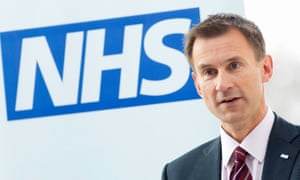
Hunt claimed he was ready to continue negotiations. Photograph: Neil Hall/PA

Repeatedly challenged on BBC Radio 4’s Today programme about the level of support for the strike, Porter did not dispute a claim that the council backed five-day strike action by only 16 votes to 14. But he denied that there had been block voting by consultants and GPs to reject the strike.


The latest planned strike action is the first since BMA members rejected the government’s final offer on the contract in a 58% to 42% vote in July, despite a recommendation to accept by the BMA’s leadership.


At the heart of the contract dispute is Hunt’s proposal to change what constitutes “unsocial” hours for which junior doctors can claim extra pay, turning 7am to 5pm on Saturday into a normal working day as part of a Tory manifesto pledge to create a “seven-day NHS”.


There have been five previous walkouts in the dispute, all this year. The longest lasted two consecutive days, and the first all-out strike – including junior doctors working in emergency departments – was held in April. More than 100,000 operations and outpatient appointments have been cancelled so far as a result of industrial action.


Porter said Hunt had left junior doctors with no alternative but to strike again.


He said: “The reason the strikes have been announced is the continued reluctance of the secretary of state for health to do anything other than impose a new contract on junior doctors, a contract in which junior doctors have demonstrated repeatedly that they do not have confidence.”


He also dismissed a claim by Chris Hopson, chief executive of NHS Providers, that the government and employers side had made 73 concessions in the negotiations.


Porter said: “Anyone could count up the number of commas changed and words inserted into a negotiated document containing tens of thousands of words and come up with a number like 73. That number is completely meaningless.”


He added: “It is time to give up the incremental approach of changing a word here or there. That is not going to work as the doctors have comprehensively shown in the latest referendum.”


“The only alternative that junior doctors have been left with is protracted strike action. The reason this dispute has become protracted … is the insistence of the government on moving ahead without agreement.”


Hunt claimed he was ready to continue negotiations.


“The way to solve the honest disagreement is to sit round the table and talk,” he said. “It is cooperation and dialogue and not confrontation and strikes, which is going to cause absolute misery to hundreds of thousands of families up and down this country.”


Hunt claimed there were only two outstanding issues to resolve. “In July they wrote to us and said there were just four outstanding issues of concerns – we have solved two of those four issues to their satisfaction.


“The main sticking point are two issues around pay: Saturday pay and automatic pay rises for part-time workers. Weekend pay rates for doctors are higher than for nurses, police officers, and fire officers. In the 24/7 society that we live in it is very fair and reasonable deal.”


Jeremy Hunt says five-day doctors" strike will be "worst in NHS history"

Top 10 Natural Home Remedies For Nausea And Vomiting In Children

Because nausea & vomiting in children is not a disorder or disease, you can treat it easily with medications or even using home remedies. However, taking medications with many children is quite hard when they suffer from vomiting frequently. Viral gastroenteritis, occurring in the stomach is one of the main causes of nausea in children. There are also some of other common causes such as stomach upset and other infections associated with the airways, ears, throat, chest, fever, and urinary tract, etc. In these cases, it will be better to choose natural home remedies that may help to reduce the vomiting and give relief from the problem until the baby recovers from it.


Ginger is very famous for its healing properties that are beneficial in treating nausea in both adults and children. It aids in promoting the secretion of different digestive juices that balance the acid levels in the stomach; therefore, keeping the muscles relaxed.


Simply, just add 1/2 inch of peeled ginger to clean water and bring it a boil. Then, you give this water to your baby in small quantities regularly.


When the vomiting in your baby occurs continuously, you need to ensure that there is no dehydration. Dehydration occurs when the body loses a huge amount of water, which makes it no longer function properly. If this condition lasts longer, it can become serious and even life-threatening. So, to prevent this condition from happening, ensure that your child drinks enough extra water to restore the lost fluids. If your baby vomits the fluids, you need the help of your pediatrician.


Frequent vomiting can make the walls of stomach inflamed and sensitive to the consumed foods. Drinking or eating too much will further make the stomach walls worse by stretching them out. And this will further make the condition as well as its symptoms worse. Therefore, reduce the intake of food that you give your child throughout this period.


Limit adding all types of solid foods to his or her diet until he or she stops vomiting for about 12 hours. Moreover, avoid forcing your child to drink or eat if he or she does not like this because this will only increase nausea & vomiting. Instead, allow him or her to rest for a while and then try giving your child some foods.


Peppermint contains refreshing & remarkable properties that help to soothe an upset tummy. Therefore, chewing a few fresh peppermint leaves can also help your baby to relieve this problem. However, if your baby not possible to chew these leaves, take 1 tablespoon of peppermint leaves, half a teaspoon of ginger paste and then place them on a sieve to extract their juice. Now, add 1 teaspoon of raw honey to it. Finally, give this solution to your baby in 2 equal doses.


Children with frequent vomiting are recommended consuming the BRAT diet (bananas, rice, applesauce, and toast) to control this condition & its symptoms. Do not feed your child foods that can increase vomiting and irritate the stomach lining. Instead, feed your child bland foods such as clear soups, bananas, rice, dry toast, boiled potatoes, crackers, ginger ale, etc.


Give this diet to your baby for about 2 days and gradually switch to other foods and increase the quantity. Please note that maintaining the BRAT diet for a long period of time may cause nutritional deficiencies. Hence, you should switch to a regular diet as soon as your child begins feeling better and stop vomiting for about 48 hours.


In fact, the fresh scent of a lemon slice may also reduce the feeling of nausea. Moreover, lemon tea can give a soothing and refreshing effect to the stomach.


Simply, add a pinch of salt and 1 teaspoon of sugar to 1 cup of water and then bring it to a boil. Next, add 1 pinch of tea powder to it and turn off the heat and sieve this liquid into a clean cup. Now, add 1/2 tablespoon of lemon juice to this cup and give the solution to your child. Kids always love this flavor.


This condition in children can become worse due to some factors such as smoke, cooking smells, perfumes, humidity, heat, a stuffy room, etc. You should reduce these triggers until your child stops vomiting and gets over the illness completely.


Besides, trying to keep the room of your child cool at all times is essential. Open a window to allow the air to enter in this room during the day. Maintain the moisture indoors with a humidifier. Do not use perfumes, room fresheners, and deodorants that work as potential triggers. Avoid cooking foods that can produce odors and try to keep your child in bed until she or he recovers from this condition because, in cases, sudden movements may also trigger nausea and vomiting.


When it comes to nausea, its feeling is very awful and your child tends to control it because he or she is scared of throwing up that makes his or her more uncomfortable. Therefore, soothe your child and then say that vomiting is a way of the body to throw out something that can be harmful to the stomach. Try to explain that your child will feel better when he or she lets it out.


In some cases, encouraging your child to sleep can aid in reducing vomiting by emptying his/her stomach and controlling the feeling of nausea. In point of fact, frequent vomiting will surely drain your child and then he or she will readily fall asleep if you ask to do. Avoid waking up him or her in between. Instead, allow your child to sleep peacefully and to wake up on his or her own. Then, try feeding your baby liquids.


If your child is at home, place him or her in a comfortable position as well as avoid having too much of activity to reduce the feeling of nausea. However, if your child is feeling nauseous because of motion sickness, you should also notice the position that your child is sitting in. He or she ought to face forward and avoid leaning sideways or backward. In case your child suffers from motion sickness regularly, ensure that his or her stomach should be empty or not too full before the journey because this triggers the feeling of nausea. Therefore, you should give something to your child an hour before traveling.


Here are a few of natural home remedies for nausea and vomiting in children that you should be aware of to take care of your child!


Guest Post by Hang Pham


Author Bio:


This guest post is by Hang Pham, a blogger with over 10 years of experience on searching the effective remedies for problems related to health and beauty talk.


Top 10 Natural Home Remedies For Nausea And Vomiting In Children