myself etiketine sahip kayıtlar gösteriliyor. Tüm kayıtları göster

20 Mart 2017 Pazartesi

My vegan experiment: ‘Even in my maddest moments I never saw myself doing this’

The first thing I want to say is that this is the last thing I ever expected to write. Over the years, I have contemplated joining the police, moving to Canada, and taking up darts, but even in my maddest moments I never saw myself doing this. The need I feel to make this disclaimer crystal-clear, however, is something I’ve been puzzling over. The only purpose it can serve is my own vanity – which, I have been surprised to discover, is my single biggest worry about becoming a vegan.


It has only been six weeks, so it’s still early days, and I could be wrong about this. But I don’t think the worst thing about going vegan is saying goodbye to all the lovely things I used to eat. I really like roast lamb and scrambled eggs and ice-cream, but the truth is that you can get used to anything. My problem with veganism isn’t the diet, but the identity.
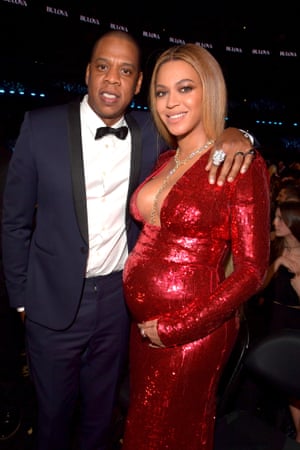


‘These days it’s the height of fashion and – if you’re a celebrity – practically compulsory.’ Jay Z and Beyoncé.


‘These days it’s the height of fashion and – if you’re a celebrity – practically compulsory.’ Jay Z and Beyoncé. Photograph: Lester Cohen/Getty Images for NARAS

Veganism used to be so niche that I was in my 20s before I first met a vegan, but these days it’s the height of fashion and – if you’re a celebrity – practically compulsory. Famous vegans are ten a penny – Beyoncé, Jay Z, Jennifer Lopez, Brad Pitt. Unlike most celebrity lifestyle choices, any idiot with a Deliciously Ella cookbook can access the glamour of giving up animal products, which may explain why the number of vegans in Britain has almost quadrupled in the past decade to more than half a million. Living in London, one can’t fail to notice that even vegan fashion has assumed a newly confident air; the old passive-aggressive T-shirt slogans (“Vegan. Because My Body is Not a Graveyard”) have made way for knowing hipster humour (“All Hail the Kale”). On a street in Hackney where, last time I looked, crowds on the pavement meant a pub fight had spilled on to the kerb, hordes now queue patiently in the rain, like old Soviet Union shoppers, outside “the world’s first-ever” vegan fried chicken shop, the Temple of Seitan.


So I don’t worry about looking weird. I worry about becoming that person who thinks what they put in their mouth is important enough to merit a significant share of their time and energy every day. Who wants to be sourcing vegan mozzarella on holiday, forever scanning labels, making a nuisance of themselves at dinner parties? To me, it has always felt fundamentally precious, if not borderline narcissistic, to care that much about the purity of one’s digestive system.


That middle-age would force a reappraisal never even occurred to me. In my 20s, it was just about plausible to pass off a diet of Dime bars and Diet Coke as evidence of a life too fabulously busy for trivial distractions such as actual meals. By 45, however, it looks like self-abuse. After I was diagnosed with breast cancer 18 months ago, it altogether ceased to be an option and, for the first time in my life, I paid serious attention to the novelty of taking care of myself – not least because when surgeons, oncologists and nurses have done everything they can to save your life, there is a certain sense of obligation to do one’s bit, too. When nutrition is no longer a lifestyle choice but a medical necessity, eating food that might really kill you becomes patently idiotic – which is why I spent most of last year trying to adopt a healthier diet.


When nutrition isn’t a lifestyle choice but a medical necessity, eating food that might kill you is patently idiotic


The problem, as anyone who has ever tried knows, is that it’s impossible to know if you are doing it right. There is quite possibly greater global consensus on how to solve the Israel/Palestine conflict than on what we should eat, and the more you learn, the less you feel you know. Is a low-carb paleo diet the answer? Is meat OK as long as it is organic? Will five a day do the job? Or is anything less radical than a strict raw-food regime a waste of time? Willpower is hard enough to sustain, even when you know it’s worth it. The possibility that it might, in fact, be pointless was enough to derail every diet I tried.


In the end, I could find only one way to make sure everything you put in your mouth is a good idea. The simplicity of the solution was irresistible. The problem, of course, is that nothing else about going vegan is remotely simple. Was I really going to find time to start shopping in specialist wholefood stores and soaking mung beans? The vegans I knew all promised that after a month I would start to feel so fantastic that the palaver would seem a small price to pay. This may be true, but I worried that faffing about with legumes would defeat me long before the fabled herbivore high kicked in.


Was there, I wondered, an easier way to do it? Of course there was. I found a company in London called Detox Fit, a one-stop shop for lazy vegans, that offers a weekly delivery of gourmet meals. A sort of vegan ready meals on wheels, if you like. Run by a preposterously good-looking vegan couple, the company also provides an AA sponsor-style helpline to call should I find myself outside a kebab shop, having a wobble. If out and about on the high street and hungry, all I need to do is call and they will guide me to vegan options in the vicinity.


Unable to think of a reason not to, I signed up, and embarked on a three-month experiment with veganism. A finite commitment felt much more doable than a lifelong promise, but the very modesty of the challenge also made me anxious. With no excuse for falling off the wagon, what if I still did?


There are so many reasons to be vegan that it is hard to know which one would work best in a crisis of willpower. Health is mine, and the obvious one – but, in a reckless mood, I might decide not to care. Would thoughts of carbon emissions from cattle fortify me? Maybe the trick is to keep a mental archive of factory-farming photos, ready to deploy when necessary. Then again, what if world famine turns out to be the most compelling option? It might be an idea to memorise some eye-opening statistics about how many acres of grazing it takes to make a Big Mac, and how many people the same fields could feed if we planted crops instead. Adopting a belt-and-braces approach, I watched the appropriate documentary material online: Cowspiracy, Forks Over Knives and Earthlings.


Rather to my surprise, at the end of month one, I’ve had no need for either the Detox Fit hotline or my fortifying mental devices. Whatever had I been worrying about? The whole thing has been startlingly easy.


And then I was invited to a dinner party …


My vegan experiment: ‘Even in my maddest moments I never saw myself doing this’

10 Şubat 2017 Cuma

"I blamed myself for being sexually assaulted"– video

In the first of a our three-part series Young Minds, we meet Sheeva, 24, who was sexually assaulted at university. It took her four years of panic attacks, anxiety and depression to accept that she was not blame for what had happened and that she could not have stopped it. She now supports victims of crime, including domestic and sexual violence, through the aftermath of a traumatic event


"I blamed myself for being sexually assaulted"– video

9 Şubat 2017 Perşembe

‘I was literally tearing myself up’: can the performing arts solve its mental health crisis?

Operatic soprano Greta Bradman was19 years old when she started to self-harm. Intense bullying through high school had coincided with her parents’ divorce. She felt isolated and started skipping school. A year earlier her grandfather, cricket star and national hero Sir Donald Bradman, had died.


Donald Bradman and his grand daughter were close – their relationship has been chronicled in a double episode of Australian Story – and he had instilled in her a love of classical music. Greta saw singing as “a kind of solace” for her pain, and she was accepted into the Elder Conservatorium of Music in Adelaide. But that overwhelming sense of self-loathing stayed with her, and she began trying to destroy the one thing that brought her joy: her voice.


“I wanted to take away the possibility of singing as a career,” she says. She describes it as needing to punish herself – for missing school, for being “completely worthless”, for having the audacity to wrap her identity up in art.


“It was a combination of wanting to hurt my voice and to get that sense of relief that can come from self-harm. But it’s a completely maladaptive coping strategy, which took me further and further down the cycle of self-loathing … It was bound up in me as an artist – not really knowing how to go about it, and not feeling like I could necessarily succeed, but at the same time being terrified of the prospect of success.”


Greta Bradman


‘I wanted to take away the possibility of singing as a career’: operatic soprano, radio host and psychologist Greta Bradman. Photograph: Pia Johnson

Eventually, Greta climbed out of the cycle. She stopped self-harming when she was 23 and became pregnant with her first child. Today, her voice well and truly intact, she is one of Australia’s leading sopranos, with a radio show on ABC Classic FM, an upcoming principal role as Mimì in La Bohème at the Sydney Opera House, and a plaque on the Adelaide Festival Centre’s walk of fame.


She also practices pro bono as a provisional psychologist, with a masters in clinical psychology. Bradman has combined both passions to consult on a major new industry-first initiative from Arts Centre Melbourne – the Arts Wellbeing Collective – to help others in the creative arts who have struggled in similar ways.


The collective, which launched on Thursday, is unprecedented – if not around the world, then certainly in Australia. It comprises close to 90 Victorian arts and culture organisations, including Melbourne festival, Melbourne Theatre Company, Victorian Opera and Regional Arts Victoria, who have come together with a common aim: to improve mental health and wellbeing for Victorian performing arts workers – those on stage and in front of the camera, as well as those working behind the scenes.


Developed in consultation with prominent psychologist Dr Michael Carr-Gregg, and drawing from the practice of positive psychology, the program, in its pilot phase, will feature a series of workshops and a dedicated website filled with resources tailored to the mental health needs of the performing arts sector – a sector which recent research has shown is in crisis.


Performing arts work: a lethal cocktail


In 2016, a major report was released by Victoria University and Entertainment Assist following an extensive study of entertainment industry workers.


The report – which focused on performing artists and composers, performing arts support workers and broadcasting and media equipment operators – was alarming. Levels of moderate to severe anxiety in the performing arts industry were 10 times higher than the general population; levels of depression in industry workers were up to five times higher; and workers were four to five times more likely to plan to commit suicide, and twice as likely to attempt it.


As Bradman explains, the performing arts industry comprises a unique cocktail of working conditions that, without the right levels of support, can prove deadly.


“As a performer, you’re working when everyone else is working, and then you’re working when everyone else is having fun,” she says. “The work hours are unique, and on top of that you’ve got the lack of work security, and the financial pressures.”


An Australia Council report released in 2010 found more than half the country’s artists were making less than $ 10,000 a year from their creative pursuits, regardless of the hours they put in. Many of those hours come in shifts, Bradman says, which come with their own set of risks – from obesity and cardiovascular disease through to sleep problems and other mental health issues.


There are social factors too, including an imperative to socialise and network at events that revolve around alcohol and drug consumption. “Looking at future work possibilities and career progression can be somewhat tied to that too,” Bradman says.


And all that’s to say nothing of work instability, and what it can do to one’s mental health. “For performing artists, and also for people backstage, you might go through a phase of getting a lot of work, and then all of the sudden the work drops off. That can have a big impact on your sense of identity.”


You have these immense highs of being part of a [big show] … and then suddenly it’s all gone


Greta Bradman, operatic soprano


The extreme highs and lows of the work itself compound the issues. “I’ve experienced this myself,” Bradman says. “You have these immense highs of being part of a family, a community, that comes together for this incredible project – particularly if it’s a long project, like a musical, an opera, a long run of a dance. You’re so close to the people, and you’re all so bound up in it – and chemically, from a neuropsychological and psychological perspective, there is so much going on in those relationships … but it’s all bound up within that world of the show, and suddenly the show ends and it’s gone.


“There’s a huge sense of grief and loss that can come from that – and a sense of needing to renegotiate your identity.”


While Bradman fundamentally disagrees with the myth of the “struggling artist”, which romanticises mental health issues as a creative boon, she says there is something intrinsic to the arts that can make artists and workers particularly at risk.


“To be [an artist] we have to be vulnerable, we have to give of ourselves, hugely, we have to allow ourselves to feel an array of emotions – some of them good, some of them really difficult,” she says. That’s why it’s particularly important that arts workers can access resources and support tailored to their industry – a gap the Arts Wellbeing Collective is hoping to fill.


“What we do [as arts workers] is so bound up with who we are. This is not necessarily a good or bad thing, it’s just a way that a lot of us identify,” Bradman says. “We have to negotiate what that means, so that in the quieter times – in those times when there’s not as much work – we don’t equate a lack of achievement with a lack of self-worth, or an uncertainty about our direction.”


‘I’d spun out of control’


For Simon J Green, it started with scratching. He had been running an independent film company for eight years – a creative investment with huge financial strain, long hours and high responsibility – when his wife noticed him absent-mindedly digging paths across his forearms. “As soon as she mentioned it, I realised I’d been scratching my legs, too. I pulled up my pant legs and we both gasped at the ragged, bloody strips I’d torn in myself.”


David J Green


Simon J Green experienced ‘extreme levels of stress and depression’ while managing a film production company in Melbourne for eight years

Green, who is based in Melbourne, was experiencing “extreme levels of stress and depression” combined with long working hours and a lack of sleep, which meant every small problem took on extreme proportions. It’s a spiralling feeling that many performing arts workers identify with.


“Taking on staff, and the pressure of keeping them both paid and creatively satisfied, weighed on me more than I realised,” he said. “Combined with managing [my] cystic fibrosis, and trying but failing to meet my own creative needs, I’d spun out of control to the point I was literally tearing myself up.”


There was another factor too, Green says: a lack of perceived value. “People don’t think our work is worth much, which puts pressure on us to make more for less.”


This is an issue Bradman raises too, which she is looking into with a new, broader survey which soft-launched in January. “Culturally, and particularly in the current climate, [there are questions] over the perceived value of the arts, not only within the performing arts community but the broader community.”


In 2015, the Abbott government slashed funding from the Australia Council – cuts which were handed down, for the most part, to the small-to-medium arts sector. In May 2016, the artistic directors of major theatre companies penned an open letter calling it an “unprecedented assault” on the arts, and individual artists were among the biggest losers.


“When funding is shifting and changing, and there is so much uncertainty, that can really play into one’s sense of where one is going in life, and one’s sense of self-worth,” Bradman says.


The issue of worth came up in the Entertainment Assist report too. “Performers working for free is a huge issue in our industry. It devalues our skills and puts us out of work,” said one participant. “[We need] more government support and to realise the importance of the arts,” said another.


In the film industry, Green says, that devaluation has specific repercussions. “There’s a real scarcity mindset that seems to undermine collaboration – a sense of a zero-sum game of work available, which isn’t true. I think it comes from that feeling that we aren’t really valued by society at large; from all of us being told at school, ‘Don’t be an artist, you’ll never make a living, be something else’, to the tired joke (that we perpetuate) that an arts degree is useless.


I pulled up my pant legs and we both gasped at the ragged, bloody strips I’d torn in myself.


Simon J Green, film producer and writer


“Performing artists are twice as likely to attempt suicide, and depression is five times higher than the general population. That’s a horrifying statistic,” he says. “Clearly there’s a problem, but no one really cares. If it were a different industry – say, manufacturing – there’d be a national discussion.”


Green remembers when the report came out, alongside an article on how little money is made by actors who are considered famous in Australia. “The comments sections were full of people saying, ‘Boo hoo, get a real job, they chose that life.’ With all this, how can the arts not be fatiguing our mental health?”


Beyond the performing arts


Although the report, and the Arts Wellbeing Collective which has sprung from it, are focused on the performing side, mental health issues in the arts are by no means confined to that. Mental suffering has a long and storied history with visual art, for instance, and a recent callout for arts workers who had experienced mental health flare-ups drew mostly anecdotes from writers, who spoke of anxiety, depression, bipolar disorder, eating disorders and recent, heartbreaking suicides among their community.


Developed by a performing arts company, the focus of the Arts Wellbeing Collective reflects its origins. Upcoming workshops are titled “the Green Room”, “Centre Stage” and “the Show Must Go On”. But Bradman hopes the resources made available will be of use across the industry and beyond, and has aspirations for expansion.


“There is absolutely nothing to preclude it from being broadened out, if it’s successful,” she says. “I think it’s really important to be slowly, slowly about it, to let it build up and evolve, to let this year really inform the shape that it takes in the next.”


Above all, she hopes it achieves a top-down recognition of mental health issues, removing stigma, generating conversation and increasing support: “A real sense of committing, on the part of the organisations, to a nonjudgmental, open and supportive relationship when it comes to mental health in the arts,” she says.


• Find out more about the Arts Wellbeing Collective


‘I was literally tearing myself up’: can the performing arts solve its mental health crisis?

19 Ağustos 2016 Cuma

20 Reasons Why I Call Myself an “Anti-Vaxxer!”

20 Fast Facts About Vaccines — by T. Matthew Phillips, Esq.

1. Under American law, it is legally impossible to design a defective vaccine.


2. In 2011, the Supreme Court declared that all vaccines are unavoidably unsafe.


3. Vaccine ingredients kill human gut microbes that regulate the immune system.


4. No vaccine comes with an immunization guarantee.


5. No vaccine is ever safety-tested in combination with other vaccines.


6. There are no vaccine safety studies that compare vaccinated versus non-vaccinated persons.


7. When vaccines fail to provide immunization, medical science is never able to explain why.


8. When vaccines kill or injure, medical science is never able to explain why.


9. Vaccine injured persons cannot sue vaccine makers; no other American industry enjoys immunity from liability for selling unsafe products – that are known to kill and injure.


10. Over the past ten years, the number of American children who died from the MMR vaccine far outpaces the number who died from measles, mumps and Rubella combined.


11. The MMR vaccine is not given to infants, (i.e., newborn through 12 months), because it is considered unsafe.


12. The MMR vaccine comes in only one “size,” (i.e., volume of liquid in the syringe); children receive the same dosage as adults.


13. Persons vaccinated for measles can nevertheless develop a full-blown case of measles as a result of the vaccination.


14. Persons vaccinated for measles can nevertheless develop a full-blown case of measles as a result of contact with persons infected with the measles virus.


15. Persons vaccinated for measles can “shed” the measles virus and infect others for approx. 28 days after vaccination; those recently vaccinated for measles must be quarantined for 28 days!


16. Measles is now a disease of vaccinated persons; modernly, in all measles outbreaks, (including Disneyland 2015), the majority of those afflicted were already vaccinated for measles.


17. Once a person has had a full-blown case of “wild” measles, (i.e., from naturally occurring viral strains), he or she naturally acquires lifetime immunity to the measles virus.


18. Once a person has had a full-blown case of “laboratory” measles, (i.e., from viral strains attenuated in vitro), he or she does NOT acquire lifetime immunity to the measles virus.


19. Persons inoculated with “laboratory” measles remain forever susceptible to “wild” measles (and other “laboratory” strains).


20. All booster shots are a hoax – you can’t “boost” immunity; it is either achieved or it isn’t.


~~TMP. (Aug. 19, 2016)


T. Matthew Phillips is an entertainment attorney and part-time particle physicist from Hollywood, Calif., who advocates the abolition of vaccines, GMOs, chemtrails, and science. Phillips is now suing the State of California to halt SB 277, California’s mandatory vaccination law for schoolchildren.
[More Info: http://www.revoltrevokerestore.com/ ]


20 Reasons Why I Call Myself an “Anti-Vaxxer!”

30 Haziran 2014 Pazartesi

"The only heckler I"m concerned about is myself"

Contrast that with the Jess of nowadays. Not content material merely to attend the music festival, she carried out there, to an audience of thousands. “I did six exhibits, two a day, on the Sensation Seekers stage,” she says. Jess teamed up with an act referred to as Captain Hotknives to carry out an improvisation display in which the Captain turned Jess’s tics into comedic songs and stories.


It is the type of exposure that would strike fear into the heart of a seasoned performer, so it is straightforward to forget that it is only two many years considering that Jess burst on to the nationwide consciousness, when she gave an interview to Radio 4’s Right now programme, in which she unleashed her special tic-peppered voice to hundreds of thousands of listeners in an attempt to increase awareness of the issue.


Considering that then, the inspirational girl who says “biscuit” 16,000 instances a day has turn into the poster girl for Tourette’s. Glastonbury wasn’t even the culmination of her dreams, but merely the very first step in a summertime campaign to demystify a neurological condition that impacts much more than 300,000 young children and grownups in Britain. It is even now erroneously referred to by several as “the swearing disease”. (In truth, only ten per cent of sufferers curse uncontrollably.)


When she is not working at the Oasis Children’s Nature Garden, a children’s undertaking in south London, in which her remit consists of fundraising, support growth and volunteer management, Jess will devote the subsequent few weeks rehearsing for the Edinburgh Fringe. Her debut display there is named Backstage In Biscuit Land, and characteristics comedy, storytelling and puppetry.


“One of my motivations for doing the show is to reclaim the laughter linked with Tourette’s. Humour is one thing that can be missing in discussions about disability, but for me humour is 1 of the factors that can make difficult occasions manageable. Tourette’s is so much funnier than just people swearing in the supermarket.”


As if on cue, Jess all of a sudden squeals “Aladdin is dead!”, ahead of breaking into laughter and explaining: “I announce Aladdin’s death quite a great deal. I have no thought why, it’s just a random thing, but when I’m all around youngsters, I have to right away include: ‘Not actually.’ The other hilarious 1 is when I announce ‘Biscuit time!’ at the children’s venture, and all the little ones are flummoxed until I say: ‘Actual biscuit time.’ ”


Jess has co-written the Edinburgh show with puppeteer and co-performer Jess Mabel-Jones. “My tics have named her Chopin, for some purpose, so that types portion of the demonstrate, as does a section that created when we have been at the workshop stage and I try to explain what Tourette’s feels like to a dolphin… in language he could understand.”


It sounds quite madcap, and after just a single hour in Jess’s organization I can vouch for her comic timing: “I really do not require to be concerned about any awkward silences on stage – my tics will fill any gap with some thing humorous, random and probably irrelevant. The only heckler I’m concerned about is myself – I mean, truly, who could say something worse to me?”


Jess also has what Simon Cowell calls the likeability issue, anything each aspiring performer seeks but only a couple of are born with. Accurate, her conversation is peppered with words this kind of as “biscuit”, “squirrel” and the occasional “f—”, but soon after a although you stop noticing and concentrate alternatively on her eloquence and uplifting, wise message.


“I used to find it really tough to talk or think about my tics with no crying or receiving upset. But in 2010, encouraged by a good friend, I started a weblog known as Touretteshero and wrote a book about my experiences. Making it possible for myself that area to think about how Tourette’s has had a positive influence – by triggering laughter or opening up a conversation with someone, for illustration – has given me a greater comprehending of the situation, and of myself. I observed the great things about obtaining Tourette’s – the humorous incidents and the kindness of strangers – and I’m glad I did. That has had a far better influence than any other intervention.”


Jess’s verbal and bodily tics are continuous, but she identified that the anti-psychosis drugs normally administered to Tourette’s sufferers did little to assist. They also came with side results such as permanent tiredness. Rather, she will take Baclofen, a muscle relaxant usually provided to cerebral palsy sufferers. She also requires useful methods this kind of as sporting knee pads and padded gloves to avert injuries when she falls or bangs her chest at evening, she sleeps beneath a weighted blanket that stops her moving about, so that she can sleep.


Nowadays, nothing seems to faze Jess. Two years ago, she started employing the wheelchair because walking had become unsafe, and she says that, far from becoming restrictive, it has liberated her, permitting her more freedom to get about.


“I possibly must have mentioned that at times my tics intensify to such a degree that I entirely lose handle of my entire body and speech,” she tells me. “It’s like a seizure and requires related management, in that I should both place on a security belt in my chair, or be put into the recovery position to stop me hurting myself.”


And with one particular final flourish of her comic timing, she deadpans: “But don’t worry, I’ve previously had a single of these these days.”


‘Backstage In Biscuit Land’ is at the Pleasance Courtyard, Edinburgh (0131 556 6550, pleasance.co.united kingdom) from August one to 16, at one.55pm. touretteshero.com


"The only heckler I"m concerned about is myself"

31 Mayıs 2014 Cumartesi

I"m letting myself off the hook for currently being scatty

After rehab

Now when I can not cope on my very own, I can request for aid. Photograph: Guardian


The oldest man on my street, Eric, has misplaced his keys for the umpteenth time this week. In the time that he repeats the routine of shuffling gradually from the front door to his vehicle, opening the passenger door, turning on the light, looking via his important wallet beneath the light, unclipping a random key and then strolling gradually back to his front door to see if it performs, day has become night.


“Need any help?” I shout from across the street, simply because Eric is deaf in one ear. “No, no,” he replies cheerfully, but I cross the street anyway. I often seem for physical indications of degeneration, such as dirty clothing, fingernails, or a strong smell of urine that would propose he hasn’t been washing. But he is immaculate as ever, his shirt ironed, cuffs and collar clean. When we locate the important that functions for his door, I observe that the hall of his house is as tidy as an officer’s mess. The only factor that is falling apart is his mind, and the pace at which it is occurring is alarming.


Up right up until a few weeks ago Eric had neighbours, Stan and Eva. They have been in the very old-age stage of lifestyle together. Eric would drive 200 yards to the shop to collect their newspapers if if it was raining or, if dry, he would stroll with his stick. Stan died a couple of weeks in the past and Eva has been taken into residential care so almost everything in Eric’s daily life has modified. And swiftly.


Contact this the starting of dementia. Get in touch with it immense grief. Get in touch with it loneliness. It is surely not craziness. Eric is in his late 80s, and in the number of many years I have lived on the street with him he has in no way been anything at all other than completely with-it. In previous age, the reasons for losing one’s thoughts can be a mixture of all these items and it is hardly surprising, but virtually constantly upsetting.


I believe I’ve misplaced my keys practically each and every time I get to my front door, but I am not old. I get in touch with my children by the cat’s name, my brothers’ names. But this is just confusion, tiredness.


The mental deterioration that I really feel comes from a wish to try to management the way in which my brain actually operates. I have usually been chaotic, usually scatty. Seldom am I wholly current in a area. Yes, I can do issues to improve the methods in which I perform, but like someone who is naturally very organised, I have to recognize that there is only so considerably of one’s persona that can be modified. Yet I still have typical fights with my character traits: every day, all the way.


Get lost keys: I berate myself for being this kind of a scatterbrain when I actually do lose my keys, ie when they are not lying in the bottom of my bag along with wrapperless tampons and a half-eaten sandwich. I think about these keys currently being picked up by an opportunistic passerby who might try to break in to the residence and steal a lot more keys to valuable issues, keys that lie in a bowl proper by the front door, like metal soup.


But, slowly, I am letting myself off the hook. I am admitting that absolutely everyone at some level loses their keys. I am making an attempt not to see this as a unique problem related with people like me, who find substantial pressure bearable, but the chaos of day-to-day existence difficult to deal with.


I’ve always had strange, illogical ways of considering and often use individuals odd, illogical ways to try to kind out my issues. For illustration, when I was nine, I got worms. My mother took me to the doctor, and I bear in mind thinking he looked like he had been taken down from a shelf and dusted off. He frightened me ahead of he even spoke and it was an knowledge that even now helps make me shudder.


When the worms returned, I believed I was abnormal, a serial catcher of bad things, and I feared currently being sent back to that outdated GP with the cold fingers. So I advised no a single, and manufactured a vow to myself to wait until finally I was 11, when I’d be permitted to consider a bus all by myself to the chemist in town to get some tablets (we lived in a village with only a publish workplace and a pub).


Two years. I would rather have waited two many years with an itchy bottom and an insatiable appetite, than tell my mom. The worms left of their very own accord, but my twisted logic did not. It is still here, but now I can see it for what it is and ask for support when I can’t cope on my personal. It can not modify personalities or behaviour, but it gives me a specific empathy for and understanding of other individuals.


I"m letting myself off the hook for currently being scatty

22 Mart 2014 Cumartesi

In the course of treatment, I realise I will not know myself very well

rehab column family

‘I’m searching my thoughts frantically for truthful answers, but I cannot believe of a single, strong purpose.’


As I share the back seat of a taxi with my buddy after a night out, it strikes me that we could kiss and it would most most likely be good. She is lovely and I’ve kissed females before, and it has not manufactured me question my sexuality due to the fact I am certain that I fancy guys far more than women – though that could adjust.


But when it comes to other matters, I realise that I never know myself so effectively.


“What is it that you want from this?” the therapist asks me, about future hopes for my romantic relationship with R.


I really feel like I’m a contestant on Mastermind and I have to ask her to repeat the question: it isn’t complicated or delivered in a method that is trying to catch me out. Talking about what I want from a connection is stuff I know, absolutely. She’s not quizzing me about the signing of the Magna Carta, or the history of silent film.


“I do not really know.”


I am seeking my mind frantically for truthful solutions, but I cannot believe of a single, strong cause. Not since the emotions for R aren’t there, but due to the fact I’m unable to speak about what it is that I want. If I have been creating an essay, I’d skirt around the central situation and speak about why I first received together with him: to see if I could fall in adore with a person who said he loved me first to share the obligation of bringing up my daughter and possibly have more kids with each other to discover how far a relationship could exist past a one particular-evening stand.


Getting asked to express need, want and want is not as effortless as it sounds. I thought I knew myself properly and but if I had to sit an exam on the topic now I consider I’d stumble at the 1st query. My grownup many years have been defined by motherhood and marriage, and I do not believe I’ve rebelled at all right up until just lately because becoming carried along with all that duty and duty had offered me a false sense of security, made me passive to modify.


How I react to a person’s behaviour – or scenario – has informed how my lifestyle has rolled on. As a mom I have been the carer. As a wife I have attempted to management, to keep factors tidy. For several years I primarily based decisions not on how I felt, but on how other people reacted. I never truly wished to have to analyse my emotions about something I desired option to lie in other people’s hands. Now I can see why it is difficult to know what I want at all.


“And what would you like to request your wife?” the therapist says to R.


This question is different, but R only pauses for a 2nd prior to answering. He appears me in the eye, which is rare.


“I’d like you to end interfering. For example, when I talk to the kids or if I tell them off, you consider to tell me how ideal to deal with them. You seldom just let me get on with currently being a father in the way that I want to be a father, and typically you treat me like a kid.”


I want to reply back with a “how dare you!” but realise that what he’s saying is totally fair. R normally likes  to shy away from confrontation, make everyone feel like he is in the incorrect all the time. I am strangely exhilarated by his sense of injustice since for when he’s standing up for himself.


Next time we check out the therapist, I want to be ready to offer at least a single reply to her query. Definitely I want all the items that everybody needs: love, safety and companionship. But for myself? A bit more self-expertise would not go amiss, nonetheless abstract that might sound.


Last week, I needed to be dragged, to get drunk, to be taken anyplace but house. At the finish of the evening, of program, I had to go property. In my thoughts, the zenith of romance in existence has usually been about an individual taking my hand and top me away from the items I just do not want to face.


All the adult duties that have frightened me – from seeking at my bank statements to dealing with authority – have basically been manifestations of my inability to look at myself.


It’s this kind of a uninteresting thing to have to do, to enter into such existential – occasionally selfish – territory. I’d much rather commit my days getting to know other individuals and admire their strengths and scrutinise their faults as a way of passing the time. It is exciting for a while to define myself against folks and spots and items to be taken along for the trip, no matter what the consequences. But that’s not a sustainable way to live any much more.


In the course of treatment, I realise I will not know myself very well

During therapy, I realise I don"t know myself very well

rehab column family

‘I’m searching my mind frantically for honest answers, but I can’t think of a single, solid reason.’


As I share the back seat of a taxi with my friend after a night out, it strikes me that we could kiss and it would most likely be nice. She is lovely and I’ve kissed women before, and it hasn’t made me question my sexuality because I’m certain that I fancy men more than women – although that could change.


But when it comes to other matters, I realise that I don’t know myself so well.


“What is it that you want from this?” the therapist asks me, about future hopes for my relationship with R.


I feel like I’m a contestant on Mastermind and I have to ask her to repeat the question: it isn’t complex or delivered in a manner that is trying to catch me out. Talking about what I want from a relationship is stuff I know, surely. She’s not quizzing me about the signing of the Magna Carta, or the history of silent film.


“I don’t really know.”


I’m searching my mind frantically for honest answers, but I can’t think of a single, solid reason. Not because the feelings for R aren’t there, but because I’m unable to talk about what it is that I want. If I were writing an essay, I’d skirt around the central issue and talk about why I first got together with him: to see if I could fall in love with someone who said he loved me first; to share the responsibility of bringing up my daughter and possibly have more children together; to explore how far a relationship could exist beyond a one-night stand.


Being asked to express desire, need and want isn’t as easy as it sounds. I thought I knew myself well and yet if I had to sit an exam on the subject now I think I’d stumble at the first question. My adult years have been defined by motherhood and marriage, and I don’t think I’ve rebelled at all until recently because being carried along with all that responsibility and duty had given me a false sense of safety, made me passive to change.


How I react to a person’s behaviour – or situation – has informed how my life has rolled on. As a mother I’ve been the carer. As a wife I’ve tried to control, to keep things tidy. For many years I based decisions not on how I felt, but on how others reacted. I never really wanted to have to analyse my feelings about anything; I wanted choice to lie in other people’s hands. Now I can see why it is hard to know what I want at all.


“And what would you like to ask your wife?” the therapist says to R.


This question is different, but R only pauses for a second before answering. He looks me in the eye, which is rare.


“I’d like you to stop interfering. For example, when I talk to the children or if I tell them off, you try to tell me how best to deal with them. You rarely just let me get on with being a father in the way that I want to be a father, and often you treat me like a child.”


I want to answer back with a “how dare you!” but realise that what he’s saying is totally fair. R usually likes  to shy away from confrontation, make everyone feel like he’s in the wrong all the time. I am strangely exhilarated by his sense of injustice because for once he’s standing up for himself.


Next time we visit the therapist, I want to be able to offer at least one answer to her question. Surely I want all the things that everybody wants: love, security and companionship. But for myself? A bit more self-knowledge wouldn’t go amiss, however abstract that might sound.


Last week, I wanted to be dragged, to get drunk, to be taken anywhere but home. At the end of the night, of course, I had to go home. In my mind, the zenith of romance in life has always been about someone taking my hand and leading me away from the things I just don’t want to face.


All the adult duties that have scared me – from looking at my bank statements to dealing with authority – have simply been manifestations of my inability to look at myself.


It’s such a boring thing to have to do, to enter into such existential – sometimes selfish – territory. I’d much rather spend my days getting to know other people and admire their strengths and scrutinise their faults as a way of passing the time. It is fun for a while to define myself against people and places and things; to be taken along for the ride, whatever the consequences. But that’s not a sustainable way to live any more.


During therapy, I realise I don"t know myself very well

15 Mart 2014 Cumartesi

Bedtime stories, hangovers and dropping myself

rehab column family

‘Knowing that R may well get greater and I could one particular day be the 1 letting him down all the time is weird.’


Studying a bedtime story when you have still got a hangover is challenging. My youngest keeps looking at me as I pause, my tongue tripping on the easiest of phrases, my monosyllabic tone dulling the cheerful premise of the story.


At the end of John Burningham’s Would You Rather? – in which a little boy has to select between brilliant, occasionally risky but constantly thrilling situations – I ask myself this: “Would you rather leave the bar with friends and get the tube property at a reasonable hour or stay out half the evening and get so drunk you have to inquire the taxi driver to open your front door?”


The preceding day at 5pm, at a members club of which I am not a member, I consider about going residence. I have been drinking considering that midday, and I barely know the individuals sitting opposite me. The buddy I met for lunch has long because gone.


I am supposed to meet an additional friend for a couple of drinks in a pub round the corner before returning house. I ring her and say I can not get a babysitter, which is rubbish considering that R has been searching right after the children all day.


At the club, I hold obtaining up to leave, but when I finally move I only make it as far as the roof terrace, where I scrounge a cigarette and talk, uninvited, to a man and a girl holding hands at a table. I inform them about my emotions of guilt more than an individual on the tube who had been begging for funds earlier that day.


“I just want to know why no one seems to be up? Why are we often so frightened to make eye contact?”


“Did you give her any income?” the lady asks, keen, I’m confident to get back to her conversation.


“No,” I say. I realise that there is no real level to my story, and I sound moronic and drunk.


Stumbling back to the sofa, I sink into its warm sumptuousness. I make a fuzzy-headed decision to stay longer, to wait for anything to take place that will make staying on worthwhile, so I send R a brief text to say that I won’t be property for dinner since my buddy is very late to meet me. I place a kiss at the end but will not apologise. Then I tuck my telephone back into my bag and will not look at it again till 1am, when I am in a taxi headed for property.


In the back seat of the cab, with the diesel engine rattle and the jolty movements generating me nauseous, I try to maintain myself steady by concentrating on the back of the taxi driver’s head.


I’m digging for ibuprofen in my bag since my head is throbbing. My telephone vibrates. I pick it up and it is R, checking to see that I am Okay. His voice is kind and concerned, and I immediately feel horrid because I realise I have ignored his texts.


At property, he asks if I had a good night, but I am too drunk to solution in any detail. I cannot even operate out if it was nice.


A day later, I don’t know what I really feel. As I flick via my telephone, there are photos of people I will not even remember currently being with. There are none of me (conserve one particular early on in the day in which I search like Spike Milligan), so I cannot even see how drunk I looked.


I find a receipt from the members club of which I am not a member, for an sum that would typically be invested on the weekly meals shop. I consider I stored consuming espresso martinis in the hope that the caffeine would hold me alert.


It’s challenging to know why I desired to lose myself so significantly to commit funds I did not have to sit in the organization of relative strangers as an alternative of close friends to cancel on my family, and to lie in the approach. Occasionally I just never want to go home.


I do not truly feel terrible now, but I truly feel scared that I may well do it once again, simply because it didn’t really feel all that undesirable. Being aware of that R may well get far better and I could one day be the one particular letting him down all the time is weird. His understanding, regardless of me ignoring his texts, at very first manufactured me believe that he was preparing for one more major binge.


But then I realise that what I did had nothing to do with what other people had carried out, or had been performing to me. Proper or incorrect, I did what I did due to the fact I needed to.


Bedtime stories, hangovers and dropping myself

2 Ocak 2014 Perşembe

Dr Sarah Wollaston MP: "Fat and pleased? Fail to remember it. Which is why I am subjecting myself to RideLondon"

It’s in no way too late to turn it close to but there are no secure brief cuts you can only drop bodyweight if you take in significantly less than your entire body employs.


The calories burned by means of physical exercise are surprising low and it is not attainable to workout your self thin you have to decrease calorie intake also. That mentioned, workout genuinely matters as it improves nicely-being and motivation, controlling the drive to binge. Fitness independently also lowers some of the hazards from the host of medical difficulties which weight problems brings in its wake.


So why is it so difficult to just get on and do it? Also tiny time, too unpleasant, also embarrassing, didn’t operate final time …


The difficulty with overly ambitious New Year’s resolutions is that they can just set you up to fail. The draft Good advice on obesity, anticipated to be published in Could this year, talks of the want to make gradual adjustments to consuming habits and bodily exercise, as also a lot of alterations at once can lead to an elevated chance of failure. If your objective is to increase your well being, even little adjustments in excess weight make a considerable distinction.


But the advice wants to be tailored to folks and gradual alter won’t suit absolutely everyone. Some people do need to have a lot more of a push, like a sensible but achievable bodily challenge to get them to train. I know that I do.


That is why I’m taking portion in RideLondon this August – as this pic demonstrates, I have started instruction currently for the a hundred mile race on a tandem with a Middle-Aged Guy in Lycra (MAMIL).


Whatever the route to shifting extra bodyweight, a constructive non-blame technique is important but honesty about intake and some of the other leads to is not the same as blame.


My tips for effective dieting


Will not drink your calories: It really is worth checking out how numerous calories are hidden in a huge glass of wine, fruit juice or latte. Some seemingly healthy juices can pack up to 600 calories a bottle. Consume off a smaller plate and minimize appropriate down on bread and pasta. Most of all, if you are addicted to junk, have definitely absolutely nothing in your shopping trolley or at home in your cupboards to lead you astray.


Zero-tolerance strategy: Like any other addiction, when you lower out sugar and alcohol count on the 1st week to be miserable. It doesn’t have to be hell however you can minimize the lows and enhance inspiration by joining a group or obtaining a no-nonsense training buddy.


Problem your self an ultimatum: As for my training buddy, the front of my tandem has issued an ultimatum get rid of a stone or RideLondon on my personal bike (all by myself). A single hundred miles in August is a long way with no a MAMIL most likely a lot more agonizing than that prolonged overdue alter in lifestyle. Time to ditch the excuses and the calories, ramp up the exercising and see if the advice performs.


As for government, it truly is time to get the weight problems epidemic far more significantly and search once more at the devastating human price of junk foods and drink and of ultra-inexpensive alcohol.


It is time for a price tag differential among high sugar versus low calorie options and, if we want to support reverse the super sizing of Britain, to place an finish to the super sizing of junk foods and drink.


Dr Sarah Wollaston, 51, is the Conservative MP for Totnes. She has commenced a education website ahead of RideLondon in August, which data her favourite cycling routes around Devon and encourages other people to add their personal


Dr Sarah Wollaston MP: "Fat and pleased? Fail to remember it. Which is why I am subjecting myself to RideLondon"