lottery etiketine sahip kayıtlar gösteriliyor. Tüm kayıtları göster

19 Şubat 2017 Pazar

Smokers trying to quit hit by postcode lottery as GPs ration help

Smokers in England wanting to quit face a postcode lottery as cash-strapped councils and GPs restrict access to services that can help them.


The revelation has alarmed health experts and charities who claim that lives are being put at risk as a result of the fragmented provision.


Evidence obtained under the Freedom of Information Act shows that an increasing number of clinical commissioning groups – the 200 or so organisations that deliver NHS services in England – have been instructing GPs to stop providing the services. Many of the groups argue that it is no longer their responsibility.


In 2012, local authorities were made responsible for improving public health and given £2.8bn of ring-fenced grants to pay for it. But, as the grants have been pared back, councils have pulled their funding for stop smoking services.


This has led to a rationing of treatments – such as nicotine replacement therapies, bupropion (brand name Zyban) or varenicline (Champix) – in many areas. When used in conjunction with counselling, studies suggest the chances of a smoker quitting can be substantial.


Almost a quarter of a million people stopped smoking in the 12 months to April 2015 as a result of using the services, a quit rate of 51%. The services are said to have a high success rate in helping smokers in poorer communities stop.


“We are increasingly concerned that cuts in council spending, NHS cost pressures and a lack of joined-up thinking by central government are combining to block progress on cutting smoking, still the No 1 public health challenge facing the country,” said Deborah Arnott, chief executive of Action on Smoking and Health (Ash).


A briefing last year to clinical commissioning groups in Worcestershire said: “Worcestershire county council will only fund a smoking cessation service for pregnant women. The CCGs have considered the implications of this decision and due to the current financial challenges are unable to commit local funding to smoking cessation services or prescribing of products to support stop smoking attempts.


“GPs are therefore advised that no prescriptions for nicotine replacement therapy, bupropion or varenicline should be written for new patients from 1 April 2016.”


It added: “The CCGs appreciate that GPs will be in the difficult position of having to explain to patients that this service is no longer available.”


For every £1 invested in help to quit smoking, £2.37 is saved in treatment and lost productivity.


For every £1 invested in help to quit smoking, £2.37 is saved in treatment and lost productivity. Photograph: Matt Cardy/Getty Images

Restrictions have also been imposed in East Kent, York and Somerset. Windsor, Ascot and Maidenhead CCG told GPs last May: “The royal borough has commissioned a new smoking cessation service. From April 2016 Solutions4Health are commissioned to support only three groups: pregnant smokers, smokers with mental health issues and young people. The bottom line is that GPs are not commissioned to provide smoking cessation services.”


But local authorities are failing to plug the gap created by GPs discontinuing the service. A survey by Ash and Cancer Research UK has found that smoking cessation budgets have been cut in almost three in five authorities. Health organisations claim this is a false economy.


At least £1.4bn a year is spent on social care because of smoking-related illness, Ash says. Access to services for patients needing surgery – known as “Stop before the Op” – is considered particularly important.


Smokers are 38% more likely to die after surgery than non-smokers due to higher risks associated with lung and heart complications; higher risks of post-operative infection; impaired wound healing and the need for longer hospital stays and higher drug doses.


The National Institute for Health and Care Excellence estimates that for every £1 invested in quit smoking services, £2.37 will be saved on treating smoking-related diseases and lost productivity.


But the service is not considered a priority. A report by the British Thoracic Society, published in December, shows that NHS hospitals are falling “woefully short” of national standards when it comes to helping patients quit.


It found that 72% of hospital patients who smoked were not asked if they would like help in stopping.


Since last May, all cigarettes must be sold in plain packs that carry the message “get help to stop smoking at www.nhs.uk/quit”. But the fragmented nature of stop smoking provision means some people are being told to contact services miles out of their local authority area.


For example, the site directs smokers in Worcester to a service in Solihull some 35 miles away – for which they do not qualify.


“It’s alarming that a pre-operative patient advised to stop smoking will only get NHS help if they live in the right place – a postcode lottery that will damage patients’ health and certainly cost the health service money in the long run,” Arnott said.


A Department of Health spokesman said smoking rates in England were the lowest they have ever been as a result of its policies. “The needs of individual communities vary significantly across the country, and local areas are best placed to understand local needs,” the spokesman said.


Smokers trying to quit hit by postcode lottery as GPs ration help

13 Eylül 2016 Salı

"It"s better than winning the lottery": readers" organ donation stories

‘To be dialysis free is better than winning the lottery’


In 2008 I became very ill with a rare autoimmune disease called microscopic polyangiitis vasculitis which caused severe kidney failure. In 2014 I was due to receive a living kidney donated by my husband, but was failed by my consultant and ended up not expecting to survive fighting for my life in hospital instead for four months. Thankfully on 4 July of this year (the first anniversary of my mother’s passing) my hero husband donated a wonderful kidney to me. There is no doubt he saved my life and to be dialysis free is better then winning the lottery.


Both our operations went fantastically and my only challenge was being 12 litres over with fluid (they pump you with fluid to keep the kidney working and alive) and the excess fluid leaked from my wound so I needed a Vac dressing and my right leg was terribly swollen. It is not an easy journey physically, mentally nor emotionally however one I would recommend to anyone lucky enough to be offered a kidney and a life again.


Jackie Bex, United Kingdom


‘The decision seemed easy: I had two kidneys and only needed one’


My experience in donating a kidney has been amazing and has left me with a great feeling of having actually achieved something life-changing. I had no idea that it was even possible to donate a non-directed living-kidney initially (in other words to someone I did not know), but I chose to become a kidney donor after watching a BBC documentary on the subject. I was also surprised that at the age of 63, I was not too old (donation is actually possible from age 18 and the oldest donor is over 80!). The decision seemed easy to me, as I had two kidneys and only needed one and the risk was totally minimal. Why not save a life?


My friends and family were very divided about the decision. Many people could not understand my motivation and felt the risk was unnecessary. Others completely appreciated my desire to do something practical and life-changing.


After the operation I was fortunate enough to receive a letter from the recipient of my kidney explaining how much it had changed her life. She had been on dialysis for many years, could not find employment, was unable to travel on holiday and relied on her parents. Now she is independent, has a job and can travel freely without the need for painful dialysis.


Chris Jones, a retired 67-year-old living in Scotland


‘We told each other how lucky we were. How wrong we were’


Not long after we were married my husband Keith discovered that he had kidney disease. I offered to be a donor and was successful, even though we were incompatible blood types and he required plasmapheresis to remove his antibodies.


In 2010, on the night we were supposed to be admitted to the transplant ward we sat huddled together. We told each other how lucky we were. How wrong we were. The surgery went well but afterwards in the recovery room, I found out that morphine has no affect on me and awoke feeling as if I had just been chopped in half. Eventually though, we both went home and started to plan the lives that we thought we had ahead of us. We celebrated my birthday and started to plan for Christmas. Keith was so unbelievably happy and grateful and had endless plans for all the things he thought he would now be able to do. But he seemed to continue to struggle.


One day he fainted twice. He was still under the care of the renal unit, going back twice a week for appointments there, so he phoned them for advice. They took hours to phone back and when they did, simply told him not to take his blood pressure medication in the morning. He didn’t live that long. The next morning, I found him dead on the hall carpet.


I regretted the surgery very bitterly as I felt – and still do – that if the transplant had never happened, my beloved husband would still be here. Life on dialysis would have been a very different kind of life – but it would still have been life.


Rebecca Farwell, a writer and tutor in Norwich


Consultant Surgeon Andrew Ready and his team conducting a live donor kidney transplant at The Queen Elizabeth Hospital, Birmingham in 2006.


Consultant Surgeon Andrew Ready and his team conducting a live donor kidney transplant at The Queen Elizabeth Hospital, Birmingham in 2006. Photograph: Christopher Furlong/Getty Images

‘I became a doctor because of my transplant’


I was 21-years-old and had three weeks left to live. I had idiopathic hepatitis, was scared, helpless and questioning how I had ended up facing death at such a young age. I was so far from the young, seemingly arrogant and invincible boy I was a year previously. When only 10% of my liver was functional I was put on the transplant list as a final resort.


Before I became ill I had just graduated from the University of Sheffield. From the point I left home at 18 to go and live in Sheffield I thought I was fully independent, untouchable, and had everything in my life because of my actions and nobody else’s. I acted as though I would never need any kind of emotional support from anybody, especially my parents. Fighting to survive, they were all I wanted now.


As a GP my father struggled to cope. He was only too aware of the implications of each set of test results and took every deterioration in my health personally. Being a man that had healed and treated people for over 30 years I felt his helplessness knowing he couldn’t make his own son better.


Very few people get to have a second chance at life. My experience has made me realise how important the smallest things in life are; post-transplant, the most groundbreaking day for me was when I managed to get out of bed and walk to the toilet on a zimmerframe with my dad supporting me.


My decision to study medicine was a direct result of my hepatitis; I want to be one of those doctors that had the same life changing effect on me. I see no other profession in the world that compares to medicine and no one I have a greater respect for.


Marcus Mehta, a 29-year-old doctor from Lincoln


The day I received my new lung is my re-birthday


I was told I had idiopathic bronchiolitis obliterans and needed a lung transplant to save my life. 3 November 2014 was the day that I received the ultimate gift of life and my new lung was transplanted. This date is now my re-birthday and my family and I celebrate it every year with a quiet dinner. We also take a moment to raise our glasses to honor my donor and donor family who made that day possible.


Only eight days days after my transplant I was discharged and was allowed to go home. I felt like the luckiest person in the world. So far I have not had any rejection episodes and my new lung is doing great.


Catherine Horine, 61-years-old and living in the US


‘One man was able to have an extra 16 years with his family due to my father’s heart’


In 1988, my parents were struck by a train on their way to a local lake. My mother was killed on impact while my father survived the accident with a severe skull fracture and a collapsed lung. My father had surgery and the doctors removed his right temporal lobe. He never regained consciousness and remained in a coma until his death 10 days later.


About three days before his death, I was approached by the hospital staff about organ donation. Once we understood that my father’s prognosis was not going to improve and that the process of brain death had started to take his life, we agreed to the organ donation. The decision was easy for us. Once brain death was confirmed, they took my father in for the harvesting surgery. They ended up taking his kidneys, one cornea (the other had bacteria on it) and his heart. My father was in great shape and worked as a ski instructor. Despite being a smoker, his heart was in an excellent condition.


Afterwards, we were given the number of the local organ donation organization and told we could get vague updates on the recipients. We were able to find out the age, sex and state of the recipients and whether the surgery was successful. We received vague, non descriptive thank you notes from the families that received the kidneys and heart, but had no update on the cornea transplant.


17 years later, as part of a public speaking class on organ donation I contacted the company to see if my father’s recipients were alive and well. One of the kidney recipients had rejected his new kidney within a few short months but had received another kidney approximately a year later. Sadly, he passed away not long after. The other kidney recipient was still alive and well. She still had my father’s kidney. I was so pleased to hear this. Sadly, the heart recipient had passed 6 months prior to my call. I was told that he was gravely ill when he had the transplant and due to my father’s heart got an extra 16 years with his family.


Lynn, 48-years-old and living in Pennsylvania


"It"s better than winning the lottery": readers" organ donation stories

8 Eylül 2016 Perşembe

"Postcode lottery" revealed in NHS care

Patients with dementia, diabetes and learning disabilities are being let down by their local health services in many parts of England, new figures show.


A postcode lottery of care across the country has been highlighted as new performance data shows that while some health bodies are performing well, neighbouring organisations are falling short.


More than half (57%) of local health bodies in England are not performing well enough on dementia, 71% are classed as “needs improvement” for diabetes care and 92% need to improve care for people with learning disabilities, the figures show.


The figures, released by NHS England, show that many clinical commissioning groups (CCGs) have been classed as needing improvement in the different aspects of care.


They have been released as part of a package of measures announced by the health secretary, Jeremy Hunt, to improve IT and digital services in the NHS.


Hunt said patients would be able to compare how well their local health service performed against others for key areas including cancer, dementia, diabetes, mental health, learning disabilities and maternity care.


Information on how well each local trust performs on dementia, diabetes and learning disability services was published on the MyNHS website, with more information on other services to be added in the autumn.


On dementia care, CCGs are rated on the number of patients are receiving a formal diagnosis and whether people with dementia are receiving annual reviews of their care plan in primary care.


Of England’s 209 CCGs, 120 need to improve their performance for these aspects of care.


Jeremy Hughes, the chief executive of the Alzheimer’s Society, said: “Over the last few years, our health system has made strides to improve dementia diagnosis rates, but with 45% of CCGs still lagging behind the national ambition, there is a significant way to go.


“People with dementia in York should be getting the same support as those in Bradford – but with diagnosis rates varying by as much as 46.1% across the country, too many people remain in the dark, unable to access the vital information, treatments and non-medical support a diagnosis can bring.


“Given the progressive nature of dementia, which means a person’s needs become more severe over time, the focus on care plan reviews is essential. However, a care plan review must be matched with support on the ground and measures should develop to assess how meaningful these plans are.”


Prof Alistair Burns, NHS England’s national clinical director for dementia, said: “Awareness of dementia is at its highest and we believe that timely diagnosis of dementia allows people to access the emotional, practical and financial support that brings. We have increased the diagnosis rate across the country so now more than 440,000 people have a formal diagnosis of dementia and can benefit from post-diagnostic support.


“NHS England today launched a support package for local areas if they feel they need extra help following the publication of the Improvement and Assessment Framework.”


Meanwhile, 149 of 209 CCGs were rated as needing to improve their care for diabetes patients based on the number of people affected who get the recommended checks each year and the proportion of patients who attend an education course about their disease.


Prof Jonathan Valabhji, NHS England’s national clinical director for obesity and diabetes, said: “People with diabetes, type 1 and type 2, have the best care and outcomes when they receive structured education early following diagnosis and go on to regularly receive and achieve all of the Nice [National Institute for Health and Care Excellence]-recommended checks and targets.


“This is part of our wider programme to improve care for everyone with diabetes including support to improve achievements of the Nice recommendations, attendance at structured education and a reduction in amputations and improve specialist diabetes support during inpatient stays.”


Care for people with learning disabilities was rated on the proportion of patients receiving annual check-ups and their ability to keep patients out of hospital. No CCG was given the highest rating of “top performing” and 193 out of 209 were deemed to “need improvement”.


An NHS spokeswoman said: “We have seen significant increases in the numbers of people both being discharged from hospital and having their care and treatment reviewed in the last year, but it’s no secret that significant improvement needs to be made across England.


“The real difference will be made over the coming months and years as local councils and NHS bodies implement their response to Building the right support, the three-year, cross-system plan to ensure people with a learning disability and/or autism have greater say in the care and support they receive.”


A Department of Health spokeswoman said: “Work is well under way to help services around the country make progress in key areas, backed with funding to help prevent diabetes, find a cure for dementia and provide suitable supported accommodation for people with learning disabilities.


“All this is shaped by world-leading transparency, focusing efforts where improvements are needed and helping us learn from the best services.”


"Postcode lottery" revealed in NHS care

29 Ağustos 2016 Pazartesi

Giving birth in Guinea: a life or death lottery bereft of midwives and medicine | Ruth Maclean

A baby was born, took one breath, then left the world again. No amount of the midwife pumping his legs up to his ribcage and back, or poking a finger hard and fast at his chest, would bring him back.


His 17-year-old mother lay in pain on the delivery table as her son was wrapped up in a yellow cloth. There was no time even for her to hold him, as another woman was about to give birth. The midwives quickly changed their bloodied robes and gloves. Because there was no other table, the second woman gave birth lying on the floor.


This time, the baby yelled as soon as she came out. She was healthy. While the midwives moved on to the next urgent case, their small delivery room filling up, she spent her first few minutes screaming on the concrete slab.


Welcome to life in Guinea, baby Katherine.


The situation for newborn babies and their mothers in this west African country is dire. Of every 1,000 babies born in Guinea, 123 die before their fifth birthday. For every 100,000 live births, 724 women die. Guinea has the world’s second-highest rate of female genital mutilation (FGM), after Somalia – 97% of women between 15 and 49 have been cut. Women who have had FGM are twice as likely to haemorrhage during childbirth, and haemorrhage is the leading cause of mothers dying in Africa.


Medicine is in short supply, and health workers’ salaries rely on selling enough of it. This leads to staff shortages; most health centres have one or two health workers when they should have eight.


The Ebola outbreak, which killed more than 2,500 people in Guinea, revealed how little access to medical care rural Guineans had. The health situation has improved slightly post-Ebola, but without donor money, the system would grind to a halt.


“The needs are identified, but the money is just not coming from the government,” says Guy Yogo, Unicef’s deputy representative in Guinea. After Ebola, the government increased its contribution to health from 2.66% to 4.66% of GDP, and has committed to 7% for next year. According to Yogo, however: “The minimum is 11-15% if you really want to have an impact.”


Katherine is one of nearly 5,000 babies officially born each year at Doko health centre in the Kankan region of north-eastern Guinea, but about 2,000 more are born to unregistered mothers who come to the area to search for gold in artisanal mines.


Births take place in one small room, with its single delivery table presided over by two midwives.


“Lots of women come, and there’s nowhere to put them all. They often have their babies on the floor. Better there than next to sick people – at least it’s clean,” says Bernadette Mansaré, a midwife.


Sayon Keita, who is pregnant with her seventh child, is examined by a midwife at a health post near Doko, Siguiri


Sayon Keita, who is pregnant with her seventh child, is examined by a midwife at a health post near Doko, Siguiri

When there is a moment between deliveries, she lectures the dozen pregnant women waiting outside on the importance of coming in for checkups.


Doko’s midwives have not had any training in 20 years. If they had, they might have known how to give the baby who died mouth to mouth resuscitation or proper compressions. Thousands of babies die from preventable causes each year.


One of the things that the response to Ebola brought was medical supplies, the like of which had not been seen in a generation.


Kondiadou health centre is near Kissidougou, one of the towns to which the UN started regular flights during Ebola. Before, reaching south-east Guinea from the capital involved a bumpy car journey lasting several days. Now, because of the flights, it is easier to get supplies and staff in, although the UN is expected to cancel the flight as soon as the threat of Ebola is completely over.


“It’s the first time we’ve got equipment like this since the centre was built in 1990,” says Therese Soropogui, a community health worker at Kondiadou, as she pulls out standard latex gloves and yellow washing-up ones and explains the difference.


Why do women still die in childbirth?

A small camping stove, some sterilising kit, bandages and a few hundred pairs of gloves have been donated by the Spanish government and Unicef. And a red plastic bucket. It does not take much to save lives in remote Guinea.


“Before, we burned tools in the fire, and that took too long,” Soropogui says. “And if you had two women giving birth at the same time, you had to use our one set of tools for both women, one after the other. That was very difficult. Now we have three or four sets of tools and, at the end, you can sterilise them.”


Not all of the equipment seems to have been used, however, showing up what many see as an endemic problem with the UN’s approach.


“They give out supplies like sweets,” says Yolande Hyjazi, the country director of Jhpiego, an international health organisation. “The UN system is: what the government asks for, they buy, and that’s it. We’ve seen a lot of vacuum extraction equipment, but if you ask the staff about it they say: ‘I don’t know [what it is], the UNFPA [UN population fund] sent it.’ They give equipment without training.”


Even when staff do know how to use it, obstetric equipment does not solve a problem many women have – getting to a clinic.


Harriet Somadouno, a 20-year-old farmer in her third trimester, walked 17km to Kondiadou for a checkup, carrying 10kg of peanuts on her head to sell at the market en route.


“I walked with my friends, but I carried the peanuts myself,” she says. “It took me six hours. I’m going home tonight but I think it’ll be a quicker journey as I sold all the peanuts – perhaps four hours.”


Somadouno, exhausted after her walk, barely seemed to take in the information given by the nurse.


One scheme to help women involves what looks like a giant old-fashioned pram, which is attached as a sidecar to a motorbike. Spain has given 15 of them to health centres in Guinea.


Mamady Berete doubles up as Doko health centre’s broken bones specialist and the moto-ambulance driver. Dressed in high-vis from head to toe, he bumps up and down bush tracks and through enormous puddles, picking up pregnant women, strapping them in his sidecar and taking them to Doko.


The giant pram turns heads, but brings fresh problems, such as how to pay for petrol or maintenance.


“We have someone here who can fix it but, if a tyre breaks, we have to send to Conakry for a new one. It’s a bit difficult,” Berete says.


On his trips to the villages, Berete spreads the word about the health centre and encourages more people to use it.


Mamady Berete heads off to collect a pregnant woman from a remote outpost


Mamady Berete heads off to collect a pregnant woman from a remote outpost and bring her to the Doko health centre

Trust in Guinea’s health system was in short supply during Ebola, when clinics closed their doors, doctors and nurses died, and infected people seemed to disappear into hospitals never to return.


“People were afraid of our health centre – they said if you came here you’d catch Ebola. So people avoided coming,” says Berete. Because nobody came, salaries could not be paid, so the clinic had to shut, leading to even less trust in the service.


According to Yogo, the lack of working health systems meant the death toll from “collateral” diseases and health complications outpaced that of Ebola.


“More people died from malaria, diarrhoea and in childbirth than of Ebola,” he says. “The country did not have enough ambulances. They were all used for Ebola patients – nobody else.”


Now, people are trying to take advantage of the supplies and attention that Ebola brought, and keep people coming through the doors so staff can afford to keep those doors open.


Berete and his colleagues are succeeding: several health centres, including Doko, are recording pregnant women coming in greater numbers than before Ebola.


Somadouno, who left school aged nine and had her first child at 16, plans to repeat her gruelling 17km journey to give birth.


“I gave birth to my first child here and, because it went well, I’m coming back for this one,” she says. “My mother-in-law will come with me, but we’ll be on foot then too. My plan is to try to catch it early.”


Giving birth in Guinea: a life or death lottery bereft of midwives and medicine | Ruth Maclean

15 Temmuz 2014 Salı

Lottery win - sweet dreams are manufactured of this.?.?.

The hold of religion may have loosened in several cultures, but the belief that dreams are linked to prophecy refuses to die. As Prof Jim Horne, of the Sleep Research Centre at Loughborough University, says: “The particular person who can interpret the dreams has enormous electrical power in ancient religions – power over kings and queens.”


Yet another rest skilled, Prof Richard Wiseman, at the University of Hertfordshire’s College of Psychology, says: “We are obsessed with dreams simply because they are unusual. And we read which means into them simply because some of the time they do contain which means. If you are concerned about your work or your connection, this will sometimes bubble up into your dream.


“But they can not predict the future. The purpose we fall for it is simple. There are hundreds of thousands of men and women who dream about winning the lottery, who don’t win the lottery, but they are not going to mention it since it is slightly embarrassing. It is just the law of massive numbers. It is the very same with the lottery itself – it is a 16 million to 1 possibility that you are going to win, but we never ever genuinely concentrate on the 15.9 million who do not win.”


This logic is clear. None the significantly less, there are lots of men and women – from 9/eleven conspiracy theorists to really wise scientists – who believe that dreams prompted them to specific actions. Paul McCartney claims that he woke up 1 morning with the tune for Yesterday currently playing in his head Dmitri Mendeleev is mentioned to have observed the periodic table of factors in a dream, and when he wrote it down in the morning, “only in a single area did a correction appear necessary”. James Watson has often said that dreaming of a spiral staircase led him to the discovery of the double-helix component of the structure of DNA.


Again, there are various rational explanations for these “premonitions”. But to recognize why, we have to examine in much more detail what transpires when we dream. And the research of dreams – even although it dates back millennia – is nonetheless in its infancy.


Freud, who referred to as dreams the “royal street to the unconscious”, believed they have been a psychological impulse and that they had been the manifestation of the unconscious. Invariably, for him, that meant they have been about sex. And it has been proved that males tend to dream about sex an terrible great deal – especially if they are in a pleased frame of thoughts. Conversely, dreams about falling off buildings, your teeth falling out, or your trousers falling down in public are traditional nervousness dreams, knowledgeable normally by folks in a fretful state of mind.


Freud’s obsession with the sexual interpretation of dreams has been extensively discredited. But most authorities agree that dreams are relevant to what is going on in our lives. “We nonetheless do not actually know why we dream,” Prof Wiseman says. “But it appears to be some kind of psychological therapy. We dream about events that fret us. By going more than individuals events in our heads, we are hunting for options but we are also taking the emotional edge off them by going through them once again and again.”


A study by the University of California, Berkeley, 3 many years in the past suggested that folks tended to react to images in a far significantly less emotional way if they slept before viewing them for a second time, in contrast with individuals who had not slept between first and second viewing.


Most recent scientific pondering, even so, focuses not on the psychological element but the neurological side – what does our brain do when we dream?


When we sleep, we tend to dream for about 90 minutes each and every night, but in four separate episodes, with every single time period lasting for a longer sum of time. The ultimate dream cycle lasts for about forty minutes. These dreaming episodes coincide with the variety of light sleep recognized as quick eye movement – REM – when our brain employs as significantly oxygen as when we are awake. But it is incorrect to feel that REM is the identical as, or even the cause of, dreams.


Prof Horne says: “We spend an awful good deal of time dreaming. And most of it is complete nonsense. It is there to entertain the brain whilst it is switched off. Dreams are cinema of the mind,


B-motion pictures there to maintain your brain periodically occupied throughout rest, because it is harmful for the brain to be knocked out for seven or eight hrs with out any stimulation. The brain needs periodic stimulation.”


His concept as to why some individuals believe they have a premonition is that “sometimes they just strike lucky”.


Prof Wiseman adds: “Again, it’s the law of big numbers. You can have five dreams a night – you have a lot of dream materials and you overlook most of it. But if the following day, after dreaming of a red vehicle skidding to a halt on a road, you see that for actual, then you all of a sudden go ‘Oh, I dreamt that last evening. How strange – I can predict the long term.’ You cannot, you have just forgotten all the other things you dreamt final night.


“We only ever bear in mind the dream we were going through when we wake up, and have a tendency to keep in mind only the last handful of minutes. People who claim never ever to dream just wake up when they are not in a dream cycle.”


A single of the most fascinating areas of sleep examine is so-referred to as lucid dreaming – when people are aware that they are dreaming and then train themselves to change the end result of their dreams. The internet is total of how-to guides, telling would-be lucid dreamers to inquire themselves continually during the day, “Am I dreaming?” so that the habit carries on into rest.


One particular or two professionals are sceptical that this is feasible, but there is a increasing physique of opinion that agrees a single can self-edit one’s personal dreams, thereby turning a quite rubbishy B-film into a summer season blockbuster.


Prof Wiseman has even developed an app that promises to boost your dreams, although it cannot assure that your night-time visions will characteristic your favourite actress falling for your charms. Area a telephone on the corner of the bed and the app monitors your bodily movements from vibrations from that it can operate out when you are in an REM state. “The app targets the final dream of the evening just ahead of you wake up, creating it a a lot more optimistic dream, playing pleasant music. The total stage is that you would wake up in a better mood. It works,” he claims. And his app is not the only one on the market.


You can not predict the future in your dreams – allow alone find a pointer to winning £500,000 from the lottery – but you may just be able to adjust the outcome of your day. It is an intriguing prospect.


Lottery win - sweet dreams are manufactured of this.?.?.

1 Haziran 2014 Pazar

Millions encounter postcode lottery in GP companies

The School stated the study, primarily based on the GP Patient Survey, showed the profession is ”creaking under the bodyweight of a developing and ageing population”.


They have launched a campaign to demand an extra £3.5 billion a yr to be ploughed into GP companies, and have place up posters in surgeries displaying sufferers having to queue down the street for an appointment except if extra funds is discovered.


Dr Maureen Baker, chairwoman of the RCGP stated: ”Every single patient should be capable to see their GP when they are in need of health-related assistance, irrespective of in which they reside.


”It is totally shocking that, due to the existing funding crisis in standard practice, sufferers are now facing a postcode lottery.


”It is doubly unacceptable that those sufferers impacted have a tendency to be people who dwell in deprived parts of the nation.”


A expanding and ageing population coupled with a surge in patients with numerous and persistent conditions was piling strain on GPs, but their share of the NHS price range has been slashed, she mentioned.


Dr Baker said: ”Family medical doctors are operating tougher than ever – but with rising patient demand, due to a growing and ageing population, and plummeting investment, there basically are not ample GPs to go round.


”There is now a desperate shortage of GPs in a lot of parts of the country, leaving the support teetering on the brink of collapse.


She additional: ”Over the final decade, investment in basic practice has slumped and has now reached an all-time minimal, with GPs conducting 90% of NHS patient contacts for just eight.5% of the total NHS price range.


”GPs want to provide higher-quality care for every single patient, but at a time of plummeting sources we are seeing 40 million more patients a year than just five many years in the past.


”The simple fact is that family doctors are now heaving beneath unsustainable workloads, with the vast majority now routinely conducting 60 patient consultations in a single day.”


The University mentioned the amount of visits to GPs has soared from an estimated 300m to 340m in the previous 5 years, and at least 10,000 a lot more GPs require to be recruited to ease the stress.


Dr Patricia Wilkie, president of the National Association for Patient Participation stated: ”Patients across the country are often unable to obtain a timely appointment with a GP, because there simply are not adequate GPs in some nearby places.


”This postcode lottery is absolutely inappropriate with clear and possibly significant implications for patients.


”It is clear that the root of the difficulty is a shortage of GPs and the lack of funding for general practice. Without appropriate funding for common practice the circumstance for patients will only deteriorate.”


NHS England said they are recruiting and education a lot more GPs. A spokeswoman mentioned: ”Patients ought to have very good accessibility to health providers, regardless of where they live.


”This 12 months, for the initial time, NHS England introduced a deprivation aspect into nearby well being budgets to start off to redress historic funding issues.”


Millions encounter postcode lottery in GP companies

15 Mayıs 2014 Perşembe

NHS trusts told to end postcode lottery of IVF therapy

Now Nice is to issue new strengthened guidance directing the NHS to provide three full cycles universally.


It will also direct trusts to provide, for free, a treatment for patients about to undergo cancer treatment that would probably leave them infertile. Egg, sperm and embryo freezing can be carried out prior to cancer treatment so the patient can have children later once given the all clear.


This comes after a judge criticised Thanet Clinical Commissioning Group for refusing to fund this procedure for Elizabeth Rose who was about to undergo chemotherapy for a severe form of Crohn’s disease.


Thanet’s reason was that they simply disagreed with the Nice guidance.


There will be an expectation that all NHS trusts comply with the new Nice ‘quality standard’.


The draft standard said women under the age of 40 who have not conceived after two year of trying or 12 cycles of artificial insemination should be offered three full cycles of IVF on the NHS.


Women aged between 40 and 42 should be offered one cycle providing they have not previously had IVF.


Sarah Norcross, co-chairman of the National Infertility Awareness Campaign (NIAC) said: “This is an excellent move. We are delighted that Nice has accepted our recommendations and that the number of cycles has been included in the quality standard.


“We are also pleased that an explicit statement has been included regarding living children as this is too often used as a reason to refuse treatment.


“This should send a strong and clear message to all commissioners and could not be a better – or clearer – indication of exactly what is needed to bring the unfair and unequitable postcode lottery approach to funding to an end.


“This quality standard must not be allowed to slip in the way that the Nice fertility guidelines have slipped and it’s high time patients were allowed to access the level of infertility treatment they are entitled to.”


Professor Gillian Leng, Deputy Chief Executive and Director of Health and Social Care at Nice, said: “Infertility is a recognised medical condition that can affect people of any age and has a potentially devastating effect on people’s lives. It can cause significant distress, depression and can possibly lead to the breakdown of relationships.


“Our updated guidance which was published last year provides clear recommendations on the most clinically and cost effective way to treat people with fertility problems. Unfortunately, we know that not all areas are following our guidance to the letter. This creates variations in treatment within the NHS, which is disappointing and goes against the fundamental aims of the NHS.


”The quality standard that we are currently developing should help health care services to focus on the key areas of care that need to be addressed most urgently and ensure that the right support and treatment is available to those who need it.”


A Department of Health spokesman said: “Infertility affects thousands of couples so we welcome Nice’s proposals to reinforce its existing guidelines so that IVF treatment can be more readily available and on a more consistent basis.


“It is for local NHS organisations to consider Nice guidance when making decisions about offering IVF to their communities. We know that around a quarter of NHS organisations currently offer three full cycles of IVF to eligible couples, so it is certainly possible to follow Nice guidelines in full and offer IVF to those who are eligible and we would encourage them to do so.”


NHS trusts told to end postcode lottery of IVF therapy

9 Mayıs 2014 Cuma

IVF and the NHS: the mother and father navigating fertility"s postcode lottery


The common expense of bringing up a youngster is now far more than £225,000 – but how significantly does it expense to conceive one? One particular in each and every 50 infants born in the United kingdom is the consequence of IVF therapy. But six out of every ten IVF cycles are funded privately, as individuals side-step long NHS waiting lists and the postcode lottery of fertility treatment method. Each and every cycle usually costs between £6,000 and £10,000, though leading London clinics charge £15,000 or more.


The dilemma for would-be mothers and fathers is that no matter how much they shell out, IVF stays a gamble where the odds are stacked against them. Across the age ranges there is a 75% likelihood every cycle will not realize success, and the figure falls as you get older.


So what are you entitled to for free on the NHS and just how a lot should you be prepared to commit on personal treatment method? And what can you do to reduce your expenses?


I spent £70,000 on IVF – but am still childless


Aged 34, theatre director Jessica Hepburn (pictured below) had no notion how significantly she would have to commit on fertility therapies when she and her husband began striving for a infant. Now 43, she understands the solution: at least £70,000 on 11 rounds of IVF, £7,500 on treatment connected to her “unexplained infertility”, and a additional £22,500 covering the value of her debts and time off perform for treatments and miscarriages. But whilst Hepburn is now broke, her resolve is not broken. If she could raise the cash to spend for more IVF, she says she would right away try out again.


Jessica Hepburn.


“I feel sick when I look back at the cash I have invested, and disappointed I’ve nothing at all to present for it,” she says. “When I look close to at our shoebox of a flat, positive, I believe about how our lives could have been diverse. I have remortgaged our residence twice to release £50,000, spent £15,000 on my credit score card, taken out a loan for £25,000 and borrowed at least £10,000 from family and friends. But I can’t regret investing the cash, or borrowing it.


“Time was operating out – how could I wait and save up? It was the only issue I could have accomplished at the time, and if someone walked in right now and gave me the funds I wouldn’t hesitate to have an additional round of IVF.”


Is she addicted? “It is like an addiction,” she agrees. “The only big difference is that, not like other addictions, if I received what I needed I’d end.”


Rip-off charges fund a highly worthwhile business


With “addicts” this kind of as Hepburn driving demand, fertility is highly rewarding – and worth an estimated £500m a year in Britain. Couples pay “rip-off rates”, according to fertility expert Robert Winston – as considerably as ten instances the costs levied in comparable countries this kind of as Australia. “Private in-vitro fertilisation is charged not on what it truly costs to deliver the treatment method, but what it is considered the marketplace will bear,” he informed the Guardian in February.


Table To see a larger model, click here.


Why do so many infertile couples in the United kingdom flip to private clinics in the initial place? “It’s very arbitrary what fertility treatment you can get on the NHS, and waiting times can be cruel,” says Karen Veness, spokesperson for the charity Infertilty Network. “But when you go personal, and a clinician says you require tests costing thousands and 1000′s of lbs, it truly is difficult to make an informed, rational determination about how considerably to commit. It really is hard to location a value on your future baby’s lifestyle.”


Hepburn, whose current book, The Pursuit of Motherhood, charts her treatment method at the hands of personal IVF clinics, says IVF patients enter a “closed globe” where what they’re paying is not true. “It feels like monopoly money. You go into your clinic and they get £2,000 to £3,000 off your credit card, and you never even blink. You may spend what ever it costs,” she says. “You tell your self: I have to locate the cash. What if I never do almost everything they recommend, and discover that may well have made a variation? You are chasing a dream, and having to pay them is the only way to get it.”


What you are entitled to on the NHS


It charges the NHS just £3,435 on average to fund a round of IVF at least half the standard price of personal treatment, according to lobby group IVFYes.org


The National Institute of Clinical Excellence recommendations for the NHS state that couples with a defined cause of infertility must be referred for 3 rounds of IVF straightaway. 3 rounds should also be supplied to all females beneath the age of 40 with “unexplained infertility”, as long as they’ve been having “regular unprotected intercourse” for two years, and one round presented to most women aged 40-42.


But the Good tips are voluntary and hospitals are free of charge to impose their personal principles. NHS funding for IVF varies in accordance to in which you live – and what has emerged is a postcode lottery, managed by 212 regional clinical commissioning groups (CCGs).


In Scotland and Wales, only two cycles of IVF are provided in most instances, and in England, just a fifth of CCGs give the suggested three rounds. A quarter give two rounds, 52% give one round and two% refuse to fund any IVF therapy whatsoever.


Funding is random. For illustration, if you reside in the Vale of York or in Scarborough and Ryedale – an location encompassing nearly 500,000 folks – the two neighborhood CCGs presently refuse to fund any IVF treatment options. Close by in Harrogate, the well being authority has not funded a single IVF case in the past 4 many years, blaming economic pressures, though as of last month the local CCG has agreed to begin funding a single IVF cycle per female below 42 experiencing fertility difficulties.


“We recognise how the old policy may possibly have appeared unfair for local couples, especially when people residing in other elements of the country have entry to this kind of treatment. It is essential to stress that we are nonetheless underneath great economic strain and this will continue effectively into the subsequent fiscal 12 months. We recognise that our new policy on IVF nonetheless does not fully comply with Nice advice, even so, I am confident that neighborhood men and women will agree that it is a good step in the proper course,” mentioned Dr Gareth Roberts, nearby GP and lead for planned care at the CCG.


Even so, Birmingham, in accordance to Veness, has fairly great IVF services below the NHS, and so had Essex. But last week the CCG covering Uttlesford, Harlow and Epping Forest published a consultation proposing a lower from 3 to two complete cycles for women aged 23 to 39. “There is no rhyme or reason about NHS IVF funding across the country,”says Veness.


You can find a listing of what IVF services your regional CCG gives by checking infertilitynetworkuk.com, though Veness warns that it may possibly not be definitely up to date – the Infertility Network relies on users updating the data along with data from Freedom of Info requests.


Each and every CCG is free to impose its personal restrictions with regards to eligibility for IVF. So you’re very likely to be refused treatment method if you happen to be a smoker, overweight (such as obtaining a physique mass index above 30) or currently have a child (adopted or biological). “Extremely cruelly”, in accordance to the Infertility Network, 85% will refuse to deal with you if your spouse has had a child before.


Ignoring Good tips, many CCGs also restrict remedy to younger girls, with ten% refusing IVF to females in excess of 35. This is despite the fact that couples are not generally referred for treatment until finally they have been making an attempt to conceive for two years and, once referred, they can be placed on waiting lists for a yr or longer. If, by the time they attain the best of the checklist, the woman’s age implies they are ineligible for NHS remedy, their only choice is to turn to the private sector – many years older and very very likely even significantly less fertile than when they began the procedure.


“The postcode lottery for IVF is entirely unfair,” says Nicola Bates, IVFYes founder. “Infertility is a disease and ought to be funded in accordance to Nice suggestions. Why need to an intensely nerve-racking fiscal burden be positioned on some infertile couples, but not their neighbours?”


Good guidelines advise that all females aged 35 or under must be supplied clinical evaluation right after a year of trying to conceive, and that women in excess of 35 be provided an evaluation even earlier (for illustration following 6 months of unprotected sex). Yet GPs can – and frequently do – ignore these recommendations.


“Do not be fobbed off by a GP who tells you to try out to conceive for longer,” says Infertility Network chief executive Susan Seenam. “Print out your CCG’s policy from our web site and consider it to your appointment. If you’re still refused an evaluation, inquire for a second viewpoint. Adjust your GP if required. There may an underlying trigger for your infertility and if so, it doesn’t matter how prolonged you try out – you are by no means going to get pregnant.”


The extended-phrase economic consequences of IVF


Lauren Williams* a 41-yr-yr outdated nurse from London, gave birth to a baby woman last 12 months following her third try at IVF. Right after paying two years waiting for an NHS therapy that failed(the clinic she was assigned to only had a twenty% good results fee), she and her husband spent all their £7,000 cost savings and took out a £10,000 loan to shell out for two personal remedies, harvesting a single, fortunate egg from the final round.


But even though she says she’d do it all once more, she feels guilty her infertility has left her family with a spiralling £15,000 credit card debt, as properly as the loan.


“IVF value me my task. You never have the right to time off operate for IVF appointments and so I was refused permission,” she says. “I’d had successive miscarriages and my employers started questioning my commitment, telling me that operate had to come first. It was quite nerve-racking and I couldn’t stay there.”


With no her salary, and no maternity leave to fall back on, the couple have invested the previous two years residing on six various credit score cards a fifth of their family cash flow goes on the loan payments alone. “It truly is been a actual struggle we live in a one-bed rented flat and I really feel poor that we don’t have the funds we could have had to devote on our daughter. But in the end, we would choose to be broke and have our fantastic child. Lifestyle for us would be empty with out her.”


She does want she had frozen her eggs even though she was in her 20s, so it would be simpler to have one more child. “Every woman who wants little ones ought to freeze her eggs although she’s in her late 20s or early 30s. It really is like taking out insurance. It could be less costly in the extended run.”


* Not her real title


Stepchildren cost my my own child


Tracey Richardson-Lyne in Leicester. Tracey Richardson-Lyne in Leicester. Photograph: David Sillitoe for the Guardian


Tracey Richardson-Lyne, 36, (pictured above) located herself the victim of the postcode lottery of IVF funding after marrying husband Chris. Her neighborhood clinical commissioning group in Leicester, which sets nearby priorities for IVF funding, refused to allow her to have IVF on the NHS on the grounds that her husband currently had two youngsters from a earlier marriage.


“It truly is entirely unfair and I truly feel quite angry about it,” says Richardson-Lyne, an accounts clerk in the city. “If I had married someone without having youngsters, I would virtually certainly have been permitted IVF therapy.


“His kids do not dwell with us and are 45 miles away. It also would seem to rely on where you live – an additional CCG may have agreed to shell out for IVF. The Wonderful guidelines never say something about instances this kind of as mine, so the policy seems to be produced up by the CCGs as they go along. I reckon there are hundreds and possibly thousands of folks in the same situation as me.”


Richardson-Lyne has been trying to have a child for ten many years but has suffered 3 ectopic pregnancies. She has written to her MP and complained to the nearby wellness authority, but with no accomplishment, and has repeatedly been turned down for therapy.


She at some point saved up the £6,000 she needed for personal IVF remedy. This has been unsuccessful and she has now abandoned hope of possessing a little one. “I would have loved to have children, but I’ve offered up. Financially and emotionally I just cannot cope with it any more,” she says.


1. Get free guidance. Request your GP to carry out blood exams or other investigations for you. Call the Infertility Network on 0800 008 7564. Alternatively, Robert Winston will personally reply your fertility inquiries on the web at the Genesis Study Believe in for totally free.


2. Request your regional NHS clinic if they take personal individuals. Costs are usually £1,000 to £2,000 cheaper at an NHS IVF clinic than at a private a single.


three. Store all around for the ideal value treatment method. Think about going abroad as this can save you 1000′s. Seem for an English-speaking clinic that you can reach at quick notice, is well-regulated and has a substantial achievement fee. You may be able to locate one that partners with a Uk clinic, reducing travelling expenses. Spain, in specific, is extremely suggested by members of the Infertility Network.


four. Get a prescription for your medicines rather than purchasing them from the clinic. Asda sells IVF medication at expense-price tag on a not-for-profit basis.


5. Donate some of your eggs for other people to use or supply to consider component in a clinical trial. You may get totally free IVF treatment that way, as effectively as helping other families.


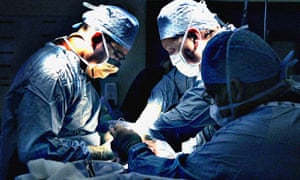

IVF and the NHS: the mother and father navigating fertility"s postcode lottery

25 Nisan 2014 Cuma

Couples searching for IVF "face unfair postcode lottery"


Couples in London and the South East are becoming denied IVF treatment supplied in other parts of the country since of a “geographical fortunate dip”, a Conservative MP claims.


Caroline Dinenage, MP for Gosport in Hampshire, explained a “desperate unfair postcode lottery dictates” who receives IVF on the NHS. “The geographical discrepancies are stark,” she stated. “A couple in the North East or East Anglia will find that they have entry to IVF in line with or above the Nationwide Institute for Wellness and Clinical Excellence guidance.


“But couples in the South East will find that they are only in a position to access one particular round of treatment method.”


Ms Dinenage wrote for the internet site Conservativehome on the subject. She claimed that guys and women who had been desperate to have a child were getting forced to go personal to achieve fertility treatment. She called for the treatment to be standardised.


“People’s odds of having a kid when they cannot conceive naturally should not be down to a geographical fortunate dip,” she stated. “Access to a sensible quantity of IVF therapy must be universally offered to individuals who want it.”


Couples searching for IVF "face unfair postcode lottery"

23 Nisan 2014 Çarşamba

Warning in excess of "unacceptable" lottery in care of the dying

Family members of cancer sufferers were much more very likely to come to feel their loved ones had acquired very good quality care, the right ache relief, and died in the place of their choosing, the studies have identified.


Prof Richards explained he was also concerned by important geographical variations in the care acquired by sufferers, irrespective of their condition.


“There are massive geographic variations, but it is not as straightforward as a north/south divide or London versus the rest,” he mentioned. “The south west comes out nicely but so does the north east… we want to realize these variations so we can boost the high quality of care.”


Prof Richards, who was national clinical director for cancer and end-of-daily life care prior to he was appointed to CQC last yr, said: “The level of variation is unacceptable we require to realize why this is, in buy to aid the places carrying out badly to do far better.”


Analysis suggests that people who invested their dying weeks in their very own properties or in hospices and in care residences, tended to have better experiences of care than those who invested much of their time in hospital.


“There was a big big difference in the good quality of care,” said Prof Richards. “In standard, we see those in hospices getting the best care, when it comes to people who died in care homes, or in their own property, its about neck and neck, but hospitals, I regret, are some way behind.”


Strategies for the nationwide evaluation cite recent research which have identified poor finish-of-existence care amongst dementia sufferers residing in care residences.


Last yr, a report by the thinktank Demos located that these with dementia, or other complicated conditions, suffered worse care than individuals with a diagnosis of cancer.


Prof Richards said that cancer care tended to be better at supplying “hospice-style” aid since charities and pioneers in the area had founded such efforts decades ago.


He said long term alterations to enhance the care of all dying sufferers were likely to need better use of patient data, with a lot more sharing of details, so that the appropriate help could be presented at all instances.


He mentioned ambulance crews need to be provided observe if individuals had said they did not want to be sent to hospital in their dying hrs.


Prof Richards explained the national evaluation, which is due to report by up coming March, will consider to identify any “barriers to care” affecting those suffering from distinct ailments, as well as people from different ethnic backgrounds, and people with mental well being situations or studying disabilities.


“This is not just about geographical variation,” he explained, “It’s about examining what the barriers to very good care are for all sorts of individuals with all sorts of backgrounds or diagnoses.”


A national survey of 50,000 bereaved relatives discovered that people in the south west rated the care provided most very, with these in Cornwall, Somerset, Devon and Dorset among the most constructive about the way their loved ones had been treated. Higher scores had been also located in the north east, with the lowest scores located in London, and the east of England, the 2012 research located.


Warning in excess of "unacceptable" lottery in care of the dying

28 Şubat 2014 Cuma

Britain"s dental cost lottery - and how to pay out much less in your postcode

Root canal treatment method in Stockport would expense £595, but just £85 in Swindon.


For a greater edition of this table, and other people, see the slideshow of pictures over. Supply: WhatClinic.com


The stark variations in expenses are very likely down to the “lack of transparency in dentistry” a spokesman for WhatClinic explained. “The market place is not effective, and like all inefficient markets, cost discrepancy is designed by a lack of expertise by the two the consumer and the companies offering the providers.


“The way factors stand, sufferers really don’t tend to shop all around. And that signifies there is quite little incentive for the practice owner to price competitively.”


Caelen King, CEO of WhatClinic, advises folks looking for personal dental treatment method to go on the web to check out the costs of dentists in their area, as the expenses can fluctuate substantially between clinics in the very same city or town. “Just paying a number of minutes on-line evaluating regional prices could conserve you a significant quantity of cash above the course of a year,” he mentioned.


Not only are there massive variations in accordance to the place in the Uk the dentist is, but the price of personal dental care versus NHS dental care differs substantially as nicely.


Unless of course you are eligible for free NHS dental care – individuals on positive aspects, pregnant girls, and people underneath-18 – then you have to spend for any dental remedy you get, even if it is “through the NHS”. Most dentists provide the two NHS and personal treatment to patients. Crucial dental treatment ought to usually be offered at NHS prices, if the practice does NHS work, but you will be asked to spend for non-essential operate privately. Teeth-whitening, for illustration, is only offered privately as it is cosmetic. Your dentist must always make clear if treatment will be charged at a private or NHS price.


Remedies underneath the NHS have managed charges. As of April 2013, the cost of NHS dental therapies were categorised into 3 bands. Band one particular is the cheapest, at £18, which covers mouth and teeth examination, diagnosis, and advice. Band two charges £49, and patients will get all of the procedures integrated in band one, plus remedies such as fillings, root canal work and tooth extraction. Band three expenses £214, and covers every little thing listed in the initial two bands, as nicely as crowns, dentures and bridges.


Consumers have prolonged been muddled about the big difference among NHS and private therapy and their respective costs. In 2012, the Office of Honest Trading launched an investigation into the £5.73bn Uk dental industry. It identified, among other factors, that individuals had insufficient information to make decisions about their option of dentist and remedies. In accordance to the report, 39pc of NHS dental patients who had been to the dentist in the prior two years said that there had been no leaflets or posters delivering details on NHS fees at their dentist. As a outcome, a lot of patients have been paying out much more to obtain private dental care.


The British Dental Overall health Basis estimates that 63pc of adults use NHS services for price reasons, although 19pc of Britons delay remedy simply because of the price, so cost is obviously an concern.


This is why thousands of individuals go abroad each year for less expensive private remedy. The dental travel operator Dentist Abroad estimates that more than 70,000 Britons a year do so, in search of greater prices.


The internet site promotes Budapest as the area to get low-cost dental care, with the price of root canal treatment method from £120, in contrast to £250 in the United kingdom, and veneers for £320 compared to £450.


But the cost savings can sour if, on return home, patients require even more perform or have to place things proper. In a survey by the British Dental Association (BDA), 29pc of Uk dentists reported possessing had to treat individuals for problems arising from treatment method abroad.


Dr John Milne of the BDA explained: “Patients taking into consideration dental treatment method overseas ought to check a dentist’s qualifications and encounter and regardless of whether or not they are insured if things go wrong, as regulation is not often as rigid as it is in the Uk.


“Complex, high-priced programs of therapy generally demand thorough planning and a number of follow-up visits. The patient should be conscious of the dangers and options to the treatment method sought after, and get suggestions on what they must do in the occasion of problems taking place when they return to the Uk.”


You can uncover out about wellness regulators and specialist bodies in other nations by visiting healthregulation.org.


The Standard Dental Council says: “We suggest you do as a lot research as you can and find out the details before you go to make sure your treatment method abroad meets your expectations.”


Britain"s dental cost lottery - and how to pay out much less in your postcode

18 Şubat 2014 Salı

Examine your ambulance service: postcode lottery "costs two,500 lives a year"

The table below shows how every ambulance service is doing, rating the survival rates from worst to greatest:


Mr Thayne stated: “It truly is completely frightening and entirely needless. We have an NHS which should be as good in any element of the country and we should not have a postcode lottery in terms of this quite acute issue, the cardiac arrest.


“I estimate that we ought to be saving twice as many lives a year, or about 2,500 men and women.”


He said more men and women would survive if much more crews arrived in time or have been equipped to carry out resuscitations.


Variables affecting failure could incorporate slow response instances, diverse health-related procedures at the scene, and the availability of defibrillators.


Mr Thayne also accused the Government of publishing “misleading” figures on ambulance performance, especially with regard to the survival of cardiac arrest patients.


At present, statistics show survival charges but not the amount of attempted resuscitations.


Mr Thayne mentioned: “When these figures first came out in the middle of 2011/12, when I saw people figures, I immediately wrote to the NHS Statistical Workplace and explained, ‘This is not the way this ought to be presented it is misleading.’ And they ignored my remarks.”


The figures recommend South Western Ambulance Services is trying to resuscitate nearly three-and-a-half instances as a lot of cardiac arrest individuals as the South Central Ambulance Service NHS Basis Believe in.


Even so, the Government statistics demonstrate the South Central cardiac arrest survival rate as 41%, in contrast with 25% for South Western.


“It strongly suggests to me that the South Central crews are not receiving to people in enough time to try resuscitation,” explained Mr Thayne.


“Yet their survival costs appear significantly far better than these of their counterparts in the South West who are trying a lot of far more resuscitations.”


Mr Thayne informed the BBC poorer performers were getting substantial survival costs in element since they have been trying to resuscitate fewer folks.


The figures present the South Western crews are trying resuscitation on 848 folks per million head of population, compared with 243 in South Central.


Professor Jonathan Benger, national clinical director of NHS England, said: “There has been variation amongst ambulance trusts considering that assortment of ambulance clinical good quality indicators started out in April 2011.


“The causes for variation are multifactorial and meticulously analysed by ambulance trusts, as nicely as in published investigation. Variation may come up from distinctions in the interpretation of the definitions and techniques used for evaluation, the good quality of information collection, verification and returns.


“Regional demographics and person patient variables will also lead to variation in outcomes, as will the treatment options offered in hospital. It would be entirely incorrect to suggest that all variation can be attributed to one particular single element.”


A spokesman for the South Central Ambulance Services explained: “This data suggests that we may possibly have fewer cardiac arrests in the South Central location, and regional variation in cardiac arrests has been recognised previously. When we do resuscitate, a substantial quantity of our sufferers survive.”


Examine your ambulance service: postcode lottery "costs two,500 lives a year"

21 Ocak 2014 Salı

Regulator requirements to act to end endemic postcode lottery


Telegraph readers will be all also acquainted with the struggles faced by cancer patients in obtaining Great to approve the medicines they need for use on the NHS. But the worrying truth is that, even when medicines are accredited, there are huge variations in the extent to which they are utilised.


Offered how high (also high) the hurdle is for therapies to be authorized by Wonderful, it is important that – when they are accredited – they are utilised. Nevertheless these most current figures demonstrate that, for some cancer drugs, usage is drastically under that expected. They help an evaluation undertaken by the Rarer Cancers Foundation that discovered a fortyfold variation in utilization of Nice-accredited cancer medicines.


We are frequently told that Great advice is the ‘gold standard’. If this is the situation, then addressing the variation in its implementation must be a priority. The Government has placed a wonderful deal of emphasis on its new inspection process. Giving the Care Good quality Commission the teeth to tackle inequalities in hospital good quality has rightly been a private priority of the Secretary of State. A important test of these new powers ought to be investigating variations in the usage of Good-approved medicines. This ought to be a central element of the inspection process for every single hospital. The CQC ought to publish its findings and require hospitals to act on them.


If the justification for making use of these medicines is so sturdy, then why is this disparity occurring? The reasons are complex. It is feasible that Wonderful has got its sums incorrect, overestimating the variety of individuals who could benefit. Some sufferers might pick not to have treatment method. Some medical doctors might be deciding not to supply treatment method to all patients. We know, for example, that older individuals are significantly less most likely to get cancer medication and that some hospitals are greater end users of new cancer medicines than other people.


There may be legitimate reasons for variations in usage but it is up to the NHS to clarify them to patients. Great wants to be accountable for the accuracy of its projections. Hospitals need to clarify their overall performance in producing accessible the greatest remedies. And medical professionals require to assess their own prescribing efficiency and account for the outcomes they obtain.


Great was established to end the postcode lottery and access to Nice-accredited medication is a basic right below the NHS Constitution. Despite these safeguards the NHS has for too long hidden behind the excuse that the causes for variations in prescribing are complex. The time has come to cease raising much more inquiries and commence delivering some answers.


Regulator requirements to act to end endemic postcode lottery

Lottery of NHS medicines punishes the dying

When the Nationwide Institute for Overall health and Care Excellence (Wonderful) was produced by the final Labour government, officials promised to end the variation in medical therapy across the nation and make sure that if a drug was discovered to be effective, individuals need to not have to fight to get it.


Nevertheless, the findings display that 1000′s of patients struggling from cancer, motor neurone condition and an eye situation which is the most widespread lead to of blindness, are not getting offered the ideal medicine.


The analysis examined ten frequent treatments which have been backed by Nice, that means they ought to be offered to all patients who call for them.


It discovered that in 3 of the groups, there was a gulf among the quantity of sufferers who need to have been offered the medicines and the numbers who have been in fact prescribed them.


The worst findings have been for kidney cancer, which affects much more than 8,000 patients a year, and for a type of motor neurone ailment which has an effect on virtually three,000 people.


One particular in three individuals who could have benefited from sunitinib (which has the brand identify Sutent) and pazopanib (brand name Votrient), daily life-extending medication for kidney cancer, or from riluzole (brand title Rilutek), the only treatment method for motor neurone ailment, did not receive them.


More than 12,000 patients had been denied injections for wet age-connected macular degeneration (AMD), the most frequent lead to of vision reduction and blindness.


Great tends to make rulings on whether or not drugs are successful and great worth, but has been criticised for refusing to help drugs in the encounter of proof that they can lengthen lives by months or even years, and for delaying selections.


But the findings suggest that even when Wonderful says NHS bodies have to fund the drugs, thousands of individuals are even now denied medicine.


Charities explained as well a lot of terminally-unwell sufferers ended up fighting bureaucratic procedures in an try to secure NHS funding for treatment method.


In other instances, they have been in no way advised about medication such as Sutent, which can double existence expectancy with kidney cancer to 28 months, and was approved by Great much more than 4 years ago.


Andrew Wilson, the chief executive of the Rarer Cancers Basis, explained individuals have been struggling from “an endemic postcode lottery in entry to Great-accredited medicines”.


“It is extremely worrying that the NHS does not seem to be creating offered cancer treatments to all individuals who could advantage, even when the drug is approved by Wonderful,” he mentioned.


Nick Turkentine, the chief working officer of the James Whale Fund for Kidney Cancer, mentioned the failure to follow national advice was “a disaster” for individuals with aggressive cancers. He said: “Sutent was one of the 1st drugs to be accepted for kidney cancer — it is actually disastrous that sufferers are nevertheless obtaining to battle for a drug which we know can give several additional years of lifestyle.”


Duleep Allirajah, the head of policy at Macmillan Cancer Help, explained: “Patients do not pick which cancer they get. Every patient deserves equal accessibility to remedy no matter who they are, the place they are from, or which cancer they have.”


A spokesman for Wonderful stated the organisation hoped the report would support make certain that advice was followed much more broadly, and that neighborhood NHS groups required to be capable to justify variations from it.


A spokesman for the Department of Wellness mentioned: “Patients have a correct to drugs and therapies that have been approved by Great and we assume the NHS to provide them if they are necessary.


“That is why the chief executive of the NHS has written to the local NHS requiring them to publish which NHS organisations are funding and employing medication and therapies approved by Great, and which are not.”


Drugs whose use was decrease than expected:


• Riluzole (Rilutek) – the only treatment method for motor neurone illness – 35 per cent of individuals who would have been expected to acquire the medicines did not.


• Sunitnib (Sutent) and pazopanib (Votrient) for kidney cancer – 32 per cent of sufferers who would have been anticipated to acquire the drugs did not.


• Ranibizumab (Lucentis) – the most powerful treatment for moist age-connected macular degeneration, which can result in blindness – 5 per cent of patients who would have been anticipated to receive the medicines did not.


Supply: Use of NHS appraised medicines in the NHS in England – 2012, Overall health and Social Care Data Centre.


Lottery of NHS medicines punishes the dying