Secure etiketine sahip kayıtlar gösteriliyor. Tüm kayıtları göster

14 Şubat 2017 Salı

NHS needs £9.5bn upfront to secure its future, says BMA

Modernising and securing the future of the health service in England would cost at least £9.5bn in upfront spending, money that the NHS does not have, the British Medical Association has said.


Health managers in 44 areas have been charged with creating sustainability and transformation plans (STPs) to help the NHS repair its crumbling finances and meet clinical and organisation challenges.


But such an overhaul would need significant capital investment, according to the BMA. The doctors’ union sent freedom of information requests to all the areas asking for their estimates to implement the STPs and 37 replied, with the figures quoted in responses totalling £9.53bn.


Dr Mark Porter, the BMA’s chief, said: “These figures are especially concerning given that everyone can see a huge crisis unfolding within our NHS, with record numbers of trusts and GP practices raising the alarm to say they already can’t cope.


“The NHS is at breaking point and the STP process could have offered a chance to deal with some of the problems that the NHS is facing, like unnecessary competition, expensive fragmentation and buildings and equipment often unfit for purpose. But there is clearly nowhere near the funding required to carry out these plans.”


More than half of the STP areas have told NHS England they would each need more than £100m of upfront funding to make changes. Six – Cambridgeshire and Peterborough, Cheshire and Merseyside, Greater Manchester, North Central London, North East London and West Yorkshire – have quoted capital needs of £500m or more.


The BMA says that NHS leaders are unlikely to have anything near the cash required to deliver the projects, with budgets already under severe pressure. The annual capital allocation of £4.8bn granted to the Department of Health from 2016/17 to 2020/21 is being used in part to cover large hospital deficits, it says.


At a hearing last month of the public accounts committee – which scrutinises government expenditure, the NHS Providers chief executive, Chris Hopson, said a quarter of the capital budget (£1.2bn) had been taken “to prop up revenue”, and the health department’s finance director, David Williams, said raids on the capital budget were likely to continue.


The BMA says there will be other demands on the budget, pointing to an NHS Digital report published last year which said that more than £2bn was needed to pay for significant or high-risk outstanding maintenance needs.


Although the NHS says the STPs are vital to the future of the service, they have proved highly controversial as they are likely to lead to the axing of thousands of hospital beds, A&E units being downgraded or closed and women facing long trips to give birth.


Porter said: “These plans are fast becoming completely unworkable and have instead revealed a health service that is unsustainable without urgent further investment, and with little capacity to ‘transform’ in any meaningful way other than by reducing the provision of services on a drastic scale.”


Tom Sandford, the Royal College of Nursing director of England, said: “We have always supported the aims of the plans – preventing ill health, joining up services, delivering care closer to home.


“But proper funding – and consultation – is key to making sure STPs solve instead of exacerbate the problems of England’s health and care system.”


An NHS England spokeswoman said: “Rather than just commenting from the sidelines, local health and care leaders and clinicians are coming together to actually try and solve some deep-seated problems by identifying practical ways to improve services.


“Yes, there are well known pressures and constraints facing the NHS, but for patients’ sake we should obviously all try and make the best of the situation, rather than just stand to one side and say ‘well I wouldn’t start from here’.”


The £9.5bn cost was revealed as an analysis by the i newspaper of the 44 STPs suggested that they will lead to the closure of 19 hospitals, including five acute ones.


Areas where acute hospitals are under threat include Leicestershire and south-west London. The STPs have previously been criticised by the BMA as a stealthy way of cutting NHS services, dressed up as modernisation.


The i investigation also found that nearly 3,000 jobs could be lost under proposals to create a “smaller, more agile” workforce.


Other mooted changes under the plans include cutting prescription costs, rationing care and operations and slashing costs through use of technology, for example, doctors using video links to assess and discharge patients and even “virtual doctors” in an attempt to boost out-of-hospital care.


NHS needs £9.5bn upfront to secure its future, says BMA

23 Aralık 2016 Cuma

Better than prison: life inside the UK"s secure hospitals

One day in early August, 36-year-old Gavin bumped into an old friend outside That’s Entertainment music and DVD shop in Preston market.


“He pulled me to one side, but I didn’t recognise him,” Gavin (a pseudonym) says when we meet a week later. “He was like, ‘How you doing? I’m just going to get some stuff, make some money.’ He’s opened his bag and it’s full of razor blades. He’s selling razor blades for a tenner a pop, all of that business.”


Gavin says that he and the man were former “grafting partners”: commercial burglars and thieves, working around Lancashire. But in the six years since they had last seen one another, their lives had taken divergent paths.


“He’s ended up on the gear, shoplifting,” Gavin says. “I was like, ‘See you later mate.’ I felt guilty, tight, leaving him, but I thought: ‘What would happen if I’m with him and he gets pulled over and I’m in the hospital?’ I’d be in a lot of trouble, wouldn’t I? I gave him a couple of quid to buy himself a couple of pies, a cup of tea, and he wandered off … I sat there and thought: ‘If I’d not been in here, it’d be me doing that.’”


Guild Lodge hospital in Lancashire


Guild Lodge hospital in Lancashire

Gavin relates the story inside a meeting room at Guild Lodge hospital, in the Lancashire village of Whittingham, where he has lived for the past three years. Guild Lodge is one of 60 medium-secure mental health hospitals in England and Wales that house people deemed to be a danger either to themselves or others on account of their mental illness. Most of the 149 patients have committed offences while mentally ill, or have been diagnosed with a mental illness while already in prison. Some have been in higher-security institutions; almost all are being held under the terms of the Mental Health Act.


Gavin, who has schizophrenia, describes a life of substance abuse and crime, sometimes with violence, that took him in and out of prison and secure care settings for the past 18 years – his entire adult life. He was most recently admitted to a medium-secure ward at Guild Lodge in 2013, and is now in low-secure, from which he is permitted release to go into town, as he waits first for a tribunal hearing that could clear him for discharge and then, crucially, for a bed in supported accommodation.


“It might not work if I was just kicked out like I was in the prison system. I would have nowhere to go,” Gavin says. “I’d be on the street, in a hostel, back in crime or something. When I’ve been released from prison, it’s been a few weeks at the most. I’ve been straight back in for something else.”


From 1873 until 1995, the leafy park that surrounds Guild Lodge’s complex of modern buildings concealed Whittingham Hospital, which was Britain’s largest psychiatric institution and a centrepiece of the notorious Victorian asylum system. But Guild Lodge, which opened in 1999, is a striking representation of the advancements in secure-care provision across the UK – particularly at a security level one step below Broadmoor, Ashworth and Rampton, England’s three high-secure forensic psychiatric services.


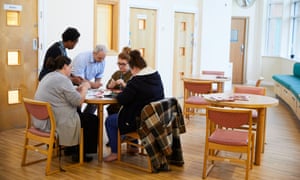
Staff helping a service user (right) during a crafts session at Guild Lodge.


Staff helping a service user (right) during a crafts session at Guild Lodge. Photograph: Christopher Thomond for the Guardian

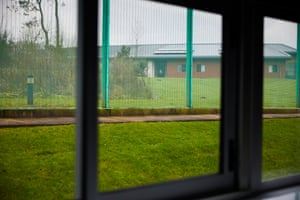
From the outside, the pale bricks and long windows of the medium-secure area of Guild Lodge could pass for a leisure centre. Even the high mesh fence that surrounds it could be for tennis courts or a five-a-side football pitch. The low-secure area that sprawls outside looks and feels like a business park. There is little to distinguish buildings containing administration offices and meeting rooms from the wards in which patients sleep.


Service users (the preferred term for patient) considered low-risk are free to wander through the adjacent woodland, around an Anglican church, a cemetery and even a cricket pitch. One service user, who told me he spends much of his days watching wildlife and listening to music on a wind-up radio, insisted that a relative of local hero Andrew Flintoff was the groundsman.


As with all hospitals, the aim is that patients will one day be discharged from Guild Lodge with their illnesses under control. It is recovery-focused rather than punitive, and although the Ministry of Justice retains a controlling interest in the onward progression of many patients (some will go back to prison), funding for medium-secure hospitals comes entirely from NHS England’s special commissioning budget.


The unique challenge is to balance care with custody; to maintain the public’s security while effectively treating patients’ illnesses. For thousands of people like Gavin, who is genial, articulate and rational when his schizophrenia is under control, secure care units can prove the difference between what might be considered a worthwhile life, and one wasted as hostage to an unpredictable and often dangerous illness.


Such endeavours are not cheap. According to figures from NHS England, expenditure on medium- and high-secure mental health services during the past year was £1.23bn, which accounts for 74% of the special commissioning budget and is one fifth of all public spending on adult mental health care. Accurate figures on a patient-by-patient basis are difficult to obtain, but conservative estimates put the cost of a bed and care for a year in a medium-secure hospital at £150,000, nearly five times as much as a male inmate in a category B prison.


A view of one of the security fences at Guild Lodge NHS secure mental health unit in Lancashire. Christopher Thomond for The Guardian.


A view of one of the security fences at Guild Lodge. Photograph: Christopher Thomond for the Guardian

Partly because of their cost, forensic psychiatry hospitals are under almost constant review. Medium-secure services in particular have remained a focal point for mental health campaigners, who say patients are often too readily admitted to an unnecessarily high level of security and then stay too long. The most recent government taskforce report on mental health – titled Five Year Forward View for Mental Health, released in February – made fresh commitments to “prevent avoidable admissions”, support recovery in the “least restrictive setting” and “address existing fragmented pathways in secure care”. In essence, it emphasises a need to get patients hastily into secure care when mental illness is the root cause of their offending, but also to discharge them quickly and safely, with adequate continued care, to get on with their lives.


Yet there remain frequent claims that the Ministry of Justice is overly cautious in approving discharge from secure hospitals, and that there is inadequate onward housing provision for patients reintegrating into communities. In general, treatment for mental illness has progressed significantly since the days of the asylums, but age-old misconceptions persist about psychiatric institutions. Patients still suffer familiar prejudice on account of their illness, compounded by their detention in hospital.


“It’s very, very risk-averse stuff,” says Jenny Shaw, the recently retired clinical director for specialist services at Lancashire Care Foundation Trust, which oversees Guild Lodge. “Even having conversations with some of my friends, who should know better, [I hear] ‘How can you ever let people who have committed those kinds of offences out?’ It’s a complete lack of understanding of what we’re trying to do. I think there’s still a massive stigma around mental health, and people with mental health problems and who are offenders – it’s a massive double whammy.”


I visited Guild Lodge twice earlier this year, touring the medium-secure unit and talking to some service users about treatment programmes and the challenges they face. Journalists are rarely permitted inside secure care environments: service users are often vulnerable and their recovery programmes easily undermined by external distractions. Administrators are also wary of the sensationalist reporting mental health hospitals have been known to attract, while victims and their families stand to gain little by repeated exposure to the perpetrators of the crimes against them. All names have therefore been changed and details of offences omitted.


Staff in the woodwork room at Tarnbrook unit at Guild Lodge NHS secure mental health unit in Lancashire.


Staff in the woodwork room at Guild Lodge. Photograph: Christopher Thomond for the Guardian

In general, people who have committed offences as a result of a mental illness tend to be blighted by extreme guilt for their actions. Many people hear voices or suffer delusions that have encouraged their offences. Hospitals house people suffering from a vast range of illnesses – schizophrenia, psychosis, acute depression, bipolar disorder – from hugely varying backgrounds, many of whom have suffered extreme trauma. The propensity to self-harm is also high.


The area “over the fence” – as one service user described the medium-secure part of the hospital – has the atmosphere of a vocational college, albeit one in which most doors are permanently locked. Staff and visitors pass through an air-lock security door, past a small office where patients can meet guests, and then into a courtyard, with various separate buildings situated either side of an access road and areas of green lawns. After appropriate risk assessment, service users are allowed access to an art room and wood and metal-working workshops, or to learn gardening skills in an on-site greenhouse and nursery. There is also a music room, and a service-user band regularly plays gigs both in and outside the hospital.


My visit to the medium-secure unit coincided with lunch, when the common areas were almost entirely deserted. Patients were in gender-specific wards, where they sleep in single-occupancy rooms, with washing facilities, and are locked in overnight. Although neither staff nor service users denied that tempers can flare, and that patients’ moods and illnesses can often raise tensions inside the hospital, I saw no threatening behaviour. Patients at different stages of recovery demand varying levels of supervision, but I met service users for interview in the low-secure area to which they brought themselves and left unescorted.


Many patients in secure care have co-morbidity issues – drug or alcohol misuse, or personality disorders – and programmes work to tackle these, as well as to improve patients’ physical health. Smoking is entirely prohibited inside Guild Lodge, and service users are encouraged to use an on-site gym and sports hall. Weight gain remains one of the most damaging side-effects of many psychotropic medications, leading both to physical ailments and reduced self-esteem.


The horticulture polytunnel at Guild Lodge NHS secure mental health unit in Lancashire


The horticulture polytunnel at Guild Lodge. Photograph: Christopher Thomond for the Guardian

Guild Lodge is also relatively unusual in that its administrators have won a battle to permit computer use for service users. Access to technology brings out the most risk-averse tendencies of lawmakers, who fear that vulnerable patients may be drawn to the darkest fringes of the internet. (Mobile phones are also strictly forbidden.) But a lack of even rudimentary IT skills may be damaging to a patient’s prospects of reintegrating to the job market on release. Service users can suffer an extreme sense of isolation, as though they are separate from the community in which they hope to reintegrate. Any further barriers, such as a lack of basic skills, only compound anxiety issues surrounding discharge.


One low-secure service user named Janet, who was not at Guild Lodge and who met me in a coffee shop in London, described a scenario where she was required to go online to arrange her own onward housing in order to be discharged from a hospital, but was not permitted access to the internet before she left.


“In the five years I’ve been in hospital, the world has moved a lot,” Janet says. “One of the people I live with has been in hospital for 16 years. She is about to be discharged and she has got no concept of how to use the internet. None at all.”


She adds: “No matter how confident you are as an individual, your confidence just plummets. Even the most arrogant individuals in hospital – it’s quite interesting watching them go out into the community, all that arrogance and bravado seems to quite quickly crumble. It’s fearful. We have a bridge at the front of the hospital. It’s called ‘life beyond the bridge’. Patients fear crossing that bridge.”


In recent years, studies into the effectiveness of treatments for mental illness, including schizophrenia, have centred on involving patients themselves in planning their own recovery. Research has shown that patients respond better to treatment when they are engaged in it and given more control over the direction of their own care.


In the secure environment, attempts to empower patients in this way can be seen to run counter to the demands of security, but initiatives are now in place that focus on service-user involvement and are aimed at hastening recovery and expediting discharge. “These things are related,” says Ian Callaghan, a former service user, with experience of both low- and medium-secure hospitals, who now works for Rethink Mental Illness. “As soon as a person’s mental health is stabilised, things should change. Stabilising mental health and managing risk go hand-in-hand.”


Callaghan is the national service user lead for a Department of Health initiative named My Shared Pathway – a programme followed throughout a patient’s stay in hospital. My Shared Pathway is tailored to an individual’s specific needs and defines closely their shared relationships with the clinicians, support workers, other service users and eventually the community they hope to return to. Meanwhile, a scheme launched by Rethink Mental Illness’ Innovation Network is aiming to involve service users in planning their futures in a far more detailed way than has been the norm.


These initiatives aren’t to everyone’s taste. One 57-year-old service user, who had spent many years in Ashworth high-secure hospital before transferring to Guild Lodge seven years ago, said: “They have meetings about when to organise meetings.” The same service user was also not a supporter of the smoking prohibition, and said fellow patients squirrelled cigarettes just outside the fence.


A crafts session at Guild Lodge NHS secure mental health unit in Lancashire.


A crafts session at Guild Lodge. Photograph: Christopher Thomond for the Guardian

Nevertheless, initial feedback from staff and patients has mainly been good, and further trials are also currently under way to enhance the role of peer-support workers in secure hospitals. The idea is that experienced service users can volunteer their support and advice to other patients, building on informal relationships on some wards and broadening networks of trusted individuals. Service users are known to respond well to people who have been through the secure-care system and have successfully returned to the community. Janet says: “It does sometimes take somebody who has recovered to let you see the light a little bit.”


Service users and staff both told me that it can be detrimental to recovery if, after being cleared for discharge by a clinician, a patient is denied release either by the Ministry of Justice, or by a lack of onward accommodation provision. After the taskforce recommendations, NHS England is trialling a reorganisation of budgets to allow local administrators to manage pathways out of hospital and into community mental health care teams. The aim is that medium-secure services be used only to address the most pressing clinical needs, rather than by patients for whom there is simply nowhere else to go.


Gavin says that the severity of his illness did not allow him to understand the benefit of his treatment during previous admissions to secure hospital. He returned to the prison system and stopped taking medication, leading to a deterioration in his condition. (Prisoners can reject medication, but some sections of the Mental Health Act, under which service users will be in hospital, allow for doctors to administer it without consent.) Eventually, after returning again to secure care, a course of therapy helped him manage his illness and turn over a new leaf.


“You get to a certain point where [you think], ‘What’s been going on? What have I been doing with my life?’” he says. “I just want to leave now. I don’t smoke anymore, I’ve not done drugs, I’ve not drunk alcohol and I don’t intend to. I don’t want to go back to that life.”


Better than prison: life inside the UK"s secure hospitals

26 Mayıs 2014 Pazartesi

Seaside holidays: Of course it is secure to go back in the water

The barrel species aside, jellyfish are considered accountable for far more stings than any other marine animal in Britain. Stinging species commonly identified here consist of the striking compass jellyfish, so named due to the fact of its V-shaped markings the substantial lion’s mane, which, located on our a lot more northerly shores, has “very strong toxins and is best avoided”, according to Harrington and the minuscule mauve stinger, which has brought on the wholesale closure of some Mediterranean beaches.


Jellyfish stings can be painful but rarely pose a serious risk, says Harrington, who adds that they shouldn’t prevent individuals going into the sea (the NHS guidance is to avoid hugely infested waters). “Our suggestions is in no way to touch them, no matter whether in the sea or stranded on the seashore. They are usually really visible.”


Stings are very best treated with seawater – the salt is believed to deactivate the tiny darts, named nematocysts, inside cells that “fire off” the venom. Peeing on a sting could have worked for Monica from Friends (Chandler did the deed when she was stung) but it is not recommended.


Some scientists consider becoming overrun by jellyfish is a signal of sea pollution, other individuals say it is portion of a natural cycle. “Jellyfish have always been with us,” says Harrington. “Studies above the last 7 or eight many years propose the numbers have risen, but it’s as well early to say for particular.”


Other marine life


The lesser weever fish lies buried in sandy shallows and has sharp spines laced with venom along its dorsal fin stepping on a single can consequence in excruciating discomfort and, sometimes, allergic shock.


The MCS advises sporting jelly shoes in the water – and shuffling your feet whilst strolling by way of the sand to scare away any waiting weevers. If stung, the standard treatment administered by lifeguards is to immerse the foot in water “as hot as you can bear” to deactivate the toxin.


Other stinging species contain stingrays, sea urchins and the Portuguese guy o’ war (not a jellyfish but a floating colony of small creatures known as hydrozoans), which visits our waters only seldom, and usually in south-west Cornwall. Most stings are not severe and can be taken care of with simple initial help (such as ice packs) and tweezers, if any spines are in the skin. Seek out healthcare aid if signs are severe.


Rocks and pools


The hazards posed by marine life are as nothing at all compared to the risks of falls and slips on the rocks. “In some regions where seawater meets freshwater, you get an algae growing on rocks and slipways, which provides them this very slippery surface – like ice,” says Andy Horton, director of the British Marine Life Study Society. “People who dwell by the sea know about this but most other folks do not.


“Kids enjoy rock climbing but dad and mom should be watchful,” he adds.


Sewage


Sea pollution in Porthleven, Cornwall (Alamy)


Sewage straight discharged into the sea can typically lead to infections of the ear, nose and throat, and gastroenteritis, whilst in a case reported in the Isle of Guy last week, a single victim mentioned he had to get 6 months off perform soon after harm to the intestines brought on by coming into get in touch with with raw sewage. Laura Foster, pollution expert at the MCS, says the last 10 to twenty years have noticed large improvements in the quality of British bathing water, with the newest survey designating 73 per cent of our beaches as “excellent”. However, stricter requirements are due to exchange the recent ones, primarily based on an EU bathing water directive from 1976, subsequent 12 months, and might see some beaches downgraded.


To minimise the threat of swimming in polluted water, select a Blue Flag beach or consult the MCS Good Beach Manual, available on the internet (www.mcsuk.org).


Quick-term pollution soon after hefty rain, triggered by run-offs from streets and farmland, as properly as stormwater overflows, is even now a issue in many regions. “As a basic rule we advise towards going in the sea for a excellent 24 hrs soon after hefty rainfall,” says Harrington.


Troubles in water


This is the most severe chance posed by the sea, with seven,000 folks acquiring into difficulty yearly. Dickon Berriman, a lifeguard manager on the Cornish coast, says the most widespread cause of difficulties are rip currents – robust bodies of water working out to sea that sweep swimmers out beyond their depth.


“You can typically see a dark ribbon of water indicating where rip currents are, or discoloured water where the sand is churned up,” he says. “The best way to keep secure is to swim on a lifeguarded beach between the flags indicated, obey security indications and by no means swim alone. If you get into difficulties, remain calm, stick your hand in the air and shout for help.”


It is also crucial to be conscious of the tide, which can come in surprisingly speedily. The site of the Royal Nationwide Lifeboat Institution (rnli.org) also has security suggestions on waves, inflatables, surfing and bodyboarding. Of tombstoning (jumping in feet-first from a height), Berriman says: “It is not new children have often carried out it. But it’s hazardous simply because you do not know what’s beneath the surface or if the water is shallow. If you are interested do it securely with an organised business.”


He adds that final winter’s storms will have modified the make-up of several seashores in the South West, which can catch out the unwary. “Some sand dunes have been washed away, leaving great sand cliffs which are at danger of collapsing, so dad and mom must hold their kids away.”


Also considerably sun


A survey final 12 months showed that when the sun does come out in Britain, we are less likely to apply sunscreen than when abroad – and beachgoers could be much more vulnerable than most to the sun’s dangerous rays. “Shade can be hard to locate on the seaside, individuals are keen to get their garments off, and sunscreen washes off in the sea,” says Greg Jones from Cancer Research Uk.


On the seashore or off, the advice is the identical: commit time in the shade or cover up among 11am and 3pm, and reapply sunscreen (with a minimum factor 15) often.


Insect bites and stings


If a wasp is interested in your ice cream, really don’t try out to swat it – move calmly out of its way. Wasps and other stinging insects like bright colors, so dress in neutrals and keep away from using robust scents. Insect repellent can avert bites from mosquitoes and horseflies, which are found in some coastal places. If you do get stung or bitten, ice packs and painkillers can assist a bee sting demands getting rid of. Wasp stings lead to much more allergic reactions than individuals of any other insect and might require immediate medical aid.


Sharks


Very unlikely: ‘Jaws’ (Moviestore/Rex)


Overlook the Jaws films: few of the 30-odd species of shark identified off Britain are interested in humans, with only two unprovoked shark attacks recorded in England since 1847. Nevertheless, adds Ali Hood from the Shark Believe in, if you spot a single, “these are large, powerful animals and you ought to hold a respectful distance”.


But really do not be put off…


Richard Harrington says that, regardless of the hazards, British beaches are amongst the most lovely in the globe. “We advise that as several folks as attainable make use of our splendid coastline.”


Seaside holidays: Of course it is secure to go back in the water

27 Nisan 2014 Pazar

Hospitals in England failing to offer secure care have tripled, says Labour

Shadow health secretary Andy Burnham

Shadow health secretary Andy Burnham mentioned the figures were indisputable proof that the NHS was ‘heading critically downhill on this government’s watch’. Photograph: David Gadd/Allstar/Sportsphoto Ltd


Labour has released figures showing a threefold boost in the variety of hospitals in England criticised by the Care Quality Commission for not supplying safe care.


Labour mentioned that in the 12 months to March 2014 the CQC recognized 45 hospitals failing on the measure of delivering “secure and appropriate care”. Above the exact same period in the prior year only sixteen hospitals failed on this measure.


People 45 hospitals represented close to 20% of those inspected, Labour explained.


The party also explained that the number of hospitals criticised by the CQC for not possessing satisfactory numbers of employees had also elevated, from 14 to 32, in excess of the exact same period.


Andy Burnham, the shadow health secretary, mentioned the figures had been indisputable evidence that the NHS was “heading seriously downhill on this government’s observe”.


He also said: “What we are now seeing are the consequences of David Cameron’s disastrous selection to destabilise he NHS with an undesirable and unnecessary reorganisation.”


But the wellness secretary Jeremy Hunt stated that the figures were indicative of the government’s choice to make hospital inspections more rigorous: “Labour made the disastrous choice to abolish expert led inspections which we have now reversed. Inevitably when you impose a much more rigorous inspection regime you uncover far more difficulties but it is in the best interests of patients to acknowledge exactly where there is poor care alternatively of trying to cover it up.”


The row erupted after Hunt used an interview with the BBC’s Andrew Marr display to all but confirm that a potential Conservative government would proceed to ringfence NHS spending.


Asked if the policy of NHS ringfencing would proceed beyond 2015, Hunt stated: “We have currently shown our instincts on that, if I can put it that way, by continuing to protect the NHS spending budget into the following monetary year [2015-sixteen].


“I consider David Cameron and George Osborne are passionate about creating confident the NHS continues to deliver for the British men and women and they comprehend the pressures it is underneath.”


On the programme, Hunt also announced that the government was setting a central procurement checklist for the NHS to allow hospitals to make financial savings via the bulk buy of ordinary things of tools.


“Hospitals spend also a lot for some of the simple goods and services. That drives them mad,” Hunt said.


At the moment hospitals negotiate costs individually for products they require. Underneath the new technique, the NHS will negotiate centrally with suppliers.


The Department for Overall health estimates the move will conserve the NHS £500m by the end of 2015-6. It is component of a wider try to safe procurement financial savings in the NHS which will also see the appointment of a “procurement tsar”.


Hunt gave the example of paying on sterile surgical gloves and said hospitals could conserve up to 38% on the price they paid for the item if they switched from the industry leader to an alternative supplier.


Hospitals in England failing to offer secure care have tripled, says Labour

26 Mart 2014 Çarşamba

Fluoride: Just when you thought it was secure to drink the water...

Yesterday, Public Health England (PHE) published a report purporting to demonstrate that fluoridation not only reduces tooth decay but also appears to have other useful results on overall health. In fluoridated regions, for instance, 45 per cent fewer youngsters aged a single to 4 were admitted to hospital. “These findings highlight the important contribution that water fluoridation tends to make,” stated PHE. Analysts also looked for indicators of harm, but discovered none – anti-fluoridation campaigners have advised that water fluoridation can improve the chance of some cancers, hip fractures and Down’s syndrome. The report said there was no proof of these results being much more prevalent in fluoridated places.


The upshot, said PHE, was that councils – which now have the last say, following the abolition of the Strategic Wellness Authorities – must seek advice from local men and women about introducing what would be the very first new fluoridation programmes for practically thirty many years.


Calcium fluoride is present naturally in nearly all water supplies, but most amounts fall effectively short of the optimum for dental wellness, which is a single portion per million. Proponents sustain that because fluoride appears to minimize the incidence of dental caries and there is no evidence that it is hazardous, why should anyone object to its becoming place in the water? Soon after all, we add chlorine in order to make it drinkable. What’s the difference?


Opponents, nonetheless, argue that what is added to water is sodium fluoride – which in big doses is hugely poisonous. The hazards of performing so, they say, are unknown, the science is questionable, and individuals studies that have been carried out have been equivocal in their conclusions about security. There is also a libertarian objection that inquiries whether any kind of medicine, useful or otherwise, must be extra to the water provide.


It is on these grounds that most European countries have rejected mass water fluoridation. Nevertheless, in countries exactly where it is widespread, such as the United States – in which 70 per cent of the population drinks fluoridated water – Australia and New Zealand, dental health is far superior to this country’s. On typical it final results in two fewer decayed, missing or filled teeth in every kid who drinks it. Nevertheless fluoridation remains controversial even in these nations that have embraced it. In America, it is not just extra to the water but to little one meals, infant juices and numerous other drinks. Campaigners in New York this week claimed that this was top to a better incidence of tooth discolouration recognized as dental fluorosis.


Then again, there appears little doubt that total dental standards are greater across the Atlantic than here. Moreover, as the PHE report has discovered, it is also much better in those parts of this country in which the water is taken care of compared with those in which it is not. Youngsters in Manchester, the place water is not fluoridated, are twice as very likely to have tooth decay as those in Birmingham, the place it is additional.


But the science is not as clear cut as it would seem. About 10 many years in the past, a assessment of the evidence by researchers at York University found that tooth decay in kids across Europe had fallen, irrespective of whether or not there was fluoride in the water. The countries showing the greatest lessen – Sweden, Netherlands, Finland and Denmark – do not fluoridate their supplies. “This trend has occurred regardless of the concentration of fluoride in water or the use of fluoridated salt, and it possibly displays use of fluoridated toothpastes and other elements, which includes perhaps nutrition,” stated the academics.


Writing in the British Healthcare Journal, they extra: “Evidence on the likely rewards and harms of incorporating fluoride to water is reasonably poor.”


Earlier this month, a paper in the Lancet explained fluoride had been newly categorised as a neurotoxin, a variety of chemical that has links to brain damage and IQ losses. It suggested that more analysis should be carried out concerning the chance of a website link amongst fluoride and neurological improvement.


In other phrases, the large problem for people pushing for fluoridation is that whilst there is a whole lot of research on this topic, none of it is conclusive – or not conclusive ample to convince these who think there are dangerous side-effects.


A formidable campaigning movement is cranked up and prepared to pounce on any try to lengthen fluoridation, in certain the National Pure Water Association (NPWA). Founded in 1960 and funded by members’ subscriptions, it opposes fluoridation “because it forces a healthcare intervention on an whole population, irrespective of individual choice”.


Councils emboldened by yesterday’s PHE report will have to seek advice from their local populations just before proceeding, though there is no absolute legal necessity for them to do so. But even if there is a majority voting in favour, that is not the finish of the story. Opponents are far more vociferous and organised than supporters.


Furthermore, campaigners can now tie up any authority pondering of introducing fluoridation not just in domestic law suits but European ones, also. Though proponents insist that due to the fact fluoride is preventative it is not medication, the NPWA argues that any scheme would contravene normally accepted concepts of health care ethics and violate the EU Convention on Human Rights and Biomedicine.


In evidence to the Commons wellness committee’s investigation into public health, the NPWA argued that fluoride is not an crucial nutrient and there is no higher-top quality scientific evidence to demonstrate that it is either effective or secure. The submission additional: “The Uk population is above-exposed to fluoride from all sources. Fluoridation is now witnessed to be an unscientific and outdated concept.”


But this is a policy that will not go away. It now appears that a fresh try is to be made to fluoridate the entire of England (Scotland decided not to pursue fluoridation ten many years in the past and there are no schemes in Wales and Northern Ireland). The battle lines are drawn once far more, just as they had been in sleepy Andover almost 60 many years in the past.


Fluoride: Just when you thought it was secure to drink the water...

11 Mart 2014 Salı

Daily life coach: what is secure exercise after a skiing accident?

Non-effect workouts like swimming, indoor cycling and employing stepping machines are a good choice to begin with. Swimming will check your lateral knee motion to some degree, which will give you excellent suggestions.


To aid test your knee a little bit, and instill confidence at the very same time, attempt the following reduced-affect knee exercise: stand on a phase and slowly reduced one particular leg in direction of the floor but only enable your heel to touch it. Return your leg to the stage. This performs the major leg muscle and buttocks but engages the knee at the same time. The on the web Sports activities Damage Clinic has a variety of rehabilitation workout routines that you could consider out (sportsinjuryclinic.net).


You mention that you would like to be in a position to ski once more. If you do get the go-ahead from your medical group and physio, do not underestimate how match and ready you will need to be – this applies to absolutely everyone taking up skiing, not just people who have had an damage.


Currently being truly “ski fit” minimises the risk of specific injuries. Get a common knee injury like an anterior cruciate ligament (ACL) tear, for instance one of the ideal techniques to avert these ruptures is balance instruction. The concept is that the fitter and more powerful you are in this area, the longer you will delay muscle fatigue, which quite often contributes to mistakes on the slopes. A thorough, all-round cardiovascular, power, stability and endurance programme is the best approach of damage prevention.


Skiing, without doubt, is a difficult and hazardous action – which is probably half the attraction. To stay risk-free, there are a lot of factors to take into account. The velocity and method of all skiers should, of course, be compatible with their capacity: an apparent illustration is sticking to the appropriate grading of pistes (or trails) according to your capacity and level of fitness.


Bad snow high quality tends to make skiing far more harmful. If the snow is hard-packed or icy, it is a lot more hard to grip with your ski edges, and this can lead to more significant injuries on effect if you do occur to fall. In the event of bad snow, I would advise taking a a lot more gentle slope and reducing your speed.


Some ski places appear to have a resistance to safety helmets, but just pondering of the speeds that can be reached on the slopes exposes how hazardous this is. Speaking of velocity, I presume you wouldn’t drink and drive, but numerous people still drink and ski. Extreme alcohol and ski security do not combine some would argue that any alcohol at all is hazardous in this context, and some resorts are considering a total ban. Even a hangover can affect skiing performance and the degree of interest that is essential to stay away from injury.


Hypothyroid worries


Q: Can you support? I was diagnosed as hypothyroid in 2007 and prescribed thyroxine. When my blood tests showed an improvement but my symptoms were considerably worse, I was advised by my expert I was now “well but depressed”and ought to take an antidepressant. I was horrified and concerned about what to do following to treat the hypothyroidism, as I knew this to be wrong. I have discovered that on the all-natural thyroid treatment, Armour, with some T3, I have made substantial improvement with the signs but the draining tiredness nonetheless has not enhanced.


A:Dr Dan Rutherford writes


Under-activity of the thyroid gland (hypothyroidism) is a typical issue and, typically, is easily corrected by taking thyroid hormone dietary supplements. Thyroid hormone (levothyroxine, T4) was synthesised in the early element of the 20th century and has been available in tablet form for a lot more than 50 many years. T4 is truly the inactive type of thyroid hormone. T3, the lively kind, is manufactured from T4 by the cells of the entire body. Armour thyroid is ready from pig thyroid glands and is explained by its supporters to work far better as it contains very a large proportion of T3 already. Thyroid authorities disagree and stage to numerous research that show ordinary T4 (levothyroxine) tablets are all 1 needs.


The debate continues but what is particular is that there are several leads to of fatigue and there is no law that says you can not have far more than one at the very same time. Perhaps the suggestion of depression need to be reconsidered. It is following all much more frequent than hypothyroidism, is capable of leading to marked fatigue and is highly treatable as soon as recognised.


Travelling diet program


Q: My son is about to go off on an interrailing vacation. He’s 19 and not a very good eater, and I be concerned that being away from residence he will just consume junk or extremely little at all. Need to I persuade him to get dietary supplements, and if so, what?


A: Sara Stanner writes


Interrailing is a lifestyle-altering and thrilling encounter and consuming healthily could not be at the top of your son’s priorities checklist for a even though. Certainly there is the temptation to fill up on low cost, very easily offered rapidly foods and large body fat and sugar snacks while travelling. But there are inexpensive and healthful meals all above the world and you may possibly be stunned by some of the new dishes he will consider along the way.


Clearly he is restricted in what he can consider, but encourage him to pack some wholesome snacks for the train such as unsalted nuts, dried fruit and trail mixes. Impress on him the value of consuming breakfast wherever he is, as this is will increase his power degree for the day. Even a straightforward bowl of cereal will offer a significant proportion of the micronutrients he requirements. Also make positive he travels with loads of water and stays well hydrated. If you are concerned he could not consume sufficient, I’d propose a one particular-a-day multivitamin/mineral tablet to make confident he is receiving all the nutrients he wants.


Toddler troubles


Q: My son, aged three, keeps getting eye infections like conjunctivitis, which I can only assume are coming from the nursery. Are some people especially susceptible to these? The other kids don’t appear to pick them up as routinely.


A: Dr Dan Rutherford writes


Really young kids could get recurrent sticky eyes that are not due to infection but as an alternative are due to the fact that the tear ducts are not properly developed until finally a 12 months previous.


As soon as you get to the nursery age group, bacterial eye and skin infections are quite common as they spread simply by speak to.


Your son will not be any more prone than other children to infection, but it could be that he is a lot more sociable and has much more get in touch with with his peers than other individuals.


*Send your queries to lifecoach@telegraph.co.united kingdom, or to 111 Buckingham Palace Street, London SW1W 0DT


Daily life coach: what is secure exercise after a skiing accident?

1 Şubat 2014 Cumartesi

Obama"s Appropriate: Marijuana Is Far Safer Than Alcohol, But Not Completely Secure

President Obama created a blunder in his January 27th New Yorker interview when he used individual anecdote to inform David Remnick, “I don’t feel [marijuana] is more unsafe than alcohol.”


Amount 1, he failed to cite information. Variety two, the press understandably failed to cite the 3 paragraphs subsequent to Remnick’s stick to-up query, “Is it less harmful than alcohol?”


(Go right here and then use your browser search for the first instance of “legalization of marijuana.”)


Yet again, whilst the president didn’t cite public wellness information, he produced an essential level:


“Less dangerous, he explained, ‘in terms of its affect on the individual client. It is not something I motivate, and I’ve advised my daughters I believe it’s a undesirable idea, a waste of time, not really healthy.’” [emphasis mine]


The president’s response reflects the difficulty in answering a press question in absolute terms on troubles that have gradations of conclusions primarily based on consideration of numerous, non-mutually-unique outcomes.


Comparison of dependence and harm between mari...

Comparison of dependence and harm among marijuana, tobacco, and alcohol. Not proven is caffeine, which is also referred to as a widespread social drug. Caffeine would be somewhere to the left of marijuana (much less bodily harm). (Photograph credit: Wikipedia)


Are we talking about direct effects of alcohol vs. marijuana? Are we talking about alcohol-associated illnesses vs. marijuana-associated disease? Are we speaking about automobile injuries and fatalities connected with driving underneath the influence of both drug? Are we speaking about quick-term or infrequent use relative to prolonged-term use? Are we speaking about how use of either drug prospects to incarceration, and how race is superimposed by law enforcement?


In fact, these kinds of considerations aren’t certain to recreational use of psychoactive chemical substances. They’re typical when society presses for absolute answers in which thoughtful threat evaluation is needed.


And when Lawyer Basic Eric Holder was asked this week by Alabama Senator Jeff Sessions to respond to Obama’s comments, all he could muster was, “I consider that the use of any drug is possibly harmful. Integrated in that would be alcohol. I believe that any drug employed in an inappropriate way can be hazardous and alcohol is between these.”


I was a teenager in the late 1970s, the target audience for Nancy Reagan’s “Just Say No” campaign. As a mother or father, I subscribe to the “Just Say Know” philosophy, the title of a book co-authored by my Duke University pharmacologist colleague, Dr. Cindy Kuhn: Given science-primarily based factual data and advice on how parents, teachers, and so on. can talk with young individuals about the a variety of temptations they’ll encounter, kids who are going to make negative alternatives anyway may finish up creating choices that are less negative than other folks.


Does marijuana use lead to 88,000 U.S. deaths per 12 months?


There are no information to recommend that marijuana use is much more unsafe than alcohol use when thinking about the total U.S. population – straight, indirectly, brief-term, or prolonged-term.


Is marijuana secure? No, there is no such factor as absolutely security. And we’ll absolutely be studying a lot more as Colorado and Washington perform their experiments with lawful product sales of recreational marijuana. NIH’s Nationwide Institute on Drug Abuse (NIDA) cites a published survey examine that identified that, “6.eight percent of drivers, largely below age 35, who had been concerned in accidents tested constructive for THC alcohol levels over the legal restrict have been identified in 21 percent of such drivers.”


Alcohol is definitely addictive but marijuana is also identified to have addictive attributes and a withdrawal syndrome upon abrupt discontinuation of prolonged-term use. Yes, there are data to help Lady Gaga’s marijuana addiction declare this week.


Marijuana is also topic to some auxiliary risks of controlled substances whose solution good quality is uncontrolled. I’ve written in the previous elsewhere of marijuana end users struggling lead poisoning in Germany due to the fact dealers extra lead filings to their item to artificially improve the bodyweight. We’ve also covered how some imported marijuana may possibly include now-banned pesticides.


A single distinction is that we have far a lot more expertise with public overall health tracking of alcohol-connected offenses and illnesses. And that is what initially received me considering about this submit earlier this month, even just before the president’s feedback.


Extreme alcohol use was accountable for 88,000 U.S. deaths each and every 12 months among 2006 and 2010, costing the economic system $ 224 billion according to a January 10, 2014 report in the Centers for Condition Manage and Prevention’s Morbidity and Mortality Weekly Report (MMWR). That’s up from 75,766 alcohol-attributed deaths in 2001.


Obama"s Appropriate: Marijuana Is Far Safer Than Alcohol, But Not Completely Secure