Prize' etiketine sahip kayıtlar gösteriliyor. Tüm kayıtları göster

24 Nisan 2017 Pazartesi

Wellcome science book prize goes to story of a heart transplant

A novel that “illustrates what it is to be human” has become the first translated book to win the Wellcome prize for science writing.


Maylis de Kerangal’s Mend the Living, which tracks the journey of a heart from donor to recipient over 24 hours, is only the second novel ever to scoop the £30,000 prize, which is awarded to a work of fiction or nonfiction that engages with health and medicine.


Announcing the winner, chair of judges Val McDermid said: “Sometimes you read a memoir and it is just one person’s tragedy, but this is about the tragedy and hope that comes from loss that could affect every single one of us.” She said the judges “felt very strongly” that the book had the potential to change the lives of readers and called it “compelling, original and ambitious”.


De Kerangal’s novel was translated from French by Jessica Moore, who was awarded £10,000. McDermid praised the translation, which she told the Guardian pulled off the difficult trick of shaping a book into a second language without undermining the intention or voice of the original.


Describing herself as a “long-time advocate” of translated fiction, McDermid, a bestselling crime writer, said: “Publishers have very slowly woken up to the importance to readers of translated fiction as a way of understanding a globalised world … The English language doesn’t have a monopoly on terrific writing and I am very happy to be one of the judges who chose this book.”


Mend the Living begins with vibrant young surfer Simon Limbeau suffering catastrophic injuries in a road traffic accident. Faced with a son who has been left brain dead, his parents are forced to decide whether to turn off his life support and donate his heart. The story then follows Limbeau’s heart on its way to a donor recipient and explores how people recover hope in tragic circumstances.


The novel, which was also longlisted for the 2016 Man Booker international prize, has also been adapted to film. Directed by Katell Quillévéré and renamed Heal the Living (Réparer les vivants), it stars Tahar Rahim, Emmanuelle Seigner and Anne Dorval and is set for a UK release at the end of April.


Mend the Living was chosen from a strong shortlist of six books that included two novels, the other being Tidal Zone by Sarah Moss, about a family navigating the NHS as they come to terms with a child’s unexpected illness.


Ed Yong’s I Contain Multitudes, which examines how the 40tn microbes in the human body affect us, was the only debut on the shortlist. The other three books interweaved science with personal experience. Neurosurgeon Paul Kalanithi was the first author to be in contention for the prize posthumously, with his memoir When Breath Becomes Air recounting his final months of life with terminal lung cancer. Siddhartha Mukherjee’s The Gene blends a narrative about genetics with the story of reoccurring mental illness in his family, while David France, a gay man and an eyewitness to the Aids epidemic, wrote of the struggle faced by HIV/Aids activists during the 1980s in How to Survive a Plague.


McDermid chaired a panel of judges that mixed broadcasters and writers with scientists. Cambridge professors Simon Baron-Cohen and Tim Lewens joined the Wire in the Blood author on a panel completed by broadcaster Gemma Cairney and radio producer Di Speirs.


Wellcome science book prize goes to story of a heart transplant

16 Mart 2017 Perşembe

Brexit, gun control and feminist science fiction on 2017 Orwell prize longlist

Naomi Alderman is the only novelist to make it on to the longlist for the 2017 Orwell prize for outstanding political writing, in a year when George Orwell’s Nineteen Eighty-Four is once again troubling the bestseller lists.


Alderman’s The Power heads a 14-strong list of books that span anthropology, politics, memoir and history for an accolade considered Britain’s most prestigious for political writing, which comes with a cash award of £3,000. Described as The Hunger Games crossed with The Handmaid’s Tale, Alderman’s dystopian novel examines the roots and impact of misogyny by reversing the gender roles in a future society ruled by women. The novel has also been longlisted for the 2017 Bailey’s prize for women’s fiction, and shortlisted for the Wellcome Trust science writing prize.


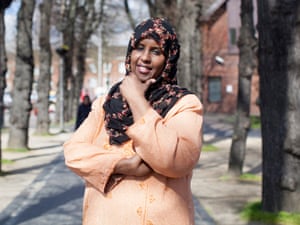
No overall theme emerges from the longlist, which includes four books by women. Helen Pearson, whose The Life Project is an account of the UK’s pioneering cohort studies run since 1946, is listed beside Somali FGM campaigner Hibo Wardere for her memoir Cut, co-written with Anna Wharton. Irish revisionist historian Ruth Dudley Edwards is longlisted for The Seven, one of four of history books on the list. It tells the story of the seven founding fathers of the Irish state.


FGM campaigner … Hibo Wardere, co-author of Cut with Anna Wharton.


FGM campaigner … Hibo Wardere, co-author of Cut with Anna Wharton. Photograph: Alicia Canter for the Guardian

Other history books on the list are Easternisation, by the chief foreign affairs commentator of the Financial Times, Gideon Rachman – the winner of the Orwell prize for political journalism last year – who documents the shift of global power to Asia; John Bew’s biography of the postwar Labour prime minister Clement Attlee, Citizen Clem; along with And The Sun Shines Now, a vivid account by Hillsborough survivor Adrian Tempany of the football disaster’s impact on the game and wider society.


Joining them on the longlist is Black and British: A Forgotten History, David Olusoga’s landmark history of Britain’s black community, which has also been shortlisted for the inaugural Jhalak prize for writers of colour.


Fellow Jhalak nominee and Guardian editor-at-large Gary Younge is also longlisted for Another Day in the Death of America, which documents the lives of 10 people killed by guns in the US on 23 November 2013. Author Gillian Slovo described the book as “a gripping account of the conditions that turn so many of America’s powerless into victims”.


Hisham Matar, the Libyan writer who was shortlisted for the Baillie Gifford prize for non-fiction, is again nominated with The Return, his account of his father’s kidnapping at the hands of Muammar Gaddafi’s government.


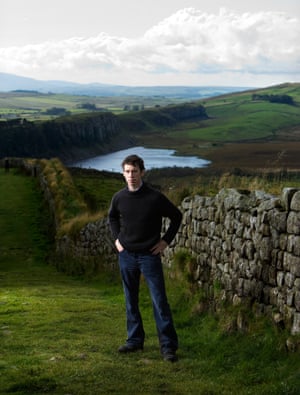
Tour de force … nominee Rory Stewart beside Hadrian’s Wall.


Tour de force … nominee Rory Stewart beside Hadrian’s Wall. Photograph: Murdo MacLeod for the Guardian

More recent politics is also documented in the books All Out War, Tim Shipman’s account of the 2016 EU referendum; Island Story, Londoner JD Taylor’s story of biking around Britain to discover other sides to UK identity; Enough Said, a look at the evolution of political language by the former BBC director-general Mark Thompson; and The Marches by Rory Stewart, Tory MP and son of a spy, who reflects on his relationship with his father and its political contexts as he walks along Hadrian’s Wall.


Announcing the longlist, the judges – Financial Times comment editor Jonathan Derbyshire, playwright and author Bonnie Greer, writer and broadcaster Mark Lawson and critic Erica Wagner – praised the list for offering “a clear and calm perspective on Britain and its place in the world”.


“The books reflect many aspects of Orwell’s literary character and interests: fiction, journalism, football, language and landscape,” the judges added.


The shortlist will be announced on 15 May, with a winner revealed at a ceremony during University College London’s festival of culture on 8 June.


The Orwell Prize for Books 2017 longlist


The Power by Naomi Alderman (Viking)


Citizen Clem by John Bew (Quercus)


The Seven by Ruth Dudley Edwards (Oneworld)


The Return by Hisham Matar (Viking)


Black and British by David Olusoga (Macmillan)


The Life Project by Helen Pearson (Allen Lane)


Easternisation by Gideon Rachman (The Bodley Head)


All Out War by Tim Shipman (HarperCollins UK)


The Marches by Rory Stewart (Vintage, Jonathan Cape)


Island Story by JD Taylor (Repeater)


And the Sun Shines Now by Adrian Tempany (Faber & Faber)


Enough Said by Mark Thompson (The Bodley Head)


Cut by Hibo Wardere, in collaboration with Anna Wharton (Simon & Schuster)


Another Day in the Death of America by Gary Younge (Guardian Faber)


Brexit, gun control and feminist science fiction on 2017 Orwell prize longlist

24 Haziran 2014 Salı

Longitude Prize 2014: Saving antibiotics for humanity"s future

• Individuals not finishing the complete course of antibiotics.


• Use in food manufacturing – growth promotion in animals


Incorrect use in these ways means that bacteria and are in a position to produce resistance.


AMR is a worldwide dilemma. Infectious agents recognise no boundaries and borders. In Europe alone 25,000 individuals a 12 months currently die from infections which are resistant to our medicines of final resort. We have reached a vital level and need to act now on a international scale to slow down AMR.


International momentum is creating – last month the Globe Health Organisation released a report on antimicrobial resistance, confirming that WHO now regards AMR as a major threat to public wellness. I was delighted to see that WHO is taking methods to lead a international, coordinated hard work to tackle this dilemma.


It is time to build on this impetus to build a check that can establish the first, and critical, place – if the patient wants an antibiotic at all. If AMR wins the Longitude Prize, some of our brightest minds will concentrate on the growth of a diagnostic device that can confirm a bacterial infection. This is the first phase in conserving antibiotics by guaranteeing that antibiotics are only prescribed for bacterial infections, that means that we can slow the development of resistance.


We truly require one thing that could be utilized across the world – this is the minute to harness the clarion get in touch with to action that has been issued. I urge the public to engage with this wonderful initiative and vote for AMR to win this year’s Longitude Prize.


LONGITUDE PRIZE 2014


The Longitude Prize provides a £10 million prize fund for an innovation that will fix one particular of the major problems of our time. And we can all help to decide which of 6 themes the prize must focus on. The six issues are:


• To assist men and women with dementia live independently for longer


• To assist avoid the rise of resistance to antibiotics


• To support us to be ready to fly without having damaging the setting


• To aid guarantee everybody has nutritious, sustainable meals


• To help restore motion to those with paralysis


• To support ensure absolutely everyone can have entry to protected and clean water


You can vote for the challenge you believe the Longitude Prize need to pursue at bbc.co.united kingdom/horizon. Voting closes at seven.10pm on June 25 2014. The winning challenge will be announced on June 25 and will become the target of the £10 million prize fund. The Longitude Committee will then finalise the criteria for how to win the prize, and from September tips can be submitted. The Longitude Prize will run for up to five many years.


Longitude Prize 2014: Saving antibiotics for humanity"s future

20 Haziran 2014 Cuma

What excellent scientific challenge should win the Longitude Prize? podcast

This week on Science Weekly presented by Ian Sample, we discuss the Longitude Prize 2014. 3 hundred many years following the 1st prize to learn a way of identifying longitude at sea, a new set of challenges have been shortlisted and thrown open to a public vote to choose the one scientific and technical dilemma that merits the £10m prize fund.


Ian is joined by Guardian on the internet environment editor Adam Vaughan, Observer Tech Month to month commissioning editor Nicola Davis and Dr Emily Grossman, educator, broadcaster and expert in molecular biology.


We also hear from two members of the new Longitude committee, Astronomer Royal Lord Martin Rees and the UK’s Chief Medical Officer Dame Sally Davies, on the scientific issues that could win the prize, and how the public – yes, that means you and me – can establish the nature of that challenge.


The public vote closes at 7.10pm on Wednesday 25 June:


Click right here to vote online.


Or text/sms the following keyword to 60011
To vote for antibiotic resistance text ANTIBIOTICS
For sustainable nutrition text Food
For dementia care text DEMENTIA
For restoring mobility text PARALYSIS
For fresh water text WATER
For zero-carbon flight text FLIGHT


Subscribe for totally free via iTunes to make sure each and every episode gets delivered. (Here is the non-iTunes URL feed).


Stick to the podcast on our Science Weekly Twitter feed and obtain updates on all breaking science information stories from Guardian Science.


Email scienceweeklypodcast@gmail.com.


What excellent scientific challenge should win the Longitude Prize? podcast

Longitude Prize 2014: We need to reject the apocalyptic, nihilistic narrative around dementia

The narrative here is largely apocalyptic. There is no effective treatment, let alone the hope of a remedy or a programme of prevention. Dementia lurks apparently in wait for all in better age unopposed. The finish phases of dementia are a genuine horror, as are the late phases of all terminal illnesses.


The hope we ought to have for dementia, however, is the hope we have always had in the encounter of daily life threatening and incurable illness: that we may well live, and reside nicely, for as lengthy as achievable. In that vein, including dementia and the search for assistive and supportive digital technologies in the Longitude Prize is to be welcomed.


It is not a search for a remedy or even an successful treatment method. It does not address the problem of persistent under-funding in the area of dementia analysis – only an eigth the assets are invested annually by Government in dementia research in contrast with the funding accessible for cancer. To me this £10 million fund, should it be won, would be an act of defiance, a statement that we choose to reject the nihilism that goes with the accepted narrative of dementia.


LONGITUDE PRIZE 2014


The Longitude Prize gives a £10 million prize fund for an innovation that will fix one particular of the key difficulties of our time. And we can all support to decide which of six themes the prize should emphasis on. The six issues are:


• To assist men and women with dementia reside independently for longer


• To aid prevent the rise of resistance to antibiotics


• To help us to be capable to fly without having damaging the surroundings


• To assist guarantee everybody has nutritious, sustainable meals


• To assist restore movement to these with paralysis


• To aid ensure every person can have access to protected and clean water


You can vote for the challenge you think the Longitude Prize should pursue at bbc.co.uk/horizon. Voting closes at 7.10pm on June 25 2014. The winning challenge will be announced on June 25 and will grow to be the emphasis of the £10 million prize fund. The Longitude Committee will then finalise the criteria for how to win the prize, and from September tips can be submitted. The Longitude Prize will run for up to five years. http://www.longitudeprize.org/


Longitude Prize 2014: We need to reject the apocalyptic, nihilistic narrative around dementia

Longitude Prize 2014: Water, water all over the place?


However, in the West, we frequently take this most treasured of all-natural assets for granted, despite the many campaigns we are exposed to reminding us that a single in ten of the world’s population has no entry to risk-free consuming water. If you don’t have clean water, you can’t grow healthful foods, and you are far more very likely to be sick and unable to perform or go to school, which implies you are much more likely to be trapped in poverty, with all the societal and protection problems that poverty brings. Globally, one in 5 deaths of children beneath 5 is due to dirty water.


I think our aim need to be to explore the improvement of new and emerging reduced-power and renewable power-driven desalination technologies, targeting a reduction in the distinct power consumption of seawater desalination to attain two kWh/m3 in the close to term, and developing a lot more sustainable desalination processes that are much less dependent on conventional vitality sources and that, consequently, are far more environmentally pleasant.


But there are so a lot of other questions we need to locate solutions to. What are the novel technologies for water desalination and reuse that we need to have to develop and exploit? How can we optimise and hybridise desalination and reuse technologies to supply enhanced overall performance?


How do we encourage (and incentivise?) water technologies for sustainable urban, agricultural and industrial applications? What study into urban and all-natural hydrologic techniques is necessary to boost our knowing and management of water sources?


And how do we make sure that the results of this study reach the widest achievable audience so that we can start to handle these problems on a global scale?


If we can answer some of these concerns and find a way to supply clean, safe water to everyone, irrespective of geographic and economic constraints, then we will, with no doubt, increase the wellness, properly-becoming, life possibilities and prosperity of billions of men and women.


Water protection is the most significant challenge we face. The Longitude Prize 2014 can be the catalyst that helps us to do something about it.


LONGITUDE PRIZE 2014


The Longitude Prize offers a £10 million prize fund for an innovation that will remedy one particular of the key problems of our time. And we can all assist to choose which of 6 themes the prize should target on. The 6 problems are:


• To support folks with dementia dwell independently for longer


• To assist prevent the rise of resistance to antibiotics


• To assist us to be capable to fly without having damaging the environment


• To assist make sure everyone has nutritious, sustainable food


• To aid restore motion to those with paralysis


• To support make certain everybody can have access to secure and clean water


You can vote for the challenge you consider the Longitude Prize need to pursue at bbc.co.united kingdom/horizon. Voting closes at seven.10pm on June 25 2014. The winning challenge will be announced on June 25 and will grow to be the target of the £10 million prize fund. The Longitude Committee will then finalise the criteria for how to win the prize, and from September ideas can be submitted. The Longitude Prize will run for up to 5 years.


Longitude Prize 2014: Water, water all over the place?

19 Haziran 2014 Perşembe

Longitude Prize 2014: We must reject the apocalyptic, nihilistic narrative around dementia

The narrative right here is largely apocalyptic. There is no efficient therapy, allow alone the hope of a remedy or a programme of prevention. Dementia lurks apparently in wait for all in higher age unopposed. The end phases of dementia are a real horror, as are the late phases of all terminal illnesses.


The hope we need to have for dementia, though, is the hope we’ve constantly had in the encounter of existence threatening and incurable ailment: that we may well dwell, and live nicely, for as long as achievable. In that vein, like dementia and the search for assistive and supportive digital technologies in the Longitude Prize is to be welcomed.


It is not a search for a remedy or even an effective treatment. It does not tackle the difficulty of continual below-funding in the location of dementia analysis – only an eigth the sources are invested yearly by Government in dementia study in contrast with the funding available for cancer. To me this £10 million fund, must it be won, would be an act of defiance, a statement that we choose to reject the nihilism that goes with the accepted narrative of dementia.


LONGITUDE PRIZE 2014


The Longitude Prize provides a £10 million prize fund for an innovation that will fix a single of the main difficulties of our time. And we can all assist to choose which of 6 themes the prize should concentrate on. The 6 problems are:


• To support men and women with dementia live independently for longer


• To aid avoid the rise of resistance to antibiotics


• To help us to be ready to fly without damaging the atmosphere


• To aid make sure everybody has nutritious, sustainable foods


• To support restore movement to people with paralysis


• To assist make certain everybody can have entry to secure and clean water


You can vote for the challenge you believe the Longitude Prize need to pursue at bbc.co.uk/horizon. Voting closes at seven.10pm on June 25 2014. The winning challenge will be announced on June 25 and will turn into the focus of the £10 million prize fund. The Longitude Committee will then finalise the criteria for how to win the prize, and from September tips can be submitted. The Longitude Prize will run for up to 5 years. http://www.longitudeprize.org/


Longitude Prize 2014: We must reject the apocalyptic, nihilistic narrative around dementia

29 Nisan 2014 Salı

Andrew Solomon wins Wellcome Book Prize 2014


Academic and journalist Andrew Solomon has been announced as the winner of this year’s Wellcome Guide Prize for Far From the Tree: Dad and mom, Youngsters and the Search for Identity. The book, for which Solomon interviewed much more than 300 households above the course of a decade, explores the exclusive parent-youngster romantic relationship and how it is impacted by “distinction” this kind of as deafness, autism or homosexuality.


Solomon’s entry noticed off five other shortlisted books to get the £30,000 prize, awarded for the best new perform of fiction or non-fiction in the health care and well being genre. Sir Andrew Motion, who chaired the judging panel, mentioned the decision was unanimous, adding: “The guide took him 10 years to write, and the positive aspects of his persistence and thoughtfulness are evident everywhere.”


Motion presented Solomon with his prize funds and a trophy, consisting of several sheets of glass depicting MRI scans, at a ceremony at the Wellcome Collection in London on Thursday evening.


Solomon dedicated the award to the families whose stories characteristic in the guide: “I accept this prize on their behalf, with admiration for the human spirit that allowed so a lot of of them to end up grateful for lives they would after have carried out anything at all to avoid.”


Andrew Solomon wins Wellcome Book Prize 2014

11 Nisan 2014 Cuma

Planet in a week: Mumbai slum resident wins million dollar prize

Great week for …


Jockin Arputham, a Mumbai slum resident and founder of India’s Nationwide Slum Dwellers Association, who has won a $ one.25 million Skoll award for social entrepreneurship.


Daniel Njuguna and James Kiarie, Kenyan assist employees who have been discovered in Somalia following becoming kidnapped in 2011.


Negative week for …


ten ladies who were advised to leave a Mumbai housing estate because they are daughters of intercourse staff.


Xu Zhiyong, a Chinese transparency campaigner, who had had his 4-year jail sentence upheld.


What you are saying


Planet Earth Institute held a discussion on The data revolution: what it signifies for scientific improvement in Africa, which prompted debate under the hashtag #africadata.


The week in numbers


185 million people close to the globe are contaminated with the hepatitis C virus, according to new WHO guidelines.


21,000 displaced people in South Sudan are living in squalor according to MSF, who accused the UN of a “shocking show of indifference”.


1 in 5 Syrian refugees in Jordan and Lebanon is impacted by bodily, sensory or intellectual impairment, says Handicap Global in a new report.


$ 134.8bn is the quantity of advancement support given in 2013 – an all-time substantial – according to figures from the Organisation for Economic Co-operation and Improvement (OECD).


$ 7 bn is donated each yr by Africa’s leading 10 philanthropists.


58 million folks are at threat of hunger in Myanmar’s central dry area.


500,000 NGOs have registered in China above the previous 25 years.


Image of the week


Members of the anti-balaka, a Christian militia, patrol outside the village of Zawa April 8, 2014.
Members of the anti-balaka, a Christian militia, patrol outside the village of Zawa in the Central African Republic. Photograph: Goran Tomasevic/Reuters


Milestones


The Supreme Court of the Philippines passed a law on contraception that has been debated in the 80% Roman Catholic country for 13 years.


It is 20 years because the International Conference on Population and Advancement in Cairo. The UN Population Fund has drawn up a record of 20 global demographic adjustments considering that then.


Reading checklist


Coming up coming week: have your say


  • Our live on the internet chat on Thursday 17 April is on engaging men and boys in the rights of ladies and women.

  • Make contact with us at globaldevpros@theguardian.com to suggest someone to join the specialist panel.


Planet in a week: Mumbai slum resident wins million dollar prize

22 Mart 2014 Cumartesi

Now There is A Davos Of Schooling And A $1 Million "Nobel Prize" For Teachers

The International Education and Expertise Forum convened its 2nd annual conference in Dubai from March 15 and 17th. The forum brought globe leaders, heads of state, global ministers of schooling, innovators, and specialists searching to aid solve a “global training crisis.”


It was a fascinating occasion, total of pleasure, large production quality, and brilliant thinkers. It provoked me to take into account training from a international viewpoint that had heretofore evaded my pondering.


The Global Training and Abilities Forum was complete of big identify headliners. Bill Clinton presented a keynote to the conference during which he explained, “Intelligence is evenly distributed. Willingness to work is evenly distributed. Hunger to find out is evenly distributed. Possibility and access are not.” Tony Blair spoke about the importance of creativity and “open minded training.”


13185609443_9c504bacfc_b


Organized “in partnership in between UNESCO, the UAE Ministry of Training, GEMS Schooling, the Varkey GEMS Basis and Dubai Cares, in help of the United Nations Secretary General’s Global Training 1st Initiative,” the occasion targeted on discussing “the global problems of a growing younger population, a large education funding gap, the changing nature of abilities and function as properly as profound technological adjustments.”


Prior to the occasion, Vikas Pota, CEO of the Varkey GEMS Foundation, mentioned: “This forum will challenge the world’s leaders to discover actual solutions to the most crucial situation of our time: education. We encounter a ticking time bomb of an total generation getting uneducated or unprepared for a new globe of perform. There is no time left for speaking outlets we require to consider selections that result in actual &amp speedy alter.”


During the conference the large themes have been education technologies, girls’ schooling, and an  ongoing essential exploration of the part organization must play in reforming and fortifying school programs.


The occasion concluded with Sunny Varkey announcing a $ one million Nobel-like teacher’s prize which will operate under the patronage of Dubai’s ruler: His Highness Sheikh Mohammed bin Rashid Al Maktoum.


Envision that, $ one Million for a great instructor. If you know one–and we all do–make the nomination. Or, motivate your little ones teachers to nominate themselves. Tell them that what they do for your little ones is really worth a million bucks. Check out http://globalteacherprize.com/ for much more information.


The prize is an attempt to deliver a considerably needed attitude of prestige to an otherwise undervalued profession. “We want to inspire kids from far-flung villages, towns and cities close to the world to say  ‘I want that prize!’” Mentioned Varkey, “How numerous little ones say they want to be a reality Tv star?  Let’s get them aiming to be the greatest teacher in the world.”


Bill Clinton (who holds the position of honorary chairman of the Varkey GEMS foundation) echoed Varkey’s sentiment, saying, “Attracting the best individuals to teaching, developing and supporting their capabilities, and holding our teachers in high regard — all are critically essential to attain excellence, the two in educating and learning.”


For the duration of the conference, I was pleased to hear that almost all of speakers emphasized that schooling needed to generate empowered individuals. The emphasis was on inspiring creativity, essential thinking, and expressive youth voices rather than greater test scores, or enhanced quantified assessments. The acquainted buzzwords of the college reform and training debates in the U.S. had been sparse.


I also encountered a extremely different conversation about edtech than the 1 I’m employed to. In the U.S., there is an ongoing discussion about the positives and negatives of edtech. There is a romantic, probably nostalgic, almost preservationist enjoy of paper–a enjoy that is expressed through a fear of screens. But I quickly learned that it is a privilege to worry about these issues. In several spots about the planet, inexpensive flip phones are currently being employed to educate rural adults basic literacy skills. Linked screens provide an reasonably priced and scalable choice to make learning content obtainable in locations exactly where it hasn’t been.


Likewise, our edtech conversation in the U.S. often gets to be a polarized discussion in which outdated will get positioned in opposition to new. No doubt this is the fate of a culture that’s founded from revolution innovation is usually tantamount to conquer and seldom observed as iteration. Hence, we use phrases like ‘disruption’ rather than ‘supplementation.’ Consider our obsession with the notion that we require to throw out 20th Century instructional strategies in favor of 21st Century ones. At the forum, I discovered a more thoughtful large image frame of mind. Particularly amongst the speakers from the United Arab Emirates, there was a smart mindset in which the strengths of new technologies had been blended with the conventional.


Here is the video of the edtech panel, “Leveraging mobile technology, social media, and gaming to boost training.” Moderated by Jeff Dunn (co-founder of edudemic.com), the panel consists of H.E. Dr. Mahmoud Aboelnasr (Minister of Schooling, Egypt), H.E. Mohammed Gheyath (Director General of Wise Finding out Plan, UAE), Benjamin Berte (CEO, Socrative, USA), Vicki Davis (Instructor, USA), Hayley McQuire (UN GEFI Youth Advocacy Group, Australia).


Want to know how the video games of the previous shaped the conscious attitudes of the present? Jordan Shapiro is author of FREEPLAY: A Video Game Manual to Maximum Euphoric Bliss. “A guide like ‘Zen And The Art Of Motorcycle Maintenance’ for a generation raised on Pac-Man &amp Space Invaders.” For info on Jordan’s upcoming books and events click right here.


Now There is A Davos Of Schooling And A $1 Million "Nobel Prize" For Teachers