transplant etiketine sahip kayıtlar gösteriliyor. Tüm kayıtları göster

24 Nisan 2017 Pazartesi

Wellcome science book prize goes to story of a heart transplant

A novel that “illustrates what it is to be human” has become the first translated book to win the Wellcome prize for science writing.


Maylis de Kerangal’s Mend the Living, which tracks the journey of a heart from donor to recipient over 24 hours, is only the second novel ever to scoop the £30,000 prize, which is awarded to a work of fiction or nonfiction that engages with health and medicine.


Announcing the winner, chair of judges Val McDermid said: “Sometimes you read a memoir and it is just one person’s tragedy, but this is about the tragedy and hope that comes from loss that could affect every single one of us.” She said the judges “felt very strongly” that the book had the potential to change the lives of readers and called it “compelling, original and ambitious”.


De Kerangal’s novel was translated from French by Jessica Moore, who was awarded £10,000. McDermid praised the translation, which she told the Guardian pulled off the difficult trick of shaping a book into a second language without undermining the intention or voice of the original.


Describing herself as a “long-time advocate” of translated fiction, McDermid, a bestselling crime writer, said: “Publishers have very slowly woken up to the importance to readers of translated fiction as a way of understanding a globalised world … The English language doesn’t have a monopoly on terrific writing and I am very happy to be one of the judges who chose this book.”


Mend the Living begins with vibrant young surfer Simon Limbeau suffering catastrophic injuries in a road traffic accident. Faced with a son who has been left brain dead, his parents are forced to decide whether to turn off his life support and donate his heart. The story then follows Limbeau’s heart on its way to a donor recipient and explores how people recover hope in tragic circumstances.


The novel, which was also longlisted for the 2016 Man Booker international prize, has also been adapted to film. Directed by Katell Quillévéré and renamed Heal the Living (Réparer les vivants), it stars Tahar Rahim, Emmanuelle Seigner and Anne Dorval and is set for a UK release at the end of April.


Mend the Living was chosen from a strong shortlist of six books that included two novels, the other being Tidal Zone by Sarah Moss, about a family navigating the NHS as they come to terms with a child’s unexpected illness.


Ed Yong’s I Contain Multitudes, which examines how the 40tn microbes in the human body affect us, was the only debut on the shortlist. The other three books interweaved science with personal experience. Neurosurgeon Paul Kalanithi was the first author to be in contention for the prize posthumously, with his memoir When Breath Becomes Air recounting his final months of life with terminal lung cancer. Siddhartha Mukherjee’s The Gene blends a narrative about genetics with the story of reoccurring mental illness in his family, while David France, a gay man and an eyewitness to the Aids epidemic, wrote of the struggle faced by HIV/Aids activists during the 1980s in How to Survive a Plague.


McDermid chaired a panel of judges that mixed broadcasters and writers with scientists. Cambridge professors Simon Baron-Cohen and Tim Lewens joined the Wire in the Blood author on a panel completed by broadcaster Gemma Cairney and radio producer Di Speirs.


Wellcome science book prize goes to story of a heart transplant

6 Nisan 2017 Perşembe

UK"s first double hand transplant patient delights in writing letter to thank surgeon

The first person in the UK to have a double hand transplant has said writing a letter to thank his surgeon has been one the highlights of his first nine months since the operation, as well as being able to clap for his favourite rugby league team.


Chris King, 57, described how he has got his life back since the surgery last July, when he became the second person to have a hand transplant at the UK’s specialist centre for the operation at Leeds General Infirmary (LGI) and the first to have both hands replaced.


King,from Rossington near Doncaster, said he can now do a range of tasks, including writing, making tea and gardening as he progresses even faster than his surgeon anticipated. He said he was improving every week and his next aims are to tie his shoelaces and button up his shirt – he said he had already cracked undoing them.


Looking at his hands, King said: “They are my boys, they really are.


“It’s been going fantastically. I can make a fist, I can hold a pen, I can do more or less the same functions as I could with my original hands. There are still limitations but I’m getting back to the full Chris again.”


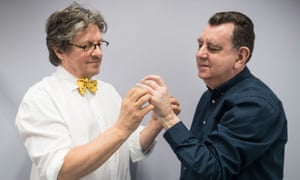
King has his hands examined by Prof Simon Kay, the surgeon who performed the transplant.


King has his hands examined by Prof Simon Kay, the surgeon who performed the transplant. Photograph: Danny Lawson/PA

King has also discovered he is now ambidextrous. “When I picked a pen up first time was with my right hand,” he said. “The next time I picked it up it was left. I might be able to write with both hands now.” He said: “I think it will be the icing on the cake when I can do my laces, and I don’t think that’s far off.”


King lost both his hands, except the thumbs, in an accident involving a metal-pressing machine at his workplace in Doncaster four years ago.


Consultant plastic surgeon Prof Simon Kay, who carried out the operation and two other hand transplants, believes the operation could become as routine as a kidney transplant.


Kay said he was amazed to receive a handwritten Christmas card and thank you letter from King.


Mark Cahill, 55, was the first hand transplant patient in 2012 at LGI, and a third man, who has not been named, became Kay’s third successful transplant patient earlier this year when he was given two new hands and a new forearm.


Two female patients are scheduled for surgery at the LGI as soon as donors become available.


Kay said: “The programme is now well-established. It’s now become mature. We understand the indications, the process. We now have three transplant patients completed and another two to go.”


“We would like hand transplantation to be as routine and unremarkable as kidney transplantation,” he said.


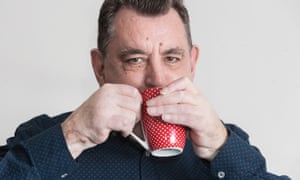
King with a cup of tea


King with a cup of tea. He lost both his hands in an industrial accident four years ago. Photograph: Danny Lawson/PA

Last year, NHS England awarded Leeds Teaching Hospitals NHS Trust the contract to become the UK’s specialist centre for hand transplants.


Referring to King, Kay said: “He’s proved to be, as he proved right at the beginning, a very robust, resilient patient, very enthusiastic about his hands, and I think he’s absolutely delighted.”


“When you bear in mind he will go on improving for another two years, he’s really remarkable – a real vindication for the surgery he’s had.”


“He’s doing more, sooner than we expected. He’s well ahead of our expectations.”


Cahill, a former pub landlord from Greetland, near Halifax, West Yorkshire, has since gained almost complete use of his transplanted hand. He reportedly used it to save his wife’s life last year after she had a heart attack.


Kay urged people to consider the need for future donors. Donating a hands is not yet an option on the organ donor card, but it can be discussed with potential donors if the opportunity arises, a spokeswoman for the NHS’s organ donor register said.


UK"s first double hand transplant patient delights in writing letter to thank surgeon

9 Aralık 2016 Cuma

Mark Serwotka has heart transplant at Papworth

Mark Serwotka, the leader of the largest civil service union, has had a successful heart transplant operation, with the medical team at Papworth hospital, Cambridgeshire, saying they were very happy about how the new heart was performing.


The Public and Commercial Services union (PCS) said the operation at the weekend had gone smoothly. Serwotka was recovering in hospital and would recuperate at home. “This is fantastic news for his family – his wife, Ruth, and children, Imogen and Rhys – and for the union, and we know everyone sends their best wishes,” a PCS statement said.


Serwotka contracted a virus in 2010, his heart failed, and over the past two years he had been kept alive by a heart pump. He was readmitted to hospital in August when the pump developed a clot and his doctors placed him on the urgent transplant list.


The union said: “[We] send our heartfelt thanks and admiration to all the team at Papworth who have provided world-class care and kept Mark’s spirits up during the last three months. Mark’s family [has] also asked us to thank all those people who have sent cards and messages over the past few months. They have really appreciated the support and it has given them a big boost during this time.”


Ruth Serwotka tweeted: “Mark recovering well from heart transplant op. Words inadequate, but so much gratitude to skilled, dedicated NHS staff of Papworth hospital. And nothing will ever adequately express my overwhelming thanks to the family of a stranger who in their loss have allowed us a future.”


Serwotka, 53, is one of the most popular and active trade union leaders. He contracted a virus six years ago and has described taking a walk in woods close to home, when his dog came back to him smelling of something foul. He recalled washing the dog down and the next day finding his face and legs grotesquely swollen.


A week later he was rushed to hospital with a heart rate of 220 beats a minute. After weeks of investigation it was established that he had contracted a virus that had caused his heart to massively inflate and swell.


When the swelling subsided it emerged that his heart had been irreparably damaged. He was fitted with an electronic device that pumped blood around his heart and which he carried in a small bag with a battery pack and plug socket. As he waited for a heart transplant, Serwotka continued to lead the union.


Mark Serwotka has heart transplant at Papworth

6 Ekim 2016 Perşembe

Double arm transplant recipient says he dreams of being a chef – video

Retired US Marine sergeant John Peck discusses his ambitions after receiving a double arm transplant. Speaking at Brigham and Women’s Hospital in Boston, Massachusetts, he says he is optimistic about what he will now be able to experience and accomplish


Double arm transplant recipient says he dreams of being a chef – video

26 Eylül 2016 Pazartesi

Parents of baby awaiting heart transplant appeal for public"s help

The parents of the youngest child waiting for a heart transplant in the UK are hoping that the plight of their 19-week-old baby will help change the law on donor transplants.


Marnie Brace was born with a serious heart condition in May, and her parents have been told that without a heart transplant she will not survive. Nick and Amy Brace are calling on the public to sign a petition to urge Westminster politicians to follow Welsh lawmakers and create an opt-out organ donor system. Currently people wishing to donate their organs after their death have to sign the organ donor register or inform family members of their wishes.


Marnie’s father said he hoped their baby’s situation would move people to sign the register and lobby politicians for a change in the law. “We know that Marnie will die without a new heart, so every day we are waiting for a call. We are on tenterhooks, we can’t sleep – it is obviously very, very hard,” he said.


“But we hope that we can use Marnie’s life to get the message across that the law needs to change, so we can stop other children and their parents going through this. Everybody you know is willing to give their organs, but the law doesn’t reflect that attitude.”


Marnie was born at the Evelina children’s hospital in London after doctors noticed at her 30-week scan that her heart was not functioning normally. After the birth Marnie was diagnosed as having Noonan’s syndrome and hypertrophic cardiomyopathy. “She gets tired very quickly,” said Brace. “If you hold her, you can hear her working so hard so we can’t really pick her up.” When Marnie was born her parents were told to prepare for the worst, he said. “She has already exceeded expectations, she is a real fighter and a real spirit.”


For Marnie to get the care she needs the Braces have moved from Eastbourne and are living with their 21-month-old son, Jonah, at a Ronald McDonald charity house in London. Friends have set up a Just Giving page to help support the family, as both parents have had to give up work. “Like Marnie we have good days and bad days, but we take it in turns – if I spend the day crying, Amy will tell me to be strong and that we will find a heart, and if she is low, then I will be the strong one,” said her husband. “But I can’t even put into words how amazing the nurses who care for Marnie have been.”


Because Marnie’s heart is so tiny the chances of her finding a match are greatly reduced. According to NHS statistics, almost 49,000 people in the UK have waited for an organ transplant in the last 10 years and more than 6,000, including 270 children, have died before receiving the transplant.


“Our priority is to help our girl, but we really want people to sign the donor register, sign the petition and share it,” said Brace. “Don’t just like the page on social media – we don’t need niceties, we need change.”


Parents of baby awaiting heart transplant appeal for public"s help

7 Eylül 2016 Çarşamba

Isabelle Dinoire, recipient of the world"s first partial face transplant, dies at 49 – video

A French woman who underwent the world’s first partial face transplant has died in hospital aged 49 after a long illness. Isabelle Dinoire, who lost her mouth and nose after being mauled by her dog, made medical history in 2005 when she was given a partial face transplant using tissue from a brain-dead woman in a 15-hour operation at Amiens Picardie hospital


Isabelle Dinoire, recipient of the world"s first partial face transplant, dies at 49 – video

25 Ağustos 2016 Perşembe

Firefighter feels like a "normal guy" year after unprecedented full face transplant

A Mississippi firefighter who received the world’s most extensive face transplant after a burning building collapsed on him said Wednesday that he feels like “a normal guy” for the first time in 15 years.


Patrick Hardison, 42, said he can now eat, see, hear and breathe normally, thanks to last year’s surgery. He even has a full head of hair and hits the gym twice a week.


“Before the transplant, every day I had to wake up and get myself motivated to face the world,” Hardison told reporters at NYU Langone Medical Center. “Now I don’t worry about people pointing and staring or kids running away crying. I’m happy.”


Hardison was a volunteer firefighter in Senatobia, Mississippi, when a building collapsed on him in 2001. He had 71 reconstructive surgeries before the transplant.


While there have been nearly 40 face transplant surgeries since 2005, Hardison’s was the first to include a scalp and functioning eyelids. Doctors have since fixed up some features and removed his breathing and feeding tubes.


Hardison has no scars on his face, and although he resembles his old self, some of his features are different. His eyes are smaller and his face is rounder, but he still has sandy brown hair.


The divorced father of five said one of the best moments of his life was seeing his children for the first time after the August 2015 surgery. Four of his children attended the news conference.


His 21-year-old daughter, Allison, said she cried after seeing him because she was so relieved.


“After the injury he wasn’t normal on the inside. He was very unhappy,” she said. “Now he’s happy with himself and happy with life.”


Hardison can finally drive and live independently thanks to his new field of vision. Previously, Hardison could see only through “pinholes” because doctors had sewed his eyelids partially shut to protect his eyes, he said.


Eduardo Rodriguez, chairman of Langone’s plastic surgery department, said Hardison has not had any issues with transplant rejection, which is due to his medications, his children and his strength.


“He’s a remarkable individual,” Rodriguez said.


Hardison said he hopes to meet this fall with the family of his donor, a 26-year-old artist who died in a bike accident in Brooklyn.


“I’d like to say that I’m the same old Pat, but that would not give enough credit to the amazing journey I have gone through this past year,” Hardison said. “The road to recovery has been long and hard, but if I had to do it again, I’d do it in a heartbeat.”


Firefighter feels like a "normal guy" year after unprecedented full face transplant

A year after face transplant, man says he is "feeling great" – video

Patrick Hardison, whose face burned off 15 years ago when a roof of a home on fire collapsed on him, is doing well after his face transplant surgery. Hardison was the subject of media attention last year when he was operated on for 26 hours at New York University’s Langone medical center. He received the face of David Rodebaugh, 26, who was pronounced brain-dead after a cycling accident


A year after face transplant, man says he is "feeling great" – video

24 Temmuz 2016 Pazar

Double hand transplant: "It"s a small miracle, looking at what nature has allowed us to do"

It was a moment that mingled triumph with relief as the UK’s first double hand transplant patient awoke from a painstaking 12-hour operation with two new sets of fingers.


“It’s better than a lottery win because you feel whole again,” said Chris King as he recuperated at the Leeds General Infirmary. “They look absolutely tremendous,” he added. “They’re my hands. They really are my hands.”


But despite his joy at the successful surgery, the real test for King may just be beginning. Experience from previous such transplants suggests that the psychological challenges of bearing another person’s hands can be hard to cope with.


Clint Hallam, the patient who received the world’s first hand transplant 1998, claimed that he felt “mentally detached” from the new limb and had it removed three years later in a secret operation.


Nadey Hakim, a surgeon at Imperial College London who was involved in that operation, agrees that for some the psychological impact can be considerable.


Related: World-first skull and scalp transplant gives Texas man ‘new lease on life’


“For someone to use someone else’s hands to hold his wife, his kids – it is not easy,” he said. “I don’t think they will ever get used to it fully- they might claim they are used to it, but it is a very difficult task for anyone, even [for those which are] the strongest psychologically.”


King lost the four fingers of each hand in an accident three years ago. He received the double transplant in a lengthy operation conducted by a team of eight surgeons, led by Professor Simon Kay.


While around 80 hand transplants have taken place worldwide, King’s is the first double hand transplant to be carried out in the UK, and the first such procedure to be undertaken since the NHS launched its new hand transplant programme earlier this year.


Kay also carried out the UK’s first single hand transplant in 2012 when Mark Cahill, a former pub landlord, received a new right hand after his own became badly affected by gout and infection.


Cahill is enthusiastic about King’s operation. “I think it is fantastic, I am so happy for him,” he told the Guardian, adding that he hopes that the publicity will result in an increase in the number of donors to the hand transplant programme. “We have got plenty of people wanting hands, but not enough donors,” he said. That, he points out, could be down to the very visible nature of hands, which might make it especially hard for grieving families to give consent for donation. “I imagine it is heartbreaking,” he said.


Since his own operation, Cahill says that not only has he been able to carry out everyday tasks and drive again, but just six weeks ago used his new hands to give CPR to his wife after she suffered a heart attack. “I wouldn’t have been able to do it without my transplanted hand because my other hand was so deformed, I wouldn’t have been able to put any pressure on her,” he said.


As well as taking immunosuppressants, Cahill has been undergoing physiotherapy since the operation to improve the movement in his new hand. But, he says, he has not had any problems in accepting his new appendage.


“I think I was in a fortunate position,” he said. “I had [one] hand amputated and another one put on, so I was never without a hand. It is probably more difficult for people who lose a hand.”


Indeed, doctors stress that how patients feel about the operation is crucial. “The psychological point of view is very, very important,” said Professor Jean-Paul Meningaud of the University Hospital Henri Mondor in Paris. “Otherwise you can have a patient that [is] going to stop taking the treatment.”


For Hallam, the psychological implications post-transplant were apparently so overwhelming that he was unable to live with his new hand. In contrast to King and Cahill, Hallam had been without a hand for many years when he was selected for the operation. He lost it after an accident in prison – where he was serving a sentence for writing bad cheques. One minute he was climbing a ladder with a circular saw, the next he was sprawled on the flood minus his hand. Surgeons attempted to reattach it, but the limb lost sensation and dexterity and had to be removed.


Related: Firefighter receives full face transplant in surgery called ‘historic’


But Hakim rejects Hallam’s claim that he felt psychologically detached from the replacement limb after the later surgery .


“[The hand] was removed 2.5 years [after the transplant], requested by the patient, because he did not have the means to pay for his immunosuppressants,” he said. “The arm itself was in good condition until he stopped taking his anti-rejection medication.”


Other transplants have proved more successful. Another of Hakim’s patients, who underwent a double arm transplant in the US in 2000, is said to be doing extremely well. “He still has, after 16 years, an excellent function of both hands,” said Hakim.


But Meningaud, who has conducted a number of face transplants, as well as the world’s first face and double hand transplant, says the drugs used to prevent rejection are a cause for concern.


“You are going to suffer the side-effects of the immunosuppressant treatments your whole life,” he said, adding that such drugs put patients at increased risk of certain cancers as well as other health issues, while large doses to combat acute rejection can result in kidney damage.


Meningaud says his opinion on face transplants has changed over time, having seen problems with rejection, infection, and even a suicide attempt by a patient. “At the beginning I did not imagine the toll would be so important,” he said.


For King though, the operation has been life-changing. “I could shout from the rooftops and celebrate it big time, which is what I’m going to do,” he told reporters after the operation.


For the surgeons too, the procedure can bring feelings of awe. “You see a dead hand which is completely white, no blood supply to it, no viability, all of a sudden getting the colour of a normal hand. It is incredible,” said Hakim. “It is a small miracle which truly you are looking at in ecstasy, looking at what nature has allowed us to do thanks to modern surgery.”


Double hand transplant: "It"s a small miracle, looking at what nature has allowed us to do"

4 Mayıs 2014 Pazar

Transplant patient wins payout more than kidney from donor with cancer

Robert Law

Robert Law explained he hoped lessons had been realized from his situation. Photograph: Christopher Thomond for the Guardian


A transplant patient who was given a kidney from a donor with an aggressive type of cancer has been awarded a six-figure compensation settlement by the NHS to assist him rebuild his daily life.


Robert Law, 62, of Wirral, Merseyside, was one of two people who had to undergo six cycles of chemotherapy following obtaining kidneys at the Royal Liverpool University hospital in 2010.


NHS Blood and Transplant admitted negligence two years in the past, and its chief executive, Lynda Hamlyn, has apologised once again, saying changes were produced right after Law’s ordeal. The other patient, Gillian Sensible, from St Helens, Merseyside, is nevertheless negotiating a settlement. Law’s award is understood to be a low 6-figure sum.


The pair acquired kidneys from a female who had died at one more hospital. An autopsy revealed the donor had intravascular B cell lymphoma.


Law said: “I hope that lessons have been realized from my situation and that this has assisted to make the method safer by making sure all medical workers involved with transplants have the instruction and help they want. I am extremely grateful for the donated kidney and to the haematology department for their therapy and care for the cancer, but it is just a shame genuinely NHSBT could not say what went wrong.


“My kidney is doing work nicely, factors are going proper. The renal division [at the hospital] are satisfied with my progress. I am satisfied with that. But I have been left with a variety of problems … physiological and psychological, for which I am acquiring ongoing care and remedy.”


He has made the decision not to have any a lot more scans to check out no matter whether he had new ailment in his kidney. “As I was informed from the start [the lymphoma] was an aggressive condition, that people usually die inside of two many years, I just keep my fingers crossed and mosey along.”


Law explained his bones and muscle tissue ached, he had neuropathy and he utilized a walking stick. “It is like a wasting of the muscle tissues. I don’t have any power. I am on various tablets to take away individuals pains. I am glad to be alive and I just get about in a slower fashion. I tend to put on T-shirts or shirts that are already buttoned up for me. Co-ordination is challenging. I am immunosuppressed and I tend to get any and each ailment going.


“To be truthful, it is only in the final twelve months I haven’t been paying time with legal matters, reviews and examinations, so I intend to make the most of my lifestyle now, put the transplant and cancer behind me and reside my existence to the fullest.”


Eddie Jones, Law’s solicitor at the Manchester company JMW, mentioned his consumer had conducted himself with great dignity by speaking in help of organ donation. “This variety of error is rare, but as with the numerous others we deal with it could have been averted with satisfactory coaching, monitoring and communication.”


NHS Blood and Transplant has previously explained the incident arose from human error by a professional nurse who had not finished coaching. Law and Intelligent every single acquired a kidney that would have been rejected by their surgeon if he had been conscious of the total details of the donor.


The services acknowledged then a failure to talk to the transplant crew in Liverpool the probability that the donor had lymphoma, but did not say the transplanted kidneys had been cancerous. Attorneys for Law and Intelligent mentioned they have been.


Hamlyn told the Guardian: “I would like to reiterate to Mr Law how sorry we are that this blunder was manufactured. I hope the full and last settlement of his case signifies he can move on from what regrettably happened. I would also like to reassure Mr Law we have discovered lessons and have created a amount of alterations as a direct end result of this situation. The vast vast majority of transplants are carried out effectively. Nevertheless, no donated organ is danger-free and recipients need to be given total data about the hazards by their surgeon.”


NHSBT mentioned an electronic technique was now employed for recording and transferring info about donors. “Verbal communication is discouraged unless needed and in which it is utilized, phone calls are recorded and the require to document all data has been stressed to staff.”


It said supervision of trainees and training of expert nurses had been reviewed and the Coroner’s Society had been asked to send guidance to pathologists so that NHSBT knew instantly about anything at all of note identified for the duration of autopsies on donors.


The government’s independent advisers on the security of blood tissue and organs, Sabto, stated lately that the danger of cancer getting transmitted when its presence was not identified before or throughout organ retrieval and transplant was much less than a single in 2,000 organs transplanted. Organs from deceased donors with some cancers could be securely used and the danger of an “inadvertent” tumour had to be balanced towards the need of a individual awaiting a transplant.


A NHSBT review published online in the BJS journal last week assessed transplants from 17,639 deceased organ donors in England amongst 1990 and 2008. This suggested organs from donors with a history of cancer posed a low risk for recipients. In 61 circumstances, donors were regarded to have a higher danger of transmitting cancer, but recipients remained cancer-totally free, the study said. With checks, the wishes of more donors could be met, benefiting a lot more individuals, it said.


Transplant patient wins payout more than kidney from donor with cancer

21 Nisan 2014 Pazartesi

Woman saves six-yr old sister from uncommon immune disorder with transplant

Kacey said: “I truly feel really proud about what I did. Ahead of the operation we have been all fairly unhappy because I missed out on a great deal of items due to the fact Milly could not do anything at all.


“Now she is much happier and we can play out the front, we can go to McDonald’s and we are going on vacation. Prior to we could not do any of that.”


Milly, who goes back to college right after Easter, additional: “My sister was wonderful and sort when she helped me. I can’t don’t forget how I felt before but now I feel fairly alright. The ideal issue is taking part in outside.”


Mothers and fathers Theresa and John, the two 39, stated they realised “something was not right” with Milly quickly after she was born.


She was continually in and out of hospital with a enormous variety of illnesses, virtually shedding her battle with a chest infection aged 16 months.


It was not right up until an infection in her toenail resulted in a hospital admission and nine courses of antibiotics that medical professionals ordered far more exams, in August 2012.


Aged four she was diagnosed with persistent granulomatous disease – a uncommon disorder the place the immune technique can not battle infections, only suffered by a single in eight,000,000 ladies.


Spores from reduce grass and leaves could have resulted in a fatal chest infection, and a straightforward lower finger could very easily have led to blood poisoning.


Her parents, from New Milton, Hampshire, have been forced to pull her out of school and preserve her indoors away from other youngsters.


Her mother, Theresa, explained: “She fundamentally had no defence against anything at all. We went by means of hell and back and she genuinely suffered.


“We always knew anything was wrong – a common cold would turn into a chest infection, and a tummy bug would last for weeks.


“It was a relief to know what was wrong but we have been informed it was fairly unusual to locate a perfect match, and even if we did there was a one in ten possibility it wouldn’t operate.


“It was a horrible time. She could not do anything. She could not go to the beach, to the forest, be near cut grass or wood. It was all as well considerably of a danger of infection.


“She couldn’t even go to the retailers. She could not leave the property. And Kacey had to miss out also because we had to prohibit what she did because of the bugs she could carry back, and we did not want her sister to be jealous.”


The loved ones had been informed she would need to have a bone marrow transplant “sooner rather than later” to survive – but that the process could kill her.


Kacey and brother Brody, 3, have been examined for the illness, which revealed that each have been healthful, and her sister was ideal match.


Milly had to have 10 days of chemotherapy to fully wipe out her own immune technique, prior to she got Kacey’s bone marrow at Excellent Ormond Street Hospital on August 30 final year.


Inside of days Theresa observed a substantial change in her youngest lady.


“Milly was so various,” she said, “She employed to be really withdrawn all the time, and to appear at her she was really pale, with dark circles around her eyes. Inside of five days the colour was back in her cheeks.”


Recent tests results exposed Milly is on the street to a total recovery and the entire household are acquiring back to standard with their very first vacation, a journey to Spain, booked for June.


Theresa additional: “We are carrying out all the items folks just take for granted. Mille went to her very first birthday party final month. Kacey had her 1st sleepover last evening.


“We still have to be careful, but they can go out and perform collectively and we have lots to search forward to.”


Woman saves six-yr old sister from uncommon immune disorder with transplant

26 Ocak 2014 Pazar

Hopes for very first womb transplant little one

“A accomplishment would be an essential evidence of principle that a procedure is now available to cure uterine infertility.”


Earlier this month, Dr Brannstrom exposed that all 9 of the womb transplants his group performed among September 2012 and last April had been profitable, with only minor issues.


Eight of the recipients endure from MRKH syndrome, a congenital disorder which affects 1 in five,000 women and prevents the womb from creating.


The ninth had her womb removed soon after suffering cervical cancer.


Women with the syndrome have intact ovaries and produce eggs, which can be fertilised outdoors their bodies like other “test-tube” infants.


Attempts to enable the Swedish women to bear children are being followed closely by would-be mothers close to the globe.


“When I read about it I cried for a lot of hours,” stated Sandra Boine, a 26-12 months-old Norwegian income assistant with the situation.


She believes a hospital in her home nation might eventually be inclined to perform a equivalent operation.


“It implies a lot since I’ve now acquired a possibility to make a child on my very own. There’s hope for us now.” She explained that her mom and sister had each and every supplied to donate their womb to her, if the Swedish procedure proved productive.


Dr Brannstrom stated that due to the fact the operation was so new, it was extremely hard to estimate the possibility of achievement.


“We know the pregnancy fee in the standard population − the possibility for a single embryo would be about 25 per cent − so it may take some trials right up until we get a pregnancy, or we might be lucky and get a pregnancy very first time. We really do not know.”


A lady is only regarded as pregnant when an embryo effectively implants in the uterine wall.


Dr Brannstrom said that the 9 females who had obtained womb transplants had presently been deeply impacted by the experience.


“Some of them say that it is great just to have a time period. They say: ‘Now I truly feel like a true lady, a regular lady, for the first time.’”


However, Stina Järvholm, the psychologist functioning with Dr Brannstrom’s team, predicted that the individuals would be “more burdened” more than the next couple of months.


“It’s the gap in between hope and despair: ‘If everything performs out I could be on the first phase in direction of obtaining my baby, but I could also be on the 1st stage of making an attempt every thing and not getting a child anyhow’.”


Two other women had womb transplants prior to the Swedish programme.


One particular, who acquired a womb in Saudi Arabia in 2000, had it eliminated once more right after blood clots designed.


In 2011 a Turkish surgeon carried out a successful transplant and his patient became pregnant, but she miscarried last year.


“What is going to be remembered in the books of healthcare historical past is not who did the very first transplant in Saudi Arabia, or the crew that did the 9 transplants in Sweden,” Dr Brannstrom explained. “It’s who did the transplant which led to the very first child.” The Turkish transplant was from the entire body of a girl killed in an accident, but eight of Dr Brannstrom’s sufferers received their wombs from close relatives, lowering the chance of their bodies rejecting them.


His staff has also transplanted as numerous veins and arteries surrounding the womb as achievable, strengthening blood provide to the spot and so growing the opportunity of a productive pregnancy.


Dr Brannstrom estimates that his programme has created some 70 per cent of all analysis into womb transplants, with five PhD students establishing the operation on mice, rats, sheep, pigs and an estimated 80 baboons.


“We deserve it due to the fact we have carried out most of the study,” he stated.


Hopes for very first womb transplant little one