Perkins etiketine sahip kayıtlar gösteriliyor. Tüm kayıtları göster

12 Nisan 2017 Çarşamba

The Charlie Gard case is a sad reminder that the law is the preserve of the powerful | Anne Perkins

The law says the best interests of the child always come first. But deciding what those are can be a matter of anguished contention. Connie Yates and Chris Gard, the parents of Charlie Gard, the little boy born with an extremely rare form of mitochondrial mutation, were told by a judge yesterday that it was not in their son’s best interests for him to be taken to the US for experimental treatment, and they think the judge was wrong.


The judge, Mr Justice Francis, who told doctors at Great Ormond Street that they could withdraw all but palliative care, was to all intents and purposes delivering a death sentence. He knew that. They knew that.


What was extraordinary is that the state – our representative in court – says that although it rightly felt it had a duty to protect Charlie, it had no role in making sure that his parents’ view of what was in his interest was properly represented. Yates and Gard were not entitled to legal aid. The judge told the court that he found this “remarkable”. This is not the sort of thing judges normally say.
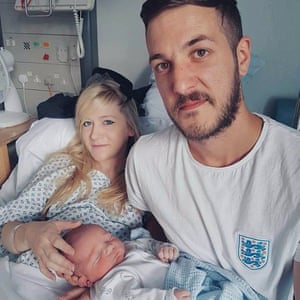


Charlie Gard


‘The judge…was to all intent and purposes delivering a death sentence. He knew that.’ Photograph: Family handout/PA

Fortunately for the parents, they found a legal team through the solicitors Bindmans, who were prepared to work for free. They did not end up, as people in private law cases often do, faced with a choice between representing themselves or not going to court at all. It is all the more absurd that had it been a question of whether Charlie should be taken into care – a life-changing but not a life-threatening decision – the state would have paid for their lawyers. That is because the case would have involved a local authority, another public body. Yet for Charlie’s parents, it would be hard to distinguish between a well-funded public body like a council, and another – the NHS.


This is not about the rights and wrongs of this heart-rending case, where Charlie’s parents wanted to overrule the doctors who felt it would be painful and futile, and take their son to the US in the very remote hope that an entirely untested treatment might help him. But it is a reminder of the way that in other courts the state is skewing the balance of justice in its own interests. The law is becoming the preserve of the powerful.


The Lord Chief Justice Lord Thomas said as much more than a year ago when he used his annual report to highlight the injustice of a system where the law was unaffordable to all but the rich. He repeated the criticism in his report for 2016: “A properly funded justice system is a core function of the state”, a role that included “holding the democratic government to account and ensuring it acts fairly and according to law”.


It is shocking to discover that even in a case where the court is having to decide a matter that is literally a choice between life and death, there is no legal aid. But it is only the most shocking of a long list of areas where it is no longer possible to get state help to challenge a perceived injustice: the list includes housing, welfare, debt, immigration, medical negligence and family law cases, unless they involve domestic violence. There are prohibitive charges on employment tribunals, which even the Ministry of Justice now acknowledges as creating unintended consequences. A 500% increase in fees for immigration and asylum appeals was only rescinded after a nationwide campaign.


This is the work of Chris Grayling, the most disastrous justice secretary yet appointed, who was in the post between 2012 and 2015. With apparently only the haziest grasp of how access to justice is a cornerstone of the constitution, in his three years as minister he took a machete to the whole system. His successors have been trying to patch it up ever since.


Excluding citizens from access to the law is a process of disempowerment. That is bad enough. What is worse still is that it enhances the lethal sense of government and its agencies that they will not be held to account. Lawyers are not often regarded as heroes of society. But a just society can’t do without them.


The Charlie Gard case is a sad reminder that the law is the preserve of the powerful | Anne Perkins

11 Nisan 2017 Salı

What we need is a national social care service | Anne Perkins

Neil Kinnock was on the radio at the weekend, talking about his hero Aneurin Bevan with the journalist Matthew Parris and one of Bevan’s biographers, John Campbell. Any conversation about Bevan’s life is mostly about the NHS and so it was this time, too. But it was a useful reminder of how, among all the battles fought over its creation, among the fiercest was the question of replacing a patchwork of local provision with a single centralised structure that tried to guarantee that everyone got the same level of care wherever they lived. At that the point the radical, big-government approach petered out. Social care was left where it always had been, with local councils.


Now the Institute for Fiscal Studies (IFS) has published a study looking at the difference in social care provision across England that raises the question of whether it too should be centrally funded. After all, whether it’s soaring demand for A&E or delayed discharge from hospital, the impact of inadequate or ill-designed social care services on the overall state of the health service has become the stuff of daily headlines.


Then there is the ageing population. Although we are all healthier in old age, the need for care doesn’t track changing demography exactly: men’s life expectancy is growing faster than women’s, so there are more old couples looking after each other rather than relying on formal care.


George Osborne’s response to the incipient social crisis was to set in motion plans to shift the entire cost of locally incurred spending to local taxes, with a system of equalisation that has yet to be explained. He introduced a social care precept allowing an increase of up to 2% in council tax to be spent on social care.


Since the amount councils can raise through council tax depends on their tax base, these changes are – as the IFS points out – hitting poorer councils much harder than well-off ones, even though in theory, the introduction of national criteria for eligibility for paid-for social care should mean a reasonably equitable approach. The IFS study found that cuts in social care were much steeper in metropolitan areas such as Greater Manchester, Tyneside and Greater Birmingham, which typically have significantly higher levels of need, than in the south of England (although that may be partly because there are more older people in the south).


But the distinction between what we pay for and what we expect wider society to support is more than just a matter of an arbitrary geographical divide. We are so familiar with it that we rarely ponder the palpable inequity between providing free care for, say, a cancer patient, regardless of their wealth, while charging someone with dementia who also has some modest assets.


Councils argue that keeping older people well is about much more than care homes and clearing hospital beds


Because social care is provided locally, the national focus is always on the NHS. So although last month’s budget made another £2bn available for social care, it is being delivered in a way that ties it in to supporting the kind of services that will ease pressure on the NHS. Councils rightly argue that keeping older people well is about much more than care homes and providing a bed clearance service for their local hospitals. It’s about wellbeing in the widest sense of the word, and the NHS’s provision of community services like stroke rehabilitation also have a significant role to play.


In some ways, NHS England chief executive Simon Stevens’ sustainability and transformation plans with their objective of integrating health and social care in ways that meet local priorities are an attempt to synthesise the national with the local. Yet there is such an inbuilt conflict between a free-at-the-point-of-use NHS and means-tested social care that it is hard to see how they can continue to coexist.


It comes at a high cost to patients. When hospitals are in effect incentivised to shovel the old lady who’s had a fall out of bed and off their books pronto (I exaggerate, a little), leaving her local authority to pick up the bill for getting her back on her feet, it seems the two arms of care that ought to be wrapped protectively around her are instead locked in a standoff. It is more arm-wrestling than hand-holding.


The government now promises (another) green paper on paying for social care in the autumn. But successive plans, each of which points to more central government funding, have crashed and burned on the runway. Oh, for a Bevan (and a Clement Attlee) with the courage and determination to sort it out.


Anne Perkins is a leader writer


What we need is a national social care service | Anne Perkins

3 Temmuz 2014 Perşembe

We must fight government plans to privatise the NHS | Anne Perkins

protest against NHS cuts

‘The government wants us to believe that the only way to attain excellent-expense successful healthcare is by privatisation.’ Photograph: Paul Davey/Paul Davey/Demotix/Corbis


Picture you are feeling a bit groggy, maybe a bit fed up with life. You go to your medical doctor. Or telephone them, or Skype them, or whatever hoop it is now necessary to jump via. You explain your symptoms – the headaches, the insomnia, the reluctance to get out of bed in the morning. The medical professional looks more and more grave. They include in some questions of their very own. Yes, you have lost your appetite, and yes, you have rather given up taking any exercise. Suddenly, the doctor brightens. “I believe I have the response!” they exclaim. “You are depressed. But I can make you greater at as soon as! Total of energy, positive, back to the get together particular person you employed to be. We will amputate your left leg!”


This is approximately the logic of the government’s determination to privatise the NHS. It isn’t going to have ample funds, as a result it ought to be provided much less. It is a type of political manoeuvre that the Tories (and often Labour, also) have been practising for a even though, an ideological sleight of hand that is well worth deconstructing this brilliant July morning, the day that it is revealed that the initial £1bn NHS contracts are going out to tender to the personal sector.


The rhetorical trick they play goes something like this. You adore the NHS. (Once it was the railways, and in the long term it may possibly be schools, but the NHS stands alone as the absolute essence of the public provision of a public excellent). We adore the NHS too! We so get in which you are coming from. But.


Then the chiselling begins. Across a broad front. The scale of the service: proudly using more individuals than the Chinese People’s Liberation Army. The budget: paying £97bn in England alone. And then the statistics. All individuals people, all that cash and it still isn’t infallible. Shame. Its competence: is it actually all that excellent? Is it occasionally, in some regions, less very good at, for example, innovation than healthcare in the US, or at detecting cancers than some hospitals in France or Germany? And last but not least, its affordability. Never thoughts that examine after study shows it is the most price-effective overall health support in the planet, Britain is on its uppers. We can’t afford it.


And right after that, the amputation minute, the minute of complete disconnect. There is only one solution. It need to be broken up and offered into the private sector. The discipline of the market place – that will be the same market place that has brought you the most costly train tickets in the globe along with a direct transfer of public subsidy into shareholders’ pockets. The market place that so efficiently delivers complexity like, say, banking solutions and insurance coverage policies. This is the industry that will kind out delivery and somehow price much less and make a profit all at the very same time.


And when it doesn’t – the way rail privatisation hasn’t delivered the advertised advantages of value effectiveness, even if the trains are more comfortable – it won’t be that you arrive 4 hrs late into Crewe. You will not arrive at all.


The government desires us to believe that the only way to achieve great-value powerful healthcare is by privatisation. That has practically nothing to do with an objective reality. It is since many Conservatives truly believe that the state is incapable of undertaking something much better than the private sector could. This is at times so taken for granted that it is ignored.


There is a danger that the campaign against the Tory health reforms will appear like a battle in between two tribes fought in incomprehensible acronyms above the organisational detail of a system that these days is appropriately understood by about five individuals most of whom operate for the Kings Fund. But actually, we ought to fight on the most fundamental factors.


Jeremy Hunt have to make clear exactly why and how the private sector will be better. Greater outcomes, or just new paint? Shorter waiting times, but at what genuine cost? And why, when OECD projections demonstrate that every single developed country will be paying a increasing share of GDP on well being, does he believe that the private sector – invariably far more costly – will be the solution? And who will shell out, with what, if he is wrong?


We must fight government plans to privatise the NHS | Anne Perkins

26 Haziran 2014 Perşembe

Note to the government: you can"t switch off bad health like a tap | Anne Perkins

‘The ‘drink water’ message is as brilliant in its rustic simplicity as Make Love Not War, and will be about as much use.’ Photograph: imagebroker / Alamy/Alamy


There is a intelligent way of dealing with the surge of weight problems that is troubling public policymakers so a lot that they are coming up with a new blacklist of foods that until yesterday we considered was excellent for us. Here it is, this silver bullet: drink water.


This is as brilliant in its rustic simplicity as Make Adore Not War, and will be about as significantly use. Any individual who has ever been to the US, or even an American-style restaurant, will know this injunction to drink water is futile beyond even the typical limits of futility. Who are the fattest people in the world? Americans. What do you invariably get when you sit down in the humblest American diner? In the land where nothing at all comes for free of charge? Water.


The guardians of the nation’s health have a fine record of coming up with recommendations that are statements of the dazzlingly evident to individuals who never require their tips, and will do nothing for the individuals who do.


A jug of water as an alternative of juice? We all know that individuals who give their youngsters juice do it due to the fact they consider it really is excellent for them. They will also attempt to feed them wise standard meals eaten even though sat down with each other round a table, which might effectively previously incorporate among the condiments (excluding salt certainly), a jug of water. It’s not even really worth attempting to find the statistics.


The juice in this family’s diet plan has now been exposed as a secret hideout for the demon sugar it is also (I can reveal given that the sector potentially hasn’t) stupendously damaging to the setting in terms of carbon emissions, except if you truly reside in the shade of an natural orange tree.


But the purpose that juice is there on the table is because a year or two back, these dad and mom have been authoritatively instructed that pure fruit juice was actually great for you, 1 of your five a day.


Companies with cute, wholesome names have created financially healthy empires on the basis that fruit, pulverised and expensively packaged, is excellent for you.


Water has been commodified also, clearly, since even ahead of we knew about fruit juice currently being the non-cabbage route to healthier living, it was reported that accessibility to a typical healthy life style would be denied to anyone who failed to drink at least two litres of it each day. This was intelligent on numerous levels, but mostly because of the exactness of the target.


No one who drinks water out of a tap, or even a jug that they may possibly share with other people, can have any thought of the sum they eat. But once it has to be two litres, then the bottle grew to become indispensable, and with the bottle comes the brand, the supply of lots of wonderful profit.


Pity these bad rulers of our conscience, for they are now regarded accountable for saving not just us but the NHS also, considering that the utter, brilliant madness of individuals who founded it on the basis that medicine helps make men and women nicely has finally been exposed for the con it constantly was. Pity them due to the fact they have absolutely nothing but exhortation to fulfil this impossible mission.


What we want to be a healthy nation are great, regular, moderately properly-paid jobs and respectable, inexpensive houses. It would be an added bonus if wholesome food were more affordable than junk foods but the public well being professionals know exactly the price of the low self-esteem, loneliness and insecurity that come from being jobless, and the damp, cramped housing that can wreck a complete family’s well being. But tackling that is not in their remit, although back in 1945 Nye Bevan was minister for housing and wellness.


Nor are they permitted to do anything about the near full capture of the national meals culture by a international food business which is founded on buying low-cost and offering dear, though not so dear that any non-worldwide company can readily compete.


And so we middle-class kinds will leap for the water jug when we hear of the require to minimize sugar and we will dutifully get rid of the fruit juice and substitute Adam’s ale (copyright the Bible), possibly from the tap. We will examine recipes that can be cooked from fresh in twenty minutes and will possibly trouble the NHS mostly at the starting and finish of our lives. And we will be silently encouraged by the knowledge that we have ticked the boxes, taken that added bit of trouble, to be free to disapprove, discreetly of program, of people who have failed to seem following themselves – although in no way needing to do anything at all a lot about it.


Note to the government: you can"t switch off bad health like a tap | Anne Perkins

10 Haziran 2014 Salı

A ringfenced tax for the NHS? Excellent notion, in theory | Anne Perkins

Frank Field

Former Labour minister Frank Discipline advised that enhanced nationwide insurance contributions could be paid into a sealed fund for overall health and care charges. Photograph: Martin Godwin for the Guardian


The idea that we would be keener to shell out tax if we knew exactly how it was to be invested is one of the most persuasive in modern day politics. No shock then, as the NHS faces up to what many believe is the deepest crisis ever, that the question of consumerising tax is back. The notion of earmarking a portion of nationwide insurance coverage to shell out for the NHS is a beguiling thought, but will it function?


The last time the debate about hypothecation captured consideration was back in the 1990s, when Labour was struggling to assert its economic competence. There had been reports from every self-respecting thinktank about reconnecting taxation to paying. And it’s by no means really gone away as an concept, getting been utilized to justify green taxes, spend for the New Deal for the younger unemployed, and support the large enhance in health paying after 2002. It may possibly make very good politics, but not always good economics.


The fuel duty escalator, an yearly increase of 3% to disincentivise motoring, was actually introduced by a Tory chancellor , but in 1997, Gordon Brown extended it to tobacco, and announced both taxes would rise by at least 5% each 12 months. And for the 1st time, he linked the increased income to mitigating the wider environmental and well being impacts of driving and smoking. Not very a hypothecated tax, much more of a hybrid, but nevertheless a way of making income for specific policy objectives. But inside of months of implementation in 1999, the fuel levy was hounded to oblivion by mass protest.


By some means the idea of an unspecified return in the form of enhanced transport infrastructure was no compensation for a whacking upfront increase in the cost of petrol. One weakness was that it was by no means created clear by how a lot spending on transport would rise, more than and above investing currently planned.


Labour introduced other levies to influence behaviour that at the exact same time would deliver funds for specified objectives: the climate change levy to incentivise the use of renewables, now heading the identical way as the fuel levy landfill tax and an aggregates levy. Some of the income from the aggregates levy went into the aggregates sustainability fund, which – in situation you missed it – fell to the cost-cutting bonfire of 2011. More or less the fate of the Street Fund, set up in 1920 and abandoned in 1936.


The climate adjust levy failed simply because it worked also well. It produced power too costly. But that is not its only weakness. In purchase to be able to declare it would be revenue-neutral – a sort of reverse hypothecation – a .three% minimize in employers’ nationwide insurance coverage contributions was created at the same time. But the climate alter levy raises much less than is foregone by the nationwide insurance reduce. Cross-referencing taxes is a tricky company.


Total-blooded hypothecation would in theory dodge some of these weaknesses. It would straight hyperlink some or all of a certain tax to, say, funding the NHS. Labour is talking about using an boost in national insurance coverage for just that function. It truly is worked before, when a 1p increase in nationwide insurance coverage contributions was used to fund the enormous improve in health investing – from £65bn to £105bn – amongst 2002 and 2007.


But it was sleight of hand. Only a fraction goes to the well being services, which is nevertheless nearly totally funded from general taxation, so it is not as transparent as it appears. And whilst the very good point about national insurance is that it is fairly progressive, the negative factor is that the revenue it raises depends on the amount in function. Often it goes down. Well being investing often goes up. There is a parliamentary briefing that spells out the options with admirable clarity.


So hypothecation can make tax a lot more respectable. But it is symbolic rather than substantive. All the exact same, that does not mean it isn’t really worth undertaking.


A ringfenced tax for the NHS? Excellent notion, in theory | Anne Perkins

12 Mart 2014 Çarşamba

The scientific research has become a flawed manual for living | Anne Perkins

Smoking - 18 Jan 2012

According to the Million Ladies Study, girls can smoke right up until they’re 30 with almost no impact on daily life expectancy. Photograph: Isopix / Rex Features


The Million Girls Review is in the business of discovering out unknown unknowns. Nowadays, for example, we understand from it that females with partners are less likely to die of heart illness, even though they are just as very likely to get it in the very first location. The Oxford-based researchers have an astonishing database, the data of 1.3m middle aged ladies recruited in the late 1990s, initially in order to examine hormone substitute therapy. But – and why not – presently the epidemiologists seem to come up with various methods of quarrying their extraordinary resource for answers that will look very good in the headlines. The study is turning into a variety of guide for residing.


So they have found out the following: the far more youngsters you have the fatter you are, unless of course you breastfed them for at least six months, in which case you will be thinner. You can smoke till you’re thirty with nearly no affect on your daily life expectancy, but smoke right after 40 and which is ten many years off it. They have also noticed that taller folks get a lot more cancer and are now considering if owning a cat influences your opportunity of receiving brain cancer. I did not make the final one up. It is on the internet site.


In other news, The Instances reports that Dundee scientists have identified that overweight girls are much more likely to fail their GCSEs, whilst the Everyday Mail has discovered a examine showing that females speak three occasions as a lot as guys, since – allegedly – of the influence of testosterone on the building brain.


What is puzzling is how we – each and every a single of us – need to reply to all this persuasively authoritative details. In some ways cohort research this kind of as Oxford’s Million Females act as a type of mirror for each older lady. In a million girls, there will be a single who is going to be just like us, a tiny ahead on the amble by means of existence, a pattern from whom we can understand. In which she stumbles above an additional glass of wine even though stroking her cat and as a result succumbs to a cancer, we can say no and reside on.


That is what is so alluring about all these scientific studies. The beguiling weight of scientific evidence appears to supply the two an individualised glimpse of our potential selves and an analytic device for explaining why our current lives are this kind of rubbish. Each and every “study” turns into a guidebook to modern day life, a instructor who is aware of us greater than we know ourselves, an analyst who can search into our souls. In which our ancestors relied on the Bible or at least a political philosophy, we can compose our biography in scientific studies. They turn into the measure against which we judge ourselves. Worse, they become the measure we hold other men and women to. Scientific studies define us, and they define otherness. The a lot more we know about the epidemiology of cancer or obesity, the a lot more stringent we can be in our condemnation of those who refuse to dwell by the guidelines.


And however we do all this understanding perfectly well that we are not standardised people. All studies present is the statistical probability of an occasion, and even that only seldom with the sort of self-confidence that legitimises action (even though it is totally proper that the Million Females Examine is based in a developing named for Richard Doll, the man who first linked smoking to cancer).


So whilst it really is interesting to hear that women are less likely to die of heart condition if they have a companion, no one’s going to go out to uncover one in purchase to have a marginally better likelihood of creating it to outdated age.


The scientific research has become a flawed manual for living | Anne Perkins

4 Mart 2014 Salı

NHS hospital closures need to be shaped by health wants, not by the market | Anne Perkins

There is already evidence that hospital closures happen not for the public good.

Strategic choices must a matter, not for politicians, but for a panel operating to defined criteria and in collaboration with the public. Photograph: Neil Hall/PA


There are many desirable reasons to reorganise the way hospitals and healthcare are managed. Reorganisation can supply much better outcomes, as the merging of care for stroke victims in London has shown. It can cut costs at the identical time by closing outdated hospital internet sites, or decreasing the assortment of providers they supply, or the quantity of folks employed. It can lead to much more and smarter investment, as effectively as better value for income. Producing the situation for rationalisation in general terms is effortless. But arguing it by way of on the ground is a nightmare. The only point that can make it even worse is for the well being secretary to consider the power away from the folks who are impacted by it and make closures all about money and the marketplace.


Jeremy Hunt’s Clause 119 of the care bill, which the Commons will contemplate for the first time on Monday, is an emergency response to the court ruling, last October, that Hunt had acted illegally in cutting A&ampE and maternity providers at Lewisham hospital in south-east London. The trust special administrator did not have the electrical power to order the closure of some of the hospital’s providers in buy to shore up the South London healthcare believe in of which it was not part. The providers had been reprieved, but probably not for long. The new clause indicates trust special administrators appointed by the well being secretary to consider more than any NHS believe in failing financially will in potential have the power to drive through whatever nearby modifications are required. The regime of failure will dictate the shape of hospital services.


Monetary crisis driven by the want to make £20bn of efficiency cost savings in NHS trusts is expected to drive tens of hospital closures in the close to long term, which includes very good, hugely valued neighborhood units that never fit into the income-making model. As the Nuffield Believe in remarked in its commentary, this efficiently provides the secretary of state “the capability to undertake large-scale reconfiguration”.


This is no way to reform the NHS. There is presently proof that hospital closures take place not for the public good, nonetheless defined, but simply the place they can be produced to occur. That is, where there is least political challenge. Each politician has discovered the lesson of the Kidderminster effect, when a regional hospital advisor swept to victory in Wyre Forest in the 2001 basic election, in defence of the A&ampE department at his hospital. So if hospitals are to near or services are to be withdrawn, it is most likely to take place the place men and women are least capable to organise properly in defence. How much much more probably are unfair closures when the ultimate say is in impact in the hands of the health secretary?


It will not only put politics at the heart of the process. It will volume to reconfiguration by crisis, cuts shaped by the market rather than by the community’s well being wants. A couple of years back, the Kings Fund suggested the reverse technique. It stated far from ministers taking management of the approach, they must be removed from it altogether. It found that nearby politicians were too usually a barrier to, rather than a facilitator of, honest dialog ue with the public. Strategic decisions must be a matter for a panel, operating to plainly defined criteria and in collaboration with the public. Which is how, twenty years ago, the Canadian province of Ontario decreased 44 hospitals to 14. Their expertise – the method was driven by steep spending budget cuts – may not be a ideal model for Britain, but at least the choices were manufactured on a rational basis that permitted good quality, specifications and accessibility to be set towards cost-cutting and efficiency.


Hospitals are the emotional repository of back links between person and community, neighborhood and the state. But they are also the physical representation of the purpose of the NHS, the embodiment of the notion that we are all in it together. The service undoubtedly wants reconfiguring, and modify in the NHS takes also prolonged. But if ever this government desired a way of demonstrating that they think the whole 1948 vision of a Nationwide Overall health Services is broken, forcing by way of cuts on the basis of a market place model is how to do it.


NHS hospital closures need to be shaped by health wants, not by the market | Anne Perkins

8 Ocak 2014 Çarşamba

The alcohol pricing U-turn exhibits the power of the organization lobby | Anne Perkins

Alcohol

‘Investigators have established there have been 130 meetings between the drinks market and coalition ministers, such as two that took spot right after consultation on the proposed minimal pricing legislation had ended.’ Photograph: David Levene for the Guardian


A minimal value for alcohol is a single of those policies that seems so wise – the only mystery is that it hasn’t currently been launched. (I speak as one who surreptitiously visits alcohol concern web sites to verify exactly where on the functioning alcoholic spectrum they fit). There are various ways of undertaking it, but in 2012 there was general enthusiasm when the coalition confirmed it would fulfil its pledge to carry in minimal pricing by alcoholic unit. The only question was at what level.


It looked like a carried out deal. Yet within months there were indications that the policy was falling out of favour. In July it was announced – to some shock – that the consultation had produced a clear majority towards and the policy was abandoned.


The charity Alcohol Policy Uk has presently pointed out that while the consultation on the legislation had asked for views on the suitable pricing level per unit of alcohol, the health secretary presented it as if all these who desired a higher level than the 45p proposed had been the same as people who did not want any minimum at all. The “no” vote was added to the “not at this level” vote. Not so significantly massaging the figures as dislocating them.


The most current problem of the BMJ supplies a persuasive explanation for why the government killed off its very own initiative, even although the Canadian encounter is exhibiting what professionals contact “dramatic” benefits to public overall health. Their investigators have established that there have been 130 meetings amongst the drinks industry and coalition ministers, such as two that took place after consultation on the proposed minimal pricing legislation had ended. Probably they have been arranging for the Tory party conference in October, the place drinks giant Diageo was sponsoring a cocktail lounge.


Today, in an astonishingly temperate intervention, Professor Sir Ian Gilmore, the Royal University of Physicians’ alcohol adviser, along with 21 other authorities in public well being and liver illness, have written a letter in the Every day Telegraph suggesting with masterly understatement that big organization may be trumping public well being issues.


It seems to be obtaining trickier and trickier to keep funds and politics apart. Here’s a listing of curious developments in the planet the place the two collide. Plain packaging for cigarettes, yet another instance of David Cameron’s worthy claim of getting in politics to do the correct point, not the popular factor: it went into the wonderful political ashtray final July too. There are recommendations it might come back soon after the election, depending on the proof. Australians seem to be fairly convinced presently. As their former prime minister, Julia Gillard, argued in a blog final month, this is a global campaign towards a single of the world’s biggest industries, and they aren’t going to give up simply. And, while Cameron insists it’s very irrelevant, it need to be comforting for the market that their guy Lynton Crosby is 1 of the prime minister’s closest advisers.


The evidence is that British politics and certainly the great vast majority of British politicians are decent and well-meaning. But the impression is that the hand of big organization is found as well shut, also usually, to huge choices. From finance to housing to healthcare, there are repeated signs of something far more than the shared goals that a rightwing government and personal business could be presumed to take pleasure in. The stupendously misnamed transparency of lobbying bill, now virtually on the statute book, was trailed as the solution. Its weedy, misjudged restrictions on third-celebration action and its partisan assault on the unions will do precisely practically nothing to adjust that impression.


It truly is damagingly straightforward to spot conspiracy the place it isn’t going to exist, all the a lot more so in which voters have become so sceptical about the political approach. Putting it right is going to get a prolonged time. But it would be a start off if the political class would recognise just what they do to public believe in every time they weasel out of undertaking something their backers do not like.


The alcohol pricing U-turn exhibits the power of the organization lobby | Anne Perkins