The tide is turning and you can feel it on the streets of the world’s capital cities. On Sunday, hundreds of peaceful protesters were arrested in Moscow and St Petersburg, after thousands massed in unsanctioned demonstrations against corruption.
There were similar scenes in Minsk, where punitive taxes on the unemployed have driven people to the streets. In February, half a million Romanians forced their government to abandon a law pardoning corrupt officials, by taking to the streets.
In Britain, in the month of March, three major protests have taken place: a demo to save the NHS that drew up to 250,000 people; a 30,000-strong march against racism; and, on Saturday, a protest in favour of staying in the EU, again numbering more than 100,000 people.
National demonstration in London to protest agains the state of the NHS. Photograph: W Szymanowicz/Barcroft Images
And when Donald Trump’s repeal of Obamacare failed in Congress, although the blow was struck by rebel Republican lawmakers, the force behind it surely came from the thousands of people who swarmed into town hall meetings to berate their representatives in the runup to the vote.
The point is not that “mass action works” – it rarely does, on its own. The point is that it’s not futile. Putting your body on to the street, or into a mass meeting, or getting it thrown into a police van – as happened to hundreds of Russians and Belarusians this weekend – creates power of the kind professional politicians despise.
If you want to understand how irked the political class feels when people exercise their right to protest, study the Twitter feed of MP Owen Smith. The one-time Labour leadership contender didn’t join the Save the NHS demo – but he did find time, at the very moment a quarter of a million people were on the streets – to belittle them. He tweeted to a follower: “Is that how we save it then? With a march? I always thought it was better to win elections and then fund it properly.”
Brief though it is, Smith’s tweet encapsulates an entire political philosophy. The people who ignored Smith’s advice and marched for the NHS understood what the closeted technocrats do not. Mass action creates its own dynamics; they can be massive and far-reaching – despite the scant and bland coverage all demos get on TV and in the press.
In the first place, assembling in a large crowd shows you that you are not alone. And it informs you in great detail about the kind of people you are not alone with. On the NHS demo, it was obvious that huge numbers of NHS workers had turned out, alongside user groups often led by elderly people. Why is that interesting? Because in the modern, privatised and corporatised NHS, the staff are afforded few collective outlets for expression. Coming together – not just as “nurses from Doncaster” but nurses, doctors and patients from Doncaster – breaks down the invisible walls institutional life creates.
On Saturday’s Unite for Europe march, it was – by all accounts – the liberal salariat that predominated. A lot of sarcasm has been aimed that way by the Labour left and the media right but, again, such mass gestures are about finding each other, testing out arguments, and creating and transforming messages.
Unite for Europe march, London. Photograph: Valerio Berdini/Rex/Shutterstock
If you add to all this the experience of resistance to Trump in the US, the global picture becomes interesting. On 21 January the US experienced possibly the biggest mass mobilisation in its history – with an estimated 4.2 million people protesting against Trump’s inauguration in towns and cities across America.
What social media adds to such mobilisations is not just visibility but the intensification of the shared experience. Each block of 1,000 protesters on any demo in the developed world is really a thousand nodes on a network containing tens of thousands of other nodes. It is a moving and incessant information-distributing machine.
And that is why the first move of any government that wants to curtail democracy is to curtail the right to demonstrate. Putin outlawed the majority of planned demos last weekend, but they went ahead regardless. Slammed into the police vans were not just brave but faceless Russians, but people with Facebook and Twitter followers all over the planet.
That’s why demonstrations matter and why, in the name of resisting the growing kleptocracy, racism and authoritarianism of political elites, we should keep on demonstrating.
But demonstrations are never enough. Just as 30,000 people on the streets usually merits only a colourful picture and a caption in the newspaper, what they did afterwards is barely recorded at all. This is why revolts and revolutions always surprise elites, and a media conditioned to see the world through the elite’s viewfinder.
“When the people decide to live …” wrote Tunisian poet Abu al-Qasim al-Shabi, “chains will be broken”. Those words were widely shared in 2011 during the Arab spring.
Revolts happen because elites push things so far that large numbers of ordinary people conclude there is no other option but to resist.
You can do some things at the ballot box: the defeat of Geert Wilders in the Netherlands, the humbling of Paul Nuttall in Stoke-on-Trent and – hopefully – the defeat of Marine Le Pen in France on 7 May. But some challenges require you to don a pink hat, or – as the Russians did – hang a designer sports shoe around your neck, paint an amusing sign, march, take pictures and tweet them to your friends.
When the people decide to live, demonstrations are what they do: and there’s a lot of people demonstrating it as spring gets under way.
It is becoming increasingly clear that many of our public service systems undermine people power.
Problems like obesity, depression, addiction and finding a job require us each to take individual action. Of course there are all kinds of support to help us keep fit, ace job interviews, or live without drugs, but control always lies with the individual, not the state. We decide what food to put in our mouths or whether to go to the gym.
But this vital truth seems to have been absent in designing our public services.
Take, for instance, a GP appointment. Most last 10 minutes; the GP asks a few questions and then tells you either to take some medicine, adopt new habits or see someone more qualified. The trouble is, we don’t do what we’re told. The World Health Organisation has estimated [pdf] that only 30%–50% of us take our medication as prescribed, in what is being described as an “epidemic of non-compliance”. Many of the changes required are intimately connected to our sense of who we are and what others think of us – and it’s very hard to change a habit. Anyone who’s tried having a “dry January” will know the challenge.
Ideas about co-producing public services, with professionals and users working together, have been around for years. What’s interesting right now is the new movement of practitioners delivering “people-powered services” that aim to improve self-efficacy at a low cost and with high impact.
One example is homelessness charity Groundswell, which provides peer support to people experiencing homelessness to help them address their health needs. Athol Halle, Groundswell chief executive says that when you provide support in this way, there are health benefits for individuals – and cost savings for the NHS. That’s why Groundswell receives in the region of £500,000 from health commissioners. It is not alone. Club Soda is working to reduce alcohol dependence, Brightside Trust is working in youth unemployment, Community Catalysts in adult social care, and Self Management UK in health. All of these organisations are based on putting users in charge of their service.
However, this is much easier said than done. Supporting people to take control is a subtle discipline in which most people working in public services have not been trained.
Here are five basic principles of how to help people take control that you can adapt according to your circumstances:
Accept the user wherever they are.
See users as having all the resources they need to start taking action.
Change is only possible if the user wants it.
Users’ solutions are the best solutions.
Never assume users think like you.
At first glance these five principles might seem plain wrong. Not everyone has all the resources they need, especially in this era of deep cuts.
But for services where individual action is a requirement, the essential ingredient is user motivation. So whether they do in fact have everything they need is not what’s important; what matters is that they believe in themselves enough to make a start.
For most professionals it takes a fundamental reorientation to start supporting individuals to take action themselves. Anand Shukla, chief executive of Brightside Trust, says it is often quite a leap for professionals to support people to make decisions and to take action. What’s crucial, says Shukla, is to identify right from the start people’s priorities and wishes, rather than jump in and tell them what you, as a professional, think they should do.
These principles need to inform not just conversations between service professionals and users but the whole way public services are designed: system design. Without that, the work of people like Halle and Shukla will be stifled by systems that claim to want people power but, in fact, work against it.
If you’re a public service professional working in people-powered services – or an individual taking action – drop us a line and tell us how you’ve got on: public.leaders@theguardian.com
Talk to us on Twitter via @Guardianpublic and sign up for your free weekly Guardian Public Leaders newsletter with news and analysis sent direct to you every Thursday.
You’ve heard of the “placebo effect“, where people who are usually being treated for benign conditions or as part of a study, will receive a medicine that is made of sugar and perhaps some filler ingredients.
Why?
Because as the official definition goes, placebo’s are “a medicine or procedure prescribed for the psychological benefit to the patient rather than for any physiological effect”. That means that just thinking that you are getting better, helps you achieve the results you would achieve with a medicated alternative.
Perhaps this is one of the most undeservedly studied phenomena of our times. These days, everything is just a “quick fix” – a pill, an easy effortless way to exercise, or a miracle diet to help shed the pounds.
Rather than focusing on improving our health as a whole, people tend to lean towards an instant solution rather than addressing the root cause of their problems.
No, it’s not as simple as “thinking” a thought, and then suddenly having it come into being – sometimes, a chemical solution really does have its place. For example, treatments for cancer and severe fungal or bacterial infections are usually grounds for using heavy duty medicine.
However, in the 21st century, there seems to be a pill for just about everything which really should be handled with natural alternatives as much as possible.
Here are just a few examples:
Depression & anxiety. A lot of times, prescription medications are given out by doctors without really looking into the root cause of the issue. When was the last time your doctor talked about your personal situations and gave you advice on how to cope with those stresses? Most likely never. The worst part about medications for these “illnesses” is that they typically are a benzodiazepine (opioid derivative) and highly addictive. They can cause a cycle of dependence and severe withdrawal symptoms which further aggravates the problem.
Acne. As a sufferer of severe acne in the past, I have found that through endless amounts of trying, a lot of acne is a result of an unbalanced body. This could be a result of hormones being out of whack due to stress (which is why people tend to break out around these times), a poor diet, or even using too many supplements. Many men take testosterone supplements which can cause major issues with the bodies natural balance of chemicals.
Pain killers for back, shoulders or other general conditions. Usually, these are the result of a poor posture, bad form in sports, repetitive strain injury, or a variety of other reasons. This had to be included on the list because among doctors these are some of the most common reasons for visitations, where the patient will usually be prescribed yet another medicated solution, rather than treating the root cause of the problem.
As you can see, these are all short term solutions for problems that will continue to persist until it’s “nipped in the bud” as they say… that means taking measures to correct your issues through holistic and natural means wherever possible.
While it’s not possible to diagnose and and provide a potential solution for every single one of the these problems, there are general guidelines anyone can follow to get on the right track.
Try to eliminate grains, wheat and bread/dairy out of your diet if you are particularly sensitive. Many people have dairy intolerance without even knowing, and it can wreak havoc on the body. Especially prone people may notice itchy skin, acne flair ups, and other inflammation (joint or body pains) without even realizing it could be an issue). Eating fruits and vegetables is highly advised.
Keep your supplements to a minimum and try to get nutrients from whole foods. There are people out there who take all kinds of vitamins, minerals, and even supplements like DHEA (which is a precursor to most hormones and pheromones produced by humans). However, relying on supplements is simply unhealthy and even more likely to throw the bodies natural balance out. A lot of the supplements people take are much better taken when eaten naturally through vegetables and fruit as they provide the complete spectrum, rather than perhaps 1-2 isomers of the compound. As an example, vitamin E is made up of 8 different types of tocopherols and tocotrienols – in nature, they are found as a complete compound whereas supplement companies use cheap, synthetic isomers of Vitamin E which could even be harmful to your health.
Stretch and be aware of your bodies posture and how you move. This one can take a lot of trial and error, but pin down the source of your pain. For example, if your back is sore, is it because you sit in a bad position? If your knees or shoulders hurt, what’s the main reason you can pin down? Once you’ve done that, find healthier ways and consciously work it into a subconscious behavior – make it second nature. You may also look into methods such as the Gokhale method, which has been recognized worldwide due to its fantastic results without surgery or extensive physiotherapy sessions.
Maintain physical exercise through cardio and weight training. Many of the benefits of exercise are discussed throughout the internet, but it warrants a mention if you have not already implemented this already in your life. It could be as easy as taking a walk around the block, to going for short runs, to challenging yourself in the weight room. If those bore you, try to incorporate a physical exercise you enjoy – dance, martial arts, and calisthenics are especially fun!
The sooner you begin working on your health as a cohesive unit – from watching what you eat, to how you use your body, to maintaining and caring for it, the happier and more enjoyable your life will be for the long term.
It’s never too late to make a positive change for a healthier lifestyle!
Every so often, as an anaesthetist, you know the patient may not wake up and that you will be the last person they ever speak to. This operation may be their last chance at survival but it may also be the very instrument which ends their life. Something has ruptured. They may be bleeding. You don’t know if you can “turn off the tap”. The patient may be frail but you must at least give them the chance.
Getting them through the operation can be the easy part but the body has suffered enough and simply does not have the reserve to deal with the trauma. They remain sedated as the feeling of a breathing tube and the nature of being a patient in intensive care would be as unpleasant as the operation itself. You keep them alive but only under the immense power of an arsenal of drugs reserved for these circumstances. You keep them alive with the hope they may pull through, but occasionally only so their loved ones can be by their side at the moment of passing.
Barriers may unintentionally fall and their true feelings are revealed, possibly followed by a knowing laugh
A patient’s last words can be deeply profound, even prophetic of their own mortality. They can be completely ignorant of their condition through delirium or dementia. Vital organs only take minutes to become irreversibly damaged. They need oxygen, they need blood and the body’s systems are failing, often before your eyes. Sudden confusion, unconsciousness, abnormal breathing, all signs of impending shutdown. You have to take over, you have to replace that which has failed. A tube to deliver life-sustaining oxygen, fluids or blood to replenish what was lost, and anaesthesia to rest a frantic brain and spare the memory of any suffering.
Those who you can talk to you reassure. You tell them everything will be done to wake them and that there will be no pain, they will not suffer. They understand. Reassurance is easy, a few simple words spoken honestly and calmly. You gauge the mood and ask them about who is waiting for them when they awaken. How long have you been married? What kind of dog do you have? Find the right path to follow and they will lead you down a road of conversation which lasts until the point of unconsciousness. Barriers may unintentionally fall and their true feelings are revealed, possibly followed by a knowing laugh. They know their secrets are safe.
Revelations range from patients, previously brave-faced, who confess their terror at the prospect of never waking, to those who divulge a sense of abandonment of life. They have suffered enough and want this sleep to guide them gently to death. One patient admitted to having enjoyed a cheeky slug of whisky a friend had smuggled to him just before coming to theatre. People share a joke and a smile. The release of a smile is echoed in the slowing heart rate only associated with feeling calm and relaxed. The beeping machine that monitors their heart becomes a metronome of their emotion.
I remember one man who was brought to theatre for an emergency operation. He was dying but nobody knew when. The cancer had spread and was now blocking his gut. He knew the operation might kill him but wanted to take the chance that he may survive long enough to leave hospital to organise his affairs and be with his loved ones at the end. His mood struck us all. He was dying yet had a smile on his face and was quick to share a joke. No one said “see you afterwards” as we most often do, we just invited him to think of somewhere he would rather be. He smiled again – “anywhere but here” – and laughed. He never spoke again. He passed away under anaesthesia the following day with his family by his side.
Only in the hours or days following the event does the poignancy hit you. You start to reflect on not only the words themselves but the underlying emotions the patient was experiencing. There is a sadness, especially when speaking to a patient’s loved ones, but the opportunity to reflect provides a chance to learn and question your own practice. Your normal bedside manner was aimed at inducing calm before the anaesthesia itself. Did it work? Did you quell the fear in any way? Could anything have been said differently or not at all?
A person’s last words can be a defining moment. You speak to families and you tell them there was a smile, even a giggle. The fact that this was their last conscious, communicated thought will hold in the memory of anyone who cared for them. “Yep, that sounds like him!” Another smile. A seemingly impossible moment of happiness.
If you would like to write a blogpost for Views from the NHS frontline, read our guidelines and get in touch by emailing sarah.johnson@theguardian.com.
Join the Healthcare Professionals Network to read more pieces like this. And follow us on Twitter (@GdnHealthcare) to keep up with the latest healthcare news and views.
‘Whenever I went to see my grandma,” says Hannah Peel, “we always had the same conversation. She would ask me who I was and what I did, and I would say that I was a musician, that I played the violin – that she’d actually given me her younger brother’s violin. I would tell her how she and my grandad used to sing together. And she would always just smile, nod, and say, ‘Mmm, oh, I love you.’ She had no idea at all what I was talking about.”
Peel, a musician known for her work with the Magnetic North and a variety of ambitious solo projects, had been watching her grandmother slowly slip into dementia for years. From the early befuddlement of lost objects, items she thought stolen, to the run of confusions and contradictions that led to her eventual diagnosis, it was a deeply distressing experience for the family.
Then one Christmas, having read about the positive effect music can have on people with dementia, Peel wondered if she could connect with her gran through some of her most familiar songs. “I said to my dad: ‘Why don’t we sing to her and see what happens?’ And from a place of not knowing us at all – from giving her Christmas gifts and her saying, ‘Oh thank you, what’s this for?’ – she completely woke up and started singing the lyrics. She was aware of what was going on around her. As we left she said: ‘Happy Christmas!’”
[embedded content]
Tenderly by Hannah Peel on YouTube
Peel found the effect so overwhelming she began to write a song about her gran. That one song led to her new album, Awake But Almost Dreaming – in part an exploration of dementia, but also a celebration of her gran’s life and of the wonders of the human body. As well as referencing Italo Calvino’s novel Invisible Cities, it features contributions from producer Liam Howe and Hayden Thorpe of Wild Beasts, a cover of Cars in the Garden by the Blue Nile’s Paul Buchanan, and recordings of those circuitous conversations she had with her gran.
“All the tracks lead us into her world and wondering where she is,” says Peel. “And so that became the record, starting with the youthfulness and slipping into that world and the rabbit hole of dementia.”
There are 850,000 people with dementia in the UK. By 2025, this number is expected to pass one million. It is now the leading cause of death among British women. While a cure has yet to be found, much has been discovered about the effect that music can have on sufferers, even when the disease is at its most advanced stage. As the neurologist Oliver Sacks said: “Music evokes emotion, and with it memory. It brings back the feeling of life when nothing else can.”
Several viral videos have captured this feeling of life: the sheer delight music can bring. Recently, there was the joyous footage of Ted McDermott, a 79-year-old former Butlins Redcoat who was diagnosed with Alzheimer’s three years ago, being driven around by his son as he sang along to Quando Quando Quando. There has also been a raft of projects – from English Touring Opera’s Turtle Song, a songwriting programme for sufferers and their companions, to Arts4Dementia and Music for Life, a long-running scheme at London’s Wigmore Hall that brings together musicians, dementia patients and carers.
[embedded content]
Cars in the Garden by Hannah Peel featuring Hayden Thorpe on YouTube
Because music requires little mental processing, relying instead upon the motor centre of the brain, pairing it with everyday activities can enable patients to develop a rhythm that helps recall the memory of that activity, and improve cognitive ability. Researchers have found that playing music from someone’s young adult years, from around 18 to 25, is likely to provoke the strongest response. As patients enter late-stage dementia, music from their childhood may prove more powerful.
Peel found this to be the case with her gran. “She used to sing around the house when she was younger,” she says. “Apparently, she would sing WB Yeats’s poem The Lake Isle of Innisfree. My father couldn’t remember the melody, but he used to recite the words and say, ‘Mum, can you remember them?’ and she would just recite them. Later, she wouldn’t get that far – but if it was Christmas carols, she would sing along.”
The theory is that the auditory system is the first part of the brain to fully function, meaning that from 16 weeks old you are receptive to music. “So anything you hear early on is soaked into that part,” says Peel, “and that’s the last part of the brain to be affected by dementia. They think, because it’s right deep down in the centre, it’s the last thing to be touched.”
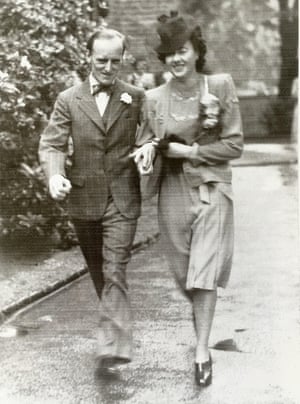
Hannah Peel’s grandparents, Robert and Joyce, on their wedding day.
Peel wanted to understand the science behind the disease, and turned to Selina Wray, a fellow Barnsley native who works at the Institute of Neurology at University College London, researching dementia for Alzheimer’s Research UK. “I grow cells in the laboratory from patients who have dementia and those who don’t – and look at what it is that leads them to die,” says Wray. “We’re trying to understand the very earliest things that go wrong, with the idea that if we can discover what those things are, we can stop them happening.”
For Peel, visiting Wray’s laboratory and seeing dementia cells up close was a chance to find unexpected beauty in the disease. “They take on these complex structures,” says Wray. “And because every cell is made up of thousands of proteins and quite often we’re interested in one or two, we use colours to label them. They look a little like fireworks.” Peel recalls: “As soon as I saw them I thought, ‘It’s like the stars! It’s like astronomy!’ It felt like an awakening – how it all connected, in a scientific and artistic and musical way.”
Peel is about to perform Awake But Always Dreaming at a special event at St Leonard’s Church in Shoreditch, east London. “It feels really fitting,” she says, “because it’s not the perfect church – it’s got flaking walls and the pews are a bit rocky. It just feels as if it encompasses everything the mind is.” The evening has been put together with Alzheimer’s Research UK, and there will be readings by the actor Christopher Ecclestone, film and poetry from Lavinia Greenlaw, and new work from the director and choreographer Shelly Love, all tackling dementia. The idea is to show “there is hope and it can be beautiful, because you can still find connections with people through music and poetry”.
This Christmas, Peel’s music also appears as part of Alzheimer’s Research UK’s charity appeal, animated by Aardman and narrated by Stephen Fry. She has also launched Memory Tapes, a project inviting participants to make playlists of their lives. “I think of it like a time capsule,” she says, “so that, if ever I fall into dementia, there would be a mixtape of the songs that connect for my children and grandchildren.”
[embedded content]
All That Matters by Hannah Peel on YouTube
Peel’s gran died earlier this year, at the age of 98, seven years after her diagnosis. “We had to stay with her for nearly two weeks, essentially just watching her breathe. And then she faded away.” Best to remember her as Joyce Peel, the “beautiful soprano” who moved to County Armagh to marry an organist, who loved music and her family and singing in the choir her husband conducted.
The experience has changed Peel’s relationship with the people she loves. She calls home more often, does not take her parents’ presence for granted. Do they, I wonder, discuss the music that binds them? “My mum doesn’t like my music and never has quite got it,” she says frankly. “She’s very direct. I’d do a gig and after she’d say: ‘It’s not my cup of tea.’”
Peel gave her the new album with some trepidation – not even telling her that it had been inspired by her gran. “She rang after about three weeks and said, ‘I’ve been listening to your record every single day.’ And I thought, ‘Oh my god, what’s she going to say?’ But she said, ‘I cannot stop listening to it – it’s the most beautiful thing you have ever done. Every day I discover something more in it.’ She’d never said anything like that before. That’s a kind of breakthrough.”
• Awake But Always Dreaming is out now on My Own Pleasure. Hannah Peel plays St Leonard’s Church, London, on 24 November, in conjunction with Alzheimer’s Research UK and The Vine Collective.
At this time of year, it feels like people are constantly warning you they are “coming down” with a cold. But if I have a slightly sore throat or a runny nose, I always try to say that I am “fighting off” the virus instead.
Because the nervous system runs from the brain into every organ of the body, what we believe can have a powerful effect on how we respond to illness. Neuroscientists are still trying to work out the specific mechanism behind this link, but the placebo effect is still regularly proven to be one of the strongest medical responses there is.
Here’s one extraordinary example: researchers got ethical permission to experiment on people who needed different kinds of knee surgery. They put them all under a general anaesthetic and made an incision in their knee.
Then half of them underwent surgery and the other half didn’t – their knee was stitched up exactly as it had been, instead. The placebo effect was so powerful that for some kinds of knee injury, the group who had an incision but did not have the surgery recovered just as well as those who’d had the whole package.
Dr Daniel Glaser is director of Science Gallery at King’s College London
If there is an irrepressible human trait it’s the determination, against all odds, to reconnect. Though governments seek to atomise and rule, we will keep finding ways to come together. Our social brains forbid any other outcome. They urge us to reach out, even when the world seems hostile.
This is the conclusion I draw from touring England over the past few weeks, talking about loneliness and mental health. Everywhere I have been so far, I’ve come across the same, double-sided story: stark failures of government offset in part by the extraordinary force of human kindness.
First the bad news: reminders of the shocking state of our mental health services. I met people who had waited a year for treatment, only to be given the wrong therapy. I heard how the thresholds for treatment are repeatedly being raised, to ration services. I met one practitioner who had been told, as a result of the cuts, to recommend computerised cognitive behaviour therapy to her patients. In other words, instead of working with a therapist, people must sit at a screen, using a programme to try to address disorders likely to have been caused or exacerbated by social isolation. Why not just write these patients a prescription instructing them to bog off and die?At least then they wouldn’t have to wait a year to be told to consult their laptops. I heard of children profoundly damaged by abuse and neglect being sent to secure accommodation – imprisoned in other words – not for their own safety, or other people’s, but because there is nowhere else for them to go.
These are not isolated cases. It is a systemic problem. There has been no child and adolescent mental health survey in this country since 2004 (though one is now planned). Snapshot studies suggest something is going badly wrong: figures published last week, for example, suggest a near quadrupling in the past 10 years of girls admitted to hospital after cutting themselves. But there are no comprehensive figures. Imagine the outcry if the government had published no national figures on childhood cancer for 12 years, and was unable to tell you whether it was rising or falling.
Of children referred for treatment for mental health disorders, 60% do not receive it. The Guardian recently published a mother’s account of how her child had been treated. Despite a severe mental health disorder, it was only after the child attempted suicide that she received the care she needed. The treatment consisted of sending her to the other end of the country: the only available bed was 300 miles from home. You don’t need to be a psychotherapist to imagine what that might do to a distressed and vulnerable child. But when the beds don’t exist, the health service has no choice. Embarrassed into a semblance of action, the coalition government promised another £250m a year for children’s mental health. It will scarcely touch the sides.
But amid the rubble of a collapsing state, I kept stumbling into something wonderful. Performing with the musician Ewan McLennan, using music and the spoken word to explore these subjects, has brought me into contact with groups that restore my faith in the human spirit.
In Leeds we ate in a cafe run by the Real Junk Food Project, whose meals are made from waste or donated food. Seeing people of all ages, from all stations of life, who had never come together before, yakking away over dinner like old friends, I realised that the project is addressing not only the waste of food but also the waste of social opportunity. Breaking bread together: this is still the best and simplest way of reconnecting.
In Sheffield I met a man creating safe spaces for people experiencing manic or psychotic episodes: using woods, allotments and – if his project gets planning permission – cobb houses like hobbit holes to create a place of comfort for those whose minds are reeling. In Durham I saw how people whose poor mental health and isolation exclude them from work are being gently introduced to the social skills and creativity that might allow them to re-engage. In Bristol I met someone from the Happy City initiative, which is finding ways to measure wellbeing and discovering the best means of enhancing it.
Across the country, groups such as the Campaign to End Loneliness, Age UK, Independent Age, Community Network, Young Minds, the Transition Network, the Network of Wellbeing and the forthcoming Jo Cox Commisssion on Loneliness are trying to provide a coherent response to the troubled times that lead to troubled minds. Everywhere I look, I see the kind of enterprise and innovation with which business is credited, but which seems to be found most often in the voluntary sector.
But what has struck me with greatest force is this. At the end of every gig, we ask people in the audience to turn to someone they don’t know and say hello. I tell them they needn’t do any more than that, but they can keep talking if they wish. On the first night I made the mistake of mentioning the idea before we had wrapped up the show. That was all it took – the conversation flared up immediately, and it was a long time before I could direct people’s attention back to the stage. After every concert the talking has continued long into the night, in the venue’s bar or the nearest pub. It’s as if people have simply been waiting for permission to speak to the strangers who surround them.
Britain, according to government figures, is the loneliness capital of Europe, but even – or perhaps especially – here, the urge to connect is overwhelming. This reattachment, I believe, holds the key to both our psychological and political transformation. Connected, engaged and happy people do not allow themselves to be trampled into the dirt. It is when we are estranged both from each other and from our political environment that we are easiest to manipulate, as the rise of demagoguery in Europe and the US seems to attest.
Neither state provision nor community action is a substitute for the other: we need both. But the more effective community groups and voluntary initiatives become, the harder it is for governments to disregard their duties. By talking together, we find our voice.
• You can comment on this article and others on our Your Opinionsthread, which opens every Wednesday at 10am
Are you struggling with getting stuff done? Is overwhelm paralyzing you from taking action?
So often I see folks just winging it every day. Hop out of bed frantically rushing around to start the day with no real plan for the family, no advance planning of typical daily activities, etc. leaving them depleted, mentally drained, frustrated and disappointed that things are so chaotic and not getting things done as hoped.
This leads to stress, overwhelm, and poor self-care leaving you feeling powerless and lacking confidence.
You must have systems to get organized, manage time and manage yourself to feel more empowered with more clarity and confidence.
I’m sharing 5 strategies that I use in my life to calm the chaos, have more clarity throughout the day and feeling in control with more confidence to take action. Implementing these 5 strategies will absolutely help you take back your power:
Use a Life calendar
Use one calendar that encompasses personal, family, community and work commitments. Get one that is digital; not the paper calendar you hang on the wall or the desk blotter that is doodled on either.
Using this system ‘no important task gets left behind’. Having a calendar that encompasses all aspects of our blended lives is critical to calming the chaos and managing your time effectively.
Sync with your smartphone, tablet and computer. Google calendar is the best and most universal I have discovered. You can even set a time reminder that pops up so you remember where and when to show up or complete a task. With Google calendar you can color code each category, and even give everyone in the family their own color. It can even be shared so everyone is responsible for adding their own stuff – wow, surrender the title logistics manager.
Take back your power with one less job!
Use a To-Do list
Creating a To-do list provides clarity of what needs to get done. No more papers floating around to get lost.
Using your To-do list with your calendar will really boost your organization and clarity. Open your calendar/planner and To-do list. Take items from your To-do list and add to your calendar by blocking off the time you estimate needed to complete that task. These items should include the 5 most important things you need to get done today.
If nothing else gets done, you will feel accomplished knowing that the most important tasks did.
Establish a Routine for Beginning and End of Day
Routine and structure will help calm the chaos and reduce stress. Our brain loves routine and structure. By establishing a routine, your brain learns this rhythm and helps you stay in the flow which turns into an effortless habit over time.
The beginning and end of the day are crucial times to prepare and control your day. A good morning routine will set you up with a positive mindset, energy and organization for less chaos.
At the end of the day wind down with a routine with daily reflection and planning for the next day. Making your plan the night before, your subconscious mind will work on your list while you sleep, and you’ll be better prepared to take on your day.
Just Say No!
One thing that steals your power and causes high level stress is your inability to say no. This can often lead to frustration, anxiety and resentment both towards ourselves and others. Most of us spend our days getting pushed and pulled by other people’s desires and demands.
Essentially, YESing all day to someone else and something else. You look at your schedule and start to feel the anxiety setting in because you know YOU are getting crowded out.
No is beautiful word.
Just say NO to three things for more control and calm throughout your day:
One is interruptions.
Two is multitasking.
Three is people, places and things that will not support and move you closer to your personal, family and professional goals.
Take Clarity Breaks
Clarity will only happen by calming the mind (and body for that matter). Lack of clarity can occur from being in a constant state of stress; it’s a brain thing. The sense of overwhelm that comes from lack of clarity can also be from lack of direction and not having a defined purpose.
You need more clarity to let those creative juices flow. You need to lessen your distractions to make better, more thoughtful decisions without that constant sense of urgency.
Take a few clarity breaks throughout the day. It’s a great way to transition from one project to another. Whether it is from work to home, running errands to cooking dinner, or client meeting to picking up kids from school. It also works great when you get stuck or frustrated on a task (or with a person).
Taking a clarity break will help you regroup, be more present and engaged.
Here is a simple and quick Clarity Break exercise:
Sit in a comfortable position. It is best if your back is straight to have your chest open so your breath can flow easily. Set a timer for 3-5 minutes (turn off all electronic notifications to minimize distractions). Close your eyes and let your mind and body just be for a minute or two. Your mind will probably wander with distracting thoughts, as you notice this happen just focus on your breath.
Have your mind’s eye focus on it flowing in and out of your body.
Now as your thoughts enter again as you breathe out from your mouth, imagine blowing out all those distracting and worrisome words and thoughts. And then, as you breathe in through your nose, imagine everything that is good in your life and all that you desire coming into your body.
Breath in all the good you received already today; breathe out the worry, frustration and negative.
Ahhhhh…feel better?
Would you like the expanded version with the how-to’s and more strategy? You can have it free http://bit.ly/5-radical-to-crush-overwhelm
When I was young I went with several of my friends on a hike. Each person had a different attitude toward being there in the first place.
One very young girl who was so small she has a hard time carrying her backpack at all, let alone when scaling a massive mesa.
Another girl who was several years older, and much larger and able bodied than the first, did not make our hike easy.
She complained the entire time and focused so much energy on how she ‘couldn’t make it’, that I actually believed her and thought we would stay in the same spot forever.
The younger, smaller girl focused absolutely no energy on the negative aspects of the hike, and never once uttered the words “I can’t do this”.
She pointed out beautiful flowers, and took small breaks as she needed them without a complaint.
She truly believed that she would get to the top of that mesa, even if it was monumentally difficult for her.
Never once did I doubt this young girl’s ability to hike to the top of the mesa, and in fact, she was the first to reach the summit. Can you guess who was last?
The power of self-belief is an incomparable tool for success.
Why is there such a benefit to simply believing you can do something and then putting in the effort?
And why do so many of us focus on what we want to avoid, rather than what we positively want?
According to an article titled Why You Need Self Belief published by Symmetry Gym, “If you’re so focused on trying to avoid failure, then what happens is that you end up working to reach that point. It becomes a negative self-fulfilling prophecy. So by cultivating the right habits, you frame things in a way that enables you to visualize success, for not just yourself, but for others to take note and draw inspiration from.”
No matter what aspect of your life needs more positivity, actually knowing that you can successfully do something has the power to determine the results that follow. Even in the medical industry, patients who have hope and believe that they will overcome the ailments that they face are much more likely to do so and make a full recovery.
A large problem that people have when trying to be positive is that their minds are so used to being in a negative state. They’re basically trained in negativity, and therefore resort to the worst case scenario more often than not, and resistant to any type of positive message because it is outside the norm.
Fortunately, there are many different techniques that can be used to incorporate the desired state of positivity into your life.
One of them is NLP’s Accessing and Anchoring States.
In order to do this, you simply imagine being in your desired state of mind, and map out that thought.
What do you see? How do you feel? What else is significant about this state that you’d like to incorporate into your present state of being?
Once you have the answers, do something small like touch your elbow, or rub your hands together as you picture this thought. Doing this will lock it in, and make it easy to trigger and access this state in the future when you really need it.
When you need to access your desired state, fire away! Rub those hands together, and feel the intensity of the desired state wash over you, and the watch the negative state being stripped away from your being.
Being able to mold your thoughts, and therefore your actions from negative to positive takes work and persistence, but with such a large pay-off it is completely worth it.
References
Why You Need Self Belief – Symmetry Gym. (n.d.). Retrieved from http://www.symmetrygymdubai.com/blog/why-you-need-self-belief/
“I have a teenage daughter with heart and kidney failure,” says Jo from Wolverhampton. “Regardless of the great care she receives, her condition can and does suddenly become critical. Her mother lives in constant fear of changes to the NHS and her support system. We must keep a tight hold on our very precious NHS.”
The story of Jo’s family is moving. But it’s not that surprising – most of us have some experience of the NHS as a true life-saver. And sadly, many of us will also recognise the anxiety Jo describes about the future of the NHS.
Elizabeth, from north-west London, has a rare autoimmune disease that requires regular visits to hospital, including overnight stays. She echoes Jo’s fears. “It is imperative that numbers of beds are not cut,” she says, “my last wait for a bed, following complications with an outpatient procedure, was approximately seven hours.” Valerie from Dorset gave 33 years of her career to the NHS as a registered nurse. “Now I am possibly facing cardiac surgery,” she says, “and I need the NHS to support me.”
Many of us have gradually started to feel less confident than our parents and grandparents were that we will be able to rely on the NHS into our old age – let alone that our children or grandchildren will have a service they can trust.
Not all the pressures on today’s NHS are the fault of politicians. We’re living longer. There are more of us. Demand has risen in hospitals and in health centres. But at the same time, government funding for the health service has been dangerously squeezed. Social care is continually neglected, putting even more pressure on hospitals. And successive ministers have refused to listen to doctors, nurses or patients when pushing through politically motivated NHS reorganisations.
Conventional politics has failed us when it comes to the NHS. The voice of ordinary people – the likes of Jo, Elizabeth and Valerie – has never been more needed. And that’s why they and hundreds of thousands of us are taking matters into our own hands. Think back to David Cameron’s costly and damaging NHS reorganisation. Without a people-powered campaign to prevent the worst elements of Cameron’s legislation, the Health and Social Care Act would have had far more harmful consequences.
A new investigation commissioned by the campaign organisation 38 Degrees, where I work as executive director, is published today. Carried out by a team of health policy experts at Incisive Health, it exposes new plans being drawn up for the NHS across England, called “sustainability and transformation plans” (STPs). The investigation has been funded by hundreds of thousands of people making individual donations via the 38 Degrees website. People like Jo, Elizabeth and Valerie have shared their personal stories, signed the campaign petition and donated to fund the research. Independent of party politics, we’ve chipped in to protect the health service we value so much by putting these plans under the spotlight.
The research finds huge funding gaps for local services, which, the experts say, could lead to A&E closures, cuts to beds and mergers of hospitals. Put together, the projected funding shortfalls across England would see a £23bn deficit in health and social care spending by 2021.
Where Jo lives, in the Black Country, there are plans for major changes at Midland Metropolitan hospital, including the closure of A&E. The plans also include the proposal to shut one of two district general hospitals. By 2021, the health and social care system in the Black Country is projected to be £476.6m short of the funds it needs to balance its books while maintaining the same level of care. Where Elizabeth lives, the draft plan indicates “reducing demand for acute services by approximately 500 beds”. That’s health manager-speak for cutting 500 hospital beds.
Our crowdfunded investigation shows that this worrying plan for the Black Country is typical of many others across England.
These kinds of cuts aren’t the fault of local NHS leaders. They’re being planned all across the country, the result of a growing black hole in the funding provided to the NHS by the government. Whether or not Theresa May allows these cuts to go ahead will be a key test of her commitment to protecting the NHS.
The NHS belongs to all of us. So before these plans go any further, local people should have a say on any changes to their services. That’s why almost 250,000 people have already signed the 38 Degrees campaign petition to the health secretary, Jeremy Hunt, calling for full public disclosure of the STPs for each and every one of the 44 areas across England.
No one is suggesting that all changes to NHS services are bad. There may be a good case for some of the changes that are being proposed. But because the plans are not out in the open – we have had to hire specialist researchers to give us even a partial picture – there’s every reason to fear that many of these will be about cost cutting at the expense of patient care and patient safety.
One thing is certain: we know that when we leave the politics of the NHS to the politicians, it doesn’t end well. Now, more than ever, people-powered campaigning is critical to the future of the NHS.
I was standing in a lift at Washington University in St Louis, with Professor Jeff Gordon and two of his students, one of whom was holding a metal canister.
“Just some faecal pellets in tubes,” she said.
“They’re microbes from healthy children, and also from some who are malnourished. We transplanted them into mice,” explained Gordon, as if this was the most normal thing in the world.
The lift doors opened, and I followed Gordon, his students, and the thermos of frozen pellets into a large room. It was filled with rows of sealed chambers made of transparent plastic. Peering inside one of these chambers, I met the eyes of one of the strangest animals on the planet. It looked like just a mouse, and that is precisely why it was so weird. It was just a mouse, and nothing more.
Almost every other animal on Earth, whether centipede or crocodile, flatworm or flamingo, hippo or human, is a teeming mass of bacteria and other microbes. Each of these miniature communities is known as a microbiome. Every human hosts a microbiome consisting of some 39 trillion microbes, roughly one for each of their own cells. Every ant in a colony is a colony itself. Every resident in a zoo is a zoo in its own right. Even the simplest of animals such as sponges, whose static bodies are never more than a few cells thick, are home to thriving microbiomes.
But not the mice in Gordon’s lab. They spend their entire lives separated from the outside world, and from microbes. Their isolators contain everything they need: drinking water, brown nuggets of chow, straw chips for bedding, and a white styrofoam hutch for mating in privacy. Gordon’s team irradiates all of these items to sterilise them before piling them into loading cylinders. They sterilise the cylinders by steaming them at a high temperature and pressure, before hooking them to portholes in the back of the isolators, using connecting sleeves that they also sterilise.
It is laborious work, but it ensures that the mice are born into a world without microbes, and grow up without microbial contact. The term for this is “gnotobiosis”, from the Greek for “known life”. We know exactly what lives in these animals – which is nothing. Unlike every other mouse on the planet, each of these rodents is a mouse and nothing more. An empty vessel. A silhouette, unfilled. An ecosystem of one.
Each isolator had a pair of black rubber gloves affixed to two portholes, through which the researchers could manipulate what was inside. The gloves were thick. When I stuck my hands in, I quickly started sweating.
I awkwardly picked up one of the mice. It sat snugly on my palm, white-furred and pink-eyed. It was a strange feeling: I was holding this animal but only via two black protrusions into its hermetically sealed world. It was sitting on me and yet completely separated from me. When I had shaken hands with Gordon earlier, we had exchanged microbes. When I stroked this mouse, we exchanged nothing.
The mouse seemed normal, but it was not. Growing up without microbes, its gut had not developed properly – it had less surface area for absorbing nutrients, its walls were leakier, it renewed itself at a slower pace, and the blood vessels that supplied it with nutrients were sparse. The rest of its body hadn’t fared much better. Compared with its normal microbe-laden peers, its bones were weaker, its immune system was compromised, and it probably behaved differently too. It was, as microbiologist Theodor Rosebury once wrote, “a miserable creature, seeming at nearly every point to require an artificial substitute for the germs [it] lacks”.
Most microbes do not make us sick. At worst, they are hitchhikers. At best, they are invaluable parts of our bodies
The woes of the germ-free mouse vividly show just how invaluable the microbiome is. Most of us still see microbes as germs: unwanted bringers of pestilence that we must avoid at all costs. This stereotype is grossly unfair. Most microbes do not make us sick. At worst, they are passengers or hitchhikers. At best, they are invaluable parts of our bodies: not takers of life but its guardians. They help to digest our food, educate our immune systems, protect us from disease, sculpt our organs, guide our behaviour, and maintain our health. This wide-ranging influence explains why the microbiome has, over the last decade, become one of the hottest areas of biology, and why Gordon – arguably the most influential scientist in the field – is so fascinated by it.
By studying our microbial companions, he is trying to unpick exactly how the microbiome is connected to obesity and its polar opposite – malnutrition. He is studying which species of microbes influence these conditions, and how they in turn are influenced by our diets, our immune systems, and other aspects of our lives. Ultimately, he wants to use that knowledge to manipulate the microbial worlds within us to improve our health.
Jeff Gordon may be one of the most respected scholars of the human microbiome, but he is also one of the hardest to get in touch with. It took me six years of writing about his work to get him to answer my emails, so visiting his lab was a hard-won privilege. I arrived expecting someone gruff and remote. Instead, I found an endearing and affable man with crinkly eyes, a kindly smile, and a whimsical demeanour. As he walked around the lab, he called people “professor” – including his students. His aversion to the media comes not from aloofness, but from a distaste for self-promotion. He even refrains from attending scientific conferences, preferring to stay out of the limelight and in his laboratory.
Ensconced there, Gordon has done more than most to address how microbes affect our health. But whenever I asked Gordon about his influence, he tended to deflect credit on to students and collaborators past and present – a roster that includes many of the field’s biggest stars. Their status testifies to Gordon’s – he’s not just a king, but a king-maker, too. And his figurehead status is all the more remarkable because long before the microbiome crossed his mind, he was already a well-established scientist who had published hundreds of studies on how the gut develops in a growing human body.
Professor Jeff Gordon, one of the world’s leading experts on the human microbiome, talks to students at Washington University in St Louis. Photograph: Mark Katzman
In the 1990s, he started to suspect that bacteria influence this process, but he was also struck by how difficult it would be to test that idea. The gut contains thousands of species of microbes. Gordon aimed to isolate parts of this daunting whole and examine it under controlled conditions. He needed that critical resource that scientists demand but biology withholds: control. In short, he needed germ-free mice – and lots of them – so he bred them himself. He could load these rodents with specific microbes, feed them with pre-defined diets, and do so again and again in controlled and repeatable conditions. He could treat them as living bioreactors, in which he could strip down the baffling complexity of the microbiome into manageable components that he could systematically study.
In 2004, Fredrik Bäckhed, a member of Gordon’s team, used the sterile rodents to run an experiment that would set the entire lab on a focused path – one devoted to understanding the connections between the microbiome, nutrition, and health. They inoculated germ-free mice with microbes harvested from the guts of conventionally raised rodents. Normally, the sterile rodents can eat as much as they like without putting on weight, but this ability disappeared once their guts were colonised. They didn’t start eating any more food – if anything, they ate slightly less – but they converted more of that food into fat and so put on more pounds.
Mouse biology is similar enough to that of human beings for scientists to use them as stand-ins in everything from drug testing to brain research; the same applies to their microbes. Gordon reasoned that if those early results apply to humans, our microbes must surely influence the nutrients that we extract from our food, and thus our body weight. That was a powerful insight. We typically think of weight as a simple balance between the calories we take in through food and those we burn through physical activity. By contrast, the idea that multitudes of organisms in our bodies could influence that balance was outlandish at the time. “People weren’t talking about it,” says Gordon.
And yet, in 2004, team member Ruth Ley found another connection between microbes and weight, when she showed that obese people (and mice) have different communities of microbes in their guts. The most obvious difference lay in the ratio of the two major groups of gut bacteria – the firmicutes and the bacteroidetes. Obese people had more firmicutes and fewer bacteroidetes than their leaner counterparts. This raised an obvious question: does extra body fat cause a relative increase in firmicutes – or, more tantalisingly, does the tilt make individuals fatter? Is the connection, as Gordon likes to put it, causal or casual? The team couldn’t answer that question by relying on simple comparisons. They needed experiments.
The mice that got microbes from lean donors put on 27% more fat, while those with obese donors packed on 47% more fat
That’s where Peter Turnbaugh came in. Then a graduate student in the lab, he harvested microbes from fat and lean mice, and then fed them to germ-free rodents. Those that got microbes from lean donors put on 27% more fat, while those with obese donors packed on 47% more fat. It was a stunning result: Turnbaugh had effectively transferred obesity from one animal to another, simply by moving their microbes across. “It was an ‘Oh my God’ moment,” said Gordon. “We were thrilled and inspired.”
These results showed that the guts of obese individuals contain altered microbiomes that can indeed contribute to obesity, at least in some contexts. The microbes were perhaps harvesting more calories from the rodents’ food, or affecting how they stored fat. Either way, it was clear that microbes don’t just go along for the ride; sometimes, they grab the wheel.
They can also turn it in both directions. While Turnbaugh showed that gut microbes can lead to weight gain, others have found that they can trigger weight loss. Akkermansia muciniphila, one of the more common species of gut bacteria, is over 3,000 times more common in lean mice than in those genetically predisposed to obesity. If obese mice eat it, they lose weight and show fewer signs of type 2 diabetes.
Gut microbes also partly explain the remarkable success of gastric bypass surgery – a radical operation that reduces the stomach to an egg-sized pouch and connects it directly to the small intestine. After this procedure, people tend to lose dozens of kilograms, a fact typically accredited to their shrunken stomachs. But as a side-effect, the operation also restructures the gut microbiome, increasing the numbers of various species, including Akkermansia. And if you transplant these restructured communities into germ-free mice, those rodents will also lose weight.
Experiments on mice using gut microbes could lead to a greater understandinding of the causes of obesity. Photograph: Deco Images II/Alamy
The world’s media treated these discoveries as both salvation and absolution for anyone who struggles with their weight. Why bother adhering to strict dietary guidelines when a quick microbial fix is seemingly around the corner? “Fat? Blame the bugs in your guts,” wrote one newspaper. “Overweight? Microbes might be to blame,” echoed another. These headlines are wrong. The microbiome does not replace or contradict other long-understood causes of obesity; it is thoroughly entangled with them.
Another of Gordon’s students, Vanessa Ridaura, demonstrated this in 2013 by using mice to stage battles between the gut microbes of lean and obese people. First, she loaded these human microbial communities into two different groups of germ-free rodents. Next, she housed the mice in the same cages. Mice readily eat each other’s droppings and so constantly fill their guts with their neighbours’ microbes. When this happened, Ridaura saw that the “lean” microbes invaded guts that were already colonised by “obese” communities, and stopped their new hosts from putting on weight. The opposite invasions never worked: the obese communities could never establish themselves in the gut when the lean ones were already there.
It’s not that the lean communities were inherently superior at taking hold in a mouse’s gut. Instead, Ridaura had tipped the battles in their favour by feeding her mice with plant-heavy chow. Plants contain a wide variety of complex fibres, and microbe communities from lean guts contain a wider range of fibre-busting species than those from obese guts. So, when the obese communities colonised lean guts, they found that every morsel of fibre was already being devoured.
By contrast, when the lean communities entered obese guts, they found a glut of uneaten fibre – and flourished. Their success only evaporated when Ridaura fed the mice with fatty, low-fibre chow, designed to represent the worst extremes of the western diet. Without fibre, the lean communities couldn’t establish themselves or stop the mice from putting on weight. They could only infiltrate the guts of mice that ate healthily. The old dietary advice still stands, over-enthusiastic headlines be damned.
An important lesson emerged: microbes matter but so do we, their hosts. Our guts, like all ecosystems, aren’t defined just by the species within them but also by the nutrients that flow through them. A rainforest isn’t just a rainforest because of the birds, insects, monkeys, and plants within it, but also because ample rain and sunlight fall from above, and bountiful nutrients lurk in the soil. If you threw the forest’s inhabitants into a desert, they would fare badly. Ridaura’s experiments emphasised that although the microbiome can help to explain what makes us fat or lean, it offers no simple solutions. And that’s something the team learned a second time, by studying a very different condition, in a very different part of the world.
Malawi has among the highest rates of child mortality in the world, and half of these deaths are due to malnourishment. One form of malnourishment, known as kwashiorkor, is especially severe and hard to treat. From an early age, a child’s fluids leaks from their blood vessels, leading to puffy swollen limbs, distended stomachs, and damaged skin.
Kwashiorkor has long been shrouded in mystery. It is said to be caused by protein-poor diets, but how can that be when children with kwashiorkor often don’t eat any less protein than those with marasmus, another form of severe malnutrition? For that matter, why do these children often fail to get better despite eating protein-rich food delivered by aid organisations? And why is it that one child might get kwashiorkor while their identical twin, who shares all the same genes, lives in the same village, and eats the same food, gets marasmus instead?
Gordon thinks that gut microbes are involved, and might explain the differences in health between children who, on paper, look identical. After his team carried out their groundbreaking obesity experiments, he started to wonder: if bacteria can influence obesity, could they also be involved in its polar opposite – malnutrition? Many of his colleagues thought it unlikely but, undeterred, Gordon launched an ambitious study. His team went to Malawi and collected regular stool samples from infants until the age of three; some had kwashiorkor, while others were healthy.
The team found that babies with kwashiorkor don’t go through the same progression of gut microbes as their healthy counterparts. Typically, these microbial communities change in the first years of life, in dramatic but predictable ways. Just as new islands are first colonised by lichens, then shrubs, then trees, so too is the infant gut colonised by waves of species that arrive in standardised patterns. But in kwashiorkor infants, microbiomes fail to diversify and mature correctly. Their inner ecosystems become stagnant. Their microbiological age soon lags behind their biological age.
When Gordon’s team transplanted these immature communities from children with kwashiorkor into germ-free mice, the rodents lost weight – but only if they also ate chow that mirrored the nutrient-poor Malawian diet. If the mice ate standard rodent chow, they didn’t lose much weight, no matter whose bacteria they were carrying. It was the combination of poor food and the wrong microbes that mattered. The kwashiorkor microbes seemed to interfere with chemical chain reactions that fuel our cells, making it harder for children to harvest energy from their food – food that contains very little energy to begin with.
The standard treatment for malnutrition is an energy-rich, fortified blend of peanut paste, sugar, vegetable oil and milk. But Gordon’s team found that the paste only has a brief effect on the bacteria of children with kwashiorkor (which perhaps explains why it doesn’t always work). As soon as they reverted to their normal Malawian diet, their microbes also boomeranged back to their earlier impoverished state. Why?
All ecosystems have a certain resilience to change, which must be overcome to push them into a different state. That’s true for coral reefs, rainforests, grassland – and a child’s gut. A poor diet could change the microbes within the gut. The dietary deficiencies could also impair the child’s immune system, changing its ability to control the gut microbiome, and opening the door to harmful infections that alter the gut communities even further. These communities could themselves start to harm the gut, stopping it from absorbing nutrients efficiently and leading to even worse malnutrition, more severe immune problems, more distorted microbiomes, and so on.
This is what microbiome scientists call dysbiosis – a state where the entire microbial community shifts into a harmful configuration. None of its members causes disease in its own right; instead, the entire community is at fault. It’s not clear exactly why the microbiomes of malnourished infants stall in their development in the first place. There are many possible reasons including antibiotic exposures, gut diseases, and poor diets, which vary from person to person. What’s clearer is that once microbiomes end up in a dysbiotic state, it can be hard to pull them back.
But Gordon is trying. His student Laura Blanton, the same woman who I met carrying that thermos of mouse droppings in the lift, recently implanted mice with microbes from either healthy infants or underweight ones. She then housed rodents from both groups in the same cages, allowing them to swap their microbiomes. When they did so, the normal communities from the healthy infants invaded and displaced the immature communities from the malnourished ones.
Blanton found that five species of bacteria from the healthy microbiomes were especially good at colonising the immature ones. When she fed this quintet to mice carrying the microbiomes of malnourished children, the rodents put on weight in a normal, healthy way. Rather than breaking down the amino acids in their diet for energy, they instead converted these nutrients into flesh and muscle.
This promising experiment suggests that the team might be able to create a probiotic cocktail of specially chosen bacteria that can turn a dysbiotic gut into a healthy one. But there’s reason to be cautious. Despite the hype that surrounds them, current probiotics – products that contain supposedly beneficial microbes – confer few big health benefits, because they contain small amounts of bacteria and consist of strains that are bad at taking hold in the gut. Gordon knows that if he wants to concoct better products, he must find ways of giving the incoming microbes a competitive advantage in their new homes. Maybe that means pairing the probiotics with foods that will nourish them. Maybe it means treating the human hosts as well as the microbes they carry, or training their immune systems to accept the newcomers.
Gordon is optimistic but cautious. As he sees it, studying the microbiome will ultimately help us to better treat conditions that are still mysterious and often intractable. But as he has said to me on more than one occasion, he’s wary of the intense hype that clouds the microbiome world. “I talk about the importance of sobriety and humility,” he says. “There’s lots of hope and expectation around this transcendent view of ourselves.” But he and other microbiome researchers still need to show that their discoveries can help people.
Bifidobacterium are used as a probiotic to promote good digestion, boost immune function, and increase resistance to infection. Photograph: Phototake/Alamy
Discoveries by Gordon and others have created the perception that the microbiome is the answer to everything. It has been linked to an absurdly long list of conditions that includes Crohn’s disease, ulcerative colitis, irritable bowel syndrome, colon cancer, type 1 diabetes, type 2 diabetes, coeliac disease, allergies, atherosclerosis, autism, asthma, Alzheimer’s disease, Parkinson’s disease, multiple sclerosis, depression, anxiety, rheumatoid arthritis, stroke, and many more.
Many of these proposed links are just correlations. Researchers often compare people with a particular disorder to healthy volunteers, find microbial differences, and stop. Those differences hint at a relationship but they don’t reveal its nature or its direction. Studies by Gordon and others go one step further. By showing that transplanted microbes can reproduce health problems in germ-free mice, they strongly hint at a causal effect.
Still, they provide more questions than answers. Did the microbes set symptoms in motion or just make a bad situation worse? Was one species responsible, or a group of them? Is it the presence of certain microbes that matters, or the absence of others, or both? And even if experiments show that microbes can cause diseases in mice and other animals, we still don’t know if they actually do so in people. Beyond the controlled settings of laboratories and the atypical bodies of lab rodents, are microbial changes really affecting our everyday health? When you enter the messy, multifaceted world of dysbiosis, the lines of cause and effect become much harder to untangle.
There is still a lot about the microbiome that we do not understand, and some of what we think we know is almost certainly wrong.
Remember how obese people and mice have more firmicutes and fewer bacteroidetes in their guts than their lean counterparts? This famous finding worked its way into the mainstream press and the scientific literature – and it’s a mirage. In 2014, two attempts to re-analyse past studies found that the F/B ratio is not consistently connected to obesity in humans. This doesn’t refute a connection between the microbiome and obesity. You can still fatten germ-free mice by loading them with microbes from an obese mouse (or person). Something about these communities affects body weight; it’s just not the F/B ratio, or at least not consistently so.
It is humbling that, despite a decade of work, scientists are barely any closer to identifying microbes that are clearly linked to obesity, which has received more attention from microbiome researchers than any other. “I think that everybody is coming to the realisation that, unfortunately, a really compelling simple biomarker, like the percentage of a certain microbe, is not going to be enough to explain something as complicated as obesity,” said Katherine Pollard, who led one of the re-analyses.
These conflicting results naturally arise in the early days of a field because of tight budgets and imprecise technology. Researchers run small, exploratory studies comparing handfuls of people or animals in hundreds or thousands of ways. “The problem is that they end up being like the Tarot,” said Rob Knight, another leading microbiome scientist. “You can tell a good story with any arbitrary combination.”
Human geneticists faced the same problem. In the early 21st century, when technology hadn’t quite caught up with ambition, they identified many genetic variants that were linked to diseases, physical traits, and behaviours. But once sequencing technology became cheap and powerful enough to analyse millions of samples, rather than dozens or hundreds, many of these early results turned out to be false positives. The human microbiome field is going through the same teething problems.
It doesn’t help that the microbiome is so variable that the communities in lab mice can differ if they belong to different strains, come from different vendors, were born to different mothers, or were reared in different cages. These variations could account for phantom patterns or inconsistencies between studies. There are also problems with contamination. Microbes are everywhere. They get into everything, including the chemical reagents that scientists use in their experiments. But these problems are now being ironed out. Microbiome researchers are getting increasingly savvy about experimental quirks that bias their results, and they’re setting standards that will shore up the quality of future studies. They are calling for experiments that will show causality, and tell us how changes in the microbiome lead to disease. They are looking at the microbiome in even greater detail, moving towards techniques that can identify the strains within a community, rather than just the species.
They are also setting up longer studies. Rather than capturing a single screenshot of the microbiome, they are trying to watch the entire movie. How do these communities change with time? What makes them resilient or unstable? And does their degree of resilience predict a person’s risk of disease? One team is recruiting a group of 100 volunteers who will collect weekly stool and urine samples for nine months, while eating specific diets or taking antibiotics at fixed times. Others are leading similar projects with pregnant women (to see if microbes contribute to pre-term births) and people at risk of developing type 2 diabetes (to see if microbes affect their progression to full-blown disease).
And Gordon’s group has been charting the normal progression of microbes in healthy developing babies, and how it stalls in kids with kwashiorkor. Using stool samples collected from Bangladeshi and Malawian children over their first two years, the team has created a score that measures the maturity of their gut communities and will hopefully predict if symptomless infants are at risk of developing kwashiorkor. The ultimate goal of all of these projects is to spot the signs of disease as early as possible, before a body turns into the equivalent of an algal reef or a fallow field: a degraded ecosystem that is very hard to repair.
Children wait for water at a borehole near Malawi’s capital Lilongwe. Photograph: Mike Hutchings/Reuters
“Professor Planer!” said Jeff Gordon. “How are you?” He meant Joe Planer, one of his students, who was standing in front of a standard laboratory bench, complete with pipettes, test tubes and Petri dishes, all of which had been sealed in a transparent, plastic tent. It looked like one of the isolators from the germ-free facility but its purpose was to exclude oxygen rather than microbes. It allowed the team to grow the many gut bacteria that are extremely intolerant of the gas. “If you write the word oxygen on a piece of paper and show it to these bugs, they’ll die,” said Gordon.
Starting off with a stool sample from a Malawian child with kwashiorkor, Planer used the anaerobic chamber to culture as many of the microbes within it as possible. He then picked off single strains from these collections, and grew each one in its own compartment. He effectively turned the chaotic ecosystem within a child’s gut into an orderly library, dividing the teeming masses of microbes into neat rows and columns. “We know the identity of the bacteria in each well,” he said. “We’ll now tell the robot which bacteria to take and combine in a pool.”
He pointed to a machine inside the plastic, a mess of black cubes and steel rods. Planer can programme it to suck up the bacteria from specific wells and mix them into a cocktail. Grab all the Enterobacteriaceae, he might say, or all the Clostridia. He can then transplant these fractions back into germ-free mice to see if they alone can confer the symptoms of kwashiorkor. Is the whole community important? Will the culturable species do? A single family? A single strain? The approach is both reductionist and holistic. They’re breaking down the microbiome, but then recombining it. “We’re trying to work out which actors are responsible,” said Gordon.
A few months after I saw Planer working with the robot, the team had narrowed down the kwashiorkor community to just 11 microbes that replicate many of the disease’s symptoms in mice. None of these were harmful on their own. They only caused a problem when acting together – and even then, only when the mice were starved of nutrients. The team also created culture collections from healthy twins who didn’t develop kwashiorkor, and identified two bacteria that counteract the damage inflicted by the deadly 11. The first is Akkermansia, which is being studied as a way of reducing body weight, but seemingly guards against malnutrition too. The second is Clostridium scindens, which tamps down inflammation by stimulating certain branches of the immune system.
Opposite the tented bench, there was a blender that could take foods representative of different diets and pulverise them into rodent-friendly chow. (On a piece of sticky tape, affixed to the blender, someone had written “Chowbacca”.) Gordon’s lab could now explore the behaviour of Akkermansia and Cscindens, either in test tubes or in the gnotobiotic mice, and work out which nutrients the microbes needed. This allowed the team to compare the effects of the same microbes when fed a Malawian diet, or an American one, or on sugars from breast milk that have specifically evolved to feed beneficial microbes. Which of these foods works best? And which genes do the microbes switch on? The team can take any one microbe and create a library of thousands of mutants, each of which contains a broken copy of a single gene. They can put these mutants in a mouse to see which genes are important for surviving in the gut, liaising with other microbes, and both causing or protecting against kwashiorkor.
What Gordon has built is a causality pipeline – a set of tools and techniques that, he hopes, will more conclusively tell us how our microbes affect our health, and take us from guesswork and speculation to actual answers. Kwashiorkor is just the start. The same techniques could work for any disease with a microbial influence.
It is the right time to be doing this work. Our planet has entered the Anthropocene – a new geological epoch when humanity’s influence is causing global climate change, a loss of wild spaces, and a drastic decline in the richness of life. Microbes are not exempt. Whether on coral reefs or human guts, we are disrupting the relationships between microbes and their hosts, often pulling apart species that have been together for millions of years. Gordon is working hard to understand these partnerships to better forestall their untimely end. He is not just a scholar of the microbiome; he is one of its stewards.
Main photograph of faecal bacteria: Science Photo Library
This is an edited extract from I Contain Multitudes,published by Bodley Head
• Follow the Long Read on Twitter at @gdnlongread, or sign up to the long read weekly email here.