Charlie etiketine sahip kayıtlar gösteriliyor. Tüm kayıtları göster

12 Nisan 2017 Çarşamba

The Charlie Gard case is a sad reminder that the law is the preserve of the powerful | Anne Perkins

The law says the best interests of the child always come first. But deciding what those are can be a matter of anguished contention. Connie Yates and Chris Gard, the parents of Charlie Gard, the little boy born with an extremely rare form of mitochondrial mutation, were told by a judge yesterday that it was not in their son’s best interests for him to be taken to the US for experimental treatment, and they think the judge was wrong.


The judge, Mr Justice Francis, who told doctors at Great Ormond Street that they could withdraw all but palliative care, was to all intents and purposes delivering a death sentence. He knew that. They knew that.


What was extraordinary is that the state – our representative in court – says that although it rightly felt it had a duty to protect Charlie, it had no role in making sure that his parents’ view of what was in his interest was properly represented. Yates and Gard were not entitled to legal aid. The judge told the court that he found this “remarkable”. This is not the sort of thing judges normally say.
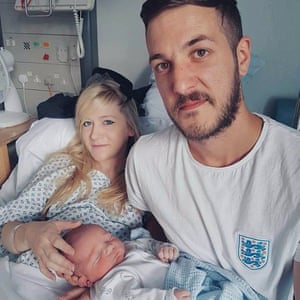


Charlie Gard


‘The judge…was to all intent and purposes delivering a death sentence. He knew that.’ Photograph: Family handout/PA

Fortunately for the parents, they found a legal team through the solicitors Bindmans, who were prepared to work for free. They did not end up, as people in private law cases often do, faced with a choice between representing themselves or not going to court at all. It is all the more absurd that had it been a question of whether Charlie should be taken into care – a life-changing but not a life-threatening decision – the state would have paid for their lawyers. That is because the case would have involved a local authority, another public body. Yet for Charlie’s parents, it would be hard to distinguish between a well-funded public body like a council, and another – the NHS.


This is not about the rights and wrongs of this heart-rending case, where Charlie’s parents wanted to overrule the doctors who felt it would be painful and futile, and take their son to the US in the very remote hope that an entirely untested treatment might help him. But it is a reminder of the way that in other courts the state is skewing the balance of justice in its own interests. The law is becoming the preserve of the powerful.


The Lord Chief Justice Lord Thomas said as much more than a year ago when he used his annual report to highlight the injustice of a system where the law was unaffordable to all but the rich. He repeated the criticism in his report for 2016: “A properly funded justice system is a core function of the state”, a role that included “holding the democratic government to account and ensuring it acts fairly and according to law”.


It is shocking to discover that even in a case where the court is having to decide a matter that is literally a choice between life and death, there is no legal aid. But it is only the most shocking of a long list of areas where it is no longer possible to get state help to challenge a perceived injustice: the list includes housing, welfare, debt, immigration, medical negligence and family law cases, unless they involve domestic violence. There are prohibitive charges on employment tribunals, which even the Ministry of Justice now acknowledges as creating unintended consequences. A 500% increase in fees for immigration and asylum appeals was only rescinded after a nationwide campaign.


This is the work of Chris Grayling, the most disastrous justice secretary yet appointed, who was in the post between 2012 and 2015. With apparently only the haziest grasp of how access to justice is a cornerstone of the constitution, in his three years as minister he took a machete to the whole system. His successors have been trying to patch it up ever since.


Excluding citizens from access to the law is a process of disempowerment. That is bad enough. What is worse still is that it enhances the lethal sense of government and its agencies that they will not be held to account. Lawyers are not often regarded as heroes of society. But a just society can’t do without them.


The Charlie Gard case is a sad reminder that the law is the preserve of the powerful | Anne Perkins


30 Ağustos 2016 Salı

Charlie Webster back in UK after contracting malaria at Rio Olympics

TV presenter Charlie Webster, who contracted malaria in Brazil, has arrived back in the UK.


The 33-year-old Team GB ambassador travelled on a specialist medical plane with a team of professionals, who continued her care on the 20-hour journey.


Webster’s condition remains stable but serious, and she will continue her treatment in a private ward at St James’s hospital in Leeds.


Charlie Webster


Charlie Webster. Photograph: Ken McKay/ITV/Rex/Shutterstock

Webster fell ill during the opening ceremony of the Rio Olympics and she was taken to hospital on 6 August.


The former Sky and ITV sports presenter had just completed a 3,000-mile (4,828km) charity cycle ride from London to Rio.


Her condition quickly deteriorated and she was put into a medically induced coma. Doctors diagnosed a very rare strain of malaria and specialists are now trying to find out where she caught the disease.


Last week, Webster was able to get out of bed for the first time and her kidney dialysis was reduced to six hours a day.


Charlie Webster back in UK after contracting malaria at Rio Olympics

20 Ocak 2014 Pazartesi

How lengthy just before a deaf man or woman dies in hospital for want of an interpreter? | Charlie Swinbourne

deaf people hospital

Nadia Hassan and Hulusi Bati with their infant Yusuf Bati. Hassan wasn’t supplied with a indicator language interpreter in the course of the birth. Photograph: Graham Turner for the Guardian


Providing birth to a little one is a stunning encounter, but it is also a scary time as well, due to the fact of the prospective for items to go wrong. So think about what it feels like to give birth if you are profoundly deaf, and since the hospital hasn’t provided you with a signal language interpreter, you are unable to understand what the doctors and nurses around you are saying.


This is what took place to Nadia Hassan at University College Hospital in London just just before Christmas. Not only was no interpreter presented throughout the birth of her son, but there was also very small communication assistance provided during the days afterwards when her child was acquiring health-related remedy, which meant she and her husband, Hulusi Bati, did not know what was going on.


The hospital’s response beggars belief. They say their services provider had “limited availability”. But this ignores the fact that there are quite a few other interpreting agencies in the capital. Did anybody make any calls? Is there a method in location for situations like this when there is higher demand?


The hospital says it is taking actions to offer an “electronic interpreting service”, presumably making use of iPads, but you have to question how efficient that would be during the ultimate stages of labour, or amid the chaos of a health-related emergency.


It wouldn’t be so negative if this have been an isolated event. Even so, incidents like this hold occurring, despite the truth the Equality Act is supposed to give deaf people equal access.


In March last year, it was exposed that a deaf lady with appendicitis had been left isolated and unable to communicate for twelve days in Ninewells Hospital, Dundee, with out a indicator language interpreter. Amazingly, the ombudsman, which upheld her complaint, discovered that as a consequence, it was “extremely hard to say” that she had offered informed consent for her surgery.


Then there is the situation of Michael May, a 27-year-previous BSL user from Plymouth. May possibly had two foot operations at Derriford Hospital, but said he had not understood the procedures he was going via. In all his consultations and procedures, he only saw a signal language interpreter once. He told the Plymouth Herald how he wished to comprehend his therapy, but couldn’t, and this manufactured him come to feel like a “second-class citizen”.


Even when interpreters are presented, the high quality is not constantly good ample. Indicator language interpreters should be registered, but in last year’s Our Overall health in Your Hands survey, carried out on behalf of a selection of deaf charities, 48% of deaf respondents reported that they had been unhappy with the normal of the interpreter they have been given.


What also puts deaf individuals at threat is the way that, in the absence of an interpreter, hospitals often presume a family member is the ideal man or woman to support, as in Hassan and Bati’s situation, the place their sister-in-law had to help translate. But what if the relative is inexperienced (as their sister-in-law was), and tends to make a essential error? Or what if they locate themselves in a place they are unprepared for, like Matt Dixon, who had to break the information to his deaf father that he was going to die? As Dixon explained: “I was a forced volunteer.”


Stories like these have prompted deaf folks to commence campaigning for greater rights to communication help. Last yr, a Facebook group called Spit the Dummy and Campaign for a BSL Act was set up to campaign for an act of parliament giving legal safety for BSL it now has more than 11,000 members. Meanwhile, a group known as Pardon. I’m Deaf. When Will You Pay attention? has campaigned for the communication assistance demands of deaf people who do not use indicator language. Working alongside foremost deaf charities, the two groups have met with Sir Malcolm Bruce MP (chair of the all party parliamentary group on deafness) to discuss his proposed communication assistance bill.


Alter can not come soon ample. It is no exaggeration that it’s only a matter of time prior to a deaf man or woman is left with a long lasting disability, or dies, due to the fact of a communication breakdown.


Men and women say that outdated individuals should not go into hospital because they may in no way come out. Could you blame deaf folks in Britain for feeling the exact same way?


How lengthy just before a deaf man or woman dies in hospital for want of an interpreter? | Charlie Swinbourne