sanctions etiketine sahip kayıtlar gösteriliyor. Tüm kayıtları göster

1 Ekim 2016 Cumartesi

Patients over politics: Sudanese breast cancer clinic that beat sanctions

For many women living in Sudan, breast cancer means certain death. Treatment is too expensive or they simply feel too embarrassed to seek help.


But until recently, yet another obstacle was seriously hampering efforts to cut breast cancer deaths in Sudan. Since the early 1990s, the country has been on the US blacklist for state sponsors of terrorism – imposed for human rights violations and for harbouring Osama Bin Laden.


Even the Khartoum Breast Care Centre (KBCC), the Horn of Africa’s first and only dedicated breast cancer clinic, has been hit by the sanctions, with a ban on international money transfers and the restriction on imports of medical equipment and spare parts.


Founded by British-trained Sudanese radiologist Dr Hania Fadl, the KBCC offers hi-tech digital mammography screening for a fraction of the usual price elsewhere. Since it opened in 2010, it has treated more the 18,000 patients from across the region and has received widespread acclaim and international support.


Using private funds and a $ 14m donation from the charitable foundation run by her ex-husband, Sudanese-British businessman Mo Ibrahim, Fadl has managed its 11-year development from start to finish.


However, the US sanctions meant the centre was unable to buy and maintain crucial diagnostic machinery. In February 2014, it decided to begin a year-long application process for a US Office of Foreign Assets Control (Ofac) exemption, which would make it easier to maintain its General Electric digital mammography machine.
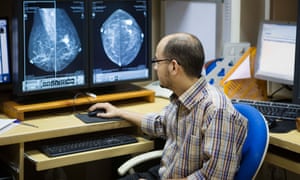


Dr David Lawis, medical director of KBCC.


Dr David Lawis, medical director of KBCC. Photograph: Yassir Bukhari/Elephant Media

During the application process the machine broke down. It ended up being out of action for 10 weeks. The clinic was paralysed, with doctors forced to use alternative screening methods. “The problem is the poor women. You do ultrasounds and biopsies but an ultrasound is not an internationally approved screening modality,” Fadl says. “There are patients and I have to do something, even if they’ll put me in jail. I can’t let them wait and risk that their cancers spread.”


After heavy campaigning and several trips to Washington by Fadl to meet members of Congress, Ofac eventually issued a blanket licence exempting all medical equipment in Sudan from sanctions.


Ignorance is rife and I really hope and pray that women will come to the centre at least for a simple check up


Fatma Abdelmajid, KBCC patient


The result was a welcome surprise to doctors at the KBCC, who say the move is a milestone for Sudanese healthcare in that it has put the needs of patients above international politics.


“All of our equipment in the clinic is from a US company, General Electric, as are the majority of advanced medical machines in Sudan. For there to be an exemption from sanctions, our lives as doctors will be much easier and the lives our patients will drastically change,” says Dr David Lawis, medical director of the KBCC.


Lawis says access to radiotherapy remains a huge issue, with just two machines in the country. One, in Khartoum a hospital, has been broken for about seven months. The second is in Madani hospital, two hours’ drive from Khartoum.


Anyone who can afford to pay for treatment abroad usually leaves Sudan to get radiotherapy, but the blanket Ofac licence has the potential to change this. “People won’t have to leave their country to get the treatment they deserve,” says Lawis.


Word of mouth


Other challenges remain, however, and Fadl says the battle to educate and inform women about self-examination and the local availability of affordable treatment is the next healthcare frontier.


“We did a little survey to ask the women how they heard about us. We found that the most effective, at 49%, was word of mouth. We are still a tribal community: we trust relatives, friends and neighbours who tell us ‘I went to that place and it is good’. We don’t have that culture of research on the internet,” says Fadl.


This was the case for 60-year-old Sudanese patient Fatma Abdelmajid, who regularly takes a six-hour bus from Atbara in north-east Sudan to Khartoum for treatment after a local doctor told her that “one of Atbara’s boys” worked at the KBCC clinic.
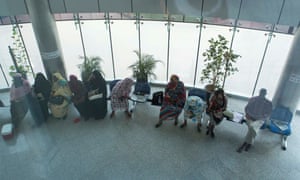


Women wait to be seen at the KBCC.


Women wait to be seen at the KBCC. Photograph: Yassir Bukhari/Elephant Media

“The mentality around breast cancer here is absolutely wrong. When you tell women in the village that you’ve been diagnosed, they are so disturbed as if you’re about to drop dead in front of them. It’s really sad,” says Abdelmajid.


“They tell you, go to a fakeeh [spiritual healer], who will give you herbs and spiritual remedies to treat you. Ignorance is rife and I really hope and pray that women will come to the centre at least for a simple checkup.”


While the Sudanese health ministry keeps no full records, Lawis says that breast cancer accounts for approximately 35% of all cancer cases among Sudanese women. An estimated 60% of the 2,000 women diagnosed with breast cancer who die each year could have survived if given proper care.


Fadl strongly believes that stories like Abdelmajid’s will help end the taboo that often stops women from seeking a diagnosis. “A woman who has the experience of being treated should tell her stories, to new patients here at the centre and women in their villages. The best thing is to have these examples and success stories,” she says.


Fadl, who lives above the centre in Khartoum, patrols the corridors every day, greeting patients. “If I just walk downstairs and see the patients, see their kindness and deep gratitude, I just can’t help but want to help them. Sudanese women deserve everything I do – really and truly. I can’t tell you enough.”


Patients over politics: Sudanese breast cancer clinic that beat sanctions

19 Ağustos 2015 Çarşamba

Benefit sanctions ruin lives. No wonder the DWP turned to fiction | Rhiannon Lucy Cosslett

It is inspiring what obtaining your rewards cut will do for your function ethic. Just ask the gormless Sarah, who – bless – did not consider a CV would assist her locate operate and missed a meeting with her operate coach back in March. Thankfully she pulled up her socks and updated her resume. “My advantage is back to typical now and I’m genuinely pleased with how my CV seems,” Sarah grins as she appears more than a personal computer screen into the camera, stopping just short of a tap-dancing “gee, thanks, Mr Duncan Smith” in the manner of a young Shirley Temple. Another benefit-sanctions accomplishment story, you may possibly feel. The only issue is that Sarah doesn’t exist.


Connected: DWP admits inventing quotes from fake ‘benefits claimants’ for sanctions leaflet


This week, following a freedom of information request courtesy of Welfare Weekly, the Department for Perform and Pensions (DWP) admitted that Sarah, along with fellow benefit claimant Zac (who presented up a heartwarming tale of notifying the jobcentre of his hospital appointment in advance, thus safeguarding his claim) were only utilised in their promotional supplies “for illustrative purposes”.


Their mugshots, meanwhile, are stock pictures. Naturally, there is no suggestion anyplace on the leaflet – which has mysteriously disappeared from the DWP internet site but has been downloaded by Welfare Weekly – that these claimants are fictional.


It is difficult not to see a twisted comic darkness in this. The optimistic spin is so firmly rooted in the realms of fantasy as to be ludicrous, and follows an incident last yr where the department was accused of planting fake tweets praising the a lot-maligned universal credit score measures, though it denied this.


Twitter end users are mocking the DWP’s newest misstep with the inevitable hashtag #fakedwpstories (“since the jobcentre sanctioned me I only eat caviar” “I conserve so much on trousers now all that funds isn’t burning holes in my pockets”), and rightly so. The fake leaflet personae signify a surreal contrast to the real effect that positive aspects sanctions can have on individuals in austerity Britain.


Tales abound from claimants who have been sanctioned for a assortment of bizarre and trivial reasons, this kind of as failing to apply for a work that had expired, or missing a jobcentre appointment that clashed with a perform programme interview. There have been punishments that are shocking in their heartlessness: it could be a funeral, a stillbirth, a heart assault, a premature labour that leads to you to miss your signing-on appointment: challenging. No excuses.


Other claimants describe a type of bureaucratic, Kafkaesque nightmare, a dystopian labyrinth that appears deliberately designed to catch you out. Just inquire the man whose dole queue was so extended that he was late for his appointment, or the 1 who failed to attend his simply because he was at a occupation interview. Each were sanctioned.


This certain DWP cock-up represents an omnishambles worthy of The Thick of It, but there is also, to borrow the phrases of Mark Serwotka, the standard secretary of the Public and Industrial Services union (PCS), one thing “disgraceful and sinister” about trying to trick individuals into believing in the benevolent chastisement of the state. In contrast to the deprivation and destitution that can outcome from sanctioning, the fictional Zac and Sarah, with their beatific expressions beaming out from leaflets, are eerily chipper. Back in the true planet, sanctioned benefits claimants are currently being forced into homelessness and resorting to food banks. There have been suicides. Final week, a famished female whose rewards had been stopped was prosecuted and fined much more than £300 for stealing a 75p pack of Mars Bars. Actuality is not really panning out the way the Conservatives intended.


The reality that the government is having to concoct “positive” tales about the sanctions system for propaganda functions suggests that there is a paucity of claimants out there keen to dispense glowing feedback on their experiences, to put it mildly. The “new regime” (the government’s phrase) was introduced in October 2012, and has by no means been a good results in terms of PR, operating as it does on what my colleague Patrick Butler refers to as a “sanction now, investigate later” rationale. Beneath the government’s “hard line” method, nearly 1 million jobseeker’s allowance claimants had been sanctioned in 2014, however there are doubts as to the sanctions’ effectiveness in helping individuals find function. The function and pensions select committee said that the government had not presented evidence that the program was not “purely punitive”. Furthermore, more evidence advised that sanctions led to poorer top quality, short-term or unstable employment.


If a funeral, stillbirth or heart assault causes you to miss your signing-on appointment: difficult. No excuses.


Then there are the jobcentre whistleblowers, who in January uncovered the existence of “hit squads” that set claimants up to fail in the pursuit of staff performance targets. There had been reports of staff focusing on the a lot more vulnerable jobseekers, reserving appointments without having informing the claimant, and currently being threatened with disciplinary accessibility if they didn’t refer sufficient individuals for sanction. With damning reviews this kind of as these, the temptation to coat the cruelty in a shiny gloss need to be huge.


What can we learn from the story of Zac and Sarah, the ragged orphans upon whom the benevolent fairy godmother of the DWP bestowed their enchanted kindness? That the government regards individuals on benefits as so “other” that it has no qualms about making use of fictional characters as stand-ins? Surely those who dismissed the evaluation that the Conservatives are engaging in an ideological assault on the vulnerable and disadvantaged will be difficult pushed to argue towards it, when it’s their wheel that is spinning the fairytales.


In addition, request by yourself: what exposes the presence of an ideology much more obviously than the dogged pursuit of it in the face of all contradictory proof? A flawed and cruel agenda, innovative with blinkered indifference, underpinned by an unmoving belief technique that casts its heroes and its villains as simplistically as a child’s bedtime story. If it feels creepy to you, that’s because it is. And the narrative continues regardless of its dishonesty. A sunlit street is superimposed more than the grey deprivation. An expressionless, robotic Zac and Sarah are waiting for you there. “Welcome to the new regime,” they say. “We hope you take pleasure in your stay.”


Benefit sanctions ruin lives. No wonder the DWP turned to fiction | Rhiannon Lucy Cosslett

19 Temmuz 2014 Cumartesi

MH17: Vladimir Putin "must come to feel pain" of sanctions

The Prime Minister insisted that direct military action involving British forces was not on the table but called on European Union leaders to make their influence felt.


In an post launched on Saturday, Mr Cameron said: “If president Putin does not adjust his technique on Ukraine, then Europe and the west need to fundamentally modify our technique to Russia.


“This is not about military action, plainly. But it is time to make our electrical power, influence and assets count.


“We have to establish the full details of what happened. But the growing weight of proof points to a clear conclusion: that MH17 was blown out of the sky by a surface-to-air missile fired from a rebel-held area.


“If it is the situation, then we have to be clear what it indicates: this is a direct end result of Russia destabilising a sovereign state, violating its territorial integrity, backing thuggish militias, and education and arming them.


“We should flip this moment of outrage into a second of action.”


That action should go wider than just bringing people responsible to justice, he mentioned, incorporating: “If president Putin does not adjust his approach on Ukraine, then Europe and the West have to fundamentally adjust our strategy to Russia.


“This is not about military action, plainly. But it is time to make our power, influence and assets count.


“Our economies are sturdy, and growing in strength. And but we sometimes behave as if we require Russia a lot more than Russia demands us and the access we give to European markets, European capital, our expertise and technological skills.


“We will not seek a romantic relationship of confrontation with Russia. But we need to not shrink from standing up for the concepts that govern carry out in between independent nations in Europe, and which in the long run preserve the peace on our continent.”


His intervention comes as European Union foreign ministers prepare to meet this week to discuss the crisis.


Britain is drawing up strategies to use the summit on Tuesday to push for tougher sanctions and sources recommended that if an agreement is reached, Russia could be hit with a lot more punitive measures within days.


A senior British government source stated “attitudes to sanctions are hardening”.


The Prime Minister held telephone calls with Tony Abbott, the Prime Minister of Australia, and Mark Rutte, the Dutch Prime Minister. Variety ten stated afterwards that the leaders had agreed contact on the Protection Council of the United Nations to demand that Russia let crash investigators unhindered access to the web site.


Mr Cameron and Mr Rutte “agreed that the EU will need to reconsider its approach to Russia in light of proof that pro-Russian separatists brought down the plane,” the Downing St spokesman said.


Michael Fallon, the new Defence Secretary, accused Putin of sponsoring terrorism and informed the Russian leader to get out of Ukraine.


‘We have to make it really clear if there is any more interference like this – and it turns out he was behind it – there will be repercussions,” he said in an interview.


“It is sponsored terrorism as far as individuals of east Ukraine are concerned. We really don’t know if somebody mentioned, ‘let’s carry down a civil airliner, wherever it is from’, – but we want to uncover out. They need to have to get out of east Ukraine and leave Ukraine to the Ukrainians.”


Philip Hammond, the Foreign Secretary, warned that President Putin that the “world’s eyes are on Russia to make sure she delivers” on her obligations to the victims killed in the Ukraine plane disaster.


After chairing one more meeting of the government’s Cobra emergency committee, Mr Hammond explained the perpetrators of the assault need to be brought to justice and the victims killed in the catastrophe must be dealt with “with proper dignity and respect”.


“We’re not receiving sufficient help from the Russians,” he explained. “We’re not seeing Russia employing their influence successfully sufficient to get the separatists, who are in handle of the web site, to allow the entry that we need to have.”


Meanwhile, in another day of intense diplomacy, international strain built on President Putin to supply greater cooperation and help for the crash investigators.


Angela Merkel urged President Putin to rein in professional-Russian rebels in eastern Ukraine on Saturday, as stress grew for EU states to impose sanctions on Moscow in the wake of the MH17 disaster.


Germany’s chancellor and Russia’s president agreed in a cellphone contact that a thorough investigation was required into the Malaysian Airlines plane crash.


John Kerry, the US secretary of state, also spoke to Sergei Lavrov, Russia’s foreign minister, with the pair determining that “urgent measures” had been needed to end the conflict.


Following a phone phone with Mr Putin the Dutch Prime Minister Mark Rutte explained: “He has 1 last likelihood to present he means to aid.”


Russia said it was retaliating towards sanctions imposed by the US final week, just prior to the air disaster, by barring entry to unnamed Americans. It also warned of a “boomerang impact” on US organization.


MH17: Vladimir Putin "must come to feel pain" of sanctions

6 Mayıs 2014 Salı

Will criminal sanctions for wilful neglect shield individuals?

Don Berwick

There are several flaws in the government’s proposals, says Nick Clements, which are not in line with Don Berwick’s suggestions to the NHS. Photograph: Bloomberg through Getty Photos


In a submit-Mid Staffs planet, the government’s programs to introduce criminal sanctions for healthcare experts who wilfully neglect their patients at first appear realistic. Surely nobody could object to a new law designed to shield sufferers against currently being unwell-handled, specially one aimed at staying away from the deaths at the centre of the Mid Staffs scandal?


It can be argued that there is probably a gap “wilful neglect” could fill. There is a criminal offence of neglect and sick-therapy in the Psychological Capacity Act (MCA) but this applies only to adult sufferers who lack capacity and not to neglect of a competent grownup. Additionally, the existing law on offences towards the man or woman is aimed at real assaults, so several things that would be described as “neglect” or “sick-therapy” – such as leaving a patient for a long time with out food or drink, or in a soiled bed – wouldn’t be covered.


Yet this attainable advantage can’t hide the a lot of flaws in the government’s proposals which, contrary to Don Berwick’s recommendation, won’t need that a patient really suffers any harm as a outcome of the neglect or ill therapy.


The most worrying element of this proposed new law is that the definition of wilful neglect can be broadly interpreted. In truth, virtually any choice about how to allocate scarce resources, which patient to deal with initial, or even regardless of whether to investigate or to begin a remedy now or up coming week could potentially volume to wilful neglect. Wellness pros have to make tough judgments and selections of this kind on a everyday basis yet there is no proposed defence of, for example, “reasonable exercising of clinical judgment” which wellness specialists can seem to. Instead, the new law proposes leaving such issues to the discretion of the investigators and prosecutors: an technique probably to end result in inconsistencies and depart healthcare specialists afraid and uncertain as to what may be criminal.


Of program healthcare pros who wilfully neglect or unwell-deal with their sufferers need to be held to account, but there presently exists a robust regulatory, disciplinary and criminal framework that is efficient at making sure physicians face the consequences of their actions. If a neglectful doctor is not deterred by these, then they will not be deterred by this new proposal.


It is critical to remember that central to the Francis report was a call for adjust of culture in the NHS. Nonetheless, cultural change cannot be mandated by legislation and measures such as the proposed criminal sanctions could do a lot more to exacerbate the really climate of concern the government is keen to end. Certainly, investigation performed by the Medical Protection Society in November 2013 discovered 65% of hospital physicians surveyed believed that the government’s programs to introduce these criminal sanctions would heighten the culture of concern in hospitals.


Healthcare professionals are appropriate to be worried. As these proposals stand, the act of exercising clinical judgment, specially in hard circumstances, might depart them vulnerable to criminal expenses, and the risk of conviction, imprisonment and the loss of profession and livelihood.


Needless to say, the risk of prosecution will do minor to promote the government’s other post-Francis measure – duty of candour. Right after all, would a healthcare professional be sincere and open about a real blunder if they knew it could depart them subject to criminal expenses?


The NHS wants an setting in which personnel are skilled and supported in admitting mistakes and learning from errors – an open culture of understanding and improvement rather than 1 of blame.


If the government must proceed with the introduction of this new offence, it should make certain it is made up of additional safeguards to safeguard clinical judgment, selections about resource allocation and to avoid criminal allegations arising as well effortlessly from civil proceedings. More importantly, it must, as advised by Berwick, make certain the legislation covers only serious incidents to steer clear of impairing daily clinical judgment. If not, they risk jeopardising attempts to generate the transparent studying culture the NHS demands.


Nick Clements is head of healthcare providers at the Medical Safety Society


Are you a member of our on the web community? Join the Guardian healthcare network to get standard emails and unique gives.


Will criminal sanctions for wilful neglect shield individuals?