Vegetables etiketine sahip kayıtlar gösteriliyor. Tüm kayıtları göster

24 Şubat 2017 Cuma

Meet the people who eat 10 portions of fruit and vegetables a day

Forget five a day, now it’s all about getting 10 portions of fruit and vegetables into your diet. That is according to scientists who say doing this could prevent up to 7.8 million premature deaths worldwide.


But how do you make sure you get your 10 a day (about 800g of fruit and veg)? We asked those of you who already consume this amount. Here is a selection of responses.


Jenny Broomfield 27, from Oxfordshire – ‘Cook from scratch. If you do that it will allow you to pack vegetables in’



Jenny Broomfield

It’s not a big deal at all. I started eating more greens after joining Weight Watchers. On this diet you are allowed to eat as much fruit and vegetables as you like, it’s not included in your daily points you have to eat within. That encouraged me to pack everything full of vegetables. I had 10 or more portions (if not more) a day. Now I no longer follow that plan to the letter but I have developed good eating habits that stayed with me. I have lost over four-and-a-half stone.


I buy a lot of vegetables and put them into what I eat. I don’t even think about it any more. For example, on Saturday night I had a pasta bake with four peppers, massive courgettes, mushrooms and onions and not much pasta. That was low calorie and five portions of vegetables all in one meal.


I do still eat meat but have smaller portions of it now. I snack on fruit as well, so I eat cherry tomatoes, satsumas, pineapples, that sort of thing. My advice is to cook from scratch. If you do that it will allow you to pack vegetables into every meal. Meals such as lasagnes, shepherd’s pie, curries – even pizzas – can be loaded up with delicious veg. It’s worth it because as well as the added vitamins the likelihood is you will be consuming fewer calories. Also vegetables are so much cheaper, which is incentive enough.


Adam Marks, 37, from Bristol – ‘Invest in a smoothie maker’



Adam Marks

I’m vegetarian, but this doesn’t mean I only eat vegetables. Most of my diet is protein-heavy stuff like Quorn, tofu and other soya products. So getting vegetables into every meal can be a struggle. But having said that, I’ve recently discovered an easy way to do it: homemade smoothies. I usually have one for my lunch using a 600ml bottle. It might not sound like much but it’s surprisingly filling. Plus, it’s an easy way to get at least five portions of fruit and veg a day. If I’m still hungry in the afternoon, I have a handful of nuts or seeds. The rest of my intake comes from other meals. I usually have an apple with my breakfast toast, and a good-sized amount of leafy greens or broccoli with dinner.


People forget that a “portion” of fruit and veg is not a huge amount. For example, 80g of banana is a pretty small banana. The same amount of blueberries is a little handful. You don’t have to hide the rest of your food. And best of all, it’s cheap.


I adopt this way of eating for health reasons mainly, and also for weight control. Eating a good amount of vegetables with a meal means you need less fatty or carbohydrate-rich foods on the same plate to feel full. My favourite smoothie includes bananas, blueberries, fresh baby spinach, cucumber, strawberries and raspberries. I mix it up with some skimmed milk. I judge the size of each portion by eye, having weighed them roughly the first time I made it.


It’s best to introduce vegetables gradually. Try substituting them into recipes instead of things like potatoes. You’ll feel just as full, but it’ll be way healthier. At some point it will become second nature. Oh and buy a smoothie maker.


Rakin Choudhury, 23, from Hull – ‘I would say prepare your meals in advance as much as you can’



Rakin Choudhury

I am dedicated with fitness and try to prepare meals in advance, so I incorporate a lot of vegetables. I would count fruit as dessert. I started eating more healthily a couple of years ago when I left a long-term relationship. I was unhappy with my weight so I decided to change my diet and gym routine. It took a while to get the balance right as it can be expensive. It’s much cheaper if you get frozen fruit and vegetables. It’s routine now, I don’t think about it. When my office has McDonald’s Fridays I have a sandwich or porridge. It’s normal to me now.


Rakin Choudhury


Rakin Choudhury prepares all his food for the week on Sunday. Photograph: Rakin Choudhury

To try to get more vegetables and fruit in your diet I would say prepare your meals in advance if you can. That’s what I do. I prepare all my food for the week on Sunday. Also if you are having pasta, have a salad with it. Or eat an apple with breakfast. It’s as simple as that. Another way to get enough good stuff in is by making smoothies. Ten portions a day sounds daunting but it’s not. I feel great for it.


Cathy, 60 from Thames Ditton – ‘My advice is don’t buy processed foods’


I have always eaten a lot of fruit and vegetables. In an average day I have a banana and blueberries in my porridge, an apple or pear and nuts as a snack. Then lunch is a salad of mixed coloured lettuce, cherry tomatoes etc and either chicken breast or salmon. I will snack on an apple afterwards. Late afternoon I have some nuts and dried fruits (cranberries or maybe some strawberries in season). Then for dinner I eat meat and broccoli and carrots, or kale and carrots, followed by melon and orange cut up as a fruit salad. I make that about 10 portions.
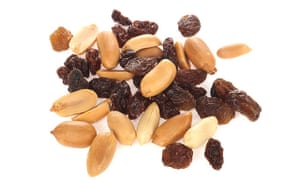


Dried fruit and nuts


Fruit and nuts are a popular snack. Photograph: Alamy

My weakness is cake and chocolate so my diet is liberally sprinkled with these plus spoonfuls of peanut butter and honey.


I don’t believe in measuring. Fruit tends to come in convenient meal-size portions ready-made (a pear, apple, banana etc). With vegetables I just fill my plate up, it’s not rocket science.


If I have a bad day eating with loads of bread, cakes and sweets I feel horrible mentally and physically. I still do it though sometimes.


Fruit and veg are cheap so I don’t know why people don’t buy more. I’m driven by my determination to stay active and healthy well into old age. My advice is don’t buy processed foods.


Tamraparni Dasu, 55, from New Jersey, US – ‘The food I grew up with was centred around vegetables’



Tamraparni Dasu

My mother was a terrific cook, and coming from the Andhra region of India, we ate three- to four-course meals, each with a different type of vegetable dish. Every celebration included multiple courses. When I got married, I was introduced to a whole new cuisine, also vegetarian, from Palghat [a city in southern India]. And when none of the restaurants could match the quality of my mother and mother-in-law’s cooking, I was forced to strike out on my own and start experimenting with recipes.


Breakfast for me is usually chapati or toast with a leftover veggie dish, like curried cauliflower. I snack on almonds and fruit. I go a bit fruit crazy, sometimes eating an entire bunch of grapes. Lunch is usually a big bowl of fruit and vegetables in a salad and then dinner will be chapati or rice and maybe eggplant or another vegetable dish.


I feel healthy and energetic, and attribute my good skin and hair to eating lots of fruit and vegetables. My advice is always cook at home, buy fresh produce every week (daily is hard for most of us working shifts). We cook together as a family and friends and it makes it more fun. There are lots of resources for vegetarian cooking, which have exploded in the last decade. Variety is important so improvise from as many cuisines as possible (Italian, Chinese, Mexican, all south Asian and east Asian). Improvise and it is OK to fail, scrape off the burnt broccoli and move on.


Anonymous, from north Wales – ‘I add vegetables to add flavour but also to add bulk and nutrients cheaply’


I get 10 portions a day. I have to work to a tight budget but also cooking is something I enjoy and take pride in. I cook our evening meals myself and while I enjoy trying out recipes I mostly cook standard stuff, such as spaghetti bolognese or stews. I add a variety of vegetables to every meal both to add flavour but also to add bulk and nutrients cheaply.


My spaghetti bolognese recipe, for instance, includes chopped onion, garlic, a red pepper and a tin of tomatoes. Also maybe a stick of celery, carrot or a handful of mushrooms chopped and sweated with the onion to start with. I do the same sort of thing with my stews and curries. I add in a bit of whatever vegetable I have to hand. I use my slow cooker a lot and that means the vegetable cooks down nicely to become part of a delicious sauce. A couple of sweet potatoes added to anything like that are delicious.


The key to getting it done is to not see it as a chore or a big thing. Just grab a glass of orange juice with breakfast. Or a cheese or ham salad sandwich with lettuce, tomato and cucumber for lunch. Then snack on a banana. Throw lots of vegetable in your dinner with apple pie to follow. There, you’ve had your 10 portions without even realising.


Meet the people who eat 10 portions of fruit and vegetables a day

23 Şubat 2017 Perşembe

Do you eat 10 portions of fruit and vegetables a day?

Forget five-a-day, scientists have said getting 10 portions of fruit and vegetables is an even better way of lowering your chance of heart disease, stroke, cancer and premature death.


While a 200g portion is associated with a 16% reduced risk of heart disease, 800g (around 10 portions of fruit and veg) sees this risk reduced further to 24%. To put this in perspective, one banana is 101g. It means we should all be piling up platefuls of greens and eating plenty of apples, strawberries, bananas etc.


But, getting this much greenery is not always easy, especially if you are not vegan or vegetarian. We want to hear from those of you who manage it without quitting meat. How do you do it? What’s the impact? Do you have any advice for others who want to increase their veg and fruit intake? Share your stories with us.


Do you eat 10 portions of fruit and vegetables a day?

3 Şubat 2017 Cuma

29 Best Detoxifying Vegetables

Detox (detoxification) is a naturally occurring and ongoing process that happens 24 hours a day, 7 days a week. And with exposures from many types of toxins and stress in the modern world, the body has a lot of work to do.


The problem of toxicity is very real and shouldn’t be underestimated. Toxins, in large quantities due to long-term exposure, sluggish detox, stress or poor nutrition, can adversely affect the liver, brain, lungs, and kidneys.


Some toxins are believed can even promote heart disease that might due to increased free radical levels, hence, increased superoxide levels.


Efficient detox helps your body to process and use nutrients effectively which results in proper physiological functioning leading to healthier, longer, and happier life.


Liver


The liver is the most important organ that runs the detoxifying processes and removes toxins. In addition, the lungs, intestines, kidney and skin play a big part in detox as well.


Vegetable nutrients and phytonutrient contents which impart antioxidant properties are vital in neutralizing free radicals produced in phase 1 detox in the liver. They also supply insoluble fiber (resistant fiber) and dietary fiber that promote better digestion, thus help elimination.


Their antioxidant properties are attributed to carotenoids, polyphenols, along with vitamin C (found in many vegetables) are also vital in helping detox.


Note: Polyphenols are bioflavonoids. Although bioflavonoids are the largest family of polyphenolic compounds, they are not necessarily polyphenols.


Their minerals contents, including magnesium, zinc, and selenium along with vitamin Bs and C play essential roles in detox as well.


The following are vegetables said to be beneficial for detox purposes.


Artichoke


Silymarin, a bioflavonoid found in artichoke acts as an antioxidant as well as helps protect the liver against free radical attacks. It also contains cyarin that helps stimulate the production of bile.


Arugula


Arugula (known as rocket vegetable in Asia), a cruciferous vegetable, provides antioxidants as well as a broad spectrum of minerals and vitamins, all of which are vital for detox.


Asparagus


Asparagus makes a great detox vegetable because the chromium it contains serve to help balance blood sugar levels while you’re on a detox.


Beets


Beets are a rich source of betalains, bioflavonoids that make beets appear red, a powerful antioxidant that helps the liver in removing impurities from your blood.


Bell Peppers


If you don’t have a sensitivity to nightshade vegetables, you can always include bell peppers in your detox. Besides containing antioxidants, they contain a good number of different vitamins and a god source of fiber as well.


Bok Choy


Bok Choy, a cruciferous vegetable family, offers important vitamins that act as antioxidants in the body. Its high fiber content helps out your elimination system by getting the toxins out of your body efficiently.


Broccoli


Broccoli is one of the best cruciferous vegetables that can help your body ridding of toxins.  The combination of fiber, glucosinolates, carotenoids, bioflavonoids, vitamins, minerals and protein found in broccoli are thought to help many bodily functions that include detoxifications and elimination, among others.


Other cruciferous vegetables that can be used along with broccoli or as a stand-alone to help detox, including Brussels sprouts, cabbage (red/purple, green, and white), cauliflower, collard, watercress, kohlrabi, and kale.


Celery


Celery is an urination-inducing vegetable that can also help reduce inflammation, promote better digestion and elimination. When you choose to take it as juice or smoothies, be sure to include the leaves to get extra nutrients.


Cucumber


Cucumber is made up mostly of water. It can support your digestive system and promote better urination, both of which are essential in helping the body to remove toxins. At the same time, it provides you carotenoids, polyphenols, and bioflavonoids with antioxidant properties for detox and reduces inflammation.


Eggplant


Adding eggplant to your shopping cart while getting your detox foods worth your while. It’s a great source of antioxidant anthocyanins that are thought to help your liver and gallbladder perform better. Besides that, it contains antioxidant chlorogenic acid which is the most abundant phenolic acid in the flesh of eggplant. Both types of antioxidants are crucial in helping detox.


Fennel


Fennel promotes better digestion as well as urination which make it a good addition to your detox plan as it will help with the removal of toxins. A study shows that it has high chlorogenic levels and antioxidant activities. To potentiate antioxidant activities of your smoothie, combine it with red/purple cabbage and broccoli.


Green Beans


Carotenoids and flavonoids content of one of the tastier, green beans, make them a good detox vegetable that will help ease you through any detox symptoms such as inflammation. They really stand out in their antioxidant value as they possess a wide variety of carotenoids, including beta-carotene, lutein, neoxanthin, and violaxanthin as well as flavonoids, including quercetin, catechins, kaemferol, epicatechins, and procyanidins.


Cayenne Peppers


Crank up the heat on your detox with a cayenne pepper. Improved circulation throughout the body is said to be an important factor in a detox and for your overall health. Capsaicin and dihydrocapsaicin offer antioxidant activities in addition to getting your detox into a higher gear. Cayenne also contains other antioxidants, including carotenoids and vitamin C.


Kale


Kale carotenoids, glucosinolates, polyphenols, vitamins C, and fiber contents would help your detox considerably.


Kimchi


Probiotic effects imparted by kimchi and other fermented vegetables like sauerkraut can prove beneficial for detox as they help your body to remove pesticides and heavy metals that have been taken in from a tainted food supply


Fermented vegetables are also revered for their improved bioavailability and activity of chemical constituents eg. amino acids, nutrients, and antioxidant phytonutrients that include polyphenols, carotenoids, and bioflavonoids.


Leeks


It’s an interesting thing to know about leeks as they share the same compound, allicin, contains in garlic which imparts powerful antioxidant effects. Leeks are also good sources of polyphenols, bioflavonoids, and carotenoids.


Mushrooms


Polysaccharides are the main supply of antioxidant phytochemicals in mushrooms. They support detox by scavenging free radicals produced in the liver after you consume foods or medicines (including herbal medicine).


Mustard Greens


Besides carotenoids and bioflavonoids, mustard greens also contain glucosinolates which, in the body, are converted to antioxidant isothiocyanates.


Onions


Many people imagine onion antioxidant properties are only attributed to allicin. However, it also contains bioflavonoids and polyphenols. The total polyphenol content of onion is not only higher compared to it cousin allium vegetables, garlic, and leeks, but also higher than carrots, tomatoes, and red bell pepper.


Peas


Despite their small sizes, peas are packed with nutrients and can be an addition to any serious detox program. Besides fiber and protein, they also contain antioxidant carotenoids and bioflavonoids. The protein not only helps you feel satiated between meals but supplies many essential amino acids required for efficient detox.


Radishes


Radishes have the affinity to your digestive system. It is also said to help clear out toxins and move them out of the body. Colored-skin varieties are believed to contain antioxidant bioflavonoids.


Seaweed


Large amounts of chlorophyll, iodine, carotenoids, polysaccharides, and minerals make seaweed so invaluable as a detox food. Iodine promotes better thyroid functions which is essential during detox. Nori and kelp supply natural iodine which is preferable over synthetics. Carrageenans are polysaccharide that aid digestion, absorb toxins and act as antioxidants.


Spinach


Spinach is revered for its mineral and beta-carotene contents. Besides that, it also contains other carotenoids that include lutein, zeaxanthin, neoxanthin, and violaxanthin, all of which exert powerful antioxidant activities. It also contains bioflavonoids, vitamin C, and vitamin E.


Squash


Adding any types of squash to your diet will help you detox with added carotenoids, bioflavonoids, fiber, vitamins, and minerals.


Sweet Potatoes


Sweet potatoes are nourishing foods that are filling. Its beta carotene, bioflavonoids, and fiber contents support your body for improved detox. Better still, choose purple varieties for their anthocyanins contents, powerful antioxidant bioflavonoids.


Tomatoes


Lycopene in tomatoes along with bioflavonoids, carotenoids, and vitamin C. help to protect the liver from damage (hepatoprotective) so it can do its job of filtering out toxins smoothly. Cherry tomatoes offer more lycopene. Reap benefits of cooked tomatoes as they increase the bioavailability of many vital nutrients including lycopene.


Turnips


Preferably, turnips should be included in a detox diet due to their fiber content. They’ll help you prevent digestive system sluggishness and release toxins need to make it all the way out.


Wheatgrass


Magnesium, a mineral vital for detox, chelates to chlorophyll like iron does to hemoglobin. High chlorophyll content of wheatgrass makes it the perfect choice for helping your body to detox. You can get its full benefits by juicing it or taking it in powder form (with water).


Zucchini


This vegetable provides vitamin C plus carotenoids and bioflavonoids to get your detox in the liver runs efficiently. Besides playing a part along with other nutrient-dense foods on the list to supply the body the nutrients it needs, Zucchini is said to be able to help reduce “healing crisis” suffered by some people during detox.


29 Best Detoxifying Vegetables

24 Temmuz 2016 Pazar

2016 Dirty Dozen & Clean Fifteen- Most & Least Pesticide Contaminated Fruits & Vegetables

If you’re looking fresh fruit and vegetables for this season, it would be better to look at this year’s 2016 Dirty Dozen and Clean Fifteen – a list of Environmental Working Group (EWG’s). If you’re eating any fruit and vegetables, you may be ingesting 146 pesticides, according to a new report from the Environmental Working Group.


 2016 Dirty Dozen


Strawberries
Apples
Nectarines
Peaches
Celery
Grapes
Cherries
Spinach
Tomatoes
Sweet bell peppers
Cherry tomatoes
Cucumbers


2016 Dirty Dozen Key Findings-:


-More than 98% of strawberry, peaches, nectarines, and apples tested positive for at least one pesticide residue.
-The average potato had more pesticides by weight than any other produce.
-Single grape and a sweet bell pepper sample contained with 15 pesticides.
-Strawberries showed upto 17 different pesticides.


Health Risks of Pesticides


Pesticides are toxic and different pesticides have been linked to a variety disease, including hormone disruption, cancer and brain toxicity, respiratory problems, memory disorders, skin conditions, depression, birth defects and neurological conditions such as Parkinson’s disease.


EWG’s Clean Fifteen list of produce least likely to hold pesticide residues.


2016 Clean Fifteen:


Avocados
Sweet corn
Pineapples
Cabbage
Sweet peas
Onions
Asparagus
Mangoes
Papayas
Kiwi
Eggplant
Honeydew Melon
Grapefruit
Cantaloupe
Cauliflower


Clean Fifteen Key findings-:


-Avocados were the only 1% of avocado samples showed any pesticides.
-89% of pineapples, 81% of papayas, 78% of mangoes, 73% of kiwi and 62% of cantaloupes had no pesticides.
-No fruit from the Clean Fifteen tested positive for more than 4 types of pesticides.
-Multiple pesticide residues are extremely rare on Clean Fifteen.


Can Pesticides Be Washed Away?


No, not entirely. According to the National Pesticide Information Center, washing fruit and vegetables doesn’t completely remove pesticide. Also, although some pesticides are found on the surface of foods, other taken up through the roots and into the plant and cannot be removed. If pesticides are present on the surfaces of your fruits and vegetables, you can remove a substantial amount of those surface pesticides.


Sources:


–https://www.ewg.org/foodnews/summary.php


–https://draxe.com/2016-dirty-dozen/


–http://www.mindbodygreen.com/0-13571/12-fruits-veggies-with-the-most-pesticides-2014-dirty-dozen.html


Read More Articles:


2016 Dirty Dozen & Clean Fifteen- Most & Least Pesticide Contaminated Fruits & Vegetables

1 Nisan 2014 Salı

7 Servings Of Vegetables A Day May possibly Preserve Death Away

Adding to the mind-boggling evidence that the street to overall health is paved with plants, a new study in BMJ nowadays finds that consuming 7 servings of fruits and veggies per day minimizes one’s death risk significantly. Researchers followed a nationally representiave sample of in excess of 65,000 individuals in Britain, and located that people who ate far more fruits and veggies have been much significantly less probably to die of any result in. In certain, they had been much less likely to die of heart condition, stroke, and cancer. And, happily, the a lot more fruits and veggies the men and women consumed, the a lot more their death risk fell.


“We all know that eating fruit and vegetables is healthful, but the size of the impact is staggering,” mentioned examine writer Oyinlola Oyebode of her team’s findings. Oyebode is a researcher in the Epidemiology and Public Well being at University College London.


English: Euler diagram representing the relati...

Euler diagram representing the partnership amongst (botanical) fruits and vegetables. Botanical fruits that are not greens are culinary fruits. (Photograph credit score: Wikipedia)


She and her staff used information from the Overall health Survey for England, looking at a random sampling of British citizens in excess of an average follow-up time period of 7.five years. Above the program of this time, 4,400 individuals died of different causes, and the researchers identified some considerable associations amongst diet plan and death chance.


For individuals who ate seven or much more servings of fruits and veggies per day, their risk of dying from any trigger was diminished by 42%, in contrast to folks who ate much less than a single serving per day. And their chance of dying from cancer and heart illness was diminished by 25% and 31%, respectively.


Even men and women who ate diet plans that have been somewhat much less vegetable- and fruit-wealthy appeared to reap some rewards. Individuals who ate one-3 servings of fruits and veggies per day loved a 14% decreased mortality danger people who ate 3-5 servings per day, were 29% significantly less most likely to die and these consuming 5-seven servings had a 35% decrease risk of death (yet again, in contrast to people who ate significantly less than serving per day).


The trends held strong when the researchers adjusted for other likely confounding factors like age, smoking, alcohol intake, socioeconomic status, Physique Mass Index, education, and bodily exercise level.


Interestingly, when the effects of the two were teased apart, veggies seemed to offer you higher safety than fruits. Every single added serving of vegetables was linked to a sixteen% reduction in mortality, in contrast to 10% for fruits.


“The clear message right here is that the far more fruit and greens you consume, the much less probably you are to die at any age,” explained Oyebode. “Vegetables have a larger result than fruit, but fruit even now can make a genuine distinction. If you’re pleased to snack on carrots or other vegetables, then that is a excellent decision but if you fancy anything sweeter, a banana or any fruit will also do you great.”


It need to be explained, the study only pointed to a correlation amongst fruits and veggies and mortality – it did not demonstrate causation. Nonetheless, the research was properly-executed and factors to a powerful connection. It also confirms what we currently suspected from prior study.


Adding a slight and possibly not surprising twist is the truth that frozen and canned fruits and greens appeared to boost the death chance by 17%. As the authors of an accompanying editorial muse, “might refined sugars be acting as the concealed villain in this Shakespearean drama? Take into account, gentle reader.” Although frozen and canned fruits were lumped collectively in the study, since Brits eat four times as numerous canned as frozen fruits, it’s very likely, the authors say, that this form of fruit – and as a result, sugar – was actually behind the result.


The U.S. dropped the “5-a-day” slogan back in 2007, favoring “Fruits and Veggies – A lot more Matters,” but other parts of the globe still suggest five servings of fruits and veggies per day. But since most men and women really don’t get five servings in per day, asking men and women to up their consumption could be tricky, especially given that fresh fruits and vegetables can be pricey.


If you can enhance your consumption, fantastic. If not, don’t fret. Just get in what you can, because there’s nevertheless benefit derived from every serving of fruits and greens you take in. Oyebode urges the public not to “feel daunted by a big target like 7. What ever your beginning level, it is usually worth consuming a lot more fruit and greens. In our examine even those eating one particular to three portions had a drastically reduced danger than individuals eating significantly less than one particular.”


Adhere to me @alicewalton or discover me on Facebook.


Courtesy BMJ

Courtesy BMJ


7 Servings Of Vegetables A Day May possibly Preserve Death Away

31 Mart 2014 Pazartesi

Wholesome diet regime implies 10 portions of fruit and vegetables per day, not five

Specialists explained that even seven-a-day was not adequate and that ten would be the optimum quantity, as the protective impact continued to improve with increased consumption.


The study’s lead author, Dr Oyinlola Oyebode of UCL’s division of epidemiology and public health, said: “The clear message here is that the more fruit and greens you consume, the less probably you are to die at any age. My suggestions would be nonetheless significantly you are eating now, eat far more.”


Overall health authorities named on the Government to subsidise the price of fruit and vegetables, which they suggested could be paid for by taxing sugary foods.


The 5-a-day suggestions were primarily based on Globe Health Organisation suggestions issued in 1990, which suggested consuming 400g of fruit and veggies every single day to reduced the chance of heart ailment, stroke, variety-two diabetes and obesity.


Prof Simon Capewell, of the department of public wellness at the University of Liverpool, stated the guidance need to be ten portions a day. “Humans are developed to be omnivorous: a handful of nuts, seeds, fruit and the occasional antelope. We’re not meant to be eating junk food.”


Researchers examined the consuming habits of 65,000 folks in England between 2001 and 2013.


They identified that 7 helpings a day of fruit or vegetables could lessen a person’s all round danger of premature death by 42 per cent when compared with folks who ate just one particular total portion.


Folks who ate between five and seven portions a day had a 36 per cent diminished threat of death, individuals who ate 3 to five portions had a 29 per cent decreased danger and individuals who ate 1 to three helpings had a 14 per cent decreased risk.


People with the highest intakes had been also 25 per cent significantly less likely to die from cancer and 31 per cent much less probably to die from heart illness.


“We need to have to urgently examine seriously the proposal to increase recommended intake to 7 a day,” mentioned Naveed Sattar, professor of metabolic medication at the University of Glasgow. “To apply a 7-a-day message would be genuinely difficult for numerous in society and would call for governmental support such as subsidising the value of fruit and greens, possibly by taxing sugar-wealthy foods.”


The review also discovered that vegetables have been far much more useful than fruit. Every portion of vegetables lowered the threat of death by 16 per cent. Even so, each piece of fruit only lowered the likelihood of death by four per cent.


The authors said the findings lent help to the Australian government’s advice of “two plus five” a day, which encourages people to consume two helpings of fruit and five of greens. Dr Alison Tedstone, the group’s director of diet regime and obesity, mentioned: “Our target remains on increasing all round consumption of fruit and veggies to meet existing suggestions.”


The research was published in the Journal of Epidemiology and Neighborhood Overall health.


Wholesome diet regime implies 10 portions of fruit and vegetables per day, not five

27 Ocak 2014 Pazartesi

4 Sea Vegetables with Amazing Health Benefits

As the dietary value of land vegetables continues to decline due to ongoing soil erosion and pollution, sea greens – whose nutritional compositions have remained intact for centuries – are coming to the fore as a significantly-needed source of minerals. Certainly, the regular seaweed even now consists of over 70 crucial minerals and phytonutrients, as effectively as quite a few compounds that can pull unpleasant harmful toxins from our bodies.


Although all sea vegetables contain a massive number of well being rewards, some stand out a lot more than other individuals in a single or far more categories. The 4 seaweeds listed below fall into this group.


Kelp is arguably the biggest “all round” seaweed, since it is rich in virtually every single nutrient our body demands for superior wellness. For instance, kelp is made up of extraordinary quantities of all the major nutritional vitamins (nutritional vitamins A, B, C, D, E, and K), which perform numerous roles in making sure our biological processes run smoothly. Kelp is also filled with dietary fiber, protein, countless trace minerals, and sodium alginate – an element that assists the body to rid itself of radioactive particles. (This is specifically critical post-Fukushima, considering that while both sea and land veggies are impacted by this disaster [85 % of rainwater comes from the oceans], few land vegetables can get rid of these particles).


Bladderwrack was Europe’s unique source of iodine, and it stays the ocean’s greatest source of this important trace nutrient (50 grams of bladderwrack contains far more than one hundred % of our advisable everyday allowance of iodine). Iodine is needed to regulate the thyroid gland, which in flip regulates the metabolic process. Individuals who have trouble shedding weight despite dieting and doing exercises heavily, for instance, are frequently suffering from thyroid dysfunction.


Bladderwrack is also rich in zeaxanthin and fucoidan. Zeaxanthin is a organic carotenoid that aids guard our eyes from oxidative harm, thus guarding us from eye-connected problems such as macular degeneration. Fucoidan, a polysaccharide discovered in the cell walls of brown algae, has been shown to inhibit tumor growth and regulate the manufacturing of AP-I (which regulates cell proliferation), making bladderwrack an outstanding cancer-fighting meals.


Nori, which is renowned for its position in wrapping sushi and garnishing noodle dishes, is the biggest seaweed source of protein. Certainly, based on its quality, nori is comprised of in between thirty and 50 percent protein (a comparable quantity to soybeans, spirulina, and chlorella), generating it an excellent supply of bioavailable, plant-based mostly protein for vegetarians and vegans. Protein, of program, plays a essential position in the growth and restore of cells a deficiency can lead to muscle and joint discomfort and a continuous craving for unhealthy foods such as refined carbs and sweets.


If bladderwrack is the king of iodine and nori is the king of protein, then hijiki is definitely the king of calcium. In fact, scientific studies display that there is far more calcium in hijiki than that contained in an equal weight of cow’s milk. Additionally, hijiki boasts an optimum calcium-magnesium ratio of 2-one (we need magnesium to support us soak up the calcium).


Perhaps hijiki’s amazing calcium content explains why this brown seaweed is so closely linked with healthier, lustrous hair in Japanese folklore. Without a doubt, hijiki – with its smooth visual appeal and delicate curls – even resembles human hair as it grows on the ocean floor.


Michael Ravensthorpe is an independent writer whose research interests consist of nutrition, alternative medication, and bushcraft. He is the creator of the website, Spiritfoods, via which he promotes the world’s healthiest meals.


4 Sea Vegetables with Amazing Health Benefits