Julia etiketine sahip kayıtlar gösteriliyor. Tüm kayıtları göster

22 Eylül 2016 Perşembe

Julia Gillard: "We"ve made progress in education and gender equality – but more must be done"

A few years ago, an outbreak of cholera and other deadly diseases swept through one of the poorest villages in the northern region of Ghana, taking the life of Ruhainatu’s mother, Jamila.


Ruhainatu was in her teens. A decade ago, Jamila’s death would have extinguished Ruhainatu’s chances of getting the education she needs to succeed in life. Instead of going to school, she would have taken on her mother’s role of caring full time for her home and family.


But efforts by the Ghanaian government, together with development partners like the Global Partnership for Education, have strengthened the country’s education system. Now Ruhainatu and girls like her have a more hopeful prospect for life. One of the top performing students in the local school, Ruhainatu has ambitions to go away to university to become a nurse and then return to her village to help others remain healthy.
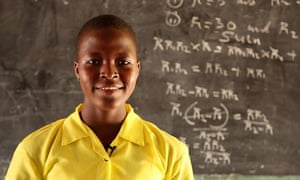


Ruhainatu has ambitions to go away and train as a nurse.

Ruhainatu has ambitions to go away and train as a nurse. Photograph: GPE/ Stephan Bachenheimer

Her story is one of countless affirmative real-life testimonials showing how educating girls can help them be healthier, more economically prosperous and become more civically empowered women. Their new knowledge can also improve the health and wellbeing of others around them.


But enabling children to succeed requires the right combination of support, so that they will be healthy, well-nourished and can attend a quality school that has access to clean drinking water and toilets.


Providing school meals and deworming programmes, for example, can have an important impact. The 2016 Unesco global education monitoring report notes that school meals and deworming programmes promote better education outcomes, especially for girls. For very poor families, the prospect that their daughter will be fed means that sending her to school is a more attractive option than keeping her at home so she can attend to domestic duties, farm work or taking goods to market. Greater access to clean water can also translate into education improvements for girls, by reducing the time they take to collect water for the family and giving them more time for school.


This give-and-take between education and other social development factors has received more emphasis since the unveiling of the sustainable development goals (SDGs) last year. We are breaking down the silos that have historically divided development sectors. Education and global health groups now understand that improvements in each are essential to progress for both and we are already creating opportunities for deeper collaboration.


Now the evidence of what works is increasingly clear, let’s just get on with it and drive progress on the mutually reinforcing goals for global education (SDG 4) and gender equality and women’s empowerment (SDG 5).


For groups like the Global Partnership for Education, whose board I chair and which partially funded the program in Ghana that helped Ruhainatu, “getting on with it” includes continuing to support countries to close the gender gaps in their education systems.


We are breaking down the silos that have historically divided development sectors.


Closing those gaps requires recognising and breaking down barriers to gender equality. Poverty is the biggest, but other significant factors include ethnicity, language, disability, early marriage, the distance from home to school, gender-biased pedagogy, fragility and conflict, absence of proper sanitary facilities, pressure to take care of family or earn money, and insecurity within and on the way to school.


We – in education or in any other related development sectors – could accomplish much more in less time if there was sufficient political support and enough financing. This includes first and foremost more domestic financing for education by developing countries themselves. But it also requires more donor funding. We can’t “just get on with it” when education’s share of overseas development aid has fallen from 13% to 10% since 2002. The International Commission for Financing Global Education Opportunities, notes in its just-released report that under present trends, only one in 10 young people in low-income countries will be on track to gain basic secondary-level skills by 2030. Clearly, this is completely unacceptable.


The Education Commission, on which I serve as a commissioner, advocates for a range of far-reaching transformations to improve education. The commission’s work provides new evidence on what works and costs out what it would take for the world to educate every child.


The call to action in financing is to increase total spending on education from $ 1.2tn (£0.9tn) per year today to $ 3tn (£2.3tn) by 2030. That’s a big jump but not an insurmountable one.


Making the leap starts with developing countries, donors, NGOs, the private sector and many others choosing right now to just get on with it.


Join our community of development professionals and humanitarians. Follow @GuardianGDP on Twitter.


Julia Gillard: "We"ve made progress in education and gender equality – but more must be done"

27 Haziran 2014 Cuma

Julia Manning reviews this week"s healthcare news

Sugar cubes

Public Wellness England and the Scientific Advisory Committee on Nutrition published reports on sugar. Photograph: Dominik Pabis/Getty Photos


Is there this kind of a thing as a quiet week in wellness? Considerably as politicians may possibly want it to be all quiet on the Whitehall front, it has been extremely hard to stay away from the noise of bed pans over the previous seven days as GPs, weight problems, assisted suicide, NHS finances, youngster neglect, clinical blunders and patient security have all been played out by means of the surround sound of media speakers.


2020health spends a good deal of time not only thinking (what thinktanks do greatest) about options, but also the cultural and behavioural context in which troubles arise. For instance, to inquire for a lot more compassionate nurses is pointless if we don’t think about how compassion and care can be valued a lot more extensively in society.


The BBC kicked off the weight problems debate ahead of the Public Well being England and Scientific Advisory Committee on Nutrition (SACN) reports on sugar, with a narrow emphasis on content in foods.


Our ongoing investigation into Weight problems: Schooling or Regulation? is currently exhibiting components to be one particular portion of a very complex difficulty requiring action in multiple sectors at nationwide, corporate, neighborhood, family members and person ranges. Getting told to lessen sugar consumption to 5% will make tiny difference to one’s intake when it is feasible to acquire 4 bars of chocolate in a specific frozen food outlet for the value of one particular-and-a-half bars in most supermarkets when both sweets and drinks can be marketed as “sports activities” objects when there are no organizing rules limiting rapidly foods retailers all around colleges and obesogenic vending machines are to be found in many of our NHS hospitals.


The most shocking report this week (notwithstanding the Savile revelations) was from the Centre for Social Justice on vulnerable children, featured in the Evening Regular. Our hearts need to break at the number of children currently being betrayed by a dysfunctional program that denies them mental health assistance, exposes them to sexual abuse and permits them to grow to be victims of the fallout of parental substance abuse. The inadequacy of addiction services and uncoordinated overall health, social and voluntary sectors is laid bare. I know from 2020health’s Fit4School research (to be published) that in any one secondary school, 85% of the youngsters can arrive at the age of 11 with behavioural, mental, dietary or emotional problems, which is why we are passionate about working to increase teenagers’ wellbeing. The charity Children Firm has launched a new campaign in response to the CSJ report.


The Guardian unveiled that NHS finance directors are worried about money, providing their take on the predicted funding shortfall, also covered by the BBC. GPs labelled the seven-day-functioning concept “Utopian” if it does not acquire a lot more funds some people can not see a GP at all, as the Every day Mail claimed patients are being de-registered from GP practices due to problems in recruiting medical doctors. At the exact same time, GPs are needed to “do far more” on prevention, when, as the Telegraph highlighted, they are previously swamped by the day work. It really is not a pleased time at the frontline.


Many of us are calling for an honest public debate on the pressures the NHS budget is facing so the public is informed and can be engaged in determining what the NHS must be in the future: A complete, do-it-all support requiring increased taxes? A streamlined, core services with personalized payment necessary for non-vital care? A method in which an “asset-primarily based” method of peer help, volunteering and third sector involvement gets to be the norm?


Ultimate word goes to the worth of genuine-time feedback. The emphasis is on good quality and security for all – this week witnessed a new drive by the well being secretary, Jeremy Hunt, on security league tables, scrutinised by Richard Vize for the Healthcare Professionals Network. Jeremy Bowen showed the way by tweeting about the poor care his father was receiving at Cardiff and Vale university hospital. In no time at all, Mr Bowen Sr was back house and CVUHB was investigating. Actual-time is the way to go.


Julia Manning is chief executive of thinktank 2020health


Are you a member of our on the web local community? Join the Healthcare Specialists Network to receive standard emails and exclusive delivers.


Julia Manning reviews this week"s healthcare news

18 Haziran 2014 Çarşamba

District nurses are crucial to the NHS they have to not be allowed to disappear | Julia Frazzleby

district nurse assisting an old woman at home

‘We had been constantly conscious that patients would be relying on us and we may possibly be the only make contact with they had with the outside world.’ Photograph: Sally and Richard Greenhill/Alamy


I was saddened to go through that district nurses are dealing with extinction yesterday. I was once a district nurse and extremely proud to be so, and six years in the past, soon after an abscess on my spine I also needed day-to-day visits from district nurses. Having been on the two sides of the fence, I can say this is a crucial service.


I worked in a rural spot as element of a six-nurse staff covering the twilight shift, from 8pm-midnight. Each evening, two nurses would meet at our nearby hospital to go by means of our listing of visits. On common we would have 9 to 10 visits per evening, and although some would be regular visits, most nights we would have additional visits that the day crew had not been capable to make or these when a GP asked us to call in on one particular of their individuals.


The care we presented was varied – we would help in end-of-lifestyle care, put somebody to bed, modify dressings, administer medicine or just assist someone to the toilet. Our nights have been planned with military precision, usually conscious that our patients have been relying on us and that really often we would be the only get in touch with they had with the outside word. Despite obtaining only a few hours to get round this kind of a large area with a lot of sufferers we never rushed, and always made time for those we have been caring for.


Archive district nurse pic 1948 A 1948 image of a house go to by a district nurse, 1 of the providers launched by the fledgling NHS. Photograph: Popperfoto/Popperfoto/Getty Images


We would typically be asked to support with what would now be deemed non-nursing duties, this kind of as unblocking a sink, creating a note for the milkman, rehanging a curtain, or taking a piglet to the vets in the middle of the evening. Extremely rarely did we finish at midnight and at the end of every shift we would have to go back to our office to check out that no additional requests had come in, as this was just before the advent of the mobile telephone. Come hail, rain and snow we in no way missed a go to. In bad weather, blankets, a shovel and wellies grew to become a normal part of our uniform. Why? Because we were an important service, one particular that could be relied on.


Nursing is a vocation, and for me it was never about the money. I did not want to sit in front of a laptop filling out countless types or inputting numerous codes into a personal computer accounting for every single 2nd of my time. I desired to be out there supplying important care and guaranteeing that where feasible, a patient could stay in their personal property.


If district nurses are genuinely in danger of disappearing, what will occur to individuals that depend on this essential services? For the older individual who is not mobile and has a leg ulcer, how and the place will they go to have their dressing modified? For the mom crippled by MS who would like to stay inside her personal residence and sustain as significantly independence as attainable, how will she and her family cope? They could not have a pot of money to shell out for private care – will tasks like washing, obtaining dressed, help with personal hygiene now be left to her loved ones to deal with?


There has been a 47% drop in district nurses in the final decade. Support solutions are stretched to the limit, and appointments with practice nurses in GP surgeries are quite challenging to come by. A&ampE and minor injury centres are total to the brim, so what is the substitute for individuals who demand the crucial providers of the district nurse?


District nurses are crucial to the NHS they have to not be allowed to disappear | Julia Frazzleby