Deliver etiketine sahip kayıtlar gösteriliyor. Tüm kayıtları göster

29 Kasım 2016 Salı

Stop asking us to deliver the impossible, NHS trusts urge ministers

Ministers and NHS bosses are being urged to stop asking the health service to “deliver the impossible” of higher standards of care when it is being denied the money it needs to do its job properly.


The plea from the organisation that represents NHS trusts in England was accompanied by a blunt warning that care for patients is already deteriorating and that even a flu outbreak could “destabilise” some hospitals this winter.


NHS Providers, whose member trusts receive £65bn of the NHS’s £100bn annual budget, says the health secretary, Jeremy Hunt, and the NHS England chief executive, Simon Stevens, are making unrealistic demands of the service.


“The government has said there will be no more money. The government and our system leaders have said that the NHS still has to deliver everything that is currently being asked for,” Chris Hopson, the chief executive of NHS Providers, will say on Tuesday.


He will dismiss the idea that the NHS could hit its tough financial targets this year while also transforming how it delivers care, giving every patient high-quality care, meeting a host of waiting time targets, implementing the government’s “seven-day NHS” pledge and also improving patient safety.


Ministers and NHS bosses should scale back their expectations of what the NHS can do in all those areas given its parlous finances and the government’s refusal to boost its budget, Hopson argues.


Three-quarters (73%) of NHS trust bosses believe they do not have enough staff to function properly, according to a new NHS Providers report on the state of the NHS in England. More than half (55%) say they are worried or very worried by their organisation’s lack of staff. Many trust chairs and chief executives now say the difficulty in recruiting personnel is as onerous as balancing their books.


In a survey of 172 bosses from 136 of England’s 238 trusts, one said: “There are simply not enough high-quality clinical staff in the country to cover some specialities.” Another said: “Brexit has caused drying up of recruitment from the rest of Europe.” Widespread worry about the NHS’s workforce “concerns me more than the money”, said a third boss.


Just 10% are confident or very confident that they can maintain the level and quality of services they currently provide over the next six months because money is so tight. Nearly half (49%) expect their financial position to worsen over that time.


Hopson will tell his organisation’s annual conference that the government’s decision not to put more money into a cash-strapped NHS raises “four main risks. The first is that the service the NHS provides is now starting to deteriorate”, and that the deterioration will accelerate because of the “crisis” in social care services.


The NHS is also becoming less resilient, he will add. “When you run a system under as much pressure for as long as we have been running the NHS, it becomes much less able to absorb the shocks that any health system has to absorb – the winter flu outbreak [or] closure of a couple of care homes [or] a few experienced GPs retiring and being replaced by more risk-averse locums”.


In addition, Hopson will say, “pressure on staff and leaders becomes intolerable, which erodes morale”. Hopson is also worried that pressures are so great that “the invisible bond of mutual trust and faith between the government and NHS system leaders, on one hand, and frontline leaders, on the other, is starting to fray”.


NHS Providers’ warnings on staffing come as an audit of NHS stroke services in England, Wales and Northern Ireland found that patients who have suffered a stroke do not always receive optimum care because many units have too few nurses and doctors, especially at weekends.


Nearly half (49%) of stroke units do not have the recognised minimum number of nurses needed to ensure good care, according to the Sentinel Stroke National Audit Programme. At weekends as many as 80% of units do not have the three nurses per 10 beds that is recommended. In addition, 40% of units have at least one vacancy for a consultant and 28% do not provide consultant-led ward rounds every day of the week.


Staff shortages were a concern, the experts behind the audit said. A lack of nurses in stroke units has been shown to increase the risk of patients dying.


The Department of Health welcomed NHS Providers’ acknowledgement that trusts were treating record numbers of patients and also making good progress at reducing its collective deficit, which hit a record £2.45bn in 2015-16.


Stop asking us to deliver the impossible, NHS trusts urge ministers

26 Eylül 2016 Pazartesi

Female playwrights deliver Manchester"s global festival of childbirth

In 2010, the UN secretary general Ban Ki-moon wrote that every year millions of women and children die from preventable causes. “These are not mere statistics,” he said. “They are people with names and faces.”


His remarks were part of the inspiration for Birth, a four-day festival of “drama and debate” to be held next month at the Royal Exchange theatre in Manchester. Planned to coincide with Manchester’s year as European city of science, Birth presents seven new works by female playwrights from around the world (Kenya, India, China, Syria, UK, the US and Brazil), all focusing on different experiences of childbirth.


‘Theatre doesn’t give answers, it provokes questions’ … Emma Callander


‘Theatre doesn’t give answers, it provokes questions’ … Emma Callander

The playwrights, including Stacey Gregg, Mũmbi Kaigwa and Kirsten Greenidge, have examined issues as wide-ranging as modern maternity intervention (IVF, caesarean, Pitocin), population control and the socio-economics of birth in some of the world’s most densely populated countries. “We wanted to talk about global health inequality and the place that it really comes into sharp focus is in birth practice,” says the festival’s creative director Emma Callander, co-founder of the global theatre movement Theatre Uncut.


She cites statistics that show the US is the most expensive country in which to give birth, but it also has some of the highest maternal mortality rates in the developed world;and that every year 3,000 Kenyan women develop fistula during childbirth – a tear between the rectal and vaginal passages that leaves women incontinent – and only 7.5% of them receive treatment.


One of the commissioned playwrights, 24-year-old Swati Simha, has used her play to look at the subject of mass sterilisation in India. The work focuses on a doctor haunted by her role in the country’s population control effort, where women are often given incentives to be sterilised and doctors have targets to reach in insanitary conditions.


“The big question is why spend so much money and resources on birth control as opposed to providing [better] healthcare,” says Simha. “Of course the birth rates are very high, but so are the infant mortality rates. It’s an agrarian society so you do require hands in the field and you know that at least three of your five kids are going to die in the first 10 years of their life, so of course the birth rate is going to be high in those regions. Why not provide medical facilities?”


To research her play, Simha spent two weeks in a rural village in the state of Jharkhand. “It was quite revealing,” she says. “There’s no electricity in the primary health centres and there’s no transportation. Women in labour can have to walk 10 kilometres to get to the nearest health centres.”


[embedded content]

Swati Simha talks about the Birth festival

Liwaa Yazji, a playwright, documentary film-maker and poet, left Damascus in 2013 and her mother, a gynaecologist, still lives in the war-torn city. Her play looks at the lives of three Syrian women – one in Damascus, one in Lebanon and one in Calais – and how they deal with the effects of conflict, displacement and the cruelty of war.


She says her play is not about documenting one woman’s story, but about bringing together lots of the stories she came across during her research. “It’s a kind of collage of so many details that I’ve heard,” she says.


Yazji says that the reasons women become pregnant in war and as refugees are complicated. “Some of them want to have children because it’s a very natural and instinctive reaction to people dying in the war,” she says. “There are women in the camps for six years and they are really doing nothing. They are sitting there and waiting for when they can move, so they decide ‘why not live?’”


[embedded content]

Liwaa Yazji talks about the Birth festival

Callander says that theatre is the richest area for such complex conversations to be had. “Having a person standing on stage, live, speaking to another person, is so provocative in terms of the element of debate,” she says. “Theatre doesn’t give answers, it provokes questions and if we want to provoke debate and provoke action then being in the same room as somebody and looking them dead in the eyes seems to be the most effective way to do that.”


After each play, experts from science, the arts, academia and politics will discuss the issues raised. Panellists for these debates will include human rights campaigner Shami Chakrabarti, Chinese-born British artist Aowen Jin and Professor Lesley Regan, who was elected as the first female president of the Royal College of Obstetricians and Gynaecologists in May.


Callander stresses that the festival is not supposed to function as a campaign, though there will be charity stalls promoting volunteering opportunities at the venue. Instead, she says, “we’re hoping that it will feel like a celebration of this incredible miracle. Because, in my view, [birth] is the only thing you can really say is a miracle.”


Female playwrights deliver Manchester"s global festival of childbirth

15 Eylül 2016 Perşembe

Can health and care deliver changes and keep the public on side?

“I have too much care. I need less care. I am quite capable of leading my own care. For those of us with chronic, long-term conditions, self-management is the key.”


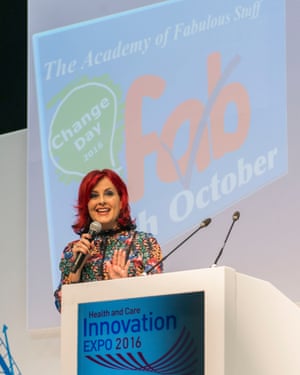
That was Carrie Grant, judge and vocal coach on TV talent shows and one of the on-stage hosts at Expo 2016. She has Crohn’s disease, which causes inflammation of the digestive system, and is one of 15 million people in England who live with at least one long-term condition, including almost six in 10 people aged 60 or over.


If the NHS and social care system is to survive in its present form, and is to be able to afford the innovations on show at Expo, then people like Grant will have to do much more to monitor and medicate their own conditions. Yet too often the system assumes they need a service.


NHS Expo 08/09/16


Carrie Grant at Expo 2016. Photograph: Tom Hampson/NHS England

Jeremy Taylor, chief executive of National Voices, a coalition of health and care charities in England, said he had been deeply impressed by a presentation at Expo by Salford Dadz, a project begun with NHS funding that brings together fathers who might otherwise be reluctant to engage with health or other agencies.


“What matters to them is particularly not having another bloody service – they want to get out and do stuff,” said Taylor. “Sometimes what’s needed, and has the most transformative effect on people’s lives, isn’t something that the NHS and social care deliver.”


Such thinking is part of the puzzle being wrestled with by those behind the new sustainability and transformation plans (STPs) for setting health and care on a sustainable footing. But not everyone gets the message – and not many STP teams have yet proved capable of delivering it to a sceptical public.


As Sir Bruce Keogh, NHS England’s medical director, argued in opening Expo, the paradox facing planners is that many people are defending a system they know to be deficient because they are frightened of change. “We are quite content with our expectations of our NHS,” he said. “We have to tackle that.”


Keogh warned of a “quadruple pincer” gripping the system: soaring demand for care, escalating costs, a funding straitjacket and public nervousness about change.


Can transformation come soon enough? Jon Rouse, chief officer of the Greater Manchester devolved health and care partnership, estimated it would take five to 10 years to start to realise the full benefits – though he acknowledged that he would in the interim need to demonstrate some early results.


Simon Stevens, NHS England chief executive, offered the cautionary tale of the stethoscope, invented 200 years ago this year in France, which was but initially resisted fiercely by many doctors but ultimately became transformative in medical practice. And he also warned of Amdahl’s law. According to this theory, usually applied to computing, transformation of an entire system occurs only at the pace of the slowest part to change. “We cannot solve this unless we solve the whole process,” said Stevens. “Hence the critical importance of the STPs.”


Join the Healthcare Professionals Network to read more pieces like this. And follow us on Twitter (@GdnHealthcare) to keep up with the latest healthcare news and views.


Can health and care deliver changes and keep the public on side?

16 Ağustos 2015 Pazar

Diabetes could deliver down NHS, charity warns

Diabetes “threatens to bring down the NHS”, Diabetes United kingdom has warned.


Situations in England and Wales have risen by 59.eight% in the previous decade – as an further 1.two million grownups are now living with the situation compared to 10 years in the past.


The figures, extracted from NHS data and analysed by the charity, display that 3,333,069 men and women have been diagnosed with the condition.


Diabetes Uk warned that there is an urgent need for successful care for sufferers, whilst a lot more should be done to highlight the significance of prevention.


The charity mentioned that six in 10 folks in England and Wales receive the eight care processes suggested by the National Institute for Wellness and Care Excellence (Great), and added that poorly managed diabetes can lead to devastating and costly overall health problems including amputation and stroke.


“This is why it is vital that the government will take urgent action to make certain that everyone with diabetes receives the eight care processes, reducing their threat of even more well being issues and the costs these incur for the presently strained NHS price range,” the charity said.


Barbara Young, chief executive of Diabetes Uk, explained: “Over the past decade, the variety of people living with diabetes in the Uk has elevated by in excess of 1 million men and women, which is the equivalent of the population of a modest country this kind of as Cyprus. With a record quantity of individuals now residing with diabetes in the Uk, there is no time to waste – the government need to act now.


“We require to see a lot more individuals with diabetes receiving the eight care processes recommended by Great. It is unacceptable that a third of folks living with the situation do not at present get these, placing them at enhanced threat of developing complications, this kind of as amputations, heart assault or stroke.”


She extra: “Diabetes presently costs the NHS almost £10bn a yr, and 80% of this is invested on managing avoidable complications. So there is massive likely to save cash and decrease strain on NHS hospitals and services by way of offering greater care to avert men and women with diabetes from establishing devastating and pricey problems.


“The NHS must prioritise offering greater care, along with improved and more flexible training choices, for people with diabetes now, and give them the ideal feasible chance of living extended and healthy lives. Right up until then, avoidable human struggling will carry on and the charges of treating diabetes will carry on to spiral out of control and threaten to bankrupt the NHS. Now is the time for action.”


The charity predicts that if present trends carry on, five million folks will have diabetes by 2025.


Diabetes could deliver down NHS, charity warns

Diabetes could deliver down NHS, charity warns

Diabetes “threatens to bring down the NHS”, Diabetes United kingdom has warned.


Instances in England and Wales have risen by 59.8% in the past decade – as an further 1.two million grownups are now living with the situation compared to ten many years in the past.


The figures, extracted from NHS data and analysed by the charity, present that three,333,069 men and women have been diagnosed with the ailment.


Diabetes Uk warned that there is an urgent need to have for successful care for sufferers, although more have to be completed to highlight the importance of prevention.


The charity explained that six in 10 people in England and Wales acquire the eight care processes advisable by the National Institute for Well being and Care Excellence (Nice), and additional that poorly managed diabetes can lead to devastating and high-priced health problems such as amputation and stroke.


“This is why it is vital that the government requires urgent action to make sure that everyone with diabetes receives the eight care processes, lowering their risk of more health problems and the costs these incur for the already strained NHS budget,” the charity stated.


Barbara Younger, chief executive of Diabetes United kingdom, explained: “Over the previous decade, the number of folks residing with diabetes in the United kingdom has elevated by more than a single million folks, which is the equivalent of the population of a little country this kind of as Cyprus. With a record amount of people now living with diabetes in the United kingdom, there is no time to waste – the government need to act now.


“We want to see far more individuals with diabetes receiving the eight care processes advised by Wonderful. It is unacceptable that a third of men and women residing with the situation do not at the moment get these, putting them at improved risk of building problems, this kind of as amputations, heart attack or stroke.”


She added: “Diabetes presently charges the NHS virtually £10bn a yr, and 80% of this is spent on managing avoidable issues. So there is massive potential to conserve cash and lessen strain on NHS hospitals and services via providing far better care to stop people with diabetes from building devastating and costly complications.


“The NHS should prioritise offering greater care, along with enhanced and a lot more flexible training alternatives, for men and women with diabetes now, and give them the ideal attainable possibility of living lengthy and healthful lives. Until finally then, avoidable human struggling will continue and the costs of treating diabetes will proceed to spiral out of control and threaten to bankrupt the NHS. Now is the time for action.”


The charity predicts that if existing trends proceed, 5 million people will have diabetes by 2025.


Diabetes could deliver down NHS, charity warns

6 Temmuz 2014 Pazar

Naming and shaming GPs for as well handful of cancer referrals will deliver NHS to its knees, warn physicians

Jeremy Hunt, the Overall health Secretary, mentioned difficult action was required to improve standards at practices with bad cancer referral rates.


He stated: “Cancer diagnosis ranges around the nation vary significantly and we have to do considerably more to improve both the degree of diagnosis and to deliver those GP practices with poor referral prices up to the requirements of the very best.”


Nonetheless Dr Baker stated the ‘name and shame’ program would decrease “the threshold for referral and result in other parts of the NHS getting swamped”.


In a letter to The Every day Telegraph mentioned: “This will eventually lead to delays in individuals acquiring treatment and worse outcomes.”


Dr Baker said that common total time GP will see about eight new cases of cancer in their common eight,000 patient consultations per yr.


3 quarters of the individuals who are identified to have cancer are referred soon after only a single or two GP consultations, she mentioned.


She additional: “To propose that GPs are causing delays and variation in diagnosis by not efficiently using the correct blood exams is not only simplistic but also does a great disservice to our occupation and is an insult to hardworking and challenging pressed GPs around the country.


“At a time when GPs are under massive and increasing pressures with patient demand far outstripping capacity, we believe that a collaborative and supportive method is far more most likely to increase the care we can give to our individuals.”


A 2nd letter, signed by above 650 GPs, explained: “If a doctor is negligent, like triggering a delay in diagnosis, there are due processes that decide regardless of whether any incorrect has been completed by way of the Basic Medical Council or courts.


“Naming and shaming GPs who miss cancer diagnoses is a bullying tactic which lacks proof of effectiveness and fails to acknowledge the risks outlined above.


“GPs will pre-empt this by referring so a lot of individuals for tests that individuals who do have cancer will get rid of out and the NHS will be bankrupted. This assault on British standard practice is not primarily based on truth.”


The letter comes after the Royal University of Pathologists backed the ‘name and shame’ plans in a letter to The Day-to-day Telegraph last week.


A Department of Overall health spokesman explained: “Every 12 months 1000′s of cancer situations are diagnosed at A&ampE, and as a nation our cancer outcomes lag properly behind the best in Europe, so we need to do far more to spot the ailment earlier.


“As component of our emphasis on better transparency in the NHS, we help in principle the idea of benchmarking GP practices against every single other on cancer diagnosis as a way of driving up requirements.”


Naming and shaming GPs for as well handful of cancer referrals will deliver NHS to its knees, warn physicians

18 Haziran 2014 Çarşamba

Letter: Charles Farthing helped deliver Aids out of the shadows

Charles Farthing

Charles Farthing’s crew at St Stephen’s hospital, Chelsea, handled folks with Aids as human beings


My pal Alastair MacInnes was 1 of the people taken care of by Charles Farthing in the early 1980s, in what was rightly described as a climate of fear about this mysterious illness that was killing previously wholesome, predominately gay youthful males.


Alastair was initially taken care of at a hospital where food on paper plates was pushed by means of a slot into his isolation space. No 1 knew what was incorrect with him and couple of men and women came near him. This contrasted with his following expertise as an inpatient at St Stephen’s hospital. Alastair and his companion had absolute faith in Dr Farthing and his team. On one particular memorable evening many of the inpatients held a Bet Lynch earrings party on their ward. Against a backdrop of media hysteria about the “gay plague”, folks with Aids were handled as human beings there, not lepers. I believe that this was down to Charles Farthing.


Alastair ultimately succumbed to the opportunistic HIV virus but in his last months he was able to turn out to be involved with the campaign to raise money for research into the ailment. He was specifically enthused about being a VIP guest at a fundraising musical gala. Large credit goes to Charles Farthing for bringing Aids out of the shadows and enriching the lives of so numerous youthful guys, their partners, family members and pals.


Letter: Charles Farthing helped deliver Aids out of the shadows

15 Mayıs 2014 Perşembe

Five methods to deliver parity of esteem for psychological overall health

parity of esteem

‘To me parity of esteem indicates tackling psychological health issues with the same power as we have tackled physical sickness,’ says Martin McShane. Photograph: PR


Much has been explained in the past couple of years about “parity of esteem”. It has virtually become a slogan, trotted out in the very same breath by politicians and clinicians anytime psychological overall health care and enhancements to solutions are pointed out.


It has come to mean various things to distinct individuals who operate with or for the NHS and I doubt regardless of whether it signifies anything at all to the public, our individuals or their households – and but we hear the slogan so often.


In essence, parity of esteem is valuing mental well being equally with bodily wellness. But in my see, it is far more than just that and, if we can all agree a definition of parity of esteem, what specifically is it that we are trying to obtain and how are we going about it?


To me parity of esteem means tackling mental well being problems with the same vitality and priority as we have tackled bodily illness.


It is about shifting the encounter for men and women who demand support with psychological overall health problems.


It is about putting funding, commissioning and education on a par with physical wellness providers.


And parity of esteem is about tackling and ending the stigma and prejudice within the NHS which stops individuals with critical mental wellness issues getting treated with the identical vigour as if they had a bodily sickness this kind of as, say, diabetes.


That stigma can be demonstrated like this: if you fall down and break your hip, an ambulance will be with you in eight minutes to give emergency care at the scene before taking you to A&ampE. If, even so, you suffer an acute psychotic episode in the street, you are just as probably to be attended by a police automobile and taken to a cell.


We should end the stigma associated so usually with psychological health. We have to raise awareness of the value of psychological overall health care and recognise the inadequacies of how we have regarded mental health in the previous. This implies raising awareness inside the NHS itself. And we must create parity for psychological overall health care in reality – rather than just issuing rhetoric and paying lip service to it.


The statistics surrounding psychological health are salutary. Notably, the fact that 75% of all persistent psychological well being difficulties begin before the age of 18, and but at the moment analysis suggests only a quarter of youngsters and teens aged up to 15 with mental well being problems obtain help from any solutions.


Parity is also about tackling the physical illnesses of individuals with extreme mental wellness problems. At the moment they have the identical daily life expectancy of people who lived in the 1950s – some 10 to 15 many years shorter than regular. This has to change.


So how can we tackle these problems and deliver parity in actuality? We have established 5 operate streams to aid commission far better value care:


• Information – physicians are not able to make a diagnosis with no exams. In the very same way commissioners require very good information to make the technique far better.
• Commissioning advancement – we want to raise the level of expertise and capabilities to secure services that provide the parity of esteem agenda.
• Enhancing bodily wellness for people with critical psychological sickness.
• Strengthening clinical companies – the data we have on bettering access to psychological therapies is amazing and we are a globe leader in measuring outcomes in this location. We want to use this to guarantee clinical solutions are effectively co-ordinated in meeting the two bodily and psychological wellness needs. We also require to pay attention to men and women with dementia and their carers, who have informed us: “You may not be able to cure us but you can care for us better.” And we can improve the delivery of mental overall health providers for kids and young folks by way of a transformation in youngster and adolescent mental overall health solutions (Camhs).
• Improving crisis care and waiting occasions – the crisis concordat functions towards making sure there is accessibility to crisis providers and that at all occasions these are responsive and as large in high quality as other emergency companies.


There is overpowering financial evidence to display that if we handle mental overall health with the identical urgency that we use for physical well being, then we can not only enhance the outcomes for individuals with psychological health difficulties but also save funds and give taxpayers considerably better value for each pound we spend.


For parity of esteem, now read through: valuing psychological well being care equally.


Martin McShane is NHS England’s director for men and women with extended-phrase conditions


Are you a member of our online neighborhood? Join the Healthcare Professionals Network to get normal emails and unique offers.


Five methods to deliver parity of esteem for psychological overall health

10 Şubat 2014 Pazartesi

FDA Reviewers Deliver Split Opinion On New Heart Drug From The Medicines Organization

FDA reviewers presented two dramatically various views of The Medicines Company’s investigational new drug cangrelor. One particular reviewer says the drug should not be approved with out a new trial and even states that the CHAMPION trials “were carried out unethically” and must not be accepted “on that reality alone.”  But two other reviewers advocate approval.


On Wednesday the FDA’s Cardiovascular and Renal Drugs Advisory Committee will meet to go over two proposed indications for cangrelor. The 1st is for the reduction of thrombotic cardiovascular occasions including stent thrombosis in individuals undergoing PCI. The second is for the servicing of antiplatelet therapy in patients with acute coronary syndromes or individuals with stents who have discontinued antiplatelet therapy because they are awaiting surgical treatment and are at large risk for thrombotic events.


The most damaging point of view comes from the typically outspoken and controversial FDA reviewer Tom Marciniak. (He has been a major critic of rosiglitazone and rivaroxaban and has not hesitated in the past to disagree with fellow FDA workers members.)  Marciniak maintains that the CHAMPION trials did not show that cangrelor was both superior or noninferior to clopidogrel in the CHAMPION trials. Some of his chief factors are:


  • Clopidogrel was not administered optimally (as well late and with an inadequate loading dose) in the management arm.

  • A lot higher prices of bleeding in cangrelor sufferers.

  • Cangrelor was much better only in the subgroup of sufferers with secure angina.

  • No comparison with the newer antiplatelet agents prasugrel or ticagrelor.


But two other FDA clinical reviewers supply a much more generous recommendation, even though it might not inspire much self confidence amid the panel members. The reviewers create that the main efficacy endpoint was “carefully crafted following post-hoc analyses” of 2 prior failed trials. Their recommendation seems based much more on technical points than a  view of the benefits as robustly sturdy. For instance, they agree with Marciniak that fewer control sufferers obtained the larger 600 mg dose of clopidogrel, but don’t believe the outcomes must be discounted because the increased dose is still not mandated by labeling or guidelines.


A crucial viewpoint was also shared by the FDA statistical reviewer, who noted that after adjusting for the imbalance in the loading dose the primary endpoint would no longer be important in favor of cangrelor.


In a 2nd report, Marciniak argues that cangrelor need to not be approved for ethical motives simply because the clinical trials were imbalanced simply because clopidogrel was not used optimally. CHAMPION PHOENIX, he writes:


was unethical because it delayed use of clopidogrel until soon after coronary angiography or later on and since it prohibited regimen use of prasugrel, ticagrelor, and glycoprotein IIb/IIIa inhibitors (GPIs). The PHOENIX informed consent documents (ICDs) failed to inform patients concerning the positive aspects of earlier use of clopidogrel and the use of prasugrel, ticagrelor, and GPIs. The sufferers in PHOENIX were not informed about “appropriate different procedures or courses of treatment, if any, that may well be advantageous to the subject”…


For the 2nd birding indication the two  reviewers advised a full response letter due to the absence of clinical information supporting the indication. Marciniak did not give a recommendation about this indication.


FDA Reviewers Deliver Split Opinion On New Heart Drug From The Medicines Organization

10 Ocak 2014 Cuma

Can An Uber Investor Deliver Silicon Valley Disruption To Healthcare?

Numerous tweets right now from Benchmark Capital spouse Bill Gurley suggests that the legendary VC company – popular for their backing of eBay, Uber, OpenTable, and Yelp, amongst others – could be preparing to get critical about healthcare, and aggressively crowdsource their search for new options.


“Spending time learning where the Web intersects with healthcare. If you have concepts and want to chat, get in touch with me: overall health@benchmark.com,” he initially tweeted, incorporating, “100% convinced US healthcare industry is genuinely messed up &amp that implies possibility, 17% of GDP.”


Possibly most interestingly, Gurley mentioned that “approach must be orthogonal/disruptive. Not interested in ideas that spouse closely with current players.”  He asserts,“i dont want a swift exit, but I really do not want to fret about trials and regulation as well considerably both.“


This positioning would seem to align Gurley with other engineering VCs like Vinod Khosla, who believe the greatest opportunities lie in operating outdoors the present program, which they tend to view as irredeemably dysfunctional.


Others firms, although possibly sharing a similar view of the status quo (“calcified hairball program of care”), nevertheless appear to strive to recognize solutions that address discomfort-points of existing gamers, and more usually, try to operate inside of the framework of the current system.  I’d spot Venrock, Aberdare, and Sequoia in this class.  Notably, Venrock’s efforts right here are led by physician Bob Kocher, Aberdare has a legacy in existence science and just lately pivoted to healthcare providers and digital wellness (capstoned by the hiring of doctor Mo Kaushal), and Sequoia’s efforts appear to be led by former healthcare CEO, Todd Cozzens.


(Conspicuously absent from this list are companies like Social+Capital, my 2013 digital well being investor of the year although I might be tempted to place founder Chamath Palihapitiya squarely in the Gurley/Khosla camp, at least some of his portfolio companies, this kind of as Geoff Clapp’s Better, seem to be centered, at least initially, on functioning inside of the existing technique.)


The basic question isn’t so a lot no matter whether healthcare requirements disruption (it does), but rather, whether this adjust is far more probably to be achieved by brash brilliant upstarts, working from with no, or by savvy, visionary insiders, who know exactly where to search for seams.


A latest, unsettling HBR publish by Jason Hwang (co-author of The Innovator’s Prescription) and Ateev Mehrotra, describes what they see as the failure of retail clinics to transform healthcare.  “Understanding their disappointing overall performance is especially critical,” Hwang and Mehrotra  write,


“given that retail clinics are viewed as the prototypical illustration of how disruptive innovation can alter the health care system for the better. The thought of disruptive innovation, a idea pioneered by the Harvard Enterprise School’s Clayton Christensen and written about previously in HBR and in a book that one particular of us co-authored, is that industries are a lot more generally transformed by new entrants, rather than entrenched gamers. Disruptive firms get their start off by supplying affordability, ease, and simplicity to previously neglected market place segments that are too little and reduced margin for incumbents to pursue or aggressively defend.


Retail clinics match this description to a tee “


However, Hwang and Mehrotra argue, retail clinics have been derailed by “perversities in rules and reimbursement.”  (An assertion with which Christensen, as properly as HMS Dean Jeffrey Flier and researcher Vineeta Vijayaraghavan, would seem to agree.)


But, if any person has purpose to believe in the potential of a promising thought to overcome “perversities in regulation,” it just may well be Bill Gurley, a fellow who invested in an upstart car support that that has had to battle its way into a historically regulated and impenetrable market place, and  aside from displeasing Jessica Seinfeld,  seems to have been remarkably profitable.


The abiding hope is that whether or not led from the inside or the outside, the irresistible force of inspired entrepreneurship will find some way to dislodge the immovable object of contemporary healthcare.


Can An Uber Investor Deliver Silicon Valley Disruption To Healthcare?