prices etiketine sahip kayıtlar gösteriliyor. Tüm kayıtları göster

9 Şubat 2017 Perşembe

Cancer drug prices must come down, say leading research institutes

The high price of new cancer drugs is indefensible and unsustainable, say two of the world’s leading cancer research institutions, who propose a different way to develop them that could sideline big pharma.


“There is a clear and urgent necessity to lower cancer drug prices to keep lifesaving drugs available and affordable to patients,” say leading scientists from the Institute of Cancer Research in the UK and the University of Texas MD Anderson Cancer Center, where many important new cancer drugs have been invented, in a paper in the journal Cell.


In the US, cancer bills are the leading cause of personal bankruptcy, while in the UK, drugs that might prolong life are rejected for NHS use because of their price. Many new drugs have to be used in combination, adding to the cost. Treatment with the two new immunotherapy drugs nivolumab and ipilimumab costs $ 252,000, which is more than the median cost of a US home ($ 240,000 in 2016), they write.


Fantastic scientific work is going on – for instance, in sequencing cancer genomes – which should lead to advances in treatment, said Prof Paul Workman, chief executive of the Institute of Cancer Research in London, which is the world’s most successful academic cancer drug discovery organisation. “All this invention is meaningless if patients cannot afford these drugs,” he said.


“It is unsustainable. For those of us involved in research, it is disturbing that the amount of research that goes on and the success that is made is not translated into treatment for patients. And for patients it is a terrible situation.”


Pharmaceutical companies used to justify their prices by pointing to the high cost of clinical trials involving many thousands of patients. But that is no longer always necessary, the scientists say in their paper. The new targeted drugs require a test for a genetic biomarker to see whether patients will respond or not. That means the drug can be trialled on far fewer people. The drug crizotinib, used for advanced lung cancer, was approved following a trial involving only 347 patients, they point out. Trastuzumab (Herceptin) was first approved for advanced breast cancer and later for early breast cancer, increasing the market for the company but with no reduction in price.


“Some drugs are tested on 50 or 100 patients and yet these drugs still go to Nice [the National Institute for Health and Care Excellence, which decides whether the NHS can afford a new drug] at the maximum price,” said Workman.


Workman, together with colleagues from the US and the Netherlands, proposes that academic discovery centres like his should forge relationships with new commercial partners – probably not the major drug companies but smaller biotech or generic drug firms.


Academics should take greater control of the drugs they discover, they argue, and join with small companies that will agree to cap the price when the drug reaches the market. They would not have the expectation of big profit margins, as the major pharmaceutical companies do. But in an era where drugs are tested on smaller populations and genetic testing means they are more likely to be effective, they would not need to “cost in” all the failed attempts at producing blockbusters, as the big companies do.


Workman said the institute was already talking to small companies about the possibility of a new way of developing more affordable cancer drugs. He believes other scientists will support the ideas in the paper. “We’re calling for a more mature and open conversation about how this could be done and offering a solution,” he said.


Cancer drug prices must come down, say leading research institutes

28 Ocak 2017 Cumartesi

Drug firms ‘put lives of cancer patients at risk’ as out-of-patent prices are inflated

Drug companies have been accused of profiteering by raising the prices of out-of-patent cancer medicines that cost just pence to make, inflating the bills of the cash-strapped NHS by hundreds of millions of pounds.


Academics say the prices of 14 cancer drugs have increased by between 100% and nearly 1,000% over the past five years in the UK. These are all generic drugs where the patent has expired, which means they can be made for little more than the cost of the raw ingredients.


But, say experts who presented their findings at the European Cancer Congress in Amsterdam, generic drug companies have been price-gouging, just as Turing Pharmaceuticals was found to have done in the US with Daraprim, a 70-year-old drug used in Aids treatment. The price rose from $ 13.50 to $ 750 to universal outrage and became an issue in the presidential election. Turing CEO Martin Shkreli was dubbed the most hated man in America.


Andrew Hill from the department of pharmacology and therapeutics at the University of Liverpool, said the price increases in the UK would be costing the NHS a huge amount of money at a time when it has said it may have to ration 20% of the very expensive new cancer drugs coming on the market. “This figure will probably be in the high hundreds of millions of pounds per year, or possibly £1 billion,” he said.


He and co-author Melissa Barber, from the London School of Hygiene and Tropical Medicine, funded by the World Health Organisation and the Open Society Foundation, could not calculate the exact costs to the NHS because they did not have access to data from hospitals, where cancer drugs are usually prescribed. But they also looked at the increase in prices of all types of generic drugs – not just cancer – that are prescribed by GPs and pharmacists and found that the NHS paid £380m more in 2015 than it had five years earlier, as generic companies pushed up their prices. The hospital bill is likely to be much more.


Hill said the rises were going unnoticed because they were “under the radar”. The NHS was not keeping an eye on the steady increases year on year. “They are not negotiating well enough,” he said. “They should be looking at any company that starts raising the price of any drug.”


Among the drugs with price rises is melphalan for ovarian cancer, a drug invented by the UK company GlaxoSmithKline and then passed with a number of other cancer drugs that were going out of patent to Aspen Pharmaceuticals, a South Africa-based generics company, in 2009. GSK took a 16% shareholding in Aspen at the time.


Hill and Barber say the price of melphalan in the UK went up from 55p for 2mg in 2011 to £1.82 in 2016, a rise of 230%. The NHS did not contest it, unlike in Italy. There, Aspen negotiated a deal in 2014 to raise the price of the drug by up to 1,500%, having threatened to stop supplying the ovarian cancer drug to patients altogether. The Italian competitions authority fined the company nearly $ 5.5m last October for its behaviour. “The negotiation strategy adopted by Aspen was so aggressive as to reach the credible threat of interrupting the direct supply of the drugs to the Italian market,” said the authority’s report.


Australia, New Zealand, France and Brazil have also faced shortages of Aspen’s drug, says Hill. Aspen did not return calls asking for the reason for the shortages.


In France, three women died after being given an alternative drug to melphalan. The drug, cyclophosphamide, should have been safe, because it was used before melphalan came on the market. An investigation is now under way into what happened.


The biggest price rise in the UK that the team found was also for an Aspen drug. The cost of busulfan for chronic myeloid leukaemia to the NHS rose from 21p for 2mg in 2011 to £2.61 in 2016, an increase of 1,143%.


Aspen’s share price rose more than 650% from 2009 to last year. GSK sold its shares in Aspen in three tranches – the last one in September – netting about £1.5bn.


The multinational giant Pfizer was fined £84m in the UK in December for conspiring with a generic company, Flynn Pharma, to raise the price paid by the NHS by 2,600% for an anti-epilepsy drug that came off-patent. The Competitions and Markets Authority said it had exploited the fact that the NHS had no alternative, because no other company was making it. In the wake of that case, a bill is going through parliament to give the Department of Health powers to investigate when the price of a drug goes up without clear justification.


Sarah Wollaston, the Tory MP who chairs the health select committee, said the research findings were concerning. “It is unacceptable for drug companies to artificially inflate the cost of drugs. This will inevitably result in less funding being available for other vital treatments,” she said.


Ian Banks, representing the patient organisation the European Men’s Health Forum at the conference, said the price rises were more than outrageous. “Behind these statistics there is a patient not getting treatment that could save their lives or at the very least improve their quality of life. That is unacceptable,” he said.


Mia Rosenblatt from Breast Cancer Now said: “We’d be extremely concerned by any suggestion of companies raising the price of tamoxifen and other generic drugs, which would only add to the current strain on the NHS.


“Part of the understanding – by health bodies – of the high cost of new drugs is based on the knowledge that there is a limited time for drug companies to see return on their investments and that these drugs will be available at a much cheaper rate in due course.


“Significant driving up of the prices of generic drugs would be of real concern and we therefore support the government’s activity to address this possibility through the Health Services Medical Supplies Bill.”


The British Generic Manufacturers Association said that most of the drugs highlighted in the study had no competition, because there was only one supplier. “That is because the total market size is too small to be attractive for generic companies to enter, since they would not recoup the million-pound plus costs of developing, testing and registering a new generic medicine,” it said in a statement.


Hill countered that the cost of developing a new generic drug is not high and that cheaper versions than those sold to the NHS could be imported from India.


Drug firms ‘put lives of cancer patients at risk’ as out-of-patent prices are inflated

26 Ekim 2016 Çarşamba

NHS drug suppliers investigated over prices

The competition watchdog has launched an investigation into drug companies accused of charging the NHS excessive prices.


If the companies are found by the the Competition and Markets Authority to have broken the law, they could face fines of up to 10% of their turnover.


The CMA said: “The investigation relates to suspected unfair pricing by way of charging excessive prices in the supply of certain pharmaceutical products, including to the National Health Service.”


The health secretary, Jeremy Hunt, called in the CMA in June after an investigation by the Times suggested companies were exploiting a loophole in NHS rules to raise prices of medicines.


The newspaper alleged that companies faced limited competition on long-established, off-patent drugs, bought from large pharmaceutical firms. It was also claimed that the prices of 32 drugs had risen by more than 1,000% in the past five years.


Concordia International said it was one of the companies being investigated. A spokesman said: “We are working co-operatively to better understand the CMA’s position and we will continue to work constructively to resolve the matter.


“Although Concordia has also had past discussions with the CMA regarding the supply of certain of its products in the UK, this is the first interaction with the CMA regarding the company’s pricing.”


NHS drug suppliers investigated over prices

6 Ekim 2016 Perşembe

Alcohol continues to be sold at "pocket money prices", report finds

Alcohol continues to be sold at “pocket money” prices across the UK, with white cider on offer for pennies, according to a report.


The study from the Alcohol Health Alliance (AHA) concluded that little has changed in recent years when it comes to people being able to buy cheap booze from supermarkets and off-licences.


Meanwhile another study has found that British teenage girls are more likely to get drunk than their male counterparts. The Organisation for Economic Co-operation and Development (OECD) study found 31% of 15-year-old girls reported having been drunk at least twice compared with 26% of boys of the same age.


Researchers from the AHA analysed 480 products to find the cheapest drink on sale across the UK. The team found that high-strength white cider, which they say is mostly drunk by dependent and underage drinkers, is being sold for as little as 16p per unit of alcohol.


They said: “The conclusion is clear – alcohol continues to be sold at pocket money prices in supermarkets and off-licences across the UK.”


They found a wide range of cheap alcohol being sold by major supermarkets – including Asda, Tesco and Sainsbury’s.


Their report said: “Both Asda and Tesco were found to be selling perry at 19p per unit, while Morrisons were selling cider at 20p per unit and Sainsbury’s stocked perry at 22p per unit.


“In our research, we also found an abundance of summer-focused promotions. The promotions included deals on multi-packs and free giveaways with alcohol purchases, enticing people to buy.”


The report said that for the cost of a standard off-peak cinema ticket (£8.24), people could buy 7.5 litres of the cheapest white cider – the equivalent of 53 shots of vodka.


“The minimum hourly wage for those aged under 18 is £3.87,” the study went on. “After just an hour’s work, you would still have 38p change after buying a three-litre bottle of Frosty Jack’s containing 22.5 units of alcohol.


“For the cost of a monthly Netflix subscription at £7.49, you would have change from buying two three-litre bottles of Frosty Jack’s.


“Today, £10 will not buy you a large Domino’s pizza, but you would have a penny left over from a 700ml bottle of 40% Putinoff vodka at £9.99.”


The report concluded: “Cheap booze can be found on every street corner. Fundamentally, very little has changed since the last report was carried out five years ago.


“While the lowest price we report is 16p per unit, we found a broad range of products on sale for 25p or less, which is half the 50p minimum unit price recommended by health bodies and alcohol charities.


“At the cheapest price per unit for white cider (16p), the low-risk drinking limit of 14 units per week for both men and women could be purchased for just £2.24.”


Chairman of the AHA and former president of the Royal College of Physicians, Professor Sir Ian Gilmore, said: “In spite of a government commitment to tackle cheap, high-strength alcohol, these products are still available at pocket money prices. Harmful drinkers and children are still choosing the cheapest products – predominantly white cider and cheap vodka.


“We need to make excessively cheap alcohol less affordable through the tax system, including an increase in cider duty. It’s not right that high strength white cider is taxed at a third of the rate for strong beer.


“In addition, we need minimum unit pricing. This would target the cheap, high strength products drunk by harmful drinkers whilst barely affecting moderate drinkers, and it would leave pub prices untouched.”


Each year, there are almost 23,000 deaths and more than 1 million hospital admissions related to alcohol in England.


More than two-thirds of alcohol sold in the UK is purchased in supermarkets and off-licences.


Another report has found that British teenage girls are more likely to get drunk than their male counterparts. The Organisation for Economic Co-operation and Development (OECD) study found 31% of 15-year-old girls reported having been drunk at least twice compared with 26% of boys of the same age.


Alcohol continues to be sold at "pocket money prices", report finds

18 Ağustos 2016 Perşembe

Cancer drug companies cut prices to win NHS approval

Drug companies are slashing the prices of new cancer medicines to avoid having them banned from NHS use, following the closure of the Cancer Drugs Fund.


The manufacturers of four cancer drugs have dropped their prices following closure of the fund – a pot of money worth £340m a year to pay for drugs that the National Institute for Health and Care Excellence (Nice) did not find cost-effective.


The latest cancer drug to be approved by Nice for general NHS use is crizotinib, for people suffering from lung cancer. It is made under the brand name Xalkori by Pfizer, which has twice cut the list price of £51,000 per patient per course of treatment after tough negotiations. The bill for crizotinib was previously picked up by the Cancer Drugs Fund.


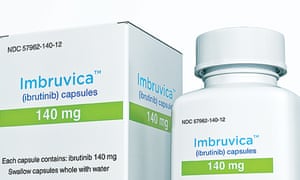
Imbruvica medicine bottle and packaging.

Nice has recommended that the NHS no longer pay for Imbruvica. Photograph: Janssen

Nice is reappraising all the drugs that the Cancer Drugs Fund was paying for before its closure and relaunch and believes that tough new tactics with the pharmaceutical companies appear to be working. If drugs can be shown to be cost-effective they will be made available for general use, paid for by the NHS, as are other drugs. If there is doubt but the drug has potential value, it may get interim funding while data is collected to prove it is worthwhile. Others will be removed from the list of drugs the NHS can buy.


Evidence that Nice is getting tougher with the manufacturers came in a further announcement that two more drugs that were supported by the fund are set to be dropped. Everolimus for breast cancer (made by Novartis as Afinitor) and ibrutinib for mantle cell lymphoma (made by Janssen as Imbruvica) were deemed not to be cost-effective.


Related: NHS cancer patients missing out on innovative drugs


There were 41 drug treatments (some drugs have more than one use) in the fund when it closed in March 2016.


The manufacturers of three other drugs have slashed their prices as a result of the reappraisal process. The prices of bosutinib for chronic myeloid leukaemia, pemetrexed for lung cancer and cabazitaxel for advanced prostate cancer have now all been dropped to a level where Nice can recommend them for NHS use.


“Companies are finding it possible to revise their value proposition – if I can put it like that – enabling us to turn what would originally have been a ‘no’, which is why they were in the Cancer Drugs Fund, into a ‘yes’,” said Nice’s chief executive, Sir Andrew Dillon. “That is good because obviously the NHS can maintain access to that drug as opposed to having to say sorry – you are out.


“We need them to change their approach to pricing cancer products in order for us to make a significant change to the rate at which we are able to support these drugs compared to the position before the CDF was introduced.”


In its early years, the CDF was “pretty much accepting all comers”, said Dillon. Some believed pharma companies did not always try very hard to keep their price down – and their cost-effectiveness high – because they could rely on the fund to pay the price they wanted.


Nice will not say what discount the drug companies have offered, because it is confidential. However, the upper threshold for approval for NHS use is £30,000 per year of good-quality life or £50,000 for a drug given towards the end of life. Permetrexed was originally well over – at £82,000 per quality-adjusted life year (QALY). Bosutinib was originally £43,000 for QALY, rising to £65,000 and £89,000 for advanced stages of the disease.


The manufacturers, however, have not hid their anger. David Montgomery, Pfizer’s medical director of oncology, said the firm had been “forced” to offer a further discounted patient access scheme for crizotinib.


“It is not sustainable to ask companies to continuously drop the price for these medicines and it will affect our ability to make further medical progress if we do,” he said.


“Developing these medicines takes an enormous investment of time, money and knowledge, with thousands of scientists dedicating decades to discover and develop the latest treatments and cures. We have made huge leaps in scientific discoveries and medical innovation but this is a high risk industry. Post-Brexit, it is even more important that we have continued inward investment in life sciences to develop new medicines for future healthcare innovation.”


Philip Knott, director of oncology at Lilly UK, which makes pemetrexed under the brand name Alimta, said the company was delighted that Nice had finally agreed that the drug can be used in the NHS for patients whose disease progression had been slowed, after a year of uncertainty over the future of the fund. “During this time, pemetrexed for continuation maintenance had been included in the CDF, threatened with delisting twice, only to be included again on appeal,” he said. They had worked hard for a commercial agreement with the fund and NHS England.


“At last UK patients can now routinely receive a treatment regimen that has been routinely available throughout Europe for some years,” he said.


Sanofi, which makes of cabazitaxel under the brand name Jevtana, said after it was dropped from the fund it submitted new data to Nice for a reappraisal and also a new discount scheme.


“In addition, Sanofi recommended a different way of supplying Jevtana, whereby a dosage tailored to the needs of an individual patient will be made available to the NHS upon receipt of prescription,” it said in a statement.


Cancer drug companies cut prices to win NHS approval

24 Ağustos 2015 Pazartesi

Military Youngsters Have Greater Prices Of Risky Behaviors But Get Little Assist

[unable to retrieve full-text content]


Military children are at increased danger for substance use, smoking, and carrying weapons at college, but tiny assist is accessible for them.


Military Youngsters Have Greater Prices Of Risky Behaviors But Get Little Assist

20 Nisan 2014 Pazar

Skin cancer prices soar thanks to sunbeds and low-cost holidays

“We know overexposure to UV (ultraviolet) rays from the sun or sunbeds is the major result in of skin cancer. This indicates, in a lot of cases, the condition can be prevented, and is why it is essential to get into excellent sun-safety routines, no matter whether at residence or abroad. The very good information for those who are diagnosed is that survival for the disease is amongst the highest for any cancer more than eight in ten people will now survive it.’’


Cancer Investigation United kingdom is campaigning for the third 12 months to inspire people to appreciate the sun safely, in partnership with Nivea Sun.


Aside from steering clear of sunburn, other suggestions contains paying time in the shade, covering up and making use of a minimal element 15 sunscreen.


Amanda Crosland, 43, from Leeds, a red-haired and honest skinned mother of two, was diagnosed with malignant melanoma in 2001, despite covering up in the sun. She said: “When I observed a new mole on my left calf, I knew it was safest to get it checked out by the physician. Spotting it early meant I had a profitable operation to eliminate the cancer before it spread.


“I’ve always been cautious to appear after my skin, but I do bear in mind receiving sunburnt as a woman. I nevertheless get pleasure from obtaining out in the sun, but now make positive the children and I are properly protected: hats, T-shirts, and sunscreen.’’


Skin cancer prices soar thanks to sunbeds and low-cost holidays

29 Ocak 2014 Çarşamba

Six NHS trusts beneath fresh scrutiny in excess of higher death prices

Colchester General hospital

The Colchester Hospital University NHS basis trust is currently in specific measures following Sir Bruce Keogh’s inquiry into 14 trusts with apparently higher death charges. Photograph: Nick Ansell/PA


Six hospital trusts are underneath fresh scrutiny soon after new NHS data exposed that more patients who had been taken care of there died for the duration of their keep or soon right after.


Two of the 6, Colchester Hospital University NHS foundation believe in and East Lancashire Hospitals NHS believe in, are currently in particular measures following NHS health care director Professor Sir Bruce Keogh’s inquiry final yr into 14 trusts with apparently large death charges.


Yet another of the six, Blackpool Teaching Hospitals NHS basis trust, was also between the 14 but was not amongst the eleven put into particular measures.


The NHS’s Health and Social Care Information Centre (HSCIC) on Wednesday explained that individuals three, plus Mid Cheshire Hospitals NHS basis trust, Aintree University Hospital NHS foundation trust in Liverpool and Wye Valley NHS trust in Herefordshire, all had unusually high death costs in 2012-13, as judged by the summary hospital-degree mortality indicator (SHMI).


The SHMI is one of the key approaches of measuring if a hospital trust is seeing an typical, greater or decrease than average quantity of deaths between sufferers. It is 1 of four mortality indicators used by the healthcare data experts Medical doctor Foster Intelligence to produce its influential yearly hospital guidebook.


The SHMI captures and compares the quantity of patients who die whilst getting handled as an inpatient or inside 30 days of their discharge from hospital.


The 6 have been identified to have “higher than anticipated” mortality charges beneath the SHMI.


The HSCIC explained that “the SHMI is the ratio between the real quantity of patients who die following treatment at the believe in and the amount that would be anticipated to die on the basis of regular England figures, given the qualities of the patients taken care of there”.


The centre was asked in 2010 by the Division of Overall health to produce the SHMI and publish information primarily based on it soon after considerations have been expressed that the hospital standardised mortality ratio (HMSR) was also crude and inadequate at capturing the complexity of hospital mortality rates.


The HSCIC stressed that its new SHMI information must not be taken “as a standalone verdict on a hospital trust’s overall performance”.


All round hospital death costs as judged by the SHMI appear to be improving slightly, the new data present. In between July 2012 and July 2013 a total of nine trusts had a “greater than anticipated” SHMI value, two fewer than the yr prior to, even though 17 trusts had a “reduce than expected” SMHI value, up from 16 a year earlier.


Six NHS trusts beneath fresh scrutiny in excess of higher death prices