Approval etiketine sahip kayıtlar gösteriliyor. Tüm kayıtları göster

18 Ağustos 2016 Perşembe

Cancer drug companies cut prices to win NHS approval

Drug companies are slashing the prices of new cancer medicines to avoid having them banned from NHS use, following the closure of the Cancer Drugs Fund.


The manufacturers of four cancer drugs have dropped their prices following closure of the fund – a pot of money worth £340m a year to pay for drugs that the National Institute for Health and Care Excellence (Nice) did not find cost-effective.


The latest cancer drug to be approved by Nice for general NHS use is crizotinib, for people suffering from lung cancer. It is made under the brand name Xalkori by Pfizer, which has twice cut the list price of £51,000 per patient per course of treatment after tough negotiations. The bill for crizotinib was previously picked up by the Cancer Drugs Fund.
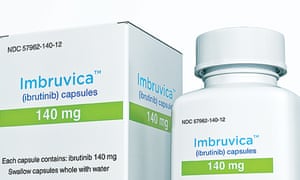


Imbruvica medicine bottle and packaging.

Nice has recommended that the NHS no longer pay for Imbruvica. Photograph: Janssen

Nice is reappraising all the drugs that the Cancer Drugs Fund was paying for before its closure and relaunch and believes that tough new tactics with the pharmaceutical companies appear to be working. If drugs can be shown to be cost-effective they will be made available for general use, paid for by the NHS, as are other drugs. If there is doubt but the drug has potential value, it may get interim funding while data is collected to prove it is worthwhile. Others will be removed from the list of drugs the NHS can buy.


Evidence that Nice is getting tougher with the manufacturers came in a further announcement that two more drugs that were supported by the fund are set to be dropped. Everolimus for breast cancer (made by Novartis as Afinitor) and ibrutinib for mantle cell lymphoma (made by Janssen as Imbruvica) were deemed not to be cost-effective.


Related: NHS cancer patients missing out on innovative drugs


There were 41 drug treatments (some drugs have more than one use) in the fund when it closed in March 2016.


The manufacturers of three other drugs have slashed their prices as a result of the reappraisal process. The prices of bosutinib for chronic myeloid leukaemia, pemetrexed for lung cancer and cabazitaxel for advanced prostate cancer have now all been dropped to a level where Nice can recommend them for NHS use.


“Companies are finding it possible to revise their value proposition – if I can put it like that – enabling us to turn what would originally have been a ‘no’, which is why they were in the Cancer Drugs Fund, into a ‘yes’,” said Nice’s chief executive, Sir Andrew Dillon. “That is good because obviously the NHS can maintain access to that drug as opposed to having to say sorry – you are out.


“We need them to change their approach to pricing cancer products in order for us to make a significant change to the rate at which we are able to support these drugs compared to the position before the CDF was introduced.”


In its early years, the CDF was “pretty much accepting all comers”, said Dillon. Some believed pharma companies did not always try very hard to keep their price down – and their cost-effectiveness high – because they could rely on the fund to pay the price they wanted.


Nice will not say what discount the drug companies have offered, because it is confidential. However, the upper threshold for approval for NHS use is £30,000 per year of good-quality life or £50,000 for a drug given towards the end of life. Permetrexed was originally well over – at £82,000 per quality-adjusted life year (QALY). Bosutinib was originally £43,000 for QALY, rising to £65,000 and £89,000 for advanced stages of the disease.


The manufacturers, however, have not hid their anger. David Montgomery, Pfizer’s medical director of oncology, said the firm had been “forced” to offer a further discounted patient access scheme for crizotinib.


“It is not sustainable to ask companies to continuously drop the price for these medicines and it will affect our ability to make further medical progress if we do,” he said.


“Developing these medicines takes an enormous investment of time, money and knowledge, with thousands of scientists dedicating decades to discover and develop the latest treatments and cures. We have made huge leaps in scientific discoveries and medical innovation but this is a high risk industry. Post-Brexit, it is even more important that we have continued inward investment in life sciences to develop new medicines for future healthcare innovation.”


Philip Knott, director of oncology at Lilly UK, which makes pemetrexed under the brand name Alimta, said the company was delighted that Nice had finally agreed that the drug can be used in the NHS for patients whose disease progression had been slowed, after a year of uncertainty over the future of the fund. “During this time, pemetrexed for continuation maintenance had been included in the CDF, threatened with delisting twice, only to be included again on appeal,” he said. They had worked hard for a commercial agreement with the fund and NHS England.


“At last UK patients can now routinely receive a treatment regimen that has been routinely available throughout Europe for some years,” he said.


Sanofi, which makes of cabazitaxel under the brand name Jevtana, said after it was dropped from the fund it submitted new data to Nice for a reappraisal and also a new discount scheme.


“In addition, Sanofi recommended a different way of supplying Jevtana, whereby a dosage tailored to the needs of an individual patient will be made available to the NHS upon receipt of prescription,” it said in a statement.


Cancer drug companies cut prices to win NHS approval

19 Ağustos 2015 Çarşamba

FDA approval of "female Viagra" leaves bitter taste for critics

It is the modest pink pill that its manufacturers hope will do for girls what Viagra did for men. The choice to give the drug a advertising licence in the US has been cheered on by campaigners for women’s rights, but the question remains no matter whether Addyi is the breakthrough medicine claimed.


Men have the blue diamond-shaped Viagra pill and 25 other individuals as well (even though 17 of individuals are kinds of testosterone), although there has so far been no counterpart for women until finally now. But sex and relationship therapists say Addyi is only moderately powerful, need to not be taken with alcohol, and has potentially severe side-effects which includes fainting and abnormally minimal blood pressure.


Related: FDA approves ‘female Viagra’ pill Flibanserin right after two rejections


Some of the women who testified before the US drug licensing committee, the Foods and Drug Administration, seemed to think the pill would bring back the passion and romance of times past, but there are fears they are currently being sold an unfulfillable dream.


“I am concerned about the expectations that ladies have,” said Cynthia Graham, professor in sexual and reproductive overall health at the University of Southampton. “Among women who spoke at the FDA there had been expectations that you can have sexual desire that is at a large level and absolutely nothing is going to influence it – that it will be correct back the place it was when you met your companion.”


The trials display that Addyi gave females who took it day-to-day a single added sexually satisfying expertise per month.


Graham and other critics believe the FDA was pressured and half-shamed into approving Addyi (generic identify flibanserin) by a campaign headed by a vocal group called Even the Score, which pitched the absence of medication to help females with reduced libido as a gender inequality issue.


It describes itself as a campaign for women’s sexual wellness equity which was “created to serve as a voice for American females who believe that it is time to level the enjoying field when it comes to the treatment method of women’s sexual dysfunction”. On the front page of its internet site now runs a banner saying “Thank you, FDA”. Sprout Pharmaceuticals, which owns Addyi, is one particular of the funders, as is Trimel, one more organization in the very same discipline.


Sprout strategies to enlarge the organization. Its shareholders ought to be in for a windfall if the drug generates even a fraction of the good results and profits Viagra did for Pfizer right after winning a licence.


Sprout’s chief executive, nevertheless, hailed the FDA selection as a victory for females. “It has been a outstanding journey to get to this breakthrough minute. Today we celebrate what this approval implies for all women who have prolonged awaited a medical remedy alternative for this daily life impacting condition,” stated Cindy Whitehead. “We applaud the FDA for putting the patient voice at the center of the conversation and for focusing on scientific proof.”


The determination was not clearcut. The drug, an antidepressant which works on the brain, in contrast to Viagra, was rejected twice by the FDA on the basis of a small benefit and considerable side-results. The last vote was an 18 to six, with none of the panel willing to endorse it without having caveats. Addyi will have a black box warning, that means there are significant side-effects. It is not accepted for girls past the menopause or anyone with an impaired liver. It can lead to lower blood pressure and reduction of consciousness. These dangers are increased if ladies drink.


“Because of a possibly critical interaction with alcohol, remedy with Addyi will only be offered by means of licensed wellness care pros and licensed pharmacies,” stated Dr Janet Woodcock, director of the FDA’s Center for Drug Evaluation and Analysis. “Patients and prescribers must completely realize the risks connected with the use of Addyi ahead of taking into consideration treatment.”


The FDA needs Sprout to do even more research of the impact of alcohol. The one it carried out concerned 25 folks, of whom 23 were males. Graham believes there is small possibility physicians will hold off prescribing it for women who drink or who are publish-menopause. Even in the hours right after the announcement of the licence “we could see indications that the drug is not going to be prescribed only to ladies who are pre-menopausal and really do not drink”, she stated.


Dr Irwin Goldstein, who heads the San Diego sexual medication centre and has been a advisor to Sprout, informed the New York Occasions he would not refuse to give it to casual drinkers.


There are also queries about the accurate scale of unmet need to have. The typically utilised statistic that far more than two-fifths of all women – 43% – knowledge loss of sexual desire dates from a survey in 1999 which failed to ask females no matter whether they have been actually bothered by that. The larger and more current National Attitudes and Sexual Lifestyles study in the Uk found that about ten% of girls had minimal libido and had been experiencing distress as a outcome.


Dr Petra Boynton, agony aunt and psychologist who has researched sexual working, says losing interest in sex is a actual worry for females, “But what are they truly worried about? They consider they are not standard because they do not want intercourse that a lot. They wonder ‘will my partner leave me?’ and ‘am I undesirable or inadequate?’”


There are some who wonder if they are missing out on pleasure, she mentioned, but that is not truly the principal anxiousness. “They are speaking about not currently being good adequate or not measuring up. Men and women have a perception that everyone else is possessing great intercourse all the time with exotic positions.” There is, Boynton explained, “anxiety brought about by misinformation about sex”, that is perpetuated by the media and particularly men’s and women’s magazines. “The cultural wallpaper is telling you that to keep somebody and be desirable and not left alone, which is a enormous fear, you must be possessing and providing regular intercourse.”


Addyi could support a modest number of females, but Boynton pointed out that, like the other medicines for sexual issues, it had only been examined against placebos. It would have been fascinating, she mentioned, to trial it towards candles and bathnights and sex toys – and, for that matter, romantic relationship treatment.


The drug will be on sale in the US from October. Sprout has not stated no matter whether it will apply for a licence to sell it in Europe, but if it did, the verdict may possibly not automatically be the same. “I would be stunned if it is licensed right here,” mentioned Boynton. “But regardless of whether it is licensed or not, it will nonetheless perpetuate the illusion that if you do not have desire, there is something wrong with you.”


FDA approval of "female Viagra" leaves bitter taste for critics

26 Haziran 2014 Perşembe

AstraZeneca"s contact to velocity approval of cancer drug rejected by US panel

AstraZeneca

AstraZeneca, Britain’s second-largest drugmaker fought off a £69bn takeover approach from US rival Pfizer final month. Photograph: Phil Noble/Reuters


AstraZeneca has suffered a setback right after a panel of US overall health authorities rejected its request for accelerated approval of a new ovarian cancer drug.


The shock determination by the US FDA’s Oncologic Medication Advisory Committee comes at a delicate time, with Britain’s second-biggest drugsmaker working difficult to supply on its drug pipeline right after fighting off a £69bn takeover method from bigger US rival Pfizer last month. Any setbacks on new medicines could stir discontent amid AstraZeneca shareholders, some of whom needed the board to engage further with Pfizer.


The FDA panel asked the AstraZeneca to submit more clinical information on olaparib, a upkeep treatment for relapsed ovarian cancer which is in mid-stage clinical trials.


The information is due at the end of 2015, but AstraZeneca had hoped to get the green light for the remedy from the FDA in October. Chief medical officer Briggs Morrison said the organization was disappointed by the determination.


Even though the setback must have minor affect on AstraZeneca’s future revenues and profits, investors and analysts are viewing closely for any slip-up in its R&ampD efforts.


New medicines are important to its ambitious forecast of a 75% leap in revenues from $ 26bn to more than $ 45bn by 2023, a key plank of the defence technique outlined by chief executive Pascal Soriot. At the heart of it are new cancer immunotherapy remedies, for which the business acquired largely good feedback at a big US oncology conference at the commence of the month.


Bernstein analyst Tim Anderson explained: “The rejection comes at a essential time simply because failed R&ampD efforts might make AstraZeneca shareholders more inclined to push AstraZeneca into Pfizer’s arms. Is the olaparib ruling a main setback for AstraZeneca that will materially adjust how traders consider about AstraZeneca? No, but every single bit of slippage at the firm probably does tilt the balance somewhat more in favour of a future Pfizer-AstraZeneca tie-up.”


He reckons the odds are less than 50% that either AstraZeneca asks Pfizer back to the negotiating table in under two months, or the New York drugsmaker returns with a greater supply in November, but “obviously the predicament is fluid”. AstraZeneca is reportedly thinking about promoting off the rights to future revenues from present medicines or partnering on assets to make itself significantly less appealing to Pfizer.


Meanwhile, analysts at Jefferies earlier this month put an 80% probability on AstraZeneca inviting Pfizer back right after a mandatory cooling-off period ends in late August.


AstraZeneca"s contact to velocity approval of cancer drug rejected by US panel

30 Nisan 2014 Çarşamba

Powerful New Bodyweight Reduction Drug Seeks FDA Approval

If the FDA says yes, a significant new fat loss drug could hit the marketplace this yr. A substantial-dose formulation of liraglutide, the common diabetes drug from Novo Nordisk, melts up to ten % of body mass, studies present.


Liraglutide, available in 1.two mg and one.eight mg doses as Victoza, is already a huge achievement for Novo Nordisk. The firm has now filed with the FDA in search of approval for a 3. mg dose right after studies located key bodyweight loss positive aspects (in conjunction with diet program and exercise.)


In clinical trials, liraglutide helped people taking it drop 5 to ten % of their body mass, according to research published in the Global Journal of Weight problems. And while this study looked at people with diabetes, a preceding examine published in the Lancet examined the drug in non-diabetics and identified similarly impressive weight loss.


In late December, Novo Nordisk filed two submissions for liraglutide, a new drug application (NDA) with the FDA, and a Marketing and advertising Authorization Application (MAA) with the European Medicines Company, according to Drug Discovery &amp Advancement.


But some individuals could not have to wait even that long. In February, Novo Nordisk created the uncommon move of focusing on Mexico for an original approval of large-dose liraglutide. And other folks may not wait at all even though the scientific studies warn towards utilizing liraglutide “off-label” for excess weight loss, it would seem particular that patients will look for to use Victoza for that goal.


weightlossdrug


Liraglutide works by mimicking a hormone known as GLP-one, which slows digestion and stimulates the body’s natural manufacturing of insulin. Victoza has been extremely profitable for Novo Nordisk, with income jumping 58 percent in 2012, and climbing an further 14 % in the third quarter of 2013.


Experts are projecting that liraglutide would have blockbuster potential as a fat reduction application because the marketplace for excess weight reduction is so large.


The research in non-diabetics, conducted by Arne Astrup of the University of Copenhagen, tested 4 distinct doses of liraglutide: (one.two mg, 1.8 mg, 2.4 mg, and three. mg) towards placebo and another drug, Orlistat and located that folks taking the highest dosage of liraglutide misplaced an common of almost sixteen pounds. Folks taking the reduced doses also lost fat, in between ten pounds with one.2 mg  and 13 pounds at two.four mg.


Just as interesting, liraglutide was located to lower blood sugar in participants who had pre-diabetes, reduced blood sugar, and even aid reduce sleep apnea. The most frequent side effects from liraglutide were mild some participants knowledgeable nausea,vomiting and diarrhea when they first started out taking the drug but in most situations the difficulties subsided more than time.


Nevertheless, there are also a lot more critical safety concerns at present the FDA is investigating the total class of GLP-1 medicines to see if they increase the risk of pancreatitis. Victoza also carries a warning that animal scientific studies found it caused thyroid tumors, both benign and cancerous, in mice, and that it’s “not known” if it could carry the very same risk for people.


And then there’s the truth that liraglutide is administered as an injection, which will most likely demonstrate a barrier for numerous folks, specially offered the availability of oral weight loss medication like Qsymia and Belviq.


Just a few weeks ago the FDA accepted albiglutide (Tanzeum), GlaxoSmithKline’s GLP-1 contender, which only has to be injected when-a-week. One more GLP-one analog drug with equally promising weight reduction likely is Eli Lilly’s dulaglutide, also in the pipeline and also utilised as soon as-a-week. Pharmacists undertaking weight reduction rewards may be just as critical as diabetes management in identifying which GLP-1 drug is most profitable.


AstraZeneca’s Byetta is the other GLP-1 analog on the market Sanofi’s GLP-1 analog Lyxumi launched in Europe in late 2013, but the firm lately withdrew it is application for FDA approval in the U.S. pending an investigation into the drug’s cardiovascular safety.


For much more health information, comply with me right here on Forbes.com, on Twitter, @MelanieHaiken, and subscribe to my posts on Facebook.


Powerful New Bodyweight Reduction Drug Seeks FDA Approval

27 Mart 2014 Perşembe

FDA Advisory Panel Suggests Towards Approval Of Novartis Heart Failure Drug

The FDA’s Cardiovascular and Renal Medicines Advisory Committee voted unanimously  (eleven-) towards approval of the biologics license application (BLA) for serelaxin (proposed trade name Reasanz). The novel drug from Novartis was meant to be employed in patients with acute heart failure. The when extremely-promising drug, which received a ”breakthrough therapy” designation from the FDA last year, was also turned down for approval in Europe earlier this 12 months.


FDA reviewers and committee members expressed no substantial worries over the security of the drug.But they have been troubled by the seemingly impenetrable benefits of the pivotal Unwind-AHF trial. Throughout the day the Novartis speakers, including heart failure experts Milton Packer and Loosen up-AHF investigator Barry Greenberg, attempted to make clear and justify the complex trial, which only met one of its two co-primary endpoints.


But panel members remained skeptical. They located that flaws in trial design and style created it extremely hard to accurately assess the effect of the drug. They did not completely reject the surprising obtaining of a mortality reduction at 180 days in Chill out-AHF, but simply because it was not a prespecified endpoint they mentioned it necessary to be tested in a followup research.


Right after the vote most of the panelists advised the business to continue development of the drug given that it may possibly in the end help handle an important unmet healthcare need to have.


.


FDA Advisory Panel Suggests Towards Approval Of Novartis Heart Failure Drug

25 Mart 2014 Salı

FDA Reviewers Suggest Against Approval For Novartis Heart Failure Drug

Ahead of an critical advisory panel FDA reviewers have advised against approval of a novel drug for acute heart failure from Novartis Novartis. The once highly-promising drug, which received a ”breakthrough therapy” designation from the FDA final yr, was turned down for approval in Europe earlier this year.


On Thursday the FDA’s Cardiovascular and Renal Drugs Advisory Committee will talk about the biologics license application (BLA) for serelaxin injection (proposed trade name Reasanz) from Novartis. The indication is for the improvement of the signs and symptoms of acute heart failure by means of reduction of the fee of worsening of heart failure. (The meeting was originally scheduled for February but was postponed due to climate.) Serelaxin is a recombinant kind of the naturally occurring human hormone relaxin-2, which has been found to assist females adjust to the cardiovascular alterations that arise during pregnancy.


The FDA reviewers raised critical questions and concerns about the pivotal Unwind-AHF trial, which was published in the Lancet in 2012. The reviewers did not increase any security concerns about the drug but stated that “there is insufficient evidence to support the proposed indication.”


Typically, the reviewer notes, the FDA calls for two independent trials to demonstrate a drug’s efficacy. But the Loosen up-AHF trial, the single trial in support of the BLA, was more hampered due to the fact it effectively met only one particular of its two principal endpoints. Further, despite the fact that the trial “was made to assess dyspnea… the proposed declare is to enhance the symptoms of acute heart failure.” Acute heart failure signs other than dyspnea “were not systematically measured in this review,” wrote the reviewer, who went on to then query the reliability and relevance of the dyspnea findings.


The FDA reviewer also cast doubt on the reliability of the surprising locating of a mortality reduction at 180 days in the serelaxin group. Although the result adds self-confidence to the security of the compound, the endpoint was not prespecified and needs to be confirmed in a followup examine before gaining acceptance. The reviewer also considered that additional doubt was raised since the mortality advantage had not been observed at an earlier time point, regardless of the reality that the drug is employed acutely. (Novartis is presently conducting a big outcomes trial to confirm the mortality consequence.)


One particular good note for Novartis is that the roster for Thursday’s panel does not incorporate any of the extremely vocal critics from previous panels, this kind of as Steve Nissen, Sanjay Kaul, or Sidney Wolfe. Even more, speaking on behalf of Novartis will be Milton Packer, an eloquent and persuasive heart failure expert who is also a former chair of the advisory panel.


FDA Reviewers Suggest Against Approval For Novartis Heart Failure Drug

18 Şubat 2014 Salı

FDA Drug Approval Policy And Informing Patient Decision

By Joseph Ross, Nicholas Downing and Harlan Krumholz


Taking a medicine is a quite personalized determination. Some individuals want to have wonderful certainty about a drug’s safety and effectiveness, whereas others are willing to tolerate uncertainty. This tolerance is probably influenced by a broad assortment of factors, which includes the severe of the ailment, substitute treatment options, physicians’ recommendations, previous expertise, and private beliefs.


When a new drug is approved by the FDA, some are so properly studied that their security and effectiveness is specific. Other people are much less properly studied, as the FDA recognizes that folks may not want to wait for higher certainty, particularly when dealing with life-threatening sickness with number of or no efficient remedy options.


A few weeks in the past, we published a study review in JAMA that described the variation in clinical trial proof supporting FDA approval of 188 new medication in between 2005 and 2012. We found, as expected, that some drugs had been studied quite extensively and had a whole lot of robust proof at approval, whilst other folks have been accredited on far more preliminary research, leaving some uncertainty about their risks and positive aspects. For instance, a single-third of new drugs had been authorized on the basis of a single key examine. In addition, while 80-90% of the research employed rigorous study patterns, there had been huge distinctions in the number of sufferers studied, the duration of the research, and what endpoints were measured to figure out advantage.


Our review confirms that the FDA maintains a flexible technique to new drug approvals. The Commissioner of the FDA, in response to our research, described the FDA’s versatile method as smart regulation. We could not agree more.


Remarkably, some commentators have recommended that our findings were not surprising to any person who follows the FDA closely, describing our study as sensationalistic. But, individuals who have the most at stake, sufferers and their physicians, do not adhere to the FDA extremely closely. Several men and women could consider that FDA approval choices are uniformly primarily based on robust evidence. We think that patients and the public will advantage from getting more completely informed about how this flexible method to drug approval plays out in practice, and must be made conscious of the variations in the amounts of proof, and amounts of certainty, that are the result.


For instance, a single-third of new medication were accepted on the basis of a single essential review, which indicates that the findings have been not replicated in a second study prior to approval.


Also, for typical diseases, the typical variety of individuals in all of the research supporting a new drug approval was just a bit more than 500, but one-quarter had fewer than 200 individuals whereas an additional quarter had much more than one thousand. Smaller sized research with fewer patients are typically significantly less dependable than greater scientific studies.


Similarly, amongst new medicines accepted to deal with persistent conditions, such as diabetes or heart condition, fewer than half had been accepted on the basis of at least one study of individuals that lasted 6 months or longer, and only twelve% a yr or longer. However these are medicines that sufferers will consider over the remainder of their lifetime, requiring sufferers and doctors to extrapolate about lengthy term dangers and advantages.


And as a last instance, 45% of new medication have been accepted exclusively on the basis of research that had been focused on surrogate endpoints, outcomes that sufferers do not experience such as lab exams or x-ray scans, and this was particularly widespread amongst drugs indicated for the treatment method of cancer, cardiovascular ailment, diabetes, and large cholesterol. Nonetheless, individuals and doctors want to know no matter whether these drugs have been shown to boost their signs and symptoms or aid them dwell longer in order to make choices amongst treatment method options.


If doctors have trouble figuring out what proof formed the basis for new drug approvals, they cannot foster truly informed decision-creating by their patients. Characterizing this details for doctors and individuals is necessary, but not sufficient, to facilitate these informed decisions – this details ideally must be plainly communicated. Outfitted with this understanding, some individuals will want to wait for a lot more conclusive evidence – others will be much more comfortable making choices with greater uncertainty.


And to be clear, there will always be uncertainty about newly authorized drugs, no matter how effectively studied they are. Nonetheless, properly communicating this proof to patients and physicians is so crucial that just this week the Institute of Medication, the most pre-eminent group of scientists in the United States, held a two-day workshop on the FDA campus to tackle this extremely topic.


Drug development is a procedure of steady finding out that commences at the second that somebody recognizes the guarantee of a compound and continues all through the time that the drug is available for sufferers. Our examine targeted on what is known at the time a drug is authorized for use by the FDA, but highlights the need for continued monitoring and evaluation to iteratively improve our understanding of their hazards and rewards. Importantly, this info demands to be communicated obviously to patients and physicians. Wise regulation makes for policies that stability patient wants with the certainty of our understanding about a drug. We just need to be certain that we also allow individuals to make wise, completely informed choices by guaranteeing they have the most up-to-date and correct knowing of the evidence for any drug accessible for use, the two at approval and afterwards.


FDA Drug Approval Policy And Informing Patient Decision

12 Şubat 2014 Çarşamba

FDA Advisory Panel Recommends Towards Approval Of New Medicines Firm Heart Drug

The FDA’s Cardiovascular and Renal Medicines Advisory Committee these days advised against the approval of cangrelor, the investigational new antiplatelet drug from the Medicines Firm. In a 7-2 vote the panel 1st rejected an indication  for the reduction of thrombotic cardiovascular occasions such as stent thrombosis in patients undergoing PCI.


The panel also voted unanimously to reject a second indication, for the maintenance of antiplatelet therapy in patients with acute coronary syndromes or sufferers with stents who have discontinued antiplatelet therapy due to the fact they are awaiting surgical treatment and are at higher threat for thrombotic occasions. FDA reviewers, who had delivered mixed opinions for the first indication, had suggested a total response letter for the 2nd indication, because the company had failed to complete a trial showing clinical advantage for the indication.


During the day panel members wrestled with issues with the pivotal CHAMPION PHOENIX trial, which attempted to treatment the deficiencies of two earlier damaging trials. Even though most panel members agreed that PHOENIX showed a advantage compared to the clopidogrel handle group, the advantage appeared small and the committee was concerned that cangrelor may possibly have acquired an unfair advantage simply because in the handle group clopidogrel was not used ideally, given that several  did not receive preloaded large-dose clopidogrel. An additional concern was that most of the difference amongst the groups was due to a reduction in periprocedural MIs. Panelists after again raised the query of the clinical relevance of this obtaining. Finally, the higher threat of bleeding with clopidogrel appeared to largely offset the observed advantages.


Panel member Milton Packer, who voted against approval, explained that he needed to vote yes and that he considered an antiplatelet agent with fast on/off properties may properly demonstrate beneficial. But, he said, the sponsor had not demonstrated that cangrelor was superior to full dose clopidogrel.


FDA Advisory Panel Recommends Towards Approval Of New Medicines Firm Heart Drug

17 Ocak 2014 Cuma

FDA Grants Earlier Than Anticipated Approval For Medtronic"s CoreValve

The FDA these days accredited Medtronic’s CoreValve transcatheter aortic valve substitute (TAVR) method for individuals with severe aortic stenosis who are unable to undergo typical open-heart surgery. The approval came numerous months ahead of expectations and with out an FDA advisory panel meeting.


CoreValve_measurements_hi-resThe approval was primarily based largely on final results from the Excessive Chance Study of the CoreValve U.S. Pivotal Trial. As previously reported right here, the fee of death or major stroke at one 12 months was 25.5%, which was 40.seven% decrease than the prespecified performance goal of 43% (p&lt0.0001) based mostly on historical requirements. All-result in mortality was 7.9% at 30 days and 24% at one year. Cardiovascular mortality was 7.9% and 17.9%. The fee of key stroke was two.4% at 30 days and 4.1% at 1 yr.


“The reduced charges of stroke and valve leakage with the CoreValve Program – two of the most concerning problems of valve replacement due to the fact they boost the chance of death and have a dramatic impact on good quality of lifestyle – set a new standard for transcatheter valves,” stated Jeffrey J. Popma, co-principal investigator of the trial, in a press release.


Medtronic mentioned the FDA had authorized the complete CoreValve platform, like 23mm, 26mm, 29mm and 31mm sizes.


CoreValve will now compete in the US marketplace with the Edwards Sapien device. Edwards anticipates approval this year of its next generation device, the Sapien XT. Edwards and Medtronic are locked in a bitter and broad-ranging dispute above patents. Earlier this week in the latest round of the battle a federal jury awarded Edwards $ 394 million from Medtronic.


FDA Grants Earlier Than Anticipated Approval For Medtronic"s CoreValve

15 Ocak 2014 Çarşamba

FDA Advisory Panel Votes In Favor Of Approval For Merck"s Vorapaxar


English: The Kraken roller coaster ride at Sea...

(Photograph credit: Wikipedia)


The FDA’s Cardiovascular and Renal Medicines Advisory Committee voted ten-1 in favor of approval for vorapaxar, Merck’s Merck’s novel thrombin receptor antagonist. The “roller coaster ride” cliché may have been invented for this drug, which was the topic of tremendous early hopes followed by main disappointments and, finally, a subsequent revival.


The committee voted in favor of the drug for use as an adjunctive therapy for the reduction of atherothrombotic events in individuals with a background of myocardial infarction (MI). Panel chairperson Philip Sager explained that “this drug addresses a true unmet medical require and can make a real variation for sufferers.”


The University of Colorado’s Mori Krantz provided the a single unfavorable vote, however in his comments he indicated that he was not completely opposed to approval. He characterized his vote as a “formal dissent” and explained that he desired to get on the record his concerns about the large amount of individuals who would need to be taken care of with vorapaxar to stop a single occasion and his dread that the bleeding problems observed in the study may be amplified in the real world.


Sanjay Kaul stated that Merck ”convincingly demonstrated that the advantage exceeded the risk in the chosen patient cohort. Like all advancement programs, it has it’s fair share of warts, but there is an unmet need in this population where we have no safe and effective therapies accessible. Hopefully, if accredited it will be utilized in situations that optimize its advantage-risk profile.”


The panel spent much of the day wrestling with the complicated questions raised by the drug’s troubled history, in which a single massive trial, TRACER, was stopped early due to large charges of significant bleeding and the other trial, the TRA2P trial, was redesigned in midstream. But eventually the panel believed that TRA2P had been able to show that vorapaxar was successful in a post-MI population in which sufferers with a historical past of stroke had been excluded.


FDA Advisory Panel Votes In Favor Of Approval For Merck"s Vorapaxar