horror etiketine sahip kayıtlar gösteriliyor. Tüm kayıtları göster

8 Ocak 2017 Pazar

Designer babies: an ethical horror waiting to happen?

Comfortably seated in the fertility clinic with Vivaldi playing softly in the background, you and your partner are brought coffee and a folder. Inside the folder is an embryo menu. Each embryo has a description, something like this:


Embryo 78 – male
• No serious early onset diseases, but a carrier for phenylketonuria (a metabolic malfunction that can cause behavioural and mental disorders. Carriers just have one copy of the gene, so don’t get the condition themselves).
• Higher than average risk of type 2 diabetes and colon cancer.
• Lower than average risk of asthma and autism.
• Dark eyes, light brown hair, male pattern baldness.
• 40% chance of coming in the top half in SAT tests.


There are 200 of these embryos to choose from, all made by in vitro fertilisation (IVF) from you and your partner’s eggs and sperm. So, over to you. Which will you choose?


If there’s any kind of future for “designer babies”, it might look something like this. It’s a long way from the image conjured up when artificial conception, and perhaps even artificial gestation, were first mooted as a serious scientific possibility. Inspired by predictions about the future of reproductive technology by the biologists JBS Haldane and Julian Huxley in the 1920s, Huxley’s brother Aldous wrote a satirical novel about it.


That book was, of course, Brave New World, published in 1932. Set in the year 2540, it describes a society whose population is grown in vats in an impersonal central hatchery, graded into five tiers of different intelligence by chemical treatment of the embryos. There are no parents as such – families are considered obscene. Instead, the gestating fetuses and babies are tended by workers in white overalls, “their hands gloved with a pale corpse‑coloured rubber”, under white, dead lights.


Brave New World has become the inevitable reference point for all media discussion of new advances in reproductive technology. Whether it’s Newsweek reporting in 1978 on the birth of Louise Brown, the first “test-tube baby” (the inaccurate phrase speaks volumes) as a “cry round the brave new world”, or the New York Times announcing “The brave new world of three-parent IVF” in 2014, the message is that we are heading towards Huxley’s hatchery with its racks of tailor-made babies in their “numbered test tubes”.


The spectre of a harsh, impersonal and authoritarian dystopia always looms in these discussions of reproductive control and selection. Novelist Kazuo Ishiguro, whose 2005 novel, Never Let Me Go, described children produced and reared as organ donors, last month warned that thanks to advances in gene editing, “we’re coming close to the point where we can, objectively in some sense, create people who are superior to others”.


But the prospect of genetic portraits of IVF embryos paints a rather different picture. If it happens at all, the aim will be not to engineer societies but to attract consumers. Should we allow that? Even if we do, would a list of dozens or even hundreds of embryos with diverse yet sketchy genetic endowments be of any use to anyone?


I don’t think we are going to see superman or a split in the species any time soon, because we just don’t know enough


Henry Greely, bioethicist


The shadow of Frankenstein’s monster haunted the fraught discussion of IVF in the 1970s and 80s, and the misleading term “three-parent baby” to refer to embryos made by the technique of mitochondrial transfer – moving healthy versions of the energy-generating cell compartments called mitochondria from a donor cell to an egg with faulty, potentially fatal versions – insinuates that there must be something “unnatural” about the procedure.


Every new advance puts a fresh spark of life into Huxley’s monstrous vision. Ishiguro’s dire forecast was spurred by the gene-editing method called Crispr-Cas9, developed in 2012, which uses natural enzymes to target and snip genes with pinpoint accuracy. Thanks to Crispr-Cas9, it seems likely that gene therapies – eliminating mutant genes that cause some severe, mostly very rare diseases – might finally bear fruit, if they can be shown to be safe for human use. Clinical trials are now under way.


But modified babies? Crispr-Cas9 has already been used to genetically modify (nonviable) human embryos in China, to see if it is possible in principle – the results were mixed. And Kathy Niakan of the Francis Crick Institute in the UK has been granted a licence by the Human Fertilisation and Embryology Authority (HFEA) to use Crispr-Cas9 on embryos a few days old to find out more about problems in these early stages of development that can lead to miscarriage and other reproductive problems.


Most countries have not yet legislated on genetic modification in human reproduction, but of those that have, all have banned it. The idea of using Crispr-Cas9 for human reproduction is largely rejected in principle by the medical research community. A team of scientists warned in Nature less than two years ago that genetic manipulation of the germ line (sperm and egg cells) by methods like Crispr-Cas9, even if focused initially on improving health, “could start us down a path towards non-therapeutic genetic enhancement”.


Besides, there seems to be little need for gene editing in reproduction. It would be a difficult, expensive and uncertain way to achieve what can mostly be achieved already in other ways, particularly by just selecting an embryo that has or lacks the gene in question. “Almost everything you can accomplish by gene editing, you can accomplish by embryo selection,” says bioethicist Henry Greely of Stanford University in California.


Because of unknown health risks and widespread public distrust of gene editing, bioethicist Ronald Green of Dartmouth College in New Hampshire says he does not foresee widespread use of Crispr-Cas9 in the next two decades, even for the prevention of genetic disease, let alone for designer babies. However, Green does see gene editing appearing on the menu eventually, and perhaps not just for medical therapies. “It is unavoidably in our future,” he says, “and I believe that it will become one of the central foci of our social debates later in this century and in the century beyond.” He warns that this might be accompanied by “serious errors and health problems as unknown genetic side effects in ‘edited’ children and populations begin to manifest themselves”.


For now, though, if there’s going to be anything even vaguely resembling the popular designer-baby fantasy, Greely says it will come from embryo selection, not genetic manipulation. Embryos produced by IVF will be genetically screened – parts or all of their DNA will be read to deduce which gene variants they carry – and the prospective parents will be able to choose which embryos to implant in the hope of achieving a pregnancy. Greely foresees that new methods of harvesting or producing human eggs, along with advances in preimplantation genetic diagnosis (PGD) of IVF embryos, will make selection much more viable and appealing, and thus more common, in 20 years’ time.


PGD is already used by couples who know that they carry genes for specific inherited diseases so that they can identify embryos that do not have those genes. The testing, generally on three- to five-day-old embryos, is conducted in around 5% of IVF cycles in the US. In the UK it is performed under licence from the HFEA, which permits screening for around 250 diseases including thalassemia, early-onset Alzheimer’s and cystic fibrosis.


As a way of “designing” your baby, PGD is currently unattractive. “Egg harvesting is unpleasant and risky and doesn’t give you that many eggs,” says Greely, and the success rate for implanted embryos is still typically about one in three. But that will change, he says, thanks to developments that will make human eggs much more abundant and conveniently available, coupled to the possibility of screening their genomes quickly and cheaply.
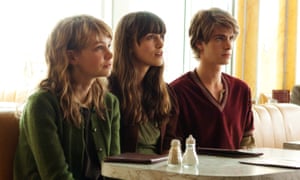


Carey Mulligan, Keira Knightley and Andrew Garfield in the 2010 film adaptation of Kazuo Ishiguro’s Never Let Me Go, in which clones are produced to provide spare organs for their originals.


Carey Mulligan, Keira Knightley and Andrew Garfield in the 2010 film adaptation of Kazuo Ishiguro’s Never Let Me Go, in which clones are produced to provide spare organs for their originals. Photograph: 20th Century Fox/Everett/Rex

Advances in methods for reading the genetic code recorded in our chromosomes are going to make it a routine possibility for every one of us – certainly, every newborn child – to have our genes sequenced. “In the next 10 years or so, the chances are that many people in rich countries will have large chunks of their genetic information in their electronic medical records,” says Greely.


But using genetic data to predict what kind of person an embryo would become is far more complicated than is often implied. Seeking to justify unquestionably important research on the genetic basis of human health, researchers haven’t done much to dispel simplistic ideas about how genes make us. Talk of “IQ genes”, “gay genes” and “musical genes” has led to a widespread perception that there is a straightforward one-to-one relationship between our genes and our traits. In general, it’s anything but.


There are thousands of mostly rare and nasty genetic diseases that can be pinpointed to a specific gene mutation. Most more common diseases or medical predispositions – for example, diabetes, heart disease or certain types of cancer – are linked to several or even many genes, can’t be predicted with any certainty, and depend also on environmental factors such as diet.


When it comes to more complex things like personality and intelligence, we know very little. Even if they are strongly inheritable – it’s estimated that up to 80% of intelligence, as measured by IQ, is inherited – we don’t know much at all about which genes are involved, and not for want of looking.


At best, Greely says, PGD might tell a prospective parent things like “there’s a 60% chance of this child getting in the top half at school, or a 13% chance of being in the top 10%”. That’s not much use.


We might do better for “cosmetic” traits such as hair or eye colour. Even these “turn out to be more complicated than a lot of people thought,” Greely says, but as the number of people whose genomes have been sequenced increases, the predictive ability will improve substantially.


Ewan Birney, director of the European Bioinformatics Institute near Cambridge, points out that, even if other countries don’t choose to constrain and regulate PGD in the way the HFEA does in the UK, it will be very far from a crystal ball.


Nearly anything you can measure for humans, he says, can be studied through genetics, and analysing the statistics for huge numbers of people often reveals some genetic component. But that information “is not very predictive on an individual basis,” says Birney. “I’ve had my genome sequenced on the cheap, and it doesn’t tell me very much. We’ve got to get away from the idea that your DNA is your destiny.”


If the genetic basis of attributes like intelligence and musicality is too thinly spread and unclear to make selection practical, then tweaking by genetic manipulation certainly seems off the menu too. “I don’t think we are going to see superman or a split in the species any time soon,” says Greely, “because we just don’t know enough and are unlikely to for a long time – or maybe for ever.”


If this is all “designer babies” could mean even in principle – freedom from some specific but rare diseases, knowledge of rather trivial aspects of appearance, but only vague, probabilistic information about more general traits like health, attractiveness and intelligence – will people go for it in large enough numbers to sustain an industry?


Greely suspects, even if it is used at first only to avoid serious genetic diseases, we need to start thinking hard about the options we might be faced with. “Choices will be made,” he says, “and if informed people do not participate in making those choices, ignorant people will make them.”
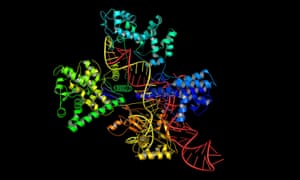


The Crispr/Cas9 system uses a molecular structure to edit genomes.


The Crispr/Cas9 system uses a molecular structure to edit genomes. Photograph: Alamy

Green thinks that technological advances could make “design” increasingly versatile. In the next 40-50 years, he says, “we’ll start seeing the use of gene editing and reproductive technologies for enhancement: blond hair and blue eyes, improved athletic abilities, enhanced reading skills or numeracy, and so on.”


He’s less optimistic about the consequences, saying that we will then see social tensions “as the well-to-do exploit technologies that make them even better off”, increasing the relatively worsened health status of the world’s poor. As Greely points out, a perfectly feasible 10-20% improvement in health via PGD, added to the comparable advantage that wealth already brings, could lead to a widening of the health gap between rich and poor, both within a society and between nations.


Others doubt that there will be any great demand for embryo selection, especially if genetic forecasts remain sketchy about the most desirable traits. “Where there is a serious problem, such as a deadly condition, or an existing obstacle, such as infertility, I would not be surprised to see people take advantage of technologies such as embryo selection,” says law professor and bioethicist R Alta Charo of the University of Wisconsin. “But we already have evidence that people do not flock to technologies when they can conceive without assistance.”


The poor take-up of sperm banks offering “superior” sperm, she says, already shows that. For most women, “the emotional significance of reproduction outweighs any notion of ‘optimisation’”. Charo feels that “our ability to love one another with all our imperfections and foibles outweighs any notion of ‘improving’ our children through genetics”.


All the same, societies are going to face tough choices about how to regulate an industry that offers PGD with an ever-widening scope. “Technologies are very amoral,” says Birney. “Societies have to decide how to use them” – and different societies will make different choices.


One of the easiest things to screen for is sex. Gender-specific abortion is formally forbidden in most countries, although it still happens in places such as China and India where there has been a strong cultural preference for boys. But prohibiting selection by gender is another matter. How could it even be implemented and policed? By creating some kind of quota system?


And what would selection against genetic disabilities do to those people who have them? “They have a lot to be worried about here,” says Greely. “In terms of whether society thinks I should have been born, but also in terms of how much medical research there is into diseases, how well understood it is for practitioners and how much social support there is.”


Once selection beyond avoidance of genetic disease becomes an option – and it does seem likely – the ethical and legal aspects are a minefield. When is it proper for governments to coerce people into, or prohibit them from, particular choices, such as not selecting for a disability? How can one balance individual freedoms and social consequences?


“The most important consideration for me,” says Charo, “is to be clear about the distinct roles of personal morality, by which individuals decide whether to seek out technological assistance, versus the role of government, which can prohibit, regulate or promote technology.”


She adds: “Too often we discuss these technologies as if personal morality or particular religious views are a sufficient basis for governmental action. But one must ground government action in a stronger set of concerns about promoting the wellbeing of all individuals while permitting the widest range of personal liberty of conscience and choice.”


“For better or worse, human beings will not forgo the opportunity to take their evolution into their own hands,” says Green. “Will that make our lives happier and better? I’m far from sure.”
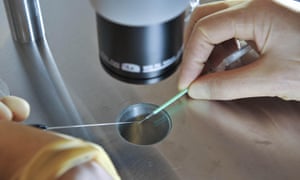


A scientist at work during an IVF process.


A scientist at work during an IVF process. Photograph: Ben Birchall/PA

Easy pickings: the future of designer babies


The simplest and surest way to “design” a baby is not to construct its genome by pick’n’mix gene editing but to produce a huge number of embryos and read their genomes to find the one that most closely matches your desires.


Two technological advances are needed for this to happen, says bioethicist Henry Greely of Stanford University in California. The production of embryos for IVF must become easier, more abundant and less unpleasant. And gene sequencing must be fast and cheap enough to reveal the traits an embryo will have. Put them together and you have “Easy PGD” (preimplantation genetic diagnosis): a cheap and painless way of generating large numbers of human embryos and then screening their entire genomes for desired characteristics.


“To get much broader use of PGD, you need a better way to get eggs,” Greely says. “The more eggs you can get, the more attractive PGD becomes.” One possibility is a one-off medical intervention that extracts a slice of a woman’s ovary and freezes it for future ripening and harvesting of eggs. It sounds drastic, but would not be much worse than current egg-extraction and embryo-implantation methods. And it could give access to thousands of eggs for future use.


An even more dramatic approach would be to grow eggs from stem cells – the cells from which all other tissue types can be derived. Some stem cells are present in umbilical blood, which could be harvested at a person’s birth and frozen for later use to grow organs – or eggs.


Even mature cells that have advanced beyond the stem-cell stage and become specific tissue types can be returned to a stem-cell-like state by treating them with biological molecules called growth factors. Last October, a team in Japan reported that they had made mouse eggs this way from skin cells, and fertilised them to create apparently healthy and fertile mouse pups.


Thanks to technological advances, the cost of human whole-genome sequencing has plummeted. In 2009 it cost around $ 50,000; today it is most like $ 1,500, which is why several private companies can now offer this service. In a few decades it could cost just a few dollars per genome. Then it becomes feasible to think of PGD for hundreds of embryos at a time.


“The science for safe and effective Easy PGD is likely to exist some time in the next 20 to 40 years,” says Greely. He thinks it will then become common for children to be conceived through IVF using selected genomes. He forecasts that this will lead to “the coming obsolescence of sex” for procreation.


Designer babies: an ethical horror waiting to happen?

5 Temmuz 2014 Cumartesi

The horror of&nbspTuam"s missing infants is not diminished by misreported details | Tanya Gold

tuam babies memorial

Some commentators think the common outrage close to the Tuam story is fake, but they are incorrect, writes Tanya Gold. Photograph: Patrick Bolger


There was a vigil outdoors the Irish embassy in London on Thursday. It was for the 796 children who died in a former mom and little one property in Tuam, County Galway, which was operated by the Sisters of Bon Secours between 1925 and 1961. There are death records but no burial data for these young children. The area of their graves is a mystery, despite the fact that it is probable that they are near the home, and that some of them, according to testimony from two regional boys, who identified skeletons in 1975 following disturbing a concrete slab, may be in what was as soon as a septic tank in the grounds. When the story broke a month ago there was fury, and misreporting. All the missing children, it was stated, have been in the tank. This is supposition. No one particular is aware of precisely the place they are. The internet site has not been searched.


I do not praise misreporting. It need to not have happened. The New York Instances and the Washington Publish carried corrections. So did the Guardian. But the scandal – and here scandal blooms on scandal – is how an original error has allowed the fate of the mothers and babies of Tuam to be diminished and then normalised. It is equivalent to watching material fray. Tug at a thread and hope the complete collapses.


In a piece for Spiked Online, Brendan O’Neill railed towards the false headlines. He was right to abhor them, but then he lost his stability. He presented those furious at the needless deaths as a “Twittermob continuously on the hunt for things it may truly feel ostentatiously outraged by”. He was, it looks, much more interested in what was misreported than what actually happened the problems in the residences, the stigma that took the girls there and the query of how many equivalent graves there might be across Ireland were significantly less essential. What started as a polemic seeking reality swiftly became the opposite. In reality, he said, the “unhealthy obsession over the previous 10 many years with raking in excess of Ireland’s past … has grow to be a variety of grotesque moral sport, offering kicks to the anti-Catholic brigade and fuel to the historical self-flagellation that now passes for public existence in Ireland”. Is that what the survivors of the Magdalene laundries, the industrial colleges, and the sexual abuse by priests believe is the result of their testimony? Hysteria? Kicks? Or, at final, an acknowledgement of what took place?


O’Neill – a professional agitator himself – believes the well-known outrage is fake. He is incorrect. It was not the septic tank detail that propelled the story everywhere. It was the understanding, brutally exposed, that young girls, some of whom have been raped or coerced, were abandoned by household, church and state to a punishment hostel right after which they had been nearly always denied their youngsters. It takes an specialist cynic – or a denier – to dismiss this on a detail.


Elsewhere, in Forbes magazine, Eamonn Fingleton deals in straw nuns. “Does an Anti-Catholic Bias Aid Describe This Hoax?” he asks. A hoax, I should remind Fingleton, is “a humorous or malicious deception” is there something to laugh at here? “[The story of] wicked-witch nuns shovelling countless small human kinds into a maelstrom of excrement and urine – practically surely never ever happened,” he says. As I said, straw nuns. He thinks we should withhold judgment until finally an inquiry, which has been ordered by the Irish government, is performed, but he isn’t going to extend that edict to himself. “Prison guards at Belsen or the perpetrators of bestial biological experiments at Imperial Japan’s Unit 731 facility in Manchuria … would have been accorded more fairness than the nuns of Tuam,” he says, which is a line from the school of hysterical polemic he loathes. “Have been they [the nuns] holier-than-thou harridans who looked down on the unmarried mothers who came to them?” he asks. “For the most portion, most likely yes. But they did do something for people mothers’ sick-starred young children.” Sick-starred? Did astrology do this to them? Maybe for Fingleton, it did. Mortality charges have been higher in every single public institution, he notes conditions bred infection. Single mothers had been despised by every person the nuns were not baby thieves who watched ladies give birth without having painkillers, and denied them health care care afterwards, as punishment for their sin. They had been saviours. This I call the Stockholm syndrome analysis. It is shape-shifting, and convenient propaganda it is retrospective complicity. Blame everyone and you blame no a single.


There is far more diminishing of what took place in Tuam, and claims of deep offence from apologists, which is ludicrous are there any victims in this tale past the children and their mothers? The president of the Catholic League for Religious and Civil Rights, Bill Donohue, wrote a lengthy defence of the property, in which he states that stigma – he speaks especially of the stigma attached to unmarried mothers – “exists as a corrective, as a indicates to discourage undesired behaviour”. Undesirable by whom? And with what results? In the Telegraph Dr Tim Stanley explained Catholic dogma had nothing to do with what happened in these homes. So were nearby priests – and nuns – agitating for girls and their kids not to be separated, ostracised and denied health-related care and good meals, or had been they, as testimony tells us, at least complicit and typically the agents of cruelty?


The apologists have one particular line in common. They do not dispute the death costs in the residences or the truth that the graves of the children are unmarked and they do not agitate for what survivors at the London vigil look for. This is, briefly: an opening of the adoption records, so surviving households can be united, and a effectively funded investigation into every former mom and child house in Ireland, dealing with accusations of healthcare trials performed on youngsters, illegal adoptions and an acknowledgement of the savagery of the crime. The investigations into the Magdalene laundries and the sex abuse scandals have been much criticised. Tuam survivors want a full confession.


The only proper response to this story is disgust and not in the direction of a media that exposed it imperfectly and significantly also late. Alternatively, the slurs fly, breeding denial and compounding harm. The exceptional local historian Catherine Corless, who first observed how a lot of youngsters have been missing, and wondered where they had been, is accused of “inflammatory” rhetoric by Donohue, and of even shifting her story under strain from anti-Catholic campaigners the Irish Times wrote that she retracted some of her findings, which is untrue. Corless, incidentally, paid for a copy of the death certificate of each and every lost child. That is a humane response.


One more response could be this, but I have not heard it: it is time for Ireland to liberalise its abortion laws. The fates of the mothers at Tuam and the unhappily pregnant in Ireland nowadays are not identical, but they are connected. Irish females, if they can afford it, have to now travel abroad, typically alone and at wonderful expense, to safe an abortion if they cannot, there is forced childbirth, or gin and the knitting needle. I will not detail the evident – and humane – arguments for abortion right here, beyond reminding you that childbirth is daily life-threatening. I will only say that Irish abortion laws are a modern incarnation of the ideology that led to mothers’ punishment at Tuam. The dilemma – the shame – of the sexualised woman is still denied. She is still abandoned. Septic tank or not? Apologists miss the point. It isn’t going to matter now.


Deborah Orr is away.


The horror of&nbspTuam"s missing infants is not diminished by misreported details | Tanya Gold

26 Haziran 2014 Perşembe

The US supreme court"s abortion buffer zone ruling protects a gauntlet of horror | Jessica Valenti

Imagine making an attempt to stroll into a constructing, making an attempt to get a health care treatment method – and someone screams at you. Someone is two inches from your face – two feet from the front door – and that someone is videotaping you, calling you a whore. There is ketchup poured in the snowbanks around you, produced to appear like spurted blood. You try to consider a phase forward, but folks block your way, yelling that you happen to be going to be “mom to a dead infant”. They hold indicators in your faces, whisper “murderer” in your ear as you pass. Maybe they shove you.


Never believe portrayals to the contrary – from anti-choice activists and the information media – that these kinds of protestors outdoors abortion clinics are not grandmas praying, or kindly “counselors” who just want to speak fairly to women. These men and women wait outside clinics to shame and to harass they are there to scare.


Despite the horrifying experiences of ladies across the nation making an attempt to acquire abortions, the US supreme court ruled unanimously on Thursday that a Massachusetts law providing a 35-foot buffer zone outdoors of clinics is unconstitutional, and violates protesters’ first amendment proper to engage in “individual, caring, consensual conversations” with females seeking abortions.


Private, caring and consensual?


Katie Klabusich, a reproductive rights activist who has volunteered as an escort at 6 clinics across the country, tells me she is “terrified”.


Just before a buffer zone was enacted at 1 clinic exactly where she volunteered in New Jersey, Klabuish says it took six or 7 escorts to safeguard a single patient and her companion from picketers yelling racist and sexist epithets in their faces.


“You could still hear them yelling in the procedure room,” she told me on Thursday soon after the determination in McCullen v Coakley.


Klabusich says the lack of a buffer zone was particularly hard when women getting would come to the clinic soon after a health-related transport from the hospital – most with wished pregnancies that had put their wellness or life in danger:


These are ladies in obvious bodily distress, and I’ve noticed seven or eight picketers surround a medical van so a sick woman couldn’t get to a physician. This is what buffer zones support to end.


According to a statement by Dr Nancy L Stanwood of Physicians for Reproductive Well being, practically 90% of abortion companies report that sufferers in their facility have “expressed considerations about their personalized security,” and above 80% of clinics have referred to as police due to the fact of safety worries.


Abortion suppliers are not attempting to limit cost-free speech – they are making an attempt safeguard their individuals from what has turn out to be a gauntlet of terror. Thursday’s ruling might not eradicate all buffer zones overnight, but it provides safety to people who need to have it least, although ignoring the vulnerable females who are being harassed and intimidated for doing exercises a legal proper.


Let’s please not fail to remember the arson and bombings of clinics, the threats of anthrax, the shootings and – of course – the multiple murders of abortion companies and clinic workers. Abortion clinics are not secure locations – anti-choicers have ensured that – and if women are genuinely to have the appropriate to seek abortions free of charge from violence and harassment, they need to be.


The supreme court’s choice is not as unanimous as it may possibly appear, and it is not the end: pro-option activists are expressing outrage, sharing stories and organizing on the Twitter hashtag #protectthezone, and Planned Parenthood president Cecile Richards says that the Planned Parenthood Advocacy Fund of Massachusetts is “already working with legislature on a new bill to safeguard women from harassment”.


But for the girls searching for abortions in the days and weeks to come – and for the providers, employees and volunteers who put their lives on the line each day to make sure girls have entry to secure healthcare care – this ruling will effect them instantly. It will make females significantly less safe, medical doctors and clinic staff more fearful, and violent harassers emboldened. This is not the “cost-free speech” we’re fighting for.


The US supreme court"s abortion buffer zone ruling protects a gauntlet of horror | Jessica Valenti

21 Haziran 2014 Cumartesi

The health care horror that drives my creating profession

Youngsters inquire, occasionally, but I don’t consider an adult ever has. What do you see with that eye – the undesirable a single? I say: nicely, you know when you go into a very dark space and shut the door and close your eyes? That. Which is what I see.


There’s absolutely nothing there, just a vaguely electrical disturbance, a dim blank of black and dark red. If I cover my proper eye, the eye that still operates, and flip the other one in direction of a candle flame or fireworks, practically nothing registers. No light, no movement. The eye itself is perfectly healthy, but the pupil won’t expand or contract simply because the optic nerve has atrophied. No information gets through.


This is the hole in my vision. It is a hole I frequently fall into: bumping into folks, doors, shopping trolleys, lamp-posts tripping more than uneven paving stones, kerbs and children’s scooters sending glasses of water flying. Strangers should believe I am clumsy and absent-minded and irritatingly hesitant. I have been given a white stick but I can’t bear to use it, although there are occasions – on unfamiliar streets following dark, or on station concourses for the duration of rush hour – when it would possibly help, if not as a tool then as a signal.


I wasn’t meant to lose the sight in that eye but it took place, and now the good eye takes the hit. A whole lot of peripheral vision has gone colors and lights are not as sharp and clear as they utilised to be (though I’m now spared the horror of comparison). I struggle with pale fonts, best-by dates. But it’s fine. I can get about. I can study with out also a lot difficulty. I would be delighted if I knew my sight would keep like this, but which is not the way it appears to perform. You see exactly where I’m going with this.


Worry can be as disabling as loss of vision. For the initial year, I ran on pure unadulterated horror. Each and every morning right after waking I would lie there for a minute, unwilling to open my eyes, unwilling to confront what was constantly fading away (the lettering on Mother’s Day cards, the data ticker-taping more than the panel on the digital radio), and I would truly feel it once more, fresh and appalling, as the day’s adrenaline began to barrel via my veins. This is my lifestyle. This is actually taking place.


I initial realised something was affecting my vision in April 2008. It has been all downhill from there: the substantial everyday dose of steroids (we have tried a great number of other treatment options without a lot luck) seems to be no match for the total force of whatever-it-is, the issue that has taken up residence and bides its time, waiting to consume up the light. My physician, a distinguished expert, is pretty confident I have an autoimmune disorder affecting the optic nerves (continual relapsing inflammatory optic neuritis) but he cannot tell me why it started, how to cease it, or why – regardless of the steroids – it keeps flaring up so destructively. I have come to enjoy his honesty. No false hope. Hope tends to make you so vulnerable.


The 1 thing he’s confident of is that my situation is extremely uncommon. It really is a lonely enterprise, being a health care freak. I sit on the ward listening to individuals with terrible circumstances assess notes, and on the undesirable days I truly feel a small envy: you’ve identified each other, you know what you have got. You believe the therapy you are getting has a good possibility of operating.


At first it felt like a series of bereavements. I was shedding the future I had so idiotically imagined I was entitled to, but there have been other losses as effectively, and at first they came thick and rapidly. A lower complete moon that a relapse rendered dingy as a penny. Blossom that I knew to be the colour of raspberry ripple became a dull beige. I stopped looking up when individuals said, “Oh, wow, the stars!”


But that sucker-punch of shock every time I believed about what was occurring to me, that trapdoor into terror: I am pleased to find that is unsustainable. You cannot dwell at that pitch for ever. Slowly you come to terms with a new actuality. You find out to accommodate it it turns into standard. And this feels like a reprieve. You are getting spared anything, and that in itself is really worth celebrating. Of course, each relapse revives the worry but probably, even as your world narrows and darkens, you’re pondering: this is acquainted, I’ve been here ahead of.


I try out extremely challenging not to anticipate. When I had a sense of autonomy I invested a lot of time worrying about the future, in a occupied and superstitious style, as if by anticipating the pratfalls I may be spared them. That habit caught even when I was coming to terms with my powerlessness, and it did me no favours. I believed about the long term and what it may possibly hold, and I did not see anything at all great lying up ahead. Just a sense of the blackness greedily closing in, attacking all the factors I held valuable. As I was spending so a lot time in hospital, my perform as a journalist was the very first to go but that, I knew, was just the starting.


I felt myself becoming diminished in increments. The National Hospital for Neurology and Neurosurgery is exactly where I want to be when factors go incorrect. Other institutions inevitably remind you of your insignificance. Foods is awful, notes go missing. A brisk supercilious GP pretends she knows much more than she genuinely does. Medical doctors go over your case (“this could be very serious”) on the other side of a curtain. A nurse at a single of London’s major teaching hospitals, a good man with whom you’ve had a number of exciting conversations, can make you sit in a wheelchair and then drags – as opposed to pushes – it along the corridors, as if you are cargo, barely even a individual.


Confronting my uselessness, my new dependency, I discovered an additional way to be totally free. In my previous lifestyle, I had never actually regarded as fiction, and even when I found myself creating a novel in 2010 I could hardly bear to acknowledge what I was performing. Sitting around, generating things up? How silly, how shameful. Who did I think I was? But it felt so excellent to be creating again. The delight of generating an environment, summoning up character, and of finding exactly the correct word: the issues I’d loved most about my previous task. But this time, I was also allowed to choose what should occur and to whom. I did not want to quit.


I kept it a secret. At very first I concerned I wouldn’t finish the guide and then, when I had completed it, I anxious that no a single would be interested in it. I’d witnessed people’s expressions modify as they saw me method, as they steeled themselves to inquire how I was, and I didn’t want to give them an additional cause to really feel sorry for me. But that book (Alys, Usually) identified a publisher, and went out into the globe, and then I wrote yet another a single (Her).


Possibly this is what I have carried out with the dread: perhaps I have collected it up, a wonderful dark tangle of dread, and worked it into my books. Each novels look to be powered by a minimal-level anxiety, an underlying sense that something’s not quite appropriate, and making this atmosphere beneath laboratory situations feels fully proper and delightful. Economical, also: very good housekeeping. I’m up to my ears in the stuff, why not place it to some use? My story, my guidelines.


This, then, is exactly where I have all the energy.


At times I wonder if I have a ration of sight left, like sand in an hourglass, and 1 day it will dwindle to a trickle, and then it will just run out. There’s absolutely nothing like living at the pointy finish of a stick to make you emphasis. Whenever my sight suffers a setback, I seem to be flooded with suggestions. There seems to be a direct correlation. I sit on plastic chairs in windowless corridors, waiting to be called for tests and consultations, and even though I wait I scribble in my orange notebook. It is escapism, of course, a way of dodging reality, and in some ways it feels a foolish and frivolous issue to be undertaking but at the identical time, it is needed. It truly is the thing that offers me goal and tends to make me satisfied a great point to do with the time and sight I have left.


• Her is published by Weidenfeld &amp Nicolson.


The health care horror that drives my creating profession