dignity etiketine sahip kayıtlar gösteriliyor. Tüm kayıtları göster

16 Ekim 2016 Pazar

My father died alone in hospital. Our campaign is restoring people’s dignity

A little more than two years ago, I was in the kitchen with my friend, Julia Jones, in a state of helpless sorrow. My father, John, was still alive then, although he was in his desolating last stages. His slow-motion dying had gone on for months and would continue for several more. While it endured we half wanted him gone, and when it ended, of course we wanted him back – a living ghost rather than a dead man who might haunt us but would never return.


My father’s drawn-out death lasted nine months: he went into hospital as someone living well with dementia; he came out quite lost and broken, and all the love in the world couldn’t have found him or put him together again.


It was Julia who suggested (and why hadn’t I thought of this before; why hadn’t it been obvious?) that carers of people living with dementia should have the same right to accompany them in hospital as the parents of sick children: that they should be welcomed by the bedside, to feed them, talk to them, hold their hand, stroke their hair, meet their gaze, be their memory, keep them safe, take them home whole. And after my father died, it was the Observer – which had 50 years earlier championed the demand by parents to be able do just that for their children – which gave me a place where my voice could be heard, and where sorrow, guilt and regret could be redeemed into change and rescue.


My father was beyond all help, but there are thousands of men and women with dementia who go into hospital each year and who come out diminished, through no fault of nurses and doctors, but because hospital is a hazardous place for those who are frail.


It was nearly two years since I wrote the piece in the Observer that launched John’s Campaign. Founded and run by Julia and me, its aim is simply that carers should be made welcome in hospital. Its beginnings were in a kitchen, but it is now part of a great movement for more enlightened and compassionate care for those with dementia.


At a conference last Wednesday dedicated to the campaign, tribute was paid to the paper’s honourable tradition of giving a voice to the voiceless, power to the powerless, hope to those in despair. The hall was full of generous people who had helped us on our journey – people with influence and connections, NHS leaders, consultants, chief nurses, heads of charities – but at the heart of the conference were the people whose voices are not usually heard, whose sorrow and anger and passion get drowned out in the great noise of the world.


As James Munro, chief executive of Patient Opinion, said: “Listening is the beating heart of healthcare” and in the act of listening “both speaker and listener are changed”.


In a session entitled “Voices”, 10 people, many of whom had never spoken in public before, courageously told of their experiences and were listened to. Sometimes what they said was hard to hear. Their stories, both the ones of anguish and the ones of kindness and optimism, illustrated why we started the campaign.


Tommy Dunne, who lives with dementia, described what it feels like to be in hospital, a “strange place surrounded by strangers”, where something tight squeezes your arm and something cold is put into your mouth; where a chicken pie is placed in front of you and then taken away, a mug of tea loudly offered and then removed; where, startled and scared, “you become dehydrated and delirium sets in … and the quick decline in your health begins. Yet no one knows or understands why.”


Several carers – partners, children, grandchildren, people who, as one of them had it, were the “voice and the memory” of the person with dementia – spoke about their experiences of heartbreak.


Teresa Canale-Parola’s partner, John, was 60 when he died. The hospital in which he spent his final days was too far away for her and her daughters to visit regularly, and – in spite of their battle to get this reversed – there were strict visiting hours, so that for much of the time he was quite alone. In his dementia, John had become violent and was placed under a mental health order. He was medicated and, even when he was placid, he was restrained.


He stopped eating and drinking. Soon he could no longer walk. Thirty-five days after his admission, Teresa had a call to say his health had deteriorated: she and her daughters found John, by now starved and badly dehydrated, “restrained in a chair, dying” . It was a brutal way for a man to go.


The death of someone with advanced dementia can be a sad blessing for those who have loved them, restoring that person to all the selves they have ever been – but a bad or lonely death makes mourning painfully difficult, full of anger and regret and terrible failure, of almost unendurable memories of distress. Not to be with them, not to comfort them, not to rescue them from abandonment and fear, not to accompany them up to the threshold.


Alongside stories of anguish, there were ones of hope: a junior geriatrician (of whom I am the proud aunt) spoke about being part of a cultural change in hospitals. Liz Charalambous – a nurse who has been fighting to get unrestricted visiting for carers for years – said that “one day we will look back in astonishment” at the time when carers were not made welcome.


Rebecca Myers, a health professional whose mother had dementia at a cruelly young age, spoke movingly about the “pragmatic empathy” that lies at the heart of healthcare: “One human being connected to another, in the moment, in the environment, for a shared purpose – to take care, of and with, each other.”


And Theresa Clarke, a former nurse from Northern Ireland now living with dementia, spoke with clarity and spirit about how people with the condition “need to be part of the conversation … not just spoken about, like an object, but talked with and to”. She certainly did not like her diagnosis, she said, and being left in hospital was “deadly, like being in deep space”, but she urged us all to remember that “we can live well with dementia, we can still contribute to society, our family and the world beyond”.


Seeing Theresa, this diminutive firecracker of a woman, hearing her talk, hearing Tommy’s vivid account, was a forceful reminder that people with dementia – who we often reduce to statistics, to costs, to problems, even (horrible words) to “bed blockers”, are not “them” but “us”, valuable and human and precious, with stories to tell and voices to be listened to.


The session ended with Kate Kellaway, of the Observer, beautifully and tenderly describing her father’s last weeks. Her words, republished here, illustrate the ideals of our campaign and show how, up and down the country, nurses and doctors are bringing extraordinary compassion and empathy to the lives of people who are vulnerable, and to their deaths: to live as well as we possibly can; to have, as they say in Ireland, a gentle passing.
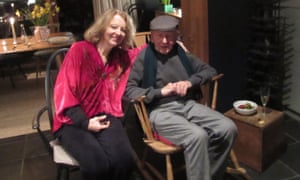


Kate Kellaway and her father on his 90th birthday, two months before he died.


Kate Kellaway and her father on his 90th birthday, two months before he died. Photograph: Courtesy of Kate Kellaway

‘My dad’s care made us believe in the goodness of people’


My father died five months ago at Whittington hospital in Archway, north London – he’d had a fall, broken a hip, had an operation, recovered and been discharged. Then he had another fall and had to be readmitted and it turned out he’d had a silent heart attack. He was 90. He had for some time suffered from chronic kidney disease.


So – a medley of misfortunes, including, towards the end, dementia. He had an intermittent belief he was back in the war and that there was a soldier in the bed next to him – he was determined to know the soldier’s name. I helplessly selected “Jim”, which seemed to pacify Dad. But, of course there was no bed and no soldier other than Dad himself, gallantly fighting on.


When it was clear he was dying, the Whittington found him a room to himself. And that was just the first of the blessings of being in that hospital during Dad’s final three weeks.


The care was, in every way, exemplary. The staff were happy to waive visiting hours without question. We could come and go as we pleased and sit up all night with Dad if that was what we wanted to do. The number of visitors at any one time was left to our discretion.


My brother, sister and I were bowled over by one nurse in particular and the compassionate intelligence with which she grasped the emotional picture. Sam Hunt talked to Dad with warmth, respect and gentle humour. She tried to find out how he was feeling. At one point, he admitted he was frightened and she listened, smiled and reassured. And she reassured us too – she made us believe in the goodness of which people are capable.


The doctor, Dr Mitchell, was outstanding – a model of intelligence, sympathy and tact. She was exceptionally clear in her information – impressive, in particular, in telling us what she was not sure of as well as informing us about whatever she knew.


Towards the end of his life, Dad had given us instructions about not prolonging his life unnecessarily – we had power of attorney. The staff listened to us but as Dad became less and less able to speak, Dr Mitchell never neglected to address him first: “Mr Kellaway, I’m just talking to your daughters about how we can try to make you more comfortable…”


The palliative care team was first rate: educating us in the art, or science, of dying comfortably.


And when Dad gently breathed his last – it seemed to me that it resembled what a friend of mine once described as pushing your boat out – I was with him, and when he was gone, it was the nurse and doctor I embraced. They had retained the necessary professional distance and yet had allowed us to feel, if only for a moment, that they were – almost – family.


Kate Kellaway


My father died alone in hospital. Our campaign is restoring people’s dignity

20 Temmuz 2014 Pazar

Detecting dementia: the initial measures towards dignity | Tania Browne

As a teenager, I misplaced my grandfather. But he wasn’t dead. He even now had his favourite music, he nevertheless loved to stroll in the woods and name the flowers and plants, and he loved his soap operas. He was alive, but gone. A dignified guy, a former aircraft engineer and oil firm salesman, diminished to the standing of a bewildered toddler lost in a buying centre. When he died, our family felt an odd mix of relief, then guilt at the relief. The man we loved had left his body years before the body gave out.


This was thirty years in the past. But even though a remedy is nonetheless far away, two new tactics may at least be able to forewarn us of dementia, and enable us to plan treatment for ourselves or loved ones prior to any outward symptoms are obvious.


In accordance to Alzheimer’s Study United kingdom, my knowledge is at the moment shared by 24m family members and shut friends of the 800 000 diagnosed dementia sufferers in the United kingdom. In December last yr, a G8 summit was advised by Alzheimer’s Ailment Global that the worldwide figure was 44m and set to treble by 2050, as the life expectancy of individuals in middle and decrease income nations soars – precisely the nations who have either depleted or non-existent healthcare techniques. Dementia is a serious time bomb.


“Dementia” covers about one hundred situations, all resulting from huge scale brain cell death. Men and women frequently feel that when they are diagnosed they are in the early phases. But cell death can be happening for ten-15 many years or more prior to any outward signs and symptoms take place, and by the time they are diagnosed many dementia patients have currently misplaced 1 fifth of their memory cells. Dementia affects language, your judgement and your standard sense of who and in which you are, amongst other things. The most typical type of dementia is Alzheimer’s, accounting for about two thirds of situations, but it’s at present not possible to detect what kind of dementia a person has even though they are alive. The behaviour of all dementia sufferers is significantly the same, and we can only narrow it down to particular sorts by examining the brain following death.


Any person interested in population health will tell you that no condition has a single result in. Epidemiologists perform with several threat aspects – aspects linked with the likelihood of acquiring a disease – in the genetic, behaviour and environmental realms. Typically health circumstances arise as a result of all 3 in a variety of proportions, but in the case of dementia no one knows. It truly is like possessing a recipe exactly where the three major substances are offered, but no person has informed you how much of every, what approaches to use, and that each and every oven is fully unique.


This also can make creating remedies challenging. The final drug, Memantine, was authorized in 2003. Two far more current medication have failed to present a significant result in clinical trials. There is hope that a single of them, Solanezumab, may support delay onset in mild situations of dementia, but significantly investigation nonetheless requirements to be accomplished.


Despite the fact that we never know what leads to dementia we locate equivalent patterns in the brains of sufferers, and two proteins seem to be particularly substantial. Proteins are produced of lengthy chains of amino acids, every of which demands to be in exactly the proper spot so the protein can fold up into a complex, specific shape – a bit like genetic origami. It is their special shapes, and the reality that they can only attach to very particular receptor websites in the physique, that make these proteins the essential to so several crucial entire body functions. So if some thing goes wrong, the genetic message mutates in excess of time and a chain isn’t going to fold up the way it should… properly, it truly is rather like folding up your stunning origami swan and realising the guidelines have advised you to make 3 wings – except with genes you can’t adjust or disregard the guidelines.


In dementia individuals, two proteins in particular are always found to have mutated and “folded wrongly”. A single, called tau, is found all more than the central nervous method where it has a function in stabilising microtubules, but it seems to be “tangled” in dementia patients. In September 2013 scientists at the Nationwide Institute of Radiological Sciences in Japan devised a chemical which could “bind” to tau and then be detected in the brain utilizing a PET scan, and it really is hoped this may possibly also present results on tau in long term clinical trials.


But PET scans are even now expensive and challenging, and the cheapest and easiest testing might be in seeking for the second crucial protein, beta amyloid. This protein has a number of roles in the entire body, but in which it varieties component of the brain fluid, it can fold wrongly, tangle and cause a layer of “plaque” to build up. It really is considered that the protein mutation might also bind with insulin receptors and stop glucose from being properly absorbed in the brain, lowering function even more.


But it’s been identified that due to the fact it plays a number of roles, “clumps” of beta amyloid in the brain are mirrored by “clumps” elsewhere, specifically the lens and retina of the eye the place it can be detected via bio-markers which bond with it. Two separate scientific studies, from the US and Australia, were presented at the Alzheimer’s Association Conference in Copenhagen final week, which showed that levels of beta amyloid in the eyes mirrored individuals in the brain. The outcomes are preliminary and the tests have not yet been carried out on adequate men and women to be confident, but in this early stage it appears promising.


So just as your normal eye test can provide early warning signs of glaucoma, it’s feasible that in potential your optician may possibly be in a position to refer you for more tests for indications of dementia. And the earlier we can detect dementia, the earlier treatment method interventions we can make to plan treatment and to slow the progress of the illness. It may possibly not be the “cure” for dementia, but it could effectively give us the initial step to providing sufferers with optimum independence and dignity for the longest time.


Detecting dementia: the initial measures towards dignity | Tania Browne

6 Mart 2014 Perşembe

Cancer and the “Trinity of Suffering” and Opting Out of Standard Remedy To Die With Dignity

When the quantity of individuals that are getting diagnosed with Cancer and opting out of therapy continues to rise, then we require to consider note. They are not opting out due to the fact of some “magic bullet cure”. For the vast majority has no expertise of any therapy except the standard treatment of surgical treatment, radiation and chemotherapy. It is the worry of these remedies and the eventual final result that has cancer victims opting out. For it is historical knowledge from 60 plus many years of these therapies that is fueling the new “opting out” alternative. For we all have been touched by cancer by means of a loss of a household member, pal or loved 1. We have all seen these brave and trusting souls fight to stay alive just one particular more day but to no avail. It is this firsthand expertise of the horrific discomfort, sickness and suffering that we have witnessed and has ultimately been cemented into our minds that enable us to encounter the reality that the “Trinity of Suffering” of conventional treatment method is a failure. So opting out even with such a fatal condition is turning into more frequent. Opting out of identified torturous therapy and eventual horrific death to a much more dignified death with a lot less struggling and soreness. We proceed to be confined to the “legal” treatment of surgical treatment, radiation and chemotherapy by a class of officials and government companies that have comprehensive energy more than our properly being and they are failing us. For people, with no information of any other viable option, to refuse health care remedy shows just how we have misplaced faith in our healthcare system. That speaks volumes and demands to be addressed. A reduction of faith due to refusal to admit failure with a worldwide yearly cancer reduction count of around eight.two million is criminal and insane. We are dropping an estimated 22,465 precious souls a day to a technique of inferior and ineffective medicine. I pray that we Wake Up to this travesty and get started conserving these precious guys, females and youngsters that are having to pay the greatest price in the title of ego, cash and power.


This kind of is the story of my mom who chose to let go of her fears and allow her lung cancer eat her with no medical intervention. She chose to reside at least four many years with out telling anybody of her cancer. Not even her husband of 62 years at the time of her passing. It was her want and so it was right up until four days before her death. It was only then that my father and then her loved ones and close friends realized of her cancer and her want to withhold that data from us. It was that day which would be her last day “awake” that we began to understand and understand how strong a lady she truly was. Specifically why she chose to deal with her cancer that way we may possibly never ever fully understand or know. What we do know is that she did not want to commit her last years disfigured and suffering horribly. She noticed also a lot of of her household and close friends die horrible deaths soon after trusting in the cancer routine recommended by their medical doctors. So several of people trusting individuals who did not even have a single “good” day in the final year of their lives. Not 1 single good day. Instead every and every one particular of these last days had been invested feeling sick and miserable. She did not want that and she chose to die with no allowing herself to be destroyed inside and out in a methodical and expensive way. I will permanently admire that in my mom. Even however she had no thought what the end would be like without the regular cancer treatment method she knew it had to be far better than with the remedy. The finish came but it wasn’t horrific and she was surrounded by household and loved ones and she went in a dignified and relatively peaceful manner. I thank God that she spared US, her loved ones and friends, the emotional pressure and anguish of seeing her die the horrific and unnatural death that cancer victims struggle by means of after all that has carried out with the surgeries, radiation and chemotherapy therapies. For theirs is a wasted entire body and soul. Hers was nonetheless a vibrant and residing soul inside her entire body. Certain she was dying of a cancer that consumed her life but it was absolutely nothing compared to what we all have observed in other individuals following all is completed that can be accomplished and the greatest damage has set in. I believe her concern of the cancer remedies and what it would do to her and to her loved ones, close friends and loved ones was what led her to do what she did. Or better nevertheless, led her to not do what most other people in her circumstance do. The absolute difference in her death as in contrast to people of my other family members and close friends that chose the treatments is so astonishing that the dangers and harm of the “Trinity of Suffering” can not be denied in my viewpoint.


Cancer and the “Trinity of Suffering” and Opting Out of Standard Remedy To Die With Dignity

5 Ocak 2014 Pazar

Humanity and dignity at the finish of our lives | @guardianletters

If only Margaret Drabble’s want (When it truly is time to go, let me go, with a whisky and a pill, two January) could be realised, but not only for the previous, despite the fact that that is now my individual, selfish concern. My son was forced to starve himself to death two and a half years in the past, a lengthy, drawn-out procedure which took determination and courage and which was particularly harrowing for his loved ones. He had suffered from a notably aggressive form of MS for numerous many years, a illness which is progressive and incurable. When he could no longer move himself from his bed to his wheelchair he made the decision that we had all had ample.


His doctor was sympathetic but could do nothing at all to support and it was too late to get Seamus to Switzerland had he not wished, anyway, to die in his own bed. Margaret Drabble is correct that we deal with individuals with much less humanity than we do our animals. I had been in a position to put a much-loved dog out of her suffering a number of months just before I had to observe my son finish his own lifestyle. It would surely be a signal of an adult and civilised society to be capable to do for our loved ones what we can do for our pets.
Primrose Kirkman
Warminster, Wiltshire


• Margaret Drabble says that, when it comes to euthanasia, “the politicians will not allow us, the bishops will not allow us and the wellness specialists are not allowed to allow us”. We can not communicate for politicians or bishops, but we can say that the vast majority of practising doctors have no want to be licensed by law to destroy their patients or to provide them with the means to kill themselves. That is not why we became medical doctors, and the suggestion that it is only the law that is avoiding us from practising euthanasia is entirely groundless.


Ms Drabble trundles out the nicely-worn argument that “you would not allow a dog endure”. She seems unaware that folks often consider their pets to be place down for other causes than suffering. Her idealised image of dying with “a great glass of whisky and a pleasing pill” might appeal to the properly-heeled and self-possessed, but as doctors we have to care for a considerably wider variety of individuals, several of them vulnerable. We have laws to safeguard us, specifically individuals amongst us who are significantly less able to communicate up for themselves, not to oblige the strong-willed and self-assured.
Dr Idris Baker Consultant in palliative medicine, Prof Rob George Vice-president, Association for Palliative Medication


• Margaret Drabble suggests that the healthcare occupation will not be permitted to be concerned in assisted dying even however the bulk of the public would now like to see this available to people who are terminally unwell. In reality the BMA (which represents all Uk physicians) manufactured binding policy towards assisted dying at its recent AGM. Given the significance of the concern, the RCGP and RCN have previously surveyed their wider membership, but the BMA has not. Why is this so on a topic of this kind of vital importance? If the bulk of medical doctors are without a doubt towards the idea then the BMA’s place will be strengthened. If the majority are neutral or in favour of assisted dying then it is only honest that this reality is produced identified to the wider public.


Interestingly, a current poll of GPs (Pulse, twenty November 2013) located that only 31% of respondents felt that their own Royal University need to be opposed to legalisation of assisted dying.
Dr David Wrigley Carnforth, Lancashire, Dr Jacky Davis London


• Margaret Drabble certainly did not study Chris Huhne’s post (An individual demands to fight the selfish, short-sighted outdated, 23 December) that was heavily criticised (Letters, 27 December). How can a cost-free choice concerning euthanasia be arrived at in the context of deep-seated age discrimination towards older men and women, as exemplified by Huhne? While commentators this kind of as him falsely accuse the older population of getting a burden on the youthful, it is impossible to have a balanced discussion about the right to die. Contrary to Margaret Drabble’s no doubt sincere wish, legal euthanasia would not grant every single particular person the electrical power to choose, because that freedom would be topic to societal and possibly household pressures. Prior to we debate euthanasia, let’s abolish age discrimination.
Alan Walker
Professor of social policy and social gerontology, University of Sheffield


• Dignity in dying, of course. But what about dignity in residing? This issue affects not just the frail elderly, but any person whose destiny is to turn out to be very previous or chronically infirm, and of course their beleaguered families and amateur carers. Margaret Drabble is appropriate that sections of the NHS fail hopelessly to recognize the ideal interests of older people. It’s also accurate that the way in which help is delivered to elderly men and women in their personal houses is a scandal, and that much of the tragedy of dementia is hidden, barely comprehended outside the walls of care residences. The whisky-and-pill alternative is of no service to most of people outdated and ailing, no matter what the ethical rights and wrongs. The time is in no way right – until finally it is, and then it truly is too late for informed consent.


But the peace of mind of realizing that when we need dignified care and support, it truly is there, and proportionate, and reasonably priced, and will take account of the particular demands of ageing men and women – now that would be an end well worth campaigning for.
Dr Gill Cookson
Castleton, North Yorkshire


• I agreed with every thing Margaret Drabble explained in her write-up. I am now 75, so outdated age is near up and personal. From the mid-1990s to 2005 I was nurse, carer and mourner for my father, my sister-in-law, my brother-in-law and my beloved husband. I noticed (and felt) what dementia, cancer and heart difficulties do to otherwise robust and balanced individuals. Their ultimate months were agonizing and undignified, and I had not the strength of mind or character to assist them out of a life which had become a burden. I come to feel that there is a time to die, and if we are kept alive beyond that level we ought to be able to say when sufficient is adequate. Vegetative breathing is not living.
Diana Lord
Cranfield, Bedfordshire


• I was delighted to go through Margaret Drabble’s polemic on doctor assisted suicide in today’s Guardian. It is a welcome commence to the 12 months 2014.


I would not agree with every single suggestion she helps make, but she raises the dilemma that the existing cruel and anachronistic law poses. A modify in this law is supported by a excellent majority of the population but is constantly blocked by a religious minority, by fearful politicians and, most sadly, by several members of the so-named caring profession of medicine.


Most of the fears raised by the opponents of modify have been proven to be unwarranted. In those jurisdictions in which assisted suicide is legal, the numbers searching for the facility remain small. The main result is the enhanced comfort and relief given to individuals with progressive disorders who would know that if palliative care did not eliminate unacceptable struggling (as is not uncommon), the final way out of the circumstance was obtainable. The fact that the selection was possible would probably delay proceeding with excessive choices such as opting to go to Switzerland whilst it is still achievable.


Offered my very own disability, a change in the law in 2014 would be the best existing that I could be given, even although it is not essential however.
Dr Clive Tonks
London


• At final, an individual who speaks my language! Nearing 80 and with failing faculties, I wish rational suicide (see the web site of the Society for Previous Age Rational Suicide) could be acknowledged as a wise step to stay away from one’s personal decline into helplessness and heartbreaking fear for one’s young children. But the means of release are difficult to come by.


1 pal wrote: “Personally, I consider that every person at the age of 75 ought to be issued with a small velvet box with the required pill for them to be able to use when they want.” What a great notion!


Of course, giving every person this kind of a pill would offend some mightily, but I do consider we ought to be issued with a prescription to be “cashed” without concerns when we consider the time is proper. This would stay away from the horrible heart-searching which physicians have to go via for each and each would-be suicide who asks for their help. My very own GP objects strongly to getting thought of as “medical doctor death” with the electrical power to dispense this kind of tablets.
Marion Bolton
Middlesbrough


• I agree wholeheartedly with Margaret Drabble that the individual’s wishes should be paramount when it comes to the approach and timing of one’s death. But several men and women discover that, when the moment of approaching death really comes, one thing in them – be it their thoughts, their body, or their spirit – seems to urge them to hang on. The moment passes and they wander into some variety of limbo. Then a half-life drags on for months or many years, with all its cost for the well being and care providers, not to mention household and close friends.


What can we do to consider our possibility to die when it presents itself? I believe there are several items we can do. Firstly, we can total an advance directive (also identified as advance decision), go over it with our loved ones and friends, have it countersigned by our GP, and lodge it with a solicitor. Secondly, we can deliver this intention into general conversation, so that those about us get utilised to the reality that at some stage we might refuse health-related intervention, and may inquire their assistance in performing so. Lastly, we can maintain our intention in the forefront of our personal minds, practise the phrases to be said at the essential stage, and put together ourselves to be firm and clear when the time comes.
Alison Leonard
Chester


• Margaret Drabble rightly raises the fraught issue of the impact of medication on old age, and how it can lead to artificial prolongation of existence when this may possibly not be to the best (or even any) advantage for those concerned. In that light, it is challenging to realize why she wishes to replace one artificial procedure with another, the taking of one’s own life using an suitable drug.


Both factors of this debate would advantage from taking artificiality out of the equation totally, and knowing better the organic end-of-existence processes that our bodies go by way of. In undertaking so, we can find out to greater define what is proper and valid health care intervention to help with dealing with these, and also prepare people for their very own death with out the terrors that Ms Drabble highlights that outcome from artificial intervention. Medication and politicians seem to be remarkably reluctant to give this the significant attention it deserves.


The reasoning provided by Ms Drabble for wishing a alter in the law appear also to highlight one particular of the major causes why it ought to not be transformed. The way in which she experiences and observes negative reactions to elderly people suggests to her that she and other folks be given a legal way of dealing with this by currently being able to pick to die. This is a horrible damning of how society views its elderly members. Changing the law to permit folks to consider their own lives will only make this worse, and Ms Drabble’s see appears to reinforce the situation that any such law could drive men and women to make a decision that is itself artificial.
Christopher Awre
Hull


• On my 81st birthday, I read with heartfelt recognition Margaret Drabble’s article. For some, a lengthy existence, irrespective of the top quality of that daily life, could be acceptable, even welcomed. For others it could effectively be a nightmare of helpless indignity. With Drabble, I truly feel the option must be mine and mine alone. If I knew with certainty that I could phase out of lifestyle when I wished, I may well view the years ahead with pleasure rather than apprehension.
BJ Cairns
London


• The New Year’s gift from which an ageing population would most benefit is not “the proper to die” as Margaret Drabble suggests, but an end to the damaging ageism that however her write-up promotes.
Tricia Cusack
Birmingham


• Margaret Drabble very rightly reminds us of the significance of selection when it comes to dying, but probably misses the opportunity to highlight the importance of option when it comes to the act of residing for older men and women. Escalating quantities of loneliness, poverty, alcohol and prescription abuse, and a sense of purposelessness, are more and more the encounter of many older folks, and would indicate a stark absence of choice. It could be recommended that a decent quality of life, and a sense of wellbeing, in the course of an older person’s “final decade”, as Margaret Drabble puts it, ought to be a fundamental right, and our concern should target on why this is not appropriately existing appropriate up to the point of dying. Probably our attention will be jolted by the big boost in the numbers of us soon to be arriving at old age.
Jon Bowra
Assistant director, Residing Properly Dying Nicely


• I enjoyed Margaret Drabble’s post, and I agree about the widespread worry of not being permitted to die in peace. I would like to make a tiny correction about “their archaic Hippocratic oath”. This was go through out to us when we certified in medication in 1957, obviously stating that “thou shalt not destroy, but need’st not strive officiously to maintain alive”. In individuals days death was often eased by the gradual, gentle readjustment of the dosage of medicines with the agreement of the family. This is now almost unattainable with the very true threat of misunderstanding and litigation. What we aimed for was to cure often, to relieve often and to comfort usually.
Patricia Tomlinson
Retired GP, Alton, Hampshire


Humanity and dignity at the finish of our lives | @guardianletters