Technology etiketine sahip kayıtlar gösteriliyor. Tüm kayıtları göster

28 Mart 2017 Salı

New technology allows tetraplegic man to move hand with thought

A man who was paralysed from below the neck after crashing his bike into a truck can once again drink a cup of coffee and eat mashed potato with a fork, after a world-first procedure to allow him to control his hand with the power of thought.


Bill Kochevar, 53, has had electrical implants in the motor cortex of his brain and sensors inserted in his forearm, which allow the muscles of his arm and hand to be stimulated in response to signals from his brain, decoded by computer. After eight years, he is able to drink and feed himself without assistance.


“I think about what I want to do and the system does it for me,” Kochevar told the Guardian. “It’s not a lot of thinking about it. When I want to do something, my brain does what it does.”


The experimental technology, pioneered by the Case Western Reserve University in Cleveland, Ohio, is the first in the world to restore brain-controlled reaching and grasping in a person with complete paralysis.


For now, the process is relatively slow, but the scientists behind the breakthrough say this is proof of concept and that they hope to streamline the technology until it becomes a routine treatment for people with paralysis. In the future, they say, it will also be wireless and the electrical arrays and sensors will all be implanted under the skin and invisible.


“Our research is at an early stage, but we believe that this neuroprosthesis could offer individuals with paralysis the possibility of regaining arm and hand functions to perform day-to-day activities, offering them greater independence,” said Dr Bolu Ajiboye, lead author of a paper detailing the research in the Lancet medical journal.


“So far it has helped a man with tetraplegia to reach and grasp, meaning he could feed himself and drink. With further development, we believe the technology could give more accurate control, allowing a wider range of actions, which could begin to transform the lives of people living with paralysis.”


Functional electrical stimulation (FES) of the muscles and nerves has been tried before in patients with paralysis, but they have had to use whatever movements they have left, such as shoulder shrugs or head nods, to trigger it. Kochevar, however, only has to think about what he wants to do.


He underwent brain surgery to implant sensors in the motor cortex area responsible for hand movement, linked to a computer. Kochevar went through four months of training, thinking about the turn of the wrist or grip of the fingers that he needed in order to bring about the movement of a virtual reality arm, so that the computer could recognise the necessary signals from the motor cortex.


Then he had 36 muscle-stimulating electrodes implanted into his upper and lower arm, including four that helped restore finger and thumb, wrist, elbow and shoulder movements. These were switched on 17 days after the procedure, and began stimulating the muscles for eight hours a week over 18 weeks to improve strength, movement and reduce muscle fatigue.


Then the whole system was connected up, so that signals from the brain were translated via a decoder into electrical impulses to trigger movement in the muscles and nerves in his arm.


“It was wow – I can do that now!” he said. “In the future I will be able any time I want to take a drink of something or feed myself.”


Graphic of technology process

Kochevar lost all power of movement after an accident during a charity bike ride in Cleveland for the MS Society. He was riding behind a mail truck, he said, when it stopped suddenly. “I went head first into it,” he said.


Ajiboye said he wanted Kochevar to be able to move his arm easily. “That is the goal – to make the technology seamless to him, in the sense of he thinks about him moving his arm and it moves,” he said.


The limitation for now was the number of muscles that could be stimulated and the wires that extrude. The slowness of the movement was not something that bothered patients, he said. “If you ask the users what their primary goal is, it is function not speed.”


There is no question of curing paralysis through this technology – it circumvents the injury instead.


“The goal is futuristic: a paralysed individual thinks about moving her arm as if her brain and muscles were not disconnected, and implanted technology seamlessly executes the desired movement … this study is groundbreaking as the first report of a person executing functional, multi-joint movements of a paralysed limb with a motor neuroprosthesis,” said Dr Steve Perlmutter from the University of Washington, in a linked comment in the Lancet.


“However, this treatment is not nearly ready for use outside the lab. The movements were rough and slow and required continuous visual feedback, as is the case for most available brain–machine interfaces, and had restricted range due to the use of a motorised device to assist shoulder movements … Thus, the study is a proof-of-principle demonstration of what is possible, rather than a fundamental advance in neuroprosthetic concepts or technology. But it is an exciting demonstration nonetheless, and the future of motor neuroprosthetics to overcome paralysis is brighter.”


New technology allows tetraplegic man to move hand with thought

11 Mart 2017 Cumartesi

Technology could redefine doctor-patient relationship | Richard Vize

Advances in clinical uses of artificial intelligence (AI) could have two profound effects on the global medical workforce.


AI, which mimics cognitive functions such as learning and problem-solving, is already making inroads into the NHS. In north London it is piloting use of an app aimed at users of the non-emergency 111 service, while the Royal Free London NHS foundation trust has teamed up with Google’s DeepMind AI arm to develop an app aimed at patients with signs of acute kidney injury. The hospital claims the project, which uses information from more than 1.6 million patients a year, could free up more than half a million hours annually spent on paperwork.


AI raises the prospect of making affordable healthcare accessible to all. According to the World Health Organisation, 400 million people do not have access to even the most basic medical services. Hundreds of millions more, including many in the world’s most advanced countries, cannot afford it. A key factor driving this is the worldwide shortage of clinical staff, which is getting worse as populations grow.


At last month’s DigitalHealth.London summit, Ali Parsa, founder of digital healthcare company Babylon, argued that mobile technology coupled with AI makes universal access a realistic goal, while replacing doctors with intelligent systems will slash costs.


“There is no solution which can fundamentally cut the costs of healthcare as long as we are reliant on humans,” he said.


So the second impact of artificial intelligence could be not merely augmenting the pool of medical talent but beginning to replace it. Big claims are being made for the clinical power of AI. Last year IBM’s Watson supercomputer was credited with diagnosing in minutes the precise condition affecting a leukaemia patient in Japan that had been baffling doctors for months, after cross-referencing her information with 20m oncology records.


However, the same system has just consumed five years and $ 62m (£51m) in an unsuccessful attempt to transform care at the University of Texas MD Anderson Cancer Center, showing how difficult it is to connect these digital behemoths to everyday hospital work. With the NHS still struggling to introduce electronic patient records, the idea of plugging the UK healthcare system into an all-knowing digital brain any time soon is fantasy.


While there is no doubt that AI will enable faster and more accurate diagnoses, a more realistic prospect than replacing doctors is to redefine their role.


That will be to put machine-generated information into the context of the unique life and needs of the individual patient, which cannot yet be reduced to an algorithm. As Dr Ameet Bakhai, consultant cardiologist at the Royal Free trust, told the summit, machines making clinical decisions on their own without that human context could fail to meet Isaac Asimov’s first law for robots of “do no harm”.


Digital evangelists argue that intelligent machines will be able to incorporate the latest data and research immediately, but that is both questionable and a potential weakness. Clinical trials vary in scale and quality, and indiscriminate inclusion would inevitably lead to mistakes. Digital hardliners would argue that machines should judge the quality of the research, but for the foreseeable future the expertise of doctors will be essential to deciding the validity of new approaches.


So perhaps one of the most powerful effects of artificial intelligence will be, perversely, to make healthcare more human and personal. It will remove the dependency on doctors’ fallible memory and incomplete knowledge, and free them to use machine-generated information to work with patients to shape their specific treatment.


This has profound implications for medical training and what defines a leading clinician. It will be those who can harness AI to their own medical knowledge and their human skills of context and empathy who will be the leaders of their profession. In the new world there will still be a great deal for highly-trained humans to do.


Join the Healthcare Professionals Network to read more on issues like this. And follow us on Twitter (@GdnHealthcare) to keep up with the latest healthcare news and views.


Technology could redefine doctor-patient relationship | Richard Vize

18 Şubat 2017 Cumartesi

How Nano Technology is Changing Farming for the Better

Utilizing nanotechnology to improve the water quality is an innovative way of improving crop nutrition, improving our natural health.


Abrupt changes in the weather are only one of the many reasons why farming is getting more and more difficult. Crops produced are of lower quality with less nutritional value, and the volume harvested is significantly fewer. Ground-breaking technology has been developed in order to address the issue of low yield and low quality yields by ensuring that the nutrients are delivered to plants more effectively.


How does nanotechnology improve plant nutrition?


Nanotechnology is an innovative technology which protects the nutrients in the soil against impurities and reactive molecules, resulting in improved crop nutrition.


What is nano technology and how does it work?


“Nano” comes from the Greek word that stands for “dwarf.” It is now, however, used to refer to a scientific scale. Consequently, nanotechnology makes use of a very small scale of measurement, about one billionth of a meter. Manipulating matter at the nanoscale has profoundly influenced different industries including manufacturing, textile, medicine, computing, and cosmetics.


This new technology’s primary function is to remove impurities in the water; thus, improving crop nutrition. It works this way: Water is pumped into a lab and is carefully processed to remove any particles and impurities from it. In essence, the particles are crushed, reducing their size up to 100 times smaller. This water is then fed to the necessary crops, allowing them to absorb the nutrients more effectively.


What are the implications of using this technology?


With a more efficient delivery of nutrients to the roots and leaves of the crops, there is a higher vegetative and germination rate. Moreover, farmers can now maximize soil nutrient and reduce the volume of required fertilizer, increasing the yield’s quality and quantity per hectare.


The full impact of these scientific advancements on the global farming community have not been measured.  If this technology is used as part of modern farming practices, farmers will be able to address issues such as the pH levels in the water, and they will be able to reduce the percentage of fertilizer used during the crop’s lifecycle. Finally, since it is a fairly new technology, there is scope for major improvements in the water purification process.


Final Words


This scientific know-how has successfully helped improve modern farming methods.


While this innovation makes use of the smallest measurement, there is no doubt that its impact on the farming industry will be tremendous. We live in a world where droughts, famines, and consequently, poor nutrition play a major role in starvation, deaths, and poor health of the people affected by the lack of proper nutrition. Therefore, any technological advancements that will improve the quality of the food produced, will go along way towards improving the quality of life for the impoverished.


Author bio: The article on improving crop nutrition has been written by Ignacio D. Pena who is a very active blogger and loves to write in the agriculture niche.


How Nano Technology is Changing Farming for the Better

8 Şubat 2017 Çarşamba

Deep Underground Base Technology Used in SpaceX HyperLoop Supersonic Tunnel Transit System?

Some technologies are not meant for public view or accreditation until the time is right. When these amazing scientific advances are brought forth it is done slowly and presented as cool and convenient. As with computers, cell phones and the internet among many other modern technologies. Always set in boring terms so the general public doesn’t notice. One rule applies. The military gets it first. Then some civilian corporation with close ties and funding from the U.S. government just happens to “pick up” the research. Military research and development that is many years old has a second market in the public sector. This may be the case with Deep Underground Base and Tunneling technology that has been rumored to exist for decades. These documented subjects are dismissed as theory until they are no longer theory. Now the idea of underground supersonic tunnel transit connecting cities is publicized in the form of Elon Musk’s HyperLoop concept. Being originally tested above ground. Is SpaceX is thinking about taking the idea subterranean?


Elon Musk may actually be serious about tunneling under L.A.


“Traffic is driving me nuts. Am going to build a tunnel boring machine and just start digging,” he tweeted at the time, adding, “it shall be called ‘The Boring Company.’”   USA Today


Just going to slap together a tunneling machine and a supersonic train in a month?  Such a boring endeavor being undertaken. It is true he is the only one in the world that can say something like that and actually mean it. Having somehow gotten the keys to the kingdom to many technologies that used to be the sole domain of national governments it would be hard to discount the statement. What is this technology based on and what will it look like in its final version?


Exciting progress on the tunnel front. Plan to start digging in a month or so. Elon Musk ‏@elonmusk Jan 25


One Tweet states he intends to bore a tunnel under the L.A. to save time on traffic. Could there be a pilot project planned for the HyperLoop system? A prototype is currently being tested  at Space X Headquarters. Musk himself leaving much room for speculation with nebulous Tweets about underground tunnels. Possibly even pitching it as an infrastructure project to the new U.S. Administration.


Hyperloop pod race happening this weekend at SpaceX HQ (near LAX). We built a ~mile long vacuum tube on our campus big enough to fit people. Elon Musk ‏@elonmusk Jan 27


It has been speculated that this very same system has been functional for years. The HyperLoop and V.H.S.T. (Very High Speed Transit System) first proposed in 1972 are basically the same idea. Almost identical in concept. An aerodynamic train like pod configuration in a specially pressurized or vacuum sealed tunnel gliding on magnetic levitation or a bed of high speed air. Overcoming air friction. Able to carry both passengers and cargo at supersonic speeds. Crossing the entire U.S. in an hour. Almost every science fiction fan has come across ideas of a supersonic transit system underground connecting major Deep Underground Bases.


Here it is. It couldn’t possibly have existed before but now the same exact design is being tested in the form of the HyperLoop. Teams from around the world are competing for the best civilian version prototype in a SpaceX  sponsored competition.


Many designs have been put forth and all based on the work of Robert M. Salter a lead scientist with the Rand Corporation that wrote the Very High Speed Transit System about the V.H.S.T. in 1972. Another followed in 1978 titled “Trans Planetary Subway Systems: A Burgeoning Capability . These documents form the basis for theories that this technology already exists and has been in use for quite sometime by the government. Salter was interviewed in a June 11 1972 article by L.A. Times science writer George Getz as reported by Intellihub. This along with the documents and patents filed around the same time fueled a lot of questions.


A Rand corporation physicist has devised a rapid transit system to get you from Los Angeles to NY in half an hour for a $ 50 fair. He said existing technology made such a system feasible and so does a cost analysis. The essence of the idea is to dig a tunnel more or less along the present routes of U.S. highways 66 and thirty. The tunnel would contain several large tubes for East West travel of trains that float on magnetic fields, moving at top speeds of 10,000 mph. Passengers would faced forwarded during acceleration, backward during deceleration. According to R. M. Salter Jr. head of the physical sciences department at Rand, the idea of high-speed train travel using electromagnetic suspension was first put forward in 1905 and actually patented in 1912. The trains he suggested now would be single cars rather than actual trains, and would be big enough to carry both passengers and freight, including large containers and automobiles.         LA Times June 11 1972


This article has led many to speculate that Deep Underground Bases and  the Tunnel systems that connect them have been in use for many years. Precious little hard proof has come up that this system actually exists in the capacity described here. Although some of this evidence is very compelling.  The SpaceX concept is very similar to Salter’s design.


The tubes would be emptied of air, almost to the point of vacuum, so the trains would not need much power to overcome air resistance. They would not even have to be streamlined. In addition to an electromagnetic roadbeds, the opposing electromagnetic loops of wires in the floors of the gondolas would be super cooled with liquid Helium to further eliminate electrical resistance.      LA Times June 11 1972


No doubt underground bases such as N.O.R.A.D.,  Weather Mountain and many others have been popularized and tunneling projects are going on all around the world. Some more intriguing than others. Still tantalizing connections come too light from time to time reinforcing the narrative that the public is not being told the whole story.


What may be more telling could be the method of tunneling that may be used if a larger version of SpaceX’s HyperLoop were too be built. Many researchers have pointed to advanced tunneling methods and boring equipment possibly used by the Defense Department. Boring machines first patented by the Atomic Energy Commission and US Energy. These could be used to construct Deep Underground Bases. As depicted in the patents the boring machines melt the surrounding rock leaving a perfectly smooth surface behind. If such boring machines were built, they could make circular patterns at different levels connected by vertical corridors. Forming a multilevel turn key sealed Underground or even Underwater base.


Perfect for a vacuum or semi pressurized tunnel the HyperLoop system needs. Time will tell if these patents get pulled into use for a scaled up project.


Method and apparatus for tunneling by melting US 3693731 A


Apparatus and method for large tunnel excavation in hard rock US 3885832 A


Apparatus and method for large tunnel excavation in soft and incompetent rock or ground US 3881777 A


Salter said many tunnels are dug nowadays almost as they would have been in the dark ages. Drilling holes in tunnel faces, and using machines with rotary bits are methods of tunneling that can be improved, according to him. He said the tunnel could be worked on from a great many “faces,” for instance. Salter suggested, too, that electronic beams or even water be used to drill holes for blasting. The high-powered electrons would drill blasting holes almost instantaneously.     LA Times June 11 1972


Indeed the HyperLoop concept is almost identical to Salter’s work in form and function with a few minor tweaks. The SpaceX design paper gives credit to Rand and Salter’s work.  Even the justifications for such a project are mirrored almost exactly.


Is there truly a new mode of transport – a fifth mode after planes, trains, cars and boats – that meets those criteria and is practical to implement?  Many ideas for a system with most of those properties have been proposed and should be acknowledged, reaching as far back as Robert Goddard’s to proposals in recent decades by the Rand Corporation and ET3.     HyperLoop  Design Concept p 2


What form this project will take in it’s final version is unclear. If it is built to full scale at all. What is clear is that this line of research and development is based off an idea long ridiculed in the main stream. Is this another advanced technology to be mainlined to the public now that it’s time?


And we start digging the tunnel tonight Elon Musk ‏@elonmusk Jan 27


Visit RaptormanReports for news, science, and history


Sources:


http://www.spacex.com/sites/spacex/files/hyperloop_alpha-20130812.pdf


http://www.usatoday.com/story/money/2017/01/25/elon-musk-the-boring-company-tunnels/97030778/


https://twitter.com/


http://www.rand.org/pubs/papers/P4874.html


http://www.rand.org/pubs/papers/P6092.html


https://www.intellihub.com


https://www.google.com/patents/


Deep Underground Base Technology Used in SpaceX HyperLoop Supersonic Tunnel Transit System?

19 Ocak 2017 Perşembe

7 Ways to Passively Use Technology For Self-Improvement

We all have a few things about ourselves that we would like to improve. Perhaps you want to increase your confidence, be more mindful, or improve your relationship. You may have even set a New Years resolution to accomplish these changes. Technology can be a great resource to passively start your path to self-improvement.


Most self-improvement goals can be described as gaining beneficial habits or replacing negative habits. For example improving our self-esteem is replacing habitual negative self-talk with positive thoughts, being more mindful is the habit of being present, and having a stronger relationship is all about habitually thinking kind and loving thoughts.


How do you form a new habit?


A habit is an automatic response to a given cue. One simple example of this is automatically washing your hands after using the bathroom. Few of us have to give this any thought, as going to the bathroom acts as the cue for our habit of hand washing. (1)


Research shows that new habits can be formed by repetition. So if you consistently exercise each morning, it will eventually be your default behavior, aka a habit. Once a good habit is formed you don’t have to rely solely on your motivation and conscious attention to be the person you hope to be. It will happen habitually. (1)


With the understanding of a habit as a response to a cue and knowing that we can form new habits with repetition, we have the power to effectively improve ourselves. We just need to set up a cue and consciously use that cue as a trigger to a wanted behavior until it becomes automated. One study suggests this will take an average of 66 days. (2)


Using Technology as a Cue For New Habits


Typing a username and password can be used as a cue for forming new habits. For most people, this is a good choice because you do it multiple times a day and you can even use words that remind you of your goal, making the conscious repetition that much easier since you will have a little reminder.


Here are 7 self-improvement goals that can be accomplished with the help of technology along with some ideas for usernames and/or passwords that could remind you of the goal:


  • Increasing Mindfulness


    Mindfulness is about being present. This means noticing your thoughts, emotions, and surroundings. Reminders like breath, smile, or stop and notice are all helpful.


  • Improving Self-Esteem


    Affirmations work great for this. Passwords or usernames like I am strong, healthy, and happy work great. Check out this article for more ideas.


  • Being A Kinder Person or being Less Self-Centered


    Training your thoughts towards kindness is commendable goal. My favourite way to do this is a quick regular loving kindness meditation. At it’s simplest, a loving kindness meditation is sending out loving thoughts to others, including difficult people in your life as well as strangers. Try something like time to send out love as a reminder to do this.


  • Forgive And Let Go


    Holding on to anger and resentment can be very damaging. Making a habit to take the time to notice anything you are holding onto and conciously releasing it is great for mental health. Use a username or password like check in and release as a cue to do this.


  • Reduce Stress


    We hold on to stress without realizing it. Sometimes our circumstances need to change for stress relief but more often it is our mindset and body that just needs to let go. Try breath, strecth, and release as your cue to relax your body and mind each time you log on.


  • Being a Better Family Member


    Reminding yourself of how much you love your family is a great way to do this. Anything from cute nicknames to triggers of great family memories works great as a password or username.


  • Being More Productive


    If you work on the computer like I do, using your computer log in as a reminder to stay focused works wonders. Use phases such as keep your eye on the goal or stay focused and you will accomplish help build the habit of staying on task.


This list could go on forever. This is really about forming a habit of positive thinking. Using a daily task as a cue to make a habit of helpful thinking patterns is an easy way to become a better person.


Think of who you can become when your default thoughts are all self-serving, loving, and kind.


Sources for this article include:
(1) NCBI: Making health habitual: the psychology of ‘habit-formation’ and general practice
(2) Huffington Post: How Long Does It Actually Take to Form a New Habit? (Backed by Science)


Amy is the mother of two young boys who has recently adopted the habit of using diaper changes as a mindfulness trigger.


Besides writing for NaturalNews.com Blogs and for her other blogs, Amy has an online store featuring her digital art.


7 Ways to Passively Use Technology For Self-Improvement

5 Ocak 2017 Perşembe

Don"t loose your snooze: the technology that"s promising a better night"s sleep

A bed that adjusts itself in the night to stop people from snoring. A princess and the pea-style gadget that fits under a mattress and monitors sleep. A “water-based, app-controlled mattress topper”, which will encourage deep slumber.


Sleep technology is one of the biggest trends at CES, the world’s premier electronics show, which opened to the public on Thursday.


The range of products on show reflect the growing interest in solutions to insomnia and other sleep problems – as well as the predictions that the global sleep market will be worth $ 80bn by 2020.


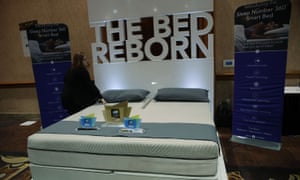
The “Sleep Number 360 smart bed”, made by bed company Sleep Number, is among the most eye-catching products. The mattress can detect a change of body position during the night and uses air chambers in the mattress to contour to the sleeper’s frame.


Sampling the bed on Thursday morning, a Guardian reporter was promised “the most comfortable, effortless sleep” of his life.


The reporter did not actually fall asleep during the three minutes he spent on the bed, but could feel the bed adjusting to support his lower back and shoulders. Invited – by a video demonstration screened above the bed – to turn to his side, the bed adjusted again.


The Sleep Number 360 smart bed at CES in Las Vegas, Nevada.


The Sleep Number 360 smart bed at CES in Las Vegas, Nevada. Photograph: Alex Wong/Getty Images

A video presentation explained that the Sleep Number 360 bed is “even smart enough to sense snoring before you do”.


Should it detect a snorer, the bed will raise the top of the mattress by 7%, which Sleep Number claims will stop the snoring. “It’s the only bed that goes to work when you go to sleep,” said Kelley Parker, senior product brand manager at Sleep Number.


The bed is able to detect the sleeper’s heart rate, breath rate and motion, to provide an excellent premium sleep experience, Parker said. It can adapt to two different sleepers’ positions. But this kind of sleep, it seems, does not come cheap.


Parker said that “pricing is not finalized” but that it would be similar to existing Sleep Number pricing. (The manufacturer’s top-of-the-range bed retails at $ 7,099.99 – although it is currently on sale for $ 5,899.99.)


A recurring theme at CES is connectivity. Almost every device on show – including some washing machines and ovens – will connect to cell phones and even smart home devices like the Amazon Echo or Google Home.


The Sleep Number 360 bed, and most of the other sleep devices on show at CES, connect to an app on a smartphone to give the user information on how they slept, and even remind a person when they should go to bed. The Sleep Number 360 will also connect to your thermostat to control room temperature during the night. (If you can afford a wireless thermostat after buying the bed.)


A few stalls along from the magic bed, Sleep Ace was demonstrating its own line of sleep-friendly products. The Sleep Dot attaches to the sleeper’s pillow and feeds information back to a cell phone on movement and sleep cycles.


Some wearable devices already to this, but the attraction of the Sleep Dot, which costs $ 49.99, is that you don’t need anything strapped to your wrist.


The National Institutes of Health estimates that 50 to 70 million Americans suffer from some kind of sleep disorder. Nearly one in five adults are said to suffer from chronic insomnia, while in February 2016 the Centers for Disease Control and Prevention said more than a third of people in the US do not get enough sleep.


Another product at CES, 2breathe Sleep Inducer, is a device that helps people sleep using guiding tones composed from the user’s breathing.


Another product at CES, 2breathe Sleep Inducer, is a device that helps people sleep using guiding tones composed from the user’s breathing. Photograph: Alex Wong/Getty Images

Sleeping less than seven hours a day can lead to increased risk of obesity, diabetes, heart disease and “frequent mental distress”, the CDC said.


One product that may be appreciated by fans of the Hans Christian Andersen, author of the The Princess and the Pea tale, is the Emfit QS. It’s a sensor that can be installed under a mattress to monitor sleep. It connects to a smartphone to provide “comprehensive reports” about “physical recovery, stress levels, and sleep quality”.


The company says it will be of particular interest to athletes seeking to track physical recovery. Like the Sleep Number the Emfit QS will also send alerts telling a userwhen to go to bed, which could potentially be helpful (or annoying).


Another sleep device generating interest at CES is the “Kryo Sleep Performance System”: a mattress topper that cools down to 60F(16C), which the company claims is optimum for deep sleep.


The Kryo connects to a smart phone – of course – and within ten nights of collecting data it will understand a sleeper’s habits enough to optimize its temperature. The mattress topper has been financed by an Indiegogo campaign, and Kryo estimates it will ship out some of the Kryo sleep performance systems in 2017. It is expected to cost $ 299.


Don"t loose your snooze: the technology that"s promising a better night"s sleep

30 Temmuz 2014 Çarşamba

Utilizing Technology To Mitigate Cognitive Disabilities

A 2013 ruling by the Division of Labor established a baseline for federal contractors to have 7% of their workforce be folks with disabilities.  Furthermore, passage by the U.S. Residence and Senate of the Workforce Innovation and Opportunity Act (WIOA) demonstrates a developing emphasis on employing more individuals with disabilities.  However, for this trend to be successful for companies, they have to improve their recruitment and retention of these folks.


Inside of the disabled local community, one of the biggest sectors is created up of folks with a cognitive challenge of some type.  Although men and women may feel that a cognitive disability signifies an inability to perform complex perform, most cognitive disabilities are connected to processing concerns this kind of as trouble monitoring fast speech or cognitive fatigue.


With a generation of students educated beneath the Americans with Disabilities Act (ADA), an aging workforce, and enhanced health-related care that enables injured men and women to return to operate, cognitive disabilities are very likely to improve in the workplace.  In fact, these challenges are, at some point, experienced by the total workforce (such as older staff), and can perform a significant role in productivity and successful team interactions.  It’s estimated that, at any provided time, 25% of the workforce might be going through some sort of cognitive situation.  Furthermore, most cognitive disabilities are “invisible,” which may result in behaviors getting misattributed and mismanaged.  For a large business, this can end result in substantial turnover and lack of engagement.  The excellent information is that technological innovation augmenting cognitive processing functions is swiftly coming into the marketplace.


New office

A normal workplace atmosphere can be mind-boggling for folks with cognitive disabilities.  (Photograph credit score: Wikipedia / Phillie Casablanca)


To much better recognize these concerns, we spoke with Madelaine Sayko, president and co-founder of Cognitive Compass, an organization that advises organizations on approaches and assets to accommodate workers with cognitive disabilities.  According to Sayko, “The cognitive tool sector is expected grow to be a $ 5 billion industry in the close to future – ready to serve not only those with cognitive issues but to support all staff in a assortment of executive perform duties.”  For instance, numerous popular productivity tools (this kind of as Evernote, Apple’s Siri, and Google Calendar) have been repurposed to aid people with cognitive issues.  It’s probably that the trend will also move the other way, with equipment at first developed for men and women with cognitive disabilities turning into well-known with the basic public.


Sayko highlighted 4 intriguing products that are especially geared for the disabled but have the prospective for broader appeal:


1) My Bionic Brain®  (by Cognitive Harmonics) is an iPad-based mostly function and private existence management instrument developed to meet the requirements of individuals with cognitive disabilities.  The solution allows organization and productivity at residence and work by educating capabilities that compensate for short-term memory impairment, disorientation, loss of emotional management, and trouble with organization and time management.


2)  PEAT® (by BrainAid) is a virtual executive assistant for use by men and women with a wide range of cognitive impairments including brain damage, ADHD, stroke, and pre-dementia.  PEAT is an Android app based on artificial intelligence methods designed at NASA’s Ames Analysis Center to aid men and women attain higher functionality.


3) BioZen® (by the National Center for Telehealth and Technology) is yet another smartphone app, this one particular designed by the Division of Defense to help service members encountering PTSD and TBI.  BioZen provides real-time biofeedback from body sensors to demonstrate consumers their attentive cognitive states and allow them to self-modify.  One particular can think about a solution like this assisting prolonged-distance drivers and pilots to keep alert.


four) Livescribe® is an sophisticated, paper-primarily based personal computer with a pen that information almost everything you hear and write.  It synchronizes the audio you hear to what you publish, so you never miss a word.  An embedded infrared camera and audio recording abilities are combined in a slightly larger-sized pen that is utilised on specific digital paper.  Past therapeutic help, it could be utilized as a memory enhancer and documentation gadget for students and businesspeople.


“These augmentative technologies signify the cutting edge for enhancing enterprise functions, and they are just a modest sample of technologies that are coming to industry,” says Sayko.  Hopefully, that trend will continue, permitting much more persons with disabilities to obtain their total potential.


Rob Szczerba is the CEO of X Tech Ventures.  Follow him on Forbes, Twitter (@RJSzczerba), Facebook, and LinkedIn.


Utilizing Technology To Mitigate Cognitive Disabilities

31 Mayıs 2014 Cumartesi

Technology And Video Games Make Children Believe In a different way About Old Questions

It is well-liked to compose about how the internet is shifting the way we consider. Education and parenting journalists like to speculate about what new engineering is performing to our young children.


Men and women create both adverse and constructive versions. The adverse versions complain that we are raising a generation of kids that are sucked into screens, disconnected from the corporeal planet, wirelessly removed from something that ties us to area. The optimistic versions celebrate the potential network of connectedness, predicting a generation with an enhanced sense of sharing and neighborhood.


Of course, these two narratives have been close to for a lengthy time. They have absolutely nothing to do with the net, technologies, or video games. We just really like to fret about our youngsters although celebrating our progress. These stories have accompanied just about each era, every time with language distinct to the dominant technology. In essence, the narrative stays the same. It is just the principal human dilemma: we are concurrently instinctual individualistic predators and sophisticated intelligent creatures capable of civilization.


When vehicles have been nonetheless the dominant technological innovation, Freud addressed this paradox making use of ‘drive’ theory. In Civilization And Its Discontents he writes, “A excellent part of the struggles of mankind centre all around the single task of finding an expedient accommodation–one, that is, that will deliver happiness–between this declare of the individual and the cultural claims of the group and one of the troubles that touches the fate of humanity is whether such an accommodation can be reached by indicates of some certain type of civilization or whether or not this conflict is irreconcilable.”


Sigmund


Freud was writing about humanity in basic, but his observations have distinct ramifications for today’s parents. Our kids are more sophisticated than we think, they comprehend what’s going on in the adult globe and they emulate it as they develop up. They will understand to deal with vital human conflicts in the exact same ways as their mothers and fathers. They will design technologies, social methods, and financial versions that mirror the methods their parents choose to be in the planet.


In the present world, the web is one of the technologies we use to accommodate this conflict among individuality and community. We seek out out algorithmic solutions.


For illustration, on-line retailers bombard us with targeted promoting: direct electronic mail, suggestions, and ads strategically inserted into our social media timelines. Residing with us inside the ubiquitous temple of consumption, our children view us satiate our need for increasingly nuanced identity markers–the vestments and talismans of individuality–with shockingly precise personalization. Meanwhile, we’re comforted by the invisible and seemingly immortal hand of totally free market place economics, which guarantees to continuously intervene in buy to ensure that our self curiosity also positive aspects culture and community. This is the new iteration of a faith-primarily based narrative that we pass on to our youngsters.


In fact, it is a amazing solution to the primordial paradox that Freud so eloquently described. The world wide web mediates the conflict with ‘connected individualism.’ Each and every one of us imagines we are distinctive in the way we connect with other people. On the world wide web, every thing public is customized. All of the media 1 consumes is so nicely tailored to the individual that I’d have to work to see some thing that does not fuel my sense of self.


Numerous writers have observed the irony that in spite of the fact that we have a lot more information accessible than ever just before, we are exposed to significantly less diversity. We seldom see things we really do not want to see. Definitely, we nonetheless read through issues we disagree with, but these things usually serve to fortify our opposing place.


What’s curious to me about the planet of customized algorithmic curation is how a lot faith we have in it. How a lot of people have posted standing updates expressing their confusion about the ads that appear beside their timelines? “What tends to make Facebook believe I’m THAT variety of person?” When Pandora plays a song that we really don’t like, we wonder why. We’re puzzled to uncover specified categories that Netflix presumes we’ll appreciate.


It is bizarre to me that when the selection seems wrong, we nonetheless insist on an explanation, that we want to realize the logic of the predictive algorithm. I believe it signifies a misplaced faith in the electrical power of data. We doubt our own opinions, assuming automated curation must be more exact. If there is anything at all about new engineering that worries me, it is that we are beginning to have more faith in quantified measures of our subjective aesthetic taste than we do in our capability to really feel and judge in the second. This is a way of getting in the world that I do not want to pass on to my kids.


Think about Minecraft. Like most kids these days, mine play it all the time. I’ve written about the good issues my youngsters learn by enjoying. I enjoy the cost-free sandbox creativity. I believe it strengthens a sense of methods considering. But I’m also anxious that so several little ones develop an practically obsessive romantic relationship to the game. They could be studying to privilege a quantified data metaphor via which to make sense of reality–one the place every thing is divided into blocks, pixels, and units of resources.


Dividing factors into extractable monads is surely a helpful way to technique the world, but not the only one particular. We know now, as we enter the submit-industrial era, that adopting this kind of an method in isolation is eventually unsustainable. We want to mix our capacity for ratio based thinking–ratio-nal thinking–with other modes of currently being. It is preferable at times to be emotional, introspective, spiritual, intuitive, irrationally passionate, etc.


Consequently, I devote a lot of time producing sure my youngsters really don’t get too heavily absorbed in any one particular way of perceiving. I do this by paying out adequate interest to what games my little ones are enjoying that I can request them to switch video games. That’s correct, not all video games are the identical. Every single one particular has special narrative properties. Each and every a single has specific mechanics that inadvertently teach a specific way of producing meaning of the world. Gaming is not a singular way of currently being. Parenting gamer-kids is not just about monitoring the on/off switch.


In truth, I never limit my kids’ screen time. I do, even so, need reading time, outdoor play time, and bodily toy time. The variation in between limiting screen time and requiring non-screen time is subtle, but considerable. It emphasizes the positive benefit of other activities rather than the scolding the display.


The display is here to stay. We need to have to equip our youngsters with the capacity to use it as a much more meaningful way of mediating the important paradoxes of the human encounter than we at present do.


Jordan Shapiro is writer of FREEPLAY: A Video Game Manual to Greatest Euphoric Bliss, and MindShift’s Manual To Games And Learning For details on Jordan’s approaching books and events click right here.


Technology And Video Games Make Children Believe In a different way About Old Questions

7 Şubat 2014 Cuma

5 minutes with ... the chair of the Medical Technology Group

Barbara Hapham

‘The biggest challenge dealing with the NHS is resistance to modify. It truly is like turning round an oil tanker,’ says Barbara Harpham.


Describe your part in 1 sentence: To enhance awareness of the variety of verified healthcare products that are available to improve patients’ overall health and expertise, but are not becoming taken up by the NHS.


Why did you want to perform in healthcare? It is about living the best daily life achievable, and if I can assist men and women who are sick or living with a problem to get the most out of lifestyle, it really is all worthwhile.


How do you want to see the sector adjust in the up coming five years? The NHS is not just about dealing with emergencies or acute circumstances it is there for patients with ongoing issues – to make them greater or aid them cope with their circumstances. Selections on suitable care or remedy want to consider into account what is ideal in the longer term, not just short-term, and take into account value for funds and high quality of lifestyle, not just value. I am not advocating that every patient has to have each and every, or the newest, treatments, but they must have accessibility to established, cost-effective medical technology to maintain them caring for their loved ones, carry on in operate, keep independent and assist them live healthier, happier, longer lives.


My proudest achievement at function was … in my other role, as national director of Heart Investigation United kingdom, seeing investigation we paid for trial a heart gadget that was implanted into a heart failure patient who had been provided two weeks to reside. He lived for eight more many years. What was learned is now currently being used for a much smaller children’s gadget, to aid them get over a virus that impacts their heart, or acts as a bridge to transplant.


The most challenging thing I’ve dealt with at operate is … the time it takes for a device to be confirmed and taken up by clinicians and commissioners.


The most significant challenge facing the NHS is … resistance to modify. It truly is like turning round an oil tanker. But the NHS need to adjust its culture and embrace innovations that help individuals. It is not just the remarkable units, such as an artificial heart or an insulin pump, it could be a greater wound dressing. Occasionally it truly is the small things that can make the greatest improvement.


The men and women I operate with are … the researchers – they are dedicated to discovering options the industry members – they are striving to make their devices price-effective the patient groups – they are maintaining their members up-to-date on what gadgets are obtainable and the clinicians – there is some perform to be done right here, so that they know about the devices and how they can advantage sufferers.


I do what I do simply because … I am fascinated every day.


Occasionally people feel that I … do not enjoy how demanding it is to modify and that I am not aware of the resource constraints in the NHS. But exactly where there’s a will there’s a way.


Right now I want to … through the efforts of our group, assist as many patients as possible have access to appropriate and value-powerful therapies.


At perform I am often finding out that … we have no problems. If you have a difficulty and you uncover a resolution, you never have a problem. If you have a dilemma and there is not a remedy, there’s nevertheless no problem, you move on.


The a single point often on my thoughts at function is that we have to maintain our focus on assisting men and women dwell healthier, happier, longer lives.


If I could go back ten many years and meet my former self I would inform them … to grab every chance you can.


If I could meet my future self I would anticipate them to be … articles and fulfilled.


What is the greatest portion of your task? Meeting all the individuals who can educate me this kind of a great deal.


What is the worst element of your task? Dealing with folks who don’t want factors to happen.


What helps make you smile? I am usually smiling. Mainly individuals make me smile.


What keeps you awake at night? That I may possibly not have done some thing to the best of my potential.


If you would like to attribute in our “Five minutes with …” series, or know an individual who would, allow us know by emailing healthcare@theguardian.com


This write-up is published by Guardian Skilled. Join the Healthcare Pros Network to receive regular emails and unique provides.


5 minutes with ... the chair of the Medical Technology Group

11 Ocak 2014 Cumartesi

Technology In The Crib: The Smart Child Onesie


Intel Core 2 Quad brand logo

Intel Core 2 Quad brand brand (Photo credit score: Wikipedia)


As wearable technologies gets to be a lot more mainstream–evident from the plethora of vendors showcasing at CES 2014 last week–one point gets to be clearer than ever: wearables may possibly be commencing in the crib, but are no longer are in their infancy!


With the “smart child onesie” on display at Intel Intel’s booth–manufactured by the company, Rest Devices–parents could now have the extra chance to maintain track of well being relevant information relating to their infants in the crib—including their respiratory fee, and as a result be a lot more conscious of any potential discomfort or illness creating.


Called the Mimo Little one, this may signify the new child keep track of of the long term, with the potential to check actual information other than cooing or motion of blankets from initial generation microphone-based monitors or even child-cams.


“Wearables are a engineering for the future”, mentioned Rich In a position, Co-Founder and CMO of X2Bio, a company which has created sophisticated wearable sensors to assess traumatic brain injury and concussions, and whose concussion monitoring application is presently currently being utilized by all 32 NFL teams. “Data from such wearable sensors has the likely to positively effect all of us in each and every element of our day-to-day lives”, extra Capable.


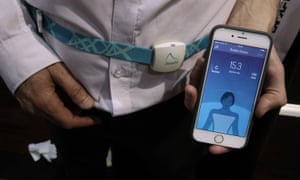
Two green stripes across the chest–sensors which record respiratory rate–provide mother and father or caregivers with modifications in respiratory rate. Potentially signaling breathing issues, this information could be beneficial in management of patients with asthma or even croup. An additional removable turtle shaped device clipped on front enables monitoring of body temperature as effectively as exercise level.


The Mimo Infant is powered by an Intel chip microprocessor created into a dual core Edison Edison Pc, the dimension of an SD card. While the Edison model will ship later this summertime a non-Edison version will be offered following week. The reported cost for 3 onesies and the turtle clip on will be $ 199.00 as a starter kit. A two-pak of onesies will retail for $ 29.00 for sized from to twelve months.


Data from infant Mimo will be offered via a smartphone app on iOS/Android, offering real time info for you or your healthcare provider. While nothing at all could change holding and touching your little one to assess any possible establishing problems, this technologies could surely include further data as an early warning method and new child monitoring system of the potential.


Intel has other novel items in their Nursery item category, which also characteristic Edison chips inside a toy frog recording a baby’s vitals linked to a LED show on a parent’s coffee cup, along with a handy milk warmer that starts heating when the frog–which is also connected–hears the baby cry.


Engineering for mother and father and infants in no longer science fiction!


Technology In The Crib: The Smart Child Onesie

30 Aralık 2013 Pazartesi

OMsignal Delivers Wearable Technology That Captures Your Bio-Data

Wearable technology, along with 3D printing, mobile income, and intelligent cities are just a couple of of the tech trends for 2014 and the coming years.


A new Canadian firm, OMsignal has produced a bio sensor shirt they hope will change how people get fit, keep wholesome and support usher in the era linked devices in our lives.


OMSignal’s Co-founder and CEO, Stephane Marceau says that in 1o years, you won’t even ask and assume the bra or underwear you get to be bio-sensing and will assist you live a fitter, more healthy and happier lifestyle.


Above time, sensors will be embedded into the fibres themselves, and this means you will have at any minute hundreds of thousands of men and women bio-streaming their physiological information into the cloud as they go about their each day lives.  This dwell pool biological signal in real existence in no way existed in recorded background. I hope that connected clothes will be like electricity in ten many years – Stephane Marceau, Co-Founder and CEO, OMsignal.


The OmSignal Bio-Sensing shirt

The OmSignal Bio-Sensing shirt


And Marceau’s new shirt does a great deal of things.  First, it looks great. Second, it’s a compression garment — which means it can activate blood circulation, enhances efficiency and aids muscle groups recover faster. 2nd, it adapts to your physique form and moves like you move and it has the traditional sports gear attributes of odor management and wicks away moisture. And, you can wash it in your washing machine. Neat correct?


The embedded sensors in the shirt, which you can not even see, monitor your heart fee, breathing and activity whilst the OMsignal app shows your bio-data in true-time on your mobile telephone.


Marceau says the sensors in the OMsignal shirt capture the ABC’s of wellness and wellness — activity, breathing and cardiac.


“The shirt or bra itself is the sensor: we capture signals from the heart through conductive yarn, inserted in the shirt at the appropriate spot to get good signal,” adds Marceau.


The shirt is also actually active. All of  your customized bio information is getting captured even when you’re away from your mobile phone — with a battery existence of up to three-five days it connects to your phone by way of Bluetooth.


The crew at OMsignal is as special as the shirt. Comprised of doctors, surgeons, textile designers, style designers, computer software and UX engineers and bio-engagement scientists. Yes, you heard that correct.


To make the OMsignal shirt, a bio-engagement scientist like Pascal Fortier, who also has a Ph.D. in Neuroscience and a biology background, needs to harness the biological signal of the individual sporting the shirt. These are signals emitted by the human body are topic to infinite artifacts in genuine lifestyle.


“Our scientists create resources to measure and optimize that signal,” says Marceau. “They function with the textile/fashion team to make sure the building of our garments delivers a great biological signal.”


With the kick off of the Human Brain Project and other academic initiatives attempting to recognize the brain and the data it can approach, Neuroscience has become the topic du jour.


Fortier’s work is to understand what the physique has to say about its state and how to pay attention to it. He works closely with the textile group to increase signal recording from the body and filter the meaningful data from the noise of lifestyle.


“Neuroscience is certainly a sizzling subject these days, but we’re about to get sensible understanding about what the brain has to say straight and we’ll have the technologies to uncover that means out of it. But the way we’ll pay attention to it could simply be wearable,” adds Fortier. “OMsignal is the closest you will find and this is what attracts me in my work as a bio-engagement scientist here.”


Dr. Jesse Slade Schantz, OMsignal’s Chief Health care Officer, is also a practicing surgeon. So why is a surgeon involved in wearables?


“I believe that MRIs and other imaging modalities are fantastic for hunting at anatomy. Questionnaires allow the crude capacity to inform if a treatment method has made a variation in a patient’s ailment, but inquire common queries,” said Schantz. “A clinic visit has usually struck me as inefficient in getting to the heart of a patient’s difficulty. What we’re missing in medication is an objective, precise way for patients to tell us their illness story. I think wearables are part of that missing hyperlink.”


OMsignal Delivers Wearable Technology That Captures Your Bio-Data