Philip etiketine sahip kayıtlar gösteriliyor. Tüm kayıtları göster

29 Kasım 2016 Salı

Tory MPs press Philip Hammond over NHS and social care

Philip Hammond, the chancellor, is coming under mounting pressure from Tory MPs to bring forward help for the NHS and social care services, amid dire warnings that council budget cuts are causing unsustainable problems.


A string of Conservatives have begun to express dismay that Hammond did not address the issue in his autumn statement. Their voices add to the senior doctors, council leaders from all parties, two Tory former health secretaries and the Labour frontbench, who are warning that increasingly hospitals are unable to discharge elderly patients as struggling social care services are not able to make appropriate arrangements.


Among those raising concerns about a crisis are Dr Andrew Murrison, a Tory former minister, who said on Monday that Hammond’s decision to miss out mention of healthcare in autumn the statement was “strange”.


“Ministers should be in no doubt of the impending financial crisis or of the demands likely to come from people like me to deal with the shortfall in cash going into our NHS. If this requires tax rises, so be it,” he said in a statement, suggesting it should be accompanied by an end to the triple-lock on pensions to ease the burden on working people.


Kit Malthouse, a Tory MP for North West Hampshire, warned that pressure was building on Hammond to ease the difficulties facing councils and the NHS.


“MPs across the House are raising this as an issue,” he told the BBC’s Westminster Hour. “The frustration for me, having worked in local government, was that health and social care, putting the two together and getting them to coordinate, has been the holy grail for such a long time and yet still, in large parts of the country, they haven’t got their act together.”


Another to raise concerns is Sir Hugo Swire, a Conservative former minister and East Devon MP, who wrote to Hammond before the autumn statement asking for more resources for social care.


“As it stands at the moment, with council budgets for social care falling behind demand by £5bn nationally, I am concerned that the loss of hospital beds will not be compensated by the social care system, resulting in an overall and unacceptable loss of healthcare provision,” he said in his letter to the chancellor.


“In my opinion, the only answer to this complex issue is an increase in the social care budget which would not only be good for patients but, ultimately, reduce the pressure on the NHS budget.”


The Treasury points to an extra £3.5bn of social care funding for councils by 2020 and ability to charge a 2% precept. A HM Treasury spokesperson said: “The government has committed to increase NHS funding by £10bn above inflation by 2020/21, going beyond what the NHS requested. In addition, we have given local councils £3.5bn extra funding by 2020 for social care. Many councils are already providing high-quality social care services within existing budgets.”


However, critics say this barely covers the extra salary cost of the higher minimum wage and Tory MPs are privately warning that the government could face unrest similar to the tax credit rebellion if more cash is not brought forward to deal with immediate shortcomings in provision.


Chancellor wrong on social care funding, says former health secretary

It is understood other Tory MPs who represent areas with high proportions of older voters have registered their alarm with the chancellor, especially as councils with few working-age residents are unlikely to be helped by the devolution of business rates.


In the House of Commons on Monday, Peter Bone, a Conservative rightwinger and MP for Wellingborough, called for cross-party talks to solve the problems with social care provision.


“Social care should not be a party political matter, and there are concerns on both sides of the House,” he said. “Would it not be a good idea if the government worked with the opposition to see whether we could agree on a way forward so that social care progresses satisfactorily?”


Martin Vickers, Tory MP for Cleethorpes, said he did not agree with those criticising Hammond but would like to see the problems urgently addressed.


“The Departments of Health and Local Government and all those involved do recognise the problems. I’ve spoken to ministers. Yes I’m concerned and yes I’m making the point to ministers at every opportunity. But am I part of a revolt? Not at this stage.


“The government’s official position is they have given the councils a 2% precept on council tax and to some extent that is cumulative but council leaders will repeatedly tell you that is not bridging the gap. So clearly there have got to be further negotiations.


“The joined-up working that we hear so much about is part of the package but that takes time to come together and the pressures are there now. So it may well be at some time there has to be an emergency top-up.”


Dr Dan Poulter, a Tory MP who has previously called for a new tax to help the NHS and social care, said the issue was causing a mounting unease on the Conservative benches, as they begin to get complaints from their local councils and constituents.


“Over the past six months there has been a growing feeling among Conservative colleagues that the health and care system is running into severe difficulties and that more money and a big intervention from government is becoming increasingly pressing and necessary,” he said.


“As the reality of an ageing population being cared for by a social care system that has seen a reduction in funding over the past five or six years begins to bite there is going to be an urgent need for the government to take action and not just look at providing a one- or two-year bung of extra money but providing a long-term funding solution for maintaining a health and care system that is free at the point of need.”


Previous warnings about the problems facing NHS and social care funding have been sounded by Sarah Wollaston, the Conservative chair of the health committee. She said there was now an urgent need for immediate cross-party talks on NHS funding and the difficulties for people in accessing social care.


“I’m very very concerned not only about what I’m seeing on the ground in my own constituency but what I’m hearing in my capacity as health committee chair,” she said. “If there are more MPs finally prepared to say this absolutely has to be dealt with I am very pleased.


“Personally I think we need a cross-party agreement just like we did with pensions. This is going to be a problem for whoever is in government. It is time to just get away from this as a political squabble.”


Tory MPs press Philip Hammond over NHS and social care

11 Eylül 2016 Pazar

Philip Kingsley obituary

Philip Kingsley, who has died aged 86, began his career sweeping hair from the floor of a Bethnal Green salon, and broke through the shame barrier around thin or limp locks in both sexes to become the senior trichologist for celebrities and the beauty business. Kingsley took hair, and its effect on confidence, seriously, and made of his affinity with it a considerable business in the form of clinics, products and a waffle-free manual, The Hair Bible (2003).


He was candid that his lifelong interest went back to his apprenticeship in his uncle’s shop, which he began just out of school at 14, in 1944, as he needed to earn to help his East End rag-trade family: his father, Barney, a tailor, mother, Dora, a seamstress, and siblings. Women on war work had money to spend on their appearance, but hat materials were unavailable, so many paid instead for perms and dos to make the most of their hair. Contemporary chemicals were brutal – ammonia for perms, hydrogen peroxide for lightening: there were no conditioners, styling preparations or emollients for shine. Even basic shampoo was hard to come by, and generic since there was no textural classification of hair (he later codified this).


Kingsley had wanted to be a doctor, but could not afford the years of education, so he saved to take a correspondence course with the Institute of Trichologists, studying scalp dermatology and hair cycles. He qualified in 1953, and improvised treatments in a side-room in a Mayfair salon. (As a boy, he had dialled phone numbers beginning with the letters MAY, just to hear how the one per cent talked.)


When Kingsley had enough clients to open his own clinic in 1957, his first move was to a room off Baker Street, among denture-fitters and orthopaedic cobblers. Over the next decade he migrated to permanent premises in Green Street, Mayfair. He reluctantly opened his Fifth Avenue, New York, clinic in 1977, at the request of American celebrity clients.


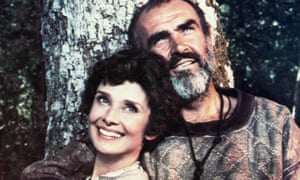
Audrey Hepburn and Sean Connery in Robin and Marian, 1975.


Audrey Hepburn and Sean Connery in Robin and Marian, 1975. Photograph: SNAP/Rex Features

Kingsley was honest (even to Laurence Olivier, an early patron who forwarded him actors from his new National Theatre company) that male-pattern baldness was genetically pre-determined, as was a rarer, related, female condition. Otherwise he insisted that all hair could be much improved through diet and kind care – many women treated its living growth more carelessly, even cruelly, than they would ever do their clothes.


Hats had ceased to be daily wear by the mid-1960s, and the fashion began, and continues, for extreme length, volume and shine in women’s hair. Movie and fashion beauties had a hard time complying with this, because studio lights, and aggressive styling punished their hair; Kingsley’s most successful product, Elasticizer, was first formulated especially for Audrey Hepburn (she had booked to see him under her married name; he wasn’t quite sure he recognised her), to stop her hair breaking after over-colouring and teasing on the set of Robin and Marian in 1975. Kingsley was a longstanding driver of the change that made “health and beauty” a major subdivision of fashion culture, no longer discreetly hidden. Jean Shrimpton, Jane Fonda, Cate Blanchett, Gwyneth Paltrow, Victoria Beckham and many others publicly acknowledged his services.


Kingsley formalised his products into a retail line in 1983. He was protective of its quality, reclaiming the licence to produce it from Eli Lilly in 1987, and later from another corporate buyer, and was involved in its tests to the last. He claimed to have told a journalist about “bad hair days” around 1960 – he certainly established the close link between hair condition and psychology – although the first recorded public use of the phrase dates from 1992.


He is survived by his wife, Joan, their daughters, Anabel and Kate, and his daughters Sue and Helen from an earlier marriage.


Philip Kingsley, trichologist, born 4 June 4 1930; died 4 September 2016


Philip Kingsley obituary

15 Haziran 2014 Pazar

Experimenting with a new Spanish flu is everybody"s organization | Philip Ball

spansih flu 1918

A Spanish flu ward at Fort Riley, Kansas, in 1918. Reseachers insist that the ‘only way to guard towards another deadly outbreak is to produce viruses very related to these responsible’. Photograph: AP


There may possibly be a fatal tumour in your brain. The only way we’ll know is if I cut it open – but there is a possibility that may possibly destroy you. Shall I go ahead?


We’ve just been confronted with a question a bit like this by scientists at the University of Wisconsin-Madison. They insist the only way to guard towards the outbreak of a deadly flu epidemic like the Spanish flu of 1918 (pictured right) is to produce viruses really equivalent to those accountable. Not to review them in the wild, mind, but to actively engineer from bird flu genes a strain that can pass in airborne droplets from one animal – or possibly species – to another. Certain, it is hazardous. But what about the chance of carrying out absolutely nothing?


So – should they go ahead?


Not in accordance to Sir Robert May, one of the world’s most respected epidemiologists. Publicly he has called the work “completely crazy”, and offered May’s status for directness his private viewpoint is likely to be much less polite. He’s not alone. Other researchers have challenged the claims of the Wisconsin group that their operate is the only way to find out how to fight a lethal flu outbreak properly, and that the experiments have been deemed needed and protected by authorities. May possibly even suggests that the group efficiently hoodwinked the US Nationwide Institutes of Health into granting approval and funding.


Investigation on pathogens, particularly viruses, has turn into increasingly disputatious more than the previous decade. In 2002 a team at the State University of New York ordered pieces of synthetic DNA through the mail, from which they pasted with each other the genome of the polio virus. They then “booted it up” to infect mice, explaining that the operate had been done to highlight the danger of how simple it was. Other individuals accused the staff of an irresponsible publicity stunt. The Wisconsin group, led by the virologist Yoshihiro Kawaoka, courted controversy in 2012 when it produced a mutant strain of H5N1 bird flu that could spread between mammals. Its final results, and comparable ones from a staff in the Netherlands, have been deemed also dangerous to publish by a US biosecurity panel that feared what bioterrorists may possibly do with them.


In one particular sense we have been here just before. Investigation often carries risks, no matter whether of intentional misuse or accidents. The discovery of nuclear vitality in the early 20th century, and of how to release it by way of nuclear fission in 1938, were arguably examples of “pure” research with perilous applications that nonetheless loom apocalyptically right now. The frequent response of scientists is that this kind of is the inevitable price of new information.


But the dangers of biotechnology, genetics and synthetic biology are anything new. For centuries we struggled to keep nasty microorganisms at bay. Even the discovery of antibiotics gave us no protection from viruses, and the emergence of HIV was a bitter reminder of that. But with the arrival of genetic manipulation in the 1970s, nature was no longer an inscrutable menace warded off with trial-and-error potions: we could fight back at the genetic degree.


This new signifies of intervention brought a new way to foul up. Synthetic biology promises to consider the battle to the up coming level: to move beyond tinkering with this or that resistance gene, say, and to enable total-scale engineering and layout of existence. We can consider our nemeses apart and rebuild them from scratch.


Yet we arrive at this point fairly unprepared to deal with the moral dilemmas. The heated nature of the present debate signifies as a lot: scientists have by no means been averse to shouting at every single other about the interpretation of their benefits, but it is uncommon to see them so passionately opposed on the question of whether or not a piece of research ought to be carried out in the first spot. If even prime specialists can’t agree, what is to be carried out?


Physical scientists are typically faced with questions that can not be answered experimentally not, on the complete, simply because the experiments are too unsafe – but because they are as well challenging. Their normal response is to figure out what need to come about in concept, and then see if the predictions can be examined in much more accessible, less complicated approaches. But in biology it is significantly, a lot more difficult to make trustworthy theoretical predictions (or any predictions at all), because living items are so damned challenging.


We’re getting there, nevertheless, as witnessed by the advancement of computer designs of human physiology and biochemistry for drug testing. It really is not too much to hope that one day medication might be made and securely trialled practically wholly on the computer, with no the need for controversial animal tests or pricey human trials. Other designs may be sufficient for knowing viruses, which are following all the simplest organisms identified. One particular purpose why some researchers argue that remaining smallpox stocks be destroyed is that the reside virus is no longer required for research – its genome sequence is sufficient. Looked at this way, generating hair-raisingly lethal viruses to comprehend their behaviour displays our lamentable ignorance of the theoretical rules involved.


There could be techniques to make experiments safer too. Faced with fears about the quasi-artificial life kinds they are beginning to generate, synthetic biologists say that it must be achievable to create in safety measures – for example, so that the organisms can only survive on a nutrient unavailable in the wild, or will self-destruct following a couple of rounds of replication. These are not fantasies, despite the fact that they raise questions both about whether such fail-secure methods give natural variety even more urgency to evade them – and regardless of whether there is a false protection in the whole engineering paradigm when applied to biology.


All the very same, the concerns raised by flu study cannot be defused with technofixes alone. Fail to remember the new Longitude prize – here is a location exactly where science truly does require to be democratic. A single thing you can say for positive about the question posed at the outset is that the patient must have a say. If scientists are going to consider these hazards for our sake, as they declare, then we had far better be asked for our approval. It truly is in our interests to guarantee that our determination is informed and not kneejerk, and the appropriate democratic machinery needs cautious construction. But the consent must be ours to give.


Experimenting with a new Spanish flu is everybody"s organization | Philip Ball

21 Mayıs 2014 Çarşamba

Prince Philip tells household preparing clinic personnel: "At least you happen to be legitimate"


It is the third time in 45 years Prince Philip, famed for his playful sense of humour, has opened the sexual health centre, as it has moved house 3 occasions since its founding in 1969.


Claire Murdoch, chief executive of the Central North West London NHS Basis Trust which runs the centre, thanked the Prince for attending.


She mentioned: “It’s to be admired that your Royal Highness supported our function when it was a lot more controversial and ground-breaking.


“This tends to make your return these days all the a lot more impressive and appreciated.”


The centre, which is visited by about 750 people a week, gives family members planning advice and help as nicely as supplying gynaecological care at Holloway Prison and working with younger men and women, homeless women and intercourse workers.


Prince Philip tells household preparing clinic personnel: "At least you happen to be legitimate"

23 Şubat 2014 Pazar

7 Guidelines From Philip Seymour Hoffman, Gandolfini, & Other Celeb Estates

Storied estates can be salacious (Anna Nicole Smith) or amusing (Leona Helmsley’s $ 12M believe in for her dog Trouble), but most are boring. However sudden celebrity deaths like Philip Seymour Hoffman’s at 46 spark debate and impart lessons. Ditto from James Gandolfini, Amy Winehouse, Heath Ledger, and other individuals.


Although Mr. Hoffman had 3 young children with Marianne O’Donnell, they were unmarried. Plus, he described only one little one in his will, not 3. Amy Winehouse did not even have a will, so we really don’t know what she would have needed. Beneath the law, her parents inherited whilst her ex-husband got practically nothing.


Heath Ledger’s five 12 months old will gave his mothers and fathers and three sisters his $ 20M estate, failing to mention Michelle Williams or their child. And following Mr. Gandolfini died at 51, reviews said his will clumsily sent $ 30M of his $ 70M to the IRS. The stories should make tax advisers go to the mattresses.


Philip Seymour HoffmanCrucial lessons?


1. Hold It Personal. Exceptionally, Hoffman, Ledger and Gandolfini, all ended up with wills in probate. Probate is public, expensive, time consuming and pointless. Like Amy Winehouse, It is worse not to even have a will (after dying with out one particular, singer John Denver’s family spent six years in court).


But a will nonetheless has to go by way of the courts. For extremely small income, a revocable trust disposes of your assets outdoors court. You even now do a simple pour-over will. It offers every thing to the revocable trust. Straightforward and confidential. 


2. Mention Everybody. Update wills and revocable trusts for big events like births. Mr. Hoffman’s will pointed out son Cooper, but not two daughters born later on. Mr. Ledger did not mention Ms. Williams or their daughter. If you are slow to update your will/trust, make sure it has good drafting. Most wills say “or other children I may have” to cover later on births. Hoffman’s and Ledger’s didn’t.


3. Marriage Issues. Mr. Hoffman gave his $ 35M estate to Marianne O’Donnell but they weren’t married, and marriage saves taxes. You can give an unlimited amount to your husband or wife tax-free of charge for the duration of lifestyle or on death. Mr. Ledger’s will gave his mothers and fathers and 3 sisters his $ 20M estate, but they generously disclaimed it so his daughter Matilda inherited it.


Nonetheless, with no spousal gifts, it’s taxable. Similarly, Marianne O’Donnell gets Mr. Hoffman’s total estate, but because they have been unmarried, taxes devour $ 15M. If they had been married, it would be tax-cost-free. Any legal marriage saves present and estate taxes, a single of several motives the legitimacy of gay marriage is so critical.


four. Believe Taxes, But Not Very first. Marriage isn’t only about taxes estate organizing is not either. Don’t pay taxes unnecessarily, but you want assets to go as you want. Mr. Gandolfini was criticized for paying out tax, but if he needed his sister to obtain a massive share, taxes may be inevitable.


five. Make Tax Productive Transfers. Mr. Gandolfini was criticized for leaving 80% of his estate to his sisters and his 9-month-previous daughter, creating 80% of the estate taxed. But occasionally you can do what you want and conserve taxes. Mr. Gandolfini took some tax-efficient actions. His teenage son obtained $ 7M in lifestyle insurance proceeds through an irrevocable existence insurance trust, a tax effective transfer. No estate tax there.


six. Contemplate Children’s Ages Carefully. Several with younger youngsters think they will be ready to get and handle assets at age 21, 25, or 30. Typically, we revise our expectations over time as they mature (or really do not). But be cautious. Mr. Gandolfini’s child daughter is to obtain important assets at 21.


7. Beware Foreign Law. Assets and life abroad are complicated. Mr. Gandolfini’s will gave his Italian property to his son and daughter, but foreign law frequently reserves a share for the spouse. Mr. Ledger’s death raised foreign troubles as well, because he was Australian but lived in New York. Domicile counts for applicable law and for taxes.


In fact, getting a U.S. green card—which makes you a long lasting resident for revenue tax purposes—does not automatically suggest you are a U.S. domiciliary for estate tax purposes. Anybody with home or presence in several nations must be mindful and get some guidance.


You can attain me at Wood@WoodLLP.com. This discussion is not meant as legal tips, and can’t be relied on for any goal with out the solutions of a qualified expert.


7 Guidelines From Philip Seymour Hoffman, Gandolfini, & Other Celeb Estates

6 Şubat 2014 Perşembe

DNP: the return of a deadly excess weight-reduction drug | Philip Strange

4 deaths in the United kingdom and up to 60 worldwide have recently been attributed to the substance two,4 – dinitrophenol (DNP). DNP is an industrial chemical but has grow to be common amongst men and women wanting to drop weight, such as bodybuilders and folks with consuming ailments.


The dangers of DNP were even raised in the Property of Commons where David Cameron agreed to see what actions could be taken to shield people. DNP is not, even so, a new substance and its deadly results have been identified for nearly a century. Its background need to convince any individual considering taking the drug that this is a very risky company.


DNP emerges as a bodyweight-reduction drug


DNP was first used on an industrial scale in French munitions factories for the duration of the Initial Globe War when it was mixed with picric acid to make explosives. The experiences of workers exposed to DNP highlighted each its likely and its risks. They misplaced bodyweight, they felt fatigue, sweated excessively and exhibited elevated entire body temperature. Several deaths occurred prior to security measures were introduced.


These observations led Tainter and Cutting at Stanford University to review the effects of DNP and in 1933, they reported that, in individuals taking the chemical, metabolic process was stimulated by 50%. Fat and carbohydrate stores have been broken down leading to weight loss of up to one.five kg per week without having dietary restriction. Though they noticed the potential of DNP therapy for fat reduction, they warned of the unknown dangers of prolonged use and the potential for fatal overheating with substantial doses.


Dropping excess weight with no dieting is, nonetheless, the slimmer’s (and the physician’s) dream. Tainter and Cutting’s observations had been embraced enthusiastically and inside a 12 months up to 20 wholesale drug companies have been marketing DNP and as a lot of as one hundred,000 folks had taken DNP in the US alone. Numerous of the revenue occurred by means of drug stores with no prescription or supervision.


At initial it seemed that the drug was relatively safe but as much more individuals took DNP and for longer periods, a lot of side results had been reported like skin lesions and an epidemic of “dinitrophenol cataracts”. Some deaths occurred such as one particular man who overdosed and “literally cooked to death” with a temperature of 43.3o C. In 1938, DNP was designated as “extremely hazardous and not match for human consumption” and its use ceased.


How does DNP function?


In 1948, Harvard biochemists, Loomis and Lipmann, showed that DNP disrupted vitality generation in cells. Typically, the vitality necessary for driving the multitude of processes that occurs in cells comes from the oxidation of meals (unwanted fat and carbohydrate). In the presence of DNP, unwanted fat and carbohydrate in meals are broken down but manufacturing of helpful energy for cells is impaired and is as an alternative released as heat. As a consequence, entire body reserves of unwanted fat and carbohydrate are mobilised and fat is lost.


DNP rears its deadly head again


In the 1960s, Russian-born doctor, Nicholas Bachynsky, learnt of the effects of DNP while translating Russian health-related journals for the US government. The Russians had utilized DNP to preserve soldiers warm in winter with the main side effect being fat loss. In the early 1980s Bachynsky utilized this knowledge to set up clinics across the southern US marketing a bodyweight reduction treatment underpinned by DNP. Bodyweight loss of up to 7 kg a week was claimed with the only side impact getting elevated physique temperature. About 14,000 individuals enrolled on the programme and Bachynsky became very rich.


Complaints about the side effects of the treatment method commenced to accumulate at the FDA. Legal action was begun towards Bachynsky on the basis that he was employing a drug that had not been accredited and in 1986, an injunction was issued preventing him from employing DNP. In spite of this, he continued treating patients and it was only when he was convicted of insurance coverage fraud that he ended up in prison.


A fateful prison meeting


Prison ought to have witnessed the finish of Bachynsky’s influence but when he was incarcerated he met Dan Duchaine. Duchaine, dubbed the “steroid guru”, was notorious as a promoter of steroids for bodybuilding. He had been jailed for illegally offering these medication and was fascinated to hear Bachynsky’s story of DNP. In the late 1990s, now out of prison, Duchaine promoted DNP to the bodybuilding neighborhood as “the king of the body fat-loss drugs” and a new era of DNP use began.


DNP is now accessible via the web and is being utilised without supervision or regulation. This has some parallels with the circumstance in the 1930s and we are witnessing the very same sorts of problems with reports of overheating and some deaths. The allure of a drug promising fat-reduction without having dieting indicates that sadly, historical past is repeating itself.


DNP: the return of a deadly excess weight-reduction drug | Philip Strange