Loneliness etiketine sahip kayıtlar gösteriliyor. Tüm kayıtları göster

10 Mayıs 2017 Çarşamba

Loneliness among older people: a new epidemic

A weekly phone call or visit from a volunteer are among the solutions to help ease the loneliness epidemic affecting 1.2 million older people in England, according to campaigners.


Age UK, says that 1.2 million older people are chronically lonely and that this has an adverse impact on mental health, and the challenge will increase as our population ages. In the next 20 years, England’s over-85 population is set to rise from nearly
1.3 million people to just under 2.8 million.


Caroline Abrahams, Age UK charity director says: “Loneliness can have an impact on older people’s health and wellbeing. And this is particularly true when it comes to mental health, with older people’s depression often brought on by, or exacerbated by loneliness.”


NHS figures reveal that depression affects around
22% of men and 28% of women aged over 65 in England, but, according to the Royal College of Psychiatrists,
85% of older people with depression receive no NHS help at all. The spotlight on older people initiative – a group of nine older people’s organisations led by the Jo Cox Commission on Loneliness – says that more than half the users of over-50s social networking site Gransnet who say they are lonely have never discussed loneliness with anyone.


But solutions do exist, says Abrahams: “There is no quick fix or single policy solution to eradicate loneliness but there are reasons to hope that we can change things for the better.” An Age UK and Campaign to End Loneliness 2015 report, Promising Approaches to Reducing Loneliness and Isolation in Later Life, reveals good practice. For example, it says interventions involving help with transport or technology “can be the glue that keeps people active and engaged”.


The report highlights successes such as face-to-face or telephone befriending projects, including the Royal Voluntary Service’s Dorset Befriending Service, offering home visits to older people. The project began after a local GP’s concerns that older patients would visit the doctor primarily because they were isolated. Another initiative, The Silver Line, is a 24-hour, free helpline for information and companionship. In addition, British Red Cross community connectors are volunteers who identify and attend local activities with lonely older people.


The Campaign to End Loneliness is developing a national initiative to tackle loneliness through community collaboration. Laura Alcock-Ferguson, the campaign’s director, adds: “At a local level across the UK, health authorities should be developing clear plans to reduce loneliness and social isolation in their local areas.”


Dr Amanda Thompsell, chair of the old age psychiatry faculty at the Royal College of Psychiatrists, says organisations developing support projects must also include older people and carers as well as psychiatrists, GPs, and the social care sector. Thompsell suggests awareness of loneliness could also be incorporated into the school curriculum: “Inter-generational contact has been shown to be particularly effective in combating loneliness and we often forget how much children can learn from older people.”


Ignoring the challenge is not an option, as Thompsell says: “Failure to tackle loneliness will lead to more pressure on services which are already overwhelmed.”


Roy Warman: ‘I met the daughter I never had through a telephone befriending service. It changed my life’
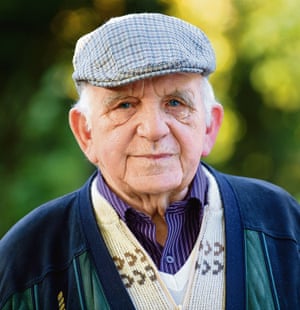


Roy Warman


Warman credits Age UK with helping to turn his life around Photograph: Amanda Searle

Roy Warman’s wife, Phyllis, died in January 2015. Buoyed by well-wishers in the first few weeks of bereavement, the visits and telephone calls gradually dwindled, and he felt increasingly alone. Many of his friends have passed away, he does not have any family nearby and the couple never had children. He explains: “The longer it goes without speaking to someone, the harder it gets.” He describes loneliness as “one of the hardest things that you will encounter in life”, likening feeling low to “living in a void”.


The 84-year-old from Wiltshire spotted information about Age UK in a local magazine a few months after Phyllis’s death. He got in touch and was referred to an Age UK telephone befriending service that matches older people with like-minded volunteers for friendship or phone calls.


He recalls the first time he spoke to a companion on the phone: “It opened a new door. It was so nice to think that someone might listen … a voice at the other end who could sympathise.” Today he has weekly phone calls with a volunteer he describes as “like the daughter I never had” and he also has regular visits from another volunteer as part of Age UK’s face-to-face befriending scheme.


The impact has been extraordinary, says Warman, describing the experience of support as “like being in a desert and coming across an oasis”. He has joined a singing group and developed his IT skills: “I think it partly affected my decision to join a local choir. And Age UK introduced me to the tablet, it’s like a giant library.” Crucially, he senses his self-confidence has returned: “I feel good about myself and feel able to cope now.” SS


Loneliness among older people: a new epidemic

2 Şubat 2017 Perşembe

Tackling loneliness cannot rest with volunteers alone | Janet Morrison

Barely a day goes by without one story or another highlighting the crisis in social care, and flagging the contribution failures in the health service are making to the problem. Added to this are the pressures of an ageing population in which many of the people living for longer are doing so with complex conditions.


The government argues it has taken short term steps to address the crisis, but as yet has offered no suggestion of how it might solve the problem long term.


Independent Age, along with many other charities in the care sector, have long been calling for a cross-party solution to address the crisis in health and social care. We can’t kick this issue into the long grass yet again. As a society we need to ask ourselves, what kind of care we want in later life and how much we are we prepared to pay for it. But the costs involved also beg the question of what role volunteers should have in helping to tackle these issues.


Through our network of volunteers across the UK we offer friendship services to older people who are lonely. Our volunteers provide regular phone calls and visits, enabling older people to feel more connected to their local community and, crucially, helping to reduce loneliness.


A great example of how our work can help is Ron, who is nearly 90. Ron’s wife died a number of years ago, and following a fall at home in which he broke his hip, he very rarely gets out. Ron would go for days on end without speaking to anyone. He now has regular visits from one of our volunteers, Alison, whose employers so value the work she does with Ron that they let her work flexibly so she can visit him.


Crucially, we understand that volunteering is not a one-way street: our volunteers tell us they get as much out of the relationship as the person they visit or call. That might be through the pleasure of a joint interest, or through sharing life stories and experiences. There is evidence that volunteering can bring health benefits for the volunteer too.


Volunteers from across the health and social care sectors are already providing essential services.


There are, however, firm boundaries to the volunteer relationship. We’re clear that it is not the role of our friendship volunteers to offer advice on issues like benefits or accessing care and support (we have an expert helpline for that). And their role mustn’t be confused with the provision of statutory services that are the legal duties of bodies like councils and the NHS.


It’s essential that the boundaries of any volunteering role are clearly understood by the organisation arranging the service, the volunteer providing it and the person receiving it.


That doesn’t mean that volunteers have no role in health and social care though. Many volunteers from across the sector are already providing other essential services: from volunteer-delivered “home from hospital” schemes to lunch clubs and shopping services, driving people to GP and hospital visits, or acting as quality assessors for their local Healthwatch. And let’s not forget the 1.3 million older people who are providing unpaid care [pdf] for their loved ones – recent estimates put the value of informal care provided by older people at £11.4bn a year [pdf].


Up and down the UK, local people are volunteering to provide essential support for health and social care provision. Their contribution must be applauded and recognised as they continue to assist those who need it, now and in the future.


Talk to us on Twitter via @Gdnvoluntary and join our community for your free fortnightly Guardian Voluntary Sector newsletter, with analysis and opinion sent direct to you on the first and third Thursday of the month.


Tackling loneliness cannot rest with volunteers alone | Janet Morrison

13 Kasım 2016 Pazar

How to cope with loneliness | Oliver Burkeman

Loneliness is everywhere in the world of psychology these days – the subject of so many studies, articles and talks that you sometimes wish the loneliness researchers would go away, so you could just get some damn time to yourself. Perhaps you knew that loneliness can be lethal: it’s linked to heart disease, insomnia and depression, and is a better predictor than obesity of an early death.


But the new spin on loneliness is that we ought to welcome it, in modest doses. “As long as we then do what we should do – reconnect with people – then loneliness is a good thing,” the German psychologist Maike Luhmann told the US website Vox. “This is a sign from our psychological systems that there’s something off.” It’s a “biological warning system” that evolved over millennia, alerting us to potentially dangerous levels of isolation. True, isolation isn’t so dangerous today: a friendless Londoner is less likely to starve, or be eaten, than a friendless prehistoric hunter-gatherer. But there’s a reason the pang of loneliness hurts so much.


This notion gets greeted with surprise – loneliness, a good thing? – but the surprising thing is that we ever imagined otherwise. Why would we have developed this response to isolation if it didn’t serve some purpose? (As the psychology writer Melissa Dahl points out, the same can be said for boredom, a warning that you need more meaning in your life, and for anxiety, which helps prepare for potential threats.) This becomes obvious if you consider physical pain. A throbbing ache in your abdomen isn’t pleasant, but it’s a “good thing” if it prompts you to head to the doctor’s and address whatever’s causing it. In programming parlance, pain isn’t a bug; it’s a feature.


If we tend to resist thinking about emotions in this way – as warning bells – that’s probably because it sounds like dispensing blame. Telling lonely people they ought to get out more seems to imply it’s their fault they’re lonely. Likewise, some forms of depression are a rational response to a bad situation you need to address: maybe it’s time to leave a relationship, or confront an inner conflict. But we’d rather not hear that; blaming a “chemical imbalance” seems less daunting. We treat depression as the problem, when it’s often better thought of as a symptom.


The nasty twist in this is that loneliness, like depression, can turn chronic. A vicious circle begins. You come to see your surroundings as hostile – they’re making you feel bad, after all – so you respond to others in unfriendly ways, or avoid contact altogether. (That’s your early warning system on the blink: in Paleolithic times, it might have helped a highly isolated person to be hyper-alert to threats, but not any more.) This kind of loneliness demands a skilful response: you need to heed the warning bell, while not heeding the thoughts to which it gives rise, telling you to pull away. Reach out, even if it feels unappealing. Once again, the analogy with physical pain is helpful. Surgery’s rarely appealing, either, but sometimes it’s exactly what you need.


oliver.burkeman@theguardian.com


How to cope with loneliness | Oliver Burkeman

12 Ekim 2016 Çarşamba

Neoliberalism is creating loneliness. That’s what’s wrenching society apart | George Monbiot

What greater indictment of a system could there be than an epidemic of mental illness? Yet plagues of anxiety, stress, depression, social phobia, eating disorders, self-harm and loneliness now strike people down all over the world. The latest, catastrophic figures for children’s mental health in England reflect a global crisis.


There are plenty of secondary reasons for this distress, but it seems to me that the underlying cause is everywhere the same: human beings, the ultrasocial mammals, whose brains are wired to respond to other people, are being peeled apart. Economic and technological change play a major role, but so does ideology. Though our wellbeing is inextricably linked to the lives of others, everywhere we are told that we will prosper through competitive self-interest and extreme individualism.


In Britain, men who have spent their entire lives in quadrangles – at school, at college, at the bar, in parliament – instruct us to stand on our own two feet. The education system becomes more brutally competitive by the year. Employment is a fight to the near-death with a multitude of other desperate people chasing ever fewer jobs. The modern overseers of the poor ascribe individual blame to economic circumstance. Endless competitions on television feed impossible aspirations as real opportunities contract.


Consumerism fills the social void. But far from curing the disease of isolation, it intensifies social comparison to the point at which, having consumed all else, we start to prey upon ourselves. Social media brings us together and drives us apart, allowing us precisely to quantify our social standing, and to see that other people have more friends and followers than we do.


As Rhiannon Lucy Cosslett has brilliantly documented, girls and young women routinely alter the photos they post to make themselves look smoother and slimmer. Some phones, using their “beauty” settings, do it for you without asking; now you can become your own thinspiration. Welcome to the post-Hobbesian dystopia: a war of everyone against themselves.


Social media brings us together and drives us apart, allowing us precisely to quantify our social standing


Is it any wonder, in these lonely inner worlds, in which touching has been replaced by retouching, that young women are drowning in mental distress? A recent survey in England suggests that one in four women between 16 and 24 have harmed themselves, and one in eight now suffer from post-traumatic stress disorder. Anxiety, depression, phobias or obsessive compulsive disorder affect 26% of women in this age group. This is what a public health crisis looks like.


If social rupture is not treated as seriously as broken limbs, it is because we cannot see it. But neuroscientists can. A series of fascinating papers suggest that social pain and physical pain are processed by the same neural circuits. This might explain why, in many languages, it is hard to describe the impact of breaking social bonds without the words we use to denote physical pain and injury. In both humans and other social mammals, social contact reduces physical pain. This is why we hug our children when they hurt themselves: affection is a powerful analgesic. Opioids relieve both physical agony and the distress of separation. Perhaps this explains the link between social isolation and drug addiction.


Experiments summarised in the journal Physiology & Behaviour last month suggest that, given a choice of physical pain or isolation, social mammals will choose the former. Capuchin monkeys starved of both food and contact for 22 hours will rejoin their companions before eating. Children who experience emotional neglect, according to some findings, suffer worse mental health consequences than children suffering both emotional neglect and physical abuse: hideous as it is, violence involves attention and contact. Self-harm is often used as an attempt to alleviate distress: another indication that physical pain is not as bad as emotional pain. As the prison system knows only too well, one of the most effective forms of torture is solitary confinement.


It is not hard to see what the evolutionary reasons for social pain might be. Survival among social mammals is greatly enhanced when they are strongly bonded with the rest of the pack. It is the isolated and marginalised animals that are most likely to be picked off by predators, or to starve. Just as physical pain protects us from physical injury, emotional pain protects us from social injury. It drives us to reconnect. But many people find this almost impossible.


It’s unsurprising that social isolation is strongly associated with depression, suicide, anxiety, insomnia, fear and the perception of threat. It’s more surprising to discover the range of physical illnesses it causes or exacerbates. Dementia, high blood pressure, heart disease, strokes, lowered resistance to viruses, even accidents are more common among chronically lonely people. Loneliness has a comparable impact on physical health to smoking 15 cigarettes a day: it appears to raise the risk of early death by 26%. This is partly because it enhances production of the stress hormone cortisol, which suppresses the immune system.


Studies in both animals and humans suggest a reason for comfort eating: isolation reduces impulse control, leading to obesity. As those at the bottom of the socioeconomic ladder are the most likely to suffer from loneliness, might this provide one of the explanations for the strong link between low economic status and obesity?


Anyone can see that something far more important than most of the issues we fret about has gone wrong. So why are we engaging in this world-eating, self-consuming frenzy of environmental destruction and social dislocation, if all it produces is unbearable pain? Should this question not burn the lips of everyone in public life?


There are some wonderful charities doing what they can to fight this tide, some of which I am going to be working with as part of my loneliness project. But for every person they reach, several others are swept past.


This does not require a policy response. It requires something much bigger: the reappraisal of an entire worldview. Of all the fantasies human beings entertain, the idea that we can go it alone is the most absurd and perhaps the most dangerous. We stand together or we fall apart.


Neoliberalism is creating loneliness. That’s what’s wrenching society apart | George Monbiot

20 Eylül 2016 Salı

Loneliness will be the next great moneyspinner | Emily White

[unable to retrieve full-text content]

Isolation among young people is increasing, spawning a new industry in companionship. Soon paying for walks, dinners and dates will feel normal

Chuck McCarthy, we heard last week, is an LA man who charges a per-mile rate to walk and talk with customers. Billed as a novel form of social interaction, his business is expanding – he now has five assistant walkers – and the service he offers is part of an emerging trend. Like others in what might be called the companionship industry, McCarthy is packaging up social connection into something we can buy.


Related: ‘We need human interaction’: meet the LA man who walks people for a living


Related: A literary cure for loneliness


Continue reading…


Loneliness will be the next great moneyspinner | Emily White

12 Ağustos 2016 Cuma

Think loneliness is about single people looking for love? Think again | Gaby Hinsliff

It’s hard to feel alone inside a long and happy marriage. But it’s easier than it looks, perhaps, to feel lonely. Last week, Italian police officers responding to reports of screaming and crying inside an apartment in Rome found something unexpected behind the door. Jole and Michele were a devoted elderly couple who had ostensibly got themselves worked up over a sad story on the TV news, but some gentle questioning elicited the fact that both were struggling with terrible loneliness. After 70 years of apparently loving marriage they still had each other, and yet that clearly was not enough.


Related: 10 reasons people are lonely? It’s more complicated than that | Sue Bourne


This being Italy, the officers rather charmingly cooked them a meal of spaghetti with butter and parmesan and stayed to chat, before doing the washing up and posting a flowery account on Facebook of how loneliness can suddenly sweep over you “like a summer storm”. The story went viral because it’s so heartwarming, and yet on second reading it’s also rather unsettling. The lonely are not quite the people we think they are.


It will be 20 years ago this summer that the first Bridget Jones novel was published, a timely reminder to ignore the spectacularly awful sequels and remember just how neatly the original skewered some of the myths about lonely singleton life.


Bridget was famously terrified of dying alone and forgotten, but ironically the one thing she wasn’t was lonely: she was riotously surrounded by friends and family, even if they did all keep harping on about her getting a proper boyfriend. It’s smug marrieds who can all too easily collapse in on themselves, severing old friendships they will come to regret in the process. (Anyone who thinks that having a baby means you’ll never feel alone again, meanwhile, has yet to find out how it feels to be home with a howling infant, desperately trying to engage the postman in conversation because he’s the only sentient adult you’ll see for hours.)


It’s all too easy to become consumed by family life and then wake up in middle age, ostensibly at the centre of a rich and busy life, struggling to remember your last meaningful conversation. That feeling may not be loneliness yet, but it’s a first step on the road.


The blunt truth is that not all lonely people are lovable old grannies who tug at your heartstrings


For while the cavernously empty feeling endured by the bereaved or unwillingly single can indeed be a terrible thing, and life-shortening to boot, it’s not the only kind of loneliness. A recent University of California study found that while almost half of its elderly subjects confessed to feeling lonely at times, only 18% of them actually lived alone.


Unhappy marriages, atrophying into long silences and separate lives, might have something to do with that, but the story of Jole and Michele suggests something else: a distinct kind of loneliness stemming not from the absence of significant others but from a feeling of disconnection with the wider world, a sense that you’re no longer part of something shared and human. Is it just a coincidence that the Italian couple’s crisis seems to have been provoked by a run of news stories – violent attacks, abuse at a kindergarten – revealing human nature at its coldest?


Fleeting loneliness comes to all of us occasionally, but it solidifies into something deeper and darker for those who start to perceive the world as a harsh and hostile place, one that wouldn’t welcome efforts to connect even if you try. It’s that nagging feeling of rejection, of not belonging or standing somehow apart from others, that is the true hallmark of feeling lonely in a crowd, and it’s by no means the preserve of the old.


Interestingly, a recent Brunel University study of over-50s found more than half of those identifying themselves as lonely had been that way for over 10 years, suggesting the feeling had become part of the fabric of their lives. (The same study, by the way, found levels of loneliness had barely changed since the second world war; so much for the idea of a modern epidemic, caused by fragmenting and hectic modern family lives.)


Related: The future of loneliness | Olivia Laing


So perhaps it’s not so surprising that this week’s obituaries of the fabulously wealthy Duke of Westminster, a father of four, should describe him as “lonely”. Immense wealth can of course be isolating – although the money clearly didn’t make the duke unhappy enough to get rid of it, or indeed to eschew the family tradition of minimising inheritance tax liabilities – but in Gerald Grosvenor’s case something else seems to be going on. What emerges is a picture of a man struggling all his life with feelings of inadequacy and anxiety, worried that he had done nothing to live up to the reputation of those ancestors who built his unearned fortune. Bullied at school, he reportedly left Harrow without one proper friend.


And if you can’t bring yourself to feel sorry for a billionaire, the blunt truth is that not all lonely people are lovable old grannies who tug at your heartstrings. An unhappy few have pushed others away with their self-destructive behaviour and are now paying a high price for it; some have struggled bitterly all their lives with the art of making friends, never quite mastering social norms. How much of the late-night bile spewed on social media simply reflects the envy and frustration of those who see other people happily connecting all around them and just don’t quite know how to join in? Loneliness has its dark side, one not so easily solved by more visits from the grandchildren or well-meaning volunteer “befrienders” popping in for chats over coffee.


For Jole and Michele, at least, perhaps there will be a happy ending. Now their story has been made public, perhaps surviving relatives or old friends will rally round, and if nothing else the knowledge that strangers worldwide are now asking how they can send letters or visit must do something to restore their faith in human nature.


Yet while a little kindness goes a very long way, it’s too easy to pretend loneliness can all be solved by a few more companionable plates of spaghetti. It makes for a less heartwarming story but the truth is that, like the poor, the lonely may to some degree always be with us – even, perhaps, when they’re ostensibly with someone else.


Italian police with a lonely older couple


Police officers serve pasta to Jole and Michele, a lonely older couple, in Rome, August 2016. Photograph: Italian police photo/AP


Think loneliness is about single people looking for love? Think again | Gaby Hinsliff

15 Temmuz 2014 Salı

What can public support managers do to aid alleviate loneliness? | Omar Khan

The challenge is to ensure that subjective wellbeing and prevention of loneliness is taken seriously

‘The challenge is to guarantee that subjective wellbeing and prevention of loneliness is taken critically in the allocation of scarce sources.’ Photograph: Nikolaenko Viacheslav/Alamy


The 1st phase in responding successfully to loneliness is to comprehend what it is. Loneliness is where the quantity or quality of our relationships isn’t going to match our expectations. This definition signifies the subjective nature of loneliness, but also displays the relevance of social relationships to personal wellbeing.


Loneliness tends to be related with older age, particularly when people retire (social loneliness), get rid of a loved 1 (emotional loneliness), or can no longer entry transport. Public managers in care providers are familiar with the a lot more acute aspects of loneliness, particularly in later age where loneliness correlates with negative well being outcomes.


The website link between subjective wellbeing and wellness is now established, even though we still want more co-ordinated action to react to it properly. The Campaign to End Loneliness is a network of organisations and and individuals, launched in 2011 by 5 partner organisations such as Age Uk Oxfordshire, Independent Age and Manchester city council, to generate circumstances that reduce loneliness in later on life. It has published advice for local authorities and health and wellbeing boards, explaining why loneliness is a difficulty, and what can be completed about it. Numerous of the campaign’s examples concentrate on prevention, and include interventions such as Age-pleasant Manchester and different befriending providers.


Even so we should not view loneliness only in terms of unfavorable wellness outcomes. Local authorities and other public companies must ensure current providers reach these much more at danger of loneliness, and create companies that directly tackle loneliness, ranging from bereavement help to transport providers.


Probably surprisingly, according to analysis by the insurance firm Aviva 18- to 24-year-olds report the most loneliness. This may possibly be explained by the disruption of social ties as they finish school, but also because function environments offer you much less meaningful social interactions for youthful staff.


Other groups additional undermine the standard notion of loneliness. Black and minority ethnic folks normally self-report greater costs of loneliness, even amongst groups perceived to have bigger and closer families, once more suggesting that the quantity of social interactions is not the most essential measure. An additional essential conclusion to be drawn from substantial minority ethnic loneliness is that addressing poverty and inequality could also lessen loneliness.


In a second area, public managers can react to loneliness that their personnel might be going through or to caring that staff are having to undertake outdoors operate as a consequence of a family member or friend who is at danger of loneliness. In the latter situation, public managers require to make versatile functioning a reality, allowing far more sabbaticals or extended depart from operate, even if these are unpaid and extending bereavement leave.


It may possibly be tempting to reply right to loneliness amongst employees by way of team-developing exercises or right after-operate social events. But what truly matters is the quality of relationships, so individuals may not wish to have much more social interaction with colleagues exactly where these interactions are not meaningful sufficient to lessen their loneliness.


The clear well being consequences of loneliness between older individuals and the public services possibilities for addressing it imply the challenge is to guarantee subjective wellbeing (and prevention of loneliness) is taken seriously in the distribution of scarcer assets.


Public managers have to also, nonetheless, recognize the wider knowledge and effects of loneliness across their employees and services customers. Men and women ought to have higher possibility – and time – to create and nurture meaningful social relationships outdoors the workplace with individuals they care about.


• The new Guardian Society Experts internet site for individuals operating in the public solutions is revisiting Beveridge’s 5 giant evils of the welfare state. Loneliness has been identified as 1 of the modern evils facing public providers. Join us tomorrow to debate what society professionals can do to tackle it theguardian.com/society-professionals


What can public support managers do to aid alleviate loneliness? | Omar Khan

28 Mayıs 2014 Çarşamba

Loneliness is not a bug with a technological solution | Ros Coward

Loneliness

‘Anyone who has spent time with elderly people knows the real issues are much more complex.’ Photograph: Paul Doyle/Alamy


In the UK, four out of 10 over-65s do not have internet access. At a time when so much of our lives is conducted online – the payment of bills, access to information – that should be a real source of concern about potential social exclusion.


But does this mean that by widening internet access, elderly people will feel more socially connected? Or, even, more radically, as a new report suggests, could this be a solution for loneliness in old age?


The centre-right Policy Exchange thinktank makes such claims as part of its forthcoming technology manifesto. It recommends £875m should be spent on training the 6.2 million mainly elderly people who are without basic digital skills.


The report claims these skills would provide older people with a way to stay connected to friends and family, and could therefore ease the isolation of those who live alone, while saving many millions for the NHS and in state-subsidised care home places.


Loneliness among the elderly is certainly a massive problem. Recent research by Age UK has shown that one in three older people are plagued by loneliness, and that this has dire effects on their health.


On first sight, claims about the potential benefit of digital connection for the elderly appear to be backed up by research. The International Longevity Centre recently found that 7.5 million adults have never used the internet – most of them elderly, disabled or poor. Of those who had not been online, 63% often felt lonely, compared with just 38% of those who did use the internet.


But these figures, and their policy conclusions, need to be treated with caution – not least because they may lead to money being invested in a technological fix when the answers are more complex and human. Loneliness in old age doesn’t occur just because older people haven’t learned to use the internet (a problem that will increasingly disappear as a more technologically literate generation ages).


Loneliness among the elderly is also to do with poverty and declining health. On the one hand, financial hardship restricts their activities; on the other, it increases frailty – including the loss of mobility, eyesight or memory, all of which undermine confidence when moving around in the wider community.


It is often these other factors that will restrict access to the internet, even for those who might once have been able to use it. To access the internet, you need money, or skilled neighbours and friends, to fix glitches; you need eyesight to read screens and memory to recall passwords.


Those findings that “prove” that the elderly who are digitally connected are also more socially connected require caution. At first sight, they too appear to be common sense. We have only to think of the incredibly energetic 80-year-olds who are internet savvy, regularly emailing their family and friends, and appearing to gain huge benefit. Yet the truth is that these people are often the ones whose health and financial situation would have kept them socially connected and in the centre of their families and communities, with or without the internet.


Anyone who has spent time with elderly people knows the real issues are much more complex. Of course internet use comes into it. But at its core, loneliness among the elderly still has other causes and effects: missing seeing people regularly, missing casual conversations, missing being able to get out and feel safe. What the elderly value is seeing regular friendly faces, having their basic needs taken care of by real human beings, and being able to walk to places where they can still interact with real people.


It is ironic that these reports highlighting how the internet can solve loneliness for the elderly are running in parallel with reports and academic studies warning young people not to mistake social interaction on the internet with friendship.


This week, research from Australia on loneliness among teenagers showed that the “loneliest” were also the most prone to sharing – or “oversharing” – intimate details on the internet. News stories constantly highlight how teenagers who are suicidally unhappy can be extremely active on social media. Indeed, there are suggestions that internet dependency can be linked to social alienation rather than social connection.


None of which is to say that the provision of basic internet skills for the elderly would be anything other than a good thing. On the basis of social justice alone, promoting universal digital competence is to be supported, and there could be very real and immediate benefits. But we shouldn’t elevate it into something it isn’t – the solution to loneliness and a way of keeping elderly people out of care provision for longer.


It’s a means to an end. The end, in this case, is human contact, human warmth, human kindness. A better way to those ends are services designed to bring about that face-to-face human contact, and communities designed to meet the needs of groups of people who are less mobile and able-bodied than they once were but still crave company.


Loneliness is not a bug with a technological solution | Ros Coward

10 Mayıs 2014 Cumartesi

Dementia, loneliness and how we can help | Norman Lamb

Care leave for Grandparents urged

Many elderly people are lonely and dementia makes that worse. Photograph: John Stillwell/PA


It is four o’clock in the morning. A man has been roused from an already fitful sleep by his wife. She is upset and confused. And she has wet the bed. He has to comfort her and change the sheets at the same time. Eventually he is able to return to bed and get a little bit of rest before his wife wakes up again. Then he will face a day of enormous challenges, before the night cycle repeats itself.


He does it because he loves her – and because she still counts. Theirs is not a life devoid of any joy or pleasure. But dementia can be a cruel condition, both for those who have it and for the people who love and care for them.


Yet these two are comparatively lucky, because they have each other. Dementia combined with loneliness is truly devastating. Tragically, it is a situation in which many more people are due to find themselves.


The Campaign to End Loneliness calculates that some 800,000 people in England are chronically lonely. Forty-six per cent of people aged 80 or over report feeling lonely at least some of the time. Meanwhile, one in three people aged over 65 will go on to develop dementia.


And dementia and loneliness already meet all too frequently. The Alzheimer’s Society has found that a third of people with dementia have lost friends. Nearly two-thirds of those with dementia who live by themselves feel lonely. Some 5% of people with the condition have not told friends about their diagnosis. All of this is deeply distressing.


So we need an assault on the twin epidemics of dementia and loneliness. Of course we have to find new ways to manage dementia – and ultimately to cure it. But in the meantime, we must do more to help people cope with it.


Helping people live well with dementia is a big priority for this government and an essential step in creating a fairer society.


But responsibility does not just rest on the shoulders of politicians and health and care professionals. Compassion for others is a moral imperative that none of us should ignore.


That’s why the Alzheimer’s Society’s Dementia Friends programme is so important. It supports people who want better to understand all the implications of the condition. I have gone through the programme and become a Dementia Friend, and it is hugely worthwhile and informative.


Last week saw celebrities and people living with dementia teaming up with the Dementia Friends Campaign to encourage even more of us to sign up. One million are expected to be recruited by 2015.


We are championing dementia-friendly communities, where more of us can learn about dementia – and where people with it are encouraged and helped to lead fulfilling lives. More than 50 cities, towns and villages are already taking local action to become dementia friendly.


All of this should be just the start, the beginning of a massive social movement. If just a fraction of the many millions of Guardian and Observer readers signed up to be a Dementia Friend by visiting www.dementiafriends.org.uk it could have a major and enduring impact. And it would be a fantastic way of helping to overcome our loneliness epidemic.


Just as good neighbours are concerned about crime, so they should be concerned that the people who live in their community are properly looked after.


We all matter, we all need to be loved, and we should all do all we can to look out for others – remembering just how vulnerable and unhappy we would be if we were lonely ourselves.


Norman Lamb is Minister of State for Care and Support


Dementia, loneliness and how we can help | Norman Lamb

Dementia, loneliness and how we can support | Norman Lamb

Care leave for Grandparents urged

Many elderly people are lonely and dementia makes that worse. Photograph: John Stillwell/PA


It is four o’clock in the morning. A man has been roused from an already fitful sleep by his wife. She is upset and confused. And she has wet the bed. He has to comfort her and change the sheets at the same time. Eventually he is able to return to bed and get a little bit of rest before his wife wakes up again. Then he will face a day of enormous challenges, before the night cycle repeats itself.


He does it because he loves her – and because she still counts. Theirs is not a life devoid of any joy or pleasure. But dementia can be a cruel condition, both for those who have it and for the people who love and care for them.


Yet these two are comparatively lucky, because they have each other. Dementia combined with loneliness is truly devastating. Tragically, it is a situation in which many more people are due to find themselves.


The Campaign to End Loneliness calculates that some 800,000 people in England are chronically lonely. Forty-six per cent of people aged 80 or over report feeling lonely at least some of the time. Meanwhile, one in three people aged over 65 will go on to develop dementia.


And dementia and loneliness already meet all too frequently. The Alzheimer’s Society has found that a third of people with dementia have lost friends. Nearly two-thirds of those with dementia who live by themselves feel lonely. Some 5% of people with the condition have not told friends about their diagnosis. All of this is deeply distressing.


So we need an assault on the twin epidemics of dementia and loneliness. Of course we have to find new ways to manage dementia – and ultimately to cure it. But in the meantime, we must do more to help people cope with it.


Helping people live well with dementia is a big priority for this government and an essential step in creating a fairer society.


But responsibility does not just rest on the shoulders of politicians and health and care professionals. Compassion for others is a moral imperative that none of us should ignore.


That’s why the Alzheimer’s Society’s Dementia Friends programme is so important. It supports people who want better to understand all the implications of the condition. I have gone through the programme and become a Dementia Friend, and it is hugely worthwhile and informative.


Last week saw celebrities and people living with dementia teaming up with the Dementia Friends Campaign to encourage even more of us to sign up. One million are expected to be recruited by 2015.


We are championing dementia-friendly communities, where more of us can learn about dementia – and where people with it are encouraged and helped to lead fulfilling lives. More than 50 cities, towns and villages are already taking local action to become dementia friendly.


All of this should be just the start, the beginning of a massive social movement. If just a fraction of the many millions of Guardian and Observer readers signed up to be a Dementia Friend by visiting www.dementiafriends.org.uk it could have a major and enduring impact. And it would be a fantastic way of helping to overcome our loneliness epidemic.


Just as good neighbours are concerned about crime, so they should be concerned that the people who live in their community are properly looked after.


We all matter, we all need to be loved, and we should all do all we can to look out for others – remembering just how vulnerable and unhappy we would be if we were lonely ourselves.


Norman Lamb is Minister of State for Care and Support


Dementia, loneliness and how we can support | Norman Lamb

22 Nisan 2014 Salı

How To Conquer Loneliness

One of the hardest components of being a 20 or thirty-one thing (or just a individual) these days is loneliness.


If you are an entrepreneur you can really feel it at perform, with no a single very understanding what you have to do to keep moving forward and realize success.


If you are single it you can feel it on weekends when you see couples roaming the streets laughing or when you start imagining your potential and have no idea who may build it with you.


People in relationships can also come to feel isolated if issues are not going appropriate. Lying up coming to the wrong man or woman in bed can be the worst kind of loneliness. Or being with a household who doesn’t usually realize you. Or even getting a single puppy owner (And I can only picture how single mothers and fathers should feel) in which everybody loves your puppy but no a single can take on the duty you hold.


Even Dr. Seuss tried to teach kids that these feelings are component of lifestyle, anything they will have to reckon with often. “I’m afraid occasionally you will play lonely games too, video games you can not win simply because you’ll perform towards you,” he wrote. And, “You can get assist from teachers, but you are going to have to understand a lot by oneself, sitting alone in a area.”


But this post is not meant to rehash all the methods millennials come to feel loneliness. I have a trusted advisor – Karen Mason Riss, a psychologist in Memphis, Tennessee (my hometown) – whom I asked to share notions on why men and women feel lonely and what they can do to feel far more at peace. Right here are her thoughts:


Connect with oneself. “Loneliness can be a spiritual issue,” says Riss. “Often times people say they are lonely because they really do not have a spouse or they really don’t have a social network, but truly they feel disconnected. They do not come to feel a part of anything.” One of the crucial ways to deal with this is to connect with oneself. Take a walk but really don’t just search close to – discover how you walk, how you breathe, what excites you, how your mind thinks, what makes you you. You can also compose in your diary, meditate, or keep a record of your dream. “When I felt lonely,” explained Riss. “I would enable myself to get guided to a movie or book that might speak to me. I allow my inner self lead me.”  Do anything that tends to make you much less of a stranger to your self. That way no matter who else is around, you are anchored.


Quit telling oneself stories. I am guilty of this habit – I go outdoors on a beautiful summer day and see spectacular couples reading books on the grass or laughing in excess of wine at cafes. And then my thoughts starts on the identical track: “Everybody is in a romantic relationship but me, and everyone is happy but me, and I have to locate somebody to be like them.” Riss calls this story telling, one thing that can be quite detrimental. “You create stories and you think these stories are genuine. You see the couples and you emphasis on lack and what you need to do is zero in on what you have. The resolution: Surround yourself with options available to you. Possibly you don’t have a boyfriend, but you have a close group of buddies. Organize a picnic with them. Perhaps you are an excellent volleyball player. So go perform volleyball. And along the way you will surprise your self by connecting with other individuals who possess the very same possibilities as you.


Fill a hole in other people’s lives. In addition to connecting with oneself, it is also important to discover methods to forge bond with others. And the ideal way to do that, says Riss, is to uncover others in require (possibly they are lonely too) and assist them. “When you get past yourself and get connected to somebody else, you quit pondering about you and how you feel and start off considering about an individual else’s hole. Then you are not lonely any longer.” Yes, you can do standard volunteer work – check out the elderly, perform at a homeless shelter, mentor a youngster, but you can also connect with individuals closer to property. Once on a lonely evening when I was living in London I reached out to a pal who I had a falling out with many years just before. In my new state of loneliness I was capable to have better empathy for her than I could in the previous. We soon rekindled our friendship, and I attended her wedding last year.


Place your energies in direction of some thing productive. I’ll by no means forget a story Helen Gurley Brown informed in Sex and the Single Woman, the explosive 1962 guide that encouraged women to be independent. There was a evening when all her colleagues were invited to a party from which she was excluded. At 1st she was angry, mad at the host for not inviting her and sad that she had absolutely nothing to do. But then she made the decision to devote her evening writing an essay for a writing contest, a competitors she won and that launched her writing occupation.


One of the very best ways to overcome loneliness says Riss is to invest your energy in one thing you care about. She tells a story of a lady who was given a few moths to dwell. When she started creating a rock backyard, she ended up living for 5 years. We all need to have to have goal – anything we are working on – or else our lives our meaningless. So subsequent time you locate oneself feeling unhappy and isolated start off operating on one thing – any task that helps make you thrilled. You really do not know in which it will lead, and how it will aid you connect with the planet about you. And that is the essential to not currently being lonely.


How To Conquer Loneliness

31 Mart 2014 Pazartesi

Antidote To Loneliness: The Energy Of Aging Parents" Friendships

If my 91 year previous mother in law, Alice, is any instance, obtaining and forming new friendships as a widow is hard.  Even for girls who are accustomed to becoming the ones to attain out to other individuals, it is even now a challenge to stay socially connected as we age.  Alice is blessed with a clear mind, the capacity to drive in the daytime at least, and an interest in pursuits in her neighborhood. She will get out and does factors even when she has to do so by herself.  Most of her still married pals discriminate towards a widow and no longer incorporate her in their outings.  She’s not portion of a couple any longer and it can hurt.  She has had to adapt.


For the bulk of older adults who discover themselves alone or with an impaired husband or wife who cannot go out, it can be much more of a challenge to meet and relate to others who share some interests.  Some  seniors favor to dwell in seniors’ communities, as Alice does, with at least ready accessibility to other folks who face comparable challenges and have exercise selections that appeal to her age group.  She’s in her personal home, but there is lots to choose from close by, with a health club and pool, club home, classes, and regular plans for enjoyment. And she participates.


Her group of girls pals also gets together to play cards every single week and to share their stories.


Other people prefer independent or assisted living communities where likely friendships are even much more available.


For males, numerous of whom depended on their wives to arrange social activities, there may be a lot more awkwardness in acquiring a social calendar moving. The emotions of isolation and loneliness can become depressing for males and women alike who do not have ready connections.  In some senior communities, especially people with shared cultural, religious or other values, the ambiance is appropriate to connect. But an individual need to take leadership to make individuals connections.  NewBridge on the Charles, a Hebrew SeniorLife (HSL) local community just outside Boston has that leadership amid its residents in an independent residing seniors’ local community.


3 of the men there received together and identified friendship, then invited other individuals to type a men’s club.  It performs. More than a hundred men come together every month to understand from one another and for entertaining and conversation. It helps male residents type particular bonds, share a laugh or two, perform pool or simply be guys.  They have their own group of close friends, whether or not they are married or single.


Gerry, Stan and Malcolm at The Men

Gerry, Stan and Malcolm at The Men’s Club


“The Men’s Club at NewBridge has helped the guys right here form new friendships and to share their understanding and lifestyle experiences to the appreciation and amazement of the other guys in the club” says 1 of the founders, Gerry Sands.


Right here at AgingParents.com, we hear about isolated elders from many of their grownup youngsters who fret about the prolonged term results of too significantly alone time.  They have explanation to be concerned. If there is 1 issue to bear in mind, it is that isolation is not great for any person at any age. We are meant to be social to some extent.


If you are anxious about an aging parent who is widowed or cut off from social life, it is properly well worth it to discover regardless of whether groups of like-minded other people exist in their area.  Not everybody is as capable to reach out as we may well like them to be.


There is some thing you can do about it.  Many of us are a lot more adept at world wide web research than our aging mother and father.  We can do the analysis and  locate local community groups, senior centers and clubs quicker than our aging loved ones. We can locate transportation, especially in urban settings, for those who do not drive.  We can help them uncover an choice, suggest it, and if we reside close by, accompany them to verify our their first meeting.


People who make constructive social connections have fewer overall health difficulties, reside longer and get pleasure from a lot more satisfying lives.   You can motivate your parent to try a new group or join a club.  Don’t wait for them to request you for that assist. You can offer it.  Try yet again later on if they decline at first.


With increasing longevity, our loved ones can outlive their spouses and most or all of their close friends. They may need our help and encouragement to make their way to new relationships that protect and sustain them.  Those new connections can also make them happier and less dependent on YOU.


Right up until up coming time,
Carolyn Rosenblatt
AgingParents.com


Antidote To Loneliness: The Energy Of Aging Parents" Friendships

20 Mart 2014 Perşembe

What can councils do to combat loneliness? – live debate

Woman looking out of window, close-up, cropped

Jeremy Hunt, the wellness secretary, has stated it is a supply of ‘national shame’ that as many as 800,000 men and women are ‘chronically lonely’. Photograph: Alamy


Loneliness is twice as negative for health as obesity, according to research published by the University of Chicago.


Its findings showed that severe loneliness in older people increases the likelihood of early death by 14%. This contrasts with investigation displaying that weight problems increases mortality chance by 7%. Jack Neill-Hall, campaign manager for the Campaign to End Loneliness, stated lonely folks are far more very likely to smoke, drink to extra and have a poor diet plan, and are much less likely to physical exercise. So, what function can councils perform in creating positive men and women will not feel isolated?


Neill-Hall stated nearby authorities had been increasingly recognising the require to invest in companies that aid to keep folks linked to their communities and build friendships. Even so, a lot more essential to be carried out, he added, and much more than half of all overall health and wellbeing boards had not recognised loneliness in their published strategies.


Jeremy Hunt, the wellness secretary, mentioned it was a supply of “national shame” that as several as 800,000 men and women in England are “chronically lonely”. Join us four April 12 noon-2pm to discuss the role of councils in combating some of the stresses associated with men and women feeling disconnected from their communities. We will tackle the following queries:


• Is loneliness deemed a priority for neighborhood authorities at the second – and ought to it be?
• What position ought to councils consider in tackling isolation?
• How can councils function with charities and local health authorities to combat this problem?
• Can new technologies assist?
• What perform is under way in this location?


Jack Neill-Hall is a campaign manager for the Campaign to Finish Loneliness.


Dominic Harrison is director of public health at Blackburn with Darwen borough council.


Christina Victor is professor of public overall health and associate deputy of investigation at Brunel unviersity’s college of health research.


Lizzie Greenhalgh is policy researcher at the Nearby Government Information Unit.


Gregor Henderson is director of psychological well being and wellbeing at Public Overall health England.


• Want your say? Email sarah.marsh@theguardian.com to suggest contributions to the network.


Not already a member? Join us now for a lot more comment, evaluation and the most recent job opportunities in local government.


What can councils do to combat loneliness? – live debate

17 Şubat 2014 Pazartesi

Loneliness is killing us – we need to begin treating this disease | Philippa Perry

A winter walk alone

‘Feeling isolated can disrupt rest, increase blood stress, weaken immunity, boost depression and reduced subjective wellbeing.’ Photograph: Ocean/Corbis


That loneliness is a wellness situation would not have been a shock to Mother Teresa who as soon as explained: “The largest disease right now is not leprosy or cancer or tuberculosis, but rather the feeling of becoming undesired, uncared for and deserted by everyone.”


But now doctors have quantified the effects of the loneliness condition, warning that lonely men and women are practically twice as probably to die prematurely as individuals who do not suffer feelings of isolation. Being lonely it would seem, is a lot a lot more worrying for your wellness than weight problems.


In a report called Rewarding Social Connections Market Profitable Ageing that Professor John Cacioppo presented in Chicago at the weekend, the effect of satisfying relationships on the elderly was measured.


Cacioppo’s group identified that friendships aided older men and women develop their resilience and capability to bounce back soon after adversity, as properly as an capability to gain power from tension rather than be diminished by it.


Not surprisingly, there is no corresponding excellent news for these significantly less effectively linked to other people. Loneliness has dramatic consequences on well being. Feeling isolated from other people can disrupt sleep, raise blood strain, reduce immunity, improve depression, reduce overall subjective wellbeing and increase the stress hormone cortisol (at sustained high levels, cortisol slowly wears your physique down).


Older individuals can stay away from the consequences of loneliness by staying in touch with former colleagues, taking component in family members gatherings and sharing great instances with loved ones and pals, says Cacioppo. Moving away from an established local community to retire to a seaside idyll could often be a error, but such excellent typical sense most likely isn’t going to go far adequate.


The Lonely Society, a 2010 report commissioned by The Psychological Wellness Basis, cited a link in between our “individualistic society” and the enhance in frequent psychological well being disorders in the last 50 many years.


It also drew on investigation exhibiting that psychological wellness difficulties occur far more regularly in unequal societies exactly where vulnerable men and women are typically left behind. By squandering “social capital” in the individualistic pursuit of greater wealth, or treating social networks as incidental, are we neglecting a element of existence that makes us content and keeps us healthful for longer?


This report also estimates analysis that suggests lonely people frequently share particular qualities: these contain much more of a background of loss or trauma and a childhood spent with unfavorable, critical and harsh parenting.


Loneliness is typically the core feeling that offers rise to feelings of anger, sadness, depression, worthlessness, resentment, emptiness, vulnerability and pessimism. Lonely individuals regularly really feel that they are disliked, are typically self-obsessed and lack empathy with other folks. They fear rejection and hold themselves at a distance, which feeds the loneliness.


Folks who are lonely often think that everybody else is undertaking Ok whilst they are not. They think they are the only ones carrying a burden. I have had customers speak about putting their “game encounter” on rather than sharing truthfully about themselves. And it can be challenging to know when it is suitable to make the move from the former to the latter.


So in an ageing society with far more and more folks living on their own, what is the answer? I feel that it is never ever too late to change, and that psychotherapy can help folks to heal the wounds from their past and create new patterns of relating to other individuals. But a dependency on this professional relationship may also develop, with the therapist turning into a substitute for building confidants outdoors the consulting room.


I am on the advisory board of The Speak for Health Company Ltd (T4H) which is a social enterprise set up by psychotherapist Nicky Forsythe. It trains individuals in the loneliness-stopping skills of authentic sharing and empathic listening. Following a quick preliminary training, the groups set up prolonged-term peer support programs that are proven to boost wellbeing substantially. The greatest aim of T4H is to create networks of confidants where any person can locate a spot to connect at a deeper degree.


It appears that at least some GPs and wellness managers do realise that combating loneliness is key to keeping very good health. A forward-searching scheme funded by the NHS in Islington will this year fund 12 Speak for Overall health programmes, providing 180 free locations to Islington residents for adults at any stage in life.


Individuals with out entry to this kind of a programme could also contemplate joining a 12-phase group such as Feelings Anonymous or Depression Anonymous, in which they will be capable to place aside their “game faces” and share truthfully about themselves on a deeper degree. Not like individual psychotherapy, the connections made in this kind of groups can be integrated into the participants’ lives past the group.


This kind of schemes can help folks of any age to develop self-acceptance, making it easier for them to relate to other individuals and connect on such a degree that loneliness, if not eradicated, at least gets to be much less of a threat to health.


Loneliness is killing us – we need to begin treating this disease | Philippa Perry

16 Şubat 2014 Pazar

Loneliness twice as unhealthy as weight problems for older people, review finds

An elderly woman looking out of her front room window

The findings point to a pending crisis in the United kingdom as the population ages and people more and more reside alone or far from their families. Photograph: Paul Doyle/Alamy


Loneliness can be twice as unhealthy as obesity, in accordance to researchers who identified that emotions of isolation can have a devastating effect on older men and women.


The scientists tracked more than 2,000 people aged 50 and above and found that the loneliest had been practically twice as very likely to die during the 6-year study than the least lonely.


In contrast with the regular individual in the research, these who reported currently being lonely had a 14% greater danger of dying. The figure signifies that loneliness has around twice the effect on an early death as weight problems. Poverty improved the threat of an early death by 19%.


The findings stage to a coming crisis as the population ages and people increasingly reside alone or far from their households. A study of loneliness in older Britons in 2012 discovered that a lot more than a fifth felt lonely all the time, and a quarter became far more lonely more than 5 years. Half of those who took part in the survey stated their loneliness was worse at weekends, and 3-quarters suffered far more at night.


Prior studies have linked loneliness to a assortment of well being problems, from higher blood strain and a weakened immune program to a better chance of depression, heart attack and strokes. In his latest book, Loneliness, John Cacioppo, a psychologist at the University of Chicago, says that the soreness of loneliness is akin to physical pain.


Cacioppo mentioned the world was encountering a “silver tsunami” as little one boomers reached retirement age. “People have to believe about how to protect themselves from depression, low subjective well-currently being and early mortality,” he stated.


In light of the damaging overall health effects of loneliness, Cacioppo stated individuals approaching retirement age may possibly want to believe twice about pulling up their roots and heading to fresh pastures to live out their retirement. He described benefits from the examine at the American Association for the Advancement of Science meeting in Chicago.


“We have mythic notions of retirement. We believe that retirement indicates leaving buddies and loved ones and acquiring a area down in Florida where it is warm and living happily ever soon after. But that is possibly not the best idea,” he explained.


“We find individuals who proceed to interact with co-employees after retirement and have close friends shut by are less lonely. Get time to appreciate by yourself and share great instances with household and buddies. Non-lonely folks get pleasure from themselves with other men and women.”


The researchers identified that some men and women had been content living a existence of solitude. Other folks still felt lonely, and suffered the well being impacts of loneliness, even with loved ones and buddies near by. The findings recommend that folks necessary to come to feel concerned and valued by these near to them, and that firm alone was not adequate.


Caroline Abrahams at Age Uk said the examine extra to a increasing entire body of study displaying that currently being lonely not only made existence miserable for older folks, but also made them much more vulnerable to illness and condition.


“It really is time we took loneliness critically as a risk to a pleased and healthier later lifestyle. We require to do more to help older individuals to keep socially linked. This is a big portion of our occupation at Age United kingdom and everyone can aid by being a great good friend or neighbour to the older folks they know,” she stated.


Neighborhood branches of Age Uk assist older people by means of befriending schemes and other providers that consist of property visits and telephone calls for people who are feeling lonely or isolated, she added.


Loneliness twice as unhealthy as weight problems for older people, review finds