City etiketine sahip kayıtlar gösteriliyor. Tüm kayıtları göster

13 Mart 2017 Pazartesi

Warning: living in a city could seriously damage your health | Florence Williams

I recently spent some time walking around Washington DC, where I live, with an aethalometer sticking out of my shirt collar. I carried the device, which measures air pollution, around with me like a pet monkey as I walked in a city park, drove on the city’s circular beltway and picked up my kids from school. It was sadly eye-opening because it confirmed what I have long suspected: my city is a polluted place.


The monitor, borrowed from Columbia University’s Lamont-Doherty Earth Observatory in Palisades, New York, measures black carbon, a byproduct of car engines and other fuel- burning processes. Its name comes from the Greek word meaning “to blacken with soot”. And that’s exactly what happened.


The spindly machine measured high readings of 6,000 nanograms per cubic meter while I drove around, even during off-peak hours. More shockingly, I recorded equally high values just outside my daughter’s school, where cars and buses idle, waiting to pick up students. Much of the pollution there is generated by diesel fuel, which has been shown to shorten life spans around the world by causing cardiovascular and pulmonary problems. Worldwide, fine particulate matter, of which black carbon is a component, is blamed for 2.1 million premature deaths annually.


Scientists have long considered the lungs as vulnerable to air pollution. Only recently have they come to realise the role of the nose as a pathway to the brain; the extent of the nose-brain connection was only illuminated in 2003, when researchers in smog-choked Mexico City found brain lesions on stray dogs.


Unfortunately for city dwellers, the closer we live to these roads, the higher our risk of autism, stroke and cognitive decline in ageing, although the exact reasons haven’t been teased out. Scientists suspect it has something to do with fine particles causing tissue inflammation and altering gene expression in the brain’s immune cells.


“I hold my breath when I’m behind a diesel bus,” Michelle Block, a neurobiologist who studies pollution’s effects on microglial cells at Virginia Commonwealth University, told me.


Regardless of whether people know about pollution, its effects are being felt in other ways too. In one 2008 survey of 400 Londoners by economists George MacKerron and Susana Mourato at the London School of Economics, “life satisfaction” fell significantly – half a point on an 11-point scale – for each additional 10 micrograms per cubic metre of nitrogen dioxide pollution, also a common byproduct of diesel engines.


Because I am strangely driven to probe the unhealthy aspects of my life, I also walked around my city wearing a portable electroencephalogram (EEG) device on my head. I wanted to know how easily I could attain “alpha” brain waves (indicating a calm, focused state of mind) by walking in various parts of the city, including a park.


Research has shown that people who live in cities may suffer more psychological stress than people who live in rural areas. For a study published in Nature in 2011, Jens Pruessner and colleagues at the Central Institute of Mental Health in Mannheim found a 21% increase in anxiety disorders, a 39% increase in mood disorders and a doubled risk of schizophrenia in city dwellers. Urban living was linked to increased activity in the brain’s amygdala – the fear centre – and in the perigenual anterior cingulate cortex, a key region for regulating fear and stress.


Meanwhile, a 2011 study from Portugal found that people living near industrial “grey areas” reported less optimism. This may sound trivial, but optimism is associated with healthier behaviours (such as a willingness to exercise), lower levels of fat in the blood and mental resilience, or the ability to recover from stress.


I uploaded the data from my EEG to a California-based website that read it, fed it into an algorithm, and sent me back this dejected message about my lack of alphas: “This indicates that in this state you were actively processing information and, perhaps, that you should relax more often!”


Both my local park and my house sit under the flightpath of a busy airport, and noise pollution is yet another well-proven source of stress. I decided to measure the noise. This I did in my very own backyard, using an iPhone app. I found out that the jets flying overhead every two minutes cranked out average decibel levels between 55 and 60 but sometimes spiking much higher (60 decibels is high enough to drown out normal speech). These are the same levels linked to stress-related disease and increased use of anti-anxiety medication in European studies. I bought noise-cancelling headphones. And I thought seriously about moving to the Rocky Mountains.


But before we all ditch our cities to camp out in a hay bale, it’s worth remembering that there are some excellent ways to counter the ill effects of crowded, Euclidean, monochromatic, loud modern life. Because, let’s face it, there are still some rather nice things about living in cities. And the fact is, more and more of us live in them. Globally, as of 2008, more people live in cities than outside them. By 2050, another two billion people will pile in, leading one US anthropologist, Jason Vargo, to suggest a new name for our species: Metro sapiens. Learning to make cities livable will be one of the greatest public health challenges of this century.


One clear step is the need to tackle air pollution. Health experts in the UK recently suggested parents cover their babies’ prams during morning rush hour. A better solution would be to regulate the polluters. Paris, Madrid, Athens and Mexico City plan to ban diesel vehicles from city centres within the next 10 years.


Another antidote to noise, particulates and greyness is both delightful and affordable: trees. For humans, urban trees provide not just aesthetic pleasure but health benefits. Trees soak up air pollution, create cooling and provide a brain-tingling array of colours, textures and scents. The birds they shelter provide us with birdsong, which in turn is linked to feelings of wellbeing.


Consider the example of Toronto, Canada. The city values its 10m trees at C$ 7bn (£4.3bn). A 2015 study there showed the higher a neighbourhood’s tree density, the lower the incidence of heart and metabolic disease, and estimated that the health boost to those living on blocks with 11 more trees than average was equivalent to a C$ 20,000 gain in median income.


I hope to become so lucky, since Washington DC and partner nonprofits have been trying to plant at least 8,600 trees per year in an effort to increase the street canopy to 40% in the next two decades. New York City recently completed a campaign to plant a million trees, and Los Angeles, Shanghai, Denver and Dubai are in the middle of similar projects.


I envision soon nestling under a sprawling oak and removing all of my monitoring devices. It will just be me and the tree, and I won’t need a machine to tell me I feel better.


Warning: living in a city could seriously damage your health | Florence Williams

15 Şubat 2017 Çarşamba

Delhi"s deadly dust: how construction sites are choking the city

Far out on Delhi’s southern and eastern fringes the rows of high-rises suddenly turn skeletal. The population of the Indian capital, already the second largest in the world, is forecast to grow by 9 million in the next 15 years; and despite a recent lull in new projects, areas such as Noida are a universe of worksites, cranes and workers.


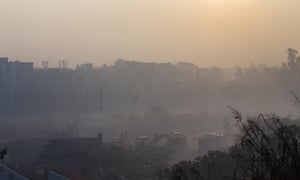
The empty towers stretch as far as can be seen – which is only about 300 metres. Like much of Delhi on most winter mornings, Noida is blanketed in thick smog and a heavy dust that cakes windows and clogs throats.


A comprehensive 2016 study of what is to blame for Delhi’s poor air identified some obvious sources,such as car emissions, the city’s coal-fired power stations and rubbish fires both small and literally mountainous. But it also highlighted more unlikely culprits.


Dust kicked up by cars along Delhi’s vast and growing road network contributes between a third and 56% of the most harmful pollutants in the city’s atmosphere.


The city’s construction sites, and the production of the raw materials that feed them – such as bricks and concrete – are also an outsized contributor to the foul air that some lung specialists warn is making Delhi hazardous, particularly for children and the elderly.


In a country largely under construction – by some rough projections, around 70% of the buildings that will exist in India’s cities by 2030 are yet to be built – controlling the dust produced by roads and worksites is an important, but largely neglected, part of clearing Delhi’s air, according to environmental groups.


Landlocked by treeless plains and deserts, Delhi is inherently dusty. “It’s one of the reasons we can’t have air quality standards as strict or high as the US,” says Sarath Guttikunda, the founder of UrbanEmissions, an air pollution research group. “Our annual standard for PM2.5 pollutants is 40 units, but the World Health Organization’s guideline is 10.”


Construction equipment sits idle at a site shrouded in smog in New Delhi, India


Construction and demolition are the third-largest contributor of coarse pollutants. Photograph: Bloomberg/Getty Images

But poor building standards and antiquated practices, multiplied across thousands of worksites, make construction and demolition the third-largest contributor of coarse pollutants – strongly linked in a 2015 study to heart disease.


At one building site in Chittaranjan Park, an affluent south Delhi neighbourhood, half-covered piles of rubble spill out on to the pavement. No fences have been erected to keep the wind from whipping dust out into the street. Enormous mounds of dirt left in empty lots, or simply dumped at the roadside, are also a common sight.


“The Indian construction contractor is trying to maximise his margins,” says Polash Mukherjee, a researcher with the Delhi-based Centre for Science and Environment. “If he’s constructing his house, he’s not required to go to a facility by law and dispose of the waste. Unless he’s forced by government to cover his trucks when he transport raw materials, he won’t do it.”


Builders aren’t just cutting corners: Delhi simply lacks the capacity to safely process the amount of construction waste it produces. A senior environmental engineer at the Delhi Pollution Control Committee told the Guardian current facilities allow for about 1,000 tonnes of waste to be processed per day, but the city produces an estimated 3,600 tonnes.


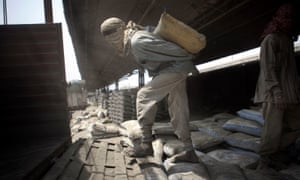
Run-of-the-mill construction activities take a hefty toll. The process of mixing concrete alone, for example, is estimated to contribute 10% of the coarse pollutants in Delhi’s air, according to an Indian Institute of Technology Kanpur study. Less polluting methods of producing concrete exist, but cost money. “Here it’s often mixed in a pit by manual labour,” says Mukherjee. “It’s cheaper that way, because there’s such a surplus of labour.”


Laborers load cement bags manually onto transport carriers at the Shakur Basti station in New Delhi, India.


Concrete is ‘often mixed in a pit by manual labour. It’s cheaper that way.’ Photograph: Bloomberg/Getty Images

A 2015 study of 19 large Delhi construction sites found the air quality around all of them exceeded safe limits by at least three times, with workers on these sites, mostly daily wage labourers, bearing the brunt. Almost none wear pollution masks, while a handful tie handkerchiefs across their faces to guard against the dust.


Naresh Sharma, a cook on a site in Greater Noida, said workers were sometimes issued pieces of jaggery, a concoction of sugarcane and date palm believed to clear the throat and lungs. “It clears your throat from phlegm, but I don’t think it prevents damage,” says Sai Kiran Chaudhari, a leading pulmonologist at the Delhi Heart and Lung Hospital.


Two years ago, India’s environment court issued extensive regulations to clean up the city’s construction industry, mandating 50,000 rupee (£595) fines for builders who failed to cover their sites in tarpaulin, put up barriers, or sprinkle building materials with water before they were stored or transported. But Mukherjee says construction in Delhi is administered according to complex rules by numerous authorities, and in any case, “enforcement is very, very lax”.


Delhi itself has strong regulations, he adds, “but the biggest projects, the metros, hospitals or malls, are usually in suburbs outside the city, in Gurgaon or Noida, where those rules don’t apply”.


Even when clear orders are issued, they are routinely flouted. Brick production has been banned in Delhi for environmental reasons, but flourishes in nearby towns such as Dadri, in Uttar Pradesh state.


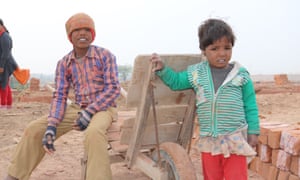
Children at brick factory Delhi


Children working at a brick production site on the outskirts of Delhi. Photograph: Michael Safi

At RR Brickfields, one of the 18 kilns that dot the dry fields around the town, workers including children were collecting finished bricks from a furnace cut deep into the earth. Thick smoke billows from a chimney stack for almost the entire six months each year that the kiln operates. Studies have suggested India’s brick industry could contribute nearly 10% of India’s emissions of black carbon, a major contributor to climate change.


Since early 2016, brick kiln owners have been required to gain environmental clearance before firing their ovens. “But in some areas, people bribe officials. Sometimes they produce bricks secretly,” said the owner of the kiln.


He said he was still in the process of applying for a clearance and, despite the apparent signs of industry, insisted his kiln was not one of those operating.


Then there is the largest year-round contributor to the city’s air crisis: the dust thrown up by the more than 9 million cars that grind along Delhi’s poorly maintained, sometimes unpaved 33,000km road network. Dust has always been factor of Delhi life, but the particles released by traffic are particularly toxic, Mukherjee says.


“It mixes up with the vehicular emissions, the industrial pollution,” he says. Harmful pollutants bind to the dust and settle in the air, when they might otherwise be dispersed by winds.


Building more pavements would make “a big difference”, he says. So would planting vegetation along dividers and road shoulders. “Those bushes would get covered in dust, but it would prevent the dust from blowing further down the road,” Mukherjee adds.


A significant proportion of Delhi’s pollution blows in from across the region, including from crop burning in Punjab and Haryana. There is growing awareness that Delhi’s air problem is really a regional one. Modelling produced for the Guardian by Greenpeace shows that air pollution increases the risk of heart disease for Delhi residents, and the risk of lung cancer by 62%. But the air in Amritsar, the Punjab capital, poses its residents a similar risk. The rates in Allahabad, in Uttar Pradesh, are even higher.


But lasting change will also involve tackling Delhi’s local pollution sources, Mukherjee says. “We know the solutions. We’ve known them for 30 years,” he says. “Implementation is the bane in India.”


Lung specialists such as Chaudhari are beginning to recommend to some older patients and those with chronic conditions to leave the city. “At one stage you have to think Delhi is not the place to live, you should look for a better option,” he says.


He says he aims to leave the city before the age of 50. “I’m serious,” he says. “Next time someone tries to trace me, I might be gone.”


Guardian Cities is dedicating a week to exploring one of the worst preventable causes of death around the world: air pollution. Explore our coverage here and follow Guardian Cities on Twitter and Facebook to join the discussion


Delhi"s deadly dust: how construction sites are choking the city

13 Şubat 2017 Pazartesi

Welcome to Onitsha: the city with the world’s worst air

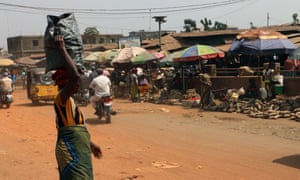
Approaching Okpoko market through thick smog on the back of an okada (motorcycle taxi), the natural reaction is to cover your nose to protect yourself from the dust storm – but the effort is futile.


When a lorry zooms past, kicking up yet another red cloud of dirt, a trader turns the head of a sleeping toddler away from the road, a protective act that is as poignant as it is pointless.


This is a typical day in the southern Nigerian port city of Onitsha – which last year gained notoriety when it was ranked the worst city in the world for the staggering levels of PM10 particulate matter in its air.


Onitsha’s mean annual concentration was recorded at 594 micrograms per cubic metre by the World Health Organization – massively exceeding the WHO’s annual guideline limit for PM10s of 20μg/m3.


PM10 refers to coarse dust particles between 10 and 2.5 micrometres in diameter, while PM2.5s are even finer and more dangerous when inhaled, settling deep in a person’s lungs. Sources of both include dust storms, gases emitted by vehicles, all types of combustion, and industrial activities such as cement manufacturing, construction, mining and smelting. Onitsha scores highly on most of the above – as do other rapidly growing Nigerian cities such as Kaduna, Aba and Umuahia, all of which also featured in the WHO’s 20 worst offenders for PM10s.


In Onitsha’s very busy Okpoko market, my air quality monitor registers 140 for PM10s and 70 for PM2.5s – all way over recommended healthy levels, but still nothing compared to the readings triggered in other parts of this densely populated commercial and industrial hub.


The entire vicinity of the market is perpetually dusty, as wood-sellers saw lumber into different shapes and sizes. The air here is made worse by all the fine sand particles that fly off the back of trucks as they visit one of the many dredging companies on the bank of the River Niger, just behind the wood market.


Onitsha, Nigeria, the world’s most polluted city according to the World Health Organisation. For cities: air pollution


Some residents of Onitsha are unaware of the dangerous levels of pollution. Photograph: Hadassah Egbedi for the Guardian

One female traffic warden has been working in the same spot here for two days. How does she cope with the dust? “I am just doing my job,” she replies reluctantly. “Dust does not kill people.”


But she is mistaken. According to the United Nations Environment Programme (Unep), around 600,000 deaths throughout Africa every year are associated with air pollution, while an October 2016 report by the Organisation for Economic Co-operation and Development (OECD) suggested that polluted air could be killing 712,000 people prematurely every year across the continent.


The warden’s attitude towards this invisible but deadly threat is widespread among Onitsha’s residents – but not necessarily because they are nonchalant about their health. Most are simply unaware of the issue.


Some say they have more pressing concerns, such as how to feed their family. Others have simply become accustomed to living in a dirty and polluted environment.


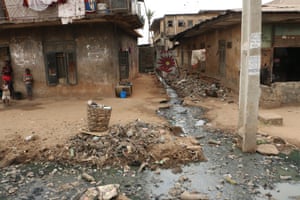
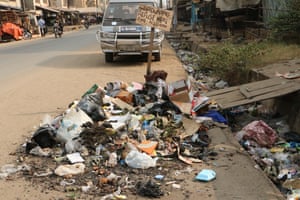
Onitsha is grossly polluted – not just in terms of the air quality, but also the solid waste that litters the streets, blocking drainages and canals. With not a single waste bin in sight, heaps of unregulated rubbish dumps occupy roadsides and street corners.


Onitsha, Nigeria, the world’s most polluted city according to the World Health Organisation. For cities: air pollution


Rubbish clogs Onitsha’s streets, drainages and canals. Photograph: Hadassah Egbedi for the Guardian

Ikechukwu Obizue, a businessman in the neighbourhood of Nwangene, says residents can only do so much when there is little corresponding effort by the city’s government.


“Onitsha is quite dirty, but the government is not doing anything about it. We do environmental sanitation monthly, but then the city returns to being dirty,” Obizue says. “It is the government’s responsibility to keep the city clean, not the work of the residents – people in this city are too busy hustling to make an income.”


‘We don’t take air pollution seriously’


In Nwangene, my air monitor shows 667μg/m3 for PM10s – a reading in excess of the 594 annual figure that gave Onitsha its title of the world’s most polluted city. What’s more, the smaller and even more dangerous particulate (PM2.5) reading of 290 is far in excess of the WHO’s annual figure of 66.


We are in deep trouble. People will keep dying as stakeholders remain nonchalant


Nelson Aluya


The air quality proves just as bad at Ochanja market, with PM10s registered at 586 micrograms and PM2.5s at 266. Yet in these highly polluted areas, few people show any sign of trying to protect themselves from the threat.


There are only a few air masks in sight. A good number of aluminium and copper recyclers are not wearing masks, even while smelting metal scraps. Worse still, most smelting activities are done in the open, releasing monstrous clouds of smoke into the core of the city.


At one of the few state-approved dump sites on Creek Road, Ikechuckwu works at a smelting workshop. He is sweating profusely as he sits on a pile of ash, taking a break from work. He explains he has been smelting iron for a little over five years – but says not to worry about his health.


“I know how to take care of myself,” he brags. “I am not wearing a nose mask because I don’t need it. I take medicine to cater for my health.”


Rubbish in Onitsha


Residents conduct a monthly cleanup, but the city quickly fills with waste again. Many locals blame government inaction for the problem. Photograph: Hadassah Egbedi for the Guardian

It is hard to determine to what extent these high concentrations of particles are affecting the residents of Onitsha, since there is no official data – but the health effects attributed to sustained exposure to PMs, especially PM2.5s, are well proven.


For a state government that can barely manage its waste disposal system, however, regulating its air quality appears a far-fetched aspiration. The now defunct Anambra State Environmental Protection Agency was widely criticised for failing in its responsibility to effectively tackle environmental pollution, and in its place, the Anambra State Waste Management Agency was created – with little effect.


The state’s Ministry of Environment, Beautification and Ecology did not respond to the Guardian’s questions regarding air pollution in Onitsha.


“The major problem is that we don’t take air pollution seriously in Nigeria,” says medical practitioner Dr Nelson Aluya. “As the population increases and we become more industrialised, we ought to have active air-monitoring agencies and a federal environmental protection agency. We say they are there – but are they active?”


In truth, air quality monitoring and control is not on the radar of many African governments. Nigeria has a long list of environmental protection laws and regulations that are barely enforced.


“Even in the healthcare sector,” Aluya continues, “there is no standardised care to monitor those who have chronic obstructive pulmonary diseases resulting from exposure to bad air, and no standard procedure in hospitals to check for oxygen levels.


“So you see, we are in deep trouble. If we have not recognised the fact there’s a problem, then how do we solve it? Unfortunately, people will keep dying as stakeholders remain nonchalant.”


Guardian Cities is dedicating a week to investigating one of the worst preventable causes of death around the world: air pollution. Explore our coverage at The Air We Breathe and follow Guardian Cities on Twitter and Facebook to join the discussion


Welcome to Onitsha: the city with the world’s worst air

19 Aralık 2016 Pazartesi

Siberian city declares emergency as dozens die from drinking alcoholic bath tincture

A state of emergency has been declared in the Siberian city of Irkutsk, as at least 48 people were reported dead on Monday from drinking a bath tincture known for its high alcohol content.


The deaths have renewed controversy over the widespread ingestion of “surrogate” alcohol in Russia, including medical ethanol, window cleaner and perfume. Experts estimate that up to 12 million Russians regularly ingest such surrogates.


The deaths in Irkutsk appear to have been caused by a counterfeit batch of Boyaryshnik, a concentrated liquid sold as a relaxant to add to bathwater but widely known as a cheap alcohol substitute. It cost a maximum of 40 roubles (£0.52) per bottle, making it cheaper than even the lowest-cost vodka, and was even put on sale in public vending machines earlier this year.


According to the label, Boyaryshnik contains 93% ethanol, hawthorn extract and lemon oils but tests on the Irkutsk consignment suggested it also contained methanol, an ingredient in antifreeze. Police said they had discovered an underground workshop in the city where bottles of fake Boyaryshnik were being produced, along with counterfeit bottles of well-known vodka brands.


Russia’s investigative committee said it had detained two people on Monday, and seized over two tonnes of the liquid from shops and kiosks around Irkutsk, to ensure no more of the batch reached consumers. Other reports suggested five people had been arrested.


Dmitry Berdnikov, the mayor of Irkutsk, declared a state of emergency in the city on Monday afternoon and also placed a temporary ban on the sale of all liquids containing alcohol not designed for consumption.


The death toll rose steadily throughout the day, with 41 confirmed dead by evening in Irkutsk. A further nine people remained in serious condition in hospital. The local prosecutor’s office said the majority of victims had arrived at hospitals already in a coma.


Vladimir Putin’s spokesman, Dmitry Peskov, told journalists that the deaths were “a terrible tragedy” and said the Russian president had been informed.


Dmitry Medvedev told a meeting of the cabinet that the deaths were unacceptable. The prime minister said: “We cannot put up with this any longer. We must take all measures either to get this kind of product off the market, or to ensure full control of the way they are sold.”


Medvedev also told the interior minister to ensure people involved in black-market production or sale of such industrial alcohol drinks would face criminal charges, and suggested tightening the law to provide harsher penalties.


Alcoholism remains a major problem in Russia. A survey two years ago showed that a quarter of Russian men died before reaching the age of 55, compared with 7% of men in Britain. The survey found that the average Russian adult drank 20 litres of vodka a year, compared with an average of three litres of spirits a year consumed in Britain.


The ingestion of low-quality surrogate alcohol not meant for human consumption causes even worse health risks. Medical professionals estimate that between 10 and 12 million Russians drink these types of alcohol, including surgical spirit, aftershaves and cleaning fluids, because they cannot afford to buy vodka or other alcoholic drinks. A ministry of health survey in a town close to Moscow earlier this year found that 13% of residents admitted to consuming surrogate alcohol.


“Every year, Boyaryshnik is killing more people than terrorist acts did in the whole history of Russia,” wrote opposition politician Alexei Navalny on Monday. He said people were being pushed into drinking surrogates due to low incomes and said only fighting against poverty could improve the situation.


Oleg Kuznetsov, a Russian toxicology specialist, said deaths from surrogate alcohol ingestion had gone up this year due to the economic crisis. “People are poorer, especially those who drink a lot, but the need for alcohol remains. Before, someone with alcohol dependency would go to the shop and buy the cheapest vodka, now he’ll go and buy something different like window cleaner,” he said.


Siberian city declares emergency as dozens die from drinking alcoholic bath tincture

1 Aralık 2016 Perşembe

Trees may increase air pollution on city streets

City trees, popularly thought to remove pollutants and improve urban life, may also increase the amount of foul air that people breathe, says the UK body which gives independent health guidance to national and local government.


“Leaves and branches slow air currents, causing pollutants to settle. They may also act as sinks for particulates and chemicals that may have direct or indirect effects in air quality. Air quality [under trees] may deteriorate at street level near vehicles,” says the National Institute for Health and Care Excellence (Nice) in new draft guidance for local government to combat air pollution.


Nice does not recommend that councils cut down trees in leafy suburbs to meet pollution limits, but urges planners, local authorities and developers to take into account the adverse effect that trees can have on air quality if badly sited or unmanaged.


“It is not always true that trees reduce air pollution. Their effect is dependent on factors including species, canopy density, time of year and wind direction. Ventilation [on streets] will vary according to the size, distribution and species of tree and their position,” it says.


The guidelines also question the unintended consequences of other measures often taken by cities to improve people’s quality of life. Road humps aimed at slowing traffic and noise barriers erected alongside busy roads can both increase air pollution, says Nice.


“Traffic calming measures such as speed humps … may increase emissions by adding to decelerations and accelerations,” it says. “Ensuring motorists drive steadily at the optimum speed can reduce stop-go driving and reduce emissions.


“People regularly travelling or living downwind of a plume of vehicle pollution can experience poorer air quality as a result of a solid barrier.”


The 60-page report, which goes to consultation on Thursday and could be adopted by July, is expected to feed into the government’s response to the supreme court. Following several cases brought by law firm ClientEarth, the court has demanded faster action to reduce air pollution which causes more than 40,000 early deaths a year in Britain, with conservative estimates putting the cost at between £8.5bn-£18.6bn.


Under pressure from the courts, the government has proposed clean air zones in five cities, including Birmingham, Derby, Leeds, Nottingham and Southampton. But Nice recommends that all councils consider setting up similar zones which could allow them to ban heavily polluting vehicles from town centres, and set their own pollution standards for taxis, hire vehicles and council fleets.


It proposes that councils consider air pollution at every stage of the planning process. This could extend to where new housing is sited and recommending that developers build new houses with the living room situated furthest away from roads.


Schools and nurseries should be sited away from main roads and councils should avoid developments that trap pollution in canyons, says Nice. But it also wants to see drivers educated as to how to reduce emissions. New guidelines are expected to support low and zero emission travel.


“Public sector transport providers should educate drivers how to reduce emissions. This could include switching the engine off when they are dropping people off, or making deliveries, and avoiding rapid accelerations and decelerations,” said a spokesman.


However, the committee could not directly address the sheer number of cars now on roads and was limited to proposing ways to mitigate pollution.


“We can take steps now to encourage people to walk or cycle rather than drive but these efforts will be futile if we do not have a long-term plan to improve air quality,” said Mark Baker, director for the centre of clinical practice at Nice.


“Past measures have not had the required impact. The draft guidance sets out … practical measures for local authorities to encourage low or zero emission transport,” said Paul Lincoln, chair of the Nice guidelines committee.


“We welcome this draft guidance. Robust measures must be taken to clean up the air we breathe. We need to specifically target the most polluted areas in our towns and cities. Everyone deserves to breathe clean air,” Lincoln said.


“Action is needed both to ensure vehicles on the road are clean and that there are fewer of them. Diesel vehicles, which are the most polluting, must be phased out and our transport and planning policy needs a radical overhaul,” said a spokeswoman for Friends of the Earth.


“This is no time for tinkering around the edges – to deal with this public health crisis we must plan our towns and cities in ways which actually reduce traffic and give people real alternatives to driving.”


Trees may increase air pollution on city streets

14 Kasım 2016 Pazartesi

The fall-less city and other innovations for a healthier old age

The city of Liverpool is aiming to become a “fall-less” city – so that all older adults with limited or reduced mobility can venture forth into the streets, parks and other public places knowing that their chances of falling have been significantly reduced. One-third of older people in the UK experience a fall each year, rising to half the over-80s. Working with the Universities of Liverpool and Cambridge, the city council is implementing falls prevention and mitigation as part of its Age-Friendly City (AFC) initiative.


Promoted by the World Health Organisation, the age-friendly city movement has spread across the globe. With projections that half Europe’s population will be over 50 within a couple of decades and that the world will have more people over 60 than under 16 by 2050, the age-proofing of our environments is high on the agenda.


Already more than 500 million people over 65 live in cities. The urban old reach 250 million in Asia, 57 million in Latin America and 23 million in Africa. Indeed 90% of us, young and old, will live in urban environments by the end of the century.


The age-friendly city initiative is now an international movement supported by forums across the globe


The age-friendly city initiative is now an international movement supported by forums across the globe. The 2015 sustainable development goals (SDGs), call for inclusive urbanisation that enables older persons to participate in planning and decision-making, have access to safe and affordable public transport, and enjoy safe, inclusive and accessible green and public spaces.


While there is a strong emphasis on health, including the successful prevention of disease, disability, frailty and the promotion of healthy lives and activities, the age-friendly movement has moved beyond this to include the natural and built environment, cultural attitudes, social capital, equity and inclusion.


Investing in public transport is essential to create age-friendly cities. Older women in particular rely on public transport to make the complex journeys enabling them to juggle multiple roles as caregivers, housekeepers and income providers. Simple initiatives like those in Ukraine, promoted by the civil society organisation Turbota pro Litnih v Ukraini encourage older people to take an active role in improving public transport services, extending bus routes to poorly-served districts, and relocating bus stops so that local health centres can be easily accessed.


Similarly, various health initiatives encouraging physical activity and healthy eating, and creating communities that support people with dementia are being promoted. Colombia’s capital, Bogotá, has now implemented schemes with the assistance of HelpAge International (HAI) which provides guidance to families and carers of people with dementia, signposting them to resources and support available in the urban community.


However, there is much to do. The recent HAI Ageing and the City report found that in “the majority of low- and middle-income countries, most people aged over 50 reported not feeling safe walking home alone at night”. And reports have highlighted the increased vulnerability of older adults in times of crisis – such as the New Orleans hurricane in 2005 or the 2011 Japanese tsunami, where older people were disproportionality affected. While Ageing and the City may call for older people in be more involved in disaster preparedness planning, the evidence that this is happening is limited.


The future for the age-friendly city movement it to engage with the smart city debate. The Citris Invention Lab at the University of California is exploring “connected ageing landscapes” which link body, home, community and caregiving in one integrated technological flow.


Something as simple as interactive television promotes social and civic engagement – enabling older adults to connect with friends, neighbours and family, actively engage in community life, interact with healthcare provision, and earn an income.


But cutting-edge inventions – assistive technologies, smart medication management tools, smart body sensors, robotics and autonomous vehicles – can combine to provide a flow from person to home to cityscape. Connected medical devices using external sensors and remote monitoring have the potential to ease the struggles for older people in cities.


The city has the potential to become one integrated physical and virtual space – within which less-mobile adults can participate to the best of their ability. Age-friendly cities need to be smart cities. The age-friendly city movement must engage with the technology of the future to provide an urban environment where we can all experience a healthy old age.


Sarah Harper is professor of gerontology at the University of Oxford and supports the Bicester Healthy New Town initiative through research.


Join our community of development professionals and humanitarians. Follow @GuardianGDP on Twitter.


The fall-less city and other innovations for a healthier old age

31 Ağustos 2016 Çarşamba

Brains and bone saws: a day with the chief medical examiner of New York City

The smell in the autopsy room is indescribable. It lingers on your clothes and in your hair long after you leave. Staff are constantly cleaning the linoleum floors and wiping down every surface with harsh disinfectants. But if anything, it adds to the uniquely acrid odor.


You never get used to the smell, says Jennifer Hammers, deputy chief medical examiner for Kings County, New York – but you do get beyond it.


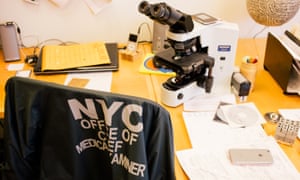
I’ve been allowed a privileged glimpse at a regular Wednesday in the Brooklyn office of the Chief Medical Examiner of New York City. The office is one of the busiest of its kind in the country.


Around 70,000 people die in New York City each year, and about 8,000-9,000 of them end up at the medical examiner, requiring further investigation. Of those, 5,000 are autopsied.


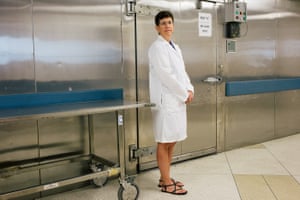
Barbara Sampson, Chief Medical Examiner of New York City


Barbara Sampson, Chief Medical Examiner of New York City Photograph: Ben Zucker for the Guardian

Only the lonely


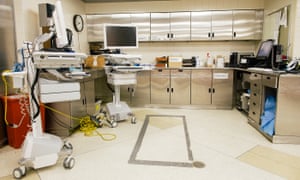
In the basement, the staff are hard at work in the autopsy suite, carefully examining the bodies and photographing relevant organs for their reports.


Most cases brought to the medical examiner are not crime related. In a city of over 8 million people, with many immigrants and transplants from other parts of the country, there is no shortage of the lonely.


Of the seven bodies brought in today, three have died alone in their apartments. In the summer, without air conditioning, it can take as little as two days before the smell of a body causes neighbors to make a call.


One gentleman found alone in his home is now lying before me on a steel gurney. James Daniels, a lead forensic mortuary technician, is carefully removing the scalp before cutting the skull with a bone saw so the brain can be examined for any signs of aneurysm, stroke or other potential causes of death.


An examination table in the “decomposition room” of the Office of the Chief Medical Examiner of New York.


An examination table in the “decomposition room” Photograph: Ben Zucker for the Guardian

Over 60 forensic mortuary technicians like Daniels work in New York City. While the 31 medical examiners in New York City are all highly trained physicians who completed special fellowships, technicians don’t have any educational requirements.


Typically, technicians join when they are young and only have a high school education. They learn the intricacies of their job on site. Without them, the office would cease to function. They are the ones dispatched to collect the bodies for autopsy. They are often the first people from the office a family encounters when grieving.


Being the doctor’s doctor


In addition to the medical examiners, there are x-ray technicians who scan for bullets and broken bones; DNA and toxicology laboratory staff; consulting dentists for matching dental records for identification; anthropologists who specialize in discovering the race, age and height of skeletal remains and figuring out what tools caused blunt force traumas; mortuary technicians who assist with autopsies; a variety of administrators; death scene investigators; and professional photographers who take careful photos of every autopsy for detailed record keeping.


One of the photographers on staff also takes professional photos of food, Hammers tells me with a smile.


While the doctors examine the body and determine the cause of death, the technicians do a lot of careful and very skilled cutting to assist them. They also clean the bodies after the autopsy is completed, making sure that it is in a pristine state when handed over to a funeral director.


For Daniels, who started with the Office of the Chief Medical Examiner as a young man in 1989, it was an unexpected career choice, as he hated the idea of being around dead bodies and avoided funerals entirely.


Most of the medical examiners, on the other hand, said they always loved the idea of solving a mystery, of being “the doctor’s doctor”. They wanted to be the ones to determine the real cause of a death or diagnose a pathology.


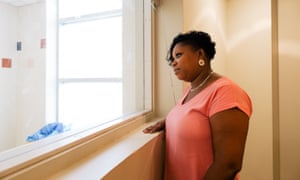
Nadia Bissette-Dolor, who works in the Office of the Chief Medical Examiner of New York City, stands by a window used by families to identify bodies of the deceased. She says family members rarely ask to view the body, but a small number do.


Nadia Bissette-Dolor, who works in the Office of the Chief Medical Examiner of New York City, stands by a window used by families to identify bodies of the deceased. She says family members rarely ask to view the body, but a small number do. Photograph: Ben Zucker for the Guardian

Daniels had a more pragmatic reason for joining the office: he needed a job, and working for the city meant stable employment. When he first started, he dreaded touching bodies and entering strangers’ homes. It was fear of the unknown, he explains. But these days, working as a lead technician, there is little left unknown when it comes to the dead.


Daniels was on the job during 9/11. He also responded to Flight 587, which crashed in Queens in November 2011, killing everyone on board. That time created his worst memories of the job. But it also gave him the greatest sense of the work’s importance: none of those families would otherwise have had closure. He now “loves the job”, he says.


The case that hits home


No matter how long they have been working at the Office of the Chief Medical Examiner, and how many bodies they have seen, everyone has a case that hits home.


For Barbara Sampson, the chief medical examiner for New York City, it was a 9/11 case. The terror attack on 9/11, which Sampson refers to as the biggest homicide in US history, was a difficult time for all of the staff at the office. They worked round the clock to identify bodies, and the images they saw still haunt most of them fifteen years later.


Identification often had to be done from DNA analysis of fragments of remains and is still ongoing as new DNA techniques are discovered.


One particular case sticks out for Sampson: a Belgian man who died during the collapse of the World Trade Center towers. His parents were elderly, and while they knew that he had died, without official scientific confirmation, they could not get closure. His remains had not been identified. They were afraid they would pass away never having his death confirmed.


Two years ago, Sampson’s office was able to identify the Belgian man’s remains through DNA analysis. “I had the honor of telling them we had found their son. That was one of the most incredible experiences of my life,” she says. Thirteen years after 9/11, the parents could finally put their son to rest.


Office work station in the Brooklyn office of Chief Medical Examiner of New York


The desk of the Deputy Chief Medical Examiner Photograph: Ben Zucker for the Guardian

For Aglae Charlot, an elegant senior medical examiner with a pronounced French accent who has worked at the office since 1987, it was a teenage girl who came in a few years back. The girl died in the hospital of an unusual illness, from which her mother also suffered. The illness can be idiopathic or caused by Aids. The hospital had assumed it was idiopathic since the mother had the same illness.


When Charlot investigated, she found the teenager did actually have Aids, which she must have been suffering from for five or six years.


Upon further investigation, she discovered the mother’s boyfriend had died of Aids.


Infecting a child and causing her death is murder, she explains to me, her jaw tensing. Charlot knew she could probably trace the particular strain of Aids back to the boyfriend, but what would it change? He was dead, so could not be charged, and it would only cause more pain for the living. She put Aids as the cause of death on the certificate, and left it at that.


Seeing the lighter side


“We all have an odd sense of humor,” says Christopher Brock, a bearded young medical examiner sitting in front of a file cabinet covered by photos of his wife and two young children. “We are often smiling, and I think you have to when you are surrounded by this every day.”


In Hammers’s office, her crooked playfulness is on display in a framed, fake blood-spattered sign above her desk that reads: “Braainns.”


Humor can provide a release in an environment that is fraught with stress. “One of the things a lot of people don’t realize is that we deal with the living just as much as we deal with the dead,” says Brock. “We provide answers to families.”


Check out station at Morgue in the office of Chief Medical Examiner of New York in Brooklyn, NY


Check out station at the morgue Photograph: Ben Zucker for the Guardian

Much of the week is spent performing autopsies, and the rest of it filling out paperwork, testifying in court and speaking with the families of the dead.


At a time when primary care physicians rarely have more than two minutes to speak with a living patient, it’s strange somehow that the medical examiners can spend hours explaining their findings to the families, comforting them and helping them deal with their grief.


“Every family really wants to know what happened to their loved one and have their questions answered in order to have closure,” says Hammers. “Even if it is a hard answer like in the case of a suicide, it wouldn’t be what they prefer to hear but it allows them to have an answer and then work their grief around that and move through it.”


As Brock puts it, when it comes to the deceased: “We are their last physicians.”


Brains and bone saws: a day with the chief medical examiner of New York City

7 Ağustos 2016 Pazar

New York"s "queer health warrior": city official funds grassroots fight against HIV

At New York City’s Pride parade this summer, tucked between the rainbow-dyed dogs and the thousands of hairy legs in tiny shorts, was the head of the city’s HIV/Aids bureau, Demetre Daskalakis, wearing a mesh T-shirt and DJing the health department’s float.


The parade’s party atmosphere echoed the sex clubs where Daskalakis still occasionally offers consultations and the spin classes he teaches each week. And that atmosphere remained as health department staff handed out New York City-branded condoms and kits filled with HIV prevention drugs to the cheering crowd. This might be because the health commissioner, Mary Bassett, was voguing next to the DJ table.


The health department in New York City, once the center of the country’s HIV/Aids epidemic, has made a point of directing funds to small, on-the-ground initiatives like the program that emerged from Daskalakis’s nights providing care in sex clubs.


Daskalakis, now the assistant health commissioner in charge of the Bureau of HIV/Aids Prevention and Control, achieved widespread acclaim while testing people in city sex clubs in 2013 to successfully combat a meningitis outbreak among gay and bisexual men. There the man known as “Dr Demetre” would offer HIV and hepatitis-C screenings and provide consultations while clubbers waited for the results of their tests.


But now he is funding the same programs he helped create. The bureau has contracts with 375 local and national groups. And money from the state’s Ending the Epidemic fund is being directed towards small transgender rights groups who do not yet have the resources to offer the sort of interventions provided by much more powerful HIV/Aids groups.


Demetre Daskalakis


Demetre Daskalakis, the New York City assistant health commissioner in charge of the Bureau of HIV/Aids Prevention and Control. Photograph: Courtesy of City of New York

“That money is being used to actually teach these organizations how to get bigger and thrive and be organizations,” Daskalakis said. “In fact, at the beginning of this, we don’t care what service they do, we just care that they grow.”


The comment might seem flippant, but Daskalakis surges with energy when he’s detailing HIV policies on a humid Monday afternoon at the health department headquarters or tweeting about Israeli singer Ofra Haza at 8am.


“HIV allows us to leverage the healthcare system to support the health of people who weren’t always getting that support,” Daskalakis said.


While the nature of government means a person with this much energy and experience may have to lower their ambitions – Daskalakis said he “tortured” his staff with ideas when he first started at the department – the bureau is the largest of its kind in the country with 413 staff members, and its initiatives are closely watched by other agencies. “We’re also bossing the feds around a little bit,” Daskalakis said.


One example of that is the city’s push to provide grants to groups that offer “status neutral” care to people whether they are HIV positive or negative – instead of focusing on people who already have the lifelong disease, this gives more flexibility in providing resources to at-risk communities.


Daskalakis said the city’s “status neutral” plan is part of a demonstration project the department is running for two federal health agencies – the Centers for Disease Control and Prevention and the Health Resources and Services Administration. “Obviously we have to see if this going to work,” he said. He barely took a breath before continuing: “But it’s going to work, it’s a great idea.”


Some of the LGBT groups who have not worked as closely with the health department, like the Services & Advocacy for GLBT Elders (Sage), said they’ve noticed a more aggressive response to the epidemic in recent years.


“The whole orientation around ending the epidemic has been an important step forward – that if we take a more aggressive and more proactive and more energetic approach, that we can really turn the corner on HIV,” said Michael Adams, SageUSA CEO. “It has been encouraging to watch that orientation, and that’s coming from leadership at both the city level and the state level.”


Sage gets money from the city, mostly through the Department of Aging, but said elder health in the HIV crisis is often overlooked – even though 50% of the people living with Aids in the city are over 50 years old. His group is still working to get the city to respond to that population more strongly, but in general, he has been encouraged by the energy emanating from the department.


And when it comes to the bureau chief of HIV/Aids, Adams said advocacy is essential to the role. “It has always been and remains the case that in order to advance an effective response to HIV activism, advocacy is required and a willingness to challenge the status quo and challenge assumptions that are often really wrong-headed,” he said.


Challenging the status quo has been a driving force during Daskalakis more than 30 years in the field. When medical schools were keeping students away from hospital Aids wards in the 1990s, Daskalakis, trained as an infectious disease doctor,was skipping classesto follow rounds and listen to doctors treating those patients.


Now, he’s “a kid in the candy store” with the extensive collection of data the city has on HIV/Aids in its health department headquarters. And though he jokingly whispered in his office that the department’s role is “secretly an advocacy group in government”, it is no secret to any visitor who sees the small rainbow flags flying above the 22nd floor cubicles.


But his work in the department has even pushed Daskalakis to an even more activist bent.


He was “the gay health warrior” before he took over the HIV/Aids bureau in September 2014, but his time in office has ramped up his activist bent. Recently, he changed his title to “queer health warrior” to encompass sexual and gender identities beyond gay.


“I was dubbed gay health warrior and kind of realized that with all the work we’re doing in the transgender space, the gender nonconforming space, it’s a lie, that it’s not really accurate to what I’m doing anymore,” he said. “So I kind of thought though at least it has a little political overlay to it, I feel like it captures a lot of what we’re doing, which is sort of for all of that universe trying to sort of advocate for a population that in some way hasn’t had that.”


New York"s "queer health warrior": city official funds grassroots fight against HIV