alcoholic etiketine sahip kayıtlar gösteriliyor. Tüm kayıtları göster

27 Şubat 2017 Pazartesi

"I loved and hated her in equal measure" – life with an alcoholic mother

It’s two-and-a-half years since I lost my mum to alcohol. At the time I was 21 and she was 49. It was a bitter yet inevitable end to a battle with a drug that had gradually increased its merciless grip on her over many years. Ashamed as I am to admit this, her death brought momentary relief. I had suddenly been liberated from an all-consuming anxiety; I wasn’t waiting to be called with yet more bad news. I wasn’t dreading talking to a mother whom I loved and hated in equal measure, whose wildly erratic state left me unsure of how to address her, what to say. Yet a harrowing period of depression quickly ensued, and I once again found myself doing what life as the child of an alcoholic had made me an expert of: concealing my true feelings and putting on a brave face.


My family had for years grieved for the woman and the life we knew before she became the puppet of a drug. A deafening silence haunted our house when Mum was drunk. Nobody spoke as she staggered around; as she sat at the dinner table barely able to spoon food into her mouth; as she attempted to engage you in fruitless, incomprehensible conversation. Instead we hoped to navigate the fragile situation just long enough for her to fall asleep or for the drunken monster that inhibited her to take its leave.


Chaos frequently reigned. Bitter words were hurled back and forth until both parties were so absorbed by regret and guilt that silence could once again rule, choking us all.


I resolved at the time of my mum’s death to speak openly about her alcoholism because I can’t bear to be complicit in the silence surrounding the issue. Between 2004-14, alcohol-related deaths in England rose by a staggering 13%. My loss is irretrievable, but others can be prevented, and starting a conversation around alcoholism is the first step in changing the national attitude towards this pandemic.


​It is only by reaching out to the children of alcoholics that we can hope to definitively break the cycle of addiction


Though the plight of alcoholics is awful – the demonisation by society (medical professionals included), cuts to mental health services, the ready availability of the drug … the list goes on – often overlooked are the struggles faced by their children. According to a report by the National Association for Children of Alcoholics (Nacoa), children of alcoholics are six times more likely to witness domestic violence, five times more likely to develop an eating disorder, three times more likely to consider suicide, two times more likely to commit criminal offences and two times more likely to have difficulties at school. Perhaps most frightening is the indomitable perpetuity of this ravaging plague; children of alcoholics are three times more likely to develop drug or alcohol problems themselves.


As of December 2016, a review by Public Health England suggests the financial burden could be as much as £52bn per year. This accounts for the cost to the NHS of dealing with alcohol-related illness, alcohol-related crime and the loss of productivity problem drinking engenders. This figure does not, then, account for the money required to combat the multitude of problems that blight the families of alcoholics. No such figure exists because these families remain hidden; the stigma around alcoholism is so great that those affected harbour guilt, embarrassment and shame.


Just as there is no single profile of an alcoholic, there is no single profile of their children. My mother was a successful professional in the NHS, working as an advanced practitioner until four years before her death. She had an infectious character that lit up a room: vivacious, bountiful in love and deeply compassionate. At the time of her death, I was two years into a languages degree. I have since completed this and am now training to become a teacher, largely inspired by the bedrock of stability and normality that school provided me with as a child. I am an “overachiever”.


My record hides a desperate truth, however: the stories of resilience many of us COAs unknowingly share must not be championed as “inspiring”, because then we continue to whitewash a much darker reality and, crucially, fail to get to the crux of the problem.


There is hope for change, however. Following Labour MP Jonathan Ashworth’s frank admission to parliament about his experience as the child of an alcoholic and the urgent need to deal with the wider harm caused by the drug, this month there will be a new strategy to support children of alcoholics (COAs).


Furthermore, the first ever manifesto for children of alcoholics coincided with COA Week and Nacoa’s annual lecture; contains a 10-point plan to help the one in five children affected by alcohol.


Currently, not a single local authority in the UK has a strategy that targets COAs, and neither the social care nor the public health system has developed effective strategies to support them. This manifesto, written by policymakers, medical experts, charities and children of alcoholics, demands that the government appoint a minister responsible for coordinating policy. The third sector must no longer have to take the burden of supporting COAs; as the number of alcohol-related admissions continues to rise, already underfunded drug and alcohol services are seeing further cuts. Local authorities require proper funding to deliver crucial physical and emotional support to children in need.


It is only by reaching out to the children of alcoholics that we can hope to definitively break the cycle of addiction that has a stranglehold upon the nation. By failing to do so – by remaining silent on the matter – we fail them and condemn thousands of children to a miserable fate, while facilitating the very issue we claim as a nation to find so repulsive.


If you would like to write a blogpost for Views from the NHS frontline, read our guidelines and get in touch by emailing sarah.johnson@theguardian.com.


Join the Healthcare Professionals Network to read more pieces like this. And follow us on Twitter (@GdnHealthcare) to keep up with the latest healthcare news and views.


"I loved and hated her in equal measure" – life with an alcoholic mother

22 Ocak 2017 Pazar

Should I abandon my son to my alcoholic husband? | Mariella Frostrup

The dilemma I have been married to my alcoholic husband for 14 years. We have a 13-year-old son, and two older kids from my previous marriage. I had an affair with a black man from 2007 until 2009. I had kept it a secret from my husband until he found out from my diary in 2010. Since then he has started drinking three or four bottles of wine a night and blames his drinking on me. He has been hospitalised and in rehab many times for his alcoholism.


Our son is suffering because when my husband drinks he gets aggressive and my son has to stand between us to stop him hitting me. I have seriously thought about leaving without a trace. Maybe my son will be happier without a mother who is so pathetic.


Mariella replies The current problems in your relationship are definitely connected to your husband’s alcoholism, but overshadowing all of them is the physical threat you are under. I’m surprised it took you so many paragraphs before mentioning his violence towards you.


Maybe it’s something you are ashamed of. You won’t be the first victim of a tormentor to see their own suffering as something they have brought on themselves, or as a reflection of their worth. That’s utterly untrue and I’m hoping you can see, when written in black and white, how misplaced such feelings are. Or perhaps you excuse his physical abuse as a side effect of his drinking. While the latter might to some extent be true, it doesn’t excuse or condone his behaviour. Next time he attempts to raise a hand to you it’s important you remain calm and call the police. It’s not your son’s job to stand between his parents, and continuing to foist that role on him will be doing him damage that I know you wouldn’t want to inflict.


In small steps, and with great courage, you must remove your son and yourself from this man’s grip


I’m hoping you can count on the support of your two adult children, because you need as big and as vocal a support network as you can muster. It’s an opportunity for your friends and family to provide real tangible back-up by showing him that they are unafraid and prepared to be your witnesses. You are definitely not alone: the statistics for domestic abuse in this country are staggering. You need to get your experience on the official record and the sooner you do, the quicker your rights will be established in this terrible situation.


First, you need to understand that there is no excuse at all for the behaviour you are being subjected to. It needs to stop and your future plans can be better established when you are in a place of safety. We say “until death us do part” when we tie the knot, but there really needs to be a sub-clause that exonerates us for instant departure in the event of violence, dangerous addiction and abuse of any kind. Rowing and raging may be an unpleasant sideshow in many relationships, but sustained abusive behaviour and particularly any form of physical threat is an immediate red card. If he won’t clear out of your home, you will have to.


There are many organisations that can support you, particularly the beleaguered Refuge (24-hour National Domestic Violence Helpline, 0808 2000 247) which, despite losing much of its government funding, does an incredible job in rescuing the victims of domestic abuse from harm.


You didn’t sign up for this experience and every day you accept it you are causing damage to both your son and yourself. This man’s drinking may be hard to live with, but his abuse is a total deal breaker.


In the circumstances I’m tempted to ignore you describing your ex-lover as a “black man” as though it was his skin-colour, rather than your affair, that provoked your spouse. Instead, I’m going to give you the benefit of the doubt; like the spouses of many abusers you are probably just trying to find blame in yourself for your abuser’s crimes against you.


If your husband considers your choice of lover a further insult then he’s even more montrous than you have described. We’re not living in apartheid South Africa now, or in one of the many countries today where abuse at home is considered the divine right of husbands. Your lover’s racial make-up has absolutely nothing to do with the problems you are enduring today and it’s time you stopped looking for excuses.


In small steps, and with great courage, you must remove your son and yourself from this man’s terrible grip and, if you can, enlist friends and family to help you on your way. Most importantly contact Refuge who, with the sobering statistic of one in four women experiencing domestic violence in their lifetime, are pretty well qualified to give you practical help and advice.


If you have a dilemma, send a brief email to mariella.frostrup@observer.co.uk. Follow her on Twitter @mariellaf1


Should I abandon my son to my alcoholic husband? | Mariella Frostrup

30 Aralık 2016 Cuma

"Dad was an alcoholic": MP Jonathan Ashworth urges action on drinking

Childhood memories of growing up with an alcoholic father have prompted the shadow health secretary to call for greater recognition of the damage done by excessive drinking.


Jonathan Ashworth said there was a need for urgent action because the cost of alcohol-related harm was not just the £3.5bn NHS price-tag, but up to £7bn in lost productivity for the British economy.


During an interview with the Guardian, the Labour MP said he also wanted there to be much more focus on the needs of families affected by alcoholism, claiming the issue would be a priority for him and Labour in 2017.


Ashworth said he was surprised to find himself disclosing, for the first time to a national newspaper, the reason he felt so passionately about the issue.


“It’s quite personal for me, because my dad was an alcoholic,” he said, suddenly spilling out early memories of his father falling over drunkenly at the school gates and of returning home to a fridge stacked with cheap booze and no food.


Ashworth said he had never really considered his experience as something relevant in policy terms. “You didn’t think there was a problem, you just thought ‘that is the life I’ve got’,” he said.


Then he came across the work being carried out by his Labour colleague, Liam Byrne, whose childhood was affected in a similar way.


The MP’s all-party parliamentary group dedicated to the children of alcoholics has revealed that local authorities across the country tend to have no specific strategies to help young people affected in this way.


The group, which is publishing research on the issue in the new year, said that millions of children were “suffering in silence”.


Inspired by Byrne’s work, Ashworth felt he wanted to make the issue a priority in 2017. “I wanted to do something on alcoholism so that if nothing else I’ll have done something on that,” he said, before adding: “I know it’s cliched.”


As well as backing Byrne’s ideas he wants to support a phoneline run by the National Association for Children of Alcoholics to help make it a nationwide service. He also wants more specialised training for professionals to support children and for councils to be properly funded to be able to reach out to families affected by alcoholism through schools, via community nurses and in Sure Start children’s centres.


Liam Byrne


Ashworth was inspired by Labour MP Liam Byrne who has set up an all-party parliamentary group dedicated to the children of alcoholics. Photograph: Peter Macdiarmid/Getty Images

Ashworth talked about his own experience as an only child in a working-class part of north Manchester after his mother, who worked as a barmaid, and his father, a croupier in a Salford casino, divorced.


He spoke vividly about the days that he stayed with his father – whom he said he loved dearly.


“I remember him falling over when he picked me up at the school gates and we’d get home and there would be nothing in the fridge other than bottles of wine – he drank cheap horrible bottles of white wine … and cans of lager and Stone’s bitter,” said Ashworth.


“When I got to 11 or 12 then I was effectively looking after him on the weekends because he was drunk all weekend,” he said, pausing before adding: “And eventually he died.”


Ashworth recalled trying to persuade his father not to move to Thailand one Christmas. The MP said he knew in his heart it would end badly, but his father replied: “No, I’m going,” and he went.


“I never saw him again,” said the MP.


About a year later he received a call telling him to travel to the small apartment where his father had been staying. When he got there he found his bed surrounded by empty whisky bottles. “He was in Thailand for that last year drinking a bottle of whisky a day … I had to clear it up. That was my life. He was 60.”


Ashworth said his father, also called Jon, had not been offered formal help, although he himself had tried to raise the issue of his drinking as an adult. He said his dad thought he was OK because he didn’t touch alcohol during his working hours. “But as a child I didn’t see him at work,” he said.


Ashworth, who was politically active for the Labour party from the age of 15, through college and on into a job advising Gordon Brown, said the experience with his dad left him feeling “not damaged but determined”.


The MP for LeicesterSouth – who was promoted to shadow health secretary by Jeremy Corbyn after his second victory in a leadership contest – now feels he has an opportunity to take action.


As well as the work he outlined with charities and councils, he believes that part of the solution must also be a cultural drive to have alcoholism taken more seriously. Ashworth recalled how “people used to think it was funny – a right laugh” that his dad was a drinker.


He remembered his father in goal in the work football team and people pointing off the pitch and shouting: “Oh Jon Ash is in goal – just throw a crate of Stella in that direction and he’ll go after that.”


“And I was like ‘oh yeah that’s funny’, but actually that was my dad and for my teenage years I was looking after him. It just became a norm. I had to grow up very fast.”


But he is not just concerned about alcohol. “Public health has been cut back by the Tories but they are storing up huge problems,” he said. “Obesity is a huge problem that costs the NHS billions. The debate on obesity and diabetes hasn’t punched through.”


Ashworth said there were lessons to be learned from the bold action to ban smoking in public places, which had a massive impact. He called for much more direct action on poor diet.


“I think we have to be bold about what we say to the advertising industry – not just with kids programmes but families sitting down watching The X Factor. Think of the hundreds of thousands of calories being advertised this winter in the run-up to Christmas,” said Ashworth, arguing that fast food and supermarkets selling “tasty treats” were all over family viewing times.


“The government watered this down. There were going to be stricter restrictions on the industry, [David] Cameron was going to go for it and the story is that Theresa May got her red pen out and cut it out. I think we have got to be bold.”


"Dad was an alcoholic": MP Jonathan Ashworth urges action on drinking

"Dad was an alcoholic": MP Jonathan Ashworth urges action on drinking

Childhood memories of growing up with an alcoholic father have prompted the shadow health secretary to call for greater recognition of the damage done by excessive drinking.


Jonathan Ashworth said there was a need for urgent action because the cost of alcohol-related harm was not just the £3.5bn NHS price-tag, but up to £7bn in lost productivity for the British economy.


During an interview with the Guardian, the Labour MP said he also wanted there to be much more focus on the needs of families affected by alcoholism, claiming the issue would be a priority for him and Labour in 2017.


Ashworth said he was surprised to find himself disclosing, for the first time to a national newspaper, the reason he felt so passionately about the issue.


“It’s quite personal for me, because my dad was an alcoholic,” he said, suddenly spilling out early memories of his father falling over drunkenly at the school gates and of returning home to a fridge stacked with cheap booze and no food.


Ashworth said he had never really considered his experience as something relevant in policy terms. “You didn’t think there was a problem, you just thought ‘that is the life I’ve got’,” he said.


Then he came across the work being carried out by his Labour colleague, Liam Byrne, whose childhood was affected in a similar way.


The MP’s all-party parliamentary group dedicated to the children of alcoholics has revealed that local authorities across the country tend to have no specific strategies to help young people affected in this way.


The group, which is publishing research on the issue in the new year, said that millions of children were “suffering in silence”.


Inspired by Byrne’s work, Ashworth felt he wanted to make the issue a priority in 2017. “I wanted to do something on alcoholism so that if nothing else I’ll have done something on that,” he said, before adding: “I know it’s cliched.”


As well as backing Byrne’s ideas he wants to support a phoneline run by the National Association for Children of Alcoholics to help make it a nationwide service. He also wants more specialised training for professionals to support children and for councils to be properly funded to be able to reach out to families affected by alcoholism through schools, via community nurses and in Sure Start children’s centres.


Liam Byrne


Ashworth was inspired by Labour MP Liam Byrne who has set up an all-party parliamentary group dedicated to the children of alcoholics. Photograph: Peter Macdiarmid/Getty Images

Ashworth talked about his own experience as an only child in a working-class part of north Manchester after his mother, who worked as a barmaid, and his father, a croupier in a Salford casino, divorced.


He spoke vividly about the days that he stayed with his father – whom he said he loved dearly.


“I remember him falling over when he picked me up at the school gates and we’d get home and there would be nothing in the fridge other than bottles of wine – he drank cheap horrible bottles of white wine … and cans of lager and Stone’s bitter,” said Ashworth.


“When I got to 11 or 12 then I was effectively looking after him on the weekends because he was drunk all weekend,” he said, pausing before adding: “And eventually he died.”


Ashworth recalled trying to persuade his father not to move to Thailand one Christmas. The MP said he knew in his heart it would end badly, but his father replied: “No, I’m going,” and he went.


“I never saw him again,” said the MP.


About a year later he received a call telling him to travel to the small apartment where his father had been staying. When he got there he found his bed surrounded by empty whisky bottles. “He was in Thailand for that last year drinking a bottle of whisky a day … I had to clear it up. That was my life. He was 60.”


Ashworth said his father, also called Jon, had not been offered formal help, although he himself had tried to raise the issue of his drinking as an adult. He said his dad thought he was OK because he didn’t touch alcohol during his working hours. “But as a child I didn’t see him at work,” he said.


Ashworth, who was politically active for the Labour party from the age of 15, through college and on into a job advising Gordon Brown, said the experience with his dad left him feeling “not damaged but determined”.


The MP for LeicesterSouth – who was promoted to shadow health secretary by Jeremy Corbyn after his second victory in a leadership contest – now feels he has an opportunity to take action.


As well as the work he outlined with charities and councils, he believes that part of the solution must also be a cultural drive to have alcoholism taken more seriously. Ashworth recalled how “people used to think it was funny – a right laugh” that his dad was a drinker.


He remembered his father in goal in the work football team and people pointing off the pitch and shouting: “Oh Jon Ash is in goal – just throw a crate of Stella in that direction and he’ll go after that.”


“And I was like ‘oh yeah that’s funny’, but actually that was my dad and for my teenage years I was looking after him. It just became a norm. I had to grow up very fast.”


But he is not just concerned about alcohol. “Public health has been cut back by the Tories but they are storing up huge problems,” he said. “Obesity is a huge problem that costs the NHS billions. The debate on obesity and diabetes hasn’t punched through.”


Ashworth said there were lessons to be learned from the bold action to ban smoking in public places, which had a massive impact. He called for much more direct action on poor diet.


“I think we have to be bold about what we say to the advertising industry – not just with kids programmes but families sitting down watching The X Factor. Think of the hundreds of thousands of calories being advertised this winter in the run-up to Christmas,” said Ashworth, arguing that fast food and supermarkets selling “tasty treats” were all over family viewing times.


“The government watered this down. There were going to be stricter restrictions on the industry, [David] Cameron was going to go for it and the story is that Theresa May got her red pen out and cut it out. I think we have got to be bold.”


"Dad was an alcoholic": MP Jonathan Ashworth urges action on drinking

19 Aralık 2016 Pazartesi

Siberian city declares emergency as dozens die from drinking alcoholic bath tincture

A state of emergency has been declared in the Siberian city of Irkutsk, as at least 48 people were reported dead on Monday from drinking a bath tincture known for its high alcohol content.


The deaths have renewed controversy over the widespread ingestion of “surrogate” alcohol in Russia, including medical ethanol, window cleaner and perfume. Experts estimate that up to 12 million Russians regularly ingest such surrogates.


The deaths in Irkutsk appear to have been caused by a counterfeit batch of Boyaryshnik, a concentrated liquid sold as a relaxant to add to bathwater but widely known as a cheap alcohol substitute. It cost a maximum of 40 roubles (£0.52) per bottle, making it cheaper than even the lowest-cost vodka, and was even put on sale in public vending machines earlier this year.


According to the label, Boyaryshnik contains 93% ethanol, hawthorn extract and lemon oils but tests on the Irkutsk consignment suggested it also contained methanol, an ingredient in antifreeze. Police said they had discovered an underground workshop in the city where bottles of fake Boyaryshnik were being produced, along with counterfeit bottles of well-known vodka brands.


Russia’s investigative committee said it had detained two people on Monday, and seized over two tonnes of the liquid from shops and kiosks around Irkutsk, to ensure no more of the batch reached consumers. Other reports suggested five people had been arrested.


Dmitry Berdnikov, the mayor of Irkutsk, declared a state of emergency in the city on Monday afternoon and also placed a temporary ban on the sale of all liquids containing alcohol not designed for consumption.


The death toll rose steadily throughout the day, with 41 confirmed dead by evening in Irkutsk. A further nine people remained in serious condition in hospital. The local prosecutor’s office said the majority of victims had arrived at hospitals already in a coma.


Vladimir Putin’s spokesman, Dmitry Peskov, told journalists that the deaths were “a terrible tragedy” and said the Russian president had been informed.


Dmitry Medvedev told a meeting of the cabinet that the deaths were unacceptable. The prime minister said: “We cannot put up with this any longer. We must take all measures either to get this kind of product off the market, or to ensure full control of the way they are sold.”


Medvedev also told the interior minister to ensure people involved in black-market production or sale of such industrial alcohol drinks would face criminal charges, and suggested tightening the law to provide harsher penalties.


Alcoholism remains a major problem in Russia. A survey two years ago showed that a quarter of Russian men died before reaching the age of 55, compared with 7% of men in Britain. The survey found that the average Russian adult drank 20 litres of vodka a year, compared with an average of three litres of spirits a year consumed in Britain.


The ingestion of low-quality surrogate alcohol not meant for human consumption causes even worse health risks. Medical professionals estimate that between 10 and 12 million Russians drink these types of alcohol, including surgical spirit, aftershaves and cleaning fluids, because they cannot afford to buy vodka or other alcoholic drinks. A ministry of health survey in a town close to Moscow earlier this year found that 13% of residents admitted to consuming surrogate alcohol.


“Every year, Boyaryshnik is killing more people than terrorist acts did in the whole history of Russia,” wrote opposition politician Alexei Navalny on Monday. He said people were being pushed into drinking surrogates due to low incomes and said only fighting against poverty could improve the situation.


Oleg Kuznetsov, a Russian toxicology specialist, said deaths from surrogate alcohol ingestion had gone up this year due to the economic crisis. “People are poorer, especially those who drink a lot, but the need for alcohol remains. Before, someone with alcohol dependency would go to the shop and buy the cheapest vodka, now he’ll go and buy something different like window cleaner,” he said.


Siberian city declares emergency as dozens die from drinking alcoholic bath tincture

10 Temmuz 2014 Perşembe

A single alcoholic drink a day could increase danger of heart condition, study finds

wine

Prior research showed that consuming twelve to 25 units of alcohol a week could be excellent for your heart. Photograph: Alamy


One alcoholic drink a day could be sufficient to increase the chance of heart ailment, according to analysis contradicting claims that minimal to reasonable consumption has a protective result.


Previous studies have suggested that consuming 12 to 25 units a week could be very good for the heart but research published in the BMJ on Friday, employing information from more than 260,000 participants in 56 scientific studies, identified that even light drinkers can minimize their chance of coronary heart disease and blood strain by cutting down.


Juan Casas, professor of epidemiology at the London College of Hygiene and Tropical Medicine, which led the review, along with UCL and Pennsylvania University, explained the message was clear that the significantly less you drink the greater.


“The best issue to do is to minimize consumption to minimize blood pressure and chance of heart condition,” said the study’s senior author. “We count on that these findings will aid to simplify policymaking about alcohol consumption. There was this concern about whether or not consumption of reduced to reasonable consumption was very good for your heart. This study exhibits that this is basically not the situation.”


The examine located that men and women who carry a genetic variant of the alcohol dehydrogenase 1B gene, which tends to lower their alcohol consumption because it leads to them unpleasant symptoms, had on regular a 10% reduced threat of coronary heart condition. They also had lower blood strain and a reduced body mass index.


Casas explained earlier scientific studies did not get account of the impact of other behaviour patterns linked with lower-to-reasonable alcohol consumption.


“Folks who drink lower to moderate quantities are more very likely to be engaging in physical activity and they’re a lot more aware about good quality of diet plan,” he stated. “That may appear to make them seem at decrease chance of coronary heart illness.”


More, he said that people who do not consume alcohol due to illness have been included in the teetotal category, generating them appear to be at higher risk of heart attack from not consuming, even even though other variables could be at function.


“Offered that this is the initial time we display findings that challenge the status quo, we are aware that we will need replication in equivalent size or even greater studies, offered the significance to public wellness of this obtaining,” Casas stated.


Dr Shannon Amoils, senior study adviser at the British Heart Foundation, which funded the study alongside the Health-related Research Council, stated: “Studies into alcohol consumption are fraught with problems in part because they rely on men and women providing accurate accounts of their drinking routines. Here, the researchers utilised a clever review design to get round this difficulty by such as people who had a gene that predisposes them to drink significantly less.”


Tim Spector, professor of genetic epidemiology at King’s University London, mentioned the study was remarkable and “rightly concludes we need to not accept the dogma that alcohol drinking is very good for us”. But he added: “This research has limitations since men and women with genes for alcohol intolerance may possibly also have other unmeasured behaviours or traits that lessen heart disease. A excellent example may possibly be if they also had various gut microbes which prevented heart illness.”


The chief health-related officer, Sally Davies, has been engaged in a review of the recommendations on how a lot alcohol is secure to drink since 2012. The existing suggestions advise women to drink no more than two to 3 units of alcohol a day and guys no a lot more than 3 to four.


A single alcoholic drink a day could increase danger of heart condition, study finds

9 Haziran 2014 Pazartesi

Get it from this alcoholic  Australia requirements a nationwide summit on alcohol | Doug Cameron

I have not had a drink for 35 many years, but I am an alcoholic. I don’t really feel the pull of drink like I utilized to, but I know if I was to have a drink, I couldn’t cease at a single, or even numerous – I would just drink until I was drunk. So I don’t.


Drink was all close to me from day a single. My father, a returned soldier, drank heavily and died from a heart attack at a young age – probably accelerated by his consuming. Increasing up, I was merely surrounded by alcohol. It was portion of the culture of the place I came from. I began drinking when I was about 14 thanks to effortless entry to my father’s home brew. I started to build my life about alcohol and couldn’t recognize how anyone could appreciate themselves without having a drink.


Even my very first property after marrying my wife Elaine was above a pub in Bellshill near Glasgow, Scotland. There was a pub across street from me, and my beloved “nearby” five minutes down the road. There have been 13 consuming establishments in close proximity my social life was governed by consuming.


I would be lying if I said I didn’t have some excellent times drinking – and at times I’d wake up the up coming day not remembering them. I did some quite stupid items whilst drunk – like driving – that make me count my fortunate stars that I’m even alive today.


Ironically, I believed I would come to Australia with my wife and youthful daughters to create a better existence and reduce my reliance on drink. I quickly realised the alcohol culture in Australia and Scotland was pretty equivalent. If you’re going to immigrate to Australia to turn out to be a teetotaller, it is not the ideal select.


I worked as a tradesman when I first arrived. We had very little money so I would flip up at operate each and every day, even if I was drunk or hungover – I had no choice. A large proportion of my wages have been spent on drink.


My wife would cover for my appalling behaviour. I could always justify and rationalise what was performing. The reality is, I was neglecting my family. Every move I manufactured for function was underpinned by the problem. I even thought a move from the city to Muswellbrook would assist me get away from the drink you can not escape – you just consider your addiction with you.


Ultimately, I recognised I had a issue and advised my wife that I required help. She advised me she had been attending Al-Anon to get assistance and guidance as the partner of an alcoholic. That was a shock to me. My wife helped me get into AA, and it saved my life. Without having her help, I believe I would most likely be dead.


Going to AA manufactured me realise that being an alcoholic does not necessarily imply lying in the gutter. Folks can have fantastic jobs, run businesses and seem fine to the outdoors planet, but much more typically than not they are destroying their lives in fundamental methods.


I’m not a wowser by any indicates. Just due to the fact I can not drink, doesn’t indicate I have a problem with individuals drinking moderately all around me. However, Australia does have a powerful drinking culture and its social acceptance has allowed us to fail to remember alcohol’s harms. Every public holiday, folks hit the drink especially challenging. It’s even hard to get a non-alcoholic beverage at some functions.


The industry has received a long way to go in enjoying a accountable position – funding an independent physique to run a number of ads on responsible consuming is not ample. We require schooling, improved self-regulation, and an end to focusing on little ones in promoting.


It is up to politicians to make confident it occurs, but the alcohol business is immensely potent. Labor tried to place tax on alco pops, and that demonstrated the industry’s political and monetary influence. When we’ve acquired these endemic cultural issues, such as alcohol abuse, obtaining a bi partisan strategy helps make it significantly easier. We’ve in no way been able to accomplish that in this nation. Try out telling the husband or wife of an alcoholic that taking methods to defend society from alcohol abuse is a “nanny state”.


I’m not arguing for bans that is just not reasonable. I do feel we need to have a nationwide summit on alcohol – let’s investigate the problems and have a proper debate. Labor has agreed to participate in that. Regrettably, the prime minister has not.


Alcohol is this kind of a basic portion of so a lot of Australian’s lives. Some deal with it well. For some, it destroys their lifestyle. I really do not know specifically what the solutions are, but I know we need more analysis and analysis into this situation. Whether or not it truly is taxation, training, self-responsibility or cultural modify, at least if we speak about it we can function toward some answers. One of the proudest factors in my life is that my youngsters have cannot keep in mind me having a drink or currently being drunk.


Doug Cameron is a guest on tonight’s episode of Insight on SBS One at 8.30pm, which asks no matter whether Australians are in denial about alcohol.


Get it from this alcoholic  Australia requirements a nationwide summit on alcohol | Doug Cameron

23 Mayıs 2014 Cuma

The Trip to Echo&nbspSpring by Olivia Laing evaluation a study of 6 alcoholic US writers

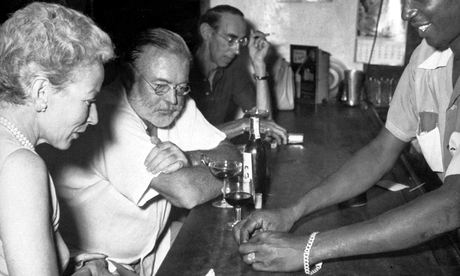
Ernest Hemingway with his wife Mary in Cuba.

Ernest Hemingway with his wife Mary in Cuba. Photograph: Getty


Travelogue, literary criticism, memoir, science, psychoanalysis: Olivia Laing’s second book lines up genres like shot glasses along a bar. It could result in a terrible grape-and-grain headache, but her examine of six alcoholic American writers – John Berryman, John Cheever, Raymond Carver, Tennessee Williams, F Scott Fitzgerald and Ernest Hemingway – is so very carefully measured it seldom loses clarity.


Laing dreamily follows her subjects’ wavering trails across the US – attending an AA meeting in New York, swimming in the “deep, mixed waters” off Essential West – whilst remaining steady, sympathetic and wary of the cliches of the tough-drinking genius. Impacted by her own family’s expertise with drink, she focuses on the sadness and worry, on ruptured beginnings and broken ends. She imagines Hemingway’s relief at clinking ice into a glass right after evoking his father’s suicide in For Whom the Bell Tolls (“a shot of the 1 issue no a single can consider from you”) and properties in on a desperate line from Berryman’s Dream Songs: “Wine, cigarettes, liquor, require require require.” Such horrible emptiness may possibly be the overriding theme, but the book is full of insight, compassion and unexpected elegance.


• To buy The Trip to Echo Spring for £8.79 with cost-free United kingdom p&ampp get in touch with Guardian guide support on 0330 333 6846 or go to guardianbookshop.co.united kingdom.


The Trip to Echo&nbspSpring by Olivia Laing evaluation a study of 6 alcoholic US writers

8 Mart 2014 Cumartesi

The similarities among an alcoholic and a teenager

rehab column family

‘Teenhood, even though short in years, can bleed into the long term and have an effect on grownup daily life.’


Not too long ago R had a key relapse, a bender that lasted a couple of days, in the course of which he holed up in his flat, blinds down, mobile cellphone switched off, intransigent in his belief that alcohol was the only issue that would soothe his dark mood.


He didn’t asked for aid, but he advised me he loved me when I at some point located him. I replied that I loved him as well, and explained that I hoped he could find the help he necessary.


On the identical evening, my daughter had a meltdown about school, which resulted in her saying some really cruel items about me and how I was to blame for her misery. I experimented with to soothe her, to hug her, but her anger rose and she ended up shouting, and strolling out of the property to see her good friend.


These two scenarios, however far from similar, tested my ability to practise new, healthy behaviours. 1 factor I’ve realized is this: obtaining an alcoholic husband and a teenage daughter may well not sound like equivalent bargains, but neither truly has a choice about the predicament in which they discover themselves. Addiction, whether or not dormant or lively, is for life. Teenage-hood, though brief in real years, can bleed into the future, and affect adult lifestyle. And though I can not management my daughter or my husband’s behaviour, I can understand to support them individually, in loving methods.


The past couple of days have proved to be a fantastic test of my stamina: not for climbing up hills, or doing sit-ups, or staying up half the night attempting to finish work. It virtually appears tougher than all of these things, yet it is just trying to maintain my mouth shut.


Throughout a heated minute with my daughter – typically something as innocuous as me not enabling her to use her mobile phone at the dinner table – she has identified the brilliant impact it can have to say some thing hurtful, then swiftly leave the space. She is – as my mom reminded me not too long ago – behaving precisely as I did when I was a teenager.


At this kind of times, I could comply with her to her bedroom and enter into an argument, and it would turn out to be a total-blown row, with her saying items that, though cruel, have much more than a modicum of reality. Issues like, “You married an alcoholic and you can’t cope with all of this.” If I am truthful, there is no comeback to that. Of program, I could try out to cause, try out to say that I’m coping appropriate now, and inquire her to be affordable. But I realise that she – like several a teenager – has a entire sea of shit and hormones swimming about her body. And usually they have just discovered that adults are complicated and much less than perfect.


With all that in thoughts, I can see that following my daughter out of the room is not often a wise concept. It is ideal to let the heat dissipate, to enable my daughter to brood a little, operate by means of her frustration, call a pal and talk it through, since I am her mom and not her buddy. The aggravation she feels (specifically when her family lifestyle has been so tumultuous of late) is sometimes eased a minor just by currently being permitted to get factors off her chest.


Trying to keep my mouth zipped is not effortless. There are times when my phrases are striving to escape like kittens from a cardboard box. I consider I have the answers I at times want to show that I am proper more typically, I merely want to fix factors with my words. But then I have to remind myself that words alone have by no means fixed something.


My daughter at times wants to stroll away from a difficult circumstance to the sound of her own voice – rather than mine – reverberating all around her head. In the days when I had to have the last word, the short-term sense of triumph was often exhilarating. It may have worn off quite quickly, but most infuriating was the adult who often desired to round off the argument with a wise minor piece of suggestions.


I am understanding with R how critical and beautiful the energy of silence can be. There were occasions when a million of my phrases would not have been enough. I would send emails in anger, others with the intention of comforting, although all with an underlying tone of resentment. Soon after a relapse, I would usually tell him what his very best program of action would be. If he was also unhappy to talk, I’d tell him to get much better at becoming vocal about his pain. “What would I do?” I used to believe – then inform him to do the exact same.


But he is not me, and I am not an alcoholic. He has to function via this, deal with his personal silence, cope with the truth that eventually, if he carries on drinking, the voices of people telling him to stop will finally disappear altogether, and the only voice left will be his personal. Hopefully then, he’ll pay attention.


The similarities among an alcoholic and a teenager

15 Şubat 2014 Cumartesi

The hardest thing about living with an alcoholic is not being aware of if - or when - he will drink once more

rehab column family

‘I do typically wonder if he’s knocked back a couple of miniatures on the way home, throwing the empties into a bush. I know these thoughts will in no way totally go away.’


One particular of the hardest issues about residing with addiction is the not-being aware of. I continue to be unsure about regardless of whether R will flip up to see the children, regardless of whether he will preserve his task, or no matter whether he’ll be ready to commit to sobriety for much more than just a handful of days.


Then there is the not-knowing about us: regardless of whether, if we do get back collectively, I will be in a position to keep strong adequate to enjoy him unconditionally – to continue to be detached ample to raise our kids and keep our lives functioning when he is not properly, due to the fact there is no ensure that he’ll usually be sober.


This week has been good for R. He has had a longish stretch of sobriety, is exercising once more, and speaking about quick-term holiday ideas. I am striving tough not to preserve tabs on him, to see if he’s doing as he says he is: when he walks to the store for a pint of milk, I do often wonder if he is knocked back a couple of miniatures on the way residence, throwing the empties into a bush. I know these thoughts will in no way fully go away. Like grief, doubt has no expiry date. Time could fade and dampen the mind’s potential to recall unsettling or upsetting ideas, but it does not have the energy to destroy all uncertainty.


There is no room for complacency the place addiction is concerned. The death of Philip Seymour Hoffman from a suspected heroin overdose has been dissected, scrutinised and gawped at above the past couple of weeks, as people have experimented with to make sense of the predicament. Twenty-three many years clean but relapsed final year suffered from loneliness split from his spouse just lately. These are details about his existence, but not motives for death and addiction. Numerous people wonder how this kind of a talented, brilliant guy with a loving family members, wealth and access to all of the greatest rehab centres could die? Definitely if he’d acknowledged how considerably he was loved, he would nonetheless be here.


Of course, we never know exactly why individuals do factors. Why do intelligent, stunning girls minimize themselves? Why do youthful guys with bright futures and nurturing households leap off bridges? Why do twelve-12 months-previous women starve themselves to death? The tragedy about self-destruction is that we’ll never truly know.


I could purport to be an skilled on addiction, but that would be a bit of a joke, like saying I’m a childbirth guru simply because I have had three children without complication. I might know some of the science behind addiction, or the human or social circumstances that can lead to it – this kind of as poverty, low self-esteem or household history – but by its quite nature, addiction is an irrational disease arising for no a single reason and claiming no one particular kind of man or woman.


The not-being aware of why people become addicts is an excruciatingly difficult factor to grasp. I want to help, to resolve difficulties, but when a problem can’t be solved – a single that is so complex and strong it has the capacity to damage not just the lives of addicts but also these of people who love them – the concept that addiction is a illness with out a diagnostic cure is infuriating.


I’m only just beginning to comprehend the illness, despite having grown up with a heroin-addicted relation (now seven years clean). I can now view addiction as a illness, which is hugely helpful with respect to how I deal with my very own behaviour. Unless of course R needs to get greater, there is little – other than giving love and help – I can do.


I used to believe R drank as a way of sticking two fingers up at the planet, of saying “Ha-ha! Look what merry hell I’m generating!” Now I see which is not the situation, and I really feel a little humble. I was incorrect to think I could make items far better for him by saying “Look what you have! You have me, and your brilliant mind, and 3 wonderful youngsters and mother and father who never ever did anything but really like you.”


The only lesson that I can ever actually learn from other people’s addictions or tragic death, is that there is no lesson to be learned. I will by no means genuinely know if or when R is going to drink yet again. My relation may use again. It could be right now, it could be up coming week, or it could be following twenty many years of sobriety. All I can do is pray for them.


Although alcoholism and addiction don’t define R as a individual, they are as considerably a element of him as the beating of his heart. They will not cease to exist for as extended as he lives. So I select to love him just for these days, for this moment. Simply because him here, right now, is all I really know.


The hardest thing about living with an alcoholic is not being aware of if - or when - he will drink once more

25 Ocak 2014 Cumartesi

My husband is an alcoholic compulsive liar but it really is hard to detach from him

rehab column family

‘I can not ask for honesty from R when he confesses to becoming a ­compulsive liar. It is deranged of me, when I know not where the lies finish and the reality starts.’


Madness has taken over. I slam on the brakes, parking diagonally, the bumper jutting out from the line of other, neater cars. It seems like all the other issues in my lifestyle at the minute: the unclosed drawers, the piles of washing, the stacks of paperwork: chaotic.


I feel suggest, angry and crazy. R and I have driven to a purchasing centre that houses a multiplex cinema, supermarket and a greasy noodle chain-restaurant. Prior to I turn off the ignition, fury rises. Static road rage the sort that can make people passing consider, “Domestic?”.


Get out of the car. I fucking hate you. I hate you so significantly that I cannot even speak to you. Your Lies. The deceit. Ten many years of this shit. Get out.


The lies that have emerged in the past week have been quite sturdy. I identified out about the lady R was seeing, regardless of him saying he only needed to be with me. “It was nothing at all. Yes, I fancied her a bit but she appeared to feed off my alcoholism and grief,” R said when he tried to clarify their connection.


Then, a letter arrived on my doorstep (R didn’t want to taint his new address) with a neighborhood pawnbroker’s stamp on the envelope. “Ah, yes,” I imagined. “I was proper. R did sell his wedding ring for peanuts.”


Whatever he is undertaking with other people, or with his daily life in standard, need to have practically nothing to do with me. The other female was possibly just a distraction, but if she had been far more? I would have to deal with that and recognise that I never genuinely want to be with him in his alcoholic state. I can see that my emotions of jealousy when I located out have been typical, and probably a useful factor. They reminded me that detaching from R is practically as difficult as him trying to give up drink. When you genuinely really like some thing that is undesirable for you and you know that you should not be performing it, the compulsion to indulge is often even more powerful.


When I have finished shouting, R will get out of the automobile. Someplace in my warped mind I believe about calling him back, but realise that lunch would be miserable and we are not prepared to talk about anything. An email is almost certainly a better way to talk about programs for when he will next see the youngsters. I observe as he helps make his way to the car-park stairwell.


In the happier weeks ahead of now, I was wandering around in a haze of blind passivity. When R showed an interest in staying the evening at times, I buzzed with excitement. It was like his presence was sating my loneliness every time he left, I slumped within. I needed him to say that he’d keep for ever – which, soon after all I’ve discovered about letting go, is a key regression.


I had started out to consider, “Could we go back to how we had been?” The very good times, the fantastic instances shooting the breeze that produced us consider sticking with each other was the most crucial issue. I forgot about all of the loneliness that I felt from mistrusting him. I just blocked it out.


This is named codependency. To detach from R I have to accept that I are not able to control something he does. But if I am to increase my lifestyle, his lifestyle and the lives of our young children, I must not let what he is performing be the target of my interest at all.


Modify is a giant pain in the arse when I feel about the challenging operate that it will entail. But to remain the exact same, to get lazy with the truth, is some thing I can no longer do. I can not ask for honesty from R when he confesses to becoming a compulsive liar. It is deranged of me, when I know not the place the lies finish and the truth starts.


Of program I nonetheless want R and me to be all about the “I enjoy yous”, our connection steeped in the romantic enjoy that kept us afloat in the early, headier days of our connection. I want to hold the soreness out by carrying myself along in a dream developed only on irrational enjoy, ignorance and safety. I want R to adjust, but not to adjust us. Which is like altering 1 worth in a mathematical equation and expecting to get the identical answer as just before.


My husband is an alcoholic compulsive liar but it really is hard to detach from him

17 Ocak 2014 Cuma

If you want to know how to help an alcoholic, you are asking the wrong question | Patrick Strudwick

‘How do you reply to hearing a thud, and it is them on the stairs? Or when they burst into our bedroom raging?’ Photograph: Stephen Barnes/Urban Exploration/Alamy


Making an attempt to assist an alcoholic is, at greatest, like making an attempt to water a dead plant. It is not a situation of diminishing returns – there are none. Only two solutions surface, as a result, to the question of how any of us with loved ones who descend into dipsomania can assist. Very first, you cannot. Pleading, screaming, reasoning, removing their stash, calling their GP, frantically Googling AA meetings, phoning the police, the ambulance, their mothers and fathers, or young children, or anyone – no, it is all useless.


2nd, it is the incorrect question, and 1 that cloaks the query we can not attain (since a carer’s perform is in no way accomplished): how do we support ourselves? And then, exactly where is the aid for us?


I ask simply because these concerns by no means occurred to me for the duration of the two intervals I lived with alcoholics, nevertheless have been triggered by studying of another’s predicament. Nobel prize-winning biologist Sir John Gurdon, 80, and his wife Jean, 77, were, a court heard this week, attacked by their alcoholic son. John confronted William, forty, in their kitchen over his drinking – he had attempted the Priory. William lashed out.


“You got drunk and pushed your mom above so she hit her head on the floor leading to injury,” said Ken Sheraton, the judge who gave William Gurdon a suspended prison sentence. “You then pushed your father on to the floor and grabbed him by the throat and attempted to strangle him.”


It was not this that winded me it was one more crushing detail. When his mom smelled booze on his breath at 8.30 that morning she cooked him a fry-up. Of course she did. He is her son and it is what we do. Give them meals. Make them a coffee. Pay attention to their looped anecdotes. Mop up their self-hatred. Reassure them. Support them.


The unkind phone this enabling. I get in touch with it caring. Simply because what else are we to do? What is the very best response to stepping in urine due to the fact you made it to the toilet in the quiet of night but they had not? How are we to respond when we hear a thud and it is them on the stairs? Or when they burst into our bedroom raging?


I did not know what to do when one of the alcoholics I lived with left the front and back doors open (a billboard advertisement for burglary in north-east London). I did not know what to do when all the reasoning ran out and the investigation ran, rather inaptly, dry. Try out to locate an NHS rehab bed for an individual. Attempt to find totally free counselling. Try out even to get them sectioned. It is virtually extremely hard. At this stage there is not even water for the dead plant.


Some recommend Al-Anon, the organisation for those affected by alcoholics, and no doubt they are superb, but what I needed was a working, capable NHS and social care method that requires addicts off our incapable hands.


Alcoholics talk of “rock bottom”: theirs, not ours. I reached mine in October 2007, not since I couldn’t cope any much more, but due to the fact he was drunk on a Sunday morning and my then 4-yr-outdated niece was due to come round. No little one ought to see that. But, in accordance to Alcohol Concern, two.six million young children are living with mothers and fathers who drink “hazardously”. How are we to respond to that gutting, jeroboam statistic other than to conclude: we do not care about these kids.


The privileged – by which I imply not just the John and Jean Gurdons but any grownup who, unlike youngsters, has options – can at rock bottom go nuclear: kick them out or telephone the police. I did the former, grabbing his keys, bagging up his belongings and dumping them on the street. But what are you left with?


Guilt for sure. More fear – will they die? And, in my case, a bedroom reeking of the dozens of vodka bottles stashed inexpertly. There wasn’t even anyone to support me clean it up.


If you want to know how to help an alcoholic, you are asking the wrong question | Patrick Strudwick