pollution etiketine sahip kayıtlar gösteriliyor. Tüm kayıtları göster

6 Mayıs 2017 Cumartesi

The Observer view on curbing air pollution | Observer editorial

Pollution has long blighted the air that we breathe. Complaints about fumes generated by coal-burning in London were recorded as early at the 13th century. The heavy smogs that descended on the capital in the 1950s killed thousands. Governments have long attempted to regulate the pollution of our cities: in 1273, authorities introduced a prohibition on burning coal in London due to it being “prejudicial to health”.


In recent years, air pollution has become less visible, but no less deadly. The noxious oxides and particulates that are linked to higher incidence of cardiovascular and respiratory diseases and cancer may not create the pea soup of industrial times, but they are estimated to be responsible for 40,000 premature deaths a year, a public health crisis on the scale of smoking or obesity.


London breached legal annual pollution limits in just the first five days of 2017. But this is not just a problem affecting the capital: almost nine out of 10 urban areas have had levels of nitrogen dioxide above legal limits since 2010.


While no one is immune, pollution particularly affects children, whose lungs are still developing. Key culprits are diesel vehicles, followed by gas combustion from boilers and cookers.


Air pollution shares none of the intractable characteristics of problems such as climate change and microbial resistance. Unlike the latter, air pollution, on the whole, respects international borders and does not require the international treaties and agreements that can take years to hammer out.


Local action to tackle air pollution can immeasurably improve air quality: the thinktank Policy Exchange has estimated that properly investing in reducing air pollution in London would increase life expectancy for its residents by an astounding six months.


As the problem has become less detectable to the naked eye, so, it seems, has been the willingness of successive governments to do anything about it. In fact, government policy over the last 15 years has, on balance, made air pollution worse, not better. The car tax regime was rebalanced to favour diesel over petrol, because diesel vehicles used to emit lower levels of greenhouse gases and policymakers believed manufacturers would deliver cleaner diesel cars. The market share of diesel cars rocketed as consumers responded to incentives: nearly half of the new cars sold in the UK now have diesel engines.


But thanks to lax standards in European emission standard testing, the vast majority of diesel cars continue to belch out poisonous fumes far in excess of the legal limit. There is now evidence that diesel cars may even emit more carbon than petrol engines. With hindsight, incentivising consumers to buy diesel cars must surely count among one of the most counterproductive environmental policies.


Cleaning up our air is eminently achievable with the right package of measures. We need a mix of clean air zones that include charging owners of diesel vehicles to drive into densely populated urban areas, a scrappage scheme for diesel cars, a tax system that discourages owners from buying diesel and much tougher European testing.


Despite the dreadful death toll, the government has dragged its feet for seven years. It ignored the legally binding European targets on air pollution that the UK was obliged to meet by 2010 and only produced a plan when it was forced to do so after a lengthy court battle instigated by the environmental campaign group Client Earth. The plan it produced under duress was so thin that the supreme court ruled it had to produce a better one by the end of last month.


Still, the government tried to delay further, arguing that it was prevented from publishing a plan under the purdah convention that the government makes no new policy announcements before a general election. The high court ruled against the government last month. The document it finally published last Friday was rightly condemned as utterly inadequate to the task, lacking any specific proposals for tax changes or a diesel scrappage scheme. It kicks the issue into the long grass at the expense of people’s health.


The government is clearly concerned about proposing any measures that would hit diesel drivers a few weeks before the general election. Yet Thursday’s local election results show it has nothing to fear: barring an electoral earthquake, it is on course for a decisive victory. Votes before lives: that’s Theresa May’s telling choice.


The Observer view on curbing air pollution | Observer editorial

5 Mayıs 2017 Cuma

Air pollution plan: sacrificing the nation"s health to save an election campaign

For seven years, people in Britain have been forced to hold their breath and wait for a comprehensive plan to tackle the nation’s toxic air crisis. After a series of humiliating defeats in the courts, Friday’s government plan was meant to finally deliver.


But instead ministers hit the brakes and slammed the policy into reverse – the farcical new strategy has even less detail than the one already ruled illegal. What was the impassable roadblock in the way of finally starting to cut the 23,000 early deaths diesel pollution causes every year? Nothing but pure political expediency.


The only sure way to bring the toxic nitrogen dioxide spewed out by dirty diesel vehicles down to legal levels is to keep them out of cities and towns. The law demands the fastest possible action, which means deterring polluting drivers with charges – as will happen in London. But backing new taxes on drivers in the heat of an election campaign promises a political car crash, so ministers have simply swerved and crashed into the nation’s health instead.


The most shocking aspect is that buried in the documents are candid admissions that the crisis is the “largest environmental threat to public health in the UK” and that it is a “direct result” of car makers gaming emissions tests for years, so that their vehicles pump out far more pollution on the road than in the official lab tests.


Ministers even say: “We will continue to press car manufacturers to develop options for recalling existing vehicles to improve their real world emissions performance.” But unlike in Germany and France, the government’s pressing of car makers has driven precisely zero action.


Rather than tackle air pollution head on, the government has passed the buck to local authorities, daring them to impose the needed charges instead and face the electoral consequences. Ministers suggest councils should penalise any diesel cars more than two years old – most of them – but lack the courage of their convictions.


In place of meaningful action, the government’s plan suggests gimmicks such as removing speed bumps and re-phasing traffic lights, measures as likely to increase traffic and emissions as to cut them.


One of the few good parts of the new plan is funds to clean up older buses, lorries and taxis but even this is old money, already announced in the budget. The much vaunted scrappage scheme is mentioned only as a possibility and even then would only cover 0.1% of all diesel cars.


The new plan will leave the nation gasping for years to come and it seems likely that ClientEarth, the lawyers who have twice had the government’s plans declared illegal, will return to the courts for a third time.


The government is likely to view its manoeuvring as a political success, having buried its feeble plan under the local election results. The government’s cynical calculus is that diesel drivers are more of a political force to be feared than people angry about the health damage being caused to them and their children.


Air pollution plan: sacrificing the nation"s health to save an election campaign

27 Nisan 2017 Perşembe

The Guardian view on air pollution: playing politics with the nation’s health | Editorial

Thanks to this government’s intransigence about tackling air pollution, the battle to improve the quality of the air we breathe has played out not in the political arena, but in the courts. Time after time, the government has found itself on the wrong side of the law: first for its failure to meet legally binding European targets on harmful nitrogen dioxide emissions; then, for failing to produce an adequate plan to address these. Its latest delaying tactic has been to claim it could not meet this week’s court-imposed deadline for publishing a new draft plan, because of the “purdah” convention ruling out new government announcements in the run-up to an election.


And so it has fallen to judges yet again to take the government to task over its failure to act. Today’s ruling took apart the government’s case: its own purdah guidance sets out exemptions where public health is at risk. As the judge pointed out, why would it be better to have parties debating what ought to be in a draft air pollution plan, when it could be debating what is actually in it?


The government’s real motivations are political, not procedural. Having delayed taking meaningful action for seven years, it is clearly nervous about proposing any measures that hit drivers of diesel cars during an election campaign. Its political cowardice is astounding – and pointless. Public attitudes have shifted in recent years, and London’s Labour mayor, Sadiq Khan, has made tackling air pollution one of his top priorities. The government is unlikely to face opposition to tougher action from any of its mainstream political opponents, and is enjoying double-digit poll leads.


Yet it continues to shirk its responsibilities to the nation’s public health. Today’s air pollution may be less visible than the smogs that settled over our cities in the 1950s, but it is a deadly killer, responsible for upwards of 40,000 premature deaths per year. London breached its annual air pollution limit just five days into 2017, and legal limits were easily surpassed in the vast majority of local authorities. The effects are particularly pernicious for children whose lungs are still developing.


The human cost makes the government’s latest attempts to delay a disgrace. The two-month extension it was seeking for its final plan could have meant thousands of avoidable premature deaths, all in service of not wanting to jeopardise a marginal number of votes in an election that it is on course to win handsomely. It’s a sick calculus.


The good news is that air pollution is easier to tackle than other environmental and public health challenges. Unlike climate change, it is relatively localised: city-scale actions to address pollution levels can have a marked effect on their air quality. Much (though by no means all) of the problem comes down to emissions from diesel vehicles and, to a greater extent than in other areas of public health, consumers are highly responsive to financial incentives. The irony is that we know this because many have switched from petrol to diesel as a result of sweeteners introduced back when diesel was thought to be more environmentally friendly due to its lower carbon emissions.


But heavy lobbying from the car industry in Westminster and Brussels has staved off firm action. European emissions tests for diesel cars have been far easier to manipulate than in the US; as a result, 97% of modern diesel cars exceed the official limit for NOx pollution. Behind the scenes, the British government has tried to block tougher testing. It’s a familiar story: the government similarly watered down plans to tackle childhood obesity in the face of special pleading from the food and drink industry.


The high court ruling puts the ball back in the government’s court. It should choose to accept it, rather than appeal. But either way, it has been exposed as a government willing to privilege marginal political advantage and the lobbying efforts of big business over the health of the nation.


The Guardian view on air pollution: playing politics with the nation’s health | Editorial

24 Nisan 2017 Pazartesi

"Life improved when I left London": readers on tackling air pollution

About 40 million people in the UK are living with illegal air pollution levels, according to analysis commissioned by the Labour party.


Earlier this month the Guardian reported thousands of children across England and Wales are exposed to illegal levels of air pollution from diesel traffic, putting the health of young children at risk in the long term.


Under pressure to lower pollution levels and improve the quality of the country’s air, the government is facing criticism for a last-minute bid to delay the publication of its clean-air plan, which the high court had said must be produced by 24 April.


After a call-out asking readers for their experiences of air pollution, some of them tell us how they’re tackling the issue.


‘Despite being let down by our council we are determined to fight on’


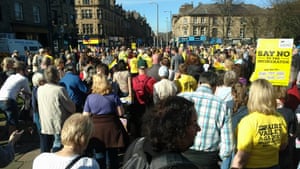
A march attended by Aire Valley Against Incineration (AVAI) supporters


A march attended by Aire Valley Against Incineration (AVAI) supporters.

We currently have quite high levels of air pollution in the areas around Bradford and Leeds. Our council has given the go-ahead for a private company to build an incinerator in the bottom of the Aire Valley – near homes, schools and a sports facility. The incinerator is not for household waste, but for industrial waste that will be shipped in from all over the country by 70 HGVs a day. One of the roads that these lorries will use is Hard Ings Road, Keighley, which is already on the Greenpeace energy desk’s map as being over the legal pollution limits.


We are campaigning hard to stop the building of this incinerator. We are also very concerned about the location – at the bottom of a valley that experiences regular temperature inversions which will make it very difficult for the pollution to disperse. We have nearly 6,000 members on our Facebook group, more than 8,500 signatures on the online petition and more than 2,100 objections have been made on the council’s planning portal. A recent march that we organised was attended by over 600 local people. Despite the fact that our council has let us down, we are determined to fight on!


Rachel Shimbles, 47, from Keighley


‘I’d encourage people to seriously consider leaving London. My quality of life shot up when I did’


As an ex-Londoner, I know how bad air pollution can be in the capital. Kendal air is much cleaner – but we still have places where legal levels of pollution are being routinely breached. I campaign with 20’s Plenty for Kendal as a way to encourage people to walk and cycle more in our compact little town – to make Kendal less congested, safer, cleaner, quieter and even more attractive as a place to live and to visit.


I’d encourage anyone to seriously consider leaving our capital. My quality of life shot up when I moved up here – and clean air was definitely a part of that. But – and it’s a big but – no one should be under the illusion that everything is rosy outside our big cities. It isn’t.


Paul Holdsworth, 57, from Kendal


‘I have lobbied local politicians, Defra and my MP’


We live in a densely populated urban environment and have been badly affected by the smoke and particulate pollution from a neighbour’s wood burner coming into our home for months at a time. As a result and after investigating the associated pollution issues we have become acutely aware of the significant health risks and damage regularly breathing this pollution causes, its effect on our quality of life and the long-term health risk. However, after we complained to our local authority we have found our hands have been tied behind our backs with the council failing to act.


I am active on Twitter, have lobbied local politicians, Defra, our MP, and contacted Gary Fuller (the senior lecturer in air quality measurement at King’s College, London). Having grown up during the implementation of the Clean Air Act, we mistakenly believed it had put an end to the blight of air pollution. A new Clean Air Act for the 21st century is needed to impose proper balanced controls. Pollution is a choice, breathing is not.


cleanairforall2, 55, from London


‘I switch off air fresheners when I can’


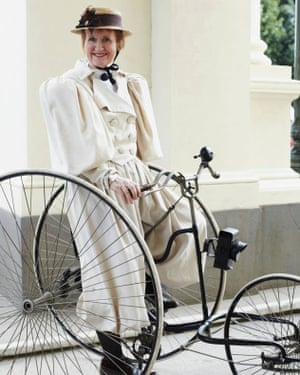
Cecilia taking part in a vintage bike parade


Cecilia taking part in a vintage bike parade. Photograph: Rita Platts

I set up a campaign called Gasp in 1980 (Group Against Smoking in Public). We achieved most of our goals but my intolerance to other forms of air pollution has caused me to run one-woman campaigns against other unwanted forms of air pollution. More recently I have campaigned against so-called “air fresheners” which pump out noxious fumes in an effort to cover everyday smells. They make me heady and nauseous. I often go into local shops and switch them off if I can find them hidden. I now won’t go to a hotel or get in a taxi that uses plug in air fresheners. I wish there was a national campaign to stop the sale and use of these things. I’m also a lifelong cyclist and have campaigned over many years on the benefits of cycling including the positive impact of cycling on air pollution.


Cecilia Farren, 67, from Bristol


‘We’re in the process of moving away to get away from the traffic’


The road on which we live has very high levels of traffic. It is a poor area, with many families renting their accommodation. My wife’s asthma has definitely worsened and the noise from the road is constant, as the traffic includes many HGVs and buses. Recently, the road was closed for a month to replace the mini-roundabout at one end with a traffic-light system.


The month was bliss for the residents, but once the road reopened the traffic worsened with a corresponding effect on the quality of air. We are now in the process of moving away to a location that is quiet, but one that we are not sure we can afford. Right now, we feel like the gamble is worth it to get away from this road.


Craig Hambling, 34, from Colchester


"Life improved when I left London": readers on tackling air pollution

Ministers under fire over bid to delay publication of air pollution plan

The government is facing renewed pressure after a last-minute attempt to delay the publication of its plan to tackle the UK’s air pollution crisis.


Ministers were under a court direction to produce tougher draft measures to tackle illegal levels of nitrogen dioxide pollution, which is largely caused by diesel traffic, by 4pm on Monday. The government’s original plans had been dismissed by judges as so poor as to be unlawful.


But following the announcement by Theresa May of a general election on 8 June, ministers lodged a lengthy application to the court late on Friday. It is understood it asked judges to allow them to breach the Monday deadline to “comply with pre-election propriety rules”.


The new draft would be submitted in June, after the election, with a full policy not produced until September.


Lawyers from environmental law group ClientEarth, which successfully took the government to court over its air quality plans, said the move was unacceptable, adding it was discussing its next move.


James Thornton, the group’s CEO, said: “The unacceptable last-minute nature of the government’s application late on Friday night, after the court had closed, has meant that we have spent the weekend considering our response.


“We are still examining our next steps. This is a question of public health and not of politics and for that reason we believe that the plans should be put in place without delay.”


The government lodged the lengthy application shortly before 7pm on Friday, which was too late for the court to accept. It was due to be considered by the court on Monday.


But ClientEarth said it was unlikely there would be a hearing on Monday as they would need time to respond to the government’s arguments, although the judge could order an emergency session.


The scale of the air pollution crisis was revealed in a joint Guardian-Greenpeace investigation this month showing hundreds of thousands of children were being educated within 150 metres of a road where levels of nitrogen dioxide from diesel traffic breached legal limits.


Last week figures obtained by Labour showed that more than 38 million people, representing 59.3% of the UK population, were living in areas where levels of nitrogen dioxide pollution were above legal limits.


Research consistently shows that exposure to traffic fumes is harmful to children and adults. Children are more vulnerable because their lungs are still developing and exposure to nitrogen dioxide reduces lung growth, causes long-term ill-health and can result it premature death.


Nitrogen dioxide emissions from diesel traffic cause 23,500 of the 40,000 premature deaths from air pollution each year, according to figures from the Department for Environment, Food and Rural Affairs (Defra). In April last year, MPs said air pollution was a public health emergency.


Thorton said: “Whichever party ends up in power after 8 June will need this air quality plan to begin finally to tackle our illegal levels of pollution and prevent further illness and early deaths from poisonous toxins in the air we breathe. The government has had five months to draft this plan and it should be published.”


A Defra spokesman said: “We are seeking an extension to comply with pre-election propriety rules.”


Ministers under fire over bid to delay publication of air pollution plan

21 Nisan 2017 Cuma

Government tries to shelve pollution action plan until after election

The government has made a last-minute application to the high court to delay the publication of its plan to tackle the air pollution crisis.


Ministers were under a court direction to produce tougher draft measures to tackle illegal levels of nitrogen dioxide pollution, which is largely caused by diesel traffic, by 4pm on Monday. The government’s original plans had been dismissed by judges as so poor as to be unlawful.


But following the announcement by Theresa May of a general election on 8 June, ministers lodged a lengthy application to the court late on Friday. It is understood they are asking judges to allow them to breach Monday’s deadline and submit a draft in June – after the general election.


It is understood that a full policy will not be produced until September this year.


The government has had months to come up with its air quality plans and Whitehall sources indicated to the Guardian this week they would be published in time.


The late application to delay publication was condemned by the environmental lawyers group ClientEarth, which successfully took the government to court over its air quality plans. MPs have said air pollution in the UK is a public health emergency that causes 40,000 premature deaths a year.


James Thornton, CEO of ClientEarth, said: “We are urgently considering the government’s application to delay the publication of the draft air quality plan which was received on Friday evening, less than one working day before the plans are due.


“It is far from acceptable that ministers have left this to the very last minute. The government proposes to delay the publication of the air quality plan despite the clear public health risk caused by illegal air quality. These plans are essential to safeguard public health and they should be put in place without delay.”


The application is likely to be considered by judges on Monday. Judges have already told ministers that their plans were taking too long and imposed the deadline to force the government to come up with new measures more quickly.


The government lodged a lengthy application shortly before 7pm on Friday to the court, which was too late for the court to accept. It will now be considered early next week.


Thornton said the general election was not an acceptable reason to delay taking action against air pollution.


“This is not a political issue but a public health issue. Whichever party is in power, the British public need to see an air quality plan which relies on good scientific evidence and which ensures that people no longer have to breathe toxic air and suffer the grave consequences to their health as a result,” he said.


Greenpeace also condemned the delaying tactics. Anna Jones, from Greenpeace UK said: “Ministers have had months to come up with a robust plan to tackle illegal air pollution. They have no excuses to delay its publication any further.


“The Cabinet Office guidance makes it clear that essential consultations can still be launched during purdah, and even mentions safeguarding public health as a ground for exceptions.


“Air pollution is a full-blown public health emergency, linked to thousands of premature deaths and a host of health problems. If the government intends to use the election as a pretext to buy more time, that would only be a sign that they just don’t get the gravity of the situation.”


A joint Guardian/Greenpeace investigation revealed this month that hundreds of thousands of children were being educated within 150 metres of a road where levels of nitrogen dioxide from diesel traffic breached legal limits.


A spokesman for the Department for Environment, Food & Rural Affairs said: “We are firmly committed to improving the UK’s air quality and cutting harmful emissions. We are seeking an extension to comply with pre-election propriety rules.”


Government tries to shelve pollution action plan until after election

19 Nisan 2017 Çarşamba

Pollution is killing our children. Here’s how we can save them | Geraint Davies

Every weekday, millions of primary school children across the UK put their lives at risk. Break time brings relief for busy teachers and is often met with screams of delight as children run out onto the playground. But in many of our major cities, tens of thousands of children in hundreds of schools, nurseries and colleges are at risk as they inhale diesel pollution breaching EU air quality standards.


Across the UK, more than 40,000 people die prematurely from diesel pollution, at a cost of £20bn each year, according to the Royal Colleges of Physicians and of Paediatrics 2016 report. Now 50% of new cars are diesel, with each car producing many times more fumes than laboratory tests had previously indicated. The VW scandal has shown that the motor industry cannot be trusted and the royal colleges’ report finds that babies and children are particularly at risk. Foetuses in pregnant women exposed to air pollution are more likely to suffer effects to their lungs, heart and neurological development. Children in “clean air zones”, areas where the air quality problem is most serious, have a 10% reduced lung capacity and have more respiratory problems, together with effects on their nervous, immune and cardiovascular systems. This leads to physical and mental health problems in later life.


The government has compelling evidence to act now. Instead it fears the backlash of diesel drivers who bought their cars in good faith and are still encouraged to do so by lower vehicle tax rates. The public-health risks of diesel particulates have been well known since the days of Margaret Thatcher. However, the impact of nitrogen oxides and the scale of underestimated pollution from lab tests compounded by the sheer volume of cars has now become a public-health catastrophe. That’s why the demand for a new Clean Air Act grows. Meanwhile, the supreme court has demanded that the government produces a clean air strategy, to fulfil our EU air quality obligations. Today, I publish my clean air bill to give shape and ambition to the government’s plan.


Britain needs to take bold leadership. We already know that four capital cities – Paris, Madrid, Athens and Mexico City – have plans to remove diesel vehicles by 2025 and that the markets are investing in zero-emissions futures. Tesla, founded in 2003, produces just 76,000 electric cars and is valued at $ 49bn (£38bn) – $ 3bn more than Ford, founded a century earlier, which produces 6.6m vehicles.


The clean air bill is a route map to reach World Health Organization air quality standards by tackling emissions in our cities, ports and airports. It provides the signals and incentives for consumers and producers to change their behaviour to do so.


Rather than penalising diesel car-owners who bought in good faith, the bill calls for recall and refit of cars, fiscal incentives and scrappage schemes largely funded by manufacturers for drivers to switch to vehicles that produce fewer – or ideally, zero – emissions. It provides for a national electric and hydrogen refuelling network and gives local authorities a responsibility to measure and publicise pollution levels, in particular close to vulnerable groups such as children and the elderly. Councils will have powers to restrict access or introduce pollution charges if communities so wish, based on local evidence.


What’s more, new powers are proposed to combat diesel pollution belching into communities from idling ships in port by requiring a switch to port-provided electric power. The bill also addresses freight transport, pollution at airports and “cheat devices” installed on cars. Overall, the bill aims to make our right to clean air a reality.


Our first duty as parents is to protect our children. Break time, walking to the shops and football in the park shouldn’t be life-or-death decisions beyond our control. They needn’t be. For the sake of all our children, let’s do something about it now.


Pollution is killing our children. Here’s how we can save them | Geraint Davies

17 Nisan 2017 Pazartesi

Air pollution as bad for wellbeing as partner"s death, say researchers

The effect on wellbeing of exposure to nitrogen dioxide, a gas mostly produced in diesel fumes, is comparable to the toll from losing a job, ending a relationship or the death of a partner, research suggests.


The study found a “significant and negative association” between life satisfaction and levels of the pollutant, which causes lung problems. These effects were “substantive and comparable to that of many ‘big-hitting’ life events,” according to the researchers behind Can Clean Air Make You Happy?.


Sarah J Knight and Peter Howley of York University took life satisfaction data from the British Household Panel Survey and UK Household Longitudinal Survey and compared it with detailed air quality records from the Department for Environment, Food and Rural Affairs.


Given that far more people are exposed to to nitrogen dioxide than suffer unemployment or end a relationship, Knight and Howley suggest that the benefits to society from reducing such emissions would be substantive.


The highest levels of nitrogen dioxide occur in London, with the lowest levels in parts of south-west England. The capital has the dubious honour of being home to the worst NO2 hotspot in Europe: Marylebone Road, which recorded the highest annual mean levels of the pollutant, more than double the legal EU limit.


Pollution from nitrogen oxides is responsible for tens of thousands of premature deaths across Europe, with the UK suffering a particularly high toll. Much of the pollution is produced by diesel cars, which emit about six times more than allowed in the official lab-based tests.


The European Environment Agency said the UK had 11,940 premature deaths in 2013 from nitrogen dioxide. The number was down from 14,100 the previous year, but was still the second worst in Europe after Italy.


Modern diesel cars produce 10 times more toxic air pollution than heavy trucks and buses, according to European data released in January.


The European commission started legal action late last year against the UK and six other EU members for failing to act against car emissions cheating in the wake of the Volkswagen dieselgate scandal.


Air pollution as bad for wellbeing as partner"s death, say researchers

6 Nisan 2017 Perşembe

Air pollution made Beijing unbearable. Britain should watch and learn | Tania Branigan

On a good morning, from my Beijing tower block, I could gaze across the city to the hills far to the west. On the worst days, when pollution levels soared off the scale, I could barely make out the buildings across the road. The air purifiers in each room were turned up to 11. The filters inside were supposed to last for six months – but after just a couple of months, the pristine white folds had usually turned charcoal grey.


Even with a mask, 20 minutes outside could leave you feeling nauseous. Friends complained of sore throats and coughs that never went away. It was a running, though unamusing, joke: Airmageddon. The airpocalypse. Beige-jing. But it got inside your head as well as your system. After a spate of especially bad days, my spirits lowered. I longed to see the sky.


And then one spring I returned home for a holiday, and turned the corner at the Peak District’s Surprise View, one of the loveliest I know. Below me lay the Hope Valley, and, to my horror, the smog lay thick in its bottom. It took me a moment to recognise my error. Pollution had become so normal to me that, even at a place I knew so well, and had seen shrouded so often, it had not occurred to me that it was just mist.


In primary school my teacher had described climbing up to the hills as a child, and being unable to see Sheffield thanks to the blanket of smog. So many years after the Clean Air Act, it had been unimaginable to us. Now I took toxic air as the norm, like so many in China. I rolled my eyes when headlines shouted about the UK’s air pollution crisis in April 2014. It was, by Beijing’s standards, a pretty clear day.


Now I live in London again and note each morning how good it feels to breathe clean air. But I’ve noticed, too, how unpleasant it can be to walk along Euston Road. And I’ve started to ask myself why I’ve regarded illegal levels of pollution as acceptable. It is hard to see how our own attitudes – what we notice, what we tolerate – shift and how dependent this is on the views of people around us. To begin with, I took Beijing’s bad days for granted. I lived there for five years before getting purifiers. No one liked the filthy air: but most residents regarded it as inevitable, like bad weather. Masks were seen as at best an eccentricity, at worst an indulgent affectation. The only Chinese people who wore them were warding off infections or trying not to spread them.


It’s hard to pinpoint exactly when things changed. The research was piling up – scary data on the long-term health impacts: early deaths, heart and lung problems, cancer, diabetes, birth defects. So was the anecdotal evidence: toddlers who developed terrible asthma; the previously healthy friend who found himself waking in the night, struggling to breathe. Soon we were checking an air pollution app each morning, and discussing air purifiers and masks as petrolheads might compare sports cars. Private schools acquired inflatable domes so pupils could exercise without going outside.


We could afford to do this. Whether in Birmingham, Beijing or Delhi, pollution disproportionately affects the poor. They are more likely to live in heavily polluted areas (near factories or main roads, say) and are by definition less able to afford even partial remedies. But no one can escape the problem entirely.


Politburo members also looked out on a wall of grey, and presumably their sisters and sons were complaining, and their grandchildren too were racked by coughs. In 2015, hundreds of millions of people watched the documentary Under the Dome, which laid out the impact of pollution on China in frightening detail. It was a turning point in public awareness – and strikingly, while it was eventually censored, it had received at least partial official backing. Some within the leadership had realised that it had to take action, even if there is still a very long way to go.


That British problems are less severe does not mean we can afford to ignore them. The impact of nitrogen dioxide levels on our health, and especially that of our children, whose developing lungs are so much more vulnerable, is undeniable. The high court has twice judged the government’s response to air pollution as being illegally poor.


Measures such as masks and purifiers may help individuals and even save lives. But they are not enough. The true significance of their adoption in China was that they showed people were recognising the problem. Their popularity helped to reinforce the sense that such concerns were sensible and pressing rather than peculiar or trivial. The real solutions are social – taken by city leaders, national governments and international bodies. But they will act only when the rest of us decide we have had enough.


Air pollution made Beijing unbearable. Britain should watch and learn | Tania Branigan

29 Mart 2017 Çarşamba

Thousands of pollution deaths worldwide linked to western consumers – study

Western consumers who buy cheap imported toys, clothes and mobile phones are indirectly contributing to tens of thousands of pollution-related deaths in the countries where the goods are produced, according to a landmark study.


Nearly 3.5 million people die prematurely each year due to air pollution, the research estimates, and about 22% of these deaths are associated with goods and services that were produced in one region for consumption in another.


The analysis provides the first detailed picture of the extent to which consumer demand in the US and western Europe contributes to pollution in developing countries, with profound health consequences.


“If the cost of imported products is lower because of less stringent air pollution controls in the regions where they are produced, then the consumer savings may come at the expense of lives lost elsewhere,” the authors conclude.


The study also reveals how emissions from industrial hotspots affect the health of people in neighbouring countries and, to a lesser extent, more distant regions, as pollutants circulate on global air currents. About 12% (411,100) of early deaths globally were related to air pollutants emitted in a different region of the world, the research found.


The study focused on the emission of fine particulate matter pollution (PM 2.5) from power stations, factories, aeroplanes and shipping in 13 regions, taking in data from 228 countries. Particulates are thought to account for more than 90% of the global mortality from outdoor air pollution, raising the number of deaths from heart disease, stroke, lung cancer and asthma.


The tiny particles can trigger asthma attacks in the lungs and can cross from the air sacs in the lung into the bloodstream, where they can cause inflammation, alter the way blood clots, and make blood vessels more permeable. Particulates have also been shown to migrate into other tissues, such as the liver, kidneys and brain, although it is less clear what the health consequences are in these organs, and the effects also depend on the chemical makeup of the particulates.


“In general, air pollution links to general ill health,” said Matthew Loxham, a toxicologist at Southampton University who was not involved in the study. “It’s a range of different conditions.”


The scientists used a combination of air pollution data, emissions measurements and models of global air currents to tally up where pollution was emitted and where it ended up in 2007. An economic model, based on data from the Global Trade Analysis Project, was then used to attribute air pollution to the demand of consumers for finished goods, although the results were not broken down by product type.


Chinese emissions caused more than twice the number of deaths worldwide than the emissions of any other region, followed by emissions produced in India and the rest of the Asia region. The scientists calculated that PM 2.5pollution produced in China is linked to more than 64,800 premature deaths in other regions, including more than 3,000 deaths in western Europe and the US.


However, this figure was significantly outweighed by the 108,600 premature deaths in China linked to consumption in western Europe and the US.


Steven Davis, a co-author based at the University of California, Irvine, said that the paper simply aimed to lay out the evidence for the benefit of policymakers. “It’s not really up to us to say what’s fair or not,” he said.


In a press briefing this week, his co-authors called for international action on the issue.


“For greenhouse gas emissions we have a global agreement. People can argue about whether its been effective or not – but at least we have a global framework,” said Dabo Guan, a professor in climate change economics at the University of East Anglia and the paper’s senior author. “People have thought air pollution was a local issue.”


Guan cites the example of mobile phones made in China, which might be sold for $ 200, around 70% of which goes to the company that designed the product and just $ 5-6 to the Chinese manufacturer.


“On average every six months we change our phone,” he said. “It has a health cost on the other side of the world.”


For countries like China, whose economies are dependent on exporting cheaply-made goods, improving environmental standards has to be balanced against potential negative economic impacts.


“Some other country would step up and say hey, we’re willing to let our people die to have that business,” said Davis.


Improving pollution control technologies in China, India and elsewhere in Asia would have a disproportionately large health benefit in those regions and worldwide, according to the analysis in the journal Nature.


Qiang Zhang, another author from Tsinghua University, Beijing, said that consumers in Europe and the US who buy cheap imported toys and clothes also bear a responsibility.


“We need to move our lifestyles away from cheap and wasteful,” he said.


Oliver Hayes, a pollution campaigner for Friends of the Earth air pollution, said: “No-one should be denied the right to breathe clean air, whether they live in Beijing or Barking. But air pollution doesn’t recognise borders, and it’s clear that the devastating impacts of polluters can be felt many miles from their activities.


Thousands of pollution deaths worldwide linked to western consumers – study

20 Mart 2017 Pazartesi

Four select committees launch joint inquiry into UK air pollution crisis

MPs from four influential committees are coming together to launch a joint inquiry into the scale and impact of the UK’s air pollution crisis.


In an unusual development, the environmental audit committee, environment, food and rural affairs committee, health committee and transport committee will hold four sessions to consider mounting scientific evidence on the health and environmental effects of toxic air.


Dr Sarah Wollaston, the health committee chair, said poor air quality was “affecting the health of millions of people across the UK”.


“Our joint inquiry will include an examination of the scale of the harm caused and the action necessary to tackle it,” she added.


Last month, the Guardian revealed the risk to children’s health posed by air pollution, identifying 802 educational institutions in London where pupils as young as three are exposed to illegal levels of air pollution.


The government says toxic air causes up to 50,000 early deaths – 9,000 of them in the capital – and costs the country £27.5bn each year.


The government’s own statistics show 38 out of 43 UK “air quality zones” breach legal limits for air pollution and last year the high court ruled ministers must cut the illegal levels of NO2 in dozens of towns and cities because their current policies to improve air quality were so poor they were unlawful.


The government has to announce its new plans before 24 April and the inquiry will examine whether these proposals go far enough to cut pollution “not only to meet legal limits but also to deliver maximum health and environmental benefits”.


Mary Creagh, chair of the environmental audit committee, said: “The UK courts have twice found that the government has failed to deal with our air pollution problem properly. Now ministers will face unprecedented scrutiny in parliament to ensure they finally step up to the mark to ensure adults, and children in particular, do not have their health damaged by filthy air.”


Much of the most dangerous pollution comes from diesel vehicles and there is growing pressure on the government to introduce a diesel scrappage scheme to encourage people to swap polluting diesel vehicles for cleaner alternatives.


Louise Ellman, chair of the transport committee, said the UK economy depends on an “efficient and flexible transport system” but added: “Emissions from vehicles are a significant problem and the standards that governments have relied on have not delivered the expected reductions. We will be asking what more can be done to increase the use of cleaner vehicles as well as to encourage the use of sustainable modes of transport.”


Neil Parish, chair of the environment, food and rural affairs committee, said the joint inquiry was unprecedented.


“The solutions to cleaning up our air are not the responsibility of just one minister. That’s why we have taken the unprecedented task of convening four select committees so we can scrutinise the government’s efforts from every angle and look for holistic solutions that are good for health, transport and the environment.”


Four select committees launch joint inquiry into UK air pollution crisis

9 Mart 2017 Perşembe

Use buggy covers to combat air pollution danger, parents warned

Parents should use covers on their prams during the school run to protect their infants from air pollution, experts have warned.


Scientists tested the pollution levels inside prams to assess the exposure of infants taken on the school run with older siblings. The researchers found that the fine particle pollution from vehicle exhausts, which is particularly harmful, was higher during the morning journey.


“Young children are far more susceptible to pollution than adults, due to their immature and developing systems and lower body weight,” said Dr Prashant Kumar, at the University of Surrey and who led the new research. “These findings provide an insight for families who walk to and from nursery and primary schools with young children. Essentially, children could be at risk of breathing in some nasty and harmful chemical species.”


“One of the simplest ways to combat this is to use a barrier between the in-pram children and the exhaust emissions, especially at pollution hotspots such as traffic intersections, so parents should use pram covers if at all possible,” he said.


The new study, published in the journal Environmental Pollution, placed detectors for particulate pollution in prams and made 64 journeys to and from schools in Guildford at drop-off and pick-up times. They found that air pollution spiked at road junctions and by bus stands, and that fine particle pollution was higher in the mornings, when the roads are busiest.


“Fine particles show larger health impacts compared to their larger counterparts and at the young age children are more susceptible to particulate pollution, suggesting a clear need for precautionary measures to limit their exposure during their transport along the busy roadsides,” the researchers concluded.


Previous work on whether adults are exposed to less pollution than children, who are closer to the level of exhaust pipes, has produced conflicting results. One study showed children were exposed to twice as much particle pollution, while another found children in buggies were exposed to lower levels of fine particles. The new work found no significant differences.


Levels of particulate pollution in the UK are generally below legal limits, but 40 of the 51 air quality zones in the UK exceed the World Health Organization’s (WHO) guideline limits for fine particulate matter, and the WHO has urged the UK to do more to cut pollution. Earlier this week, the WHO revealed that around the world 560,000 children under five years old die each year as a result of air pollution.


Particulate pollution is estimated to cause a total of 29,000 early deaths in adults each year in the UK. Levels of another key pollutant – nitrogen dioxide – are above legal levels in much of the UK. A recent study commissioned by the mayor of London, Sadiq Khan, showed over 800 schools, nurseries and colleges in the capital alone are in areas with illegally high NO2 levels.


On Thursday, Khan announced the first of 12 “low emission bus zones”, where only the cleanest buses will be allowed to run. The first is along Putney High Street, a notorious pollution blackspot, with others to follow including in Brixton.


Khan, who said the zones represent the most extensive network of clean buses of any major world city, commented: “London’s toxic air is an outrage. [This] will make a big difference to the pollution caused by our public transport system.”


Research published by Kumar’s team in February showed that drivers in London are the commuters least exposed to harmful particulate pollution, when compared with those taking the underground or the bus. “There is definitely an element of environmental injustice among those commuting in London, with those who create the most pollution having the least exposure to it,” he said.


Use buggy covers to combat air pollution danger, parents warned

6 Mart 2017 Pazartesi

Drive less if you care about air pollution | Letters

Please don’t give people an excuse for not making every effort to change behaviours that contribute to air pollution (Omega-3 supplements could guard against air pollution, 4 March). Millions of car drivers can cut air pollution right now by reducing their car use. Driving a car is antisocial in the extreme: it negatively impacts on thousands of lives and there are few places (if any) to escape the toxic waste that car drivers (their cars couldn’t do it without them) spew out from the moment they turn the key in the ignition to the moment they turn it off. One of the most troubling aspects of the human intellect is our ability to rationalise and reason away the most irrational and unreasonable and destructive behaviours. Car drivers are brilliant at it.
Jo Whateley
Sheffield


It appears that may be true for mice and may yet prove to be so for humans. However, bearing in mind that around a quarter of all car journeys are for less than one mile and that car engines are significantly more polluting when the engine is cold, wouldn’t it be more immediately effective and expedient if far more people simply left their cars behind and walked?
Bill White
Leeds


Join the debate – email guardian.letters@theguardian.com


Read more Guardian letters – click here to visit gu.com/letters


Drive less if you care about air pollution | Letters

Pollution responsible for a quarter of deaths of young children, says WHO

Pollution is responsible for one in four deaths among all children under five, according to new World Health Organisation reports, with toxic air, unsafe water and and lack of sanitation the leading causes.


The reports found polluted environments cause the deaths of 1.7 million children every year, but that many of the deaths could be prevented by interventions already known to work, such as providing cleaner cooking fuels to prevent indoor air pollution.


“A polluted environment is a deadly one – particularly for young children,” says Dr Margaret Chan, director-general of the WHO. “Their developing organs and immune systems – and smaller bodies and airways – make them especially vulnerable to dirty air and water.”


The harm from air pollution can begin in the womb and increase the risk of premature birth. After birth, air pollution raises the risk of pneumonia, a major cause of death for under fives, and of lifelong lung conditions such as asthma. It may also increase the risk of heart disease, stroke and cancer in later life.


Children playing football on an open stove used for smelting woods into charcoal at an unregulated charcoal factory locally known as ‘Ulingan’ in the slums of Manila, Philippines.


Children play on an open stove used for smelting woods at an unregulated charcoal factory in Manila, Philippines. Photograph: Ted Aljibe/AFP/Getty Images

The reports present a comprehensive review of the effect of unhealthy environments and found 570,000 children under five-years-old die each year from respiratory infections such as pneumonia, while another 361,000 die due to diarrhoea, as a result of polluted water and poor access to sanitation.


The WHO estimates that 11–14% of children aged five years and older currently report asthma symptoms, with almost half of these cases related to air pollution. It also suggests that the warmer temperatures and carbon dioxide levels linked to climate change may increase pollen levels, making asthma worse.


“Investing in the removal of environmental risks to health will result in massive health benefits,” said Dr Maria Neira, WHO director of environmental and social determinants of health. For example, tackling the backyard recycling of electrical waste would cut children’s exposure to toxins which can cause reduced intelligence and cancer.


In October, the UN’s children’s agency Unicef made the first global estimate of children’s exposure to air pollution and found that almost 90% – 2 billion children – live in places where outdoor air pollution exceeds WHO limits. It found that 300 million of these children live in areas with extreme air pollution, where toxic fumes are more than six times above the health guidelines.


The WHO announced in May that air pollution around the world is rising at an alarming rate, with virtually all cities in poorer nations blighted by unhealthy air and more than half of those in richer countries also suffering.


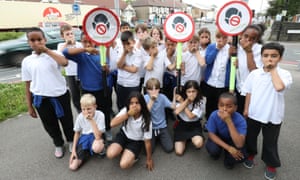
Pupils from Bowes Primary school in Enfield, north London, protesting about levels of air pollution outside their school, which is adjacent to the North Circular ring road. Tens of thousands of children in a quarter of all London’s schools are exposed to illegal levels of air pollution that can cause permanent damage to their health, a study has found.


Pupils from Bowes primary school in Enfield, north London, protesting about levels of air pollution outside their school. Photograph: Chris Radburn/PA

Research in 2015 revealed that more than 3 million people a year die early because of outdoor air pollution, more than malaria and HIV/Aids combined. Chan told the BBC on Monday that air pollution is “one of the most pernicious threats” facing global public health today and is on a much bigger scale than HIV or Ebola.


Pollution responsible for a quarter of deaths of young children, says WHO

2 Mart 2017 Perşembe

Stuttgart residents sue mayor for "bodily harm" caused by air pollution

On a frosty Friday evening at the end of January, after her usual walk around her central Stuttgart neighbourhood, Susanne Jallow felt an unusual cough and irritation in her throat.


Jallow, 54, lives in Neckartor, an area chock-a-block with residential buildings hugged by a busy road, B14, which handles around 100,000 vehicles a day.


Neckartor is a hotspot for air pollution, not just in Stuttgart but in the whole of Germany. PM10 values (coarse dust particles between 10 and 2.5 micrometres in diameter) recorded on sensors installed in the busy intersection of B14 often hit around 200 micrograms per cubic metre (µg/m³). EU standards set the top limit of safe PM10 levels at 50µg/m³.


On this particular evening, however, Jallow came home and checked the readings on a sensor hanging from her balcony, provided to her as part of an open data citizen initiative called Luftdaten (“air data”), and found that it had recorded 300µg/m³.


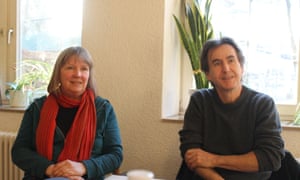
Keen to draw attention to the scale of Stuttgart’s problem, Jallow and her neighbour Peter Erben – both members of local citizens’ forum BI Initiative – lodged a criminal complaint on 23 January against the city’s mayor, Fritz Kuhn, and the district president, Wolfgang Reimer. The complaint accuses the officials on two counts: bodily injury with death as a consequence (due to air pollution), and lack of assistance.


Susanne Jallow and Peter Erben.


Susanne Jallow and Peter Erben. Photograph: Prathap Nair for the Guardian

The issue was immediately picked up by local media. “We wanted to highlight the bureaucratic apathy of the city administration. There is a pressing need for more proactive measures to combat air pollution. The existing ones are inadequate,” says Erben.


He suspects other neighbourhoods in Stuttgart are just as in danger of air pollution from PM10 and nitrogen dioxide as Neckartor is. “Right now, the official explanation is that only Neckartor suffers from bad air in all of Stuttgart. I don’t necessarily think that is true.”


Popular resistance to air pollution in Stuttgart has been ongoing for more than a decade. In the autumn of 2004, two of its citizens approached the court seeking redressal from air pollution and fine particulate matter. The government reacted by introducing a truck transit ban that did little to control PM levels. In 2008, a Neckartor resident filed another lawsuit – and the court, in its ruling, noted that no effective measures had been taken to address the city’s poor air quality.


The concept of Feinstaubalarm (“fine particulate matter alarm”) was introduced in January 2016 to mark the days when the city’s air pollution exceeds EU limits. On these days, the city administration urges residents to stop using their wood-fired chimneys and utilise public transportation rather than cars – tickets are reduced to half price as an incentive.


Last year, Stuttgart breached the EU’s daily permitted PM10 levels on 63 days – almost double the allowed 35 days.


“Combustion residues, mainly from diesel engines, as well as the abrasion of brakes and tyres, are the main reasons for these high PM10 values,” says Dr Ulrich Vogt, head of the Department of Air Quality Control at Stuttgart University.


Stuttgart, seen from the TV tower at night, with fog, Baden-Wuerttemberg


A foggy view of Stuttgart. The city’s dense population contributes to the air pollution. Photograph: Alamy

One reason for Stuttgart’s heavy traffic is that it doesn’t possess any ring roads, so much of the traffic passes straight through the city. In contrast, Munich has three ring roads.


“Another reason we have such a high concentration [of air pollution] is that everything is very, very densely populated,” Vogt says. “Stuttgart west has the highest population density in Europe. There are no broad avenues here, only narrow street canyons.”


But the problem is also geographical: Stuttgart’s city centre is located in a basin, surrounded by mountains on three sides. “We do not have good ventilation and hence no way of diluting the air pollutants,” Vogt adds.


Winter brings further weather-related issues: “We are now experiencing a phenomenon called temperature inversion. It acts like a lid, trapping cold air in the ground without allowing for exchange,” explains Dr Ulrich Reuter, an environment counsellor with Stuttgart’s Office of Environmental Protection.


From Reuter’s office window on a late January afternoon, the city’s landmark Fernsehturm (TV tower) is shrouded in thick smog. “I hope it will be possible to bring down the pollution levels,” he says. “But I’m afraid it’s not possible without restrictions.”


“The politicians are satisfied with Feinstaubalarm without considering any other action,” says Jallow. “Why can’t we have a ban on vehicular traffic on pollution days, like Paris and Madrid?”


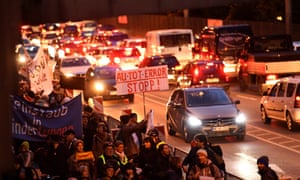
Participants of a demonstration walk through the streets in order to protest the fine dust pollution in Stuttgart, Germany, 21 November 2016.


Protests against air pollution in Stuttgart in 2016. Photograph: DPA Picture Alliance/Alamy

But such a ban would be controversial in the industrial city home to major manufacturers including Porsche, Daimler and NeoPlan (the maker of Man buses and trucks).


“I think it would be fatal,” Thomas Bareiss, the commissioner for energy policy, told a local newspaper. “Even the discussion about driving bans will lead to the destruction of [Stuttgart]. There are more intelligent ways to tackle the fine dust problem.”


But according to Julia Pieper, a spokesperson for the Ministry of Transport for the state of Baden Württemberg, of which Stuttgart is the capital, traffic restrictions are being considered for next year.


“In the eventuality that the 2017 limit values are not met, traffic restrictions on individual days are planned for the year 2018,” Pieper told the Guardian. “In doing so, the affected area is kept as small as possible.”


In the month of January alone, the city experienced around 25 of the acceptable 35 Feinstaubalarm days – so restrictions look certain to be introduced next year.


No threshold


The grubby, soot-laden walls of the grand old houses that sit along B14 in Neckartor bear the tell-tale signs of air pollution.


“You can only imagine what the lungs of people who live inside those houses look like,” says Erben, rubbing his fingers across the soot. An acrid smell hangs heavily in the air, resulting from the emissions let out by the cars hurtling past the busy intersection.


Experts such as Vogt and Reuter agree a reduction in car traffic is the most effective measure for improvement of air quality. “Every microgram per cubic metre of PM10 is unhealthy,” Vogt says. “So there is no threshold value or lower limit [of acceptability].”


There is certainly growing awareness of the issue among Stuttgart residents. Luftdaten is in the process of installing low cost, crowdfunded sensors across the city to measure PM levels, much like the one on Jallow’s balcony.


“I wanted to build cost-effective sensors, given the less than reliable government data and coverage regarding air pollution,” explains Jan Lutz, a social entrepreneur who runs Luftdaten’s website.


“But I think in five years Stuttgart will be like Detroit or something, because there is simply no innovation,” he adds. “The automobile industry continues to produce more cars, which is basically two tonnes of steel transporting a 70kg human. It’s an overkill, and not sustainable in the long run.”


Follow Guardian Cities on Twitter and Facebook to join the discussion and explore our special series on air pollution


Stuttgart residents sue mayor for "bodily harm" caused by air pollution

1 Mart 2017 Çarşamba

British people unaware of pollution levels in the air they breathe – study

People across the UK are underestimating the impact of the air pollution crisis in their local areas, according to a new survey.


Almost two thirds of respondents said they were concerned about the issue of air pollution, but only one in 10 said they thought the air they breathe is bad.


Last week the Guardian revealed that there are 802 educational institutions in the capital where pupils as young as three are being exposed to illegal levels of air pollution that can cause serious long term health problems.


And government statistics show 38 our of 43 UK “air quality zones” breach legal limits for air pollution.


Friends of the Earth, which carried out the latest survey, said that despite the growing evidence many people – particularly outside London – were still unaware of the dangers of air pollution.


“With only 1 in 10 British adults rating their air quality as poor despite swaths of the country breaking legal limits for air pollution, it seems the message about the scale and danger of air pollution isn’t getting through,” said Oliver Hayes, a Friends of the Earth air pollution campaigner.


“Often you can’t see it or smell it, but it’s there – and air pollution is risking the health of an entire generation of children.”


To coincide with the findings Friends of the Earth has launched what it says will be the “biggest ever citizen science air pollution experiment”. People can apply to the charity for clean air kits, enabling them to test the air quality where they live, and FoE will provide tips on how to avoid air pollution and what people can do to help support the campaign for clean air.


Hayes said: “Our clean air kits help people to find out about the air quality in the places they care about most: on the street where they live, where they work, where their children go to school and at the heart of their communities.


“The results will help us build up a localised picture of the state of our nation’s air to really bring home why everyone, from individuals to businesses and politicians, must do all they can to make the air we breathe safer.”


Air pollution is linked to heart disease, lung cancer, worsening asthma and poor lung development in children and leads to the premature deaths of around 40,000 people every year in the UK.


The Friends of the Earth report coincided with a separate study for the Greater London Authority which found a much higher awareness of air pollution in the capital.


It found that nine out of 10 people in London believe air pollution is at crisis levels and two thirds describe air quality in their local area as bad.


It also found that every London borough has recorded illegally high levels of air pollution in the last two years.


Hayes said: “Whilst Londoners are starting to understand the air pollution crisis, in part due to welcome attention from politicians and the media, outside of the capital it’s a very different story.”


Friends of the Earth said it hoped thousands of people will join in the charity’s experiment so it can create a comprehensive national air pollution picture. It said the data generated will feed into a national map which will help create a “state of the nation” report on air pollution.


British people unaware of pollution levels in the air they breathe – study