promise etiketine sahip kayıtlar gösteriliyor. Tüm kayıtları göster

24 Ekim 2016 Pazartesi

MPs urge chancellor to honour leave campaign"s £350m NHS promise

Dozens of MPs have signed a joint letter, organised by a group that aims to hold leave campaigners to their pre-referendum promises, which calls on the government to uphold the most infamous Brexit promise of all – £350m more a week to be spent on the NHS.


The letter, signed by 41 MPs, mainly from Labour but also some Liberal Democrats and Caroline Lucas of the Greens, demands that the chancellor, Philip Hammond, make the pledge in his autumn statement a month from now.


The £350m pledge was a key element of the Vote Leave campaign’s promise to voters, billed as money that would be saved after leaving the EU which could instead go to health spending.


In the wake of the 23 June referendum many leading pro-Brexit figures began to distance themselves from the idea, a process highlighted in a new Vote Leave Watch video to accompany the letter.


Last month it emerged that a successor group to Vote Leave, Change Britain, had not included the pledge among its aims.


The letter, addressed to Hammond, noted that the chancellor’s speech to the Conservative party conference earlier this month said that “the message of the referendum result had been ‘received, loud and clear’ by the government”.


The letter continued: “We accept the verdict of the British people. Yet it is clear that, if this mandate is to mean anything, it must include the single most visible promise of the leave campaign – spending £350m more a week on the NHS.

“In just under a month you will present your first autumn statement. We are calling on you to commit to increase national NHS spending by £350m a week – that is £18.2bn a year – as soon as this money becomes available by leaving the European Union. This additional funding must be over and above the amount that is currently planned to be spent on the National Health Service.


“Anything else will be a betrayal of the wishes of the British people. We challenge you, when you stand up in the House of Commons on 23 November, to show us the money and commit to Vote Leave’s promise; or explain why you cannot, and why your cabinet colleagues so cynically misled the British people.”


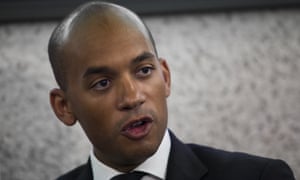
Chuka Umunna, the Labour MP who chairs Vote Leave Watch, said the message to Hammond was that “this Brexit government will not be able to run away from the promises of Brexit campaigners”.


Umunna said: “He has a month to work out how the government are going to find the money to keep this promise. If he can’t his pro-leave colleagues will have to explain why they misled voters during the campaign and are now breaking their promises.”


The full letter and signatories


Dear Chancellor,


We believe in a Britain with an excellent, well-funded public sector that provides a world-class service to the British people, pays its hard-working staff well and treats them with respect.


This was the vision of Britain promised by your cabinet colleagues who campaigned for a leave vote in the EU referendum. Vote Leave promised that, if Britain left the EU, £350m a week extra would be spent on the NHS. They travelled the country in a bus which said: “We send the EU £350m a week, let’s fund our NHS instead.” In the press conference suite at their London headquarters, a large sign read: “Let’s give our NHS the £350m the EU takes every week.”


The foreign secretary, the secretary of state for international trade, the secretary of state for the environment, the secretary of state for transport and the secretary of state for international development all appeared in photo opportunities featuring these messages. They made a very clear promise to the British people, and it is clear that a very large number of people believed this promise.


In your speech to Conservative party conference earlier this month, you said that the message of the referendum result had been “received, loud and clear” by the government. Members of the government talk of the “mandate” from the voters for Brexit.


We accept the verdict of the British people. Yet it is clear that, if this mandate is to mean anything, it must include the single most visible promise of the leave campaign – spending £350m more a week on the NHS.


Chuka Ummuna, the Labour MP who chairs Vote Leave Watch:


Chuka Ummuna, the Labour MP who chairs Vote Leave Watch: ‘this Brexit government will not be able to run away from the promises of Brexit campaigners.’ Photograph: Jack Taylor/Getty Images

In just under a month, you will present your first autumn statement. We are calling on you to commit to increase national NHS spending by £350m a week – that is £18.2bn a year – as soon as this money becomes available by leaving the European Union. This additional funding must be over and above the amount that is currently planned to be spent on the National Health Service.


Anything else will be a betrayal of the wishes of the British people. We challenge you, when you stand up in the House of Commons on 23 November, to show us the money and commit to Vote Leave’s promise; or explain why you cannot, and why your cabinet colleagues so cynically misled the British people.


Yours sincerely,


Chuka Umunna, Chair of Vote Leave Watch


Tom Brake, Patron of Vote Leave Watch


Norman Lamb, Patron of Vote Leave Watch


Emma Reynolds, Patron of Vote Leave Watch


Rushanara Ali


Ian Austin


Adrian Bailey


Kevin Baron


Tom Blenkinsop


Ben Bradshaw


Dawn Butler


Vernon Coaker


Mary Creagh


Stella Creasy


Julie Elliott


Chris Evans


Mike Gapes


Lilian Greenwood


David Hanson


Carolyn Harris


Tristram Hunt


Graham Jones


Stephen Kinnock


Peter Kyle


Caroline Lucas


Holly Lynch


Seema Malhotra


Conor McGinn


Alison McGovern


Ian Murray


Melanie Onn


Toby Perkins


Bridget Philipson


Rachel Reeves


Gavin Shuker


Ruth Smeeth


Angela Smith


Owen Smith


Wes Streeting


Anna Turley


Phil Wilson


John Woodcock


MPs urge chancellor to honour leave campaign"s £350m NHS promise

2 Temmuz 2014 Çarşamba

Income bonus to give carers a break, Lib Dems promise

The Liberal Democrat manifesto in 2015 will consist of a guarantee to introduce a new annual “carer’s bonus”, at first worth £125 per yr and rising to £250 per yr by 2020.


Mr Clegg stated the cash would be for individuals who make fantastic sacrifices for their relations. “Many have had to give up function totally to give round-the-clock care for an individual else. They are conserving our overall health and care companies tremendous sums at a time when every penny counts.


“Yet they themselves regularly struggle to make ends meet – a issue intensified by the financial crisis. A lot of contend every day with their personal depression and pressure.”


The bonus would be paid in income to carers, who would be cost-free to spend it as they wished.


Mr Clegg suggested that most would want to use the income to organize different care, making it possible for them to take a break from their household responsibilities. “Our carers reside lives the rest of us would locate nearly unattainable to imagine and respite indicates distinct items to distinct men and women. Some carers may possibly use the money to retain the services of a care assistant to assist them out for a week. Others may well place it in the direction of obtaining away themselves, or shell out for a cleaner to come to their residence.


“Books, music, garments, a day out with loved ones. Carers should be capable to spend the income nonetheless they see match. What matters to me is that we do whatever we can to display our thanks and ease the stress the nation’s carers face.”


The bonus would be obtainable to anybody who has been acquiring Carer’s Allowance for at least a yr – about one particular million individuals in all. The most current census showed that ten per cent of the population – or six.5 million men and women – offer standard unpaid care, with more than a third dedicating twenty or much more hours a week.


Last 12 months, NHS investigation identified that developing numbers of carers are obtaining to put their lives on hold to support disabled or elderly loved ones.


Practically five million individuals in Britain feel they are dropping manage of their lives due to the fact of unpaid caring responsibilities, in accordance to an NHS survey.


Income bonus to give carers a break, Lib Dems promise

22 Haziran 2014 Pazar

Doctor Group Requires Actions To Fulfill The Promise Of Telemedicine

The American Medical Association (AMA) seems very proud of their new,  just announced policy “for ensuring the appropriate coverage of and payment for telemedicine services.”  They believe telemedicine, properly implemented according to their guidelines, can “strengthen the patient-physician relationship,” increase quality of care, improve health outcomes, and save money. Wow. Who would not be in favor of that? But is this one of those instances when something that seems to good to be true, is?  A closer look at the policy report from AMA’s Council on Medical Service  shows that while much optimism is totally justified and appropriate, many reasons for caution remain.


First, a little background on the players and concepts. The Council on Medical Service (CMS) “recommends AMA policies and actions for consideration by the AMA House of Delegates on the socioeconomic factors that influence the practice of medicine.” In this instance, on June 11, 2014 at the AMA annual meeting in Chicago, the AMA voted to adopt a report of the CMS titled, “REPORT 7 OF THE COUNCIL ON MEDICAL SERVICE (A-14): Coverage of and Payment for Telemedicine.” Furthermore, in the report, telemedicine is defined to include all “three broad categories of telemedicine technologies: store-and-forward, remote monitoring, and (real-time) interactive services.” Now let’s look closer at the details.


Statuette of ancient Egyptian physician Imhote...

Statuette of ancient Egyptian physician Imhotep, the first physician from antiquity known by name. (Photo credit: Wikipedia)


While the report articulates 8 specific recommendations, the actual standards of care and practice guidelines are to be left to the “national medical specialty societies and state medical associations.” In other words, what’s good for the dermatologists may not be good for the radiologists. Plus, a rural state in need of additional medical expertise may adopt more telemedicine-friendly policies than a state with large numbers of physicians looking to protect turf. The potential for confusion rather than coordination across specialities and state lines is significant. I think this requires more attention than given it by current AMA policy.


Our techno-future is so compelling we tend to forget how seductive it can be. Technologically-enabled utopian visions abound, including in telehealth. The American Telemedicine Association is a good example of all benefit and no cost, gain without loss. But there is never a free lunch, even in a world of abundance. And the CMS report did a nice job balancing promise and peril. It keeps an eye on both the promise inherent in “future innovation in the use of telemedicine” and the peril of diminished quality of care, impaired physician-patient relationship, and breaches of confidentiality.


The best part of the report was their emphasis on research. One of the 8 specific recommendations is to “encourage additional research to develop a stronger evidence base for telemedicine.” After all, telemedicine is great idea with tremendous game-changing promise. But who knows? As messy and difficult as science can be, it is still the best way we have of finding out what works, what harms, and what is just ineffective. You don’t want to bet your life, or someone else’s, on just a great idea. The history of healthcare is replete with things that seemed like a great idea at the time only to be shown by later research to be, well, not so hot. And telemedicine is bound to be full of such practices.


To their credit, they also emphasized protecting the physician-patient relationship.  In telemedicine, the CMS report asserts a “valid patient-physician relationship must be established, through at minimum a face-to-face examination, if a face-to-face encounter would otherwise be required in the provision of the same service not delivered via telemedicine.” This will prevent, for example, prescribing some medications based on simply filling out a web form.


Unfortunately, the report goes on to state the “face-to-face encounter could occur in person or virtually through real-time audio and video technology.” Such an assumption of functional equivalence between being bodies together and meeting each other as 2-D representations on screens is just wrong. And dangerous.


First, diagnostically relevant dimensions of interaction are blocked with video. I remember one patient in my psychology practice at an initial consultation who was well and carefully dressed. He denied problems. I would have wondered what he was doing in my office at all except for the fact that he smelled bad, like he hadn’t showered in many days, which he had not. Might I have missed this and missed the significant depression he was trying to hide had the interview been done via “real-time audio and video technology.” Perhaps. And for a physician, olfaction can be an even more important dimension of diagnostic information.


Second, and more dangerous and important for a physician, are the different limits each kind of interaction has. Simply put, there is no possibility of touching on video. A physician cannot follow-up a complaint by, for example, palpating lymph nodes. And because of that maybe a patient will not bother to even complain in the first place. The idea that hands-off medicine is functionally the same as hands-on medicine is not just wrong, it also undermines the physician-patient relationship and diminishes us all.


Finally, hope is a fragile thing; placebos a powerful medicine. Equating being bodies together with video interactions seems like trying to get nutrition from a recipe. Sometimes you need the actual meal for full effect. And the power of hope shows us that the representation of a relationship may not heal the same way as do actual relationships.


So, we should appreciate the AMA’s effort, despite some issues. The significant promise of telemedicine deserves care and tending. It just needs to be said we will most likely fulfill that promise by focussing on both what technologies can do and what they can not do. And assuming a video chat is functionally equivalent to sitting in a room with someone is a dangerous mistake that will likely interfere with the ongoing evolution of telehealth.


For updates on “Managing Mental Wealth” and related news and links follow me on Twitter. To contact me click the mail icon above.


Doctor Group Requires Actions To Fulfill The Promise Of Telemedicine

12 Mayıs 2014 Pazartesi

Ed Miliband vows to promise sufferers a GP appointment inside 48 hrs

Ed Miliband

Ed Miliband visits Leighton hospital in Crewe and speaks with the personnel about the NHS. Photograph: Lynne Cameron/PA


Ed Miliband is to guarantee an appointment at a GP surgical procedure inside of 48 hrs of seeking a consultation and inside of 24 hrs if the patient is in significant need.


The daring promise is very likely to be deeply unpopular with doctors, and raises serious queries about whether it is feasible in the context of an NHS spending budget beneath sustained stress. Labour says GPs who persistently fail to meet the new promise will shed some funding as a penalty.


Miliband’s aides claimed the cost of the guarantee would be £100m a yr, which could be identified by cutting the charges of imposing competition on the NHS, as effectively as by retaining individuals out of A&ampE.


The party claims £46m can be saved by ending the part of the regulator Check in enforcing competitors.


The proportion of patients acquiring a GP appointment in 48 hrs has fallen from 80% beneath the final Labour government to 40%. Practically a quarter of folks now cannot get an appointment in the very same week.


Speaking in Manchester on Monday, Miliband will say he is established to place the NHS at the heart of the Labour’s campaigning in excess of the next yr. He is to stick to the commitment with a celebration election broadcast focusing on his visits to the NHS over the previous few days.


The critical tone of the broadcast is markedly distinct from the broadly criticised attack on “the extraordinary shrinking Nick Clegg” proven final week.


It is notable that the overall health support has dropped down the troubles of public worries given that the NHS Act was passed, and Jeremy Hunt took above as well being secretary focusing on the quality of care in hospitals. An expected NHS winter beds crisis did not materialise, partly due to much better-than-anticipated organizing.


Labour will promise individuals the right to check with a doctor or a nurse at their regional GP surgical treatment on the same day, the appropriate to get an appointment the same day if they need to have to be witnessed speedily, the right to a guaranteed appointment inside of 48 hrs and the right to guide an appointment a lot more than 48 hours ahead with the GP of their choice. Labour claims £100m could pay for an extra 3m appointments annually.


Some studies have suggested a 5% improve in individuals seeing their favored GP could minimize emergency admissions by as a lot of as 159,000 a year, saving £375m.


In April David Cameron made a rival offer you promising that a lot more than 7.five million individuals in England would benefit from increased accessibility to GPs, such as seven-day opening and 8am–8pm appointments. The opening hrs are to be extended using the £50m GP access fund.


In arguably the most contentious element of the Labour announcement, Miliband claims at least £78m of the expenses of the ensure can be located from “unnecessary administration and legal fees since NHS solutions are now below threat from EU competitors law”.


He also guarantees to end the duplication presented by three NHS quangos – Monitor, the Believe in Growth Authority and Commissioning Help Units.


In his Manchester speech, Miliband says Cameron has broken the bond of trust with the electorate more than the NHS.


He claims: “Men and women remember the promises David Cameron made at the final election: the airbrushed posters and the 3 letters he mentioned he cared about most: NHS. He promised that folks ought to be ready to see their GP ’24/7′. But a quarter of the public now say they can not get an appointment in the exact same week. It really is a scandal that folks are waiting that prolonged. It is not how our NHS, the pride of Britain, ought to work.


“He has proved the oldest reality in British politics: you can’t believe in the Tories with the NHS.”


His announcement adds: “It really is excellent folks are residing longer – but it signifies the NHS is getting to cope with individuals in their 80s and 90s that it never had to cope with ahead of. They don’t merely have medical wants, but care demands which the NHS is not employed to tackling.”


In his speech he also concedes: “We know money will be tight. The final Labour government was capable to supply some really massive increases in wellness support paying. The up coming Labour government will not be ready to match that scale of increase. We will have to do issues in a new way to make our health service much better, to conserve cash in which we can – and make positive that every single single penny is well invested.”


In his three major reforms for the NHS he will promise an integrated service for mental wellness, physical health and care for the elderly, a preventive service not just a reactive support, by investing in care exactly where people dwell, and ultimately a wellness support primarily based on cooperation not competition.


Ed Miliband vows to promise sufferers a GP appointment inside 48 hrs

8 Mayıs 2014 Perşembe

Integrating wellness and social services is no promise of savings | @guardianletters

old person in hospital

‘The extremely elderly come in to hospital generally as a outcome of a fall, or getting to be abruptly confused or significantly less mobile.’ Photograph: Garry Weaser


I am unsurprised that the Cabinet Office overview (Whitehall calls halt on £3.8bn NHS reforms, 7 May possibly) found that strategies to integrate health and social care services showed little prospect of generating financial savings. It is not the separation of these two companies which is the underlying result in of overuse of hospital care by the frail elderly it is the much more basic issue of care being free of charge in the NHS but indicates-tested for social providers. This can lead right to an extended length of stay in hospital while detailed assessments are carried out to make a decision who will be responsible for paying for the care required on discharge.


Shortening the length of stay is the place the main savings for hospitals can be produced. Enhanced local community providers have only a limited role to play in decreasing admissions in the very first location, as practically all admissions are the direct end result of both new or worsened medical circumstances. The quite elderly come in to hospital frequently as a end result of a fall, or getting to be out of the blue confused or much less mobile. Even though the 1st of these sounds amenable to greater social and local community care, in practice this prevents reasonably few falls as most are due to medical issues. These need diagnosis and remedy, and the elderly need to not be discriminated towards by becoming denied this just simply because they are elderly. The underlying diagnoses are many and different, and frequently demand the services of an acute hospital.


Even though the funding techniques for wellness and social companies continue to be so disparate, individuals who wish to find financial savings in the hospital sector would do better to emphasis on speeding sufferers across the boundary amongst the two, rather than integrating them.
Dr David Maisey
Retired consultant geriatrician, Norwich


• Contrary to your reports, far from halting the Far better Care programme, we have produced great progress on a venture that heralds a historic merger between health and social care commissioning.


The schemes in each and every spot start from April 2015, but we asked for early drafts to be ready a yr early so we had time to make sure they provide the genuine advantages for individuals envisaged when the scheme was set up. That is what is occurring, and the consequence is an interesting collaboration which has observed neighborhood government and local NHS commissioners operating collectively in a way that has by no means took place just before.


As your editorial states, the Greater Care Fund is “crucial to the prolonged-term viability of the NHS”. Mixed with the announcement by Simon Stevens last week that clinical commissioning groups will be invited to commission main care jointly with NHS England, we have for the first time the prospect of a single organisation leading the commissioning for all out-of-hospital care, a significant step forward in the integration of care that has often been talked about but in no way in fact delivered. No doubt the road to acquiring there will be bumpy, but it is a vital phase in the revolution in out-of-hospital care we require if the NHS is to carry on to meet the growing aspirations of an ageing population.
Jeremy Hunt MP
Secretary of state for overall health
Eric Pickles MP
Secretary of state for communities and
local government


• Your write-up appeared to suggest that the fund was unravelling. Clearly, trying to draw two extremely various providers collectively – the NHS and regional government – to integrate in a way that ends an institutional obsession with acute provision in hospitals as a implies to offer care, the BCF is not the only way of repairing the program, but it is the best way to guarantee all places benefit from integration amongst the NHS and Nearby Government. 


In Staffordshire, we have previously established a partnership trust with our nearby NHS to bring collectively solutions from each the county council and acute sector into one particular automobile that breaks down silos, avoids duplication and provides a vehicle to deliver a much better services locally. We did this without having a Far better Care Fund.


The actuality is that in Staffordshire, and in several other nearby places we are already integrated, but only as far as current resources permit. The BCF is the next stage, a means of investing in prevention and community care to cease the horrendous unsustainable burden placed on acute solutions inside of the well being service. Integration, the BCF and closer functioning with the NHS are vital basically since of the long shadow cast by the Francis report. Better integration is portion of the lesson we all have to discover from the Francis report in Mid-Staffordshire.
Philip Atkins
Leader, Staffordshire county council


• The push-back on the Greater Care Fund by Numbers 10 and eleven is but one more illustration of short-term political consideration blocking a critical try at rebalancing overall health and social care. Anyone with any grasp of health organizing understands there has to be front-loading to get new local community services functioning prior to any financial savings will be delivered at the hospital finish (the transitional funding stressed by David Nicholson). It did not occur with the closure of the psychological hospitals in the 1970s and 80s or with the Community Care Act in the 1990s. When New Labour had the cash and the neighborhood structures in spot to do it (coterminous and potentially co-operative principal care trusts and regional authorities) political fixation with hospital targets squandered the opportunity.


Lansley’s reforms have been always going to make the collaboration more hard. Pre-election panic in excess of hospital balance sheets yet yet again scuppers wise approach. How differently factors may have gone if Norman Lamb had acquired Lansley’s publish in 2010. Kate Barker’s interim report for the King’s Fund demonstrates extremely obviously that the Greater Care Fund was heading in the right direction but that the politicians are by no means going to provide if they cannot be sincere about the price. Her group is consulting on funding but also on how best to harmonise commissioning at national and nearby level. A single can only hope that the up coming government requires far better note than Gordon Brown did of her recommendations on residence-building.
Colin Godber
Winchester, Hampshire


 • Lambeth (and no doubt other authorities) have place in spot innovative programs for the demolition and promote-off of perfectly excellent and nicely-loved (if ill-maintained) sheltered housing schemes, constructed in the halcyon days of the reknowned Ted Hollamby. This has grow to be a indicates for nearby authorities to shuffle off obligation for their elderly tenants, bringing in “private providers” and medicalising outdated age.


Hundreds of the frail and elderly, whose tenancies are exempt from correct-to-buy, are currently being subjected to anxiousness and uncertainty with the threat that they will be moved to unknown destinations, away from close friends and loved ones members and their minor help networks broken up. An example of the “large society” in action.


Will the Cabinet Workplace suggestions to government that the claims of the Much better Care Fund do not stack up put a stop to this excoriating cruelty currently being visited on the elderly?


Allow us hope so.
Kate Macintosh
Winchester, Hampshire


Integrating wellness and social services is no promise of savings | @guardianletters

10 Ocak 2014 Cuma

Care not Custody is a promise worth maintaining | @guardianletters

We welcome the announcement of the government’s determination to hold its Care not Custody guarantee (Hopes mental overall health nurses in courts will reduce reoffending costs, four January). Nevertheless, we note that the first commitment for delivery of national liaison and diversion companies by 2014 will not now be met. For too lengthy individuals with a mental health want or understanding disability, who need to be diverted from police stations and courts into treatment method or social care, have ended up in prison as a default choice, while others are left with no the help they need as they continue by means of the justice process.


Higher numbers of individuals in prison have mental health wants, and practically half of all women in prison and more than a fifth of guys have attempted suicide at some level in their lives in contrast with 6% of the common population. The Care not Custody initiative was inspired by the tragic suicide of a youthful man with schizophrenia in Manchester prison, the son of a WI member.


The Care not Custody Coalition, representing up to two million folks across the health, social care and justice sectors and wider civic society, was convened in 2011 to help the government in trying to keep its guarantee and to hold it to account for successful delivery. Although the dedication to fund an extension of liaison and diversion trial web sites in police stations and courts and a company program to roll out nationwide services by 2017 gives a very good basis for alter, this revised timeframe should now be kept.


Marylyn Haines-Evans Public affairs chair, Nationwide Federation of Women’s Institutes
Juliet Lyon Director, Prison Reform Believe in
Steve Williams Chair, Police Federation of England and Wales
Dr Peter Carter Chief executive and common secretary, Royal School of Nursing
Nicholas Fluck President, The Law Society of England and Wales
Sue Bailey President, Royal School of Psychiatrists
Eoin McLennan-Murray President, Prison Governors Association
Peter McParlin National chairman, Prison Officers Association
Sue Hall Chair, Probation Chiefs Association
Javed Khan Chief executive, Victim Support
Paul Farmer Chief executive, Thoughts
Laurie Clarke Chief Executive, British Association for Counselling &amp Psychotherapy
Paul Jenkins Chief executive, Rethink Psychological Sickness
Sean Duggan Chief executive, Centre for Mental Overall health
Nigel Lithman Chairman, Criminal Bar Association
Vicki Helyar-Caldwell Director, Criminal Justice Alliance
Sarah Clarke Vice-chair, Instruction and Accreditation Committee, Advocacy Training Council
Karyn Kirkpatrick Chief executive, Keyring Residing Help Network
John Graham Director, Police Foundation
Jackie Russell Director, Women’s Breakout
Chris Bath Chief executive, Nationwide Appropriate Adult Network
Rachel Halford Director, Females in Prison


Care not Custody is a promise worth maintaining | @guardianletters