You don’t need to spend long in Purley to realise the town is home to many elderly people. The otherwise unremarkable suburb of Croydon is surrounded by numerous residential care homes, and in Purley Library, staff are used to adapting to the needs of elderly visitors.
While the older generation adds much to the town’s community and economy, there are occasional issues: visitors from the local care homes often forget where they are or what they are looking for. “We’ve had two already this morning,” one librarian says on a Friday afternoon in January. Another local describes how she notices some people having trouble in shops, struggling to remember pin numbers or momentarily forgetting what they are buying.
In 2012, Croydon determined that 3,300 residents of the borough are living with dementia, above the London average, and set to rise to 4,500 by 2025. So when Purley Bid, the business improvement district, held a meeting to discuss measures to improve the town, much centred on finding new ways to support the elderly population.
“We realised there wasn’t much being done for them,” says Yuliana Topazly, marketing manager for Purley Bid. “Businesses knew they needed to do more to make them feel more welcome in the town centre.” After dementia awareness-raising events hosted by the Bid last year, and a number of workshops run by the Dementia Friends initiative, Purley was designated a dementia-friendly community in January this year.
The focus is now on providing free training so locals can better recognise, understand and assist those with dementia. Dementia-friendly businesses are provided with stickers displaying the Alzheimer’s Society forget-me-nots flower logo, which are date-stamped to encourage business owners to maintain standards.

The Alzheimer’s Society has designated 220 communities in England and Wales as dementia-friendly, aiming to reduce stigma around the disorder and improve safety and quality of life for those who experience it. The charity is campaigning for London to be the world’s first “dementia-friendly capital city” by 2020, defining such a place as “a city where every person with dementia – no matter who they are or where they live – can live well and access the right support, at the right time, in the right way”.
The concept of dementia-friendly communities was born in Japan in the 1990s, where an ageing population forced radical thinking: rather than exclude people with dementia from society, Japanese cities developed a range of programmes that would allow those living with dementia to continue to engage with the world around them. It’s estimated that the condition will affect 7 million – or 20% of all people aged 65 or over – in Japan by 2025.
In the Belgian city of Bruges – a place where 2,000 of the 116,000 residents have dementia – 90 shops classify as dementia-friendly. They display a logo of a knotted red handkerchief – a symbol of the traditional memory aid – which signifies that staff can offer assistance to people with the condition. The initiative, set up by charity Foton, has also been distributing dementia guides and training sessions.
We want people with dementia to feel confident to go out
Dementia is also a growing problem in the UK. The Alzheimer’s Society believes it will affect more than 1 million residents by 2025. Of the 850,000 people who currently have dementia in the country, 40% said they feel lonely and 34% don’t feel part of their community. To counter this, in February 2015, former prime minister David Cameron introduced the challenge on dementia 2020, which called for half the population of England and Wales to be living in a recognised dementia-friendly community by 2020 and for there to be 4 million “Dementia Friends”.
“Dementia Friends are those who have had awareness training in understanding and empathy,” explains Sara Miles of the Alzheimer’s Society. “That’s a crucial element in the community – you need those working in the infrastructure to understand the needs of people with dementia in your area.”
“We want people with dementia to feel confident to go out; we don’t want them sitting at home,” adds Miles. “We want them to stay active for as long as possible, to do their own banking or shopping, so that’s where retailers are so important. We want to keep those parts of the brains active as long as possible and to retain that quality of life, so they interact rather than sitting at home feeling isolated and alone.”
There’s no single set menu of measures to employ when creating a dementia-friendly community; instead areas are encouraged to choose what works best for them. These communities tend to be built from the ground up, often having been championed by people with direct experience.
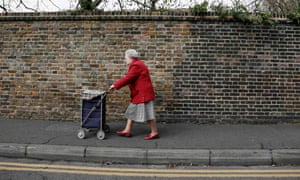
It’s then down to community groups to contact a body like the Dementia Action Alliance, an umbrella organisation consisting of 150 groups working in the field, who can offer advice. This is an intensely localised concept, created so each community is able to adapt to specific needs.
“There are certain strands that come up regularly – arts, businesses and shops, transport, community associations, housing – but a community can decide what they want to focus on and what tools to use,” Miles says.
In the London borough of Lewisham, for instance, there has been a drive to persuade museums and arts venues to offer dementia-friendly activities, as well as working with shops, supermarkets and banks to provide slow lanes and special assistance. In York, a taxi firm has introduced a dementia-friendly service. In Bradford, particular effort has gone into working with a local primary school and also with gurdwaras to break down barriers in the Sikh community.
Raising awareness of the scheme is a challenge. Speaking to locals in shops and cafes in Purley, there seems to be little knowledge about its new status, although most like the idea. Anura Kalubowila, who runs the Purley View residential care home, understands the value of a supportive external community for those with dementia. “We would be happy for residents to get out more,” he says. “We do excursions with them already – stimulation is important.”
Lynda Pennington, a manager at the Purley Cross community centre, is pleased about the training on offer. “We want to upscale our volunteers to be dementia friendly,” she says.
“We often get people in here with dementia and it can be difficult, but as a community we are aware of the needs of old people because of all the local care homes. With training people can be even more responsive. Shopkeepers should come to get the training, it’s in their interests as it benefits the community.”
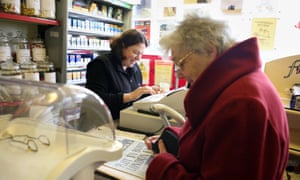
The only dissenting voice came in a nearby cafe. “My dad had dementia, and I wouldn’t have wanted him going out alone without a carer, even if there had been local improvements,” says a manager, who preferred to remain anonymous.
Purley Bid aims to challenge such fears and hopes that over time, people with dementia will feel more welcome and safe in the community when they leave their homes. Topazly hopes people may choose to move to Purley precisely because it has dementia-friendly status.
Issues around ageing are increasingly important to cities. While dementia-friendly communities share some characteristics with the broader concept of age-friendly cities, there are crucial differences. Natalie Turner, who works for the Centre for Ageing Better, has studied how the two approaches work in the US.
“Age-friendly is much broader and deeper, looking at how to tackle the challenge of demographic change,” she says. “It’s much more holistic, focusing less on decline and disability and more on change and opportunity.
“Dementia friendly is a much more specific lens, it’s grassroots and very localised, usually focused around a high street. It’s also more focused on training – getting people to understand needs. It’s not really going to be embedded into the city planning. As a result, the age-friendly conversation can inadvertently neglect the needs of the most vulnerable, and people with dementia and their carers can get left out of any big planning.”
One body working with this problem is the University of Stirling’s Dementia Services Development Centre. They use design to improve the private and public realm by encouraging dementia-friendly measures that promote familiarity, legibility, distinctiveness, accessibility, comfort and safety. “It’s about making sure surfaces between floors and walls are clearer, making exits and entrances much more obvious,” says Turner.
For such major changes to be introduced, the conversation about dementia friendliness has to go beyond communities and into local councils. This is partly why Purley Bid has begun talking to Croydon council about the plans.
“We need the council to put the resources out there so people have the information they need,” says Topazly. “Maybe any new business that opens on a high street should be encouraged to think about customers who have dementia. We want Croydon to be leading on this. The needs of the population are changing and there needs to be a close partnership between residents, business community and the local council. If everybody does their small bit from each corner it will have a much bigger impact.”
Follow Guardian Cities on Twitter and Facebook to join the discussion, and explore our archive here
Forget-me-nots in Purley: how the town became "dementia friendly"

