fitness etiketine sahip kayıtlar gösteriliyor. Tüm kayıtları göster

11 Ekim 2016 Salı

Do you spend a lot on fitness? Seven people reveal their exercise budget

The latest sportswear, healthy cookbooks, Fitbits, apps and after-work classes – exercise and wellbeing is big business these days. Consumer spending on UK gym membership soared by 44% in 2015 and sales of sportswear grew by by 9.5% in 2014. So how much do you spend staying in shape?


We asked readers about their monthly fitness (including sportswear, health food etc) and weekly exercise spend, calling for people to reveal how much they were willing to pay. We also asked for stories of people who manage to exercise on next to nothing. We received 473 responses. Here are some excerpts from the comments we received, condensed and edited for clarity.


Sian Melonie, 32, from London: ‘I spent more than £1,000 on a juice retreat’


Spend on exercise a week: £37.50
Spend on fitness per month: £25
Hours spent exercising: 15



Sian Melonie


Sian Melonie: ‘Most pressure to be fit comes from my parents – my mum, sister and step-mum all worry about their looks’

I have a Classpass which lets me access a variety of fitness classes around London. So with this pass you pay £110 a month and you get access to lots of different fitness sessions – you can attend three a month at each studio and it’s a rolling contract so I set myself a goal of doing 20 to 25 a month. It ends up being better value than wasted gym membership. The most I have ever spent on exercise was more than £1,000 for a week at a juice retreat.


I used to go for cheaper alternatives, such as running and going to cheaper gyms, but it didn’t seem to really work. ClassPass allows me to mix it up and do different exercises to challenge my body. I’ve never struggled with my finances because of the cost of exercise but I have spent a lot in the past.


In terms of other fitness spending I buy good quality food as I prefer to put unprocessed foods in my body. I also spend lots on clothes. Most pressure to be fit comes from my parents – they may not appreciate that but my mum, sister and stepmum all worry about their looks. However, the rise of Instagram and Facebook also adds to this. Knowing that l am doing something about it and getting stronger with each class that l do takes the pressure off me feeling bad about myself – knowing I am working towards a goal makes me feel better about myself. I have lost inches from my waist and I am more focused on toning up than losing weight. I am also much stronger and can do planks, burpees and press-ups.


Kelly, 50, from London: ‘The fact I know I will lose money if I don’t see my personal trainer helps to motivate me’


Spend on exercise a week: £200
Spend on fitness a month:
£1,000
Hours spent exercising: eight


I have a personal trainer twice a week , a tennis class once a week and I go to group lessons too. I am also a member of a tennis and golf country club, which is about £200 a month. The combination of playing tennis and going to the gym has been good for my body. I have always been into fitness but recently I’ve got better at doing exercises that specifically help me as a tennis player.


Having someone there helps to motivate me and pushes me more


Kelly


If I could pay less on exercise then that would be great. I guess if I didn’t go to such an expensive club I could save. I could also maybe not have a personal trainer twice a week, but have it once instead. I just find it hard on my own. I always think next month I will do just one personal training session a week, but that never quite happens. Having someone there helps to motivate me and pushes me more. It depends on your personality but, for me, having someone there waiting for me and the fact that I will lose money if I don’t go means I can’t create excuses for not going.I feel fitter and look leaner and that has an impact on how I feel about myself. There’s also the endorphin release aspect that helps as I tend to have slumps in my mood and working out helps with that.
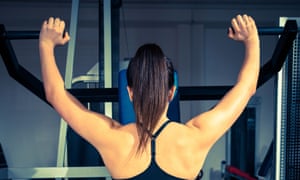


Woman working out in fitness


‘There’s also the endorphin release aspect that helps as I tend to have slumps in my mood.’

Cearon O’Flynn, 34, from Kent: ‘Cycling to work saves me money in petrol each week’


Spend on exercise a week: £15
Spend on fitness a month: £15
Hours spent exercising: 10


Cearon O


Cearon O’Flynn: ‘Exercising saves me money as I don’t have to drive to work.’

My biggest expense is my bike, it was £800, although through the cycle-to-work scheme I’ve paid for it now. I cycle to work; this keeps me fit and saves me about £20 a week on petrol. I then use that bike to cycle more over the weekend. I love cycling because it keeps me healthy, makes me feel comfortable and allows me to run around with my kids. Exercising saves me money as I don’t have to drive to work. This eases my financial burdens.


Tania, 49, from High Wycombe: ‘I spend a significant portion of my household budget on exercise’


Spend on exercise a week: £50 (minimum)
Spend on fitness a month: £300
Hours spent exercising: 12
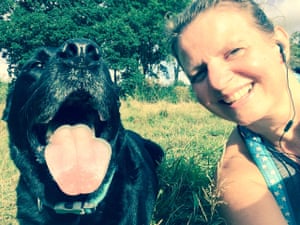


Tania with her dog


Tania: ‘My biggest expense is probably on running shoes, but you can’t compromise on quality.’

I pay for quality exercise classes, as well as doing free stuff such as running. My biggest expense is probably on running shoes, but you can’t compromise on quality – I spend about £120 every six months. Physiotherapy is also expensive and I usually get a few sessions when something goes wrong. I do Taekwondo with an excellent instructor; it costs £55 a month but I can train as often as I like. It’s excellent for the body, mind and soul, and great value for money.


I’ve tried doing classes at my gym, which cost £6 a session, but they are usually packed so I don’t get the same level of attention from the instructors. It’s important to do certain exercises, such as pilates, in small groups so you can make the most out of it. I spend a significant portion of my household budget on exercise but I see it as an investment. I spend the money to be healthy and set a good example to my kids. It’s also a great way to socialise too.


Sam Thompson, 24, from York: ‘It’s very enjoyable to cycle everywhere, and it’s cheap’


Spend on exercise a week: £0
Spend on fitness a month: £0
Hours spent exercising:
eight


My biggest exercise expense is probably bike maintenance; I’ll spend on average a few hundred pounds a year on tyres, chains, cassettes, brake pads, new cables, etc. I think I’m about as cheap as it’s possible to be – if I were to spend the same time running, I’d probably get through the same cash on shoes.


Cycling. My bike doesn’t tell me how many calories I’ve burned, but humans have managed for millennia without knowing whether they’ve burnt off that extra slice of cake (though admittedly, we’ve spent millennia without the option of an extra slice of cake). Seeing the English countryside and fresh air is far more enjoyable than labouring in the identikit gym down the road with all the other sweaty people. It’s very enjoyable to cycle everywhere, and it has the positive side-effect that it keeps me healthy.


Not owning a car makes using a bike for everything sound a lot better value. Cycling everywhere costs about half what I’d spend on insurance each year.


Daniel Coleman, 41, from Bracknell: ‘I hired a personal trainer when I was 40 and going through mid-life stuff’


Spend on exercise a week: £5
Spend on fitness a month: £50
Hours spent exercising: five
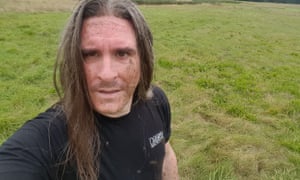


Daniel Coleman


Daniel Coleman: ‘I got the running bug after doing an obstacle course and have really got into it this year.’

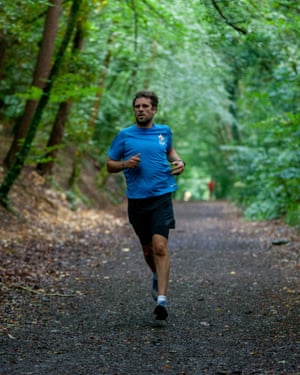
I generally run to keep fit – I run about 5km every day after work and have a budget gym membership. I have set a little challenge for myself this month to run every day but I used to run three times a week. It’s something I’ve discovered this year and before that I had a personal trainer and cycled to work. I hired a personal trainer when I hit 40; I was going through some mid-life stuff, but after having him for a year I gained the confidence to train on my own.


I got the running bug after doing an obstacle course and have really got into it this year. I like how quick and easy running is, and it doesn’t take up much of my day doing it. I am very motivated by goals, so I set myself the target of running 5km in under 24 minutes this year. I mix cheaper activities (eg running in the woods) and more expensive stuff (eg a personal training session) depending on mood. I don’t spend much else on fitness, except I occasionally treat myself to a brand of top.


Clare Riley, 56, from London: ‘I should probably just cancel my gym membership but I keep it as a safety net’


Spend on exercise a week: £75
Spend on fitness a month: £25
Hours spent exercising: three


I do an hour with a personal trainer a week and two bootcamp classes that I pay extra for. I do them locally in London and they are about £12 to £13 each. I haven’t always been into fitness, but when I reached 50 I concentrated on it more as your metabolism slows down, etc. I do spend a lot compared to some people, but it works for me.


I also have gym membership, which costs me £25 a month. I don’t go to the classes at the gym as much though as the standard of tuition isn’t great. I should probably just cancel my gym membership altogether but I keep it as a safety net and sometimes go to pilates there.


What I spend is fair in terms of the market rate and my trainer is very good. The boot camp also gives me a good level of cardio fitness, so it really does make a difference. As you get older, it gets more important to stay healthy. I don’t want to go into old age not being mobile and getting out of breath easily. I want to stay in shape for as long as possible.


Dan, 44, from Bristol: ‘It’s not always easy to pay for it all, but what bigger priority is there than health?’


Spend on exercise a week: £100
Spend on fitness a month: £400
Hours spent exercising: four


I have a personal trainer and gym membership. I also spend monthly on clothes, healthy food and race entry fees. Surely the reason why people spend so much on exercise is because there isn’t an alternative. Lots of us would spend two hours a day running or cycling if we could, but we are all in offices for most of the day. I mean, for six months of the year it’s dark when you leave work so going to the gym is the easy option. On weekends it’s also hard to find the time to exercise outdoors because I want to spend time with my family. I’d rather spend Saturday morning with my four-year-old than training. It’s not always easy to pay for it all, but what bigger priority is there than health? We all come alive when we make a hard physical effort, it’s in our genes.


Do you spend a lot on fitness? Seven people reveal their exercise budget

30 Ağustos 2016 Salı

‘We still come if the rain’s sideways’ – how Britain fell in love with outdoor fitness

Parkrun, Devon


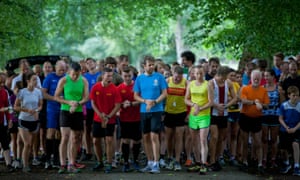
Sometimes the hardest thing about running is getting out the door, especially in the mornings. It’s so much easier to roll over and go back to sleep, or stick on some toast and promise yourself you’ll go another time. Knowing there are hundreds of other people waiting to run with you in your local park can be a big help.


‘There’s something about being in a group that seems to make running easier.’


‘There’s something about being in a group that seems to make running easier.’ Photograph: SWNS.com

Parkrun is a phenomenon. More than 1 million people in the UK have taken part in one at some point. Every Saturday at 9am, in 414 parks across the country, people of all ages, shapes and sizes run together over a three-mile course.


My nearest one is the aptly named Parke parkrun in Devon. I’ve been meaning to go for months. Finally, on Saturday, I took the plunge.


Adharanand Finn picks up a sweat.


Adharanand Finn picks up a sweat. Photograph: SWNS.com

For beginners, joining a race or running with others can be intimidating. But parkrun is set up to cater for British awkwardness. While it’s all very welcoming, if you don’t want to talk to anyone, you don’t have to. The whole thing is a template for simple efficiency. Register online, print out a barcode (which you hand in at the end), and turn up in time for the start, where volunteers will explain the route and how everything works. It’s also completely free.


Parke parkrun is in a country park and, it being August, there are lots of holidaymakers joining it. It’s that much fun you’ll even want to do it when you’re on holiday.


I usually plough a lonely furrow around the lanes near my house on a Saturday morning, but now I’m suddenly in the excited throng, milling around, limbering up. Proper running. Once we start, everything passes in a mad blur as we dash off through the woods. There’s something about being in a group that seems to make running easier – the movement of the other runners, the sense of being carried along in this flow of bodies, of being part of the charge.


Be warned, though, you may end up running faster than you intended. I had planned to enjoy the run at a nice gentle pace but, halfway around, my competitiveness got the better of me and I started trying to pass as many people as possible. The organisers say, pointedly, that parkrun is a run, not a race, but I’m not listening. I’m Mo Farah, making my move up the field. In the end, I finish in 4th place – just outside the medals. Adharanand Finn


Nordic walking, Edinburgh


First things first: the weather is lovely. Rich, gold evening light, bone-dry grass, and – OK, you can’t have everything – a naughty August wind careering through the flat expanse of Edinburgh’s Inverleith park. Still, we’re talking about an outdoor fitness class in Scotland. The fact that the wind isn’t studding my face with a hundred tiny needles of rain makes it a resounding success before I have even strapped my poles to my hands.


Making strides ... the beginners go Nordic in Inverleith park with her instructor Trevor.


Making strides … the beginners go Nordic in Inverleith park with her instructor Trevor. Photograph: Murdo Macleod for the Guardian

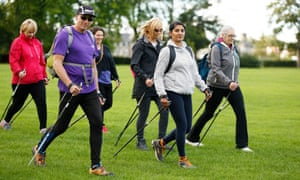
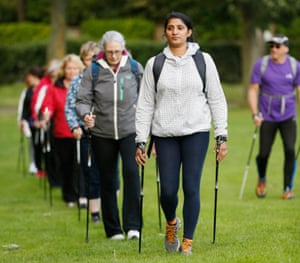
Ah, yes, the poles. I am Nordic walking, which is about as inoffensive as outdoor fitness gets. It looks a bit like cross-country skiing without the skis. But if you don’t like Nordic walking, you don’t like life. It is a wholesome, unintimidating, cheery activity – the kind I imagine allotment owners going in for – and it uses 46% more calories than normal walking and 90% of working muscles. Also, it’s Scandinavian, so it must be good.


One woman in our group – a four-week beginners’ course – is on crutches and is Nordic walking to strengthen her leg. In another weekly class at Portobello beach, two of the walkers are in their 80s. Most Nordic walkers are women. As for me, I have never done an outdoor fitness class in my life and I am usually the person walking their dog past the uptempo group doing star jumps on a Tuesday morning, pondering the point of all this hands-in-the-air bootcampery.


But, by the time we are striding across the park with our poles softly patting the ground in our wake, I am having a blast. Dogs come and sniff our pole tips when we stop for a quick debrief. The sun dips lower in the sky. There is birdsong, laughter, the warm glow of smugness that all exercise induces.


‘ It is a wholesome, unintimidating, cheery activity.’


‘ It is a wholesome, unintimidating, cheery activity.’ Photograph: Murdo Macleod for the Guardian

Trevor, Edinburgh’s only Nordic walking instructor, took it up four years ago and is an excellent advert for its benefits: kind, chipper, slim. He talks us through the technique, which is harder than it looks; I keep “spotty-dogging” (when your arms go out of synch with your legs and you look like a tool). No one minds. Nordic walking is about embracing your inner spotty dog. We head for a distant corner of the park and Nordic walk up and down a precipitous hill that I would never have otherwise attempted. Beside us, another group sprints up and down the verge. I suddenly become aware that Inverleith park – a typically genteel Edinburgh green space, with its painterly views of the castle, and pond used by model boat clubs – is teeming with outdoor fitness classes. Boot camps, football games, jogging groups, buggy runs; half of the city seems to be here.


In such an environment, it’s hardly surprising that no one finds our merry band of Nordic walkers annoying. Rather, people smile at us fondly as they might if we were a hi-vis group of nursery children holding hands. One elderly man on a bench shouts: “WHAT ARE YOU DOING?” as we stride past, then as an afterthought, “CAN I COME?” It’s all so very … nice. Chitra Ramaswamy


Project Awesome, London


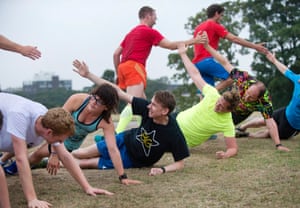
As I complete 10 press ups on a stranger’s back, high-five several people I have only just met and crab-walk painfully up Primrose Hill for the sixth time, I glance at my watch. It’s 6.58am.


My aching muscles – most of which I didn’t know existed until now – are waving white flags and, somehow, I have a mouthful of dried mud and grass, yet it appears I have only been doing this for 28 minutes. Oh well, I think, only another 32 to go …


High fives and press-ups make for a ‘fun, badass workout.’


High-fives and press-ups make for a ‘fun, badass workout.’ Photograph: Linda Nylind for the Guardian

I’m here because of the success of Project Awesome, a collective of high-energy extroverts providing “free, fun, badass workouts in your city” (currently that means London, Bristol and Edinburgh). Their classes start at a time I am as likely to stay up until as get up for, and put a twist on your typical outdoor exercise class: along with all the running and burpees, there are frequent hugs, high-fives and, er, bum slaps. There’s also chanting, cake-eating and more hugs. Did I mention the hugs? There are a lot of hugs.


Things kick off with a minute’s litter picking (the hilltop is a mess of broken glass and lager cans at 6am) before the 50 or so attendees begin a running circuit that involves various touchy-feely exercises such as joint one-legged squats. If this all seems daunting for a newcomer, the Project Awesome team ensure that it is not – newbies are made to feel especially welcome right up until the end when I am forced inside the centre of a massive group – you guessed it – hug. You have to quickly get au fait with other people’s sweat: the smell, the feel, the taste.


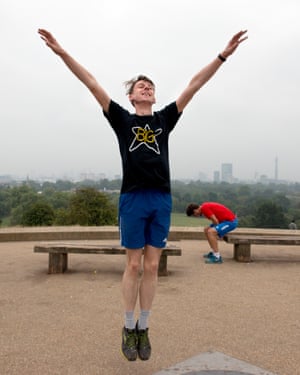
Star power ... Tim Jonze gets in the Project Awesome spirit.


Star power … Tim Jonze gets in the Project Awesome spirit. Photograph: Linda Nylind for the Guardian

But it’s fun, even for people like me, who don’t particularly relish early starts, enforced extroversion or being required to slap strangers on the arse. The surreal atmosphere means that the workout is far less painful than it could be and several people tell me how they had previously been spending around £60 a month on outdoor exercise courses before they found Project Awesome (which promises it will never charge).


Yet, despite what seems to be an altruistic project that encourages friendship as much as fitness, Project Awesome is currently at the centre of controversy. Locals are up in arms that the “spiritual” atmosphere of Primrose Hill at 6am has been broken by chanting, Lycra-clad “hipsters” and have been trying to get the class shut down. One report said the situation had become so serious that Liam Gallagher had been forced to stop running there. Won’t anyone think of the poor Britpop frontmen?


It all seems pretty daft to me – the noise is minimal, local cafes get a boost (post-workout coffee is encouraged) and the place gets tidied up for free; surely the people leaving broken glass lying around would make better targets for ire? Besides, I wouldn’t fancy trying to repress the enthusiastic types behind Project Awesome. “See you next week!” my newly acquired exercise buddies shout as I head off. Little do they know that I don’t get out of bed before 9am for anything less than a Guardian byline. Still, I spend the next 12 hours feeling pumped up and high as a kite. Awesome, in fact. Tim Jonze


British Military Fitness, Brighton and Hove


The other writers on this page are going to say that their fitness classes were tough, but they will be wrong. This was tough. This one. The toughest I think I’ve ever done.


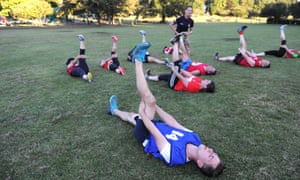
In British Military Fitness, there are no breaks at all.


In British Military Fitness, there are no breaks at all. Photograph: Jill Mead for the Guardian

British Military Fitness (BMF) was one of the first outdoor fitness clubs, and is now one of the biggest. “Old-fashioned army physical training,” park manager Les told me to expect. “We still come if the rain’s sideways. But it’s not boot camp. We don’t bawl in people’s faces.” Lisa, Matt and Jason will be the instructors. All are current or ex-military. There are about 30 of us civilians, an even mix of men and women. David, 50, has been coming with his wife for two years to complete his weight-loss programme. Jilly, 36, likes being outdoors and hates gyms. “It’s all poncing around in there.”


We take numbered bibs from a bucket, coloured blue through red up to green to denote our fitness level. After years of football, I fancy myself a red, but there is only a blue 14 left. It turns out to suit me. We begin with a quick jog, followed by some team games passing heavy bags around and doing squat thrusts, sit-ups, press-ups, burpees (a kind of jumping squat thrust) and bastardos (I was tired by then, I forget). Afterwards, Matt takes the green group and the rest go with Jason and Lisa. We run uphill with the bags (“your injured mate”). We form ranks and teams and compete to do our squat thrusts and press-ups and so on faster than each other.


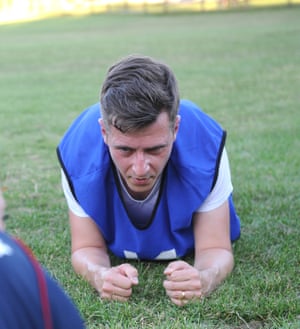
A real planker ... Leo Benedictus is pushed to the limit.


A real planker … Leo Benedictus is pushed to the limit. Photograph: Jill Mead for the Guardian

This is what I didn’t expect: there are literally no breaks at all. We never rest. Even while the rules of a new game are explained, we have to hold ourselves in the plank position, or do more squats or lunges or something. The reward for finishing each task is the next one. We are always behind, always struggling, always being kindly but loudly told to work harder, as we grunt through the weed smoke and bemused stares of passersby. I can stop if I feel I can’t go on. I’ve been told that. But it isn’t made easy. That’s why BMF is different: you find you’re more or less forced to do it.


Some of the compulsion comes from comradeship. Working in teams, or even in a pair, makes me want to find another press-up from somewhere, because my mate just did. The rest comes from friendly shouting and punishment, for losing or for doing the wrong thing. Shattered, when I put my hands on my hips to rest, Lisa makes the whole group do three burpees, “courtesy of number 14”. When David breaks another rule by telling me what I did wrong, we have to do three more. Sometimes the prize for winning is choosing the punishment for the losers. “We beast them,” Lisa chuckles afterwards, “but there’s always a bit of humour.” I think BMF is fantastic – now it’s over. I may well come back. Leo Benedictus


Our Parks, London


It’s somewhere in the middle of my second plank exercise that the trees stop helping to distract me. So far I have star-jumped until I was red in the face, done three rounds of sit-ups – twisting and turning like a fish on a line – and lunged across the black tarmac of the multiuse court for so long my thighs felt like they might burst into flame. Through it all, my teacher has been patient and gently encouraging. But it was the novelty of staring at the blue sky instead of a speckled ceiling tile or the horrors of a gym mirror that kept me going.


Limbering up ... Homa Khaleeli with instructor Chantal.


Limbering up … Homa Khaleeli with instructor Chantal. Photograph: Alicia Canter for the Guardian

Even when my aching abs got in the way of the bliss of being outdoors, there were diversions in the park – the children kicking a football, teenagers gossiping, someone smoking a spliff – to focus on rather than ticking away the seconds of the plank.


None of the other park users seem to mind me puffing and panting in the corner of the playing courts. This might be because the classes are free and open to everyone. Chantal, my instructor, is from Our Parks, an initiative that works with councils and development agencies to put on classes in open spaces around London. The company was set up by Born Barikor, a former athlete from a council estate in Tower Hamlets, who wanted to create a way for people on lower incomes to access exercise classes.


Currently there are 200 on offer through the company’s website – from yoga to boot camps – and the organisation is hoping to expand further afield. The one I have joined is in Alexandra Road park, a playground-heavy strip of beautiful green lawns and landscaped gardens in the middle of the brutalist Alexandra and Ainsworth estate in north London.


The fitness class helps people on the estate stay healthy.


The fitness class helps people on the estate stay healthy. Photograph: Alicia Canter for the Guardian

Chantal explains that the residents’ association wanted a class to help the mothers on the estate stay healthy – and she usually has at least eight women attending. Children are welcome to play alongside their exercising parents and the ex-City worker shows me picture of her last session, with three babies along for the ride. But today, thanks to the 28C heat and school holidays, it is just me having what amounts to a personal training session.


During winter, she tells me, she has had a couple of sessions where the group has been snowed on. Some classes are moved indoors when it gets cold to avoid people giving up. As I gingerly get to my feet and feel my legs wobble below me, I have to admit I am hooked. I gave up the gym a few years ago when I realised that running outside made me much happier than staring at a screen indoors. But I have been looking for a strength class to kick me properly into shape – now I just have to find one that doesn’t involve the plank. Homa Khaleeli


‘We still come if the rain’s sideways’ – how Britain fell in love with outdoor fitness

22 Ağustos 2016 Pazartesi

Why has women’s fitness become a beauty contest? | Anna Kessel

Being a female Olympian must be a confusing experience. You win a gold medal, you wow the world with your athleticism and sporting talent, you make history … and all anyone can talk about is your make-up, your marital status, or your hair. In 2016 we may finally have woken up to the infuriating daily inequalities facing sportswomen, but it is damning that so much superficial nonsense remains in the rhetoric that surrounds their success.


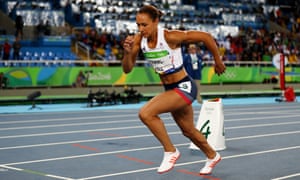
We should be in awe of what these sportswomen do and say, not harping on about what they look like. When Simone Manuel won gold in the pool, and spoke out about Black Lives Matter, she wasn’t doing it so that people could have an opinion about her hair. When Jessica Ennis-Hill ran her guts out in the 800m for a heptathlon silver medal, she wasn’t thinking about showing off her abdominals. When Egypt’s Nada Meawad and Doaa Elghobashy made their Olympic debut in beach volleyball, they weren’t weighing up how their outfits looked compared with their bikini-clad rivals.


Jessica Ennis-Hill


‘When Jessica Ennis-Hill ran her guts out in the 800m for a heptathlon silver medal, she wasn’t thinking about showing off her abdominals.’ Photograph: Ian Walton/Getty Images

Neither should we be. If I see one more editorial about a sportswoman’s outfit, or make-up, or how to get abs like an Olympian, I will throw up. Professional sport should be about the struggle to reach the pinnacle of your abilities, to stretch yourself, to win. These women put their bodies on the line, and use their platform to make bold political statements; it can’t be right that all we can think about is how to achieve greater butt lift.


Because with the explosion of fitness for women has come a new preoccupation with our bodies: the quest for muscle – also known as “fitspo”. It’s all delivered under the banner of being good for you, buoyed by the now ubiquitous slogan: strong is the new skinny. But if strong really is the new skinny, then why do the #Fitspo and #SheSquats images show us flat stomachs? Is “strong” just “skinny” rebranded? And why does it all come loaded with this weird front-facing pressure? By its very nature, fitspo wants you to show your muscle off: to tweet it, Instagram it, Facebook it, Snapchat it. Women, once again, are being put on display.


Related: Fitspo: how strong became the new skinny


What is so pernicious about this movement is that feeling bad about our bodies is being dressed up as female emancipation, wrapped up in the idea of self-control. If you want to look good, you just have to work harder. You’ll feel pain now, but you will feel great tomorrow. Look at her! Do you think she just woke up like this? No! She sweated in the gym. (Remember, ladies, “sweat is just fat crying”.)


If you said any of this out loud, to a friend, you’d probably both have an attack of the giggles. But somehow, in the private glow of the laptop, or phone, these images hold sway over us. Why? Because the messages are so familiar. We’ve been hearing them our whole lives in the language of the diet industry. We already know that we should suffer for our bodies to look right; we already know that we should critique, and pick, and compare, and judge, and measure, and ultimately feel dissatisfied. This is our zone.


Depressingly, it’s fast becoming the case for men too. Reggie Yates’s BBC documentary, Dying for a Six Pack, broadcast earlier this year, brought tears to my eyes as I watched young men risk their lives, waste their bank balances, and ultimately damage their own mental health – all in the pursuit of the right shaped abdominal stack. Which, inevitably, never materialised. Because all our bodies are different and we won’t all get six packs, even if we work out in a sauna, on steroids, with our gut wrapped in cling film. The narrative was so eye-gougingly familiar I wanted to shout in despair at the TV.


Skinny was bad enough, but now we need a six pack and a tight booty that looks like it’s been implanted with beachballs


Rather than “strong” paving the way to female liberation, it all just smacks of new pressures to look a certain way, to conform to a new body trend. Skinny was bad enough, but now we need a six pack and a tight booty that looks like it’s been implanted with beachballs. Plenty of sports at least offer the possibility of inclusivity – but this exercise trend feels entirely elitist. It’s expensive, it involves tight-fitting lycra and revealing crop-top outfits: just how many women are we further alienating in an already alienated section of the population?


Some will argue, inevitably, that fitspo is an improvement on what went before: a necessity, even. We have an obesity crisis, society is less active than ever, gyms and hot yoga being cool are good things – right? And not all media outlets are to blame. At the turn of the year the US editor at Women’s Health announced a ban on some of the worst phrases that have traditionally graced its covers – including “diet”, “shrink”, “drop two sizes”, and “bikini body”. Good for them. But until we stop polarising these issues – from obesity to fitspo – profiling the extremes as though it’s only one option or the other, will we ever truly find a healthy space to live in?


So why do we insist on perpetuating this punitive approach? Why are physical goals so deeply attached to attaining a certain type of body image? Why is all this stuff so emotionally loaded with unhappiness? I want women to be physically active because it feels good, because it is something enjoyable they can do with their friends, their partners and their children, or because it provides a quiet space to be on their own.


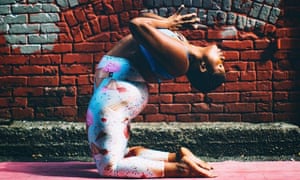
I want more women to be inspired by the likes of Jessamyn Stanley, an African American woman living in North Carolina who posts beautiful photographs of her body in exquisite yoga poses that mainstream media would lead you to believe were not possible for a woman of her shape and size.


Jessamyn Stanley


‘Jessamyn Stanley posts beautiful photographs of her body in exquisite yoga poses that mainstream media would lead you to believe were not possible for a woman of her shape and size.’ Photograph: Jessamyn Stanley

I want to shout about the £2.50 family fitness classes at my local Salvation Army, or the clubbing exercise classes at a community centre down the road, I want women spreading the word about exercise that makes them feel great –through the menopause, dementia and period pains.


With the final note of the Olympic closing ceremony having played last night, our biggest takeaway from these two weeks of incredible sport should be about female sporting achievement and how it connects to our own lives. If we want to move forward as a society we’ve got to stop obsessing over women’s bodies.


Sport is supposed to be fun – that’s the point – and it is supposed to be liberating. In 1896 the American civil rights leader Susan B Anthony wrote: “Let me tell you what I think of bicycling. I think it has done more to emancipate women than any one thing in the world. I rejoice every time I see a woman ride by on a bike. It gives her a feeling of self-reliance and independence the moment she takes her seat; and away she goes, the picture of untrammelled womanhood.”


Sport should move us further away from thoughts about how we are supposed to look, not chain us into a lifetime of butt-taming burpees.


Anna Kessel is the author of Eat Sweat Play


Why has women’s fitness become a beauty contest? | Anna Kessel