accused etiketine sahip kayıtlar gösteriliyor. Tüm kayıtları göster

31 Mart 2017 Cuma

NHS accused of waving white flag as it axes 18-week operation target

Patients will face longer delays for operations after the NHS decided to shelve one of its most important waiting time targets as part of its ambitious survival plan, which will also result in hundreds of thousands of people being denied surgery.


Simon Stevens, NHS England’s chief executive, has announced that the NHS is significantly relaxing the requirement on hospitals to treat, within 18 weeks, 92% of all patients in England who are waiting for a hip or knee replacement, cataract removal, hernia repair or other non-urgent operation.


The Royal College of Surgeons of England (RCSE) immediately accused the NHS of “waving the white flag on the 18-week target”.


A clampdown on surgery deemed of “limited clinical value” will affect people with certain spinal conditions, for example. Overall, a greater number of people with back pain will be treated with physiotherapy rather than surgery.


Stevens said rolling back the 10-year-old 92% target was necessary so that hospitals could concentrate on more urgent priorities, particularly in terms of easing the strain on overloaded A&E departments, as well as enhancing access to GPs and improving the treatment of cancer – diagnosis will be speeded up to 28 days – and mental health care.


The RCSE said the move risked going back to the time when patients faced excessive delays for surgery, leaving them to suffer in pain for even longer before finally undergoing necessary procedures.


“We are concerned that the 18-week waiting times target for surgical treatment has now effectively been jettisoned in all but name, having been dropped from the list of priorities for the next 12 months,” it said.


Clare Marx, the RCSE president, said: “It will be difficult for the general public to understand how waving the white flag on this target is compatible with a vision of an improved health service. We risk returning to the days of unacceptably long waits for elective surgical treatment.”


The move could see the number of people waiting for surgery within 18 weeks under the referral to treatment system going above 4 million for the first time since September 2007. The political importance of the target is likely to prompt criticism of Jeremy Hunt, the health secretary.


Stevens said: “We are saying that we expect that the number of operations that the NHS pays for will continue to go up, but we recognise that [while] right now about nine out of 10 people get their operations in under 18 weeks, in some parts of the country that will be under pressure.


“There is a trade-off here. We expect there will be some marginal lengthening of waiting lists, but this will still represent a strong, quick waiting times experience compared to 10 years ago, let alone 20.”
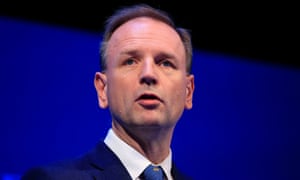


Simon Stevens, chief executive of NHS England.


Simon Stevens, chief executive of NHS England. Photograph: Jonathan Brady/PA

The British Medical Association claimed the NHS’s inability to meet all its waiting time targets showed that it was “at breaking point”. Its leader, Dr Mark Porter, said: “Achieving one delivery promise only by missing another is a textbook example of rationing access to care. It should not be happening in today’s NHS.”


Hunt insisted that the fact that hospitals were still giving around nine out of 10 patients elective care within 18 weeks, despite the huge demands being placed on them, was a sign of success, not failure. The NHS met the 92% target every month since its inception in April 2007 until December 2015, when performance was 91.8%.


However, medical bodies fear that watering down the 92% target will lead to a significant further jump in the number of patients forced to wait beyond the maximum 18 weeks guaranteed under the NHS constitution. Although the target is not being formally scrapped, in future NHS trusts will face no sanctions for failing to deliver on it.


Hospitals have already breached the target for the past 11 months and, in January, hospitals only achieved a 89.9% rate: 3.255 million people were treated on time but 364,218 were left waiting. Scores of hospitals across England had to declare large-scale alerts and convert gyms and other non-clinical areas into makeshift wards.


Chris Hopson, the chief executive of NHS providers, which represents most hospital trusts in England, welcomed Stevens’s move as proof of “greater realism” among NHS bosses. “But we do need to remember the impact on patients. The [NHS] plan reinforces a simple, stark truth: that you get what you pay for,” said Hopson.


NHS England’s 75-page delivery plan outlines how it intends to transform healthcare by 2020. The document makes repeated reference to how “modest” budget increases mean that it is unable to provide as much care or care within existing waiting times.


The plan makes clear that what critics call greater rationing of some types of care was imminent. GPs will be expected to refer fewer people to hospital and instead arrange treatment in the community. NHS England will expand the use of “referral management processes”, under which doctors assess whether patients need to go to hospital at all. More patients will be offered online advice.


Stevens announced that hospitals would be financially penalised if they did not screen patients who smoked or drank too much and refer them to tobacco or alcohol services, and said he was determined to reduce the wide variation in patients’ chances of being referred for certain surgery depending on where they lived in England.


Radical modernisation of how the NHS works is needed to ensure it survives as a service funded by general taxation that is free at the point of use, the document adds.


But Niall Dickson, the chief executive of the NHS Confederation, called the plan “a leap in the dark”, adding: “We have no alternative but to embark upon such fundamental change, but to do so when services are under enormous pressure and money is so tight is without precedent.”


NHS accused of waving white flag as it axes 18-week operation target

9 Mart 2017 Perşembe

Mexican government accused of torture by ex-patients of disabled care home

For decades, disabled children and adults living in institutions worldwide have suffered abuse of all kinds – from deprivation and solitary confinement in miniature cells, to sexual abuse and forced sterilisation.


Now a charity which has documented this abuse for more than 20 years is bringing a landmark legal case against the Mexican government, with the intention of laying down a new line in international law.


Throughout their years of research, Disability Rights International (DRI) has found sickening abuse in donor, state-funded and private institutions for people with disabilities across the world. A three-year investigation in Ukraine revealed that children detained in institutions without “adequate government oversight” were at risk of being trafficked for sex, pornography, or organs. At a psychiatric asylum in Argentina in the early 2000s, DRI (then known as Mental Disability Rights International) documented patients locked naked in tiny isolation cells. When people with psychosocial disabilities are subjected to social and sensory isolation like this, it is classed as degrading treatment or torture, according to the UN special rapporteur on torture.


They’re not protecting the women from getting raped by sterilising them, they’re protecting them from getting pregnant


Eric Rosenthal, executive director of DRI


The institutions that house children and adults in Mexico have been one of DRI’s principal focuses since 2000. Their first groundbreaking report documenting abuse in the Samuel Ramirez hospital in Mexico City contributed to the landmark 2006 UN convention on the rights of persons with disabilities.


In 2014, a two-year investigation into the state of facilities for people with disabilities in Mexico City found residents were sexually abused, locked in cages, left permanently in cribs, and overall detained in “dehumanising conditions”, as the charity described it. “People with disabilities have the right to stay in society and not be locked up,” said Eric Rosenthal, executive director of DRI. In Mexico he witnessed “effectively no community services; a total system of segregation”.


The case that DRI is now bringing centres on children and adults detained at Casa Esperanza institution in Mexico City. Casa Esperanza featured on a list compiled by Mexico City authorities of facilities for people with disabilities that were particularly abusive that was passed to DRI in May 2014 by an anonymous source.


In repeated visits to Casa Esperanza in 2014 and 2015 carried out by representatives from DRI, who were open about their intentions to investigate the facility, 37 people were found to be held in “dangerous, violent, degrading and unhygienic conditions”.


In one interview with the director of the institution in 2014, which is recorded on video, he states that the forced sterilisation of some of the women in the home is standard policy as a precautionary measure against pregnancy, in reference to the risk of sexual abuse (a resident told DRI that a repairman had raped her). “They’re not protecting them from getting raped, they’re protecting them from getting pregnant,” said Rosenthal.


Interviews conducted by DRI with patients at Casa Esperanza who were able to communicate disclosed harrowing tales of assault. Five women revealed they were being sexually abused by a relative of a senior staff member, and a workman.


Disability Rights International has documented the abuse of people in institutions for more than 20 years


Disability Rights International has documented the abuse of people in institutions for more than 20 years Photograph: Alamy Stock Photo

DRI met with the Mexico City System for Integral Family Development (DIF-DF) in June 2014 to make them aware of the abuses, including forced sterilisation and isolation, and later sent a formal letter with photographic evidence, but it was not until September 2015 that Casa Esperanza was closed.


In the timeline of events which DRI outlines in their legal petition, DIF-DF visited Casa Esperanza in January 2015 and witnessed the same abuses DRI had recorded. “The facility was known to be abusive and allowed to continue as such,” said Rosenthal.


Once Casa Esperanza was shut down by Mexico City authorities, many of the residents were moved to different facilities. The charity followed up with some of the young people after they left Casa Esperanza. “We know that at least two people have died [since moving from Casa Esperanza]; we know that one woman was systematically raped, and I read the testimonies from the rape she suffered in the new institution, and it was even worse,” said Priscila Rodríguez, DRI’s associate director.


The case which DRI is bringing against the Mexican government under international law seeks reparation for the residents who were detained in these conditions. It calls for Mexico to provide full community integration for not only the survivors of Casa Esperanza, but for all people with disabilities who are institutionalised. To do this, Mexico must provide housing and other support services for disabled people to live in the community. The Inter-American Court has granted financial reparations to victims of torture in some previous cases, so there may be a possibility of compensation.


An investigation into the state of facilities for people with disabilities in Mexico City found residents were sexually abused, locked in cages, and overall detained in “dehumanising conditions”


An investigation into the state of facilities for people with disabilities in Mexico City found residents were sexually abused, locked in cages, and overall detained in “dehumanising conditions” Photograph: Sasa Stankovic/EPA

The charity claims the Mexican government had knowledge of the abuses taking place at the institution. They argue that the abuses constitute torture, contrary to Mexico’s obligations under international human rights law. Accordingly, in January this year DRI and the O’Neill Institute for National and Global Health Law filed a case at the Inter-American Commission on Human Rights, and are calling for deinstitutionalisation across the country. They aim to get recognition under international law that disabled people have the right to live in the community. If the commission decides that they have a case, it will go before the Inter-American court. The government is legally bound to accept the court’s decision.


The Olmstead case was a historic breakthrough throughout the world and drove a lot of deinstitutionalisation in the US


Professor Gerard Quinn, disability law specialist


The Mexico City authorities say that after learning about the matter in 2014, they “undertook various inter-institutional actions to address the issues… initiating supervision and follow-up work… A series of joint operations were carried out between the Human Rights Commission of Mexico City, DRI, and the DIF of Mexico City, aimed at protecting the rights of the disabled population that were in [Casa Esperanza], with the aim of taking them out of that home and placing them in the care of other social organisations that provide alternative care, follow up and accompaniment to persons with disabilities.”


They state that the state authorities took the necessary steps in order to make sure that the institution was closed down, and to this day continue to work on behalf of of the persons that were removed from [Casa Esperanza], “in order to guarantee the enjoyment and exercise of their human rights, as well as to promote the development of their autonomy. These are fundamental for the strengthening of the agenda of Persons with Disabilities deprived of family care, in which the main objective is to promote their inclusion in the community”.


“Survivors of Casa Esperanza committed no crime, yet they are serving a life sentence in Mexico’s mental health institutions,” says Rosenthal. “The case presents a new legal claim that has never been before established under international law; that is the idea of a right to community integration.”


It is based on the case of Olmstead v LC in 1999, which is seen as one of the most important civil rights cases for people with disabilities in the US. A lawsuit was filed on behalf of two women with mental health conditions and intellectual disabilities in Georgia for support to be provided in the community, after they had spent their lives continuously moving in and out of state psychiatric hospitals. The lawsuit went to the supreme court, which held that people with disabilities have a right to receive state-funded support and services in the community, rather than institutions.


“The Olmstead decision had crystal clarity in terms of inappropriate institutionalisation amounting to discrimination. It was a huge historic breakthrough throughout the world; it has had really huge impact, [and] it has been driving a lot of deinstitutionalisation in the US,” said Prof Gerard Quinn who specialises in disability law at NUI Galway, “[The Mexico case] has the potential for having an impact in Latin America if it goes further.”


“Historically, disability rights have been ignored,” said Rodríguez. “Segregation is a practice that’s been systematically used for people with disabilities, and it’s important to change that mindset. We are saying that to segregate a person on the basis of their disability is one of the most aggressive forms of discrimination.”


“[This] will be the first case about community integration in Latin America, and we are very keen to have that precedent established not only in Mexico, but in the whole continent,” Rodríguez said. “We do hope that similar action can take place somewhere else. For instance, the European Human Rights System and the Inter-American Human Rights system rely on each other for standard-setting, a case before the European Court can be used as an international standard before the Inter-American Court and vice-versa. This case could thus also be used as a standard in other human rights system, such as the European and also at the International level, such as before UN Committees.”


Join our community of development professionals and humanitarians. Follow @GuardianGDP on Twitter.


Mexican government accused of torture by ex-patients of disabled care home

26 Şubat 2017 Pazar

NHS accused of covering up huge data loss that put thousands at risk

Thousands of patients are feared to have been harmed after the NHS lost more than half a million pieces of confidential medical correspondence, including test results and treatment plans.


In one of the biggest losses of sensitive clinical information in the NHS’s 69-year history, more than 500,000 pieces of patient data sent between GPs and hospitals went undelivered over the five years from 2011 to 2016.


The mislaid documents, which range from screening results to blood tests to diagnoses, failed to reach their intended recipients because the company meant to ensure their delivery mistakenly stored them in a warehouse.


NHS England has quietly launched an inquiry to discover how many patients have been affected. So far 2,500 cases that require further investigation to discover potential for harm have been identified. The NHS is spending millions of pounds paying doctors to assess the scale of the medical impact.


It is also undertaking a clinical review of patients who have died since the loss of documents was discovered in March 2016 to examine whether delays in material reaching GPs played any part in any patient’s death.


The correspondence included the results of blood and urine tests, and of biopsies and screening tests for diseases including cancer. It also included letters containing details of patients’ visits to hospital, including to oncology clinics and information about what they had been diagnosed with after visiting A&E. Other paperwork that went astray included summaries of the care patients had received while in hospital. Some involved material related to cases of child protection.


In total, 708,000 pieces of correspondence were undelivered. However, 200,000 of these were not clinically relevant as they were temporary change of address forms.


NHS England secretly assembled a 50-strong team of administrators, based in Leeds, to clear up the mess created by NHS Shared Business Services (NHS SBS), who mislaid the documents. The private company, co-owned by the Department of Health and the French firm Sopra Steria, was working as a kind of internal postal service within the NHS in England until March last year.


The clear-up team is being led by Jill Matthews, the managing director of the primary-care support services arm of NHS England.


Documents detailing the team’s work, seen by the Guardian, reveal it has finally returned the lost material to 7,700 GP surgeries, and assessed how many potential incidents of harm may have occurred at each practice. They show that GP surgeries up and down England have been affected, with some facing a few dozen cases of potential harm arose from missing correspondence.


GPs have so far been paid £2.2m to examine returned correspondence and cross-check it with other material in patients’ medical records, although the internal documents show that some have said that they are too busy to do so and others have asked surgery administrators to do it.


The British Medical Association warned that some patients might have taken extra drugs unnecessarily or had the diagnosis of their illness delayed because of the blunder.


“This is a very serious incident, it should never have happened and it’s an example of what happens when the NHS tries to cut costs by inviting private companies to do work which they don’t do properly, the private company in this case being NHS Shared Business Services,” said Richard Vautrey, chair of the BMA’s GPs committee and a family doctor in Yorkshire.


He added: “Undoubtedly, there will be cases where patients have been seen by their home GP without [the GP having] the information from previous consultations or tests being their file – so they may not know whether antibiotics have been prescribed to a patient or whether tests and investigations have been done.


Jeremy Hunt, the health secretary


Jeremy Hunt, the health secretary, is being pushed to reveal what he knew of the paperwork, including items relating to child safety, that went astray. Photograph: Stefan Rousseau/PA

“That might mean repeat prescriptions, which would be unnecessary, as they have been taken before. And it might mean delay in diagnosis. If that happened it’s at best an inconvenience to the patient, and at worst there’s a risk of patient harm.”


Jonathan Ashworth, the shadow health secretary, said: “This is an absolute scandal. For a company partly owned by the Department of Health and a private company to fail to deliver half a million NHS letters, many of which contain information critical to patient care, is astonishing.


“Patient safety will have been put seriously at risk as a result of this staggering incompetence. The news is heartbreaking for the families involved and it will be scarcely believable for these hospitals and GPs who are doing their best to deliver services despite the neglect of the government.”


He said that Hunt’s statement to MPs last July was “perfunctory, complacent and evasive, failing to reveal any of the catastrophic detail of how 500,000 pieces of correspondence including test and screening results and pathways following hospital treatment, had failed to be delivered and were in fact languishing unopened in a warehouse”.


Ashworth added: “Instead, Mr Hunt gliby told parliament that ‘some correspondence in the mail redirection service has not reached the intended recipients’. For a secretary of state who supposedly has transparency as his watchword this looks like he has tried to hide the scandal from patients and the public. It’s totally unacceptable.”


Tim Farron, the leader of the Liberal Democrats, said: “This looks, to me, like a cover-up. Jeremy Hunt has serious questions to answer, especially his deliberately evasive statement to parliament. Jeremy Hunt often talks about an NHS more open about patient safety failings since the Mid Staffs scandal. His deeds don’t match his words.


“This is a staggering loss of personal and private data, this colossal loss of vital material that may have been absolutely crucial to a patient’s treatment. I worry that while all this correspondence, including test results, has gathered dust, patients had been put at risk. People could have died as a result of this.”


An NHS England spokeswoman said: “Some correspondence forwarded to SBS between 2011-2016 was not redirected or forwarded by them to GP surgeries or linked to the medical record when the sender sent correspondence to the wrong GP or the patient changed practice.


“A team including clinical experts has reviewed that old correspondence and it has now all been delivered wherever possible to the correct practice. SBS have expressed regret for this situation.”


The Department of Health refused to comment.


NHS accused of covering up huge data loss that put thousands at risk

6 Şubat 2017 Pazartesi

Senior MPs accused of damaging UK with divisive rhetoric

Senior government ministers including Amber Rudd and Jeremy Hunt are damaging the UK’s standing in the world with their divisive rhetoric, the chair of the Commons Brexit committee, Hilary Benn, has said.


The former shadow foreign secretary said the Conservative party’s annual conference was an “absolute disaster” because senior politicians portrayed an image of the UK that was insular and aggressive towards foreigners.


Indicating that such language could influence negotiations with the EU, Benn said making pronouncements about what the government would achieve from its discussions would harden attitudes towards the UK among European politicians and officials.


Speaking at the Institute for Government’s headquarters in central London, Benn said: “When I reflect upon a certain week in Birmingham in the autumn, where people of a particular political party gathered and made speeches, I thought that was a disastrous week for Britain’s reputation in the world. Absolutely disastrous.


“Because to produce headlines saying ‘Crackdown on foreign students’ – when I last checked I wasn’t aware that foreign students were a problem that we need to crack down upon, it is ridiculous to have them in the net migration target – or saying that doctors who have brought their skills to this country can stay in the interim while we train more of our own doctors – it sent a message at that point that we are closing in on ourselves as a nation. That’s not who we are, it is not what Britain is. We will thrive in the future by being a welcoming country.”


He said ministers should stop claiming they would achieve certain goals from the Brexit negotiations before they began because it would only harden the opinions of those with whom Britain was negotiating.


“The second difficulty has been people sitting there saying: ‘We are going to get the following’. Well, the 27 [other EU member states] are thinking: ‘We will see about that’ … It would be prudent to change the tone,” he said.


In October, Rudd, the home secretary, told the party conference that the Home Office would shortly consult on the new student immigration system, and on tightening the resident labour market test that companies have to pass before recruiting employees from overseas. The moves were part of the drive to reduce net migration, which currently stands at 327,000, to “sustainable levels”.


“The test should ensure people coming here are filling gaps in the labour market, not taking jobs British people could do,” she said.


Hunt, the health secretary, told delegates he would recruit more UK-trained doctors to replace those who were being employed from abroad. “Is it right to import doctors from poorer countries that need them, while turning away bright home graduates desperate to study medicine?” he asked.


Benn said that while politicians should take on board the views of many Britons who wished to see curbs in migration, immigration targets were unhelpful because migrant labour was still needed in many sectors, including agriculture and social care.


He said he had seen first-hand the vital work migrants do as he nursed his father, the Labour veteran Tony Benn, who died in March 2014.


“When my father was dying, almost all who helped care for him were born outside of the UK. Who will look after us in the future?” he said.


Senior MPs accused of damaging UK with divisive rhetoric

2 Ocak 2017 Pazartesi

Jeremy Hunt accused of compromising weekday hospital care

The health secretary, Jeremy Hunt, has been accused of compromising the care patients receive during the week by not taking forward his pledge to hire more junior doctors to help deliver a seven-day NHS.


The Liberal Democrats’ health spokesman, Norman Lamb, said that with juniors now having to work more at weekends, already under-staffed hospitals had fewer medics on duty on weekdays.


He said Hunt had done little to make good on the hiring pledge he made in parliament during the year-long dispute over junior doctors’ contracts.


“My fear is that unless you can guarantee that there will be more junior doctors employed, imposing a change which involves more hours being worked at weekends will inevitably reduce the numbers of hours worked during weekdays when the pressure is at its greatest,” Lamb said. “This could result in real safety concerns.”


In a letter to Lamb, Hunt failed to provide any detail of how many more junior medics would be trained and employed this year or any other year before the end of this parliament in 2020.


He has previously acknowledged the potential for too few doctors being on duty between Monday and Friday as a result of the new contract he imposed in October on all 54,000 junior doctors working in the NHS in England.


Hunt told Lamb that it was up to hospital trusts to expand their junior doctor workforce, raising doubt that his previous assurance would be acted on.


Nor did the letter provide any detail on how many extra trainee medics would join the NHS this year, despite Hunt having told Lamb in the House of Commons on 5 September that he would give him a number.


“This letter from Jeremy Hunt fails to reassure me,” Lamb said. “There appears to be no clear plan as to when more junior doctors will be employed and yet the changes are being imposed immediately.


“There seems to have been no assessment of the number of additional junior doctors needed to ensure that additional weekend hours won’t have a dangerous effect on weekday cover. Jeremy Hunt has failed to provide the evidence to back up his claim that the problem will be addressed by additional junior doctors.”


When Lamb first raised the prospect of shortfalls in weekday medical rotas affecting care standards in a Commons debate on the dispute on 19 May last year, Hunt told him: “The short answer is that we need to increase the NHS workforce.”


Hunt’s letter, however, simply restated the government’s longstanding pledge that there would be 11,500 more doctors by 2020 than there were in 2015.


Dr Nadia Masood, a member of the Justice For Health campaign group and the British Medical Association’s junior doctors committee, said she shared Lamb’s concerns about weekday care.


“Weekday care is already suffering. The NHS is struggling every day of the week. So yes, if we are going to remove more doctors from weekday shifts to staff the weekends, weekday care will deteriorate. We need more doctors every day of the week, not just weekends,” she said.


Masood said she had never believed Hunt’s pledge to recruit more junior doctors, “because he and the government have repeatedly shown themselves to be deceitful with NHS-related issues to further their own political agenda, for example [their claims about] £10bn extra funding to the NHS.”


She said ministers and Health Education England, the medical training and education agency, “have no idea how many doctors we actually need. They are making it up as they go along, which is a staggeringly incompetent way to handle something as valuable as our National Health Service”.


In his letter to Lamb, Hunt said: “Health Education England does not expect significant change in the overall numbers of training posts and trainees, but it cannot say how many there will be at any point in time.


“The number of non-consultant non-training medical staff employed is for providers [NHS trusts] to determine based on the workforce required to deliver services … It is therefore difficult to provide the expected total number of junior doctors by grade.”


The Department of Health said: “The new junior doctors contract is making it easier for hospitals to roster doctors at weekends as well as improving patient safety right across the week. Working with Health Education England, we will ensure that the NHS has a further 11,000 doctors by 2020 – as well as increasing the number of medical training places by 1,500 in a year’s time.”


Jeremy Hunt accused of compromising weekday hospital care

18 Kasım 2016 Cuma

Scotch whisky body accused of arrogance over minimum pricing

Health campaigners have accused the Scotch Whisky Association of arrogance after it launched a fresh legal challenge over plans for minimum alcohol pricing in Scotland.


To the dismay of medical experts and ministers in Edinburgh, the SWA said it would appeal to the UK supreme court against a Scottish court ruling last month that plans for a 50p minimum price for alcohol were compatible with EU law.


Alcohol charities said the SWA, which represents global drinks giants such as Diageo and Pernod Ricard alongside smaller family distillers, was borrowing tactics from tobacco companies, putting their commercial interests above public health.


“Twenty-two Scots are dying because of alcohol every single week,” said Alison Douglas, chief executive of Alcohol Focus Scotland. “In taking legal action, SWA members like Diageo and Pernod Ricard continue to put their shareholders’ profits above the public interest. When it comes to the nation’s health, we cannot allow the alcohol industry to call the shots.


“It is totally disingenuous of the SWA to say they are committed to tackling alcohol harm when they consistently block the single most effective measure to achieve that. They are borrowing from the tactics of the tobacco companies in delaying this live-saving measure.”


The Scottish health secretary, Shona Robison, said she was deeply saddened by the SWA’s decision to appeal again against another ruling by Scottish judges. She urged the association to drop its legal action.


“I think the SWA may want to consider that minimum unit pricing was passed with the overwhelming support of the parliament, has been tested in Europe, and has now been approved twice in the Scottish courts,” she said.


“We remain committed to ongoing dialogue with the alcohol industry. Should the SWA drop their appeal, and accept that the time has now come to implement this measure that will save lives, they could expect very strong support from across Scotland.”


A 50p minimum unit price would push the cost of a standard bottle of whisky up to £14. The data analyst Nielsen said earlier this week its research showed 69% of spirits in Scotland would be affected, and 67% of beers. Measured by brand, 76% of Scotland’s most popular spirits would have to increase prices, Nielsen said, with blended scotch prices rising by 20% overall.


The fresh appeal is likely to delay a final ruling well into 2017. The SWA’s legal battle began four years ago and its case has now twice gone through the Scottish courts, with the drinks industry losing each time.


Backed by European drinks associations and nine EU member states including France, it insists that imposing a fixed starting price for all drinks is a breach of EU competition and free trade rules. The SWA argues a blanket approach penalises responsible drinkers unjustifiably, when ordinary taxation could be used to target cheaper types of drink.


The European court of justice (ECJ) ruled last December that this was a clear issue but it referred the case back to the Scottish courts to assess whether that breach of EU competition rules was justified on health grounds. The ECJ added it had to be shown to be more proportionate and effective than using general taxation.


The Treasury already taxes certain alcohol drinks more heavily than others, targeting some on health grounds. However Scottish ministers have no control over drinks taxation but are responsible for health policy, limiting their options.


Last month, Lord Carloway, Scotland’s most senior judge, said minimum pricing was justified as there was a link between alcohol-related deaths and cheap alcohol. “The fact that the legislation would affect moderate drinkers in some way does not detract from the legitimacy of the aim as a measure designed for the general protection of public health and life,” he said.


Julie Hesketh-Laird, the SWA’s acting chief executive, would not explain in detail the legal basis for the further appeal, but said: “This is not a decision we have taken lightly. [But] given our strong view that minimum pricing is incompatible with EU law and likely to be ineffective, we now hope that our appeal can be heard quickly in the UK supreme court.


“Having studied the ruling, we believe the Scottish court has not properly reviewed the legislation’s compatibility with EU law as required by the European court’s judgment.”


The Sheffield Alcohol Research Group at the University of Sheffield argues that minimum unit pricing has been consistently effective and well-targeted when used abroad. It believes a 50p minimum unit price would result in 60 fewer deaths in Scotland, 1,300 fewer hospital admissions and 3,500 fewer crimes due to alcohol within the first year.


Scotch whisky body accused of arrogance over minimum pricing

3 Kasım 2016 Perşembe

Theresa May accused of being in denial over NHS financial woes

Theresa May was in denial about the extent of the NHS’s financial problems and should accept that its sums “just do not add up”, the government spending watchdog has claimed.


Meg Hillier, the chair of the Commons public accounts committee, wrote in a letter to the prime minister on Thursday that growing evidence disproved her insistence that the NHS was getting enough money.


Hillier, the MP for Hackney South and Shoreditch, also accused NHS bosses, including its chief executive, Simon Stevens, of not telling May the truth about how grim the health service’s finances were.


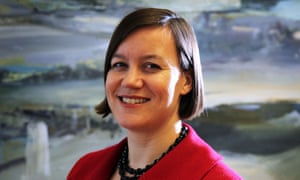
Meg Hillier.


Meg Hillier. Photograph: Jonathan Goldberg/Rex

Hillier is the second select committee chair this week to dispute the accuracy of May’s assertions that the NHS in England would receive £10bn extra funding by 2020-21 and that it was getting all the money it said it needed.


Earlier this week, the government rebutted the health select committee’s detailed critique of government statements about NHS funding, the accuracy of which is increasingly being challenged.


“In nine reports and multiple hearings we have had on the NHS this calendar year, concerns about the sustainability of the budget were very clear,” Hillier wrote.


“As you are aware, concerns have also been raised by the chair of the health select committee, Dr Sarah Wollaston MP, in her letter to the chancellor of the exchequer on 26 October. I was dismayed that the official government response was to deny there was any issue. This flies in the face of the evidence that our committees and the National Audit Office have uncovered.”


Hillier added that growing demand for patient care and a reliance on expensive agency staff, due to budget restrictions stopping trusts hiring permanent workers, were behind the NHS’s financial problems, rather than overspending by hospitals.


The Guardian revealed last month that, at their first meeting on 8 September, May told Stevens that the service would get no extra money in the autumn statement and that it should focus on becoming more efficient.


In an apparent reference to that meeting, Hillier said: “Too often NHS personnel raising concerns find themselves pariahs in the system. There is a long list of formal whistleblowers who have never worked in the NHS again as a result of their willingness to raise their concerns. I fear that this lack of willingness to talk truth to those in charge extends right up to No 10.”


In an annex to the letter, summarising evidence the committee has heard this year about how lack of money is affecting various NHS services, Hillier told May: “Taken as a whole, the current situation and the current budget just do not add up.”


May is under fire for saying the government is giving the NHS £10bn extra, allegedly £2bn more than it requested. However, Stevens has dismissed the £10bn figure and also warned that underfunding may force NHS bosses to ration care and close some hospital units.


Downing Street did not respond immediately to Hillier’s letter. But on Monday a government spokesman responding to the health select committee’s letter to Philip Hammond said: “The government has backed the NHS’s own plan for the future with a £10bn real-terms increase in its annual funding by 2020-21, helping to ease the pressure on hospitals, GPs and mental health services. It is wrong to suggest otherwise.”


Theresa May accused of being in denial over NHS financial woes

29 Eylül 2016 Perşembe

US doctor accused of making children"s vaccines from cat saliva and vodka

Regulators have suspended the license of a doctor in Chicago who allegedly gave patients modified vaccinations containing cat saliva and vodka.


The Illinois department of financial and professional regulation ordered the emergency action in the interest of public safety, according to paperwork signed by acting director Jessica Baer.


After hearing complaints from health care providers that children were getting unapproved oral versions of childhood shots from Dr Ming Te Lin, investigators visited Lin’s practice.


They found a cluttered, unsterile office and “a box filled with vials and tubes that [Lin] was using to make his own vaccinations.”


Lin told investigators he had been preparing alternative vaccinations for children for more than a decade, according to the order.


Despite his unapproved methods, Lin is accused of signing state forms certifying he had given paediatric patients their conventional shots. Charts showed the patients who received unapproved oral vaccines included a seven-day-old infant.


A phone message and email seeking comment from Lin on the allegations were not immediately returned.


Lin added alcohol and sometimes cat saliva gathered with a swab from a cat’s mouth for patients with allergies, he told investigators, and he used a device called the “WaveFront 2000” to detoxify vaccinations from mercury.


Lin gave vaccines orally or in a nasal form if the patient or a family member had a history of autism, eczema or neurological disorder.


None of Lin’s methods is approved by the Food and Drug Administration or regarded as legitimate medicine. He didn’t inform his patients of the risks of failing to follow vaccine guidelines, the state’s paperwork says.


A hearing before the Medical Disciplinary Board is set for 11 October in Chicago.


US doctor accused of making children"s vaccines from cat saliva and vodka

30 Temmuz 2016 Cumartesi

Green party candidate Jill Stein accused of "anti-vaxxer" sympathies

The Green party’s presumptive nominee for president, Jill Stein, has claimed questions may remain about the oversight of vaccines, drawing accusations that she has associated herself with the discredited “anti-vaxxer” movement.


Related: Green party’s Jill Stein invites Bernie Sanders to take over ticket


Stein, a Harvard-educated physician, has both cited the proven importance of vaccines, noting that they save lives and have eliminated devastating diseases, and suggested that Americans cannot trust the people who recommend widespread vaccination. Responding to criticisms this week, she said her concerns were about the influence of corporations in government.


“As a medical doctor, of course I support vaccinations,” she tweeted. “I have a problem with the FDA [Food and Drug Administration] being controlled by drug companies.”


But in comments to the Washington Post on Friday and on an online forum earlier this summer, Stein echoed the concerns of anti-vaccination campaigners in her suggestion that unfit or influenced regulators could open the door for dangerous medicine.


“I think there’s no question that vaccines have been absolutely critical in ridding us of the scourge of many diseases,” she told the Post, citing the efficacy of vaccination against smallpox, polio and other diseases. She then questioned regulators, and by extension the vaccines they approve, saying: “People do not trust a Food and Drug Administration, or even the CDC [Centers for Disease Control and Prevention] for that matter, where corporate influence and the pharmaceutical industry has a lot of influence.”


Stein claimed corporations involved with genetically modified food have influenced government oversight of medicine.


“Monsanto lobbyists help run the day in those agencies,” she said, referring to the controversial corporation that also draws the ire of environmentalists. Research shows GM food is generally safe.


Eleven of the 15 sitting members of the Vaccines and Related Biological Products Advisory Committee are medical doctors who work at hospitals and universities, not pharmaceutical companies. Only two committee members work at pharmaceutical companies, GlaxoSmithKline and Sanofi Pasteur US. Both are doctors. The committee’s designated federal officer holds a PhD, and a management specialist also sits on the board. Two seats are vacant.


Stein, who has tried to court progressive voters disillusioned by the Democratic candidate Hillary Clinton’s more center-left policies, made similar comments earlier this year in a Reddit AMA.


“Regulatory agencies are routinely packed with corporate lobbyists and CEOs,” she wrote. “So the foxes are guarding the chicken coop as usual in the US.”


Stein also advocated for more safe vaccinations, writing that dropping rates “can and must be fixed” but that the real issue was “widespread distrust of the medical-industrial complex”.


She added: “Vaccines should be treated like any medical procedure. Each one needs to be tested and regulated by parties that do not have a financial interest in them.”


Speaking to the Post on Friday, Stein claimed that she remembered, from her time practicing medicine, that “there were concerns among physicians about what the vaccination schedule meant, the toxic substances like mercury which used to be rampant in vaccines”.


Research has shown schedule-related concerns about vaccines to be unfounded, and that delays to vaccines actually put children at greater risk. Anti-vaxx campaigners often claim there are dangerous compounds in vaccines, though decades of safe vaccinations contradict the claim and no evidence shows that trace amounts that remain in some approved vaccines cause any harm to the body.


“We have a real compelling need for vaccinations,” Stein said, before insisting: “I think some of [the questions] at least have been addressed. I don’t know if all of them have been addressed.”


Many anti-vaccination fears stem from a paper published in 1998 and since retracted which helped lead to the barring of its author from medicine. Andrew Wakefield, a British doctor, insisted without credible evidence that vaccines could be linked to measles, mumps, rubella and autism. The completely discredited report continues to influence vaccination rates, which have fallen around the US in the last 20 years.


Stein seemed to echo such fears in her interview on Friday, though again as part of a broader argument about regulators.


“To assure the American public, whether it’s vaccinations, whether it’s administering estrogen to, you know, treat symptoms of menopause,” she said, “or at one point it was the solution to prevent Alzheimer’s and then it was discovered – oh, my goodness – it may actually contribute to Alzheimer’s – it’s really important that the American public have confidence in our regulatory boards so that all of our medical treatments and medications actually are approved by people who do not have a vested interest in their promotion.”


Related: Vaxxed: an expert view on controversial film about vaccines and autism


The Republican nominee, Donald Trump, has explicitly linked vaccines to autism. At a September debate, he claimed, without specifics or evidence: “People that work for me, just the other day, two years old, beautiful child went to have the vaccine and came back and a week later, got a tremendous fever, got very, very sick, now is autistic.”


In contrast, Bernie Sanders, the progressive candidate whose voters Stein has tried to win since his defeat in the Democratic primary, has forcefully rejected anti-vaccination ideas.


“I think obviously vaccinations work,” he said last year. “The difficulty is if I have a kid who is suffering from an illness, who is subjected to a kid who walks into a room without vaccines, that could kill that child. And that’s wrong.”


Clinton, too, has been unequivocal, tweeting: “The science is clear: The earth is round, the sky is blue, and #vaccineswork. Let’s protect all our kids.”


Green party candidate Jill Stein accused of "anti-vaxxer" sympathies

12 Temmuz 2014 Cumartesi

Rapidly-food vogue: Moschino accused of "glorifying" McDonald"s brand

Model Lindsey Wixson holds the Moschino iPhone case

Model Lindsey Wixson holds the Moschino iPhone case on the catwalk at Milan Style Week. Photograph: Rex Characteristics


It really is uncommon to see a magazine editor pulling a box of McDonald’s French fries from her Chanel handbag at haute couture trend week. But that was the unlikely occurrence in Paris final week – or so it seemed.


The reality was decidedly calorie-totally free. Produced of thick, spongey, vivid red and yellow plastic, the season’s most prolific accessory between the fashion set is an iPhone situation in the form of a McDonald’s carton, by Italian vogue residence Moschino.


Accurate to the spirit of quickly food, counterfeit versions have appeared at lightning speed in markets and on the internet. Weight problems campaigners, nonetheless, have not been so quick to embrace the craze. Some members of the healthcare establishment query the wisdom of celebrating rapidly meals at a time when one particular in 4 Britons is classed as obese and there are programs to reduced the threshold for NHS weight-reduction surgical treatment for men and women with newly diagnosed type two diabetes to a BMI of thirty, which could see an additional 800,000 people referred.


Obesity expert and GP Dr Ian Campbell explained: “My problem is that if children are [employing these iPhone situations] they are buying in to the complete rapidly-foods concept. And although the occasional McDonald’s meal is not a dilemma, to current it as trend is disappointing. Is it glorifying McDonald’s? I guess it is. Is it a good type of advertising for them? I guess it is.”


These criticisms are unlikely to harm the popularity of the types, which were unveiled as element of designer Jeremy Scott’s 1st catwalk present for Moschino in late February model Lindsey Wixson held one on the catwalk, while trend editor Anna Dello Russo utilised hers to take selfies with Katy Perry. In the months that followed, the instances grew to become ever a lot more well-liked with vogue editors, bloggers and celebrities. Rihanna and Rita Ora had been photographed with theirs Miley Cyrus brandished one on stage.


The problem for trend brand names is that designer iPhone circumstances are effortless to copy, according to Jason Rawkins, head of vogue and luxury brands at solicitors Taylor Wessing. The Moschino situation charges all around £45 fakes are getting offered for as minor as £3.


“Social media indicates that information travels more quickly and things turn into well-known significantly a lot more speedily,” said Rawkins. “So if the counterfeiters don’t move actually quickly themselves they could miss the boat two months later the bubble may burst.”


More and more designers are fighting this by speeding up their own operations, releasing up coming season’s collections straight right after the catwalk show. Confident enough, the Moschino iPhone situations had been offered from midnight on the day of the trend demonstrate. In the United kingdom, the very first vendor was Browns, the place the total iPhone’s stock offered inside of half a day.


The social media buzz around that demonstrate was unprecedented the brightly coloured clothing, employing familiar motifs – from Content Meal handbags to dresses inspired by sweet wrappers – appeared specifically developed to be irresistible on Instagram. And when the pictures had been disseminated broadly, controversy designed publicity that income can not get. Columnists decried the hypocrisy of the vogue market celebrating rapidly food others ran quotes from restaurant employees comparing their paltry wages to the rates of the collection.


There was a lot debate, as well, about no matter whether Moschino was infringing on the McDonald’s copyright, but a McDonald’s spokesperson explained: “We have signed a licence agreement with Moschino that makes it possible for them to use McDonald’s intellectual property on the merchandise. Moschino will make a donation to Ronald McDonald Home Charities.”


Definitely, the collection would seem unlikely to do the golden arches any injury. For the consumers who get into the Moschino aesthetic, the iPhone case is an expression of absurdity and fun. Scott has typically spoken about Moschino as a brand centred on irony and irreverence, and has spelt out his wish to carry Moschino to a younger audience.


The iPhone cases also tie into a wider “emblem mania mood we have observed on a quantity of catwalks that references 90s nostalgia”, according to Natalie Kingham, buying director at matchesfashion.com. Even though Moschino was at the forefront of the very first wave of brand mania in the 1990s, this time about it is deployed with more complex and being aware of layers. Scott’s initial Moschino menswear collection, for example, saw the designer generating “knock-offs” of fellow luxury manufacturers, from Louis Vuitton to Hermès – an notion that suggests he would be unfazed by the Camden Industry copies of his brand’s iPhone circumstances.


In any case, Moschino looks to have alighted on the recipe for quickfire good results in the social media age: right away arresting design and style, speedy manufacturing, social media dominance and a side purchase of controversy.


Rapidly-food vogue: Moschino accused of "glorifying" McDonald"s brand

18 Nisan 2014 Cuma

NHS whistleblower: I was accused of fraud and sexual impropriety

Dr Mattu was suspended for eight many years, then sacked, in a situation which is already estimated to have cost the NHS at least £6 million.


Professionals feel he could be in line for damages of up to £10 million.


The cardiologist publicly exposed overcrowding and fears for patient safety at Walsgrave Hospital in Coventry in 2001, claiming that there may have been avoidable deaths as a outcome.


He was then “vilified and bullied” by the University Hospital of Coventry and Warwickshire NHS Trust during a “witch hunt” which lasted almost a decade, in accordance to his attorneys.


Dr Mattu told BBC Radio 4’s These days programme: “I was rather concerned that the reason I came into medicine, which was to care for patients and to hopefully conserve lives, was not a priority or surely a main factor of what managers in the hospital in Coventry were focused on.


“Patient security was frequently place at risk and individuals had been dying that I felt would not have died at other hospitals I had worked at.”


He stated he was forced to flip whistleblower simply because the trust repeatedly ignored his complaints about the remedy of individuals, including a policy which allowed five patients to be place in a ward developed for 4.


A yr following speaking out the £70,000-a-year physician was suspended by the trust on total spend soon after being accused of bullying. He was dismissed in 2010.


Dr Mattu said that following his selection to blow the whistle, the hospital’s head of protection was asked to monitor him and “try and uncover as significantly information to use towards me as possible” in an attempt to blacken his title.


“I was accused of fraud, I was accused of sexual impropriety, assaults, not carrying out my duties and so on,” he mentioned.


The believe in employed private investigators, who had been paid nearly £60,000 to investigate the cardiologist’s affairs.


He was cleared this week of wrongdoing by Birmingham Employment Tribunal, which ruled the trust unfairly dismissed him and subjected him to “detriments” simply because he was a whistleblower.


Dr Mattu stated: “I’m completely relieved that one particular of the things that has come out of this situation that I have won is that I have been vindicated for what I did, since a single of the other key findings of the tribunal is that they located that I had not induced or contributed to towards my dismissal.”


But he mentioned the trust’s actions had been normal of the response of NHS managers.


“Unfortunately that is a typical practice of numerous managers inside the NHS, this denial of what the main purpose is as to why you are targeted,” he said.


“It is really challenging to feel that it is sheer coincidence that, obtaining in no way faced from 1979 to 2001 any allegations or complaints, that all of a sudden I must have turn into so altered in my nature and persona that suddenly more than 200 allegations were justified, I was suspended for five-and-a-half years, and prevented from carrying out the work I had so a lot needed to do given that the age of 18.


“I just locate it really tough to conquer the truth that there is usually this attempt to place forward a plausible option when the true cause at the heart of why all these allegations had been all of a sudden mustered up is the reality that I had whistle blown, spoken out as an advocate for the individuals and was not prepared to accept what was in the best interests of the managers.”


He added: “Emotionally it has been really draining. I have mixed emotions in excess of the judgment: I am relieved that I have won the case, I am also pleased that my detriments have been recognised by the employment tribunal.


“But the saddest point out of all of this for me is that the people who have lost out the most are the patients and the public simply because for 13 years the believe in management have prevented me from seeking following individuals. They have also, in the way they have taken care of me, discouraged any more whistleblowers in the NHS from coming forward and risking obtaining their occupation and livelihood destroyed.”


He mentioned he needed talks with Mr Hunt and NHS chief executive Simon Stevens about his situation and the treatment of other whistleblowers.


Dr Mattu’s solicitor Stephen Moore described the situation as a “David v Goliath battle”.


Following becoming suspended Dr Mattu won a disciplinary hearing and the believe in was forced to reinstate him in 2008.


A year later an inquiry by the Standard Medical Council also cleared him of the prolonged-standing bullying allegations.


But Dr Mattu continued to experience hostility from management and in 2009 launched grievance procedures.


This was met with counter-allegations of far more bullying and breach of confidentiality and in 2010 Dr Mattu was dismissed by the believe in while on sick depart.


The trust defended its actions and mentioned it was seeking into the tribunal’s selection “to contemplate its grounds for appeal”.


In a statement, it mentioned: “We are disappointed by the Employment Tribunal’s decision that the dismissal of Dr Mattu was unfair, given that the procedure followed by the Believe in was reviewed by the Court of Appeal in March 2012 when it identified in the Trust’s favour.


“The Trust now requirements to examine the Tribunal’s determination in much more detail (which runs to over 400 pages) to think about its grounds for appeal.


“However, we are pleased that they have firmly rejected his main declare that his dismissal in 2010 was in any way linked to whistle-blowing about patient care.”


NHS whistleblower: I was accused of fraud and sexual impropriety

27 Mart 2014 Perşembe

"Control freak" Jeremy Hunt accused of manipulating NHS for political ends

Sir Bruce Keogh,

Sir Bruce Keogh, the NHS’s medical director, is stated to have clashed with Jeremy Hunt. Photograph: Joe Giddens/PA


The overall health secretary Jeremy Hunt has had a series of standoffs and rows with NHS leaders amid claims from senior figures in the services that he is an interfering “control freak” who is striving to manipulate it for political functions.


Senior NHS figures have advised the Guardian privately of their fears that Hunt has torn up the coalition’s pledges to “liberate” the NHS from political manage and make it operationally independent.


It is understood that Sir Bruce Keogh, the NHS’s health-related director, had to personally instruct Hunt not to announce his blueprint for restructuring A&ampE solutions in a highly charged experience amongst the two last November.


Keogh and senior colleagues at NHS England, which is meant to be independent of Hunt’s Department of Wellness, were annoyed that Hunt appeared to want to hijack Keogh’s program to announce the overhaul by unveiling the information himself first.


“Bruce essentially took the secretary of state to one side and stated ‘bugger off’. There were some reasonably tense conversations amongst Bruce and Jeremy Hunt at that time,” explained an NHS supply.


NHS England leaders were also annoyed that when Hunt announced that hospitals in England would get an further £250m to assist their A&ampE departments cope with the winter, he gave them really minor credit score, even however they provided the cash.


But Hunt and the division declined to react right to claims by NHS figures that he is improperly “controlling” the support that is supposed to be run at arm’s length following the controversial reforms instituted by his predecessor, Andrew Lansley. The Division of Overall health argues that he was doing the work anticipated of him.


A Department of Wellness spokesman explained: “Jeremy Hunt tends to make no apology for taking a near interest in the efficiency of the NHS more than winter, or certainly throughout the 12 months. He is accountable to patients and to parliament and the public would count on practically nothing much less.”


Sources also say Hunt’s staff also “leaned on” Anne Rainsberry, the chief executive of the component of NHS England accountable for London, to consider to quit a controversial reorganisation of hospital services in north-west London due to the fact the prime minister was anxious about the downgrading of many A&ampE units in the region.


Rainsberry assisted thwart that intervention by ensuring that health-related directors of the eight NHS hospital trusts concerned and the GP chairs of the eight clinical commissioning groups in the region wrote to Hunt outlining their help for the move. He later championed the shakeup as excellent for patient care.


Senior NHS figures also disclosed that they resent how Hunt holds twice-weekly meetings with the leaders of NHS England and two other important NHS organisations at which he directs them to search into issues of concern, supply more data, kind out troubles and report back.


Normal “NHS delivery” meetings on Mondays target on crucial locations of NHS performance this kind of as A&ampE waiting instances and fiscal difficulties, although the Thursday afternoon meetings instituted final October have concentrated on ensuring the services functions nicely for the duration of the winter.


Leaders of NHS England, Monitor, which regulates foundation believe in hospitals, and the NHS Believe in Improvement Authority (TDA), an arm of the Department of Wellness that oversees all other trusts, routinely attend the meetings.


Nonetheless, some who do so, specifically at NHS England, truly feel Hunt is improperly impinging on their freedom, particularly in light of the autonomy they are supposed to have.


Sources speaking on problem of anonymity declare he is “micro-managing” the NHS, a practice the coalition explicitly promised to end.


But the Department of Overall health explained that Hunt was entitled to hold this kind of meetings. “It is absolutely correct that he has regular updates from the essential NHS organisations and the opportunity to go over their strategies,” it additional.


When Hunt began straight calling bosses of hospitals that were not meeting A&ampE targets final November, David Prior, the chairman of the Care Quality Commission NHS regulator and a former Conservative MP, explained the overall health secretary was “crazy” and criticised his “obsession” with targets.


Managers in important NHS organisations this kind of as NHS England and the TDA come to feel they are becoming “walked more than” as a consequence of Hunt’s really hands-on style, in accordance to the head of their trade union.


Jon Restell, chief executive of Managers in Partnership, mentioned: “They are really concerned. They really feel they are becoming walked more than by the Division of Well being and that some of their independence is being ignored.”


Concern extends to some of the members of NHS England’s board. Lord Adebowale, one particular of the organisation’s nonexecutive directors, mentioned the balance of electrical power amongst it and Hunt is a lead to of concern.


“I have always stated it would be tough to deal with the strategic partnership among the NHS and the secretary of state [after the NHS reforms], offered his duty to parliament,” he said.


“It really is a challenge, it truly is bound to be, managing that connection. Of program it is anything I worry about as a nonexecutive director.” Hunt was flawlessly entitled to inquire for meetings with leaders of NHS England, he extra.


Andy Burnham, the shadow wellness secretary, claimed that Hunt “would seem to have forgotten voting to turn the NHS into the largest quango in the globe and now tries to disown the logic of his very own policy. He talks in public about ending political interference, but in practice spends an afternoon creating phone calls to chief executives of hospitals missing A&ampE targets.”


"Control freak" Jeremy Hunt accused of manipulating NHS for political ends

13 Mart 2014 Perşembe

Ministers accused of showing contempt with fresh squeeze on public sector spend

A nurse

Unison says it is a disgrace that 70% of nurses will get no spend rise this 12 months. Photograph: Christopher Furlong/Getty Photos


All around 600,000 NHS staff will acquire a reduce-than-anticipated pay rise soon after the government rejected a get in touch with for them to be awarded a 1% rise on prime of automated “progression spend” that averages around three%.


The government has also determined that 400 “very senior managers” in the NHS, who are no longer on progression pay will acquire no pay rise at all.


Danny Alexander, the chief secretary to the Treasury, explained the government necessary to press ahead with “public sector pay restraint” as he stated that the selections would conserve a complete of £200m in the NHS budget in 2014-15 and £400m in 2015-sixteen.


Christina McAnea, head of well being at Unison, mentioned: “This coalition government has taken a scalpel to the pay body’s report and will not escape the anger of NHS personnel. It’s a disgrace that 70% of nurses will not even get a shell out rise this yr – what sort of message does this give to the value this government spots on focused NHS workers?”


Unison criticised the government right after it set out how it would implement pay out rises for 2014-15 following it asked the pay assessment bodies to examine how a one% enhance could be applied to the pertinent public sector workforces.


In addition to the NHS selection the government announced a 1% boost for members of the armed forces, contractor medical doctors and nurses and members of the judiciary. Departments will award a 1% boost to senior civil servants on a discretionary basis and a one% rise will be awarded to the bulk of prison officers. Police and crime commissioners will acquire no enhance.


Alexander also announced that £1bn in employer public pension contributions will have to be paid by person government departments rather than from the treasury’s central “annually managed expenditure” pot. This will give Osborne an extra £1bn in up coming week’s spending budget, which he could invest in infrastructure. But it means that personal departments will have to make a higher contribution to pensions.


The training division will have to pay out an further 2.3%, working out at £330m in 2015-sixteen and £560m in 2016-17. For the civil services it will mean an additional two.2%, doing work out £275m a yr from 2015-16 and onwards. For the NHS it will be a .3% improve, functioning out at £125m a 12 months from 2015-sixteen.


The Treasury chief secretary mentioned of the 1% spend rises: “Public sector workers make a crucial contribution to the effective delivery of public services. We need to have to continue with public sector pay out restraint in order to place the nation’s finances back on a sustainable footing. We are delivering on our commitment to a one particular percent shell out rise for all except some of the most senior public sector employees.”


The determination on the NHS marks a rejection of the recommendation by the NHS Spend Assessment Entire body for all around 600,000 workers – around fifty five% of the complete.


Christina McAnea extra: “The government has proven complete contempt for the NHS, contempt for workers and contempt for individuals and will pay the cost at the ballot box. Even a straight 1% improve would be nowhere near adequate to meet the massive price-of-living increases that NHS workers have had to cope with given that 2010. Employees are on average 10% worse off than when the coalition came to power.”


Ministers accused of showing contempt with fresh squeeze on public sector spend