Tens etiketine sahip kayıtlar gösteriliyor. Tüm kayıtları göster

2 Nisan 2017 Pazar

Paramedics taking tens of thousands of days a year off sick with stress

Paramedics are taking tens of thousands of days a year off sick with stress, as growing numbers of 999 calls add to the pressure on NHS ambulance services.


The number of days being lost to paramedics having time off work because they are struggling with stress, anxiety or other mental health conditions is rising, official figures show.


Statistics have revealed that paramedics working for seven of England’s 10 NHS regional services have been signed off sick with such ailments for 183,962 days in the last four years.


In all, 35,872 days were lost for that reason in 2013-14; that went up to 41,412 in 2015-16. Figures for the first nine months of 2016-17 suggest last year’s total will be even higher.


Paramedics and health unions claim staff shortages, pressure to meet 999 response targets, routinely long shifts lasting up to 15 hours and the emotional toll of dealing with sick patients and their families are behind the trend.


There is concern that stress leave is exacerbating the existing pressures on ambulance services’ ability to respond fast enough to the increasing number of emergency calls at a time when vacancies and early retirement are widespread.


“Paramedics provide life-saving care, often in stressful circumstances, but the blue lights flashing right now are for the ambulance service. It is unacceptable that such high levels of stress are now seen as part of normal life for ambulance staff,” said Tim Farron, the leader of the Liberal Democrats, who obtained the figures under freedom of information laws.


“The things paramedics see and have to deal with on a daily basis must keep people up at night. We need to do more to care for those who care for us”, he added.


The London ambulance service has lost the most paramedic days through stress. It lost 11,911 days to it in 2013-14 but that rose to 12,215 in 2015-16 and then again to 14,447 in the first nine months of 2016-17 alone.


The South-East Coast ambulance service’s figures rose from 5,659 to 6,366 figures, and the South West’s from 4,162 to 5,228, over the same period. Only the West Midlands service saw a significant fall in its numbers in that time.


“Ambulance services are haemorrhaging staff, and struggling to hire new recruits. That puts extra pressure on those left behind with crews having to work very long shifts,” said Alan Lofthouse, Unison’s national ambulance officer, who is a former paramedic.


“Rising demand on 999 services means patients wanting not just emergency treatment but also medical care as they can’t see their GPs. Overstretched A&E departments with long waits to hand over patients, abuse and threats of violence from motorists, relatives or under the influence casualties. It’s no wonder ambulance staff are having to take time off for stress.”


The true figures for England as a whole will be a lot higher as the North West, Yorkshire and South Central ambulance services did not provide any figures.


A survey of ambulance staff undertaken by the union Unite last year found that 89% of ambulance staff said that morale and motivation in their workplace was falling and 88% identified stress as the main reason for that. In the same poll 91% of the 362 ambulance crews questioned said their workloads were growing and 85% said they worked beyond their contracted hours.


Meanwhile, Labour claims NHS England’s plan to significantly relax the requirement on hospitals to treat 92% of patients waiting for an operation within 18 weeks may be illegal.


Labour has challenged the health secretary, Jeremy Hunt, to set out the legal basis for dropping a commitment on waiting times that is enshrined in the NHS constitution.


The move, announced on Friday, prompted widespread criticism from medical groups.


Paramedics taking tens of thousands of days a year off sick with stress

14 Şubat 2017 Salı

Tens of thousands of new mothers can"t reach a midwife, study finds

Tens of thousands of new mothers a year are seeking help at an A&E unit or GP surgery because they cannot reach a midwife to ask them for advice, a new study has found.


Mothers worried about a problem with their own or their baby’s health are adding to the strain on family doctors, emergency departments and walk-in centres because of midwife shortages and because they have “nowhere else to go”, says the parenting charity the NCT – which undertook the research.


“It’s completely unacceptable that new mums have to get themselves to already fit-to-burst A&E departments,” said Elizabeth Duff, the NCT’s senior policy adviser. “The first weeks are challenging enough for parents without the added stress of waiting around for hours in casualty with their babies.”


The NCT estimates that around 37,000 women every year in England and Wales resort to accessing these services because NHS care in the six weeks after a baby’s birth is so “patchy”.


The NCT’s findings are contained in a survey it conducted alongside the National Federation of Women’s Institutes of 2,500 women who gave birth between 2014 and mid-2016. While women were mostly positive about their experiences, postnatal care emerged as a major concern, including not seeing a midwife as often as they would like soon after their delivery.


Overall, 18% said they did not have the access they wanted to a midwife. Of those, 29% – around 37,000 of the 700,000 women a year who give birth in England and Wales – said they went to a GP, A&E or walk-in centre instead.


Their main concerns were their baby not feeding properly (64%), their own emotional or mental wellbeing (50%), the healing of stitches or sutures (35%) and the healing of the scar from a caesarean section (18%).


“If the NHS provided better postnatal support, new parents would not be adding to the pressure on overburdened A&E departments and GP surgeries,” Duff said.


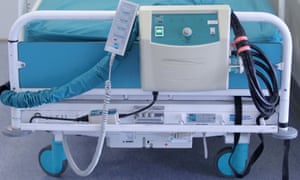
Hospital bed


Almost 37,000 women went to a GP, A&E or a walk-in centre because they didn’t have access to a midwife between 2014 and mid-2016. Photograph: Lynne Cameron/PA

It was worrying that the same proportion of women who could not see a midwife as often as they wanted to postnatally had not improved since the NCT carried out a previous survey four years ago, Duff said. A&E staff and GPs do their best to help women in such circumstances but are not properly trained to help with problems such as those that concerned new mothers typically present with, she added.


One woman told the NCT how she felt obliged to go to her local A&E after her midwife did not come out and see her at home when her legs and feet became swollen, even though they were potential signs of deep vein thrombosis, which her own mother had suffered from after giving birth to her. Another said she had gone to A&E when she and her baby son were discharged too quickly after his birth even though he was not breastfeeding and he soon became dehydrated.


Cathy Warwick, chief executive of the Royal College of Midwives, criticised the NHS’s failure to allocate proper resources to postnatal care as a short-term policy that stored up more problems and longer-term costs.


“Underfunding and under-resourcing postnatal care not only puts pressure on other parts of the NHS, it also fails mothers and babies who may not be getting the care, support and advice they need,” she said. “I am hearing increasing reports of babies requiring readmission to hospital because of lack of breastfeeding support.


“It is also widely acknowledged how critical it is to have early detection of women who are suffering from mental health problems postnatally. Early intervention can prevent very serious problems for the mother as well as separation of mother and baby.”


A series of reports in recent years into weaknesses in postnatal care led to NHS England’s maternity care taskforce and Better Births report last year recommending improvements, including that women can contact a midwife in the weeks after the birth. However, Warwick warned that pressure on hospital maternity units and serious shortages of midwives meant that some midwives are being taken away from home visits to help out there.


NHS England declined to respond directly to the findings, but insisted that it was making progress on implementing the recommendations contained in Better Births.


“It is safer than ever to give birth in this country and the vast majority of mothers report that they received great NHS care,” a spokesman said.


“We are now working to implement the recommendations made by Better Births across the NHS including providing better postnatal care and access to a small team of midwives for continuity throughout the pregnancy, birth and postnatally, ensuring all women receive the best possible care.”


Case study


When Leigh Jerzeyszek, 33, gave birth to her first son, Charlie, last October, the baby didn’t take to breastfeeding at first.


“I’m a new mum, I’d never breastfed before, so I didn’t know what was happening and what was normal,” she said. “He was just very, very gentle, so I thought, this is easy.”


She asked the nurses for some help with breastfeeding, but didn’t receive help before being discharged, the day after giving birth. “For three days, Charlie had barely anything to drink, and every time I tried to breastfeed him he was distressed, like I was trying to poison him,” Jerzeyszek said.


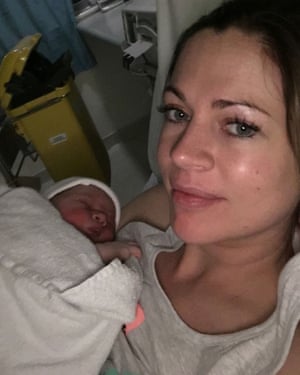
Leigh Jerzyszek and Charlie.


Leigh Jerzyszek and Charlie. Photograph: Leigh Jerzyszek

“I thought, this can’t be right … he’s going to dehydrate if I don’t give him something, so I tried him with formula. He couldn’t latch to my breast, and he couldn’t latch to the normal teat of a bottle, either.”


Unlike many of the mothers in the NCT study, Jerzeyszek did have a visit from a midwife the day after being discharged, and the following day a healthcare visitor, who said she should tickle Charlie to make him try to eat. But it wasn’t until three days after she left the hospital, and becoming increasingly anxious about Charlie’s inability to feed, that she saw an infant feeding specialist.


“As soon as she saw him, she said, ‘get him to A&E, because that’s not a normal cry’,” said Jerzeyszek. “It was really whimpery, just no energy. She looked at his tummy and it was quite sunken. We went back to the hospital in a panic. No one in A&E could feed him.”


Charlie was tested for meningitis and sepsis, and was given lumbar punctures.


Jerzeyszek was exhausted, awash with postnatal hormones and terrified. “I went into the toilet and cried,” she said. “I hadn’t slept, this tiny, innocent little baby’s not feeding, it’s just really surreal.”


Charlie spent three nights in hospital being fed on a tube, as an ear, nose and throat specialist and eventually a speech therapist tried to work out why he wouldn’t feed. He ended up needing special teats until he was four months old.


“I was discharged too soon … they just basically didn’t check that Charlie was feeding properly,” Jerzeyszek said. Although she received frequent visits, “they just didn’t identify the problem … I would have thought as an experienced care professional, rather than thinking he doesn’t want it or he’s lazy, he actually couldn’t feed”.


She remains angry at the impact it had on her family in their very first week. “I think because at the time it’s all a whirlwind … you just deal with it,” Jerzeyszek said.


“But now that he’s settled, sometimes I get upset about it. There was a lot of trauma to him that could have been prevented if they’d only checked [his feeding] in the first place.”


As told to Alice Ross


Tens of thousands of new mothers can"t reach a midwife, study finds

7 Nisan 2014 Pazartesi

Arkansas" "Private Option" Value Tag Is Growing By The Month Below Obamacare"s Medicaid Expansion, State Taxpayers To Pay out Tens Of Millions

This publish is co-authored with Jonathan Ingram.


Any Governor or legislator still contemplating a “Private Option” design ObamaCare Medicaid growth in their state ought to consider an additional-extended look, as the Razorback state’s edition is turning out to be hugely costly. Even though the “Private Option” programs are essential to look nearly exactly the exact same as Previous Medicaid from an enrollee’s viewpoint, the prepare does have one massive big difference from a straight “traditional” ObamaCare Medicaid expansion: state taxpayers are on the hook for all expense overruns. The trend of enrollment in the 1st couple of months venture a price overrun of tens of millions of dollars for 2014 alone, with likely overruns growing larger in the future.


We just lately talked to Arkansas state Representative Joe Farrer (R-44), who has been warning his colleagues of these possible problems for fairly some time. When asked what lawmakers both in his very own state and around the country need to know, here’s what he had to say:


These expense overruns have designed tens of hundreds of thousands of new causes why the Private Choice should be repealed. A lot of of us warned that this program was going to be a income pit we are already being established correct and Arkansas taxpayers are going to finish up on the hook.


Except if we reverse program, we are going to have to make large cuts to vital state services—including these that truly vulnerable, elderly and disabled sufferers rely upon—or increase taxes even a lot more in buy to maintain pumping income into this giant broken promise. How many sufferers will have to suffer and how a lot of family members budgets will get a hit ahead of Personal Choice supporters admit this ObamaCare Medicaid expansion scheme has failed?


The New York Instances, Hillary Clinton &amp Some Republicans Have Endorsed The Personal Choice As GOP-safe Medicaid Expansion


Media accounts have manufactured a quite huge deal about the “GOP-conceived alternative” to Medicaid expansion. This has led to speculation that the prepare helps make it politically less difficult for red states to assistance ObamaCare’s Medicaid expansion. The dilemma is that, as we discover a lot more about the fine print of the last deal and view early implementation, the plan looks like a horrible deal for taxpayers in Arkansas and consists of all of the same federal strings that make Old Medicaid such a dysfunctional program in the 1st location.


The further charges will directly crowd-out investing on other public priorities like schooling, public safety and infrastructure investments. But worse than that, as Representative Farrer would like other states to consider, it will hurt the most vulnerable already protected by the pre-ObamaCare security net: mainly poor kids, seniors and men and women with disabilities.


In the odd submit-ObamaCare era of Medicaid growth debates, a strategy roundly endorsed by each The New York Times editorial board and Hillary Clinton has not dampened the interest from some Republican legislators hoping to secure their own version of the Arkansas model. The idea has spread to states like Iowa, New Hampshire, Pennsylvania, and Utah. Yet a lot of fail to recognize how the Arkansas program is structured, and move past the rosy rhetoric of the Personal Choice.


How Arkansas Policymakers Put Their Residents On The Hook


ObamaCare advocates repeatedly guarantee state lawmakers that Medicaid expansion is totally-funded by the federal government, at least through 2016.  Advocates repeated this guarantee for the Arkansas Personal Alternative Medicaid expansion, which sought to use ObamaCare’s Medicaid funding to supply Medicaid advantages to a new class of operating-age, able-bodied adults by means of ObamaCare exchange plans.


But under terms of the Private Choice federal waiver signed by Governor Beebe and the Obama administration, state taxpayers will be on the hook for any value overruns. The unique terms and conditions of the Private Choice waiver attribute month to month per-particular person caps on federal investing for every of the up coming three many years. A widespread characteristic of Medicaid waivers, these caps are meant to shield the federal taxpayer if the Private Option ends up becoming much more costly than previously estimated.


Beneath the terms of the waiver, the state taxpayer is accountable for all charges which exceed these per-enrollee caps. At the end of the waiver period, the federal government will calculate how a lot Arkansas invested on the Private Choice Medicaid expansion and compare it to the yearly price range caps agreed to in the waiver. Any quantities more than individuals caps should then be repaid to the federal government from state tax bucks.


Private Choice Already Exceeding Federal Cap


Just three months into the program, costs have been far over the state’s initial projections. When the Personal Alternative originally passed, consultants for the Arkansas Department of Human Solutions projected that the system would price $ 437 per individual per month in 2014. But the Division of Legislative Audit reports that the Personal Option had an average month-to-month price of $ 476.59 per individual in January alone. By February, the Division of Human Providers reported average regular monthly expenses had enhanced to $ 483.15 per individual. In March, the typical monthly charges grew even higher, reaching $ 485.77.


PrivateOptionOverrun


Despite the fact that the state developed a minor wiggle space into the cap it negotiated with the federal government, the Personal Option started to exceed the month to month per-enrollee cap of $ 477.63 in February, the second total month of the program, with expenses continuing to improve thereafter. The waiver does supply the state an possibility to inquire for an adjustment to this cap, but this would call for added federal approval and is supposed to only be granted for problems in participation costs and related aspects.


Arkansas" "Private Option" Value Tag Is Growing By The Month Below Obamacare"s Medicaid Expansion, State Taxpayers To Pay out Tens Of Millions