Lucy Kellaway, associate editor of the Financial Times, has made news by announcing that, after three decades as a journalist, she is switching careers. Aged 57, she is to train to become a maths teacher. She also plans to work with a charity, Now Teach, to persuade others in midlife and older to follow her example and have what in the US is called an encore career.
“It’s one of the best jobs in the world but I’m not getting any better at it,” Kellaway said of her years in journalism. “I’m part of the lucky generation that’s paid off mortgages and has a pension. I can afford to do something that tangibly improves people’s lives.”
Not everyone, of course, is in what Kellaway describes as this “demographic sweet spot”: financially secure for life so they can make an occupational shift that may bring rich rewards but not pay the bills.
To be clear, an encore career is not the same as finding a job, any job, after redundancy, illness or “enforced retirement” – plights that have befallen 1.5 million people aged 50-69 in the UK in the last eight years, more than a million of whom would work if somebody would employ them. And it is different from having to work those extra years – to 70 for today’s twentysomethings, according to some predictions – to scrape together a pension.
In the US, Marc Freedman set up Encore.org, “second acts for the greater good”, 18 years ago to make use of the experience, wits and wisdom of older people. He defines these second (or third or more) careers in the second half of life, paid – on an often significantly reduced income – and unpaid, as combining “greater personal meaning and social impact to improve communities and the world”. Freedman was among the first to recognise what was unfolding demographically. The combination of longevity – many of today’s newborns will live to 100 – and retirements that already stretch to three and four decades, plus the sheer numbers of baby boomers reaching their 60s, 10,000 a day in the US, meant that volunteering required an overhaul and the entry requirements and training for jobs with social impact needed to adapt to admit recruits who already had 30 or 40 years of experience.
Freedman established a one-year training scheme, “a fellowship” so that a banker interested in, say, community regeneration or a doctor wanting to work in literacy, had accelerated instruction and a network of support. Then, 10 years ago, he launched a $ 100,000 Purpose prize for “exceptional individuals over 60 working to address critical social problems”, and innovation has flowed from the scheme. Among the winners of the prize are Vicki Thomas, a former executive in public relations, who via a charity, Purple Heart Homes, matches disabled members of the armed forces with repossessed homes donated by banks; and W Wilson Goode, a former mayor and retired academic, who runs a scheme mentoring the children of prisoners.
Inevitably, it’s not easy challenging the traditional pattern of working lives, as Kellaway has discovered. Men and women who have been teaching for years don’t take kindly to vintage amateurs, fortysomethings and older, arriving in the classroom. But, as she points out, an acute shortage of maths, science and language teachers has a negative impact on children and age may bring other benefits.
Recently, the government and Nesta, an organisation promoting innovation, announced grants of £4m to explore how charities and public services can tap into “the skills and experience of volunteers over 50 for the benefit of society”. But money alone can’t make a movement. It needs a man or a woman, such as Freedman, on a personal mission – and that, as yet, the UK lacks.
In the meantime, professors Lynda Gratton and Andrew Scott have been studying the issue of working lives in (much) later life and some of the stereotypes that hinder its acceptance. The co-authors of The 100-Year Life surveyed 10,000 people from across the world aged 24-80. The results, reported in the Harvard Business Review, indicate that it is not just the young who invest in new skills, who are excited about their work and who make an effort to keep fit. Those in their fifth, sixth and seventh decades do too. Again, while more than half those aged 46-60 want to “slow down”, fewer than 20% of those over 70 agree and more people under 45 (43%) than over (35%) said they were exhausted – with the least exhausted over 60. Leave aside the idea that rampant ageism might inhibit the 50-plus group from telling the whole truth.
Research says that retirement makes many of us happy. However, if you decide to delay it for a decade or so to take up a new career and “give something back”, that may also help to inject positivity into what is currently a highly negative narrative about our changing demographics and alleged inter-generational warfare. Encore careers offer a bonus not least in the power to shift ageing from a problem to part of a solution.
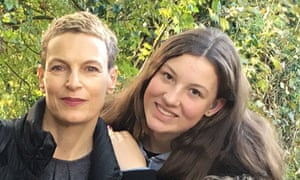
LAURA GODFREY-ISAACS
52, academic, producer, feminist activist, artist, director of her own company for 12 years, Home Live Art, qualified as a midwife in September 2016
“I began training at 47. It made internal sense to me. I felt I’d come to an end. I knew what I was doing in the arts and I wanted to work in a different way with people. I wanted to combine art and midwifery and in a more caring, direct, hands-on role.
“I’d been running my own company but in my midwifery training I enjoyed stepping away from the leadership role. I had experience but I had to show some humility and learn from people much younger than myself.
“I was the oldest in training but there were others in their 30s and 40s and I have good friends now in their 20s and that’s refreshing. I’m fortunate in that I could afford to take the financial risk, I have a supportive husband and my own business but other older students with me took a bigger financial hit and it will be tougher still with the removal of the bursary system [bursaries will be replaced with grants next year].
“I’ve been a mother for 20 years so now I feel very strongly about ‘mothering the mother’, looking after other women in childbirth. I see myself doing this part-time for 10 or 15 years. It’s not trying to forge a career; it’s for different reasons.”
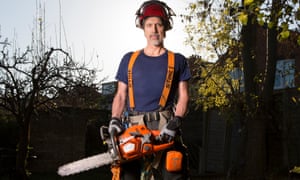
KEVIN CURRAN
62, welder, trade unionist and now tree surgeon
“I’ve had a lifelong interest in economic and social justice and woods and trees. I got my chainsaw qualification as a way of relaxing when I was a trade union organiser.
“At 53, I resigned from a job at the International Labour Organisation in Geneva. I wanted to come home and do something that meant I could give something back and work in a sustainable way. I did a two-week tree-climbing course and everybody else was a lot younger but I’m in good health and a long-distance runner.
“My brother Eamonn was 50 and a retired firefighter so we set up the tree surgery business together. As a volunteer I also manage a 63-acre wood. We also recycle by turning the wood we bring down into firewood.
“If I’d stayed full time as a trade unionist I’d probably be dead from a heart attack by now. When I was at school the careers advice person gave me a test and told me that my ideal occupation was farming or forestry. Now I feel so lucky. I love it up in the trees. When you’ve been climbing all day you know it but as long as my body holds out, I’ll keep going.”
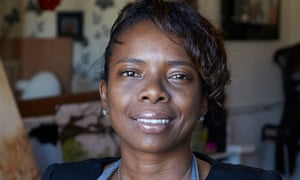
TONI LEE
43, former carer
A mother of two sons, 18 and 23, Lee was a carer for 20 years after leaving school with GCSEs in English anda art. “It was the only thing I thought I could do.” Fourteen years ago, she began to care for John and Irene Leal, a former headmaster and his wife, both in their 80s. In 2012, with John’s encouragement, she began a BA fine arts degree. “He had been waiting for my results but he died, aged 95, the day before,” said Lee.
She received a first-class degree and won a scholarship to do an MA at the Royal College of Art in oil painting and photography, where she is now studying, in addition to working part-time in Sainsbury’s.
“I do oil paintings and the subjects are influenced by my passion about social issues, about poverty and unemployment and homelessness and the loneliness of older people. I visited South Africa in 2011 and it changed my whole way of thinking. I wanted to do work that meant something that could be a catalyst.
“I want to set up a gallery and a work space in a deprived community to teach young people and encourage local artists – to give them a chance of something better. As a student, financially it’s crippling – canvases can cost up to £200 – but I believe as long as you have passion you can accomplish anything.
“Half my sitting room is my studio. That’s where I make the magic happen. Being a mature student is challenging, delightful and sometimes it’s lonely, but I love the environment because I’m learning and it means, eventually, I can give something back.”
The rise of encore careers: why over-50s are changing patterns of working life


