sport etiketine sahip kayıtlar gösteriliyor. Tüm kayıtları göster

9 Mayıs 2017 Salı

Gardening, art, sport – "prescriptions" for mental health that don"t involve pills

Group therapeutic work had never appealed to Kerina, who was diagnosed with borderline personality disorder and obsessive compulsive disorder in her 30s after suffering from mental health issues all her life. “You sit there reading paperwork and it feels like you’re in a classroom,” she says.


Then two years ago the community mental health team in Mid Ross in the Scottish Highlands gave her a “social prescription” – referring her to Branching Out, a Forestry Commission Scotland programme designed to help people recover from long-term mental health problems. For 12 weeks she spent five hours a week in the woods doing conservation work, bushcraft and environmental art.


“I enjoyed it straightaway,” says Kerina, who now volunteers as a mentor with the Abriachan Forest Trust, where she completed the course. “It’s so different from your normal life. You go out there and all your worries leave you. We built shelters, tables, workbenches, a kitchen. We chopped wood, we cooked, we sat around the campfire.


“It just seemed to really work for me. I remember saying: ‘I feel like I’ve been here for ages.’ I’d only been there a day.” Though she still has good and bad days, she says she now finds her problems easier to deal with, and is working towards a formal award in volunteering.


The use of social prescribing – where GPs and other primary care professionals refer patients to non-medical activities, such as gardening, arts and sports, normally delivered by the voluntary sector – is growing, with many schemes tackling mild to moderate mental health problems. Studies have suggested a range of positive mental health and wellbeing outcomes.


But in January a report commissioned by Natural England warned that the lack of a standardised referral mechanism, or funding for the activities offered in the majority of services, posed “fundamental barriers” to the NHS’s ambition to increase the scale of social prescribing.


It identified Rotherham’s service for people with long-term health conditions, which started in 2012, as having many of the ingredients for good practice – including a simple and effective referral system, well-informed link workers to help patients choose an intervention, and, crucially, funding for those interventions.


The report also highlighted the service Rotherham has since started for people with mental health issues, which began as a one-year pilot in 2015 and has just been extended for a third year. In an evaluation of its first year, 93% of service users reported progress against at least one of eight wellbeing outcome measures, and 64% reported progress on four or more.


While the service initially focused on those who had been using services for five to 20 years and needed a support network and meaningful activities to help with a successful discharge, it is now expanding to work with people earlier on.


But Janet Wheatley, chief executive of Voluntary Action Rotherham, which coordinates the programme, backs up the warning in the Natural England report: “You can’t direct more and more people to use resources in the community without providing funding to support that.”


Gardening, art, sport – "prescriptions" for mental health that don"t involve pills

31 Ağustos 2016 Çarşamba

Kids, sport, concussion, and the long lasting effects of minor brain injury | Pankaj Sah

Head knocks in childhood are by no means uncommon, yet they may have lasting negative effects. New research has found a link between concussion in childhood and adverse medical and social outcomes as an adult.


Researchers from the United Kingdom, United States and Sweden looked at data from the entire Swedish population born between 1973 and 1982 – some 1.1 million people – to analyse the effect of experiencing a traumatic brain injury in the first 25 years of life.


Compared to those who had sustained no injury, people who had experienced at least one traumatic brain injury in childhood – around 9% of those studied – were, as adults, more likely to die early or be treated for a psychiatric illness and receive a disability pension, and less likely to have completed secondary schooling.


At first glance, the findings seem unsurprising: common sense suggests, for example, that a child who has sustained severe brain damage in a car accident would encounter more educational obstacles than a child who hasn’t.


Accordingly, the study found that the more severe the brain injury, the worse the outcomes in adulthood (this was also the case for repeated brain injuries). But the research also found a significant link between concussion – the mildest and most common form of brain injury – and subsequent problems.


In the study, concussions comprised more than 75% of the childhood brain injuries recorded. The researchers found being exposed to a concussion, or mild brain injury, was associated with a 18%–52% increased risk of negative outcomes, including early death, low educational attainment, and being on welfare. The most marked increase in risk was found for psychiatric inpatient hospitalisation and the disability pension.


Traumatic brain injury occurs when the brain is damaged by external force such as a fall, car accident, assault or being struck by an object such as might occur during sport. It’s usually classified according to its severity, or based on the anatomy of the injury. Moderate to severe traumatic brain injury can result in irreversible structural damage to the brain, and in some cases death.


A concussion, on the mild end of the brain injury spectrum, results when force causes the brain to twist upon itself or strike the skull. Bruising and cell damage can occur, but any structural damage from the injury cannot be picked up by MRI or CT imaging, which can make diagnosis difficult. Using specialised imaging methods such as functional MRI (fMRI), however, changes in patterns of brain activity are apparent soon after a concussion.


Research shows even a seemingly innocuous knock that wouldn’t qualify as a concussion can trigger changes in brain physiology and affect the functioning of neurons. There is some evidence that repeated concussions could be associated with the development in later life of a neurodegenerative disease called chronic traumatic encephalopathy. More long-term research is needed to determine how permanent or reversible brain changes following a single concussion are.


The new study found an association between the age at first head injury and subsequent health and social outcomes. Children who were older, and particularly those who were older than 15, were substantially more likely to have problems in adulthood.


Although the study findings are yet to be replicated, the authors suggest heightened neuroplasticity – the ability of the brain to adapt and change its networks and behaviour – in younger years may be protective in the long term.


While there are still many unknowns when it comes to concussion, the latest findings point to the importance of minimising head trauma in childhood. Because children have weaker necks and torsos than adults, less force is needed to cause a brain injury. For toddlers and preschoolers, the study’s authors suggest improved parental supervision is key, as falls are the most common cause of traumatic brain injury for young children.


In older children, reducing the incidence of sports-related concussions may be trickier. Wearing hard helmets in sports generally reduces the risk of severe head injuries such as skull fractures and bleeding inside the skull, but is ineffective against the rotational forces – forces that cause the head to turn rapidly and the brain to twist on itself, as can occur with whiplash for example – that can cause concussion. There’s also no evidence that the soft headgear worn in some Australian football codes can protect against brain injury.


Many concussions occur without noticeable signs such as disorientation or slurred speech, and for that reason go undiagnosed. The danger of an unrecognised concussion on the sporting field – which predisposes a player to subsequent concussion – is that it increases the risk of lasting damage. The lack of awareness about the symptoms, treatment and management of concussion is an unrecognised public health problem.


The health benefits of sport are well established and should be supported. However, the nature of contact sports means that head knocks are sometimes unavoidable.


Given Australia’s strong sporting culture, the solution might not be to change the fundamental rules of these sports or prevent children from playing them. Rather, by investing in research and improving awareness at the grassroots level, we can improve the diagnosis and management of concussive episodes in kids.


This article was co-authored by Donna Lu, science writer at the Queensland Brain Institute, and was originally published on The Conversation. Read the original article.


Kids, sport, concussion, and the long lasting effects of minor brain injury | Pankaj Sah

19 Ağustos 2015 Çarşamba

Female rugby player"s tragic death exhibits why girls must tackle this sport head on


The 23-yr-outdated player was tackled to the ground for the duration of a game for her crew Longton but walked off the pitch, despite some discomfort. She later on suffered a stroke very likely due to a blood clot and died a month following being harm.


Some have pointed to this as proof that females shouldn’t be playing such a rough sport.


But, with respect to Sarah’s household and close friends, I should disagree.


Yes, rugby is a get in touch with sport it is the nature of the beast. Knocks will happen and a handful of are far more significant than others. As Sarah’s teammate Lesley Thompson said at the hearing into her death: “It was just a tackle, absolutely nothing malicious or heated”.


Anyone who queries the rougher edge and suggests that girls would be much better off steering clear of rugby, is missing the point.


The reality is that we achieve so a lot more, in spades.


Sarah ChestersSarah Chesters  Photograph: SWNS


We’re encouraged, by our coaches and teams, to search right after our bodies to stretch and problem them in purchase to avoid injury, acquire strength and consume nicely.


The teamwork doesn’t cease, ever. From instruction in the wind and rain on grim February nights to plaiting every single others’ hair on the bus to an away game. These are journeys when we shout, sing, get raucous and share cakes we stayed up producing the night before (it’s not just the staff, one particular of our star bakers is a player’s husband).


You feel ladies can’t perform nicely with each other? There’s no greater way to bust this ridiculous myth than seeing eight girls, working with each other in a pack to earn hard yards for the rest of their team.


We’re invariably called ‘butch lesbians’ and ‘man-hating hulks’.


Masculine, you say? Well, if you’d class strength, determination and a cracking sense of humour as masculine traits, we’d say: “too correct.”


There are even now too many lazy and hazardous stereotypes that surround women’s rugby. But shell out a pay a visit to to any club, and you will locate this kind of a selection of personalities, shapes, ages, sexualities, speeds and skill-levels – it’s the sport that brings us with each other.


Whether it’s busting our guts on the pitch for a single yet another, or busting our lungs singing S Club 7 songs in the showers afterwards although acquiring the mud out of our hair (3 shampoos and a rinse generally does the trick), there is amazing camaraderie that comes hand-in-hand with pushing your self to the limits in the worst climate circumstances Britain has to provide.


That is something that Sarah, who commenced playing rugby as a student at Manchester Metropolitan University, would have skilled initial hand and loved, just as we do.


Bath ladies in action  Photo: Paul Hughes


All the ladies I perform with are properly aware of the dangers involved. And they also have knowledgeable a tragic injury. Eight years ago, the team’s captain and a founder-player broke two vertebrae in her neck and broken her spinal cord. Her injuries had been life-changing. But she’s by no means blamed the sport, nor anybody concerned, merely saying it was “one of individuals items.”


In the days following her accident, she informed the crew they have to return to perform their largest rivals the following week. It was hard but they did. And they won.


I imagined of her this week, when I study a comment by Sarah Chesters’ father, right after the inquest. Michael, 65, explained that his daughter ‘loved’ rugby. “Despite her modest stature,” he additional, “she was really strong”.


To propose that ladies shouldn’t play rugby – that we are not physically capable – is to say we’re the weaker intercourse. Tragic accidents do take place in sport, as in numerous other walks of lifestyle. Only last month, 24-year-outdated Bavalan Pathmanathan died following currently being struck in the chest by a ball in the course of a regional cricket match in Surrey.


This kind of incidents need to not be taken lightly, of program. Any sports player is aware that severe damage is a real risk. But, as Sarah’s father rightly pointed out in saying how much his daughter loved rugby, it is just component of throwing oneself wholeheartedly into the game, with passion, enthusiasm and strength.


Sarah Chesters playing rugbySarah Chesters taking part in rugby  Photo: SWNS


Confident, as girls we occasionally appeal to a little concern from strangers who clock our black eyes and mutter quietly, “are you alright?”


But once they uncover out you play rugby, it problems their assumptions. It is not a bad conversation starter for your CV, too.


Player security is constantly proper at the best of the agenda. New protocols to deal with concussion are filtering down to grassroots degree from the prime tiers of the sport, with latest higher-profile circumstances – this kind of as the concussions experienced by Welsh player George North and Ireland’s Jonny Sexton – guaranteeing rapid progress.


• Rugby concussions soar by 59 per cent, says report


We have scrum caps, mouth guards, hi-tech strapping. There’s also been important advancement in sports armour for women’s bodies, which will give you even a lot more protection when you get that inevitable elbow to the nipple (ouch). All this means the game has never been safer.


England win WomenEngland win Women’s Rugby Globe Cup ultimate   Photo: AFP


Following the achievement of the England staff in winning the 2014 Women’s Rugby Globe Cup, a lot more girls than ever are scrumming down.


The Men’s Rugby World Cup lands in England (and Cardiff) this September, with tournament organisers stating that upping participation and engagement is one particular of their key objectives. Soon after that we’ve acquired fast and furious Sevens in the Rio Olympics to seem forward to.


Yes, there are aches, knocks and bruises. There’s crying, there is laugher – most of the time in my group, it is crying with laughter.


And there are the horrible (though thankfully scarce) times, when our community has to come with each other in the encounter of heartbreaking injuries.


But in women’s rugby, there’s also determination, strength, respect and joy. And the most entertaining you could ever have. There’s in no way been a much better time to tackle lifestyle head on.


Bath Rugby Women are element of Bath RFC. Last season, recruitment and advancement of new players was so effective that a Bath Rugby Women IIs staff was formed, and will compete for the very first time in the 2015/sixteen season. New players are extremely welcome – if you would like to come and train with us, just pop along, email bathrugbyladies@hotmail.co.united kingdom or follow on Twitter @bathrugbyladies


Female rugby player"s tragic death exhibits why girls must tackle this sport head on

18 Ağustos 2015 Salı

The situation of Chelsea"s Eva Carneiro exhibits how tough it is to be a sport medical doctor


A player collapses on the discipline. He seems injured and in pain. The referee, on two occasions, urges the medics to examine him. Dr Carneiro and physiotherapist Jon Fearn run onto the pitch and treat the injured player. Dr Carneiro has given that been demoted from touchline duties to Chelsea’s coaching ground at Cobham.


Ethically, Dr Carneiro is on protected ground. The Common Medical Council’s states in its advice that “In an emergency, wherever it arises, you need to provide help, taking account of your very own safety, your competence, and the availability of other possibilities for care.”


In this situation, there was no risk to Dr Carneiro’s security and she was plainly competent to assist the player. Failing to offer help may have led to disciplinary action towards her.


Chelsea medical professional Eva Carneiro responds to Jose Mourinho’s criticism


Divided loyalties


A doctor’s principal duty is to act in the very best interests of the patient. A football manager, nonetheless, might prioritise the ideal interests of the crew.


Like the manager, the players, and the followers, the medical professional usually wants the team to do effectively. The difficulties arise when a doctor’s loyalties to the manager, the group, and the fans conflict with the health care commitment to the patient.


In April 2009, in the quarter final of rugby’s Heineken Cup, the club doctor of the Harlequins crew deliberately minimize a player’s lip, at the player’s request, so that a professional purpose kicker could be brought on. The player had concealed a capsule of fake blood in his sock. In causing physical harm to the patient, the medical doctor had place the team’s interests above that of her patient, and in excess of the laws and spirit of the sport. She was suspended by the Basic Health-related Council.


A sports activities physician after advised me that he allowed a boxer, ahead on points in the greatest battle of his daily life, to carry on fighting with a broken rib. The stress here was between the health-related best interests of the patient (cease the fight) and his all round very best interests (let him to fulfil his ambition of reaching the best of the sport).


Shifting power


In a regular clinical context, there is an imbalance of electrical power in favour of the doctor. The patient is sick, often frightened, and medically significantly less sophisticated. The medical doctor is healthier, experienced and in a acquainted atmosphere.


For sports activities medical professionals, the electrical power relationship is altered. The well-known manager and gamers with eye-watering salaries, the prestige and privilege of a coveted health care part, and the expertise that a substitute could effortlessly be found, create a diverse dynamic. The physician wields small power.


External pressures


Sports physicians are by no signifies the only physicians to encounter external pressures. Military physicians can encounter ethical tensions in between acting in the greatest curiosity of individuals and obeying the orders of their superiors. A military medical professional in Afghanistan could be ordered not to deal with Afghan civilians who present to the hospital with injuries unrelated to the military mission. This runs counter to a doctor’s instinct to support.


The private medical doctors of heads of state or celebrities can expertise a reversal in the energy dynamic in between doctor and patient. This may possibly describe the actions of Michael Jackson’s physician, Dr Conrad Murray, who acted far beyond his level of competence and triggered the death of his patient.


The prolonged intervals spent with one particular, or just a few, patients threat blurring skilled boundaries. Famously, Dr Claude Gubler, personalized medical doctor to former French president François Mitterrand, repeatedly lied in the 1980s and 90s to the French people about Mitterrand’s prostate cancer and his declining bodily and psychological well being. The identity of his patient, his close relationship with him, the prestige of the work and the substantial salary distorted his ethical judgement.


Eva Carneiro has an argument with Chelsea manager Jose Mourinho on the touchline


Moral courage


The solutions to the ethical dilemmas encountered by sports activities medical professionals are seldom difficult. The Hippocratic Oath reminds medical professionals of their commitment to healing, even in the face of pressure or the temptations of corruption: “In a pure and holy way, I will guard my existence and my art and my science.” The GMC’s guidance is also clear on the duty to act in the best interests of the patient.


But, knowing the solution and acting on this expertise are fairly various. When much is at stake, carrying out the right point can call for significant moral courage. On the facts publicly available, Dr Carneiro and physiotherapist Jon Fearn discharged their Hippocratic and skilled duties to aid the sick and injured in an emergency. In so undertaking, they have guarded their lifestyle, artwork and science and maintained the reputation of their professions.


Dr Daniel Sokol is a medical ethicist and barrister at 12 King’s Bench Walk in London, Uk.


The situation of Chelsea"s Eva Carneiro exhibits how tough it is to be a sport medical doctor

29 Haziran 2014 Pazar

How Can We Get Ladies To Consider Up Sport?

As we reach the enterprise finish of the World Cup, it is easy to fail to remember that even though viewing sport has in no way been so popular, taking element is another matter. And a single particular question is exercising the minds of college leaders and sports activities bodies alike: how to get more women to get up sport?


Participation charges in sport amongst college-age kids are low for the two sexes, but for ladies they are worryingly so.


Figures published by the Women’s Sport and Fitness Basis, a U.K. organization that aims to market bodily action, present that girls start off carrying out substantially less physical exercise than boys by the age of 9.


By 15, just 15% of girls are performing the recommended 60 minutes exercise a day, in contrast with 32% of boys. 1 in five women does no physical action in a week, even although it is compulsory in college.


A variety of motives have been put forward for this lack of exertion, which includes social pressures and the normal of altering rooms.


Proposed remedies have been just as varied. Earlier this month, Jennie Value, the head of Sport England, stated women need to be offered time to dry their hair and reconstruct themselves following college sport, even though Helen Fraser, chief executive of the Girls’ Day College Believe in, advocated actions this kind of as Zumba as a way of receiving ladies interested in sport and fitness.


In the most latest contribution, the Youth Sport Believe in final week reported the final results of a twelve-month pilot undertaking to try out to improve consider-up of physical action in college.


English: India playing against Japan in the FI...

English: India enjoying towards Japan in the FIH Women’s Area Hockey World Cup, Rosario, Argentina, 2010 (Photo credit score: Wikipedia)


At the end of the pilot, the surveys showed a sharp rise in the percentage who said looked forward to bodily training in school, from 38% to 71%. The proportion who explained they liked the way they felt soon after exercising showed a related enhance, from 41% to 73%.


What was particularly fascinating about this task was that it did not involve significantly in the way of investment. The method might not look particularly earth-shattering, but nor is it frequent in many colleges. The fundamental premise was to inquire the ladies what they wished to do.


Every single of the twenty schools taking portion recruited a small group of young leaders, who were given the role of finding out what would inspire girls to take part in sport and create an action plan based on that knowledge.


The result was the introduction of Zumba clubs, cheerleading groups and girls’-only swimming sessions.


As well as a far more favourable mindset towards physical exercise, the pilot also noticed a wider adjust in attitudes, with the percentage who felt good about school growing from 24% to 78%.


According to Alison Oliver, managing director of the Youth Sport Trust, the lesson to be drawn from this venture is clear. Except if girls are offered a say above which activities they do at school, then college might threat turning them off sport for existence.


“If we are to get women a lot more active…then we must operate with them to recognize what appeals to them,” she stated.


It might not perform each and every time, but there is no explanation why all schools need to not consider this kind of a lower-price method. If acquiring girls to get portion in sport requires giving them a say in what they do, then that seems a cost worth having to pay.


How Can We Get Ladies To Consider Up Sport?

18 Haziran 2014 Çarşamba

Record number of people in England playing sport regularly

What with the Globe Cup now underway and the Wimbledon tennis championships about to begin next week, sport is on the brain for numerous men and women across the country. But how several people really engage in the physical activities themselves?


Sport England aims to reply this query in its bi-yearly Lively People survey. Because 2005, the non-departmental public entire body under the Division for Culture, Media and Sport has been asking people in England about their sport participation.


The survey is the greatest of its kind, sampling far more than 165,000, and contains these aged over 14 (prior to 2012, the survey only incorporated people aged over 16).


In accordance to the latest information release covering April 2013 to April 2014, the variety of above-16s taking part in sport after a week, each week has risen to a record 15.6m – 1.7m a lot more than in 2005.


In the most lively nearby authorities – Hart, Richmond upon Thames, St Albans, Corby and Tunbridge Wells – about half of the individuals participate regularly in sports activities.


A lot more than 2.9m people are swimming frequently, generating it the most well-known sport in England by far. Football, athletics or cycling are element of the weekly regimen for about five out of one hundred people in England – a slight increase since last 12 months.


Importantly the variation for these ‘big sports’ between this and last year’s survey is even smaller sized than the seasonal variation in sport participation, which you can explore on the Sport England interactive tool.


Fencing, canoeing and staff sports activities such as rounders, netball and rugby union – still only played by a minority – actually acquired most in acceptance.


But there is a big gap among guys and ladies. While in excess of forty% of men exercise frequently, only 31% of ladies do. Nonetheless, the gender gap has not changed much since the Active Folks survey in 2012/13.


Jennie Price, chief executive of Sport England mentioned:


There is a lot more to do, which includes closing the unacceptable gap in participation amongst youthful males and young girls…this will be an critical focus for Sport England above the subsequent twelve months


Download the information


• Source: Sport England


Much more open information


Information journalism and data visualisations from the Guardian


Improvement and aid data


• Search the world’s international improvement data with our gateway


Can you do far more with this data?


• Contact us at information@theguardian.com
• Adhere to us on Twitter
• Like us on Facebook


Record number of people in England playing sport regularly

19 Mayıs 2014 Pazartesi

Sporting Recollections Network: How sport assists us hit Alzheimer"s for 6


When carers at a Grimsby care residence identified out that one particular of the female residents, aged 96, utilised to be a competitive ice dancer, they place on their skates. With the support of the local rink, they took their charge out on the ice, so she could expertise the feeling of freedom after again.


Tony Jameson-Allen smiles at the considered. “Using sport to engage and interest elderly folks with memory troubles is a fantastic way to assist them feel alive once again,” he says. Jameson-Allen, a former psychiatric nurse, and his colleague Chris Wilkins are behind a social enterprise called Sporting Memories Network, which uses recollections of sport to aid people living with dementia and their care teams.


Sporting Recollections Network is a nominee in the Alzheimer’s Society’s initial Dementia Friendly Awards, sponsored by Lloyds Banking Group and supported by The Telegraph, whose winners will be announced tomorrow. The awards recognise organisations and individuals that aid to make their spot more dementia-pleasant.


In 4 years, the social enterprise has educated and supported volunteers in much more than 200 organisations, and been backed by bodies this kind of as the British Racing Drivers’ Club and the Expert Footballers’ Association. It has had recollections “donated” to its site by sporting stars such as David Coulthard and Liz McColgan.


“Using sport as the concentrate for reminiscence-primarily based activities for older people has been very common, especially amongst males,” says Jameson-Allen. “We get them together for 90 minutes once a week… We use photographs and images to stimulate recollections, and even serve Bovril and meat pies at half time.


“Every week, we publish a version of the classic Saturday paper Pink ’Un. We extra a spot-the-ball competition, and discovered that females had been notably keen. It appeared numerous women had a shared memory of not currently being allowed to fill these in, as husbands liked to mark exactly where the ball must be.”


Groups are even led by former sports activities stars. In Bristol, for illustration, former county cricketer Phil Bainbridge and former Bristol Rovers players Peter Aitken and Tom Stanton lead meetings.


At Memories Video games (held by cricket, football, and rugby union and league clubs), fans celebrate club background although raising awareness of dementia. In August, for instance, England v India ODI at Glos Cricket Club is designated a Memories Game.


“We’ve discovered older men and women would rather speak about which pub they went to on match day, rather than discussing subjects of reduction such as the War,” says Jameson-Allen.


“Sport doesn’t normally hold damaging memories – they centre on community, humour and friendship instead.”


www.sportingmemoriesnetwork.com


alzheimers.org.uk/dementiafriendlyawards


Sporting Recollections Network: How sport assists us hit Alzheimer"s for 6

10 Şubat 2014 Pazartesi

Davina McCall collapses after Sport Relief swim


Ms McCall, 46, was dragged from the water right after reaching a jetty searching limp and exhausted. Concerned organisers rallied close to her, carrying her out of the water and taking her inside.


The presenter is trying to make historical past by getting to be the 1st lady to undertake an complete BT Sports Relief challenge, which requires working, swimming and cycling 500 miles from Edinburgh to London in a week.


There had been fears that Ms McCall may have been struggling from hypothermia following the gruelling swim, but minutes after the challenge she tweeted saying, “I am Ok. That was hairy. Thank you for all the assistance. I am about to get on a bike.”


She was also photographed warming up and having her core temperature taken, which was stated to be on the way back up.


In prior years brave celebrities have place themselves by means of other draining pursuits for Sport Relief.


David Walliams picked up stomach bugs in the course of his swim down the River Thames, as well as developing sores from his wetsuit, and two years in the past John Bishop was left in agony amid worries about anxiety fractures as he did back-to-back marathon distance runs en route from Paris to London.


Davina McCall collapses after Sport Relief swim

9 Ocak 2014 Perşembe

Patient involvement is nonetheless a minority sport in the NHS

A&ampE waiting line

There is proof that supporting patients to deal with their personal well being circumstances can reduce A&ampE waiting times. Photograph: Christopher Thomond


With growing numbers of NHS trusts destined to slide into the economic mire this year and up coming, there is one resource of which difficult pushed hospitals appreciate a plentiful but underused provide – sufferers. They are the very best hope for cutting demand and transforming companies.


“Coproduction” is up there with “integration” and “transformation” in the NHS lexicon of abused words. It is meant to signify clinical personnel involving patients in deciding the greatest program of treatment method. As overall health secretary, Andrew Lansley pitched this as “no determination about me with out me”.


Although this was undoubtedly one of the a lot more intelligible elements of his reform package, it conveys somewhat the incorrect idea about why patient involvement is so critical. That slogan generates the impression that it is just a correct to be respected – but it is so a lot far more effective than that.


Patient involvement leads to better treatment method, and frequently less of it. It is a straightforward way to save income and preserve people out of hospital.


This week’s announcement by the National Institute for Wellness and Care Excellence of new suggestions for treating prostate cancer is a potent instance of where assisting individuals recognize the hazards and positive aspects of therapy can steer clear of interventions that are pointless, distressing and costly.


The guidance is centered on providing guys the details and support to decide whether living with prostate cancer and monitoring it is preferable to surgical treatment. Picking to live with cancer demonstrates how sufferers are willing and capable to make sophisticated, difficult decisions about their healthcare requirements.


Involving individuals in care selections indicates patients taking more duty for their very own health. In several areas of of our lives, 4 years of austerity have opened up the debate about the balance amongst personal and state obligation.


But while college students are contributing to the expense of their university education and households and communities are increasingly currently being anticipated to get on far more of the burden of social care, the NHS is nonetheless as well diffident when it comes to pushing personalized responsibility.


The shortage of money implies this will have to change. Sufferers will require to be supported in addressing the underlying causes of lifestyle-induced illnesses, while schooling and local community support are now vital resources in decreasing emergency admissions amid patients with lengthy-term situations. There is convincing proof that excellent self-management cuts A&ampE visits. At the other finish of the scale, considerable cost savings can be manufactured just by offering individuals far more versatility in excess of when to come back for a check out-up.


The very best hospitals are using patient insights to adjust their care pathways – coordinating companies a lot more effectively, offering sufferers greater data with which to make options, and encouraging clinicians to focus on the complete patient rather than the problem. Northumbria Healthcare NHS Foundation Trust is 1 that is embedding the patient voice into the way it thinks and acts. However in spite of the urgency of the require to conserve money and the established effectiveness of patient involvement, it is nevertheless a minority sport in the NHS.


As the King’s Fund has located, the institutional barriers to offering sufferers a voice are several and entrenched. Some medical professionals worry shedding energy, other people lack the instruction, and as well many have limited understanding of what it feels like to be a patient. I vividly keep in mind a senior medical professional admitting that it was not until he discovered himself in the place of a patient that he realised how astonishingly disempowering it was, even for him.


Amid the frantic exercise of a normal NHS day there doesn’t seem to be the time to involve individuals in selections about their care. In as well several cases, patient involvement will take the kind of projects and pilots rather than systemic alter in the way care is offered. This demands to modify.


It has to be observed not as a desirable further, but the centrepiece of approaches to raise good quality, increase the patient encounter and lower fees. Listening to patients improves effectiveness and can save cash – plenty of it.


This post is published by Guardian Expert. Join the Healthcare Experts Network to receive typical emails and exclusive delivers.


Patient involvement is nonetheless a minority sport in the NHS

30 Aralık 2013 Pazartesi

Is skiing the world"s most unsafe sport?

Michael Schumacher, seven-time winner of Formula One is in a essential issue soon after suffering a serious head damage although skiing in the Méribel resort in France. Several analysis scientific studies put the information in context by comparing damage costs amongst various sports.


Is skiing more dangerous than snowboarding?


The popularity of snowboarding has rapidly grown more than the past two decades despite (or some may possibly argue simply because of) considerations about the sport getting a unsafe 1. A four-yr review by medical doctors in California sought to compare injuries sustained by skiers and snowboarders to figure out which winter sport had the highest danger.


Their results display the importance of expertise 49% of injured snowboarders were newbies compared to 18% of skiers. Wrist and ankle injuries are far a lot more very likely amid snowboarders although skiers are a lot more very likely to injury their knees throughout a fall. 


Total although, snowboarding carries a increased risk of injury and, according to Professor Michael Henrie at the University of Utah, has turn out to be much more hazardous – Henrie discovered that there were 6.97 snowboarding injuries per one,000 visits in 2001, compared to 3.37 per one,000 ten many years earlier.


.9 per one,000


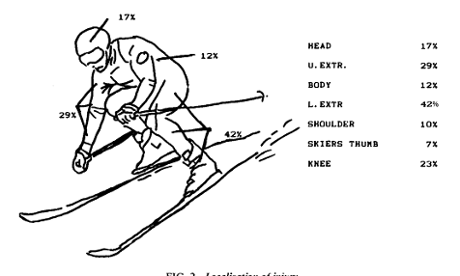
In a separate study of skiers in Norway, a healthcare officer documented 883 injuries more than 980,000 days – amounting to an injury rate of close to .9 per one,000 days. About one in six of all injuries had been to the head, although that figure rose to 1 in 4 of all injuries that were the end result of a collision.


Diagram of ski injuries
Image: Lystad

Protection


two out of three skiers and snowboarders who had been in a collision but hadn’t suffered an injury stated that they constantly wore helmets. In spite of accounting for a comparatively tiny fraction of all injuries, head injuries are specifically critical offered that they are the most frequent trigger of death and severe disability.


Other sports


Even though their information doesn’t consider into account the popularity of diverse sports, the American Association of Neurological Surgeons monitors head injuries taken care of in US hospital emergency rooms, notably those that impact the brain. 


Around 10.8 million US citizens skied for the duration of the 2010/11 season, compared to around 18.three million who played football and 46.8 million who cycled. When these participation charges are regarded, the risks of sustaining a head injury are comparable across all three sports. 


Listed under are the twenty sports activities and recreational actions most commonly witnessed in the emergency room for head injuries.


Is skiing the world"s most unsafe sport?