doctor etiketine sahip kayıtlar gösteriliyor. Tüm kayıtları göster

21 Nisan 2017 Cuma

"Hopeless": how senior doctor described NHS maternity unit"s testing regime

A senior figure in an NHS trust’s maternity unit under investigation over avoidable baby deaths has admitted that some practices in the unit were “hopeless”.


Andrew Tapp, medical director of women and children’s services at Shrewsbury and Telford hospital NHS trust, said in an email to a GP: “I think there are real problems here.” The GP had raised concerns about the maternity’s unit’s communication of test results.


The emails, seen by the Guardian, were sent in May 2016. The GP says his concerns about the safety of patients persist, citing a recent incident he was involved in that could have risked the life of an unborn baby.


The renewed concerns about the unit come as it has emerged that NHS chiefs are now investigating the deaths of 15 babies and three mothers. Several deaths have already been judged to have been avoidable; some were allegedly caused by a failure to correctly monitor babies’ heartbeats or spot infections early.


A team is also reviewing 10 further cases where patients survived but suffered harm.


The GP’s emails express alarm about the maternity unit’s procedures for communicating medical test results, accusing some departments of having a “fax and forget” attitude.


He said that without explanation or context, it was difficult for GPs to understand why particular tests had been ordered, how to interpret the results and how follow up appropriately.


The GP, who has expertise in patient safety, said: “At best these issues are an irritation; at worst, it’s dangerous. There seems to be an inability to change and to learn from mistakes. The safety culture isn’t responsive.


“It has always been thus during the years I’ve been a GP here. The reason why I’m speaking out is because as a GMC-registered doctor I have a duty to speak up about this kind of thing. I believe that patients are at risk and that there’s a lack of effective learning about safety at the trust. My motivation is to protect patients and I’m frustrated that there has been little change over the years.”


A second GP working with the hospital trust shared his fears.“When we have concerns we have to keep asking about them again and again,” he said. “There’s a genuine concern about patients and staff. There are lessons to be learned here.”


The case cited by the first GP was of a vulnerable young pregnant woman who was tested for a group B streptococcus infection. He said there was a significant delay in the maternity unit communicating the positive result to her GP, and that some of the information had been “scribbled” and was unclear.


Any woman with this infection is at risk of passing it to her baby – with potentially life-threatening consequences – unless antibiotics are promptly administered.


Last week an inquest into the death of one-day-old Pippa Griffiths, who contracted the same infection at the same hospital trust, found that she could have survived if she had received better medical care.


A Care Quality Commission report in January 2015 found that the trust required improvement and that while staff were caring, they needed more feedback about incidents to learn from their mistakes.


Maternity services at Shrewsbury and Telford hospital NHS trust were strongly criticised by an inquiry commissioned by NHS England into the death in 2009 of a baby, Kate Stanton-Davies.


In the email exchanges with the GP, Tapp, writes: “I have just finished a clinic at the Ludlow community hospital and have found another raft of tests that are simply cc’d to GPs without information going to GPs. I was informed by the senior sec[retary] that the process of cc results to GPs as they arrive in the community hospitals has been in place for 30 years. Does this need to be unpicked as well!! I suspect so.”


Another email states: “([name redacted] can you check on this and ensure that we are informing patients of abnormal results). The place for you to contact for any discussion was not ticked ([name redacted] can you look into this matter).”


In response to an example given by the GP of a test result inadequately dealt with by the trust, Tapp said: “Hopeless. [name redacted] can you look into this matter. I am fairly stunned that any one would have just popped this result into the post without context. I am not sure where a result sent to Ms M Midwife would go but can you ensure an effective educational program for colleagues.”


He goes on to say: “There does seem to be a bit of disconnect of brain here … The previous context does not seem to have been taken into consideration.”


He also adds: “I think there are some real problems here but there are opportunities to improve.”


Dr Edwin Borman, medical director at the Shrewsbury and Telford hospital NHS trust, said: “Effective and high quality communication between medical colleagues in primary and secondary care is extremely important for safe patient care.”


He said the trust – which handles 4,700 deliveries a year – had created a working group of consultants and GPs to review standards of communication following a patient’s discharge and would “continue to monitor and evaluate process to ensure continual improvement”.


Medics employed by the trust are the focus of both internal and external inquiries and at least four midwives are being investigated by the Nursing & Midwifery Council, according to a report in the Mirror.


The trust’s chief executive has apologised to the families of babies who died and said the trust was cooperating fully with the NHS review. But he added that it was his “firm belief” that the trust provided safe care for mothers and babies.


The health secretary, Jeremy Hunt, ordered an investigation into the deaths of a number of babies at the trust after seven deaths were judged to have been avoidable and bereaved families and the local coroner criticised the quality and safety of maternity care.


Five of the deaths involved apparent failures by staff to correctly monitor a baby’s heartbeat. Borman said the rate of baby deaths was no worse than anywhere else in the NHS.


"Hopeless": how senior doctor described NHS maternity unit"s testing regime

A moment that changed me: when the doctor told me I was psychotic | Anonymous

I was sitting in my living room along with a social worker, mental health nurse and my baffled parents the day the doctor told me I was “psychotic”. It felt like a dream. Just a week before, suffering from anxiety and depression, I had taken leave from the training course I was on. A week of shuffling around the house followed.


Like many people, I was determined to “escape” my unhappiness in any way possible, but thankfully lacked the conviction to do anything about it. Soon I became convinced I had committed some sort of sin that I could never articulate: TV programmes and songs fed a narrative in my mind which was impossible to write down now – it simply made no sense. It involved God, the devil, my boss and the professionals around me, all of whom were part of some major conspiracy reminiscent of The Truman Show. These delusions were common signs of psychosis, a condition that can stem from deep depression.


During my own episode of psychosis I was, in medical terms, detached from reality. But that simple message was not what I heard in the stigma-ridden word, psychotic. It conjured up something very different, and very upsetting: serial killers and fictitious villains. Unsurprisingly, this added more weight to my own delusional and self-loathing narrative.


This was a life-changing moment for me. I didn’t realise it then, but I was experiencing for the first time the true impact of misused words. According to the NHS, somebody who is psychotic will “perceive things differently to those around them; this might involve hallucinations and delusions”. But the word with which “psychotic” is so regularly interchanged is “psychopathic”, defined as a “chronic mental disorder with abnormal or violent social behaviour”.


The two are not linked, and they are certainly not the same. Yet a glance through any film review section, in any newspaper or magazine, will probably suggest something different. As the mental health charity Mind states on its website, “lots of people wrongly think that the word ‘psychotic’ means ‘dangerous’”. As I sat in my living room, being told I was psychotic, I interchanged the word with “dangerous” and felt myself spiral deeper into a delusion of guilt. “So I have done something wrong … maybe I am an evil person,” I thought.


I spent 10 days in a psychiatric hospital, silent and shy. Every patient was a character in my “story”, as were the nurses. I said very little and did even less, but my mind was racing. Like many psychotic patients, I was convinced the nurses were out to get me, and that I was being punished for something. My fantasies of having committed a great sin escalated as I was taunted by one patient who believed she was the devil, and offered salvation by another who sang religious songs and walked around the ward with arms outstretched. We were all orbiting “reality” in our own ways.


Like many people who experience any kind of deep depression I lacked hope, but my warped state of mind took that further


It wasn’t until I had taken the right drugs and rebalanced various chemicals in my brain that I began to listen to the professionals who were there to help me. I read up on psychosis and had several sessions with a community mental health nurse. Listening to my reflections on the negative associations of the word “psychotic”, he explained how common my feelings were in his clients. “That’s the media for you,” he said, brimming with frustration.


He’s right. Examples of journalists’ misuse of the word “psychotic” are everywhere. Trainspotting’s Begbie is described as “psychotic” in practically every review I have read; ranging from the Guardian to the Sun (the latter also describes Begbie as “psychopathic”, using the terms interchangeably). On the Huffington Post, you can find a countdown of The Most Psychotic Movie Villains of All Time, featuring everyone from Freddy Krueger to Norman Bates. A website called allthetests.com, billing itself as “an exciting exploration into your personality and IQ”, allows you to partake in a light-hearted quiz entitled Are You a Psychotic Killer?, claiming it will help you decide “whether or not you should be locked away forever to keep you from killing everyone!” Even if, after all this, you look for a definition of the word in the online dictionary Merriam-Webster, the context given is as follows: “the identity of the psychotic murderer known as the Zodiac Killer remains an intriguing puzzle”.


Meanwhile, Dictionary.com unhelpfully lists “psychopath” as a synonym. I have no doubt that I would have spiralled less, and experienced fewer delusions about my own morality and guilt, were it not for the way mental health terminology is misused.


My life has changed a lot since that day. I’ve returned to work and count myself lucky to be among those who love their job. Yet my life today seemed impossibly out of reach two years ago. Like many people who experience any kind of deep depression I lacked hope, but my warped state of mind took that further. Interpreting my psychotic thoughts with hindsight, I was convinced my future would consist of prison, some sort of pact with the devil and a showdown with lots of malevolent nurses.


Unless I’m in for a big surprise, none of this has or will turn out to be a reality. My mind played tricks on me; the truth was that I was going through an episode, and episodes pass. The life and happiness that felt so out of reach was, in reality, waiting for me just the other side of a hospital spell.


I am fortunate to have been free of psychotic episodes since 2014. But for many people these episodes come and go frequently. The misuse of the word is everywhere, and the associations it carries as a result will only help to escalate people’s symptoms. So please remember: psychotic does not mean psychopathic, violent or dangerous: it is about perceiving things differently to everyone else around you. With the help of the media, and the general public, we could all have a positive change in perception.


Read about psychosis on the Mind website. The NHS explains many aspects on this page


Comments on this article will be premoderated


A moment that changed me: when the doctor told me I was psychotic | Anonymous

20 Nisan 2017 Perşembe

Confessions of a Junior Doctor review – Bake Off"s Tamal Ray gives his verdict

If you have a sense of deja vu while watching Channel 4’s new series Confessions of a Junior Doctor, it might be because you saw BBC3’s Junior Doctors: Your Life in Their Hands, which chronicled the highs and lows of doctors embarking on the start of their careers. That series coincided with my first year working as a doctor and – despite working all hours in a hospital – I couldn’t help but be glued to every episode. At first glance, things do feel familiar: shaky footage of doctors running through corridors, and haunting piano music overlaid with poignant monologues about suffering and death. There’s a brief introduction which looks like a medical version of Harry Potter, complete with nervous first years and kindly consultant, Dr Philip Pearson, in the role of Dumbledore. “It will be hard work. It will be stressful. But there will be plenty of good times,” he intones, with twinkly-eyed enthusiasm.


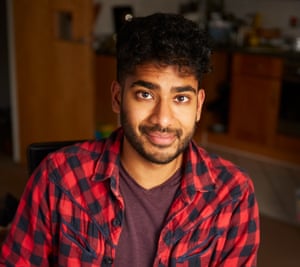
Junior doctor – and Bake Off star – Tamal Ray.


‘Today’s NHS seems predetermined to only allow staff to do a lacklustre job’… Junior doctor and Bake Off star Tamal Ray. Photograph: Christopher Thomond for the Guardian

But cut to footage of last year’s junior doctor strikes and it’s clear that the focus of this series will be more than the usual narrative of overcoming adversity. What brought a generation of doctors, the ones who should be the most bright-eyed and enthusiastic, to take such drastic action last year? Set not in a glitzy London teaching hospital, but in one of the many general hospitals that make up the backbone of the NHS, this is a series about the healthcare system’s struggles, seen through the eyes of its frontline staff.


Holly is the only true junior of the three doctors in this first episode. She funded her studies with a variety of jobs including stints as a healthcare assistant, a pub landlord and working in security; I wonder if she realises how useful the last two will be to her life as a doctor. We join her in the first few weeks of her fledgling career, where every prescription she writes comes bundled with the fear that she is going to kill someone. “I’ve heard that’s very difficult to do,” she tries to reassure herself. “Hopefully.”


Meanwhile, Emily’s dreams of becoming a palliative care specialist might seem a masochistic career choice. Why would you want to specialise in an area where every one of your patients will die? It is clear, though, that she understands how much of the practice of medicine doesn’t come from a textbook. If her patient dies suffering, the trauma it will cause the family will last the rest of their lives.


But it is Sam who has the most compelling story. One of his patients, Ryan, is a frequent visitor due to a undiagnosed illness that has caused him to be severely underweight. He is 29 but with his emaciated, four-stone frame he looks 15 years younger. What obscure disease will he turn out to have: a parasitic worm thought to have been eradicated 150 years ago? Radiation poisoning from the paperweight he bought at a car-boot sale? As this is real life, not an episode of House, the answer turns out to be as depressingly ordinary as it is heart-breaking. In a rare moment of quiet on the busy ward, Ryan takes Sam to one side and confides that he is terrified of going home because he knows he will start using cannabis again. It’s a potent appetite suppressant and he has been a heavy user for many years. Mystery solved: not some rare disease but a cycle of substance misuse and depression. What was needed to make the diagnosis was a doctor having the time to speak to his patient.


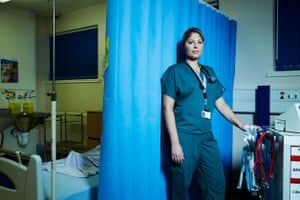
One of the stars of Confessions of a Junior Doctor.


One of the stars of Confessions of a Junior Doctor. Photograph: Jude Edginton/Channel 4

Time, or lack of it, is a recurring theme. It crops up when Emily stands her ground with her team, concerned that their hurried conversations are leaving the patients confused and resentful. When Holly informs her consultant that a patient has died, there is barely time for a heartbeat of recognition before the ward round continues. There are always more patients to see, more work to be done. “Emotion doesn’t come into it,” she says, like a soldier conscripted into a pointless war, despite her clearly empathetic nature. “If you’ve got the time to worry about how you feel then you’ve got more time on your hands than you thought.”


Sadly, today’s NHS seems predetermined to only allow staff to do a lacklustre job. Sam, it turns out, will be joining the one-third of junior doctors who have chosen to leave the NHS and not apply for further specialist training. “I want what anybody wants. I want to be able to do the job that I’m trained to do. I want to be respected,” he pauses, as it dawns on him that no job is worth his health. “I want to be happy.” Oh, Sam.


At the start of the programme, we are told that being a doctor requires courage, but if I were to choose a crucial skill that today’s doctors need it would be patience. Patience to work harder and longer hours for less pay. Patience to deal with a tabloid press obsessed with denigrating our every move. Patience to be ruled by a government whose only innovations are the myriad of ways they rebrand cuts. I worry, though, that our patience is running out.


Confessions of a Junior Doctor review – Bake Off"s Tamal Ray gives his verdict

18 Nisan 2017 Salı

Bashar al-Assad trained as a doctor. How did he become a mass murderer? | Ranjana Srivastava

Preparing dinner, I bite my tongue as images of the latest atrocity in Syria flashes on the screen.


“Isn’t he a doctor too?” my daughter asks.


“Yes,” I cringe at the “too” and rededicate myself to the carrots.


But she knows that conversations about medicine are usually far more animated in our household and immediately sniffs out my reticence.


“I don’t get it. Aren’t doctors supposed to help people?”


Since it’s too late to switch channels, I say something benign. But the footage continues, leaving her to conclude, “I guess not all doctors save lives.”


The heart-wrenchingly succinct statement goes to the heart of my own dismay at the appalling crisis in Syria. More than 400,000 dead, most recently in a nerve gas attack. Six million citizens internally displaced. Five million refugees fled to neighbouring countries. An entire country in spasms. And to add to the unspeakable tragedy, at the hands of a president who used to be a doctor. Not just a theoretical doctor, not one of those who enrolled in medical school but never touched a patient. No, Bashar al-Assad was a proper doctor who by all accounts was personable and polite.


A doctor who studied first at the prestigious Damascus University, then committed to post-graduate training and finally went to London to gain further experience in ophthalmology, a niche medical specialty with many aspirants and limited places. A doctor whose boss recalled him as humble and whom nurses thought exemplary in reassuring anxious patients about to undergo anaesthetic.


To his medical class he was unassuming, seemingly unaffected by his status. Perhaps he had secured admission in the way of other entitled offspring, through power and privilege, but he seemed to be at ease with the responsibilities of being a doctor.


Some classmates kept their distance, wary of the dictator-father’s long reach. Some suspected he didn’t have it in him to be a leader, but then, the world needs good followers and it would have been quite normal for Assad to have settled in a leafy corner of London and practised his craft. Not necessarily groundbreaking stuff, but solid, dependable, everyday medicine that relieved the suffering of many. No one thought he would turn out a mass murderer.


Upon becoming president, he returned to London with his glamorous and accomplished wife, herself a cardiologist’s daughter, who presumably possessed insight into a doctor’s obligations. At his old eye hospital, he looked longingly at a slit-lamp and fondly recalled his medical training.


When he was recalled home, Syria was in the grips of a rebellion, Sunni fighting Shia against a backdrop of roiling tensions in the Middle East. Perhaps Assad, the urbane, London-educated ophthalmologist who spoke of Syria’s “own democratic experience”, would be the people’s advocate, the agent of change. But alas, the Damascus spring didn’t last and Assad the kindly doctor transformed into Assad the feared killer.


Revulsion at the horrific abuses perpetrated by the Nazi doctors – Josef Mengele most infamous among them – led to the development of the Nuremberg Code, which govern the ethics of human experimentation. Radovan Karadžić was a psychiatrist and a poet before being convicted of genocide in the former Yugoslavia. British doctor Harold Shipman injected lethal drugs into more than 200 patients, and American cardiologist Conrad Murray was convicted of homicide after injecting Michael Jackson with the anaesthetic agent, propofol.


History has witnessed other doctors turned rogue but Assad’s attack on his own people is staggering by any standard. He has gone from bombing civilians to destroying entire hospitals, and whatever and whoever lies in their wake. Nearly 800 medical personnel have been killed and many others detained and tortured. Four hundred medical facilities lie in ruins, their hapless occupants either dead or badly injured.


Doctors around the world regard Assad’s deeds with dismay and horror


Entire cities have been left without medical aid, turning treatable injuries into fatal wounds. The United Nations has pleaded that “even war has rules” but experts say that no previous war has witnessed such deliberate, systematic targeting of medical facilities and health professionals.


It defies belief, but in a way it makes sense, that a doctor who once felt the pulse of people, knows that the way to still that pulse is by aiming his strongest weapons at the hospitals that keep people alive and give them hope. It would take a doctor to predict the psychological devastation and desperate surrender of a people robbed of gauze for a bleeding wound, antibiotics for a festering sore, surgery for a lodged bullet.


There are interesting views on how someone who once pledged to save lives could so wantonly destroy them. Perhaps he is striving to prove himself to his dead father who had openly favoured his older son who died in a car accident while Assad was becoming an ophthalmologist. The younger Assad was teased for being interested in human blood rather than the blood of politics – this is the revenge of the bullied.


Or more chillingly, all that medical training was just a show and behind the suave specialist lay a murderer who always had the measure of his power. Medical training necessarily inures doctors to pain and suffering: imagine how inefficient a doctor would be if he faltered at a patient’s every tear and cried over every wound. Part of becoming a good doctor is to learn to stand back enough to help, but most doctors experience a continual tightrope in maintaining a professional boundary while being empathetic. Perhaps Assad just dumped the empathy while fortifying the boundary.


Doctors around the world regard Assad’s deeds with dismay and horror. They know how many of their colleagues leave medicine for far, far smaller reasons than killing a patient. Most doctors can’t bear having a stain on their conscience for missing a diagnosis or misprescribing a drug, never mind that the patient wasn’t even hurt. Doctors take their own lives at the mere thought that they did something wrong. It beggars belief that someone who was once one of them could so systematically and remorselessly kill his own classmates and their patients.


History will diagnose Assad one day but in the meantime, when I see my Syrian patients I can’t help wondering whether to just treat their illness or acknowledge their deeper wounds. Their fragility is obvious as is their concern and shame.


Assad’s crimes against humanity seem distant until they are personalised in the form of a son, a mother, a neighbour. The easiest answer is to feel helpless and stay silent but it just doesn’t feel right. Another is to express solidarity with our fellow human beings even as they live unrecognisable lives in distant lands. This, too, can feel inadequate in the face of punitive government policies. A third is to support the courageous professionals and the organisations that are determined to stay put in Syria against the odds. Most of us won’t go to Syria because we are not skilled or capable of working in dangerous and impoverished settings. But we can be effective through donating to credible charities, such as the Red Cross, The White Helmets and Médecins Sans Frontières, who can channel our aid where it is needed.


Our gestures can seem insignificant in the face of so great a tragedy but I hope it says to the Syrian people that while their own doctor president has given up on them, the rest of the world has not.


Bashar al-Assad trained as a doctor. How did he become a mass murderer? | Ranjana Srivastava

31 Mart 2017 Cuma

"It took 20 years for a doctor to mention endometriosis"


This week it was reported that GPs are failing to treat women with common gynaecological complaints such as endometriosis, which affects about 2 million women in the UK.


A report by the all-party parliamentary group on women’s health said these issues were being treated with insufficient dignity and respect. A survey of 2,600 women found 40% of those with endometriosis had had to visit their GP 10 or more times before getting treatment, while many women were left feeling they were “going mad” after being turned away by doctorsdespite painful symptoms, and more than two-thirds of women received so little information from doctors that they resorted to searching for online for it. We asked our readers to share their experiences. Here is a selection of responses, with some names changed to protect people’s identities.


Kelly, 35, from London: Despite repeat visits to my family doctor, no one suggested endometriosis


I find it bizarre that it took 20 years of seeing a doctor about my incredibly painful periods for one of them to mention endometriosis. It’s a common condition, and I had many of the symptoms. Despite repeat visits to the GP throughout my teens and twenties, none of the doctors I spoke to suggested the condition. It wasn’t until I wrote down my symptoms and went to a female doctor that she said “That sounds like endometriosis” and I was referred to a specialist.


With premenstrual syndrome (PMS), doctors haven’t been able to help much. I’ve had judgmental responses to my questions, including one doctor who said: “maybe you’re an up-and-down sort of person”. This made me feel as though the doctor wasn’t taking my concerns seriously. I’ve never been given a solution, and continue to suffer with this problem. I’m trying alternative remedies now, with some success.


The best aspect of the care for my endometriosis came when I was sent to a specialist clinic. There, a nurse listened to me and respected what I was saying. Emotionally, this was hugely significant.


Olivia, 60: Chronic UTIs have plagued me since I was 13, but now I am getting the right help


By the time I was 13 I had had my first urinary tract infection. Over the next 25 years I had frequent attacks and was given varying courses of antibiotics. I saw a urologist in my 30s who said my urethra needed stretching as my urine wasn’t flowing out properly and was probably pooling in my bladder and causing infections. That didn’t work. So I was put on a low dose of trimethoprim, an antibiotic used mainly in the treatment of bladder infections, for about a year. This seemed to stave off attacks. Then the UTIs continued, occurring about every four months.


I was given lots of advice – don’t wear tight jeans, only wear cotton knickers – which was useless. I went to my GP who constantly tested my urine and sometimes found infection, sometimes not. I would have to cry, cajole and persuade them to give me antibiotics. It was very demeaning, as I felt dismissed and not taken seriously. I was made to feel it was my fault and that I imagined my symptoms. I was referred eventually to a urogynecologist who said she would “cure” me. I underwent a massive operation to repair a prolapse with mesh which went horribly wrong. I developed a terrible infection, haemorrhaged many times and had to have three blood transfusions.


Still the UTIs carried on.


At that point my GP said there was nothing the matter with me and I should get on with my life. Eventually I went to see another gynaecologist who repaired the damage the previous surgeon had done, and recommended I go to a specialist clinic in Haringey where they treat chronic UTIs. I was listened to carefully there, and treated so successfully that I have my life back. I am no longer in pain, I am no longer exhausted, and although I am still being treated, I believe I will be cured in the end.


Georgia, 38, from London: I’ve had thrush-like symptoms for eight years. I’ve heard of others experiencing the same


I have had thrush-like symptoms for around eight years now – near-permanent mild itching and discomfort. It’s much worse before my period and can make sex painful or uncomfortable. I’ve been to three different practices and about five doctors. I’ve got thrush creams and pills and bacterial vaginosis cream, none of which has ever helped. Some doctors have been more sympathetic than others, but they have not had very many ideas about what is wrong with me. I’ve tested negative for thrush on occasion.


I was finally referred to a local gynaecologist after about six years. They made a few suggestions but showed very little sympathy and did not identify what my problem was. There seems to be a huge lack of research and GP knowledge in this area. One of my doctors even said that straightforwardly, and others have looked things up online while I’ve been in their surgery room. My husband got tested for male thrush, and when he went to the sexual health clinic they told him it was now thought that men didn’t get thrush. I’ve heard about lots of other women having similar long-term problems. Mine was probably brought about by use of the contraceptive pill, as I didn’t have it before then. I feel that it’s linked to my body as a whole and is probably candida-related. This is a self-diagnosis after lots of research.


I know from talking to friends that I’m not the only one who suffers from whatever it is that I have. Many of them know someone who has something similar. I’ve used given up sugar, caffeine, alcohol and even wheat four years ago. This partly helped with some symptoms. I use natural things like yoghurt and essential oils to alleviate my discomfort, and have read several books about the problem, but nothing has got rid of it. It’s massively affecting my sex life with my husband.


Kacey, 18, from Brighton: I may never be able to have penetrative sex – but doctors don’t seem to know much about my condition


After two years of investigation, I was finally diagnosed with vulvodynia. This is a life-long chronic pain condition which involves the nerves in or around the vagina sending pain signals unnecessarily. I am only 18 and my life will never be normal. I can’t have sex with my partner as it is so painful I have thrown up and passed out. And although I have a diagnosis now, so many medical professionals are ignorant of my condition. I feel distraught when I think about the future. There’s so little research and the only “cure” is to be on constant medication that dulls the nerves. I am all out of hope. I may never be able to have kids naturally, or have penetrative sex with my partner. This leaves me feeling like I am ruining the lives of two people because there is such pressure to have penetrative sex as a young woman, or as a woman at all.


Of the care I’ve received, the best was from a vulva specialist at my local hospital and a psychosexual counsellor. They have helped me on my way to having a different, but equally loving, sexual relationship with my long-term partner. The worst care I received was about a year after my diagnosis, where a gynaecologist coerced me into a speculum examination. This was totally unnecessary and for several months it left me in even worse pain.


"It took 20 years for a doctor to mention endometriosis"

30 Mart 2017 Perşembe

I thought my career as a doctor was over. It was the arts that saved me

[unable to retrieve full-text content]


I used to ignore my creative side, but after I was signed off work with depression and anxiety, I made space for the things I loved


As a hospital doctor I am used to working under pressure, and had always felt I thrived on it. But when I took time out of clinical training to pursue a PhD, I found I was intensely unhappy. I suffered a range of physical symptoms: palpitations, early morning waking, nausea, severe headaches, poor appetite, diarrhoea, dizziness, breathlessness and tremors.


My day was constantly interrupted by intrusive negative thoughts; I once walked for 30 minutes with “I hate my life, I hate my life” on a loop of internal monologue that I feared had no end. I listened to podcasts and audiobooks fanatically but could not drown out these thoughts, and no rationalisation of all the wonderful things I had in my life could make them stop.


Continue reading…


I thought my career as a doctor was over. It was the arts that saved me

27 Mart 2017 Pazartesi

Doctor was "dishonest" in screening nurse who had Ebola, tribunal finds

A doctor acted dishonestly when she lied to investigators about the dangerously high temperature of a nurse who went on to develop Ebola, a tribunal has found.


Dr Hannah Ryan, who had been working in Sierra Leone during the west Africa Ebola outbreak of 2014, was one of the medics who assessed Pauline Cafferkey following the Scottish nurse’s return to the UK in December 2014.


Ryan did not raise the alarm when a colleague wrote down Cafferkey’s temperature as 1C lower than it actually was during a “chaotic” screening process at Heathrow airport on 28 December 2014, a medical practitioners tribunal found on Monday.


A raised temperature can be the first sign of Ebola, which can kill within five days. Cafferkey, who twice nearly died from the virus, went on to develop one of the worst cases on record for people treated in the west.


During screening at Heathrow, Cafferkey insisted she was feeling fine and was eventually allowed to catch her connecting flight to Glasgow. The following day, she developed further Ebola symptoms and was admitted to hospital for urgent treatment.


The tribunal found that Ryan had acted in a “misleading” manner when she agreed that the form recording the lower, wrong temperature be submitted to screening staff from Public Health England (PHE) at the airport.


But Ryan, who had only just graduated from medical school, did not intend to conceal Cafferkey’s real temperature at the airport, knowing it to be at least 38.2C – higher than the 37.5 considered normal – the panel found.


However, the tribunal decided that the doctor had later been “dishonest” when she concealed her role in taking Cafferkey’s temperature during a conversation with Dr Nick Gent on 2 January 2015. Gent, deputy head of the emergency response department at PHE, had phoned her during PHE’s investigation into when Cafferkey’s symptoms first emerged.


Ryan did not tell him she had taken Cafferkey’s temperature and told him words to the effect that the nurse’s temperature was “normal”, the panel found.


The tribunal heard that Ryan and Cafferkey were one group among many British medics who put their own lives at risk by volunteering their medical skills and going to west Africa to help fight the outbreak.


Deployed on 22 November 2014, they were based at an 80-bed treatment centre in Kerry Town, a village in Sierra Leone, working “tirelessly in dangerous and highly pressurised conditions” during which they “formed a strong bond of friendship”, according to Fraser Coxhill, representing the General Medical Council.


The medical practitioners tribunal, which is independent of the GMC, will decide later this week whether Ryan’s fitness to practice as a doctor was impaired due to her actions and whether to impose sanctions.


Doctor was "dishonest" in screening nurse who had Ebola, tribunal finds

20 Mart 2017 Pazartesi

Doctor admits misleading medics over Pauline Cafferkey temperature

A doctor has admitted misleading other medics by concealing Pauline Cafferkey’s raised temperature before she became seriously ill with Ebola.


Hannah Ryan, who volunteered in Sierra Leone in her first year after graduating from medical school, was one of the medics who assessed Cafferkey following the Scottish nurse’s return to the UK in 2014.


Ryan wrote down a temperature 1C lower than it actually was during a “chaotic” screening process at Heathrow airport on 28 December 2014, a medical practitioners tribunal heard on Monday.


A raised temperature can be the first sign of Ebola, which can kill within five days. Cafferkey, who twice nearly died from the virus, went on to develop one of the worst cases on record for people treated in the west.


Cafferkey was cleared of misconduct over the recording of her temperature in September.


The tribunal in Manchester heard on Monday that Ryan recorded Cafferkey’s temperature as being 37.2C despite knowing it was at least 38.2C – above the average body temperature of 37C and higher than the 37.5C threshold requiring further assessment by a consultant in infectious diseases.


She later told another doctor there were no abnormalities in the temperatures of Cafferkey’s group of returnees, according to a written summary of the allegations by the General Medical Council.


Dr Bernard Herdan, the tribunal chair, was told Ryan’s conduct was “misleading and dishonest” and that her “fitness to practise is impaired because of [Ryan’s] misconduct”.


Ryan admitted misleading others and “acquiesced” in the wrong temperature being given but denies misconduct by her actions at the airport and during a subsequent investigation by Public Health England.


Fraser Coxhill, representing the General Medical Council, said Ryan and Cafferkey were one group among many British medics who put their own lives at risk by volunteering their medical skills and going to west Africa to help fight the outbreak.


Deployed on 22 November 2014, they were based at an 80-bed treatment centre in Kerry Town, working “tirelessly in dangerous and highly pressurised conditions” during which they “formed a strong bond of friendship”, Coxhill said.


But about a month later when they returned to the UK on the afternoon of 28 December, the Ebola screening area at the Heathrow terminal was “crowded, noisy and chaotic”.


In the queue to get clearance from PHE medics to be allowed to leave “murmurings of discontent and frustration” grew, the tribunal heard. There were concerns some Scottish medics would miss connecting flights to Glasgow due to delays in the screening process.


Trying to help PHE staff with the process, they agreed to take and record their own temperatures. Ryan took Cafferkey’s temperature, which was 38.2C – a warning sign for the Ebola virus.


The two medics and another nurse with them, Donna Wood, discussed the reading, “during which someone said, ‘Let’s get out of here’,” Coxhill told the tribunal.


Cafferkey’s temperature was then recorded as 37.2C, the form was passed to PHE staff and the medics went on their way.


However, in baggage reclaim there was further discussion between the medics, and PHE staff were contacted.


When Cafferkey’s temperature was taken again it was below the threshold. However, by this time she had taken paracetamol, which lowers body temperature. Cafferkey returned to Glasgow but the next day fell seriously ill with Ebola.


Four days later, Dr Nick Gent, from PHE, called Ryan to investigate what had happened at the airport. Ryan later admitted not telling him she had taken Cafferkey’s temperature and that it was above the threshold for possible Ebola infection.


Coxhill added: “Whilst there is no doubt that Dr Ryan is a practitioner of hitherto unblemished character who undertook important selfless work in Sierra Leone, it is submitted that the events of 28 December 2014 and 2 January 2015 appear to demonstrate someone whose first instinct is to mislead and be dishonest.”


Ryan’s involvement emerged during a misconduct hearing for Donna Wood, another volunteer medic who was suspended for two months in November after being found to have concealed Cafferkey’s raised temperature.


In evidence to the Nursing and Midwifery Council, Ryan said she was in shock after taking Cafferkey’s temperature in her left and right ears and finding it raised.


She told the NMC hearing in a written witness statement: “I asked Pauline if she was feeling OK. She said she was feeling fine.


“I stood there in shock. It was like I was paralysed. I had no clear thought process. Ebola is such a horrible disease that every time you have a high temperature you worry, even when you know there’s no reason to.”


Ryan said only the three medics were present and that Wood “broke the inertia by saying something like, ‘I’m just going to write it down as 37.2 degrees’” so they could “get out of here and sort it out”.


The tribunal is expected to last 10 days.


Doctor admits misleading medics over Pauline Cafferkey temperature

11 Mart 2017 Cumartesi

New South Wales police asked to investigate fake doctor

NSW police have been asked to investigate a man who allegedly stole a doctor’s identity and managed to remain employed for more than a decade at four of the state’s hospitals.


Shyam Acharya has already been charged by the Australia Health Practitioners Regulatory Authority but NSW Health Minister Brad Hazzard says the maximum $ 30,000 penalty is woefully inadequate.


He has asked police commissioner Andrew Scipione to pursue the case after previously leaving it to federal authorities.


Hazzard said a police investigation could help NSW Health’s efforts to seize Acharya’s North Ryde house, estimated to be worth at least $ 1.25 million, in order to recoup his wages.


“There is a possibility that if this person were convicted of fraud, we may be able to get some of the money back under the proceeds of crime legislation,” Hazzard told reporters on Saturday afternoon. However, he said seizing the home could be complicated because another person, possibly Acharya’s wife, was on the title.


Hazzard also confirmed plans for an independent inquiry into how Acharya was allegedly able to “con the entire health system”. Acharya is said to have posed as Dr Sarang Chitale by entering Australia on a fake passport and gaining registration with the Medical Board of NSW.


He worked in hospitals at Manly, Hornsby, Gosford and Wyong while the real doctor practised as a specialist in the UK. Acharya is now on the run and believed to have fled overseas.


Labor’s health spokesman Walt Secord is backing efforts to seize the Acharya’s house and has given in-principle support to an independent investigation. “The community has a right to know if his activity led to clinical errors,” he said in a statement. “Thousands of patients and their families have question marks over their treatment.”


Since allegations about Acharya became public less than a week ago, Hazzard said about 30 people had called NSW Health believing they had been treated by him.


Twenty-six were either mistaken or had been treated by Acharya but had suffered no adverse affects as a result. The remaining four cases are still being investigated.


“The health department has indicated to me at this point that there doesn’t appear to be any serious concerns, but certainly we’ve got to look at everyone,” Hazzard said.


New South Wales police asked to investigate fake doctor

6 Mart 2017 Pazartesi

Why Won’t My Doctor Listen to Me? The Sad Reality for Those With Post-Concussion Syndrome

A Sad Reality for So Many With Concussion and Post-Concussion Syndrome


Nearly every day in clinical practice patients report to us (one way or another), “My doctor doesn’t listen to me!” This concern is far more prevalent in those suffering the effects of concussion and post-concussion syndrome. The same sentiment is often offered when it comes to how their family and friends act.


There are several theories as to why many doctors don’t take the time to listen. You can explore these at length with a simple internet search. Here, I will explore briefly some of the better know reasons and, more importantly, what I have come to see is the real truth behind why so many are being ignored. And, in many cases, being dismissed and belittled by their trusted health care providers.


What the Studies Show


  • Time. Most primary care physicians are pressured by the demands of heavy patient loads and declining insurance reimbursement. That leaves you as the patient at the mercy of a provider that may only give you one minute or less to voice your concerns. For those of you with concussion there are often far too many to list!

  • Distraction. Electronic records, insurance forms, mobile devices, and excessive patient volume can cause doctors to get caught up in things that are not right in front of them. That is you, the patient. If a doctor is distracted, they will not do a great job at listening.

  • Bias. Many doctors spend less time with individuals based on their race, gender, and other factors such as socioeconomic status. Also, patients that come in with recurring complaints are more likely to be dismissed or ignored.

I believe these are accurate (although unacceptable) reasons for many being short-changed when it comes to their provider’s attention. But, there are more accurate reasons doctors don’t do a great job of listening when it comes to the laundry list of struggles that can accompany concussion and post-concussion syndrome.


The Rest of the Story


  • Ignorance. This may seem like a harsh term to many (particularly the doctors). What it simply means is that most primary care providers lack the knowledge and information necessary to properly question, screen, and refer for these types of injuries.

  • Invisible. Concussions are not seen on CT scans or found in blood work. These are silent injuries that result in functional problems with balance, vision, cognitive abilities, emotions, and more. Conventional medical approaches are not well suited for these conditions. Therefore, doctors are less inclined to listen to problems they cannot treat.

  • Overwhelming. The number of symptoms and conditions that can result from a hit to the head are staggering (we’ve compiled a list of over 50!). Your doctor, when presented with 5, 10, or more complaints, may focus only on 1 or 2 as this is what they are accustomed to.

  • Unknown. Even with all the attention given to concussion over the past several years in sports, the media, and movies; this is still uncharted territory for most providers in mainstream medicine. The challenge is, this is most common route taken when one has a concussion.

So, How Do I Get Someone to Listen (and, how do I get help!)


The internet is full of strategies to get your provider to listen better to you. This, however, is not the focus of this article. And, it will not serve you well to try and get those that do not understand concussion to listen to you! You need to seek out the services of a qualified functional neurologist (most often a chiropractic neurologist) who is well versed in the art of listening, and, who understands the multitude of symptoms those with concussion and post-concussion syndrome experience. Only then will you be able to find answers as to what the best method of treatment will be for you. Concussions are real, and so are the symptoms and the solutions!


Why Won’t My Doctor Listen to Me? The Sad Reality for Those With Post-Concussion Syndrome

I worry I can"t be a good mother and a good doctor

I leave the house of my first home visit of the day – a middle aged businessman – and walk back to my car. I recall the heat of his skin on my hand, his yellow, sunken cheeks, his racing pulse.


An ambulance is on its way – I opted for the semi-urgent type, the type that comes within two hours, the type for people who are quite sick but not very sick. I wonder whether I should have chosen the very sick type, the one that races down the road, flashing blue lights and all.


A message lights up the screen of my phone – “I’ve found a button in her poo.”


I often ask myself the question: is it really possible to be a great doctor and a hands-on mother? I’m not sure it is


I think now of my two-year-old daughter. I picture her careering around the room at playgroup, biscuit hanging from her mouth and dribble falling from her chin. Then come the usual worries: is she really enjoying playgroup; is the childminder overly strict with her; does she eat too many biscuits and did she really eat a button? If I’ve chosen to be out at work, do I even have any right to tell the childminder how to look after her? At that age, maybe my daughter doesn’t even know I’m not there.


Back at the surgery, the waiting room begins to fill. Swimming round my head is an endless list of things I need to do that I will never have time to do: the patient cases I should be writing up, the audit I need to conduct, the extra out-of-hours shifts I must work, the exam I need to prepare for – all in order to complete my GP training. I try to forget the morning’s events so that I can prepare for the afternoon ahead. It’s important to give each patient the best version of me.


My pregnant bump presses against the edge of my desk and I feel the familiar kick in the ribs from the one inside. As if she’s saying: “Remember I’m in here, Mummy.”


I have just one week left before I go on maternity leave. I plan to take a year off and then return to work part-time. Already I am wondering how it will be possible for me to do this. It’s not that I don’t want to go back – I love my job – it’s just that I’m not sure it’s the right thing to do for my family. The cost of putting two children in childcare and the worry that I will miss out on their early years are my main concerns. Alongside this, the fact that I am still training means that I have extra work to do outside of my already very busy job. But if I don’t finish my training, all the years of work I’ve done will go to waste.


I often ask myself the question: is it really possible to be a great doctor and a hands-on mother? Personally I’m not sure it is – I feel like I am continually striving to achieve the impossible and never feel satisfied that I am doing either job well. To be a good doctor I need to invest time in keeping my knowledge up to date but simultaneously my two-year-old needs to be the focus of my attention. I know I am in a position of privilege; I have choices women historically would never have had and (potentially) a very rewarding career ahead of me, but it all feels too much.


It’s a dilemma women up and down the country face – to work, to stay at home or to do a bit of both. I have one friend who feels that it is important for her daughter to see her going out to work every day so that she can aspire to the same. I have another who has given up her career to be at home with her child.


For now I have decided that the best way for me is to accept things as they are, to manage my expectations of what I can achieve at both home and work and hope everything works out all right in the long run. I will try my best to forget work on the days I spend at home and to trust that my children are in good hands on the days that I’m not.


That evening, as I try to convince my two-year-old that her princess dress isn’t really suitable attire for bed, I think again of the yellowness of that man’s skin and the look of desperation in his wife’s eyes. I promise my daughter we’ll go for ice-cream in the morning if she will just let me put her pyjamas on. After all, I know only too well that life is short.


If you would like to write a blogpost for Views from the NHS frontline, read our guidelines and get in touch by emailing sarah.johnson@theguardian.com.


Join the Healthcare Professionals Network to read more pieces like this. And follow us on Twitter (@GdnHealthcare) to keep up with the latest healthcare news and views.


I worry I can"t be a good mother and a good doctor

3 Mart 2017 Cuma

CQC warns online doctor services may pose risk to public

Patients could be at risk from online companies offering doctors’ services, the Care Quality Commission has said.


The warning comes after investigators found two firms were putting patients at risk by failing to examine their medical history before prescribing medicines. There were also questions over whether clinicians had the relevant skills or qualifications to prescribe or diagnose illnesses.


The inspectors found there were no processes for contacting a patient’s GP, including when medication was prescribed that required monitoring or a follow-up. The medics failed to check patient identity before prescribing online and there was no way of checking if people lacked the capacity to consent to treatments.


The two online firms were MD Direct (which had traded through the website assetchemist.co.uk) and HR Healthcare Ltd (treated.com). The CQC said its inspection of HR Healthcare was influenced by an investigation by BBC Radio 5 Live, which looked at the site’s online sale of antibiotics.


Following this, the CQC suspended the registration of HR Healthcare Ltd. MD Direct voluntarily cancelled its registration; the site assetchemist.co.uk now uses a different online GP provider for its prescription service.


As well as these two inspections, a review of all 43 online services registered with the CQC revealed others were potentially posing a risk to patients.


The CQC has now brought forward a programme of inspections. It is particularly concerned about sites where patients can choose their own drug and select their symptoms or diagnosis from a drop-down menu. The prescription is then reviewed by a medic and passed to a pharmacist who processes it.


Steve Field, the chief inspector of general practice at the CQC, said: “The growth in online technology presents a real opportunity to improve people’s access to medical advice and treatment. It is important that healthcare services continue to innovate. However, in some cases we have found websites which in effect allow people to select their own medication, including medicines restricted as prescription-only, with little or limited clinical oversight.


“Patients can go online, self-diagnose their condition, order their own medicine and obtain a prescription from the online doctor service, with minimal checks on [their identity] and whether the medication is safe or appropriate for them, often within a matter of seconds. We know there are often inadequate identity checks, no checks on patient history or suitability, no checks with patients’ GPs and no follow-ups or monitoring.


“Following our review of all online services registered with CQC, we will now visit each provider, working closely in partnership with the relevant regulators and checking that providers are following the appropriate professional guidance. We will take action to cancel or suspend the registration of providers who are putting their patients at risk.”


Field said that, as with conventional GP surgeries, online companies and pharmacies were required to provide safe, high-quality and compassionate care. “They must not cut corners,” he said.


A further joint statement from four regulatory bodies – the CQC, the General Medical Council, the General Pharmaceutical Council and the Medicines and Healthcare products Regulatory Agency (MHRA) – reminds firms and their medics that they must provide safe and effective care, and follow professional guidelines.


Lord O’Shaughnessy, the health minister, said: “We have empowered the CQC to run a tough and comprehensive inspection regime and commend their work to uncover failings in digital care provision. Online providers can be a convenient option, but patient safety must always be the priority and we urge the public to follow CQC’s advice when buying medicines online.”


Gerald Heddell, the director of inspection, enforcement and standards at the MHRA, said: “Prescription-only medicines are prescription only for a reason and should only be taken under the supervision of a healthcare professional. A proper consultation with a medical professional is essential to ensure that an appropriate diagnosis of your condition can be made, your medical history can be reviewed, your recovery can be monitored and any adverse reactions can be dealt with.”


CQC warns online doctor services may pose risk to public

9 Şubat 2017 Perşembe

The three questions that every patient should ask their doctor | Ranjana Srivastava

An unimpressed nurse summons the oncology fellow to the chemotherapy chair. “I am not prepared to treat him with chemo. He can barely stay awake.”


“But his oncologist wants to push on,” the fellow responds.


“The patient doesn’t seem to understand how sick he is or how chemotherapy is doing harm. You’ll need to sort this out, I am afraid.”


The fellow sighs, caught on the horns of a dilemma.


Elsewhere, an elderly woman has taken warfarin, a blood thinner, for some time, and now presents with a massive cerebral bleed. She was going to the kitchen one moment and unconscious the next; she is expected to die shortly. As I console her stricken son, it emerges that she had sustained 50 falls that year leading up to the fatal one. There had been many doctor visits but no one had asked specifically about falls.


At the desk, as I solemnly write a note, I overhear the same exchange that’s going on in my head.


“Fifty falls!” one dismayed resident says. “Why would you put her on warfarin?”


“Because someone wanted to reduce stroke risk and someone else watched her heart disease but no one thought of the whole patient.”


“What were they thinking?”


If you listen to doctors and nurses, this is one of the most common questions you will find them grappling with and grumbling about. It reflects part genuine puzzlement and part exasperation that what one doctor has recommended seems ill-advised or even inappropriate to another.


The Grattan Institute estimates the cost of wasted healthcare dollars to be in the order of a billion dollars and the figure stings clinicians but as a disillusioned young doctor sighed, in the age of super-specialisation, it seems expedient to let every doctor manage “their own organ”. Except the practice harms patients who are after all, more than a collection of organs.


If highly trained doctors don’t understand their colleagues’ intentions it stands to reason that most patients feel even more hapless, caught in an endless tangle of tests and explanations but the knowledge and power asymmetry is such that it’s impossible to question the doctor, who must surely know better (if not best).


Physicians overestimated the effect of some interventions on life expectancy by as much as 30%


Unnecessary and expensive medicine is at an all-time high and the usual reasons given are patient expectations, financial incentives, therapeutic uncertainty, medico-legal fears and the sustenance of hope. Now a new study in JAMA Internal Medicine authored by two Australians points out that when it comes to unsound medicine, there is another element at play. It turns out that when prescribing a drug or ordering a procedure doctors are actually quite bad at estimating the benefit and harm associated with it.


In a systematic review of 48 studies performed in 17 countries and involving more than 13,000 clinicians, they found that doctors rarely had accurate expectations of benefits or harms. The inaccuracies were in both directions but more often, harm was underestimated and benefit overestimated.


No group of doctors fared well. As a result, children with acute ear infections may be overprescribed antibiotics and women with troublesome postmenopausal symptoms may be deprived of hormone replacement therapy. Obstetricians and neurologists underestimated the risk of birth defects from antiepileptic drugs and GPs overestimated the benefit of prostate cancer screening and underestimated the benefit of warfarin for atrial fibrillation, a common heart condition. Transplant surgeons were biased towards an inaccurately low estimate of graft failure and all types of doctors were unaware of the risk of radiation exposure from imaging.


Physicians overestimated the effect of some interventions on life expectancy by as much as 30% and for elective but by no means inconsequential surgery on the thyroid, lung, prostate and uterus, there were clinicians who believed that complications “never occurred or had a rate of zero”. Dermatologists couldn’t agree on psoriasis treatment and psychiatrists differed on the risk of harm from long-term antipsychotics. There was a reluctance to convey a numerical estimate of benefit and worryingly, clinicians “overwhelmingly recommend the interventions they provide”.


This study is a wake-up call for doctors because it speaks to our collective failure to appreciate that in prescribing more for our patients we don’t always help, and indeed, commonly inflict harm. The goal of good medicine is not only to avoid harm but also to provide actual benefit, a distinction that’s commonly blurred, including in oncology. Chemotherapy at the end of life improves neither quantity nor quality of life. It leads to more invasive procedures and greater likelihood of dying in an intensive care unit but patients continue to receive it.


In the reign of evidence-based medicine it is discomfiting news that doctors may not understand the data in the form of hundreds of thousands of studies poured upon us.


First, as any patient knows, the art of medicine matters as much as its science. Evidence applied without tact, consideration, empathy and an understanding of the patient’s perspective can be as harmful as evidence not applied at all. Doctors are increasingly exhorted to provide collaborative care and practice shared decision-making. The catch is that both art and science suffer when we don’t know the facts or struggle to convey them.


Part of the problem is the sheer volume of publications. Entwined in increasing bureaucratic demands many doctors lack the time and also the confidence to interpret academic research so we turn to (commonly paid) expert opinion, “peer influencers” and biased pharmaceutical advertising.


Medical schools run the obligatory statistics course but don’t ingrain in doctors that their interpretation of a journal article or more commonly, an “advertorial”, and their participation in marketing disguised as “literature” peddled by pharmaceutical representatives has a direct impact on patient experience, the cost of care and wasted healthcare dollars. Hospitals who should care even more about such education virtually ignore it and when it’s volume, not quality of care that’s rewarded, it all but extinguishes the desire to do better.


Meanwhile, what should patients do? The JAMA study suggests that doctors frequently don’t know and certainly, don’t know best. This is vexing but not all doom and gloom because doctors now have at their disposal an unprecedented number of sound guidelines, robust protocols and genuinely plain-language information for patients, not to mention easy web-based access to experts. When it comes to doctors seeking advice the world really is a global village. In a world of rapidly evolving information, patients should be prepared for a doctor to say, “I don’t know” provided this is followed by, “but I’ll find out.”


Here are three questions that every patient should ask of every new proposed drug or intervention:


  • What are my options?

  • What are the specific benefits and harms to me?

  • What happens if I do nothing?

If patients asked these questions more often and doctors took it upon themselves to answer faithfully, medicine might yet experience a new dawn.


The three questions that every patient should ask their doctor | Ranjana Srivastava

26 Ocak 2017 Perşembe

Every doctor has one death they remember. For me, it was you

You were only in your 40s when you came into hospital and I was asked to see you. You reminded me of my mother, only you were 10 years younger.


The cancer had spread throughout your body. Your husband had brought you into hospital because you hadn’t eaten or drunk for almost a week and had collapsed.


I took one look and knew you didn’t have long. Your husband said that a week ago you had been your usual self, walking, laughing, living, loving. He broke down in tears. He didn’t need me to tell him you weren’t going to leave hospital. He told me how grateful he was for the cancer treatment we’d given you, what wonderful care you had received. His wish was that you would stay alive long enough for your parents to see you one last time. They were away and you hadn’t told them you were unwell for fear of hurting them, so they’d only found out today. They were getting the first flight to come and see you one last time. To say goodbye.


Your husband was overcome by emotion, hoping, begging I’d say you’d make it long enough to see them. I should have managed his expectations, explained that we’d do everything we could, that you were very unwell, that your organs were failing, your body was failing. I should have found a way to say all this, sensitively, compassionately and professionally. Instead, my lip trembled. My voice broke. Tears started rolling down my cheeks. I had to leave you to compose myself. I walked to the bathroom and wept.


I came back five minutes later, and your husband apologised for upsetting me. I didn’t have the heart to tell him that his last wish for you would be taken away. Instead, I told him we’d try our best. I said I would get the consultant to see you, partly because I hoped he’d have an answer I didn’t have, partly because I knew I couldn’t tell your husband you had hours to live.


When the consultant told your husband that he had only hours left with you, and that he should call your loved ones to your side, your husband thanked us between sobs.


I came into your room a couple of hours later to see how you were. The lights were dim. You looked at peace. You had left us. Your sister was there, your son was there. Your husband was there. He thanked us for everything we had done in giving you the time you had together. Your parents never made it.


I hope you are resting in peace. I hope your husband is somehow coping with your loss.


Some details have been changed.


If you would like to contribute to our Blood, sweat and tears series about memorable moments in a healthcare career, read our guidelines and get in touch by emailing sarah.johnson@theguardian.com.


Join the Healthcare Professionals Network to read more pieces like this. And follow us on Twitter (@GdnHealthcare) to keep up with the latest healthcare news and views.


Every doctor has one death they remember. For me, it was you

6 Ocak 2017 Cuma

I"m a junior doctor in the NHS, and I"m terrified for this winter

Widespread concerns that the NHS will face the “toughest winter ever” are not exaggerated or unfounded – just look at the terrible news today from Worcestershire. We really should be worried for ourselves and our relatives. As a junior doctor and a researcher looking after cancer patients in the NHS, I am terrified by the prospect of what the next few months will bring. But we must not forget this is entirely preventable.


Our current crisis is down to the almost clockwork-like series of reshuffling, rebranding and top-down disorganisation of the services by government. It’s led to an inexorable decline in the quality of care.


I have also become aware of an insidious “takeover” by the private sector. It is both literal – in the provision of services – and ideological, with an overwhelming prevalence of business-speak being absorbed into our collective psyche. But the British public (and even many staff) remain largely unaware that this is happening.


Where the consultant physician or surgeon was once general, they now increasingly play second fiddle to chief executives and clinical business unit managers. Junior doctors such as myself (many of whom have spent 10-15 years practising medicine and have completed PhDs) must also fall in line to comply with business models and corporate strategy put forward by those with no clinical training or experience with patients.


With bad policies accumulating over the years, we are now seeing the crisis come to a climax


It is this type of decision-making (based on little evidence) and seemingly unaccountable policymaking that means patient care is suffering. Blame cannot be laid at the feet of a population of demanding and ageing patients, nor the “health tourists” who are too often scapegoated.


The epitome of such changes is known as the “sustainability and transformation plans”. These will bring about some of the biggest shifts in how NHS frontline service are funded and run in recent history, and yet, worryingly, most of my own colleagues have not even heard of them. Even fewer feel able to influence them.


Sustainability and transformation plans will see almost a third of regions having an A&E closed or downgraded, and nearly half will see numbers of inpatient bed reductions. This is all part of the overarching five-year plan to drive through £22bn in efficiency savings in the NHS. But with overwhelming cuts in social services and community care and with GPs under immense pressure, people are forced to go to A&E because they quite simply do not have any other options.


I have been on the phone with patients with cancer who need to come into hospital with life-threatening conditions such as sepsis, and I have been forced to tell them, “We have no beds here you need to go to another local A&E.” Responses such as, “Please doctor don’t make me go there – last time there were people backed up down the corridors,” break my heart.


According to the Kings Fund, our NHS leaders are choosing to spend less year-on-year on healthcare (as a proportion of GDP) than at any other time in NHS history and yet we are the fifth richest economy in the world. Simultaneously private sector involvement increases and astronomical interest rates from private finance initiatives must be paid, with hospitals such as St Bartholomew’s in London having to pay up to £2m per week in interest alone. No wonder nearly all hospitals are now in dire straits.


This is all the result of intentional policies being made at the top with minimal consultation of those on the frontline. With such policies accumulating over the years we are now seeing the crisis come to a climax. The UK has fewer beds per person and fewer doctors per person than most countries in Europe. Fewer ambulances are now able to reach the highest-category emergencies, which means people having asthma attacks, heart attacks and traffic accidents are being left to wait longer in situations where minutes really matter.


The sustainability and transformation plans for my local area in south-west London show that they plan to cut 44% of inpatient bed stays over the next four years . This is dangerous. It is likely that St Helier hospital in Sutton, which takes many emergencies in the area, will close and patients will then not only have access to critically reduced services, they will then have to travel longer to hospital, having waited longer for the ambulance to get to them.


This will be the straw that broke the camel’s back. I cannot stand by while patients’ lives are put at unnecessary risk this winter. And neither should you.


Health Campaigns Together and the People’s Assembly are organising a national demonstration in support of the NHS on 4 March 2017. I would urge everyone who cares about their families and their own future to get out on to the street and start demanding that better decisions are made on all our behalf.


I"m a junior doctor in the NHS, and I"m terrified for this winter

2 Ocak 2017 Pazartesi

Junior doctor Nadia Masood: "Hunt"s driven a lot of us out of the NHS"

Dr Nadia Masood’s public involvement in the junior doctors’ dispute began in a layby somewhere in north-east London on 11 January. “I was driving to Essex to see my mum, who was in hospital with sepsis after having chemotherapy for breast cancer. I was listening to LBC and James O’Brien was talking about the first junior doctors’ strike, which was due the next day,” she recalls. “I pulled over, phoned in and ended up on air, trying to explain to listeners why we were going on strike. I was feeling very emotional both because of my mum and because of the strike.”


It was unusual behaviour for the 35-year-old anaesthetic registrar. “I’m from a completely apolitical background. I didn’t have a political bone in my body until the health secretary, Jeremy Hunt, decided to impose an unfair and unjust contract on 54,000 junior doctors,” Masood says. “At first I saw the contract as an ethical, not political, issue. It wasn’t right to impose a contract on a workforce who give up their entire lives and pour blood, sweat and tears into their jobs and have no choice but to work under the conditions the NHS gives us, because that’s the only way we can become consultants, which is our goal. I was shocked Jeremy Hunt had the balls to do it.”


The next day brought the first of what would be eight strikes between January and May. They pitted young medics renowned as workhorses of the NHS against a health secretary regarded with deep suspicion by the medical profession for his disparaging comments about GPs and consultants. Doctors in scrubs on picket duty outside their hospitals vied with Hunt for public sympathy over his insistence that juniors had to work more at weekends to deliver the government’s promised “truly seven-day NHS”.


Striking wasn’t easy for the doctors, who realise the uniqueness of their jobs, which they love, says Masood. On day one she was among the pickets outside Great Ormond Street hospital in London, where she worked at the time. “We were all feeling really bad about refusing to work that day. But parents brought their children outside from the wards to say hello and said they supported us, and our consultant colleagues kept everything running smoothly, which all helped.”


Did junior doctors expect to win? “Yes. That 98% of junior doctors who took part in a ballot organised by the British Medical Association backed strike action to oppose a contract we argued was unfair and unsafe – that made us realise that we all felt the same shock and horror at what Hunt was doing. We all felt justified in our resistance. Maybe I can call this naivety, but I think that the right thing – truth, honour, justice – always prevails in the end,” says Masood.


As walkouts, on-off negotiations and the war of words rolled on, opinion polls showed the medics were winning the battle for hearts and minds, even when they escalated their action to include withdrawal of cover from areas of life-or-death care, such as A&E and maternity units.


“The RMT give the impression that they don’t care [about the impact the rail strikes by their members has on the public], and people think they are being selfish and not handling things right,” Masood says. “But as junior doctors we felt that our motivation was really pure. We were genuinely concerned about the wellbeing of the NHS and genuinely believed that what we were doing was to protect it.


“It wasn’t about money, though Jeremy Hunt portrayed us as money-grabbers by constantly stressing that we’d be getting a pay rise. It was about patient safety and the sustainability of the NHS. Some people thought we were against a seven-day NHS, but most doctors – especially junior doctors – already work seven days a week.


“We spoke about how the NHS was already at breaking point, with too few staff and too little money to do its job properly. But no one took notice of us. But a year on, people like [the NHS England chief executive] Simon Stevens and [the NHS Providers chief executive] Chris Hopson, who distanced themselves from us a year ago, are now saying publicly what we were saying then, that the NHS is struggling with the lack of funding that it has.”


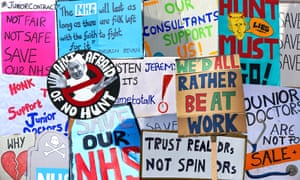
Posters made and carried by junior doctors during the strikes.


Posters made and carried by junior doctors during the strikes. Photograph: Photomontage/Roger Tooth

Hunt has insisted hospitals have to be able to roster doctors to work more at weekends to enable the NHS to treat more patients on those days, though precisely what services he wants to be expanded remains unclear. Eight strikes did not force him to backtrack. Masood repeats what junior doctors argued repeatedly throughout the dispute: “There’s not enough doctors at the moment to staff the current service we’re trying to deliver over five days, so why has Jeremy Hunt brought in the new contract when he knows that? It’s madness to stretch a workforce that’s already too small across seven days.”


In May the then chair of the BMA’s junior doctors committee endorsed a revised version of the contract, but members rejected it by 58% to 42%. In August the union threatened a series of five-day walkouts between then and Christmas, but abandoned the plans in the face of huge opposition, both internal and external. Juniors began moving on to the contract in October.


So who won? “They did,” says Masood quietly, her voice trailing away. “The government have won in the short nterm and I’m worried that they will now do the same thing to nurses, consultants – to all NHS staff. But long term I fear that more junior doctors will decide not to train to be NHS consultants and quit, and that more people will be burned out mentally and physically.” She was one of five junior doctors who in September challenged in the high court the legality of Hunt’s decision to impose the contract. That action ended in defeat too.


The dispute has left junior doctors feeling miserable and demoralised, Masood says. She is still so outraged by Hunt’s behaviour that she stepped away from her training last month, even though she is close to becoming a consultant. Her decision means an understaffed NHS is one more medic short. She is taking a career break and now works as a locum in various London hospitals.


“There’s a big need for locums because there are rota gaps in every specialty in every hospital,” she says. “What Jeremy Hunt has done is driven a lot of us out of the NHS, either temporarily – like me – or permanently. He says he values us, but everything he has done has made us feel devalued. I just worry that he will do to other NHS workers what he did to us and if he does, that will kill us as a workforce, and that will kill the NHS, because there will be no one to work in it.”


Junior doctor Nadia Masood: "Hunt"s driven a lot of us out of the NHS"