injury etiketine sahip kayıtlar gösteriliyor. Tüm kayıtları göster

20 Mart 2017 Pazartesi

NHS trust triples injury payout to £9.3m under controversial new rules

The first case settled under controversial new compensation rules for serious injuries has seen an NHS trust forced to nearly triple its payout to a 10-year-old girl left with cerebral palsy from £3.8m to £9.3m.


The case, involving East Lancashire Hospitals NHS trust, will send fresh shockwaves through the NHS and insurance companies, which have been braced for big increases in claims since the new “Ogden” formula was announced last month.


Despite intensive lobbying, the new rules came into force this week, and immediately resulted in a dramatic escalation in one payout. As recently as January, it was agreed that the 10-year-old would receive a lump sum capitalised at £3.77m, but this will now be increased to £9.29m.


Her solicitor, Leonie Millard of Forbes Solicitors in Accrington, said: “The benefit for the claimant from the new -0.75% discount rate, is immense. It vastly improves the long-term future financial ability to meet her needs for the rest of her life, which is expected to be long. Her parents are comforted to know that there is funding to ensure that her needs are properly met when they are no longer around.”


Until now the Ogden formula for paying out compensation assumed that the claimant could earn 2.5% interest a year on a lump-sum payment. But under the new rules, the rate is assumed to be -0.75%.


In documents published after the budget, it emerged the government’s finances will take a near-£6bn hit as a result of the increased bill faced by the NHS and other parts of the public sector as a result of the changes made to the way compensation awards will now be calculated.


The Office for Budget Responsibility said the government would be setting aside an extra £1.2bn a year to meet the expected costs to the public sector – and it would push up car insurance premiums by about 10%.


The Association of British Insurers said it was “crazy” that up to 36m insurance policies could be affected in what it alleged would be “over-compensating” a few thousand claimants a year.


It is estimated that the cost of the average car insurance policy could increase by £60 a year, but for younger and older drivers, the increase will be higher. Comparison site comparethemarket.com said the average price for drivers aged 17 to 20 will rise by £115 to £1,650. The total increase in premiums paid by all motorists is expected to reach £2bn.


Direct Line, one of Britain’s biggest insurers, has already blamed a £217m slump in profits on the new Ogden rate, as it pencilled in bills for some individual cases doubling from £10m to £20m.


The lord chancellor, Liz Truss, has said there will be consultation on the new rules, but the insurance industry says it has yet to be told the shape of any reforms that might be forthcoming.


The ABI said: “The first wave of impacts on insurance costs are already being felt. A number of insurers have already publicly confirmed that premiums are going up as a result of the decision in February to cut the discount rate.”


Huw Evans, director general of the ABI, said: “The massive rise in insurers’ claims costs, which makes premium rises for millions of customers inevitable, results from a wholly avoidable decision by the lord chancellor. It was based on pressure from claimant lawyers, poor legal advice and an outdated formula that does not reflect the choices available today for a prudent claimant. With the public purse hit by £6bn, the government consultation cannot come soon enough.”


But Michael Redfern, the QC who was counsel for the 10-year-old girl, known only as “LMS”, said: “The large increase in lump-sum awards is offset by lack of return on lump-sum low-risk investment and the ability to keep pace with inflation.


“We welcome the new discount rate, the first change in 17 years, which addresses the actual lack of meaningful return on safe lump-sum investment opportunities. The only person to benefit from the new discount rate is the claimant. It has no impact on legal costs.”


NHS trust triples injury payout to £9.3m under controversial new rules

8 Mart 2017 Çarşamba

Government finances face near-£6bn hit over changes to personal injury payouts

The government’s finances will take a near-£6bn hit as a result of the increased bill faced by the NHS and other parts of the public sector as a result of changes made to the way compensation awards for botched operations and other errors are calculated.


The lord chancellor, Liz Truss, announced a cut to the so-called Ogden discount rate last month which is pushing up the payouts to claimants but increasing the cost to organisations such as the NHS.


The Office for Budget Responsibility said the government was now setting aside an extra £1.2bn a year to meet the expected costs to the public sector – and it would push up car insurance premiums by around 10% .


Robert Chote, chair of the OBR forecasting unit, said: “The overall effect is to increase borrowing by £1.8bn this year and around £1bn each year thereafter.”


The Association of British Insurers, which wants an overhaul of the system, described the costs as extraordinary.


Huw Evans, ABI director general, said: “Today’s budget confirms a massive £6bn hit to the NHS caused by the lord chancellor’s decision to cut the personal injury discount rate to -0.75%”.


The rate was previously 2%. “This extraordinary bill for taxpayers – bigger than any other in this budget – shows how absurd this avoidable decision was,” he added.


Government finances face near-£6bn hit over changes to personal injury payouts

16 Şubat 2017 Perşembe

Portable brain-scanning helmet could be future for rapid brain injury assessments

A transportable brain-scanning helmet that could be used for rapid brain injury assessments of stroke victims and those felled on the sports pitch or battlefield is being tested by US scientists.


The wearable device, known as the PET helmet, is a miniaturised version of the hospital positron emission tomography (PET) scanner, a doughnut-shaped machine which occupies the volume of a small room.


Julie Brefczynski-Lewis, the neuroscientist leading the project at West Virginia University, said that the new helmet could dramatically speed up diagnosis and make the difference between a positive outcome and devastating brain damage or death for some patients.


“You could roll it right to their bedside and put it on their head,” she said ahead of a presentation at the American Association for the Advancement of Science’s (AAAS) annual meeting in Boston. “Time is brain for stroke.”


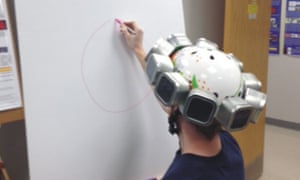
Despite being only the size of a motorbike helmet, the new device produces remarkably detailed images that could be used to identify regions of trauma to the brain in the ambulance on the way to hospital or at a person’s bedside. The device is currently being tested on healthy volunteers, but could be used clinically within two years, the team predicted.


Despite being only the size of a motorbike helmet, the new device produces detailed images that could be used to identify regions of trauma to the brain in the ambulance on the way to hospital or at a person’s bedside.


Despite being only the size of a motorbike helmet, the new device produces detailed images that could be used to identify regions of trauma to the brain in the ambulance on the way to hospital or at a person’s bedside. Photograph: Stan Majewski

Rapidly diagnosing stroke patients, who often wake up unaware of what has happened, is crucial as every passing minute without treatment can result in more extensive and permanent brain damage.


In the hours after a stroke, the brain tissue surrounding the main injury hangs in the balance as it is starved of oxygen due to blockages in the brain’s blood vessels. A rapid surgical intervention, within two to four hours of a stroke, can salvage neurons in the so-called “penumbra” area. After that the risks of brain surgery tend to outweigh any potential benefits to the patient.


“The more you wait, the more that penumbra area gasps and dies,” said Brefczynski-Lewis. “If you can see there’s a bit of activity you might say let’s do an intervention.”


Depending on the brain region affected by stroke, a patient’s speech and language abilities could be saved or paralysis prevented.


In the future, the team said it may be possible to diagnose sports concussion “within minutes”.


“If one can determine quickly whether a head injury is a concussion, then one might be better able to assess if the player, or the soldier, should continue or take time to heal,” said Brefczynski-Lewis.


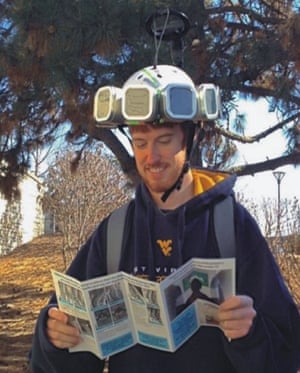
The device, which can be worn while walking around could also enable scientists to study people’s mental patterns as they walk aroundmove about, socialise and respond to threats in their day-to-day environment.


The device, which can be worn while walking around could also enable scientists to study people’s mental patterns as they move about, socialise and respond to threats in their day-to-day environment. Photograph: Stan Majewski

The helmet was developed in the lab and Brefczynski-Lewis describes it as the equivalent of “going from a big computer to a smartphone”.


The wearable scanner works on the same basic principle as a conventional PET scan. The patient is injected with glucose that has been tagged with a radioactive tracer. Radiation emitted by the tracer is captured by sensors on the helmet, allowing scientists to pinpoint which brain regions are metabolising glucose most rapidly, providing a heatmap of brain activity.


The team were able to miniaturise the scanner by using much smaller detectors fitted with crystal arrays designed to turn PET radiation into measurable electrical signals with a high degree of efficiency.


The device, which can be worn while walking around could also enable scientists to study people’s mental patterns as they move about, socialise and respond to threats in their day-to-day environment. Brefczynski-Lewis said it could also be useful for understanding addiction, where people can respond very differently in a lab setting to in their day-to-day lives where environmental triggers suddenly set off cravings.


“You could put [addicts] in a room similar to where they’ve used drugs before and ask what allows you to have the willpower to walk away,” she said.


A potential limitation is that the helmet is cumbersome, weighing nearly 3kg (6.6lbs) in its current form and up to 9kg (20lb) in an upgraded version designed to give full-brain coverage. The scientists have developed a counterweight system that is pushed along on a stand or carried in a rucksack to avoid the patient being crushed, but Brefczynski-Lewis acknowledges: “you’re probably not walking down the street in Manhattan wearing it”.


Portable brain-scanning helmet could be future for rapid brain injury assessments

22 Kasım 2016 Salı

From BMX to brain injury: how a single punch changed a life forever – video

This short film explores the story of Jamie McKechnie, who was punched in an unprovoked street attack in Shortlands, south-east London, in 2011. The film was made as part of a Channel 4 documentary, One Killer Punch, which explores the dramatic repercussions of a single act of violence


From BMX to brain injury: how a single punch changed a life forever – video

21 Kasım 2016 Pazartesi

Running shoes with less cushioning can reduce injury, study shows

Runners who wear trainers with no cushioning and land on the ball rather than the heel of the foot significantly reduce the risk of injury, according to a study.


Researchers compared how quickly the force acts when runners’ feet hit the ground – known as the loading rate – which has been shown to influence injury risk.


The study of 29 runners, published in the Medicine & Science in Sports & Exercise journal, found significantly lower loading rates for those who wore so-called minimal trainers and landed on the ball of their foot, compared with people in normal running shoes, regardless of whether the latter landed on the heel or ball of the foot.


The lead researcher, Dr Hannah Rice of the University of Exeter, said: “So many people use running as a means of reducing the risk of chronic diseases, but about three-quarters of runners typically get injured in a year.


“Footwear is easily modifiable, but many runners are misguided when it comes to buying new trainers. This research shows that running in minimal shoes and landing on the balls of your feet reduces loading rates and may therefore reduce the risk of injury.”


Running continues to grow in popularity but injury rates have not fallen despite decades of research aimed at reducing them.


Runners in cushioned footwear tend to land on the heel – known as a “rearfoot strike” – while those who run barefoot are more likely to land on the ball of the foot – a “forefoot strike”.


Rearfoot strike runners experience an abrupt vertical impact force each time the foot hits the ground. The impact force is often missing when running with a forefoot strike, but previous research has shown that forward/backward and sideways forces can be higher with a forefoot strike, meaning the total force is similar.


Total force seems to be similar between foot strikes if wearing modern, cushioned trainers. “This seems to suggest that, for runners in traditional, cushioned running shoes, foot strike pattern may not matter for injury risk.


“However, we suspected that the same may not be true of runners who regularly use minimal shoes, which don’t have the cushioning provided by traditional running shoes,” Rice said.


“Our research tells us that becoming accustomed to running with a forefoot strike in shoes that lack cushioning promotes a landing with the lowest loading rates, and this may be beneficial in reducing the risk of injury.”


Any transition to new footwear or to a different foot strike pattern should be undertaken gradually and with guidance, she said.


The research was conducted at the Spaulding National Running Center at Harvard Medical School.
“We found that when running in trainers with no cushioning and landing on the ball of the foot, the loading rate is lower than when running in cushioned shoes, however you land,” Rice said.
“The loading rate is a useful measure, as it tells us how fast the forces are acting, and higher values have been associated with running injury. So in summary, our paper found that running in shoes that have no cushioning and landing on the ball of your foot may reduce the risk of injury in runners.”
Minimal shoes, Rice said, have very little or no cushioning, a heel-toe drop of less than or equal to 4mm (0.16 inches), and a stack height of less than or equal to 16mm. “This is information which manufacturers and footwear shops should be able to provide,” she said.


Running shoes with less cushioning can reduce injury, study shows

16 Kasım 2016 Çarşamba

Construction project rebuilds lives after brain injury and mental illness

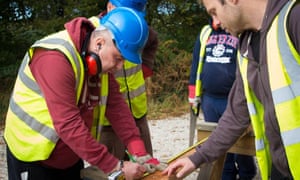
At first glance it’s just another construction site. On one side of the yard, a group of men in hard hats stand around a large electric saw, watching the foreman demonstrate how it works. Further along, another group are wielding hand saws. The sound of banging and clashing comes from inside a half-finished wooden structure.


But this isn’t your average building site and these are no regular builders. They’re patients on day release from three low secure mental health facilities within the Abertawe Bro Morgannwg University (ABMU) health board in Wales.


The group is here at Down To Earth, a not-for-profit education organisation based near Swansea, as part of the Building Community project, funded by the Big Lottery’s people and places grant, which aims to engage hard to reach and vulnerable adults and young people through participation in practical, educational and community-based activity.


Paul, who didn’t want to tell the Guardian his surname, is one of today’s workers. It’s his fifth time on site, and so far he’s enjoyed learning skills such as sawing, measuring and team work, all of which are designed to boost confidence and mental wellbeing.


“It makes me feel better,” he says. “I feel like I’ve done something worthwhile.”


His occupational therapist technician, Freya Jones, from the Taith Newydd mental health unit at Glanrhyd hospital, says it’s having a huge benefit on the group. “I’ve really seen an improvement in confidence in the guys since they’ve been here.”


construction project


‘Wellbeing can be delivered through an educational and community regeneration approach …’ Composite: Down to Earth

This anecdotal evidence is supported by clinical research funded by ABMU and Swansea University, which is measuring the effectiveness of this kind of work on both psychological and physiological wellbeing, as well as the healthcare impact of the project’s approach.


“Wellbeing and healthcare isn’t just doing some gardening or singing in a community choir,” says Down To Earth founder Mark McKenna.


“We want to show that wellbeing can be delivered through an educational and community regeneration approach, so you don’t separate out healthcare from education or healthcare and education from community regeneration. It’s an integrated, cross-sector approach.”


Another study is being undertaken with a group of brain injury patients from Morriston hospital in Swansea. In their case, the emphasis is on neuro-rehabilitation, with four factors under consideration: depression and anxiety levels, quality of life and wellbeing. In all four areas, the results have been significant and positive.


Alan Gee is a prime example of the project’s success. Just over three years ago, the 56-year-old father of four fell from a height while cleaning the stables at his home in Pembrokeshire. He landed headfirst on the concrete floor, fracturing his skull in 12 places.


Less than a fortnight later he was discharged from hospital, but the recovery process was only just beginning. Battling memory loss, slow mental processing, fatigue and mood swings, Gee spent a year doing little more than lying on the sofa, heavily medicated with painkillers.


Then, in 2014, he was referred to Down To Earth and joined the first group of brain injury patients to work on the construction of the training centre. The experience is one he believes transformed his life.


building project


Everyone in the project hopes it will be the start of a new way of providing practical community-based healthcare solutions. Photograph: Down to Earth

“It’s like coming in and having an arm put round you and someone saying it’s alright,” he says. “People understood. A lot of people with serious brain injury become defined by it. People stick them in a box. Projects like this get you out of that box. You become the new you – you don’t have to be ‘the brain injury person’.”


His neuropsychologist, Dr Zoe Fisher, has nothing but praise for the work Down To Earth is doing.


“It’s really bridging the gap between the health service and the community,” she says. “Usually, we’re confined to a hospital; if you don’t have access to real life situations, you can’t help people through them.


“You can’t do neuropsychology to someone, you do it with them. There’s no them and us in this project, everybody just gets involved. It helps us achieve the same objectives in a more holistic way than in the hospital.”


Everyone involved in the project hopes it will be the start of a new way of providing practical community-based healthcare solutions – including Gee’s wife, Michelle.


“It wasn’t just somewhere Alan came to spend some time,” she says. “The way he was when he came home each time, to me that growth was rapid. We could start to see him finding himself again.


“This shouldn’t be seen as alternative; it’s the future. It has to be. Medication is fantastic and it has a time and a place, but it doesn’t create the future.”


Join the Healthcare Professionals Network to read more pieces like this. And follow us on Twitter (@GdnHealthcare) to keep up with the latest healthcare news and views.


Construction project rebuilds lives after brain injury and mental illness

26 Eylül 2016 Pazartesi

A Look at 2 Cases: How HBOT Helped in Autism and Brain Injury Treatment

Hyperbaric Oxygen Therapy (HBOT) has emerged as an effective treatment for a number of medical conditions. There are conditions in which conventional therapies have not proved to be effective. In some of such conditions, HBOT has proved its potential to be considered as a viable treatment option. After experiencing HBOT’s benefits, many people are using a portable hyperbaric chamber in their homes, offices, and clinics to continue getting the therapy’s beneficial effects.


Autism and Traumatic Brain Injury are two such conditions, in which several patients have experienced substantial improvements with HBOT. Let’s look at 2 cases – a child with autism and a veteran with brain injury – and know how HBOT helped significantly in their improvement.


HBOT for Callum – Young Boy with Autism


Callum, a young boy with severe autism, had his communication abilities limited to slapping, biting and screaming tantrums. Callum’s mother, Lee Frost, took her son for Hyperbaric Oxygen Therapy treatment in a high-pressure oxygen chamber, for 3 months in 2013. Disheartened by an inadequate number of approved treatments for Callum, Ms. Frost came across HBOT through online research.


After getting the therapy, Callum, about 5 years of age now, is able to talk in sentences and get dressed up on his own in the morning before going to kindergarten, stated Ms. Frost. The therapy involved breathing pure oxygen inside a hyperbaric chamber for about 75 minutes at a time.


Dietary changes were also included in his treatment. Callum still has to go a long way, however, the child he is now, is a quite a different child, said Ms. Frost, living in White Rock at British Columbia in Canada.


HBOT for Ben Parkinson – Veteran with Brain Injury


Ben Parkinson was only 22 years old when a bomb blast at Afghanistan in 2006 left him with severe injuries. He lost both the legs and suffered major damages to his brain, arms, pelvis, skull and spine. Ever since, he is struggling to overcome these injuries.


However, Parkinson began a controversial treatment – Hyperbaric Oxygen Therapy. He, along with another injured veteran, Stephen Thomas, underwent HBOT, which involves inhaling 100% oxygen in a hyperbaric chamber at an atmospheric pressure which is up to twice the normal. Oxygen is supplied through a mask in the enclosed chamber. Just after one session of HBOT, Parkinson said that he was already experiencing its benefits.


Most of the specialists would state that about 8 years after the incident, no treatment would be likely to cause any improvement in a case of serious brain injury. However, Professor Philip James, who has been advising on Parkinson’s treatment, is quite optimistic.


He stated that so far, Ben made a remarkable recovery, and he is quite a brave young man. But his head injury hasn’t recovered. Parkinson gets severe fatigue that would certainly improve , according to what the Professor thinks. The speech of Parkinson is barely understandable sometimes, but it’s better at other times. This too would improve, as expected by the Professor.


Professor James illustrated that the treatment course depends on patients individually. It can be quite strenuous and there is no quick fix. Ben was probably going to undergo 21-hour sessions over a month, and was then going to be reviewed.


HBOT is always administered under the supervision of an authorized medical professional, whether the therapy is given to a patient at a clinic or hospital, or at a home or office in a portable hyperbaric chamber.


Although not approved by FDA for treatment of autism, brain injury and several other medical conditions, many patients and families with patients have reported of the remarkable benefits HBOT can provide in such conditions. Nowadays, HBOT treatment is offered by a number of clinics, alternative medicine centers and medical spas. Many companies, like OxyHealth LLC, offer portable hyperbaric chambers for use at home, office and clinic.


A Look at 2 Cases: How HBOT Helped in Autism and Brain Injury Treatment

22 Eylül 2016 Perşembe

Bicycle helmets reduce risk of serious head injury by nearly 70%, study finds

A major study of bike helmet use around the world from more than 64,000 cyclists has found helmets reduce the risks of a serious head injury by nearly 70%.


The study also found neck injuries are not associated with helmet use and cyclists who wear helmets reduce their chance of a fatal head injury by 65%.


The compulsory wearing of bike helmets in Australia has long been a source of frustration for some cyclists, who argue it reduces participation rates. Previous studies have indicated helmet use encourages risk-taking behaviour or does not reduce serious injury to the brain.


But a comprehensive review by Australian statisticians Jake Olivier and Prudence Creighton from the University of New South Wales that drew together data from more than 40 separate studies found helmet use was associated with dramatically reduced odds of head injuries.


The findings were presented in Finland this week at Safety 2016, the world conference on injury prevention and safety promotion.


Olivier’s findings were particularly significant for serious or fatal head injuries and found the reduction was greater for these kinds of more serious injuries.


“Helmet use is associated with odds reductions of 51% for head injury, 69% for serious head injury, 33% for face injury and 65% for fatal head injury. Injuries to the neck were rare and not associated with helmet use,” the study found.


“These results suggest that strategies to increase the uptake of bicycle helmets should be considered along with other injury prevention strategies as part of a comprehensive cycling safety plan.”


The researchers cautioned that helmets were not a “panacea for cycling injury” and did not eliminate head or face injuries or offer protection to other parts of cyclists’ bodies. But it does make the case more difficult for those who oppose mandatory helmet wearing, they said.


The legislation of mandatory helmets for cyclists is a controversial topic and past research on its effectiveness has been somewhat mixed,” the study said. “Irrespective of past research, the results of this review do not support arguments against helmet legislation from an injury prevention perspective.”


However, critics claim that helmet laws put people off cycling, causing far wider weight-related health problems due to Australians favouring driving, or not moving at all. One study found that 16.5% of people say they would ride more often if they were not required to wear a helmet at all times.


Chris Rissel, a professor of public health at the University of Sydney, told a 2015 Australian Senate inquiry into the subject that cycling numbers dropped after the helmet laws were introduced in the 1990s, which made remaining cyclists more vulnerable.


“In safety terms there is a phenomenon called safety in numbers,” he said. “As more people cycle, our roads become safer for these cyclists.


“Drivers become used to seeing cyclists and adjust their behaviour, and infrastructure tends to be improved to better cater for cycling. Even if cyclists wear helmets they are less safe with fewer cyclists on the road than they would be with more cyclists about.


“Helmets are a barrier to new riders, particularly for occasional and non-regular riders. The need to wear a helmet reinforces the message that cycling is dangerous – with perceptions of danger a major reason people give for not cycling.”


The NSW government has recently reviewed cycling laws and introduced harsh new penalties for a range of offences. The fine for not wearing a helmet has risen from $ 71 to $ 319.


Bicycle helmets reduce risk of serious head injury by nearly 70%, study finds

31 Ağustos 2016 Çarşamba

Kids, sport, concussion, and the long lasting effects of minor brain injury | Pankaj Sah

Head knocks in childhood are by no means uncommon, yet they may have lasting negative effects. New research has found a link between concussion in childhood and adverse medical and social outcomes as an adult.


Researchers from the United Kingdom, United States and Sweden looked at data from the entire Swedish population born between 1973 and 1982 – some 1.1 million people – to analyse the effect of experiencing a traumatic brain injury in the first 25 years of life.


Compared to those who had sustained no injury, people who had experienced at least one traumatic brain injury in childhood – around 9% of those studied – were, as adults, more likely to die early or be treated for a psychiatric illness and receive a disability pension, and less likely to have completed secondary schooling.


At first glance, the findings seem unsurprising: common sense suggests, for example, that a child who has sustained severe brain damage in a car accident would encounter more educational obstacles than a child who hasn’t.


Accordingly, the study found that the more severe the brain injury, the worse the outcomes in adulthood (this was also the case for repeated brain injuries). But the research also found a significant link between concussion – the mildest and most common form of brain injury – and subsequent problems.


In the study, concussions comprised more than 75% of the childhood brain injuries recorded. The researchers found being exposed to a concussion, or mild brain injury, was associated with a 18%–52% increased risk of negative outcomes, including early death, low educational attainment, and being on welfare. The most marked increase in risk was found for psychiatric inpatient hospitalisation and the disability pension.


Traumatic brain injury occurs when the brain is damaged by external force such as a fall, car accident, assault or being struck by an object such as might occur during sport. It’s usually classified according to its severity, or based on the anatomy of the injury. Moderate to severe traumatic brain injury can result in irreversible structural damage to the brain, and in some cases death.


A concussion, on the mild end of the brain injury spectrum, results when force causes the brain to twist upon itself or strike the skull. Bruising and cell damage can occur, but any structural damage from the injury cannot be picked up by MRI or CT imaging, which can make diagnosis difficult. Using specialised imaging methods such as functional MRI (fMRI), however, changes in patterns of brain activity are apparent soon after a concussion.


Research shows even a seemingly innocuous knock that wouldn’t qualify as a concussion can trigger changes in brain physiology and affect the functioning of neurons. There is some evidence that repeated concussions could be associated with the development in later life of a neurodegenerative disease called chronic traumatic encephalopathy. More long-term research is needed to determine how permanent or reversible brain changes following a single concussion are.


The new study found an association between the age at first head injury and subsequent health and social outcomes. Children who were older, and particularly those who were older than 15, were substantially more likely to have problems in adulthood.


Although the study findings are yet to be replicated, the authors suggest heightened neuroplasticity – the ability of the brain to adapt and change its networks and behaviour – in younger years may be protective in the long term.


While there are still many unknowns when it comes to concussion, the latest findings point to the importance of minimising head trauma in childhood. Because children have weaker necks and torsos than adults, less force is needed to cause a brain injury. For toddlers and preschoolers, the study’s authors suggest improved parental supervision is key, as falls are the most common cause of traumatic brain injury for young children.


In older children, reducing the incidence of sports-related concussions may be trickier. Wearing hard helmets in sports generally reduces the risk of severe head injuries such as skull fractures and bleeding inside the skull, but is ineffective against the rotational forces – forces that cause the head to turn rapidly and the brain to twist on itself, as can occur with whiplash for example – that can cause concussion. There’s also no evidence that the soft headgear worn in some Australian football codes can protect against brain injury.


Many concussions occur without noticeable signs such as disorientation or slurred speech, and for that reason go undiagnosed. The danger of an unrecognised concussion on the sporting field – which predisposes a player to subsequent concussion – is that it increases the risk of lasting damage. The lack of awareness about the symptoms, treatment and management of concussion is an unrecognised public health problem.


The health benefits of sport are well established and should be supported. However, the nature of contact sports means that head knocks are sometimes unavoidable.


Given Australia’s strong sporting culture, the solution might not be to change the fundamental rules of these sports or prevent children from playing them. Rather, by investing in research and improving awareness at the grassroots level, we can improve the diagnosis and management of concussive episodes in kids.


This article was co-authored by Donna Lu, science writer at the Queensland Brain Institute, and was originally published on The Conversation. Read the original article.


Kids, sport, concussion, and the long lasting effects of minor brain injury | Pankaj Sah

27 Eylül 2015 Pazar

8 Subconscious Habits That Gradually Injury Your Brain

The human brain is deemed a quite delicate portion of a human currently being. The brain is made up of 90% water and scientist are nevertheless researching into its complexity. The brain is an vital organ composed of billions of cells that send signals from head to toe. It controls everything from standard functions like breathing, heartbeat, reacting to pleasure and soreness and potential to remember something. The injury to the brain can lead to a amount of overall health issues. Globe Well being Organization has launched the most significant Brain damaging habits in accordance to their latest analysis findings.


8 Most significant Brain Damaging Habits You Must Stay away from


Smoking
It is the worst habit, smoking not only harms the lungs, but the brain as nicely, the nicotine in cigarettes consists of substances that can lead to multiple brain cell shrinkage, top to Alzheimer’s condition.


Covering Head For the duration of Sleeping
Covering head for the duration of sleeping is poor for our wellness, it not only injury brain but also increases your possibilities of getting Alzheimer’s and dementia. This is due to the lower in oxygen and the improve re-breathing of carbon dioxide.


As well Less Talking
Your brain is like a muscle, and if you do not exercise it – it will shrink. Conversation increase efficiency of the brain. More speak a lot more lively brain. So be energetic in meetings and get-togethers much more.


Substantial sugar consumption
Also considerably sugar will interrupt the absorption of proteins and nutrients and may interfere with brain growth. Nutrient deficiency weakens the immune method, prospects to malnutrition.


Also Much Alcohol
Consuming as well significantly alcohol could harm nervous program, liver and heart. Its modify brain’s equilibrium and interferes with its chemical reactions. Alcoholism damages neurological processes and slows the velocity at which nerve impulses are transmitted.


Pressure
Also much tension can harm nervous method. It’s been proven to shrink mental capability and improve your threat of obtaining a stroke or a heart assault.


Rest Deprivation
Brain requirements a rest at evening following all the pressure and strain of the day. Long phrase deprivation from sleep will accelerate the death of brain cells, a lot more cells dead, more loss of memory.


No Breakfast
Breakfast is the most essential meal of the day. After your sleep, your brain demands nutrients. Skipping breakfast deprives the brain from important nutrients. Not consuming breakfast will also lead to reduced blood sugar, which can also enhance anxiety.


Reference and sources:


http://steptohealth.co.united kingdom/eleven-habits-negatively-impact-brain/


simplecapacity.com


unbelievable-details.com


Study:


8 Subconscious Habits That Gradually Injury Your Brain

2 Temmuz 2014 Çarşamba

Paramedic left heart assault victim to die 4 many years right after failing to spot toddler"s fatal injury

The North West Ambulance Services paramedic only assessed the toddler for 15 minutes and explained he did not want urgent hospital treatment.


Even so for the duration of the evening, the toddler misplaced consciousness and died with a 56-gram blood clot soon after Orme failed to advise the toddler’s parents to check out on their son at normal intervals for the duration of the evening.


The paramedic then had to go before the Wellness Professions Council (HPC) in 2010 and obtained a four-yr caution but was permitted to proceed treating individuals.


The panel ruled he was not responsible for the toddler’s death.


In the situation of Mrs Davies, Orme made a decision to quit as a paramedic and prevented a 2nd disciplinary hearing by removing himself from the register of approved health-related pros.


Orme admitted to a series of failings prior to the Tuesday’s hearing and wrote to the HPC panel asking to be struck off the register.


The allegations which Orme admitted to in the course of his employment incorporate failing to supply adequate care, failing to enquire about Mrs Davies’s past health care history and leaving her with junior workers despite her essential issue.


He also admitted to failing to perform an ECG, which can aid detect issues with heart fee or heart rhythm, as nicely as failing to travel with the patient to hospital.


The paramedic admitted to leaving the scene ahead of the ambulance went to the hospital and failing to give an adequate handover to the attending crew.


Orme has agreed not to apply to be readmitted to the HCPC register.


HCPC panel chairman Helen Carter explained a full hearing was not in the public interest, and would danger upsetting family members of Mrs Davies.


Ms Carter said: “The balance falls in favour of permitting the voluntary removal, especially as there is an unequivocal admission of the allegations and it will be known that Mr Orme will no longer be on the paramedic part of the HCPC register and will no longer be ready to practise as a paramedic.”


She extra elements of the hearing would have been limited to go over Orme’s overall health troubles.


A spokesman for North West Ambulance Service said: “We provide our sincere condolences to the households of the sufferers concerned in these incidents and value that occasions such as this hearing must be a challenging time for them.


“In line with Trust policies and procedures, the workers member and his carry out was entirely investigated, resulting in the elimination of paramedic standing inside of the Trust and referral to the HPC. We will take into account the suggestions and outcomes from the hearing.”


Paramedic left heart assault victim to die 4 many years right after failing to spot toddler"s fatal injury

22 Nisan 2014 Salı

6 medical doctors failed to spot indicators of kidney injury in patient


The condition refers to a reduction of kidney perform and can develop very speedily. It can take place in men and women who are presently ill with problems this kind of as heart failure or diabetes, and those admitted to hospital with infections.


Researchers identified that acute kidney damage triggers in between 15,000 and 40,000 excess deaths each and every 12 months.


6 medical doctors failed to spot indicators of kidney injury in patient

26 Mart 2014 Çarşamba

Can instantaneous messaging injury your health? Medical doctor warns of "WhatsAppitis"

WhatsApp icon on smartphone

WhatsApp is a messaging system popular with smartphone end users all around the world. Photograph: Barry Huang/REUTERS


A medical professional in Granada is advising fellow physicians to be “mindful” of the injuries that can consequence from employing immediate messaging companies, soon after she diagnosed a 34-yr-previous pregnant female with “WhatsAppitis”.


The situation, described by the medical doctor in the Lancet, explained the patient was struggling sudden soreness in the two wrists right after waking up in the morning. Inés Fernandez-Guerrero, of Granada’s Common University hospital, wrote that the patient “had no historical past of trauma and had not engaged in any extreme bodily activity in prior days”. She ruled out carpal tunnel syndrome and nerve harm.


The patient had been doing work on Christmas Eve. The up coming day, she responded to the a lot of WhatsApp social messages that had been sent to her. Her cellphone was in her hands for at least 6 hrs, in the course of which she “made continuous movements with both thumbs to send messages”, explained the medical doctor.


The diagnosis for the sore wrists was “WhatsAppitis,” the doctor concluded. The treatment was “comprehensive abstinence from employing the telephone to send messages,” along with anti-inflammatory medicines. The medical doctor drew a comparison among WhatsAppitis and a repetitive strain damage diagnosed in hefty Nintendo end users in the 1990s: Nintendinitis, or Nintendo thumb. As soon as imagined to be restricted to young children, numerous grownups have because reported injuries connected with video video games and new technologies, she said. Discomfort, swelling and trouble moving specific joints induced by texting with mobile phones “could properly be an emerging condition”, she wrote. “Physicians require to be mindful of these new issues.”


Can instantaneous messaging injury your health? Medical doctor warns of "WhatsAppitis"

19 Şubat 2014 Çarşamba

Meningitis vaccine withstands African heat without having injury

MDG : A child being vaccinated against meningitis in Tchadoua, south-west Niger

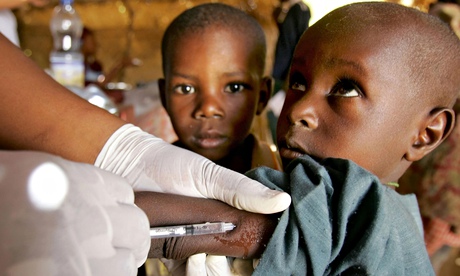
A little one becoming vaccinated against meningitis in Niger. The trial targeted 155,000 individuals across 150 villages in rural Benin. Photograph: AFP/Getty


The initial immunisation campaign in Africa making use of a vaccine that does not have to be stored in fridges and iceboxes has been productive and considerably cut charges, in accordance to scientists.


MenAfriVac is authorised for use at temperatures not exceeding 40C and can be stored out of the fridge for up to four days. The vaccine towards meningitis A was uncommon in getting made specifically for the African meningitis belt, the place yearly epidemics employed to kill 1000′s, but professionals say it would be possible to permit other vaccines to be utilized outdoors of cold-chain situations. Vaccines towards yellow fever and cholera are among those that could potentially be stored and utilized securely at increased temperatures, enabling many a lot more men and women to be reached in remote regions and the price of immunisation campaigns to come down.


In the journal Vaccine, medical doctors report the achievement of a trial in Benin of MenAfriVac at controlled temperatures under 40C, rather than the 2C-8C that is normal for vaccines. Component of the population was given the vaccine from the regular cold chain – stored in fridges, moved about the country in refrigerated vehicles and taken into the field in great boxes containing icepacks. The rest had been provided MenAfriVac that had been out of the fridge for up to 4 days. Neither group had a situation of meningitis A, and the vaccine remained viable at temperatures as large as 39C.


MenAfriVac was created by the World Wellness Organisation (WHO) and Path, a non-profit international wellness group. The vaccine is manufactured by the Serum Institute of India and it was the Indian regulatory authorities who gave approval for its use outside of cold situations. The query is whether or not companies of other vaccines that are also used in affluent nations, in which electricity and refrigeration are not a issue, will seek out equivalent approval.


A paper published in the WHO’s Bulletin demonstrated that not having to refrigerate MenAfriVac would have lower the fees of immunisation in Chad by 50%. “The remarkable coverage we noticed in Benin when MenAfriVac was utilized outside of the cold chain paves the way for potential campaigns in other regions with demanding geography, like countries exactly where the vaccine will be administered later on this yr to rural populations living in the desert,” stated Dr Marie-Pierre Préziosi, director of the Meningitis Vaccine Venture, the collaboration amongst WHO and Path that drove the advancement of MenAfriVac.


The trial targeted the rural Benin district of Banikoara, vaccinating 155,000 people across 150 villages. Only nine vaccine vials had been discarded since they had been at typical temperatures for a lot more than four days. None had to be discarded since of getting been exposed to temperatures of 40C or far more – a particular heat-sensitive sticker modified colour as a warning if that occurred.


Much more than 150 million individuals in the African meningitis belt have been vaccinated with MenAfriVac considering that it was launched in 2010. No situation of meningitis A has been recognized in those vaccinated.


Meningitis vaccine withstands African heat without having injury

23 Ocak 2014 Perşembe

A New Playbook to Fight Traumatic Brain Injury

Concussions. We’ve heard whole lot about them just lately considering that advancements in science and medication have assisted us to recognize the potential for devastating extended-phrase effect of these injuries. What used to be a sense of pride for an athlete on the field of play – “Yeah, he got his bell rung, but he stayed in the game like a champ” – has now turn out to be a source of fantastic concern for many, from recreational sports activities to the pros. What isn’t nicely understood is that if your son or daughter will get injured on the discipline of perform these days, possibilities are quite excellent that the exact same subjective diagnostic procedures they would use to try to establish if there are indications of concussion are the very very same procedures they may have utilised on the sidelines 40 or 50 years in the past. Most of us know the drill: ”How many fingers am I holding up? What is your birthday? Let me see your pupils…”


A equivalent challenge exists on the battlefield right now. The decade-extended war has grow to be identified as a TBI, or traumatic brain damage war. Roadside gadgets that explode on influence have created devastating, long phrase results for our guys and women in the area of battle. Since these injuries frequently can not be witnessed, the challenge is the exact same as in sports activities: how can we better decide regardless of whether a soldier must be removed from the area of battle due to potential concussion or TBI?


Even though engineering has enhanced the lives of these same athletes and soldiers in so several techniques – from enjoyment to instruction to perform productivity – not ample advancement has taken area in using technologies to help determine indications of a concussion or TBI. Yes, you can be pulled from the field of play or from the battlefield and sent for a CT Scan to seem at the brain, but for a lot of this is an needless, costly and potentially harmful step, provided exposure to radiation.


So what to do?  With the belief that there has to be a far better way, a youthful entrepreneurial company has taken on this challenge. BrainScope, in Bethesda, Maryland, has just been acknowledged by GE and the NFL for its revolutionary strategy to helping to identify possible signs of a concussion. The business is 1 of the 16 winners in the initial stage of the $ 20 million “Head Overall health Challenge” who will acquire a $ 300,000 award to advance their operate to speed diagnosis and improve therapy for mild traumatic brain injury.


BrainScope’s novel strategy requires a disposable headset and mobile handset employed to measure EEG, or “brainwave” action. They are utilizing sophisticated mathematics to create goods that classify the degree of likely concussion or TBI. This method could be employed by clinicians to rapidly provide them an aim assessment to assist them figure out the program of care they might select for athletes or soldiers who have just suffered a head damage.


Startups like BrainScope hold the potential to modify the planet, and organizations like GE and the NFL deserve great credit score for identifying and supporting new approaches to resolve old issues.


BrainScope device in use

BrainScope gadget in use


Jean Situation is an investor in BrainScope and a member of its Board of Directors.


A New Playbook to Fight Traumatic Brain Injury

15 Ocak 2014 Çarşamba

Heart assault injury can be reduced with a basic injection, say professionals

Australian scientists have stumbled upon a “simple” way to significantly decrease the damage brought on by a heart attack.


They say the new strategy could transform the treatment of heart attack sufferers, and could also aid folks with multiple sclerosis and inflammatory bowel illness.


The important to the treatment method is for medical doctors to inject synthetic microparticles into the patient’s bloodstream inside 24 hours of a heart attack.


This decreases tissue damage brought on by inflammatory white blood cells, in accordance to a report published in the journal Science Translational Medication.


The particles are produced from the exact same materials as dissolvable stitches.


The University of Sydney scientists have been making use of them in a various experiment when they found the anti-inflammatory result.


“It was accidental. A classical serendipitous discovery,” immunopathology professor Nicholas King mentioned.


He and his team believes the technique halves submit-heart attack injury and plans to perform human clinical trials in two many years.


“This is the first treatment that especially targets a key driver of the harm that takes place soon after a heart assault,” co-discoverer Dr Daniel Getts said. “There is no other treatment on the horizon that can do this. It has the potential to transform the way heart attacks and cardiovascular condition are handled.”


The treatment triggers a organic approach that destroys the inflammatory cells, King said.


“We’re quite fired up. This implies we can stop significant tissue damage,” he stated. “The inflammatory cells are diverted down a natural cell disposal pathway into the spleen.”


He factors out, however, the treatment method limits the tissue damage induced only soon after a heart attack. It are not able to repair tissue damaged in the course of the heart assault and has no impact on the disease that caused the heart assault.


“But we believe it will enhance the heart function considerably and the patient will finish up with a much better quality of existence,” King mentioned.


Early study demonstrates the microparticles lessen inflammatory injury and enhance tissue repair in a various assortment of situations, from several sclerosis to viral irritation of the brain and kidney transplant.


“The possible is very extraordinary,” King explained. “It really is wonderful that such a simple technique can limit major tissue injury in such a wide range of conditions.”


Professor James Tatoulis of the Heart Foundation described the discovery as “critical and fascinating”.


“It is really related as up to 20,000 Australians survive a heart attack yearly and might subsequently develop heart failure,” he explained.


He emphasised, however, that half the men and women who suffered a heart assault died prior to they got to hospital. “This will not prevent the heart assault taking place in the 1st area,” he mentioned.


Heart assault injury can be reduced with a basic injection, say professionals