seen etiketine sahip kayıtlar gösteriliyor. Tüm kayıtları göster

9 Mayıs 2017 Salı

‘Death and dying continues to be seen as a big taboo’ | Mary O’Hara

Dr BJ (Bruce) Miller is convinced that how we care for people towards the end of their lives needs an urgent, radical rethink. An American palliative care specialist, Miller is in the UK this week as the keynote speaker at a conference marking the 50th anniversary of modern hospice care in Britain. He will argue that much more needs to be done to ensure the best possible quality of life for people as they deal with illness and approach dying.


“The way in which we handle death and dying is enormous, fascinating and elemental, and yet it is something that continues to be seen as a taboo,” Miller says of how societies like Britain and America tend to confront the issue. Palliative care is not as high a priority as it should be, he says, and while there are encouraging signs of a growing understanding of the importance of end-of-life care, “at least here in the United States, and I presume [in Britain], a lot of people don’t understand what the heck palliative care is”.


A physician and faculty member at the University of California, San Francisco Helen Diller Family Comprehensive Cancer Center, Miller has emerged in the US as a leading advocate for an approach to palliative care that focuses on promoting people’s quality of life, not merely managing pain. It also emphasises the involvement of others including healthcare workers and caregivers in making that happen.. The 46-year-old sprung to prominence with a 2015 TED Talk, What Matters Most at the End of Life, which ended up being among the 15 most viewed online that year. In it he laid out his vision and talked of how his own life experience (at 19 he almost died in an accident and lost both his lower legs and a forearm) informed his perspective on dying and end-of-life care.


Like his UK counterparts in the palliative care sector, including this month’s conference co-organisers Hospice UK and St Christopher’s Hospice, Miller promotes a focus on the individual and the quality of their life, not just on the disease, illness or disability. Palliative care, including hospices and home visits delivered by “interdisciplinary” teams that include doctors, social workers, volunteers, carers and family as well as fresh perspectives from areas like design and art, should contribute to a better life even as it nears the end, he says.


Delivering first-rate palliative care is not just a worthy ambition, it’s a necessity, Miller says. Wider health and social care systems need to respond to the fact that so many more people are living much longer with chronic or degenerative conditions. “People at the end of their lives often do not have access to the services they need, and with an ageing population demand continues to grow.” The availability of hospice services needs to meet the demand, he says.


Miller’s assessment appears to tally with public opinion, at least in Britain. A recent ComRes poll for Dying Matters, a coalition of voluntary and public sector organisations found that only 16% of people agreed there is enough support for people dealing with death, dying and bereavement.


It’s good news that people are living longer, Miller says, but “we’ve opened up these enormous ranges of lifespans too quickly, soour society has not kept up. And that’s a problem.”


We don’t need to demonise hospitals; we just need to use them more surgically


The “default” mode within healthcare systems of “a strictly medicalised approach” won’t suffice, he says. A situation where older or dying people end up in hospitals because there isn’t a better, more appropriate place for them to be is unacceptable. “Being sick, dying; these are hard things that we all go through, but they are much harder than they need to be. The seduction of acute care remains outrageously and disproportionately the receiver of funding and attention,” he adds. “Let’s not ask them to do everything. We don’t need to demonise hospitals; we just need to use them more surgically.”


To truly transform things, Miller says, the public needs to be properly informed about what palliative care is – where the quality of life for people with advanced or serious illnesses is the focus of teams with a range of skills. They need to be made aware of the benefits too, not least because once they do understand, they are likely to put pressure on politicians to make it a priority. This is why he “keeps banging the public education drum”, he says. And policy-makers need to realise that palliative care can be cost-effective.


“Part of the good news of palliative care is that if you are to take the total cost to the system point of view, time and again this approach saves the damn system money. Even if you’re the most narrow-minded bean counter, you’re still going to arrive at palliative care and the approach it provides as good for the system.”


The US and UK palliative care systems may be different, but both should concentrate spending on residential hospices, more homecare services, video conferences and teleconferencing to reach people in rural areas, says Miller. “These things exist. They just need to be developed and amplified.”


He accepts that the challenges are vast. At a time when social care and healthcare in the UK is under huge financial strain, and when Republicans in the US are attempting to dismantle Obama’s Affordable Care Act – which saw healthcare provision expanded to millions who were previously without insurance (including the very sick, disabled and older people) – the climate is far from conducive.


But he firmly believes the status quo can’t continue: “I believe there is a true urgency to this.”


Curriculum vitae


Age: 46.


Lives: Mill Valley, California.


Family: Dog named Maysie and two cats: The Muffin Man and Darkness.


Education: St George’s school; Princeton, undergraduate studies in art history; University of California, San Francisco, MD as a regents’ scholar; Cottage Hospital, Santa Barbara, California, internal medicine residency as chief resident; Harvard Medical School, fellowship in hospice and palliative medicine, with clinical duties split between Massachusetts General Hospital and Dana-Farber Cancer Institute.


Career: 2007 to present: assistant clinical professor of medicine, UCSF; 2011-16: executive director, Zen Hospice Project; 2008-11: associate director, Symptom Management Service, UCSF; 2008-10: associate programme director, UCSF; 2008-10: associate fellowship director, hospice & palliative medicine, UCSF.


Interests: Nature, the arts, the built environment.


‘Death and dying continues to be seen as a big taboo’ | Mary O’Hara

30 Aralık 2016 Cuma

I have seen Britain shrouded in darkness before. Better times will come | Harry Leslie Smith

Hope is hard to find in the grey teatime light of this December, because despite all of the holiday cheer around us, darkness gathers. It has been the hardest, saddest and cruellest of years – a sour vintage which has brought to everyone’s doorstep heartache, financial worries and political unease.


Austerity seems eternal, and for many it is as if they are living within a new circle added to Dante’s inferno for the 21st century. Callous and barbarous wars in Yemen and Syria test our faith in humanity, while the unstoppable refugee crisis it produced makes us want to weep in despair for the decrepitude of our civilisation.


Hope is as absent from society today as cash is to a pauper’s wallet because a noxious populism fuelled by hate now smoulders. Everywhere we turn it feels like optimism has been eclipsed by a world we don’t want to recognise as our own. Despair is in the breath of our words because we are frightened.


But as my life has been long, I have seen Britain up against the setting sun of history before. I witnessed our country on its knees from the Great Depression; with its back to the wall and under threat of invasion by the Nazis. Over my nine decades of life, I’ve known despair but never hopelessness.


My hope for a better tomorrow for everyone in our country doesn’t come from our military victories against fascism. It doesn’t come from Churchill’s defiance or the words of present-day politicians. No: the source of hope that has carried me through decades of existence comes from the collective will of my generation in 1945 to beat our swords into ploughshares and harvest a just society through the erection of the welfare state.


My hope has always come from the humanity, kindness and intelligence that inhabits the majority of people who reside on our shores. It may seem dormant now, but it will rise again because those sparks of decency that built the NHS, gave affordable housing to each and every one of us, and provided free education to all, are in each Briton alive today – because you are the children and the grandchildren of my generation. If we did it before, then we can do it again.


The 1945 general election was called after our long and brutal war with Germany. It would decide whether our country would cling to its feudal past or accept a bold egalitarian future. I was 22, a member of the allied occupation force and stationed in Hamburg. And it was there that I cast my ballot for the first time – and it’s been a love affair with democracy ever since.


On the day I voted in that occupied city, which looked more worse for wear than Aleppo does now, sorrow could be found on every street corner because of a dead tyrant’s madness. While I queued to vote, I remember how conscious I was of both what I had endured as a boy and teenager during the Great Depression and what I’d witnessed during the war. I felt by making my mark and voting for a welfare state, I was declaring to my country, my peers and those that did not live to see that election day, that my destiny mattered regardless of my humble station in life. The hope that has kept me going all these years came from that election, when ordinary people said their lives mattered just as much as any elite class.


I have seen Britain shrouded in darkness before. Better times will come | Harry Leslie Smith

7 Kasım 2016 Pazartesi

As a prison doctor I’ve seen the crisis in jails – half the inmates shouldn’t be there | Gordon Cameron

I have worked as a GP over the past decade in about a third of the around 140 prisons in England and Wales – all categories, male and female – and in all there has been a gradual increase in the prison population, leading to overcrowding.


This reflects the national situation. Ministry of Justice figures show that between June 1993 and June 2012 the prison population in England and Wales increased by 41,800 prisoners, to more than 86,000. Without urgent steps aimed at cutting the prison population this could exceed 100,000 by 2020. However, this has not been matched by a corresponding increase in the number of prison officers. On the contrary, their numbers have been cut.


When our prisons are at crisis point, amid continuing controversy about incidents such as the recent killing at Pentonville, consider our direction of travel. Take HMP Berwyn, the so-called super prison expected to open in February 2017.


Built at the cost of £212m and located at Wrexham in Wales, HMP Berwyn is expected to accommodate 2,100 category C prisoners – those who cannot be allowed to move freely but are considered unlikely to try to escape. Instead of taking steps to radically reduce the UK prison population the government keeps building more prisons to house even more prisoners.


I have come across numerous cases over the years where a noncustodial sentence would have been more appropriate than imprisonment. I recall a heavily pregnant lady suffering from a life-threatening condition who was jailed for breaching a restraining order. What was to be expected of a pregnant sufferer confined for a good deal of the time in a small, poorly ventilated prison cell? During her time behind bars she was rushed to hospital several times. Whenever she was there, for sometimes up to a week and longer, she was guarded round the clock by prison officers.


Sending people to jail in the hope of ridding society of the menace of drug abuse is a woefully inadequate approach


I recall another instance when the nurse, seeing the new arrivals on reception duty, sent me the following message, asking me to prescribe a short course of sleeping tablets for a recent arrival. She was in prison for failing to pay a bill. Her partner was supposed to be looking after their young children but, the message said: “she does not believe he is up to the task. She is in a very weepy state and unable to sleep. She has another four weeks to do – could you please help?”


These women represent a not insignificant proportion of the prison population who are not a “danger to the public”. So why is the state spending large sums to keep them behind bars?


Ministry of Justice figures from 2013 revealed that 55% of prisoners connected their offences to drug-taking, with the need for money to buy drugs the most commonly cited factor. Eliminating the addiction factor could lead to the closure of about half the prisons in the UK and free resources for other matters.


‘Prison is punishment enough’: are inmates paying price of industry politics?

Sending these people to jail in the hope of ridding society of the menace of drug abuse is a woefully inadequate approach to the complex problem of drugs. It is akin to a doctor treating the symptoms of a disease without concerning themselves with its cause or its future prevention. There should instead be a holistic approach to the problem of drug addiction, with treatment and rehabilitation forming the centrepiece.


And then there are the inmates with mental health issues. Surely these are best handled in psychiatric institutions rather than prison. Instead of spending millions on “super prisons”, the state would be better employed building additional psychiatric hospitals and homes to accommodate the hundreds, if not thousands, of them languishing in jail. Instead of helping them to overcome their mental impairment, society is punishing them for a condition they cannot help having. Labelling them criminals on a par with those who commit armed robbery, rape and murder is antiquated at best and nonsensical at worst. Samuel Butler lampooned this stance in his classic satire, Erewhon, describing a culture who imprisoned the sick for the crime of not being well. That was published in 1872, but what has changed since then?


A report published last month by the RSA’s Future Prison project says the prison and probation services in England and Wales are failing to protect the public because they do not rehabilitate offenders, and that they should be radically restructured. I welcome the rehabilitation aspect, but it still ignores the central issue of population.


We need urgently to address sentencing, because too many offenders are being sent to prison for short terms. A record-breaking case was that of a lady who was jailed one evening only to be released the next day. I believe any sentence below three months should be suspended, turned into fines or whatever other punishment society deems appropriate short of an actual prison sentence.


As for drug addicts, the power to sentence them to drug rehabilitation homes makes sense for everybody. Keeping the most dangerous criminals – sex offenders, murderers, terrorists, armed robbers, and so on – in jail, and finding alternative punishment for those committing petty crimes, would not only lead a radical reduction in the prison population, it would also allow for the proper supervision of extremely dangerous inmates.


Whatever else is said this week, population reduction is where our focus is and it is quite achievable. What is really needed is the will.


Dr Gordon Cameron is a pseudonym. Memoirs of Her Majesty’s Prison Doctor by Dr Cameron is available now. Visit hmpdoctorsmemoirs.com


As a prison doctor I’ve seen the crisis in jails – half the inmates shouldn’t be there | Gordon Cameron

8 Ağustos 2016 Pazartesi

As a psychiatrist I"ve seen how culture affects views of mental illness

“I am already dead! I have been buried.” said a young south Asian girl on the psychiatric ward. Prior to her admission she had stopped going to school, and instead isolated herself in her room spending hours on the internet searching for her grave. She was not eating much and losing weight. There had been occasions when she wandered off at night. With poor eye contact and slow speech, she added: “I can feel the worms crawling inside my body.”


After an assessment she was found to have developed a severe form of depression with Cotard syndrome (a rare mental illness in which the affected person holds the delusional belief that he or she is already dead).She wanted me to let her access the internet so she could view her grave online. Her family thought that the girl was possessed by a jinn (a demon in Muslim culture). The family wanted to take her to a spiritual healer, away from the hospital, but we were concerned about her wellbeing.


I spent hours explaining to them the need for medical treatment while listening to their cultural understanding of such mental health problems. As mental illness is a taboo in so many cultures, it is easier to see it as a spiritual problem rather than a medical one. I agreed to talk to the spiritual healer, so that he could explain to the family the serious nature of her mental health problems. We finally came to an agreement whereby the girl would continue to have treatment in hospital and the family would place spiritual amulets around the room. There was a good outcome and the young girl was discharged after recovery.


This was my first exposure, as a psychiatry trainee, to cultural issues entwined with mental health problems in England. Although I had an understanding of some of the cultural issues highlighted in this case, I learned it was important to make sure we listened to and respected all views before coming to a decision.


The UK has become more ethnically diverse in the past 20 years. Generally, stigma and shame have heavily influenced any help-seeking behaviour in the black and ethnic minority groups. Even if they do seek help, the lack of cultural and spiritual understanding of their problems may lead to non-attendance and disinterest by the patient and the family. We come across this in our daily practice.


A middle-aged women of African descent was referred to us for dependence on prescribed painkillers. Following a thorough assessment it transpired her initial complaint of “aches all over her body” were cultural expressions of low mood and depression rather than actual pain. This was explained to us by her young daughter who described how feelings of lethargy and lack of energy are expressed as weakness and body aches.


Related: How can mental health services deliver better care for black patients?


Once we helped the person detoxify from the painkillers, we started treating her for depression which dramatically improved her life.


We need to target communities to increase awareness and challenge stigma which would help to reduce the barriers in seeking help. We should work to develop community champions and work with spiritual healers who can refer individuals needing mental health treatment.


As a British south Asian Muslim, I can identify with some of the issues I see in my clinical practice. I think appropriate, localised training on cultural awareness for all staff in the NHS can help in a better understanding of the patient’s needs.


Transcultural psychiatry has always been at the forefront of the Royal College of Psychiatrists’ agenda and now it is needed more than ever.


If you would like to write a blogpost for Views from the NHS frontline, read our guidelines and get in touch by emailing sarah.johnson@theguardian.com.


Join the Healthcare Professionals Network to read more pieces like this. And follow us on Twitter (@GdnHealthcare) to keep up with the latest healthcare news and views.


As a psychiatrist I"ve seen how culture affects views of mental illness

25 Temmuz 2016 Pazartesi

I have seen death unite families and spill secrets that tear them apart

There’s a lot people don’t know about dying.


Most people are terrified of it. We don’t talk about it, and when we do it’s with hushed voices and delicate words. Most of us are blissfully ignorant until it forces us to take notice of it, whether it be because of a terminal illness, a fatal car accident or a loved one snatched from our lives. We are woefully unprepared for it. What are we supposed to do? What should we say? You never imagine it happening to you.


It is a sensitive subject, because deep down we know that it is the one thing in all our lives that is inevitable. Death does not discriminate, and it makes every single one of us equal. I was terrified of it too, but after seven years as an intensive care nurse I am familiar enough with death to be able to see it differently to most.


Death is ugly. It’s not glamorous, and most people do not close their eyes and slip away peacefully at home


Death is ugly. It’s not glamorous, and most people do not close their eyes and slip away peacefully at home in their beds, surrounded by loving family. The death I see comes with plastic tubes and cannulas shoved into oozing blood vessels, giant machines that hiss, click and shriek alarms as they mechanise the life of a human being, and a rainbow of bad smells. It comes with cheap fabric curtains, stiff white sheets and sunken, fluid-swollen skin. It comes with an unexpected phone call that drags you from your bed into cold and uncomfortable waiting rooms at 3am. Even if it is expected, it still comes with an icy shock and a deep, gut-wrenching sadness.


I have seen death unite families that haven’t spoken to each other for 10 years – arguments are forgotten, old grudges are meaningless. I have seen death spill secrets that tear families apart. I have seen a woman bring her lover to the bedside for comfort while her husband lay unconscious. I have called security for two brothers who started to fight about inheritance over the top of their dying mother’s body. I have held in my arms a young woman after her father died, who cried tears of relief at a future without his constant abuse. I have caught grown men from hitting the floor when they faint at the sight of their best mate lying unconscious on a ventilator. I have broken the ribs of patients by doing chest compressions as I am trying to resuscitate them, and not regretted a single one even if they don’t make it. One man, after several hours of stoic silence at his dying wife’s bedside, suddenly broke down in tears and told me in detail about the last time they made love before she collapsed on the way to work with a massive heart attack. I have had a chair thrown at me by the son of a woman who couldn’t be saved, even after 50 bags of blood and three hours of non-stop resuscitation. Death makes you behave in ways you didn’t realise were inside you.


Related: I am dying and I want everyone to talk about it


At 22 years old, three months after finishing my nursing degree, I withdrew the life support from my first brain-dead patient – a man only a year older than me, who was hit by a truck while he was cycling to his girlfriend’s house. I cried for four hours straight and had to be sent home early from work in a taxi because I couldn’t pull myself together enough to drive. I had no idea how to deal with my own feelings, let alone provide comfort to his family and friends. I couldn’t fathom why this particular man, with his beautiful girlfriend and his entire life ahead of him, had just died in front of me. The injustice of it haunted me for days afterward.


Not long after that, I spent three night shifts caring for an 80-year-old grandmother who had been savagely raped and beaten with a fire extinguisher in her own backyard while she was gardening. The trauma to her brain was so severe that the neurosurgeons had to remove a third of her skull to relieve the swelling. Her family was devastated, and as her condition worsened on the morning of my last night shift, they begged us to stop her life support and let her pass away unaware of the horrors that she had suffered. We did.


Dying can be an incredibly moving experience to be a part of. Only recently, I was holding the feathery hand of a 98-year-old woman as she whispered her last breath. Usually, I am a quiet presence in the background, gently adjusting sedative doses of painkillers and waiting to hand over tissues and cups of tea to teary-eyed relatives. This woman had no living family left, and had spent the last year in a nursing home without anyone for company. The nursing home told us that she had been a classical opera singer, and had worked for years in a mission hospital in Africa with her husband.


Related: This is not Casualty – in real life CPR is brutal and usually fails


Now she was comatose in intensive care, surrounded by loud machines that kept her fragile heart beating and her lungs breathing. Now it was up to me to gift her a peaceful and dignified exit from this world, after 98 years of sparkling life. It’s an honour to be present at the end of a life – especially one as long and rich as this woman’s.


Being on such intimate terms with death makes you realise that life is fleeting, fragile and unpredictable. Accepting death is terrifying, but not as terrifying as the thought of wasting the time that you have left before it does. Make sure you die happy.


If you would like to write a blogpost for Views from the NHS frontline, read our guidelines and get in touch by emailing healthcare@theguardian.com.


Join the Healthcare Professionals Network to read more pieces like this. And follow us on Twitter (@GdnHealthcare) to keep up with the latest healthcare news and views.


I have seen death unite families and spill secrets that tear them apart

24 Şubat 2014 Pazartesi

Polio-like ailment seen in California kids

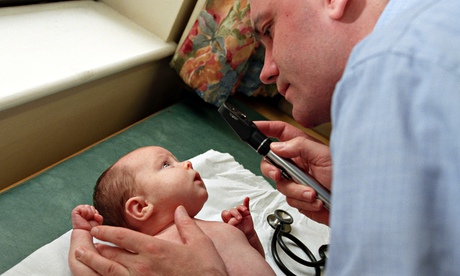
Doctor giving 8 week old baby polio vaccine

Physician giving an eight-week outdated child the polio vaccine. The young children in California had been vaccinated against polio but the illness looks to have comparable results. Photograph: Alamy


A polio-like sickness has afflicted a tiny quantity of kids in California since 2012, triggering significant weakness or fast paralysis in one or a lot more limbs.


The Los Angeles Times reported that state public well being officials have been investigating the sickness given that a medical doctor requested polio testing for a little one with serious paralysis in 2012. Considering that then, related instances have sporadically been reported all through the state.


Dr Carol Glaser, leader of a California division of public health group investigating the illnesses, explained she was concerned about the request because polio has been eradicated in the US and the youngster had not travelled overseas.


The signs sometimes arise following a mild respiratory sickness. Glaser stated a virus that is generally associated with respiratory sickness but which has also been linked to polio-like illnesses was detected in two of the sufferers.


Dr Keith Van Haren, a paediatric neurologist at Stanford University’s Lucile Packard Children’s Hospital who has worked with Glaser’s staff, will present the situations of five of the youngsters at the American Academy of Neurology’s approaching annual meeting.


He said all 5 had paralysis in one or a lot more arms or legs that reached its full severity within two days. None had recovered limb function following six months.


“We know definitively that it is not polio,” Van Haren added, noting that all had been vaccinated towards that condition.


Glaser would not say how numerous circumstances were becoming investigated. Van Haren stated he was conscious of around twenty.


She urged medical doctors to report new circumstances of acute paralysis so investigators could attempt to figure out the trigger.


Polio-like ailment seen in California kids

17 Ocak 2014 Cuma

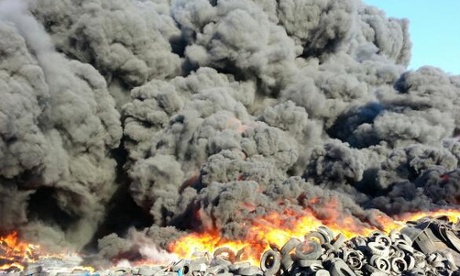
Tyre fire at Yorkshire recycling plant seen from room - video and pictures

Taken by @djsalt1 by way of Instagram at Sherburn Aero Club on Thursday

A fire involving 15,000 tonnes of tyres at the Newgen Recycling plant in Sherburn-in-Elmet, near Leeds blanketed York in black smoke with heights of up to six,000ft.


The fire started out Thursday at around 08:forty GMT but the lead to of the huge blaze is however unknown. 


fire york recycling plant
Photograph: @NorthYorksFire

Smoke from the fire was picked up by a Nasa satellite picture displaying the enormous plume of smoke towering over Yorkshire and the north of England.


Nasa yorkshire fire satellite
A dark column of smoke was captured by a Nasa satellite – shown at the bottom right of the image Photograph: Nasa
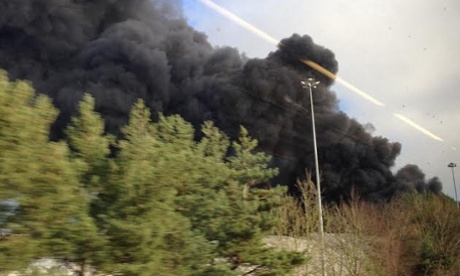
fire york recycling plant
Thick plume of black smoke witnessed from the Hull to Manchester train on Thursday. Photograph: Jonathan Cooke

North Yorkshire County Council recommended thirteen schools to maintain staff and pupils inside on Thursday, even though there have been no reviews of sick-well being as a outcome of the fire. 


Taken from Sherburn Higher School by @chelsmariexox on Instagram

Neighborhood residents had been suggested to keep indoors and maintain their windows and doors closed on Friday until additional notice. Public Health England’s Yorkshire &amp the Humber Centre said that the risk of long term health effects is likely to be really reduced with “publicity in excess of lengthy time period normally essential for harm to happen.”


@jblandy88 took this photo from his house in Brayton, Selby

North Yorkshire Fire and Rescue Support announced Friday morning that they were making it possible for the fire to burn up out: “We are scaling down our attendance but several fire crews continue to be at the scene, including two fire engines.”


Speaking to the BBC, North Yorkshire’s fire chief Nigel Hutchinson said that the fire is most likely to ”go on for days.”


fire york recycling plant
North Yorkshire Fire and Rescue announced they were scaling back operations Friday morning, with officers on site still functioning to stop the fire spreading. Photograph: @NorthYorksFire
fire york recycling plant
A substantial volume water pump is relaying water from a pond at the edge of the web site. Water curtains protected the recycling plant overnight. Photograph: @NorthYorksFire

View our video report


Tyre fire at Yorkshire recycling plant seen from room - video and pictures