kidney etiketine sahip kayıtlar gösteriliyor. Tüm kayıtları göster

23 Nisan 2017 Pazar

Obesity blamed for sharp rise in kidney cancer in UK

Obesity is to blame for a surge in kidney cancer in the UK, causing an extra 20,000 cases in the last 10 years, according to a leading charity.


Cancer Research UK says that new cases of kidney cancer have risen steeply, by 40% over the past decade.


Obesity and being overweight are implicated in about a quarter of kidney cancers, with smoking linked to another quarter, but while the numbers of people smoking has dropped, obesity continues to rise. The charity’s projections show kidney cancer cases climbing by a further 26% by 2035, which would make it one of the fastest growing types of cancer.


Kidney cancer kills half of those who develop it within 10 years. It is rare in people under the age of 50 and can be halted if caught early – usually by surgery to remove all or part of a kidney. It is often not picked up in time, however, because there may be no obvious symptoms early on.


There are about 11,900 cases of kidney cancer in the UK each year, 7,400 in men and 4,500 in women. About 4,300 people die from the disease each year.


Campaigners are concerned that few people realise obesity is a major factor in developing many types of cancer, including stomach, pancreatic and breast cancer.


“It’s concerning to see kidney cancer cases rising like this. Being overweight or obese is linked to 13 types of cancer, including kidney which is becoming more and more common,” said Dr Julie Sharp of Cancer Research UK.


“Similar to smoking, where damage to cells builds up over time and increases the risk of cancer, damage from carrying excess weight accumulates over a person’s lifetime.”


The symptoms of kidney cancer – when there are any – include blood in urine, a persistent pain below the ribs in the lower back or side, and a lump or swelling in the side. Kidney cancer is sometimes picked up during urine tests carried out for other reasons.


Sarah Toule of the World Cancer Research Fund said that maintaining a healthy weight was extremely important. “In fact, if everyone was a healthy weight, around 25,000 cancer cases could be prevented every year in the UK,” she said.


”There are simple ways people can help maintain a healthy weight, such as cutting out high-calorie food and drinks and doing at least 30 minutes of exercise every day.


“The government also plays a vital role in ensuring strong measures are in place to help the healthy choice be the easy choice. These include restricting junk food marketing to children and reducing the amount of sugar found in everyday products.”


Adam Freeman, a 46-year-old lawyer and father of four from south London, was diagnosed with kidney cancer in 2013. He had surgery to remove a kidney and is now cancer-free.


“When it comes to my lifestyle, I would say that the little devil on my one shoulder won over the angel on my other, so I ducked exercise and ate badly a bit too often.


“Now, since my diagnosis, I try to listen to the angel rather than the devil on my shoulder. I have tried to make things more habitual and rarely skip exercise or make bad food or drink choices. I regularly cycle to work to try and keep fit, and I have also started doing yoga.


“Of course it’s challenging to maintain a healthy lifestyle when you are juggling a career and family. I am only human. I’m a husband and father to our four children and my career can be demanding.


“But that’s why things have to be a habit so it becomes part of your daily life. We talk much more as a family about healthy choices, particularly trying to make the children aware of how much sugar is in drinks and breakfast cereals. We try and reduce the amount of temptations in the house.”


Obesity blamed for sharp rise in kidney cancer in UK

23 Kasım 2016 Çarşamba

Study- Synthetic Fragrance Linked to Cancer, Brain & Kidney Damage, Asthma, Headaches & More

What is Fragrance?


Fragrance also called a perfume is a key ingredient in perfumes and colognes. It is also called “the new second-hand smoke.” Like cigarettes, fragrance is harmful to the health of users and bystanders, its toxic effect lingering for hours after initial use. The late 70s and early 80s perfumes used to be made from natural ingredients like flowers and herbs. Today, they are approximately 95-100% synthetic (man-made).


Do you know your shampoo, perfumes, air fresheners, candles, and dryer sheets are killing you slowly? The term “fragrance” on a cosmetic ingredients list usually represents a complex mixture of dozens of chemicals. According to the United States Department of Health and Human Services, there are over 5,000 chemical fragrances being used in some combination by today’s consumers. (1) (2)


Fragrances are Synthetic and Artificial


The Environmental Working Group (EWG) reports that more than 95 percent of the chemicals in synthetic fragrances are derived from petrochemicals. These chemicals include benzene derivatives, aldehydes, phthalates, and a few of other known toxins that are capable of causing cancer, birth defects, nervous-system disorders and allergies. A survey of asthmatics found that perfume and colognes triggered attacks in nearly three out of four individuals.


Environmental Working Group (EWG) researchers found more than 75 percent of products listing the ingredient “fragrance” contained phthalates (THAL-ates) which have been shown to disrupt hormone activity, reduce sperm counts, and cause reproductive malformation, and have been linked to liver and breast cancer, diabetes, and obesity. There is also evidence suggesting that exposure to perfume can exacerbate asthma, and perhaps even contribute to its development in children. (3) (4) (5)


Homemade Herbal Perfume Recipe


Ingredients:


Approximately 12-20 drops of Essential Oils like: Cedarwood, Vanilla, Vetiver, Ylang Ylang, Sandalwood, etc
1 tsp of vanilla extract (optional)
25-30 drops of middle tone oil like Rose, Lavender, Chamomile or Geranium
12-15 drops of top note oil like Bergamot, Wild Orange or Neroli
4 ounces of alcohol to preserve and meld scents


Directions:


Mix all oils together in an opaque bottle to get a scent you like.
Let this mixture stay in the bottle alone for a few days to let scents meld.
Add the alcohol and cap tightly.
Shake and put in a cool, dark place for at least a month (preferably).
This is optional but helps the alcohol scent fade and the scents of the oils intensify.


Additional Sources:


–http://wellnessmama.com/26194/diy-herbal-perfume-recipe/


–http://www.huffingtonpost.com/maria-rodale/five-mustknows-on-the-dan_b_4737654.html


Read:


Study- Synthetic Fragrance Linked to Cancer, Brain & Kidney Damage, Asthma, Headaches & More

31 Ekim 2016 Pazartesi

Treat Kidney Infection With These Home Remedies

Kidney infection is a type of urinary tract infection which is caused by bacteria. Kidney infection is common in women than men. It consists of two groups which are complicated kidney infection and uncomplicated kidney infection.


Symptoms of kidney infection:


  • Urgent urination

  • Blood in the urine

  • Fatigue

  • Diarrhea

  • Nausea

  • Vomiting

  • Fever

  • Back pain

  • Pain in the side

It is important to treat properly to reduce risk of severe conditions such as: kidney abscess, blood poisoning, severe infection, kidney failure and more.


Causes of kidney infection


Many reasons lead to kidney infection like weakened immune systems, anatomy of urination, toilet hygiene, kidney stone, sexually active females…


Here are some home remedies which can help you treat effectively.


  1. Stay hydrated


Drink enough of fluid is the best way to keep your body hydrated. In addition, it is important to prevent kidney stone. Water helps reduce risk of salt and minerals which probably form stone. Try to drink a glass of lemon juice to refresh your kidney. You can look at other benefits from lemon: Top 10 Natural Benefits of Lemon


  1. Diet


What you eat and drink can affect to your kidney condition. Otherwise, here are some recommended foods which researchers showed you should put it into your daily diet such as: apples, onions, cabbage, and cauliflower. These foods reduce inflammation and ease kidney infection symptoms. However, be caution with amount of phosphorus in your diet. Because of phosphorus can cause serious situation and calcification.


  1. Lifestyle


There are a large of number bad habits which might push your condition more severe and prolong your healing process such as drinking too much alcohol, smoking and lacking of sleep. Therefore, try to stop smoking, alcohol and sleep enough to help your body healthy.


  1. Apple cider vinegar


Apple cider vinegar is great to treat infection inside the body. Kidney infection is be treated by apple cider vinegar. There are some acids in this remedy which can reduce inflammation. To get the most effective from apple cider vinegar you should combine with honey. Mix 2 teaspoon of honey with 1 teaspoon of apple cider vinegar then drink several times per day. To know more health benefits of apple cider vinegar you can visit here: 16 Ways That Apple Cider Vinegar Benefits You


  1. Herbal tea


There are many types of herbal teas which are good for our body such as chamomile tea, marshmallow tea and parsley tea. These herbal reduce infections and prevent kidney stone. What’s more, it eases your symptoms and shortens the duration. You should use at least twice a day to get effectively.


  1. Baking soda


This is probably the first time you heard about baking soda which may treat kidney infection but it is true. Baking soda replenishes bicarbonate levels in the kidney. Put one teaspoon of baking soda in a glass of water and drink it several times per day.


  1. Garlic


Garlic is related to passing salt in the urine. Therefore, it is good for diuretic properties. Potentially, garlic can help your body prevent heart disease and skin problems. Garlic contains allicin that avoid bacterial and infection.


Resources:


https://authorityremedies.com/home-remedies-for-kidney-infection/


https://www.ncbi.nlm.nih.gov/pubmed/23297714


https://www.ncbi.nlm.nih.gov/pubmed/27098290


More by Jenny Heth:


Treat Kidney Infection With These Home Remedies

3 Ekim 2016 Pazartesi

Top 15 Natural Healthy Foods for People with Kidney Disease

Human body is intricately designed by the Creator, every organ and part have some specific and important tasks to perform like our hands are used for writing, eating and picking up things. Have you ever wonder without hands how can we be able to perform our so many works???  Similarly, body organs have their own importance and tasks to perform in the body. Hearts, lungs, livers and kidneys are important organs of the body, without any one of these the body can’t perform normal. Kidneys are very important and main organ of the body that detoxifies the body and makes your blood clean as well as it makes the body fluid balanced. It is also perform to clear the waste, maintain PH and other important functions like regulating the B.P.


Now-a-days we come across to see people with numerous small and big kidney diseases like kidney stone, kidney improper functioning (need of dialysis) and many others. In this article we will try to convey a number of healthy and natural foods that can help in kidney disease or these may aid in it’s functioning. Here are some:


  1. Olive oil: Being a great natural source of oleic acid, olive oil is an anti-inflammatory fatty acid which protects against oxidation. Other compounds like polyphenols prevent oxidation as well as inflammation.

  2. Coriander: The best organic food for kidney disease is coriander. Add a little lemon juice in one glass coriander boiled water and drink it on daily basis. It will improve the kidney function as well as reduce oxidation.

  3. Water: Drinking plenty of water will clean the kidneys and take out the waste in the urine.

  4. Garlic: It reduces inflammation and cholesterol in the body to make kidney perform well.

  5. Cranberries: These small and tangled berries will reduce and protect bladder infections.

  6. Blueberries: These contains antioxidant phytonutrients known as anthocyanidins which are good anti-inflammatory.

  7. Marshmallow root: It is a diuretic compound that will protect from bladder infections, kidney stones and urinary tract infections.

  8. Red clover: Rich in vitamin C and vitamin A, an excellent anti-oxidant for kidney function.

  9. Turmeric: It has antiseptic properties usually used to treat the kidney infections and inflammations.

  10. Apples: To improve kidney functions, apples are great anti-oxidants that reduces inflammation in the kidneys to improve its function.

  11. Pumpkin seeds: Rich in vitamins, minerals and antioxidants and promotes safe kidney functioning by reducing kidney stone risks.

  12. Fish: It contains Omega 3s fatty acids that are good as an anti-inflammatory agent.

  13. Egg whites: It is being a good natural source of protein is good for kidney functioning.

  14. Lemon juice: Lemon juice in water is used to avoid the formation of kidney stone that causes urinary tract infection and urine pass most chornic.

  15. Water melon: Rich in water makes it a diuretic compound that will help in reducing inflammation in the kidney.

Natural nutrients are always best to avoid the side effects of the medicine.


Reference:


Top 15 Natural Healthy Foods for People with Kidney Disease

Coroner criticises care of woman who died after kidney stone operation

[unable to retrieve full-text content]


Third inquest into death of Carmel Bloom 14 years ago rules that ‘absences’ in routine aftercare contributed to cardiac arrest


A series of medical “absences” played a part in the death of a woman 14 years ago after a routine kidney stone operation, the third inquest into her death has ruled.


Carmel Bloom, 54, from Ilford, Essex, died on 8 September 2002, after surgery at the private Roding hospital in Ilford, where she worked as a health controller. She was taken to Whipps Cross intensive therapy unit (ITU) but died after her blood pressure fell and she suffered cardiac arrest.


Continue reading…


Coroner criticises care of woman who died after kidney stone operation

13 Temmuz 2014 Pazar

Would you give your kidney to a total stranger? | Andrew Anthony

Twenty many years right after she gave up alcohol, Clare Bolitho made a decision she needed to mark the occasion. Her two decades of sobriety had turned her lifestyle close to. She had, by her very own admission, been a reckless alcoholic, twice losing her driving licence. She had also suffered from anorexia, had been sexually promiscuous, a smoker and somebody who was normally not in management of her lifestyle. But right after her alcoholic boyfriend died, she quit drinking in 1989.


She was fortunate to get excellent help from the NHS, like a psychotherapist whom she noticed for twenty years. She also had assist from Alcoholics Anonymous and, surveying how items had turned out, she felt grateful for her “lucky hand of cards”.


“I’ve acquired quite good well being, I’ve been educated, I’ve got ample money and I’ve received a good task,” the 63-year-outdated veterinarian informed me at her pet-filled property a handful of miles outside Wolverhampton. But how to display her appreciation? Buddies suggested her to find the appropriate charity and give money. But Bolitho wanted to give some thing else, she just didn’t know what. Then a single day she occurred to hear a radio programme on a certain kind of altruistic donation and immediately she realised she had found the solution. “Oh brilliant!” she imagined. She abruptly knew that what she wanted to give was 1 of her kidneys.


Not posthumously – she was currently a signatory to the organ donation scheme. As an alternative what Claire made a decision to do was bring forward her minute of corporeal contribution and undergo an operation to remove a kidney even though she was alive and wholesome.


Altruistic kidney donation grew to become legal in Britain in 2006. Until finally then the only people who were allowed to give up their organs had been relatives and near pals of men and women struggling from kidney dysfunction. Wary of the health care hazards connected with any type of major surgery, the authorities had also been keen to discourage a trade in organs which might lead to an exploitative or even coercive romantic relationship in between recipient and donor.


The legislation that was brought in eight years ago was cautiously drawn to stop this kind of outcomes. Donors are not permitted to know the identity of the recipient before or following they give a kidney. But, a bit like adopted children, recipients have the appropriate, if they decide on, to contact their donors following the operation. This way recipients are not produced to really feel any variety of moral – let alone fiscal – obligation.


The very first altruistic kidney transplant took place in 2007. Five more followed that yr. At the time, a lot of believed the supply of donors would be quickly exhausted. “We did the second [altruistic transplant operation] right here in Portsmouth,” recalls Paul Gibbs, a advisor renal and vascular surgeon at Queen Alexandra Hospital. “We imagined it would be a flash in the pan – half a dozen extremely enthusiastic individuals who’d been pushing the situation, and then it would die a death.”


The following yr there were 15 more altruistic kidney transplants, and 15 far more the yr right after that. Then the yearly numbers went like this: 28, 34, 76. It’s estimated that about 120 individuals donated a kidney to a stranger in the twelve months from April 2013 to April 2014. The figures look to be developing practically exponentially. There are close to 20,000 individuals in the United kingdom obtaining kidney dialysis therapy. If the upward trend for donors continued at this current rate, the require for dialysis would be ended within a decade.


But what’s in it for the donor? There is some thing fundamentally counterintuitive about obtaining a healthy organ removed. It goes towards all our most deeply held notions about the part of medicine, of surgery, hospitals and, without a doubt, our bodies. Why would anyone elect to have an essential component of themselves minimize out to give it to an anonymous stranger?


“One exciting facet was how unsupportive my closest buddies had been,” Bolitho says. “My closest buddy is a doctor and she was fairly angry with me. My AA sponsor also did not want me to do it. And I nonetheless do not genuinely know why. My GP did say that it might flag up other people’s feelings of guilt that they are not undertaking it.” Bolitho can be fairly proselytising with men and women she does not know, and despite the fact that wary of banging her personal drum, she is mystified as to why much more folks really don’t donate.


It took practically three years from Bolitho searching into donation to having her kidney eliminated. There is at first a lengthy process of healthcare exams – blood tests, scans, ultra-sounds, mammograms, smears and a lot else apart from. There is also a psychological check in which the donor is quizzed on his or her motivations, expectations and understanding. But most of the delay in Bolitho’s case was down to discovering time to consider 6 weeks off perform.


Were there moments when she had doubts? “No!” she exclaims. “Not at all. The only time was afterwards, because I felt bloody terrible when I came out of hospital, and I’m very fit and get pleasure from physical exercise. And I considered: ‘My God, what have I accomplished?’ I felt really grotty and went to the GP and he stated: ‘Look, you’ve had major surgical procedure. Of program you’re going to truly feel grotty.’”


In numerous respects Bolitho fits the common profile of a kidney donor. She is more than 50, a extended-time blood donor, financially secure, with a strong sense of civic duty. She also has no children and she saw kidney donation as “a way of type of carrying myself on somehow”.


But there are donors from all age groups and walks of daily life, and a surprising amount who are young men. The youngest donor of all so far has been Sam Nagy from Huddersfield. He donated in 2012 when he was just twenty. Throughout a stint as a volunteer working in Kenya, he paid a check out to a hospital where he noticed infants of much less than 6 months with HIV.


“It was very a distressing time,” he recalls. “I couldn’t aid people children, but was there anything at all I could do to assist somebody else? For some cause kidney donation came into my head. I did not know if it was achievable or feasible. I did not know something about it.”


With limited world wide web access, he did what investigation he could, but the following time he phoned property he asked his loved ones to look into it for him. They were concerned but supportive. “They knew it was something I desired to do and so they backed me all the way.”


On his return to England, he went by way of the exams without having a hitch. Following the operation, he came out of hospital following three days but he pulled a stitch, returned to hospital and then contracted an infection. He seems really philosophical about the setback, pointing out that he was in the gym inside three weeks.


“I was really match and wholesome just before the operation and there’s nothing at all I could do then I can’t do now. The stomach muscles are a minor bit tender right after surgery, but that is only for the 1st month.”


Like all of the donors I spoke to, Nagy was reluctant to dwell on his sacrifice. He saw it as a minor inconvenience which he set against the major benefit it presented to someone struggling from kidney dysfunction. The only purpose for discussing what he imagined was basically a private act was to draw interest to a scheme of which numerous people remained ignorant. Nonetheless, he has been attacked on-line by anonymous commenters who have accused him of glory-hunting. About this as well he seems precociously phlegmatic, noting that there will always be people who want to look for damaging explanations.


The recipient of his kidney, Nagy learned in a letter sent to him, turned out to be a 25-12 months-outdated male. He liked the thought that they had been of a similar age. At first he intended to write straight back, but subsequently made the decision to wait.


“The most critical point to me is to know the kidney recipient is match and well. It would have been horrible to know it hadn’t been accepted. Everybody needs it to go to a great individual – not a criminal or an individual who does negative things. But it goes to the particular person who’s the best match genetically. There’s no say from me. I want them all the very best and hope they deal with it effectively. That chapter in my daily life is, I guess, closed now.”


The kidney is NOT a glamorous organ. It has none of the romance of the heart or the splendour of the lungs. But it is a important and small-understood organ. Its most critical occupation is to filter the blood, to remove waste items this kind of as dead cells, further salt and water by way of passing urine – most men and women with innovative renal dysfunction urinate quite minor or not at all. If the blood is not appropriately cleaned, tiredness sets in, the hands and feet start to swell and vomiting is frequent. Without health care intervention, kidney failure is eventually fatal.


There are estimated to be close to 40,000 men and women in this country affected by kidney failure, around half of whom are on dialysis. For the massive vast majority of them, it is a gradual decline over many years or decades. But for Nicholas Evans, the writer of the bestselling book The Horse Whisperer, his wife and her brother the transition from having healthful kidneys to no kidney perform took place inside 24 hours.


In August 2008, Evans went mushroom choosing on his brother-in-law’s Scottish estate. He imagined he had collected Boletus edulis, acknowledged as “ceps”, but in reality he had gathered Cortinarius speciosissimus – deadly webcap. He cooked and served them to his wife and brother-in-law and the following day they all grew to become critically unwell, were taken to hospital and placed on dialysis.


“There are a lot of various facets of being on dialysis,” says Evans, “and possibly the most torturing of them is thirst. Simply because you are not peeing, all the liquid that comes into you has to be taken off and dialysis is that chance to get rid of the extra fluid in your entire body. In my case, and most folks with subsequent to no kidney perform, you have to restrict the intake to a litre a day. But that litre has to contain every thing, which includes fruit, yogurt – every little thing. That is a constant struggle and you are always thirsty and craving liquid. The self-restraint involved… you’d never think how difficult it is.”


Like the bulk of dialysis individuals, Evans was hooked up to a machine three occasions a week for 5 hours a day. But even this method only cleaned 25% of his blood. That meant he felt unwell most of the time: weak, exhausted, functioning on a minimal level of vitality. He remained on dialysis for 3 years, a period he describes as “horrible”. As fruit and greens are large in potassium, which is undesirable for dialysis patients, he had to restrict his diet regime to that of a “couch potato” – stodgy cakes, toast and the like. The diet was tedious, he says, “but it is just the overall feeling of not being correctly alive that is the hardest point.”


He had several gives of kidneys from close friends and loved ones, but it was only when he began to create heart troubles – which is not uncommon with dialysis individuals – that he accepted his daughter’s words and, as outcome, her kidney. “She acquired extremely cross with me and explained she wasn’t getting generous and selfless, she was getting entirely selfish because she desired me to be alive to meet her kids when she had them, which genuinely did it for me.”


Right after the transplant, his daily life substantially improved, but not before a couple of troubles have been conquer. “When you have the operation, with males all the blood that is brought on in the course of the operation goes rushing downhill and you get just the most extraordinary set of genitals, like a prizewinning beetroot at the village fête. Extraordinary to search at and bloody painful to pee by means of!”


One of the items Evans set about carrying out, obtaining returned to a healthful level of fitness, was to aid set up a charity – Give a Kidney – to promote altruistic residing kidney donation. It’s extensively believed that the charity’s arrival in 2011 has been accountable for a important enhance in the numbers of donors.


Most of these involved in the charity are themselves donors, like David Hemmings, a former civil servant and lay magistrate, who is now a trustee of Give a Kidney. Hemmings describes himself as a “dyed-in-the-wool socialist”. His philosophy, he says, is that “if you are in a place to support a person significantly less lucky than your self you just get on with it”.


A noble sentiment, however how several of us genuinely truly feel that variety of altruism? Although most of us would accept that it is morally excellent to help others, the social and biological basis of altruism is hotly contested. We are advised by evolutionary professionals that a specific kind of selfishness is essential to survive and thrive. Yet maybe the most frequent criticism of Richard Dawkins’s The Selfish Gene is that it failed to describe adequately the altruism that we encounter in everyday existence, allow alone gestures such as kidney donation to unknown strangers. And what a gesture it is. As Paul Gibbs explains: “To take away a kidney you need to disconnect the artery that sends blood into the kidney, the vein that drains the blood back into the circulation and last but not least the ureter that drains the urine from the kidney into the bladder.”


Although the surgical procedure tends to be keyhole, the incision needs to be massive ample for the surgeon to attain in and pull out the kidney. So far there have been no main difficulties, but likely issues incorporate bleeding from the vessels, damage to other organs (bowel, liver, spleen), anaesthetic problems and wound troubles, this kind of as infection and hernia formation. Risk of death is typically estimated to be all around one in 3,000, even though most surgeons would argue this overstates the danger.


On the other side of the coin, it is stated that people who donate kidneys have a longer existence expectancy than the regular member of society – if only due to the fact the degree of wellness required to qualify for donation is larger than average. And, in accordance to healthcare research, one healthful kidney can provide significantly the very same outcomes as two healthful kidneys. “With some of our transplant recipients and donors, if you just looked at their blood exams, you wouldn’t know,” says Gibbs.


But although the kidney that the donor keeps may do the task of two thereafter, that is not the case for the one particular that is eliminated. Or rather, there’s a restricted quantity of time that it will function. The latest statistics recommend that 50% of dwell donor kidneys will last amongst twenty and 25 many years after transplantation.


That’s a lengthy volume of time, but for most recipients below 50 it does not constitute a lifetime. So, for instance, the youthful man who received Sam Nagy’s kidney will be seeking for an additional in middle age, if medical science hasn’t by then created an substitute strategy.


Nevertheless, for these twenty or 25 many years he will, all being nicely, have loved a drastically improved quality of daily life thanks to a person who is likely to endure no far more than a handful of weeks’ discomfort. When presented in these terms, kidney donation becomes a challenge we are morally bound to at least consider. And, in reality, a survey in 2011 discovered that eight% of the population would contemplate offering a kidney to a stranger. If only one in 500 of people who regarded went ahead and donated, the transplant waiting checklist would be wiped out.


One particular of the variables that may possibly be element of that consideration is that in the following twenty many years up to 50% of kidney ailment is very likely to be induced by diabetes, primarily type two diabetes, which is linked with becoming obese and with metabolic syndrome. These are conditions frequently linked to diet regime. So does altruism extend to assisting these who have been negligent in assisting themselves?


Gibbs is dismissive of such ethical issues. “You could also talk about surgical treatment with smokers and liver transplants on alcoholics. And you could extend that to must we do surgical treatment on these who crash their vehicles when driving above the velocity limit? Consuming a good deal might be increasingly socially unacceptable, but it is not unlawful.”


In the long run there is no easy or, without a doubt, complex moral formula that results in kidney donation. Whilst some donors speak of it in terms of a rational selection or their consciences, other folks look to locate the determination nearer the kidney, as a kind of gut feeling.


Sanjiv Gohil, for illustration, had never donated blood, nor was he a seasoned charity employee. A partner in an architectural company in London, he wasn’t hunting to aid anyone or make a statement. Then a single day he happened to see a doctor getting interviewed on Television about altruistic kidney donation. Separated from his wife, and with two teenage young children, he skilled what he calls “an epiphany”.


As an alternative of going on a summer season holiday, he went into hospital and had a kidney eliminated. He has seen the despair and desperation on a renal ward, but he also talks of how the operation empowered not just the recipient but him, the donor. “I feel more healthy and far more alive than I did before. And I’ve identified that given that I donated, I’m much more tolerant of life. I think people are naturally excellent, and often we really do not know how to reveal that. You just get caught up in daily life.”


Gohil says that offering his kidney gave him a more accepting viewpoint on the globe. “That’s been the lasting legacy,” he says with a calm smile. “So there are rewards.”


He doesn’t know who received his kidney, and he doesn’t care, but Clare Bolitho does know. When 48-year-outdated Marion Pattinson left hospital three years ago, she was asked if she would like to contact the man or woman whose kidney she had just received. “I stated: ‘I would love to,’” she recalls.


Pattinson had to correspond via the hospital’s kidney co-ordinator, to make certain she didn’t mention names or the hospital, so that her identity was protected. But the two ladies stayed in touch and determined they needed to meet. And on the anniversary of the operation, Bolitho visited Pattinson at her residence, the place Pattinson’s daughter had produced a cake with farm animals in honour of Bolitho’s job as a vet.


Pattinson finds it tough to put into words the depth of her gratitude, but it says anything that the lengthy-phrase diabetes sufferer, who also requirements a pancreas transplant, is partially sighted and not too long ago had a toe amputated, describes herself as “so lucky”.


On dialysis, she says, she felt nearly permanently unwell, tired and in want of sleep. Since the transplant she says she’s “always on the go” and filled with energy. A keen gardener, she no longer has to sit down and rest all the time. “I’m just so grateful,” she says of her new lease of lively life.


She continues to keep in touch with Bolitho, and constantly calls her if she has to go to hospital for a verify-up, just to allow her know how she’s performing. She even sent her a photo of her toe before it was amputated. “Our relationship…” she says, searching for the proper words to describe the specific connection formed by a kidney, “well, it’s like currently being sisters, really.”


Would you give your kidney to a total stranger? | Andrew Anthony

4 Mayıs 2014 Pazar

Transplant patient wins payout more than kidney from donor with cancer

Robert Law

Robert Law explained he hoped lessons had been realized from his situation. Photograph: Christopher Thomond for the Guardian


A transplant patient who was given a kidney from a donor with an aggressive type of cancer has been awarded a six-figure compensation settlement by the NHS to assist him rebuild his daily life.


Robert Law, 62, of Wirral, Merseyside, was one of two people who had to undergo six cycles of chemotherapy following obtaining kidneys at the Royal Liverpool University hospital in 2010.


NHS Blood and Transplant admitted negligence two years in the past, and its chief executive, Lynda Hamlyn, has apologised once again, saying changes were produced right after Law’s ordeal. The other patient, Gillian Sensible, from St Helens, Merseyside, is nevertheless negotiating a settlement. Law’s award is understood to be a low 6-figure sum.


The pair acquired kidneys from a female who had died at one more hospital. An autopsy revealed the donor had intravascular B cell lymphoma.


Law said: “I hope that lessons have been realized from my situation and that this has assisted to make the method safer by making sure all medical workers involved with transplants have the instruction and help they want. I am extremely grateful for the donated kidney and to the haematology department for their therapy and care for the cancer, but it is just a shame genuinely NHSBT could not say what went wrong.


“My kidney is doing work nicely, factors are going proper. The renal division [at the hospital] are satisfied with my progress. I am satisfied with that. But I have been left with a variety of problems … physiological and psychological, for which I am acquiring ongoing care and remedy.”


He has made the decision not to have any a lot more scans to check out no matter whether he had new ailment in his kidney. “As I was informed from the start [the lymphoma] was an aggressive condition, that people usually die inside of two many years, I just keep my fingers crossed and mosey along.”


Law explained his bones and muscle tissue ached, he had neuropathy and he utilized a walking stick. “It is like a wasting of the muscle tissues. I don’t have any power. I am on various tablets to take away individuals pains. I am glad to be alive and I just get about in a slower fashion. I tend to put on T-shirts or shirts that are already buttoned up for me. Co-ordination is challenging. I am immunosuppressed and I tend to get any and each ailment going.


“To be truthful, it is only in the final twelve months I haven’t been paying time with legal matters, reviews and examinations, so I intend to make the most of my lifestyle now, put the transplant and cancer behind me and reside my existence to the fullest.”


Eddie Jones, Law’s solicitor at the Manchester company JMW, mentioned his consumer had conducted himself with great dignity by speaking in help of organ donation. “This variety of error is rare, but as with the numerous others we deal with it could have been averted with satisfactory coaching, monitoring and communication.”


NHS Blood and Transplant has previously explained the incident arose from human error by a professional nurse who had not finished coaching. Law and Intelligent every single acquired a kidney that would have been rejected by their surgeon if he had been conscious of the total details of the donor.


The services acknowledged then a failure to talk to the transplant crew in Liverpool the probability that the donor had lymphoma, but did not say the transplanted kidneys had been cancerous. Attorneys for Law and Intelligent mentioned they have been.


Hamlyn told the Guardian: “I would like to reiterate to Mr Law how sorry we are that this blunder was manufactured. I hope the full and last settlement of his case signifies he can move on from what regrettably happened. I would also like to reassure Mr Law we have discovered lessons and have created a amount of alterations as a direct end result of this situation. The vast vast majority of transplants are carried out effectively. Nevertheless, no donated organ is danger-free and recipients need to be given total data about the hazards by their surgeon.”


NHSBT mentioned an electronic technique was now employed for recording and transferring info about donors. “Verbal communication is discouraged unless needed and in which it is utilized, phone calls are recorded and the require to document all data has been stressed to staff.”


It said supervision of trainees and training of expert nurses had been reviewed and the Coroner’s Society had been asked to send guidance to pathologists so that NHSBT knew instantly about anything at all of note identified for the duration of autopsies on donors.


The government’s independent advisers on the security of blood tissue and organs, Sabto, stated lately that the danger of cancer getting transmitted when its presence was not identified before or throughout organ retrieval and transplant was much less than a single in 2,000 organs transplanted. Organs from deceased donors with some cancers could be securely used and the danger of an “inadvertent” tumour had to be balanced towards the need of a individual awaiting a transplant.


A NHSBT review published online in the BJS journal last week assessed transplants from 17,639 deceased organ donors in England amongst 1990 and 2008. This suggested organs from donors with a history of cancer posed a low risk for recipients. In 61 circumstances, donors were regarded to have a higher danger of transmitting cancer, but recipients remained cancer-totally free, the study said. With checks, the wishes of more donors could be met, benefiting a lot more individuals, it said.


Transplant patient wins payout more than kidney from donor with cancer

22 Nisan 2014 Salı

6 medical doctors failed to spot indicators of kidney harm in patient


The issue refers to a reduction of kidney function and can build very speedily. It can take place in individuals who are presently ill with situations such as heart failure or diabetes, and these admitted to hospital with infections.


Researchers located that acute kidney injury leads to among 15,000 and forty,000 extra deaths every 12 months.


6 medical doctors failed to spot indicators of kidney harm in patient

6 medical doctors failed to spot indicators of kidney injury in patient


The condition refers to a reduction of kidney perform and can develop very speedily. It can take place in men and women who are presently ill with problems this kind of as heart failure or diabetes, and those admitted to hospital with infections.


Researchers identified that acute kidney damage triggers in between 15,000 and 40,000 excess deaths each and every 12 months.


6 medical doctors failed to spot indicators of kidney injury in patient

1,000 hospital sufferers die each and every month from avoidable kidney issues

acute kidney injury causes avoidable deaths

Surgeons performing kidney operation. Photograph: Christopher Furlong/Getty Pictures


At least 1,000 hospital sufferers in England die each and every month from avoidable kidney difficulties, according to a examine commissioned by the NHS.


Researchers identified that 15,000-forty,000 excess deaths every single 12 months are induced by acute kidney injury (AKI), which triggers a loss of kidney perform and can produce extremely speedily. It can happen in folks who are already sick with conditions such as heart failure or diabetes and these admitted to hospital with infections.


AKI can also create following significant surgical treatment, this kind of as some types of heart surgical treatment, due to the fact the kidneys can be deprived of normal blood movement during the procedure. Severe dehydration is one particular of the primary brings about of the condition.


AKI charges the wellness services more than £1bn each year, in accordance to a study commissioned by NHS Bettering High quality.


The study, carried out by kidney disease specialists and Insight Well being Economics, identified that AKI is five instances much more prevalent in English hospitals than previously considered.


The report’s co-writer Prof Donal O’Donoghue, advisor renal doctor at Salford Royal NHS basis trust, stated: “We know that at least a thousand individuals a month are dying in hospital from AKI due to poor care.


“These deaths are avoidable. This is totally unacceptable and we can’t enable it to continue. Very good fundamental care would conserve these lives and conserve millions of pounds for the NHS. Medical doctors and nurses require to make elementary checks to stop AKI. In basic, people who are getting surgical procedure shouldn’t be asked to go with out water for longer than two hrs.


“Occasionally that is unavoidable, but then health-related employees need to check out their patients are not becoming dehydrated. They also require to be aware that some frequent medicines enhance the risk of AKI.”


Marion Kerr, health economist at Insight Well being Economics, explained the £1bn annual expense to the NHS “is more than we devote on breast, lung and bowel cancer combined”.


She extra: “Every single day, much more than thirty people are dying needlessly. Compare that to MRSA which was killing about 4 people a day at its peak. Easy enhancements in simple care could conserve the NHS £200m a yr and, more importantly, conserve 1000′s of lives.”


A spokesman for NHS England explained: “We have taken steps to guarantee the NHS puts in place coherent lengthy-phrase strategies to minimize avoidable deaths in our hospitals, and to improve the way data is utilised in selection producing.


“Overall health investigation primarily based on true lifestyle proof like this is vitally crucial for NHS commissioners in deciding on where to target their sources.”


1,000 hospital sufferers die each and every month from avoidable kidney issues

7 Nisan 2014 Pazartesi

My family lined up to give me a kidney

It was, of program, devastating news. I knew as significantly about kidneys as I did 3D versions, and I was terrified. What I did know was that the wait for a suitably matched cadaveric kidney (from somebody who has lately died) was, on typical, 3 to four many years. Dialysis appeared inevitable.


For my mother and father, Tim and Lesley, even so, there was only 1 solution, and dialysis wasn’t it. They have been tissue-typed and cross-matched to ascertain if one particular of them would be appropriate as a donor. My father proved to be the much better match.


I wasn’t a mother or father then and I did not know what it meant to have a kid. I didn’t want my dad to go by means of key surgery, with all its dangers of issues, for me. Also, I was concerned that need to any subsequent troubles come up, he wouldn’t have a second kidney to rely on. But for my dad, a 60-12 months-outdated retired underwriter at Lloyd’s, it was a no-brainer: he was my father, I was his son and he would give me a kidney when the time came.


Two years later on, as the medical doctors had predicted, my personal kidneys had fairly considerably run out of puff. Harmful toxins have been creating up in my blood, creating me more and more unwell. By this time, despite feeling guilty about placing my dad via surgical treatment, I was immensely relieved to have an choice other than dialysis, with all its daily life-changing restrictions.


In autumn 2001, after a ultimate contemplative stroll along the river, my father and I were admitted to Guy’s Hospital, London, for the scheduled transplant of his left kidney, a method that lasted about 5 hrs. It was considerably far more invasive for my dad, resulting in a scar working from his stomach to nearly the middle of his back.


Sadly, the operation was not completely productive. Complications incorporated a loss of blood supply to the newly transplanted kidney, and recurring episodes of rejection, in which the body’s immune program destroys transplanted tissue. At that time, the regular transplant lasted 13 years. Now, due to enhanced matching protocols and drug therapies, it is far more like 25, and some go on for longer nonetheless. To be informed five days soon after the operation that Dad’s kidney may only final a matter of months was devastating, specifically for my father, who felt as if he were to blame.


Yet extremely, even right after consistently depressing opinions from every nephrology advisor and medical professional we noticed, the tiny organ that no one ever considered would realize success has carried on doing work for yet another 13 years. My frequent blood tests usually suggested it was on the verge of failure and dialysis was imminent, but by some means it would suddenly enhance, just a little bit, and for a although absolutely everyone would quit searching so nervous. My dad’s kidney did sterling work, seeing off all method of viral, bacterial and immune technique onslaughts, and I truly feel exceptionally lucky to have had this kind of a very good run with it.


Even now, right now was often coming, but as Dad’s kidney finally runs out of steam, I’m not getting ready for dialysis but for another transplant. This time the kidney is coming from my sister. From day one particular of my diagnosis, Victoria had stated she would donate, if she proved a very good match. But at the time, with her kids even now so youthful – Kitty was eight, Louisa four and her son Barnaby only 12 weeks outdated – the dangers have been deemed also fantastic.


2nd time close to, it is not so challenging for me. For Victoria, it’s scary and unknown, and I bear in mind what that feels like. We have usually been shut, but I am overwhelmed by her determination and honoured to be her brother.


It sounds contrived, but transplant actually is the present of lifestyle. And that is what my father and sister have provided me a 2nd and third possibility to dwell a comparatively standard lifestyle. It is not normal, of program: there are dietary restrictions, increased prospective for other serious illness, and a lifetime of immunosuppressant medication. But the restriction, inconvenience and propensity to sickness that comes with dialysis can make all that worthwhile.


I come to feel really fortunate. I had a fantastic childhood, surrounded by happiness and security. As a teenager I, like most, had intervals of aggravation, anger and melancholy leading to undesirable poetry, but fundamentally I was very secure. And I still am today my mother and father nonetheless enjoy me and I have a superb huge sister, 4 many years my elder, who is also my greatest good friend.


More than the many years, I’ve been able to make certain assumptions about my loved ones and know how they will react to situations both good and negative. But their unquestioning selection, without having hesitation, to donate was humbling, and I’m wholly indebted to them for their assistance all through my illness.


In a way, though what my dad and my sister have done is an unbelievable and phenomenal act of love, I also now consider it for granted. And that’s since I would have carried out exactly the exact same issue for my sister, my wife, my children (Milo, 5, and Elliot, two) and my parents. It is just household.


National Kidney Federation www.kidney.org.united kingdom


My family lined up to give me a kidney

3 Nisan 2014 Perşembe

Would you donate a kidney to a person you had in no way met?

I found the entire procedure fascinating and rewarding, and when Alison contacted me to tell me that the initial couple I’d donated to hadn’t sooner or later conceived, she also advised me she was setting up Altrui, and I got concerned. It’s an wonderful issue to be a part of. I wouldn’t donate once again, as I’m focusing on my very own family members now, but I adore supporting other donors with their journeys.


I informed Lyndon about it all not lengthy after we met, but there was never a problem – he has two children from a earlier partnership so we the two come with a previous. Having my daughter has just confirmed how precious my eggs must have been to the couples whose lives I have transformed. I’m certain that when she is in a position to recognize what I’ve accomplished she will be proud of her mum.


Alan Fisher 35, is a information analyst and lives in Nottingham with his girlfriend, Cat. He joined the UK’s blood cancer charity and bone marrow register, Anthony Nolan (anthonynolan.org), in 2010 and donated bone marrow at the London Clinic in January


It was a memorable drive to perform the day I made a decision to donate. I tuned into the regional radio station to hear a six-12 months-outdated boy internet hosting the breakfast display: he had leukaemia and was raising awareness for the Anthony Nolan register. It was remarkable to hear a youthful, assured voice carrying out such a brave issue, and I pulled into the office automobile park feeling uplifted. But as I reached down to flip off the engine the demonstrate ended, and I heard the usual presenter explaining that it had been a tribute to the boy, who had died since a donor hadn’t been found in time. There and then I knew I would sign up.


I went along to a Join for Joel occasion organised in memory of the boy, Joel Picker Spence. It was effortless: all I had to do was give a saliva sample. Being aware of I could be called to donate inside of months, years or in no way, I didn’t think about it much after that.


A yr and a half later I was contacted and told there was a potential recipient for my bone marrow, but right after far more exams it transpired that they did not require me. It was a bit of an anticlimax, to be honest. But in 2013, just prior to Christmas, I acquired an additional cellphone contact and recognised the number on my cellphone. It’s my flip now, I thought.


My employers were great about me taking time off. The hospital wished to take bone marrow underneath basic anaesthetic from my pelvic bone. It would seem like the a lot more invasive selection – you can at times give by a stem cell blood donation – but as I do not like needles I didn’t mind the thought of being knocked out.


The process itself went fine: I spent the night before at hospital and was taken to theatre early. When I awoke following the operation, which took significantly less than an hour, I truly considered it hadn’t occurred. I was left feeling drained, but only for a handful of days. I also had two tiny puncture wounds in the tiny of my back, but they healed nicely. For me, it was a minor inconvenience – for the recipient and their family members, I hope it has meant a whole lot a lot more. I identified out afterwards that the amount of bone marrow required indicated that the recipient was a youngster. Ahead of I was discharged, I also found out it was a young boy, about the same age as Joel.


Jay Kelly 36, is a fertility and birth hypnotherapist. She is divorced and lives in Harrogate with her 4 daughters, aged 13, 10 and 7 (twins). She recently gave birth to a little one for an additional couple, whom she met by way of Surrogacy United kingdom (surrogacyuk.org)


Deciding to become a surrogate wasn’t some ‘road to Damascus’ minute. It was one thing that had been bubbling underneath for a prolonged time. Via my function I meet a whole lot of women unable to conceive and I just cannot envision how distressing it should be for them. My young children are every thing to me, and it struck me that if I could help a couple who couldn’t have what I have, it would be a rather remarkable factor to do.


I chose Surrogacy United kingdom because I liked their ethos. The focus is on friendship, and they organise social events so that IPs (intended dad and mom) can get to know like-minded folks and probably locate a surrogate. In my head, I had to meet the appropriate couple and truly feel entirely comfortable with them.


Certain enough, I met my couple and knew correct away as we all just clicked. We acquired to know every other over a three-month period and mentioned all the information of the arrangements, practical issues such as how several attempts to conceive there would be and what type of birth we would strategy. Surrogacy Uk offer a help worker to aid the approach. This couple would be donating an embryo, so the infant would have no genetic hyperlink to me. I would just be performing the carrying.


We had a single failed IVF cycle, then on the second attempt I acquired pregnant. My IPs did the check – I desired them to be the ones to see the benefits on the stick. I just peed in a tiny pot and gave it to them. It was a best minute, the start of an extraordinary journey for them.


My pregnancy went fine. It felt completely diverse to my other pregnancies. I felt nurturing towards the little one inside me, but never maternal. If anyone asked, I would just say, ‘I’m carrying for a friend.’ That was normally ample, but I had some awkward moments, this kind of as my postman telling me it was like a Coronation Street plot. I never had a single wobble, even though – I had so considerably help from my buddies and colleagues, and my girls were proud and excited about what I was undertaking.


The birth was quite challenging and it is taken time for me to recover, but I’ve bounced back and come to feel like my outdated self once more. The infant looks just like her mum and dad, and they are so content she is right here. I am in touch with them routinely and when I cuddle her it doesn’t come to feel like a child that was inside me, just like the little one of a very best buddy. A lot more than anything, it feels correct – and I am so proud of what I’ve been able to give them.


Diane Franks 62, lives in Wiltshire and in 2010 donated a kidney to a stranger. She runs the site Residing Kidney Donation (livingkidneydonation.co.united kingdom)


I obviously remember the moment I heard that a good friend in the US was donating a kidney to an individual she did not know. My heart was pumping with excitement and I knew it was anything I desired to do also. But back then, in 2006, there wasn’t a program set up in the United kingdom. It wasn’t illegal, it just didn’t take place.


I was disappointed, but consoled myself that the predicament would soon change. The following yr I saw one thing on Tv about an altruistic donor. But it was a tough period in my existence. I’d had a cataract operation, lost my work and was seeking after a sick dog. I did not feel it was the proper time.


By 2009 issues had modified, so I spoke to my GP, who referred me to the Churchill Hospital in Oxford. They had been undertaking kidney transplants among relations for many years, but I was the first altruistic donor.


The procedure was lengthy, and tested my resolve. But I never ever thought, what am I carrying out? There was this invisible encounter in front of me, throughout the total journey, an individual whose lifestyle I could modify. That’s what drove me. Many years before, I’d had thyroid troubles, and kept becoming told it was the menopause. I bear in mind feeling unwell, miserable, depressed – just wanting support. Now I felt in a position to aid an individual else, with worse overall health issues than I’d ever had, and I felt rather of asking myself, ‘Why ought to I?’ it was a case of, ‘Why wouldn’t I?’


Right after sixteen months of tests, the two physical and psychiatric, the day arrived. My son, Matthew, and ex-husband, Ray, drove me to the hospital. I had their total support. I wouldn’t have done it if Matthew hadn’t accredited far more than that, he was proud of me. I hadn’t informed anyone else. I didn’t want individuals to question my determination and believe I was performing it for any type of focus.


The operation took about 3 and a half hours. I recovered quickly, and really do not come to feel any distinct now physically. As a man or woman, though, I come to feel stronger. It is shown me what I’m capable of. And setting up the internet site has been an remarkable task, enabling other individuals to do what I have.


The 1st Christmas was truly particular. We raised a glass to my recipient, about whom I know absolutely nothing, other than that they are all around my age. I pictured them becoming ready to have their first suitable celebration in many years, paying time with their household rather of having dialysis. It brought tears to my eyes.


Luke Cox 36, a nurse, lives in west London with his partner, Lizzie, and their two-12 months-previous daughter. He donated stem cells for Anthony Nolan final yr


Watching the nurse prepare a huge-bore needle, which is about the dimension of the tip of a sharpened pencil, I can’t deny that I imagined, ‘What on earth am I doing?’ But donating my stem cells was anything I’d produced up my mind to do, so I tried to believe of it as an adventure.


I’d joined the Anthony Nolan register when I was a pupil nurse – the father of a shut good friend of mine was dying of leukaemia, and my grandmother had not too long ago passed away from the exact same ailment. It just felt correct. I had to send in a blood sample and that was it. Then I quite much forgot about it.


10 years passed, then I got the telephone get in touch with. A recipient had been identified and I was known as for blood exams. They came back as a match for a person struggling from leukaemia, a girl, someplace in Europe. For the initial time I produced the connection in between my donation and the person on the other side, and it manufactured me established to go by way of with it.


I had a health care examine-up and not long after that received a date for donation. For four days beforehand a nurse came to give me injections that stimulated my white blood cells. Two of these I had at house, the place my baby daughter watched in fascination, and two at the A&ampE department in which I work, in which the nurses turned up with their anaphylaxis kit and oxygen in situation anything went wrong, to the amusement of my colleagues.


On the day of the donation, my abdomen was in knots. In spite of getting a nurse I can not stand needles, specially when they are in me. But after they have been in it was fine. I had to hold my arm straight while the blood was sucked out, whizzed about in a machine so that the stem cells were extracted, and then pumped back in by way of a cannula in my other arm. I couldn’t move for about 4 hrs. In the direction of the finish of the procedure a buddy turned up to pay a visit to. It was the same good friend whose father had been dying of leukaemia all individuals many years in the past. I could see that what I was carrying out meant something to him, and that meant a great deal to me.


Afterwards, I felt washed out for a few days but that was all. I don’t believe about it that much, but when I do I come to feel proud. I’ve heard men and women get in touch with donors heroes, but my gesture would indicate practically nothing with no the other folks concerned in the chain, at the London Clinic the place I donated the cells, and at Anthony Nolan. If anybody deserves to be named heroes, it’s them.


Would you donate a kidney to a person you had in no way met?

10 Mart 2014 Pazartesi

Doctor"s Diary: The marvels of kidney donation


This year, it so happens, marks the 60th anniversary of the first successful kidney transplant, when American surgeon Joseph Murray eliminated a kidney from Ronald Herrick and transplanted it into his identical twin brother Richard, then in the terminal stages of renal failure from the progressive inflammatory problem glomerulonephritis. His new kidney functioned immediately and inside of a couple of weeks he was effectively ample to be discharged from hospital, promptly marrying the nurse who had looked following him in the recovery room soon after his operation.


Just lately retired doctor Dr Chris Burns-Cox, an altruistic donor when he was 72, has set up a charity, Give a Kidney, to motivate other individuals. This has grow to be a sensible prospect for many largely due to another health-related marvel – keyhole surgical treatment – that permits the surgeon to get rid of the kidney by means of a small incision in the flank. “Donation is no big deal for the donor, but a significant one for the recipient,” Dr Burns-Cox observes, anticipating a time when “the days of suffering and even dying on a waiting list for a kidney transplant will be over”.


Mystery smell


The frustrating knowledge of the gentleman, as featured final week, who finds that cooking the family supper brings about him temporarily to get rid of his sense of smell has prompted an fascinating suggestion from a former surgeon at St Bartholomew’s Hospital, Mr J Buchanan. He proposes really plausibly this might be relevant to the heat of the kitchen stove or cooker aggravating some lower-grade catarrhal irritation of the nose and sinuses – therefore diminishing the perception of smell as mediated through the olfactory nerve.


This is really distinct from the scenario with the gentleman who can nevertheless appreciate the bouquet of his fine wines (consequently the olfactory nerve have to be intact) but finds they taste “disgusting”. This would imply some disturbance of the nerves accountable for relaying sensation from one or other of the 4 types of taste buds (sweet, sour, salt or bitter) at the back of the tongue.


Canine fury


This week’s health care query comes courtesy of Mrs CM of Kent, writing on behalf of her husband, 78. He is “a sort person often fond of cats and dogs”, but lately, when strolling to the neighborhood village, the dogs he has encountered have had to be held back, snapping and growling, by their owners and he has twice been “nipped”. She wonders whether or not the canines may probably be sensing some chemical of 1 or other of the a number of prescription drugs he will take and would be more than interested to hear of any similar knowledge.


Summer digestion


Lastly, my thanks to a reader for passing on her most fascinating treatment for heartburn and acid reflux, prompted by her observation that she is much much less troubled by her symptoms in the summer season compared to the winter months.


She speculated that this might be relevant to the truth that during the summer she goes swimming most days and that plying up and down the pool performing the breaststroke might strengthen her diaphragm, providing it a tighter grip on the oesophagus and thus avoiding the upward reflux of acid from the abdomen. Accordingly, since Christmas she has taken to incorporating into her hold-match regime the practice of simulating the very same muscular movements as people involved in doing the breaststroke. “I have not been troubled by heartburn given that,” she writes.


Email medical concerns confidentially to Dr James LeFanu at drjames@telegraph.co.united kingdom. Answers will be published each and every Friday, at telegraph.co.uk/well being


Doctor"s Diary: The marvels of kidney donation

4 Mart 2014 Salı

Warfarin Positive aspects Extended To Individuals with Chronic Kidney Condition

Anticoagulation is a cornerstone of therapy for atrial fibrillation due to the fact it lowers the heightened chance for stroke in this population. Individuals with chronic kidney disease are also at increased risk for stroke, but the positive aspects of anticoagulation are less clear in this group, and anticoagulation is used much less often in AF sufferers who have CKD. Now, a large observational examine delivers some reassurance that anticoagulation in AF sufferers with CKD may possibly be helpful.


Researchers in Sweden analyzed information from far more than 24,000 survivors of acute myocardial infarction who had AF. In a paper published in JAMA, they report that a lot more than half (51.seven%) of this group had CKD (stage 3 or above). Much more than a fifth (21.eight%) of all patients have been taken care of with warfarin, and after 1 12 months of adhere to-up, these patients had a reduced price of death, MI, or stroke but no considerable increases in bleeding issues. The findings persisted following the researchers adjusted for differences amongst the groups. Severity of CKD did not impact the results.


In an accompanying editorial, Wolfgang Winkelmayer and Mintu Turakhia examine some of the limitations of the research, including “the central situation of confounding by indication for warfarin remedy.” They also point out that INR handle in Sweden is the very best in the world, so the outcomes of the study could not apply where warfarin is not optimally employed. In addition, they caution that the outcomes should not be generalized to AF sufferers who have not had an MI.


Nevertheless, they create, the review “provides the best evidence to date that vitamin K antagonists are associated with improved clinical outcomes and no substantial enhanced chance of bleeding in individuals with myocardial infarction and atrial fibrillation with superior CKD. These data support the use and continuation of warfarin treatment amid individuals with CKD with superb INR management.”


Warfarin Positive aspects Extended To Individuals with Chronic Kidney Condition

9 Şubat 2014 Pazar

Organ donation: A kidney donor dies – and brings new life to two people

As Mrs X begins to die in a lilac-painted hospital side room, surrounded by her husband and children who are perched on a semi-circle of purple plastic chairs, a team of surgeons and nurses is making preparations for her afterlife. In an operating theatre a few metres down the corridor, a six-person team of organ retrieval specialists has arrived to remove her kidneys, her liver and possibly her corneas.


Elsewhere, another possible recipient receives a midnight call, and is summoned to a third hospital to await the second kidney.


For the operations to be successful, the removal of the organs and the transplant must happen very swiftly. Complex arrangements begin around lunchtime when Mrs X’s family are made to understand that there is no hope of her recovering from the catastrophic heart attack that brought her to hospital two weeks earlier, and agree that it is time to let her die.


She has signed the organ donor register, and the family have supported her request, so a specialist nurse for organ donation (shortened with the ugly acronym Snod), has been paged in to help them, and to launch the laborious job of searching for the best recipients. If a recipient is found on the other side of the country, then air transport will have to be arranged, because once the kidney is out of the body there is only a 12-hour transplantation window, otherwise its functions begin to deteriorate.


The Snod is here before the donor has died, before the recipients even know their lives are about to be transformed by the long-awaited arrival of an organ. He will be here for a day’s work that won’t end until early the following morning, supporting the family through the process, performing the last offices on the donor, washing and dressing the body and placing her in a shroud once the organs have been removed.


The family has had two weeks coming to understand that their mother will not survive, so they are better prepared for the process than many. Doctors have scanned her head, established that there is an unsurvivable brain injury, and concluded that it would be in her best interests to withdraw treatment. In her late 50s, the dying patient is not too old to donate her organs. “Kidneys have no sell-by date,” a doctor says.


The nurse has spent much of the afternoon talking to them, explaining what will happen. Families find it easier to talk to nurses than doctors. “Sometimes you have to explain information again and again and again, because they are at a stage of such great grief that we have to ensure they have understood. Doctors are not very good at having this conversation. They use medical terms people don’t understand. It is a lot of information to take in. The consultant on the intensive care ward will be looking after 22 people. Nurses have more time. Families feel they can ask the silly question,” he says.


Some families are uncertain about what their relative would have wanted, and staff wish this was a subject people were more ready to discuss. “We are asking people to do something for others at a time that is so devastating for them. It is an awful time to be asking someone this information. A lot of families say no because they don’t know what their relatives would have wanted,” he says. NHS Blood and Transplant (NHSBT) figures show that despite the fact that most people either want to donate their organs, or would consider it, only half have talked to their families about it. Figures also show that seven out of 10 families opt not to give permission for their relative’s organs to be donated, if they don’t know their wishes.


Fortunately Mrs X’s family knows want she would have wanted and are anxious for as much of her body to be transplanted in new people as possible. “They are a lovely family. Really kind,” the nurse says.
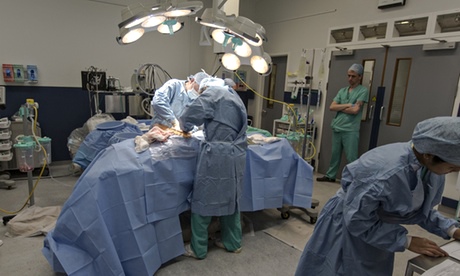

operation to retrieve kidneys from a donor ‘It is the most rewarding type of operation you can do. You know at once if it has worked.’ Photograph: Sean Smith for the Guardian


Following the journey of a transplant is a uniquely challenging journalistic exercise, not least because the timing of an operation is impossible to predict in advance and depends on human tragedy. There are very strict rules governing confidentiality, to prevent the family of the donor and the recipient finding out too much about each other. Contact between the two is rare, and only happens at the end of a very supervised process. To adhere to these rules, all names, locations and dates have been removed from this account, making this an uncomfortably detail-free article.


But there is a parallel desire from NHSBT to focus attention on the need to sign up new organ donors and to highlight the extraordinary life-prolonging effect of a successful transplant. Although there has been a 30.5% increase in transplants in the past five years, there are still more than 7,000 on the transplant list, and last year more than 1,300 people either died while on the waiting list or became too sick to receive a transplant. The process of signing up to donate is simple and takes only a couple of minutes online.


Earlier this year, the law was changed in Wales to introduce a system of presumed consent for organ donation, which will give doctors the right, in principle, to remove people’s organs when they die unless they have registered an objection. Supporters of the new policy, which will be introduced in December 2015, believe that it will save lives; opponents worry that it could intensify the anguish of some grieving families. France, Spain, Sweden, Italy, Belgium and numerous other countries have already adopted the system. In England, the debate continues.


By early evening, the final medical checks are done on the dying woman, and the nurse sends out a list of possible body parts that might be suitable for transplant to an organ donation coordinating hub in Bristol. He receives back a list of hospitals, caring for possible recipients, and begins to call consultants to tell them what is on offer, and to see if they want to accept it on behalf of a patient.


Until this is all in place, the family must wait, before the breathing tubes are removed and their relative is allowed to begin the process of dying. They are encouraged to go home for a while, before returning to sit in the depressing waiting room, drinking cherry cola and Ribena, watching a muted television in the corner. A homemade sign, decorated with a sketch of a fluctuating heartbeat line, promises: “Throughout Your Loved One’s Journey, There May be Ups and Downs, However We Will Endeavour, To Make It as Smooth as Possible.”
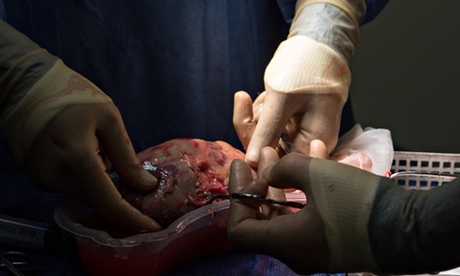

a kidney ‘We do it like a plumbing job. It looks nice on paper, but it is a major ­operation …’ a kidney just after its removal from a living donor. Photograph: Sean Smith for the Guardian


Staff know that this wait can be agonising and try to prepare them for it. “Sometimes they withdraw consent if the process takes too long. We do tell them the process takes a long time,” the nurse says. By 10.30pm, recipients have been found for the two kidneys, but no home has been found for the liver.


He begins instructing the retrieval team on this basis, but is interrupted by his mobile phone. “Really? That’s fantastic. Anne, you have made my day. That is amazing,” he says, smiling into the phone. “The breathing is fading a bit. We’ll do the extubation between 11.30 and 12 …” The surgeon in Birmingham who was previously offered the liver has changed his mind, and decided to accept it. “That’s good news for two reasons. It could save someone’s life; also it helps the family who are very keen for the donation to happen,” he says.


At around midnight, the breathing tube is removed from Mrs X’s mouth, and the family is called back to be with her for the final process. “I don’t do anything to accelerate her death. We ensure that she is comfortable, but we don’t do anything else.” She lies on the bed, with a pile of soft toys on her feet, breathing independently. There is silence apart from the whir of the air conditioning, and the high chirruping from medical equipment in the room, echoed by cheeps in the ward across the corridor, like electronic birds answering each other’s call, wearyingly unceasing.


Her eyes are shut. The nurse notes that the oxygen levels are dropping quite quickly. At some point in this hospital’s long history, someone decided it would be soothing to paint the wards with a lavender paint. Now the pale pink is criss-crossed with old plug sockets, bits of dried-up Sellotape, and endless bossy public health instructions, hand-shaped stickers that instruct visitors to “Stop and Wash! Do your bit!” and to “Switch It Off! Making Business Sense of Climate Change”. She dies surrounded by scuffed grey lino, bright yellow binliners, a box screwed to the wall dispensing white plastic gloves, breakfast trolleys pushed into the corner, and the orange glow of street lights outside, rain dripping down the windows.


Family members come out to the corridor, for a break from the pressure. Something is ending here, but not quite ending. Naturally, there is none of the joy of a maternity ward, but there is a sense of expectation, of new life beginning.


In the cool ante-room outside the theatre, the young surgical team are briefed on her medical details and told which organs should be retrieved. The last stage of life turns out to be very quick, and is over within 30 minutes. Doctors start removing Mrs X’s organs at around 1am. It turns out that the liver is not good enough to transplant, but the kidneys look in very good condition.


A beautiful procedure


Later that night, in another hospital, somewhere else, Mr Y is mentally preparing himself for a major operation, which has inevitably come without warning. He is lying in a room that he has to himself, still dressed, a thin hospital blanket pulled over his clothes, when I’m taken in to meet him at around 4am. He is awake, but was initially (understandably) not desperate to talk to me. The prospect of having a major operation you were not expecting to have just a few hours ago is dispiriting enough without being asked to describe how you’re feeling to a journalist in the early hours of the morning.


After a reassuring conversation with the surgeon, he is very obliging, however, and explains how he went to the doctor a few years ago with swollen legs and a puffy face, and discovered he had high blood pressure and that his kidneys were no longer working. He hadn’t realised anything was seriously wrong. “It is the silent killer,” he says. He has been on dialysis for two years.


He had worked as a warehouse employee but lost his job recently. In any case, dialysis had made work exhausting. “I’m always tired. I feel very weak and sleepy as well. Dialysis is very, very time-consuming. You’re stuck to a machine all the time. I don’t feel happy, but you get used to it, because if you don’t, you can’t survive.”


He has been looking for new work, but a lot of jobs he can’t apply for because the three weekly visits he needs to make for dialysis eat into his working hours. His illness also makes interviews complicated. “If you disclose your sickness, they will not call you back, because they think your performance will be low. But if you don’t disclose your illness and they find out, they can terminate your contract. You are stuck between two positions.


“My mind was not on transplants at all. The doctor told me that it would be difficult and I would have to wait a long time,” he says.


He regrets not having taken his health more seriously. “The car goes to an MoT; every six months, you should get into the habit of doing the same, visiting your GP. I didn’t go to the doctor. I should have gone to the doctor.”


He isn’t curious about the donor family or the circumstances that have made the organ available. “I don’t want to know anything. I just don’t want to know.”


This is not unusual, a consultant at the hospital explains. “They tend not to ask. I suspect it is because they want to dehumanise it a little bit – take the organ now and deal with the human side later. It is emotionally challenging as it is, to be called in for a transplant, without thinking about the donor family’s grief. There’s a lot to cope with already.”
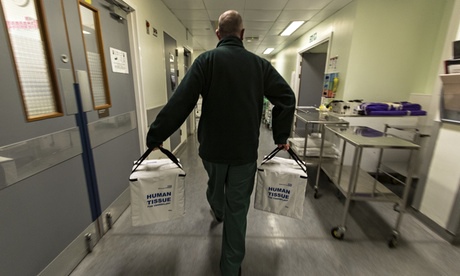

kidney courier The donated organs are taken for transplant … some 7,000 people in the UK are on the waiting list for a kidney transplant. Photograph: Sean Smith for the Guardian


The surgeon reports later that the procedure, which began at 8.30 the following morning and was over by 11.30, went “beautifully”. He was thrilled at the state of the kidney. “It was really a wonderful organ,” he says with unexpected delight.


His description highlights both the amazing simplicity of the process – pulling an organ out of one body and popping it in to someone else a few hours later – and the extraordinary sophistication required to make it work.


The host of the kidney has changed gender. It has left the body of the woman, where it has grown for the past five decades and been sewn into the body of a sick man. The surgeon could tell that the kidney was not in its first flush of youth – it had lost its pearly sheen, and there were traces of scarring – but it was functioning well. “The donor was a good donor. This was an excellent kidney, beautifully retrieved,” he says.


When the transplant box arrived, he had to check that it was the correct organ, coming from the hospital he expected, checking that it was the right kidney, as promised, and not the left one. The kidney was not ready for transplanting, so he worked with colleagues to trim it, remove all the fat, expose the anatomy, check the vein, the artery, the urethra, and repair anything that was damaged.


Transplanting an organ is less traumatic than removing one (several doctors use the word “harvesting”, although one corrects himself, apologetically: “Harvesting – I try not to use that word, it sounds like a 1970s cloning film”); the old kidneys are left in the body. The critical moment comes towards the end, when doctors release the clamps, the instruments that hold the blood flow, and allow the blood to rush into the new organ. “You don’t stop to think ‘this is fantastic’ and have a moment of happiness. It is a moment of attentiveness. You are too busy, you need to make sure you do a good job,” he says. “When you see the production of urine in recovery, that’s when we can start to relax, then things look good.”


Sometimes it can take days before the new organ starts functioning, but in Mr Y’s case, it was almost instantaneous. “When it works, I feel good. It is the most rewarding type of operation you can do. It is completely different from the feeling you have after a cancer operation, when the best you can hope for is that everything bad has been removed. This is something positive. You know immediately if it has worked. It is extremely satisfying.


“The speciality that I have the privilege to work in is the most exciting of any others – we are so exposed to the ethical, legal and emotional aspects. We are just immensely grateful to the families because it is extremely difficult to agree to donation when it is so sudden and so unexpected.”


That night Mrs X’s second kidney is also successfully transplanted into another sick individual. Her death has saved two lives.


Pretty incredible people


Things do not always go so smoothly. In a third hospital, Mrs Z, 53, who has been on dialysis for six years, has been called in at midnight to receive a new kidney. She has had a suitcase packed, ready by her front door for years, as she waits for the correct organ to come up. This is the fourth time she has been summoned; on the three previous occasions tests showed that her body was likely to reject the organ. She is calmly thrilled at the prospect of a transplant, which will free her from dialysis, and will enable her to make a long-postponed visit to her 90-year-old father in India.


She is at the end stage of kidney failure, and finds the thrice-weekly requirement to be in hospital for dialysis profoundly wearing. “Some days you feel depressed. You get emotional, very upset.” A surgeon comes in and draws a picture in ballpoint pen of how the operation will be done. “We do it like a plumbing job,” he says, explaining that it will take up to four hours. “It looks nice on paper, but it is a major operation. It takes one month to feel OK. Are you OK with that?”


She smiles and says she is. Staff have taken a blood sample to see whether there is anything to prevent the operation from going ahead. “It was very heartbreaking last time.”


Later that night, it turns out that the final tests have again shown a strong likelihood that she will reject the organ, and she is again sent home, with no option but to continue on dialysis.


Giving a tour of the dialysis unit at a busy London hospital, the clinical director of renal nephrology explains how exhausting the process is. There are 70 dialysis machines constantly in use here, over three shifts, seven days a week, cleaning the blood, sucking out its toxins, and returning it to the body. The process offers only the equivalent of 10% of normal kidney function.


“They will make light of it but these are pretty incredible people. It is hard work being on dialysis. It takes incredible patience. We circulate blood for four hours, which leaves them tied for four hours to the machine. During that time, we ask their heart and blood vessels to do things that are not unlike a 10-mile run for me. Then they have to go home on the tube, pick the kids up from school or go back to work. These are superhumans for what they endure,” he says. “The joy we get when people are transplanted is immense. It is a wonderful thing to see people get better, to see their quality of life go back up.”


He is undecided about whether England should follow Wales towards a policy of presumed consent. “Families often balk at the idea of somebody putting a knife to someone they barely think of as dead. I don’t think anyone would ever take an organ without consent. We want the public to tell us what to do; we want to know that the public is comfortable with what we are doing,” he says.


The assistant director of Organ Donation and Transplantation NHSBT, Anthony Clarkson, mostly wants people to discuss the issue with their families. “We know there is a reluctance to talk about organ donations among families – research shows that half of the population has never had this conversation. There are taboos around death. There is a reluctance to talk about this,” he says.


“For the revolution on consent for organ donation in the UK, we need it to become a normal part of end of life care, and we need it to become a normal part of society, where people expect to be asked about organ donation, and the expected response is that they will be a donor. People don’t talk about it enough.”


Ten days later, Mr Y is still recovering, but has come home after a week in hospital. He is still finding it painful to walk, and is a bit overwhelmed by the quantity of drugs he is required to take, but he hopes he will be well enough to start looking for work again in a couple of months.


He has had a very positive experience in hospital. “It started working straight away. It was amazing. The doctors answered my questions with dignity and respect. They are there to help you to live. The only question the doctor cannot answer properly is how many years the kidney can continue working.”


He still has no desire to find out anything about the donor whose organ has freed him from a life on dialysis. “I have the right to ask, but I decided not to. I’m a Christian. I feel it is a gift from God.”


Does it feel strange to be living with part of someone else inside? “That is the reason I don’t want to know anything about the source. It will play on my mind. I feel if I ask too many questions, I will get too much information. Somebody else’s body is in my stomach. Some people wouldn’t care, but I mind. I am not so keen to know. It makes me feel sad.”


• Join the NHS organ donor register at organdonation.nhs.uk or call 0300 123 23 23


Organ donation: A kidney donor dies – and brings new life to two people