hiding etiketine sahip kayıtlar gösteriliyor. Tüm kayıtları göster

30 Nisan 2017 Pazar

Ona Gritz: "I had spent more than enough time hiding and pretending"

There are ways to cover for the fact that you can’t run like the other kids, or skate, or climb fences, or ride your flowered banana seat bike without training wheels. My own strategy was to suggest alternatives, offering to bring out a board game, colouring books and crayons, or my brand new, unopened jigsaw puzzle with the picture of a farm scene on its box. If my friends countered by asking to play hopscotch, a game that would require each of us to stand first on one foot, which I could do fine, then on the other, which I couldn’t do at all, I’d act like the idea was too dull to consider. If they suggested we play cards, I’d say yes, but reluctantly, willing someone else to insist on shuffling since it takes two good hands to bend and riffle each half of the deck. More often I told them, truthfully, that I’d rather grab our dolls and play house or store or any other game of pretend.


Pretending, after all, was the thing I was best at. It was the magic that allowed me to inhabit any capable, agile, graceful body I chose.


In our crowded box of curled family photos there is only one picture that includes the leg brace I was made to wear because of my cerebral palsy, though even here it is barely visible. A slight bulge beneath the fabric of my pants, a hint of metal peeking from the hem, the single angled strap that attached it to my shoe. I’m three years old in the photo, the same age I was the first time I held it in my hand. “Oh,” I said. I’d seen posters for the March of Dimes with images of children leaning on crutches or sitting in wheelchairs, and now I saw that I was like them in some way. This struck me as nothing more than an ordinary fact. “Oh.”


Shortly after that picture was taken, my doctor decided I only needed to wear the brace in bed at night. Daytimes, it lived in the back of my closet, tucked in a brown paper grocery sack. My mother allowed me to leave it home whenever I slept at a friend’s house, or in its hiding place when a friend slept at mine. Maybe this was how I got the idea that my cerebral palsy could and should be kept secret. This, coupled with the fact that my father never mentioned it, and that my mother, when she did discuss it, said, “It’s nothing, hardly noticeable”, dismissively waving her hand. To me, my body was simply my body, the only one I’d known, and so I thought the brace was my disability. As long as I kept it out of sight, I fitted in with my friends.


“Let’s pretend we walk like people who limp,” Lisa Lowenstein suggested one muggy afternoon in our sixth summer. She slid off the stoop and began hobbling in a circle, and though the game made me uneasy, I got up and did my best to imitate her awkward moves.


Lisa paused to observe me. “Just walk like you always do,” she advised. “You walk like people who limp.”


“Oh,” I said, just as I had when I first saw the photo where I’m wearing my brace. Only this time my throat tightened around the word.


In middle school, I found it helped to carry novels in my backpack. That way, if my friends decided to pay handball at the park or zip around the neighbourhood on their 10 speeds, I could pull out my book and say, “I’m too caught up in this right now”, which, soon enough, would be true.


I also got good at finding the girls who were happy to sit inside, listening to records, and the few left who, like me, were slow to give up Barbies and other daydreaming kinds of games.
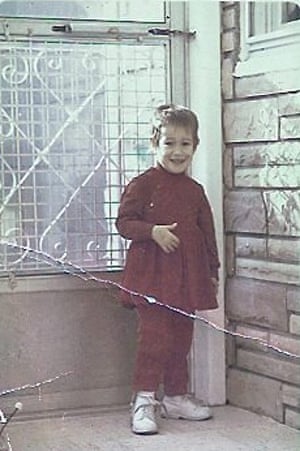


Ona, aged three, with the leg brace she had to wear.

Ona, aged three, with the leg brace she had to wear.

“What do you want to do?” Jody might ask me.


“I don’t know. You?”


“I don’t know.”


“Rock star wives?” one of us would finally ask, sighing like it was a last resort.


“I guess.”


After that we’d play for hours, immersed in the elaborate stories we created for Elton, Paul and beautiful grownup versions of ourselves.


Still, the next time Jody and I got together, whoever asked would be tentative about it, afraid the other would be the first to outgrow the game.


By high school, pretend games were no longer an option, unless you count pretending to have my period so I could sit on the sidelines in gym class. Or claiming to be too behind in homework to join my friends at the ice rink. Or acting as though my dislike of disco was the only reason I stood pressed against the wall at dances while the other girls mastered those perfectly synchronised steps.


“Why don’t we go to the movies?” I was always the one to suggest. There, in the comforting darkness, all I had to do was sit perfectly still, along with everyone around me. Row by row by row, we imagined together, lost in the drama of fictitious lives. The movies offered a means of playing pretend that was still sanctioned, a way to be social that asked nothing of my faulty limbs.


For college I chose a small, artsy school where the only team sport offered was Ultimate Frisbee and there were signs posted on the bulletin boards throughout campus that proclaimed It’s Okay to be Gay. I extrapolated from this that here, in this heady oasis, it was OK to be different. Among my classmates were girls with unshaven legs, boys who wore lipstick, kids of both genders with spiky magenta hair and splatters of safety pins on their clothes. Still, while I admired these outliers for their boldness and originality, I hid my uneven legs under long gauzy skirts in my usual attempt to blend in.


If my new classmates noticed my limp, or my childhood friends had seen through my excuses, they were kind enough not to say so. This allowed me to believe my own fabrications. I see it now as a wilful and instantaneous form of amnesia. As soon as I succeeded in avoiding a physical challenge or a potentially embarrassing moment, the memory, along with any thoughts about my disability, dispersed.
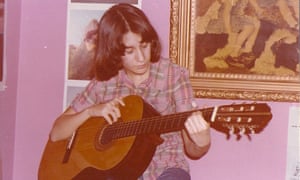


The young Ona: ‘If my new classmates noticed my limp, they were kind enough not to say so’


The young Ona: ‘If my new classmates noticed my limp, they were kind enough not to say so.’ Photograph: Leonard Gritz

Even so, as I settled in at college, an unnamed tension left me. I now lived in a place where I could curl up with my books hour after hour, not because my friends were off having adventures I couldn’t keep up with, but because this was the adventure. I majored in literature and had plans to become a writer. As I read and honed my craft, it felt as though the body, my body, with its limits and awkwardness, was the least of who I was. Finally, I could live the life of the mind. How perfect was that? Except, of course, it was only part of the story.


One afternoon in the campus library, I highlighted this line in my slim paperback copy of Virginia Woolf’s A Room of One’s Own:


“Women have served all these centuries as looking glasses possessing the magic and delicious power of reflecting the figure of man at twice its natural size.”


I marked the sentence, having brushed past and already forgotten this, from earlier in the same chapter, about the fact that so many men have written books about women:


“…it was flattering, vaguely, to feel oneself the object of such attention provided that it was not entirely bestowed by the crippled and the infirm…”


Had I, a 19-year-old crippled girl, flinched when I read this? Had it stung? I don’t know. I’d forgotten those words existed, and only discovered them now, decades later, while searching for the looking glass quote that has stayed with me all this time. This was precisely how my self-protective amnesia worked. Virginia Woolf devalued people like me in a chapter about the importance of confidence? But I loved Virginia Woolf, so the insult quietly left through some back door in my mind.
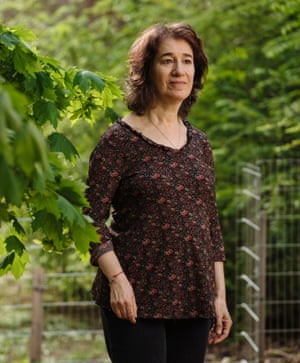


Ona at home


Ona at home: ‘A poetry workshop, I sat beside a man named Dan.’ Photograph: Gene Smirnov for the Observer

What did interest me that afternoon was the metaphor of the mirror, and the idea that men used us to build themselves up. I’d recently joined a feminist consciousness-raising group, and had begun insisting, sometimes petulantly, that I be referred to as a woman rather than a girl. When I marked Woolf’s words it was because they struck me as poetic and true. What I couldn’t yet see was that I had begun to use men similarly, not to reflect me at twice my natural size but as attractive enough. As OK.


This is where my college life wasn’t all disembodied intellect. I had also begun seeking validation through sex.


Here is another truth. I wasn’t at all beyond the prejudices expressed in Woolf’s forgotten passage. The young men I pursued had to be not just smart, creative and interesting, but handsome too. It went without saying that they were also able-bodied. Everyone I knew was able-bodied. There may have been a handful of other students with disabilities on campus, but I paid them no mind.


I chose men for the wrong reasons and, in turn, none of them chose me for anything more than an occasional intimate night. Then, when I was 25, I met Richard. He was athletic and handsome in the way of the popular boys who were completely out of my league in high school. The two of us had very little in common. Richard’s passions included skiing and mountain biking, and though I could never join him on either terrain, he was passionate about me too.


Richard was earnest, playful and affectionate. He was also hot-tempered and impossible to please. Nonetheless, I invited him to move into my apartment. Soon after, we got engaged. All the while, my friends looked on warily.


One friend told me she had always imagined that the man I’d wind up with would be someone she found amazing.


“Someone smart and really kind. The type of guy I’d love for myself, only I’d be so happy for you I wouldn’t be jealous.”


She watched me carefully and I realised that her comment had not just one subtext, but two. First, and most obvious, Richard, who was more conventional and less intellectual than my previous love interests, didn’t meet her expectations. Worse, it seemed she’d always believed that only someone amazing and really kind could possibly choose me. What hung in the air, unspoken between us, was the reason she thought it would take such a remarkable person to love me. I was defective. This made me cling to my handsome boyfriend all the more.


One weekend, while Richard was off mountain biking with friends, I decided to spend an afternoon in the city. After a movie and lunch at a cafe, I found myself following a strange woman down a winding street.


Is that what I look like? I wondered, carefully studying her from a distance. She’s pretty enough, but how much does her limp detract from that?


Over the following weeks and months, for the better part of a year, I kept an eye out for women with physical disabilities. When I found them, I trailed them. For a while, my curiosity remained on the surface. Could women who moved like me still be considered attractive? Did I find them so? But as I continued my stalkerish experiment, something shifted. I began to want to know about their lives.


The best way I knew to process this, as with most issues I grappled with, was through writing. Alone at my desk, I entered into a kind of dialogue with these strangers I was too reticent to approach in person. I did this by writing a poem in the voice of a nonverbal quadriplegic woman who was in the news at the time.


By now I had completed an MFA in creative writing and had found my place in a community of poets. One winter afternoon, I ran into an acquaintance who invited me to take part in a poetry reading and panel discussion for Women’s History Month. Each participant would be from a different cultural background, she explained. She’d already lined up an African American poet, a Latina poet, and she wanted me there to represent disability. My initial response was to take a step back when she said this. But then I felt a stirring of interest.


“I’ll be there,” I heard myself say.


I had the persona poem, and one about my mother helping me on with my nightbrace, and a third, titled What the Mirror Knows, that used my partial disability as a symbol for other ways I felt divided. At the reading, I surrounded these pieces with poems that made no mention of disability and that, to my mind, proved I led a perfectly normal and interesting life.


The panel discussion ended with questions and comments from the audience. There was one woman, seated a few rows back, whose insights caught my attention. She referred to writers I loved, and made connections that surprised and intrigued me. Afterwards, as I was gathering my things, I looked up to find her waiting to talk to me.


“I really liked your poems.”


“Thanks. I liked hearing what you had to say.”


We smiled shyly at each other. “Well,” she said, “I should probably use the bathroom before I head home.”


It wasn’t until the woman, who had introduced herself to me as Hope, started to walk away that I noticed her palsied gait. What could I do but follow her into the restroom?


Cerebral palsy is caused by damage, most often at birth, to a part of the brain that controls motor skills. There are various forms, and it affects people to widely differing degrees. Many don’t have enough balance to walk or need crutches to do so. Some have uncontrollable tremors. Some are intellectually disabled, while others are assumed to be because their facial muscles are affected and their speech is unclear.


Hope and I both have relatively mild cases and forms of the disability that affect only half our bodies. She has diplegia, which means the palsy is just in her legs. I have hemiplegia, which means the split is vertical. The muscles of my right limbs are tight and underdeveloped, and the fingers of that hand lack the dexterity, tactile sensitivity and fine motor skills of those on the left.


“It’s lucky she’s left-handed,” a doctor once told my parents during a consultation, “since she’ll always have to depend on that side.” I was nine at the time, old enough to resent being spoken about in the third person, and also to see the flaw in his logic. Maybe I was born left-handed, maybe not. The body learns to compensate, just like the mind.


Years later, I read an article suggesting that right hemiplegics are likely to be more creative and less practical than our counterparts whose disability is manifested on the left. The hypothesis is based on left /right brain differences. Left hemiplegics have undamaged left hemispheres, which is where pragmatism lives. Meanwhile, we right hemiplegics need to rely on our intact arty and imaginative right hemispheres.


The theory appealed to me. It fitted me so well. But then, just as I understood at nine years old, when it comes to cause and effect it’s hard to assess the true order. Certainly, my cerebral palsy and my drifty, daydreaming ways are connected. But to what extent is this due to the physical brain as opposed to the simple desire to escape the confines of a limited and disappointing body by imagining it away?


Hope and I spent several hours in a coffee shop that late afternoon, commiserating about what it felt like for each of us to be the one kid on the block who couldn’t run, climb fences, or ride a bike without training wheels. I learned I wasn’t the only one who coped by making excuses, hiding behind books, and living too much in my head. This was the first time either of us had ever spoken about these experiences. It was also the first time that I could remember when I wasn’t expending effort and energy to pretend my cerebral palsy didn’t exist.


While Hope took the fuel of our connection and almost immediately got involved in disability activism, I went home to Richard and my belief that his love for me meant that my cerebral palsy was, as my mother had assured me all those years ago, nothing, hardly noticeable.


A few months later, Richard and I married. With Hope now in my life, I had a growing consciousness about disability that came close to acceptance, but it was a place I visited, not yet one where I lived. More real to me was my marriage licence, which I saw as a kind of passport. It proved that where I really belonged was in the enviable world of the unscathed.


Something I had wanted since I was a child trying to coax my friends away from their games of hopscotch and tag to play house with me was to one day be a mother. Six years into our marriage, Richard and I agreed the time was right.


Through my pregnancy, my midwife never once mentioned my cerebral palsy, so neither did I. She did suggest a number of tests to rule out potential birth defects. Always I declined, feeling vaguely insulted, though I couldn’t have said why.


The daily and very physical tasks of caring for a baby forced me to recognise my disability for what it actually was


Our son Ethan was perfect: seven-and-a-half pounds, 14 inches, with active limbs, the right amount of digits, and a hearty cry. For the first hours after his birth, Richard and I sat together in the hospital room and stared at him in wonder. Eventually, a nurse came in to help me with breastfeeding.


“You need to lift your elbow so his head sits a little higher. Not working? How about we try the other side? Can you shift him so he’s in a better position? Let me show you something called the football hold…”


Nothing we tried worked so she brought in another nurse and then a third. They piled cushions around us until I could finally hold Ethan at the right angle and height.


“There we go,” the nurses said once he began to suckle.


“Problem solved,” Richard put in.


This tiny new person nuzzling at my breast depended on me. Yet, somehow, as I’d drifted through my pregnancy, daydreaming as usual, it had never occurred to me that I wouldn’t be able to meet his needs. Now, as I touched his cheek with the one hand that could really feel him, I understood that I didn’t have the balance or coordination to be this fragile, trusting person’s mom. I may have learned early in life to cover for being unable to run, skate or climb fences, but there would be no covering for being unable to safely bathe a newborn, carry him on stairs, or walk any distance while he flailed in my arms.


From that moment on, the daily and very physical tasks of caring for a baby forced me to recognise my disability for what it actually was. A set of very real and specific limitations I had to either work with or around. There were constant puzzles to solve, along the lines of, I’ve arrived home with a baby and a bag of groceries in his carriage and now I find that the one elevator in our apartment building has broken down. What do I do? Often the only answer was to ask for help from a neighbour. The first few times I did so, I stammered and felt myself flush. Then one day I simply stopped feeling apologetic. So, I had a disability. It was what it was.


Meanwhile, Ethan had begun reaching his perfect pudgy little arms towards me the moment we were together in a room. His absolute acceptance, despite my funny walk and clumsy touch, struck me as both lovely and familiar. It reminded me of my three-year-old self, noticing my brace in a photo without judgment.


It’s tempting to end the story here with the happy ending of a renewed self-acceptance. I would, except it gets even better.


It’s neither a surprise nor a tragedy that my marriage to Richard ended when Ethan was still small. Richard remains active in Ethan’s life and the divorce proved to be the best choice for us all.


One holiday weekend, when Ethan was eight, he stayed at Richard’s while I went to a writers’ retreat. There, in a poetry workshop, I sat beside a man named Dan, who had a soft-spoken gentle manner and, I could tell from his responses to poems, an incisive mind. When he brought out his own poem to be critiqued, I liked him even more. His piece had rhythm, wit and heart. This was definitely someone I wanted to know.


I watched him read and take notes by tapping on a braille laptop, his guide dog sprawled at his feet. After the workshop ended we stayed in our seats an extra few minutes talking, then he slipped his hand into the crook of my elbow, and we strolled together to the next event. I wondered if he noticed the lilt in my walk, and actually hoped he did. I wanted Dan to know that, along with poetry, disability was something we shared.


A week later, Dan called me and we stayed on the phone for four hours. In many ways, it was like my first conversation with Hope in the coffee shop. We were so happy to share our stories with each other, and while, in this case, the details of our disabilities bore no resemblance, when I talked about the long and circuitous road I took to making peace with mine, he let me know he’d been there too.


Still, I thought about how, as a young woman, I’d considered my disability a cosmetic flaw, akin to having a bad complexion or being a bit overweight. My concern had been whether people noticed. Now, it occurred to me what an indulgence that was. Born blind, Dan never had the luxury to pretend.


When we met, Dan and I lived a hundred miles apart. This meant we only got to be together on weekends. The rest of the week, we talked on the phone, building our relationship on a foundation of ideas and conversation. From the start, I was captivated by how smart he was, and by how intently he listened. Of course Dan listens well. Hearing is the sense he relies on the most. But I’d never met a man who did so with such presence and interest, and somehow I knew that this had more to do with who he was and what he valued than with the fact that he was blind.


Long before Dan and I got to know each other, he’d begun to write beautifully and candidly about his life as a blind man. He also had a community of friends who were writers and artists with disabilities. I wanted in, and they embraced me without hesitation. Soon, I began to seriously take on disability as a subject in my work. It felt scary at first, a little like pulling my childhood brace out of the closet and putting it on display. But I had spent more than enough time hiding and pretending. I wrote as truthfully as I could about how it felt to live in my particular body, which allowed me to see how universal my experiences actually were.


Dan and I were married on a bright, breezy day in June. Hope slept on our couch on the nights bracketing our wedding day. Ethan stood with us at the altar, holding my palsied hand.


We have been together for 12 years now. The work we do includes disability awareness presentations, literary readings and panel discussions about disability poetics. During one such event at a large poetry festival, a member of the audience, a man with a visibly awkward gait, took the microphone during the Q&A portion and asked in a shaky voice, “How did you learn to like yourselves?”


There were four of us up on the stage and for a long moment we were silent, touched by the vulnerability in the question. I thought of Hope who’d approached me after hearing my first tentative poems about disability. I thought of Dan and our community of disabled friends, including those with us up on that stage. It struck me that, in some way, we were each a pleasing and accurate mirror for the others.


“Do you like us?” I asked.


The man nodded.


“Well, that’s a start.”


Ona Gritz is the author, most recently, of On the Whole: A Story of Mothering and Disability (Shebooks, 2014) and the poetry collection Geode, which was a finalist for the 2013 Main Street Rag poetry book award. Her essay, It’s Time, which appears in the Rumpus, was named a Notable Essay in Best American Essays, 2016


Ona Gritz: "I had spent more than enough time hiding and pretending"

27 Ocak 2017 Cuma

Top Natural Antibiotics Hiding In Your Kitchen

The over-use of antibiotics may lead to many unwanted side effects. According to healthline.com,  the overuse of antibiotics are affecting people’s health in several ways:


  • Antibiotics may increase fatal diarrhea cases in kids

  • Antibiotics also upset sensitive gut flora

  • Antibiotics kill the good bacteria in your body too

  • Antibiotics increase the cases of untreated gonorrhea

Besides, antibiotics also make the drug and hospital cost more expensive.


So instead of taking antibiotics until you get sick, it’s better to build up your immune system in advance, with the help of some natural foods and herbs, that with antibacterial and anti-viral properties to protect you against diseases.


These foods and herbs are known as the natural antibiotics, they help the balance of the good bacteria in your body and also cleanse your blood naturally without any side effects.


Actually, these natural antibiotics are available to you as they are common ingredients in your kitchen.


Top Natural Antibiotics In Your Kitchen


Spices and Herbs: Oregano, thyme, cinnamon, turmeric, rosemary, basil, cloves, anise, ginger, fennel, cayenne, chili peppers, garlic


Fermented foods: Kim chi, probiotic yogurt, raw pickles, apple cider vinegar


Honey and coconut oil are also great ingredients to boost your immune system and help you fight infections.


Vegetables such as onion, broccoli, kale, and cabbage have been shown effective as disease fighters.


So include these healthy foods into your diet, for a stronger body and system. Here is a sample recipe you can use:
The Recipe of Master Tonic Remedy


Ingredients:


  • 700 ml organic apple cider vinegar

  • 1/4 cup garlic (chopped)

  • 1/4 cup onion (chopped)

  • 1/4 cup ginger (grated)

  • 2 hot peppers

  • 2 tablespoons turmeric powder

  • 2 tablespoons grated horseradish

Note: Try to use fresh and organically grown ingredients for the best result.


Directions:


Put all of the ingredients except apple cider vinegar into a bowl and mix them well.


Transfer the mixture to a jar and add apple cider vinegar to make sure all the ingredients are covered.


Close the jar and shake it. Keep it in a cool place and avoid sunshine.


Shake the jar for a while everyday for 2 weeks.


The tonic is well for use, store it in amber bottles.


How to Use:


Take 1-2 ounces of the master tonic, swish and swallow, 2-3 times a day.


Sources: ourhealthyvision.com, myhealthwire.com, seekingfit.com


Also Read:


9 Natural Antibiotics That Are More Effective Than Prescribed Drugs


11 Healthy Foods That Can Block Inflammation and Ease Pain


Top Natural Remedies That Can Help Prevent and Cure Flu and Cold


Top Natural Antibiotics Hiding In Your Kitchen

20 Ocak 2017 Cuma

6 Surprising New Places Nuts Are Hiding

My younger son has food allergies and I’m absolutely obsessive about helping him steer clear of peanuts and tree nuts. Yet somehow, last month, I brought him home a pistachio sandwich.


Let me explain: I ran to the deli to buy chicken salad, but it was next to a salad with nuts. Trying to avoid that cross-contamination risk, I pivoted and grabbed Gus, who is 10, a slice of an Italian Combo hero, stupidly without asking what was in it. One bite in he said, “My mouth feels itchy and numb.” I ripped apart his sandwich and found a meat dotted with green flecks…oh no, pistachio? A quick call to the deli revealed he had eaten mortadella—an Italian pork studded with one of his worst allergens.


Thankfully, after an injection of epinephrine and a few hours in the ER, Gus was fine. But my husband and I were traumatized. Where else were there nuts lurking? Raising a child with a food allergy sometimes feels like being a hockey goalie, to use an analogy from Gus’s favorite sport: You’re always guarding against not only the obvious threats (that Thai takeout) but also the surprise wraparound ones you never see coming (nut meat, I’m talking to you).


And, in a way, having a food allergy is a paradoxical health problem: You are perfectly healthy. And yet the wrong food, in the wrong amount, without prompt administration of the right amount of epinephrine, can kill you. To make sure that we know all the wild cards out there, I consulted Sujan Patel, MD, an allergist/immunologist at New York University Langone Medical Center in New York, and David Stukus, MD, a Columbus-based spokesperson for the American College of Allergy, Asthma, and Immunology.


Chili


In 1986, a freshman at Brown University tragically died after she ate restaurant chili thickened with peanut butter. More recently, a 28-year-old dad in England reportedly died from anaphylaxsis after having a chili burger that likely contained peanuts. PB may not be a classic ingredient in this comfort food, says Dr. Patel, “but with chili cook offs and all kinds of ways to prepare things, you shouldn’t assume it is safe.”


RELATED: 31 Everyday Things You Can Be Allergic to


Still, the even more common danger in Mexican joints is the mole sauce. While mole’s most famous ingredient is chocolate (itself a potential disaster for the nut-allergic), peanuts or peanut butter may also be in the mix. “Sauces in general are dicey,” warns Dr. Patel, adding that Indian and Thai cuisines are particularly tricky. “Indian cooking uses cashews and almonds made into a paste and then used as a thickener.”


French fries


Most frites are a-ok, but when grabbing them out, do ask about the oil. Peanut oil is the go-to at some chains such as Five Guys, as well as smaller restaurants. “The interesting thing about peanut oil,” says Dr. Patel, “is that when it’s made in the U.S. it is so refined that almost nobody with a peanut allergy would react to it. But the problem is we don’t know if it is one from China, which are much less refined. We don’t tell people this because we don’t want them to take a chance.”


My family got stumped by cottonseed oil on a trip to Florida. (“Siri, is cottonseed a nut? Help!”) Nope, cottonseed oil, I’ve since learned, is not a nut, though it’s pretty terrible for your health.


Deli meat


My son’s kryptonite—mortadella—is a fancy Italian bologna that was banned from import to America for years due to an Italian outbreak of African swine fever, according to The New York Times. More expensive than bologna and speckled with fat and pistachios, it isn’t a big seller in the U.S (which almost explains how I could be half Italian-American, raised on antipasto spreads, and never heard of it). “A real fluke,” is how Dr. Patel described my son’s close call. And yet in 2016, BJ’s Wholesale Club issued a recall of deli meats for undeclared pistachios; they had been sent Citterio’s Mortadella by mistake and sold it—along with other meats sliced on the same equipment—without listing pistachio on the labels.


So how do you make sure your cold cuts don’t come with an unwanted side of nut residue? “Ask the person at the counter about any potential source of cross contact,” advises Dr. Stukus, who is also an associate professor of pediatric allergy and immunology at the Ohio State College of Medicine.  And if they’re unsure, steer clear and opt for a prepackaged lunch meat with a nut-safe label.


Cocktails


Better ask what’s in that signature cocktail before you knock it back. Major vodka makers now sell bottles infused with hazelnut, almond, and other tree nuts. Frangelico gets its flavor from hazelnuts and Nocello from walnuts. And here’s a who knew: Many gins, including Bombay Sapphire, are flavored with almonds. Not even beer is completely safe. Brown ales may contain peanuts and/or macadamia, walnut, or other tree nuts.


Pet food


Is your toddler at the stage where she puts everything in her mouth? If she’s allergic to peanuts or tree nuts, watch out for your dog food, warns Dr. Patel. Pet foods are not subject to The Food Allergen Labeling and Consumer Protection Act—a law mandating that food labels clearly list out in plain English if they contain any of the top eight most common allergens (peanuts, tree nuts, milk, eggs, wheat, soy, shellfish, fish). But a scan of that puppy chow label should alert you to peanuts, he adds. (When in doubt, call the manufacturer.) Bird food almost always contains nuts, or has a nut warning. Our family’s solution is to buy food-grade sunflower seeds (labeled as nut-safe) for our outdoor feeders.


Gluten-free treats


A gluten-free cupcake or bread may seem harmless for all, but don’t be fooled: It can pack lupin, “a legume frequently used as flour in gluten-free products that can cross react with a peanut,” says Dr. Stukus. He notes that there have been many reports of people with peanut allergies having reactions from lupin. Also watch out for almond flour, sometimes used to hold things together in G-free sweets.


Another 2017 concern? Nut butters popping up in unexpected places. “I had a mom whose child had a reaction to kale chips,” shares Dr. Patel. “Randomly, they were made with cashew butter.”


To stay one step ahead, read labels every time (ingredients on familiar products can change). And, as I learned the hard way, always ask, even when it seems unlikely that a dish would contain nuts. When it comes to managing food allergies, you can never be too careful. My son knows this well: Hand him a banana and he’ll ask you, “Are there nuts in it?”


6 Surprising New Places Nuts Are Hiding

19 Ocak 2017 Perşembe

11 Unexpected Places Mold May Be Hiding in Your Home

When Dana Chianese noticed a musty smell coming from her son’s Sophie the Giraffe teether, she decided to cut it open. Inside the popular baby toy, she discovered a “science experiment”: The latex figurine was lined with “smelly, ugly” mold, Chianese, a pediatric dentist, recently told GoodHousekeeping.com—even though she had always cleaned it according to the instructions (with hot, soapy water and a damp sponge) and never submerged it.


She’s not the only mom to make that disconcerting discovery: Last February an Amazon customer posted a photo of the inside of her child’s Sophie, also covered in mold. Yikes.


But allergist Janna Tuck, MD, a spokesperson for the American College of Allergy, Asthma, and Immunology, isn’t surprised by these reports: “Teething infants drool a lot and I think it would be impossible to keep the inside of a well-loved Sophie completely dry,” she told Health via email. “Mold can grow on almost any surface if there is enough moisture.”


RELATED: 20 Allergy-Control Products to Sneeze-Proof Your Life


The good news is that a moldy chew toy isn’t as risky as it sounds: “While disgusting, the amount of mold in a toy would not likely cause significant harm unless the child has an immune deficiency or a mold allergy,” says Dr. Tuck, who runs a private practice in Cape Girardeau, Missouri.


The not-so-good news? Toys aren’t the only unexpected objects that can harbor fungi (mold is a type of fungus). Mold may be lurking in your washing machine, dishwasher, blender, or refrigerator, says Dr. Tuck. It can be found in the soil of potted plants, on ceiling fans, and in window AC units. In your bathroom, it might be growing in your toilet, sink—even in the bristles of your toothbrush, or inside your electric toothbrush. 


When mold grows in hidden places, it can cause real problems for people who are allergic. “They can suffer with allergic rhinitis symptoms,” Dr. Tuck says, such as itchy eyes, congestion, runny nose, and sneezing. Or the mold may worsen their asthma symptoms.


RELATED: 31 Everyday Things You Didn’t Know You Could Be Allergic To


So what can you do to keep your home fungi-free?


To reduce the growth of mold in your washing machine and dishwasher, you can regularly run the “clean cycle” with diluted bleach. Most manufacturers recommend monthly cleanings, or whenever the machine begins to smell musty, says Dr. Tuck. Check the owner’s manuals to see exactly how much to dilute the bleach before using. “Vinegar is a very good substitute,” she adds. “I personally run vinegar in my dishwasher.”


When you’re taking a bath or shower, always use the vent in the bathroom. Also be sure to turn on the vent in the kitchen whenever you’re cooking and washing dishes, says Dr. Tuck, “to reduce spikes in ambient humidity.”


After you use any food prep vessel (like your blender), clean it promptly and dry it fully, so no moisture is left sitting inside. And replace your toothbrush every three months, says Dr. Tuck.


Another place mold likes to hide: “cold” spots in your home. If you have rooms or closets that seem cooler than the rest of the house, leave the doors open to improve air circulation, and help prevent condensation. Leaving the fan in your central heating/cooling unit on at all times can help as well. ”Mold needs water to grow. Anything you can do in your home to reduce humidity, condensation, or pooling of water goes a long way in reducing mold growth,” says Dr. Tuck.


11 Unexpected Places Mold May Be Hiding in Your Home

25 Temmuz 2016 Pazartesi

Lyme Disease Could be Hiding behind a Dementia Misdiagnosis

Dementia is one of the most common medical complications that older adults face. In fact, 33 percent of seniors die as a result of Alzheimer’s or dementia. Therefore, it is no wonder that physicians immediately suspect dementia when people 65 or older begin to exhibit certain issues such as foggy memory and mood changes. However, as a case involving songwriter and actor Kris Kristofferson recently showcased, it is not wise to simply accept a dementia diagnosis without looking into other health problems that cause similar symptoms.


An in-depth interview with Rolling Stone recently revealed that Kristofferson had been erroneously treated for dementia for several years. During this time, his cognitive issues continued to worsen, including brain fog, being unable to keep track of conversations and constantly forgetting the names of people around him. Problems of this nature are commonly associated with dementia, so it took a long time for a doctor to question whether or not Kristofferson had been diagnosed correctly. After a test for Lyme disease, it became clear that the songwriter had never had dementia at all.


Unfortunately, the treatment that Kristofferson received for dementia actually caused a lot of his health issues. This showcases yet again why it’s so important to secure the proper diagnosis. According to Kristofferson’s wife, Lisa, it only took three weeks of being treated for the proper condition for him to recover a lot of his previously missing cognitive skills. Therefore, always ask questions, especially when you are faced with such a serious, life-altering condition. Remember that you do have other options, and it is vital not to blindly start any new treatments without doing some research first.


At least 300,000 people in the U.S. are believed to currently have Lyme disease, but the CDC has confirmed that cases are underrepresented due to issues such as a misdiagnosis. It is likely that many people do not get diagnosed because the earliest symptoms of Lyme disease, which include headaches, muscle pain, swollen lymph nodes, chills, joint pain and a fever, are often blamed on influenza instead. If you have any combination of these symptoms with a rash, though, it is imperative to go to your doctor right away and get checked for Lyme disease.


Infected ticks spread this medical condition, and it is surprisingly common for someone to be bitten without being aware of it. If Lyme disease goes untreated, the symptoms will progressively get worse. New issues such as irregular heartbeat, short-term memory problems, joint pain, Bell’s palsy and neck stiffness may appear within a few weeks or months of the tick bite.


Of course, the CDC recommends using an insect repellent that contains permethrin or DEET for protection against ticks. As we all know, this is akin to purposefully poisoning yourself with a neurotoxin. However, even the CDC has acknowledged that certain natural products can keep ticks from biting you. The best natural option appears to be oil of lemon eucalyptus, which has been proven to be effective for up to six hours. As we’ve previously reported, you may also receive the same level of protection by utilizing essential oils.


Although studies have shown that at least 300,000 Americans have Lyme disease, only 30,000 new cases are reported each year. In other words, the diagnosis rate is approximately 10 percent. This highlights how under-diagnosed this medical condition truly is and how critical it is to go to the doctor if you have any reason to believe you are experiencing the symptoms of Lyme disease.


Sadly, if you have been diagnosed with Lyme disease, you can expect a rough road. No one is ever cured of this medical condition, but there are several natural things you can do to help improve your quality of life. Mindfulness meditation is a great place to start. If you combine this with having a dietitian tweak your diet, it is possible to minimize flare-ups.


Author Bio


Jade Rich currently works at a Skilled Nursing Facility and Inpatient Rehabilitation Center. Her primary focus is providing elderly care, and she has worked with several dementia patients. Jade enjoys researching new medical information, and she was fascinated by Kris Kristofferson’s case and what it might mean for future dementia and Lyme disease diagnoses.


Lyme Disease Could be Hiding behind a Dementia Misdiagnosis

25 Eylül 2015 Cuma

11 Natural Powerful Antibiotics Hiding In Your Kitchen

Antibiotics are medication employed to deal with and prevent bacterial infections. They are the most over-prescribed medicines today. This is unsafe due to the fact too significantly use of antibiotics prospects to antibiotic resistance. Nature is full of natural antibiotics as effectively, such as herbal treatments, greens, and straightforward house remedies of all kinds. Here are some normal antibiotic, which you almost certainly have in your kitchen, and you vsn deal with the ache oneself naturally.


eleven Nature Strong Antibiotics Hiding In Your Kitchen


Oil of Oregano
Oregano oil identified greatest for its bacteria-killing talents. It includes antioxidant, antiseptic, antiviral, antifungal, anti-inflammatory, antiparasitic and ache-relieving properties. Study found that oregano oil’s germ-killing properties have been practically as successful as most antibiotics.


Echinacea
It is employed for treating aging and a broad selection of infections. It also treat open wounds, as effectively as blood poisoning, diphtheria and other bacteria-connected illnesses. Now a days, it is employed primarily to deal with colds and flu.


Additional Virgin Coconut Oil
Coconut oil has naturally anti-fungal and anti-microbial properties and is packed with antioxidants. It improve your immune system, stability thyroid, cholesterol, and blood sugar levels, and even boost brain function.


Cayenne Pepper
Cayenne pepper is also identified as capsicum. It is a quite powerful spice that has incredible healing power and antibiotic effects. It is not only an antidote it is a single of the most effective natural antibiotics.


Garlic
Garlic gets most of its remarkable antibiotic properties from a single single compound known as Allcin. This effective compound has a substantial degree of antioxidants, which fights with bacteria and infection.


Turmeric
Turmeric root is from ginger loved ones and has some actually incredible wellness benefits due to getting antibacterial action. Turmeric antibiotic properties are employed to help destroy bacteria that cause diseases and market the body’s normal defenses. Its Curcumin compound gives Turmeric most of its well being benefits.


Ginger
Ginger’s natural antibiotic property helps prevent and deal with many wellness difficulties induced by bacteria. The phenol compounds like shogaols and gingerols are the primary medicinal part in the root that contribute to the anti-inflammatory benefits as nicely as lowering cholesterol.


Manuka Honey
Manuka Honey can destroy a broad variety of pathogens like MRSA and flesh eating bacteria. It also consists of antimicrobial, anti-inflammatory and antiseptic properties. It ability to battle infection on a number of levels, generating it far more challenging for bacteria to build resistance to it.


Raw Apple Cider Vinegar
Apple cider vinegar (ACV) has antibiotic and antiseptic properties, it naturally alkalizing your technique, and can support you in everything from managing your fat to reducing cholesterol and your risk of cancer.


Cabbage
Cabbage is a potent all-natural antibiotic that can battle against cancer disease. Several folks do not know that cabbage has a lot of vitamin-C. One cup of cabbage juice provides 75% of vitamin-C per day as needed.


Onion
Onion reduce irritation and heal infections. It has effective compound named quercetin in onions that stopping cancer. Onions get rid of cost-free radicals, thereby decreasing your risk of building gastric ulcers.


Sources:


http://www.top10homeremedies.com/news-facts/top-ten-natural-antibiotics.html


http://www.care2.com/greenliving/frequent-food items-herbs-with-antibiotic-properties.html


http://www.doctoroz.com/movies/effective-natural-antibiotics


A lot more From Author:


11 Natural Powerful Antibiotics Hiding In Your Kitchen

22 Şubat 2014 Cumartesi

Is The CDC Hiding Data About Mercury, Vaccines, And Autism?

You know the rule. The solution is, “No.” But the assertion has gone viral on social media thanks to the zombie-like resurrection of a lengthy-advised, oft-debunked story that the US Centers for Ailment Control (CDC) is hiding its own data linking autism and mercury in vaccines. If you see such assertions in your timelines and newsfeeds (sample headline: “CDC Caught Hiding Data Exhibiting Mercury in Vaccines Linked to Autism”), send the disseminators here. Why? Read through on.


In 1999, four authors affiliated with the CDC presented an abstract at a conference … a CDC conference for fellows of its Epidemic Intelligence Service (EIS). The EIS, by the way, serves as the Interpol of infectious ailment, monitoring down elusive perpetrators globally and stopping them ahead of they can harm yet again. In other words, they are individuals who dedicate their lives to conserving lives. Every single 12 months, the system also sponsors a conference. And 1999 was no exception.


In 1999, one Thomas Verstraeten and 3 colleagues submitted an abstract for the EIS conference. It was preliminary, as numerous, a lot of this kind of submitted abstracts are. They indicated ‘no strong preference for a poster presentation’, which implies that they have been Okay with obtaining up in front of the conference attendees and discussing their findings on the record. The zombie-like story generating the rounds would have you believe that submitting the abstract “required the approval of best CDC officials prior to its presentation at the Epidemic Intelligence Support (EIS) conference,” but all conference abstracts need approval from the individuals operating the conference–which, in this situation, was the CDC.


The authors report utilizing raw data from the Vaccine Safety Datalink and HMOs in the Pacific northwest to identify mathematical relationships between thimerosal-containing vaccines and building neurological and renal impairment (thimerosal is a preservative that consists of ethylmercury and prevents dangerous contamination of large volumes of vaccine. It at the moment is current in multidose vials of flu vaccine). In their comparison of what they call the “highest publicity group” to an “unexposed group,” they reported an enhanced threat for nondegenerative neurological disorders.


Conference abstracts and the accompanying information are virtually usually preliminary. In truth, the probability that conference material and what lastly seems in a peer-reviewed journal will vary is fairly large. Significantly conference material never ever appears in a complete, peer-reviewed article at all because completion of the examine yields the considerably-dreaded “negative benefits.”


The yr of the EIS conference, 1999, was a turning level for thimerosal in vaccines. And then in 2000, the Simpsonwood Conference took location, an assemblage of experts from inside and outside the CDC to examine the thimerosal concern. The complete transcript of that conference is offered right here. Verstraeten was in attendance and presented on the information connected to the not-even-remotely concealed benefits from his two-phase study. 1 point he noted–and this situation possibly is 1 of many that drives differences in between a conference abstract and a ultimate publication–was variability connected to the HMOs gathering the data. Individuals distinctions mattered to the outcomes and had absolutely nothing to do with thimerosal.


In his presentation at the Simpsonwood conference, Verstraeten mentioned,


This is the end result for autism, in which we don’t see considerably of a trend except for a slight, but not substantial, increase for the highest publicity. The overall check for trend is statistically not substantial.


Later on in the presentation, we discover that phase I of the study looked only at raw numbers from a database whilst phase II concerned chart examination to verify diagnoses and added in an HMO. The second phase concerned new data following on the examine described in the 1999 abstract.  This chart overview matters. As a single of the other authors on the 1999 abstract notes in the Simpsonwood presentation:


Now with autism, if we limit it to kids with publicity at either one particular month or three months of age… there is a relative risk that is no various than one particular and that is replicated whether we limit it to kids with a diagnosis talked about in the chart exactly where the youngster was referred to a expert, or the child was confirmed by a specialist.


In other phrases, the chart assessment refined the original raw data and effaced any locating of enhanced danger.


In spite of the openness of this process and the adherence to an unique two-phase plan for the research, Verstraeten identified himself (and continues to find himself, it appears) the target of accusations of manipulating or hiding information, specifically when the peer-reviewed paper from this study was published in 2003 (abstract right here). His having gone to work for “Big Pharma”–in this case, GlaxoSmithKline GlaxoSmithKline–following completion of his appointment at the CDC brought even more accusations of complicity in a coverup. Certainly, the accusations were so scorching that Verstraeten responded to them in a 2004 commentary published in Pediatrics, recounting the background. Bottom line was, he was a foreign citizen whose fellowship with the CDC was ending, and he sought and obtained employment in his property country, in his field.


In his 2004 commentary (which is behind a paywall), Verstraeten says, “Did the CDC water down the authentic outcomes? It did not.”


He goes on to write


The CDC screening study of thimerosal-containing vaccines was perceived at initial as a good study that found an association among thimerosal and some neurodevelopmental outcomes. This was the perception the two independent scientists and antivaccine lobbyists had at the conclusion of the initial phase of the review. It was foreseen from the very begin that any constructive outcome would lead to a 2nd phase.


In other phrases, when you dig into raw numbers and locate some mathematical relationships, then you have a purpose to move to the second planned phase of examining the charts. If you do not discover anything, phase II is a non-starter.


He then notes


Since the findings of the initial phase have been not replicated in the 2nd phase, the perception of the examine altered from a optimistic to a neutral research. Surprisingly, even so, the research is becoming interpreted now as negative by many, such as the antivaccine lobbyists. The article does not state that we located evidence against an association, as a damaging research would. It does state, on the contrary, that added study is advised, which is the conclusion to which a neutral review should come.


Maybe you really don’t want to consider Verstraeten’s word for it simply because he went to operate for Huge Pharma. Individuals who oppose vaccines usually depend on the US Congress, for much better or for worse, to make their arguments. So, here’s a link to the findings of the Senate Committee on Overall health, Schooling, Labor and Pensions from their 2007 investigation into allegations that the CDC used Simpsonwood to cover up a thimerosal-autism link and that Verstraeten manipulated information.


Here’s what the Senate committee concluded concerning allegations towards Verstraeten:


Allegation # 2: The Centers for Ailment Control (CDC) convened the Simpsonwood Conference to cover up the locating that thimerosal leads to autism.
Findings: The allegation is not substantiated. … Instead of hiding the information or restricting access to it, CDC distributed it, frequently to individuals who had by no means witnessed it just before, and solicited outside viewpoint concerning how to interpret it. The transcript of these discussions was produced obtainable to the public. The information was also talked about at the Advisory Committee on Immunization Practices, a public forum held on June 21 and 22, 2000. Simpsonwood participants generally agreed that the VSD information set was weak, it was hard to assess causality, and further examine and investigation were warranted.


Not exactly the habits of government scientists bent on a cover-up.


The committee also located that


Allegation # 3: Dr. Thomas Verstraeten, MD, MSc, was pressured into modifying his research position with regards to a causal link between thimerosal and autism.
Finding: The allegation is not substantiated. … Assist Committee employees interviewed Dr. Verstraeten with regard to his findings and his participation in the Simpsonwood Conference. …Review of the phases of Dr. Verstraeten’s study, “Safety of Thimerosal-Containing Vaccines: A Two-Phased Study of Computerized Health Upkeep Organization Databases,” and examination of his voluntary response to Committee queries in the course of his interview reflect that his intention was usually to carry out a two-phase research. … there is no evidence that GlaxoSmithKline employed Dr. Verstraeten for the purpose of pressuring him to manipulate his data on a causal website link in between thimerosal and autism. … Dr. Verstraeten was operating in the United States at CDC on a short-term visa. Close to the completion of his tenure with CDC, he began searching for employment in his native nation and discovered employment with GlaxoSmithKline in which he continues to be employed.


In spite of the neutral findings from Verstraeten’s study, the US Public Wellness Services (USPHS) and the American Academy of Pediatrics (AAP) jointly suggested in 1999 that thimerosal need to be phased out of use in the handful of childhood vaccines that included it. In the wake of significant additional research exhibiting no website link in between thimerosal and developmental ailments, that recommendation was retired in 2002. Now, say AAP doctors in a 2012 commentary:


Had the AAP (and, we suspect, the USPHS) known what analysis has uncovered in the intervening 14 many years, it is inconceivable to us that these organizations would have manufactured the joint statement of July 7, 1999. The Globe Wellness Organization recommendation to delete the ban on thimerosal must be heeded or it will trigger remarkable injury to current applications to protect all children from death and disability induced by vaccine-preventable conditions.


Is The CDC Hiding Data About Mercury, Vaccines, And Autism?

5 Ocak 2014 Pazar

Scott Stossel: "I"m fairly succcesful at hiding my anxiety"

Scott Stossel

Scott Stossel: ‘After reading through the guide, colleagues gave me a hug.’ Photograph: Mike McGregor for the Observer


The anxieties you describe in your book sound crippling but you have managed to construct not only a effective career as an writer and editor but a happy marriage with two kids. How so?
Nervousness can be a spur to achievement as properly as a barrier. Picture a bell curve with excessive anxiousness on the far right and extreme lack of anxiety on the far left. If you happen to be too anxious to the stage the place it truly is physically and mentally debilitating, then your overall performance suffers. If you are not anxious adequate, if you happen to be not engaged and somewhat activated by nervousness, as it had been, then your functionality also suffers. So in some techniques it does hold me back but in other people there is a redeeming worth to it.


Do you find it straightforward to hide your anxiousness?
I won’t say it is easy to hide. Most of the time it is very challenging to hide. But I feel for the most part I am fairly effective at hiding it. I’ve had a variety of colleagues coming in after reading through the guide and providing to give me a hug – which is sweet but also a small uncomfortable – and expressing great shock about what I’ve written, due to the fact it is so a lot at odds with their see of me as this calm, rational human getting.


What is your most debilitating phobia or anxiousness?
Emetophobia, which is a dread of vomiting. That is the phobia that lies at the core of all my anxieties. To individuals who don’t have it, that have to sound bizarre. No one likes abdomen viruses but fear of them does not consume their existence. But for me, going back 30-plus years, half of the dreams I have ever had are nightmares about vomiting, even however I have not really been sick for a lot more than 35 many years. All my other fears connect to the emetophobia: my worry of flying, even though in some approaches a conventional aerophobia, is also a worry of obtaining motion sickness my agoraphobia comes from getting afraid of obtaining sick far from home public speaking engagements are terrifying due to the fact I am afraid my anxiousness-symptoms about speaking will be so extreme they will make my abdomen harm and then I will be afraid of vomiting.


What functions very best to treat your anxiety, medication or psychotherapy?
There have been acres of phrases written about the evils of Massive Pharma. I’m not in that camp. There is no denying drugs are way overprescribed and have serious side effects, several of which we’re not properly aware of, but I do think that for individuals who are severely anxious or depressed, like me, the modern medication actually, really do operate. Having explained that, there is a great deal of proof emerging about cognitive behavioural treatment, which suggests that it can be extremely powerful in getting patients with anxiousness and phobias to reframe their cognitions and adjust their maladapted imagined patterns. Scientific studies present it can be as powerful as the relief offered by medicine, with none of the side results. New brain-scanning strategies have also shown that normal meditation can be very powerful. It in fact functions to shrink the size of the amygdala, which is the element of the brain concerned in anxiety.


Your fantastic-grandfather had electroshock treatment to fight his persistent anxiety, and it is a kind of treatment that is gaining renewed respect in some circles. Would you ever submit yourself for ECT?
If things got negative sufficient, yes. The film depictions of it, like the scene the place Jack Nicholson receives it in One particular Flew Over the Cuckoo’s Nest, have created people feel it is barbaric, understandably so. It isn’t pleasant. But for individuals who have been severely depressed and anxious it can demonstrate rather successful. It seemed to perform for my fantastic-grandfather. I sometimes wonder if I would have had to have recourse to ECT ahead of now if it hadn’t been for the modern day drugs, the SSRIs and benzodiazepines that I have had entry to but were not all around in my wonderful-grandfather’s time.


Do you consider we are a lot more anxious today or is anxiousness basically a component of the human problem?
The quick response is both. I do believe that anxiousness is woven into the human problem, and I think a good deal of it is tough-wired into the genes so your relative capacity for anxiety is pretty much pre-established. Possessing explained that, I think there are particular eras that may well be much more anxiety-generating than others, and the one we’re residing by way of now is one of these. The motives are evident: financial fears, fear of unemployment, fear about dropping out of the middle class – all these issues are nervousness-inducing. We also have so much far more selection than ever just before: much more political power, far more freedom to select our personal jobs, our partners, the way we dress – all of which is excellent but also exceptionally nervousness-generating. We have so several selections to make! We are also doing work more and sleeping significantly less. For all of people factors the modern age could lay claim to being the most anxious ever.


Your young son and daughter are presently exhibiting symptoms extremely similar to your very own. How do you really feel about having passed on your anxieties to your kids?
Rotten in some techniques. But there is evidence that by intervening early you can restrict the odds of youngsters creating a full-blown nervousness disorder, and that’s what my wife and I are hoping for. When I began struggling with anxiety as a kid, my mothers and fathers did not know how to handle it, even however my mom had suffered from it herself. We are most likely significantly far better outfitted than they had been since I have not only knowledgeable it myself, I have also done a whole lot of scholarly analysis. So we have been able to do much more early intervention. My daughter has the emetophobia but aside from that her general level of temperamental nervousness is a lot lowered from what it was a couple of many years ago. With my son, who is six, it is nonetheless a large issue but we’re hoping that we will be in a position to head him off at the pass.


In the last line of the guide you say you are hoping that the act of creating and publishing it will be empowering and nervousness-decreasing. Has this proved to be the situation?
The jury is even now out. It varies from hour to hour and day to day. There are moments when I believe, what have I accomplished? I’ve let the genie out of the bottle, I can not put it back in. One particular of the items that prompted me to compose this book was my acute nervousness about the book tour surrounding my final book. So I wrote this book and now right here I am rewarded with another book tour. I have exposed a great deal about myself in the guide, which is not my organic tendency, so I come to feel quite a bit of anxiety around that. But I’m hopeful that in the fullness of time it will show to be liberating and empowering.


Scott Stossel: "I"m fairly succcesful at hiding my anxiety"