criticised etiketine sahip kayıtlar gösteriliyor. Tüm kayıtları göster

18 Ekim 2016 Salı

NHS trust criticised for underestimating risk posed by patients who killed people

An inquiry has criticised an NHS mental health trust for underestimating the risk of violence posed by patients who went on to carry out killings, two of which could have been prevented. Sussex Partnership NHS foundation trust has been criticised for not taking more seriously the families of disturbed patients who pleaded for help because they feared that their relative would commit violence.


The review of 10 homicides that occurred between 2010 and 2015 included the death of 79-year-old Donald Lock on the A24 near Worthing in Sussex in July 2015 after his car collided with that of Matthew Daley, who stabbed him 39 times.


An independent review of the trust’s handling of patients involved in the cases has found that it did not always learn from mistakes and on occasion “severely underestimated” the risk presented by certain patients. It was criticised for misjudging the risk posed in seven of the 10 killings.


In several cases, the process was said to be “inadequate and the risk posed by the service user went unrecognised or was severely underestimated”. Some diagnoses were acknowledged as flawed, yet were not changed even when patients carried out a fresh offence. “Sometimes service users made threats to kill others, but no further action – for example informing the police or warning the person threatened – was taken,” the report said.


The experts concluded that two of the 10 killlings could have been avoided, though they did not say which. The two did not include Lock’s death, for which 36-year-old Daley – who had a history of psychiatric problems including psychosis and who claimed diminished responsibility at his trial – was convicted of manslaughter.


The trust has already admitted that it “got things wrong” in Daley’s case and should have carried out a formal assessment of his mental state. Lock’s family say that he would “still be here today” if trust staff had done their job properly. Daley’s trial heard that his father warned doctors that unless his son received proper care for his condition, he would “hurt someone or worse”.


Colm Donaghy, the trust’s chief executive, apologised for incidents “which had devastating consequences for those affected. I realise this [review] may bring back painful memories for them. I also understand that some, if not all, will feel angry about our services. On behalf of the trust, I want to extend my sincere apology and condolences”.


A major NHS report earlier this month found that the number of killings by patients being treated for mental health problems is falling, probably as a result of improved NHS care. Patients with schizophrenia, psychosis or other disorders committed a total of 870 homicides across the UK between 2004 and 2014, which was just over one in ten (11%) of all killings in that time. Such homicides resulted in 67 deaths in 2014.


Sophie Corlett, director of external relations at the mental health charity Mind, said the NHS needed to do more to help those who feared that an unwell relative might harm themselves or others. “It’s vital that people are taken seriously when they say they are approaching crisis and ask for support. We still hear of too many cases where people have been turned away despite asking for help,” she said.


“If people don’t get support when they’re at their most unwell and vulnerable, there can be tragic consequences for people themselves, and sometimes – mercifully rarely – for others too. The lesson of this report is that these consequences can and should have been avoided.”


The trust jointly commissioned the review with NHS England to help it improve its handling of patients judged a risk to themselves or others.


NHS trust criticised for underestimating risk posed by patients who killed people

12 Eylül 2016 Pazartesi

Scottish food standards agency criticised over E coli poisoning case

Scotland’s food standards agency has come under attack after it confirmed it had no samples or test evidence linking a cheese-maker with a food poisoning outbreak that killed a three-year-old girl.


Prof Sir Hugh Pennington, a world authority on the bug blamed for the outbreak, E coli O157, said the information issued by Food Standards Scotland on its investigation had been “a mess”, and had failed to answer basis questions about the case.


“The whole thing is a mess in terms of the public information coming out; from my point of view, I just don’t understand what’s going on,” said Pennington, emeritus professor for bacteriology at Aberdeen university and a former adviser to the UK Food Standards Agency.


He said he was puzzled by the agency’s delay in releasing its report in the outbreak, which ended several weeks ago. “The sooner we see all the data which has been collated which allows the FSS to point the finger, the better it will be for everybody,” he said.


The agency issued an alert in July after it linked an E coli outbreak that had affected 20 people with two batches of Dunsyre Blue, one of the best known brands from an artisan cheese firm in Lanarkshire, Errington Cheese, which has pioneered the use of unpasteurised milk.


The firm withdrew the cheeses from sale in July, but the scare escalated last week after the FSS revealed that a three-year-old girl in Dunbartonshire had died and 11 people were hospitalised after contracting the E coli O157 bug. Prosecutors at the Crown Office are studying a file on the case.


Errington Cheese insisted its repeated testing had found no traces of E coli in any of the cheeses involved, but Food Standards Scotland said last week two batches of Dunsyre cheese “were implicated based on epidemiological evidence”.


Two days later, the company said that withdrawing the cheeses from sale was in “the best interests of consumers to protect them from potential risks to public health”.


However, the agency told the Sunday Herald at the weekend it had no direct proof the cheeses it had named and had banned from sale were to blame. “Tests carried out to date from samples taken by South Lanarkshire council as part of this investigation have not detected the same strain linked to the outbreak,” it said.


It is understood the FSS did not test any samples of the cheese eaten, had no swabs from any restaurant or home or supplier, and was relying instead on a questionnaire of those affected by the outbreak. The FSS would not comment on those elements of its investigation.


The agency said on Saturday its testing of Errington’s cheeses led to a positive finding of E coli O157 on a different product, the firm’s Lanark White brand; although it had not yet established that that cheese had the shiga toxin that makes the bug so dangerous.


The company withdrew its Lanark White from sale, too, on the agency’s instructions but again tried to defend its food hygiene and production standards. In a statement on its website, Errington Cheese said its advisers were unhappy about the testing used by the FSS: those batches of Lanark White had been on sale for three weeks with no reports of ill-health.


The company said in August there had been no E coli detected at all at its factory or in its cheeses since 21 March, either by its own laboratory, the local council or by its customers.


Its six samples of the Dunsyre Blue that was targeted by the FSS had all been clear. From the limited information given to it by the FSS, all the cases occurred in the first two weeks of July, even though the cheese had been on sale for up to nine weeks.


The FSS said on Monday: “Public health is and will continue to be FSS’s priority and any actions will continue to be determined by what is necessary to protect public health and the interests of consumers. As there is an ongoing food safety investigation, we will publish more information when this is necessary to protect public health and provide information to consumers.”


Pennington said it was often directly to directly link a suspect batch of cheese to a poisoning outbreak because an E coli bug may only affect part of each block, and consumers could literally eat the only evidence available.


In some cases, people could pick up the bug from an infected knife without eating the cheese involved. However, without very detailed analysis, such as DNA testing, of each bug detected in every patient to prove a direct link, there could more than one source of the outbreak.


Pennington has not been contacted by the Errington family in this case but gave expert evidence in the company’s defence in 1994 when it was unsuccessfully prosecuted after traces of listeria were found it its Lanark Blue cheese. He said in this case, the Erringtons had a right to see the FSS’s report as soon as possible, so it could understand why its brands had been identified as the source of this outbreak.


But he said the FSS attitude in this case underlined long-standing hostility in Scotland’s public health and food safety sectors towards cheeses made by unpasteurised milk, including the Errington brands. English regulators were more relaxed about unpasteurised milk; Scottish agencies became far more hardline after two major salmonella outbreaks in the 1970s caused a number of fatalities.


Scottish food standards agency criticised over E coli poisoning case

30 Ağustos 2016 Salı

Care firm criticised for promoting "exciting" prison self-harm incidents

The UK’s largest private healthcare provider has been criticised after one of its senior executives spoke of the “exciting life of prison medical staff” in reference to life-threatening injuries and self-harm.


Dr Sarah Bromley, Care UK’s national medical director for health in justice, said in a staff recruitment video: “If you like life to be exciting, there are always alarm bells going off, resuscitations, self-harming incidents, a lot of chaos that goes on in our prisons.”


The remarks, which have been criticised as ill-judged and offensive, come at a time when suicides and self-harm rates are at a record high in prisons in England and Wales.


Care UK is the UK’s largest independent provider of health and social care services. Its health and justice arm provides healthcare in 30 prisons in England and Wales, including some of the biggest.


It provides healthcare in HMP Leeds, which has seen five apparently self-inflicted deaths in the last year. At Chelmsford prison, where it also operates, an inspection report published this week said health provision was inadequate. Inspectors said self-harm levels were “very high, far higher than at comparator prisons.”


This month a coroner said “significant failures” by Care UK had contributed to the death of a prisoner at Pentonville jail in London. Terence Adams, 43, killed himself at the prison last November. Mary Hassell, the senior coroner for inner north London, found medical staff did not take immediate action after Adams’ admission to the jail despite recording a “high risk of self-harm”.


Adams had been deemed at risk on a mental health assessment, which should have triggered an immediate admission to in-patient care at the jail. Instead he was placed in a normal cell. He killed himself three days later.


The coroner also said a report compiled by Care UK after the death was not shared with the coroner’s office until it was accidentally discovered by lawyers during the inquest.


Also this month, the Ministry of Justice published a bulletin on deaths, self-harm and assaults in prisons. In the 12 months from June 2015 there were 105 apparently self-inflicted deaths, a 28% increase on the previous year, and 34,586 reported incidents of self-harm, up 27%.


Deborah Coles, the director of Inquest, which supports relatives of people who die in custody, said Bromley’s remarks were offensive to the hundreds of families the charity had represented over the years.


Coles expressed concern that the comments demonstrated a lack of understanding of the vulnerability of prisoners and the staff who work with them.


“If this is the premise in which staff are recruited to work in some of the most challenging prisons, it is not hard to imagine the quality of training Care UK staff receive,” she said.


“The evidence from prison inspectors and the coroner earlier this month is alarming. When will the government stop prioritising profit over quality of service and look at how these private providers are operating on the ground?”


A Care UK spokesman said: “The video seeks to explain to healthcare professionals the difficulties, but also the opportunity, of providing complex multi-disciplinary care to vulnerable people, who often have had limited access to healthcare in the past, within what is inevitably a challenging environment.


“Whilst seeking to describe the nature of the role and environment appropriately, we are of course sensitive to the perceptions of everyone connected to prison healthcare and we will review our recruitment material accordingly.”


After the Guardian contacted Care UK about the recruitment video, the company edited the film, removing Bromley’s reference to excitement, resuscitations, and self-harm.


Care firm criticised for promoting "exciting" prison self-harm incidents

7 Ağustos 2016 Pazar

British Olympic chiefs criticised for Strongbow sponsorship of Team GB

British Olympic chiefs have been accused of encouraging underage drinking following their decision to allow the cider brand Strongbow to sponsor Team GB at the Rio Games.


Doctors, public health experts and alcohol groups are warning that Strongbow’s high-profile association with the exploits of British athletes in Brazil could lead to teenagers starting to drink and increase the amount of alcohol-related harm.


In a letter to the Guardian, members of the Alcohol Health Alliance (AHA)say that the sponsorship of Team GB by a cider brand will “promote the idea of drinking to our young people”.


The signatories include Dr Clifford Mann, the president of the Royal College of Emergency Medicine, which represents A&E doctors, Sarah Toule of the World Cancer Research Fund and experts in liver health. They say: “We are concerned that children will be encouraged to drink as a result. There is strong evidence that exposure to alcohol marketing leads young people to drink at an earlier age.


“We know from the research that exposure to alcohol messages increases the likelihood that non-drinking young people will start to drink, and increases the likelihood that existing young drinkers will drink more alcohol, and in a more risky fashion. This exposure also leads to more positive beliefs among young people about alcohol.”


Under the deal, Strongbow is featuring official Team GB branding on its products and spending several million pounds promoting its “supporting the supporters” campaign aimed at sports fans in Britain.


Heineken, the drinks multinational which makes Strongbow, has not disclosed how much it is paying the British Olympic Association (BOA), which did not have an alcohol sponsor when the Games was held in London four years ago.


But Strongbow rejected the AHA’s concerns and said its tie-up with Team GB and promotional campaign was aimed entirely at adults and would not involve any individual British competitor endorsing the drink.


“Our partnership is exclusively focussed on the adult fans who will be cheering on Team GB over the next two weeks. Strongbow will not be sold or promoted at Games venues, feature in TV coverage, or be linked to any individual member of Team GB,” said a spokesman.


The AHA letter adds: “A study of school children aged 13-14 from four EU countries found exposure to alcohol sports sponsorship through viewing a major football tournament was linked to a 70% increased chance of underage drinking.


“The later we can delay the uptake of drinking among young people, the better. We know that the younger people start to drink, the more chance there is that they will become dependent drinkers, with all the harm that causes to individuals, their families and society.”


When the sponsorship deal was agreed in April, Bill Sweeney, the BOA’s chief executive, said:“The fans made the difference in 2012 and with the team competing some 6,000 miles away in Rio we want to make sure they know they have the whole nation behind them all over again. Strongbow’s commitment to supporting the supporters and celebrating success is a great way of embracing that passion for our Olympians.”


The Portman Group, the alcohol industry trade body, defended the deal. “Alcohol sponsorship makes a significant contribution to the economy, supports major sporting events and provides essential investment for grassroots programmes. In the UK marketing alcohol to children is prohibited and alcohol sponsorship is strictly controlled. The strict rules are supported by all major sports organisations, alcohol producers and have been welcomed by the UK governments,” said a spokesman.


British Olympic chiefs criticised for Strongbow sponsorship of Team GB

11 Haziran 2014 Çarşamba

World Cup alcohol licensing extension criticised

“Considerable sums are invested on repairing bodies and property and sadly, the expenses of misplaced options, shattered relationships, violence and abusive behaviour are even a lot more substantial.


“This temporary relaxation of the licensing laws is unwelcome, as it sets a precedent that those with vested interests can use to inspire the exception to grow to be the norm.


“People vested interests have held sway on this event – but they should not be permitted to peddle the notion that sporting events are ideal appreciated with alcohol, and we should certainly reject the argument that licensing laws need to reflect sporting timetables and television schedules.”


Earlier this week charity Alcohol Concern stated drink and football have grow to be closely linked, and there are numerous “forces” throughout the a lot-anticipated sporting occasion which motivate individuals to drink too much.


A briefing note written by the charity on the Globe Cup mentioned: “More than time, football and alcohol have turn out to be closely entwined at all levels, and officially endorsed.


“It is challenging to reconcile football’s prospective for generating and selling healthier and lively lifestyles with the volume of alcohol marketing connected with the sport.”


A Home Workplace spokeswoman stated: “We launched a consultation on extending licensing hrs for England matches in the course of the Globe Cup. The vast majority of respondents were in favour of extending the licensing hours.”


World Cup alcohol licensing extension criticised

3 Mart 2014 Pazartesi

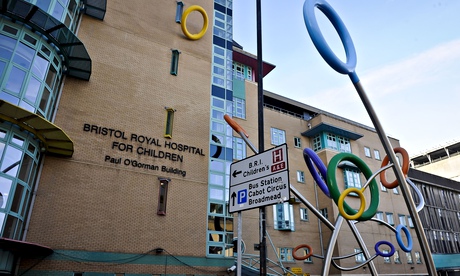
Bristol children"s hospital criticised more than death of 3-year-old heart patient

Bristol Royal Hospital for Children

Bristol Royal Hospital for Youngsters. Photograph: Ben Birchall/PA


A three-yr-previous died in his parents’ arms at a hospital that has been heavily criticised over its paediatric cardiac companies right after an obvious personal computer glitch meant he missed important verify-ups, an inquest has heard.


Samuel Starr underwent complex heart surgical procedure when he was 9 months old at Bristol Royal Hospital for Young children and was thought to have been recovering properly.


But a new computer method at a second hospital, the Royal United in Bath, failed to generate appointment slots for him and he did not receive essential stick to-up therapy for twenty months.


By the time he was seen, he was judged to need to have additional surgical procedure but suffered problems soon after that process and suffered a stroke and cardiac arrest.


Samuel’s mothers and fathers, Catherine Holley and Paul Starr, had been recommended to cease the therapy and he died the identical day, the inquest in Flax Bourton, near Bristol, heard.


Holley informed the inquest how her son swiftly deteriorated from a “pleased and wholesome” youthful boy right after the 2nd operation on seven August 2012.


She mentioned: “Just hours ahead of his operation Samuel was dancing all around the ward and telling the nurses all about Spiderman – we had to remind him to quieten down.


“Several of the nurses on the ward could not believe how energetic he was thinking about the surgical treatment he was about to have – he was a content and healthier boy.


“On 9 August they started bringing Samuel out of sedation and his left arm started flailing. I was then asked to leave the hospital ward so they could do the evening rounds.


“I was enthusiastic to return as I anticipated him to have made even more of a recovery but when we went back to the ward we were informed Samuel had had a stroke and a number of cardiac arrests. On 6 September we have been told that a 2nd cardiac arrest was imminent and that we need to take into account withdrawing treatment.


“So we agreed and we study him stories and sang him songs whilst they stopped giving him medication. Our tiny boy died in our arms.”


Samuel missed important appointments because his situation “slipped through the cracks” between the outdated and the new computer method, the inquest heard.


Ben Peregrine, the speciality manager for paediatrics at the RUH, in Bath, said: “Samuel’s appointment request have to have fallen by way of the cracks amongst the previous and new method. The new program is now up and working as ideal as it can be, but as long as there is even now people entering the details there will usually be room for error.”


Samuel’s cardiologist, Dr Andrew Tometzki, sobbed as he advised the inquest how tried everything he could to save the boy. “Logically you would say that an early diagnosis would have meant far more successful treatment but I have no evidence to suggest things would have turned out any various.”


Samuel’s inquest is the fourth in a series of hearings examining deaths of young heart sufferers at hospitals in Bristol. 4-year-previous Sean Turner and Luke Jenkins , seven, died soon after being treated in ward 32, the children’s cardiac ward, at Bristol Royal Hospital for Children. Their parents advised preceding inquests their sons would even now be alive if they had received much better care.


A child known as Rohan Rhodes also died following becoming treated at St Michael’s hospital in Bristol, which like the children’s hospital is part of the University Hospitals Bristol NHS basis believe in. Avon coroner Maria Voisin has stated possibilities were missed in the treatment of both Rohan and Sean.


Last month the medical director of NHS England, Professor Sir Bruce Keogh, announced that an independent inquiry would examine paediatric cardiac care at the Bristol children’s hospital.


Sir Ian Kennedy, a lawyer who specialises in the law and ethics of healthcare and who was in charge of the inquiry into heart surgical treatment on youngsters at the Bristol Royal Infirmary in the 1990s, has agreed in principle to lead the inquiry.


Prior to Samuel’s inquest, his family’s lawyer, Laurence Vick, explained the inquests so far had shown a “worrying trend of poor communication and human error”.


Vick, who is representing 7 households of young children who died right after becoming taken care of at Bristol, additional: “In addition to the shortcomings in his care at Bristol, the failure of the personal computer appointments method at Bath is of particular concern to Samuel’s parents. The flawed method meant that he successfully dropped off the appointments listing.


“This was compounded by the failure at Bristol to address the appointment mistakes. You have to wonder how there could be this kind of a lack of safeguards that Samuel was permitted to deteriorate, unmonitored, over such a long time.”


Samuel’s inquest continues.


Bristol children"s hospital criticised more than death of 3-year-old heart patient

29 Ocak 2014 Çarşamba

South Africa: doctor"s web site about botched male circumcisions criticised

TO GO WITH AFP STORY BY Claudine RENAUD

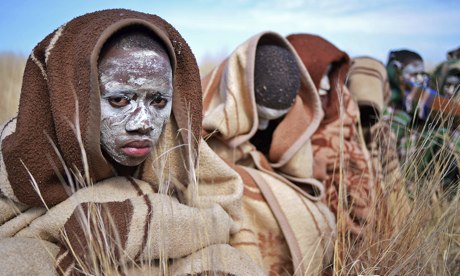
The website aims to reveal the “dark secrets and techniques” of the circumcision ritual undergone by teenage boys from the Xhosa group. Photograph: Carl De Souza/AFP/Getty Photographs


A Dutch medical doctor in South Africa has published graphic images of penises mutilated during botched circumcision ceremonies, angering community leaders who accuse him of meddling in their culture.


Dr Dingeman Rijken says he set up a internet site to reveal the “dark tricks of the ritual” because conventional leaders had shown surprising indifference and incompetence to the annual toll of death and injury.


The leaders have condemned Rijken for breaking a cultural taboo and reported his website to South Africa’s Movie and Publication Board, demanding it be shut down.


Each year 1000′s of teenage boys from the Xhosa group embark on a secretive rite of passage in Eastern Cape province, spending up to a month in the bush to examine, undergo circumcision by a traditional surgeon and apply white clay to their bodies.


While a lot of initiation colleges are officially sanctioned, other individuals are unregulated and let bogus surgeons to operate with unsterilised blades. In accordance to Rijken, who operates in the area, 825 boys have died from problems considering that 1995 and a lot of much more have suffered from what he calls male genital mutilation.


Explaining his motives for going public, Rijken writes: “Winter 2012. Groups of young boys with white faces had been brought out of a secret dark world into glaring hospital lights. Sunken eyes from dehydration, flaky skin from malnourishment, bagged eyes from sleep deprivation.


“Usually you would smell the rotting when they had been strolling previous. I devote many hrs cleaning their wounds, attempting to insert urinary catheters in their botched penis, battling to explain 17-year-olds that they had misplaced their manhood.”


He adds that, following an additional catastrophic winter season in 2013, and with standard leaders unlikely to make a positive adjust, he chose to go to the media and set up the website to inform prospective initiates and the broader community about the dark tricks of the ritual.


Graphic photos display severely disfigured, contaminated or amputated genitals on the internet site, ulwaluko.co.za, named soon after the Xhosa language word for initiation into manhood. Guests are advised: “Please be warned that this website includes graphic medical photographs of penile disfigurement beneath ‘complications’ and ‘photos’. You could only enter this website if you are 13 years of age or older.”


But critics argue that Rijken has betrayed their culture and should have been dealt with the matter differently. Nkululeko Nxesi, from the Neighborhood Development Basis of South Africa, informed the AFP news agency: “That web site should be shut down with fast effect. He must respect the cultural rules and processes of this nation.”


Patekile Holomisa, a former leader of the Congress of Traditional Leaders of South Africa, took a related view. He advised AFP: “We condemn the publicity of this ritual to individuals who do not practise it. Ladies must not see what takes place at initiations.”


The Movie and Publications Board restricted the site for under-13s but ruled that it is a bona fide scientific publication with fantastic educative value.


It extra: “The internet site highlights the malice that bedevils this rich cultural practice. It does not condemn this rich cultural practice but tends to make a clear plea for it to be regulated so that deaths do not arise.”


South Africa: doctor"s web site about botched male circumcisions criticised