botched etiketine sahip kayıtlar gösteriliyor. Tüm kayıtları göster

26 Ekim 2016 Çarşamba

Will the closure of India"s sterilisation camps end botched operations?

It happened in a classroom, on the desks of the village school. It was dark, so the doctor operated on the women by torchlight. The procedure only took two minutes; many women did not even know that they had been permanently sterilised.


That Saturday night, in January 2012, 53 women from the village of Kaparfora in the northern Indian state of Bihar had tubectomies over a period of two hours, under the supervision of a local NGO. The school desks where the operations took place were never disinfected; the doctor never changed his gloves, and the medicines were past their use-by dates, violating a number of government guidelines. After the operations, the doctor left the school, ignoring the wails of the bleeding women in the classroom.


Devika Biswas, a health activist from the region, who visited Kaparfora a month after the event on a fact-finding mission, says she was “aghast” at the conditions she saw. “I was feeling so bad. I thought, is this my country? Not a single woman was screened to see if there would be any complications. One of the women who was sterilised was actually three months pregnant, and she ended up miscarrying her baby. I mean, they were just butchering women.”


Biswas recalls the words of one woman she met in the village. “She looked sad so I asked her to speak her mind. She said to me, ‘The government puts no value on our lives, so they can do anything to us.’”


Biswas filed a petition to the supreme court based on her findings. After a four-year legal battle with the government, this September the court ordered the government to shut down sterilisation camps across India within three years. Though women can still go to health clinics and request to have tubectomies, sterilisation camps run either by state government officials, or outsourced to local NGOs, in which doctors go out to villages and encourage women to have their tubes tied, will be illegal.


The supreme court’s verdict is a historic victory for women’s rights activists who have campaigned against sterilisation camps for decades. The ruling could mean that, for the first time, India moves away from family planning policies that focus on women rather than men and provide a wider range of contraception, particularly in rural clinics.


The judge told state governments to increase compensation payments to victims of botched surgeries. “It is time that women and men are treated with respect and dignity and not as mere statistics in the sterilisation programme,” wrote Justice Madan Lokur in the judgment.


The mother of 30-year-old Phoolbai, who died after she underwent surgery at a government mass sterilisation camp


The mother of 30-year-old Phoolbai, who died after she underwent surgery at a government mass sterilisation camp. Photograph: Alamy Stock Photo

India’s controversial sterilisation drives, funded by the World Bank, USAID, and other international organisations have been at the core of the country’s efforts to minimise population growth since the 1980s. Unlike China, where, until last year, a strict one-child policy has slowed population growth, India’s government offers cash incentives to women and men who choose permanent sterilisation in an attempt to bring down the national fertility rate.


Quotas for sterilisation and cash incentives to doctors and village health workers who bring women to camps have led to mass operations – sometimes even on very young women in their early twenties – increasing the risks of infection and poor care. The sterilisation camps became a national embarrassment when 15 women died after botched tubectomies in the northern state of Chhattisgarh.


The focus on permanent sterilisation comes from a long-rooted belief that overpopulation is at the heart of India’s major problems of hunger, poverty, poor education and poor healthcare. India has the world’s second biggest population after China, 1.25 billion people, roughly equivalent to the populations of Europe and North America combined.


While family planning clinics around the country offer free oral contraceptives, IUDs and condoms, these methods are unpopular and associated with promiscuity. Vasectomies, cheaper and easier sterilisation procedures for men, are available too, but the stigma of being unmanly, and the memory of former prime minister Indira Gandhi’s fertility control drives in the 1980s, in which millions of men were forcibly sterilised, have stuck.


India sterilises more women than any other country in the world. “The government’s strategy has always been female-focused,” explains Sarita Barpanda, from the Human Rights Law Network.


“All the programmes are targeted at them. Many women are coerced into having sterilisations. The fact that the government has given so much of the responsibility for sterilisations to private organisations suggests how valuable a woman’s life is.”


Barpanda has further stories of atrocities during the sterilisation drives around the country. “In Orissa, they used bicycle pumps in the operations because the doctors did not have up-to-date medical equipment,” she says. “In Himachal Pradesh, one doctor did five surgeries and then passed out drunk halfway through the sixth. In Malda, in West Bengal, they had no beds for the women, so they had to lie out on the ground, in the cold after the operations,” says Barpanda. “Almost every state was reporting violations of the government’s sterilisation guidelines.”


In 2007, the supreme court ruled that the national government was responsible for maintaining standards in sterilisation procedures. It also asked state governments to introduce quality control commissions to ensure high standards in family planning clinics and camps, but these bodies have not been established.


In a statement to the Guardian, a spokesperson from the Ministry of Health and Family Welfare said the botched sterilisations were “a one-off” and were the exception rather than the rule.


The ministry said it had made many attempts to improve standards at state-run sterilisation camps. “The government of India has formulated several manuals and regular updates for the guidance of the state governments and union territories to address all aspects of conducting sterilisation procedures. The government of India has also issued advisories to all the states and union territories to adhere to the standard operating procedures at all levels to prevent and pre-empt incidents that might adversely affect the health of clients due to sterilisation procedures. These have been extensively disseminated across states.”
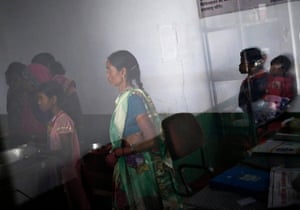


Women who underwent sterilisation surgery queue to receive food inside a hospital in the eastern Indian state of Chhattisgarh, in November 2014


Women who underwent sterilisation surgery queue to receive food inside a hospital in the eastern Indian state of Chhattisgarh, in November 2014. Photograph: Anindito Mukherjee/Reuters

The spokesperson said that the supreme court’s decision to phase out sterilisation camps was “in alignment with the government of India’s own endeavour in that direction over a period of three years”.


Contraceptives were being offered free of charge to any couples wanting them, added the spokesperson, and the government is increasing access to family planning.


But Biswas says she doubts the supreme court’s order will make much difference. “The government is responsible – they are perpetual violators of the rights of women in this country, but I just don’t think anything will change.”


Barpanda is more optimistic. “They’ve already stopped the camps in Orissa,” she says. “This was a really big thing for the supreme court to pass. But I don’t know if I would call it a victory because so many people have lost their lives.”


Will the closure of India"s sterilisation camps end botched operations?

17 Ağustos 2016 Çarşamba

Hospitals trust put in special measures after botched operations

A number of occasions where surgeons operated on the wrong part of a patientwere among incidents flagged up by a damning watchdog report which recommended that a hospital trust should be put in special measures.


The four cases involving the surgeons in 2015 were among seven “never events” – serious incidents that are wholly preventable – according to a report by the Care Quality Commission (CQC) into Brighton and Sussex University hospitals NHS trust.


The report also highlighted problems with a culture of bullying and discrimination.


Other issues included patients being kept in surgical recovery rooms – usually just a temporary stop before being returned to a ward or intensive care unit – for up to three days. These areas were also used for emergency medical patients because of an overcrowded A&E and “to help meet the emergency department’s targets”.


The CQC inspectors said there had not been enough staff to ensure patients were receiving safe care and that the culture at Royal Sussex County hospital was one where poor performance in some areas was tolerated.


As well as the safety issues, the report highlighted a culture of bullying at the organisation, where people from black and minority ethnic backgrounds reported that “discrimination was rife”.


The CQC document highlights a 2015 NHS Workforce Race Equality Standard report which concluded: “Following job application, the relative likelihood of white staff being appointed was 1.26 times greater than for BME staff.” It added: “BME staff felt very undervalued and bullied.”


Some lesbian, gay, bisexual and transgender staff also told inspectors they did not feel they were treated equally and felt discriminated against.


Prof Edward Baker, the deputy chief inspector of hospitals for the CQC, said: “It is clear that the problems we have found on this inspection go right through Brighton and Sussex University hospitals NHS trust.


“It is a matter of some concern that we found there was a distinct disconnect between the trust board and staff working in clinical areas, with very little insight by the board into the main safety and risk issues, and seemingly little appetite to resolve them.


“For some time the trust has been failing to meet national standards on waiting and treatment times, there were high numbers of cancelled appointments and operations, and delays in providing diagnostic results. We found that the executive team had failed on multiple occasions to provide resources or support to clinical staff in critical care and there was no acknowledgement that they understood the problems staff identified.


Dr Gillian Fairfield, the trust’s interim chief executive, apologised for the failures identified by the CQC, which she described as “completely unacceptable”.


“The NHS as a whole is seeing growing demand for services and, like many other trusts across the country, this has caused us significant challenges which has affected the standard of the care we are providing our patients. These challenges have been made worse by the fact that our older buildings are not fit for purpose.


“It would be wrong for us to use these pressures and challenges as excuses, however, and we know we should and need to be doing better for our patients and staff.”


Hospitals trust put in special measures after botched operations

2 Mayıs 2014 Cuma

Payout right after botched tummy tuck induced stomach button to "erupt" on flight

Belly button burst case

Patricia Jackson was on a flight from a holiday when the location about her old stomach button ‘unexpectedly burst’. Photograph: Fletchers Solicitors/PA


A woman has been awarded much more than £20,000 compensation right after botched surgical treatment led to her belly button “erupting” on a flight.


Patricia Jackson, 68, of Bridlington, east Yorkshire, underwent a tummy tuck operation to take away excess skin following weight loss, but many years later on her stomach burst, her lawyers mentioned.


She underwent an abdominoplasty by plastic surgeon Edgardo Schiavone, who worked for the Hospital Group in Birmingham in 2005. Added skin and unwanted fat was removed and the muscle tissue were tightened in the abdominal wall, mentioned a spokeswoman for Fletchers Solicitors.


Following the operation, surgeons advised Jackson that they had not produced a new stomach button for her due to the fact there was not adequate skin left in excess of following the operation.


But it later emerged that they had left portion of the outdated one inside her, the spokeswoman mentioned.


In 2011, on a flight back from Portugal, Jackson observed blisters about in which her outdated belly button had been and the spot “unexpectedly burst”, the spokeswoman stated.


Right after the flight, medics discovered her previous stomach button had been left inside her and she had to undergo more reconstructive surgery.


Earlier this year the care property manager was awarded £22,500 compensation right after she efficiently sued the doctor.


“The outcome of my case signifies that awareness has been raised and it can hopefully modify patient care in the long term,” Jackson said.


Jeanette Aspinall, head of medical negligence at Fletchers Solicitors, explained: “This case highlights how straightforward it is for an daily cosmetic surgery procedure, like a tummy tuck, to go wrong, each with the surgical treatment itself and if the proper after-care is not administered.


“Mrs Jackson had the operation to acquire confidence, and rather was subjected to many years of pain and embarrassment.”


• This post was amended on two Could 2014 to make clear that the case was taken against the surgeon, not the Hospital Group.


Payout right after botched tummy tuck induced stomach button to "erupt" on flight

12 Mart 2014 Çarşamba

Plastic surgeon"s profession in tatters following transsexual patient falsely claims he botched ear operation

“I’m going to see you dog, f****** c***. You’ve deformed me for lifestyle.”


Dr. Brian Mayou founded the Cadogan Clinic in Belgravia


Charles also talked about Dr Mayou’s wife and daughters, calling 1 of his ladies a “pig” and a “slut” and branding the surgeon a “kiddie fiddler.”


The medical doctor was also forced to apply for fifty on the web posts to be eliminated from three different sites, which contained material this kind of as: “He is a paedophile and demands to be locked up.”


The former advisor and honorary lecturer at Guys and St. Thomas’ Hospital, who was the plastic surgeon who initial launched liposuction to the United kingdom, now has the complaint completely on his Common Health-related Council record.


“There have been a number of forms of threats over a long period of time,” magistrate Mrs Nicola Leach advised Charles. “The threats have impacted Dr Mayou’s family, occupation, track record and earnings. The impact is unimaginable.”


Charles made the unfounded allegations during a two-and-a-half 12 months campaign, resulting in the surgeon’s appropriate to perform at South Kensington’s private Cromwell Hospital currently being withdrawn.


Charles, Cowbridge Road East, Cardiff, of pleaded guilty to harassing Dr Mayou between December sixteen, 2010 and May possibly 16, last 12 months by sending many unwanted insulting messages and was sentenced to 6 months imprisonment, suspended for two many years.


“This surgeon, who has pressed these charges, has induced me so a lot pain and distress,” Charles informed the court. “If you knew the full story and what this man has completed to me you would be shocked.”


Charles was also ordered to pay out £2,500 compensation to the surgeon, £150 fees an £80 victim surcharge and was made topic to a 9-month drug rehabilitation necessity.


Charles was arrested when arriving in the Uk at Bristol Airport on July 22, final 12 months, after a journey to the continent.


In his victim impact statement Dr Mayou explained the abuse gave him sleepless nights and patients had cancelled surgical procedure as a end result of Charles’ on the internet rants.


“He has carried out a social media campaign towards me and the clinic,” stated the surgeon. “Sufferers have cancelled as a direct outcome of the posts.”


Charles’ lawyer Miss Julie Stanhope advised the court: “My client suffers a large-degree of self-hatred and in his early thirties decided to handle his gender issues.


“The very first stage was surgery on his ears by Dr Mayou and he accepts the behaviour the physician endured was extreme and unacceptable.”


Charles has because had facial reconstruction surgical treatment and breast augmentation.


He previously jumped bail right after telling the court: “I am halfway through a intercourse-change and sending me to a male penitentiary would be sexual abuse.”


Plastic surgeon"s profession in tatters following transsexual patient falsely claims he botched ear operation

29 Ocak 2014 Çarşamba

South Africa: doctor"s web site about botched male circumcisions criticised

TO GO WITH AFP STORY BY Claudine RENAUD

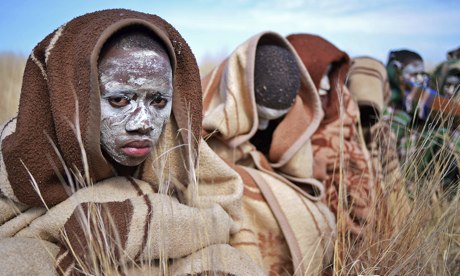
The website aims to reveal the “dark secrets and techniques” of the circumcision ritual undergone by teenage boys from the Xhosa group. Photograph: Carl De Souza/AFP/Getty Photographs


A Dutch medical doctor in South Africa has published graphic images of penises mutilated during botched circumcision ceremonies, angering community leaders who accuse him of meddling in their culture.


Dr Dingeman Rijken says he set up a internet site to reveal the “dark tricks of the ritual” because conventional leaders had shown surprising indifference and incompetence to the annual toll of death and injury.


The leaders have condemned Rijken for breaking a cultural taboo and reported his website to South Africa’s Movie and Publication Board, demanding it be shut down.


Each year 1000′s of teenage boys from the Xhosa group embark on a secretive rite of passage in Eastern Cape province, spending up to a month in the bush to examine, undergo circumcision by a traditional surgeon and apply white clay to their bodies.


While a lot of initiation colleges are officially sanctioned, other individuals are unregulated and let bogus surgeons to operate with unsterilised blades. In accordance to Rijken, who operates in the area, 825 boys have died from problems considering that 1995 and a lot of much more have suffered from what he calls male genital mutilation.


Explaining his motives for going public, Rijken writes: “Winter 2012. Groups of young boys with white faces had been brought out of a secret dark world into glaring hospital lights. Sunken eyes from dehydration, flaky skin from malnourishment, bagged eyes from sleep deprivation.


“Usually you would smell the rotting when they had been strolling previous. I devote many hrs cleaning their wounds, attempting to insert urinary catheters in their botched penis, battling to explain 17-year-olds that they had misplaced their manhood.”


He adds that, following an additional catastrophic winter season in 2013, and with standard leaders unlikely to make a positive adjust, he chose to go to the media and set up the website to inform prospective initiates and the broader community about the dark tricks of the ritual.


Graphic photos display severely disfigured, contaminated or amputated genitals on the internet site, ulwaluko.co.za, named soon after the Xhosa language word for initiation into manhood. Guests are advised: “Please be warned that this website includes graphic medical photographs of penile disfigurement beneath ‘complications’ and ‘photos’. You could only enter this website if you are 13 years of age or older.”


But critics argue that Rijken has betrayed their culture and should have been dealt with the matter differently. Nkululeko Nxesi, from the Neighborhood Development Basis of South Africa, informed the AFP news agency: “That web site should be shut down with fast effect. He must respect the cultural rules and processes of this nation.”


Patekile Holomisa, a former leader of the Congress of Traditional Leaders of South Africa, took a related view. He advised AFP: “We condemn the publicity of this ritual to individuals who do not practise it. Ladies must not see what takes place at initiations.”


The Movie and Publications Board restricted the site for under-13s but ruled that it is a bona fide scientific publication with fantastic educative value.


It extra: “The internet site highlights the malice that bedevils this rich cultural practice. It does not condemn this rich cultural practice but tends to make a clear plea for it to be regulated so that deaths do not arise.”


South Africa: doctor"s web site about botched male circumcisions criticised