Hear etiketine sahip kayıtlar gösteriliyor. Tüm kayıtları göster

20 Nisan 2017 Perşembe

It"s good to hear cycling to work reduces your risk of dying. But that"s not why I do it | Laura Laker

It may not be a surprise to see another study suggesting that cycling to work can drastically reduce your chances of getting cancer and heart disease – those who ride bikes for transport already know how good it makes them feel. However, it’s perhaps yet another motivation for those who don’t, to dust off their bikes – and remember some other reasons cycling to work is so great.


In a five-year study of 263,450 UK commuters, published in the BMJ, researchers at Glasgow University found regular cycling cut the risk of death from any cause by 41%, and the incidence of cancer and heart disease by 45% and 46% respectively.


The cyclists in the study were riding an average of 30 miles per week; that’s three miles each way, five days per week. Cycling at a leisurely 10mph, that would take about 20 minutes each way – a manageable distance for most people.


At present only 3% of the UK population commute by bike, while 36% use a car. If we increased cycling in this country to German levels by 2025, we would save £1.8bn in health benefits and £284m thanks to less congestion.


Ask anyone who cycles to work why they do it, and they’ll have a story to tell, whether it’s about how good it makes them feel, how they saved money, lost weight, or won a battle with depression. Most people will tell you how enjoyable it is.


My commuting story began at university. I remember being astonished one morning when I realised my friend Szilvia had cycled from Finsbury Park in the rain. Getting on a bike and riding five miles in such conditions sounded miserable, but she looked happy and bright, and told me how great it was.


We lived fairly close to one another and she offered to ride with me one day. As I pedalled frantically to keep up with her through Regent’s Park, and Camden, it was like I’d grown wings. Before long, like her, nothing short of a gale force wind with pigeon-sized hailstones was going to stop me from experiencing this feeling every day.


For the first time in my life I started getting fit. I arrived at university feeling awake, alert, and generally in a good mood. I continued to cycle to various temp jobs around London after graduation, carrying my work clothes in a pannier and getting changed in the loos.


On crisp, sunny mornings, I’d cycle through the city feeling like it had rolled out the red carpet just for me. I’d levelled up on urban living: I’d whizz past the stationary traffic and queues for buses and try not to look too smug.


I’d chat to others at the traffic lights. Often I’d get to places quicker than public transport could carry me. Often it was the best part of the day.


Fitting exercise into your daily routine is infinitely easier than trying to carve out a slice of it to go to the gym. Without even trying, you get fitter if you cycle. It is no surprise that levels of physical activity are declining as fewer people cycle or walk to work.


In the cities of cycle friendly countries, such as the Netherlands and Denmark, up to 41% of people commute by bike because it’s easy to do and it feels safe. Decades of investment in cycling infrastructure have made it that way. These countries have learned that most people prefer protected, direct routes on main roads, and low-traffic neighbourhood streets. This means people of any age can cycle, from the very young to the elderly. In the Netherlands, for example, 20% of 80-84 year olds regularly cycle.


Imagine if the UK was like the Netherlands, where 20% of 80-84 year olds regularly cycle


Imagine if the UK was like the Netherlands, where 20% of 80-84 year olds regularly cycle. Photograph: Rory Buckland L/Alamy Stock Photo

In the UK, meanwhile, we’ve had decades of car-centric planning, and minuscule levels of funding for cycling. Even though cycling is statistically safe, it doesn’t always feel it, and this fear of sharing road space with motor traffic is the key reason people don’t cycle or stop after trying it.


The government knows that every £1 spent on cycling brings £5.50 of benefits, but at present it spends just 72p per person per year on cycling, compared with £86 per person per year for roads. There is huge potential for more journeys to be cycled if that were to change.


Increased levels of cycling can bring benefits for everyone, whether they cycle or not. Bicycles take up far less road space than cars and emit no toxic fumes. They’re good for our high streets: on New York streets where cycle lanes were introduced average trade rose by a quarter. What’s more, bicycles are great social levellers – according to research, mass cycling could increase mobility of the nation’s poorest families by 25%.


If a magic pill were invented that could generate all of these benefits, we would be falling over ourselves to buy it. As it is, no magic is required, just steady, long-term planning and investment, and a commitment to the humble bicycle, so that more of us can enjoy the simple, life-giving joy of cycling from A to B.


It"s good to hear cycling to work reduces your risk of dying. But that"s not why I do it | Laura Laker

21 Mart 2017 Salı

To stop doctors ending their lives, we need to hear from those suffering | Ranjana Srivastava

The ceilings soar impressively high, the stained glass windows are exquisite, and the satin-adorned pews stretch majestically to the dignified altar. Amid the silence punctuated by the barest of sobs, I spot doctors whom I have long lost track of. And row upon row of nurses, still tight years later. As we wait for the service to begin, we imagine we are all silently interrogating our memories about each other. Time parted us for decades before we have gathered in such dreadful circumstances.


“I wanted you to hear it from me,” a colleague had said, audibly upset on the phone. I nearly collided with the pavement when I heard.


She was wonderful, the speakers confirm that morning. Her boss delivers an impassioned eulogy about an inspired clinician and a devoted mother to the children who sometimes tagged along on weekend rounds. Her best friend recalls their last conversation that ended with the doctor saying to the nurse, “Go home, don’t work so hard.”


Her husband quietly expresses gratitude for their years together and grief for the stolen ones. Her parents sit mutely, heads hung low, suddenly and irrevocably aged. A slideshow of pictures, depicting ordinary things – licking ice cream, dropping of the kids, medical graduation, the first day of internship – suddenly turned unmistakably poignant. The audience is frozen in a horrible dream.


Outside, there is more heartbreak. “We have to say goodbye to Mummy, just us,” the children’s father says softly. We, the gathered, hold our breath lest it makes a sound. Gently, under the flowers she so loved, she is lifted into the car. It’s soon a mere dot on the road. There are refreshments but the crowd disperses awkwardly, wordlessly, not trusting ourselves to speak.


We had known each other well enough in our early days, biding time on endless night shifts, watching dawn break, praying that the nurses would save the next page for the day crew. Later, our lives diverged, each assuming the other was successful, busy and content. The final time I saw her was shortly before she died.


It had been a fractious day; I felt brittle, from a distance she looked happy. What would have happened if we had stopped to talk?


If she had asked, “How are you?” I’d almost certainly have smiled, “Fine.”


And if I had asked, “How are you?”


Could she conceivably have replied, “Suicidal”?


After the gut-wrenching news of her suicide starts the inevitable soul-searching. It was a bad boss. No, a troubled marriage. Parenting had taken its toll. Or her disagreeable colleagues. She seemed so normal in the days leading up to it. No, far from it. She was upset, anxious, disillusioned. The only thing you learn is that for someone who was surrounded by observant and intelligent people, no one really knew much at all. No one knew what went through the mind of a vibrant and capable doctor in the prime of her life, who one day decided that life wasn’t worth living anymore.


Unfortunately, this isn’t the first time I have encountered the suicide of a colleague. Some I had known personally; others were brought close through mutual patients, and still others I would never get to meet because they had ended their life before starting a new rotation. In every instance, other doctors did not realise the depth of their colleague’s mental anguish. “I wondered about her but didn’t want to intrude,” someone ruefully recalled. “I didn’t think it was possible,” reflected another.


Four junior doctors have taken their lives in the past six months in Australia.In my busy hospital, I observe a roundabout of students, residents and specialists in difficulty. But how much difficulty? When they say they’re having a bad time, is it a bad week, a dreadful year, or a tortured life? Are they upset about a rejected grant or do they deem their very existence worthless? Forced smiles and tough hides abound in the workplace, where always being “fine” is a badge of honour. This is why it can be so difficult to distinguish doctors who will indeed be fine from those who need help.


There is ample evidence for the high rates of mental illness in doctors, several times greater compared to other professions and the general population. These figures are quoted so frequently at every orientation that awareness should not be an issue. Practically every institution has an employee assistance program that offers confidential help. Some offer free psychiatric evaluation and counselling. And as with other informal medical consults, many psychiatrists will help a colleague in distress, making access to high quality help less of an issue for doctors than many others.


Armed with knowledge and surrounded by advice, why do doctors commit suicide at an alarmingly high rate?


I sometimes fear it may be because as a profession, we are reluctant to swallow the evidence. And if we can’t accept the evidence we can’t help ourselves or others. We can have an intellectual discussion about anxiety, depression or suicide and we can apply the knowledge to our patients but but identifying vulnerability in our own self is altogether different. No matter how many times we hear it, it still doesn’t seem possible that we, or someone like us, could have a mental illness. The consequences seem so vast, the repercussions so numerous that perhaps it’s better to not know the truthful response to “Are you OK?”


Doctors say that the disclosure of mental illness poses a real threat – to license and insurance, career and reputation.


Discrimination, bullying and harassment in medicine are unfortunately never far from the headlines but thanks to brave people who have risked their career, a victimised doctor has more support than ever before. Nonetheless, a career in medicine means always having to keep up with something, whether it’s the latest research, the newest drugs, the next exam or the upcoming promotion. Doctors would like to be perfect at all of these and are genuinely puzzled when life deals them disappointment. It seems ludicrous now but I was dumbfounded when I got my first mark that wasn’t a distinction. Twenty years later, I realised nothing had changed when my registrar failed his specialist exam and told me that “even the walls” were laughing.


When doctors are depressed, their sense of personal failure is compounded by the suspicion that they somehow lack the ability to pull themselves together. The “well” among them can’t understand how the same stressful hospital ward, the same demanding colleagues, the same rocky tenure track can make some of us angry, others sleepless, and yet others suicidal.


In these pressured times, few doctors would be strangers to a variation of the message, “Heard you’re sick. There’s no cover so let us know whether to cancel your patients.” There is no call more disheartening than one that professes to care about the doctor but can seem like a veiled complaint that says, “If you’re sick, we all suffer.” But while it’s quite easy to tell your colleagues that you have pneumonia or a migraine, doctors say that the disclosure of mental illness poses a real threat – to license and insurance, career and reputation. The diagnosis invokes not only sadness but also ignominy, which may be why there are so few well-publicised stories of doctors with mental illness.


For much of my career, I have watched policies, promises and campaigns about combating mental illness and suicide in doctors. Our knowledge is evolving and with it, ways of managing mental illness, but with many lives lost each year, we don’t have the luxury of time.


Since we can’t always read the suffering of our colleagues, humanity in all our professional dealings and concern and compassion for every colleague must be a priority. As well as this, a healthy dose of introspection about how we judge doctors with a mental illness and why we judge them differently, arguably more poorly, than our patients.


When it comes to mental illness, we hear a lot from the experts but not enough from the sufferers. But in fact, nothing would be more welcome than the insights of doctors who have endured mental suffering and worse, been on the brink of suicide. What healed them and who helped them? What could their colleagues have said or done differently at the time? What workplace adjustments would have meant the most? These stories are clearly among us – hearing them could illuminate the dark corners of our understanding and help link theory and practice.


As a profession, we must do more than lament our dead colleagues. Dealing effectively with mental illness and halting suicide among doctors requires curiosity, compassion and practical support. Most importantly, it requires the humility to realise that in the long span of a career, none of us is immune and that those doctors whom we help today could end up saving our life tomorrow.


  • In Australia, the crisis support service Lifeline is on 13 11 14. In the UK, the Samaritans can be contacted on 116 123. In the US, the National Suicide Prevention Hotline is 1-800-273-8255.


To stop doctors ending their lives, we need to hear from those suffering | Ranjana Srivastava

19 Temmuz 2014 Cumartesi

I hear his voice on the mobile phone and know my husband is consuming once more

rehab column family

‘I do what all British people do when a crisis is brewing and request R if he’d like a cup of tea.’


It all of a sudden feels all very three many years ago. I have accidently restored my cellphone settings so that all of my new contacts, photographs and suchlike have been deleted, and replaced with old stuff – photographs of our youngest when he was a child, text messages from individuals whose names I’ve now forgotten, extremely odd contacts with cryptic names, this kind of as Lawnmower Steve. 3 many years feels like a extremely extended time ago, or else my memory is shot.


On the very same evening that I mistakenly reconfigure my cellphone I get in touch with R, who is on his final night of a weekend away seeing old friends. I want to shoot the breeze, inform him how our daughter has run up a telephone bill that indicates I won’t be in a position to pay for groceries following month.


He listens silently as I tell him our son has a temperature. “Can you drive him to the GP?” he asks. It is 11pm on a Sunday night. This is the kind of nonsense he talks when he is drunk. And when he asks once more, I realise he is. He voice often lilts up towards the finish of sentences, a guise to preserve issues regular and cheery, an attempt to mask any malformed words.


This could be a scene from a couple of years back, an unremarkable journey exactly where I get to revisit my not-so-distance previous. R is pissed, slurring, talking baloney.


Nevertheless it is not like 3 years in the past, simply because my mind isn’t going to commence frantically analysing why he is consuming. (Was it the non-alcoholic beer he is been getting lately that has tempted him to drink the true thing? Is it because he is stopped going to AA meetings? Have his previous friends made him nostalgic for his outdated existence)?


I do not feel wounded in my chest, both, like almost everything has been ruined and R’s drunkenness will in the long run lead to chaos and a string of unhappy days. I feel a tiny unsettled and disappointed, yes, but I never continue with the conversation. I say goodbye and go to bed.


A friend whose husband is in recovery once explained: “There is totally no point in getting into into any type of conversation with R when he is drunk. You will only come to feel like crap.”


In the morning, R arrives home. I’m greeted by the potent whiff of a thousand drinks. It’s not pleasant, so I stand back. But weirdly the anger’s not there. Pity, maybe, simply because he seems to be fairly sad and says, “I will not think I can go on weekends away like that at the minute. Probably I never could.” I do what all British men and women do when a near-crisis is brewing and ask if R would like a cup of tea.


And sooner or later he says, “I drank,” which is one thing he never ever explicitly supplied up just before. I laugh and say, “The total of the bar?” and he begins to give me a serious solution but then he realises I am joking.


I want to update the familiar, new settings on my telephone but I fear they’re misplaced for ever. But at least I can scrub the pictures that remind me of 3 many years in the past. Not because it was all so horrible: we’re smiling as if we indicate it in some of the shots. We all search comparatively content and our elder son nevertheless has baby teeth that make him look impossibly wonderful, which for a moment fills me with a longing for all the children to stay for ever youthful.


But I was not at all Okay, not at all able to enjoy individuals real moments for any sustained time period of time back then. I was obsessed with R’s drinking. I counted his sober days like good behaviour factors on a children’s sticker chart.


I was fixated on his life as if it had been my personal. My easy belief was that if R could stop consuming then we would all be so considerably happier. I was full of rage, nevertheless unable to express it in a way that was valuable my anger like poison gas, omnipresent, ruining the great instances and producing the undesirable instances worse. So no, 3 years ago would not be someplace I would like to be. Apart from my hair. My hair was better then.


So we move on with out malice into the evening, when all of the young children have been place to bed by R, who has not when lain down and complained of a sore head. He tends to make me a dinner that is so delicious that I think of how wonderful a cook he is, rather than of his current binge. Simply because the moments of happiness that I considered I was missing out on three many years in the past, that I imagined could only exist if R remained sober for ever, can be experienced correct now.


I hear his voice on the mobile phone and know my husband is consuming once more

24 Haziran 2014 Salı

Reduction in GP funding puts total NHS at threat, BMA conference to hear

GP waiting room

BMA conference will hear that a real-terms reduction in funding of £450m more than the previous 3 many years has been coupled with a 40m improve in annual demand for appointments over the past five. Photograph: Burger/Phanie/REX/Rex Functions


Patients are being put at chance by “brutal disinvestment” in general practice and are now often waiting two weeks for appointments, the chair of the British Health-related Association’s GPs’ committee will warn on Wednesday.


In a speech at the yearly BMA conference, Chaand Nagpaul will warn that basic practice is “imploding”. He will say that a reduction of £450m in funding, in real terms, above the previous three years, coupled with a 40m boost in yearly demand for appointments above the past five years has place the potential of numerous surgeries, and that of the total NHS, at danger.


“The straightforward truth is that demand has far outstripped our impoverished capacity, denying patients the care and access they deserve. We’re forced into providing a conveyor belt of care at breakneck velocity, up to 60 instances in a day, extra to by an open-ended volume of mobile phone calls, property visits, repeat prescriptions, outcomes, reviews and hospital correspondence. This is unmanageable, exhausting and unsustainable, and puts safety and quality at threat.”


Nagpaul will say waiting instances for appointments are getting longer as the end result of rising pressures. “Waiting occasions are inevitably acquiring longer since the enhanced demand has not been matched with elevated capacity,” he will say. “GPs will rightly prioritise urgent difficulties. What is getting squeezed are patients with schedule issues.


“This is paining GPs. We want to give prompt and great care but it really is just proving impossible. It truly is frequent that sufferers wait over a week, some two weeks. The Royal College of GPs has accomplished a survey which exhibits that waits will enhance to two weeks in a big amount of practices in the coming year.”


Speaking before the address, he mentioned thousands could be left with no a readily available local GP altogether due to the fact of the abolition of the minimal practice cash flow guarantee (MPIG). The MPIG supports surgeries facing tough circumstances that demand added funding but is getting phased out more than a 7-year time period that began in April. Some practices have misplaced a third of their funding as a consequence of its abolition, jeopardising their quite survival, mentioned Nagpaul, who is calling for the decision to scrap the MPIG to be put on hold.


He accused the government of getting gone back on a guarantee to help 98 practices recognized by the NHS as at threat of closure. “They said final year they would supply support and now these practices are obtaining they have no assistance,” he said. “They have reneged on their guarantee.”


He explained that surgeries particularly at chance had been people that typically delivered care to vulnerable communities, be they in rural regions, inner cities or universities with massive, transient populations. Though there may be perceived to be more choices for these living in urban areas, no practices have spare capacity, according to Nagpaul, who said the closure of surgeries would place even much more pressure on individuals left to select up the pieces.


The BMA is launching a campaign known as Your GP Cares to strain the government into supplying far more GPs, practice nurses and buildings. The amount of GPs as a proportion of all medical doctors in England has fallen from from 34% to 26% in two decades and numerous current GPs are producing ideas to retire early, Nagpaul says, whilst junior physicians are increasingly shunning the profession, with 451 training areas unfilled final 12 months, since of the workload and anxiety related with the task.


He will say in his speech that the fight for the survival of common practice is the fight for the survival of the NHS itself, as just a six% reduction in GPs seeing individuals would double the numbers attending presently overstretched A&ampE departments if they went there instead.


Katherine Murphy, chief executive of the Individuals Association, mentioned she recognised the picture painted by Nagpaul and that the risk of surgery closures was “extremely worrying. It could take place, especially in rural regions. We regularly hear from sufferers, and members of the public tell us how lengthy they have to wait, especially if they want to see a named GP, familiar with their situation. They frequently have to wait two to 3 weeks, which you cannot do if you’re unwell.”


A Department of Well being spokeswoman accused Nagpaul of “scaremongering”. She explained: “The quantity of GPs has gone up by one,000 given that 2010 and we have taken difficult choices to safeguard the NHS spending budget so we can strengthen family doctoring, reform out-of-hospital care and enhance GP entry for 7.five million men and women.


“GPs agreed to be at the heart of our radical strategies for more personalised neighborhood care in return for cutting their targets by more than a third to cost-free up more time with individuals. GPs’ premises must be fit to aid supply a single, seamless service for the elderly and the most vulnerable.”


Reduction in GP funding puts total NHS at threat, BMA conference to hear

27 Mart 2014 Perşembe

Minute a deaf woman could hear for 1st time

Although she is nevertheless acquiring employed to her implants – even the rustle of a bag of crisps has “made her jump” – she hopes she will quickly be in a position to use a telephone and the factor she has looked forward to much more than anything at all else: the sound of music.


“Getting deaf was just who I was and I did not actually have any unfavorable ideas about my deafness, just the one point of missing out on music,” she mentioned. “I have usually wondered what it have to be like.”


She has been to concerts with buddies and enjoyed the environment, even although she could only pick up vibrations with the use of standard hearing aids now her buddies have chosen their favourite songs from each year of her life, ranging from Paul McCartney to Elbow, to give her a crash program on what she has missed.


Miss Milne, who operates for the charity Sense, underwent surgical treatment at the Midlands Implant Centre at the Queen Elizabeth Hospital, Birmingham. Cochlear implants, which were initial developed in the 1960s and have been given to more than 300,000 men and women considering that then, stimulate auditory nerves to make patients artificially hear noises.


Miss Milne’s implant has been doubly crucial to her, as the unusual Usher Syndrome that influences her hearing induced her to commence shedding her vision in her early 20s. She now has severe tunnel vision and is registered blind.


She said: “The switch-on was the most emotional and overwhelming encounter of my existence and I am still in shock now. The hearing globe sounds so loud and alien. The first day everyone sounded robotic and I have to find out to recognise what these sounds are as I create a sound library in my brain.


“I can already foresee how it truly is going to be life shifting and the implants will get much better and greater above time. I’m so, so satisfied.


“I’m hearing words without having lip-reading through currently new sounds like the Tannoy at a train station, my knife clinking my plate as I eat – even the rustle of a packet of crisps manufactured me jump!


“I’m attempting to use the telephone but it’s one particular step at a time as it really is all so challenging. It’s the tiny issues that are enormous daily life altering experiences to me right now and this will probably last a few months.


“Wearing hearing aids I could nonetheless hear some sounds which helped me be mindful of the atmosphere I was in. If I walked into a room exactly where a tv was on I would hear the noise but not what was becoming said.


“I recognise the vibrations but have never ever, ever heard the words to music.”


Her best buddy Jo Knight stated: “It will open her up to more experiences. We have been away collectively and been to see bands. Even although she could not hear them, she really appreciated the environment and vibe.


“Now when we go on days out she will be capable to hear the birds singing and her canine, Matt, barking.”


Minute a deaf woman could hear for 1st time

15 Mart 2014 Cumartesi

Bionic ears: let us hear it for cochlear implants…

Sitting at the kitchen table rolling a ball of Play-Doh, Oliver Campbell is a image of childhood contentment. At just underneath two many years old he is experimenting with words and is happily peppering his innovative endeavours with them. But inside Oliver’s head something extraordinary is taking place. Currents from tiny electrodes, curled within the snail-shaped cochlea of his inner ear, are stimulating his auditory nerve, making it possible for him to hear the thud of the Perform-Doh and the creak of the chair and to assimilate the phrases of encouragement from his grandmother following to him.


Take them away and Oliver’s globe would be thrown into confusion.


Diagnosed with auditory neuropathy spectrum disorder (ANSD) at barely 24 hrs previous, Oliver was born unable to make sense of the sounds close to him. For his mothers and fathers, Chris and Claire Campbell, it was devastating.


Lightning, they realised, had struck twice. 5 many years earlier Oliver’s sister, Alice, was also born with ANSD – even though it took virtually 18 months for the diagnosis to be offered. “It was a massive shock,” Claire says. “There is no historical past of deafness at all in both side of the loved ones.” Certainly the couple’s 1st kid, Joseph, has no hearing troubles at all. But when Alice did not seem to be to be studying to speak as her older brother had, the Campbells knew one thing was incorrect.


The diagnosis was a bombshell. “Each and every hope and dream that you’ve ever had for this tiny youngster sitting in front you will get blown out of the water,” says Claire.


For Alice and her younger brother, anything in their ears had gone badly awry. And it was going to consider surgical treatment, education and some seriously hi-tech kit just before the clattering, chattering, bustling planet would come alive.


Hearing is a sense most of us take for granted, but in actuality it resembles a convoluted, anatomical version of the board game Mousetrap, played out within the fiendishly intricate architecture of the ear.


The ball is set rolling when sound waves arrive at the outer ear and are funnelled down the ear canal in which they end up banging into the eardrum. The vibrations from the eardrum move a small linked bone called the hammer, which is hooked up to more biological ironmongery in the kind of the anvil which is linked to the stirrup. The latter rests towards part of the inner ear which prospects on to the spiral-shaped cochlea.
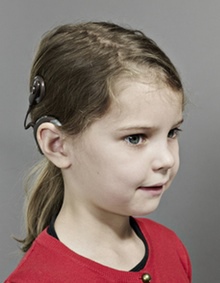

Alice Campbell. Alice Campbell, who like her brother Oliver was born with auditory neuropathy spectrum disorder (ANSD). Photograph: Suki Dhanda for the Observer


And it is inside the cochlea that factors get technical. As the stirrup vibrates, it brings about fluid inside of the inner ear to move back and forth – motion that is picked up by a membrane and passed on to tiny hair cells within the cochlea. When the hair cells waggle, they release chemical compounds acknowledged as neurotransmitters that set off electrical impulses in auditory nerve fibres near by. These signals whiz along the auditory nerve to the brain where they are deciphered. Possibly remarkably the hair cells, and hence auditory nerve fibres, are laid out like a piano keyboard – those in the outer component of the cochlea’s spiral respond to high frequency sound, even though those close to the tight curl at the centre react to reduced frequencies.


There is no doubt it’s a complicated set-up, and one particular of evolution’s finest achievements. But when something goes incorrect, the consequences can be devastating. For Oliver, Alice, and a lot of other individuals, the dilemma was found in the cochlea. While ANSD is a broad phrase encompassing a range of brings about, and symptoms that can differ in severity day-to-day, the upshot is that sound waves attain the hair cells, but are then scrambled into an incoherent signal or fail to be turned into electrical signals at all. But cochlear implants can make a planet of difference. “For us it boiled down to a black and white determination,” Claire says. “It was, if you want your child to have hearing this is your only hope.”


Boasting an array of extremely sophisticated technologies, these implants have unsurprisingly been named “bionic ears”. Their staggering capacity to develop a sense of sound is down to a flexible electrode array that is gently nestled inside the cochlea during surgery. Finer than fishing twine, these wires let the typical auditory pathway to be sidestepped, shifting the lives not only of those with ANSD, but also individuals with the missing or broken hair cells or a broken auditory nerve typical of “sensorineural” hearing reduction.


Let’s reset the Mousetrap. Now sounds are picked up by an external microphone, hooked over the ear, and turned into a digital “score” of electronic stimulation patterns by a processor. This info is then transmitted wirelessly across the scalp, together with a dose of energy, in which it is picked up by a coil underneath the skin and passed to the implant exactly where the digital score is converted into electrical pulses. These are sent to the electrodes inside the cochlea, exactly where they artificially trigger electrical impulses in the auditory nerve fibres, bypassing the position of the hair cells. But although each and every hair cell stimulates only a handful of of these fibres, the electrical pulses of a cochlear implant set off much bigger areas. It really is a bit like enjoying a piano with giant hands – massive bunches of keys get hit all at when. But, wonderfully, the mechanism performs. It truly is elegant, it’s sophisticated, and it changes lives.


“You can see it first factor in the morning when Ollie initial puts his ears on,” Claire explains in excess of the sound of her son happily enjoying. “The noise commences coming and he sort of brightens up and lightens up and you know his globe is considerably far more open.” The engineering has also enabled Alice to attend a mainstream hearing college, learn to perform the drums and appreciate listening to music – her favourite tunes getting a blend of Queen and hits from Annie. It truly is been a long journey for the Campbells, and 1 that has been intimately shared by way of their website Alice’s Ears. But their hopes and dreams have returned. “Alice is flying now at college,” says Claire. “I am so proud of her and I’m so surprised by the technology and what it has offered her.”


Nevertheless it is technologies that, practically forty many years in the past, barely seemed possible. “In the quite starting there was a whole lot of scepticism, mostly by neurophysiologists,” reveals Professor Ingeborg Hochmair when we meet in the swish surroundings of the Med-El innovation centre in Innsbruck, Austria. “They couldn’t think it could function to stimulate just a couple of places in the cochlea, and by stimulating all around eight to twenty or so areas change the perform of 25,000 nerve fibres which there are in a regular auditory nerve, ” she says. “But it works.” As CEO of Med-El, a single of the biggest cochlear implant companies globally, Hochmair is recognised as a pioneer of the engineering – an accolade that final yr noticed her share the Lasker prize, an worldwide award in the field of medical study.


The new innovation centre, a futuristic-seeking development opened just final 12 months, is a testimony to the good results of her vision and challenging perform. But the procedure of constructing a cochlear implant is also impressive. Peeking through into the clean rooms, I see a host of figures in gowns and masks busily peering down microscopes, meticulously inspecting the laser welding of person implants or checking a silicone seal is excellent. Number of parts of the approach are automated, and it is claimed that if a consumer tells the firm the variety of their implant, Med-El can pinpoint the folks who constructed it. It really is a handmade device for a really individual application.
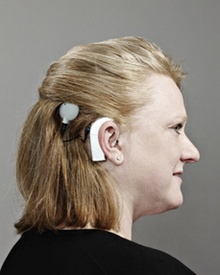

Anita Grover. Anita Grover: ‘I would not want to be in a social predicament for concern of missing element of the conversation.’ Photograph: Suki Dhanda for the Observer


And it is a trigger to which Ingeborg Hochmair has devoted her life. Possessing made the decision at just 13 years outdated that she needed to pursue a occupation in biomedical engineering she went on to review electrical engineering in Vienna. It was there that she and her future husband, Erwin Hochmair, grew to become involved in the nascent discipline of cochlear implantation. Functioning with researchers, surgeons and, crucially, patients, they soon notched up an extraordinary list of successes, and in 1990 started employing workers at Med-El. “As inventors we desired to see this become available for prospective end users,” she says. At the time each have been employed in academia, which Ingeborg later left to head the increasing firm. She believes their mutual passion for the technological innovation has contributed to her achievement. “This is a really fortunate constellation,” she says of the partnership.


But while the engineering has produced in leaps and bounds, Hochmair believes there is more to do. “There are even now so many young children that still have no entry to the technologies in numerous nations.” And fiscal outlay is not the only cause. “It really is awareness: numerous families just don’t know about that probability. It really is infrastructure in some nations,” she says.


With children, it is a race towards time. For these born unable to hear, it is vital to implant the units at a younger age, ideally just before two years outdated and ideally nearer 9 months, to maximise the child’s capacity to produce speech, language and listening skills. With out the input of auditory signals, the brain does not fully develop the capacity to decipher sound, and as time ticks by this capability for adjust – acknowledged as plasticity – decreases. What is far more it has been advised that, if unused, these locations of the brain steadily become reassigned to tackling other tasks.


Even with a cochlear implant, there are even more hurdles to encounter in harnessing the engineering. “Somebody informed me once that [having] a cochlear implant is a bit like becoming handed a important to a Porsche and not understanding how to drive,” says Anita Grover. “The brain has access to all this sound but it has to really understand to make sense of it.”


As chief executive of Auditory Verbal United kingdom , a charity that provides therapy to youngsters receiving to grips with their bionic ears, Grover is passionate about assisting other people to make the most of the engineering. “I would like all kids whose household needs them to be in a position to listen, speak and accomplish to have accessibility to auditory verbal therapy to support them maximise the prospective of their cochlear implants,” she says. “There is a very tiny window in which there is plasticity in a younger brain, which implies there is a real chance to maximise the improvement of listening and spoken language. If you get the early intervention right with the correct engineering and habilitation then you get the possibility for deaf children to realise their potential. And that likely must be the very same as a hearing child.”


Grover is effectively acquainted with the technology. Possessing knowledgeable progressive hearing reduction, by her late 20s hearing aids have been no longer helping. As a civil servant she had relied heavily on lip-studying, but it was far from ideal. “I would be in a meeting [with] 15 to 20 folks around the table and it was like Wimbledon,” she says. “It really is so extremely tiring – you have acquired no backup.” In the end, a cochlear implant became essential. “With no a cochlear implant I hear nothing at all, absolutely practically nothing,” she says. “It changed my lifestyle. I had gone via that approach of my hearing deteriorating whereby I was becoming more and a lot more withdrawn. I would not want to be in a social situation for fear of missing component of the conversation or something possessing been mentioned, or possibly getting the pitch incorrect – shouting in a quiet spot or becoming quiet in a noisy spot.” And there are sounds you would never want to miss. “When the first of my twins was born he came out screaming,” says Grover. “I would not have heard that if I didn’t have a cochlear implant.”


But adults are in danger of becoming overlooked. Recent figures from the charity Action on Hearing Reduction reveal that a single sixth of the UK’s grownup population have some type of hearing issues even though a 2013 research suggests only 5% of grownups whose lifestyle could be enhanced by cochlear implants truly obtain 1. “For adults, I would like to see improved access to at least a single implant and ideally two,” says Grover.


It truly is the dark side of the accomplishment story. Policy launched in 2009 by the National Institute for Well being and Care Excellence (Nice) dictates that although kids deaf in the two ears ought to obtain two implants as a matter of program, adults are permitted only 1 – except if they have a 2nd disability, such as blindness, that can make them more reliant on hearing. It is an concern that Labour MP Lilian Greenwood place squarely to the Home of Commons in November. “A increasing physique of evidence indicates that bilateral implants offer extra enhancements in speech perception in noisy environments in excess of unilateral implantation, and much better sound localisation, foremost to improved good quality of existence,” she said.


Azhar Shaida, consultant otologist and cochlear implant surgeon at the Royal National Throat, Nose and Ear hospital agrees but says: “The problem is down to money versus advantage.” With the assessment, implant, surgical procedure and a year’s therapy costing £38,000-£45,000 for a single implant it’s an high-priced business, though with discounts obtainable on a 2nd gadget and only 1 hospital procedure necessary if implanted simultaneously, the expense of bilateral implantation is not double the value. Even then Nice doesn’t believe the advantages enhance quality of existence ample, in contrast with the existence-altering result of the very first implant, for adults to merit the cost.
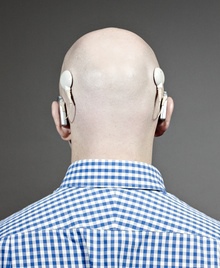

Stuart McNaughton. Stuart McNaughton: ‘I pushed for two years [for] the NHS to give me the 2nd one.’ Photograph: Suki Dhanda for the Observer


Customers this kind of as Stuart McNaughton, a lecturer at Westminster Enterprise School who also works for cochlear implant firm Sophisticated Bionics, say grownups deserve greater. “I pushed for two many years [for] the NHS to give me the second a single,” he tells me over coffee amid the bustle of Waterloo station. “Due to the fact I educate, element of my livelihood is extremely dependent on my ear working and, you know, occasionally items go wrong and if the 1 ear that you’ve got goes incorrect you lose your livelihood.” Fundamentally, he says, it is about going through the world individuals of us who can hear consider for granted. “It can make me the way I should have been, the way you are.”


But McNaughton is one particular of a small group of adults with bilateral cochlear implants. And like Greenwood, he believes it is substantial time attitudes in direction of grownups transformed. “I understand that young children want far more input simply because they are establishing language and they are creating expertise, but what about all the individuals more than the age of 18, 19, twenty, 21? They need to be allowed bilateral implants as well. Society puts pressures on grownups too – relationships, jobs – it’s a rat race out there.”


It truly is a contact to arms that resonates across the health-related occupation. As Shaida explains: “Two ears are better than one. Two cochlear implants are far better than 1.” The situation is particularly desperate for individuals who have suffered from meningitis. “With meningitis you often get obliteration of the cochlea,” he says. “Normally for the meningitis sufferers we fast track them so that we can get the implant in as quickly as achievable before the cochlea gets to be totally blocked and it is extremely hard to do an operation.” For such patients simultaneous bilateral implantation could be crucial. “If we came back later on to implant the other side due to the fact the first side had failed, it [could not] be possible simply because of the blockage.”


But the 2009 Nice guidelines make it clear: even in this kind of conditions simultaneous bilateral implantation is basically not an selection.


The introduction of the recommendations has also fuelled fears of deepening inequalities. “What we are seeing is a quantity of patients are opting to have one particular completed on the NHS and getting the 2nd one carried out privately. Which is excellent – if you can afford it,” says Shaida.


David Selvadurai, consultant otolaryngologist surgeon at St George’s hospital, London, also believes it is time for alter. “As a local community of experts we are keen to push this forward and we would like to see bilateral implants in grownups turn out to be far more acceptable,” he says.


But with the guidelines only reviewed every couple of years, he believes timing is almost everything. “What we do not have at the minute is good value benefit data to show that there’s adequate advantage to the personal to demonstrate value effectiveness for the NHS,” he says. “The danger that we have to be wary of is that the recommendations are reviewed ahead of the needed evidence is accessible.”


It truly is a scenario Shakeel Saeed, professor at UCL and the Royal National Throat, Nose and Ear hospital is determined to adjust. Working with colleagues at the Ear Institute, he is presently scoping a nationwide, multi-centre potential review on bilateral cochlear implantation in adults. “This is to create higher good quality proof that Nice can then use to make a considered choice.” Gathering the proof, he says, will take 4 to 5 years – and it will not be inexpensive. But it is a possibility they can’t afford to miss.


“If we complete that review then we will be ready to solution a quite straightforward query: does the benefit of having two implants in adults justify the value?” says Saeed. “We might find it doesn’t – but I suspect that we will find that it does.”


Bionic ears are a technological triumph. It’s time adults, like youngsters, had been permitted to expertise the complete measure of their metamorphic possible.


Bionic ears: let us hear it for cochlear implants…

5 Şubat 2014 Çarşamba

Can You Hear Me Now: Detecting Hearing Loss in Infants

Your baby’s formative years can be challenged due to hearing loss. Support your child’s improvement through age suitable hearing exams.


Detecting Hearing Reduction in Infants


Origins of hearing troubles can vary. They could be genetic or hereditary. Children’s hearing patterns can also be impacted throughout the mother’s pregnancy or correct right after kid birth. Infections and contracted sicknesses could also occur, and a single of the bodily results can be ear problems.
If your child’s hearing issue isn’t detected at an early stage, troubles in speech patterns will happen. Hearing reduction can also affect your tiny one’s studying skills. Should you detect signs of listening problems, really do not hesitate to urgently schedule for a hearing check.


Identify the Problems Early On
Stopping conditions is naturally greater than locating their remedy. Know your child’s hearing abilities and determine early indications of hearing loss through these phases:


• Pre-Natal or Congenital
By this time the youngster ought to be hearing the mother’s voice in the womb. Whilst it is visually impossible for you to know if your baby can hear nicely, there are technological developments accessible to carry out hearing tests.


Scanners and audiometers can be mixed to check on how the child reacts within the mother’s womb. Patterns of reactions can be recognized when the mom speaks and each time beeps are pressed for sounds. The minimal requirement is for the child to express movements at cues of audible patterns.


• Very first Month Right after Birth
If your little one is consistently unable to respond and calm down with soothing sounds, examine whether it is due to the inability to hear from your voice. Your youngster need to mainly love hearing you talk as a parent, specifically if you are a mother. Reactions to sudden noises are also indications of healthier hearing skills.  Should your minor one be unable to react to fundamental sounds, it is greatest to check with with a pediatrician to clear your child’s auditory wellness by detecting hearing reduction in infants as early as attainable.


• Your Child’s Ninth Month
This is one of the earliest critical stages for your youngster. It signifies your small one should be all the far more responsive and largely interested in what he or she is hearing all close to. You can train your little one to talk standard words.


If it requires even far more time for the phrases to register and be mentioned back, this is a single indicator you should consider. A kid must be responsive to what he or she hears as nicely, specifically when you are offering fundamental directions (this kind of as receiving a modest pillow or throwing a toy for the dog to fetch).


• At 3 Years Previous
At this level, your youngster ought to be ready to talk straightforward sentences, and express his or her ideas. You can recognize a pattern no matter whether your small one can typically pronounce words. You youngster should currently have clear speech patterns.


If you want to maintain repeating what you say in the course of speech imitation workouts, take this as a cue for consideration. Recognize how your youngster also reacts with within loved ones stories. If your tiny one isn’t a fan of broccoli, say the word in the course of an exercise and recognize if he or she flinches upon the word’s pronunciation.


A person’s capabilities are crucially formed during the early years of growth and advancement. Be additional keen on identifying your child’s abilities, specifically on hearing patterns. Make certain to routinely consult with a pediatrician and hearing check expert today.


Good Resource for New Mother and father: The Every thing Baby’s Very first Year Guide: The tips you require to get you and child by means of the very first twelve months


Get Healthy Stuff: Healthy Living Shop


Wellness Strategies 4 Daily life  


If you appreciated Can You Hear Me Now: Detecting Hearing Reduction in Infants, please pass it on.


Can You Hear Me Now: Detecting Hearing Loss in Infants