suffering etiketine sahip kayıtlar gösteriliyor. Tüm kayıtları göster

19 Nisan 2017 Çarşamba

When therapists also need therapists: "Suffering is not unique to one group"

Britain’s Prince Harry has earned praise in recent days for speaking up about his personal issues with mental health, the need to not stay silent about emotions, and the benefits of seeking therapy.


Describing how he arrived at a breaking point in an interview with the Telegraph, he explained it was listening to other people’s problems and realizing he was unable to be as helpful as he wanted to be that pushed him to seek help.


“You park your own issues because of what you’re confronted with, and all you want to do is help and listen, but then you walk away and go, hang on a second, how the hell am I supposed to process this?”


He then added that for every three hours of listening to people, psychologists take half an hour to process it themselves with someone else. He’s right: one of the most important traditions within the mental health world. Therapists also need therapy.


We asked four psychotherapists with extensive experience in the field to open up about how they, too, use therapists.


David Lopez, practitioner for 15 years, Connecticut


David Lopez, a former president of the American Academy of Psychoanalysis and Dynamic Psychiatry, says there are a few different reasons why therapists will seek therapy.


The first is during the training process, when therapists in training will have a supervisor and often a therapist of their own.


“Typically, people who want to become therapists have an interest in connecting with people. When they are doing therapy that need needs to be redirected, to be tamed so that it does not get in the way of not being objective,” Lopez elucidates.


What needs to be addressed in training is something called “countertransference”, Lopez explains. While a client transferring emotions they would have for someone in their outside lives onto their therapist (called “transference”) is generally considered a good thing, a therapist transferring emotions onto their client is to be avoided.


If a therapist in training was orphaned young, they may emotionally react to stories their clients bring into sessions about parents and loss, for instance. The challenge for the therapist is then not necessarily to get rid of the feelings related to loss and parenting, but to become very aware of them and become intimately acquainted with these “blind spots”.


A common blind spot might simply be witnessing a patient struggle with some kind of grief and watch them cry: a therapist may want to go and hug them, and be their friend.


“You may wish to connect with a patient for your own need, instead of applying the tools that you have been taught. But they’re not paying you to be their friends, even if a hug in that moment may feel good to give.”


Elena Lister, private practitioner for 30 years, New York


“Shockingly enough, therapists are also people,” Elena Lister says, not without a considerable amount of irony.


Lister, a psychiatrist, analyst and professor who teaches at Cornell and Columbia universities, says that there is nothing particularly mysterious leading therapists to seek treatment of their own, beyond the initial training requirements during the early years. The answer is it’s life, and life’s trying and often painful events.


Lister herself sought therapy when she lost her six year-old child to leukemia. At the time, the help she found did not adequately meet her needs, she says. Identifying this lacuna in her own field convinced her to specialize in grief and loss, meaning she could seek to be there for others in a way she had not been able to professionally find herself.


Treating patients (including patients who are therapists) who are undergoing such extreme pain means developing an ability to leave what has happened during a therapy session in the room once it is over.


“You have to be able to keep it in boundaries. Some people have gone through such tremendous suffering. You have to be fully present in the room. But if I am going to do this, it’s my mandate to not carry it to the next room. I have a duty not to.”


To keep herself upbeat and in the right mental space for all her patients, as well as of for herself, Lister says she has to do “all sorts of things. I talk to friends, to myself, to my husband. I exercise, I meditate”.


Leslie Prusnofsky, private practitioner for 35 years, New York


Leslie Prusnofsky, a psychiatrist, psychoanalyst and faculty member at Columbia University, says that in some ways treating therapists is no different than treating non-therapists.


“You’re dealing with a lot of people’s pain. Whether it is therapists or lay patients, pain is human, and human suffering is not unique to one group.”


But Prusnofsky says that treating therapists does sometimes come with its own particular obstacles.


“It can result in more walls that have to be pulled down,” he explains. This will be the case even if the therapist-patients are very willing to engage in treatment.


Part of the therapy process is trying to break through to things that are naturally being protected, he explains. There is “an unconscious resistance” that can be found in everyone, Prusnofsky says, but therapists who know the jargon may be even better than others at hiding the real root of their problems.


“Using the jargon is one of the cover-ups to stay away from the depths of what they [the therapist-patient] actually need to explore.


“If someone comes in saying they have a lot of ‘repressed anger’, you may find with time, the deeper you go, that the anger turns into sadness. What is revealed is a sense of loss or of deprivation that is harder for the person to deal with.”


David Forrest, practitioner for 50 years, New York


For David Forrest, a clinical professor of psychiatry at Columbia University, and a trained psychotherapist and psychoanalyst who also holds a private practice in Midtown Manhattan, one of the most interesting – and tough – questions that therapists go to therapy for is when it’s time to call it quits.


Forrest, whose work includes research and teaching in the field of neurology, says that asking the question of when a psychotherapist should retire is a particularly fascinating one.


“To ask how does a psychotherapist know when it it time to hang up their spurs, asks us to define the mental capacities necessary to be a psychotherapist in the first place,” Forrest poses.


A surgeon may no longer physically be able to withstand the arduous hours, or may suffer from an injury that prevents them from operating, but so long as a psychotherapist’s brain is going, when do they know to stop? Doesn’t an older therapist mean a more experienced therapist, an attribute one would seek?


Memory loss or small mental failings can affect the mind as one gets older and negatively impact remembering a patient’s complex history.


But other things may start to go with age, too, Forrest says, elements that might be just as crucial to quality therapy-giving.


Deciphering what is funny and not, for example, sometimes morphs with age.


If someone contracts frontotemporal dementia, their sense of humor tends to degrade from the more elaborate sensitivities, Forrest says. A therapist with this kind of affliction may develop a new kind of sense of humor – that is less suitable in a therapy room.


“It [the sense of humor] would no longer be deadpan and dry. It would sink to slapstick and sadistic, and the brain would enjoy low-quality humor.”


“The pun is a low sense of humor,” the psychiatrist explains, helpfully.


As for Forrest himself, a veteran of the profession: have decades and decades of practice and inquiry into the human brain started to wear him out? Such a question is one more adapted to younger professionals, he responds.


“For someone like me, there is no question of burnout.”


When therapists also need therapists: "Suffering is not unique to one group"

21 Mart 2017 Salı

To stop doctors ending their lives, we need to hear from those suffering | Ranjana Srivastava

The ceilings soar impressively high, the stained glass windows are exquisite, and the satin-adorned pews stretch majestically to the dignified altar. Amid the silence punctuated by the barest of sobs, I spot doctors whom I have long lost track of. And row upon row of nurses, still tight years later. As we wait for the service to begin, we imagine we are all silently interrogating our memories about each other. Time parted us for decades before we have gathered in such dreadful circumstances.


“I wanted you to hear it from me,” a colleague had said, audibly upset on the phone. I nearly collided with the pavement when I heard.


She was wonderful, the speakers confirm that morning. Her boss delivers an impassioned eulogy about an inspired clinician and a devoted mother to the children who sometimes tagged along on weekend rounds. Her best friend recalls their last conversation that ended with the doctor saying to the nurse, “Go home, don’t work so hard.”


Her husband quietly expresses gratitude for their years together and grief for the stolen ones. Her parents sit mutely, heads hung low, suddenly and irrevocably aged. A slideshow of pictures, depicting ordinary things – licking ice cream, dropping of the kids, medical graduation, the first day of internship – suddenly turned unmistakably poignant. The audience is frozen in a horrible dream.


Outside, there is more heartbreak. “We have to say goodbye to Mummy, just us,” the children’s father says softly. We, the gathered, hold our breath lest it makes a sound. Gently, under the flowers she so loved, she is lifted into the car. It’s soon a mere dot on the road. There are refreshments but the crowd disperses awkwardly, wordlessly, not trusting ourselves to speak.


We had known each other well enough in our early days, biding time on endless night shifts, watching dawn break, praying that the nurses would save the next page for the day crew. Later, our lives diverged, each assuming the other was successful, busy and content. The final time I saw her was shortly before she died.


It had been a fractious day; I felt brittle, from a distance she looked happy. What would have happened if we had stopped to talk?


If she had asked, “How are you?” I’d almost certainly have smiled, “Fine.”


And if I had asked, “How are you?”


Could she conceivably have replied, “Suicidal”?


After the gut-wrenching news of her suicide starts the inevitable soul-searching. It was a bad boss. No, a troubled marriage. Parenting had taken its toll. Or her disagreeable colleagues. She seemed so normal in the days leading up to it. No, far from it. She was upset, anxious, disillusioned. The only thing you learn is that for someone who was surrounded by observant and intelligent people, no one really knew much at all. No one knew what went through the mind of a vibrant and capable doctor in the prime of her life, who one day decided that life wasn’t worth living anymore.


Unfortunately, this isn’t the first time I have encountered the suicide of a colleague. Some I had known personally; others were brought close through mutual patients, and still others I would never get to meet because they had ended their life before starting a new rotation. In every instance, other doctors did not realise the depth of their colleague’s mental anguish. “I wondered about her but didn’t want to intrude,” someone ruefully recalled. “I didn’t think it was possible,” reflected another.


Four junior doctors have taken their lives in the past six months in Australia.In my busy hospital, I observe a roundabout of students, residents and specialists in difficulty. But how much difficulty? When they say they’re having a bad time, is it a bad week, a dreadful year, or a tortured life? Are they upset about a rejected grant or do they deem their very existence worthless? Forced smiles and tough hides abound in the workplace, where always being “fine” is a badge of honour. This is why it can be so difficult to distinguish doctors who will indeed be fine from those who need help.


There is ample evidence for the high rates of mental illness in doctors, several times greater compared to other professions and the general population. These figures are quoted so frequently at every orientation that awareness should not be an issue. Practically every institution has an employee assistance program that offers confidential help. Some offer free psychiatric evaluation and counselling. And as with other informal medical consults, many psychiatrists will help a colleague in distress, making access to high quality help less of an issue for doctors than many others.


Armed with knowledge and surrounded by advice, why do doctors commit suicide at an alarmingly high rate?


I sometimes fear it may be because as a profession, we are reluctant to swallow the evidence. And if we can’t accept the evidence we can’t help ourselves or others. We can have an intellectual discussion about anxiety, depression or suicide and we can apply the knowledge to our patients but but identifying vulnerability in our own self is altogether different. No matter how many times we hear it, it still doesn’t seem possible that we, or someone like us, could have a mental illness. The consequences seem so vast, the repercussions so numerous that perhaps it’s better to not know the truthful response to “Are you OK?”


Doctors say that the disclosure of mental illness poses a real threat – to license and insurance, career and reputation.


Discrimination, bullying and harassment in medicine are unfortunately never far from the headlines but thanks to brave people who have risked their career, a victimised doctor has more support than ever before. Nonetheless, a career in medicine means always having to keep up with something, whether it’s the latest research, the newest drugs, the next exam or the upcoming promotion. Doctors would like to be perfect at all of these and are genuinely puzzled when life deals them disappointment. It seems ludicrous now but I was dumbfounded when I got my first mark that wasn’t a distinction. Twenty years later, I realised nothing had changed when my registrar failed his specialist exam and told me that “even the walls” were laughing.


When doctors are depressed, their sense of personal failure is compounded by the suspicion that they somehow lack the ability to pull themselves together. The “well” among them can’t understand how the same stressful hospital ward, the same demanding colleagues, the same rocky tenure track can make some of us angry, others sleepless, and yet others suicidal.


In these pressured times, few doctors would be strangers to a variation of the message, “Heard you’re sick. There’s no cover so let us know whether to cancel your patients.” There is no call more disheartening than one that professes to care about the doctor but can seem like a veiled complaint that says, “If you’re sick, we all suffer.” But while it’s quite easy to tell your colleagues that you have pneumonia or a migraine, doctors say that the disclosure of mental illness poses a real threat – to license and insurance, career and reputation. The diagnosis invokes not only sadness but also ignominy, which may be why there are so few well-publicised stories of doctors with mental illness.


For much of my career, I have watched policies, promises and campaigns about combating mental illness and suicide in doctors. Our knowledge is evolving and with it, ways of managing mental illness, but with many lives lost each year, we don’t have the luxury of time.


Since we can’t always read the suffering of our colleagues, humanity in all our professional dealings and concern and compassion for every colleague must be a priority. As well as this, a healthy dose of introspection about how we judge doctors with a mental illness and why we judge them differently, arguably more poorly, than our patients.


When it comes to mental illness, we hear a lot from the experts but not enough from the sufferers. But in fact, nothing would be more welcome than the insights of doctors who have endured mental suffering and worse, been on the brink of suicide. What healed them and who helped them? What could their colleagues have said or done differently at the time? What workplace adjustments would have meant the most? These stories are clearly among us – hearing them could illuminate the dark corners of our understanding and help link theory and practice.


As a profession, we must do more than lament our dead colleagues. Dealing effectively with mental illness and halting suicide among doctors requires curiosity, compassion and practical support. Most importantly, it requires the humility to realise that in the long span of a career, none of us is immune and that those doctors whom we help today could end up saving our life tomorrow.


  • In Australia, the crisis support service Lifeline is on 13 11 14. In the UK, the Samaritans can be contacted on 116 123. In the US, the National Suicide Prevention Hotline is 1-800-273-8255.


To stop doctors ending their lives, we need to hear from those suffering | Ranjana Srivastava

6 Mart 2017 Pazartesi

Syrian children suffering staggering levels of trauma, report warns

Children in Syria are suffering from “toxic stress”, a severe form of psychological trauma that can cause life-long damage, according to a study that charts a rise in self-harm and suicide attempts among children as young as 12.


A report by Save the Children and its partner agencies in Syria paints a harrowing picture of the country’s children, 5.8 million of whom are in need of aid, after a war which reaches its sixth year next week.


Authors of the study, the largest of its kind to be undertaken during the conflict, warned the nation’s mental health crisis had reached a tipping point, where “staggering levels” of trauma and distress among children could cause permanent and irreversible damage.


More than 70% of children interviewed experienced common symptoms of “toxic stress” or post-traumatic stress disorder, such as bedwetting, the study found. Loss of speech, aggression and substance abuse are also commonplace. About 48% of adults reported seeing children who have lost the ability to speak or who have developed speech impediments since the war began, according to the report, entitled Invisible Wounds (pdf).


Mohammed, an aid worker with Shafak, a Save the Children partner in Idlib, said children were in a state of constant anxiety: “We notice that they are always stressed and react to any unfamiliar noise – [such as] if a chair moves or the door bangs – because of their fear of the sound of airplanes and rockets. Children are increasingly isolated and don’t like to participate in our activities, and in the young children we’re seeing a lot of cases of involuntary urination.”


Firas*, the father of Saeed*, three, said: “My son wakes up afraid in the middle of the night. He wakes up screaming. A child was slaughtered in front of him, so he started to dream that someone is coming to slaughter him.”


The majority of children interviewed showed signs of “severe emotional stress” and 78% of them felt grief and extreme sadness some of the time. The study focused on 458 children, adolescents and adults, and was undertaken between December 2016 and February 2017, in seven of Syria’s 14 governorates. It also revealed:


  • 51% of adults interviewed said adolescents are turning to drugs to cope with stress

  • 59% of adultssaid they knew children and adolescents who had been recruited into armed groups. Almost half knew of children working at checkpoints or barracks

  • One in four children is now at risk of developing a mental health disorder

Of the adults questioned, 60% cited the loss of education as one of the biggest impacts on their children’s daily lives. Since war began there have been more than 4,000 attacks on schools in Syria, according to Unicef.


The interviews, by Save the Children staff, partners and trained psychosocial practitioners, took place mainly in opposition-held areas, including Aleppo, Damascus, Dara’a, Hasakah, Homs and Idlib. The organisation is unable to operate in places held by the government or Isis, but the charity said that issues experienced by children in these areas are likely to be similar. Two-thirds of children had lost a loved one, had their home shelled or bombed or suffered war-related injuries.


In Madaya, which has been under siege since mid-2015, medical staff reported at least six children, the youngest a 12-year-old girl, and seven adults had attempted suicide in just two months.


All children’s focus groups and 84% of adults cited an “overwhelming feeling of being unsafe” as the single biggest cause of children’s high levels of stress.


Hala, a teacher in Madaya, said: “Children wish they were dead, and that they would go to heaven to be warm and eat and play. They wish they would be injured by a sniper, because if they got injured they would go to the hospital and leave the siege and eat whatever they want.”


However, despite the high levels of need, in some regions of more than 1 million people, there is only one psychiatrist.


Alexandra Chen, a child protection and mental health specialist at Harvard University, said that toxic stress is the most dangerous form of stress response, when children experience strong or prolonged adversity without adequate adult support.


“This is likely to have a life-long and devastating impact on these children’s mental and physical health, disrupting the development of the brain and other organs and increasing the risk of heart disease, substance abuse, depression and other mental health disorders into adulthood,” said Chen.


She said that with an end to the violence and with the right support, children can recover.


“However, the child mental health crisis is reaching a tipping point in Syria just as family support structures and official services are collapsing.”


The report called for a ceasefire and for all parties to stop using explosive weapons in populated areas, schools and hospitals, as well as an end to siege tactics, and unrestricted humanitarian access to all areas. It also called on donors to commit to supporting children’s mental health in Syria.


Dr Marcia Brophy, a psychosocial adviser for the Middle East at Save the Children, said: “We risk condemning a generation of children to a lifetime of mental and physical health problems. We need to ensure that children who have already lost six years of their lives to war don’t have to lose their whole future as well.”


Some 13.5 million people inside Syria, including 5.8 million children, are in need of aid, Save the Children said. About 4.8 million people are trapped in besieged and hard-to-reach areas.


At least 250,000 people have died and 4.9 million, 2.3 million of them children, have fled the county, the majority to Turkey, Jordan, Lebanon and Iraq.


*Names changed to protect identities


Syrian children suffering staggering levels of trauma, report warns

17 Şubat 2017 Cuma

Alarming number of cancer medics suffering burnout and stress

Alarming numbers of cancer doctors experience high levels of burnout, stress, sleep problems and depression, with some resorting to alcohol or sedatives to cope, research suggests.


Meta-analysis of 43 existing studies, published on Friday in Psycho-Oncology, revealed that many oncologists were struggling with the burden of dealing with suffering patients, distressed relatives and heavy workloads. It found that a third of cancer doctors were suffering from high burnout, defined as high emotional exhaustion, and a quarter had mental health problems.


The authors, from the department of organisational psychology at Birkbeck, University of London, stressed that patients were not at risk but urged doctors to be kinder to themselves.


Caroline Kamau said: “We don’t want the medical community to stigmatise distress in medical practice. A significant problem is doctors are afraid of admitting to these things. Of all the people they should be the most compassionate but they have had to soldier on and this leads to people feeling they may not be able to admit to it. Their feelings are a normal human reaction to the things doctors have to go through, particularly oncologists.”


The research considered studies from 14 countries, including the UK, US, Brazil, Australia, Japan and France, carried out between 1990 and 2014. Despite differing health systems and workloads (for example, workloads tend to be lighter in the US than in the UK), the authors said the results were consistent.


The paper highlights the fact that oncologists experience more frequent patient death than do other specialities, that they mostly work in excess of 60 hours, that they remain on call outside their formal working hours and work in a profession where understaffing is a problem.


As the studies asked different questions, the responses varied in number. Ten different studies identified stress levels among oncologists varying between 42% and 69% from a total of 1,203 responses. The burnout question was answered by more than 2,000 oncologists across the studies, and almost 5,000 responses were gathered on mental illness.


Much smaller samples found that up to 30% of oncologists drank alcohol in a problematic way – generally defined in the studies in question as drinking four or more times a week – and up to 20% were said to take “hypnotic drugs” such as sedatives, or medication to relieve anxiety or insomnia, although the authors stressed that this was outside working hours.


They say that the solution to the problems highlighted by their study should come from within the oncology community in the shape of a peer-to-peer/mentor support network.


The study’s co-author Asta Medisauskaite said: “Occupational distress reduces career satisfaction, affects patient care and increases the chances of cancer doctors switching to another area of medicine. We want to highlight that improving workload and support for oncologists could improve patient care, reduce talent loss from the field of oncology, and could ultimately impact clinical outcomes for cancer patients.”


Alarming number of cancer medics suffering burnout and stress

30 Kasım 2016 Çarşamba

Thyroid Dysfunctions & The Obesity Epidemic: Is Your Weight Loss Canary Suffering?

There’s no doubt that thyroid disease is on the rise. Now the question is why?


The reason your weight loss attempts might not be working is because your weight loss canary might be suffering…let me explain.


From the research, I have reviewed and the patients I have seen over the last 10 years, it’s clear to me that the thyroid gland is your body’s own yellow canary. It’s sensitive to many different influences—your diet, your lifestyle, and the world around you. And all these influences can affect how well your thyroid functions.


Remember how miners used to detect toxic methane gas and carbon monoxide? They sent bright yellow canaries into the mines. Canaries are highly sensitive to these gasses—so much so that they die when exposed to them. Their deaths served as a warning system for miners so they do not enter and become exposed to poisonous air.


So, it’s not surprising that as we eat more toxic foods and are increasingly exposed to pollution, petrochemical and industrial wastes, and heavy metals that thyroid problems have also skyrocketed. In fact, more than 20 percent of women and 10 percent of men in the United States have thyroid dysfunctions—and half of them don’t even know it (1, 2)!


But exactly how does your environment affect your thyroid?


We now have substantial research to demonstrate that environmental chemicals have a direct impact on the thyroid gland. It’s clear that PCBs and other industrial petrochemical toxins can lower thyroid function, as well as other pollutants such as chlorine, fluoride, and bromide.


Since the thyroid produces hormones that manage your metabolism, anything that affects your thyroid will ultimately affect your metabolism. In fact, there’s evidence that toxins boost the excretion of thyroid hormones, leaving you with less of this hormone to control your metabolism—and a decreased ability to burn fat.


The truth is, your thyroid plays a huge role in weight control, and in determining your metabolic rate.


The question is not if, but how much is today’s obesity epidemic linked to the harmful effects of environmental toxins on metabolism.


I’ve seen so many patients struggle with their weight, only to have the pounds melt off when we addressed their thyroid problems.


True, not everyone’s weight problems are caused by thyroid dysfunction—but if you’re overweight, you should consider the connection. That’s why the best medical doctors always check their patients’ thyroid functions and will consider all the possible causes of subtle thyroid imbalance, including toxins, food allergies, nutritional deficiencies, and stress.


Now let’s talk about some of those other factors.


For example, food allergies, like sensitivities to gluten and other foods, also negatively affect thyroid function—and are frequently undiagnosed. Likewise, deficiencies in nutrients important to good thyroid function—like selenium, zinc, omega-3 fatty acids. and iodine and tyrosine—can also trigger thyroid problems.


With all these factors that can affect your thyroid, it’s clear that we need a new approach to the diagnosis and treatment of thyroid disease. Many doctors can miss the subtle signs of thyroid problems, and conventional medicine often treats low thyroid function with inadequate, one-size-fits-all drugs like Synthroid.


However, thyroid dysfunction requires a more personalized, integrative approach—one that you can help control by becoming an active partner in your care. First, keep an eye out for the symptoms of a low thyroid function, including (3):


  • fatigue

  • sluggishness

  • trouble getting up in the morning

  • depression

  • dry skin

  • dry hair

  • constipation

  • fluid retention

  • menstrual problems and PMS

  • hair loss

  • cracked or chipping fingernails

  • low sex drive

  • weight gain

  • muscle aches

  • cramps

Yes, a lot of those symptoms are common and vague—which is one reason why thyroid dysfunction often goes undetected. But if you notice any of these signs, bring them to your doctor’s attention, and ask him or her to test your thyroid function.


If you are diagnosed with low thyroid function, the following steps recommended:


  1. Eliminate the causes of thyroid problems, like toxins, food allergies, and nutritional deficiencies.

  2. Exercise

  3. Eat foods that provide nutritional support to your thyroid—and avoid those that don’t.

  4. Use supplements that protect your thyroid, such as vitamins A and D, selenium, zinc and fish oil.

  5. Work with your doctor to choose the right thyroid proto

Remember, thyroid hormone is the master metabolism hormone. If your thyroid is out of balance, your metabolism is out of balance, too.


Do you have a dysfunctional thyroid?


Know that the problem can be fixed. By following the program here you can get your thyroid working properly, keep your weight under control and start feeling better today.
1. The Truth About Low Thyroid: Stories of Hope and Healing for Those Suffering with Hashimoto’s Low Thyroid Disease – August 30, 2016 Dr. Joshua J. Redd
2. Why Do I Still Have Thyroid Symptoms? when My Lab Tests Are Normal: a Revolutionary Breakthrough in Understanding Hashimoto’s Disease and Hypothyroidism, 1st Edition, Dr. Datis Kharrazian
3. http://www.health.com/health/gallery/0,,20723100,00.html


Thyroid Dysfunctions & The Obesity Epidemic: Is Your Weight Loss Canary Suffering?

19 Temmuz 2014 Cumartesi

Assisted dying: "God would realize my wish to end my suffering"

1 of the very first items I did, as the shock numbed – it never fully goes away – was to Google “Dignitas”. I felt I was dropping handle of my existence at least the selection of selecting my death may alleviate the sense of vulnerability I was feeling. But I found that Dignitas is hugely expensive – and anyway, I want to die in my personal bed with birdsong in the garden, or at least in a hospice with trees glimpsed through a window. I really do not want to die in a foreign clinic, miles from home.


The level I am trying to emphasise is that from the extremely starting, the likelihood of getting some option over how and when I die – even if I never use it – would have done so considerably to help with the psychological burden of becoming terminally ill. When I was properly, I was conscious of Dignitas. But I’d never ever stopped to consider the arguments for and towards assisted dying. Now my sickness has brought me face to face with this complex and nevertheless really subjective situation.


Following the formal terminal diagnosis, I have had palliative chemotherapy and radiotherapy. I have also had smart help from a hospice nurse, beneficial assist from a counsellor, and an outpouring of compassionate enjoy from family and close friends.


I have been christened and confirmed, also. Some have referred to this as a rediscovery of my faith, whilst other individuals have understandably concluded that I have been fastening a spiritual seatbelt, just to be on the secure side. But really, I have never ever misplaced my faith – getting unwell has just created it more powerful.


Being aware of I had the alternative to spare my household any added struggling, however – and, above all, the soreness of a probably lengthy and tough death – would support me so considerably now. And if I had been emotionally more powerful, we would all benefit.


Apart from Dignitas, there is the DIY route – suicide. The practicalities appal me, although. Suppose I bodge it? Could I be that cruel to whoever found me? Or suppose my teenage kids located me by error?


The law can flip a confusingly blind eye to deaths at Dignitas and the suicides of the terminally ill, but it will not grapple with the actuality. These ought to not be the only resort for men and women who want option.


So with no Dignitas or suicide, I am effectively trapped. I can’t finish my work as a mom (if a single ever does), nor can I protect my young children from the suffering I could face. We are urged to shield our children with every thing from bike helmets to world wide web porn blockers, but we can not have assist to achieve a swift, dignified finish to depart them with uplifting rather than agonising recollections.


I haven’t really discussed assisted dying with my household due to the fact it’s hypothetical. My son recently remarked, though, that a single would have to be extremely brave to select it, and I agree, although I still want that decision.


If it were achievable, I am only contemplating of assisted dying in the direction of the really finish. I’d carry on wanting to reside as long as I could, but it is individuals ultimate weeks of deterioration, lack of dignity and, as far as I recognize, consistent soreness that I would want to stay away from.


Traditionalists communicate of the sanctity of human daily life: it is not our will but God’s to choose when we die. But the moment we pick therapy, we influence the time of our death. I feel that my God would realize my longing for the decision to steer clear of struggling for my family, and myself. He is, after all, a father.


Other people cite their worry of a “slippery slope” in which virtually everyone gets to be eligible. But certainly we can consider heart from areas the place assisted dying is not abused, such as in Oregon, in the United States, exactly where a Death with Dignity Act has been in force for 16 many years. Only a really modest quantity of sufferers decide on an assisted death – fewer than 80 per 12 months.


Lord Falconer’s Bill has rightly raised numerous problems surrounding assisted dying. It has been so beneficial to study, hear and speak about dying, which still remains a taboo.


As I write, I am relishing the gift my medical doctors have given me of one more wonderful summer. It is a summer season supported by adore but made possible by health-related expertise. How complete it would be if I were in a position to select – ought to I wish – a fantastic ending.


Jane Stephen is a pseudonym. Payment for this article has been donated to Cancer Study United kingdom and the author’s local hospice


Assisted dying: "God would realize my wish to end my suffering"

8 Mayıs 2014 Perşembe

NHS shakeup has produced confusion, chaos and suffering, says Labour

NHS

Shadow care minister Liz Kendall has revealed major failings in Greater East Midlands commissioning support unit. Photograph: Dominic Lipinski/PA


The government’s reorganisation of the NHS has led to major failings by “unaccountable bureaucrats” in the commissioning of care for highly vulnerable people, the shadow care minister Liz Kendall has said.


A new tier of commissioning groups, which were created under Andrew Lansley’s NHS reforms, employ 9,000 people and spend more than £700m, were commissioning complex care with little monitoring of quality, she claimed.


Kendall spoke out about the 18 NHS Commissioning Support Units (CSUs) in England after uncovering major failings in her own area of the east Midlands. The CSUs were created as a result of Lansley’s Health and Social Care Act because the GP-led clinical commissioning groups – the centrepiece of the reforms – were considered too small and inexperienced to commission all the healthcare.


The shadow care minister, who is MP for Leicester West, uncovered a catalogue of failings by the Greater East Midlands CSU (GEM), which has one part-time person monitoring quality standards in their domiciliary care providers even though they procure care from 84 providers.


The failings identified by Kendall included:


• An 89-year-old bed-bound man with Alzheimer’s in need of care throughout the night whose family were not told that the company appointed by the commissioning group initially did not have enough staff. When the carers did come in they failed to change the man’s incontinence pads overnight.


• A 21-year-old terminally ill man who was discharged after 10 weeks in hospital without the correct support. When Kendall spoke to the man’s caseworker she said she was not aware he had been discharged from hospital.


• A 74-year-old man with dementia who was given four days’ notice to leave his care home after his funding for NHS Continuing Care – available for those who need support in their own home or a care home – was withdrawn as part of an annual review on the grounds that he was no longer taking medication. The man’s daughter said he had stopped taking medication to assist his condition, which has worsened.


Kendall said: “The real culprit here is the government and their massive backroom NHS reorganisation. This has put unaccountable bureaucrats in charge of commissioning care for some of the most vulnerable people in this area. Labour warned the reorganisation would cause chaos and confusion and that patients would suffer – and that’s precisely what has happened.


“Ministers must apologise to families and get a grip of the mess they have created. GEM should be stripped of its role in commissioning NHS Continuing Healthcare and a single, accountable person with the right skills and experience put in charge so that these unacceptable failures can be prevented from happening again.”


NHS shakeup has produced confusion, chaos and suffering, says Labour

15 Nisan 2014 Salı

Suffering from depression: "It was touch and go - but I didn"t jump"

“Don’t chicken out,” I told myself.


I manufactured it to the cliff edge. I could quit feeling this horrible basically by taking one more stage. It was so preposterously easy – a single stage versus the pain of being alive.


But, really, it wasn’t effortless.


The weird issue about depression is that even however you may possibly have suicidal ideas, the terror of death stays the identical. The distinction is that the terror of life has rapidly improved. So when you hear about an individual killing themselves it is essential to know that death wasn’t any less scary for them. It’s just that existence had turn out to be so unpleasant that death was the lesser of two incredibly poor evils.


I stood there for a even though, summoning the courage to die, then summoning the courage to reside.


It was touch and go, but I didn’t leap. I had my mothers and fathers, my sister Phoebe, and Andrea. 4 individuals who loved me. I wished like mad, in that second, that I had no a single at all. Also, if I’m sincere, I was scared. What if I didn’t die? What if I was paralysed and was trapped in this state permanently?


And so I stored residing. I turned back towards the villa and was sick from the pressure of it all.


A medical professional place me on diazepam to support management my nervousness, and I moved back to my hometown of Newark in Nottinghamshire to reside with Andrea and my dad and mom.


When you are depressed – unable to depart the property, or the sofa, or to believe of something but the depression – it can be unbearably challenging. Nevertheless, poor days are not all equally negative. The really undesirable ones, even though horrible to dwell through, are helpful for later. You store them up in a financial institution so that if you’re getting one more negative day, you know there have been worse: the day you were so depressed your tongue wouldn’t move the day you produced your mothers and fathers cry the day you almost threw your self off a cliff.


And even when you can think of no worse day, you at least know that the bank exists and that you’ve made a deposit.


Depression is an sickness. There could be triggers, but we can’t see them. At times it just happens. It acts like an intense worry of happiness, even as you consciously want that happiness far more than anything at all.


The period that followed was, from the outdoors, the least eventful phase of my life. My parents would depart for function, and Andrea and I would spend long days speaking in the property. Occasionally we would venture to the nearest store, about 250 yards away, or walk by the River Trent. That was about it. Life at the lowest attainable volume that two 24-year-olds could deal with.


But those days have been the most extreme I’ve lived because they contained thousands of small battles. They are filled with memories so agonizing that I can only now, with the distance of 14 years, look at them head-on. Individuals say “take it a single day at a time”. But days have been mountains and a week was a trek across the Himalayas.


We invested three long months at my parents’ property, then the rest of that winter in a inexpensive flat in Leeds. Andrea did freelance PR perform and I tried not to go mad.


But from April 2000, great stuff progressively commenced to become offered, even though it amounted to about .0001 per cent of what I felt. The bad stuff was still there most of the time, but from that point on I knew lifestyle was available to me once again and, by May possibly, .0001 per cent became .1 per cent.


In June, we moved to a flat in the city centre. The issue I liked about it was the light – the walls were white and the windows made up most of the walls. Light was every thing but so, more and more, were books. I began to go through with an intensity I’d in no way identified. I necessary books. I read through more in the following six months than I had in the course of 5 many years of university, and I’d certainly fallen deeper than I ever had into the worlds conjured on the webpage.


There is an idea that you read either to escape or to discover by yourself, but I really do not see the big difference. I consider we discover ourselves via the procedure of escaping.


“Is there no way out of the mind?” asked the author Sylvia Plath. If there is a way out (that isn’t death), I think the exit route is via phrases. But rather than depart the mind entirely, phrases support give us the creating blocks to develop one more thoughts, really frequently with a much better view.


My mess of a mind essential shape, and external narratives I found in movies, television dramas and, notably, books, supplied hope and became motives to keep alive.


Each time I go through a wonderful book I felt I was reading a sort of a treasure map, and the treasure I was being directed to was, in actual reality, myself. But each map was incomplete, and would be comprehensive only if I go through all the books, and so the method of obtaining my greatest self was an countless quest.


1 cliché attached to bookish individuals is that they’re lonely, but for me books were a way out of currently being lonely. In my deepest state of depression I felt trapped in quicksand, but books have been about movement, quests and journeys. They had been about starting new chapters and leaving outdated ones behind. And because I’d only lately lost the level of phrases and stories altogether, I was established never ever to truly feel like that yet again.


I utilized to sit with the bedside lamp on, reading through for hrs until my eyes have been dry and sore. I was constantly searching for, but in no way very locating, regardless of feeling tantalisingly near.


Then Andrea sat me down in front of an old Computer and forced me to compose. I started with what I felt, and then creating became a kind of treatment. A way of externalising factors.


I wrote a story called The Last Family members in England, written from the point of see of a family’s puppy about the disintegration of the household and the dog’s attempts to quit it. It was published in 2004, grew to become a bestseller and the movie rights were offered to Brad Pitt. It felt surreal, but for as soon as it was in a good way.


I married Andrea in 2007 and we now have two youngsters, Lucas, six, and Pearl, four. 7 more novels followed that 1st. I am nonetheless prone to the odd dip, or spell of anxiousness, but absolutely nothing on the scale of my breakdown. The approach of creating, mixed with an enhance in self-esteem that getting published gave me, has aided a lot more than I can say. It was a defence mechanism. It gave me goal. It may well have even saved my lifestyle.


Interview by David Hurst


*Echo Boy by Matt Haig (Random Home, RRP £12.99) is obtainable to order from Telegraph Books at £11.99 + £1.35 p&ampp. Humans (Canongate Books, RRP £7.99) is available at £7.99 + £1.10p&ampp. Phone 0844 871 1514 or visit books.telegraph.co.united kingdom


*If you or a person you know wants assist, get in touch with the Samaritans: 08457 909090 jo@samaritans.org samaritans.org


Suffering from depression: "It was touch and go - but I didn"t jump"

7 Nisan 2014 Pazartesi

Older individuals in NHS care suffering in silence, says overall health services ombudsman

Dame Julie Mellor, the parliamentary and health service ombudsman

Dame Julie Mellor, the parliamentary and wellness services ombudsman. Photograph: Martin Argles for the Guardian


Older men and women may be “struggling in silence” underneath NHS care since they are reluctant to complain about the care they get, the parliamentary and wellness services ombudsman for England has said.


Dame Julie Mellor believes above-65s either concern a backlash if they raise troubles or will not like producing fuss, that means watchdogs are only seeing the tip of the iceberg of critical failings.


“Older folks are some of the most regular consumers of the NHS but they are much less very likely to complain about remedy and care when specifications slip to unacceptable levels,” Mellor explained in an report for the Day-to-day Mail on Monday.


“Our analysis displays that a quarter of older men and women never know the place to go to complain about the NHS, despite using the support much more frequently than folks underneath 65. Complaints are a gift to the NHS because that is how improvements are accomplished. Older individuals should be encouraged to complain and taken significantly when they do.”


Mellor said: “Nearly 80% of all the investigations we carry out are about NHS services. Even even though virtually half of NHS care and solutions are given to older people, only a third of the health complaints we investigate are about the care of older individuals.


“Of the situations we do see, there are frequent themes operating by means of complaints about the care of older people,” the ombudsman stated. “Misdiagnosis, personnel attitudes, poor communication with sufferers and households, substandard nutrition, and individuals not currently being treated with dignity, just to title a few.”


Calling for a “cultural shift in the way” complaints are dealt with across the well being and social care technique, Mellor said: “More needs to be carried out to tackle the toxic cocktail of reluctance by individuals, carers and families to complain, and a defensive response from the NHS when they do.”


In an interview with the Guardian final yr, Mellor accused hospital boards of “not understanding from their patients’ experience to avoid problems from taking place again”, warning that failure to listen sufficiently to individuals and discover from their complaints – as occurred in the scandal at the Mid Staffordshire NHS trust – was not exceptional.


Older individuals in NHS care suffering in silence, says overall health services ombudsman

6 Mart 2014 Perşembe

Cancer and the “Trinity of Suffering” and Opting Out of Standard Remedy To Die With Dignity

When the quantity of individuals that are getting diagnosed with Cancer and opting out of therapy continues to rise, then we require to consider note. They are not opting out due to the fact of some “magic bullet cure”. For the vast majority has no expertise of any therapy except the standard treatment of surgical treatment, radiation and chemotherapy. It is the worry of these remedies and the eventual final result that has cancer victims opting out. For it is historical knowledge from 60 plus many years of these therapies that is fueling the new “opting out” alternative. For we all have been touched by cancer by means of a loss of a household member, pal or loved 1. We have all seen these brave and trusting souls fight to stay alive just one particular more day but to no avail. It is this firsthand expertise of the horrific discomfort, sickness and suffering that we have witnessed and has ultimately been cemented into our minds that enable us to encounter the reality that the “Trinity of Suffering” of conventional treatment method is a failure. So opting out even with such a fatal condition is turning into more frequent. Opting out of identified torturous therapy and eventual horrific death to a much more dignified death with a lot less struggling and soreness. We proceed to be confined to the “legal” treatment of surgical treatment, radiation and chemotherapy by a class of officials and government companies that have comprehensive energy more than our properly being and they are failing us. For people, with no information of any other viable option, to refuse health care remedy shows just how we have misplaced faith in our healthcare system. That speaks volumes and demands to be addressed. A reduction of faith due to refusal to admit failure with a worldwide yearly cancer reduction count of around eight.two million is criminal and insane. We are dropping an estimated 22,465 precious souls a day to a technique of inferior and ineffective medicine. I pray that we Wake Up to this travesty and get started conserving these precious guys, females and youngsters that are having to pay the greatest price in the title of ego, cash and power.


This kind of is the story of my mom who chose to let go of her fears and allow her lung cancer eat her with no medical intervention. She chose to reside at least four many years with out telling anybody of her cancer. Not even her husband of 62 years at the time of her passing. It was her want and so it was right up until four days before her death. It was only then that my father and then her loved ones and close friends realized of her cancer and her want to withhold that data from us. It was that day which would be her last day “awake” that we began to understand and understand how strong a lady she truly was. Specifically why she chose to deal with her cancer that way we may possibly never ever fully understand or know. What we do know is that she did not want to commit her last years disfigured and suffering horribly. She noticed also a lot of of her household and close friends die horrible deaths soon after trusting in the cancer routine recommended by their medical doctors. So several of people trusting individuals who did not even have a single “good” day in the final year of their lives. Not 1 single good day. Instead every and every one particular of these last days had been invested feeling sick and miserable. She did not want that and she chose to die with no allowing herself to be destroyed inside and out in a methodical and expensive way. I will permanently admire that in my mom. Even however she had no thought what the end would be like without the regular cancer treatment method she knew it had to be far better than with the remedy. The finish came but it wasn’t horrific and she was surrounded by household and loved ones and she went in a dignified and relatively peaceful manner. I thank God that she spared US, her loved ones and friends, the emotional pressure and anguish of seeing her die the horrific and unnatural death that cancer victims struggle by means of after all that has carried out with the surgeries, radiation and chemotherapy therapies. For theirs is a wasted entire body and soul. Hers was nonetheless a vibrant and residing soul inside her entire body. Certain she was dying of a cancer that consumed her life but it was absolutely nothing compared to what we all have observed in other individuals following all is completed that can be accomplished and the greatest damage has set in. I believe her concern of the cancer remedies and what it would do to her and to her loved ones, close friends and loved ones was what led her to do what she did. Or better nevertheless, led her to not do what most other people in her circumstance do. The absolute difference in her death as in contrast to people of my other family members and close friends that chose the treatments is so astonishing that the dangers and harm of the “Trinity of Suffering” can not be denied in my viewpoint.


Cancer and the “Trinity of Suffering” and Opting Out of Standard Remedy To Die With Dignity

3 Mart 2014 Pazartesi

Prunella Scales suffering a "sort of mild Alzheimer"s"

West, who Scales affectionately calls the “skipper”, steers the boat while his wife negotiates the locks.


The programme, one of four, features narration from the couple, who gently tease one another as they bump into the side of canals and reminisce about times gone by.


West, who is already supporter of Alzheimer’s Research UK, spoke movingly as part of the programme about how 81-year-old Scales now suffers with her memory.


“Pru has this condition,” he said. “It’s sort of Alzheimer’s but it isn’t; it’s quite mild.


“She can’t remember things very well, but you don’t have to remember things on the canal.


“You can just keep your mind absolutely vacant, enjoy things as they happen and as you see them, so it’s perfect for her.”


Scales, who was nominated for a Bafta for her 1991 role as Queen Elizabeth II in A Question of Attribution, added: “Well it can be a nuisance sometimes but it doesn’t stop me being able to open a lock gate or make the skipper a cup of tea.”


As West, 79, admitted “We’re both getting on a bit now”, she said: “We’re determined to make the most of it while we still can.”


The programme will see them exploring the Rochdale Canal, the Llangollen Canal, the Canal du Nivernais in Burgundy and the Kennet and Avon canal in the West Country.


Scales said: “Do I know where we’re going or why we’re going there? Sometimes I do. Sometimes I just want to watch the countryside slide by.”


Speaking of her condition, which he described as “slight”, West added: “When you think back over the long period and you think this person that I loved and enjoyed this and that and the other with doesn’t really exist any more, it’s another person… that’s quite painful.


“But you mustn’t think like that, you must take it from day to day. You notice how much she’s able to do and how much she enjoys life.”


Scales added: “I certainly do enjoy life, and I can still perform my duties as crew.”


West, who was being filmed on the boat with his wife, continued: “Her sense of humour is still there, and things still make her laugh. We have a lot of fun.


“She’s just growing older and in a certain area more quickly that either of us would like. We’re very lucky, really.”


Watching Scales climbing around the boat and opening the locks, West said: “It’s easy to forget Pru is the age she is, when she’s so agile leaping about the locks.”


The actress admitted she has still “probably got a bit more energy than he has”, thanks to her fitness and training as a young woman.


She told the Radio Times she would like to eventually “die on the eighth curtain call”, adding: “Eight will mean the show’s been rather a success. I just hope I’m somewhere near the middle and have been reasonably good in the part.”


The couple will be joined by their two sons, Joe and Sam, later in the series as they recreate some of their treasured family memories.


West is a “celebrity supporter” of Alzheimer’s Research UK, and in 2008 backed calls for the government to increase funding to study the disease.


The programme, called Grand Canal Journeys, will be broadcast on More 4 on March 10, 2014, at 9pm.


Prunella Scales suffering a "sort of mild Alzheimer"s"

Prunella Scales suffering from "a sort of mild Alzheimer"s"

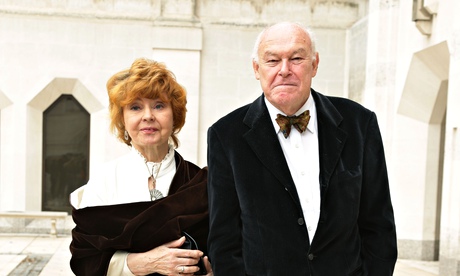
Prunella Scales and Timothy West

Prunella Scales and her husband Timothy West. Photograph: Yui Mok/PA


Actor Timothy West has advised how his wife, Fawlty Towers star Prunella Scales, has been struggling from “a kind of mild Alzheimer’s”.


Stage and display actor West, 79, talks about Scales’ situation in a new More4 documentary, Grand Canal Journeys.


The actress, now 81, is very best acknowledged for her position as Basil Fawlty’s wife Sybil in the comedy Fawlty Towers but has continued to notch up display roles.


West, who last 12 months appeared in Coronation Street and has given that joined EastEnders, tells the programme, which is broadcast later this month, that Scales suffers from “a kind of mild Alzheimer’s”, the Radio Instances mentioned.


The couple have been navigating Britain’s canals on a slow boat ever because they initial sparked a passion for the pastime when they borrowed a friend’s boat for a fortnight in the 1970s.


And West tells the programme, in which the pair embark on four canal journeys across Britain, that the journeys are best for his wife simply because of the problems with her memory.


“She cannot remember things really effectively, but you do not have to bear in mind factors on the canal,” he says.


“You can just appreciate things as they happen – so it really is excellent for her.”


Scales says that she was determined not to allow the issue keep her from the stage.


“I usually say I want to die on the eighth curtain contact,” she says.


“Eight will imply the show’s been rather a accomplishment. I just hope I am someplace close to the middle and have been fairly great in the element.”


The pair celebrated their golden wedding ceremony anniversary last October with a trip down the River Thames on paddle steamer the Waverley.


Right after Henry star Scales says of her pastime: “It truly is always Tim who steers! But I enjoy operating up and down due to the fact of the wonderful wildlife on the towpath. And it keeps you match.”


Alzheimer’s Society’s director of external affairs, Dr Alison Cook, said: “Alzheimer’s Society would like to thank Timothy West for speaking out about his wife Prunella Scales’ dementia and raising awareness of the problem.


“Their latest journey navigating Britain’s canals displays that it is possible to dwell effectively with dementia and plan to carry on enjoying daily life.


“We would urge any individual who is concerned about themselves or a loved one particular to talk to their GP right now or speak to Alzheimer’s Society for suggestions and assistance.”


Prunella Scales suffering from "a sort of mild Alzheimer"s"