Channel etiketine sahip kayıtlar gösteriliyor. Tüm kayıtları göster

16 Ocak 2017 Pazartesi

Channel 4 to broadcast first TV ad of live surgery

Squeamish viewers tuning into Channel 4 on Wednesday afternoon might want to look away as the broadcaster airs the first TV ad showing a live surgical procedure.


Channel 4 and Cancer Research UK have teamed up to air a colonoscopy being performed live on a patient in what the two organisations claim is a world first in broadcasting.


The 90-second TV ad, which will rather incongruously air at 3.25pm on Wednesday during the property programme A Place In The Sun, will demonstrate an operation to remove two bowel polyps inside Philip McSparron.


McSparron, who started getting regular screenings for cancer after his brother’s bowel cancer was spotted in early 2010, said he hoped the live broadcast of his procedure would show people that it is “not something to be frightened of”.


“Hopefully people will be interested in seeing the live footage and it will encourage them to be more willing to talk about cancer and think about taking up regular screening,” he said. McSparron is not being paid for his appearance in the ad.


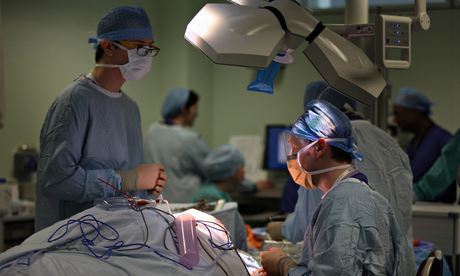
Bowel polyps are common, and not usually cancerous, but some can become cancerous if left untreated. The surgery will be performed by Dr Sunil Dolwani, at the Cardiff & Vale University hospital, who will give a running commentary on what viewers are seeing.


Cancer Research UK hopes the procedure, which will see a camera on a flexible tube called a colonoscope inserted into McSparron’s anus, will help to show the positive impact research has had in helping to treat cancer. The TV ad, titled Live from the Inside, will be promoted from Monday with 10-second teaser trails on Channel 4.


The charity will simultaneously stream the ad on Facebook, with a cancer nurse to field questions posted by social media users. Channel 4 will also simultaneously broadcast the event across its social media accounts.


For those keen to see the ad but stuck at work or unable to tune in online, a 60-second version will be rebroadcast at 9.30pm during the Channel 4 drama No Offence. The show attracts an audience of almost 2 million viewers.


The live ad has to be first broadcast during daytime TV as the surgery has to take place during routine hospital hours.


In 2008, 2.2 million viewers watched the live broadcast of a team skydive in a three-minute, £500,000 ad for Honda. Almost 170,000 tuned in just to watch the TV advert, not the edition of Come Dine With Me during which the ad had been aired. It was the first live ad broadcast on UK TV.


The live colonoscopy broadcast forms part of Cancer Research UK’s “Right Now” campaign, which was launched on Boxing Day. The campaign aims to show the reality of day-to-day life for patients, their loved ones, researchers and medical staff. The organisation says that showing the colonoscopy highlights how investment in cancer research has helped develop simpler and more effective tests and treatments.


“Broadcasting Philip’s colonoscopy live gives us the opportunity to show one of the many people across the UK who is benefiting from procedures that wouldn’t be possible without research,” said Ed Aspel, of Cancer Research UK. “We want viewers to join us to experience the unique insight of seeing live inside the human body, and witness a procedure that can actually prevent cancer from developing.”


The organisation does not receive any government funding for its cancer research, relying on charitable donations.


Last month, Channel 4 teamed up with the film studio 21st Century Fox to air a live ad of a stuntman performing a 30-metre (100ft) freefall in a commercial break during the TV show Humans.


The “leap of faith” stunt was part of the promotion of the film Assassin’s Creed, which sees the character played by the actor Michael Fassbender jump from a similar height.


In 2014, Channel 4 also collaborated with Google and Capitol Records, the Universal Music-owned label, to take over a whole 3.5-minute ad break to air Sam Smith singing his hit Stay With Me live from a performance at Camden’s Roundhouse venue in London.


Channel 4 to broadcast first TV ad of live surgery

10 Temmuz 2014 Perşembe

Britain"s Youngest Carers, Channel 4, assessment: "a difficult road"


When six-12 months-outdated Ty-Reese handed his mom a glass of water for her to take her drugs, she stated: “Thank you, little one.” He replied: “You’re welcome, Mummy.” Following this formal little exchange, he went into the kitchen to load the washing machine, for he had previously spent 18 months of his existence helping to be a carer for his mother, who has kidney problems and arthritis, and is fitted with a pacemaker.


Officially there are 200,000 kids who are classified as “carers”, based on the 2011 census, but Professor Saul Becker, a Nottingham sociologist, told the camera that a more accurate variety is nearer 700,000, 1 in 12 of all kids in the country.


He was asked about this by Oritsé Williams, greatest identified as a member of the former boy-band JLS. The cause he was presenting Britain’s Youngest Carers (Channel 4) is that, from the age of twelve, he cared for his very own mother, Sonia, who has several sclerosis.


Williams wisely said, “I’m constantly suspicious of celebrity involvement” in this kind of complex difficulties, and he had no illusion that a magic wand could be waved to save schoolchildren investing forty hrs or much more caring for a mother or father on top of their scientific studies. He presented a literal shoulder to cry on for far more than one particular youngster in this brief documentary, and repeated that one particular of the most troubling problems is their getting no one particular to share their feelings with. Kids are even bullied at college if they reveal their parents’ dependence.


A single, Josh, aged 13, helps his mom and sister look right after his terminally unwell father. A critical youth, he also goes to Air Cadets, which he finds “takes your thoughts off it” but he has advised no one there of his commitment at home. “He has to slowly watch his father die,” Williams commented, “something which no one of any age ought to have to do, and not at 13.”


That sounds a sympathetic thing to say, but it cannot be true. Absolutely everyone has to see their parents die, gradually or speedily, unless they die 1st. Josh must tread a hard road, and one particular probably unnecessarily lonely, but, for all his hidden anguish, he appears to be undertaking it bravely. What’s the different?


One particular substitute is the probability that small Ty-Reese’s mom fears: that, now he has a social employee allotted to him, he will, when she gets to be even less capable to look following herself, be “taken into care”. That, in our day, is a prospect as chilling as the workhouse when was.


Stick to TELEGRAPH Tv ON FACEBOOK


Britain"s Youngest Carers, Channel 4, assessment: "a difficult road"

9 Temmuz 2014 Çarşamba

Britain"s Youngest Carers, Channel 4, assessment: "more than a celebrity endorsement"


When six-12 months-old Ty-Reese handed his mom a glass of water for her to take her drugs, she stated: “Thank you, little one.” He replied: “You’re welcome, Mummy.” After this formal small exchange, he went into the kitchen to load the washing machine, for he had already spent 18 months of his lifestyle helping to be a carer for his mom, who has kidney difficulties and arthritis, and is fitted with a pacemaker.


Officially there are 200,000 kids who are classified as “carers”, based mostly on the 2011 census, but Professor Saul Becker, a Nottingham sociologist, informed the camera that a more correct variety is nearer 700,000, 1 in twelve of all young children in the nation. He was asked about this by Oritsé Williams, very best recognized as a member of the former boy-band JLS. The reason he was presenting Britain’s Youngest Carers (Channel four) is that, from the age of 12, he cared for his own mom, Sonia, who has multiple sclerosis.


Williams wisely explained, “I’m usually suspicious of celebrity involvement” in such complex problems, and he had no illusion that a magic wand could be waved to save schoolchildren investing 40 hours or far more caring for a mother or father on best of their scientific studies. He offered a literal shoulder to cry on for much more than a single youngster in this brief documentary, and repeated that one of the most troubling troubles is their obtaining no one to share their emotions with. Kids are even bullied at college if they reveal their parents’ dependence.


A single, Josh, aged 13, helps his mom and sister seem soon after his terminally ill father. A serious youth, he also goes to Air Cadets, which he finds “takes your thoughts off it” but he has told no one there of his dedication at property. “He has to gradually watch his father die,” Williams commented, “something which no 1 of any age should have to do, and not at 13.” That sounds a sympathetic factor to say, but it can not be real. Everyone has to see their dad and mom die, slowly or quickly, unless they die first. Josh must tread a challenging street, and 1 perhaps unnecessarily lonely, but, for all his hidden anguish, he would seem to be doing it bravely. What’s the substitute?


One particular substitute is the chance that minor Ty-Reese’s mom fears: that, now he has a social worker allotted to him, he will, when she turns into even significantly less in a position to look after herself, be “taken into care”. That, in our day, is a prospect as chilling as the workhouse after was.


Britain"s Youngest Carers, Channel 4, assessment: "more than a celebrity endorsement"

1 Temmuz 2014 Salı

The World"s Greatest Diet plans, Channel 4, overview: "wince making"


Is an hour extended sufficient to travel the globe? Probably not, the producers of final night’s dispiriting documentary The World’s Very best Diet program (Channel 4) need to have agreed. Much better make it an hour and a half.


So it was at breakneck pace that our presenters, jovial Jimmy Doherty and perky Kate Quilton, set off to find the world’s healthiest cuisines. Specialists – off screen – had obligingly ranked 50 nationwide diets by goodness. Occupying the sinful reduced half have been the devotees of cola and corn-syrup: the Marshall Islanders brought up the rear, followed by Mexico, the US and Kuwait. At the finish of every tiny segment, a didactic minor voice summed up: “DON’T consume sugar. Bear in mind to consume vegetables. Do not skip breakfast.”


Overweight individuals of all nationalities waddled across the display incessantly till we reached the halfway stage at 25 and a trumpet announced the Dietary Equator: henceforth, stock footage would demonstrate only gamines.


I was a small unhappy to see the waddlers go what dispirited me more, even so, was the presenters’ cultural commentary, which began to downgrade from merely banal to excruciating.


A segment in Ethiopia was generally wince-producing. “This utilised to be a spot of famine and Live Support but it’s all much much better now,” grinned Doherty. The documentary was so “over” Ethiopia’s recurring famines (last critical in 2011) that it wobbled close to the territory of that spoof Mariah Carey interview: “I’d love to be skinny like that – but with no all the flies and death and things.”


Doherty challenged his Ethiopian host to eat an whole can of Green Giant sweetcorn with him and compare excretions the next day. Doherty’s digestive technique took a total twelve hrs longer to procedure the maize. The Ethiopian diet regime, it would seem, helps make for an inspiring colon. But it didn’t make for inspiring television.


Our short immersion in the establishing planet turned out to be tokenistic. In the ultimate evaluation, it was “clever old West”: the Mediterranean diet plan came in 2nd. Gold went to Iceland. (Fish, apparently.)


Some of this documentary’s flaws lay in the crass execution, some in the notion. Television can do marvellous things but if you ask it to tour the planet in 90 minutes, you need to anticipate to be served scene-setting cliché: the Eiffel Tower, cue accordion Christ over Rio, cue the Macarena rural Italy, cue – illogically, inevitably – Dean Martin.


Go through: The best meals and drink podcasts


The World"s Greatest Diet plans, Channel 4, overview: "wince making"

30 Haziran 2014 Pazartesi

The World"s Very best Diets, Channel four, overview: foods for believed


Is an hour lengthy sufficient to travel the globe? Probably not, the producers of final night’s dispiriting documentary The World’s Very best Diet (Channel 4) should have agreed. Far better make it an hour and a half.


So it was at breakneck tempo that our presenters, jovial Jimmy Doherty and perky Kate Quilton, set off to locate the world’s healthiest cuisines. Experts – off display – had obligingly ranked 50 national diet plans by goodness. Occupying the sinful reduced half were the devotees of cola and corn-syrup: the Marshall Islanders brought up the rear, followed by Mexico, the US and Kuwait. At the end of each small segment, a didactic little voice summed up: “DON’T consume sugar. Don’t forget to consume vegetables. Do not skip breakfast.”


Overweight men and women of all nationalities waddled across the display incessantly until finally we reached the halfway stage at 25 and a trumpet announced the Dietary Equator: henceforth, stock footage would display only gamines.


I was a little sad to see the waddlers go what dispirited me a lot more, however, was the presenters’ cultural commentary, which began to downgrade from just banal to excruciating.


A section in Ethiopia was normally wince-generating. “This used to be a area of famine and Live Help but it is all considerably much better now,” grinned Doherty. The documentary was so “over” Ethiopia’s recurring famines (final critical in 2011) that it wobbled near the territory of that spoof Mariah Carey interview: “I’d enjoy to be skinny like that – but with out all the flies and death and things.”


Doherty challenged his Ethiopian host to eat an entire can of Green Giant sweetcorn with him and examine excretions the next day. The Ethiopian diet program, it turned out, need to be an inspiration to us all. But it did not make for inspiring television.


Our quick immersion in the creating globe turned out to be tokenistic. In the final analysis, it was “clever previous West”: the Mediterranean diet plan came in second. Gold went to Iceland. (Fish, apparently.)


Some of this documentary’s flaws lay in the crass execution, some in the concept. Television can do marvellous factors but if you ask it to tour the globe in 90 minutes, you have to expect to be served scene-setting cliché: the Eiffel Tower, cue accordion Christ above Rio, cue the Macarena rural Italy, cue – illogically, inevitably – Dean Martin.


Study: The ideal meals and drink podcasts


The World"s Very best Diets, Channel four, overview: foods for believed

Channel 4"s Bedlam series acquired men and women talking about mental sickness

James, one of the case studies from Channel 4

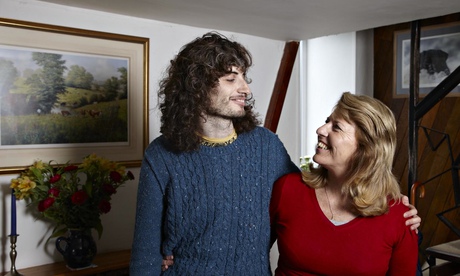
James, who appeared in Channel 4′s Bedlam series, with his mum Penny. Photograph: Richard Ansett


Two years ago we manufactured the selection to let Channel 4 to film an observational documentary series at South London and Maudsley NHS foundation believe in. Our reasons for taking element had been to raise awareness about psychological sickness, draw focus to the realities of living with it, and deal with issues surrounding stigma. Even so, we also knew that we were possibly opening ourselves up to criticism. I would not want to expose any of our staff and individuals to ridicule or to repeat the historical past of Bedlam – when the rich paid to see “mad” individuals as enjoyment.


As a consultant psychiatrist, as well as medical director of the trust, I had to think about whether or not taking portion was advantageous for our individuals and for mental health typically, as one of the fundamental factors of my operate – and a lot of other folks at Slam – is the constant battle to minimize stigma.


For also extended our individuals and mental well being professionals have endured ignorance, stigmatisation, social isolation and even abuse. I would not be completely truthful if I mentioned I never anxious about the outcome I was, however, confident in our partners (Channel four and Garden Productions) and believed that as it was an crucial story to inform, it was worth the risk.


So when we stood on stage acquiring a Bafta last month, it struck me how far we have come (I also manufactured a psychological note that this was a personal knowledge unlikely to be repeated in my lifetime). A series about psychological illness triumphed over mainstream populist documentaries to win a significant award.


Many years in the past it was unlikely that a series like this would have been produced, allow alone acquire such recognition. Just before Bedlam was on Tv no person actually knew what psychiatrists or psychological well being nurses do for a residing through Channel four millions of people acquired a small glimpse into our planet from their living room. Even my pals and family members mentioned it was the first time they actually knew what I got up to. When I watched the programmes I was immensely proud of the personnel and patients who took element – they did so simply because they believed their work is essential and should be acknowledged about. There was an huge sense of humanity and humility in what was portrayed.


During the transmission of Bedlam we noticed many new developments on social media web sites and many rewarding responses from the public. Gradually, men and women have been possessing their eyes opened. Folks were ultimately obtaining the thought that psychological illness is not constrained to a particular kind of individual it can impact anybody – your neighbours, colleagues and friends. The individuals on Bedlam are ordinary folks who have sometimes had to encounter extraordinary conditions. It isn’t going to matter what your tax band or your postcode are.


Bedlam followed men and women on a journey to recovery – something we will not see virtually enough in the media. People can be reluctant to look for assist for a psychological health difficulty, or even to talk about it with their family and close friends, due to the fact of the stigma and discrimination that is sadly nonetheless as well prevalent in our society. The series exhibits that it is attainable to live with and recover from severe psychological illness if you receive the proper treatment method and help.


Close to 80% of folks with psychological overall health issues say they are subjected to stigma or discrimination. The individuals who took part desired to confront this. The dangers have been explained to them and there was a complicated procedure of consent in area to make sure their demands had been met every single stage of the way.


Usually when I seem in the media it is to speak about the UK’s psychological wellness crisis and bed shortage. Sadly, this predicament has nevertheless not enhanced. The bed shortage is a nationwide phenomenon underpinned by a lot of factors. Squeezed social companies budgets, pressures on housing, reductions in specifications of living and adjustments to the positive aspects technique have all played their part in leading to a national upturn in mental overall health issues. It is also a truth that, at a time when healthcare funding is under enormous strain, psychological wellness providers have taken a disproportionally huge hit.


This is why we need to have more displays like Bedlam – shows that can portray mental illness accurately, increase the profile of psychiatry and attract talented younger medical doctors into the profession.


I was worried about the responses of colleagues, possibly fearing I would be accused of trivialising psychological well being issues. In fact I have received a massive quantity of unsolicited thanks and appreciation for what the trust has accomplished with the programme.


It is naive to believe Bedlam has modified anything at all lengthy term but it genuinely feels as although we have manufactured some commence on tackling mental well being discrimination. If nothing else, Bedlam received folks talking about psychological sickness – and that can only be a step in the proper course.


Dr Martin Baggaley is health care director at South London and Maudsley NHS basis believe in. He is also a advisor psychiatrist at Lambeth hospital triage ward, which offers quick evaluation and treatment method for folks with severe mental illness in crisis. The operate of the unit featured in the Channel four documentary series Bedlam, which won a Bafta for ideal factual tv series.


Are you a member of our online community? Join the Healthcare Professionals Network to receive typical emails and exclusive provides.


Channel 4"s Bedlam series acquired men and women talking about mental sickness

31 Mayıs 2014 Cumartesi

Preview clip: Harry Wallop investigates junk meals advertising for Channel 4 Dispatches


The forthcoming episode of Dispatches on Channel four seems at how junk food items are marketed to shoppers in the Uk.


Presented by The Telegraph’s Harry Wallop, Tricks of the Junk Meals Company sees Harry and his colleagues invent a fake brand of large-sugar drink aimed at young children.


Armed with a bottle of the luridly-coloured Orange Beast, the programme makers go undercover and offer marketing companies the likelihood to industry the solution to children.


‘Secrets of the Junk Food Business’ on Channel 4 at 8pm on Monday 2 June


Preview clip: Harry Wallop investigates junk meals advertising for Channel 4 Dispatches

23 Nisan 2014 Çarşamba

Channel 4 interactive documentary to examine value of treating NHS patients

Channel 4

Channel 4′s NHS documentary will give viewers the chance to give their views on who must be handled. Photograph: Christopher Furlong/Getty Images


The price of treating NHS individuals will be examined in a new Channel four interactive documentary that the broadcaster says offers viewers the likelihood to “choose for themselves who ought to receive the therapy”.


With the doing work title of NHS: The Value of Residing, the series has been commissioned as campaigners are at the moment urging pharmaceutical giant Roche to lessen the cost of a pioneering breast cancer remedy following it was rejected for widespread use by the NHS on price grounds.


In accordance to Channel four NHS: The Value of Living will have, “a dwell presence through the broadcast of the documentaries [and] this progressive format will challenge viewers to choose for themselves who need to receive the remedy and how the NHS ought to spend its rapidly depleting funds”.


Actual particulars are even now becoming worked out of how the programme will function – nonetheless, it will not be a type of Patient Idol or X-ray Issue design-show as viewers will not in fact have the last say on who receives the treatment method, only register their opinions on both a web site or Twitter feed.


The 4-component series will be followed by a reside debate, which is most likely to provoke view as with the NHS paying on typical more than £2bn a week, its fees are growing quicker than its spending budget.


Channel 4 head of documentaries Nick Mirsky stated: “The series will reveal the charges of every patient to the NHS and explore the complex ethical and monetary dilemmas faced by clinicians as these become an more and more prevalent factor in the care they are ready to offer sufferers.


“NHS: The Cost of Living will inquire viewers – would you make decisions differently about where and how the NHS spends its income if you knew the complete emotional, social and health-related context of each therapy? We can’t afford to supply all the medical remedy that we would like to – in the debate programme we will ask our viewers where and how we draw the line – who must receive it and who should be denied.”


It will be made by new independent production company Voltage Television, series created by Jon Alwen and executive developed by Sanjay Singhal.


Singhal explained: “It truly is an ambitious programme combining robust character-led storytelling, hard entry, strong journalism and innovation in kind – with tricky moral dilemmas operating by way of its core. We couldn’t hope for more from our very first series.”


The series will air later this 12 months.


• To contact the MediaGuardian news desk e mail media@theguardian.com or cellphone 020 3353 3857. For all other inquiries please contact the main Guardian switchboard on 020 3353 2000. If you are writing a comment for publication, please mark clearly “for publication”.


• To get the most recent media news to your desktop or mobile, stick to MediaGuardian on Twitter and Facebook.


Channel 4 interactive documentary to examine value of treating NHS patients

7 Şubat 2014 Cuma

Channel 4"s Big Ballet demonstrates that this is an art type that must be open to all | Deborah Orr

Big Ballet

‘Big Ballet is fairly radical, a challenge to ballet as a grand, brittle repository of ambivalence about women’, writes Deborah Orr. Photograph: Rory Mulvey


There is, I think, a really critical level at the heart of Channel 4′s new 3-element reality present, Massive Ballet. That stage is not about becoming unwanted fat or becoming thin. It is about variations in gender attitudes to perform and leisure that go back centuries. Not that any of this is intentional or explicit in the show, which, if last Thursday’s opening episode is something to go by, follows the formula of an established contemporary genre. The contention of the show’s presenter, the former Royal Ballet principal dancer Wayne Rest, is just that anybody and everybody should have accessibility to classical ballet as a implies of enjoyment and physical exercise, even so they search. He is right. Why not?


The explanation why not is complex. It’s that such an mindset is alien to the culture of ballet. From the crown of its bun to the suggestions of its blocks, ballet is a substantial art, with its goal the achievement of aesthetic perfection. It is decidedly not just for exciting, mere entertainment or simple workout. Every single ballet teacher is a talent spotter, surveying her crew of tiny women in pink tutus in the hope of spotting one more Darcey Bussell. If she spots a boy, then that, of program, is an even greater deal …


Accurate, every single amateur football coach is also a talent spotter, surveying his crew of minor boys in Manchester United strips in the hope of spotting another George Very best. The variation is that no a single would ever dream of putting together a actuality demonstrate in which a bunch of tubby guys and a couple of tubby females struggled valiantly in direction of their socially unacceptable ambition of taking element in an amateur five-a-side match. That occurs all the time.


In some respects, the causes for this are obvious. Visual perfection is an integral aim of top-degree ballet, whilst it is just one particular of the glorious by-goods of top-degree football. Only those with the potential for perfection can go to ballet school. If you’re also unwanted fat, also tall or too brief (however Sleep himself defied the latter rule), then you’re out. The high incidence of eating disorders among dancers suggests, counter-intuitively, that you can in no way be too thin.


What’s not evident, even so, is why ballet should be so single-mindedly in thrall to professionalism, while football comes in all shapes and sizes, available to all. Offered that so numerous little ladies want to go to ballet courses, and that it’s great exercising, why is it that dance remains so peripheral to physical exercising at college, for illustration? There is certainly a huge gender element here, but possibly it really is even greater than we very realise.


Ballet originated in Renaissance Italy, solely the protect of aristocratic amateurs, and spread quickly to other European courts. It was France that professionalised ballet, and founded the first ballet school in the 17th century. Crucially, all this occurred at a time when it was not acceptable for educated females – aristocratic women – to operate. We all know that throughout this time period younger men took the parts of females in plays and that as women did start going into theatre, it conferred on them the excellent status described so nicely in Mrs Jordan’s Occupation, Claire Tomalin’s biography of Dorothea Jordan, the 18th-century actor. Actors had been offered a cultural dispensation to be much more socially totally free than other ladies – they could have lovers, be single mothers, and so on, when usually females just couldn’t.


For a ballerina, although, a racy enjoy life and the typical pregnancies this tended to generate definitely would not be very the factor. Perhaps here lie the origins of that extremely circumscribed variety method, whereby ladies are picked or rejected at a youthful age for careers in ballet – whisked away to strive for perfection nearly in the manner of nuns, residing a cloistered existence devoted to art, but denied the freedoms of other female theatrical artists. It’s notable that neither of Britain’s prima ballerinas assolutas, Alicia Markova and Margot Fonteyn, had young children.


It really is surely a concept that fits with that wonderful melodrama of ballet, Powell and Pressburger’s 1948 movie, The Red Footwear, in which Victoria finds it impossible to decide on among ballet and marriage. More not too long ago, Darren Aronofsky’s 2010 film The Black Swan explored the concept of a dancer becoming haunted by a a lot more assured and liberated double, which could be read as being the woman the ballerina had been obliged not to be.


These psychological melodramas are disliked by ballet professionals perhaps exactly due to the fact they contain unpleasant truths about the origins of the occupation and the restrictions it sought to spot on ladies. Ballet professionals tend to be quite touchy when it is suggested that the prevalence of anorexia in ballet dancers is an aspect of the febrile strain placed on them. But given that eating ailments are frequently interpreted as currently being indicative of a refusal to embrace womanhood, this too helps make sense.


Seeking at the display in this light, Large Ballet gets very radical, a challenge to ballet as a grand, brittle repository of ambivalence about ladies, in which perfect females express archetypal femininity by rejecting such definite facets of womanhood as the ability to procreate, itself related ridiculously closely with “obtaining fat”.


The close scrutiny of female bodies is considerably debated, with limitless discussion of the detrimental results on youthful ladies that such publicity has. The media’s obsession with “shedding that child fat” is specifically irksome. It’s as if 17th-century suggestions about girls and ballet have been writ massive, with girls who wish to wear figure-hugging clothes or place on a bikini for the beach getting warned that reproduction will place it all in jeopardy. Mothers with younger children carry on to find it a challenge, getting accommodated at work during those years, to the lifetime detriment of their careers. But what females are “allowed” to seem like is only the superficial element of a significantly a lot more deep-seated impulse to control how girls are “permitted” to behave.


So excellent on the women who want to do ballet for enjoyable, even though they are not the form that is deemed ideal for it. Like all fat men and women, they lay themselves open to ridicule by the shallow, unhappy and suggest. If they’d been encouraged to exercise by way of dance at school, rather than forced to do the sport that so many schoolgirls loathe, then there’s each likelihood that they would not have piled on the lbs in the very first place. It’s weird that the enthusiasm of tiny girls for dance is not utilized at school as a conduit to a lifetime of fitness and physical exercise. This, as well, could date back to the days when an training at a college was the preserve of males.


The pursuit of skilled ballet as a high-artwork form need to usually have a pre-eminent area in human culture. But ballet should be far more universal, too, embracing amateurs with gusto. Ballet, in short, could and need to be a lot, a lot larger.


Channel 4"s Big Ballet demonstrates that this is an art type that must be open to all | Deborah Orr

9 Ocak 2014 Perşembe

The Undateables, Channel 4, assessment


What do you lie awake worrying about at night? Work stresses? Mortgage payments? Utility bills? For some folks, none of that issues. As the first in the latest series of The Undateables (Channel four) reminded us final night, often all you need is enjoy.


This was about as far from the schmaltz of Enjoy Actually as you could get, even so, as the documentary about dating with disabilities returned for a third run. Charming, poignant but with a dose of reality, this followed 3 “extraordinary singletons” who allow us into their worlds as they joined dating companies in their quest for an individual specific.


Daniel, 25, was a 6ft 4in singer-songwriter and all-round good guy with autism. “I love to fancy her,” he advised us of his date, Holly, who had mild learning difficulties. He was a bundle of energy – clapping, twirling, always smiling – and I’m sure I wasn’t the only 1 to get teary-eyed when it turned out Holly liked him back (and he didn’t even need his crib sheet for “talking on the date”).


Mary, 44, a gold medal winner in the Dwarf Games, was frank, open and formidable in confronting stereotypes. “We can be a fantasy for some folks,” she admitted. “I would like to be in adore, genuine really like.” Following clothing tips from Reece, her teenage son, she went on a productive date with Jet, a personalized trainer, which ended in a smooch on the street.


But it was Hayley, a 29-12 months-outdated nursery nurse, who had the most moving story. Born with a problem that fuses her bones collectively, she had had a single date in nine many years and described herself as a “beast” compared to her fairly sister, Amanda. But Hayley was funny and variety and held her very own on her bowling date with Chris, a council worker who boasted he’d after shared a cheeseburger with Eddie the Eagle.


It would have been easy for this to descend into patronising commentary on its participants and their distinctive lives. In the final couple of series, I felt it did, focusing excessively on potential daters’ “differences” from the norm. Obtaining had time to refine its tone, however, final night’s episode avoided that.


Alternatively, it was eye-opening, refreshing and brutally sincere. The format – interviews and footage of the dates – was easy and unobtrusive. Far more demands to be mentioned about dating with disabilities – the crucial part of minders, the paucity of trustworthy companies – and The Undateables (the clue’s in the unapologetic title) is going the proper way about it.


The Undateables, Channel 4, assessment