Series etiketine sahip kayıtlar gösteriliyor. Tüm kayıtları göster

8 Ağustos 2016 Pazartesi

Measles warning to young people at festivals after series of outbreaks

Young people planning to go to festivals or other mass events are being warned to make sure they have been fully vaccinated after a number of measles outbreaks.


Public Health England says anyone visiting a music festival should ensure they have had two shots of the measles, mumps and rubella (MMR) vaccine. Some younger people may be at risk because they were not vaccinated as small children, after the scare generated by the suggestion of the now discredited scientist Andrew Wakefield that there was a link between the vaccine and autism.


There has already been an increase in measles cases this year, with 234 confirmed between January and June, says PHE, which has to be notified of every case. That is a more than fourfold increase over the 54 cases in the same six months last year.


Festivals have added to that. There have been 36 suspected measles cases in young people who attended events in June and July. Glastonbury – the biggest music festival of the year – had the most cases, at 16. There were seven cases reported from the NASS festival near Bristol; six at the Triplicity festival in north Devon; three at Tewkesbury medieval festival; two at Nozstock: the Hidden Valley in Herefordshire; two at Noisily in Leicester; one at the Secret Garden Party near Huntingdon; and one at Yeovil Show.


At least three of the cases were people who had measles symptoms but decided to go to the festival anyway rather than staying at home.


PHE is anxious to avoid further spread at festivals and gatherings where thousands of young people are in close contact and some may be susceptible to infection. Measles can be more complicated in teenagers than in small children.


“Measles is a highly infectious viral illness that can be very unpleasant and sometimes lead to serious complications,” said Dr Mary Ramsay, PHE’s head of immunisation.


“So if you think you might have measles, please don’t go to any of these big events. Measles isn’t common these days because most of us are vaccinated, but young people who missed their MMR jab as children are vulnerable, especially if gathered in large numbers at an event.


“If you think you’ve got it, call your GP or NHS 111. Please don’t turn up at the surgery or at A&E as you could infect other patients.”


Measles commonly causes diarrhoea and vomiting, which can lead to dehydration, earaches, conjunctivitis, fits caused by fever and pneumonia or bronchitis if the infection reaches the lungs.


Very rarely it can lead to serious eye disorders and even a fatal brain complication years later. Before vaccination, it was a regular killer. In 1941, there were 1,145 deaths from more than 400,000 cases. In 1998, the year in which the Wakefield paper was published in the Lancet, there were more than 3,700 cases and three deaths. In 2013, the latest year with published figures, although they are incomplete, there was a surge to 6,102 cases because of the Swansea outbreak – in an area of Wales where many parents had opted not to vaccinate their children – but only one death.


The MMR vaccination rate fell slightly in 2014-15 to 92.3% of eligible children. The previous year it was 92.7%, the highest rate ever achieved. But the overall figure obscures the problem of low vaccination rates in specific regions. In some places, less than 80% of children were vaccinated.


Anxieties about the vaccine have led to outbreaks in the US as well. In 2014, there were a record 667 cases, according to the Centers for Disease Control and Prevention. A substantial number of those were among the unvaccinated Amish communities in Ohio.


Last year there was an outbreak in California among children whose parents had refused to have them vaccinated, which began when somebody with measles visited Disneyland – another place where there are mass gatherings.


Measles warning to young people at festivals after series of outbreaks

12 Ağustos 2014 Salı

Performance Apparel Brand ATHOS Secures $12.two Million In Series B Funding


Fitness apparel line ATHOS, which is focused on analyzing muscle activity, hard work, and heart and breathing rates in real-time has just secured $ 12.2 million from a group of investors led by venture capital firm DCM, which includes Real Ventures along with Joe Lacob, majority proprietor of the Golden State Warriors.  The Social + Capital Partnership, an current investor in the organization was also part of the sizable Series B round of funding.  The Series B round brings ATHOS up to a total of $ 16 million raised given that its creation in 2012.


The ATHOS brand seeks to differentiate itself from existing sports activities apparel manufacturers that have not too long ago targeted on comfy fit clothes and sweat resistant engineering by introducing a new capacity that supplies actionable insight on muscle motion, work, target zones and more.  It is all about giving the capacity to enhance an individual’s education on the spot.


$ 12.2 million in additional funding need to aid ATHOS obtain its purpose of obtaining its very first line of apparel accessible for buyers to test out this Fall.  The key to the technological innovation to is to allow consumers to use their smartphones to select up action recognized by sensors in the clothes and receive genuine-time feedback in the course of their workout routines.


“ATHOS’ distinctive performance apparel is fully shifting the way we train the human entire body,” stated Lacob, who along with Pete Moran, common spouse at DCM, will join ATHOS’ board of directors.  ”The Golden State Warriors have been hunting for data-driven techniques to increase our education routine.  With ATHOS, we will for the very first time get a complete see of our players’ muscle activity providing our coaches immediate data-driven insight into enhancing their instruction without disrupting routines.”


The ATHOS apparel is not only being branded for the highest degree expert athlete.  Co-founders Dhananja Jayalath and Christopher Wiebe created the core of their engineering, since they believed that they, and other “weekend warriors,” needed a lot more info about their exercises.


“We’ve spent the past handful of years perfecting this engineering and making the gear seamless, comfy and resilient,” mentioned Jayalath, CEO of ATHOS.  ”And now, with backing from two of the most skilled investors, plus the assistance of Golden State Warriors’ owner Joe Lacob, we are thrilled to carry on our journey to transform the fitness sector the two in the U.S. and overseas.”


ATHOS’ technologies incorporates electromyography (EMG) to track muscle tissue for the duration of workouts.  It claims to be the initial firm to bring this kind of technology to the masses by embedding muscle-tracking sensors into relaxed, efficiency apparel.  The biosignals collected by the apparel are transmitted to a mobile gadget via Bluetooth technological innovation.


“ATHOS’ entrance into the market couldn’t come at a far better time,” said Puneet Agarwal, a spouse at Correct Ventures, who was also an early investor in FitBit.  ”ATHOS is positioned to transcend the fitness and apparel industry – an industry that is seeing more interest in all sorts of gadgets and clothes that are helping individuals stay fit and enhance overall performance.  We couldn’t be far more pleased to companion with ATHOS and support it carry this innovation to the masses.”


Darren Heitner is a attorney and the Founder of South Florida-based HEITNER LEGAL, P.L.L.C., which has a concentrate on Sports activities Law and Enjoyment Law.


Performance Apparel Brand ATHOS Secures $12.two Million In Series B Funding

30 Haziran 2014 Pazartesi

Channel 4"s Bedlam series acquired men and women talking about mental sickness

James, one of the case studies from Channel 4

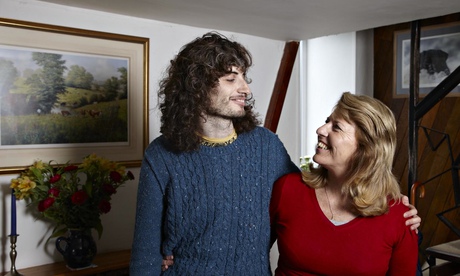
James, who appeared in Channel 4′s Bedlam series, with his mum Penny. Photograph: Richard Ansett


Two years ago we manufactured the selection to let Channel 4 to film an observational documentary series at South London and Maudsley NHS foundation believe in. Our reasons for taking element had been to raise awareness about psychological sickness, draw focus to the realities of living with it, and deal with issues surrounding stigma. Even so, we also knew that we were possibly opening ourselves up to criticism. I would not want to expose any of our staff and individuals to ridicule or to repeat the historical past of Bedlam – when the rich paid to see “mad” individuals as enjoyment.


As a consultant psychiatrist, as well as medical director of the trust, I had to think about whether or not taking portion was advantageous for our individuals and for mental health typically, as one of the fundamental factors of my operate – and a lot of other folks at Slam – is the constant battle to minimize stigma.


For also extended our individuals and mental well being professionals have endured ignorance, stigmatisation, social isolation and even abuse. I would not be completely truthful if I mentioned I never anxious about the outcome I was, however, confident in our partners (Channel four and Garden Productions) and believed that as it was an crucial story to inform, it was worth the risk.


So when we stood on stage acquiring a Bafta last month, it struck me how far we have come (I also manufactured a psychological note that this was a personal knowledge unlikely to be repeated in my lifetime). A series about psychological illness triumphed over mainstream populist documentaries to win a significant award.


Many years in the past it was unlikely that a series like this would have been produced, allow alone acquire such recognition. Just before Bedlam was on Tv no person actually knew what psychiatrists or psychological well being nurses do for a residing through Channel four millions of people acquired a small glimpse into our planet from their living room. Even my pals and family members mentioned it was the first time they actually knew what I got up to. When I watched the programmes I was immensely proud of the personnel and patients who took element – they did so simply because they believed their work is essential and should be acknowledged about. There was an huge sense of humanity and humility in what was portrayed.


During the transmission of Bedlam we noticed many new developments on social media web sites and many rewarding responses from the public. Gradually, men and women have been possessing their eyes opened. Folks were ultimately obtaining the thought that psychological illness is not constrained to a particular kind of individual it can impact anybody – your neighbours, colleagues and friends. The individuals on Bedlam are ordinary folks who have sometimes had to encounter extraordinary conditions. It isn’t going to matter what your tax band or your postcode are.


Bedlam followed men and women on a journey to recovery – something we will not see virtually enough in the media. People can be reluctant to look for assist for a psychological health difficulty, or even to talk about it with their family and close friends, due to the fact of the stigma and discrimination that is sadly nonetheless as well prevalent in our society. The series exhibits that it is attainable to live with and recover from severe psychological illness if you receive the proper treatment method and help.


Close to 80% of folks with psychological overall health issues say they are subjected to stigma or discrimination. The individuals who took part desired to confront this. The dangers have been explained to them and there was a complicated procedure of consent in area to make sure their demands had been met every single stage of the way.


Usually when I seem in the media it is to speak about the UK’s psychological wellness crisis and bed shortage. Sadly, this predicament has nevertheless not enhanced. The bed shortage is a nationwide phenomenon underpinned by a lot of factors. Squeezed social companies budgets, pressures on housing, reductions in specifications of living and adjustments to the positive aspects technique have all played their part in leading to a national upturn in mental overall health issues. It is also a truth that, at a time when healthcare funding is under enormous strain, psychological wellness providers have taken a disproportionally huge hit.


This is why we need to have more displays like Bedlam – shows that can portray mental illness accurately, increase the profile of psychiatry and attract talented younger medical doctors into the profession.


I was worried about the responses of colleagues, possibly fearing I would be accused of trivialising psychological well being issues. In fact I have received a massive quantity of unsolicited thanks and appreciation for what the trust has accomplished with the programme.


It is naive to believe Bedlam has modified anything at all lengthy term but it genuinely feels as although we have manufactured some commence on tackling mental well being discrimination. If nothing else, Bedlam received folks talking about psychological sickness – and that can only be a step in the proper course.


Dr Martin Baggaley is health care director at South London and Maudsley NHS basis believe in. He is also a advisor psychiatrist at Lambeth hospital triage ward, which offers quick evaluation and treatment method for folks with severe mental illness in crisis. The operate of the unit featured in the Channel four documentary series Bedlam, which won a Bafta for ideal factual tv series.


Are you a member of our online community? Join the Healthcare Professionals Network to receive typical emails and exclusive provides.


Channel 4"s Bedlam series acquired men and women talking about mental sickness

20 Haziran 2014 Cuma

Visionary Healthcare Leaders Series # four, Patrick Fry Sutter Well being CEO

One issue pretty much absolutely everyone in America has in widespread is a deep-seated curiosity in uncovering how healthcare will modify over the subsequent decade. Below are, I believe, several of the solutions. I just lately interviewed Pat Fry, who is the CEO of Sutter Wellness, a technique with more than 24 hospitals, 48,000 personnel and $ 10 billion income. I discovered his vision for the future riveting and but practical.


Robert Reiss: With healthcare at 17.2 percent of the GDP, considerably larger than any other nation, how can we enhance the economics of healthcare in America?


Pat Fry: A remarkable amount of overall health care expense—perhaps far more than one fifth—is largely due to poorly coordinated care, in excess of treatment method and variation. To fix this difficulty, providers need to have to root out waste from the total delivery technique. For illustration, what if companies across the nation did something as straightforward as prescribing generics as an alternative of expensive brand name medication? In 2008, our medical doctors commenced doing work with individuals and their wellness plans to do specifically this each time achievable. Considering that then, we’ve saved our well being prepare partners more than $ 54 million. There is also wonderful opportunity for providers to streamline non-direct patient care services, this kind of as back workplace or enterprise functions. We started out this procedure two many years ago and within a 12 months we attained more than $ 92 million in price savings and captured income, and by 2017 we assume to achieve $ 300 million yearly.


Suppliers in the U.S. also need to have to do a better job at coordinating care and managing chronic illness. A few many years in the past, we launched an Innovative Sickness Management system to aid individuals steer clear of needless emergency area visits and hospital stays. Based mostly on the encounter of about 1,000 sufferers enrolled in our program amongst July 2012 and September 2013, we saw a 69 percent reduction in days invested in an ICU, much more than 25 % reduction in ER visits and a more than 62 percent reduction in hospitalizations. And we estimate AIM saved government payers and industrial wellness strategies $ twenty million in reimbursement.


Reiss: How can we boost good quality of care whilst not including to charges?


Fry: We’ve discovered that good quality and affordability go hand-in-hand. By focusing on improving good quality, we give better, more productive, reduced value care. Consider hospital-acquired infections as an illustration. In accordance to the CDC, 1 out of each and every 25 hospitalized patients in the U.S. will get some sort of infection. A latest report published in JAMA estimates these types of infections value our nation nearly $ ten billion a 12 months. At Sutter Overall health, a concerted energy by our medical teams helped us decrease our charges of central line blood infections by 82 percent―far ahead of the national regular. Our efforts for the duration of this time time period saved 123 lives and prevented 770 infection situations. Our sepsis mortality fee also enhanced by 32.6 percent because 2008, with an estimated 4,247 lives saved. As a end result, we’ve saved approximately $ 120.two million for central line infections and sepsis from 2007 by means of 2013.


Reiss: In a digital world, how will mobility modify healthcare?


Fry: Nowadays, smartphones are much more than stylish gadgets—they’re fairly a lot an inseparable portion of our lives. And we’re just now at the tip of the iceberg in exploring revolutionary ways to use mobile technology to boost wellness and engage with patients. This fall, we prepare to launch an app that will give our patients all around-the-clock access to virtual telehealth visits with a physician, as effectively as a complete suite of data that will help them manage well being care all in the palm of their hand. We’re also exploring innovative biometric technology to allow individuals to share essential, genuine-time data with their medical doctors, such as heart, breathing, pulse rates—all whilst outdoors the conventional care setting. Picture if right after significant surgical procedure a patient is in a position to recover in the comfort of his or her property rather than staying at the hospital, all created attainable by telehealth and remote biometric monitors.


Mobile technology is also opening new doors for physicians to partner with sufferers to support them much better handle serious wellness circumstances. For example, at Sutter Health’s Palo Alto Healthcare Foundation Innovation Center, we launched a pilot program to support patients with uncontrolled higher blood strain. Via this plan funded by the Gordon and Betty Moore Foundation and Sutter Health, we outfitted 149 patients with blood strain monitors, pedometers and bodyweight scales—all linked to an iPhone application we designed. Patients frequently uploaded their health data to the app and reported key behaviors, such as drugs taken, nutrition habits and exercise levels. A nurse care manager then utilized the information to generate customized habits action plans with objectives such as shifting eating routines or rising the variety of steps per day. In just 6 months, 54 percent of the sufferers in the pilot had their blood stress back underneath control—all by using mobile technology to control their progress although at house.


Reiss: By 2025, how will our well being care delivery system adjust?


Fry: A decade from now, well being care as we know it today will be vastly diverse. Above the previous a number of many years, we’ve seen a decline in the quantity of hospitals beds in the U.S., largely due to health care care moving out of hospitals. As this trend continues we’ll very likely start to see more and a lot more retail wellness clinics open in areas like malls and grocery stores, as properly as in function settings. Telehealth will turn into a mainstream way of offering customers with actual-time medical consultations, diagnostic and prescription solutions. Currently we’re seeing a convergence of technological innovation businesses commencing to enter the well being care business—many today have even recruited chief health-related officers.


At the very heart of this sector shift is the consumer. By 2025, they’ll use a assortment of intelligent apps and wearable technological innovation to encourage wholesome behaviors and even acquire and send information to doctors for advice. Possibly grocery retailers will understand these products and warn buyers that they are about to make a bad food selection. Information from these apps will flow into families’ personalized overall health information, exactly where straightforward-to-comprehend digital graphics will help them preserve track of their health progress or challenges.


And any well being remedy will want to be inexpensive to buyers, who will carry on to make choices primarily based on cost and high quality. They’ll demand greater transparency from their services companies. If they’re dissatisfied with the top quality offered, consumer service or cost, they’ll store all around and go elsewhere. That’s why we’re driven to transform and redefine care at Sutter Health—focusing on how, when and exactly where buyers want wellness providers.


We’re expanding weekend and evening hours in our doctors’ offices, increasing our presence in walk-in health-related clinics at key retail shops or areas of employment and investing in telemedicine services providers, like MDLive. And our analysis institutes aid us much more swiftly translate revolutionary findings into care that better meets the varied healthcare wants of individuals. Personally, I believe the potential is complete of incredible chance for wellness care providers ready to embrace alter. But, a decade from now, the genuine winners will not be doctors, hospitals, overall health methods or insurance coverage plans they’ll be shoppers.


To hear interview with Pat Fry and other leading CEOs as recorded on The CEO Present, go to www.ceoshow.com


Visionary Healthcare Leaders Series # four, Patrick Fry Sutter Well being CEO

17 Nisan 2014 Perşembe

A significant new documentary series examines the state of elderly care

News: 1000′s of dementia individuals not referred to professionals


Hospital care is just the tip of the iceberg. Most care of older folks will take location in the home with primary health care and local community well being teams, supported by social services and mental well being. As this kind of, a lot of Safeguarding Our Parents focuses on the complex, distressing, frequently near not possible alternatives dealing with nearby authorities and social welfare companies when it comes to balancing overstretched budgets towards the needs and desires of men and women. In no way more so than when it comes to care in the home.


Fighting for independence: patient Betty Williams Photo: BBC


The 1st movie concentrates on sufferers whose arrival at Heartlands following severe falls points up deeper rooted concerns above their safety in advance of discharge. For octogenarian Betty Williams, the difficulty is balancing her ferociously held wish for independence with worries above deteriorating residing problems in her residence. For 80-year-old dementia sufferer Jim Webpage, a current widower, a complicated multi-agency dilemma arises in excess of how to preserve his care at home where everyone agrees he is happiest.


“What I’ve observed in excess of my career is that the numbers of people presenting in crisis is increasing,” Wallis says. “Often these are situations that have been brewing gradually in excess of a extended time and out of the blue they’ve reached a stage in which a crisis has been precipitated by a fall, or an infection or a time period of lowered mobility. Occasionally it has been picked up by local community services in a good deal of conditions it hasn’t. ”


Possibly surprisingly, given that Defending Our Mothers and fathers depicts a scenario in which resources across the board seem stretched to the restrict, neither of these clinicians target specifically on far more funding as a resolution.


Sufferers Betty Williams and Catherine O’Mahoney Photo: BBC


“It’s not constantly about more funds.’ says Wallis. “I believe a great deal of it is about integrating companies much better. We have a method which is historical. We have psychological overall health, social services, local community health, primary overall health, hospitals. There are some truly great examples of joined up, coordinated care, but this is an location where we can get considerably, significantly far better.”


For George Tadros, training and early intervention are crucial. “Dementia is costing us £30 billion a yr and this will triple soon,” he says, quoting the National Dementia Approach report published last 12 months. “We need to target on instruction for nurses and doctors. Individuals with dementia are not only on geriatric wards.”


View: Dementia wants more than excellent intentions


In an increasingly mobile society, the place children move extended distances from mothers and fathers and increasing numbers of individuals reside alone into outdated age, he also emphasises the value of personal preparedness.


“Acute hospitals are active places, and a time of crisis is not the best time for creating prolonged-lasting choices. We need to make individuals aware of this. So they can make planning for the potential.”


Wallis agrees. “These scenarios will influence all of us when we’re older. Selling healthier ageing and minimising the consequences of frailty is possible.”


For Wallis, Defending the Mother and father represents a dose of realism following a decade in which exposés of practices linked with elderly care, such as “Care Pathways” for individuals deemed dying, had shocked the public.


Study: NHS millions for controversial care pathway


“A great deal of media focus in the past had been scaremongering which can be frightening for folks viewing and dispiriting for us. We felt we didn’t want this to be an exposé nor did we want it to portray a health and social care system that was perfection and had all the solutions.”


But he remains steadfastly optimistic. “The demographic changes in society are not a disaster,” he insists. “The ageing of society genuinely is a good results story as there are numerous additional years of daily life and most of those are healthful. If we get organised, it is containable.”


Safeguarding our Mothers and fathers airs tonight on BBC Two at 9.00pm


Go through: WHY ARE Girls Scared OF Receiving Previous?


A significant new documentary series examines the state of elderly care

11 Mart 2014 Salı

Visionary Healthcare Leader Series, Interview # one Ken Kaufman

I am concerned with the state of healthcare in America. Statistically, our healthcare fees have ballooned to 17.2% of the GDP. Anecdotally, both CEOs and close friends alike tell me healthcare is becoming a disproportionate sum of their budgets. Still the good quality of care and outcomes lags behind a lot of nations. In truth, a current Bloomberg report analyzed the healthcare efficiency globally and the U.S. came in 46th place out of 48 nations.


So I made a decision to place collectively a series of interviews exactly where I would have visionary healthcare leaders share insights on four fundamental queries about answers for value, top quality, engineering, and how the program may adjust over the subsequent decade.


In February, I was at a Governance Institute meeting of hospital board members, and in hearing Ken Kaufman, Chair of Kaufman Hall, speak I identified the first visionary for this series. Right here are his responses:


Reiss 1.     With healthcare at 17.2% of the GDP, substantially increased than any other nation, how can we boost the economics of healthcare in America? 


Kaufman: We’ll want a total overhaul of the care program to decrease the two the amount of care we consume and the cost of that care. New economic incentives like substantial-deductible overall health plans and value-primarily based payment are encouraging buyers not to over-use and suppliers to be more effective. But a more radical reworking of the care model is coming, driven by new rivals from Walgreens to Google and innovations from robotic pills for continual problems to higher availability of genetic sequencing. Ultimately, we need to transform the program from substantial-expense, provider-centric, and sickness-targeted, to reduced-price, buyer-centric, and wellness-centered.


two.     How can we improve high quality of care whilst not incorporating to charges? 


For an example, look no further than Walgreens, which will now be diagnosing and treating heart ailment, diabetes, and other chronic circumstances that are the large drivers of healthcare expenses. Walgreens uses physician extenders and kiosks, so it’s reduced price. Ninety percent of Americans live inside of two miles of a Walgreens, so it’s practical. This model is developed to get men and women the right level of care at a lowest cost. And it encourages individuals to be seen early, before their problem calls for treatment in a more expensive setting. The introduction of a organization like Walgreens in which doctors and hospitals when held sway is a signal of the upheaval taking place in healthcare.


3.     In a digital world, how will mobility alter healthcare? 


A smartphone is even much more convenient and much less expensive than a Walgreens clinic. You can investigation competing medical doctors, even even though sitting in your doctor’s waiting space. You can attach a blood strain cuff or a blood glucose keep track of. You can get a mobile video consultation swiftly and inexpensively through Google Helpout. Quickly you will be able to shop and share DNA data. Mobile technological innovation is a game-altering tool for moving care into the lowest expense setting and beneath the consumer’s management.


4.     By 2025, how will our healthcare delivery system change? 


Ken Kaufman and Robert Reiss discuss healthcare at The Governance Institute

Ken Kaufman and Robert Reiss go over healthcare at The Governance Institute


By 2025, individuals will have moved to the prime of the healthcare technique, with better engagement and option. Physicians and hospitals most likely will be at the bottom, increasingly viewed as a commodity. In in between will be a business that acts like your cable Television organization. It will personal the infrastructure of the program and use it to provide material. It will either rent or make the content material, depending on which offers the highest high quality. It will move the material to customers employing a number of settings and platforms, with customers opting for the most economical and convenient strategy. This new firm may be a provider organization or an insurer, but my bet is that it’s a company that does not even exist yet.


Really feel free to share any feedback you have, to advance the dialogue.


Visionary Healthcare Leader Series, Interview # one Ken Kaufman