went etiketine sahip kayıtlar gösteriliyor. Tüm kayıtları göster

6 Nisan 2017 Perşembe

I was ready to quit nursing until I went to work in a Laos hospital

I didn’t go into nursing ignorant of the challenges ahead. I’d witnessed the enormous toll it can take emotionally and physically, and was exposed to the seemingly constant negative press surrounding the NHS about overworked staff and a broken system. Yet I wanted to be a nurse. And I wasn’t going to let the NHS break me.


After three years of training, I started my first job as a children’s nurse on a busy surgical ward. I sat in my first handover, listening to the nurses complain about not getting breaks until, eventually, one turned to me and said dryly, “Welcome to the NHS!” These weren’t bad people. They were exhausted from giving so much to a system that relies on the good nature of its staff. But I was still optimistic. I wanted to be a good nurse. I wasn’t bitter. Yet.


My enthusiasm very quickly waned. My optimism and energy were worn down by the patient load, 14-hour days with just a cup of coffee to see me through, and the crushing responsibility of being a newly-qualified nurse. I made an agreement with myself: I’d get through one full year before I quit, just to prove to people I’d tried.


As the months passed I found myself actually enjoying the job. Yes, I still worked long days without a real break. And yes, I did still worry about my patients on my days off. But I’d somehow adapted to the gruelling schedule of a nurse. And so I continued.


But gradually, over the years, my list of grievances with nursing grew. It started to affect my home life and I noticed that I was getting sick more often. My resilience had been weakened and I felt like I was running on empty.


My partner and I had been talking about living abroad for a while and we came to the conclusion that now was as good a time as any. We were both ready for a break. Many of our friends were buying houses and climbing career ladders, and would often comment that we were brave to quit it all. But for me taking a break seemed selfish and indulgent rather than brave. I didn’t even consider whether it would harm my career progression. At that point I yearned for less, rather than more responsibility.


And so we packed our bags and headed for Asia. On long bus journeys or during quiet moments I would sometimes question whether I could go back to nursing. With the luxury of distance and time I saw myself as the bitter, overworked nurse I’d been sure I wouldn’t become. I was ashamed. I’d lost sight of why I wanted to be nurse.


After six months away from nursing, I heard that the Lao friends hospital for children in Luang Prabang was looking for nursing volunteers. Re-energised by our time away so far, I felt ready for a new challenge and so, with a mixture of apprehension and excitement, we headed to Laos.


The hospital is well equipped thanks to the generosity of the charity that funds and runs it. Yet compared with NHS hospitals it lacks the equipment, medicines and expertise that we take for granted. In the UK I never saw a child go without a blood transfusion because the blood bank was empty, or watched a terminally ill child be discharged home with only an apology that we could do no more. It reminds me how lucky we are to have the NHS. The limitations we worked with in Laos encouraged innovation and teamwork, which can sometimes be lacking or forgotten about in the vastness of the NHS.


Being part of a team that responds innovatively and tirelessly to the challenges these limitations provide, combined with spending my days (and nights) with children and their families and the joy of seeing these children get better, has reignited my enthusiasm for nursing.


I’m extending my stay here in Luang Prabang. Hopefully when I return to the UK, I’ll be a better nurse for my time spent here. But I certainly wouldn’t rule out another career break. It’s been difficult financially, and yes, it’s a luxury, but a break from my normal has made me remember why I’m proud to be a nurse.


If you would like to contribute to our Blood, sweat and tears series about memorable moments in a healthcare career, read our guidelines and get in touch by emailing sarah.johnson@theguardian.com.


Join the Healthcare Professionals Network to read more pieces like this. And follow us on Twitter (@GdnHealthcare) to keep up with the latest healthcare news and views.


I was ready to quit nursing until I went to work in a Laos hospital

1 Ekim 2016 Cumartesi

I had heard clean eating made you feel better – but for me it went wrong

I got into clean eating with a friend around my AS levels, when I was 16. My friends only followed the diet for about two weeks but when they all stopped I continued. I got addicted to it and I lost loads of weight.


We all started the diet because we were really stressed and tired and had heard eating better made you feel better, but for me it went wrong.


I cut out snacking, I had smaller portions, and everything was a health food. I prepared all my meals myself from scratch.


I cut out dairy and any drinks that weren’t water. I was eating fruit and vegetables and no carbohydrates and no snacking. I was eating no processed food – I would have a handful of dried fruit if I had a snack. An average dinner would be just meat or fish and a small side of vegetables.


I obsessively watched Lean in 15 – a YouTube channel on healthy eating by Joe Wicks. I used to watch a lot of his videos and also followed loads of “transformation” accounts where people ate healthily to lose weight.


At first I did this all to feel better in myself and then it became about losing weight. I liked how it felt and people saying: “Oh you’ve lost weight and you look great.” I used to limit food groups and obsessively weighed my food. I had foods I was afraid to eat and would avoid, such as carbohydrates. This went on for two years, from 16 to 18, and eventually I was diagnosed with anorexia with orthorexic tendencies.


As well as losing weight, orthorexia made me feel exhausted. I couldn’t sleep because I was really hungry the whole time. I had depression and anxiety and I couldn’t focus on anything at all.


My parents noticed that something was wrong. I actually didn’t know what was happening – they took me to the doctor. I went to the Priory for diagnoses and was referred to Camhs (child and adolescent mental health services). I then got sent there on an outpatient basis and got cognitive behavioural therapy. That helped a lot.


Because of my eating disorder I have body dysmorphic disorder and have always feel more overweight than I am. CBT helped me realise that this was not logical. Medication also helped with my depression and gradually everything got better.


I feel more normal about food now. I am a student at Leeds and cook for myself. I eat out with friends. I still suffer guilt when I eat unhealthily but I can cope.


I think health food bloggers have a big influence on young people and they should make it clear that everything should be eaten in moderation. For example, it’s OK to have a biscuit every now and then – it’s not going to kill you. The expression clean eating makes it sound like other foods are dirty; it’s like making an enemy out of everyday food, making it something negative in people’s heads.


Healthy eating is supposed to make you feel better, but not if you develop orthorexia. Although some people need to be careful about what they eat, others can take this lifestyle to the extreme.


I had heard clean eating made you feel better – but for me it went wrong

25 Ağustos 2016 Perşembe

I went to work a doctor – and returned home a stroke patient

It started with an innocuous drooping of the right side of my face late one Tuesday evening in January. While talking to Amy, my wife, I suddenly couldn’t match the thoughts in my head to the lip movements to make the words. Amy asked if I was having a stroke, to which I answered: “There’s no way, I’m too young and healthy.” When she questioned again, I uttered the immortal words: “I should know, I’m a doctor.”


It was so painless and gentle that I thought little of it at the time. I was tired and perhaps overstressed. Pressures of work and maintaining a life balance had perhaps been taking their toll. My first consideration was that this was a Bell’s palsy, which involves a virus in the nerve endings in the face causing them to go offline for a while. This can be brought on by stress and not looking after yourself, so I felt it fitted what was happening. As it was late and I had to get up early the next day for work I thought I’d sleep on it and reassess in the morning.


At breakfast the next day the severity of the situation hit. I read up on the symptoms over breakfast and saw that if your eyebrows were still working (as mine were), this was far more serious. The potential option list read: brain tumour, multiple sclerosis and stroke.


Four days, one brain scan and a battery of tests later at the hospital in which I work, I had been diagnosed with an embolic stroke. I was 34, a marathon runner, recently married, a junior doctor and had no risk factors. This wasn’t meant to happen to me.


The immediate aftermath of the diagnosis was a proverbial rollercoaster of emotion, an odd combination of a doctor’s curiosity about the disease process and a strange inability to think. The shock, interest and well wishes of the outside world contrasted with the suffocating moments on my own wondering if another would happen; the sense of bafflement that this could have happened to me and the painful realisation that it had. One memory I have is being struck by how life can literally change in a heartbeat, even when lying in bed.


I had gone into work a doctor on the Monday and returned home a patient on Tuesday. The transition was seamless. One day I was helping others, the next I needed help myself.


One of the greatest lessons it has taught me so far is something that no amount of study in medical school could have prepared me more – being ill is often a profoundly lonely process.


While we study and work hard to understand the objective reality of disease with its variety of pathology and manifestations, we can only ever understand what is happening with half the information. The other half is what that disease means to the patient.


A huge element that defined my own recovery from the stroke was the post-stroke fatigue. The tiredness was like something I’ve never experienced. Boiling an egg became an exercise in total concentration; I could only talk to people for 10 minutes before feeling shattered. Some days, getting out of bed was almost impossible.


Becoming a patient, but also retaining the identity of a doctor, allowed for a duality of perspective. One part of me was able to step back and observe and be interested by what was happening. Another lived and breathed the tough new reality I found myself in. No one could really understand what I was going through. Illness and recuperation became a lonely place, with some days much harder than others.


The desire to be listened to is powerful. One thing I learnt was how suffocating it could be to be given answers such as “don’t worry, you’ll be ok” or “it’s happening for a reason” when others perhaps didn’t know what else to say.


Among many things, this has taught me the value of just being there to listen and support, without the need to necessarily control the situation and only offer solutions. This is something that as often over-stretched doctors we do not always feel we have time for, but the value of it can never be underestimated. I hope to take this back into my own personal life and professional practice – both with loved ones and future patients.


Giles Dawnay has self-published a book about his experience on Amazon – Brushstrokes – Thoughts, poems and reflection on having had a stroke at the age of 34


If you would like to contribute to our Blood, sweat and tears series which is about memorable moments in a healthcare career, please read our guidelines and get in touch by emailing sarah.johnson@theguardian.com.


Join the Healthcare Professionals Network to read more pieces like this. And follow us on Twitter (@GdnHealthcare) to keep up with the latest healthcare news and views.


I went to work a doctor – and returned home a stroke patient

18 Temmuz 2014 Cuma

Andrew Lloyd Webber: "I went by way of a second of deep depression - I in fact got the kinds for Dignitas"

The fulfilment of Jean Lloyd Webber’s fiercest want, that her kids should attain all the good results of which they had been capable, is reflected in her older son’s domain. We meet in his London house, a palatial residence in which a modern day elevator whisks guests between floors of huge rooms adorned with very good furnishings and fine art.


Lord Lloyd-Webber (he acquired a hyphen with his peerage) owns a London theatre empire, a cellar of vintage Burgundy, a nation mansion and a assortment of Victorian art so magnificent that he strategies to endow a gallery to house it right after his death. And but, at 66, he combines an unaffected method with the insatiable appetite for work instilled in him by his mother. Jean Lloyd Webber, far from searching for luxury, lived a daily life of Spartan thrift. Until her last days, she would cycle or stroll to give her music lessons and furnished her flat with the barest necessities, refusing all offers to support from her older son.


“When I very first manufactured some income out of Jesus Christ Superstar, I inspected her fridge and stated: ‘Mum, this issue ought to be condemned. I’d like to purchase you a new a single.’ She wouldn’t even accept that.” Careless of material comforts, she had “an enormous work ethic. She at first wished me to be a performer like my brother, but anyone who heard my French horn practice realised that was not to be my destiny.”


When Andrew expressed an curiosity in history and architecture instead, she supported him to the extent of decreeing – to the dismay of her husband William, director of the London School of Music – that household trips have to be geared to her older son’s new passion. “We spent one vacation staying by a steelworks due to the fact I had explained I wanted to pay a visit to [the nearby] Margam Abbey.”


The close Lloyd Webber household was shaken when Andrew’s father died, unexpectedly, at 67. Soon afterwards, Jean Lloyd Webber, grief-stricken by her reduction, developed breast cancer. “My mom was a fighter, but she did not feel in traditional medication. She became far more and more ill, refusing any remedy, at a time when I essential her a lot.” Her decline coincided with the breakdown of his marriage to the singer, Sarah Brightman, and the start off of his relationship with his wife, Madeleine.


At first Jean was resistant to her future daughter-in-law, an completed horsewoman, believing her, mistakenly, to be in favour of the bloodsports she abhorred. “On one particular event she turned up for lunch with close friends carrying anti-hunting placards. But she came to adore and adore Madeleine, and she was a wonderful assistance to both of us.


“Still she stored saying that she couldn’t carry on any much more due to the fact she was a burden on us. We advised her she was anything at all but she was the rock from which we could go forward. Then she said she did not want to be a burden on Julian who, like John Lill [the concert pianist, whom she taken care of as an adopted family members member], lived in the exact same block of flats as she did.


“I was away, doing work round the world. I couldn’t be with her all the time. And frankly, in the state she was in, I fear that a couple of medical professionals would have concluded that, if she wished to destroy herself, they would agree.”


Her conviction that she would be a roadblock to her sons’ fantastic talents, ebbed only following she – a stranger to the planet of musicals – began to understand how she was a helpmate, not a hindrance, in a collaborative business. And so, in the final phase of her life, she grew closer to her older child than they had ever been. When death ultimately came, Andrew was operating in Los Angeles. She, the selfless promoter of her children’s successes, would have wished it no other way.


Long right after her tiny funeral was over, mortality continued to stalk her son’s existence. The themes of adore and death, which run like a fugue through the functions of Andrew Lloyd Webber, were soon to turn out to be individual. After a schedule blood check, he discovered that he had prostate cancer. “It was the most virulent kind, but I was quite fortunate. I didn’t consider I was going to die – just that I should have the wretched [cancer] removed so that I could get on with my occupation.”


Close to two years in the past, with his cancer cured, he began to suffer from a ache in one leg. A method to ease his discomfort and a subsequent back operation led to a sequence of interventions in which he had 14 procedures below general anaesthetic. By last summertime, Andrew Lloyd Webber – who had so a lot in common with his mom – identified that he also shared her wish to die.


“There have been days when I believed that I would do something to get out of this. I adore my perform, and I imagined that if I could not do that, then I had nothing more. I went through a moment of deep depression – that awful moment when you consider that you must find a way out. I truly got the forms for Dignitas. With hindsight, it was stupid and ridiculous, but I couldn’t feel what to do.


“I received through the demonstrate I was doing work on, but it was murder. I was on every type of painkiller there is… I couldn’t think what to do. In the finish, I threw away the kinds.” His journey back from despair was assisted by a chiropractor who alleviated his signs and symptoms. Nevertheless he says that his back condition indicates that “a sword of Damocles hangs more than me… and I can understand what serious pain means”.


Possessing watched his mom navigate the divide in between fulfilment and a daily life that has become intolerable, Lord Lloyd-Webber walked that lonely pathway for himself. These experiences have rendered him one particular of the most thoughtful critics of Lord Falconer’s Bill, the initial try to legalise assisted dying for the terminally ill given that 2006.


He will not communicate in today’s debate, but he will listen to the arguments innovative with respect and some humility. Unlike the strident advocates on each sides, Lord Lloyd-Webber – who has stared at death a lot more closely than most – nevertheless wrestles with a single of the best questions of the age.


“If individuals get to a point where their lives are so impossible, I would agree with the Bill. What concerns me, and I suspect many other individuals, is what floodgates would [this measure] open? Does it generate a culture in which older people are a burden? In 20 years’ time, signing off on the deaths of outdated folks may well not be taken as seriously as it is now. I am entirely uncertain.”


That admission must not recommend any weakness. The doubt that he is trustworthy adequate to countenance is mirrored in the health-related occupation, the place views differ, and in a Church riven by schism. Even though Justin Welby, the Archbishop of Canterbury has come out towards the measure, his predecessor Lord Carey supports the Bill, persuaded by “the actuality of needless suffering”.


Meanwhile Archbishop Desmond Tutu, 1 of the biggest churchmen in the globe, has asserted that he sees no sanctity in struggling. Lord Lloyd-Webber, who has watched a youthful acquaintance dying of motor-neurone ailment, does not dissent from the argument that it could be a lot more compassionate to allow some individuals to die. “I wonder if the principle of the Bill is not a excellent a single but that it requirements an amendment [to target on whether or not] people are on mechanical daily life assistance or in such intense discomfort that absolutely nothing can be accomplished.”


For many reasons, Lord Lloyd-Webber has studied the issues of daily life and death with forensic precision – not just because of the struggling he has witnessed and endured but because a wealthy man’s legacy demands considerably forethought.


His fortune will not go to his 5 children for, like his mother, he expects the next generation to make their personal way. Instead the beneficiary will be his Arts Foundation, whose operate consists of teaching music to state college youngsters who may possibly otherwise miss the chance to fulfil their dreams. Individuals plans in area, he has no intention of lessening his personal workload. With his musical Cats due back in London and a present to open on Broadway subsequent year, his life seems as settled as it has ever been.


Today, however, he will focus on the lives and on the deaths of others. A pragmatist, he is grateful to Lord Falconer for bringing a Bill which will allow a significantly-needed debate. As he says regularly, if the arguments in favour prove sufficiently compelling, then he reserves the right to modify his thoughts.


This kind of a alter of heart does not seem to be probably. As he says: “The danger for me lies in a situation like my mother’s.” When the claims and counter-claims are aired right now, one memory will lodge in his mind. The picture he can not shift is that of an elderly instructor particular that she is dying, but established to impart the present of music that will live on prolonged following she is gone.


Andrew Lloyd Webber: "I went by way of a second of deep depression - I in fact got the kinds for Dignitas"
24 Haziran 2014 Salı

If I went back to jail, I would refuse to share a prison cell | Eric Allison

mental health prisons

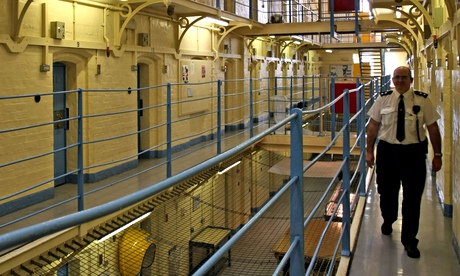
An acute shortage of secure psychological overall health beds signifies inmates are held in unsuitable prison segregation units. Photograph: Simon Value/Alamy


When I was performing time, I received on well with the vast vast majority of my fellow prisoners we had been all in the very same boat and there is power in unity. Even when forced to share a cell, I produced the best of sharing a room designed for a single with a stranger for up to 23 hours a day.


Nonetheless, in the unlikely event of my getting imprisoned yet again, I would refuse point blank to enter a shared cell.


Why? Statistically, it would be a lot more likely than not that the particular person I was being asked to share with, would have considerable mental overall health issues. In some situations, dangerously so.


In March 2000, at Feltham Younger Offenders Institution, 19-year-previous Zahid Mubarek, was murdered by his cellmate, who had a significant character disorder. Of the 18 resolved prison homicides because then, above half had been committed in shared cells, by individuals suffering serious mental well being troubles who need to not have been confined with anybody.


My thoughts has focused on this concern for the final 18 months, as I’ve been sitting on a commission set up to examine what has changed on psychological overall health in the criminal justice method (CJS) because the Bradley report five years in the past. Headed by labour peer, Keith Bradley, it found offenders with psychological wellness problems have been failed by policing, courts and prisons and manufactured 82 recommendations.


The overview of the progress made is yet again headed by Lord Bradley. It has heard proof from a wide selection of specialists doing work in the area, along with people who had been by way of the program, and made a new report. In a nutshell: there are distinct indications of improvement in some areas because 2009, with evidence of effective early interventions to prevent young children from coming into the CJS. 6 pilot programmes, aimed at diverting young people with behavioural problems away from the CJS, were efficiently completed in 2010/11 and a national working model is being embedded. There are, nevertheless, fears that the nationwide programme has an grownup bias and requirements a lot more people with an knowing of younger people’s requirements. And there is constantly the danger of funding cuts. But it is progress.


And some police forces, Leicestershire and the Met in certain, are showing important improvement in their dealing with of people with psychological overall health problems. Police minister Damian Green backed moves earlier this yr to place psychological wellness nurses in 50 police stations across the United kingdom, as portion of the liaison programme recommended by Bradley. The aim is to roll this out nationally, with the NHS taking above when contracts expire.


But in my region of knowledge, prisons, there is no such positivity. The psychological health situation in jails is worse than ever. Apart from the increase in prison murders and self-harm amid male prisoners, my intray bulges with horror stories. A snapshot: an inmate in Dovegate prison, in Staffordshire, was informed the only way to ensure being seen by a mental overall health nurse was to self-harm. So he did.


And in 2011, a prisoner in the shut supervision centre at Woodhill jail, in Buckinghamshire, sliced the two ears off in two separate incidents. The guy is nonetheless becoming held in a segregation unit, alternatively of a secure psychological wellness bed. There is an acute shortage of this kind of beds. Only three hospitals, Broadmoor, Rampton and Ashworth take higher-chance people from prison. Sufferers will not leave these locations in a hurry so dozens of prisoners with serious mental overall health difficulties are held rather in segregation units, treated as handle issues rather than the seriously sick people they are.


The prison services has to get individuals the courts send them, irrespective of their mental state. But this mistreatment of prisoners with psychological health difficulties must shame us all. Politicians and senior managers should admit the problem and deal with it.


If I went back to jail, I would refuse to share a prison cell | Eric Allison

26 Mayıs 2014 Pazartesi

How Marco Pierre White went from fine dining to a fine previous mess

Celebrities Attend The Melbourne Cup

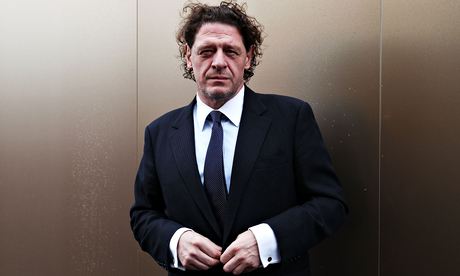
Marco Pierre White: retired as a chef in 1999 to focus on his company ventures. Photograph: Don Arnold/WireImage


Identify: Marco Pierre White.


Age: 52.


Appearance: Remember that time your dinner lady came to college drunk and wild-haired and clutching a knife? A bit like that.


That is no way to communicate about the enfant horrible of British cuisine. Marco’s eating places are prestigious. They’re influential. They are … in want of a swift clean?


Pardon? Environmental wellness officers visited the Marco Pierre White Steakhouse Bar &amp Grill in Birmingham earlier this yr and awarded it a foods hygiene rating of zero. The specifics of their report appeared in the Instances this week.


And what does the zero rating indicate, exactly? It signifies they identified raw meat and cooked meat stored together and dealt with with the exact same gear, they found the cleanliness, layout and ventilation to be ‘poor’ and they had no self-confidence in the management. Workers say they have acted on the inspectors’ suggestions and subsequent revisits have been constructive, but the zero rating will keep legitimate till the subsequent inspection.


But I was going to go there subsequent week. Conserve your income. There is an Eat4Less sandwich store 10 minutes away. You could get dozens of 99p baguettes for the same cost.


Are there any options that nevertheless involve Marco Pierre White? Oh yes, quite a couple of. White retired as a chef in 1999, which has offered him a lot of time to focus on his other business ventures.


Such as? There is Marco’s Grill, which is inside a football stadium. Or the sports bar he created with a jockey, which is also inside a football stadium …


I’d rather consume someplace that is not within a football stadium. In no way worry! Marco is also the encounter of each Bernard Matthews and condiment makers Knorr, so you could usually go and sit on a park bench someplace, crumble a stock cube above a packet of Hickory BBQ Turkey Chunks and reside out your fantasy of fine dining that way.


Are you suggesting that Marco Pierre White has squandered his talent in favour of an effortless buck? No, I am stating it baldly as truth. I considered that was apparent.


Do say: “I would like to order the beef bourguignon, please.”


Don’t say: “Yes, I’m cancelling my reservation. We’re just going to remain residence and neck some gravy.”


How Marco Pierre White went from fine dining to a fine previous mess

4 Mart 2014 Salı

Teenager screamed "I"m going to die" as ambulance went to incorrect spot

Mrs Keeling, 33, explained: “It was a good day for Ellie’s asthma. She appeared definitely fine. I asked if she had her inhaler with her and she said yes.


“She desired to go to the sports activities day so I was persuaded.”


Mrs Keeling said her daughter named her just following 7.30pm to tell her mom her asthma had received truly poor. She then referred to as 10 minutes later and said: “I can’t walk and I can’t breathe.”


“When I arrived I could see Ellie on the floor unconscious with her eyes broad open,” extra Mrs Keeling.


The youngster collapsed at RAF Brampton near Huntingdon, Cambridgeshire on June 25 last yr and an ambulance was called at seven.44pm.


But a contact handler wrongly sent the paramedics to RAF Wyton – 7 miles away – and it did not arrive right up until 8.03pm. The bases had the identical postcode.


Mrs Keeling, of Ellington, added: “The cadet was extremely clear in his mobile phone contact.


“He stored saying its RAF Brampton. I heard him say: ‘No, you happen to be in the incorrect RAF base.’ He was quite distressed.


“I talked to Ellie and I advised her to preserve breathing. She was gasping and it was a lengthy time just before the ambulance arrived to be by her side.


“They seemed extremely slow receiving out of the motor vehicle. They just strolled over to us.


“The products kept failing – the oxygen cylinders kept running out. It seemed like chaos.


“My mother and father arrived by then and my dad held Ellie’s hand.”


The teenager was pronounced dead an hour later.


The inquest heard ambulances had been sent to the wrong air base on two preceding occasions in 2006 and just eight months earlier in December 2012, because the two bases had the exact same postcode.


Since the child’s death the two bases have been provided separate postcodes.


Michael Smith, 19, the cadet who created the 999 call, informed how he repeatedly asked the call handler to send the ambulance to RAF Brampton, not Wyton.


He stated: “I was making an attempt to calm her down and she was very panicked. She was shouting ‘I’m going to die.’


“I called the ambulance and I told them it was RAF Brampton in the village of Brampton. I mentioned there had been two distinct stations.


“I had to uncover the postcode on my telephone. The lady asked if I was in RAF Wyton and I mentioned no, Brampton.


“Then she mentioned an ambulance was on its way.”


The inquest heard the transcript of the 999 phone in which the operator reassured Mr Smith, saying: “There is no require to panic sir. We’re properly on the way.”


Mr Smith responded and explained: “The lady asked me if we had been close to a white tower and I realised they’d been sent to to Wyton.


“I explained ‘You’re in the wrong spot.”


The East of England Ambulance Services has been extensively criticised more than delays in current months. Crews are supposed to reply to the highest priority instances inside eight minutes but this journey took 19 minutes.


On the day she died, Eloise had not taken part in the sports activities day but had been asked to jog a short distance to a sports activities area.


A statement from her greatest buddy Kayleigh Parker, 14, explained how Eloise collapsed and pleaded with the cadet leaders to call an ambulance as she struggled for breath.


She mentioned: “A single of the sergeants asked if we had been Okay to jog. Me and Ellie were laughing and saying how unfit we were.


“Then I observed Ellie having issues with breathing. I asked if she was Ok and she said she imagined she was having an asthma assault.


“Ellie went blue in the lips and she stated she needed an ambulance but practically nothing occurred.


“Then following she referred to as her mum she mentioned she necessary an ambulance once more.


She added: “While we were waiting for the ambulance to arrive Ellie became blue in the encounter.


“She was panicking and stated ‘I’m going to die’ three instances. She threw her water bottle and kicked the floor – it was frightening to view.


“I bear in mind him telling the ambulance to come to RAF Brampton – then I was taken away.”


The inquest in Huntingdon continues


Teenager screamed "I"m going to die" as ambulance went to incorrect spot