menopause etiketine sahip kayıtlar gösteriliyor. Tüm kayıtları göster

23 Nisan 2017 Pazar

Diet has a vital role to play in dealing with the menopause | Letters

While I applaud publicising and myth-busting the menopause (“I just coped, as others do: breaking the silence about the menopause”, In Focus), I am sorry that nowhere in the article did you mention diet as a means of dealing with menopausal side-effects.


The beginning of my menopause was a nightly sheet-wringing affair and daily having to pull over in the car to urgently strip off before I melted. About that time, I exchanged meat and dairy products for tofu and soya milk alternatives. Soon afterwards, the sweats subsided, then stopped. I thought I was one of the lucky ones, but I then learned that an oriental diet, low in meat and dairy and high in soya, which contains phytoestrogens, was the more likely reason. Menopause is not an illness, it’s a fact of life, and the reaction to administer drugs to treat the symptoms is sad.


In the early days of my transition, I found that suddenly stripping off in public places for an impending hot flush was best dealt with an: “Excuse me, I’m having a menopausal!” and laughing. Since laughing is infectious, everyone laughed with me (albeit sometimes nervously).
Stephanie Fuger
Matlock, Derbyshire


Nazis knew the BBC’s power


There has never been much doubt about the integrity and quality of the BBC’s wartime broadcasts to Nazi Germany. Their significance for that nebulous entity, “the German people”, is less certain (“How the BBC’s truth offensive beat Hitler’s propaganda machine”, News).


Nazi propaganda succeeded in seducing huge sections of the German population, especially among the young, while a draconian law passed at the outbreak of the war imposed such heavy penalties on listeners to foreign broadcasts, including capital punishment for passing on such information, that it was likely to discourage all but the most intrepid anti-Nazi.


Its most consistent and attentive listener was Hitler’s minister of information, Joseph Goebbels, who, sensing the potential danger, refused even high-ranking Nazi colleagues permission to listen to the BBC. Nazi terror ensured that even in the last stages of a clearly lost war “the German people” would stage no uprisings against their moribund overlords.


The BBC’s German Service failed in its mission to enlighten the misguided “German people”. The listeners to this splendid service were people like my Nazi-hating mother, who took huge comfort from the knowledge that beyond the confines of their now so deadly country was another world that cared and would fight to overcome the evil that gripped Germany.
Carla Wartenberg
London NW3


Heavy weather, Nick


It seems that whatever Nick Cohen writes about, he has set himself the task of inserting at least one gratuitous swipe at the left wing of the Labour party. If he was asked to write the Observer’s weather forecast, he’d probably find a way of blaming them for every approaching thunderstorm.


Last week, for instance, writing about George Soros and the Hungarian government, he managed to contrive a reference to what he described as “the Labour left’s claim that Hitler was a Zionist”. That’s quite a sweeping, damaging accusation, apparently aimed at the whole of the Labour left. Yet the recent crude, insensitive and provocative suggestion by Ken Livingstone that Hitler “was supporting Zionism” was widely condemned by Jeremy Corbyn, John McDonnell and most of that very same “Labour left”.
John Marais
Cambridge


MacKenzie is his own nemesis


I agree with Barbara Ellen’s piece “Read all about it. MacKenzie is no man of the people” (Comment). However, I would go further as Kelvin MacKenzie displays the classic symptoms of addictive behaviour, whereby someone has compulsive patterns of behaviour and cannot help themselves.


MacKenzie has made a few of these ill-advised stands, making ridiculous pronouncements since his terrible stance on Hillsborough and one has to have some compassion for the man who is on a self-destruct mission. These desperate attempts to keep himself in the frame are another form of attention-seeking. Of course, the management of the Sun should have put themselves, any sub-editors, the editor and any journalists party to the piece before publication on gardening leave immediately, without waiting to see the reaction.
Martin Sandaver
Hay-on-Wye


Enough of this codswallop


Your business leader column on corporate speak reminded me that it is not only the corporate world that suffers from meaningless jargon intended to fool the listener/reader into believing that something meaningful has been uttered.


Corporate speak is spoken by those who wish to exclude from their conversations those who are not deemed suitable to be admitted to their heady heights. Nowhere is this more manifest than in the corridors of government and civil administration. They are all talking codswallop to each other, but no one has the cojones to be the first to admit that they do not understand what has been said.
Paul F Faupel
Somersham, Cambridgeshire


Diet has a vital role to play in dealing with the menopause | Letters

16 Nisan 2017 Pazar

‘I just coped’: Kirsty Wark on breaking the silence about menopause

‘The most disconcerting side-effects were disturbed sleep and night sweats, waking up literally wrung out, with no discernible pattern to either,” says Kirsty Wark. She sounds as measured, informed and professional as is her norm when presenting Newsnight but Wark is talking about something much more personal than current affairs: her menopause.


Wark is fronting a documentary that will air on BBC1 on Thursday: The Menopause and Me. Her involvement in the programme comes from her own sudden and unexpected experience. She had a “medical menopause” at the age of 47, after a hysterectomy and after coming off hormone replacement therapy(HRT) because of fears over its reported link to breast cancer.


“Suddenly, I had no oestrogen and the disturbed sleep and night sweats started. By the time I started making the documentary, nothing much had changed for me in 12 years and I just coped with it, as so many others do.”


But, aside from the obvious physical battle she had to endure, what Wark also struggled with was the apparent silence surrounding the menopause. In many households it is still not discussed and, in those that do broach the subject, it is often talked about in hushed tones as “the change”.


“It’s not so long ago that the hormonal changes that came with menopause were regarded as madness – the madwomen in the attic,” says Wark. “Mythology has a lot to answer for.”


Just 50 years ago, menopausal women tended to suffer alone, mortified by hot flushes and bewildered by hormonal mood swings. There was also a general acceptance that they should retire into the shadows in case it bothered anyone else. The very idea that work colleagues might know or show empathy was anathema.


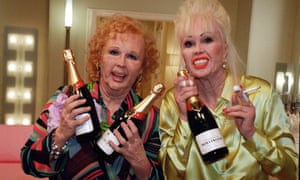
It has, however, long been the subject of comedy, featuring in episodes of Father Ted and Absolutely Fabulous, as well as in routines by Les Dawson. Jennifer Saunders – who had a cancer-induced menopause – is both funny and uplifting in the Wark documentary. “There’s a moment when you realise everything’s changed,” she says. “Your metabolism, energy levels, skin, hair … so I just had a large glass of champagne and got on with it.”


This 2001 episode of Absolutely Fabulous is called Menopause – the subject crops up frequently on comedy programmes.


This 2001 episode of Absolutely Fabulous is called Menopause – the subject crops up frequently on comedy programmes. Photograph: Brian Ritchie/BBC

Not until relatively recently has it started to be something that is not ignored or giggled at, or both – and this is partly owing to the willingness of celebrities such as Wark and others to speak openly about it.


In a recent interview with People magazine, Gillian Anderson talked about a sense of life falling apart when she experienced perimenopause, the hormonal transition prior to menopause. “All of a sudden, I felt like I could handle nothing. I felt completely overwhelmed,” Anderson said. “When I talked to the specialist, she said she often gets phone calls from female CEOs screaming, ‘I need help now! I’m losing my mind!’ I felt like somebody else had taken over my brain.”


She credits Angelina Jolie with helping change the stigma when she spoke openly about her menopause after having her breast and ovaries removed because of being genetically at risk of breast and ovarian cancer. “Perimenopause and menopause should be treated as the rites of passage that they are,” Anderson told People. “If not celebrated, then at least accepted and acknowledged and honoured.”


Cynthia Nixon, famous for her role in Sex and the City, has also been open, although she had a completely different experience from Anderson, telling the Telegraph that she and her wife are going through the menopause together. Nixon wasn’t upset, revealing: “There has been no sadness for me, because once you hit 50, you’re done.” She cites the advantages of passing childbearing age and experiencing it together. “Although I have a six-year-old, the freedom that comes from no longer being fertile is huge.”


Those differing experiences also highlight a potential problem in being more open about menopause, since symptoms can vary wildly. We have gone from a culture where it was rarely mentioned to, in some cases, one where women suffering badly ask for special consideration in the workplace. This leads to inevitable scepticism not just from men, but from other women who simply don’t suffer to the same extent and feel their colleagues should just put up with it.


Wark’s response to this is to suggest we should all be a bit kinder in the workplace if colleagues aren’t feeling well – which is possibly the best approach.


Wark’s programme is also for partners, husbands, family, friends and employers, to help give them an understanding of what women go through when they enter the menopause. Every angle is explored, with many women and one husband talking about loss of libido, weight gain, hair loss, joint pain and the almost unspeakable vaginal atrophy. 


It’s also useful as a reminder that times change – everyone recognises the classic image of menopausal women as witch-like harridans exhibiting seriously odd behaviour – and that the modern menopausal women is more likely to be leading a busy and satisfying life.


Many confident, articulate women are now talking and writing about the menopause, with India Knight and Christa D’Souza producing highly entertaining books, and Miranda Sawyer writing on the subject with such penetrating honesty and empathy that you wonder if she has been poking about in your own mind.


Gillian Anderson spoke of a sense of her life falling apart following her perimenopause in an interview with People magazine.


Gillian Anderson spoke of a sense of her life falling apart following her perimenopause in an interview with People magazine. Photograph: Anthony Harvey/Getty Images

Many women live a third of their lives post-menopausal, often at the peak of their careers and still with big plans. Medical advances are also making a huge difference to women’s experiences – and how they are seen to be dealing with it by those around them.


Wark admits she was surprised by how much she learned during the making of the programme, particularly from Dr Heather Currie, chair of the British Menopause Society and consultant obstetrician and gynaecologist at Dumfries and Galloway Royal Infirmary in Scotland. Currie also runs the Menopause Matters website.


“Discovering Heather was on HRT was an absolute eye-opener for me,” says Wark. “The US study that prompted me to come off HRT has been considerably revised and HRT only increases the risk of breast cancer if you are already predisposed. I’m back on a small dose of HRT and think I’m starting to see my sleep improve.”


Currie says a new paper by Professor Robert D Langer demonstrates that errors in the study led to 15 years of unnecessary suffering for women who stopped HRT. “There’s a better understanding of risk,” she says. “For most women who commence HRT under the age of 60, or within 10 years of the menopause, it provides more benefits than risks, including symptom control, as well as improved urogenital, bone and cardiovascular health.”


She adds: “The study didn’t show any statistically significant increased risk of breast cancer or heart disease in women using HRT, yet the highly publicised conclusions emphasised these risks. It’s hard to come back from such panic-inducing headlines but I think we are getting there, with more women talking to their GPs about the consequences of menopause and treatment options.”


WHI Study errors led to 15 years of unnecessary suffering for women who stopped HRT.


Dr Heather Currie


Carol Smillie, another famous face who has previously spoken openly about incontinence and periods, thinks women should not be afraid to talk with GPs, friends and family about the menopause. “We live in a far more tolerant society than our parents did,” she says. “Look how far we have come with issues like gender and disability; menopause is more openly discussed and therefore better understood now.”


It is a sentiment echoed in India Knight’s book, where she writes: “There’s a whole third of life to go. That’s not an ending – it’s a thrilling new beginning. And as you approach the years ahead, you do so at the height of your powers. You know more than you’ve ever known. You are the wisest you’ve ever been.”


THE FACTS


The menopause is when a woman stops having periods and cannot get pregnant naturally. It usually occurs between 45 and 55, as oestrogen levels decline. The average age in the UK is 51.


Common symptoms include hot flushes – sudden body temperature changes that produce heat and sweating – night sweats, irregular periods, decreased libido, vaginal dryness and mood swings.


Treatments include HRT and gabapentin, which have received mixed reviews in treating hot flushes and can have significant side-effects.


The most significant recent development is the clinical trial of a new drug carried out by Dr Julia Prague and colleagues at Imperial College London that promises the development of an effective way of reducing hot flushes. The drug is currently undergoing further trials and if these are successful it could make a considerable difference to women’s lives.


Alternative remedies include bio identicals and evening primrose oil.


‘I just coped’: Kirsty Wark on breaking the silence about menopause

20 Mart 2017 Pazartesi

11 Herbs for Perimenopause and Menopause Symptom Relief

by Karen Brennan, MSW, CN, BCHN, Herbalist


Around the age of 40 women begin perimenopause and the transition to menopause.  During this time levels of estrogen, progesterone and the androgens fluctuate.  Your body will spend years gradually and naturally going through this process. This transition can last 5 to 10 years and for some up to 13 years.   Menopause typically occurs between the ages of 45-55.  During this time your periods may stop and then start again or may occur more frequently and may increase or decrease in intensity and flow. You are officially in menopause when your period has stopped for one full year.


Herbs to Ease Perimenopause/Menopause Symptoms


Note: Always check first with your health professional when adding in herbs to your regimen. Some herbs interact with meds and some are not safe to take with certain health conditions.


Motherwort: This herb can be your ally in reducing irritability and anxiety that may occur during the transition time.  It can calm the heart during perimenopause heart palpitations.  If you have heavy bleeding during perimenopause, then don’t overdo the use of this herb.  It can aid in menopausal insomnia. Avoid this herb if you have low blood pressure.  Take in tea or in tincture.  50-80 drops 2-4 times per day in tincture form.  As a tea use 1 tsp. of dried herb.  Drink 4 oz. three times per day.


Shatavari: This herb is a wonderful one to use during these times of transition. It is useful for hot flashes, night sweats, vaginal dryness, anxiety and memory loss.  It also is known to increase libido.  Use 30-60 drops 1-2 times per day depending on the severity of your symptoms.  As a tincture, use 40-80 drops 3x per day.  As a tea use of dried root and consume up to 2 cups per day.  Avoid if you have diarrhea and bloating or add ginger and consume as a tea only.


Passion Flower: This herb has many uses and it is useful for menopausal mood swings.  It can aid in reducing panic attacks, calms irritability and helps with stress relief.  If you can’t turn your mind off at night, use passion flower.  Use in tea blend or take 60-80 drops of tincture 3 times per day.  Avoid with bipolar, schizophrenia and manic phases.  Do not use with MAOI’s.


Sage: This is beneficial for stimulating memory and is useful for the brain fog that is sometimes associated with perimenopause.   It is also good for excessive sweating which means it can be supportive for those with night sweats during perimenopause. It is also used for anxiety, hot flashes and fatigue associated with menopausal symptoms. Take in tincture 30-60 drops 2-3 times per day or use 1 tsp. in a tea blend 3 times per day.


Fennel: While many of you may be familiar with fennel for digestive issues, fennel is used to offer hormonal support as well.  One of its main components appears to have natural hormone like actions.  It can be useful for bloating, menstrual pain and hot flashes.  As a tea use 1-2 tsp in one cup hot water.


Skullcap: This herb is considered a brain tonic and is useful for ADD, poor memory and mental fatigue. It is also useful for PMS, menstrual pain/cramps, menopausal depression and mood swings, hot flashes and irritation.  Use in a tea blend or take ½ t. of tincture as needed.  Avoid with bipolar, schizophrenia and manic phases.


Kudzu root: This herb is beneficial for PMS and peri menopausal symptoms such as acne, hot flashes, night sweats, and mood swings.  Take in tincture form of 60 drops 2-3 times per day.


Lemon Balm: Use this herb for menstrual cramping and depression associated with perimenopause.  This is considered a very safe herb and safe for children as well. However, if you have low thyroid uses it is best to minimize the amount of lemon balm you consume as it can lower thyroid function.


Hops: This herb is used for menstrual cramping. This is best used in tea or tincture. It also has a sedative effect.  As a tincture, take 30-60 drops 2-3 times per day.  Avoid with usage of sedative medication.  Do not use if you have depression.


Black Cohosh: This herb has been popularized for use for hot flashes yet it also has many other beneficial uses. This herb can also be useful for those with depression.  Avoid use of this herb if you have liver disease.  Take 20-40 drops of tincture per day.


Chaste Tree Berry: Some of you may be familiar with Chaste Tree (Vitex) for hormonal support, however a word of caution-it is very easy to overdo it with this herb. Taking too much may increase progesterone levels and thus increase your symptoms.  If using this herb, take only one capsule per day in the morning or 15 drops of tincture in the morning.  Avoid usage if you are taking antipsychotic medications.


Going Beyond Herbs to Reduce Symptoms


For some of you with mild symptoms, an herb or two may do the trick.  For those of you that continue to struggle with symptoms your body may need more support than just a few herbs.  Addressing and identifying imbalances in the body will be key for you, such as addressing blood sugar, adrenals, thyroid, digestion and/or other areas to restore balance.  Dietary changes along with targeted supplementation may be needed depending on your current diet and symptoms.


For instance, some of you may enter perimenopause sooner than others due to poor health or due to your diet.


Estrogen dominance becomes an issue along with its side effects during perimenopause for some due to low progesterone levels.  The key is to find out what is the issue for you and then address it.


The bottom line is yes, there is something you can do instead of having to put up with these symptoms for years!


Sources


Blankenship, V. (2016) Sage Herbal Foundations Program. Colorado Springs, CO. (notes from)


Bauman, E. & Friedlander, J. (2014) Therapeutic Nutrition.  CA: Bauman College


Cech, R. (2016) Making Plant Medicine.  Oregon: Herbal Reads


Crow, D. (2016) Medicinal Plants & Spiritual Evolution Intensive.  Online Program (notes from)


Mars, B. (2007) The Desktop Guide to Herbal Medicine.  CA: Basic Health Publications, Inc.


Skenderi, G. (2003) Herbal Vade Mecum.  NJ: Herbacy Press


Winston, D. & Maimes, S. (2007) Adaptogens: Herbs for Strength, Stamina and Stress Relief.  VT: Healing


Arts Press.


As a nutrition professional, Karen Brennan, of Tru Foods Nutrition Services LLC,  does not treat, cure nor diagnose. This information is for educational purposes only.


Tru Foods Nutrition

I am a nutrition professional with a focus on mental health and gut health. I am also passionate about getting nutrition information out to the public so that others can take charge of their own health instead of living on meds. I help others who have tried the medical route and who are often are worse off because of it. Nutrition therapy has an individized approach and addresses root causes.


11 Herbs for Perimenopause and Menopause Symptom Relief

27 Temmuz 2016 Çarşamba

Increased type 2 diabetes risk linked to early or late menopause

An early or late menopause increases the risk of women developing type 2 diabetes, a study has found.


Researchers who analysed data on 124,000 women found that those whose fertility came to an end in their mid-40s or earlier were 25% more likely to become diabetic than women who reached the menopause between 46 and 55.


A menopause after the age of 55 increased the risk of diabetes by 12%.


In the UK, the average age at which a woman has her final menstrual period is 51.


Related: Everything you wanted to know about diabetes


Dr Erin LeBlanc, from the Kaiser Permanente Center for Health Research in the US, said: “Our study suggests the optimal window for menopause and diabetes risk is between the ages of 45 and 55.


“Women who start menopause before or after that window should be aware that they are at higher risk and should be especially vigilant about reducing obesity, eating a healthy diet and exercising. These lifestyle changes will help to reduce their risk for type 2 diabetes.”


After menopause, levels of the hormone oestrogen decline and this has been linked to increased body fat and appetite, slower metabolism and higher blood sugar.


While previous research has associated early menopause with an increased risk of diabetes, the new findings are the first to show that the condition is also linked to later menopause.


The new study, reported in the journal Menopause, also found an association between the risk of developing type 2 diabetes and the length of a woman’s “lifetime reproductive cycle” – the time span between her first and last period.


Women with a lifetime reproductive cycle of less than 30 years were 37% more likely to develop diabetes than those with “medium length” cycles of 36 to 40 years, the study found.


Long reproductive cycles of more than 45 years were associated with a 23% increased risk of diabetes.


The study formed part of the Women’s Health Initiative, a large US investigation of postmenopausal women focusing on the prevention of heart disease, bone fractures, and breast and bowel cancer.


Increased type 2 diabetes risk linked to early or late menopause

28 Temmuz 2014 Pazartesi

Hormone Therapy At Menopause Fails To Halt Heart Illness Progression

More than a decade ago the Women’s Overall health Research made surprising and essential outcomes when it showed that broad use of hormone substitute treatment did not minimize cardiovascular threat in publish-menopausal females. But the study also led to speculation  that hormone therapy  might be beneficial when delivered closer to the time of menopause. Now a review published in Annals of Internal Medicine demonstrates that menopausal hormone therapy (MHT) might have some favorable results on some cardiovascular danger elements but it does not lessen the progression of atherosclerosis.


In the review, called KEEPS (Kronos Early Estrogen Prevention Research), 727 menopausal women were randomized to placebo or one particular of two types of low dose hormone treatment (oral conjugated equine estrogens or transdermal 17β- estradiol). Following four years there was no distinction between the groups in the primary endpoint of the research, which was the progression of atherosclerosis as measured by carotid artery intima–media thickness (CIMT). There was also no big difference in the coronary artery calcium scores. Ladies in the equine estrogen group had enhancements in their lipid profiles (decrease in LDL and increase in HDL) while women in the transdermal group had improved insulin sensitivity. There was no big difference in the incidence of significant adverse occasions.


The investigators supplied several explanations for the findings, like a research population at reduced danger for athersosclerosis, a reasonably quick examine duration, and the use of minimal dose but not large dose estrogen. “To the extent that these imaging strategies predict CVD events, our findings recommend that MHT neither is a chance nor is protective in the population studied,” they wrote. The study was not powered to appear at clinical events.


Andrew Kaunitz, a expert in women’s wellness and menopause at the University of Florida, explained that although it even now remains unclear what the prolonged term effects of hormone treatment will be on cardiovascular occasions, the study “does not assistance using hormone treatment to avert CVD events.”


Hormone Therapy At Menopause Fails To Halt Heart Illness Progression

7 Mayıs 2014 Çarşamba

Premature menopause is linked with bad contemplating and response times

They had been also one third far more probably to have proven a decline in their reaction instances and general considering ability, 7 many years later on.


The findings have been published in BJOG: An International Journal of Obstetrics and Gynaecology.


The tests included recognising a line drawing they had been proven previously, the amount of phrases they could believe of in a given class this kind of as colors or animals in thirty seconds, connecting numbered circles and the mini-psychological state examination which covers general pondering potential.


The researchers said the final results ought to mean that surgical procedure to get rid of the ovaries in girls below the age of 40, which induces menopause, ought to take into account the result on thinking and memory.


They discovered that remedy with hormone replacement therapy at the time of menopause did not counteract the changes in thinking and memory.


There was some proof that HRT could be advantageous for visual memory, but it could increase the danger of bad verbal fluency, it was found.


Lead writer, Dr Joanne Ryan, postdoctoral study fellow in Neuropsychiatry at Hospital La Colombiere, in Montpellier, France, mentioned: “Both premature surgical menopause and premature ovarian failure, had been connected with extended-term negative effects on cognitive function, which are not fully offset by menopausal hormone therapy.”


Pierre Martin Hirsch, BJOG deputy editor-in-chief, stated: “With the ageing population it is critical to have a greater knowing of the long term effects of a premature menopause on later-life cognitive perform and the prospective benefit from utilizing menopausal hormone treatment.


“This research adds to the existing proof base to propose premature menopause can have a significant influence on cognitive function in later on lifestyle which healthcare professionals must be aware of.”


Premature menopause is linked with bad contemplating and response times