Doctors have long warned parents to delay introducing certain foods to babies to decrease the risk of a potential allergic reaction, but a new study suggests that strategy probably doesn’t help.
sponsored stories
trending now
By Serena Gordon HealthDay Reporter WEDNESDAY, May 18, 2016 (HealthDay News) — Doctors have long warned parents to delay introducing certain foods to babies to decrease the risk of a potential allergic reaction, but a new study suggests that strategy probably doesn’t help. The study of about 1,400 children found that when babies were given peanuts, eggs or cow’s milk during their first year, they were less likely to become “sensitized” to those common allergy-causing foods. Being sensitized to a food means a child tests positive on a skin test. “That doesn’t necessarily mean a food allergy as such, but it indicates the child is on that pathway,” said the study’s senior author, Dr. Malcolm Sears. The goal is to reduce the risk of sensitization, which also reduces the risk of allergy, said Sears, a professor in the division of respirology at McMaster University in Hamilton, Ontario, Canada. The study’s lead author, Maxwell Tran, said this study, along with other research, “supports the paradigm shift that parents should not hesitate to introduce allergenic foods, especially cow’s milk, peanuts and eggs. This will reduce the likelihood of sensitization.” Tran is a health sciences student at McMaster. Sears reiterated: “Earlier is better. Don’t be afraid to introduce these foods.” But he added that even early introduction of a food doesn’t guarantee a child won’t eventually develop a food allergy. Tran is scheduled to present the study’s findings Wednesday at the American Thoracic Society meeting in San Francisco. Findings presented at meetings are generally viewed as preliminary until published in a peer-reviewed journal. According to Tran, previous guidelines recommended waiting a year before introducing cow’s milk and cow’s milk products, such as cheese, yogurt or ice cream. Doctors recommended delaying eggs until age 2 years, and peanut-containing products until age 3. Since other studies have hinted that earlier introduction of these foods might be beneficial instead of harmful, the researchers behind the new study looked at a sample of children already involved in a large Canadian child development trial. Sears noted that this was not a group of children that would be considered at high risk for allergies. Just over 1,400 youngsters from that study had their skin tested for allergen sensitization at 1 year. Nutrition questionnaires were completed by parents when the kids were 3, 6, 12, 18 and 24 months old, the researchers said. The researchers found that almost half the babies had consumed cow’s milk by 6 months, and the other half had milk by 12 months. Just 4 percent didn’t have milk until they were 1 year old, the study revealed. Only 6 percent of the babies had eggs by 6 months, while 76 percent had them before 12 months. And about 19 percent first had eggs after their first birthday, the study showed. Parents were much more likely to delay peanuts. Only 1 percent of the children had peanuts by 6 months, and 41 percent had peanuts introduced in their diet between 7 and 12 months. Fifty-eight percent of the children were over 1 year of age when they first had peanuts, the study found. The researchers found that early introduction of any of the allergic foods was linked to a lower risk of sensitization for that food. Giving a child egg before age 1 also reduced the odds of sensitization to any of the three tested foods, the study found. Dr. Jennifer Appleyard is chief of allergy and immunology at St. John Hospital and Medical Center in Detroit. She said, “The old train of thought was that the immune system is in flux for the first three years of life, and if exposed during that vulnerable period, food allergies might develop. But some of the old thoughts on how allergies develop and how best to treat them are changing.” She said that parents who followed that advice and waited to give their child these foods didn’t cause any allergies. “So many different things influence allergies… Things we do may affect a health outcome in some way, but it doesn’t completely control how allergies develop,” she said. There’s still a lot of research looking into the development of allergies, Appleyard noted, adding for now, early introduction of foods seems okay. If you come from an allergic family, particularly one with food allergies, Appleyard said it’s best to talk with your doctor about the introduction of common allergy-causing foods.More information Learn more about food allergy from the American College of Allergy, Asthma and Immunology.
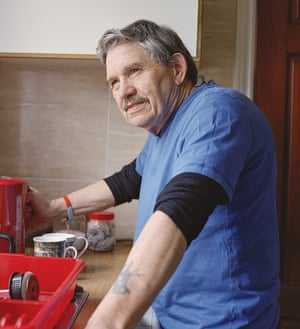
One day during his last year at primary school, Jon Adams drew a picture of a street in Portsmouth, the city where he still lives. The scene he drew had no people in it, but its representation of everything else suggested a talent beyond his years.
The headteacher happened to see the picture, and said he wanted to put it up in the school’s entrance hall. “And that was an honour,” Adams says, “particularly for someone who didn’t think they were any good, because they’d been told they weren’t any good, every day.”
Adams was asked to write his name on the back, an instruction that threw up a choice. He had difficulties with writing, and he knew his class teacher could be cruel. “If I asked for help, I knew what he would say: ‘Oh, he can’t even spell his own name, what rubbish is that?’ So I did it myself.”
The teacher called Adams to the front of the class. “I went up, gave it to him, he held it up in front of the class, and then he tore it up. He said, ‘He’s spelled his name wrong – he’ll never be anything.’”
This happened 45 years ago. In recent years, Adams has been treated for post-traumatic stress disorder, caused at least partly by that episode, and how long it lived on, not just in his memory, but in his understanding of the world and his place in it. The story says a lot about the inhumanity that was once rife in the British education system; but it also shines light on what it’s like spending a lot of your life being not just misunderstood, but routinely insulted. “Someone telling you you’re no good every day worms its way inside your head,” Adams says. “Inside, you know you’re all right, so there’s this conflict going on.”
Since April 2013, Adams has known that he has Asperger syndrome – or, to put it another way, that he is autistic. Ten minutes online will tell you that Adams’ condition comes down to a so-called “triad of impairments” to do with social interaction, communication and imagination, or what some people call “flexibility of thought” – although the fact that Adams is a prolific artist suggests that, in his case, that last criterion might be misplaced.
Since 2013, many diagnoses of autism have also included a range of sensory issues, among them aversions to certain textures, sounds, smells and tastes, as well as a deep dislike of sudden noise. In Adams’ case, these seem to blur into a complex kind of synaesthesia: he understands music as something he can touch, and experiences the colour yellow as a profoundly unpleasant taste, like mould.
Adams sometimes talks about his condition in front of an audience, and there is one question that always comes up. “It goes: ‘My son’s eight, he sits in his room all day, he does Lego, he does complicated drawings, he won’t talk to anyone else – how do I make him socialise?’ Well, you don’t. He’s made his world. One day, he’ll show it to you. Don’t let him grow up thinking that the way he’s thinking and what he’s doing are faulty.”
***
Jon Adams was formally diagnosed at the age of 52, at an NHS clinic run as an offshoot of Cambridge University’s Autism Research Centre, after he was referred there by his GP. The initial spark had been a meeting with the centre’s founder and director, Simon Baron-Cohen (the cousin, in case anyone was wondering, of Sacha), who had spoken with Adams at the Cheltenham literature festival.
Adams had begun to realise what sat under a lot of his experiences; at the time, the biography that accompanied his work as an artist included the words “probably autistic”. From May 2012 until June 2013, he worked as the research centre’s artist-in-residence; immediately afterwards, a specialist gave him his formal diagnosis, a process that involved an interview and something akin to a questionnaire. “I got the letter through, saying I scored 18 out of 18 autistic traits, and I had Asperger’s,” Adams says.
I meet Baron-Cohen in a crowded Starbucks near St Paul’s Cathedral in London, where he wryly comments on the mixture of chatter, clattering cups and muzak – “For a lot of autistic people, this would probably be hell” – and casts his mind back over the 35 years he has been thinking about and researching autism. He started working with six autistic children in a special unit in Barnet, north London, in 1982. Fifteen years later, he set up the Cambridge research centre; two years after that, in 1999, he opened a clinic dedicated to diagnosing autistic adults.
My son received a diagnosis aged three. He had fixations with particular music or places – traits I recognise in myself
“There was a growing awareness that autism wasn’t just about kids,” he tells me. “I was receiving more and more emails saying, ‘My son’s an adult, but he’s never fitted in. Might he have autism?’ An adult couldn’t go to a child and adolescent clinic, so where were they meant to go? If they went to a learning disability clinic, and they had an IQ above 70, they’d be turned away. So these people were like a lost generation. That was a phrase I used a lot.”
The National Autistic Society estimates that there are currently around 700,000 people living with autism in the UK – more than one in every 100 of the population. Some of these people have learning disabilities. Some are what the medical vocabulary terms “non-verbal”, or unable to speak. Others are so-called “high-functioning”, a sub-group that includes those with Asperger syndrome, the condition named after the Austrian paediatrician who in the 1940s worked with a group of children he famously termed “little professors”. Asperger syndrome is distinguished by the fact that people who have it display no language delay as toddlers or small children. (Asperger died in 1980, long before the term “Asperger syndrome” entered popular usage. It has since been dropped from the relevant American diagnostic manual, but is still used in the UK.)
It is among this latter group that you will find many of the 20% of autistic people currently thought to have been diagnosed as adults. No national figures for adult autism diagnoses are available, but anecdotal evidence suggests numbers are rising: Baron-Cohen tells me that four years ago, 100 cases in Cambridgeshire were referred to his clinic; in the first four months of 2016 alone, it received 400 referrals.
Most of the terms used to describe autism don’t do justice to the nuanced, complicated traits bound up with it. Nonetheless, all its variants are covered by the catch-all term autism spectrum disorder, or ASD; people who dispute that autism is any kind of “disorder” prefer the term autism spectrum condition. The word “spectrum” was first used in this context by the pioneering British researcher Lorna Wing, who died in 2014. Baron-Cohen explains: “What she meant at the time, I think, was a spectrum within those who come to clinical attention. Where it’s gone since is that this spectrum runs right through society, out into the general population.”
My own interest in autism began when my son James received a diagnosis of ASD at the age of three. Back then, some things seemed strange: the social distance between him and his peers; his fixations with particular music (the Clash, the Beatles) or places; his pointed dislike of some foods or sounds (I still curse whoever invented the public toilet hand-dryer); his amazing facility with technology. Now, these things are simply part of the fabric of our shared life. I recognise echoes of myself in some of these traits (the music, the technology), and of plenty of other people: more than anything, his 10 years have brought me an ever-growing understanding of the complexities of human psychology, both among those diagnosed as “on the spectrum” and so-called “neurotypical” people.
Unfortunately, the everyday world has yet to catch up. Only 16% of adults diagnosed with autism in the UK are in full-time, paid employment. In 2014 Baron-Cohen’s team found that two-thirds of the patients in their clinic had either felt suicidal or planned to kill themselves, and that a third had attempted to do so. “To my mind, this is nothing to do with autism or Asperger syndrome,” he says. “These are secondary mental-health problems. You came into the world with autism, and the way the world reacted, or didn’t react, to you has led to a second problem, which is depression. And that’s preventable.”
***
A week after talking to Baron-Cohen, I take the train to the Lancashire town of Wigan, to meet 68-year-old Peter Street, who got his autism diagnosis only 10 months ago. He is an impish, funny presence, and says he loves conversation, perhaps a little too much. “I get this deep urge – it’s a pain, almost, to talk to people. When I’ve described it to the therapist, I’ve said I’m like a bucket of water and it’s full. And then all of it comes out, and it empties.”
Peter Street: ‘I get too much for people, and they get too much for me.’ Photograph: Rosie Barnes
After 20 minutes, it becomes clear that Street has the most astonishing life story of anyone I have ever interviewed. His mother, he says, became pregnant with him when she was raped. In his native Bolton, the two of them were taken in by a man much older than her, who employed her as his housekeeper, and then married her and adopted Street to give the arrangement a veneer of normality. He grew up, he says, with no extended family and very few friends. “I get too much for people, and they get too much for me. A lot of the time, I overpower people. When I was a kid, when I made a friend, I would go and sit on their doorstep, waiting for them. I’m a really early riser, and I can’t cope with being late anywhere. I used to go and sit on the doorstep, maybe six, seven in the morning. And people obviously didn’t like that.”
His daily routine, he says, often revolved around an outside toilet, and his home’s back wall, which he would use for solo games of football and marbles. “And that was wonderful, in some sense. It wouldn’t have been wonderful for some people, but it was for me.” He also made endless trips to the cinema, where he acquired a forensic knowledge of Greek mythology; he mentions Steve Reeves, the musclebound 1950s actor who played Hercules. “I can take certain things in – really odd things, sometimes,” he says. “But I can’t take in what most people take in every day.”
At school, he found it almost impossible to tune in to the teachers. “They were shit with me,” he says. “They knew how to abuse. They were good at it. They were bullies. They used to stand me in the corner, in the wastebasket, and hit me over the head with the board rubber, to knock some sense into me. I’ve always blamed my epilepsy on that.” He started having grand mal seizures when he was 15; it is now estimated that around a third of autistic people also experience epilepsy, though the relationship between the two is something that neuroscience has yet to fathom.
Street left school unable to read or write. He passed through a series of jobs – a bakery, a butcher’s shop – some of which came to an end because he found it difficult to process complex instructions, before settling into work as a gardener and gravedigger. Along the way, he married his wife, Sandra, with whom he has three grownup children. “She doesn’t like being with people,” he says. “She’s very quiet, very introverted. In a way, she’s a mirror.”
In 1984, after breaking his neck while trying to climb into a transit van that was pulling away, Street began three years in recovery. While he was in hospital, he met a fellow patient who was an English teacher, and started to work with him on his literacy; then, through adult education, he discovered a talent for poetry.
While we talk, he hands me an anthology of his work, published in 2009, that begins with a poem titled Not Being Me, a perfect glimpse into the autistic experience of not fitting in:
Childhood nights were dreams of being a sheep then up and out of a morning, a quick check to see
if by any chance in the night there had been a change of being just like all my friends and not the odd one out
In the late 1980s, Street began to teach poetry in schools and day centres; in the early 90s, he became a writer-in-residence at the BBC in Manchester, which led to a series of assignments. In 1993, he went to Croatia to write about the war that was then engulfing the Balkans. “People with autism, it’s often said that they have no emotion or empathy,” he says. “I have too much emotion, too much empathy. It broke my heart.” Three experiences preyed on him: a meeting with an 18-year-old abandoned in a refugee camp; an occasion when he gave his water ration to an emaciated woman with a newborn child; and the experience of eating a sumptuous meal in the town of Lipik, with “three or four kids at the window, looking in. And I didn’t have the balls to get up and go and give them my food.”
By 2014, his inability to put away these memories had become too much. “I went to a therapist. And she said, ‘I want you to go and see a friend of mine. She’s a specialist in diagnosing people with autism.’ I thought, ‘I’ll go along’, as you do. And she gave me these really strange games. They were like a jigsaw puzzle: four pieces. White. They were so simple, I thought I could do them – and I couldn’t.” He was handed five plastic figures and toys, and told to make a story with them. “And I couldn’t do that, either. I couldn’t connect them together into one story. She said I was highly intellectual, but on the autism spectrum.”
His response was one of enormous relief. “I cried. It was wonderful. Wonderful. Because all my life suddenly made sense. And none of it – the beatings, the abuse – none of it was my fault. Apart from my family and Sandra, I’d put it in the top five greatest things that have happened in my life. Absolutely, incredibly wonderful.”
***
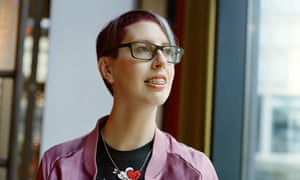
Penny Andrews got her diagnosis of Asperger syndrome (though she is perfectly comfortable with the term “autistic”) when she was 30. Back then, she was a regular user of LiveJournal, the social networking site that was a forerunner of Myspace and Facebook, and one of her online contacts had begun to write about the process of finding out he was autistic. “He wrote about it quite openly: all the reasons he’d gone for diagnosis, what the procedure was like, seeing half a dozen different psychiatrists before he found one who would refer him for diagnosis,” she tells me. “And the more he wrote about it, the more I was like, ‘Oh, God, this is me.’”
Andrews is now 35. She also has mild cerebral palsy, which manifests itself in spasms in her ankles, knees and wrists. She is a para-athlete whose specialism is the 100m, and has a punishing training schedule. She wears a vintage Bowie T-shirt, has a wood-cut picture of the Yorkshire town of Whitby tattooed on her right arm, and is a prolific and waspish presence on Twitter. Andrews is currently awaiting a decision on the funding of her PhD, which is focused on the relationships between academic libraries and “data flows, digital labour, academic social networking services and governance in research support”.
At secondary school, boys pretend to fancy you. It kills you, because you take it seriously
She grew up in Nidderdale in the Yorkshire dales and now lives in Leeds. Throughout her childhood, Andrews says she had a deep sense of “everything being wrong, somehow. Being clever and being a supposedly interesting person, but never able to maintain friendships and always, inexplicably, saying something wrong.”
Autism among women and girls is only starting to be properly understood. The male to female ratio of autistic people currently stands at around 5:1, although Baron-Cohen says he and other autism specialists are currently in a “transition period” in their research: the actual figure may eventually turn out to be very different. “There’s a whole new topic researchers are latching on to, about camouflage: whether females – for whatever reason – might be better at hiding their autism,” he says, something that is borne out by Andrews’ recollection of her time at school.
“You’re not supposed to get on with people’s parents better than them when you go round to their houses. I didn’t really want to play with people – I just looked really aloof. I read the diary of Anne Frank when I was six, and I talked about the Holocaust. But I would try to copy other people, how they talked and acted. I’d watch TV programmes that other people watched so I’d have something to talk about. Neighbours and Home And Away.” She laughs. “I got a Tamagotchi when everyone else got them, but I had no interest in it.”
In the end, teenage etiquette and the nastiness that often comes with it proved too much. “Girls are cruel. They exclude each other, and pretend to be friends with each other, as a game. And I get sarcasm, but I don’t get insincerity. And then, at secondary school, boys pretend to fancy you, because that’s the most ludicrous idea they can think of. It kills you because you take it seriously. And they invite you to things, and then they don’t show up, or they’re round the corner laughing. All of that happened.”
Penny Andrews: ‘I would try to copy other people, how they talked and acted.’ Photograph: Rosie Barnes
She has been married to her husband, Emil, for 11 years. “Because he loves me the way I am, I’m completely myself with him.” How hard does she find it to read other people’s emotions? “It sort of depends. If somebody’s actually upset, I can probably feel it quicker than other people. I can feel it too much. But I can’t usually tell if people are trying to get out of a conversation: if people are trying to leave. You have to tell me: ‘We need to stop.’ I can’t tell whether people like me or not, which is hard.”
Plenty of non-autistic people have issues with that, I say, myself included. “But they seem at peace with it. Even with people I’ve known for a long time, I won’t know whether they like me or not unless we’ve had an explicit conversation: ‘Do you actually like me?’ Which turns people off.”
When it comes to understanding autism, how much does she think the world still needs to change? “Quite a lot. Because I think a lot of people still don’t believe it, or think it’s a really mild thing: ‘Well, it just makes it a bit harder for her to make friends, makes her a bit more anxious.’ A lot of the time, it’s stressful. Painful. When the sensory stuff is happening, it’s like you’re being Tasered.” Andrews mentions people flicking their train tickets, or jangling their coins, or whistling. “It’s not just, ‘That’s annoying.’ It’s, ‘That’s unbearable.’ I have said, ‘I’m really sorry, but can you stop doing that?’ But people don’t.”
I have one last question. Self-evidently, Andrews is what some people call “high-functioning”. When she meets autistic people who are, say, non-verbal, does she feel they are part of the same community? “Yes. And I think we have a duty, as people who can speak, to make sure that those people are looked after properly, and they’re not exploited, and they don’t have inappropriate people speaking for them, or saying things like, ‘He’s got a mental age of three.’ How would they know, if they can’t communicate with them? From what I can observe, they are experiencing the same thing as me. When I’ve seen a non-verbal person have a meltdown, it looks like my meltdowns, only more physical. It looks…” She thinks for a minute. “It looks like an unrestrained version of how I sometimes feel.”
***
In Portsmouth, Jon Adams talks about what many autistic people call “passing”: like Andrews’ pretend interest in Australian soaps and techno pets, it’s about managing to blend in, even if that means submerging whole chunks of your personality. In Adams’ case, passing took its toll and, in his late 30s, he hit an emotional wall. “Not being true to yourself has an effect on you,” he says. “I’d been married, and that had failed. I had a girlfriend at the time, and that was failing. I had a bit of a breakdown, and it took me a couple of years to get used to people.”
He started out on a new path as an artist. The work he does ranges across disciplines including sculpture and music, and regularly touches on his own story. Among his most affecting works is a piece called My School Pen: an old-school fountain pen covered in spikes that perfectly evokes his struggles as a child.
You might have imperfections, but the basics of the way you view the world are right for you
In 2007, he was working on a project with a group of teenagers for a charity called the Foyer Federation. “The woman in charge said, ‘Have you ever considered you’re autistic?’” he recalls. “I said, ‘No, what’s that?’” She gave him a copy of Mark Haddon’s novel The Curious Incident Of The Dog In The Night-Time, now almost a set text for people interested in the condition. “And I went away and I read one page and I cried.”
He wells up now. “You might have faults and imperfections, but the basics of the way you view the world are right for you. When everybody tells you, ‘No, you’re thinking wrong’, you know you’re not. But if everyone tells you that, you think you’re faulty. That’s the root of the depression and the low self-confidence. So to read those things on a page was emotional. It was visual. I could see that someone understood. And I thought, ‘OK, maybe I am autistic.’” It would be another six years before he was formally diagnosed.
For most adults who receive a diagnosis, the formal recognition might make belated sense of their lives, but it tends to make little difference to their daily existence. According to the National Autistic Society, 70% of adults say they don’t get the help they need. People might just about recognise the condition’s more extreme manifestations, but as Penny Andrews puts it, “They’re probably not aware of the bulk of autistic adults: people who are sitting there, coping with a lot of stuff, and the fact that they’re dealing with all this noise and stress and uncertainty that they shouldn’t have to.”
Joblessness among autistic adults speaks for itself. Even such mundane things as the ubiquity of piped music, or inadequate signage in public spaces, attest to the same basic issue: a society averting its eyes from things that blight hundreds of thousands of lives and might easily be improved. We fetishise “awareness” of autism, but the point needs to be greater understanding – and then practical action.
Simon Baron-Cohen cites one big frustration: if autism comes down to an often profound difficulty navigating the world, only a tiny number of people currently receive the help they need to do that. “Whether it’s about how to go shopping, or how to go for a job interview, or how to reply to your girlfriend. To me, if we were a civilised society, we’d be paying for mentors. It doesn’t seem unreasonable.”
A government programme called Access To Work means that Adams does get help from a support worker called Donna, a calm and empathic woman who accompanies him to our interview. Donna is copied into all his emails, and in the course of Adams’ work as an artist and a researcher into disability and creativity at Portsmouth University, she regularly shadows him for a couple of hours a day. Among other things, her job is partly to assist him in the kind of reading between the lines that professional and social etiquette demands, but that a lot of autistic people find difficult. Very often, she explains, she is there to suggest that a particular request or instruction is put in a different way, or to remind people in authority that Adams has his own ways of working. “You might have a three-week time span to do a piece of work,” Adams explains, “and if your line manager is checking you each day to find out your progress – well, you might not do anything for two weeks: you might be mulling it over in your head.”
Adams talks a lot about “systemising”, the quintessentially autistic way in which he divines patterns in the world, often immersing himself in them. Music is a good example. He has an app called iMini, which he uses to programme sequences of electronic notes into an on-screen keyboard, which he can then use if a spurt of anxiety means he needs to readjust. He plays me a bit, which I say reminds me of the kind of experimental music that came out of Germany in the 1970s. That’s not a coincidence: “I got really into Tangerine Dream in about 1976 – the repeating sequences were heaven for me,” Adams says. He also likes the electronic pioneers Kraftwerk, which rings loud bells. My son is a Kraftwerk obsessive, and regularly zeroes in on particular segments of their songs and plays them over and over. Does that sound familiar?
“Yes,” Adams says, and his mind goes back to 1978. “I bought Mr Blue Sky by ELO. There was a track on the other side, and it had a very strange beginning. It was called Fire On High, and I’d play it over and over and over again.”
Why? “It aligned me. It made me feel that the world was right and everything was together. It felt like it was part of me. It’s like all the stars lining up.”
He smiles. “Things like that give me the feeling I’m meant to be here.”
My university seminar had just finished, and I was standing in line at the refectory, grumbling about a man who had suggested any woman who disagreed with him must be a lesbian. “Well, I am a lesbian so I don’t know what he’d say to me,” said Denise Marshall. It was the first time we’d met. I was enchanted.
This was early 1992 and I’d been pretending to be “straight” for quite some time. I didn’t ever use the word lesbian. If my sexuality had been spoken about at all – which it definitely wasn’t – I would have used the word gay.
To meet a woman so out and so absolutely gorgeous … well … I was hooked. I didn’t know, of course, just how far my life would go with the funny, red-haired woman in a duffel coat, but we were friends immediately, laughing at both being from Tottenham, just up the road from the Middlesex University campus in Enfield, when all around us were people from proper “up north”: Tracy from Manchester, Wendy from Bradford, John and his twin from somewhere “not London”.
We were funny and flash in our north London cockiness. We thought so, at least.
Denise was profoundly political, a feminist and socialist to her core and deeply delighted by her life as an out-and-proud lesbian activist. Every Thursday afternoon, while the rest of us sat around smoking, Denise would go off to work with a group of Kurdish women who needed housing. I didn’t even know what Kurdish was at the time.
For the next three years, Denise held court after lectures and many people listened. Me most of all. She hadn’t been around heterosexuals for many years, she said. She had been a development worker for Stonewall, helping to set up housing projects for vulnerable young lesbians and gay men. University was full of straight people. She was fascinated by them and it made her fascinating. She also knew from our first meeting that I wasn’t being true to myself. She didn’t say so directly. But because she presented being a lesbian as a beautiful privilege, she made me realise I could live differently.
Denise organised a group of us to go to the May Day rally in 1992, and soon we were all reading her two favourite books: The Ragged-Trousered Philanthropists by Robert Tressell and Sour Sweet by Timothy Mo. She taught me about feminism, class oppression, the importance of caring for our communities, of working to right wrongs. Pretty soon I was out of the closet, and with Denise’s encouragement I went to Gay Pride, had some fine fun flings with fabulous women, and my life took off. Denise was an education in herself and I spent every moment I could with her.
My secret life faded and I found liberation in living honestly. Our friendship deepened, I moved in as Denise’s lodger, and then one day, it all changed. We became lovers.
This was 1995, and Denise had become the manager of a women’s refuge. I had graduated as an English teacher and the internet had just arrived. Like the rest of the world, we had no idea what that dial-up tone would mean and where it would take us. We had no idea what becoming lovers would come to mean either, but our love was wild and wonderful, and neither of us had ever been happier. It was a golden time of feminism, lesbianism, freedom and hope. We adored each other.
Ten years later, not long after I became a headteacher, I collapsed one day, insanely tired following an Ofsted inspection. An emergency brain scan led to a diagnosis of multiple sclerosis. I had to retire from my job, and was told I would soon need a wheelchair. It felt like my life was over. But it wasn’t. I still had Denise.
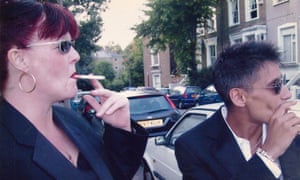
‘Denise’s final Facebook post asked friends to look after me, and they did.’ Denise Marshall and friend. Photograph: Lisa Alabaksh
She became CEO of Eaves, a feminist charity specialising in support, advocacy and research into all aspects of violence against women. Eaves changed policy and perceptions around trafficking through its Poppy project, and the work was respected worldwide. Funding was cut with the advent of the coalition government in 2010, and Denise was heartbroken. But she was a force of nature, and kept the Eaves projects going, as well as writing two novels, travelling the world for adventure, playing poker and using social media with a political passion.
In August 2015, our life together ended. Denise died of stomach cancer, and Eaves closed two months later – a double devastation. Through sickness, diagnosis, treatment, pretty much up to the end of her life, Facebook had been Denise’s link to the outside world, and in those early minutes, hours, days and weeks of grief it became mine too. Posting on Facebook was my way of not drowning, because online, there were friends. Real friends; people I’d actually met and who knew Denise. I would write, sometimes in the dark, desperate hours of insomnia, and someone would be there. Facebook saved my life. Denise’s final post asked friends to look after me, and they did.
By the time of my first birthday without Denise, I had posted some 60,000 words. She was loved by so many and she was missed so much, personally and professionally. People told me it helped to read my posts, and that message helped me. One day, two friends brought a manuscript around, made up of the posts I’d written, and from there this became an actual book and my life changed again.
Now I am a published writer who has a life that includes people I really don’t know but who now know me. Sort of. The book is an out-and-proud story of lesbian love, feminist fire and a universal recognition that everyone can be stronger for longer with a bit of kindness and compassion. It is about surviving the swim across the oceans of grief and finding hope in the heartache. It is about love.
The moment I met Denise Marshall, I found my life’s passion – working to end violence against women and girls – and I took the first step on the path to living openly and happily as a lesbian, as who I am. Because of Facebook, I have been able to survive the greatest loss of my life. Along the way, I’ve tried to live according to a mood and a mindset I call Hahalala – health and happiness and love and laughter all. This outlook and expression came to me after my own recovery from sickness. Although Denise would often roll her eyes at my cheeriness, she too was an optimist and she loved and believed in the concept.
In the last days of her life, I asked how she had done it all, how she was still managing to raise a smile, how we were all going to survive without her. She smiled the smile that enchanted me the first time I met her, in that refectory queue, 23 years earlier. “It’s a case of having to, my darling,” she said.
An early or late menopause increases the risk of women developing type 2 diabetes, a study has found.
Researchers who analysed data on 124,000 women found that those whose fertility came to an end in their mid-40s or earlier were 25% more likely to become diabetic than women who reached the menopause between 46 and 55.
A menopause after the age of 55 increased the risk of diabetes by 12%.
In the UK, the average age at which a woman has her final menstrual period is 51.
Related: Everything you wanted to know about diabetes
Dr Erin LeBlanc, from the Kaiser Permanente Center for Health Research in the US, said: “Our study suggests the optimal window for menopause and diabetes risk is between the ages of 45 and 55.
“Women who start menopause before or after that window should be aware that they are at higher risk and should be especially vigilant about reducing obesity, eating a healthy diet and exercising. These lifestyle changes will help to reduce their risk for type 2 diabetes.”
After menopause, levels of the hormone oestrogen decline and this has been linked to increased body fat and appetite, slower metabolism and higher blood sugar.
While previous research has associated early menopause with an increased risk of diabetes, the new findings are the first to show that the condition is also linked to later menopause.
The new study, reported in the journal Menopause, also found an association between the risk of developing type 2 diabetes and the length of a woman’s “lifetime reproductive cycle” – the time span between her first and last period.
Women with a lifetime reproductive cycle of less than 30 years were 37% more likely to develop diabetes than those with “medium length” cycles of 36 to 40 years, the study found.
Long reproductive cycles of more than 45 years were associated with a 23% increased risk of diabetes.
The study formed part of the Women’s Health Initiative, a large US investigation of postmenopausal women focusing on the prevention of heart disease, bone fractures, and breast and bowel cancer.
About 30% of individuals with HIV are diagnosed properly following they must have begun therapy, according to the most current Australian data, suggesting early-testing initiatives have not worked.
Regardless of 88% of the country’s new infections happening in gay guys, unprotected sex in that group continues to be a key driver of infections, producing falling HIV testing rates between youthful gay males a concern.
There have been 1,235 new circumstances of HIV diagnosed in Australia final yr – an improve of 70% considering that 1999 when diagnoses had been at their lowest, figures from the annual HIV surveillance report by the University of NSW Kirby Institute show.
A lot of of these have been not currently being diagnosed early sufficient, enabling their immune program to fail and potentially posing a chance to other people, the report found.
The greatest indicator of how lengthy a individual has had HIV for is their CD4+ cell count per microlitre, which declines on regular by 50%–60% per year in folks with HIV. The proportion of late diagnosis cases, defined by a CD4+ cell count of significantly less than 350 cells per microlitre at diagnosis, had not improved in the 3 many years to 2013, the report found. In individuals with out HIV, the count is over 500.
“These data are suggestive of no substantial shift in the illness stage at which men and women are diagnosed regardless of recent initiatives to increase HIV testing,” the report explained.
Along with condom use, early treatment method of infections is considered essential to stopping HIV’s spread. Most of individuals taking antiretroviral treatment options lessen their possibility of transmitting the virus to other people during unprotected intercourse by up to 96%.
But in some situations, individuals were residing for many many years with HIV with out realizing, mentioned Associate Professor David Wilson, head of Kirby’s surveillance and evaluation program for public wellness.
“It is important to stage out that charges of therapy when men and women are diagnosed is much better here than in most other countries in the planet, with 60% of folks diagnosed with HIV on therapy that restores their immune technique,” Wilson said.
“But we really don’t want to commence treating men and women when their immune system has presently crumbled.”
Individuals who delayed their therapy too extended also often took longer to recover. Wilson explained it meant attempts by overall health departments to get people to test, for instance through speedy-testing by GPs and at sexual well being clinics, were not foremost to earlier diagnosis. But Wilson added he was hopeful the approval of HIV house-testing would lead to men and women becoming diagnosed sooner.
No Australian state or territory has a lengthy-term decreasing trend in HIV. Victoria recorded the largest boost in HIV situations in 2013, with 365 new diagnoses.
Condoms had been still the most effective way to avoid HIV’s spread, Wilson mentioned, and was particularly crucial for gay men.
Up to twelve% of that group is estimated to be contaminated with HIV. The prevalence amid sex staff, by comparison, is less than .one%.
But the annual trends in behaviour report by UNSW’s Centre for Social Analysis in Well being – also released Thursday – discovered the rate of unprotected anal sex among gay males with casual partners has elevated in the past decade.
Far more than 35% of males with casual partners in the six months before the survey reported having unsafe anal intercourse.
A Melbourne HIV professional physician from Monash University, Nick Medland, says HIV prices have been higher amongst gay males not just since of that, but also because the HIV epidemic hit the gay male local community initial.
“Australia has been extremely productive following the discovery of HIV in stopping it from getting to other communities like drug consumers and intercourse employees,” he mentioned.
Folks normally, including heterosexual Australians, had turn into far more complacent towards catching HIV, Wilson mentioned.
“A lot of factors have took place given that HIV very first came to light, for illustration HIV is no longer fatal in most instances,” he said. “I guess that has triggered men and women to turn out to be lax about acquiring it, folks aren’t as terrified as they have been in 1990s.
“It’s a good factor that they are not terrified and that stigma is being decreased, but it does also suggest some folks are a great deal much less mindful. I’m not saying they really do not care if they are contaminated, but twenty many years ago men and women fell apart throughout the testing method.”
The yearly HIV testing price among gay guys who are not HIV good is around 60%, according to the report, with the charge falling particularly among people who were beneath 25 many years of age.
This was partly due to the fact public awareness campaigns all around HIV had been not as powerful now, Medland said. And HIV testing was essential for the common community – not just gay guys.
“It’s about thirty many years on from the peak of HIV awareness campaigns, and it’s a bit hard for the neighborhood to sustain that level of awareness,” Medland mentioned. “People have moved on to worry about other factors.”
1 in 4 individuals was only diagnosed following they had been admitted to hospital as an emergency, the report identified.
It warns that this kind of circumstances were twice as most likely to die inside of a 12 months compared with those provided an urgent referral by their GP.
Ciarán Devane, the charity’s chief executive, explained the findings ought to be handled as “a wake-up call” to the Government about the way sufferers have been getting taken care of and warned of a “looming crisis” in cancer care.
He explained: “It is a national shame that our cancer survival rates are amongst the worst in Europe, that patients are getting treated with a lack of dignity, or being denied a ‘good’ death.”
By 2020 virtually half of the population can assume to be diagnosed with cancer for the duration of their lifetimes, forecasts show.
The charity stated urgent improvements have been needed in diagnosis and treatment of sufferers, given the inability of the NHS to cope with today’s demands.
Mr Devane stated: “With the quantity of folks living with cancer set to increase, political parties should inquire themselves – how will we cope with these growing numbers when we can’t even meet the demands of numerous folks these days?”
The report identified that 1000′s of individuals had been denied “a good death” with ample soreness relief, and in a location of their selecting.
Whilst 73 per cent of sufferers expressed a need to die at property fewer than a third had been ready to do so, the study located, and much more than half did not have complete discomfort relief in the final 3 months of their lives.
Main strides have been created in the therapy of cancer in latest decades.
Earlier this week, researchers explained 50 per cent of individuals who are diagnosed today can anticipate to reside for at least 10 many years.
But progress diagnosing cancer has been far slower. Most current figures show that 68.2 per cent of people diagnosed with six of the most frequent cancers are alive 1 yr later, in contrast with 59.two per cent 15 years ago.
Authorities said survival rates in the United kingdom are lagging far behind individuals in a lot of countries in Europe simply because so several cases are not picked up right up until a patient arrives at Accident & Emergency departments, suffering acute signs.
Study demonstrates the Uk has the lowest 1-year survival prices for 4 cancer varieties (colorectal, lung, breast and ovarian) compared with five countries – Australia, Canada, Sweden, Denmark and Norway – with comparable well being programs and ranges of wealth to the United kingdom.
In December a review of 29 countries which compared five-12 months survival located that the UK’s charges were worse than the EU typical for nine out of ten typical cancers, which includes breast, bowel, prostate and lung cancer.
As we age, our capacity to hear may possibly decline. But, even though age-relevant hearing loss may not be anything we can completely avert, we may not be fully powerless to stop it either, as is commonly believed. There are some organic therapies that may support fix some of the injury that leads to gradual modifications in our hearing, and right here are a few worth taking into consideration.
Dietary supplements
There are certain dietary supplements which might help increase hearing. It is essential to don’t forget natural dietary supplements can take awhile to exhibit their complete effects, so you need to be patient and steady with their use. Usually times, it can get up to two months, often even six, ahead of you can accurately evaluate no matter whether a distinct supplement is operating for you or not. And you must educate oneself about prospective interactions and whether specific wellness problems make use unsafe.
Considerably of hearing reduction comes from cell injury caused by totally free radicals, and antioxidants are substances that can avoid or support fix this type of harm. Particularly valuable supplements for hearing loss may possibly be alpha-lipoic acid, vitamin C and vitamin E. Taking glutathione along with these dietary supplements might aid these antioxidants perform more efficiently in the body.
Supplements that aid convert excess fat into energy are also advised for hearing issues, and two that are specifically recommended are acetyl-carnitine and coenzyme Q10. Vitamin A and magnesium might also be helpful.
Sound Treatment
Sound therapy could also be valuable for bettering hearing. Particular combinations of sounds may assist stimulate the auditory technique, naturally enhancing perform. By stimulating various locations of the ear, sound treatment is explained to get at the root causes of hearing reduction.
Very first, it aims to workout the small muscle groups in the ear essential for typical functioning. Above time, they get rid of tone and flexibility, producing it hard to identify particular frequencies and the finish consequence, is they by no means attain the inner ear, so you really don’t hear these sounds. Sound treatment employs alternating frequencies to operate the muscle groups.
Sound treatment also stimulates the cilia, individuals little hair cells in the ear, that when damaged, contribute to hearing loss. Since a lot of cilia are usually damaged, but not entirely destroyed, stimulating them with the appropriate frequency may restore some of their functioning.
Lastly, sound treatment may possibly aid boost communication between the ear and the elements of the brain concerned in auditory and language processing.
You can find numerous sound therapy plans on-line.
Save Your Hearing Now: The Revolutionary Program That Can Avoid and May Even Reverse Hearing Reduction
Option Remedy Modalities
Specific option remedy modalities may be useful for enhancing hearing. Acupuncture has been shown to assist with some auditory ailments, but there is limited study on its results on regular age-relevant hearing loss. But, provided the safety of this treatment, and its great track record for treating a host of other situations, it is definitely worth a try out.
Craniosacral therapy, designed by an osteopathic physician, is an additional treatment method that could be helpful for hearing reduction. In a nutshell, it aims to restore stability to the nervous system by releasing any tensions that could be existing in the surrounding soft tissues. Practitioners think restoring this balance can address troubles this kind of as age-relevant hearing loss, which results from a variety of varieties of harm to the different structures of the ear.
Kelli Cooper, creating for Fluke Hearing, has a passion for organic wellness, and enjoys sharing guidelines on how to enhance wellness problems by way of holistic indicates.
With the March 31st deadline approaching to enroll in health insurance by way of the Patient Safety and Inexpensive Care Act (or, to the rest of us, Obamacare), several of you could have missed some of the enjoyable, concern, truth, and fiction surrounding this controversial system. With Cronkite, Murrow, and Brinkley no longer all around, we turned to modern sages of late night comedy to aid us stroll down memory lane.
Obamacare Rollout
“Loser, the Obamacare site, which had technical troubles all week because of as well significantly internet visitors. You can not campaign on the fact that millions really do not have overall health care and then be stunned that millions don’t have wellness care. How could you not be prepared? That’s like one-800-Flowers getting caught off guard by Valentine’s Day.” - Cecily Powerful, SNL’s Weekend Update
“Many scam artists are making an attempt to take advantage of the problems with the Obamacare web site. Specialists say you can tell it is a scam web site if you enter your data and it swiftly and efficiently signs you up for healthcare.” - Conan O’Brien
“Today, there have been a lot more troubles with the Obamacare website. It looks when you kind in your age, it’s confusing because it’s not clear if they want the age you are right now, or the age you’ll be when you finally log in.” - Jay Leno
“Obama said they’ve had some glitches with the Affordable Care site. I’ll inform you some thing. If you buy a pair of pants on the web and they send you the incorrect colour, that is a glitch. This is like a Carnival cruise, for God’s sake!” - David Letterman
“The White Property announced that it is bringing in the ideal and brightest tech experts to fix the glitches on the Obamacare web site, which is a wonderful strategy. You know what would have been a better program? Hiring the ideal and brightest tech professionals to make the Obamacare site in the 1st place.” - Jimmy Fallon
“You can also enroll above the cellphone. The contact goes like this: ‘Hello and welcome to Healthcare.gov, the place exactly where you can discover about signing up for reasonably priced healthcare. Appropriate now, there are eight million individuals ahead of you in line. Your estimated wait time is forever.’ It would be ironic to die while waiting on hold for well being insurance, correct?” - Jimmy Kimmel
President Obama and Jay Leno take pleasure in a laugh back stage. (Photo Credit score: Pete Souza via Wikipedia)
Obamacare in General
“President Obama said he is sorry that some Americans have lost their existing well being coverage due to Obamacare. I believe he’s receiving a little desperate. These days, he stated if you like your complete lack of coverage, you can hold your complete lack of coverage.” - Jay Leno
“The Obama administration asks Hollywood to function optimistic mentions of Obamacare into its Television demonstrates and videos. So AMC’s new zombie drama is titled: “The Strolling Dead but not Due to Pre-present Circumstances.” - Conan O’Brien
“President Obama’s approval rating is down to 39 percent. And Toronto Mayor Rob Ford, who admitted to smoking crack cocaine, went up to 49 %. How does this make Obama really feel? He’d be better off smoking crack than passing Obamacare.” - Jay Leno
“Obamacare demands the premiums of more healthy folks to cover the fees of sicker individuals. It is a devious con that can only be described as insurance.” - Stephen Colbert
“The Republicans in Congress voted to repeal Obamacare for a fortieth time right now. It’s actually now much less a governing philosophy it’s more like Charlie Manson applying for parole.” - Bill Maher
“President Obama delivered his inaugural address, which set a more liberal tone for his second term, especially the part where he showered the crowd with birth handle pills.” - Seth Meyers, SNL’s Weekend Update
If you are the variety of man or woman who keeps abreast of fitness trends or is at all interested in rubbernecking at the absurd extremes of human behaviour, you’ve almost certainly heard of CrossFit. CrossFit, according to the official description, is “consistently varied practical movements executed at substantial intensity across broad modal and time domains”. This is CrossFit communicate for “working, jumping, and lifting issues until finally you vomit or make it through to a increased astral plane based mostly on the mind-cleansing properties of intense discomfort”.
Back in the day if you wanted to get match, all you had to do was throw on some Howard-type trackie dacks and take the canine down the park to scare some youngsters. But given that the exercising revolution of the 1970s and 1980s, we’ve noticed a succession of hilarious fitness trends. These have ranged from the spiral-permed aerobics workout routines that singlehandedly supported the legwarmer industry all the way through to hardcore bodybuilding, which is just a single of numerous factors that Arnie will have to reply for in the afterlife. None have been a lot more all-encompassing and more ridiculous than Crossfit, which is famous for its extreme workout routines and lax dedication to retaining participants alive.
A single of the activities CrossFitters participate in is heavy barbell-based weightlifting, with an emphasis on lifts like the thruster. Throwing a loaded barbell over your personal head is a technically demanding move that ought to be taught by an seasoned professional, which is why it really is concerning that you can grow to be a CrossFit coach in as little as two days. This restricted instructor certification, combined with CrossFit’s super-macho culture, could go some way to explaining why one particular small study discovered an damage rate of 73.5%.
Confident, you might say, but lots of sports activities are dangerous. Previous-style backyard trampolines, the sort we allow little ones perform on, have an damage price so higher that science has yet to come up with enough numbers to hold track. And as quickly as human cloning is legalised, Rugby League gamers will just grow themselves a back-up entire body from which to harvest new parts. But the captivating portion of CrossFit is that the injuries and the exertion vomiting are employed as a marketing tactic. The shoulder reconstruction goes with the rippling abs, like matching your shoes to your belt (pointing this out to CrossFitters creates approximately the identical results as making a your mum joke to Bruce Banner).
There is a huge crossover between CrossFitters and people who comply with the paleo diet plan, yet another excessive wellness trend which inspires excessive devotion and continuous evangelising (you are rather considerably legally required to start off a life style and recipe weblog, also). For the dedicated CrossFit family, there are even CrossFit courses for children.
I read through paleo/CrossFit blogs like some people observe cockfights, except cockfighting was banned a while back for getting cruel and uncommon. A couple of years invested spectating on people’s CrossFit obsessions alternatively of undertaking something beneficial with my daily life has led me to feel that CrossFit has a lot to tell us about life in late western capitalism. People with physically demanding blue-collar jobs are not CrossFit’s primary demographic, and the on the internet subculture, at least as far as I can see, skews heavily towards post-industrial knowledge employees. Why would you spend $ 200 a month to throw weights about in a garage if you previously do that as a day task? The exploding recognition of CrossFit and other “xtreme physical exercise” trends like Tough Mudder suggests a kind of atavistic revolution, the place sit-down workplace workers can truly feel the thrill of an improved heart price and a handful of soft tissue injuries with no obtaining to turn out to be a bricklayer.
There are of program plenty of fit, wonderful men and women who appreciate CrossFit, some of whom even have all their original limbs. To those folks, I say: get out now! Go for a run, lift some weights, and do some pull-ups without providing your difficult-earned funds to a nebulous trend that manages the risk of muscle death using a decrepit-looking cartoon clown named Uncle Rhabdo.
Of program, to the hardened CrossFitter, statements like “please try not to die” and “be mindful, your lifestyle is treasured” are very likely to elicit the very same kind of reaction as a mother or father asking their 13-yr-old to hold hands even though crossing the road. And fair enough, who am I to say that a willing adult shouldn’t carry out explosive weightlifting manoeuvres below questionable supervision, or promote a hairy-chested competitiveness that encourages participants to mock and shame folks who engage in less strenuous types of exercise.
It really is challenging to see how popular physical exercise can get far more severe than CrossFit, but it is often feasible that the following fitness trend will involve throwing oneself into a volcano, or rolling down a rocky hill under a hail of live gunfire. Now – nobody steal people tips, I’ve acquired them copyrighted for potential entrepreneurship options.
Business travelers, shift staff, university students, and overworked tech staff, beware. Unusual sleep patterns, notably sleeping for the duration of the day and staying up late at evening, wreak havoc with the action of your genes, new investigation demonstrates.
Researchers at the Sleep Study Centre at the University of Surrey in the United kingdom interrupted review participants’ rest at normal intervals above three days, taking blood samples to keep track of gene function. The findings: Daytime sleeping disrupted the rhythms of up to one third of the participants’ genes.
The review, published on the web yesterday in the Proceedings of the National Academy of Sciences (PNAS), helps to shed light on the mechanism for previously established connections amongst interrupted rest and significant well being difficulties such as heart disease, weight problems, diabetes, and cancer.
“This analysis may assist us to understand the damaging wellness outcomes linked with shift perform, jet lag, and other conditions in which the rhythms of our genes are disrupted.”said lead researcher Derk-Jan Dijk, professor of Sleep and Physiology and director of the Sleep Investigation Centre.
Using a light-managed sleep lab, Dijk and staff manipulated the examine participants’ sleep patterns, postponing their bedtime by four hrs a day until finally the topics were 12 hours out of sync with their standard day/evening biological clock. The purpose was to mimic the results of jet lag or working the night shift, the researchers explained. Blood exams unveiled decreased gene expression, which can impact the body’s circadian rhythms, as effectively as bodily functions this kind of as metabolic process, irritation, pressure and immune response.
The study has worrisome implications not only for shift staff, but for enterprise vacationers, university students, and sleep-deprived employees of all stripes, who typically nap or sleep for the duration of the day to make up for operating late into the night. (Much more and more businesses are setting up nap rooms to offset employees’ late work hours.)
The prolonged function days are taking their toll – in accordance to the most recent poll by the National Rest Basis, 43 % of Americans among the ages of 13 and 64 rarely or never get a total night’s sleep for the duration of the perform and college week.
In the past couple of years, scientists have been honing in on the connection between rest patterns, light publicity at night, and significant wellness issues. Last 12 months the American Health-related Association (AMA) house of delegates went so far as to concern a policy statement warning that “nighttime electrical light can disrupt circadian rhythms in humans” and that this disruption “affects aspects of physiology with direct hyperlinks to human health, such as cell cycle regulation, DNA damage response, and metabolism.”
Analysis has linked late nights, shift function, and ambient light to well being situations ranging from depression to early death. The AMA’s concern was primarily based, in portion, on a expanding physique of new analysis linking doing work at evening beneath vibrant lights with enhanced risk of breast cancer.
In a research published final year in Chronobiology International, researchers from Yale University and the Danish Cancer Society demonstrated that girls who worked at evening had the exact same epigenetic alterations – biological modifications that impact gene expression – previously observed in ladies with breast cancer. In 2007, the International Company for Investigation on Cancer declared shift perform a “probable human carcinogen.”
Although the recent United kingdom review was a little 1, involving just 22 participants, preceding study by Dijk and colleagues published final yr also in PNAS documented equivalent findings.
For much more well being information, follow me here on Forbes.com, on Twitter, @MelanieHaiken, and subscribe to my posts on Facebook.


![Pete Souza [Public domain], via Wikimedia Commons](http://blogs-images.forbes.com/robertszczerba/files/2014/03/1024px-Obama_and_Leno-e1395800870655.jpg)