cannot etiketine sahip kayıtlar gösteriliyor. Tüm kayıtları göster

2 Şubat 2017 Perşembe

Tackling loneliness cannot rest with volunteers alone | Janet Morrison

Barely a day goes by without one story or another highlighting the crisis in social care, and flagging the contribution failures in the health service are making to the problem. Added to this are the pressures of an ageing population in which many of the people living for longer are doing so with complex conditions.


The government argues it has taken short term steps to address the crisis, but as yet has offered no suggestion of how it might solve the problem long term.


Independent Age, along with many other charities in the care sector, have long been calling for a cross-party solution to address the crisis in health and social care. We can’t kick this issue into the long grass yet again. As a society we need to ask ourselves, what kind of care we want in later life and how much we are we prepared to pay for it. But the costs involved also beg the question of what role volunteers should have in helping to tackle these issues.


Through our network of volunteers across the UK we offer friendship services to older people who are lonely. Our volunteers provide regular phone calls and visits, enabling older people to feel more connected to their local community and, crucially, helping to reduce loneliness.


A great example of how our work can help is Ron, who is nearly 90. Ron’s wife died a number of years ago, and following a fall at home in which he broke his hip, he very rarely gets out. Ron would go for days on end without speaking to anyone. He now has regular visits from one of our volunteers, Alison, whose employers so value the work she does with Ron that they let her work flexibly so she can visit him.


Crucially, we understand that volunteering is not a one-way street: our volunteers tell us they get as much out of the relationship as the person they visit or call. That might be through the pleasure of a joint interest, or through sharing life stories and experiences. There is evidence that volunteering can bring health benefits for the volunteer too.


Volunteers from across the health and social care sectors are already providing essential services.


There are, however, firm boundaries to the volunteer relationship. We’re clear that it is not the role of our friendship volunteers to offer advice on issues like benefits or accessing care and support (we have an expert helpline for that). And their role mustn’t be confused with the provision of statutory services that are the legal duties of bodies like councils and the NHS.


It’s essential that the boundaries of any volunteering role are clearly understood by the organisation arranging the service, the volunteer providing it and the person receiving it.


That doesn’t mean that volunteers have no role in health and social care though. Many volunteers from across the sector are already providing other essential services: from volunteer-delivered “home from hospital” schemes to lunch clubs and shopping services, driving people to GP and hospital visits, or acting as quality assessors for their local Healthwatch. And let’s not forget the 1.3 million older people who are providing unpaid care [pdf] for their loved ones – recent estimates put the value of informal care provided by older people at £11.4bn a year [pdf].


Up and down the UK, local people are volunteering to provide essential support for health and social care provision. Their contribution must be applauded and recognised as they continue to assist those who need it, now and in the future.


Talk to us on Twitter via @Gdnvoluntary and join our community for your free fortnightly Guardian Voluntary Sector newsletter, with analysis and opinion sent direct to you on the first and third Thursday of the month.


Tackling loneliness cannot rest with volunteers alone | Janet Morrison

16 Ocak 2017 Pazartesi

You cannot buy happiness – not even on ‘Blue Monday’ | Polly Mackenzie

Waking up today, on so-called Blue Monday, the “most depressing day of the year”, you may already be aware that this concept is based on a fraud. An almost deliciously spurious mathematical formula was dreamed up by a PR agency, given the veneer of academic rigour by attaching the name of a lecturer at a further education college, and a media phenomenon was born. More than a decade’s worth of articles and social media memes have at turns reinforced and defied the Blue Monday myth, and it is often now held up as a case study of bad science.


It is, of course, laughable to have a formula where W stands for weather and days-since-Christmas is raised to the power of Q, the days-since-we-quit-our-new-year-resolutions. But the driver behind this mockable maths is a much more sinister lie, one from which many struggle to escape 365 days of the year.


Blue Monday was originally invented for an advertising campaign for Sky Travel. Its sole purpose was to sell holidays with the false promise that spending money would raise flagging spirits. Blue Monday has now been used to sell everything from flowers to Ferraris, takeaways to airport parking. Beat Blue Monday, they tell us (laughing knowingly at the fact that it’s made up): buy something new today.


We’re told every day by advertisers that buying stuff will make us happy. A new pair of shoes will help us to feel better after a breakup. New beauty products will give us a sense that we’re “worth it”. A bigger car will give us social status. New toys will make the children happy. Even loans are sold this way: one payday lender is currently running a campaign with a smiling woman, snuggling a mug of tea and feeling happy thanks to a 1,200% APR loan, an implausible scenario if ever there was one. So it’s no wonder that on Blue Monday, the day our anxieties and misery are supposed to peak, the advertisers scream that the path out of unhappiness is paved with till receipts.


Sometimes the harm this causes is relatively trivial: overconsumption of stuff we don’t need; a bit less money in the bank; a wardrobe that won’t close because we’re not very good at throwing away our throwaway fashion buys.


But the harm can be deadly serious for people struggling with mental health problems. Imagine it: your mood is low. You find yourself crippled by anxiety. You feel like a failure, a burden on your family and friends. This is the moment when a lifetime of being told that stuff will make you feel better takes its toll: in desperation, nine in 10 people with a mental health problems find themselves spending more when they’re feeling unwell.


In my work at the research charity Money and Mental Health, I’ve lost count of the stories I’ve heard that stop me in my tracks. Mothers spending their way through months of postnatal depression – one who bought nearly 100 buggies over four years. A man who tried to buy a villa in a country he didn’t have a visa for, convinced it would turn his life around. A young woman who found buying something online was the only way she could stop a panic attack, so she did it almost every day. A husband who felt such a burden he’d buy endless presents he couldn’t afford for his wife. And many of them tell us that the boxes sit in the living room, unopened, unwanted, but impossible to ignore.


Because buying stuff is just the first part of the cycle. Next comes the guilt. People with mental health problems are far more likely to be living on a low income, and the financial damage that compulsive shopping can do is extraordinary. The boxes – or if they’re actually opened, the new possessions – are a constant reminder of the mistakes made. Too often, people don’t return unwanted goods: nearly half tell us that’s because they just want to pretend it never happened. The guilt brings their mood lower and then buying something for a temporary buzz feels like the only way back up.


We have just launched a new tool, the Shopper Stopper, which is helping people to curb their night-time shopping in particular by allowing them to set the opening hours of online shops. But it’s going to take a wider societal shift to really shake us out of these habits for good.


Comfort eating and substance abuse – other common ways to medicate mood – have physical effects. But the psychological impact of new stuff comes from our culture, not our chemistry. We can, if we change the way we talk about belongings, change the way we all think about shopping. And the people who would benefit the most are those struggling every day to find enough happiness to stay alive, and driving themselves into debt on a doomed quest to find it in a shopping basket. You cannot buy happiness – not even on “Blue Monday” – and the sooner we destroy the myth that you can, the happier we all will be.


You cannot buy happiness – not even on ‘Blue Monday’ | Polly Mackenzie

15 Ocak 2017 Pazar

It is clear to anyone in the NHS that we cannot carry on as we are | Bob Kerslake

Jim Callaghan may not have actually said “Crisis? What crisis?” in 1979, but the then prime minister’s words have gone down in history as the clearest example of a politician not in touch with the severity of the issues facing the country. Last week has seen a similar debate about the state of our accident and emergency services.


Seen from the position of chair of King’s College Hospital, there is no question that the pressures are real and serious. Constant and relentless effort is required to keep essential services running. That we have managed to do so is down to the extraordinary efforts of senior and frontline staff. Even with this, the picture is one of enormous fragility, not just at my trust but across the whole of the NHS.


The story at King’s is reflected in the grim national figures on A&E waiting times, trolley waits and “black alerts” released last week. Of course, the picture varies from area to area. But the underlying story is of a service under more pressure than it has been for a decade.


It is hard to think of anything that matters more to people than the health and wellbeing of themselves and their family. Given this, can we really be happy with our health and care services staggering from year to year, wondering whether they will manage to make it safely through the winter?


The reasons for our current predicament are well understood. This is a “crisis” that was not only predictable but was predicted. The hard bit here is not knowing what to do, but having the will to do it.


First and foremost of the issues we need to tackle is funding. The NHS is not a “bottomless pit” as some have suggested, but increasing demand and continuing advances in healthcare mean that it needs additional funding year on year of around 4% above inflation. Whenever it has not had this for any sustained period of time, it has run into trouble.


The funding problems of social care are, if anything, more severe. Half of local government funding goes on adult and children’s care. Local authorities have done remarkably well in delivering spending reductions while preserving services in recent years, but it is inevitable that they will have to take money out of their care budgets in order to balance their overall budgets. In the end we all want clean streets and good leisure services as well.


It is very hard to improve your swimming technique if you are struggling to keep your head above water


There is, of course, scope to improve the way services are delivered. As the work of Lord Carter has shown, some hospitals are more efficient than others. We know at King’s that there is room for improvement. But sustained progress will only come if we can stabilise the financial position. It is very hard to improve your swimming technique if you are struggling to keep your head above water.


Additional funding now, together with a concerted move to eliminate the deficits that NHS trusts are currently carrying, is essential. This would stop the incessant tug of war that currently goes on between different parts of the NHS as they desperately try to balance their own part of the system. The energy and focus could then go on delivering real improvements in productivity and more consistent service quality.


Last week was dominated by a debate between the prime minister and NHS England chief Simon Stevens over whether the NHS has in fact been given more money than it actually asked for. In reality, the funding agreed in the Five Year Forward View was the art of the politically possible at a time when big reductions were being agreed in other government departments.


It assumed efficiency savings of £22bn – higher than has ever been achieved by the NHS or indeed any other major health economy – and significantly underestimated the scale of the structural deficits that already existed in hospital trusts. Crucially, it was reliant on sustained funding of social care.


Stevens was both right and courageous to set out the true picture as he saw it, even if it has been at some cost to his personal relationship with No 10. This is his job. It is clear to anyone who works in the NHS that we cannot carry on as we are. He has a duty to say so. The prime minister had to make some tough decisions to deliver savings when she was home secretary. So did Philip Hammond when he was at defence. It is, perhaps, not surprising that they believe standing firm now on NHS funding is the right approach. In my view this would be a profound mistake. The NHS is different, and needs to be recognised as such.


The debate on funding is not just a matter for the government or the NHS. As a country we need to make some hard choices. We can help ourselves by being fitter and more active, but in the end – if we want the security of having the best health and care services available to us – we will have to pay for them. A cross-party health and care commission could begin that debate with the public.


Beyond funding, we need to put back together a service that has been chronically fragmented by the reorganisations of successive governments. This does not need, God forbid, to be another top-down reorganisation, but a concerted move to allow health and care organisations to come together at local level. Combining hospitals, GPs and community services and moving away from the current artificial division between purchasers and providers would improve care and reduce costs. In some places this change has already started. It needs much more support.


A proper investment plan is needed in the buildings and equipment of the NHS. The private finance initiative brought substantial new investment, albeit at a very high cost. This has now gone, but nothing has been put forward to replace it. Much of the NHS estate urgently needs investment, and many of the buildings built under PFI will soon need refurbishing.


As well as investing in the infrastructure of the NHS, we also need to invest in the people who work for it. In all the different parts of the public sector that I have worked in, I have never come across people with such talent and dedication. People are passionate about what they do. And yet we have contrived to create a situation in crucial areas, such as nursing, where we struggle to recruit and retain the trained staff that we need.


These are the basic building blocks of an NHS recovery plan. There is no doubt much more that could and should be done, but without these essential steps we are unlikely to succeed.


The NHS has a lot that it can justly be proud about. At King’s, we achieve consistently good health outcomes and have seen major advances in areas such as trauma, haematology and neurosciences. We are confident that over time we can become both m ore efficient and deliver better services.


But like all other parts of the NHS we are now at a crossroads. Without a new approach, these advances will be put at risk. The hardest thing for governments to do is to listen and act on inconvenient advice. It is also the most important.


Sir Bob Kerslake is the chair of King’s College Hospital NHS foundation trust


It is clear to anyone in the NHS that we cannot carry on as we are | Bob Kerslake

7 Ocak 2017 Cumartesi

Theresa May cannot ignore NHS crisis or brush off critics

Most months, and most weeks during winter, the openness the NHS claims to practise yields an array of statistics showing how the service has performed against a range of targets. The figures usually tell a grim story.


Whether it’s ambulance response times to 999 calls, the number of patients waiting more than four hours in A&E or the number waiting longer than they should for urgent cancer care, NHS performance against such metrics is the worst it has ever been.


Jeremy Hunt prefers to trumpet the record numbers of patients being seen, a byproduct of our ageing and increasingly lifestyle-affected population. But few experts take that seriously as an indicator of the health of the health service.


Theresa May will make an important speech tomorrow on mental health, rightly drawing attention to an under-resourced area of enormous concern. But the headlines this weekend are all about a wider NHS crisis that seems to be spiralling dangerously out of control.


May will hope that the intense pressures that prompted the British Red Cross to declare on Friday that the state of hospitals and ambulance services was a “humanitarian crisis” were simply the result of a backlog from the festive period. But the evidence suggests that is not the case; the overload of the system appears to be real and risks to patients rising. Accepting the realities of the ongoing and increasingly visible deterioration of the nation’s most-loved institution would involve significant political risk for the prime minister.


One recently retired NHS trust chief executive believes the deaths at Worcestershire Royal hospital in early January of two patients who had been waiting on trolleys for a bed could become a new “Jennifer’s ear”. Jennifer was a five-year-old who featured in a Labour Party broadcast during the 1992 general election campaign, who had been waiting 11 months for an ear operation. Her plight came to symbolise the Tories’ alleged running down of the NHS.


Media coverage of corridors full of patients on trolleys, waiting to get a bed on a ward, also played a key part in the 1997 election, which Labour won by a landslide. David Cameron’s drive to detoxify the Conservative brand on health, ensuring the NHS was seen as safe in their hands, was conceived in the aftermath of those dark days for his party.


So the parallels being made between then and now by Dr Mark Holland, president of the Society for Acute Medicine, must be worrying for May and Hunt.


True, every winter brings examples of trolleys stacking up in corridors. Two years ago Stoke made headlines; now it’s Worcester’s turn. But the large number of hospitals declaring a red or black alert – their way of saying that they can’t cope, at least temporarily – is not normal. And the huge amount of ambulance crews’ time being wasted looking after patients because A&E staff are too busy to accept them is becoming an urgent problem.


Other serious issues include hospitals having to rush to create extra bed space in order to cope with unprecedented numbers of patients needing to be admitted. Above all, the increasingly long waits for treatment being experienced by more and more people indicate that quite a few hospitals are, as Holland puts it, back to the “chaos” of the 1990s.


The impression is of a service that is wilting, even cracking, under the strain. Dr Taj Hassan, president of the Royal College of Emergency Medicine, which represents A&E doctors, talks of conditions creating “untold patient misery”.


Health experts fear that both quality of care and patient safety are at risk amid a chaos made worse by chronic understaffing.


What is the government’s response? May and Hunt’s stock answers are the disputed “£10bn extra”, combined with “more staff than ever” and the assertion that “demand is no heavier than usual for the time of year”.


But if there are more Worcesters, because doctors, paramedics and hospital staff are too busy to give patients the time they need, or to respond to them quickly enough because they’re tending to others, those pat lines may quickly appear dangerously glib and inadequate.


Theresa May cannot ignore NHS crisis or brush off critics

18 Kasım 2016 Cuma

The NHS cannot afford to get another workforce initiative wrong

Ultimately, saving money in the NHS means cutting staff costs. The NHS in England spends roughly 40% of its £121bn budget on staff, and as local health economies try to stabilise their finances, options such as slashing agency spending and creating cheaper full-time roles are inevitably part of the mix.


Although clinical staff shortages are a global problem, the NHS exacerbates the difficulties of workforce planning by constant changes in policy. Nursing posts – currently numbering around 300,000 – have borne the brunt of this.


Having been recruited in record numbers since the 2013 publication of the Francis report into the Mid Staffordshire scandal, nursing costs face being cut again as hospitals fight to contain deficits.


Once upskilling was in vogue; now the latest convulsion in the nursing profession is downskilling, with the introduction of the post of nursing associate as trusts across the country struggle to fill thousands of vacancies.


Health Education England is ramming this through with ill-considered haste. In January, around a thousand trainees will begin at pilot sites which were only announced in October, leaving far too little time to prepare adequately for a new discipline. A similar number of trainees follows in April, long before any meaningful evaluation of the first wave will be possible.


With just weeks to go, there have been alarming swerves in specifying what nurse associates will do. Crucially, a draft of the curriculum leaked to the Health Service Journal indicated they would be administering controlled drugs independently – a highly-controversial proposal that was dropped from the final version published on Thursday.


The key issue is whether this new role will support or replace nurses. As a study published this week in the journal BMJ Quality and Safety highlighted, replacing qualified nurses with assistants increases the risk of patients dying.


The Department of Health insists nursing associates will complement rather than replace nurses. That does not tally with the Buckinghamshire, Oxfordshire and Berkshire West sustainability and transformation plan to cut staff costs by £34m, which requires a “reduction of nursing grade input” coupled with greater use of various forms of support workers across health and social care services. The plan says that if they “do nothing”, by 2020-21 the area will have a financial gap of almost £500m.


There is nothing inherently wrong with introducing new posts with less training than traditional doctors and nurses. There are some outstanding examples – notably in countries such as India – where new approaches can cut costs and improve quality. On the other hand, in different circumstances replacing low-skilled staff with high-skilled staff has the same effect. The way to find the right solution is to test changes before rolling them out; rushing major changes through in the midst of a financial panic risks serious mistakes.


As well as the obvious dangers around patient safety, the NHS does not have the luxury of getting another workforce initiative wrong; it has too little money and too many nursing vacancies.


For example, this new post seems to have been created primarily to help hospital wards and budgets. It is far from clear how it will support the expansion of community-based nursing and the integration of care services, which is supposed to be at the heart of a transformed care service.


The Council of Deans of Health has raised concerns, such as how nursing associates will improve care quality, whether they are the right way to encourage service integration and whether their function could be met better through existing roles.


Since Health Education England was established four years ago it has pushed the need for “values-based recruitment” – in other words, appointing people who have the right temperament to care for people, not just the technical ability. In the rush to fill trainee positions and nursing vacancies, it must ensure that this progress is not undermined.


Constant changes in resources, technology and patient need coupled with training schemes that take years mean that maintaining the right workforce for the NHS is a near impossible task. But rushing through changes aimed primarily at cutting costs with a poor grasp of the implications for care will not help.


Join the Healthcare Professionals Network to read more pieces like this. And follow us on Twitter (@GdnHealthcare) to keep up with the latest healthcare news and views.


The NHS cannot afford to get another workforce initiative wrong

20 Eylül 2016 Salı

I remember the welfare state being built. A divided Labour cannot save it | Harry Leslie Smith

As the date for the Labour conference grows closer, like dark clouds gathering on the horizon, my thoughts are focused on the social and economic injustices from our nation’s history that helped form this party’s progressive political ideology.


Come this October it will be 90 years since my eldest sister Marion was buried in a pauper’s pit on the outskirts of Barnsley. Not a day has gone by in the intervening decades when I have not thought of her miserable death from TB in a workhouse infirmary, or her ignoble burial in a mass grave for indigents because my parents, being from the working class, were too poor to afford my sister a doctor’s care.


My sister’s tragic end came at a time when Britain was ruled by a Tory government that had unleashed austerity on the citizens of Britain. Her death, and the misery I endured from poverty in the 1930s, were caused by government indifference to the plight of working-class Britain – and that politicised me to become a pragmatic socialist. I learned during the Great Depression that there can be no middle road to social or economic justice when my family, along with millions of other British citizens, were forced to live in substandard housing or slums because the government didn’t adequately tax its most affluent citizens and corporations.


Labour must end its eternal battle between its heart and its head. Both are necessary for electoral victory


It’s why since 1945 my political ideology has been fixed in orbit around the Labour party’s commitment to social democracy. So, when I was invited to speak at the Labour conference in 2014 about what life was like in Britain before the NHS, I was honoured. I was also gratified that I was finally able to give the speech I had waited a lifetime to give about the iniquities ordinary people endure if there is no social safety network to protect them.


Since then, I have spoken all across Britain to small and large crowds about how my generation struggled to build a welfare state, and how that became a tide which raised all boats from the miseries of unharnessed capitalism. But my talks were not so much about my past as about everyone else’s future, and how the younger generations must now shoulder the responsibility to maintain and preserve my generation’s legacy, the welfare state.


But for the young to make a difference and reverse years of neoliberalism that have fragmented this society and ossified their ability to prosper, the left must unite for one purpose: to defeat conservative politics that benefits the few at the expense of the many. Those of social conscience who want a nation based upon egalitarian ideals can only accomplish this if the Labour party ends its eternal battle between its heart and its head. Both are necessary for electoral victory. The warring factions in Labour must unite in a grand alliance that includes the PLP and its 500,000 enthusiastic members, as well as the millions of voters all across these islands who want a new deal.


Make no mistake: I am a fervent supporter of Jeremy Corbyn but I will not forget or ignore how I came to speak at that Labour conference in 2014. I will always be grateful to Andy Burnham, along with Ed Miliband and his office of dedicated staffers, who asked me to speak about healthcare because they believed in an NHS that is for the people and not for the benefit of hedge funds. It’s why, having met many of the members of the PLP over the past two years in every nook and cranny of this country, I can attest to their professionalism and their dedication to social justice. But in their anguish after Brexit, I believe the PLP members erred when they tried to oust a leader who had been elected less than a year earlier. I understand their frustrations just as well as those party members who are now angry at the PLP. I can see the merits to both sides in this acrimonious battle.


That’s why this year’s conference in Liverpool will be more important than even one held right before a general election. The speeches will be a window for the British electorate to see whether Labour can tell the human stories that win elections, rather than just settling old scores.


So, for those members given the great honour of addressing conference delegates – whether they support Corbyn or Owen Smith – they must remember that history is watching them and measure their words accordingly. This is not the time nor the place for the politics of revenge, but instead a time for amity. This is the time for Labour to reaffirm its commitment to forming the next government and building a compassionate Britain, where all are welcomed. The only way to do that is to get our own house in order.


I remember the welfare state being built. A divided Labour cannot save it | Harry Leslie Smith

26 Ağustos 2016 Cuma

Jeremy Hunt cannot bully his seven-day NHS plans through

The Guardian’s revelation of the Department of Health’s analysis of the risks around seven-day working exposes how a highly political health secretary is meeting his nemesis in the hard graft of policy implementation.


There is nothing remarkable about the existence of a risk register; identifying a range of potentially serious problems is standard practice for any government policy. What is striking is that 13 major risks are rated red or red/amber – meaning they are very likely or likely to occur.


Translating Whitehall-speak into plain English, the document tells us that ministers are not sure what they are trying to achieve, that in all likelihood seven-day working will make little difference to hospital services, that there is little agreement on how it should be delivered, plans that do exist are of poor quality, and there are not enough NHS staff in place to make it all happen.


In short, this is a policy – and a health secretary – in crisis. Jeremy Hunt has been trying to batter seven-day working through by winning the propaganda war with the junior doctors over the introduction of new contracts, and doing so by misrepresenting the evidence. Listening to Hunt, the casual observer would assume that the only thing standing between today’s NHS and effective seven-day working is changing doctors’ shift patterns. This document reveals far more serious obstacles.


It is obvious that Hunt is ignoring advice from his civil servants on the most fundamental aspects of delivering a massive and complex policy. The document states baldly that “the objectives and scope are not fully agreed upon, but delivery has started”. In other words, Hunt has been willing to risk strikes by doctors without being clear what he is trying to achieve.


It appears he has not even established a clear position with Downing Street; the risk that the policy does not meet the expectations of No 10 is rated red – an extraordinary position for such a controversial course of action.


Perhaps the most damning revelation is that Department of Health civil servants endorse one of the major criticisms of Hunt’s seven-day working push – that there are simply not enough staff with the right skills to do it. Again, this risk is rated red. Even with generous funding, the timescales around NHS workforce recruitment, training and deployment are such that it would take years for full seven-day working to be implemented, yet Hunt persists in creating the impression that the only obstacle is the lack of will among NHS staff to do it.


Hunt has also ignored civil service advice on how he has pitched the case for seven-day working to the public. In another document obtained by the Guardian and Channel 4, officials have told him that his repeated allegation of patient safety failings at weekends “has not been helpful”. They have been pushing him to explain the benefits for patients, pointing out that attempting to play on fears of medical accidents is not winning public support.


In his early months as health secretary Hunt demonstrated the skills of a political Houdini. The coalition government had been under fire for months over Andrew Lansley’s botched health reforms, but his replacement was able to distract the public’s attention from the chaotic and expensive changes and take the fight over the NHS to Labour by using the Mid Staffordshire scandal to shift the spotlight to quality and safety.


But eventually, rhetorical flourishes have to give way to the long-haul of planning and implementing change, and this is where Hunt’s tenure as health secretary is starting to unravel. Having scored a success by picking a fight with Labour over Mid Staffs he believed he could chalk up another victory by winning a confrontation with the British Medical Association.


But his officials are trying to tell him that changing the junior doctors’ contract is just a small part of implementing seven-day working across the NHS. Hunt needs to listen to civil service advice by reframing the policy around the benefits for patients, being clear on the objectives, adopting a realistic timescale for implementation and above all securing adequate funding. It is simply not possible to bully this policy through.


Join the Healthcare Professionals Network to read more pieces like this. And follow us on Twitter (@GdnHealthcare) to keep up with the latest healthcare news and views.


Jeremy Hunt cannot bully his seven-day NHS plans through

16 Temmuz 2014 Çarşamba

Why millions of us nevertheless cannot quite kick the smoking habit

Catherine Zeta-Jones can oft be spotted lighting up a secret stogie, despite the fact that this might be considered essential stress relief for a lady whose husband blamed amorous pursuits for his throat cancer.


Barack Obama promised to renounce his thirty-yr habit in return for his wife letting him run for the White House. Not remarkably, becoming leader of the free planet did not bestow the calm necessary for this kind of abstinence. In spite of chewing Nicorette gum in the method of a ketamined horse, the president is explained even now to cadge gaspers from his aides.


For the duration of an episode of the BBC’s Question Time in 2011, our very own David Cameron confessed to currently being a reformed smoker, remarking: “I surely help No Smoking Day and, in contrast to in some earlier many years, I hope to meet its requirements in total.” Earlier he had recalled: “When I was 14, 15, sixteen, I was carrying out factors that teenagers do in terms of drinking as well much, currently being caught having the odd fag, items like that.” This appeared to be a reference to cigarettes rather than arcane Etonian practices.


Nigel Farage: unashamed smoker


The Resplendent Smoker


Aka the Unashamed Fagger. Rock chicks Cameron Diaz and Kate Moss fall into this class the former faring greater than the latter in the “not seeking like she’s on forty-a-day” stakes.


For Nigel Farage and Ken Clarke, smoking is all part of the what you see is what you get/man of the men and women stance (the cheroot-toting Clarke also possessing been in the employ of British American Tobacco).


Nick Clegg experimented with, and failed, to emulate this bravura when he advised Radio 4’s Desert Island Discs that his castaway luxury would be a “stash” of cigs an attempt to play it great, second only to his declare to have slept with “no a lot more than 30” unfortunate girls.


The Skinny Smoker


For “skinny”, study “thin at all costs”, in the manner of the Mses E Hurley, J Aniston and T Woodall. Marketing Charles Saatchi’s non-throttling credentials is not the only purpose why Trinny favours an outdoors table at Scott’s, for she – like her fellow slimline smokers – is steadfast in preferring cancer to calories. They could favour state-of-the art “youthening” therapies, but they can not drop the old skin parchers. As one death-stick dieter reveals: “I live off air – cigarette smoke.”


The Rebellious Smoker


Seditious smokers are life’s eternal teenagers, with a homicidal (that is, suicidal) phobia of being advised what to do, regardless of whether by mothers and fathers, employers or society at huge.


A single has only to stand outdoors The Globe of an evening and spot all the ruff-sporting puffers to know that theatre varieties favour the odd fag. If pushed, the thespian will drawl: “It’s so poor for the voice, darling, but brilliant for the nerves and so much naughty fun. I’ve been at it because my days in rep.” The truth that Very good Existence sweetheart Felicity Kendal has her fag-ash Lil moments only endears her to her fawning public.


Kate Winslet, so rock-and-roll try-challenging that she is married to a chap known as “Rocknroll”, and right royal rogue Prince Harry should never really feel obliged to kick the habit.


Elsewhere, there are non-smokers who have never ever puffed more than because the 2006 ban, myself integrated. I detest cigarettes, but not as a lot as I detest having my behaviour policed. (As I said: teenage.)


Jennifer Saunders: provoked outrage:


The Taboo Smoker


The comedian Jennifer Saunders happily provoked outrage in January when she was spotted enjoying an Ab Fab-style cigarette three many years soon after currently being given the all-clear from cancer.


Wander outside any hospital and one will locate medical doctors, nurses, guests and patients with drips lining up for a spot of kill-throat activity.


The ultimate taboo smoker I have encountered was a heavily pregnant comrade at a dinner get together. A fellow guest launched into a relentless, didactic monologue concerning all the items my staunchly unmaternal friend should be performing by way of massaging her perineum. Coolly, my good friend poured herself a second glass of burgundy and languorously lit up: exit irate earth mom in a puff of smoke. My good friend smiled beatifically as she exhaled and uttered, as any taboo smoker would: “I just had to.”


Why millions of us nevertheless cannot quite kick the smoking habit

1 Temmuz 2014 Salı

If Labour cannot win on the NHS concern, then it really is in intensive care

The vacuum of haplessness produced by Jeremy Hunt, the Health Secretary, has been filled by Stephen Dorrell, the most distinguished of his current predecessors, who yesterday repeated that a lot more need to be invested on wellness as the economic system recovers. With Sarah Wollaston, Mr Dorrell’s substitute as chair of the Commons Wellness Committee, also calling in The Telegraph for extra funding, the parties are agreed on a single thing only – that health will be a defining problem of the up coming election.


Although that ought to be welcome news for Labour, with its popularity as the saviour of the NHS, a poll published yesterday place Ed Miliband only somewhat over David Cameron, with 33 per cent of folks saying they trusted the Labour leader to defend the NHS and 29 per cent trusting the Prime Minister. Provided that the PM has been hardly much more beneficial to the nation’s wellness than a plague of locusts, this is a grim omen for Mr Miliband.


Numerous backers are assured that Labour will reclaim the initiative by announcing a (potentially popular) hypothecated tax, but barring a key modify of heart inside the get together, that is not going to occur. “Speculation on an NHS tax is very over-carried out,” says 1 supply, warning against throwing a lot more money at a broken technique. In certain, the notion floated by Frank Field of a rise of a single penny on Nationwide Insurance has privately been discounted by the shadow health secretary, Andy Burnham. Neither he nor his capable deputy, Liz Kendall, believes that functioning-age men and women ought to bear the brunt of having to pay for social care of the elderly.


Mr Burnham was not the first to argue that overall health and social care need to be combined (Mr Dorrell has extended made the same situation), but the Labour spokesman deserves credit score for embedding the notion of an integrated service to which all parties now subscribe. The query is how to weld a tax-funded NHS on to a Cinderella system offering, at ideal, a handful of 15-minute visits for under-paid carers to dispense a shower or a sandwich.


Labour would almost certainly reboot this disgraceful support, the hit-and-run end of social provision, with a “year of care plan” beneath which each patient would be allotted a joint yearly price range for GP visits, hospital remedy and social care. Any person needing social or long-term care would, by appropriate, also have a “single care champion” to oversee all elements of their therapy.


Whilst this kind of initiatives would hold men and women out of hospital, and so save some money quickly, health specialists all believe that further funding will be required. But alarmingly for a party harnessing its fortunes to the NHS, Labour nonetheless has no funds-raising program. While serious talks are mentioned (as ever) to be imminent, there is no suggestion that the party is near to agreeing on, let alone revealing, any scheme compelling older individuals to pay for social care in a honest way.


Mr Burnham is explained still to hope that public opinion might quickly favour his favored scheme – a ten per cent levy on all estates – especially now that the Coalition’s social care cap has exposed several elderly people to extravagant fees, which tends to make it a “death tax” by one more name.


It is not clear, even so, that Labour’s leadership will dare, this side of the election, to announce any money injection. This kind of prevarication could prove disastrous. If the Opposition wants to spend the campaign speaking about overall health, as opposed to welfare or immigration or Europe, then it had greater have anything huge to say. In which Bevan and Attlee pulled back the curtain on the potential, Mr Miliband may be lowered, in the greatest second because 1948, to doing a dance of the 7 veils.


Labour’s uncertainties on overall health are far from self-contained. As an alternative they feed into the wider disappointment that boiled more than when Jon Cruddas, the policy reviewer, spoke of the “profound dead hand” within his party. He was not alluding to Mr Miliband, nor to Ed Balls, whom he admires, but to what he may see as a spirit-crushing election machine that will not serve Labour effectively.


Although Mr Cruddas is explained to “feel terrible” about the revelations, his outburst struck a chord with some senior colleagues, who dread the leadership has elevated the economic climate to close to-sacred status whilst sidelining the rebuilding of the state and so dropping sight of how folks dwell and die. In a speech last night, Mr Cruddas declared himself to be “on the romantic and conservative side of socialism”. He must hope that sufficient other men and women in his celebration share his belief in the politics of humanity.


Nowhere is that impulse a lot more crucial than in well being. Down at the reborn Olympic centre, staff cite numerous tiny successes that all stage to one conclusion. If the NHS has a very good future, then it lies in the very same mix of empathy, reciprocity and shrewd investment that drives this hub of the local community.


No lesson is a lot more crucial for Ed Miliband. If Labour are not able to win on the NHS, then it really is all in excess of.


If Labour cannot win on the NHS concern, then it really is in intensive care

20 Haziran 2014 Cuma

Feel You Cannot Stand To Do Some thing? Demonstrate By yourself Wrong

No matter whether you feel you can not stand one far more day at the office, or you are convinced you can not stand one more minute of a dull seminar, really do not give into people ideas proper away. In reality, the much more you believe you cannot stand anything, the much more crucial it is to show oneself wrong.


Just since you consider you cannot stand it, does not indicate it is correct. (See my preceding report on The 10 Pondering Errors that Will Hold You Back in Existence). You’re very likely in a position to tolerate much more than you give yourself credit for. Nonetheless, the much more you consider you cannot perhaps tolerate another 2nd, the worse you’re most likely to come to feel and the much more these ideas will influence your conduct.


Think First

Believe 1st (Photo credit: jDevaun)


Examples of “I Cannot Stand It” 


Picking to steer clear of unpleasant feelings gives some fast quick-term relief, but avoidance can lead to extended-term consequences. Right here are some techniques that thinking, “I cannot stand this,” leads to difficulties for folks:


•  If you consider, “I cannot stand getting hungry,” you may eat frequently to avoid any likelihood that you’ll experience hunger. You might commence consuming an further snack just before you head into a meeting or you might stop to pick up an added bite to eat prior to your commute residence. Even when you really do not come to feel hungry, you may decide not to consider any chances and consume as a preventative measure. Sooner or later, your waistline could suffer the consequences.


•  Thinking, “I can not stand my job any longer,” will probably result in you to only target on all the unfavorable facets of your perform. You could ignore something optimistic about your job and persuade oneself that you need to quit right away.


•  When you feel, “I cannot stand going to people boring department meetings,” you are not very likely to appear for answers that could make the meeting much more productive. Alternatively, you could get started to stay away from the meetings altogether or waste time complaining to other folks about how much you dislike the meetings.


Why Beliving Your Self-Doubt is a Negative Notion


Just since you come to feel unpleasant, doesn’t mean you require to give up appropriate away. Here are the causes why you must prove to oneself that you really don’t need to have to end carrying out one thing just simply because you consider you cannot stand it:


•  Thinking you can not stand anything influences how you truly feel. You are very likely to really feel a sense of dread, anxiety, or even anger as you approach some thing that you think you can’t tolerate. As you knowledge much more negative feelings about one thing, your thoughts are likely to turn into exaggeratedly unfavorable.


•  If you give up every time you can not stand something, you aren’t probably to attain your goals. It is likely that you tremendously underestimate your capabilities. You may possibly sell yourself quick if you give up each and every time you believe you can not stand something.


•  Giving up when the going will get tough can turn out to be a negative habit and it can alter how you see by yourself. You may begin to believe you’re weak or that you are a failure simply because you can not appear to stick with items long sufficient to see optimistic final results.


Demonstrate to By yourself You Can Stand It


When you consider you can’t stand one thing any longer, prove yourself wrong. If you feel you cannot stand anything for yet another minute, stick close to for two minutes just to show to yourself that you can do it. If you think you cannot stand 1 a lot more week at the workplace, resolve to perform at least two far more weeks. 


That does not indicate you require to perform at a job you dislike for 30 many years just for the sake of it, but by doing work 1 day longer than you thought you could, you can prove to oneself that you are stronger than you give your self credit score for. If you pick to quit your occupation, it’s crucial to recognize you quit by choice, not due to the fact you couldn’t stand the discomfort any longer.


When you conduct behavioral experiments that demonstrate your contemplating wrong, sooner or later, it will modify the way you feel. You’ll start to see that you have far more potential than you ever even imagined. You’ll be much less probably to think, “I can not do that.” Instead, you’ll recognize all the issues that you can pick to do.


Feel You Cannot Stand To Do Some thing? Demonstrate By yourself Wrong

1 Haziran 2014 Pazar

If we cannot do it on our personal, then let"s shed excess weight collectively

If people were too excess fat, I mentioned, then that was because they were too darn greedy and if they wished to get thinner then they need to eat significantly less. Basic, I said. The much more we “medicalised” the dilemma, the much less men and women would get responsibility – and the fatter we would all turn into.


Effectively, I am afraid that in the past two button-busting decades, I have been proved right at least about the last point. We are now the second fattest nation in the globe, and I am alarmed to find out that Londoners are now even fatter than New Yorkers. We have weight problems levels of 67 per cent amongst guys and 57 per cent amongst girls. We are the official lard-arses of Europe.


Every single year we have to widen our cinema seats and reinforce the floors of our ambulances. As this paper reviews, more and more soldiers are manufactured to leave the army for getting, frankly, too excess fat to charge at the enemy. Our charter jets puff and groan and spew out unconscionable quantities of fossil fuels as they lug our biomass to the Mediterranean – and the fatter we get, the greater the chance to our health. The a lot more overweight we are, the a lot more likely we are to have cancer, heart illness, stroke: the large causers of early and preventable death. The national fatness issue charges the NHS at least £16 billion a yr in extra and needless cost.


If you are technically obese – as most of us now are – you are statistically reducing your existence expectancy by 3 or 4 many years. If you are morbidly obese, you are probably forsaking ten years of existence – 10 years of entertaining viewing your children and grandchildren develop up.


Practically nothing looks to end us consuming also significantly – neither my savage libertarian sermons in the Telegraph, nor the bossing and nannying of the state. We are akratic. We know what we ought to do, but we can’t look to make ourselves do it. We know what is in our interests – minimize out chips, cake, bread, cheese, crisps and so on and consume a lot more fruit – but we cannot summon up the steady willpower to adhere to the rules.


Brooding on this difficulty, I wondered if we could construct a diverse psychological framework. What if it wasn’t just about us: our selfishness, our weakness of will, our very own abusive relationships with meals. Probably folks might be much more ready to exercising discipline – to make a sacrifice – if it could be witnessed to be for everybody’s sake, for everybody’s wellness.


People are usually capable of remarkable acts of kindness and altruism. Seldom are men and women happier and a lot more energetic than when carrying out items for other people. So at City Hall we have all embarked – about 150 of us, I think – on a prepare to shed fat with each other.


We all stood on a some giant business scales not individually, so that no one felt any individual embarrassment or stress, and we didn’t have the anxiousness of other folks seeing how considerably we weighed. We did it in groups of about 12 at a time. We recorded who was in the groups, and the total fat, and we agreed that in a couple of months we would attempt to drop five per cent.


There is no coercion, no bullying, and it goes with out saying that the entire factor is fully voluntary. It is a joint effort and a bit of a laugh. But the key factor is that I now know that unless of course I keep it up – and refuse the lascivious winks of the cheese and the cake – then I will not just be failing to do the appropriate thing by myself. I will be failing to do the correct point by the group.


I want to drop weight or I’ll let the side down. In a few months’ time we will all get back on the scales and see how we have completed. Will it perform? Every single psychological text book will almost certainly say that you only get outcomes by attractive to people’s naked self-interest. Properly, we have attempted that, and it is going nowhere. Let’s try staff spirit. It is really worth a shot.


If we cannot do it on our personal, then let"s shed excess weight collectively

2 Nisan 2014 Çarşamba

Doctors, nurses, pharmacists who cannot communicate English will be struck off

The German medical doctor had failed an English test for one particular major care believe in, so simply utilized to operate at yet another.


A new draft bill, published these days by the Law Commission, will enable regulators to bar foreign staff from practising and subject them to language exams. People that fail will be barred from doing work in Britain.


New powers would enable regulators to proactively investigate circumstances of suspected poor perform and practice every time they come to their interest.


At the second, some can only investigate after they have received a formal complaint.


The Bill also makes it possible for regulators to reconsider circumstances that have been closed following a mistake or error, as advisable by the inquiry into the scandal at Mid Staffs.


A approach of revalidation – where experts undergo “MOTs” to ensure they are still match to practise – will be extended from medical professionals to all overall health and social care pros.


Schemes could also be launched to bar unregulated workers from offering providers, according to the Uk-broad suggestions.


The nine organisations, including the Standard Dental Council, General Pharmaceutical Council and Well being Professions Council, are accountable for all around 1.4 million workers across 32 well being and social care roles.


A joint letter signed by the regulators calls on the Government to support the new strategies and asks for “urgent parliamentary consideration” of the Bill.


It said: “The Law Commission was tasked with making a single, streamlined legal structure covering all 9 regulators which would allow us to supply greater protection for individuals, be far more responsive, decrease the burden of regulation and to drive down costs.


“We had been, and remain, committed to these aims. Realising them is crucial if we are to retain the believe in and self-confidence of the public, wellness care experts and the health service in which people pros operate.


“The suggestions of Robert Francis QC following occasions in Mid Staffordshire highlighted the important relevance of powerful regulation targeted on marketing secure, compassionate patient care rather than, as as well often in the past, intervening only after sufferers have suffered harm.”


Doctors, nurses, pharmacists who cannot communicate English will be struck off

18 Mart 2014 Salı

I cannot be satisfied, I never want something poor to happen

“Some of the beliefs about the adverse consequences of happiness look to be exaggerations, typically spurred by superstition or timeless suggestions on how to enjoy a pleasant or prosperous lifestyle.


“Nevertheless, taking into consideration the inevitable individual distinctions in regards to even dominant cultural trends, no culture can be expected to unanimously hold any of these beliefs.”


The researchers at the Victoria University of Wellington, New Zealand, explained currently being pleased with your lot is far more most likely to be the ultimate aim of westerners, than individuals from other cultures.


The examination published in Springer’s Journal of Happiness Studies is the initial to overview the notion of aversion to emotional satisfaction, and seems at why a variety of communities react in a different way to emotions of effectively becoming.


Dr Joshanloo and Dr Weijers explained it is “a cultural phenomena” that for some individuals happiness is not a supreme value.


The researchers believe being raised in a culture that does not value happiness could motivate a particular person to back away from it. And while avoiding it exists in both Western and non Western cultures, it is far more valued in the West.


In America, it is nearly taken for granted happiness is a single of the most essential values guiding people’s lives. Western cultures are much more driven by an urge to maximize happiness and lessen sadness.


Failing to seem content is typically a result in for concern. Its worth is echoed through Western constructive psychology and investigation on subjective properly becoming.


But in non Western cultures it is much less valued. The ideals of harmony and conformity are usually at odds with the pursuit of personal happiness and the endorsement of individualistic values.


For instance, research have proven East Asians are a lot more inclined than Westerners to feel it is inappropriate to express happiness in a lot of social conditions. Similarly, Japanese are less inclined to savour constructive feelings than Americans.


I cannot be satisfied, I never want something poor to happen

17 Mart 2014 Pazartesi

If NHS data goes on-line, what will occur to the outdated and the bad who cannot entry technological innovation? | Katharine Whitehorn

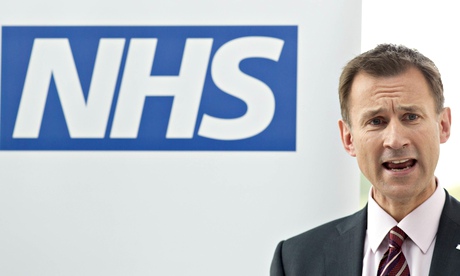
Jeremy Hunt speaking in front of big NHS logo

Katharine Whitehorn: ‘Jeremy Hunt (pictured) trotted out figures, such as that 70% of us buy our air tickets on-line.’ Photograph: Neil Hall/PA


Well being secretary Jeremy Hunt need to have considered he was saying something cheerful when he explained that the NHS ought to learn from banks and airlines, and use engineering to make our care far more personalized. He trotted out figures, such as that a single in five Christmas presents was purchased online and that 70% of us acquire our air tickets on-line.


Definitely individuals who have income in banking institutions, fly away on vacation and have a pc or its equivalent can do all these things. But has not he observed that a wonderful percentage of individuals who are unwell are previous, and many of them poor? They may not even personal a mobile telephone or be fortunate adequate to have someone younger who can cope with such items on their behalf.


Of program there are some who are techies by nature, other folks who have laptop-wise carers here and there some groups are trying to assist pensioners with the web with all the selfless work that used to go into educating the heathen to read. I realize that even now GPs are usually getting to element in the time it will take to pay attention to, and then proper what their younger sufferers have learned on the net.


But probably there is a great motive hidden in all this: a hope of tackling youth unemployment by hiring them as technical interpreters, to bridge the gulf among the old and sick and the machines with out which, apparently, they could not be cured.


What do you think? Have your say below…


If NHS data goes on-line, what will occur to the outdated and the bad who cannot entry technological innovation? | Katharine Whitehorn

8 Mart 2014 Cumartesi

Why You Cannot Rest at Night

In the occasion that you or your family members members have problems with sleeplessness, you are seldom in a position to say the obligatory wishes of great morning to people and in fact imply it. Sleeplessness is reaching epidemic numbers and far more and a lot more people are wondering why it is that they cannot rest. Our ever growing, substantial-demand, very tense, large velocity existence-types usually do not permit us to get a blissful eight hrs of slumber. For most of individuals who are suffering from sleepless nights, the effects can become incapacitating, if not life threatening.


The way to finding a remedy that operates for you is by empowering your self using the reality about sleeplessness. The amount of hrs a individual needs to rest at night alterations based on the individual, and it also alterations by how you come to feel right after sleeping. Sleeplessness is about the top quality of your slumber and is not simply based mostly on the hrs of sack time that you get. You might even consider you’re receiving sufficient rest but nevertheless wake up feeling lethargic and worn out.


Leads to of Your Sleepless Nights


The conventional perpetrators of a person’s inability to get some high quality sleep frequently incorporate: plenty of pressure in your life, psychological injuries, jet-lag, shift-work, noisy sleep surroundings, negative sleep temperatures, well being difficulties, drug or alcohol withdrawal, maternity, a partner that keeps you up at evening with their snoring, or probably changes in elevation. All of these and far more could be why you might be struggling with sleeplessness.


The troubles that can consequence in persistent sleeplessness (continues more than a number of weeks) may well incorporate nervousness, depression, be concerned or some psychological issues. The bodily triggers variety from circadian rhythm ailments, interrupted rest practices, or they might begin with a sickness. These may comprise factors like inherited ailments, persistent pain syndromes, RLS, chronic fatigue syndrome, congestive heart failure, back or torso soreness, heartburn, nocturnal asthma, or sleep apnea.


It’s no shock that so couple of individuals are acquiring up feeling energized. These groggy, rest disadvantaged peoples are impaired in a lot of manners as they strive to get through yet an additional sleepy day. It’s also challenging to convey your ideas and emotions appropriately when you are exhausted.


Sadly, most individuals get over the counter or prescription medicines to deal with their sleeping problems. Prescription treatments are large-enterprise with Americans,  with much more than 5 billion per year being invested on tablets to help people rest. Whats so undesirable about this is that a lot of of these drugs can lead to a good deal of other troubles with your overall health, amid other side effects.


All-natural Sleep Aids


Fortunately, there are numerous secure and natural choices which could function as a genuine treatment as an alternative of only covering up the signs. A couple herbs that have acquired reputation due to their effectiveness for sleeplessness are valerian root and passion flower.


Valerian is an herbaceous plant with reasonable sedative effects. Research reveal that it enriches your whole high quality of slumber, helps you fall asleep faster, and improves hefty slumber. You can study far more about the herb’s advantages here.


Passion flower performs nicely by calming the body to help you put together for sleep. Numerous folks like to enjoy a cup of passion flower tea before bed to reap its rewards  (of which, there are a number of). Passion flower also operates great to assist you chill out from a stressful day.


By taking your sleepless nights seriously and figuring out WHY you aren’t sleeping, you can grow to be greater outfitted to dealing with the concern. In the meantime, the above two herbs, valerian root and passion flower, each perform effectively to support as a normal, secure way to increase your good quality of rest and aid you fall asleep faster.


If you’d like to read through a lot more natural overall health content articles by Joshua Rogers, you can do so by visiting NaturalAlternativeRemedy.com. You can also adhere to him on Google+ and on Facebook.


Why You Cannot Rest at Night

24 Şubat 2014 Pazartesi

We cannot leave mentally ill folks at the mercy of unregulated therapists | Patrick Strudwick

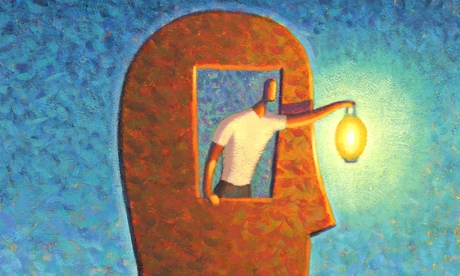
Therapist holding a lamp

‘I could get in touch with myself a therapist, provide my solutions for £60 an hour and do what I want to my consumers – as prolonged as it does not break the law.’ Photograph: Pictures.com/Corbis


Revisit, just for a second, a time when a medical professional was searching soon after you. How do you come to feel? Vulnerable? Frightened? Reassured? For all the latest scandals about NHS failings, as patients we at least know that the particular person treating us is skilled and experienced, has a particular volume of encounter and is registered with the General Medical Council. We know that thanks to this regulatory physique, underpinned by statute, our medical doctor is topic to a code of carry out and, if misconduct happens, can be held to account, and in excessive cases struck off, in no way again allowed close to a patient.


Revisit as well, if you will, a time when you or a loved one required support for a mental overall health dilemma, and think about this: the therapist or counsellor looking right after you can do so without any coaching, any qualifications, any experience, any membership of a skilled physique, or ever getting signed up to a code of carry out. If they abuse their place – perhaps by creating sexual advances to you – maybe by planting false memories, or any variety of other malpractices more widespread than we will ever know, they do so with absolute impunity.


Neither “psychotherapist” nor “counsellor” are protected titles in Britain. Hence I could set up a internet site today, contact myself a therapist, offer my companies for £60 an hour and do or say what ever I want to my consumers – as lengthy as it isn’t going to break the law – and there is nothing any person could do about it. I could even be hired by the NHS, and be paid with taxpayers’ income. Someone violent and just lately out of prison, an individual on the intercourse offenders’ register could grow to be a therapist. And they could be assisting you with panic attacks, or depression, or post-traumatic stress from childhood sexual abuse.


So what type of country does not have a simple necessity for these operating with the mentally unwell?


Presently, there are only personal, independent bodies for counsellors and psychotherapists. They choose, behind closed doors, whether their members have contravened their very own code of perform. And if membership is revoked, the therapist can join yet another organisation.


I know this since I took psychotherapist Lesley Pilkington to a conduct hearing at the British Association for Counselling and Psychotherapy right after she attempted, although I was doing work undercover for a newspaper, to use treatment and prayer to make me heterosexual. It took two years for the BACP to withdraw her membership and she just registered with the Association of Christian Counsellors and carried on practising.


Hers is far from an isolated case. But it was this case that prompted Labour MP Geraint Davies to make contact with me, aghast at the inadequacies of our program. Together we drafted a bill – the counsellors and psychotherapists (regulation) bill, which reaches its 2nd reading through in the Commons on 28 February, and which will deliver universal standards and meaningful accountability. Struck off will suggest struck off.


Beneath Gordon Brown, Labour had planned to regulate counsellors and therapists, but the coalition shelved this and launched alternatively a voluntary register – no teeth, no safety for the vulnerable.


To illustrate the close to laughable inconsistencies among regulation for bodily and psychological health resulting from this kind of inaction, one want only glance at someone dispensing a hearing support. They are regulated by the Health and Care Pros Council (who will regulate counsellors and therapists if this bill succeeds). But an individual tending to the suicidal is not. Suicide kills much more youthful guys than any bodily illness.


If the government votes towards this bill on Friday, as they have recommended they will, they will be failing each Briton – not only the a single in 4 of us who will suffer mental ill wellness but everyone impacted by it. They will leave you, your little one, your partner, or any individual reaching out, vulnerable, frightened, to quell their distress, at the mercy of the untrained, the unqualified and the unethical. This is not basically a scandal it is an emergency.


We cannot leave mentally ill folks at the mercy of unregulated therapists | Patrick Strudwick

21 Ocak 2014 Salı

Man flu: why males cannot win when it comes to illness

Now, I can realize that as men have been the dominant sex for so lengthy, jibing at the male portion of our species can be noticed as redressing the stability, whereas the reverse is much more akin to bullying.


That’s why it is socially acceptable to talk about guy flu, man drawers, guy caves and the rest, and to mock males for currently being emotionally insensitive, undesirable at housework, unobservant, hypochondriacal and aggressive.


I also enjoy that in many places of daily life, girls are even now witnessed as window dressing rather than men and women in their own right, and far more wants to be carried out to give them equality of chance.


For instance, I take place to know personally an actress who has lately become rather renowned. The other day I noticed a image of her in the paper, posing in her underwear.


Even though, like all of us, I am utilized to seeing photographs like these, hunting at somebody I knew felt very odd. It appeared like she was demeaning herself. I imply, posing in your underwear? I wouldn’t do it, and I do not expect my buddies to, particularly when they are actors as opposed to, say, underwear designs.


So like I mentioned, I get all this. But which is no excuse to go on about man flu.


In this day and age, we should be striving to move towards a greater climate of equality. Plenty wants to be accomplished on the female side of the equation. But accusing males willy nilly of getting guy flu does absolutely nothing to foster intersexual harmony. In truth, it only makes us peeved.


Man flu: why males cannot win when it comes to illness