Anyone etiketine sahip kayıtlar gösteriliyor. Tüm kayıtları göster

11 Mayıs 2017 Perşembe

Supporting LGBTI pupils: "It"s important a school is ready for anyone"

It was not long ago that LGBT pupils at the Priory School in Hitchen, Hertfordshire, hid behind a mask of silence. Fellow students used the word “gay” to describe something that was rubbish. Faced with homophobic language, they felt unable to come out in the classroom and kept their true identities secret.


Three years later, dozens of students have come out thanks to a “massive culture shift” in school. Today, diversity and inclusion are celebrated across all aspects of school life: from the setting up of an LGBT drop-in group and appointment of an LGBT student champion, to changes in the curriculum and the building of gender-neutral toilets and changing rooms. Indeed, the school has established such a reputation for equality it is attracting transgender pupils from neighbouring areas.


Priory now has a resident counsellor and has forged close links with local child and adolescent mental health services. Sixteen staff have also been trained in mental health first aid.


Assistant head Katie Southall has led the transformation. Responsible for student wellbeing, Southall realised that more needed to be done to promote equality and diversity. Surveys of young people who identify as LGBT revealed that many are at high risk of mental health problems.


The 2016 Youth Chances survey, conducted by the charity Metro in collaboration with the University of Greenwich, found that out of the 6,414 respondents aged 16-25 who took part in the survey and identified themselves as LGBT, some 44% said they had considered suicide.


Southall says: “We realised from an annual survey on student wellbeing that lots of students identified as gay or LGBT, but didn’t want to be open about it. We are now in a position where pupils are openly transgender, gay, bi, lesbian or gender questioning. For those who are transgender we have procedures in place for name changes and work together with the young person. That can mean getting people who have transitioned to come in and talk to young people.”


LGBT role models have also visited the school, including actor Sir Ian McKellen, co-founder of LGBT charity Stonewall, who spoke to 35 student members of the weekly LGBT drop-in group. “One sixth-former who is gay said he wished the school had been as open when he was in key stage 3,” Southall says.


Meanwhile Arbury primary school in Cambridge is working hard to promote diversity and has become a beacon of good practice. It has adopted a range of initiatives to stamp out gender stereotypes across the school, from abolishing pink- and blue-coloured name badges for reception children, to having a non-gendered school uniform.


Children are taught to respect difference from the start in reception: through picture books showing different types of families, and talks during circle time highlighting the school’s golden rules. Displays of materials from Stonewall with the slogan: “Different families, same love” are posted around the school, which also celebrates LGBT history month.


Staff are trained to understand how stereotyped views of how boys or girls should behave can prevent them from reaching their potential. Senior teacher Kathy Whiting says the school advises other schools on creating a trans-inclusive environment, including training on the use of inclusive language.


Headteacher Ben Tull says: “It is really important that a school is ready for anyone who walks in. For children at primary level, the more we can do to non-stereotype them the better. We steer away from the binary model.”


Supporting LGBTI pupils: "It"s important a school is ready for anyone"

15 Ocak 2017 Pazar

It is clear to anyone in the NHS that we cannot carry on as we are | Bob Kerslake

Jim Callaghan may not have actually said “Crisis? What crisis?” in 1979, but the then prime minister’s words have gone down in history as the clearest example of a politician not in touch with the severity of the issues facing the country. Last week has seen a similar debate about the state of our accident and emergency services.


Seen from the position of chair of King’s College Hospital, there is no question that the pressures are real and serious. Constant and relentless effort is required to keep essential services running. That we have managed to do so is down to the extraordinary efforts of senior and frontline staff. Even with this, the picture is one of enormous fragility, not just at my trust but across the whole of the NHS.


The story at King’s is reflected in the grim national figures on A&E waiting times, trolley waits and “black alerts” released last week. Of course, the picture varies from area to area. But the underlying story is of a service under more pressure than it has been for a decade.


It is hard to think of anything that matters more to people than the health and wellbeing of themselves and their family. Given this, can we really be happy with our health and care services staggering from year to year, wondering whether they will manage to make it safely through the winter?


The reasons for our current predicament are well understood. This is a “crisis” that was not only predictable but was predicted. The hard bit here is not knowing what to do, but having the will to do it.


First and foremost of the issues we need to tackle is funding. The NHS is not a “bottomless pit” as some have suggested, but increasing demand and continuing advances in healthcare mean that it needs additional funding year on year of around 4% above inflation. Whenever it has not had this for any sustained period of time, it has run into trouble.


The funding problems of social care are, if anything, more severe. Half of local government funding goes on adult and children’s care. Local authorities have done remarkably well in delivering spending reductions while preserving services in recent years, but it is inevitable that they will have to take money out of their care budgets in order to balance their overall budgets. In the end we all want clean streets and good leisure services as well.


It is very hard to improve your swimming technique if you are struggling to keep your head above water


There is, of course, scope to improve the way services are delivered. As the work of Lord Carter has shown, some hospitals are more efficient than others. We know at King’s that there is room for improvement. But sustained progress will only come if we can stabilise the financial position. It is very hard to improve your swimming technique if you are struggling to keep your head above water.


Additional funding now, together with a concerted move to eliminate the deficits that NHS trusts are currently carrying, is essential. This would stop the incessant tug of war that currently goes on between different parts of the NHS as they desperately try to balance their own part of the system. The energy and focus could then go on delivering real improvements in productivity and more consistent service quality.


Last week was dominated by a debate between the prime minister and NHS England chief Simon Stevens over whether the NHS has in fact been given more money than it actually asked for. In reality, the funding agreed in the Five Year Forward View was the art of the politically possible at a time when big reductions were being agreed in other government departments.


It assumed efficiency savings of £22bn – higher than has ever been achieved by the NHS or indeed any other major health economy – and significantly underestimated the scale of the structural deficits that already existed in hospital trusts. Crucially, it was reliant on sustained funding of social care.


Stevens was both right and courageous to set out the true picture as he saw it, even if it has been at some cost to his personal relationship with No 10. This is his job. It is clear to anyone who works in the NHS that we cannot carry on as we are. He has a duty to say so. The prime minister had to make some tough decisions to deliver savings when she was home secretary. So did Philip Hammond when he was at defence. It is, perhaps, not surprising that they believe standing firm now on NHS funding is the right approach. In my view this would be a profound mistake. The NHS is different, and needs to be recognised as such.


The debate on funding is not just a matter for the government or the NHS. As a country we need to make some hard choices. We can help ourselves by being fitter and more active, but in the end – if we want the security of having the best health and care services available to us – we will have to pay for them. A cross-party health and care commission could begin that debate with the public.


Beyond funding, we need to put back together a service that has been chronically fragmented by the reorganisations of successive governments. This does not need, God forbid, to be another top-down reorganisation, but a concerted move to allow health and care organisations to come together at local level. Combining hospitals, GPs and community services and moving away from the current artificial division between purchasers and providers would improve care and reduce costs. In some places this change has already started. It needs much more support.


A proper investment plan is needed in the buildings and equipment of the NHS. The private finance initiative brought substantial new investment, albeit at a very high cost. This has now gone, but nothing has been put forward to replace it. Much of the NHS estate urgently needs investment, and many of the buildings built under PFI will soon need refurbishing.


As well as investing in the infrastructure of the NHS, we also need to invest in the people who work for it. In all the different parts of the public sector that I have worked in, I have never come across people with such talent and dedication. People are passionate about what they do. And yet we have contrived to create a situation in crucial areas, such as nursing, where we struggle to recruit and retain the trained staff that we need.


These are the basic building blocks of an NHS recovery plan. There is no doubt much more that could and should be done, but without these essential steps we are unlikely to succeed.


The NHS has a lot that it can justly be proud about. At King’s, we achieve consistently good health outcomes and have seen major advances in areas such as trauma, haematology and neurosciences. We are confident that over time we can become both m ore efficient and deliver better services.


But like all other parts of the NHS we are now at a crossroads. Without a new approach, these advances will be put at risk. The hardest thing for governments to do is to listen and act on inconvenient advice. It is also the most important.


Sir Bob Kerslake is the chair of King’s College Hospital NHS foundation trust


It is clear to anyone in the NHS that we cannot carry on as we are | Bob Kerslake

13 Ekim 2016 Perşembe

Top Doctors Warning- Anyone Over 40 Should Stop Taking Ibuprofen Immediately

It seems common for us to be use ibuprofen for nearly every symptom like Headaches, toothaches, back pain. According many medical experts around the world claim that these drugs (nonsteroidal anti-inflammatory drugs, or NSAIDs), have serious side effects and are a major cause of drug-induced injury.


Ibuprofen doesn’t cure the pain and in the long run it is toxic to the heart muscle. In fact, using long period of time may even cause death.


More Harm Than Good


In 2005, the FDA issued a warning about ibuprofen, saying it significantly increases one’s risk of heart attack or stroke. Keep in mind that the FDA approves of some pretty terrible medications, but even they are raising a red flag when it comes to this over the counter drug. The organization has since emphasized the warning with the following information


-Ibuprofen significantly raises the risk of heart attacks and strokes, even after short term use.
-The risk increases with higher doses of NSAIDs taken for longer periods of time.
-The risk is somewhat higher for people who already have heart disease.


Additionally, the risk is much higher for people older than 40, and the chances for these people to develop heart problems are extremely high.


The Natural Alternative of Ibuprofen


Turmeric isn’t just a spice, it’s a natural medicine. In fact, it works better than drugs in fighting disease such as fatty liver disease, pain, arthritis, weight loss, depression and even cancer.


The active compound in turmeric is curcumin, it has analgesic properties. It reduce the sensation of pain by triggering a response in the opioid receptors in the brain. Unlike drugs, though, turmeric doesn’t cause addiction.


Homemade Turmeric Supplements


Ingredients:


1/3 cup organic, ground turmeric
big pinch of ground black pepper
3 tbsp raw, organic honey
1 tbsp melted coconut oil


Instructions:


-Mix all ingredients together in a bowl to make a paste.
-Take pinches of the turmeric paste and roll them into small balls.
-Place in freezer for about 1 hour and remove.
-Store in a glass container and keep it in your refrigerator.
-Take 2-3 a day.


Turmeric Drink


-In a glass mix 1 tbsp. turmeric powder, 1 cup of honey and the juice of 1 lemon.
-Add 1 of the mixture into a cup of warm water or tea 3 times a day.


Additional Sources:


1) https://dailyhealthpost.com


2) http://juicing-for-health.com


3) http://www.naturalhealingmagazine.com


More Articles:


Top Doctors Warning- Anyone Over 40 Should Stop Taking Ibuprofen Immediately

22 Mayıs 2014 Perşembe

A big, juicy burger to anyone who is aware of what healthier eating is any longer | Owen Jones

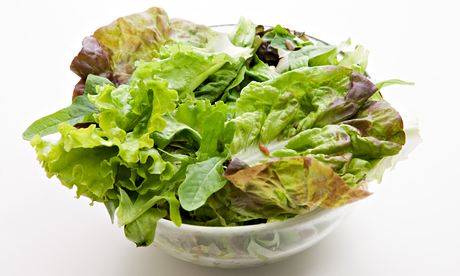
Salad in a bowl.

Salad in a bowl. wel Photograph: Alamy


As somebody who once ate a bag of Mini Eggs for breakfast, I am in no place to champion a crusade against the evils of confectionery. But Tesco’s determination to eject sweets from their pride-of-location at checkouts is challenging not to applaud (although I’ll spare the standing ovation until finally it commences paying a living wage).


There is a lengthy-established consensus that obesity is 1 of the defining – and developing – well being crises of our age. It kills men and women, ruins people’s wellbeing, and charges massive sums to deal with. Youngster obesity in Britain is the highest in western Europe, and in between 2000 and 2009 the quantity of young people admitted to hospital with weight problems-connected conditions more than quadrupled. It charges the NHS £4.2bn to treat each 12 months.


The problem is this. Whilst we’re all agreed that scoffing sweets is a fool-proof means of trashing your overall health, I am now lost as to what constitutes a wholesome diet and lifestyle. Growing up it was easy: avoid consuming body fat if you will not, well, want to turn out to be body fat. As a teenager, I would down bottles of Frijj chocolate milkshake on the basis it was advertised as a “low-excess fat” drink. I have extended depended on Red Bulls to energy me through deadlines, but was just lately horrified to find out a 473ml can of the things includes no significantly less than 13 teaspoons of sugar. It does not just give you wings, but a belly, as well.


Now it truly is no longer fat that is public enemy number 1: it’s sugar. Not least due to the fact it hides in rather much every thing and is supremely addictive.


But then is will get difficult. The official recommendation is to consume at least five portions of fruit and veggies a day: then a University University London basis suggested that consuming at least seven would save lives. That’s a quite lofty ambition: in excess of the final couple of years, we have actually becoming consuming much less fruit and veg. The wellness benefits are clear: they incorporate tons of fibre (which also makes you come to feel total) and anti-oxidants, and decrease your chance of nasty diseases this kind of as a variety of cancers and heart ailment. But then there is the anti-fructose lobby, led by the likes of Dr Robert Lustig the Every day Mail, probably more predictably, has suggested also a lot fruit makes you fat. Others recommend extreme fruit consumption leads to every thing from dental decay to thinning hair. Oh boy!


The truth is you would have to eat a great deal of fruit to significantly injury your well being: even though staying away from fruit juices is a great move, since they are jam-packed with sugar. But the tips has been critically muddied because of the anti-sugar backlash. Then there’s carbohydrates: their reputation is all over the area, and we’re supposed to learn how to distinguish in between “very good” carbs and “undesirable” carbs.


Diets are even now routinely promoted, even even though there is a growing consensus that they are unhealthy, and lead only to temporary and unsustainable bodyweight reduction, demoralising any individual who tries them. But now even physical exercise for bodyweight loss is under fire: apparently if you go the fitness center, you just consume a lot more to reward oneself, cancelling out the effects. We’ve all done it: had a run and then tucked into a good huge burger, feeling guilt-free of charge.


Just to make it even a lot more complicated, we’re subjected to a continuous diet of unrealistic physique images – damaging our self-esteem (particularly amid ladies), but also driving us to lifestyles that are entirely counterproductive and damaging to our health. There is the environment to contemplate, too: and the world’s growing consumption of meat is driving up greenhouse gas emissions, as properly as meals charges.


What a complete mess. Removing sweets from the front of Tesco is a excellent symbolic gesture when it comes to selling wholesome lifestyles. But what we all need to have is a clear manual to what a healthier diet plan and life style would look like. At the second, we’re getting fed perplexing and contradictory statements. No wonder, then, that public awareness of the need to be wholesome – in an abstract sense – is better than it has ever been, and yet obesity is hurtling north. Unless of course the message is drastically simplified, our overall health is going to hold getting worse.


A big, juicy burger to anyone who is aware of what healthier eating is any longer | Owen Jones

5 Nisan 2014 Cumartesi

Who deserves a new liver? Anyone who demands a single | Barbara Ellen

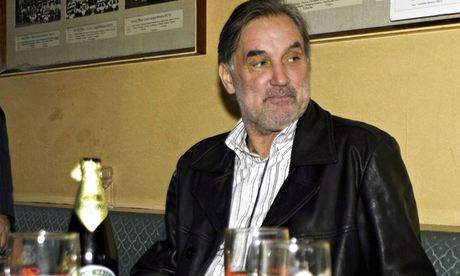
‘Poster boy’: George Best in a Dublin pub in 2004.

George Best in a Dublin pub in 2004. Photograph: Getty Photographs


How heartening that folks with alcohol-related liver disease are to be regarded as for liver transplants. NHS’s blood and transport support (NHSBT) associate healthcare director, James Neuberger, mentioned: “We’re transplanting humans, not angels.” Neuberger’s comment concerned the ongoing debate about whether folks deserve costly treatment method when they have brought their overall health troubles on themselves.


This debate has been rattling on in the same way for so extended, I’m mildly amazed that all the judgmental bigots and droning misanthropes have not died of boredom by now. More significantly, does any individual actually feel that there should be what amounts to ethical means-testing on someone’s suitability for healthcare help?


Just before anybody starts worrying about crowds of dipsomaniacs descending on the NHS, drunkenly demanding new livers to wreck, the pilot scheme aims to involve 20 patients, who may possibly consider up to two years to recruit. These patients would be aged between 18-40, seeing a medical professional for the 1st time with liver disease, and also have a very first-time diagnosis for a drink issue. As usually with transplants, issues such as suitability and likelihood of very good outcome would be of paramount concern. Professionals have currently raised considerations about how to make sure that post-ops stay abstinent, and also about the influence on other people waiting for transplants when there is a shortage of organs.


Then there is the “George Ideal effect” – where potential donors are put off by the considered of their livers going to an individual whose plight was drink-connected. There carry on to be fascinating discussions about whether donor cards should be opt-out rather than opt-in. Possibly there could be a area on donor cards the place people could signal that they choose a non-alcoholic recipient, a non-smoker, or what ever. Nevertheless, if men and women really want to do this – the same men and women who’ve currently made the generous, thoughtful choice to donate – then probably they should think about why this kind of distinctions are so important to them? Deciding to assist yet another human being right after your death is an astounding act of selflessness that could only be marred by weasel-quibbling about merit and worthiness – which is primarily illogical anyway. Most individuals (especially heavily penalised smokers and drinkers) presently “spend” for any treatment they call for via taxation.


There are also numerous diverse approaches for an illness or injury to be a patient’s “fault” (consuming/smoking/diet regime/intercourse/driving/sports activities/way of life/danger-taking) to the level in which it turns into nonsensical. (“I’m sorry, your youngster was seen happily skipping before he fell – consequently we can’t set his broken arm.”). And how vile to portray Ideal as an example of fecklessness, when that bad guy was a critically sick alcoholic, with all the devastating mental well being problems that involved.


Besides all that, this debate represents an ethical rupture at the heart of what most Britons contemplate one particular of the greatest national achievements. How can people bang on about how proud they are of the NHS, then, in the up coming breath, support a state of moral apartheid about who deserves to be aided? Even if the patients are fully at fault, why must they be begrudged a 2nd chance? The NHS is supposed to exist for the therapy men and women want, not what some moralising minority loftily deem they deserve.


What’s occurring here if not men and women being judged, found wanting, and abandoned to their fate? It sounds also equivalent to these disturbing stories about sick people in the United States currently being left by ambulances on pavements due to the fact they have not received enough wellness insurance. The very same heartless principle applies, just in a passive -aggressive mealy-mouthed way – the only variation becoming that folks feel that remedy should be denied on the grounds of ethics as an alternative of cash. Even though some sufferers might not be blameless, this does not instantly indicate unworthy. The only acceptable civilised solution to “Who deserves remedy?” is that every person does.


Why I wept through Mother’s Day


Along with a lot of other people, I was impacted by the Saharan dust/air pollution. We had been possessing lunch in a restaurant on Mother’s Day when my eyes began streaming, my throat seemed to swell and I felt as although I was having a mild panic attack. At the time, we place it down to my tragic goth tendency to slap on sunscreen at the 1st signal of rays, and getting some in my eyes, even though I would carried out that ahead of without such a violent allergic response. So it was that I invested the meal involuntarily “weeping” by means of swiftly swelling eyes, breathing really shallowly and asking yourself if I would been sarin-gassed in a secret government experiment. Pleased Mother’s Day!


It was only when we noticed the news reports, and remembered the unusual dust flecking the automobiles in our street, that realisation dawned. It felt as although I would starred in a post-apocalyptic movie, set in a desolate future-globe exactly where the air was unbreathable and there was absolutely nothing left to do bar create nuclear bunkers and stroll around with Will Smith shooting machine-guns at mutated super-rats. Or one thing. (In actuality, I whined a bit, took antihistamine and sprawled on the sofa, viewing The Millionaire Matchmaker).


Because then, I have taken special curiosity in reports about the dust, not to mention the normal (shocking) amounts of air pollution and men and women struggling with extended-standing respiratory problems. It does not mean I will henceforth be sporting a surgical mask. (That would come to feel also a lot as though I were channelling Bubbles-era Michael Jackson.) Nonetheless, thinking about how a lot of have been affected, the events have probably raised public awareness about air pollution in a way that should be gratifying to eco and climate modify lobbies. What ever happens now, post-dust, it need to have opened a couple of (itchy, streaming) eyes.


The Forsyth saga: strictly speaking, it really is an ageist problem


Bruce Forsyth is quitting Strictly Come Dancing following 10 years. It’s been a decade not only of Forsyth hosting but also of public debate about how doddery he is, how embarrassing and irritating, how he essential to leave and so on.


Admittedly, I would occasionally squirm impatiently as “Brucie” – now 86 many years previous – staggered to the end of a scripted joke. Nonetheless, I am the very same with a lot of younger presenters Forsyth’s age was much less of an issue than the often poor high quality of his materials.


Undoubtedly there was no excuse for the relentless belittling of him for his age. Positive, girls have it worse on television and in myriad methods (why is there speculation about a new principal male presenter when Tess Daly and Claudia Winkleman have carried out editions of SCD?). However, Forsyth came to be a lightning rod for each and every grey-bashing dig going.


Arguably, Forsyth was gradually hounded out of that task by ageist forces in a related way to Arlene Phillips getting axed from Strictly or Miriam O’Reilly from Countryfile. The distinction is that in Forsyth’s case it wasn’t the BBC undertaking the dirty, it was the British public.


Who deserves a new liver? Anyone who demands a single | Barbara Ellen

26 Mart 2014 Çarşamba

Ban sale of cigarettes to anyone born soon after 2000, medical professionals say


Tim Crocker-Buqué, a professional registrar in public wellness medication with the NHS, stated: “Humanity has never ever produced anything a lot more deadly than the cigarette.


Dr Crocker-Buqué said eight out of ten smokers began smoking as teens and an individual who started smoking at 15 was three instances far more most likely to die from smoking-relevant cancer than someone who started out in their 20s. “This is a highly addictive merchandise that kills 50 per cent of the consumers and it is so patently more than the stability of harm that we have to now work to stop the subsequent generation from falling into the nicotine trap,” he extra.


Mark Temple, a co-chairman of the BMA’s public overall health medication committee, agreed, adding: “If we avert accessibility to a group that is expanding older by means of time then slowly we will end effortless entry to tobacco items.”


But Ian Kennedy, yet another public wellness medication registrar, questioned if banning cigarettes for a certain area of the population was a sustainable policy, and asked why 13 to 14-yr-olds have been currently being targeted.


Ban sale of cigarettes to anyone born soon after 2000, medical professionals say

4 Ocak 2014 Cumartesi

CrampTini, Anyone? Prime 5 Foods to Alleviate PMS Signs, Plus a Wholesome Juice Recipe

About 90% of ladies suffer from a single kind or one more of premenstrual syndrome (PMS) with nearly 10-twenty% of them experiencing signs that are disabling. From severe fatigue and mood fluctuations to stomach cramps and breast tenderness, the symptoms fluctuate by every single female but a single issue is specified: relief is constantly welcome!


Several folks crave certain comfort foods for the duration of PMS, even so they may make signs worse, not far better. Foods to stay away from incorporate those high in sugar and sodium content material, alcohol, chocolate (darn!) and anything with preservatives. Sounds like a good way to consume all the time, not just to relive PMS signs, correct?


Of course, we often enjoy realizing what we ought to eat, rather than becoming advised what not to consume.


Top 5 Foods to Aid Diminish PMS Signs


one. Bananas &amp Raw Walnuts


Wealthy in vitamin B6, bananas and raw walnuts (aff hyperlink) are known to supply relief from cramps related with PMS. In fact, info published in the American Journal of Clinical Nutrition found that women who ate foods rich in B vitamins exhibited approximately a quarter danger reduce of PMS than these who did not.


2. Raw Honey


Raw honey (Amazon affiliate website link) is deemed a all-natural discomfort reliever, an excellent choice to support manage the often disabling feelings ladies expertise ahead of and for the duration of their periods.


3. Pineapple


This sweet fruit is large in an enzyme known as bromelain which is responsible for aiding in muscle relaxation.


four. Kale


Large in vitamin E, kale assists maintain inflammation at bay. According to the World’s Healthiest Meals checklist, “It only takes 100 calories of kale to supply us with 25-35% of the Nationwide Academy of Sciences’ public health recommendation for the most simple omega-three fatty acid (alpha-linolenic acid, or ALA).” Inflammation is accountable for leading to the swelling, stiffness and pain often related with PMS, creating ALA an crucial part of PMS management.


5. Drumroll Please . . . The CrampTini Recipe


We’ve all heard of a martini or an appletini, but 1 lady has produced a healthier version developed to rid cramping that’s really frequent for ladies experiencing PMS.


Her “CrampTini” is alcohol-cost-free and rich in what she refers to as the “lean and clean” foods that are important to relieving PMS symptoms like cramps. When she decided to begin juicing, she was concerned that with no certain drugs (like Advil) or comfort foods to minimize her PMS pains, that she “was going to have the worst cycle ever.” But she started to read through about best food items to eat like the ones listed above and developed her special “CrampTini,” which she swears by for extraordinary PMS relief.


To make this delightful juice, merely blend (all quantities may possibly be altered according to individual preference and taste) and get pleasure from:


  • 1 peeled and cored apple

  • one bunch of kale

  • one bunch of spinach

  • A number of beets

  • 1 banana

  • 1 tiny piece of ginger

  • one-two cups of water


It is recommended to have the juice after a day for the duration of your period and to eat the “lean and clean” excellent food items (kale, leafy greens, bananas, honey) for about 3 days prior to the commence of your cycle.


CrampTini, Anyone? Prime 5 Foods to Alleviate PMS Signs, Plus a Wholesome Juice Recipe