Ashworth etiketine sahip kayıtlar gösteriliyor. Tüm kayıtları göster

28 Mart 2017 Salı

The fog of Brexit is engulfing the NHS. It’s up to Theresa May to provide clarity | Jonathan Ashworth

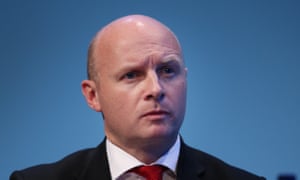
Everyone knows that after seven years of neglect from the Conservative government, the NHS is undergoing a serious crisis of funding and staffing. The last thing needed is more uncertainty. That is exactly what the NHS faces with Brexit.


On Wednesday Theresa May will trigger article 50 and later this week health bosses publish the updated Five Year Forward View. It is time for the prime minister and the health secretary, Jeremy Hunt, to give the NHS and its patients the certainty needed through the Brexit process. May has already turned her back on the promise of £350m a week for our NHS and now she is walking away from her responsibilities to protect the health service through a turbulent Brexit process that will hit it hard.


The complacency in government is astounding. Last week Hunt published the department of health’s Mandate to NHS England to set “the government’s objectives and any requirements for NHS England”. Amazingly, the 24-page document made no mention of Brexit whatsoever.


It should come as no surprise that the NHS is not a priority for the government. Hunt isn’t even a member of the cabinet committees managing the exit strategy. Yet Britain’s health and social care system is dependent on tens of thousands of European staff, many of whom have settled and built lives here while caring for our sick and elderly. Safeguarding the future of these staff should be an absolute priority in the Brexit negotiations. But in the House of Commons last week Hunt failed to offer any reassurance that he’s prepared to stand up for this essential section of the workforce he oversees.


Will health professionals from other EU countries be able to come to work in our NHS after Brexit, or will there be a cap on their numbers? As long as the issue is left unclear, more and more EU workers are voting with their feet and leaving on their own terms. In a recent survey, 42% of European health staff working here said they are now thinking of leaving the UK. Almost 5,500 have left since the Brexit vote according to NHS Digital, a 25% increase on the 2015 figures. And others are being put off from coming here at all: only 96 European nurses registered to work in the UK in December – that figure was 1,304 for last July.


So our first test of the government plans will be whether they deliver a right of remain for the 140,000 EU nationals working in the NHS and social care system. Secondly, on funding, we know that the EU’s Horizon 2020 scheme is due to invest £7.5bn in health research across the EU over the next five years, and the UK will be by far the largest recipient of those funds. We also receive EU funding from the Innovative Medicines Initiative, the European Cooperation in Science and Technology programme, and the Active and Assisted Living programme for older people.


This long-term funding is vital in giving security to those medical institutions and universities planning major research projects. They cannot just wait and see what will happen after 2019. So we need to know whether access to these funding streams will continue after Brexit. If not, how do the government propose to make up the shortfall?


Our third test is on reciprocal healthcare arrangements. It is a key principle that British citizens can obtain free healthcare elsewhere in Europe, just as they would at home. That is an important safety net for British holidaymakers, and for UK citizens living elsewhere in Europe. Does the government intend to maintain those arrangements? If not, how will it address the increased insurance costs for UK holidaymakers?


Our fourth test is on EU healthcare collaboration. Working effectively with our European partners, on everything from infectious disease control to the licensing and regulation of medicines, has been vital for the NHS in recent years. The sector desperately needs to know whether it’s the government’s intention to maintain the UK’s participation in pan-European public health initiatives after Brexit. Will the UK continue to participate in the centralised marketing authorisation procedure for the licensing, sale and regulation of medicines, governed by the European Medicines Agency? The government needs to be clear about how Brexit will affect the UK pharmaceutical industry when exporting medicines to other member states in future.


These are difficult and detailed questions, but they are all of absolute importance to the future of our health service and of our medical research sectors. There is no reason why May should refuse to give us the answers. That will allow us to understand with greater clarity what the impact of Brexit will be on the NHS – and most importantly, it will allow patients and staff the opportunity to scrutinise the government’s plans closely over the next two years.


The NHS is already in crisis over funding and staffing. But Brexit has the potential to tip those crises into disasters. Patients and NHS staff should not be bargaining chips in May’s hard Brexit negotiations. They want a world-class NHS delivering the best quality healthcare. As article 50 is triggered, the very least the public deserves is clarity and certainty from its government.


The fog of Brexit is engulfing the NHS. It’s up to Theresa May to provide clarity | Jonathan Ashworth

30 Aralık 2016 Cuma

"Dad was an alcoholic": MP Jonathan Ashworth urges action on drinking

Childhood memories of growing up with an alcoholic father have prompted the shadow health secretary to call for greater recognition of the damage done by excessive drinking.


Jonathan Ashworth said there was a need for urgent action because the cost of alcohol-related harm was not just the £3.5bn NHS price-tag, but up to £7bn in lost productivity for the British economy.


During an interview with the Guardian, the Labour MP said he also wanted there to be much more focus on the needs of families affected by alcoholism, claiming the issue would be a priority for him and Labour in 2017.


Ashworth said he was surprised to find himself disclosing, for the first time to a national newspaper, the reason he felt so passionately about the issue.


“It’s quite personal for me, because my dad was an alcoholic,” he said, suddenly spilling out early memories of his father falling over drunkenly at the school gates and of returning home to a fridge stacked with cheap booze and no food.


Ashworth said he had never really considered his experience as something relevant in policy terms. “You didn’t think there was a problem, you just thought ‘that is the life I’ve got’,” he said.


Then he came across the work being carried out by his Labour colleague, Liam Byrne, whose childhood was affected in a similar way.


The MP’s all-party parliamentary group dedicated to the children of alcoholics has revealed that local authorities across the country tend to have no specific strategies to help young people affected in this way.


The group, which is publishing research on the issue in the new year, said that millions of children were “suffering in silence”.


Inspired by Byrne’s work, Ashworth felt he wanted to make the issue a priority in 2017. “I wanted to do something on alcoholism so that if nothing else I’ll have done something on that,” he said, before adding: “I know it’s cliched.”


As well as backing Byrne’s ideas he wants to support a phoneline run by the National Association for Children of Alcoholics to help make it a nationwide service. He also wants more specialised training for professionals to support children and for councils to be properly funded to be able to reach out to families affected by alcoholism through schools, via community nurses and in Sure Start children’s centres.


Liam Byrne


Ashworth was inspired by Labour MP Liam Byrne who has set up an all-party parliamentary group dedicated to the children of alcoholics. Photograph: Peter Macdiarmid/Getty Images

Ashworth talked about his own experience as an only child in a working-class part of north Manchester after his mother, who worked as a barmaid, and his father, a croupier in a Salford casino, divorced.


He spoke vividly about the days that he stayed with his father – whom he said he loved dearly.


“I remember him falling over when he picked me up at the school gates and we’d get home and there would be nothing in the fridge other than bottles of wine – he drank cheap horrible bottles of white wine … and cans of lager and Stone’s bitter,” said Ashworth.


“When I got to 11 or 12 then I was effectively looking after him on the weekends because he was drunk all weekend,” he said, pausing before adding: “And eventually he died.”


Ashworth recalled trying to persuade his father not to move to Thailand one Christmas. The MP said he knew in his heart it would end badly, but his father replied: “No, I’m going,” and he went.


“I never saw him again,” said the MP.


About a year later he received a call telling him to travel to the small apartment where his father had been staying. When he got there he found his bed surrounded by empty whisky bottles. “He was in Thailand for that last year drinking a bottle of whisky a day … I had to clear it up. That was my life. He was 60.”


Ashworth said his father, also called Jon, had not been offered formal help, although he himself had tried to raise the issue of his drinking as an adult. He said his dad thought he was OK because he didn’t touch alcohol during his working hours. “But as a child I didn’t see him at work,” he said.


Ashworth, who was politically active for the Labour party from the age of 15, through college and on into a job advising Gordon Brown, said the experience with his dad left him feeling “not damaged but determined”.


The MP for LeicesterSouth – who was promoted to shadow health secretary by Jeremy Corbyn after his second victory in a leadership contest – now feels he has an opportunity to take action.


As well as the work he outlined with charities and councils, he believes that part of the solution must also be a cultural drive to have alcoholism taken more seriously. Ashworth recalled how “people used to think it was funny – a right laugh” that his dad was a drinker.


He remembered his father in goal in the work football team and people pointing off the pitch and shouting: “Oh Jon Ash is in goal – just throw a crate of Stella in that direction and he’ll go after that.”


“And I was like ‘oh yeah that’s funny’, but actually that was my dad and for my teenage years I was looking after him. It just became a norm. I had to grow up very fast.”


But he is not just concerned about alcohol. “Public health has been cut back by the Tories but they are storing up huge problems,” he said. “Obesity is a huge problem that costs the NHS billions. The debate on obesity and diabetes hasn’t punched through.”


Ashworth said there were lessons to be learned from the bold action to ban smoking in public places, which had a massive impact. He called for much more direct action on poor diet.


“I think we have to be bold about what we say to the advertising industry – not just with kids programmes but families sitting down watching The X Factor. Think of the hundreds of thousands of calories being advertised this winter in the run-up to Christmas,” said Ashworth, arguing that fast food and supermarkets selling “tasty treats” were all over family viewing times.


“The government watered this down. There were going to be stricter restrictions on the industry, [David] Cameron was going to go for it and the story is that Theresa May got her red pen out and cut it out. I think we have got to be bold.”


"Dad was an alcoholic": MP Jonathan Ashworth urges action on drinking

"Dad was an alcoholic": MP Jonathan Ashworth urges action on drinking

Childhood memories of growing up with an alcoholic father have prompted the shadow health secretary to call for greater recognition of the damage done by excessive drinking.


Jonathan Ashworth said there was a need for urgent action because the cost of alcohol-related harm was not just the £3.5bn NHS price-tag, but up to £7bn in lost productivity for the British economy.


During an interview with the Guardian, the Labour MP said he also wanted there to be much more focus on the needs of families affected by alcoholism, claiming the issue would be a priority for him and Labour in 2017.


Ashworth said he was surprised to find himself disclosing, for the first time to a national newspaper, the reason he felt so passionately about the issue.


“It’s quite personal for me, because my dad was an alcoholic,” he said, suddenly spilling out early memories of his father falling over drunkenly at the school gates and of returning home to a fridge stacked with cheap booze and no food.


Ashworth said he had never really considered his experience as something relevant in policy terms. “You didn’t think there was a problem, you just thought ‘that is the life I’ve got’,” he said.


Then he came across the work being carried out by his Labour colleague, Liam Byrne, whose childhood was affected in a similar way.


The MP’s all-party parliamentary group dedicated to the children of alcoholics has revealed that local authorities across the country tend to have no specific strategies to help young people affected in this way.


The group, which is publishing research on the issue in the new year, said that millions of children were “suffering in silence”.


Inspired by Byrne’s work, Ashworth felt he wanted to make the issue a priority in 2017. “I wanted to do something on alcoholism so that if nothing else I’ll have done something on that,” he said, before adding: “I know it’s cliched.”


As well as backing Byrne’s ideas he wants to support a phoneline run by the National Association for Children of Alcoholics to help make it a nationwide service. He also wants more specialised training for professionals to support children and for councils to be properly funded to be able to reach out to families affected by alcoholism through schools, via community nurses and in Sure Start children’s centres.


Liam Byrne


Ashworth was inspired by Labour MP Liam Byrne who has set up an all-party parliamentary group dedicated to the children of alcoholics. Photograph: Peter Macdiarmid/Getty Images

Ashworth talked about his own experience as an only child in a working-class part of north Manchester after his mother, who worked as a barmaid, and his father, a croupier in a Salford casino, divorced.


He spoke vividly about the days that he stayed with his father – whom he said he loved dearly.


“I remember him falling over when he picked me up at the school gates and we’d get home and there would be nothing in the fridge other than bottles of wine – he drank cheap horrible bottles of white wine … and cans of lager and Stone’s bitter,” said Ashworth.


“When I got to 11 or 12 then I was effectively looking after him on the weekends because he was drunk all weekend,” he said, pausing before adding: “And eventually he died.”


Ashworth recalled trying to persuade his father not to move to Thailand one Christmas. The MP said he knew in his heart it would end badly, but his father replied: “No, I’m going,” and he went.


“I never saw him again,” said the MP.


About a year later he received a call telling him to travel to the small apartment where his father had been staying. When he got there he found his bed surrounded by empty whisky bottles. “He was in Thailand for that last year drinking a bottle of whisky a day … I had to clear it up. That was my life. He was 60.”


Ashworth said his father, also called Jon, had not been offered formal help, although he himself had tried to raise the issue of his drinking as an adult. He said his dad thought he was OK because he didn’t touch alcohol during his working hours. “But as a child I didn’t see him at work,” he said.


Ashworth, who was politically active for the Labour party from the age of 15, through college and on into a job advising Gordon Brown, said the experience with his dad left him feeling “not damaged but determined”.


The MP for LeicesterSouth – who was promoted to shadow health secretary by Jeremy Corbyn after his second victory in a leadership contest – now feels he has an opportunity to take action.


As well as the work he outlined with charities and councils, he believes that part of the solution must also be a cultural drive to have alcoholism taken more seriously. Ashworth recalled how “people used to think it was funny – a right laugh” that his dad was a drinker.


He remembered his father in goal in the work football team and people pointing off the pitch and shouting: “Oh Jon Ash is in goal – just throw a crate of Stella in that direction and he’ll go after that.”


“And I was like ‘oh yeah that’s funny’, but actually that was my dad and for my teenage years I was looking after him. It just became a norm. I had to grow up very fast.”


But he is not just concerned about alcohol. “Public health has been cut back by the Tories but they are storing up huge problems,” he said. “Obesity is a huge problem that costs the NHS billions. The debate on obesity and diabetes hasn’t punched through.”


Ashworth said there were lessons to be learned from the bold action to ban smoking in public places, which had a massive impact. He called for much more direct action on poor diet.


“I think we have to be bold about what we say to the advertising industry – not just with kids programmes but families sitting down watching The X Factor. Think of the hundreds of thousands of calories being advertised this winter in the run-up to Christmas,” said Ashworth, arguing that fast food and supermarkets selling “tasty treats” were all over family viewing times.


“The government watered this down. There were going to be stricter restrictions on the industry, [David] Cameron was going to go for it and the story is that Theresa May got her red pen out and cut it out. I think we have got to be bold.”


"Dad was an alcoholic": MP Jonathan Ashworth urges action on drinking