Manchester etiketine sahip kayıtlar gösteriliyor. Tüm kayıtları göster

1 Şubat 2017 Çarşamba

Let’s talk about cancer: the Manchester project that aims to save lives

Security guard Gilbert Morris will stop at nothing to talk to other black men like himself about cancer screening. He once defused a late-night fight in a Manchester club by asking five scuffling men whether they had had their prostate tested.


“It was like I had a magic wand that lowered their aggression,” laughs Morris. “They stopped in their tracks and put their fists down. Two of them said their fathers had prostate cancer and another’s uncle had it. We ended up sitting round the table talking about their fears of having their privates looked at.”


The success of this 51-year-old six footer in communicating the risk of cancer is being harnessed by health chiefs in Greater Manchester as part of the launch of a social movement to sign up 20,000 people as cancer champions.


The idea, led by Greater Manchester Cancer Vanguard Innovation, (part of Greater Manchester Cancer – the cancer programme of Greater Manchester’s devolved health and social care partnership), is to use people power to create a cultural shift in one of the UK’s cancer hot spots, and make it normal to talk about screening, healthier lifestyle options and catching symptoms early.


Working with the voluntary sector, the aim is to sign up 5,000 cancer champions by autumn 2017, and to reach 20,000 by 2019. Mobilising this cancer army is one of a series of measures to cut premature cancer deaths in the area by 1,300 by 2021.
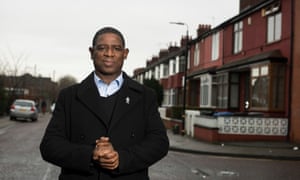


Gilbert Morris


Gilbert Morris developed prostate cancer in his 40s and couldn’t find anyone to talk to about it. Photograph: Karen Wright

The cancer death rate in Greater Manchester is 10% higher than the national average, according to Cancer Research UK figures. Manchester comes bottom out of 150 local authorities for premature deaths (under 75 years). Cancer experts reckon that around 40% of cancer deaths could have been prevented by screening or lifestyle changes, the potential for saving lives in Greater Manchester is great, since 6,700 people died of the disease in 2013.


Cancer champions programme director, Jenny Scott, explains: “By creating champions we will create support for active lifestyle changes. We need to engender people’s interest and then it will spread like a wave. I hope that people will soon be chatting about what they can do – whether it be at the bus stop or a football match.”


This radical approach is the result of a realisation that health systems are not having an impact in many sectors of society.


Morris’s story underlines this. He developed prostate cancer in his 40s and could not find anyone to talk to about it. He volunteered with the Manchester-based Black Health Agency to highlight the heightened risk of the disease in the African-Caribbean community. As his experience shows, the mention of prostate cancer can stop people in their tracks.


Morris says: “Doctor does not always know best, because some men never go to the doctor. I will speak to men anywhere – at a street corner or a bus stop. I am not embarrassed about talking about it, because if I can save one life I have done my job.”


He joins 1,000 plus existing volunteers willing to become cancer champions. More will be recruited through formal links between local authorities, Action Together and Voluntary Sector North West. Interested individuals will be put in touch with voluntary organisations across the 10 local authority areas, and receive advice and training. Workshops and publicity campaigns are planned. A web platform is also being built where people can become a champion and share their experience.


The rewards of volunteering are rich according to cancer champion Zoe Ashworth, a 29-year-old single parent from Stockport. She spends around three hours a fortnight at a nearby GP surgery in a deprived area calling people who have not returned their bowel cancer screening kits.


“Volunteering gives me real personal satisfaction,” says Ashworth. “Of all the people I have called, every single one has agreed to receive a screening kit. My friends will not listen to anybody else, but they can’t get away from me!”


Findings from the cancer champions project, will be combined with other data and public health information, to create a national dashboard to help prevent avoidable deaths across the rest of the UK. It will also be shared with cancer alliances being set up all round the country.


Leading Greater Manchester’s social movement projects, Ben Gilchrist, sees the cancer champion work in the context of a step change in society, in which many people no longer take their health messages from a health system.


He is clear that volunteering is not a replacement for NHS and public services, or a cost-cutting measure but the “right thing to do” to empower communities.


Join the Healthcare Professionals Network to read more about issues like this. And follow us on Twitter (@GdnHealthcare) to keep up with the latest healthcare news and views.


Let’s talk about cancer: the Manchester project that aims to save lives

31 Ağustos 2016 Çarşamba

How Manchester plans to be the best place for people with dementia

Imagine a pub designed for people with dementia, complete with old beer adverts, games of dominoes and darts, a DJ playing a selection of music from the 50s and regular live entertainment, where people with the diagnosis can feel welcome and those who look after them can receive support.


A pop-up pub like this was set up in Salford recently by the university’s Institute for Dementia as part of Dementia United – the Greater Manchester partnership whose five-year improvement plan aims by 2020 to make Greater Manchester the “best place in the world” for its 30,000 residents with Alzheimer’s and similar conditions. It also wants to reduce dependence on health and care services.


This pub experiment is one of a number of innovations under the umbrella of Dementia United, led by the health and social care trusts enjoying their newly devolved status, and the Alzheimer’s Society. Its 41 partners, including charities, sports organisations and three universities, are working out how to tackle dementia from the perspective of those who live with it.


With 850,000 people living with dementia in the UK (1.3% of the population), according to Alzheimer’s Society figures, the eyes of the UK are focused on Dementia United.


Maxine Power, director of Dementia United, , says: “This is a once-in-a-lifetime opportunity. Dementia is an area with a huge amount of activity, but it is like an orchestra without a conductor. Devolution brings clarity and a focus on care for people in the places where they live, rather than on organisations. Culturally that is a massive shift for our system.”


Dementia United goes way beyond pubs. It is about rejecting a model of care that health professionals agree is neither fit for purpose nor financially viable, and the opportunity to create a new one. Greater Manchester spends £270m a year treating and caring for people with dementia. The figure has not decreased in the past five years, despite many attempts to improve dementia care, and there are 20,000 hospital admissions for the 30,000 people in the area with dementia.


This is is outrageous, says Power. She is adamant that in five years Dementia United will reduce that figure – mainly associated with unplanned hospital admissions and admissions to care homes – by 20%.


This will be guided by five pledges, to be implemented by 2021: improving the lives of dementia patients and their carers by questioning them about their individual needs; reducing variation in care quality (and a diagnosis rate difference between 63% and 90% across the city); the introduction of a key worker for each person with dementia; the redesign of services around users; and access to the best assistive technology.


Dementia United was set up in late 2015 as an “early win” under the devolution of Greater Manchester’s health and social care.


There is dementia knowledge in Manchester to back it. Its three universities formed a dementia research consortium in May 2016 and Prof Alistair Burns, the national clinical director for dementia, is based at Manchester.


Progress is being made. A measurement tool of “lived experience” has been developed, including numerical and qualitative measures of how people live their lives, which can be shared across Greater Manchester’s health systems. Work is under way on a dementia “dashboard” to allow inter-area comparisons and set standards. External evaluation methods of Dementia United are being developed jointly by the universities of Salford and Manchester.


Discussions are going on with Social Finance – a not-for-profit organisation bringing together government, the social sector and the financial community to tackle social problems – to build in additional financial support.


Assistive technology is advancing apace, with Manchester University’s dementia platform evaluating devices, such as watches with accelerometers to measure movement, to establish value for money. Everything in Dementia United must be supported by a business case.


George McNamara, head of policy for the Alzheimer’s Society, is working with Dementia United to make it a reality across Greater Manchester and is receiving inquiries from politicians worldwide, particularly the US. He says: “We are seeing the devolution of powers and funding on an unprecedented scale. What is significant is the scale and the marrying together of a number of political objectives and cultures into one vision.”


Patrick Hall, a fellow in social care policy for the King’s Fund, admires the ambition of Dementia United, but is concerned about its sustainability given the financial climate.


He says : “The locality focus in Dementia United is very welcome and anything that gives impetus to that for the care of people with dementia would be looked on by the King’s Fund very positively. However it is being set up in the context of unprecedented cuts in social care and a decline in the number of community nurses. Only time will tell whether Greater Manchester has got the model right.”


Maxine Power and George McNamara will discuss devolution and dementia at the NHS Health and Care Innovation Expo in Manchester on 8 September NHS staff can attend free of charge. Click here to register.


Join the Healthcare Professionals Network to read more pieces like this. And follow us on Twitter (@GdnHealthcare) to keep up with the latest healthcare news and views.


How Manchester plans to be the best place for people with dementia

24 Temmuz 2016 Pazar

Police and charities launch anti-FGM campaign at Manchester airport

At 3am on Thursday morning, a group of police, border officers and charity workers joined the throng of holidaymakers at Manchester airport of to begin their summer campaign against female genital mutilation (FGM).


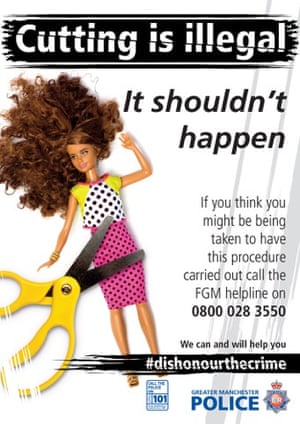
Cutting is illegal poster

Photograph: Greater Manchester police

Sometimes known as the ‘cutting season’, the school summer holidays are the most common time for girls in the UK to be taken abroad, usually to their family’s country of origin, and subject to mutilation.


Operation Limelight will see Greater Manchester police and their partners speaking to outbound passengers in July about FGM and again to inbound passengers at the end of August and into September.


Travellers will be made aware of the signs that indicate someone could be at risk and informed that it is illegal for UK nationals or permanent residents to perform FGM in the UK or abroad, with a maximum sentence of 14 years imprisonment.


The facts you should know about female genital mutilation

The first ever FGM figures in England were released last week showing that there have been nearly 6,000 new cases in the last year and that a further 65,000 girls under the age of 13 are at risk of the procedure, which can result in severe pain, shock and death as well as psychological problems such as post-traumatic stress disorder.


People who carry out the procedure, or ‘cutters’ are also known to come to the UK during this time to carry out FGM in the UK.


Now in its third year, Operation Limelight was designed to coincide with the school holidays of Greater Manchester and the surrounding areas of Liverpool, Yorkshire and Lancashire, which are also served by the airport.


‘Spread the word: it’s child abuse’


Detective Inspector Nathan Percival, Greater Manchester’s lead on FGM, has overseen a change in approach to FGM in the area.


“For so many years the police have gone off and done their own thing but we don’t do that anymore,” he told the Guardian. “We don’t charge in, but have a softly, softly approach. We’re learning each day from charities and voluntary sectors on how to approach – police shouldn’t be the baddies.


We need friends, siblings and community members to come forward


DI Nathan Percival


“For FGM it’s never just the police deciding we need to make arrests. Policy dictates now that FGM work should be multi-agency so we share information with partners at a strategy meeting to discuss the best thing for the child. We always aim to support the child and the family involved.”


Operation Limelight focuses more on raising awareness than chasing convictions (of which there have been none for FGM in the UK so far). All passengers are approached, without families being isolated. “It’s just basically chatting to people. We explain who we are, and ask whether they’ve heard of FGM or cutting. My tagline has always been: Spread the word: it’s child abuse, it’s illegal and there are serious health implications. If a criminal investigation springs, that is all well and good, but child safety is always the priority.”


In 2015, new FGM laws came into force in the UK. Under the Serious Crime Act, FGM protection orders can now be issued whereby potential victims or third parties can apply for an order to protect the person at risk. These orders can include the confiscating of passports. It is now mandatory for health and social care professionals and teachers to make a report to the police if they learn that a girl under 18 has been subject to FGM.


Percival believes mandatory reporting especially has helped to protect girls and Greater Manchester police has seen an increase in reports made to them of FGM – only nine reports were made to them three years ago, but last year, there were 94. The taboo nature of FGM remains one of the biggest obstacles to eradication, however.


“We need friends, siblings and community members to come forward, people who know that this child will be at risk this time of year. This is what we cry out for – for people to please come forward. It’s hard though, people have been carrying out FGM for thousands of years and believe that not doing it will bring shame on the family. We rely on partnerships and voluntary sector, charities like Afruka and Nestac who work in communities. These agencies work on a cultural level. They know they have a police officer who is really passionate about combatting FGM. I try and understand and put myself in their shoes. You have to with child abuse.”


Angie Marriot, a former nurse and independent consultant in honour based violence, forced marriage and FGM, worked on Operation Limelight for the first time this year.


“It’s been excellent to give out information and target a diverse population of people coming through the airport,” she said. “The opportunity is absolutely outstanding. We’re targeting everybody. I would say that 85% of people have been very positive endorsing the information they’ve been given.”


“Some of the people who’ve taken leaflets have said: ‘Oh we’ve heard about that’ and others have said: ‘What’s this? so we still know there’s a lot of work to do. There are lots of professionals out there who still don’t know about FGM. They don’t feel confident to report and overcome those cultural barriers and lots of people are fearful about being accused of being racist.


“There’s also an issue with funding. We hear about this 80 million pounds for violence against women, unfortunately that’s not trickling down to BME groups or specialists who’ve got that expertise.


“To see the police embrace a sensitive issue openly is remarkable, and GMP need to be commended for the outstanding work they’re doing here today.”


Everyone involved in the operation (police, border agents, consultants and charity workers) have volunteered their time for free.


Signs that a child may be at risk of undergoing FGM include


  • being taken ‘home’ to visit family

  • a special occasion to ‘become a woman’

  • an older female relative visiting the UK

Signs that a child may have recently been a victim of FGM include


  • the child is frequenting the toilet

  • the child is complaining of pelvic pain

  • a change in behaviour after going on holiday. For example, becoming suddenly submissive or anxious.

Anyone with concerns is asked to contact police on 101 or Crimestoppers anonymously on 0800 555111 or the FGM Helpline on 0800 028 3550. You can also contact the NSPCC on 0808 800 5000.


Police and charities launch anti-FGM campaign at Manchester airport

7 Mart 2014 Cuma

Superbug kills 16 in Manchester hospitals

NHS hospital

The BBC stated 1,241 patients have been impacted inside the Central Manchester University Hospitals NHS foundation trust region from 2009 to 2013. Photograph: Nick Ansell/PA


Sixteen people have died in the Manchester spot in the past 4 many years from a highly resistant “superbug”, in accordance to figures launched beneath the Freedom of Details Act.


Klebsiella pneumoniae carbapenemase (KPC) has been accountable for hundreds of infections, with 17 men and women dying, like 16 in Manchester, the BBC has reported.


It mentioned 1,241 individuals have been affected inside the Central Manchester University Hospitals NHS basis trust area from 2009 to 2013, with the numbers rising yr on yr.


Sixty-two patients at the trust have suffered blood poisoning – with 14 confirmed deaths inside of thirty days of infection. Two other deaths have been confirmed this year.


KPC is resistant to carbapenems – a group of antibiotics that, in several situations, are regarded as the last effective defence towards multi-resistant bacterial infections.


The believe in mentioned the enzyme, which KPC utilizes to render antibiotics ineffective, had entered other bacteria, including E coli and enterobacter.


The believe in explained all the individuals who had died have been seriously sick, this kind of as with diabetes, kidney difficulties or transplant rejection. Other folks had leukaemia or other forms of cancer.


It explained: “This trust has and continues to make strenuous efforts to control and minimize this infection. We continue to work really closely with Public Overall health England at both a regional and national level to develop answers for the lengthy-term management of individuals.”


The Christie NHS foundation believe in in Manchester, a specialist cancer hospital, explained nine patients had been colonised with KPC last 12 months.


Two circumstances of KPC have also been located at New Cross hospital in Wolverhampton, with 1 patient dying in the past two many years. Its microbiologist, Dr Mike Cooper, explained the patient was 96 and her form of KPC was nonetheless vulnerable to some medication.


“There’s a large element of luck in this,” he said. “Either Manchester has been extremely unlucky or we have been incredibly lucky not to have much more cases.”


Ten patients have also been colonised at the University Hospital of Stoke-on-Trent. Two had urinary tract infections, but neither patient died of blood poisoning.


Stoke microbiologist Jeorge Orendi explained: “In contrast to the situation in specific hospitals in Manchester and London, thankfully in our hospital and catchment location, carbapenemase producers have remained uncommon to date.”


Superbug kills 16 in Manchester hospitals