knew etiketine sahip kayıtlar gösteriliyor. Tüm kayıtları göster

6 Nisan 2017 Perşembe

Gareth Parry: ‘I knew a lot about mental health but I didn’t recognise it’

Gareth Parry has spent almost three decades supporting people with disabilities and mental health issues find work, but a recent mental health crisis of his own has given him a personal insight into the remit of the organisation he leads.


Parry has only ever worked for Remploy, starting as a trainee administrator and becoming chief executive a year ago. Problems in his personal life two years ago triggered depression. At the time, he was overseeing a government contract for workplace mental health support. “I knew a lot [professionally] about mental ill health, but I didn’t recognise it,” he says. “Suddenly I was on the other side. It reinforced the importance of organisations like Remploy; work gave me routine, structure, focus, when everything else in my life was in chaos.”


Parry became chief executive in May 2016, several months after disclosing his condition (“all credit to the board”), which he manages with antidepressants, cognitive behaviour therapy-style self-help and maintaining a reasonable work-life balance. Living with depression, he says, “has made me a better person to run an organisation like Remploy”.


Remploy is a big provider of welfare-to-work services, running £50m worth of contracts for national and local government, and for a range of employers from retailers and supermarkets to construction firms and facilities management companies in Great Britain. About 95% of its contracts are with government or other public bodies and agencies, such as the Care Quality Commission, the BBC and GCHQ, and for local authorities. Its government contracts include providing mental health support to employees and people in work who are referred to Remploy or who self-refer through the access to work programme; disability employment support through the work choice scheme; and running part of the much-criticised work programme for the long-term unemployed. It helps disadvantaged people to start, keep or return to employment, supporting 130,000 people into work over the past decade.


These 130,000 are just a proportion of the total who have accessed Remploy in some way. Some are helped to keep jobs when going through mental health issues, or supported in less direct ways, through internships, walk-in advice in high street branches, applications for work or training, online access for help with CVs or letters, and phone support.


For the workplace mental health support scheme, of 7,000 people helped by Remploy over the past five years, 92% still had their jobs six months later. In addition, supported internships have helped people with learning disabilities. “For a good supported internship scheme, let’s say a cohort of 10 people, it’s reasonable that six of the 10 will end up in work,” Parry says. He adds: “There is a challenge around what happens about the four who did not get work, but the point is you’ve got six into work.”


According to government figures, in mid-2016 in the UK, 49% of disabled people aged 16–64 were in work, compared with 81% of non-disabled people. The disability employment gap – the difference between the employment rates of disabled and non-disabled people – therefore stood at 32 percentage points.


Of Remploy’s own staff of 750, just under one-third are disabled. So how can you get more disabled people into work when government policy and cuts seem to undermine that end? Parry fudges the question somewhat. “Regime and government administrations change and evolve and have different types of impact,” he says. “Our role is regardless of that to get disabled people who want to work, into work.”


What does he make of a damning report published by the Equality and Human Rights Commission on Monday, showing that progress towards real equality for disabled people over the past 20 years is insufficient and “littered with missed opportunities and failures”, including a lack of equal opportunities in education and employment?


“I realise that we still have a long way to go to achieve true equality of opportunity for disabled people in our communities,” he says.


“Achieving real social inclusion has to be the goal and while having structures and regulation in place to support and protect people with disabilities and health conditions is important, societal change is vital. We must recognise, harness and nurture people’s abilities rather than see only a disability. I am heartened by the attitude of employers large and small that we work with and among whom this recognition is evident and increasing. Genuinely putting ability first not only makes sense in working towards a more equal society, but it makes good business sense, which in turn will increase employment opportunities for disabled people.”


Remploy has changed a lot in its 72 years of existence. Launched by the postwar government in 1945 to employ disabled second world war veterans in sheltered factories producing everything from furniture to shoes, the last factories closed in 2013, as the government and many campaigners regarded mainstream employment as preferable to segregated or sheltered employment. While some welcomed the move, others felt the closures abandoned disadvantaged people.


In April 2015, Remploy was outsourced to a joint venture between US-born international outsourcing giant Maximus – which has come under fire as the provider of the Department for Work and Pensions’ controversial “fit for work” tests – and Remploy’s employees, who have a 30% stake in the business.


But Parry denies that being owned by Maximus undermines Remploy’s status as a champion of disabled people. “I can understand why people would see it that way, but we have a strong social conscience, the employee ownership keeps us focused on that, the profits don’t go overseas to America, they go back into the [Remploy] business.


“We have to be commercially successful and sustainable – so we want to make a profit because that will ensure we continue to exist for another 70 years and impact positively on the lives of disabled people,” he says.


While Remploy is financially secure – it declared £2m profits in 2015 – it is having to seek more business outside the public sector. “The business will reshape because our core market – welfare to work – is resizing and reshaping,” says Parry. This autumn sees the government’s work programme and work choice scheme replaced by a single work and health programme – Remploy may get the contract in Wales – but there are fears that such reforms decimate the welfare to work sector. Austerity, says Parry, “speeds up the need to diversify”. Hence Remploy does more “commercial work” like supported employment schemes with big retailers, although 95% of its business is still with the public sector.


Parry wants more supported internships for learning disabled people (the employment rate for learning disabled people is 5.8%). No longer state-owned, he says Remploy is not apolitical, but “constructively critical”: “We think government could do a lot more for supported internships for people with learning disabilities.” He wants young people with an education care and health plan (for additional support to those with special educational needs) to get “automatic entitlement” to supported internships.


For now, Parry wants to challenge the negative language used to describe people with higher support needs as “unemployable” or “hardest to help”. “The welfare-to-work market needs to develop a much more aspirational language … it’s not about lecturing people to get a job.” Raising aspirations, he says, is the responsibility of business leaders. Parry’s own experience of depression underlined to him the importance of senior staff advocating for and demystifying mental ill-health. “You get sports stars and personalities talking about it, but not many business leaders. There’s still a taboo we need to break.”


CV


Age: 50.


Lives: Leamington Spa, Warwickshire.


Family: Separated, three children (14, 12 and 10).


Education: Mosslands comprehensive, Wirral, Merseyside; University of Hertfordshire: social sciences degree.


Career: May 2016-present: chief executive, Remploy; 2013-May 2016: director of strategy, Remploy; 1988-2013: various roles at Remploy, including factory manager, HR manager, head of learning; 1988-90: administrator, Remploy


Public life: 2015-present: board member of Remploy’s employee ownership association.


Interests: Cycling, music and spending time with the children.


We must recognise, harness and nurture people’s abilities rather than see only a disability


Gareth Parry


Gareth Parry: ‘I knew a lot about mental health but I didn’t recognise it’
26 Şubat 2017 Pazar

The Steve Hewlett I knew: a tough journalist, a fearless chronicler of the illness that killed him

Steve Hewlett became a household name over the past few months for talking about his cancer intimately and frankly to Eddie Mair on BBC Radio 4’s PM programme and for his diaries, which appeared in the Observer. At first I found it hard to reconcile how Steve was talking with the way he’d approached his life and work on Radio 4’s The Media Show, where I was his producer from 2009 to 2013.


It was an extraordinary time in media history, with stories of phone hacking and a BBC director general resigning. Steve Hewlett had always wanted to find the story, not be the story, and he was wary of “human interest”. But here he was on PM talking of himself with the same clarity and fascination as if he were a breaking story, with the scoop on his own condition. Suddenly it made sense. He was an utterly fearless interviewer and now he was turning that fearlessness on himself.


Steve made his name in investigative journalism on television and had been presenting The Media Show for a year when I first met him. We went for a pint and compared notes on what was going well and what might be changed. I had to get up to Steve’s speed on what he already knew, and find new subjects he didn’t know about, to test him, keep pushing him and show how wide the remit of this new programme could be.


Over the next few years, his scoops ranged from phone hacking and press regulation to who knew what, and when, about Jimmy Savile. On air he was dauntingly impartial, as hard on his friends, contacts and colleagues as on anyone else. It was gruelling at times, but Steve had the stamina of an ox.


The Media Show wasn’t Panorama, where he’d famously handled Martin Bashir’s interview with Princess Diana, and Steve was doubtful at first of radio and the impact it had, compared to television.


He was still developing his voice as a presenter of a live programme, rather than an expert answering someone else’s questions on his favourite subjects. But he hit his stride as we broke stories, and he enjoyed it even more when this rolled into appearances on Radio 4’s Today programme, which turned virtually into a residency during the phone-hacking scandals, the News of the World debacle and the Leveson inquiry.


I remember getting a call from Steve almost incoherent with excitement when he had just been phoned by someone at the News of the World, from the meeting where its closure was being announced. Steve made it to a studio to take part in the PM programme within the hour, exhilarated to be the one in the know, first with the inside story.


He was a great teacher. He impressed on me the importance of knowing the industry’s regulations, to see who was bending the rules, and of working out who had a strategy and who was being merely tactical. I often catch myself saying “causation or correlation?” and realise that’s a mantra from Steve, picked up when he snorted at a piece of research that claimed to show watching TV was bad for children, without demonstrating the link.


Steve pushed me and our assistant producer hard, but he always pushed himself harder. Especially in the first years of The Media Show, when it was live at lunchtime, I would arrive before 7.30am to find him already working on something in his office.


Often the door would stay closed for a confidential call. Later, as he came to trust me, it would be left open. Sometimes his tone would be intense, hushed, focused, and I’d not know who it was until after he hung up.


Sometimes it was altogether warmer, lighter and tinged with laughter, and I knew he was talking to one of his teenage sons, a holiday moment on a busy programme day. This would prompt him to tell stories about the other areas of his life, his weekends of refereeing rugby in Harpenden and his adventures in student politics, what he was doing at their age.


It was a glimpse of the side of him listeners eventually got to know much better in recent months. When I asked, he said it felt so natural to talk openly to Eddie Mair about his cancer, he couldn’t understand why anyone thought it was remarkable. Anyone who heard Steve, or read his diaries in the Observer, came to appreciate just how remarkable he was.


The Steve Hewlett I knew: a tough journalist, a fearless chronicler of the illness that killed him

28 Ocak 2017 Cumartesi

How breast cancer and the BRCA gene brought us the sister we never knew

Like all sisters, Tamsin and Lorna Sargeant and Claire Pike are linked by their genes. But in their case, one gene has dominated their relationship; in fact, it was responsible for bringing them together for the very first time. In this picture of the three of them smiling in the sunshine they look happy and carefree – but the gene that brought them together has led to a huge amount of heartache, and desperately difficult decisions.


The story that united these sisters begins one day in spring 2009, when Tamsin, then 40, noticed a strange thickening under the skin of her chest, just below her collarbone. She went to her GP, who knew immediately it was serious. Sure enough, tests revealed a large tumour that had spread to her lymph nodes.


It was shocking and scary: but Tamsin knew she would get through. Her sister Lorna was a big support: the two had been raised by their mother, Jennie, and stepfather, Ralph, who had died a few months before her cancer came to light.


Tamsin had chemotherapy to shrink the tumour, followed by a lumpectomy and radiotherapy. She carried on with her job as a social worker as much as possible as well as caring for her then two-year-old daughter, Esmé, with her partner, Tom. By early 2010, it seemed she had put breast cancer behind her and moved on with her life.


But she hadn’t. At some point, her oncologist raised the possibility of whether Tamsin might be a carrier of one of the most common breast cancer genes, BRCA1 or BRCA2. “We had always been a bit worried about breast cancer in our family, on my mum’s side, because my grandmother and an aunt had it. But from the pattern of the disease in our family, the doctor said it was unlikely the BRCA gene was in our family.”


All the same, Tamsin agreed to take part in some medical research that meant being tested for BRCA. She was asked to fill in a detailed questionnaire about her family history, which meant contacting someone she had barely seen since she was a small child: her birth father, Clive, who had split up with her mother when she and Lorna were very young. “I hardly remembered Clive, and I’d always regarded Ralph as my dad,” says Tamsin. “But I had Clive’s email address, so I wrote to him to ask for information about anyone on his side of the family who had had breast cancer.”


Clive’s reply contained a bombshell. Not only had his sister and other members of his family had breast cancer, but he had another female relative to tell Tamsin about: a half-sister she had not known existed – Claire, the daughter of another relationship.


The news was exciting, and unexpected, and Tamsin hoped they might get to know one another. But first, she felt she needed to rule out the possibility, however unlikely her oncologist thought it was, that her family might be BRCA carriers. “I was very interested in Claire, and keen to meet her, but I felt it was my responsibility, for her and for Lorna, to make absolutely sure I didn’t have this gene,” says Tamsin. “I’d been through a horrible experience, and I thought the least I could do for them was make sure it wasn’t a big risk for them, too.”


The test results took a long time, but Tamsin wasn’t too worried. So when in March 2011 she went along to the Royal Marsden hospital to be told she was, after all, a carrier of BRCA1, the news was utterly devastating. “It was worse than being told I had cancer in the first place. By this stage, my hair had grown back and I felt my life was back to normal: now I was told I had a 50:50 chance of getting breast cancer again, and that I should consider the possibility of having a double mastectomy to reduce the risk.


“But on top of that, I now had to tell Claire and Lorna that they, too, might be carriers – and then they, too, would be at high risk of breast cancer.”


A BRCA gene mutation isn’t the most common cause of breast cancer. According to Martin Ledwick of Cancer Research UK, fewer than one in 10 cases of the disease are linked to it. But where the gene is identified, there’s a higher risk of getting breast cancer. “Up to 65% of women who carry the BRCA1 gene, and 45% of women who carry the BRCA2 gene will develop breast cancer by the age of 70,” he says. So while it doesn’t mean cancer is a given, it does mean it’s worth considering preventive surgery – a double mastectomy – to reduce the risk of breast cancer, and an oophorectomy, to reduce the risk of ovarian cancer, which is also higher in BRCA carriers.


Although she knows it wasn’t rational, and that she can’t possibly be held responsible for it, Tamsin says she felt the weight of responsibility of having to tell her sisters about the gene. “They had seen what I’d gone through, and I knew they would now be thinking, will I have all those horrible experiences ahead of me, too?” Like Tamsin, they had choices to make: and the first was whether to be tested for the gene.


“What’s interesting in a family is that different people react totally differently to the same piece of news,” says Tamsin. “It wasn’t just Lorna and Claire – there were others affected, relatives on Clive’s side of the family and my mum and her relatives. Some people wanted to have the test so they knew one way or the other; others preferred to wait and see; others wanted to have surveillance so any tumour would be discovered as early as possible.”


For Tamsin, there was a different dilemma. “I had to think about whether to have a double mastectomy. At first, I was completely opposed to that: I really wanted to keep my breasts, they felt like such an important part of me. Also, I’d had enough of hospitals and medical treatment.”


Eventually, though, she decided to have the operation. “I’ve got a young child, and I thought I owed it to her and Tom to do everything I could to reduce my risk of a further cancer,” she says.


When the operation took place, in February 2012, there was more bad news: Tamsin already had a second cancer in her other breast. More chemotherapy followed, as well as a failed reconstruction; and because the cancer had spread to her lymph nodes, these also had to be removed. “Things seemed to go from bad to worse – and all the time, I knew my sisters, as well as supporting me, were thinking this could be what lay ahead for them,” says Tamsin.


After her double mastectomy in 2012, she had her ovaries removed the following year. “But this is another operation you don’t just walk away from – there are big consequences to it. You go through an early menopause and it’s life-changing,” she says. “I like the fact that Angelina Jolie, who made the same choices as me, brought the BRCA gene to everyone’s attention, but I don’t think the suffering that goes with it has been fully appreciated.”


Meanwhile, first Claire, and then Lorna, had decided to be tested. For Claire, who is 37, it took a while for the enormity of the news that she might be affected by the BRCA gene to sink in. “I’d never met my birth father, Clive, but my mum had told me that somewhere out there I had two half-sisters,” she says. “And then one day Mum came round and said she needed to talk to me about something: Clive had contacted her about Tamsin having the gene. This was before Angelina Jolie, so I had no idea what it meant – but I was worried.


“My GP referred me to a geneticist, and after counselling I decided to have the test – I’ve got a young son, and felt I needed all the information I could get.” Six weeks later, she got the news that she, too, was a carrier. “By this stage, Tamsin had had her preventive surgery and found out she had cancer again – so I decided it was too much of a risk not to have the operation.” She had a double mastectomy and reconstruction in 2013, and has just had her ovaries removed.


Lorna, who is 45, was the last of the three sisters to be tested. “I’m the kind of person who’s happy trundling along, so I thought I didn’t want to know,” she says. “But after a couple of years I was worrying about every little bump and ailment and whether it was cancer.”


She decided to have the test in March 2014. “I’ve never told my sisters this, but I was worried that I might be the only one of us who didn’t have the gene. It sounds odd, but I thought I’d feel guilty having to tell them I was BRCA-free.” Sadly, she didn’t have to: she, too, tested positive.


“I’d already decided to have the surgery,” she says. “I didn’t want to live with this ticking time-bomb.”


For all three sisters, being brought together has been a silver lining to the dark cloud of BRCA – but they don’t want to minimise that cloud, or what it’s meant to their lives. “It’s been a very tough journey, and although it’s been wonderful to get to know Claire, the impact of the gene has coloured everything,” says Tamsin. “Apart from anything, there’s always been one or other or us going through major surgery.”


Claire says having two new sisters has been a brilliant boon to her life. “Lorna and I live quite near one another in Manchester and Cheshire, so it’s been great being able to meet up. When I was a teenager, I used to wonder about these sisters I knew nothing about, so it’s wonderful to have got to know them eventually. And given what we’ve had to face up to, it’s great that all of us know exactly what the others are going through – we’ve always had someone to talk to who understands.”


Lorna agrees: “We’ve had one another and been able to compare scars and nipples and lack of nipples,” she says. “My big hope now is that, at some point in the future, we can put BRCA into the box where it belongs, and just enjoy our lives together.”


Tamsin, Claire and Lorna are supporting Cancer Research UK’s Right Now campaign to beat cancer sooner. To support them, visit cruk.org


How breast cancer and the BRCA gene brought us the sister we never knew

23 Kasım 2016 Çarşamba

I was 52, a non-smoker, and told I had lung cancer. Life as I knew it was over | Briony Scott

There is no such thing as a “good” cancer. If you’re being told you have cancer, by any criteria, you’re not having a good day.


On 26 August, 2015 – Daffodil Day – I was diagnosed with lung cancer. I was 52, a mother of three, and have never smoked. Apart from a cough I’d had for a couple of weeks, I was feeling great. I turned up to the GP ready to be lectured on the overuse of antibiotics. Instead I was sent for an X-ray.


The first I knew I was in trouble was when the technician looked at the film, turned to me, and asked if I was a “real” doctor. I thought about arguing semantics. Technically I was a “real” doctor and medical doctors are the interlopers, but feeling the tectonic plates beginning to shift, I mutely took the films, minus the reports (I wasn’t trusted with them), back to the GP.


The plates shifted again when the GP lit up the film. It turns out I didn’t need the reports. Even a “real” doctor could see that life as I knew it was over.


The final shift to a new world order happened while googling life expectancy and reading my chances of survival. If my life is nothing but a series of miracles from this point onwards, nothing will undo that moment. The change was immediate and irrevocable.


Like everyone, I’ve had my share of hardships and deep sadness, but I am a school principal and we deal in hope daily. It is my default with young people and their families. Which is just as well, because if there is any theme needed around lung cancer, it is hope. Those who have hope; those who don’t. Those who try to be hopeful but who cannot mask pity; those who know the odds yet exude hope and strength by their very presence.


You may think that to get lung cancer is just bad luck. And you’d be right. Except that lung cancer is the number one cancer killer in Australia. So that’s a fair bit of bad luck. More women die each year from lung cancer than from breast and ovarian cancer combined – the fastest growing subset is young women who have never smoked.


With so many people getting lung cancer and the death rate so high, you’d think there would be group hug sessions, fun-runs and gala balls.


Not so.


From the moment I discovered some bright spark in the marketing department decided the symbol for Lung Cancer would be an invisible ribbon, it was evident “lung cancer” needed some practical assistance in the hope department.


Throughout my smorgasbord of treatments – chemotherapy, surgery and radiotherapy – I never met a soul with lung cancer. Literally no one. It wasn’t till I’d finished treatment that I came across Lilian, a young woman with lung cancer, a mother of one, non-smoker. Over a year later, I met Lisa, a mother of three, a non-smoker, and David, a father of four, and a non-smoker.


Bluntly, there are so few advocates till now because so few people survive. By the time there are symptoms, the disease has usually progressed so that people live weeks or months, rather than years. A significant number of lung cancer patients are told by their doctor to go home and get their affairs in order. Hope appears in short supply.


We don’t invest in research because one of the risk factors, and only one, is smoking. Not my risk factor, nor Lilian’s, Lisa’s, or David’s. But a risk factor. At latest count 13.3% of the Australian population smoke daily. And because their risk of lung cancer is increased, everyone with lung cancer is penalised.


It is the most stigmatised of cancers, attracting less than 5% of research funding to finding a cure, despite taking the lives of more Australians than any other cancer.


This differs starkly from other cancers, some of which can have survival rates around 90%, and yet continue to receive significantly greater funding.


The most frustrating aspect of this is that Australia has brilliant scientists, researchers and doctors. We punch above our weight on the world stage, in every regard. The development of medicine in this area is on the brink of a seismic shift as we move into immunology and targeted therapies, led in no small part by practitioners who operate on the smell of an oily rag. Imagine what they could do if funding matched the greatest need? Given half a chance, this cancer would be a chronic condition at worst and fully curable at best. Hope would reign supreme.


When it comes to cancer, we do all we can to control our risk. We educate, raise awareness and fund research. But if we are going to make judgment calls about where our research funding goes on the basis of stigma, or by moralising on lifestyle choices, then we should be consistent. Cut funding to Type II Diabetes till everyone stops eating sugar, stop researching heart disease while some patients continue to eat fatty food, cease researching bowel cancer till everyone eats fibre, and recognise that 40% of breast cancers are exacerbated by lifestyle choices. And acknowledge that more than 85% of the population do not smoke. Then let’s talk about funding allocations.


I wish we had a team of advocates for lung cancer and that more people survived. I wish I could raise public awareness with pithy campaigns and beautifully coloured ribbons. But wishes count for nothing. There is a pragmatic reality to hope that demands action, funding and research.


But the number one cancer in Australia, like its ribbon, is invisible. As are those who have been through it, and those who have died from it.


I am back at work, rallying the troops (students and parents) through term four, and looking forward to the Christmas break. Mercifully, the timbre of my journey was set by a eclectic tribe of romantic pragmatists – they knew the odds and fought every step of the way. They assumed I would win. Hope dictated their agenda and not stigma. And for that, I will be forever grateful. It is time to make this outcome a reality for everyone.


I was 52, a non-smoker, and told I had lung cancer. Life as I knew it was over | Briony Scott

20 Temmuz 2014 Pazar

Elaine Stritch: a girl who knew how to live

——————


There’s NO Rapid Correct FOR DIABETES


Pre-diabetes is not in fact officially recognised as a illness. It doesn’t seem on the World Well being Organisation record of conditions, but doctors and researchers increasingly use the phrase to describe men and women who, they suspect, are on the cusp of building diabetes. They might have no symptoms of unwell-well being, but their blood sugar ranges are at the upper selection of typical. Thanks to hefty marketing and advertising by the pharmaceutical sector, there is rising strain to prescribe diabetic medicine for them – to reduce their probabilities of creating full-blown type 2 diabetes.


The toxic blend of enhanced existence expectancy and a diet that is higher in sugar, salt and fat is undoubtedly causing sort two diabetes to attain epidemic proportions. This single situation will take up 10 per cent of the whole NHS budget, thanks to the litany of complications it brings.


The chance of stroke in newly handled variety 2 diabetics, for instance, is far more than double that of the basic population. Folks with diabetes are four instances a lot more very likely to have cardiovascular disease. Between 20 and thirty per cent of diabetics have suffered injury to their renal system, major to kidney failure and the want for dialysis. Injury to the delicate blood vessels in the eyes of diabetics is a foremost cause of blindness, even though damage to nerves is a main result in of foot wounds and ulcers, which could end result in amputation.


Prevention is, of course, better than cure, so there is an argument for identifying pre-diabetics, treating them and encouraging lifestyle adjustments. But creating in the British Healthcare Journal, John Yudkin, a professor of medication at University School London, has challenged this. He factors out that the term “pre-diabetes” medicalises perfectly healthful individuals, and risks placing “unsustainable burdens” on health care systems.


Organisations this kind of as Diabetes Uk strongly disagree. I have some sympathy with their place. As well a lot of folks think about variety 2 diabetes as nothing at all a lot more than an irritant, some thing that can easily be fixed with a pill. They are wrong. Irrespective of how effectively it is managed, kind two diabetes is a progressive disease that outcomes in the need to have to boost drug therapies over time.


A recent study conducted in Australia showed that following 6 years, 44 per cent of sufferers no longer responded to oral medication and essential insulin injections. Without a doubt, oral medicine sooner or later fails in most individuals, meaning that injections are virtually inevitable at some point. So if we can determine folks who are at risk sooner – when they are pre-diabetic – rather than later on, it have to be advantageous for the two the patient and the NHS.


Nevertheless, there is still one thing inherently dishonest about the term pre-diabetes. It suggests that, without having intervention, it will inevitably lead to kind 2 but that is not the situation, as Prof Yudkin explains. For pre-diabetes, the danger of progressing to diabetes is about ten-20 per cent. In addition, he argues that there is no confirmed benefit from treating pre-diabetics with medicines. So the health-related occupation is needlessly leading to worry and distress in most of these it labels with this situation. And it has been produced worse by the American Diabetic Association, which in 2010 widened the parameters for what is considered pre-diabetes, so that now even far more people fall inside the variety.


Medication is not as clear-minimize as we’d like it to be. The reality is that most diseases are defined by arbitrary lower-off points, and diabetes is no distinct. Anything at all above a particular blood sugar level is deemed to be pathological, and outcomes in a diagnosis. As a clinical instrument, the phrase pre-diabetic is useless.


Some doctors argue that this doesn’t matter if it signifies men and women can be persuaded to adopt a more healthy lifestyle as a result of a diagnosis. But the worry is that if the parameters for a diagnosis of pre-diabetes are permitted to be set as ludicrously wide as they are at the moment, so many folks will be diagnosed with it that it will turn into the norm. It would get rid of its shock issue: if a third of folks have pre-diabetes, what does it matter?


So the chance is, it would have fairly the opposite impact to that intended. It would merely make even a lot more men and women complacent about diabetes.


———————-


DIGNIFIED DEBATE In excess of A DIVISIVE Issue


Lord Falconer’s Assisted Dying Bill have to be one of the most divisive and controversial pieces of legislation in latest many years. It has split medical professionals, lawyers, clergy, politicians and the standard public.


For years, I have supported the thought of assisted dying, but arguments put forward by critics of the Bill have been compelling. Andrew Lloyd Webber spoke movingly to this paper of how final year he deemed going to Dignitas, the suicide clinic in Switzerland, when he grew to become depressed soon after a series of operations. He now considers this would have been “stupid and ridiculous”.


I do think that those with terminal sickness need to be able to get manage of their lives and be assisted to die if that is what they need. But I’m impressed and heartened by the mature, dignified nature of the debate that has taken area, and how the emphasis of the arguments – both for and against – has been on the men and women this proposed Bill will influence most.


Max Pemberton’s newest book, ‘The Medical doctor Will See You Now’, is published by Hodder. To buy a copy, contact Telegraph Books on 0844 871 1515 books.telegraph.co.united kingdom


Elaine Stritch: a girl who knew how to live

31 Mayıs 2014 Cumartesi

Ross Hutchins interview: "I knew it was cancer"

On court Hutchins wasn’t explosive like Andy Murray, his near friend since meeting in an under-10s match in Scotland in the early 1990s. Nor was he showy or swaggery he described himself as a lot more like Pat Rafter or Stefan Edberg, ‘quiet and focused’.


Hutchins’s life changed on December 27 2012. He had ultimately gone for exams after a physiotherapist flagged up the probability of kidney problems, and that morning he obtained the outcomes: Hodgkin lymphoma, cancer of the blood. It was stage 4, the most superior – the cancer had spread to his physique organs, including the lungs and spleen, and his back (therefore the pain).


About one,800 people a yr in the United kingdom are diagnosed with Hodgkin lymphoma, and it accounts for .2 per cent of all male deaths from cancer.


‘I knew it was cancer,’ Hutchins says. ‘I’d seen so a lot of experts, so a lot of physicians, had so several scans and biopsies. And the way they have been speaking, it was evident they didn’t want to tell me, but they had been preparing to say it was quite critical. So I was upset for literally two seconds and then, fine.’


Last January Hutchins exchanged the tennis court for the cancer ward. He invested every single other Thursday lying on a hospital bed in the Royal Marsden Hospital, Sutton, getting chemotherapy medicines pumped into a vein in his appropriate arm.


That month, Andy Murray focused his win in the Brisbane International to ‘one of my closest close friends, who is back property watching… you are going to get through it.’


And he did. Hutchins was offered the all-clear in August and is now rededicating himself to tennis. His recovery has been nothing at all short of miraculous.


Undergoing therapy for Hodgkin lymphoma in hospital Photo: Getty


‘Sometimes right after chemotherapy I couldn’t encounter eating. I’d have a plate like this’ – Hutchins points to his chicken and avocado salad – ‘and would only eat this considerably.’ He holds up a small forkful of chicken. We are possessing lunch in the members’ restaurant at the Queen’s Club in west London.


Founded in 1886, and named right after its very first patron, Queen Victoria, it is a single of the jewels in the crown of the British grass-court season as each and every June it hosts the Aegon Championships, which serve as a warm-up for Wimbledon.


We have met right here since Hutchins was recently appointed tournament director of the championships, a 1st for a existing tour player (even though he will not be permitted to compete at Queen’s). ‘A good deal of tennis players do not want other items on their plate, but that is the opposite of what I’m like. I like to hold busy,’ he says.


He has previously shown me all around – the 28 outside and eight indoor courts – and throughout the tour he has been greeted warmly by personnel and members alike. Hutchins himself seems as however he has stepped out from a observe ad – handsome, 6ft 3in tall, broad shoulders. His clothes – elegant jacket, verify shirt, teal tie – are by Ted Baker, for which he just lately grew to become a brand ambassador.


His encounter is tanned from taking part in in a tournament in California. When we sat down he ordered sparkling water and blackcurrant cordial, just about the only sugar he permits himself now.


He has a polite and charming air that belies his grit, and behaves so professionally each on and off the court that it is hard to realise that he is even now only 29. He sees himself as ‘a typical man, down to earth’. Ahead of his new position with Ted Baker, he says, ‘I would have possibly turned up to this in a tracksuit.’


He looks so wholesome it is difficult to envision how he was a 12 months in the past. ‘I misplaced most of my hair,’ he says. ‘The first time it happened I woke up in the morning and turned over and there was a stash of hair on the pillow. I believed I was going to go entirely bald.’


He dropped four kilos – he was 87kg (13st 10lb) before he grew to become unwell – but forced himself to consume so when he completed his therapy he was only one particular kilo shy of his original bodyweight. ‘I needed to be near to the same particular person I was when I commenced,’ he explains.


He knows the cancer could return, but for now he is consolidating his remarkable recovery with frantic activity. The day we met he was up at 6am to go for a thirty-minute run near his home in Wimbledon. He is taking part in with Fleming again – earlier this month they reached the ultimate of the BMW Open in Munich.


Hutchins was approached by the Aegon Championships’ managing director, Stephen Farrow, in January. ‘He asked if I’d think about the role and I mentioned it would be totally wonderful. I did not think about it for a second. I’ve been playing at tournaments for six or 7 years and know what it takes to run 1.’


His role includes seeking soon after the gamers, the media and on-web site pursuits, this kind of as a players’ lounge, plus overseeing transport, hotels, players’ foods and physiotherapy therapy. ‘He has a large task on his hands now with taking part in and also becoming a tournament director,’ Andy Murray tells me by way of e-mail, ‘but often gamers do make the best tournament directors due to the fact they know what operates.’


Amongst the comforts Hutchins ideas to provide is a grooming space, exactly where gamers can acquire complimentary manicures and pedicures. ‘We have the very best gamers in the planet coming to our tournament, let’s seem soon after them,’ he says.


His association with Queen’s runs deep. This was the club in which, in 2007, at the age of 22, he had his very first win in an Association of Tennis Professionals (ATP) World Tour match when he partnered Jamie Delgado on centre court in front of seven,500 spectators (they had been due to perform on a single of the back courts, but had been upgraded following yet another player pulled out). It was Hutchins’s 1st match with a pace gun. ‘I could see how quick I was serving!’


This is also the place the place he would come, despite feeling weak from chemotherapy, to organise Rally Towards Cancer, a charity match held soon after the last of the Aegon Championships last yr, which featured Boris Johnson, Jonathan Ross, Andy Murray and Ivan Lendl and raised more than £350,000 for the Royal Marsden Cancer Charity.


At the Rally Towards Cancer Charity Match, flanked by Boris Johnson, Jonathan Ross, Jimmy Carr, Andy Murray, Tim Henman, Sir Richard Branson, Eddie Redmayne and Michael McIntrye Photo: Getty


Rally Against Cancer was the thought of Chris Kermode, then the Aegon tournament director, and now the CEO and chairman of the ATP Planet Tour. ‘Chris referred to as me in January, most likely 10 days following my chemotherapy began and explained, how would you like to place on a charity event this year at Queen’s? And I mentioned, I’d love to. I do not know what state I’ll be in, how healthy I’ll be, but let’s go for it.’


‘It was inspirational,’ Kermode says. ‘He was so committed to producing sure that it was the ideal that it could be. He was plainly exhausted but never ever, ever complained, by no means really described it, unless of course asked. It was really extraordinary.’ Hutchins says the experience ‘gave me a great deal of belief that I could get in excess of the line and come back to court’.


He maintains that the chief issue in his recovery was his background as a tennis player. Not only was he physically fit – ‘that aided with dealing with the chemotherapy I was physically far more in a position to get on toxins’ – but he also had a psychological edge tempered by years on the aggressive circuit.


He decided to treat the cancer as an opponent. ‘If you have undesirable results in tennis, you have to do issues that are unpleasant to make your self comfortable yet again. So you train tougher, commit longer in the health club, spend much more hours studying opponents, and that is what I did with this. I did a great deal of investigation.’ His approach was to concentrate on diet plan, lifestyle and ‘keeping my thoughts busy’.


His fiancée, Lindsay Woods, a attorney, whom he met at a property celebration when he was sixteen, took a 12 months off perform to look right after him. She did a whole lot of study into what he should be consuming. The diet regime of elite athletes is abstemious, and just before he was sick Hutchins typically allowed himself two cups of coffee a week a glass of red wine once a fortnight Lindt milk chocolate as a treat.


But he liked sandwiches and pasta and ate a whole lot of red meat to build up muscle. Woods, a vegetarian, recommended he remove caffeine, red meat, dairy, shellfish and all bread, apart from that manufactured with spelt flour. She made spelt pizzas with tomato sauce and greens, and brown rice sushi with greens. He also had beetroot and orange juice every single morning and evening. ‘Even when I was feeling genuinely ill, I produced sure I nailed eight beetroots a day,’ he says.


His treatment program was a blood check at Sutton every single other Wednesday, then chemotherapy every other Thursday for five hours. Not that he would rest in among treatment options. ‘A lot of the time I’d be working on the personal computer, writing, carrying out projects,’ he says. 1 of these projects was doing work as a tactician for the British Davis Cup group.


‘Fridays were hard. But I created confident I acquired out of the home and did items with family and friends. And then Sunday I would typically start off to truly feel better. I’d arrange meetings on Monday morning no matter what whether or not I was ill or desired to lie in bed, I knew I had to get up on Monday morning.’


Hutchins incorporated factors of optimistic contemplating into his treatment method. ‘Psychology was vital for me,’ he explains. ‘The purpose was to get healthful again, back on court yet again and to have CT scans that showed no cancer. I constantly had that sight firmly in my mind.’ He goes on, ‘I’d talk to Colin about “when we’re taking part in once again following 12 months we want to do this”, often speaking in a positive way about when we’re back on court together. That mindset was quite massive for me.’


But positivity does not constantly help, I say. Elena Baltacha, the former British amount one particular, died of liver cancer at the age of 30 only a number of days ahead of we met. ‘Elena had the most positive mindset you could probably have,’ Hutchins says. ‘She would have hit cancer with every little thing she could have hit it with and never ever given up.


‘But at times cancer does get the much better of men and women and it is not a question of who has the stronger psychological powers or something.’ (On finals day at Queen’s, Hutchins and Murray will be taking element in Rally for Bally, a series of exhibition matches to increase money in Baltacha’s memory.)


Photograph: Getty


Ross Hutchins was born into a planet of tennis. His father, Paul, is a former British Davis Cup player and captain, and now runs national club league tournaments with Ross’s mom, Shali, who is Sri-Lankan born of Malaysian descent. Ross grew up in Wimbledon, the third of 4 children, and commenced playing aged five (his siblings – brother, Blake, and two sisters, Romy and Lauren – all played to national level).


From the age of 7 he went to King’s College College, Wimbledon, the place academically he was ‘middle of the road’, and he left with 7 GCSEs in 2001 to pursue a tennis profession. He turned professional in 2002 and played Junior Wimbledon in 2002 and 2003.


Ill overall health has dogged his profession. In 2004 he blacked out and collapsed right after a hefty practice session in Colombo, Sri Lanka. ‘I had cramping and kidney problems,’ he says. The lead to was dehydration. In sizzling situations he cannot replace quickly adequate the amount of fluid and sodium that he loses.


‘It occurred a lot. I was almost certainly hospitalised 20 instances and put on drips. It is not anything I’ve talked about a lot. It was one of the causes why I gave up singles.’


He turned to doubles in 2007 and started enjoying with Fleming in 2010. ‘There aren’t this kind of lengthy rallies in doubles, much less motion for every stage, so it’s significantly less taxing on the entire body.’


Hutchins says the cancer was one thing else fully, but now recognises the psychological benefit in possessing presently faced his body’s vulnerability. When he was diagnosed, ‘I did not really feel allow down by my body, just sensible that negative factors can happen.’


As soon as he was provided the all-clear last August he launched himself into getting back into form. ‘My oncologist told me the good information by phone one particular evening and the next morning I went to Wimbledon and hit some balls with my brother and my dad on the grass courts. It just felt correct to be in a location that indicates so much to me and to be ready to hit tennis balls cancer-free once again.’


He found an almost physical craving to compete again. ‘I wasn’t happy with just hitting. I was, “All correct, let’s play factors.” I was receiving destroyed by my brother and my dad and was hitting the ball atrociously, but loving the truth that I could perform aggressive factors.’


Prior to the illness, a common day’s education was 3 hrs of tennis, two hrs in the health club. Hutchins chose to adopt a far more fluid approach to acquiring match. ‘I stated to myself that each time I felt like hitting, I’d play. So if it was five hours a day, I’d perform five hrs and if it was half an hour, I’d play half an hour.’


He also committed himself to fat training. ‘I do not usually use machines, I do a whole lot of free of charge weights. But it was basically anything to get robust.’


He admits to overdoing it at initial. ‘I’d be falling asleep at five o’clock on some days. Literally mid-conversation falling asleep. But that was very good, that showed I was operating challenging, and then from September I began to be much more certain [with my ambitions]. I said, I’ve got to be ready to go to Miami with Andy in November.’


For the prior 5 years, Hutchins had joined Murray in Miami for pre-season instruction. ‘I knew that you can’t coast when you’re in the heat with such a match person, and because I wished to keep up with Andy that was my purpose.’ It worked. He was ready to fly out and stayed for two and a half weeks.


Hutchins’s comeback match with Fleming was towards Jérémy Chardy and Grigor Dimitrov in the Brisbane International in January. They took the initial set to love, but misplaced the 2nd six-4 and the deciding set to a tie-break. ‘We came out completely on fire, enjoying truly effectively and then my level dipped. We hadn’t played matches for 15 months. I wasn’t match-sharp.’


Photograph: Getty


Though now match, he says his physique has changed. ‘It does not recover as quickly. I can lift the very same weights but I tire quicker. I’d be silly to consider it is only because of the chemotherapy. It is currently being older.’


When not playing tennis he lives quietly with Woods, who now operates in the offices of the All England Club, and his labrador, Sammy. ‘We go to the cinema, go out for breakfast from time to time. We really do not go on numerous holidays but I like going away for the weekend, regardless of whether Kent or Bath or the New Forest.’ They are getting married at the finish of the 12 months.


He nevertheless forsakes alcohol, dairy, sugar and caffeine, though now enables himself a steak every three weeks and has relaxed the ‘spelt flour rule’. His idea of a deal with is afternoon tea at the Savoy. ‘I told you I like sandwiches,’ he says, grinning.


‘If the cancer returns, then so be it,’ he says, ‘I’ll tackle it head-on once again. But if it doesn’t, then I’ll preserve enjoying taking part in tennis and hold striving to be a better player and become the individual and athlete I want to be.’


The Aegon Championships begin on Monday (aegonchampionships.com). To donate to Rally for Bally go to justgiving.com/RallyForBally


Ross Hutchins interview: "I knew it was cancer"

15 Mart 2014 Cumartesi

That is us told… posters from when the nanny state knew best – in pictures


Warnings about the value of hygiene on holiday and early campaigns about wholesome foods featured in some of the most striking government-problem graphic posters. A new guide showcases a selection from the 50s and 60s, a golden age of public details artwork in Britain


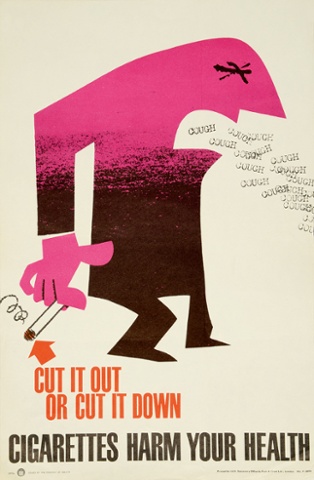
Nanny state posters cigarettes tobacco
Cigarettes harm your health
1962-3, Reginald Mount, Ministry of Wellness
In 1948, 82 % of men were smokers and 41 % of girls. In the 1950s the link in between smoking and lung cancer began to be apparent and the amount of smokers started to decline. However the government’s anti-smoking campaign did not commence until finally the 1960s, following the publication of a Royal University of Doctors report and it was then that posters this kind of as this 1 had been produced. Designer Reginald Mount (1906-79) worked for the Central Office of Info and a number of government companies in the postwar era. Poster courtesy of Thames &amp Hudson
Nanny state posters Holiday hygiene
Vacation well being depends on vacation hygiene
c1966 Scottish Home and Health Department
Following on from the well-liked “Coughs and sneezes spread diseases” slogan 1st utilised in the second planet war, well being and hygiene grew to become a central theme of public data campaigns in succeeding decades. To get the pressure off the NHS, the public was encouraged to aspire to a healthier, outside lifestyle while sustaining great specifications of hygiene. The message in posters this kind of as this was clear: very good hygiene is fundamental to all our aspirations, underpins loved ones wellness and prospects to idyllic summertime holidays. The era’s conception of a common household is pictured generating the most of what was considered crucial – the time, space and freedom to get pleasure from existence to the complete. Poster courtesy of Thames &amp Hudson
Nanny state posters germs
Rogue’s Gallery
1960s, Reginald Mount, Ministry of Overall health
Pathogenic bacteria spread from particular person to particular person largely by way of the touch of hands, and the significance of antiseptic procedures the two in clinical practice and in everyday lifestyle have been a staple of public-well being campaigns given that the second globe war. These are a lot more important than ever in today’s world of MRSA and Clostridium difficile. Poster courtesy of Thames &amp Hudson
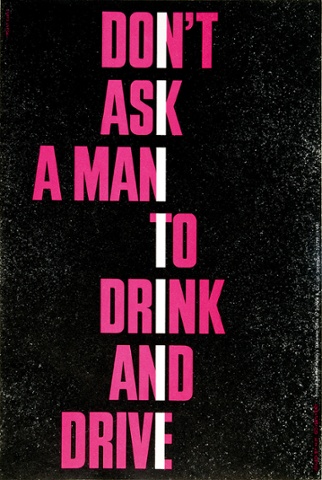
Nanny state posters Drink Driving
Do not inquire a guy to drink and drive
1966, Reginald Mount and Eileen M Evans, HM Government
This poster was published in the same yr as the Street Security bill (enacted 1967), which made it an offence for drivers to have far more than a prescribed limit of 80mg of alcohol per 100ml of blood and introduced roadside breath-testing. Before that, motorists suspected of having drunk as well significantly have been asked to walk in a straight line (typically utilizing the road markings as a guide). The vertical white lines in the poster allude each to the street-relevant message and to the walking test. The wording also reveals how it was expected then that a man in a couple would drive. Reginald Mount and Eileen M Evans worked together for the government before establishing the Mount/Evans studio. Poster courtesy of Thames &amp Hudson
Nanny state posters crime police
Suspicious? Contact the Police
c1968, Unknown, HM Government
The 2nd half of the 20th century saw a dramatic rise in the level of recorded crime, and it was towards this background that the Home Workplace launched its anti-theft drive in 1968. Though the figures unveiled an upward trend, the extent of the rise is most likely to have been exaggerated by the development in the reporting of crime. Ironically, in encouraging people to inform the police if they spotted somebody acting suspiciously, posters this kind of as this might have contributed to this perceived surge in criminality. Poster courtesy of Thames &amp Hudson
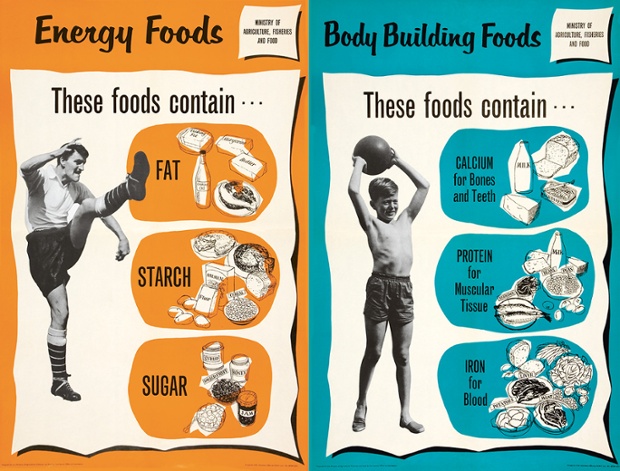
Body building foods/ energy foods poster
Body constructing meals/power foods
1954 Ministry of Agriculture, Fisheries and Foods
Schools had been offering meals to pupils prior to the war, but it was not right up until the Education Act of 1944 that the provision of free of charge college meals and milk became a statutory duty. By 1951 college lunch was eaten by 49% of pupils. With a excellent proportion of youngsters acquiring this nutritional minimal, it is maybe not surprising, if surprising, that a 1998 research by the Medical Analysis Council identified that children in the 1950s were more healthy than their 1990s counterparts. Interestingly, the promotion of excess fat, starch and sugar as constructive factors in a diet regime, allow alone as energy food items, is at odds with the message adopted later on in the century. Poster courtesy of Thames &amp Hudson
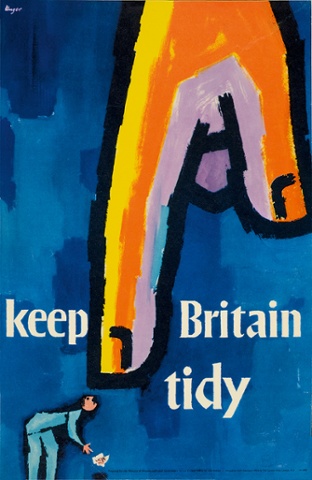
Nanny state posters keep Britain tidy litter bins
Maintain Britain tidy
1962, Hans Unger, Ministry of Housing and Neighborhood Government
This poster was developed by German-born graphic designer Hans Unger (1915-75). His encounter of the Nazis in Berlin in the 1930s probably influenced his rather threatening depiction of an accusing finger bearing down on an offending guy. The layout seeks to emphasise both the official nature of the campaign and the importance of individuals in taking accountability for their surroundings. In the 70s the KBT posters took a significantly softer line. Poster courtesy of Thames &amp Hudson
Nanny state posters keep Britain tidy litter
Preserve Britain tidy
1965, Royston Cooper, Ministry of Housing and Regional Government
The Hold Britain Tidy campaign, which was begun in 1954 by the Women’s Institute, became an independent organisation in 1961 and began acquiring official government funding. Support also came in the kind of posters such as this one particular. Royston Cooper (1931-85), a painter and typographer as well as a designer of posters, yearly reports and packaging, had his own studio in north London for 23 many years. Poster courtesy of Thames &amp Hudson


‘) jQuery(‘.related-galleries-slot’).load(‘http://gdn-galleries.appspot.com/components/galleries/associated/box?webpage-url=’ + window.area.href) }


That is us told… posters from when the nanny state knew best – in pictures