Marathon etiketine sahip kayıtlar gösteriliyor. Tüm kayıtları göster

4 Ekim 2016 Salı

The two-hour marathon: who is it for?

In a two-part series in the New York Times entitled Man vs Marathon, Jeré Longman took a thorough look at Yannis Pitsiladis’s project to accelerate the process that will, almost certainly, lead to a human being running the arbitrary distance of 26.2 miles in two hours. In the article, Pitsiladis, a sports psychologist, says that the most likely candidate to achieve this feat would be an Ethiopian or Kenyan with a hard, rural upbringing, and that the best way for them to run that fast for that long would be to minimise the amount of weight on their feet, probably by running barefoot or with merely “a film that covers the bottom of the foot”.


I read the first article while I was staying at a rural training camp in Gondar, Ethiopia, where I am doing anthropological fieldwork with aspiring young Ethiopian runners. They happen to fit Pitsiladis’s model: they come from remote rural areas and spent much of their childhood and adolescence running barefoot or in cheap plastic sandals. I read the second sitting at the side of a field in nearby Debre Tabor with some of the young distance runners from the camp, waiting for the start of the Cultural Sports Games, where people from the nine different states in Ethiopia came together to compete in horse riding, gena (resembling hockey with rough-hewn wooden sticks and fewer rules) and tigel, a form of Ethiopian wrestling. We were sitting at the side of the field for the second time that day, having been told at the proposed start time of 9am that people didn’t feel like it quite yet and we should come back at 3pm. At 3.30pm, there was still no sign of any action. The runners had put on traditional Amhara clothing for the occasion and didn’t seem concerned. “This is cultural sport, Mike. This is the good life, no one is in a hurry.” And running, I ask. Is that the good life too? “Sort of,” I’m told. “But running is always about condition, every day worrying about condition, condition, condition.”


This seems to be a good time to ask them about the possibility of a two-hour marathon one day; is there a way for them to work even harder, to go even faster? “Two hours in the marathon?” my friend Telahun* replies, before relaying the question for the others. “Yikabadal,” they murmur together: “This is heavy …” Telahun thinks for a while then adds, respectfully: “Maybe for Kenenisa (Bekele, world record holder at 5,000m and 10,000m) he says, “but the Kenenisa of six or seven years ago.” He then asks the question that Pitsiladis’s research seems to have missed: “Why is this man so obsessed with that anyway? Aren’t we running fast enough already?”


I tell them that the project is looking for $ 30m (£24m) of investment, and they raise their eyebrows. Running clubs in Ethiopia pay modest salaries to their athletes of around $ 100 a month. “So he’ll start a club with good salaries?” Telahun asks. I’m not so sure about that, I tell them. The irony is that the sub-two hour project is focusing on cutting-edge science to shave the remaining 177 seconds off the marathon world record. The project epitomises modernity’s project to keep pushing forwards, and to accelerate at all costs. And yet the life that Pitsiladis demands of his subjects is the opposite of this. His ideal candidate should avoid footwear at all costs. They should live off the land. Preferably they should live a life that enables them to practise discomfort, and they should have to walk long distances as well as run hard. On our way back from a training session the other day, we waited for an auto rickshaw to give us a ride back to the camp. A middle-aged woman pushed in front of us in the queue, eyeing our tracksuits and saying: “You’re sportsmen, you can go on foot!’ No doubt Pitsiladis would agree.


When I asked my sub-agent friend Gebre about Pitsiladis’s project, he told me that he thought it might be possible, but that you’d need to have a special training camp focused exclusively on that goal. “You’d have to lock them in,” he told me, “and only let them out to fly to races. And after the race they’d need to be straight back on the plane and back to the training camp.” He explained that most runners who run fast marathons and win good prize money want to enjoy life in the city a little bit. “They’ll buy a car, and drive back to Bekoji [the small town where much of Pitsiladis’s reseach is based], and then it’s finished for the two-hour marathon for them,” he told me.


Is there really anything wrong with these young men wanting to live their lives? One of the main problems with marketing distance running is that coverage fails to bring out the personalities of the athletes. Forcing an even more Spartan approach to training is hardly likely to solve this problem. Having become good friends with some Ethiopian marathon runners over the past year, this is a real shame for the sport.


My worry is that the obsession with the two-hour marathon will lead to races where a phalanx of identically dressed pacemakers attempt to escort one exceptionally talented athlete to a world record. Yet the most exciting marathons in recent years, have been the duals, the tactical victories and the upsets; Wanjiru vs Kebede in Chicago 2010, Stephen Kiprotich’s Olympic title in 2012 or Meb Keflezighi’s 2014 Boston win. Also, given the problems with performance-enhancing drugs both Kenya and Ethiopia are currently facing, now may not be the time to obsess over the watch. The athletes in Gondar were sceptical about the possibility until I mentioned drugs. “Well, yeah, with doping of course it’s possible,” they said, “with doping you can run like a car.”



Athletes playing pool in Debre Tabor, Gondar


Athletes playing pool in Debre Tabor, Gondar Photograph: Michael Crawley

It is important to think about who the two-hour marathon is for. At one point in the interview with Pitsiladis, he talks about testing new and eccentric training theories, stating “it may not work but let’s try it and see what happens” and says he is a “risky person”. This attitude is fine if we’re talking about an experiment in a lab, but these are young men from poor backgrounds whose livelihoods depend on their running. Pitsiladis is taking his risks with other people’s bodies. They have hopes, dreams and often families and other dependants to support. They are not merely expendible sources of research data.


The project’s hypothesis goes something like this: “In spite of the fact that no one has so far got within 177 seconds of breaking the two-hour marathon thus far, and given the widespread accusations of doping in Ethiopia and Kenya, we can assume that some of those athletes were taking drugs. We nevertheless believe we can develop special drinks, ‘pre-hab’ exercises and other unspecified technologies that we can’t go into the details of to make it happen within five years, without drugs.”


In Berlin, Kenenisa almost certainly the most talented distance runner in history, ran 2.03.04, having worked with the Sub2Hr project for the last few months. He and Wilson Kipsang ran the fastest half-marathon split ever recorded in a marathon, 61.11. Yet to run sub-two hours you would have to replicate that fastest-ever half-marathon split and then follow it with a 58.48 half marathon, that is, with the sixth fastest half marathon of all time.


So why would the Sub2Hr project claim to think it will happen so soon? Let’s start by considering how they wrote about Kenenisa’s incredible run in Berlin. On their website they published an article about a special drink: “We are proud of the fact that in just a few months we were able to take two minutes off his marathon PB.” Kenenisa, in this statement, did absolutely nothing to effect the change: it was all in the drink. Kipsang was only a few seconds behind, in spite of not having access to the magic drink.


The article goes on to discuss the founders of the company of the drink, listing their names and inviting their reader to ask the questions they seem to think we all want answers to: “Is the drink commercially available?” and: “When will the new product be available?” In the “our objectives” section of their website, they list “major and unlimited prospects for commercial benefit”. Now it starts to make more sense.


Timing


I want to make clear that I think a project that took a long-term approach to breaking the two-hour barrier, and which genuinely did focus on investment in the grassroots of the sport, could be extremely successful. My criticisms of the project, however, are twofold.


Firstly, timing. I think it is inevitable that someone will eventually run the marathon in under two hours, and I will be as excited as any other athletics fan when it happens. I’ve spent more than a year in Ethiopia as an anthropologist. However, I’ve learnt Amharic and spent countless hours talking to people about doping, and people’s concerns (in a context where the anti-doping infrastructure is in its infancy and many athletes live too far away to be tested) have grown louder in the course of my stay. Here is the coach I work with speaking to the athletes on the subject of gradual improvement:


You have to plan to increase your performance level over a long period of time. It needs strategic planning that brings development for you and brings progress through time. If you are concerned only with running fast, then most of the time you will be exposed to doping. Short cut.


As we have seen with the revelations surrounding the Oregon project and unnecessary therapeutic use exemptions (TUEs), there is an extremely fine line between “science” and “medicine’. As far as I’m concerned, injecting huge amounts of money into helping a select group of athletes, regardless of whether they are technically overstepping the line, is not in the spirit of the sport.


Motivation


When I spoke to Kenenise’s first coach in Bekoji, he became animated when I asked him why he thought Kenenisa was so good. He took the Oromo newspaper he had in his hand and rolled it into a telescope, peering through it at me. This is what he said:


When he was 13, he knew what he wanted. He was like this (he mimes looking through his newspaper telescope). He told me he wanted to be world and Olympic champion. He was so focused so young.


This is the kind of motivation athletes need, and it is intrinsic, not extrinsic. Coach Sentayehu shared with me his concerns about the money in the marathon. He couldn’t see himself producing another Kenenisa, capable of breaking world records on the track, he said, because all of his runners want to move to the marathon when they’re too young to do so, in his opinion. I worry that the Sub2Hr project will merely exacerbate that problem.


The Sub2Hr project describes itself thus: “The first research initiative made up of specialist multidisciplinary scientists striving to achieve the sub-two-hour marathon with a scientific approach.” The athletes themselves are notably absent from this statement. The implication is that it is the work of the scientists themselves that will “achieve” the two-hour marathon. Is this the kind of sport we want? One that pits various groups of scientists against each other? “Science is for farenj (foreigners)”, the athletes often tell me, “running is for us”.


Rather than seeing elite athletes as sources of data for the betterment of science and medicine, we should spend time with the athletes themselves, and find out what kind of sport they want to be involved in.


*I have changed the athletes’ names to protect their anonymity.


A shorter version of this piece was first published on the University of Edinburgh’s Sport Matters blog. Michael has extended the piece to address the concerns raised by the Sub2Hr project’s response to the original article.


The two-hour marathon: who is it for?

3 Haziran 2014 Salı

Runner, 91, breaks two marathon records


A 91-year-previous female has set time and age records at the Rock ‘n’ Roll San Diego marathon on Sunday.


Harriette Thompson became the oldest girl to compete in the race and it was her 15th time working it.


With a time of 7 hrs, seven minutes and 42 seconds, Ms Thompson also broke the US record for the fastest marathon run in the 90-94 age group.


Ms Thompson is a cancer survivor and just lately underwent nine radiation treatments for cancer in her legs.


She says the ideal portion of every single race is going in excess of the finish line.


Runner, 91, breaks two marathon records

19 Nisan 2014 Cumartesi

As Sudden Healthcare Costs Mount, Crowdfunding Web site Lifts Boston Marathon Victims

, with many attributing substantial numbers of yearly bankruptcies to healthcare expenses. No 1 knows these types of sudden charges like Pat and Jess, a couple who, both sustained serious leg injuries soon after a single of the bombs went off at the finish line of the Boston Marathon on April 15th, 2013. When faced with an expected $ 500,000 lifetime expense for each and every amputee, with a lot of their requirements not covered by insurance coverage, the couple did not know in which to turn. Then their pals began a fundraiser for them on GiveForward, the brainchild of two individuals who wished to see .


Beyond Bankruptcy


In accordance to a Harvard examine (but with notable back links to political figures), particular sickness or damage medical costs are to blame for an estimated 30% of filings for bankruptcy, and another twenty% listed well being care concerns as a contribution to bankruptcy filing. Surprisingly, most of these folks had overall health insurance coverage when they 1st got sick or hurt.


Even more, in 2012, when wellness care costs for the common American household of 4 exceeded $ 20,000 for the initial time, Milliman utilized their Milliman Health-related Index (MMI) to liken the cost of a family’s wellness care to the cost of an typical midsize sedan. In 2013, with common fees at $ 22,030, they also compared other major purchases to the yearly cost of healthcare. For illustration, the cost of attending an in-state public university is $ 22,261 for the recent academic yr.


Even so, these fees do not account for numerous of the other OOP expenses that American’s endure such as additional daycare for youngsters of sufferers, charges for patients who travel across borders or out-of-network for far better care that is not accessible on their insurance coverage program. People costs are also not reflective of the travel bills, parking costs, and other expenditures that come to households needing comprehensive care.


Using their online platform to develop fundraisers for the varieties of overall health charges and nonprofit endeavors that assistance assisting OOP paying demands, .


How Does Giving Forward Perform?


Seeing the toll Hurricane Katrina took on victims and whole communities, GiveForward Co-Founder and CEO Desiree Vargas Wrigley wanted to donate to these in the spot, but had difficulties without having validated on-line sources that weren’t especially tied to a for-revenue organization with high overhead fees or a nonprofit focusing on specifically what she wanted. With Co-Founder and President Ethan Austin, she set out to, “take donation jars at comfort store registers to the subsequent level.”


As an alternative of putting a jar with a photo of a little one needing a heart transplant on a nearby counter, families can go on the internet and tell their story, as nicely as interact with donors and give updates on treatment progress.


“No a single ever strategies for an emergency health care crisis or getting involved in a catastrophic occasion like the assault last 12 months at the Boston Marathon. We hope to aid folks heal as they see other people from close to the world offer them with extra emotional support and monetary donations,” contends Ethan.


The Founders of GiveForward knew they were onto one thing massive when their very first on the internet raise netted $ 30,000 in thirty days using Facebook as the major strategy of outreach.


In accordance to the company, 99.5% of all donations go to the men and women and households of these fundraising, with the .5% taken by GiveForward as a “keep the lights on” fee.


To date, the firm has raised shut to $ 100 million in only a number of many years, with Patrick and Jess becoming the largest raise however. With only days left to go on their campaign, and approaching the 2014 Boston Marathon run, the couple is nearing $ 900,000 in donations.


As Sudden Healthcare Costs Mount, Crowdfunding Web site Lifts Boston Marathon Victims

14 Nisan 2014 Pazartesi

North Korea stages its very first worldwide marathon


The event was held to commemorate the birthday of its founder, Kim Il Sung, and was open to foreign athletes for the 1st time.


The country’s state-run television reported that about 400 foreigners, including amateurs, from 15 distinct nations took component.


North Korean Pak Chol won the men’s class, with Rwandan Mvuyekure Jean Pierre finishing second and Ukrainian Babaryka Ivan third.


North Koreans took all the medals for the women’s race, with Kim Hye Gyong finishing first.


North Korea stages its very first worldwide marathon

12 Nisan 2014 Cumartesi

Cancer survivor teams up with stem cell donor in bid for marathon glory

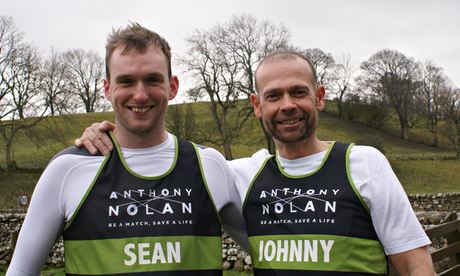
Sean Hagan and Johnny Pearson

Johnny Pearson, who had cancer two years in the past, will run the London Marathon with each other with his stem cell donor, Sean Hagan. Photograph: Anthony Nolan charity


At the end of his cancer therapy two years in the past, Johnny Pearson could barely stroll.


As he stood up to leave hospital, his leg muscle tissues have been so weak that he fell to the ground. The 44-yr-previous, who lives in Harrogate, North Yorkshire, had undergone a number of rounds of chemotherapy and a stem cell transplant. He knew he was fortunate that the Anthony Nolan charity had identified him a stem cell donor on their register (“otherwise my survival odds had been nil”) but recovering his power was hard.


Prior to diagnosis Pearson, who had lately began his personal wine organization, was quite energetic, playing cricket, golf and squash he employed to ski competitively and ran the Great North Run – even though at the finish line he “vowed never to do a marathon”. Now he’s gone back on his word, and will be taking part in the London Marathon on Sunday, along with his running partner, Sean Hagan, 23, an engineer from Cumbria.


“There’s no way I could do it with no him,” Pearson says. He is not exaggerating – he would not be alive without having Hagan, who takes place to be the guy who donated his stem cells two years ago.


Touched by the altruism of this complete stranger, Pearson wrote a thank you card to his donor following his transplant in 2012, starting a series of letters between the two of them. They exchanged information of their lives, all the whilst remaining anonymous (donors and recipients are only permitted to share their identities right after two many years). Final yr Pearson identified out that Anthony Nolan was the official charity for the 2014 marathon. “Dear friend,” he wrote to his donor. “In a second of sheer madness, I have signed up to run it. Perhaps you could do it with me? No pressure!!” Hagan was unfazed. The pair had by no means even met, but he didn’t truly feel like it was an provide he could refuse after all, his recipient had been on the verge of death and was still determined to run 26 miles and raise income for the charity that had supplied him a second opportunity at lifestyle. “Suppose I ideal get training!” Sean replied in his next letter.


It truly is the first time a donor and a recipient will run the London Marathon with each other. The two men only met a couple of months in the past when they were ultimately permitted to reveal their identities. “There was not any awkwardness,” Hagan says, “we’d been writing for so lengthy we had been currently pals. I felt we were friends from the minute I discovered out I was a match.” They toasted the two-year milestone with a handful of beers, before obtaining down to company – discussing marathon techniques and sharing ideas.


The strategy is to begin off gently, combining 15-minute bursts of running with one-minute pace-walking intervals, and pauses to refuel. The two guys are a tiny nervous – Hagan has struggled to find time for education with his twelve-hour evening shifts at a submarine business, and as I talk to Pearson, he’s sat with one leg plunged into a bucket of ice, getting aggravated an old cricket damage in his calf muscle. But they are assured it will be all appropriate on the day, with their families cheering them on, and the BBC following their progress.


“There’s no backing out now,” says Hagan, “we have done a number of interviews, there is a lot of pressure.” He’s a bit shy, satisfied that the media interest has currently sparked a rise in the variety of prospective donors signing up to the register, but embarrassed by any praise or suggestion that he’s a hero. “Donating was the best thing I’ve ever completed. I just hope by running we inspire far more people to indicator up.”


Together the men have presently raised all around £12,000 for Anthony Nolan in marathon sponsorship and other fundraising, like a ball organised by Hagan’s sisters.


Pearson says he’s fallen in enjoy with running now, addicted to the “rush of endorphins” he received from a 20-mile session last week. “The medical doctors feel I am crazy for undertaking it. All my organs have taken a beating, my lungs have been impacted, I had pneumonia at one particular point. At the time of my transplant I was advised there was a 50% opportunity I would not survive. But I’m extremely stubborn, when I get an notion into my head.” Hagan expects to be spurred on by fellow runners on Sunday. “I’ve noticed individuals with artificial limbs running it. And with Johnny next to me, realizing what he is been via, which is all the inspiration I need to have.”


Cancer survivor teams up with stem cell donor in bid for marathon glory

20 Mart 2014 Perşembe

Mother of three to run London Marathon in spite of "terrible pain" from bus crash injuries

The charity was set up after Telegraph readers raised tens of 1000′s of pounds to sponsor Sarah following her husband Christopher, the Telegraph’s Senior Political Correspondent, wrote a series of articles about what took place.


Right after not becoming able to walk herself correctly for a 12 months right after the 2007 accident, Mrs Hope, a mom-of-3, began running to develop up her leg muscles.


Transport for London and bus operator Metroline not too long ago met the loved ones at a summit brokered by Boris Johnson, the London Mayor.


Metroline has now agreed to donate £3,000 towards the twins’ marathon bid on behalf of Elizabeth’s Legacy of Hope charity and Street Little one in Liberia.


Sarah said: “When I lost my mom and my daughter lost a leg it impacted on our entire loved ones.


“We try out and dwell as typical existence as attainable but we cannot get on with our lives like that bus driver can after he walked out of prison.


“Every 5 months she demands a new leg and last year she couldn’t walk effectively for the yr. I’m working this marathon with a horrible discomfort in my leg since I lost half my calf muscle. I’m slowly regaining sensation in my foot, the working aids it.”


Mr Johnson additional: “I want Sarah and Victoria all the extremely very best with their Marathon. Their bravery, and in specific the bravery of Sarah’s daughter Pollyanna has been inspirational.”


If you want to sponsor Sarah and Victoria please go to www.virginmoneygiving.com/team/sarah-and-vee.


Elizabeth’s Legacy of Hope is a registered charity in England and Wales. No: 1141287, For much more information go to www.elizabethslegacyofhope.org.


Mother of three to run London Marathon in spite of "terrible pain" from bus crash injuries

14 Şubat 2014 Cuma

Marathon Coaching: Are You Prepared to Go the Distance

Prior to you run a marathon, you need to follow a coaching routine to equip your physique. You want to make certain that you have the bodily strength and stamina for obtaining this outstanding accomplishment. Preparing yourself both physically and emotionally beforehand is critical to completing a marathon effectively.


Marathon Training


Regular alterations in fitness instruction: To commence with, you want to make a decision on a training regimen that fits your body variety. When you introduce minor alterations steadily, your physique adapts far better. You require to begin from scratch instead of aiming to commence from the spot in which you need to be. As a result, the initial education need to coincide with your present fitness plans, perhaps with a tiny a lot more endurance instruction. It is a gross blunder to opt for a plan which introduces a dramatic modify in intensity you can finish up injuring by yourself and you could be forced to drop out of the race last but not least. Your physique will start responding favorably when you progress slowly. Taking one particular stage at a time is the crucial to succeeding in a marathon.


Check with your physician: Before determining on working a marathon, you must ideally check with your medical professional. This is due to the fact the marathon coaching schedules are very demanding, grueling and hectic. Unless you are physically fit and lively, you could encounter injuries that could turn out to be fatal.


Appropriate diet program: To run a marathon, proper nutrition is important. A carbohydrate wealthy diet plan is advisable due to the fact it will contribute glycogen. Proteins will help to fix muscle tissues. The two girls and men will need to get in as many as 2000-2500 calories in a day. The key portion of the energy is derived from carbs although some sum is also obtained from proteins and unsaturated fats. Your diet plan must also contain vitamin and mineral sources you can also consume vitamin dietary supplements.


Finally, a great deal of calcium and iron is advisable for marathon runners. Merely due to the fact you want to strengthen your body for running a marathon does not mean that you are totally free to consume anything. You need to stay away from processed sugars and grains unless of course you eat them throughout your routines or instantly afterwards. These may possibly result in undesirable spikes in blood glucose amounts that results in physique fat. Participants of Marathon can use the providers of meal delivery applications to chalk out a healthful diet prepare. Meal delivery companies like Nutrisystem have an professional team of nutritionists and counselors working with them. When you approach them with particular wants, they can provide a complementing diet program for your athletic occasion. They may propose adding further protein to your diet to supply endurance.


Stretch exercises: To equip your body for a marathon, you need to stretch on a every day basis. This assists to make your hamstrings and back muscles sturdy.


Sleep: Because you have to have a strong entire body for running a marathon, you require to consume well, drink lots of water and get satisfactory rest. Rest is required for reenergizing your body. A marathon runner need to ideally rest for eight hours each evening. Considering that the exhausting physical instruction sessions can wear you out, this rest is critical for recovery.


Occasionally a great recovery drink can operate wonders for your marathon coaching. When you can recover nicely from any exercise session, you can complete even better in the subsequent a single. This drink does not have to be a protein drink only it ought to ideally contain higher glycemic carbs like dextrose. The most effective drink for recovery should have a four:1 ratio of carbs and proteins. It is essential to don’t forget that there is no magic potion to prepare your physique for a marathon. Even with the most efficient education prepare, you might fail. So, it is crucial to stick to your program and carry out the modifications recommended in a slow manner.


Jessica Robert avidly blogs about bodyweight loss suggestions and diet plan ideas. Her site The Diet program Circle displays informative articles or blog posts on difficulties cost-free dieting techniques and fat reduction suggestions.


Resource: Racing Fat: How to Get Lean for Peak Overall performance


Healthier Residing Site


If you appreciated Marathon Coaching, please pass it on!


Marathon Coaching: Are You Prepared to Go the Distance